
The beauty of Hagi-Yaki that will grow with you
Hagi-yaki is a 400-year-old Japanese pottery tradition from Yamaguchi Prefecture, prized above nearly every other tea ceremony ware for one reason: it changes with use. The glaze develops a network of fine cracks called kan'nyū, through which tea slowly stains the clay, a permanent transformation known as nanabake, the seven changes. A related but separate effect, karahai, is a warm pink glow born in the kiln itself, present before the bowl is ever used.
A 400-year tradition where imperfection becomes art
There's something special about drinking tea from the same bowl every day and watching it slowly transform. The glaze shifts in colour. Tiny lines appear and deepen.
What starts as soft pink or pale cream gradually takes on golden tones, amber streaks, earthy browns. This isn't damage. This is Hagi-yaki doing exactly what it's meant to do.
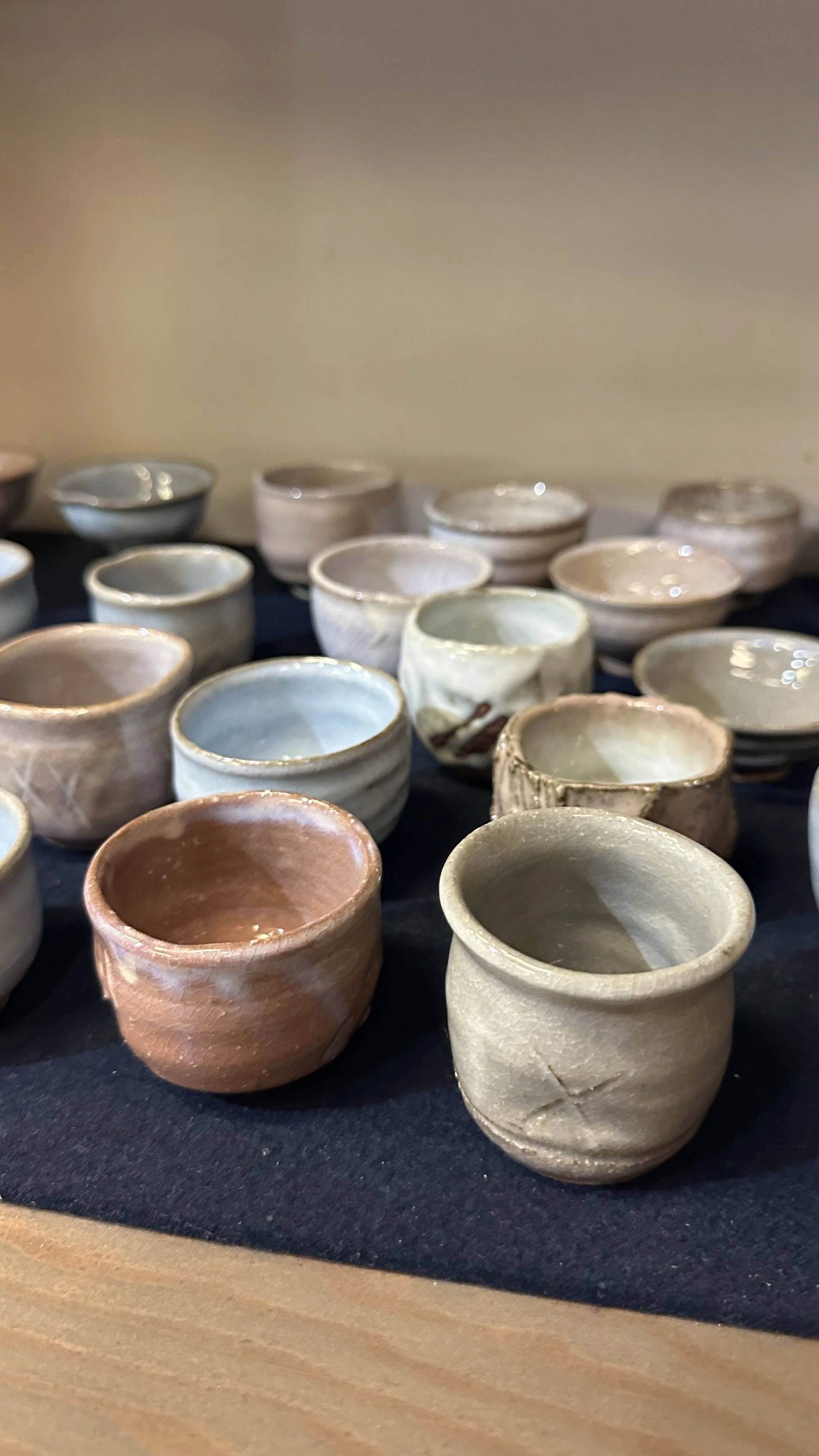
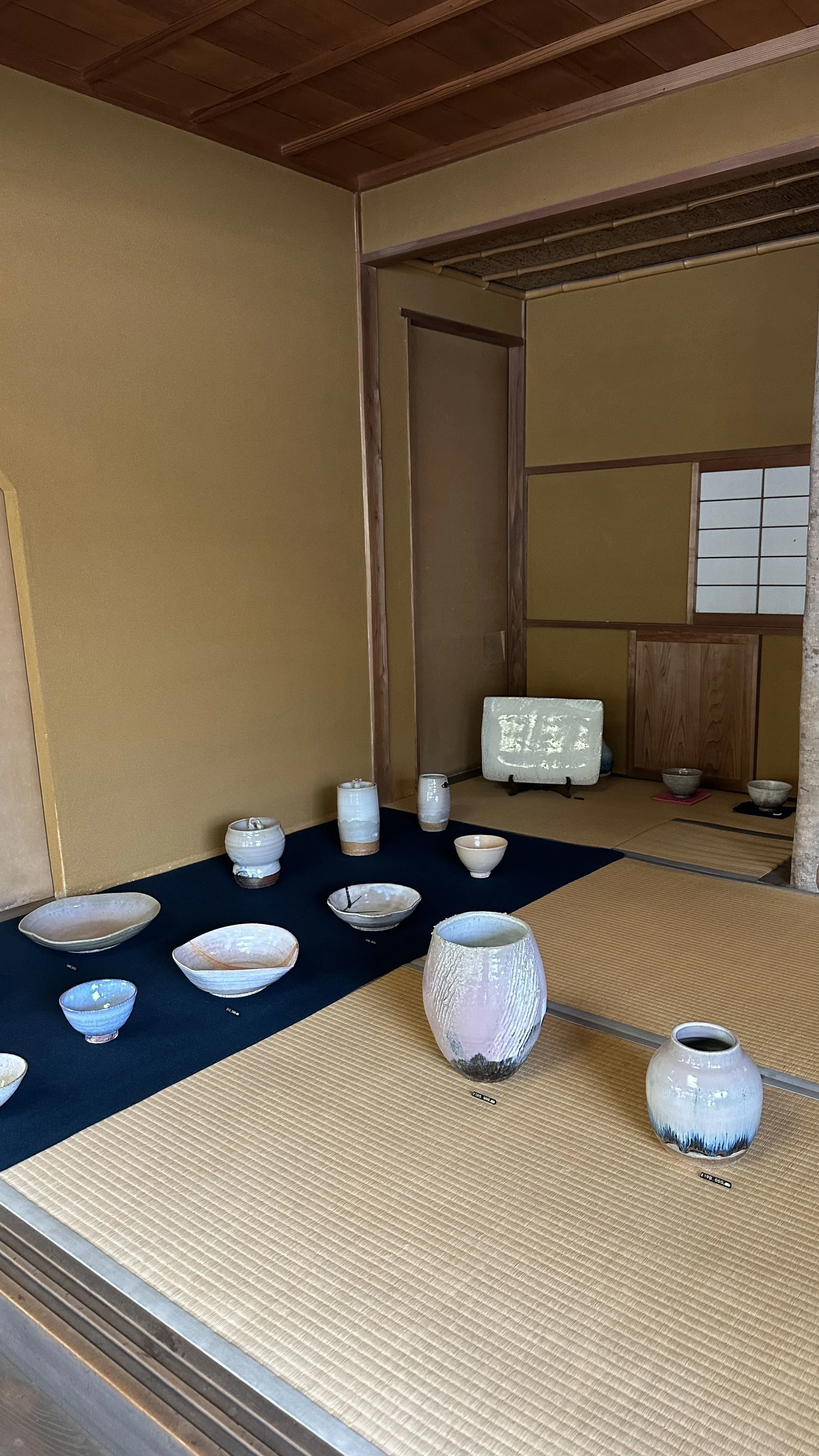
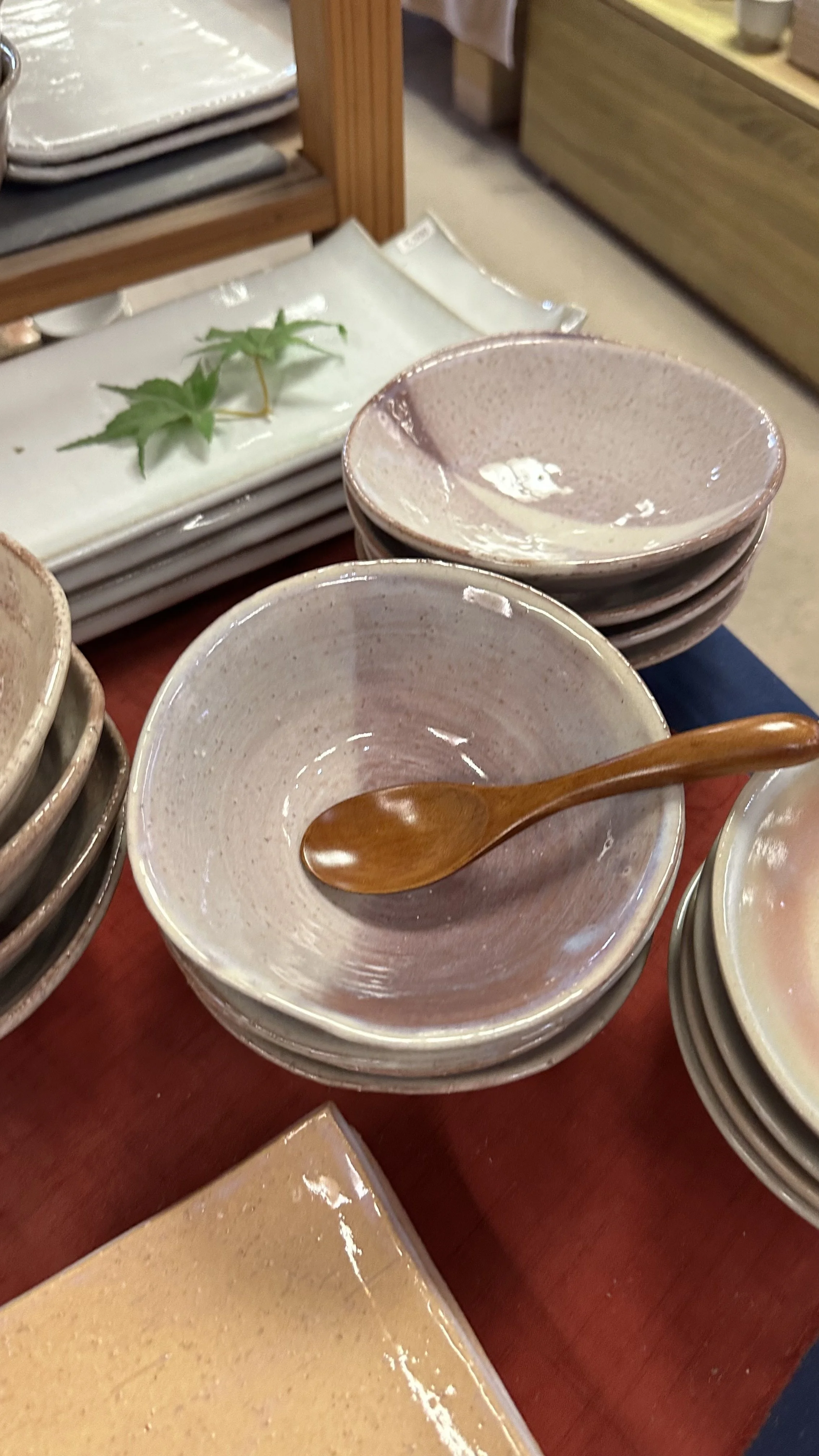
Hagi and its many shapes and forms
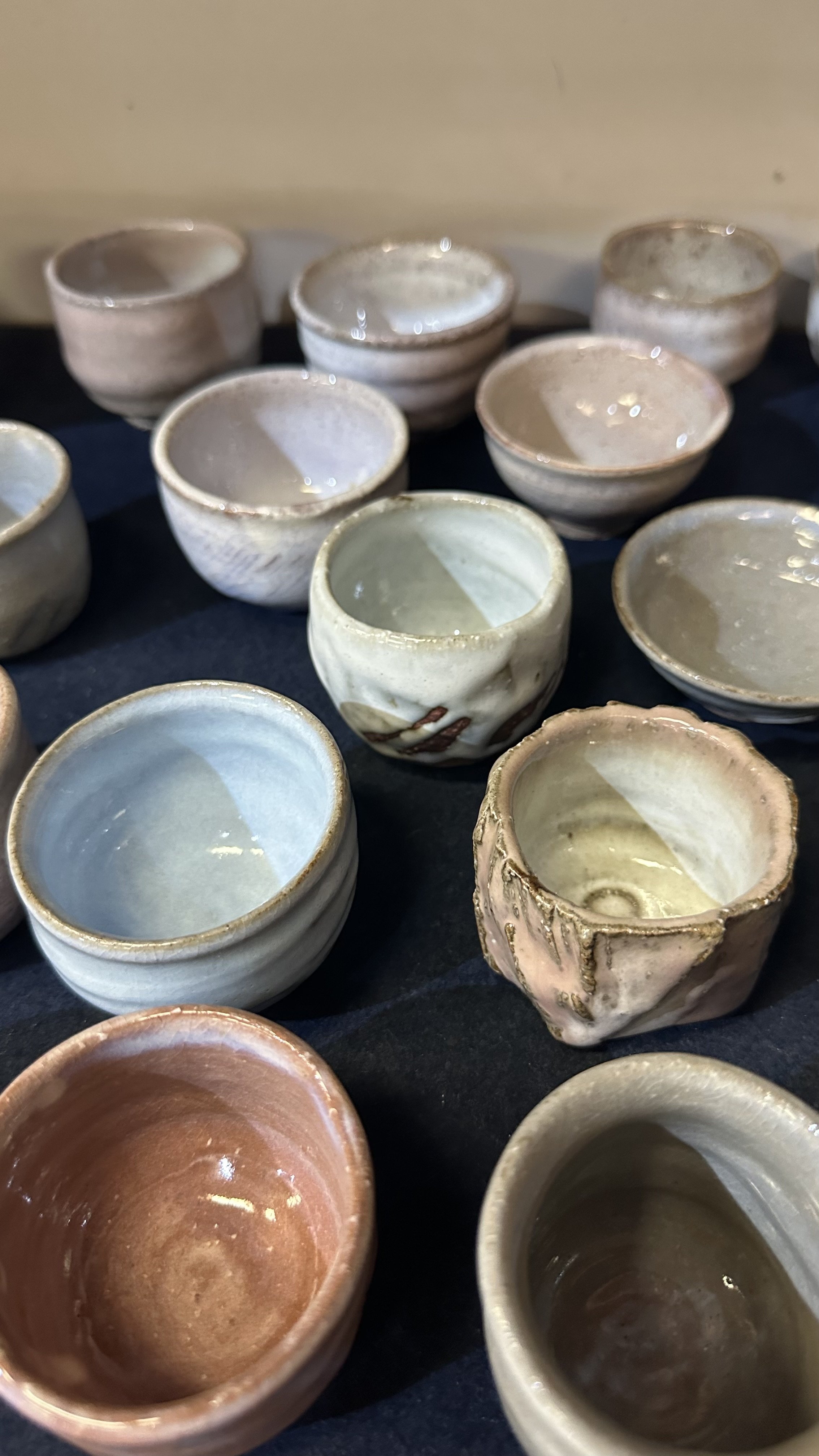
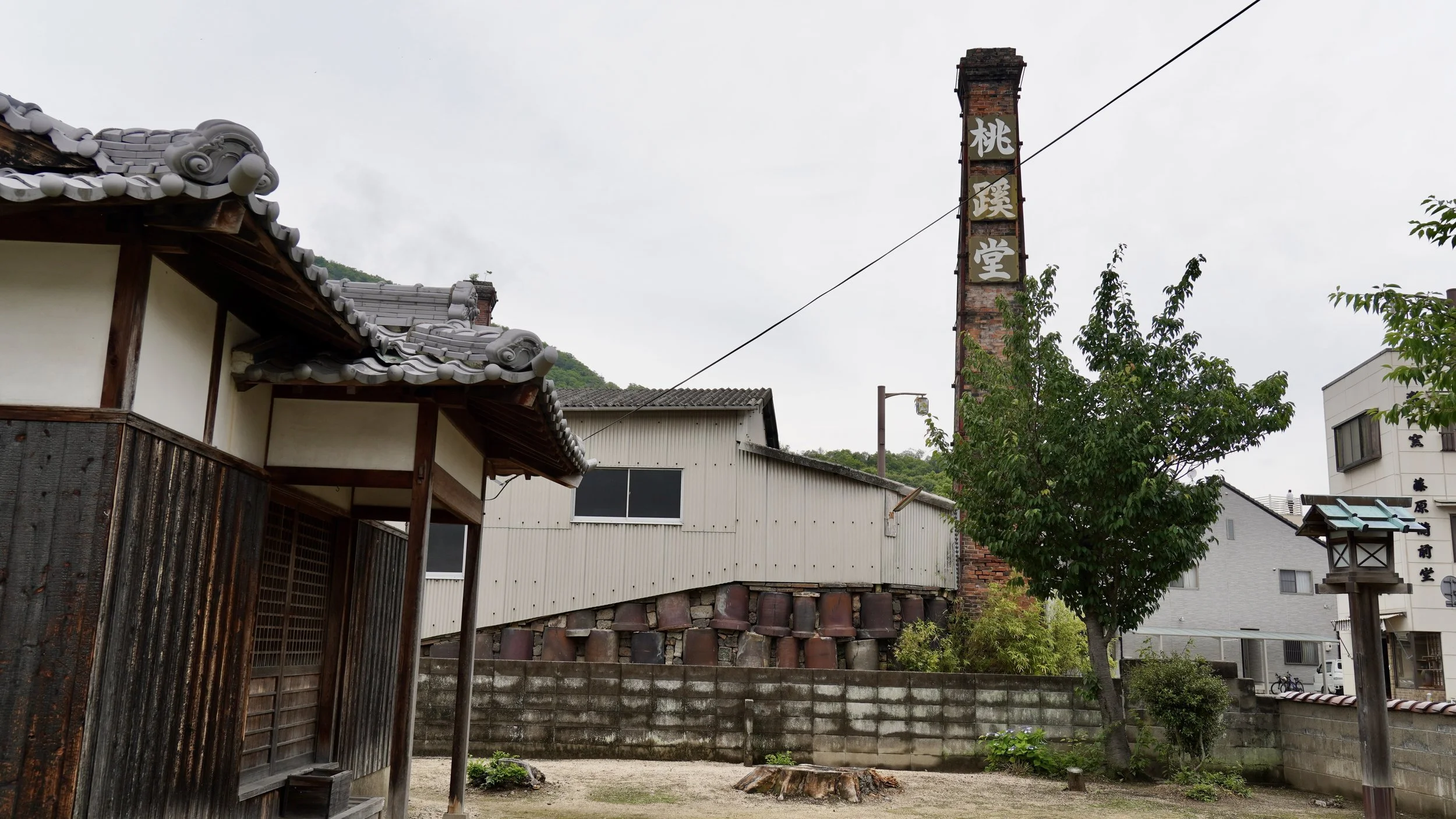
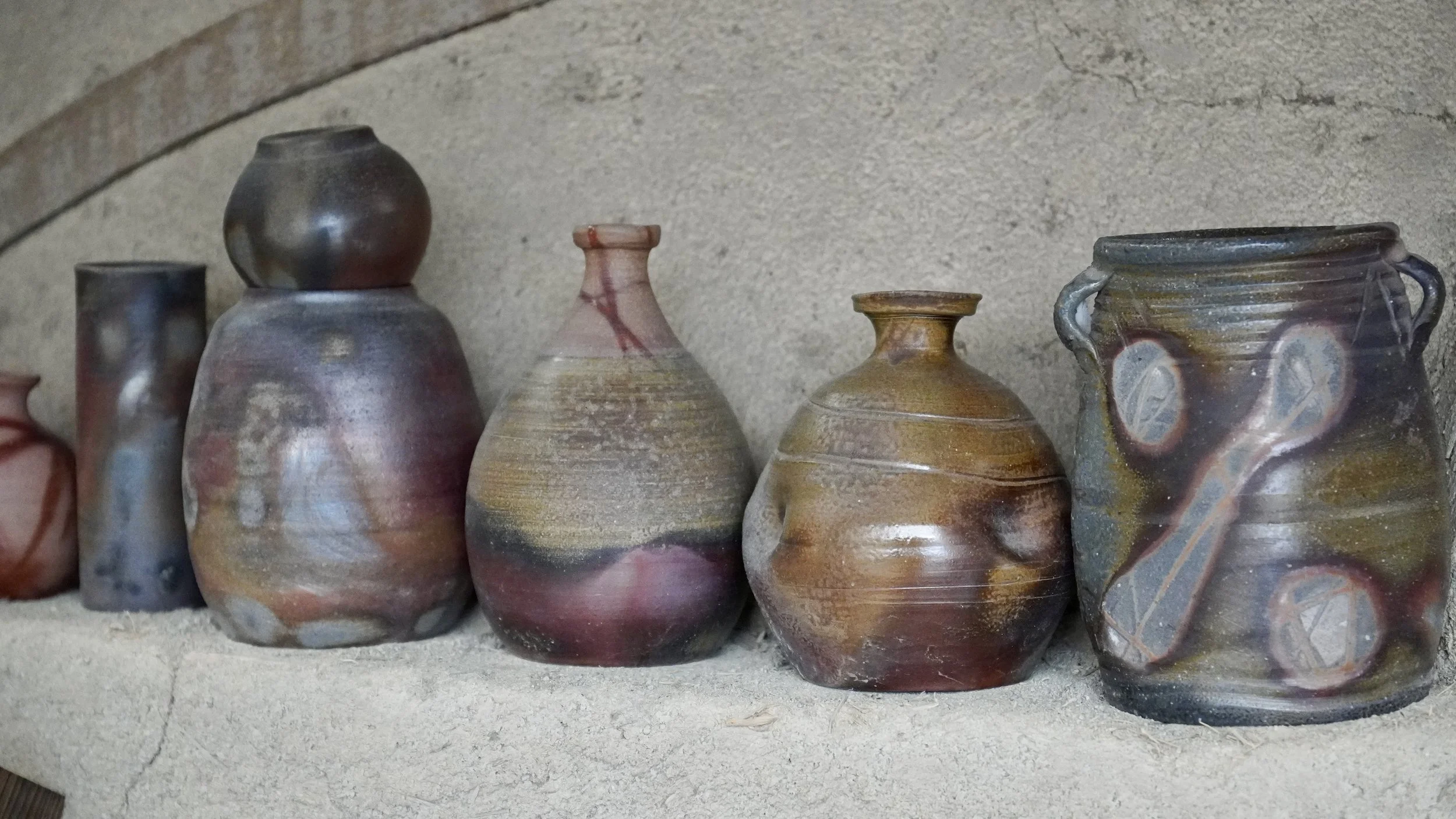
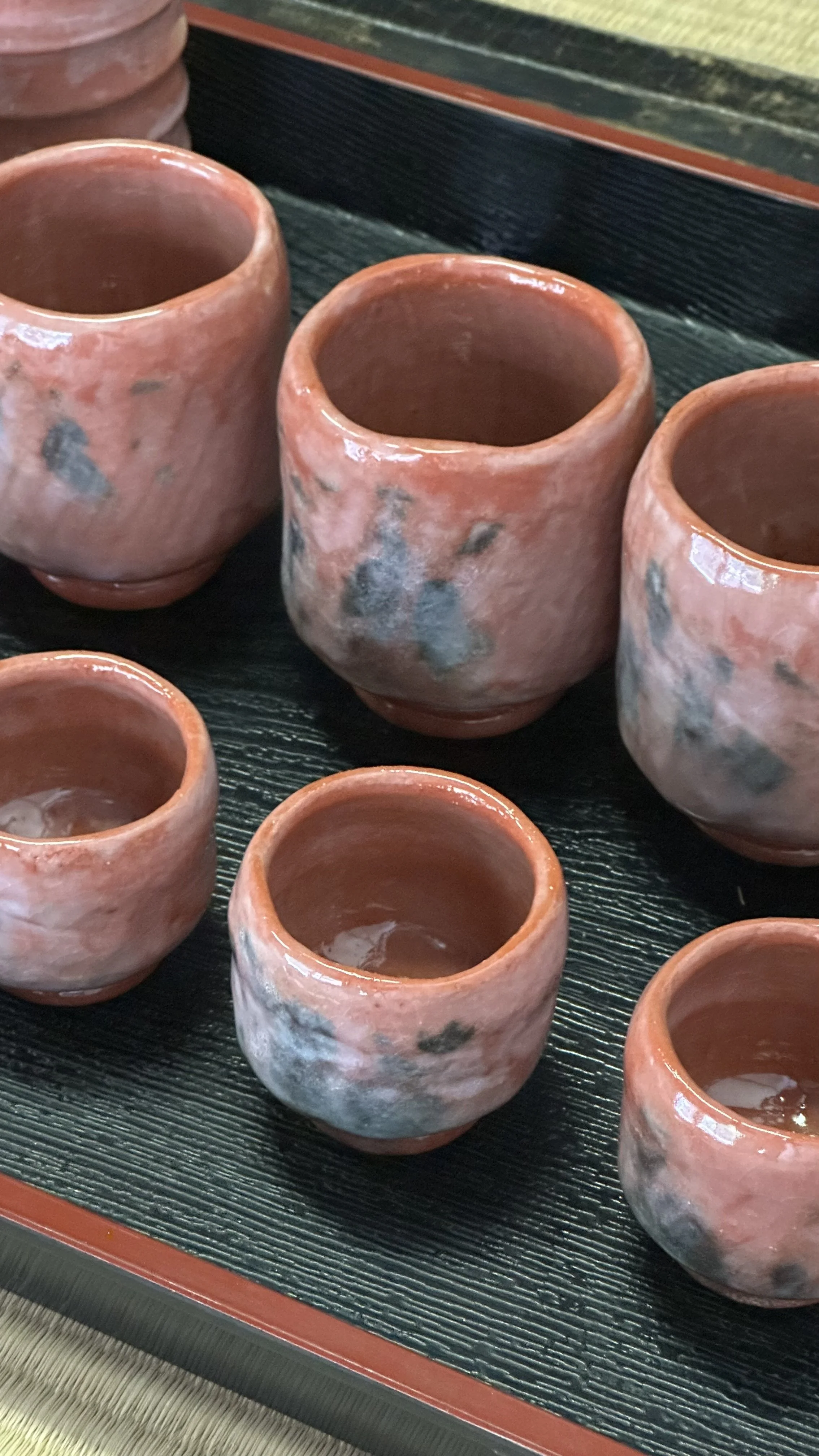
I photographed the above pieces at Senryūzan, a kiln in Hagi with roots going back to 1826, run today by the Yoshiga family who have continued the tradition since the Taishō era.
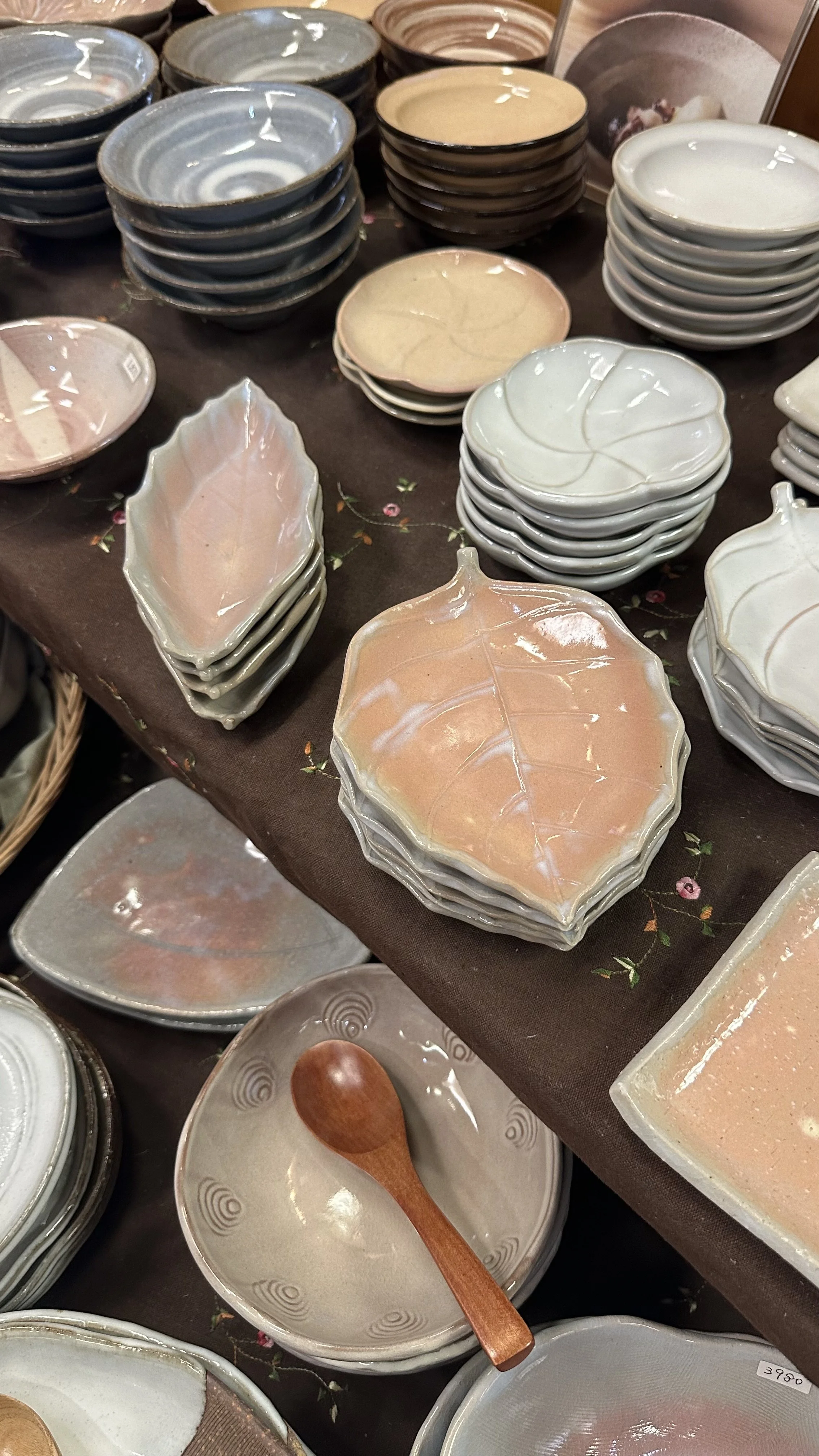
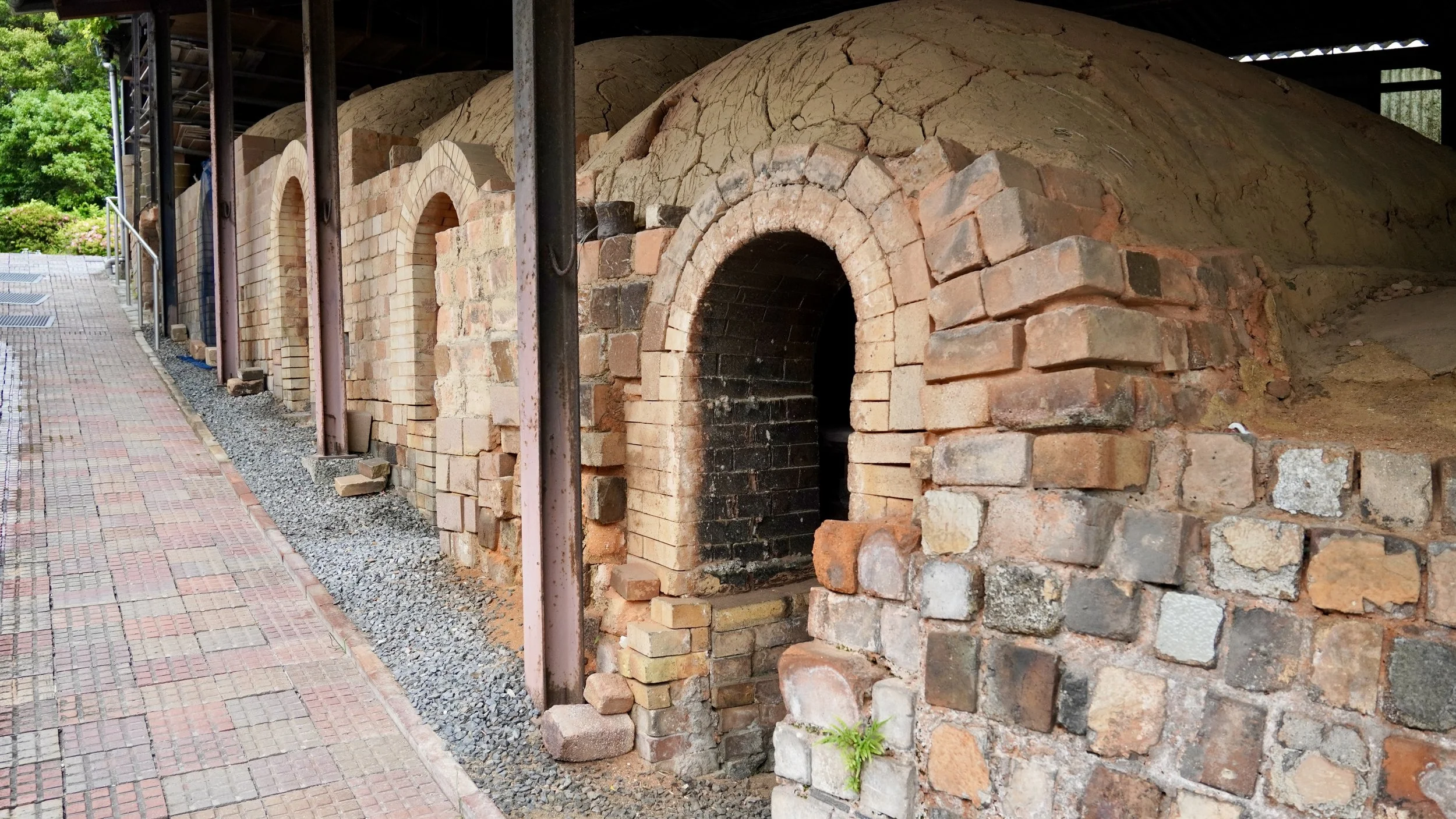
What struck me most was how many different shapes sat side by side on the same shelf. Wide chawan, narrow yunomi, cups with a slight lean, others perfectly round, all thrown in the same wood-burning climbing kiln the family has used since then, one of the few in Hagi still fired this way.
Hagi-yaki was never meant to sit behind glass. It is made to be picked up, filled, used daily, and every shape changes how it feels in the hand and how the glaze catches the light. Seeing that variety in one place, generations of craft still clearly meant for daily use, says more about this tradition than any single bowl could.
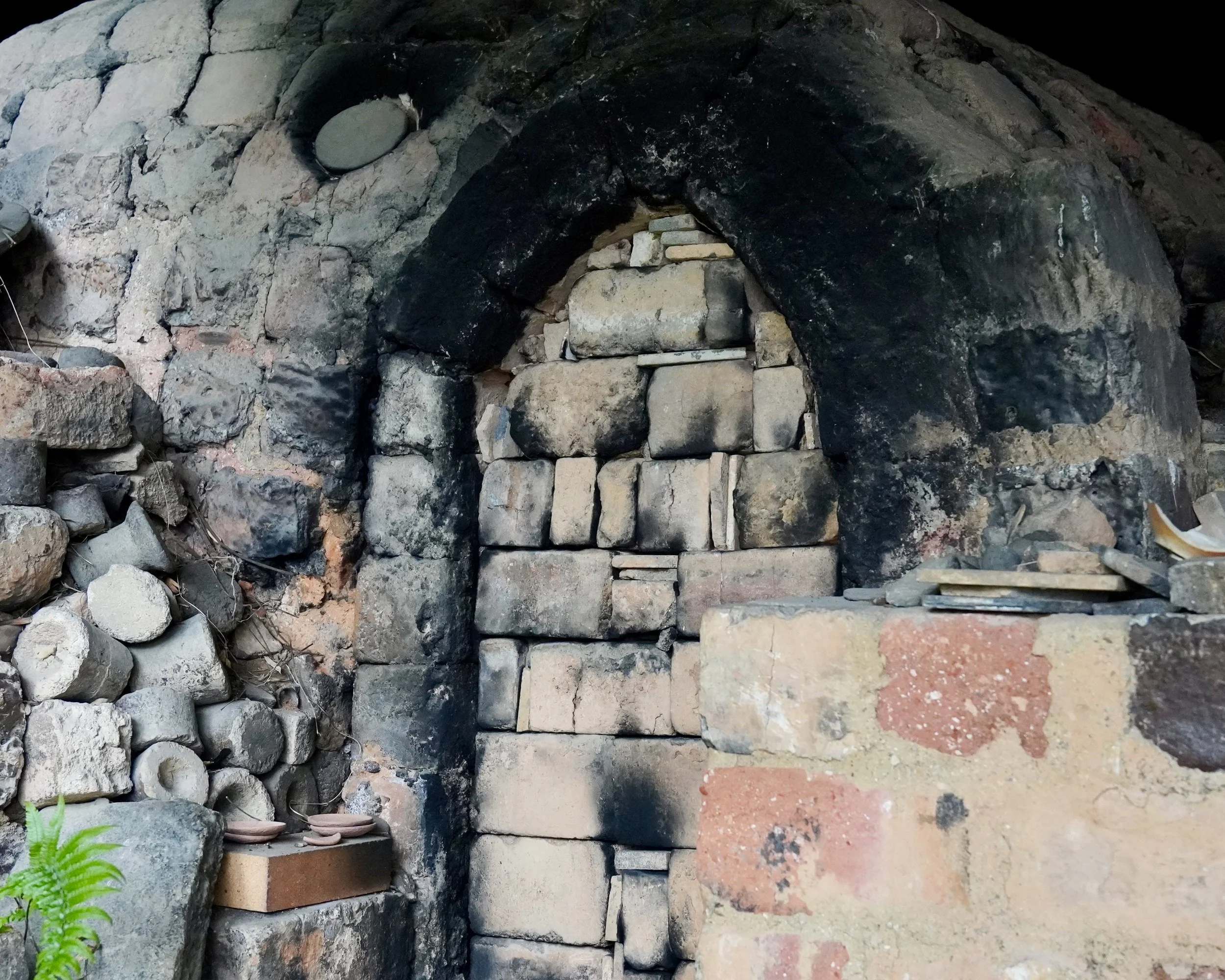
Inside one of the working kilns in Hagi where clay, tools and half-finished pieces still sit exactly where they were left.
What is Hagi-yaki?
The tradition goes back over 400 years, brought to Japan by Korean potters during the late 16th century. It became one of the most treasured ceramic traditions in the country, particularly among tea ceremony practitioners who prize it above almost everything else.
The clay is soft and slightly porous, and it is never just one clay. Hagi potters blend three local earths, Daidō, Mishima and Mitake, in ratios that shift from piece to piece depending on what the finished piece needs to do. The glazes are simple: feldspar, ash, rice straw. No drama, no surface decoration. The beauty is entirely in the material itself and what happens to it over time.
Hagi-yaki pieces feel warm to the touch. Lighter than you'd expect. When you hold one, there's a softness to the texture that is immediately comforting.
This isn't a bowl that shouts for attention. It's a bowl that whispers.
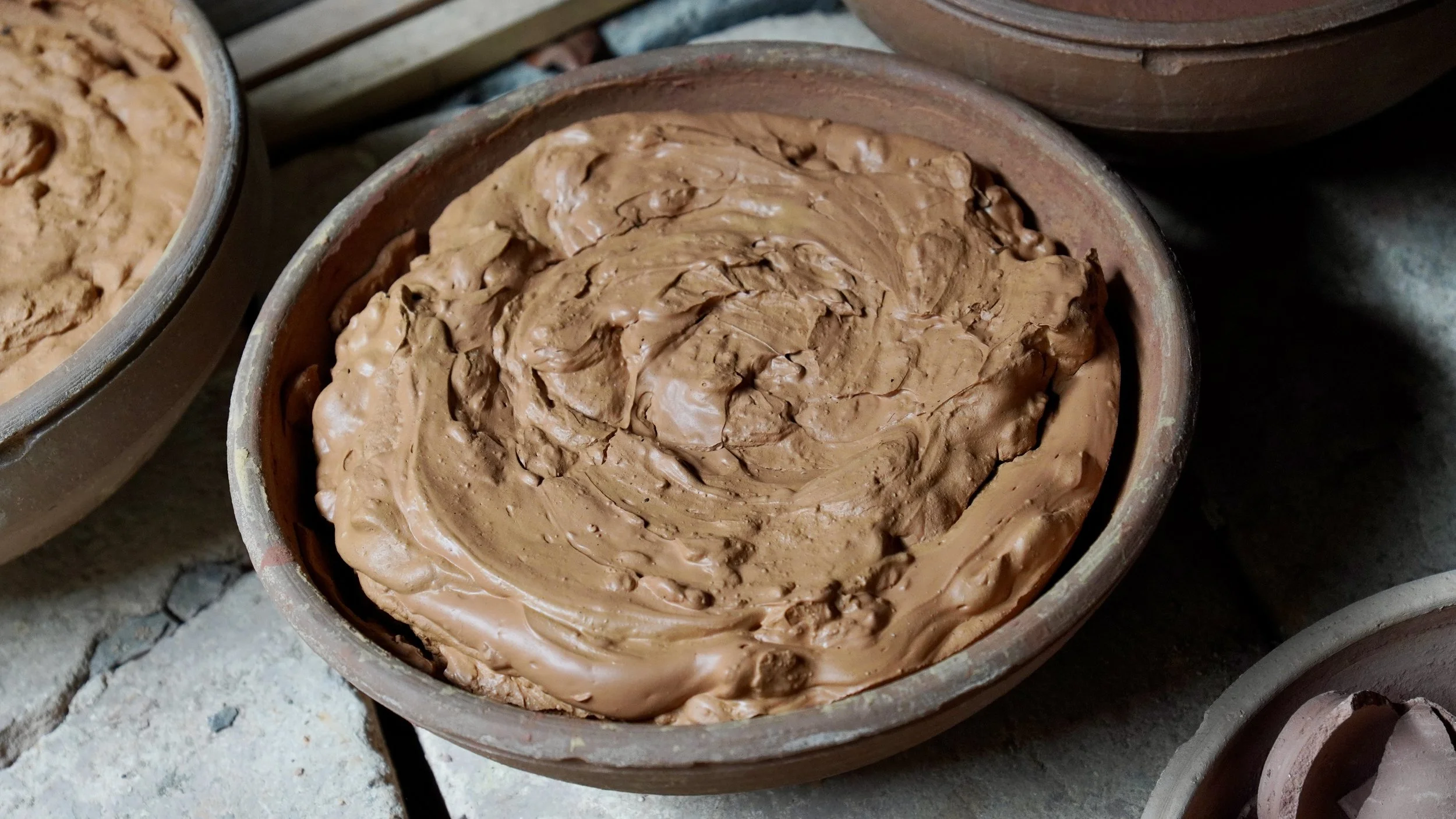
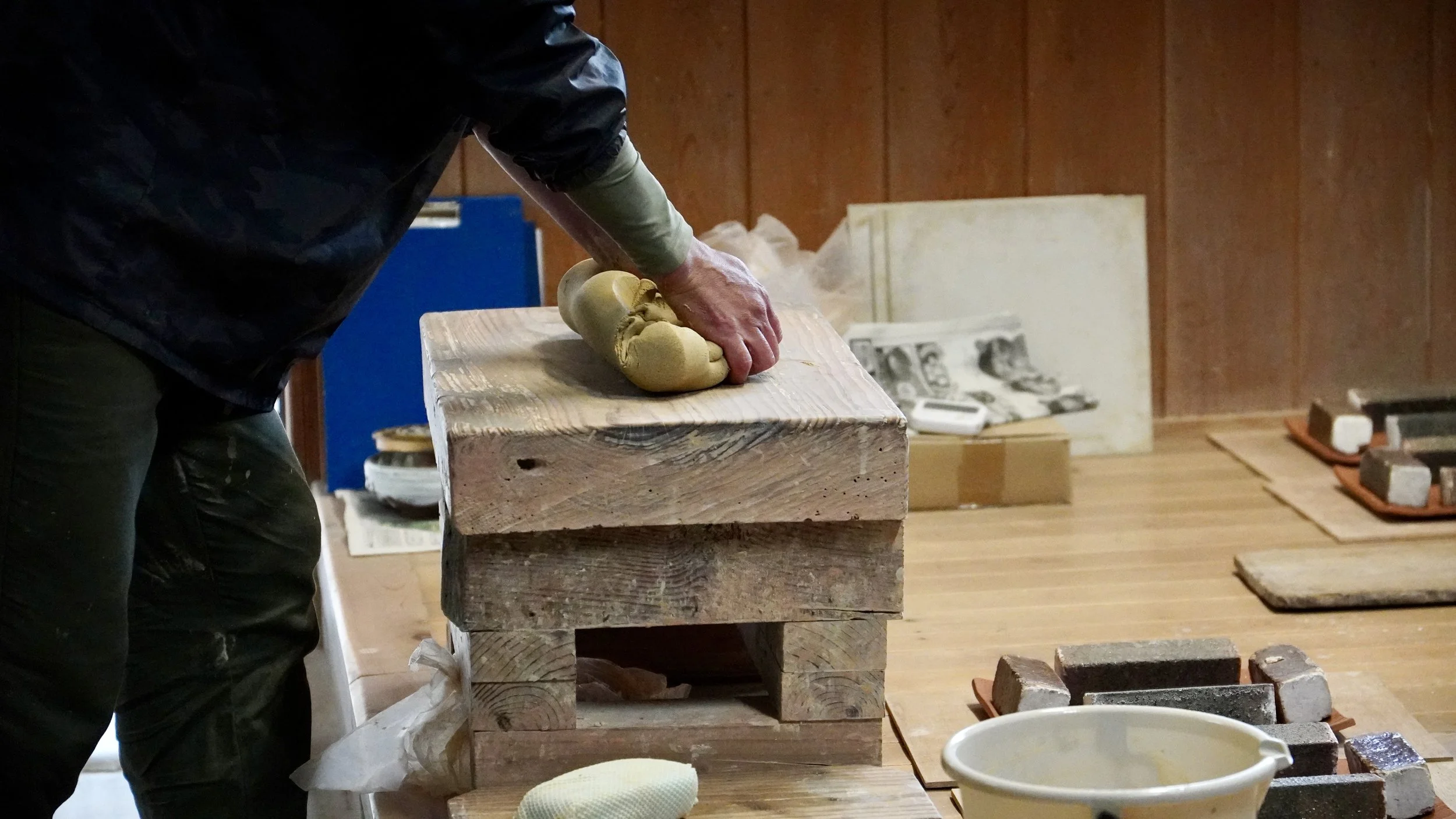
Freshly mixed Hagi clay, the blend of Daidō, Mishima and Mitake earths that gives every piece its individual character before it ever touches the wheel.
Before the glaze, there is the wheel
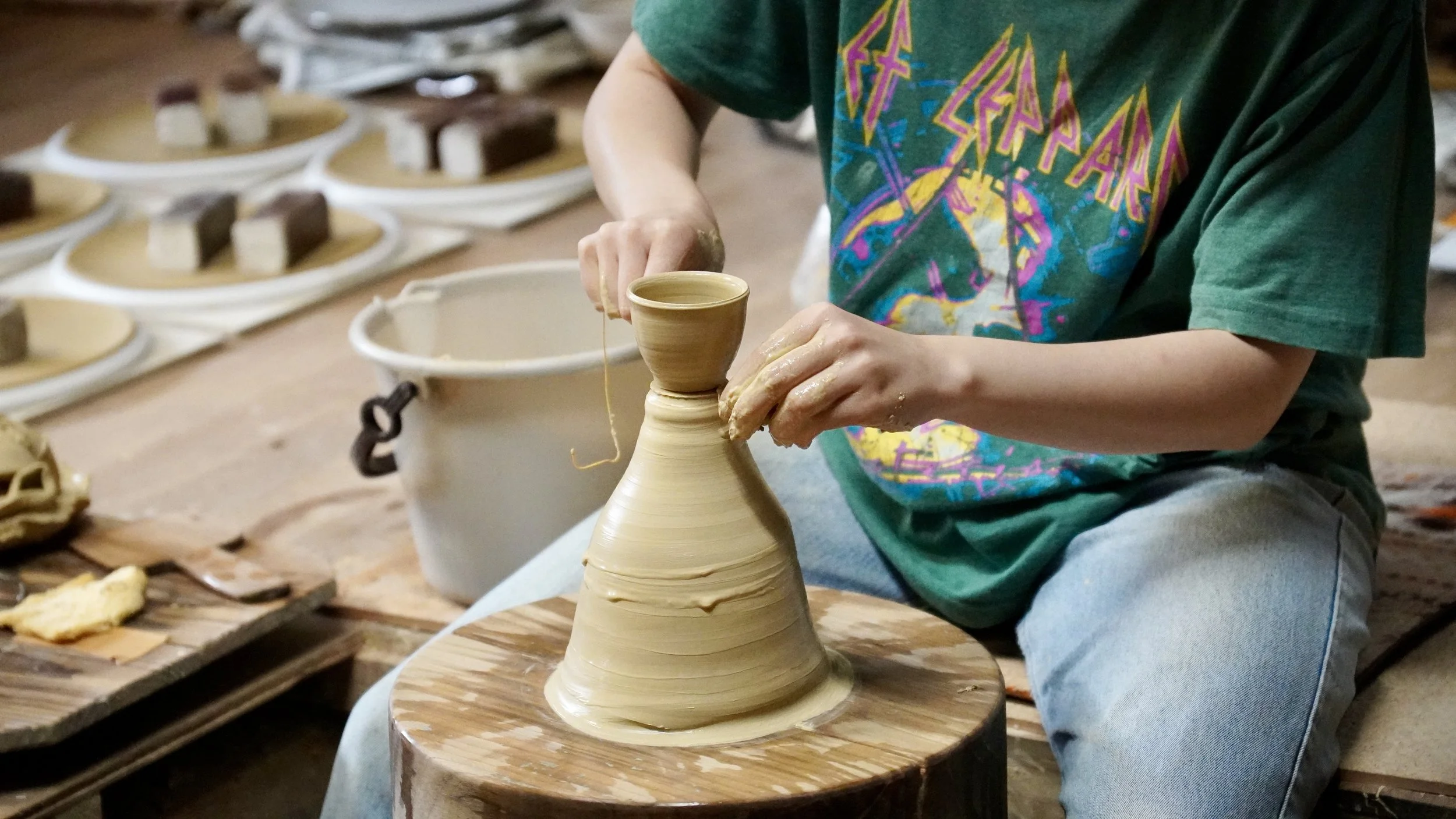
Before any of that whispering happens, this is where it starts. Every Hagi-yaki piece starts like this: wet clay, steady hands, a shape rising and falling until it settles. What you see below is the moment before any glaze or firing decides the final colour, just the clay finding its form.
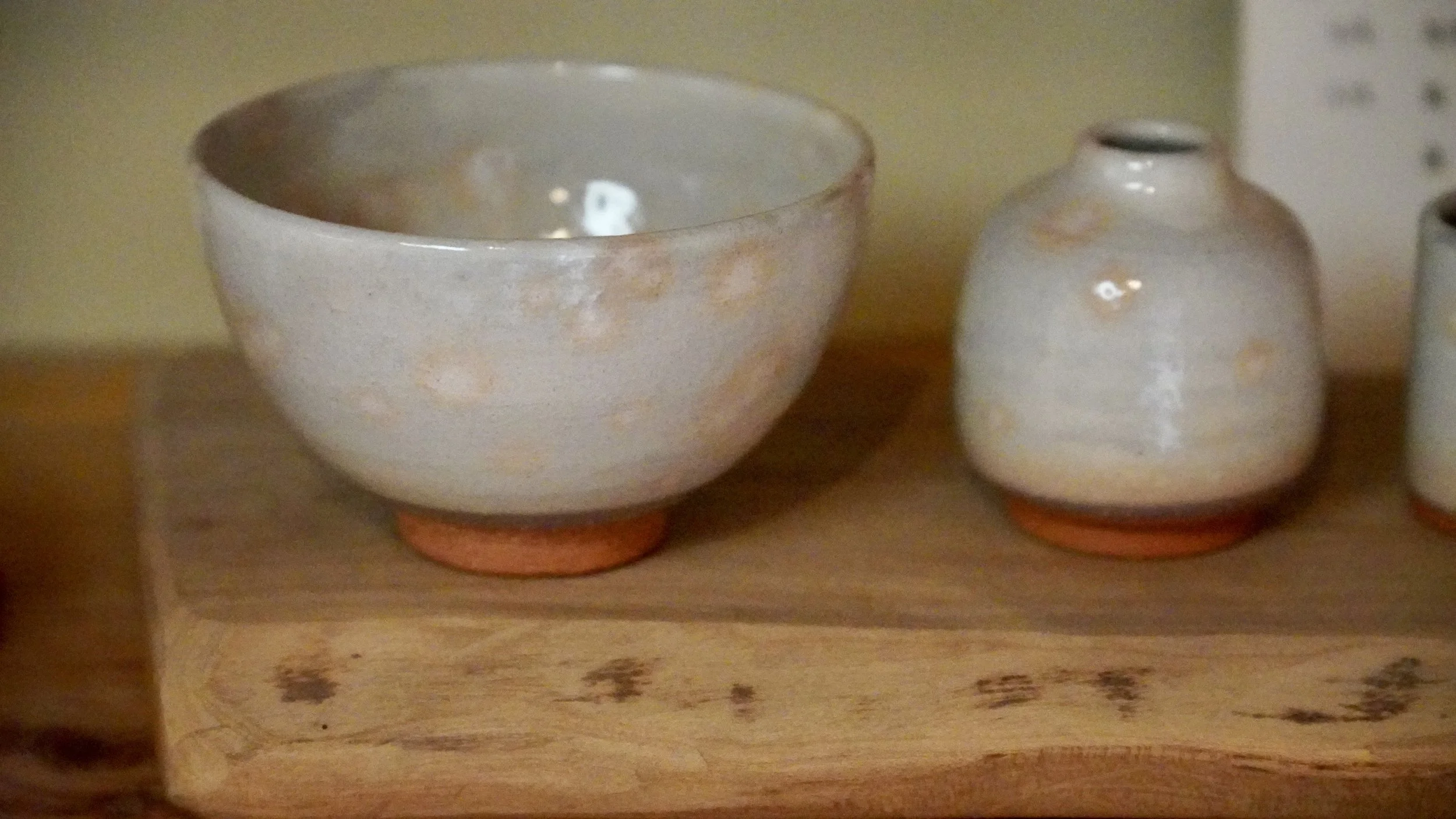
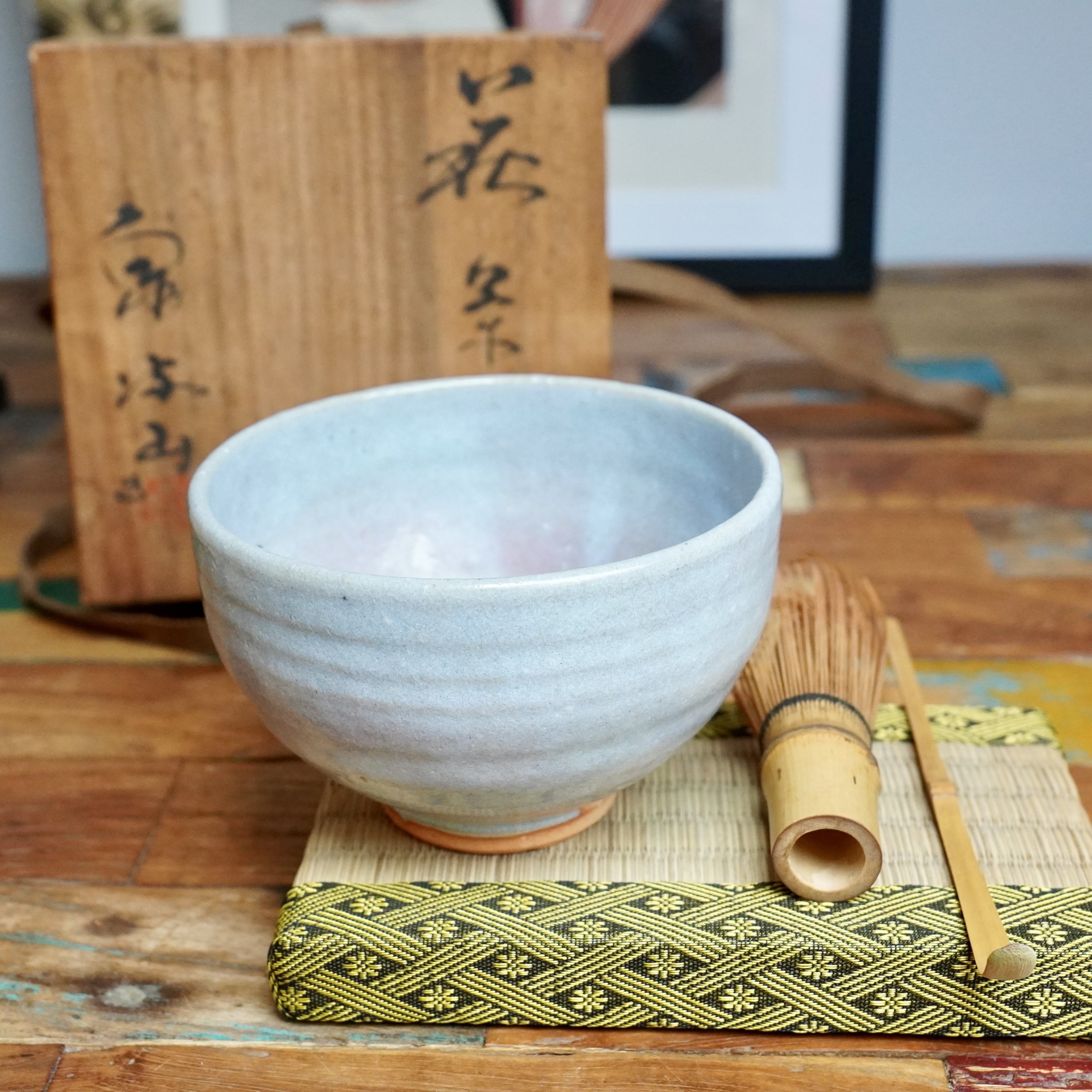
Next to it, a quieter chawan from Hagiyaki Yū Okada shows where that same process ends up, a pale, soft glaze with none of the deep crackle of the Senryūzan pieces earlier in this post. Same clay tradition, same 400 year lineage, different hand and different kiln. Read more on the Okada kiln visit.
Every cup of tea you drink will leave a trace.
Why the glaze crazes
This is called crazing, or kan'nyū (貫入) in Japanese, and it happens because the clay body and the glaze cool at slightly different rates after firing. The glaze, which is essentially a thin layer of glass, tenses and cracks under that pressure.
In most ceramics this would be considered a defect. In Hagi-yaki it is the whole point.
Those fine cracks are the pathways through which tea slowly seeps into the clay beneath. The tannins in the tea stain the lines, first tan, then amber, then deep brown over years of use. The entire surface gradually warms in tone.
After five years, ten years, twenty years, the bowl becomes entirely unique to you and your ritual. No one else's bowl will ever look quite like yours.
Some people inherit Hagi bowls that belonged to their grandparents. Dark, richly coloured, decades of tea lived into the clay. Objects that hold time in a way that almost nothing else does.
Before and after: Hagi absorbs tea beautifully
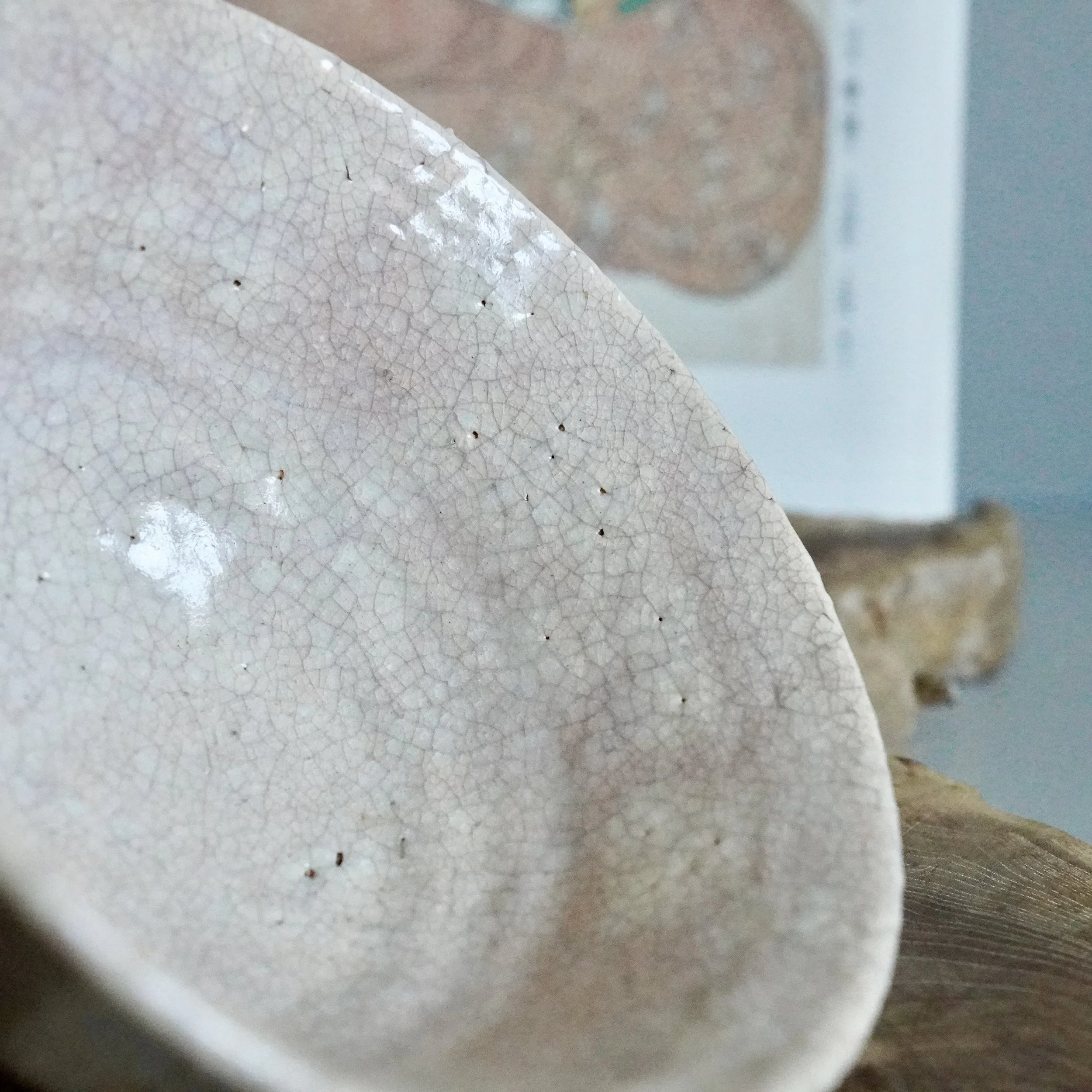
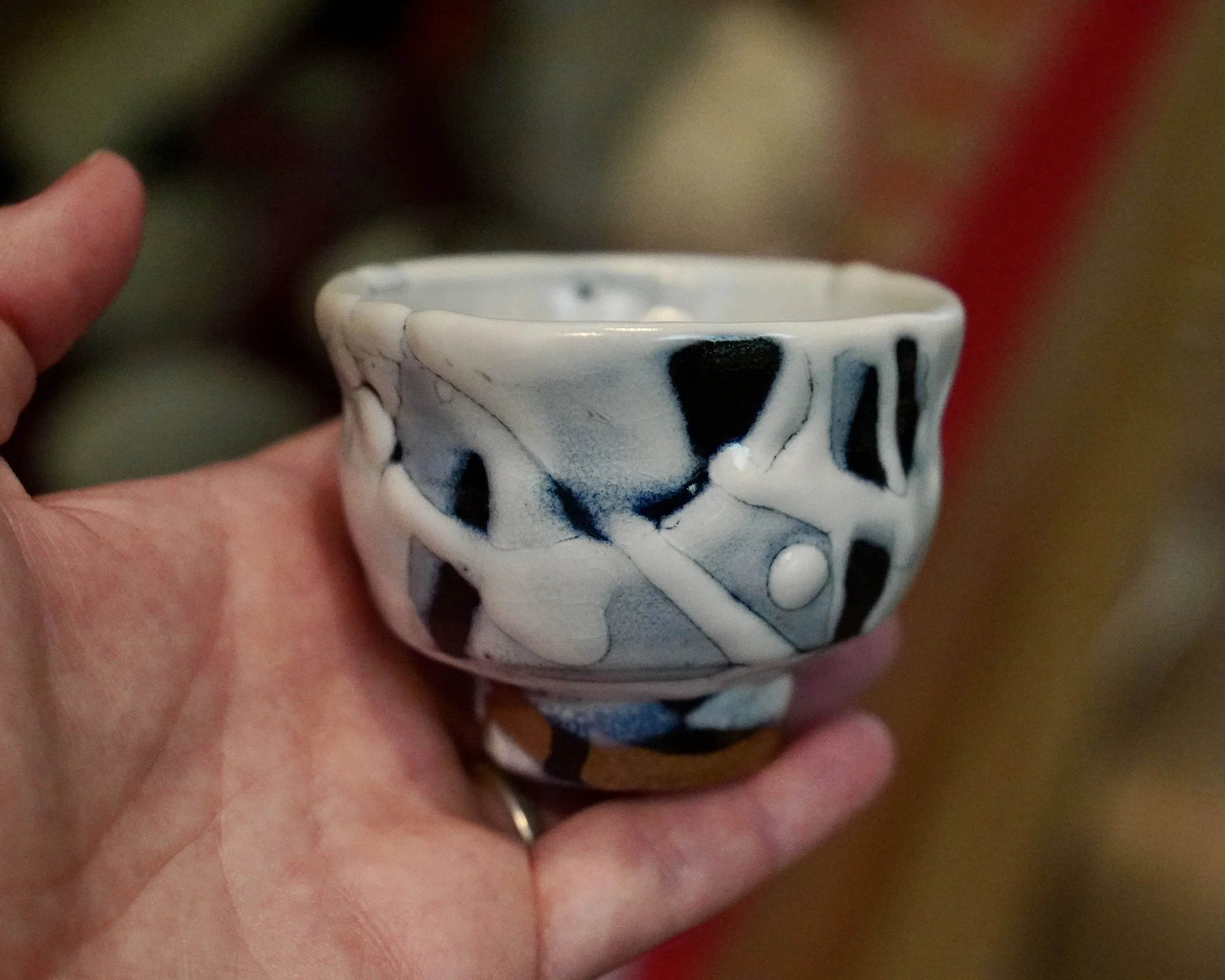
The word for what you're looking at is kan'nyū. The shop owner in Hagi old town explained this to me while I stood holding the cup: the Japanese have a name for this exact effect, kan'nyū (貫入), the fine network of cracks running through a glaze.
It is simply what happens when clay and glaze cool at different speeds after firing. Tea practitioners look for good kan'nyū the way others look for good grain in wood. The photos above are kan'nyū at two different points in its life, one just beginning, one well on its way, and it is the same structure that eventually leads to nanabake, the permanent colour change Hagi ware is known for after years of use.
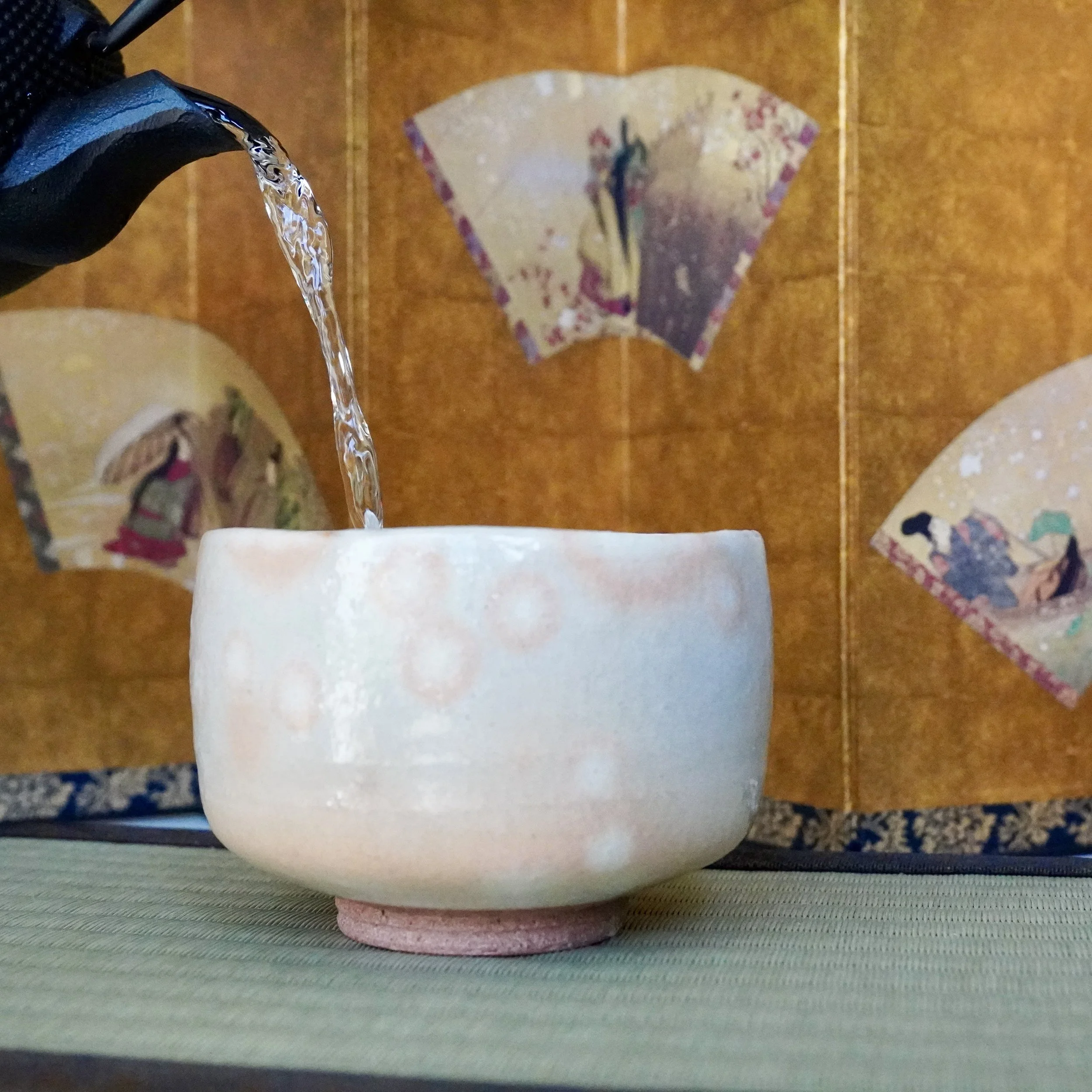
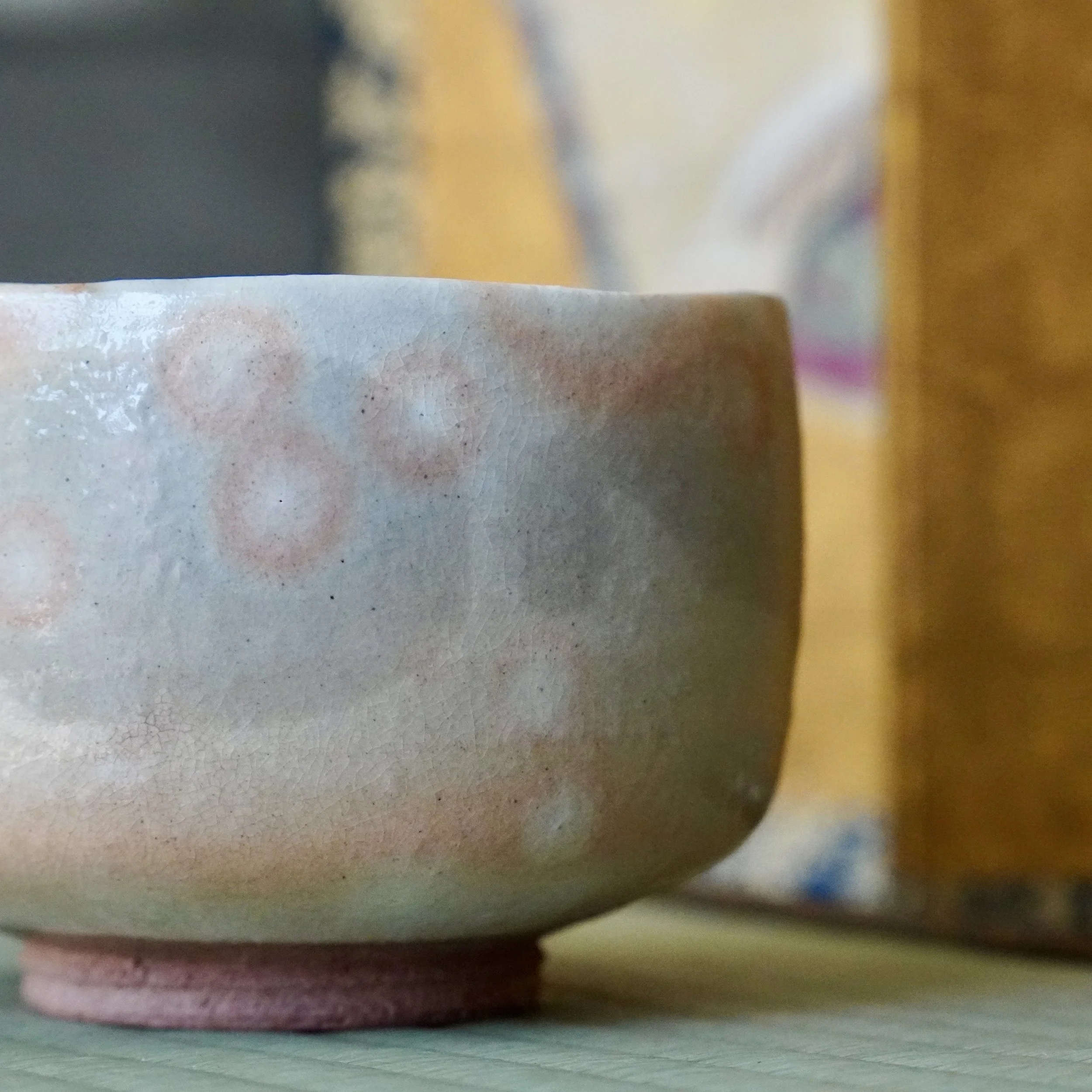
→ Want to see more about the kan'nyū absorbing water in real time, and understand exactly how it leads to nanabake? Read the story here.
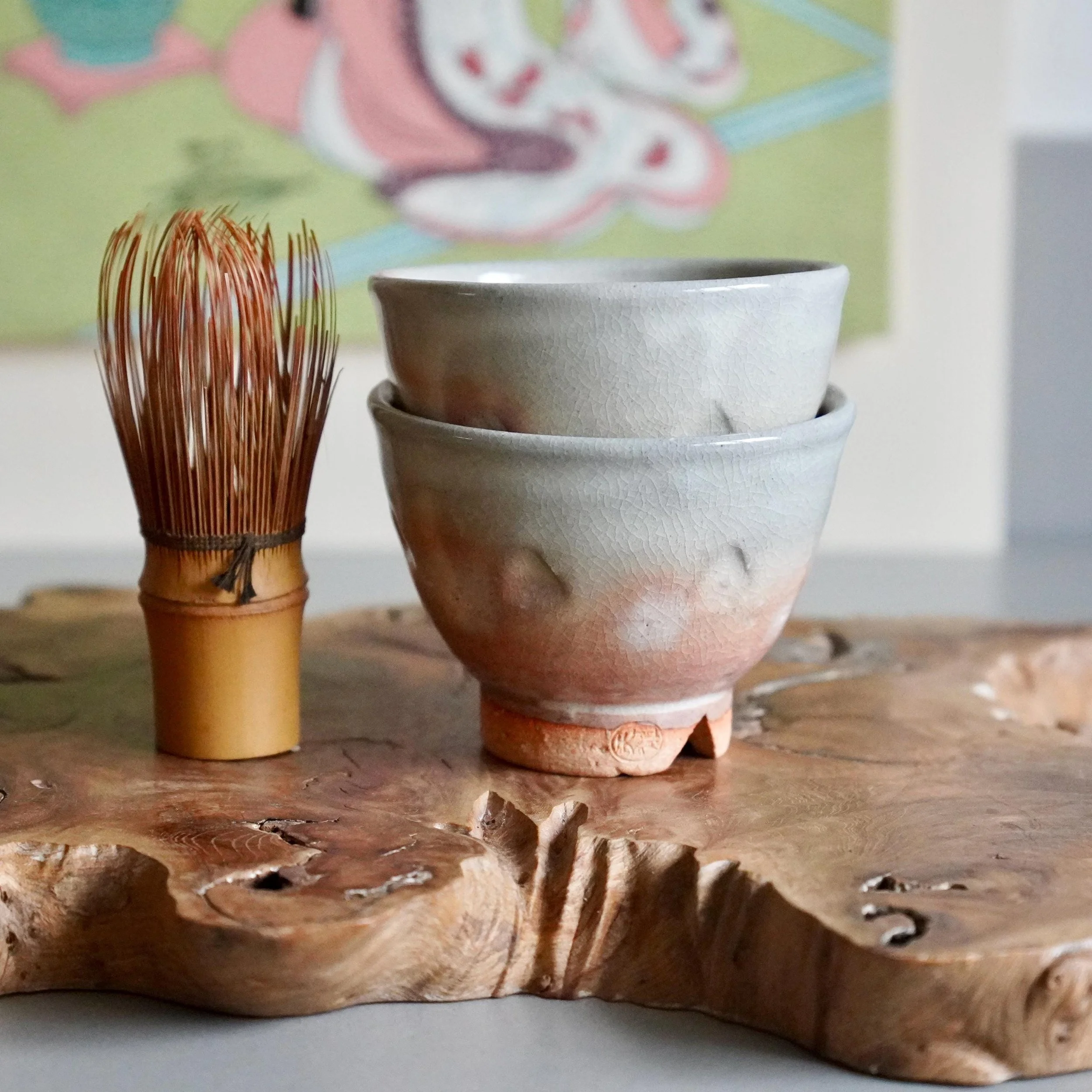
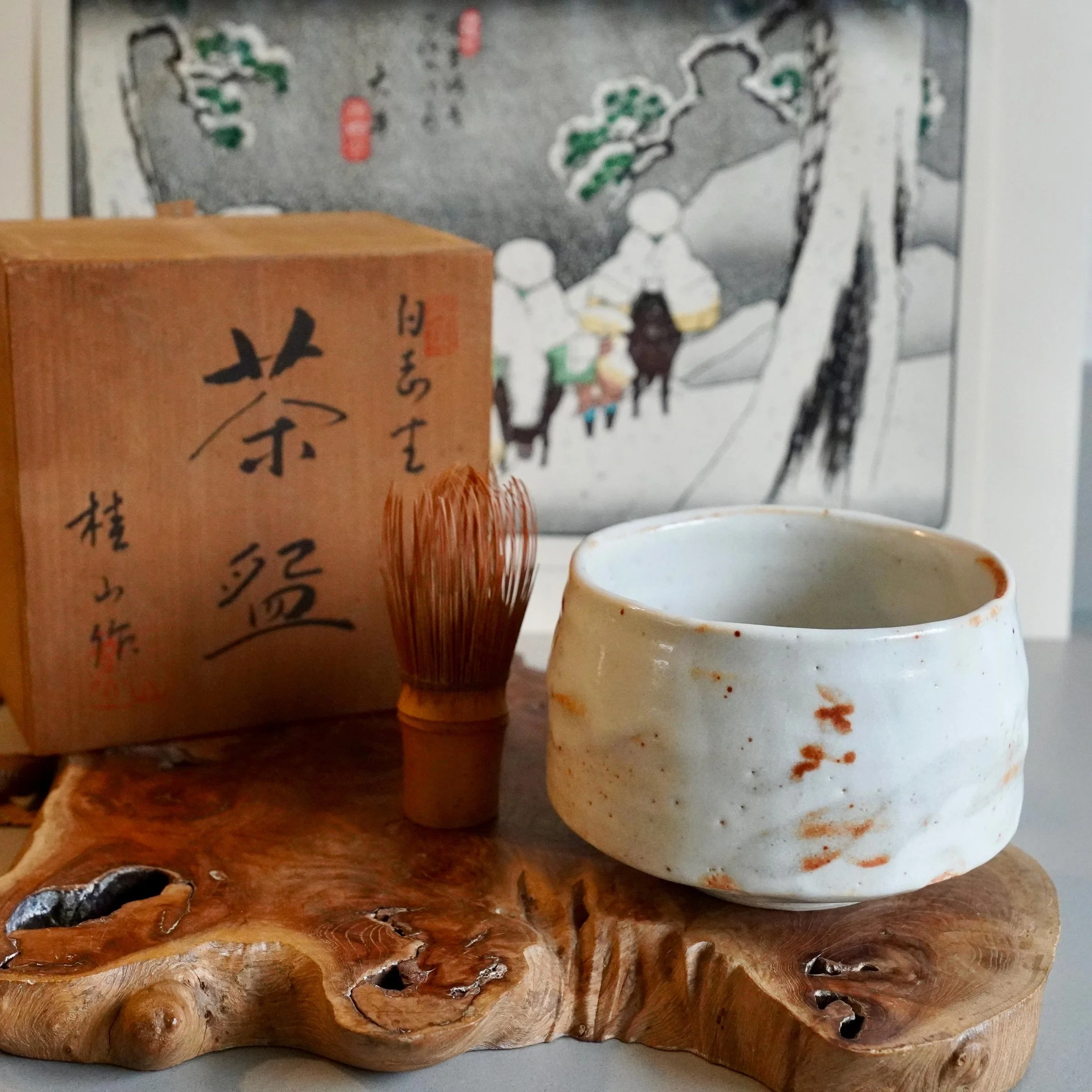
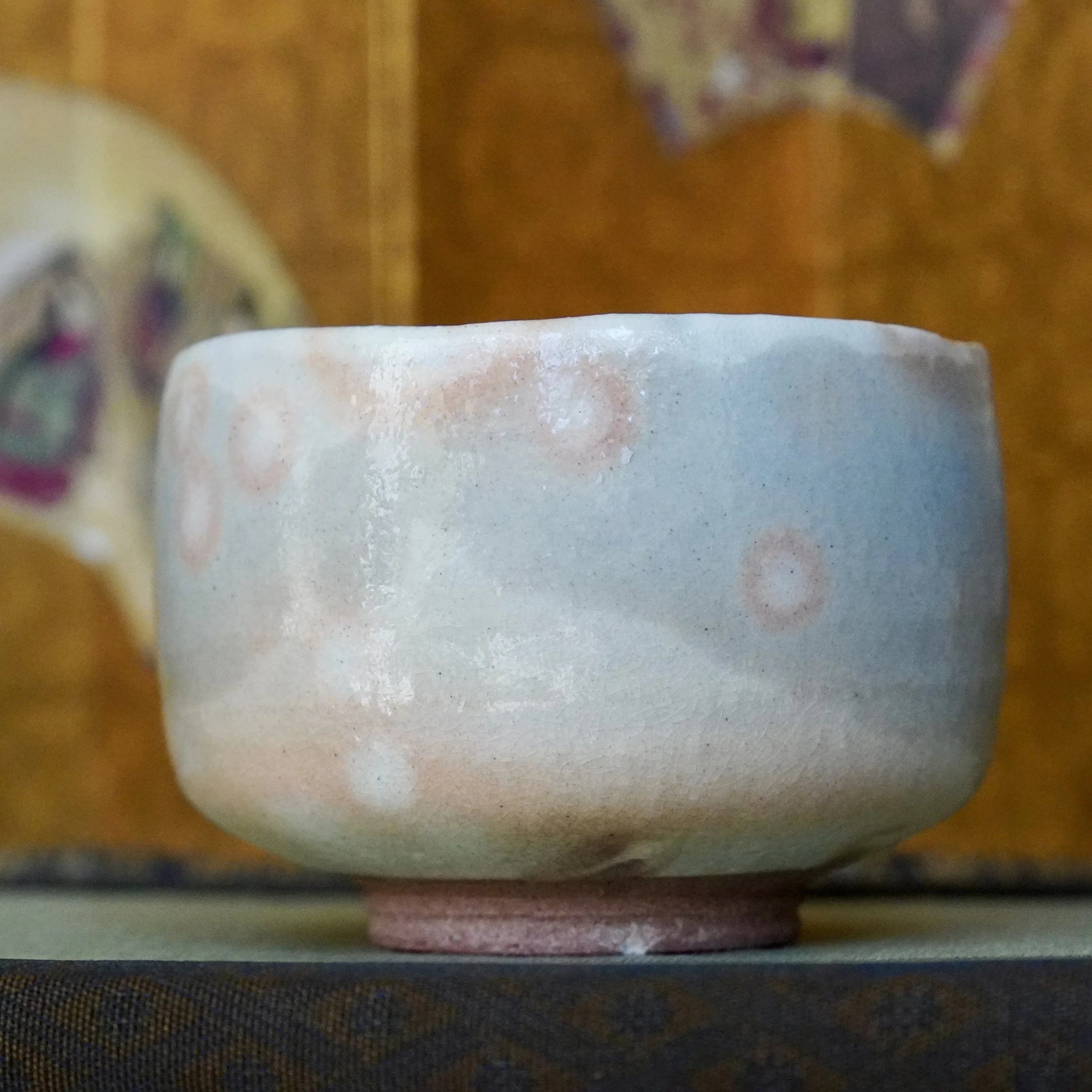
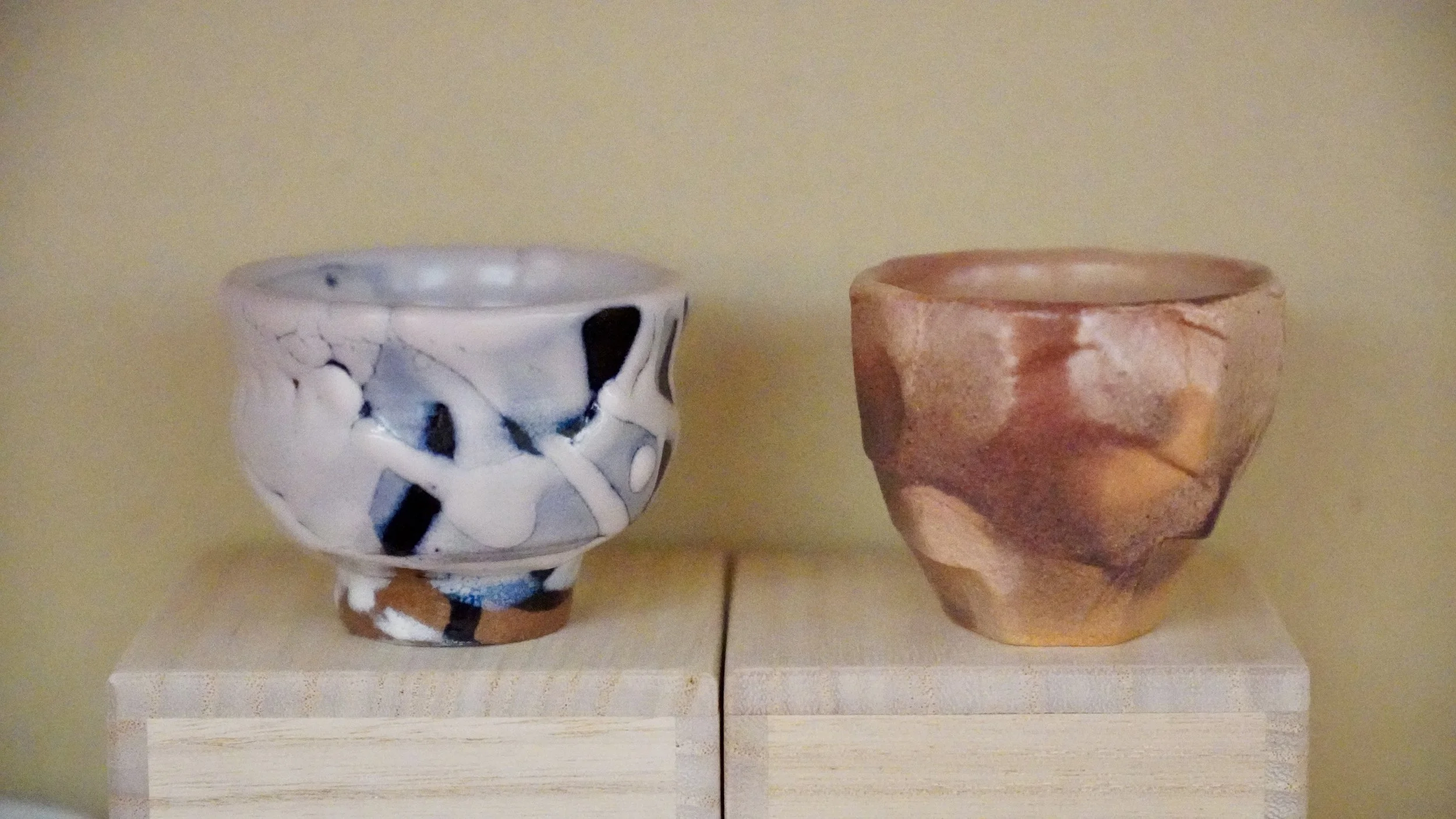
See the way the white and the orange pink contrasts? That’s what sets Hagi yaki apart.
Living with Hagi-yaki
Owning a Hagi-yaki bowl is a commitment, but the best kind. It asks you to slow down, to notice small changes, to let something happen instead of rushing it.
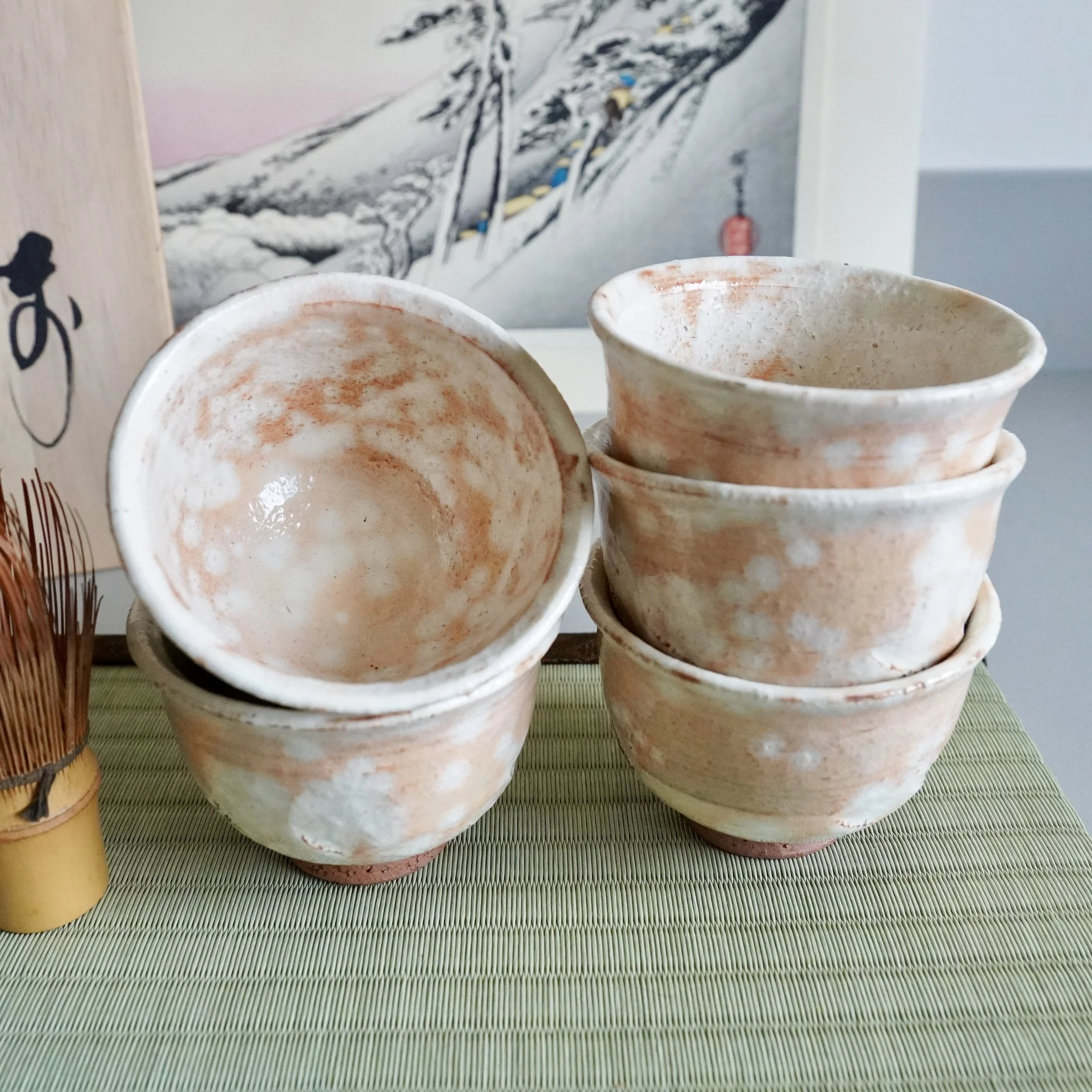
The cup pictured here is a shira-hagi piece from the Taizan kiln, that warm orange-pink tone meeting a soft white glaze pooling where it ran thickest, over the terracotta clay Hagi is known for. Use it often. Don't save it for special occasions.
The bowl becomes more beautiful with use, not less. Hold it in ten years and you won't just see a tea bowl, you'll see a record of your own time. Every cup leaves a trace. That's the beauty of Hagi-yaki. It doesn't stay perfect. It becomes perfect.
Every piece in this post, whether it lives in my own collection or sits in a photo from a kiln shelf in Hagi, comes from the same 400 year old tradition of clay, glaze, fire, and patience. Different kilns, different hands, the same quiet promise: this bowl will change with you. That is what I keep coming back to Hagi for, and what I hope you feel when you pick one of these pieces up for the first time.
Caring for Japanese vintage ceramics
As Hagi clay is porous by design, and that changes how you should treat it once it is home. No dishwasher, no soap, rinse by hand and let it dry fully before you put it away. The full ceramics care guide walks through exactly why, and what to do differently once a piece already shows crazing.
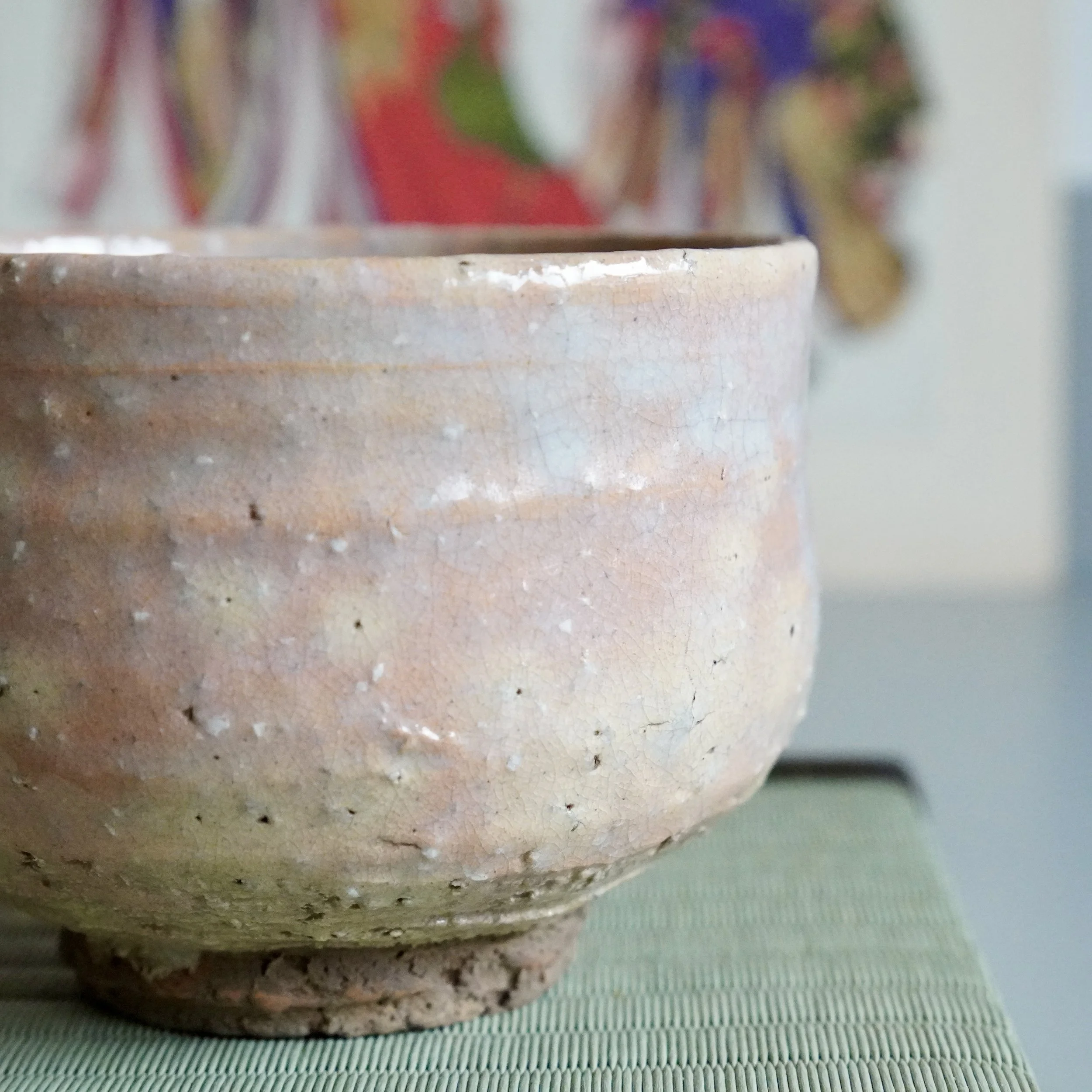
See the Hagi ware we have in our collection
Read more
→ Hidasuki, goma, sangiri: three pieces of straw and ash decide everything, and none of it comes from a brush. A guide to the Bizen styles.
→ Fourteen days, one fire, and a potter who never once checked a dial. Inside a Bizen firing at Kōzan-gama.
→ The bowl decides how the tea tastes before a single leaf is involved. Why size matters in a chawan.
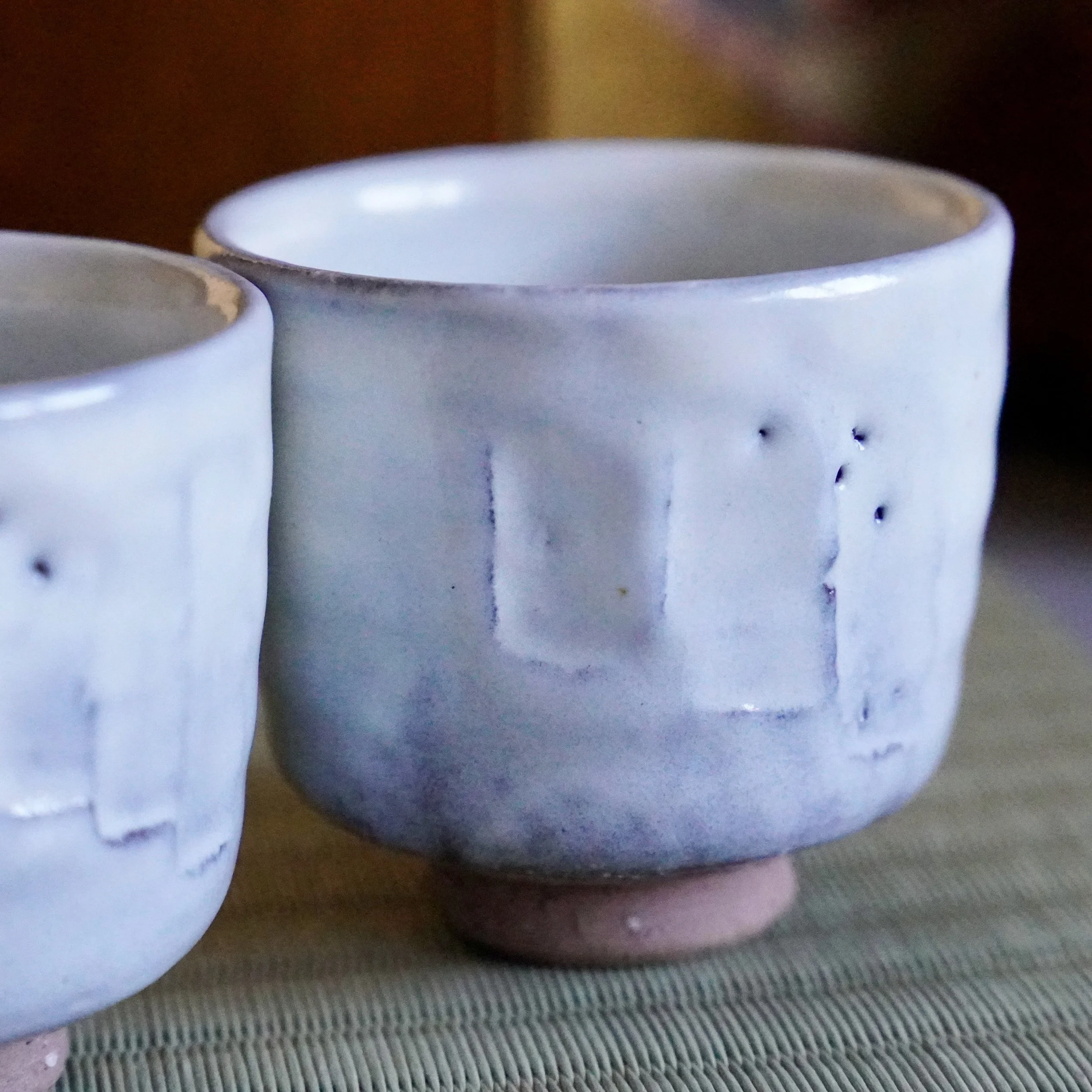
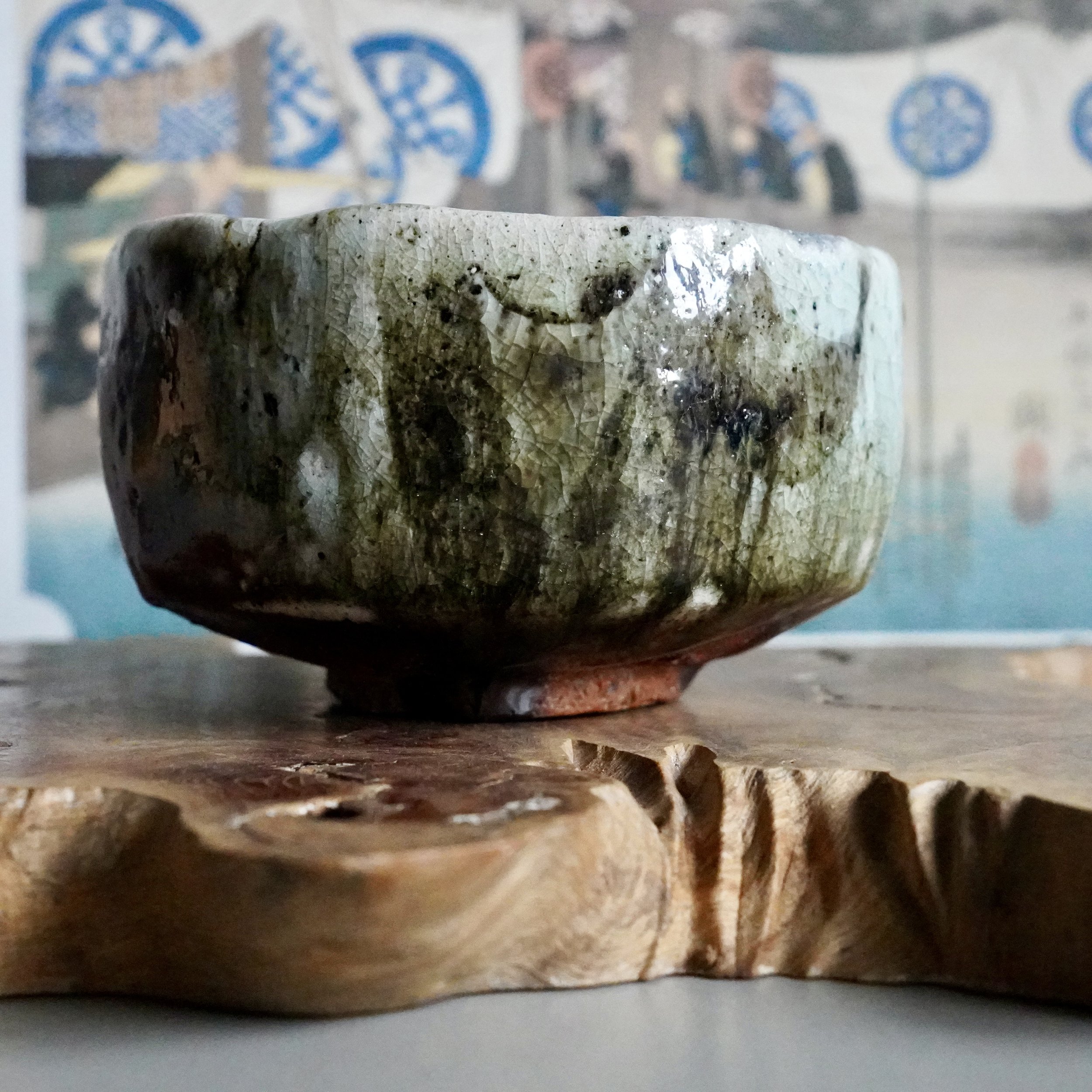
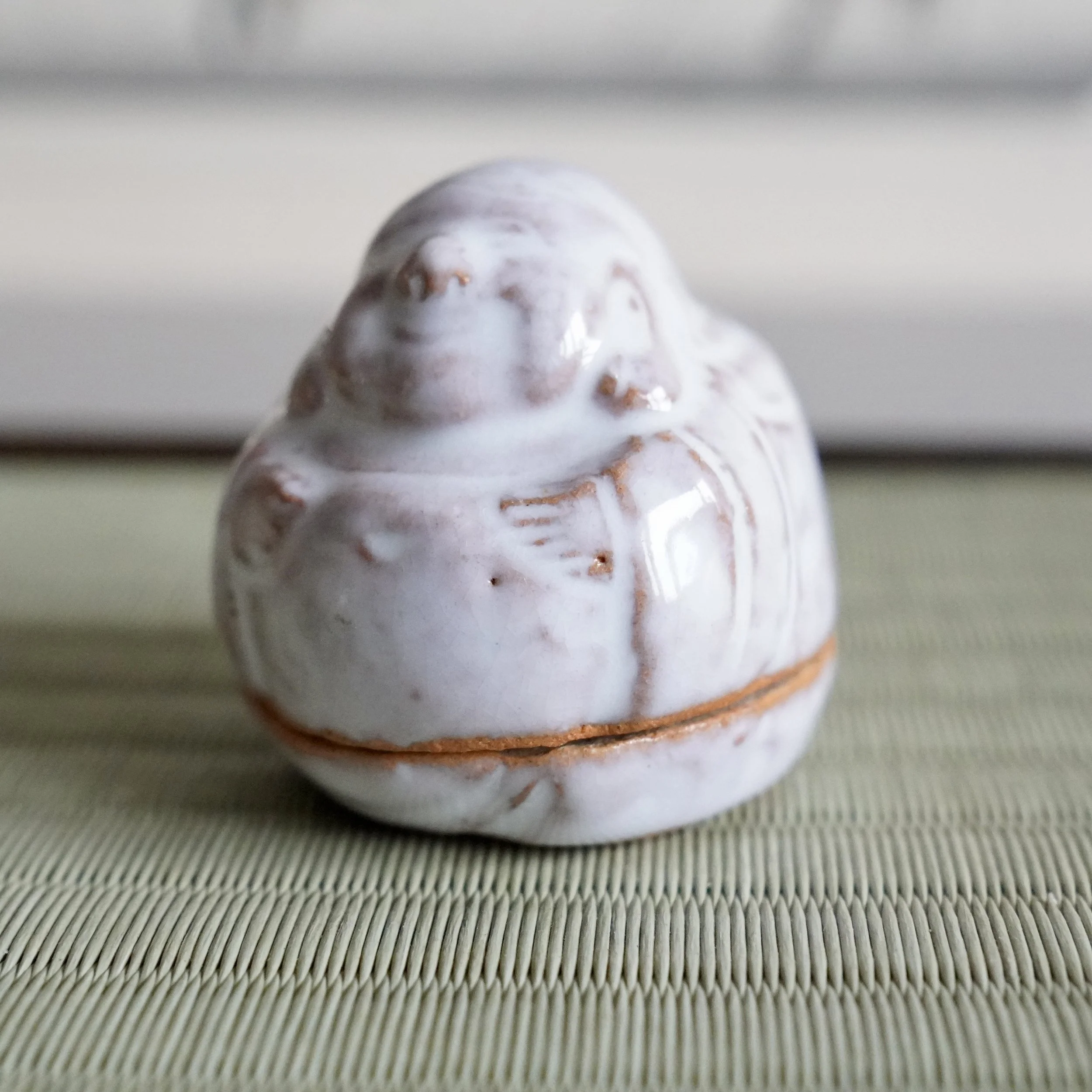
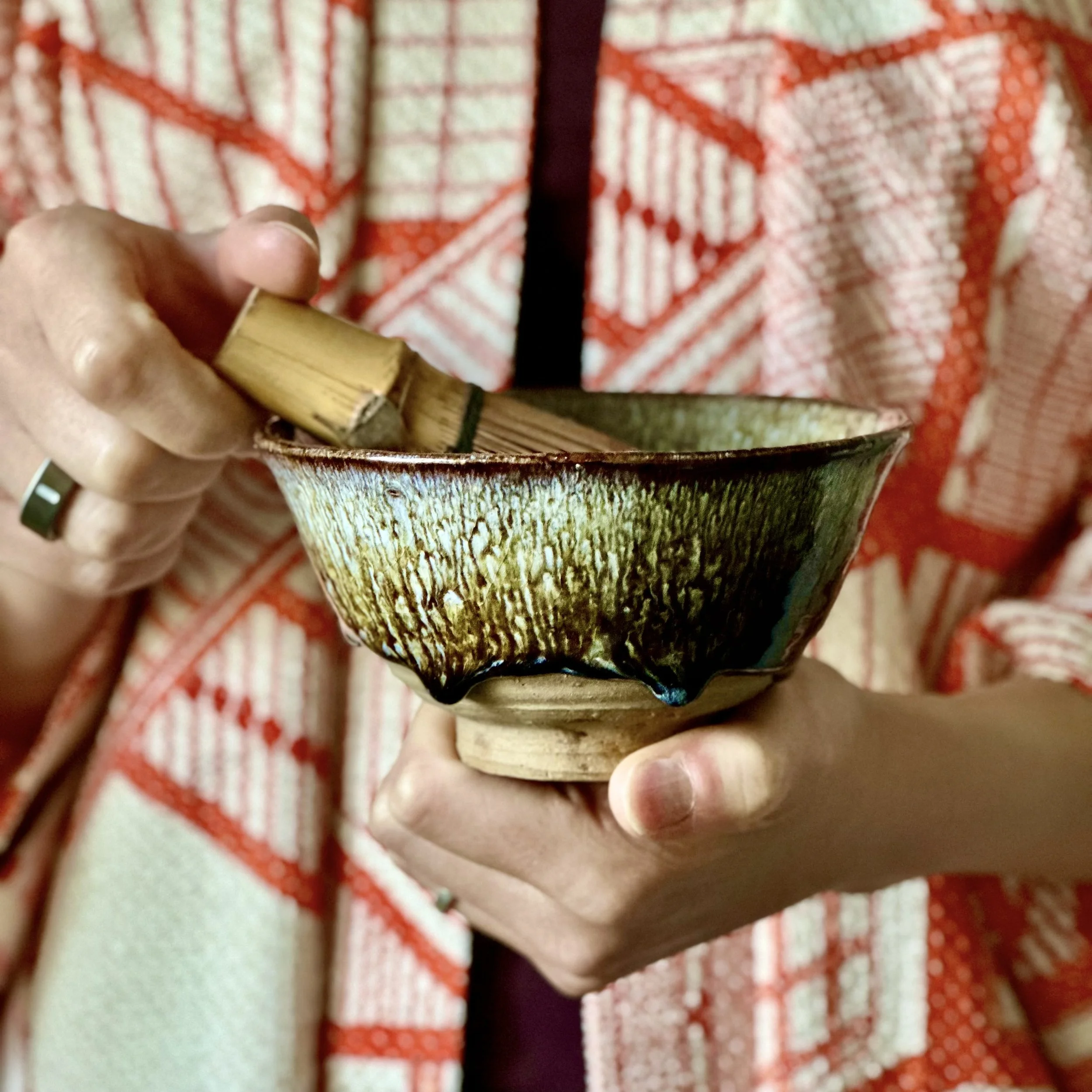
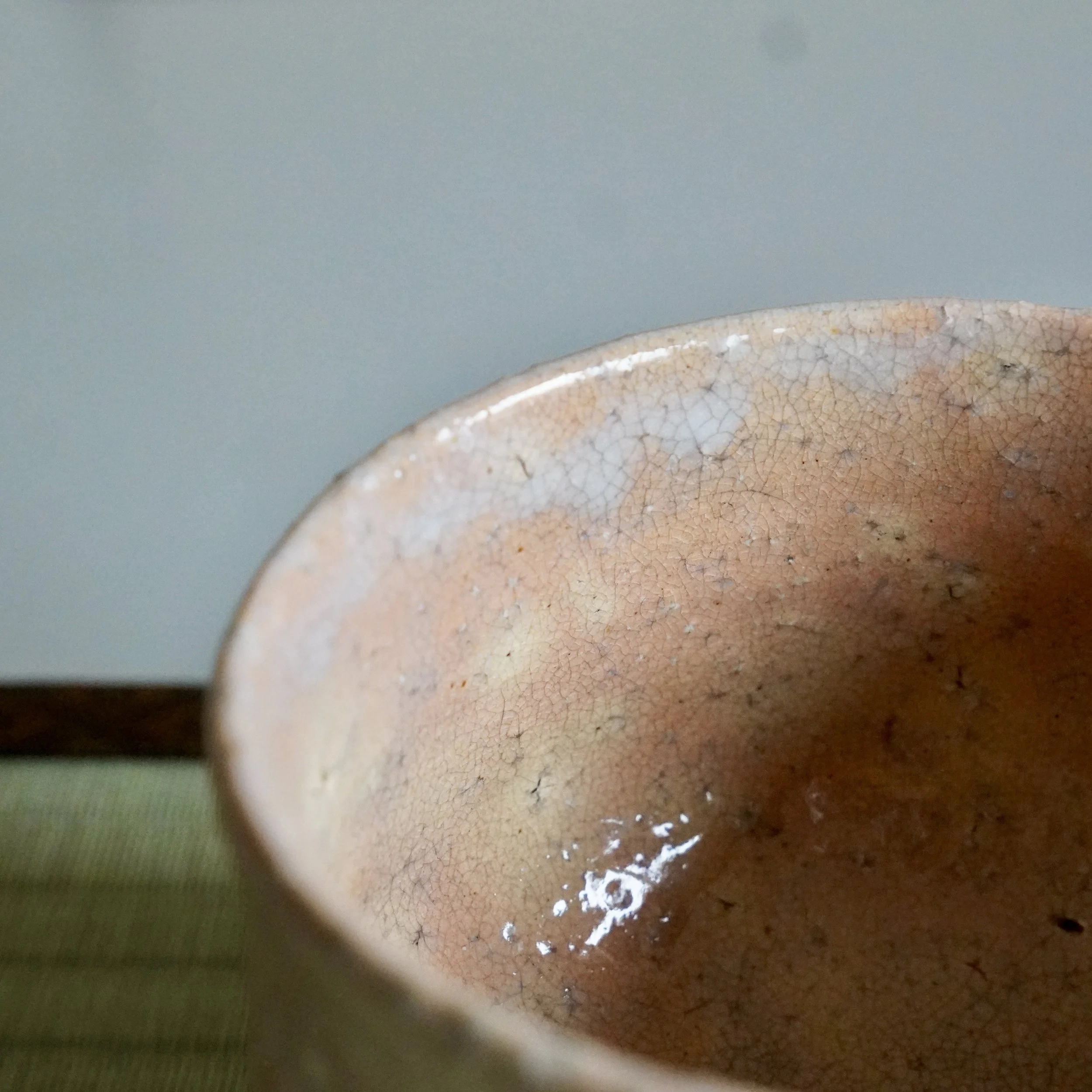
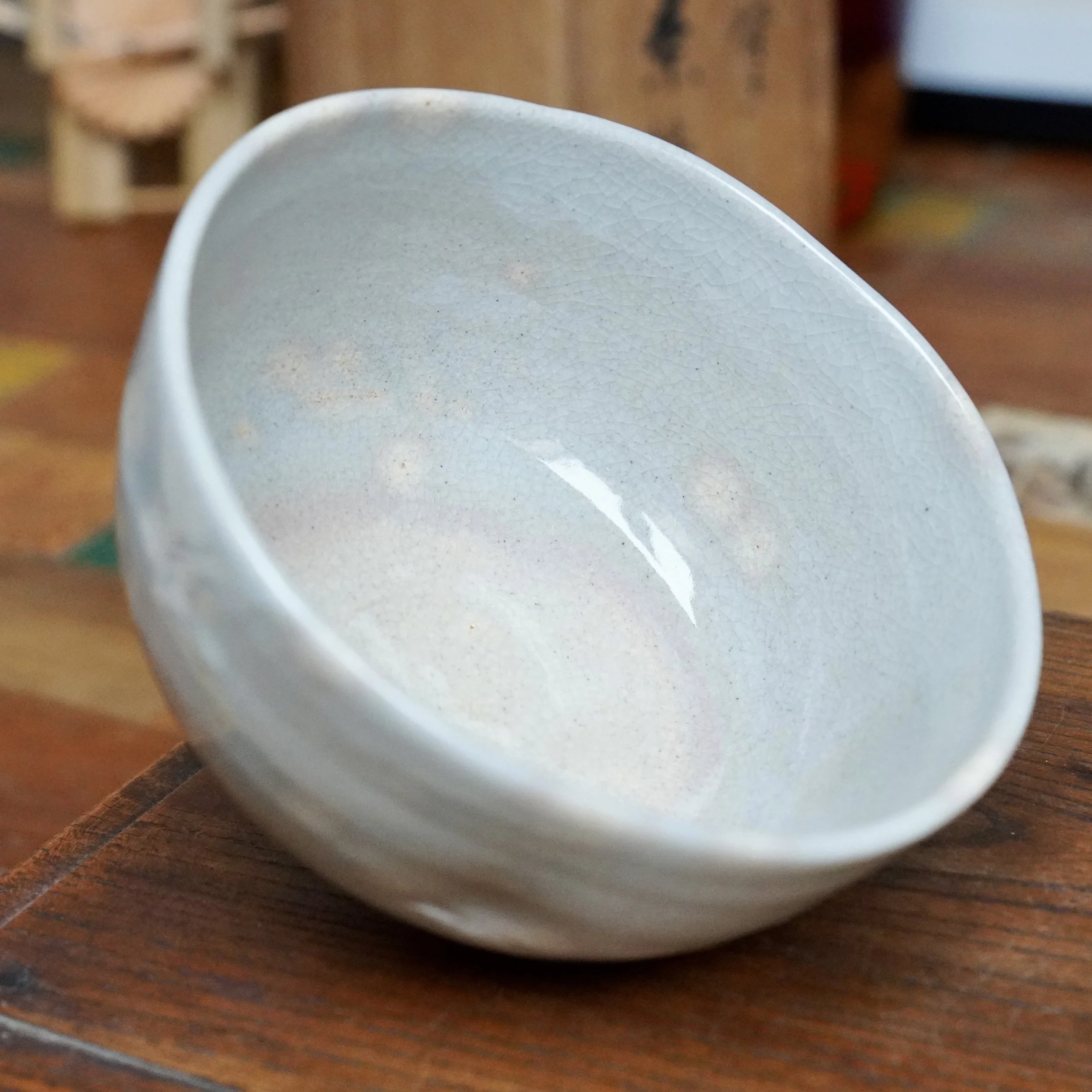
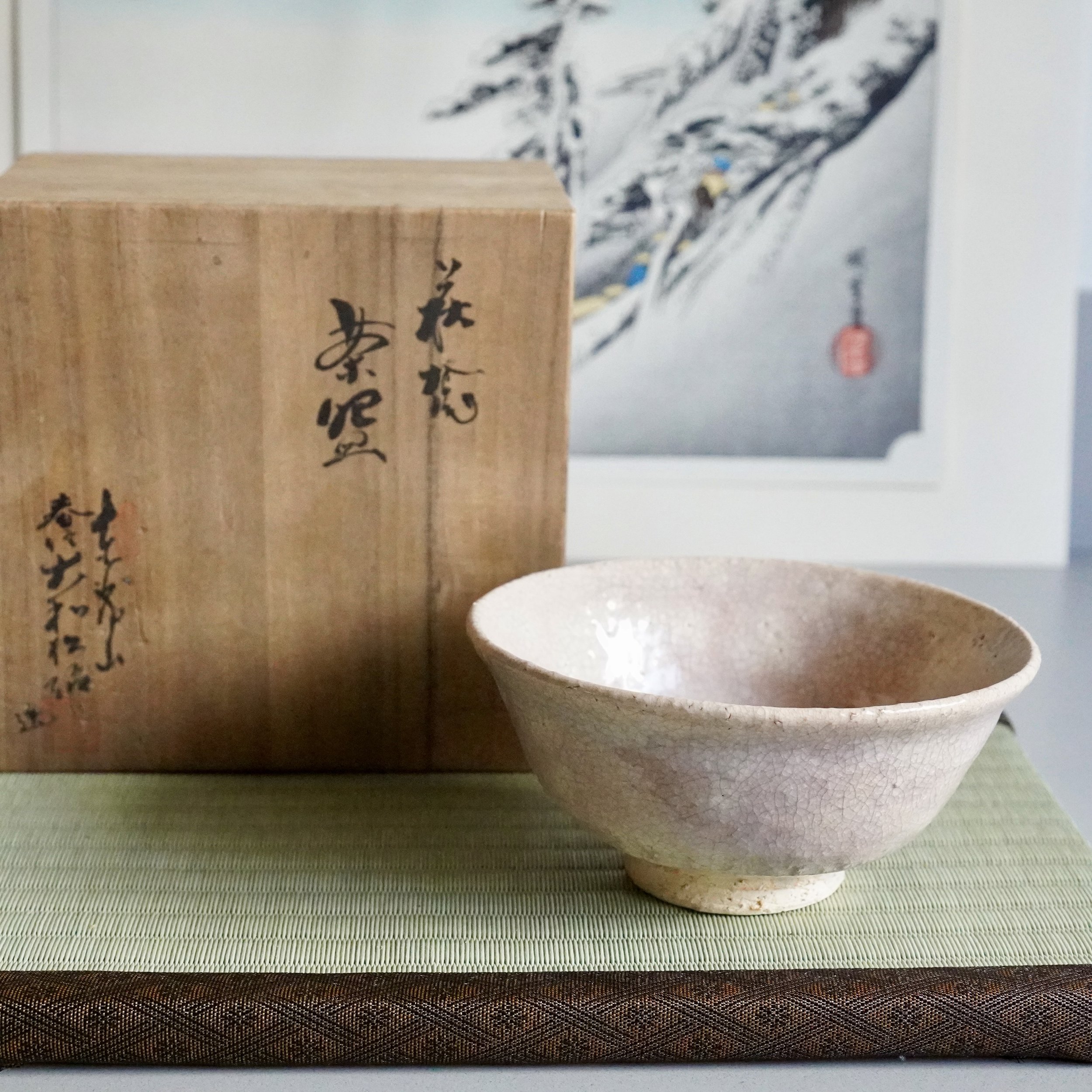
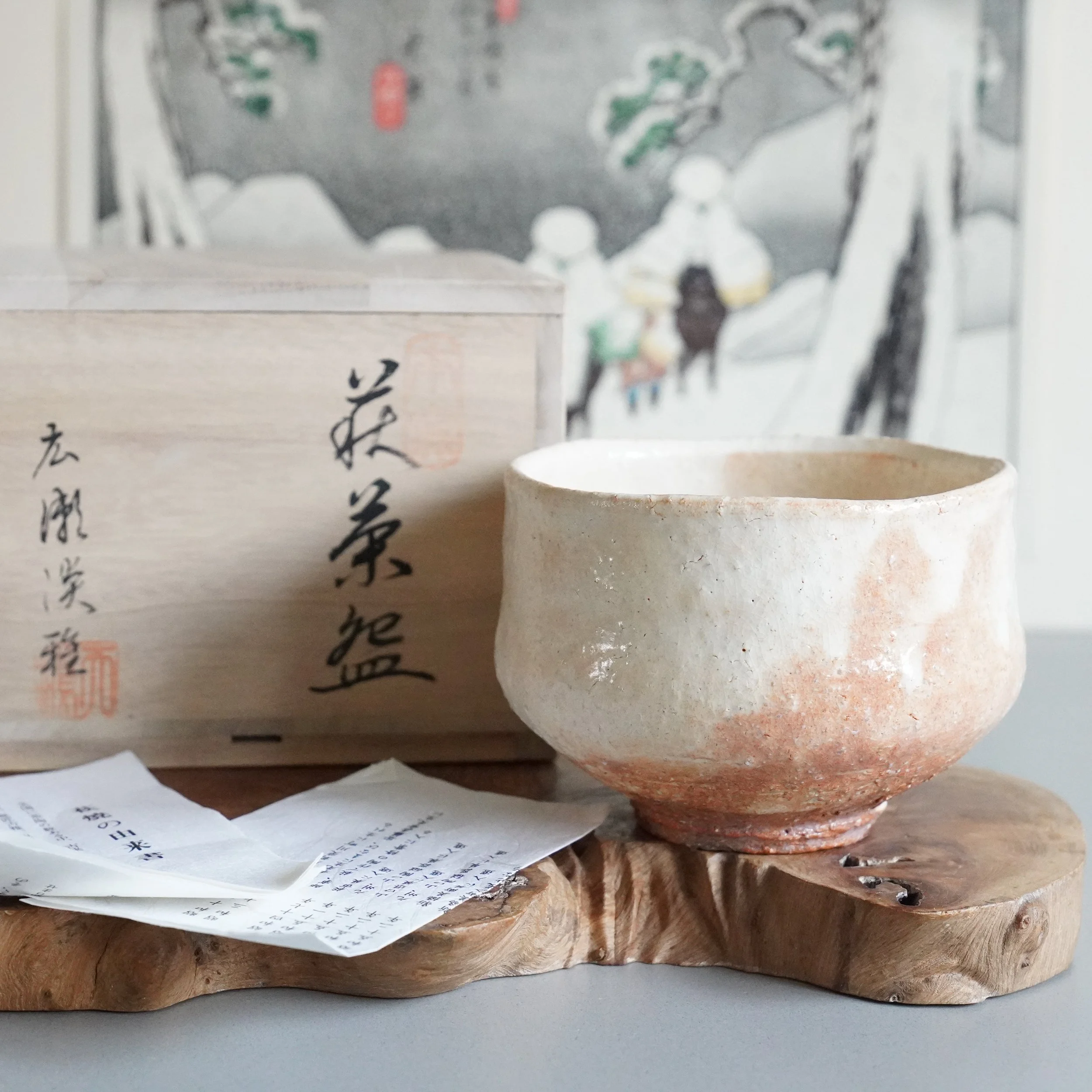
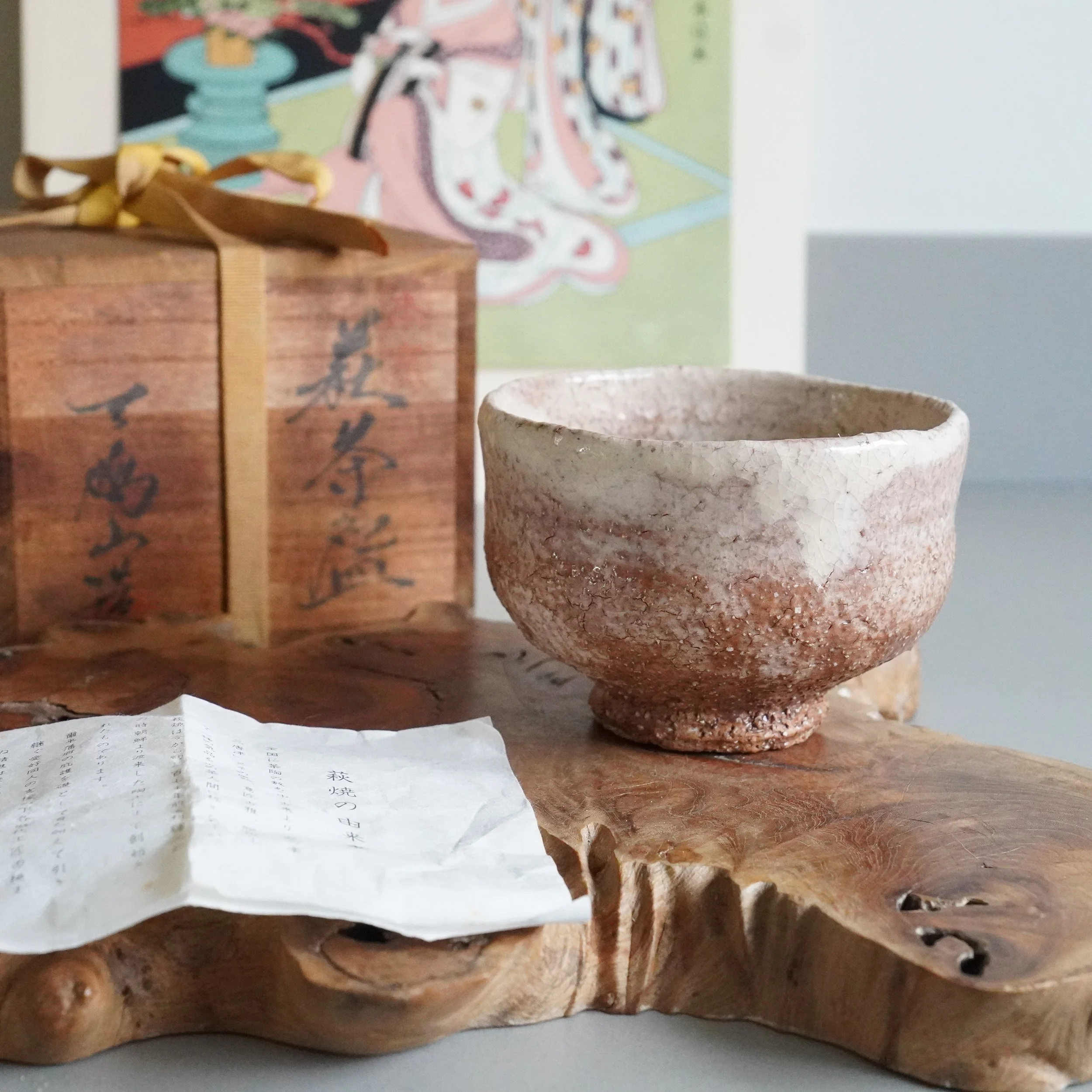
This chawan is lighter than it looks, which is the first thing you notice picking it up. The rim stays fairly calm, an even white, but your eye drops toward the base and that is where the crackle really lives, dense and a little chaotic compared to the rim above it, tea stains settled into every line of it. Someone used this bowl, and used it often enough that its history is written right into the glaze. Outside there is less drama. The white just fades out unevenly on its way down, and somewhere before the foot it gives up entirely, leaving bare reddish clay that is rough enough to feel the difference with your thumb.
This piece carries the signature of Tamamura Shōgetsu, whose kiln in Hagi has stood since 1952. Hagi ware ages the way almost no other tea ceramic does, the glaze slowly taking on colour and character through use, something tea drinkers have a specific word for. The box has its own small story too: an inscription inside notes the bowl was given as a gift in May 1972, back when there was only one Shōgetsu working the kiln, since the name did not pass to a second generation until 1988.