
 Image 1 of 4
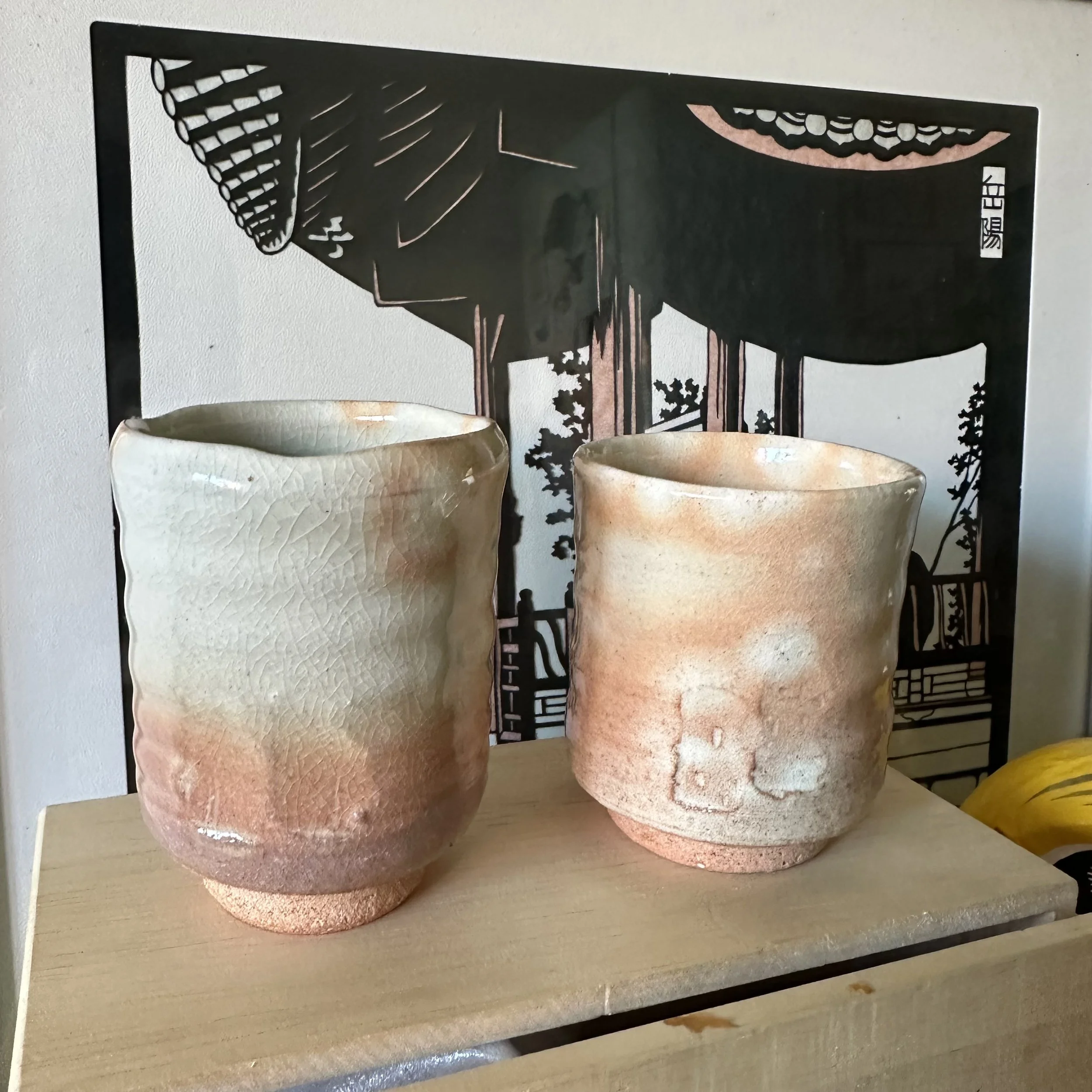 Image 2 of 4
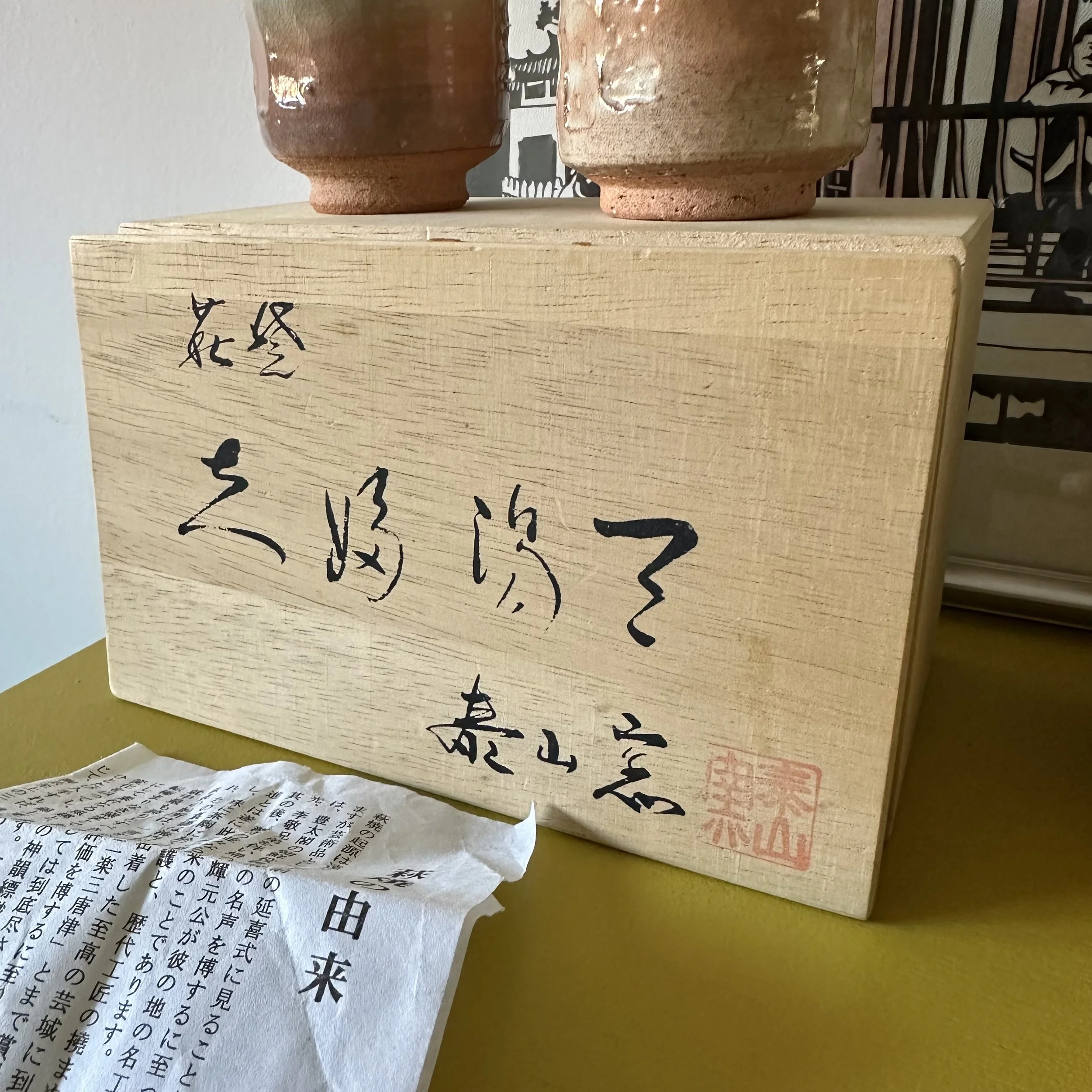 Image 3 of 4
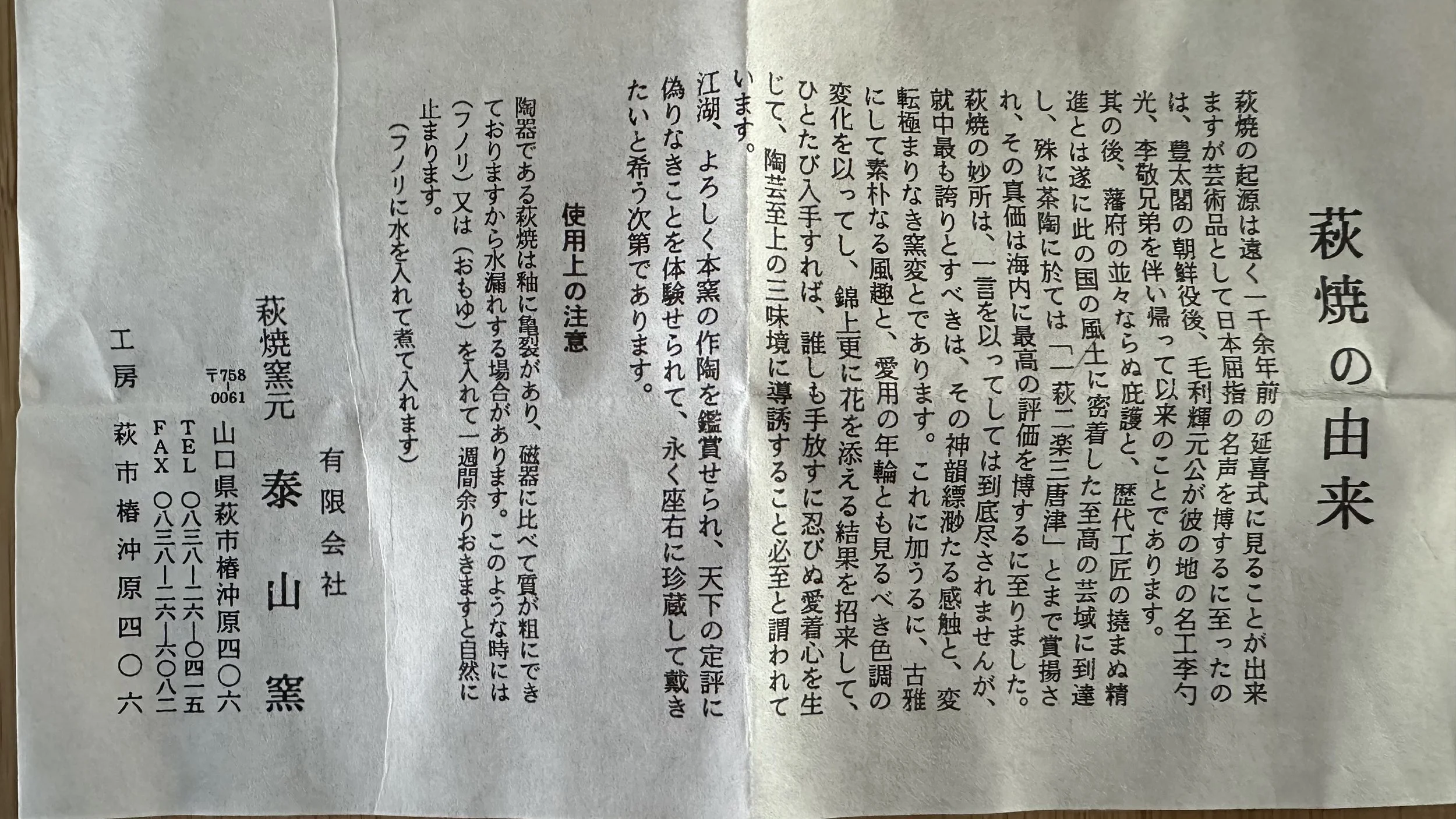 Image 4 of 4
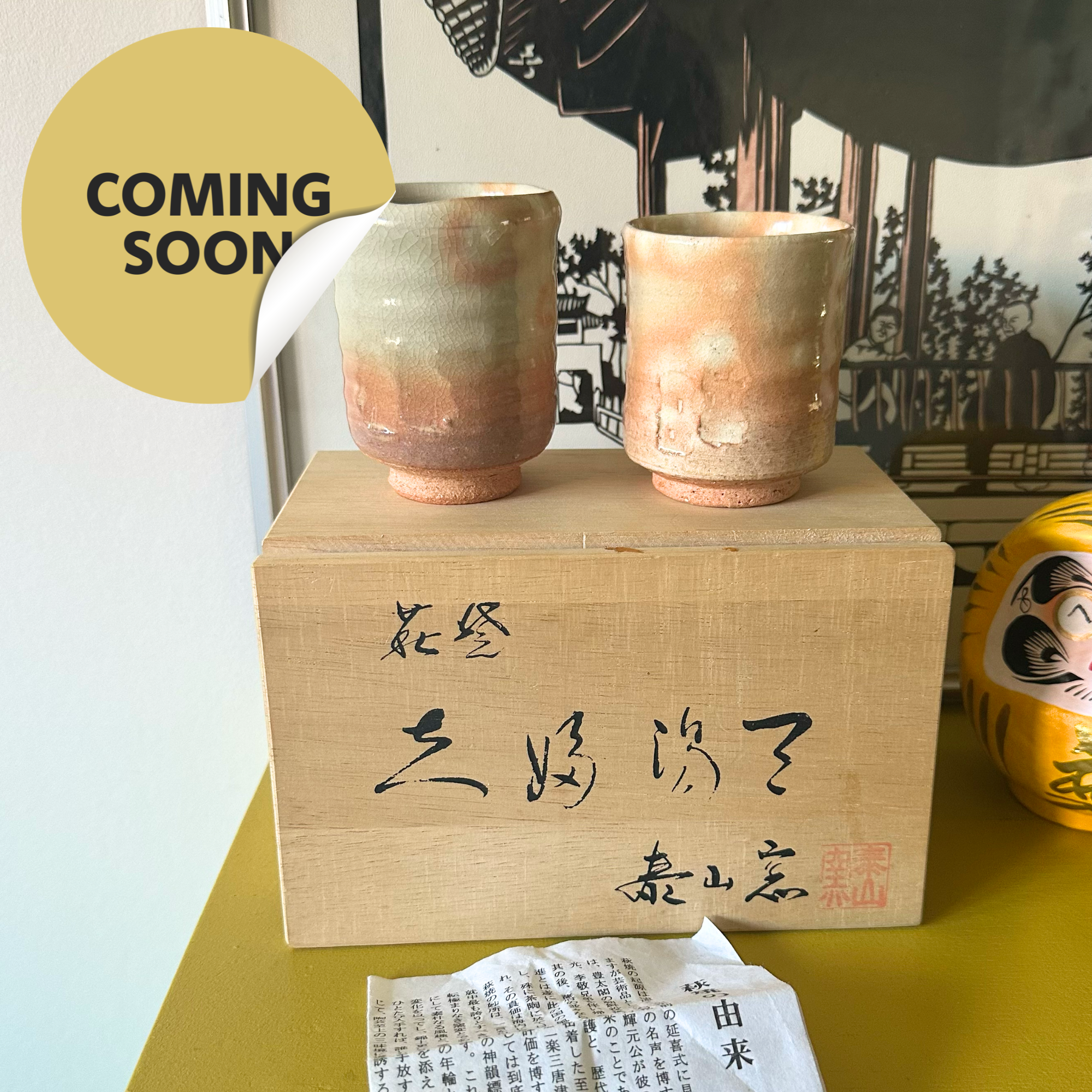
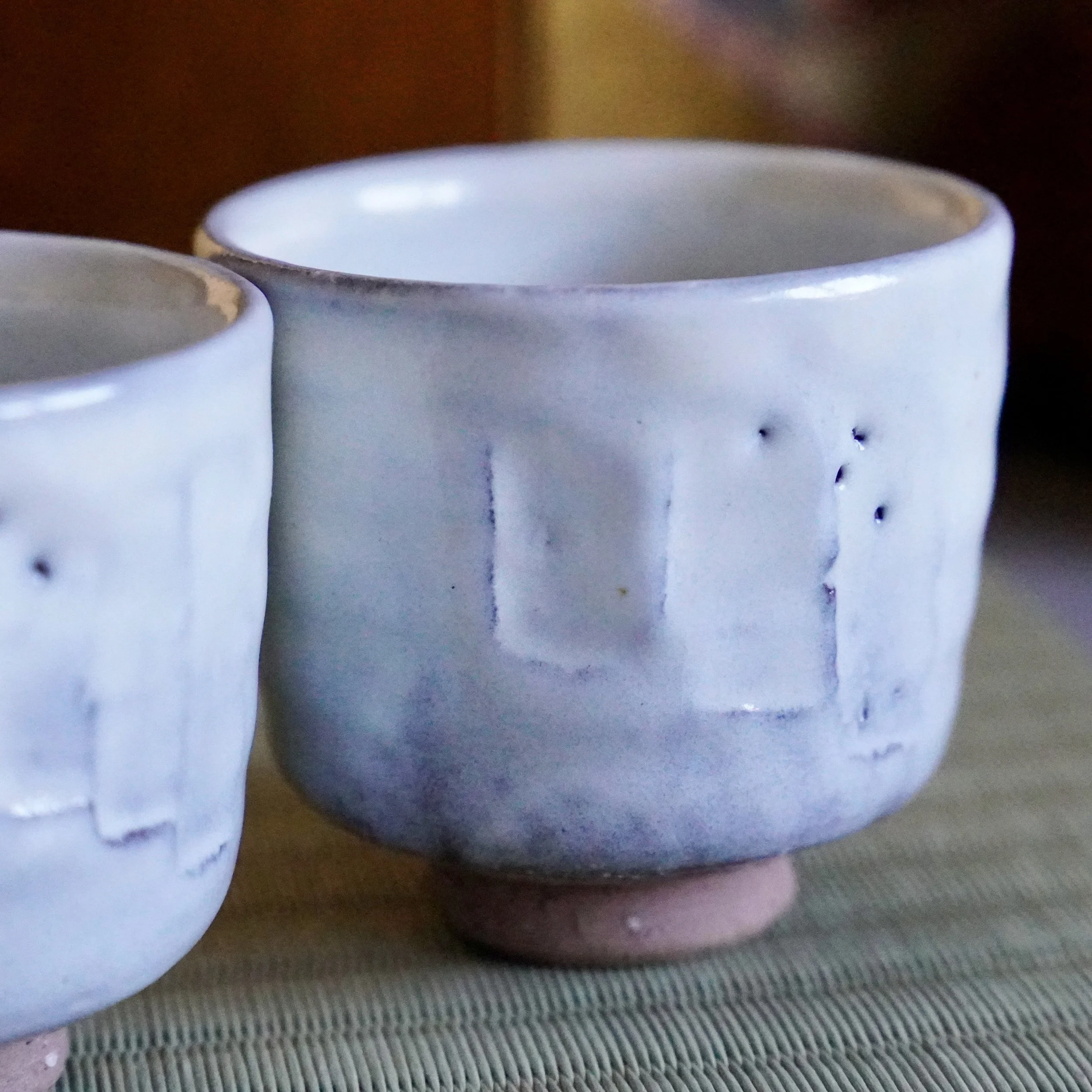
(coming soon) Meoto yunomi pair, Taizan kiln, Hagi-yaki, with tomobako box and shiori documentation, Shōwa - Heisei ca 1980-2000s
I work through my finds in small batches as each piece takes time to research, photograph and write properly. But some items are too good to sit invisible in the backlog, and if you have been looking for a Taizan klin Hagi-yaki yunomi meteo pair with their original box and documentation, I want you to know this one exists.
This is a meoto set, made for two, named 花容 on the tomobako. One cup runs warm with orange and rust, the other cooler with fine crazing across a celadon-grey glaze. Both from Taizan-gama in Tsubaki, Hagi, with the original signed tomobako and kiln documentation.
A meoto set, made for two, the slight difference in size a deliberate choice: the larger cup for him, the smaller for her. In Japan these sets are a traditional wedding gift, a pair of objects meant to be used together for a lifetime.
The full listing, photographs and price will follow. Want to know the moment it goes live? Scroll down.
👇
I work through my finds in small batches as each piece takes time to research, photograph and write properly. But some items are too good to sit invisible in the backlog, and if you have been looking for a Taizan klin Hagi-yaki yunomi meteo pair with their original box and documentation, I want you to know this one exists.
This is a meoto set, made for two, named 花容 on the tomobako. One cup runs warm with orange and rust, the other cooler with fine crazing across a celadon-grey glaze. Both from Taizan-gama in Tsubaki, Hagi, with the original signed tomobako and kiln documentation.
A meoto set, made for two, the slight difference in size a deliberate choice: the larger cup for him, the smaller for her. In Japan these sets are a traditional wedding gift, a pair of objects meant to be used together for a lifetime.
The full listing, photographs and price will follow. Want to know the moment it goes live? Scroll down.
👇
Want to know when this piece goes live?
Leave your email here and I will reach out before this piece is officially listed.
If you have questions in the meantime, I am always happy to tell you more. Through the form on the right or at hello@kaikoandco.com.
Meet our hagi ware family
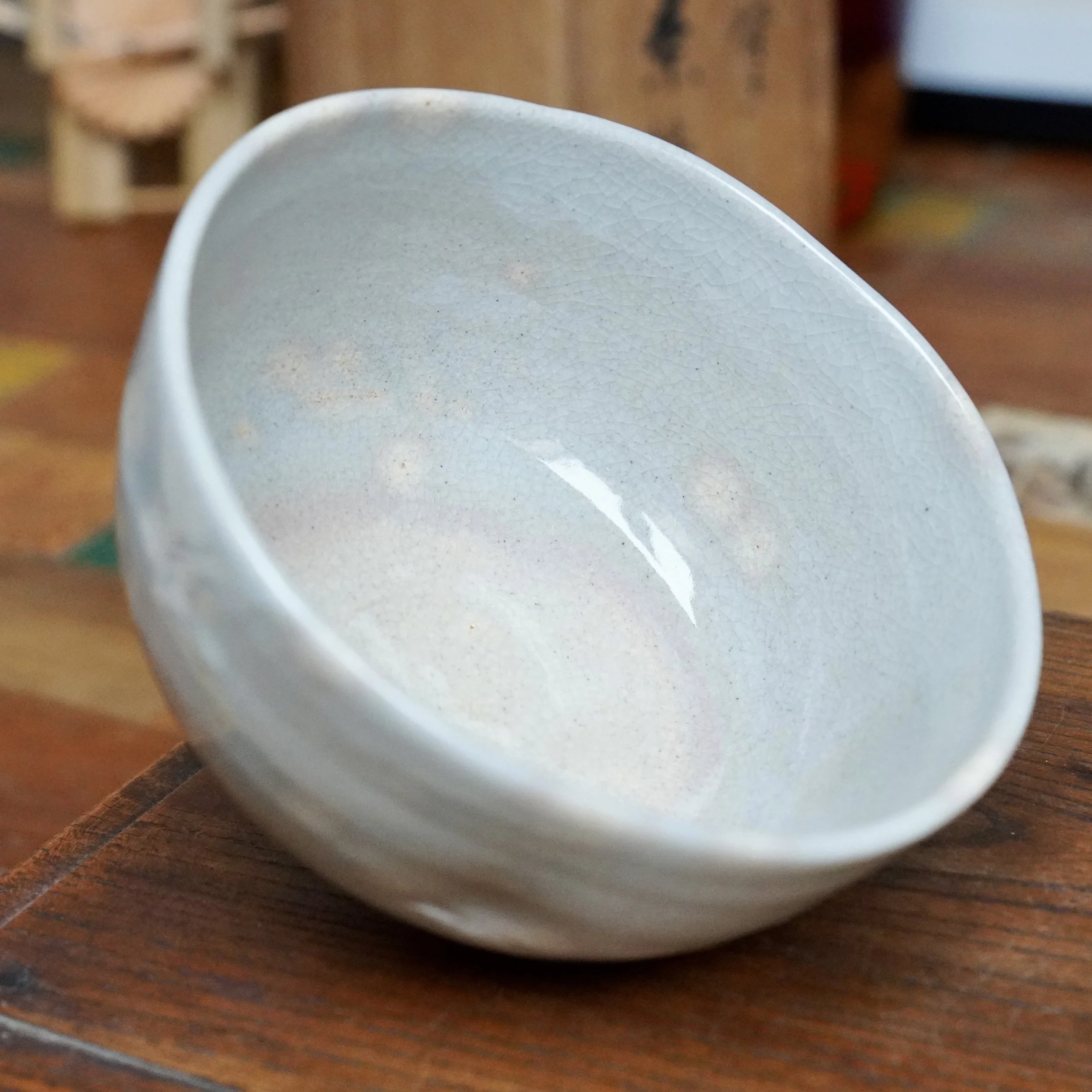
Pick this bowl up and the shape answers a question before you ask it. One side of the rim sits straighter than the rest, a shallow, deliberate press into the wall that meets your fingers exactly where a hand naturally rests. The glaze is a soft grey-blue, smooth under the fingertips, and where it catches the light around scattered pinholes a faint pink blush shows through, the same warm pink that spreads openly across the whole interior. Fine crackle runs over every surface, the kind that only comes from decades of tea passing through it.
This bowl carries the signature of Nagasawa Minoru, third generation head of Izushi-gama, the Nagasawa family workshop that has worked in Izushi, Hyōgo Prefecture, since 1907. Minoru trained at the Kyoto Municipal Ceramics Training Institute before turning to painting under Akamatsu Unrei in Osaka, and went on to win the Hokuto Prize at the Nitten exhibition, serve as a Nitten judge, and receive Japan's National Yellow Ribbon Medal in 1974. Izushi-gama is best known for pure white porcelain, but Minoru was the generation who also worked in local clay, and this bowl, with its Hagi-like crackle and blush, is a rare piece of evidence of that side of his work.
Those small pinholes in the glaze aren't unique to Hagi and Shino wares alone. Curious what causes them, and why tea masters have prized them for centuries? Read more about su-ana, the "nest holes" of Japanese glaze here.
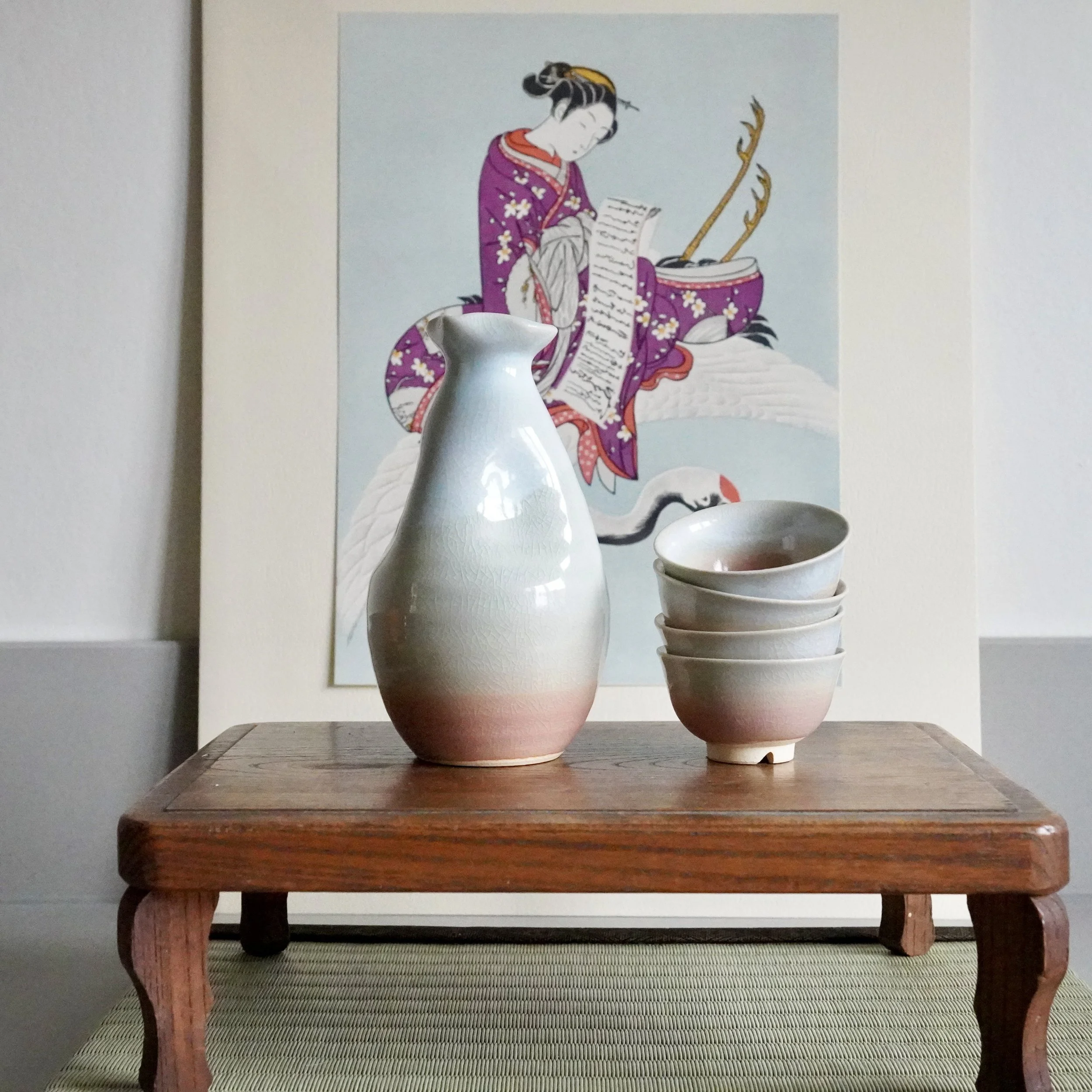
The gradient is the first thing that stands out A soft blush at the base, the colour of a winter sunset, rising into a cool pale blue-grey at the rim, as though the glaze caught its breath halfway through. One tokkuri and four ochoko, every piece moving through the same shift of colour, every piece a slightly different temperature when you hold it.
Hagi-yaki stands just behind Raku in the old hierarchy of Japanese ceramics, and its reputation rests on one quality: the clay is porous. Over years of use, sake works its way slowly into the surface and the colours shift. The Japanese call this shichibake, the seven transformations. For sake ware, this is not wear; it is the point. This set bears a kiln stamp pressed into the unglazed foot of each piece.
Pour sake into this set once and you have started something. Hagi clay is porous, so every cup you drink from leaves a trace: a slow, quiet shift in colour that the Japanese have a name for. Nobody can rush it, and no two sets change in quite the same way. I wrote about what actually happens inside the clay, why the crazing matters, and how to help the change along instead of fighting it. Read the full story.
Notice: This chawan has found a new home. If you are looking for something similar, scroll down.
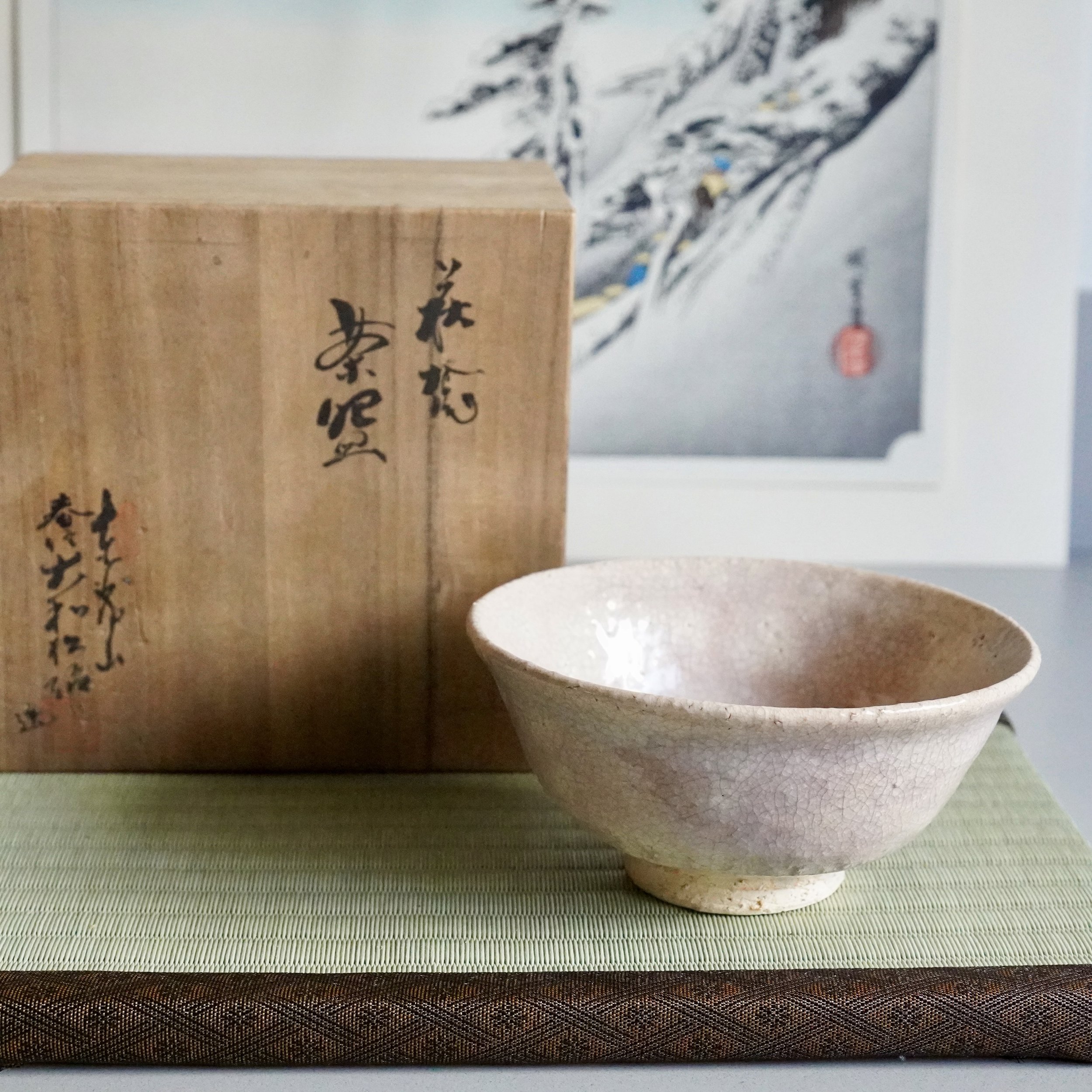
Held at an angle, this chawan catches the light differently every time. The pale, crackled glaze runs from a soft off-white into a warm, almost blush pink where it thins over the clay, a color Hagi potters call karahai, and it only appears where the firing has gone exactly right. The rim tilts and dips ever so slightly, a wall that never quite settles into a perfect circle, and that small imperfection is what makes it sit so naturally in the hand. It is a bowl built to be picked up, turned, and looked at again.
This bowl carries the tomobako signature of Matsuura Mugen, founder of the Shōunzan-gama kiln in Hagi, built on the very ground where Hagi-yaki itself began centuries ago. Mugen's work grew out of the tradition of Miwa Kyūwa, one of the defining masters of Hagi ware and a holder of Japan's Living National Treasure designation, and that lineage shows in the quiet, unforced warmth of this glaze. Its wide, shallow shape is a natsu-jawan, a summer bowl, made so the tea cools a little faster in the warmer months, which makes this the moment to bring it into use rather than let it wait. A signed, boxed chawan from this kiln is not something that turns up often outside Japan.
Hagi ware isn't meant to stay the same. Read how it grows with you, in my journal.
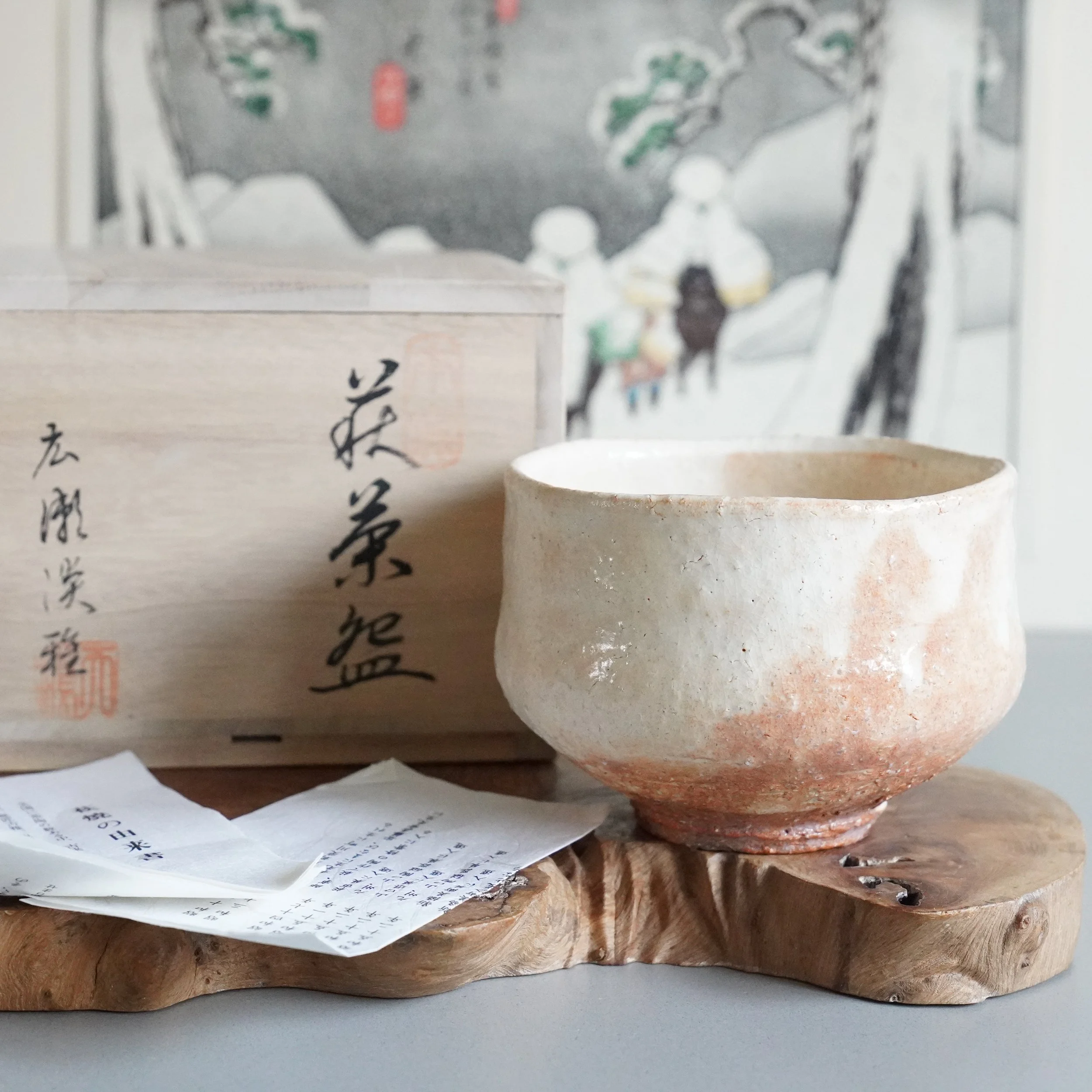
The glaze on this bowl sits differently from most Hagi ware you will encounter. It is pale, almost creamy, with a softness that makes the surface look slightly matte until the light catches it and you see the depth underneath. The craquelé is fine and even. The form is quieter and more settled than early Hagi ware. It is less raw, more considered.
By the time Hirose Tanga made this bowl, he had been working in Hagi for decades. His name had appeared in exhibitions across Kyūshū and Yamaguchi since the 1960s, he had received a national fine arts prize, and his kiln held an official government designation as a traditional craft. The tomobako for this bowl carries his personal signature alongside the kiln name, and the shiori inside contains his full printed biography. That combination of the signed box, named maker and documented career is what the Japanese tea world calls full provenance, and it is genuinely uncommon to find outside Japan.
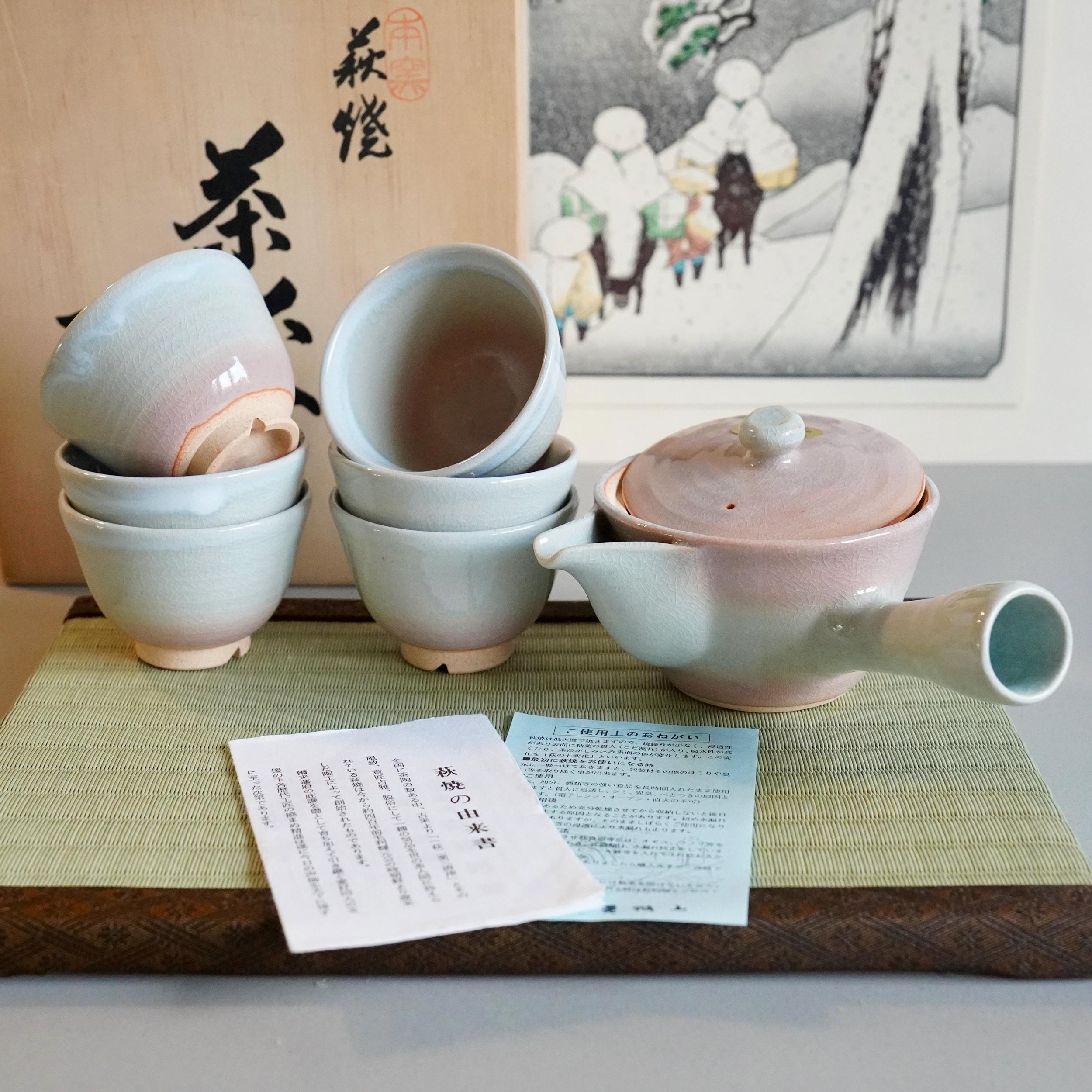
Six cups and a teapot, and the whole set reads as one breath. The glaze moves between pale blue-grey and soft salmon pink depending on where the light falls, and a fine web of craquelé runs across every surface.
Nothing is decorated. Nothing needs to be.
Sencha culture in Japan is quieter than the matcha ceremony but no less intentional. It is the daily practice of making something ordinary into something considered. Choosing the right pot, the right cup, the right temperature of water. Hagi ware has been part of that practice for over four centuries, prized for a clay body so porous and alive that the glaze slowly shifts in colour with each use.
Hagi ware isn't meant to stay the same. Read how it grows with you, in my journal.
Six cups and a teapot, and the whole set reads as one breath. The glaze moves between pale blue-grey and soft salmon pink depending on where the light falls, and a fine web of craquelé runs across every surface.
Nothing is decorated. Nothing needs to be.
Sencha culture in Japan is quieter than the matcha ceremony but no less intentional. It is the daily practice of making something ordinary into something considered. Choosing the right pot, the right cup, the right temperature of water. Hagi ware has been part of that practice for over four centuries, prized for a clay body so porous and alive that the glaze slowly shifts in colour with each use.
A Hagi tea set does not stay the same. It becomes something over time.
→ Read how it grows with you, in my journal.
I work through my finds in small batches as each piece takes time to research, photograph and write properly. But some items are too good to sit invisible in the backlog, and if you have been looking for a Taizan klin Hagi-yaki yunomi meteo pair with their original box and documentation, I want you to know this one exists.
This is a meoto set, made for two, named 花容 on the tomobako. One cup runs warm with orange and rust, the other cooler with fine crazing across a celadon-grey glaze. Both from Taizan-gama in Tsubaki, Hagi, with the original signed tomobako and kiln documentation.
A meoto set, made for two, the slight difference in size a deliberate choice: the larger cup for him, the smaller for her. In Japan these sets are a traditional wedding gift, a pair of objects meant to be used together for a lifetime.
The full listing, photographs and price will follow. Want to know the moment it goes live? Scroll down.
👇
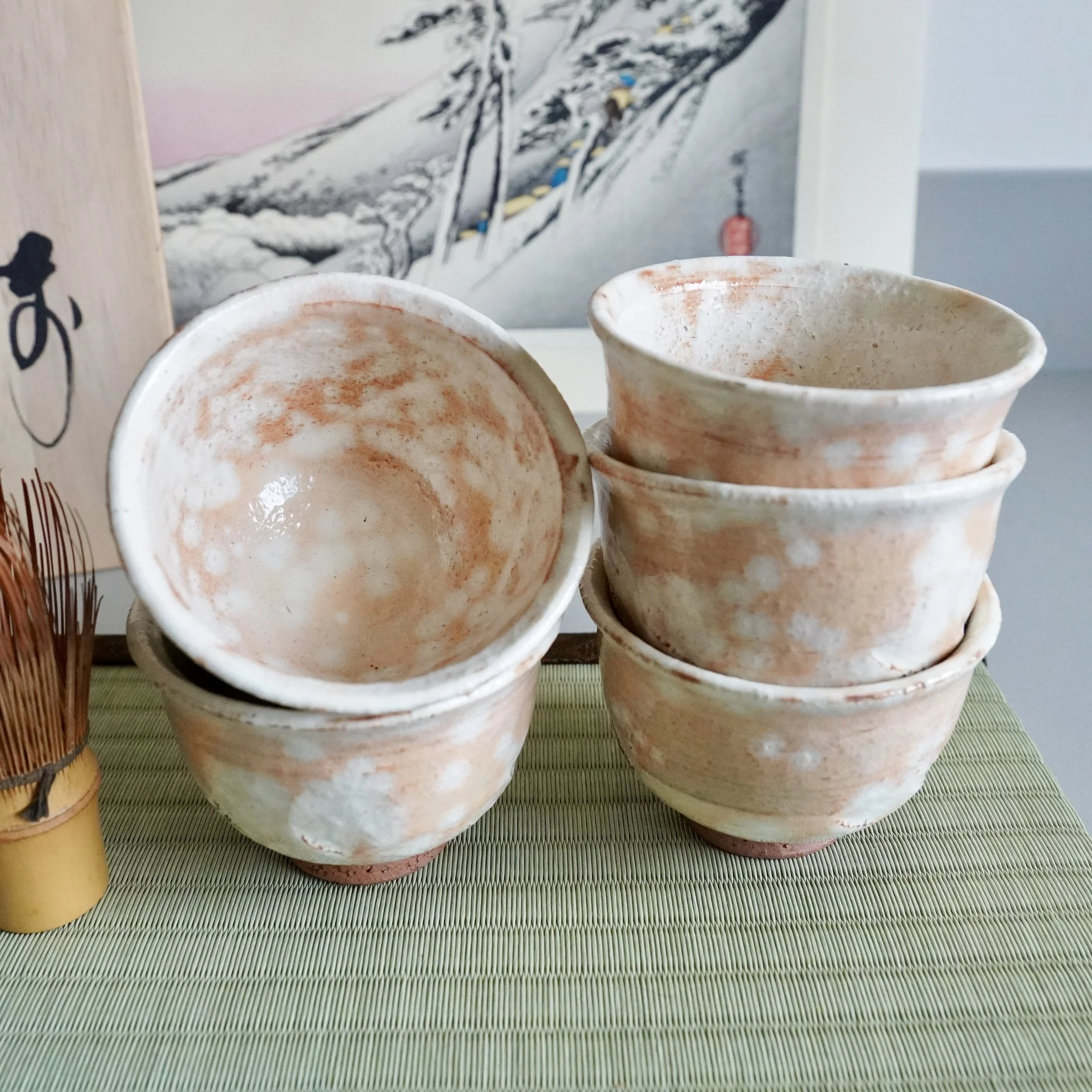
Five cups that move together without being identical. The glaze is the color of old paper washed with rust, white pooling in clouds where it thickens, warm terracotta clay pushing through where it thins. Each cup carries this differently. Set them on a table and the effect is immediate: a family of objects made from the same impulse, none of them the same.
These cups are wide and generous, substantial enough to hold with both hands and feel warmth come through the clay. Hagi-yaki has been placed second only to Raku by tea masters for four centuries. The shira-hagi glaze, made from rice straw ash fired until the carbon burns away, is among the most refined expressions of that tradition.
The set comes with its original signed and stamped tomobako and the kiln's own shiori, giving it a provenance completeness that is unusual for Shōwa-period teaware.
Hagi ware isn't meant to stay the same. Read how it grows with you, in my journal.
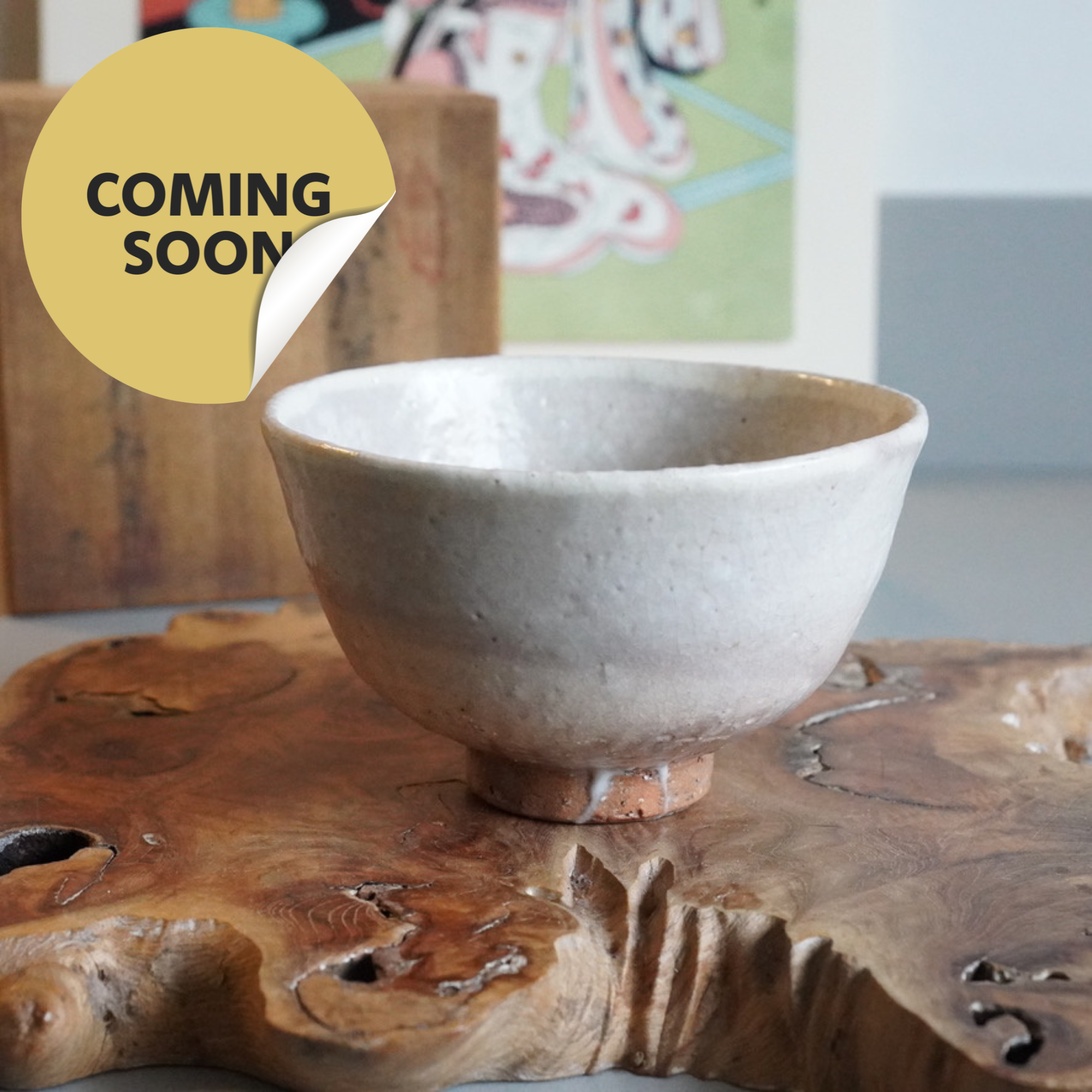
I work through my finds in small batches as each piece takes time to research, photograph and write properly. But some items are too good to sit invisible in the backlog, and if you have been looking for a Hagi-yaki Ido chawan with full provenance, I want you to know this one exists.
This chawan comes from the Tokugetsu-gama kiln in Hagi, run by the Tamamura family whose lineage of master potters stretches back to the Edo period. The name Shōgetsu is a generation name passed down within this family line, which holds an exceptional reputation among tea ceremony practitioners in Japan. The original signed tomobako is included.
The full listing, photographs and price will follow. Want to know the moment it goes live? Scroll down.
👇
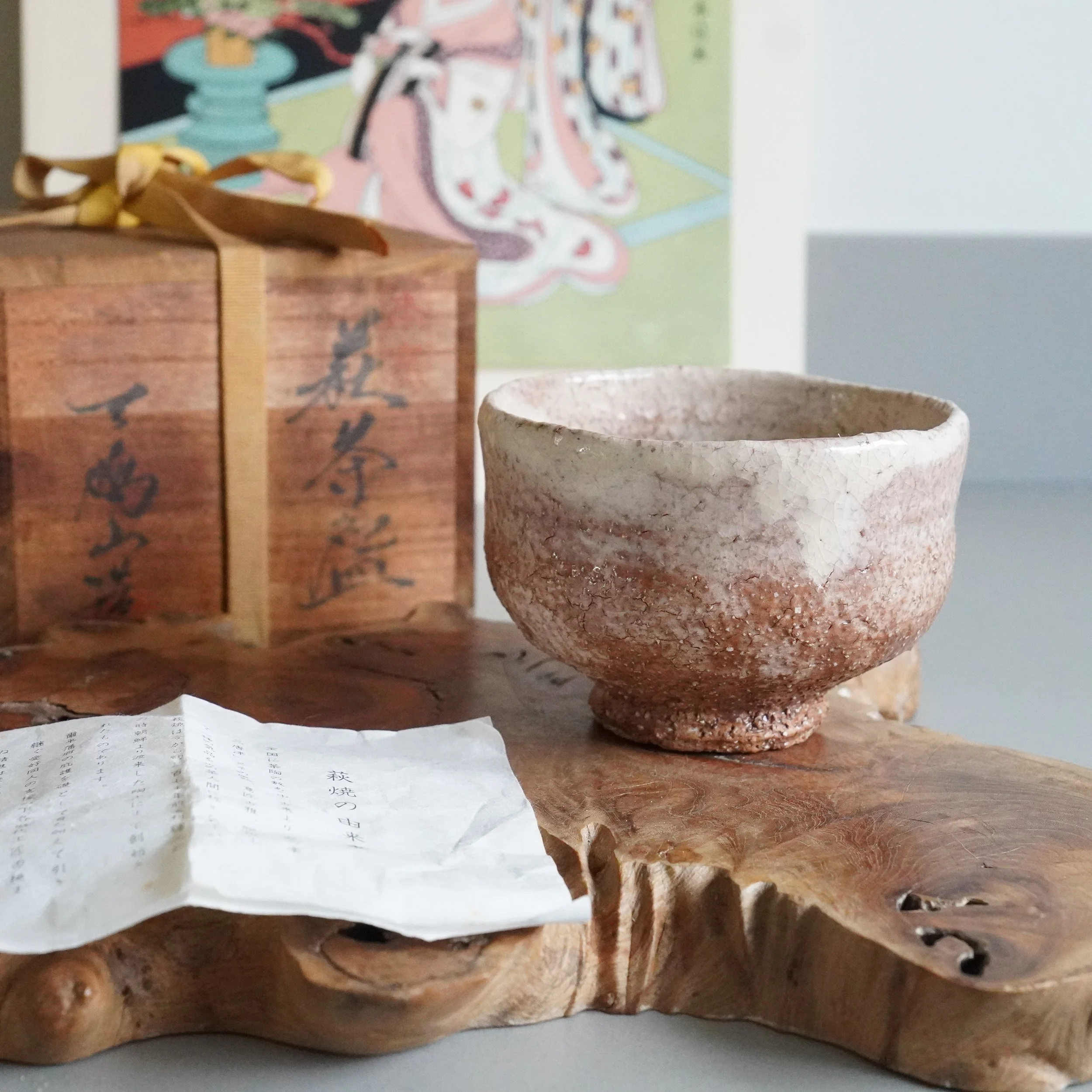
The clay here is warm and gritty in a way that reads almost geological. The glaze deepens to amber-brown at the base and fades toward a pale sandy beige at the rim, and the transition between the two is not a line but a gradual dissolve. The form is slightly irregular, soft-shouldered, made without any ambition to be symmetrical.
This bowl comes from the founding generation of one of Hagi's most recognised kilns. The tomobako carries the hanko of Hirose Nanshū (南州), the man who established the Tsubaki-gama Tenpōzan in Hagi. The telephone notation on the shiori dates the documentation to before direct-dial lines existed in the city. Somewhere in the 1960s or earlier.
The shiori itself was signed by his son Hirose Tanga, who took over the kiln and continued his father's practice. That combination (the father's box and seal, the son's documentation) is a quiet record of how Japanese family kilns pass from one generation to the next. Hagi-yaki has held the second rank in the traditional tea master's hierarchy for centuries, behind only Raku. A bowl from the founding generation of a kiln in that tradition is not a common thing to find.
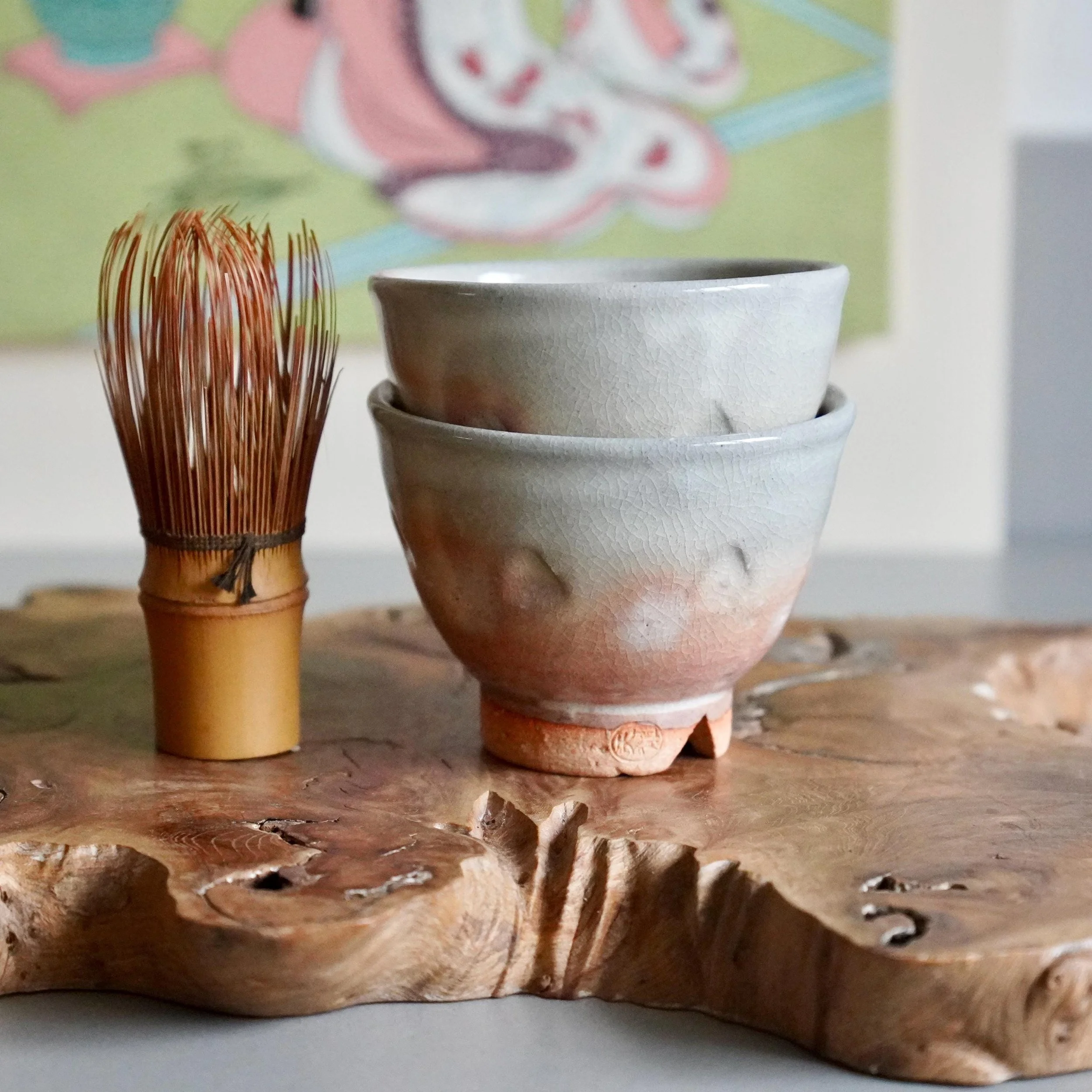
These cups are from the Tenpō gama kiln in Hagi, Yamaguchi Prefecture, a kiln founded in 1973 that has built its reputation on classical Hagi technique: soft forms, understated glazes, and the porous clay that makes Hagi ware change with use.
The iron-bearing spots in the clay bleed through the white glaze during firing: no two cups come out the same. As tea slowly stains the clay through the craquelé over years of use, the cup deepens in colour and texture, a process the Japanese call nanabake, the seven transformations.
The craquelé covers the full surface in a fine irregular network. The form is round and low, wider at the lip than at the base, and each cup sits on the kiri-kodai foot: the triangular notch cut into the clay that has been a feature of quality Hagi ware for four centuries.
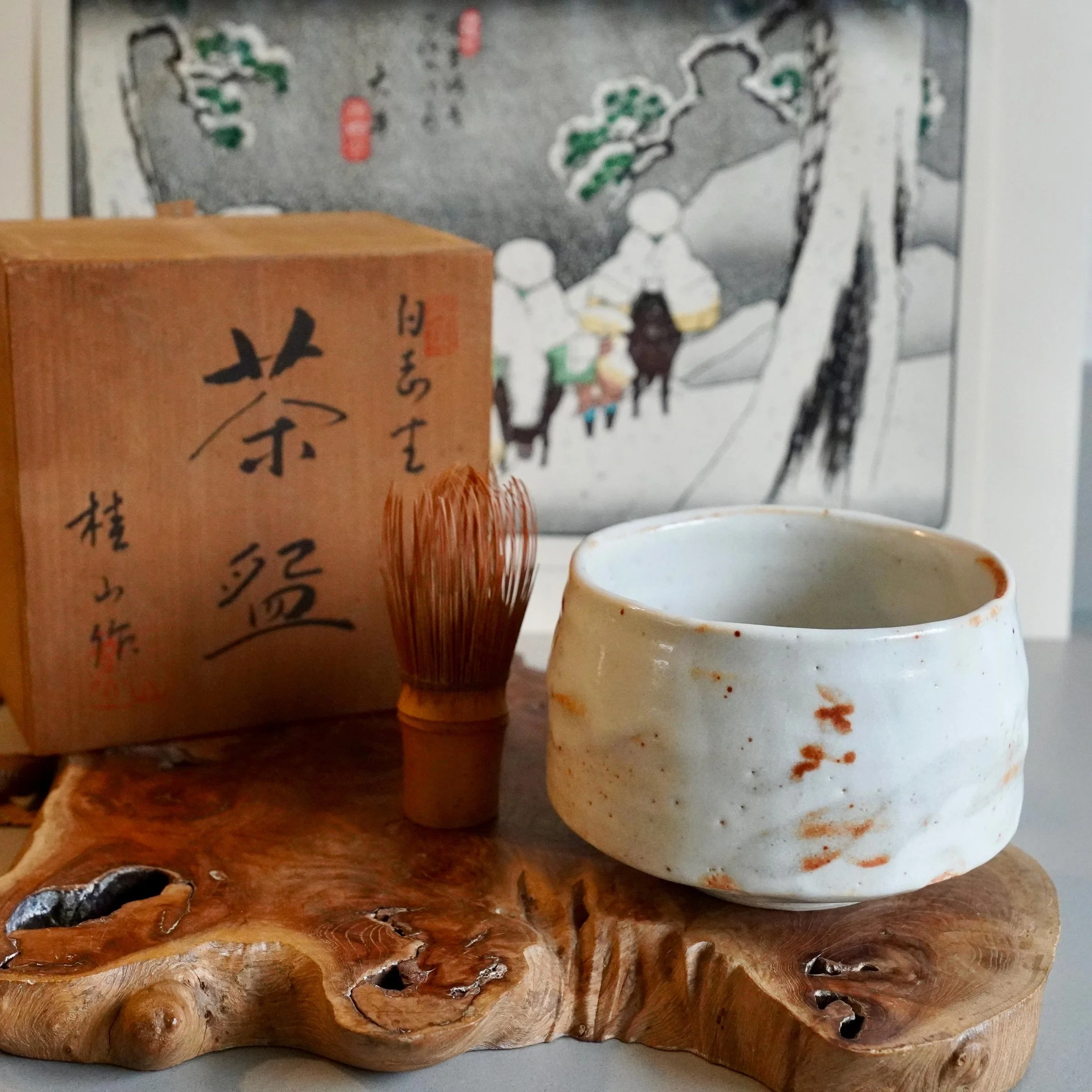
This bowl has a way of looking complete from any angle. The form is low and wide, the rim gently uneven in the way of something made by hand rather than adjusted toward perfection.
The glaze is a full, dense shining white over most of the body, with orange pushing through directly where the clay asserts itself. It stops you before you know why.
This chawan comes from an earlier generation of Taizan-gama, one of the kilns that has worked in the Tsubaki district of Hagi within a tradition tea masters have placed second only to Raku for four centuries.
The tomobako is inscribed 白萩 茶碗 and the bowl carries the full rectangular 泰山 seal, the older mark of the kiln used before the oven was incorporated as a company.
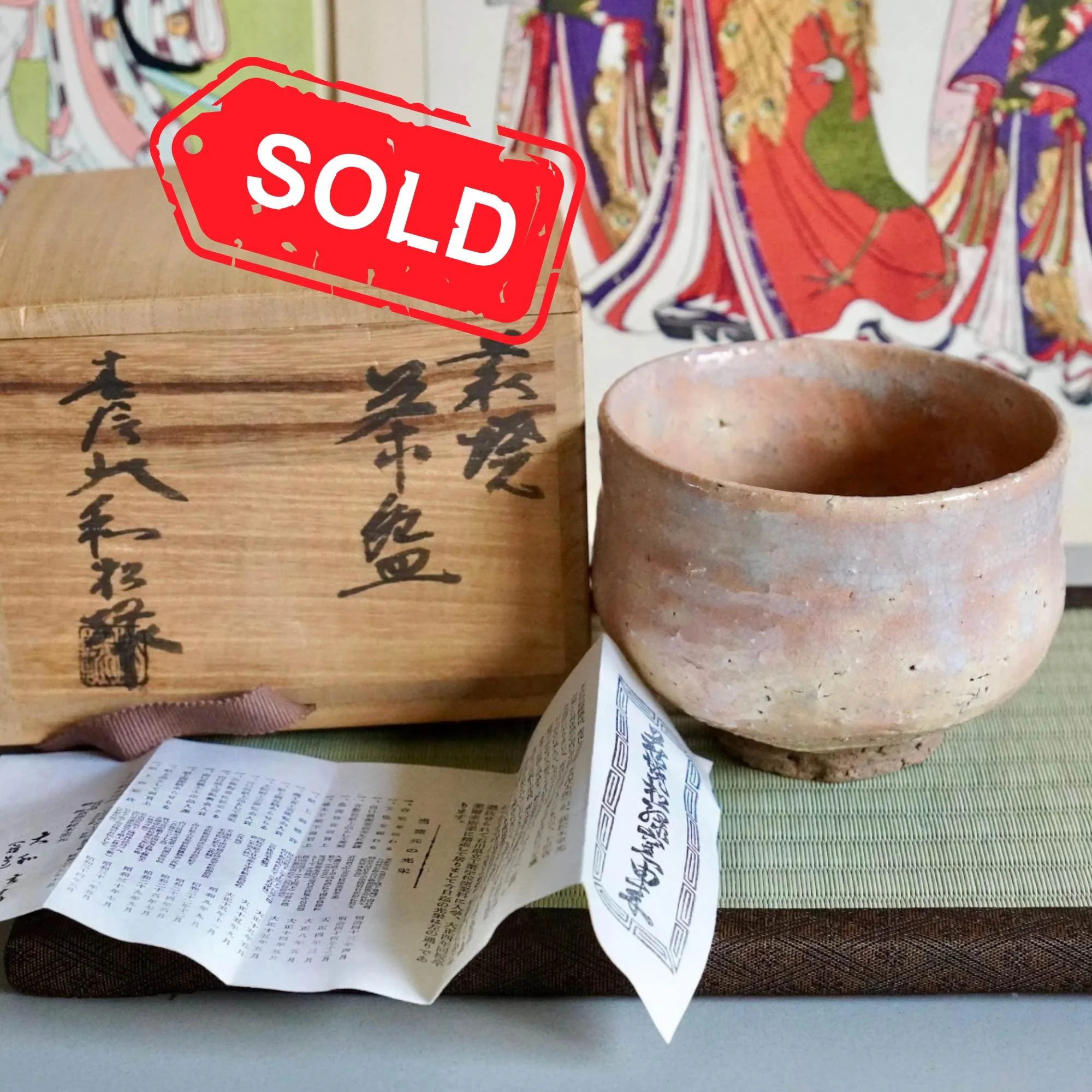
Notice: This chawan has found a new home. If you are looking for something similar, scroll down.
Soft. That is the first word for this bowl.
Not white exactly, more the pale warm tone of early morning light on clay, with a blush of peach that deepens toward the foot and fades near the rim. It shifts depending on where you hold it. In shade it reads warm and rosy. In direct light it almost disappears into the clay beneath it. The form is generous and low, the kind of chawan that settles into two hands naturally, and the rough dark foot ring anchors everything.
This is shira-Hagi, the white Hagi style, made with the characteristic straw ash glaze over Daido clay from Yamaguchi Prefecture. The glaze sits on the clay like a pale morning sky, rosy and warm, shifting between peach and white depending on the light.
This bowl was made by Yamato Yoshitaka (大和吉孝), tenth-generation master of Matsuroku-gama in Miyano, Yamaguchi, during the Taishō period. The kiln's lineage begins with the Mōri clan's official Tōkōji kiln in Hagi, one of the historically significant lines in Japanese ceramic history.
Complete with the original signed tomobako wooden storage box, the original printed kiln document, and a fitted silk drawstring pouch.
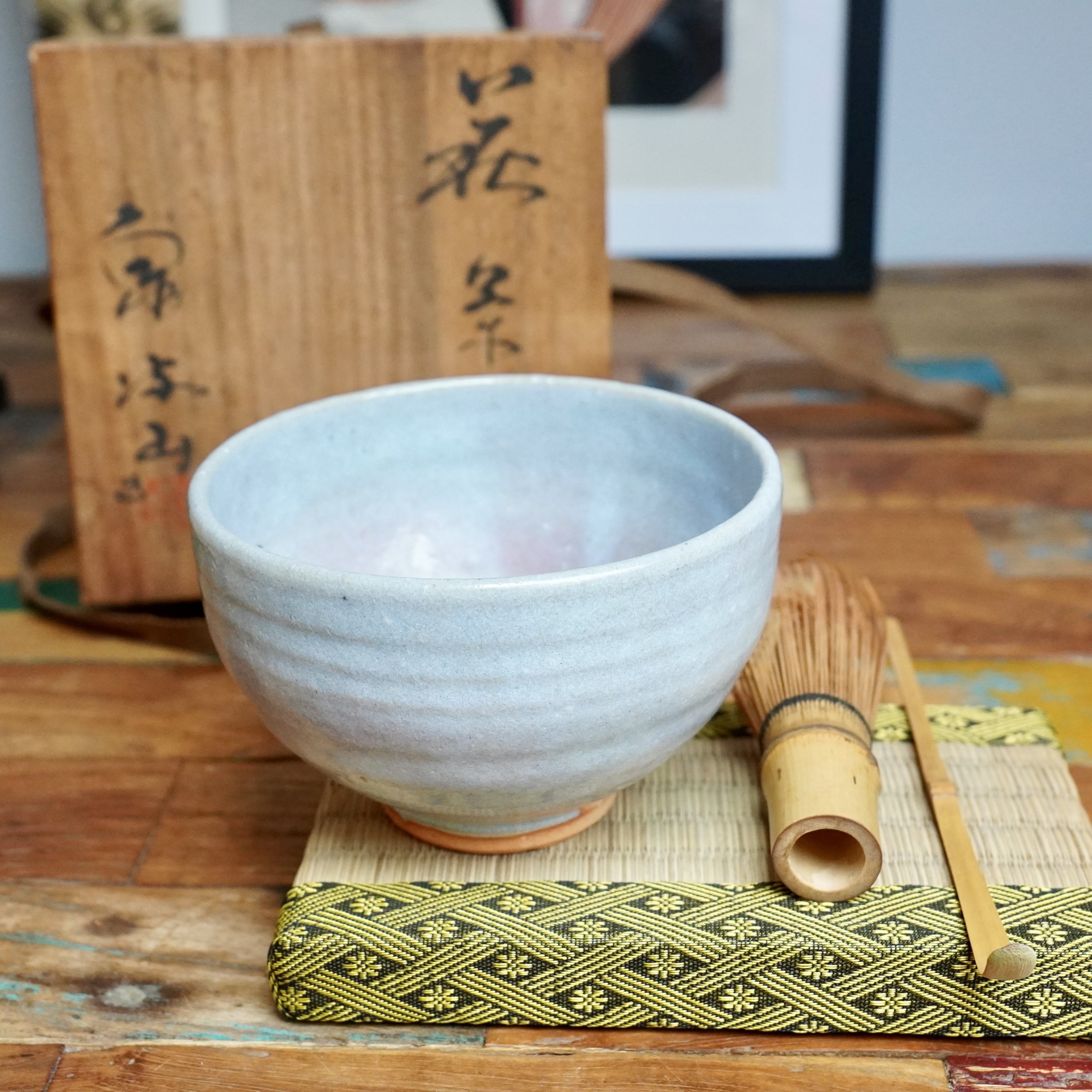
The glaze on this chawan is the quiet kind. Soft white shifting into blue-grey and pale lilac depending on the light, a surface that looks different in morning sun than in lamplight. The form is generous and low, the kind of bowl that settles into both hands rather than sitting in them.
Hagi ware asks to be held. In the tea ceremony it is the object that passes through the most hands, that is turned and considered from every angle, that is meant to reward this kind of attention over years and decades of use.
The porous clay body gradually absorbs tea, shifting slowly in color, deepening where the glaze cracks finest.
Moriwaki Fumitada made this bowl at his Chigiri-gama kiln in Seto, where a decades-long practice in the technical traditions of Japanese ceramics underlies work that carries Hagi-yaki's quieter, more intuitive qualities.
A Hagi-yaki glaze is never fully sealed. It develops a fine network of cracks called kan'nyū as it cools in the kiln, and through those cracks water, and later tea, slowly enters the clay beneath. What happens when water or tea meets Hagi-yaki: kan'nyū and nanabake, watched in real time → Read journal post.
Tiny pinholes scattered across a thick glaze, a texture called su-ana, tell you more about Shino and Hagi ceramics than most people realise. Here's what causes it, and why potters never smoothed it away.
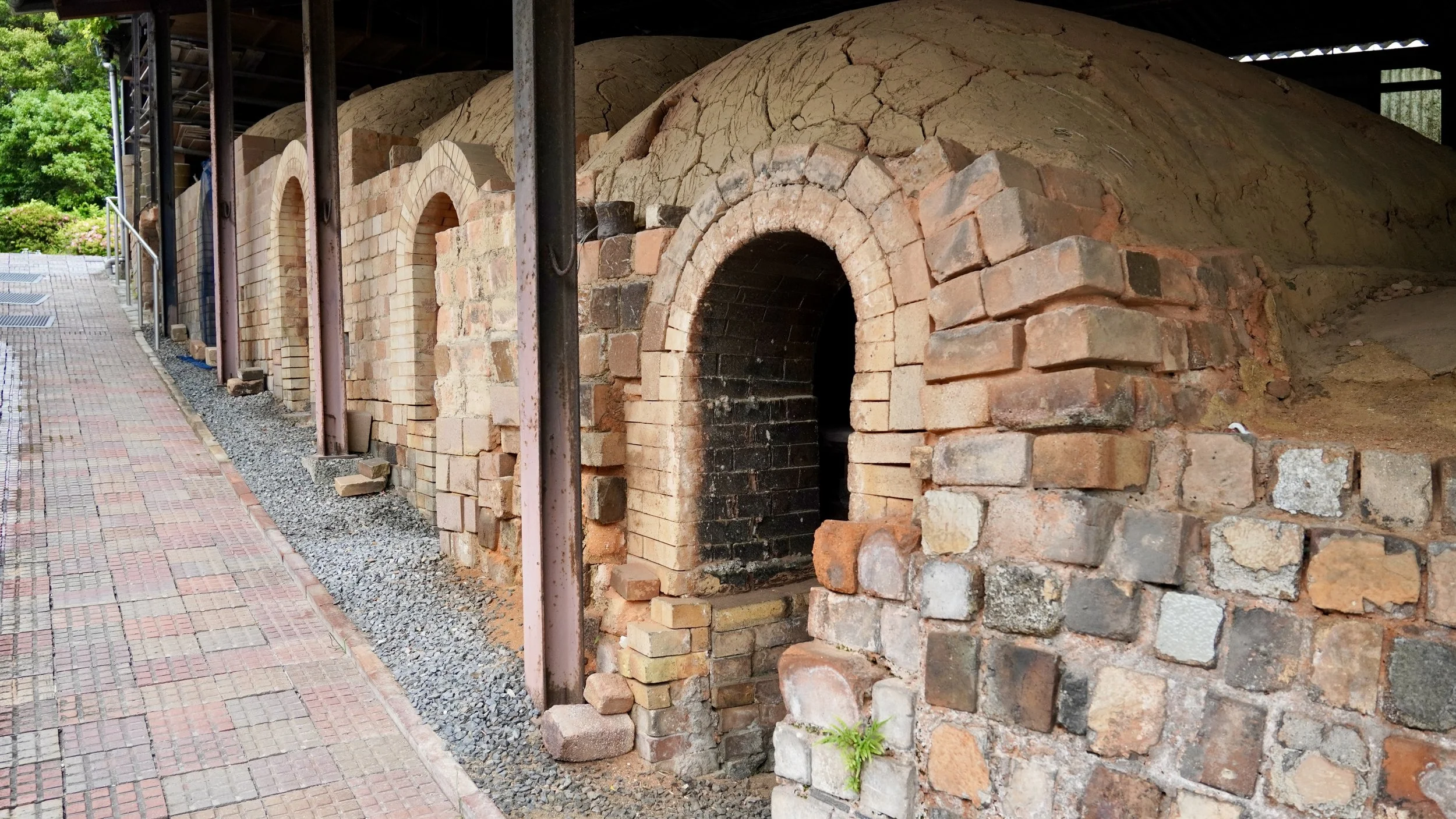
Senryūzan (泉流山) is a Hagi-yaki kiln in Yamaguchi Prefecture founded in 1826, tracing its roots back further still to the late Edo-period Obata-yaki tradition. The kiln was led for decades by Yoshiga Taibi, a recognised Person of Cultural Merit, and is now run by his son Yoshiga Hatao. Senryūzan still fires in a wood-burning noborigama, one of the few climbing kilns in Hagi still worked this way.
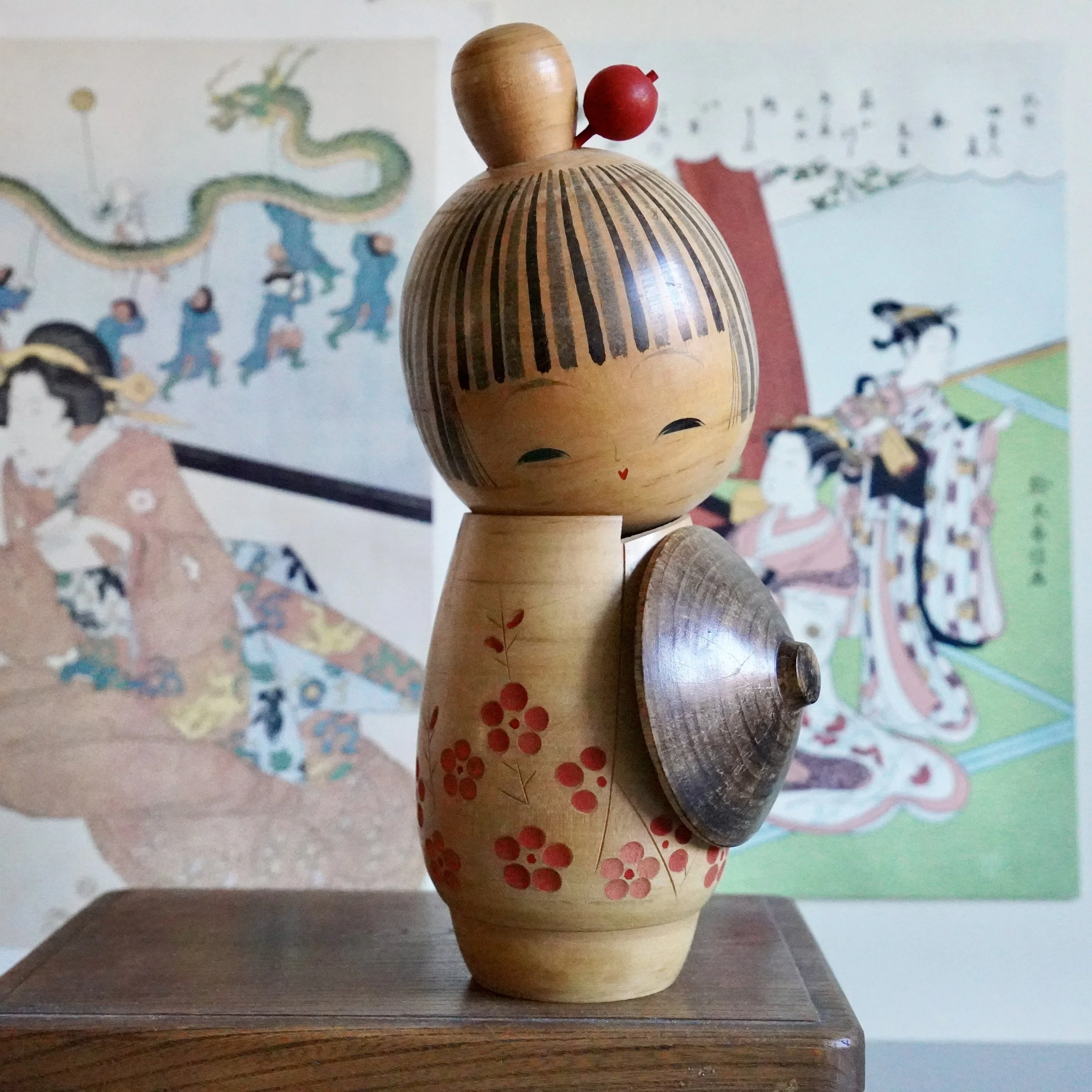
Oshinobi dōchū, travelling incognito, shows a Heian noblewoman shielding her face with a kasa hat while journeying in disguise. Two pieces in the collection, by Sato Suigai and Seiju Kon, show how differently that same story can be built in wood.
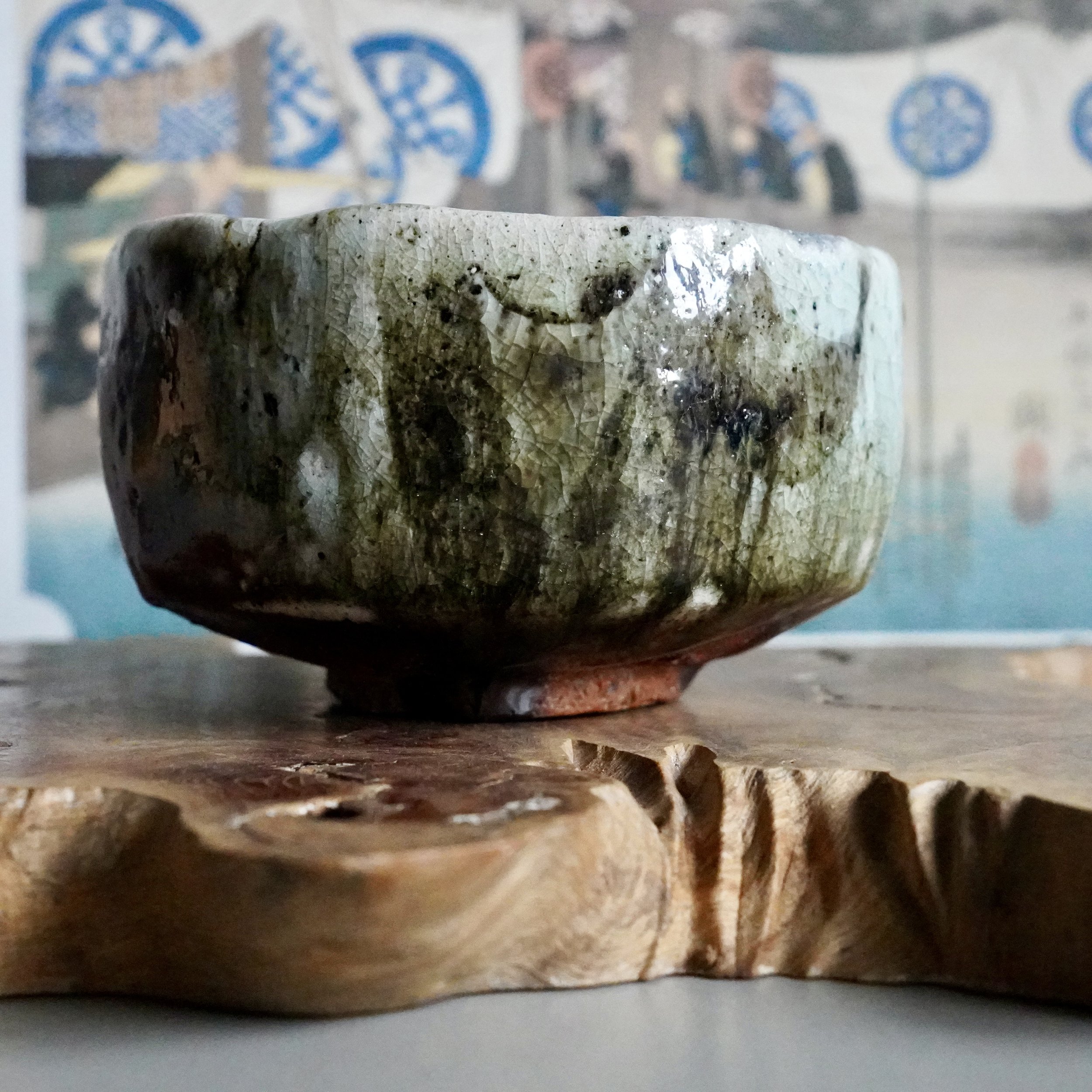
This chawan was fired at the Kakuzan-gama, a kiln built in 1959 inside the Kyoto headquarters of Ōmoto, a Japanese religious movement, by Kaneshige Sozan, a member of Bizen's most celebrated pottery family. It is signed by Deguchi Eiji, who served as Ōmoto's Sōchō (director) from 1958 to 1962. A single white glaze on this bowl developed rust, near-black and crystalline blue effects during firing, the result of flame position, ash deposit and heat variation inside a wood kiln, not of painting or decoration.
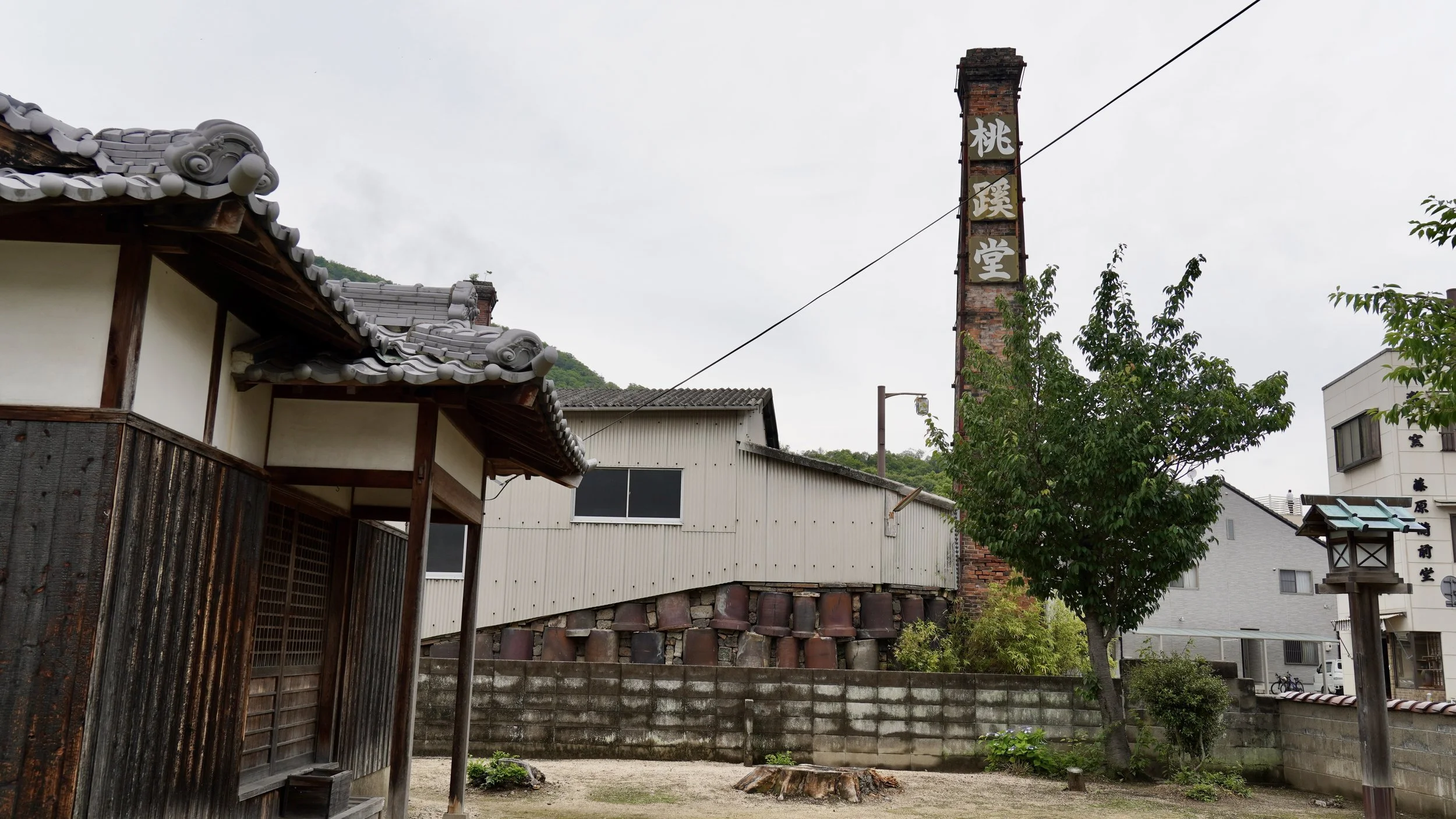
Bizen-yaki is never glazed and never painted. Everything visible on a finished piece was decided during the firing itself, by potters who spend two weeks feeding a kiln by hand, reading the fire instead of a dial. On a return visit to Shibaoka Tōsendō, the Kōzan-gama kiln in Imbe, here is what that actually looks like from the inside.
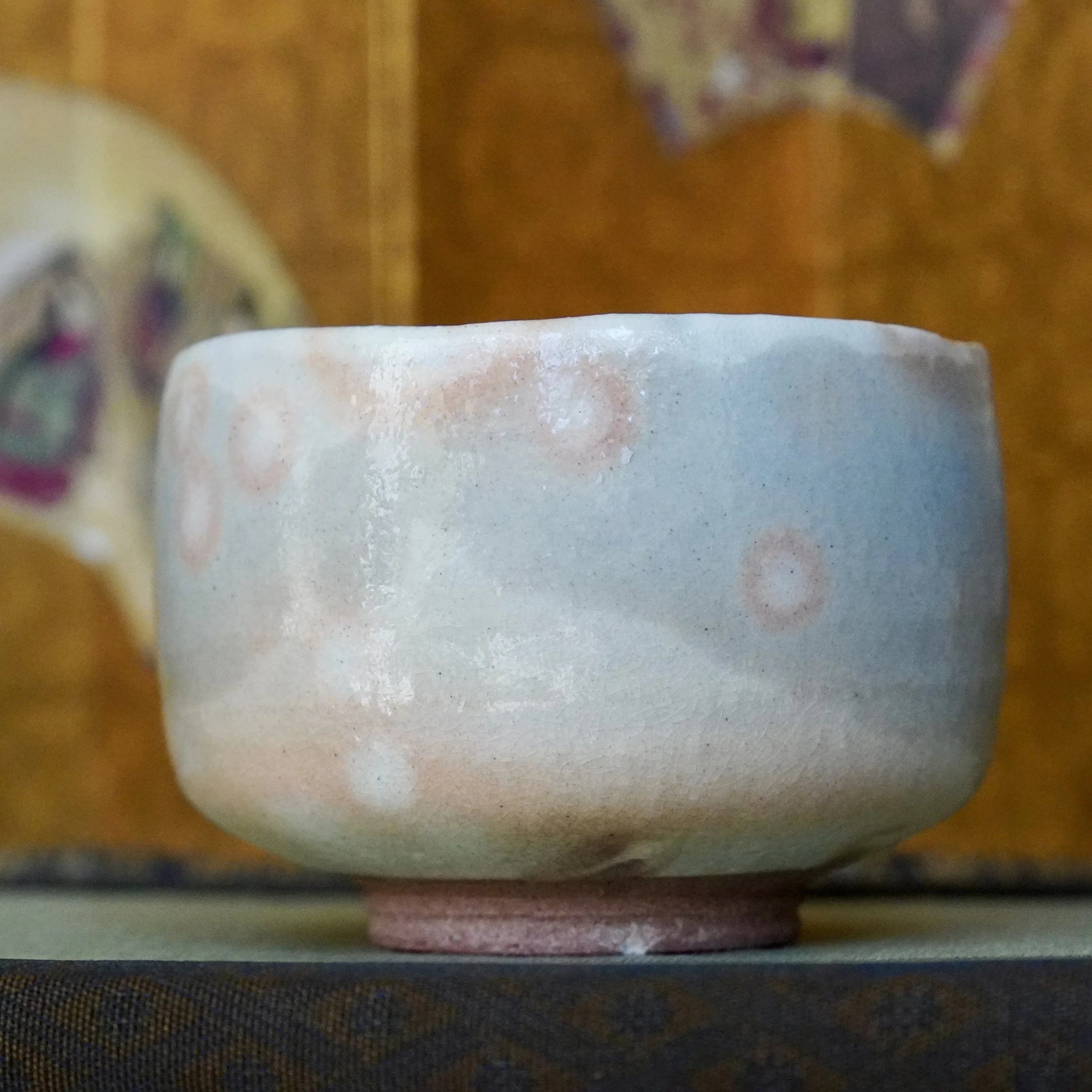
I filled a Hagi chawan with water and watched what happened. Within a minute, the glaze showed exactly how it will change with years of tea, and four other pieces revealed just how differently that process can unfold, starting long before the kiln, in the clay itself.
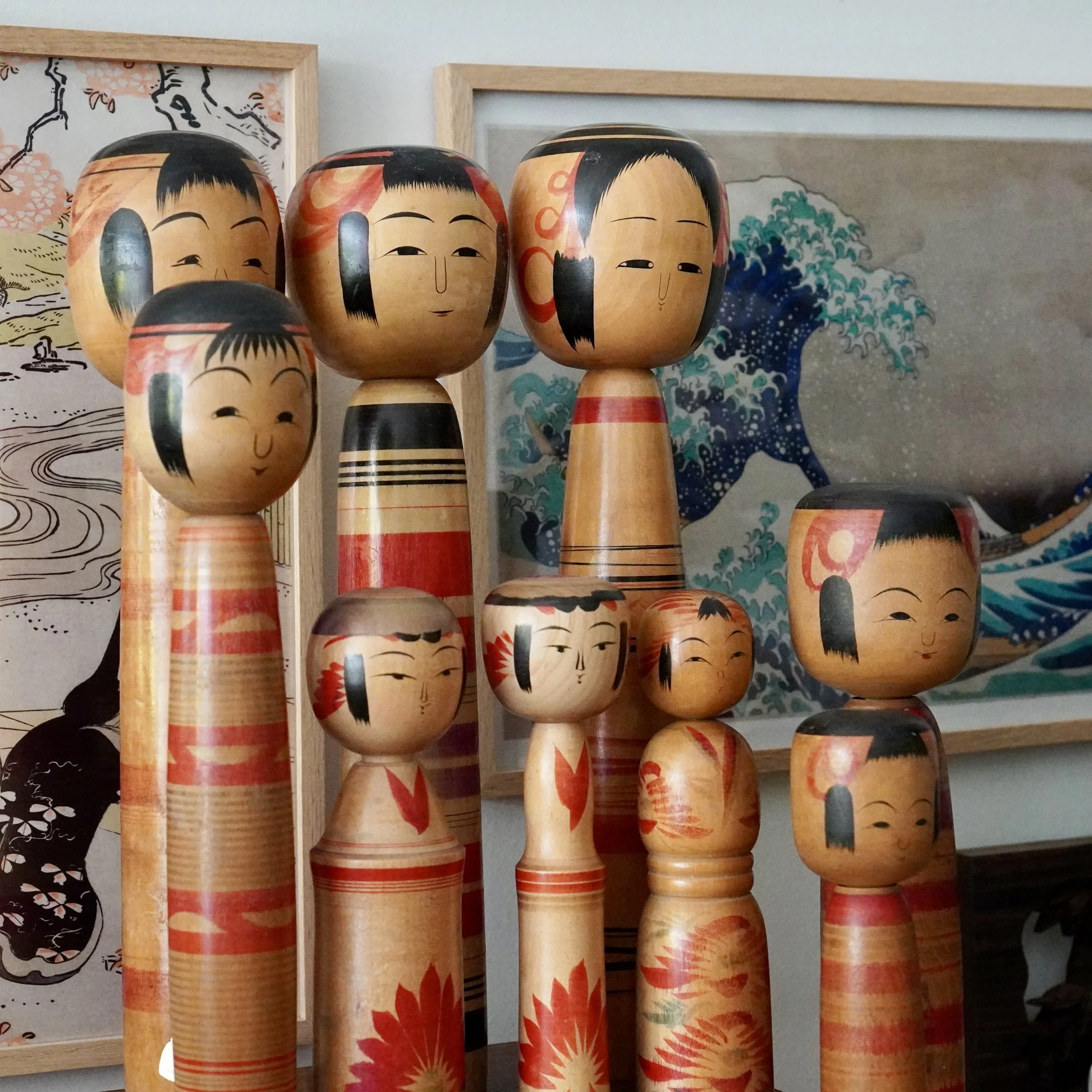
Every kokeshi carries the place it comes from before it carries anything else. A guide to the eleven regional traditions of Tōhoku, and how to recognise each one on sight.
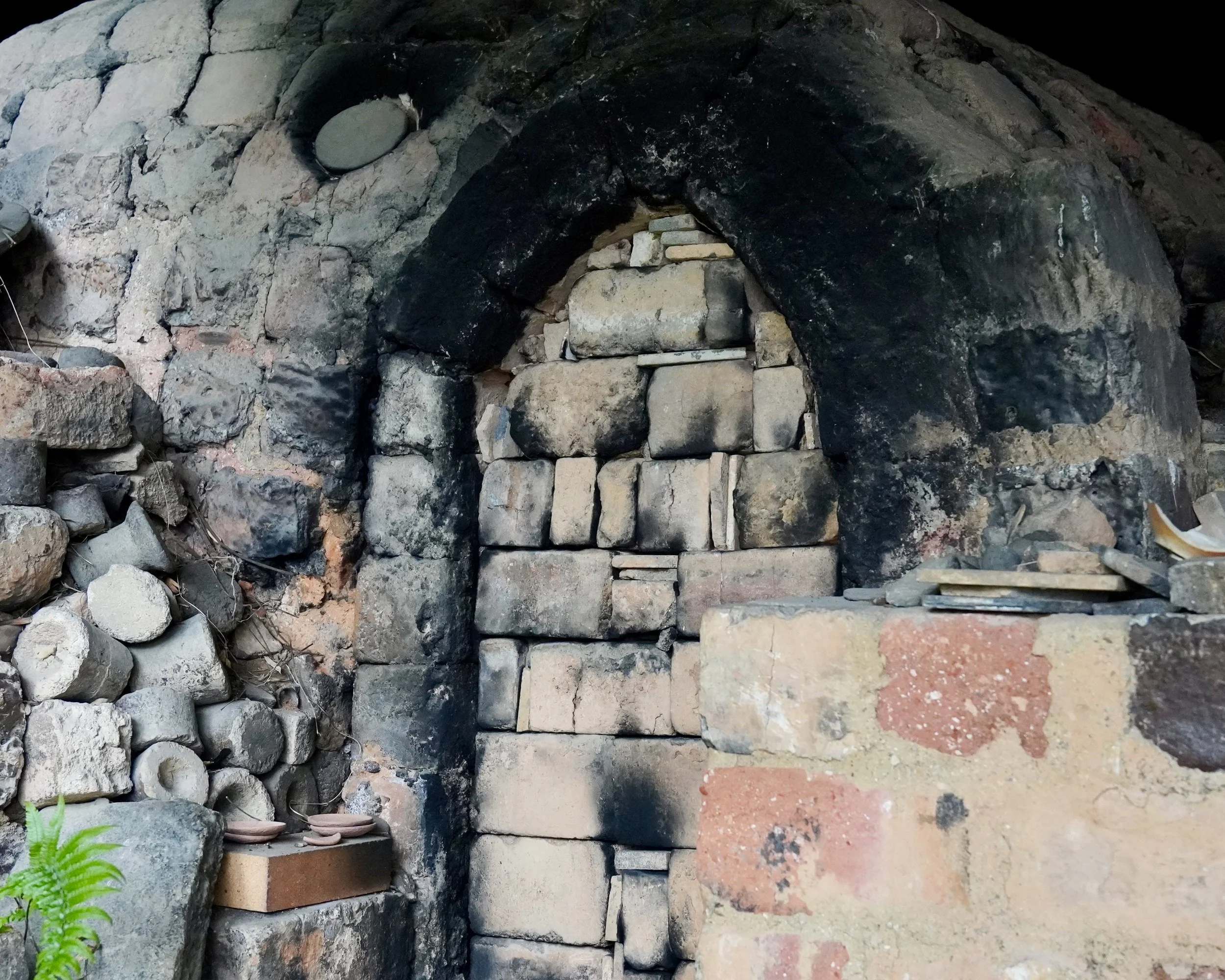
Three generations under one roof, a blue glaze that surprised me, and a cat I bought on the way out. One of my favorite mornings in Hagi, at the Okada kiln.
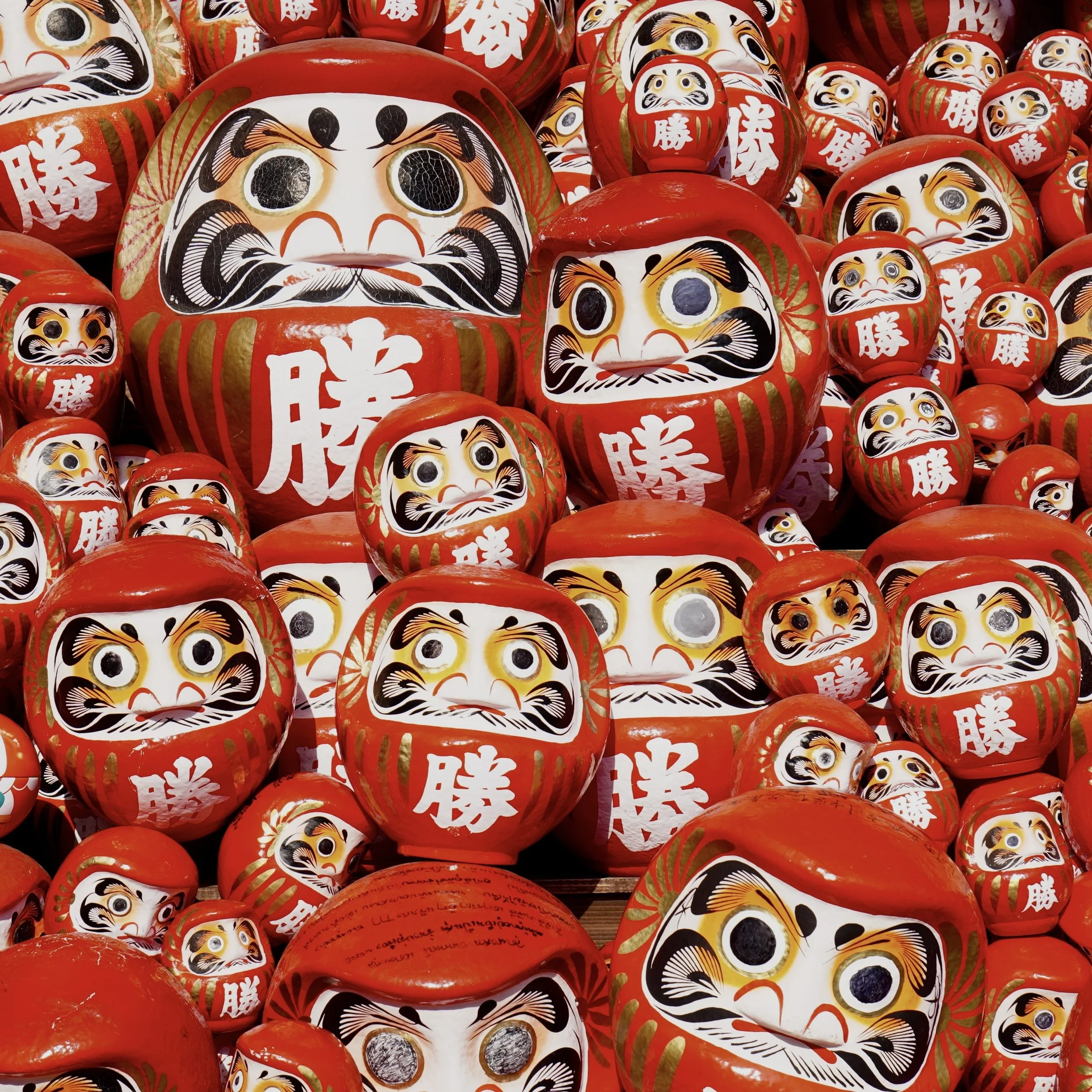
Perched in the forested hills of Minoh, Katsuo-ji is known throughout Japan as the Daruma Temple, thousands of red daruma cascading down its steps, each one carrying someone's wish. A visit that changed how I see the wooden daruma in our own collection.
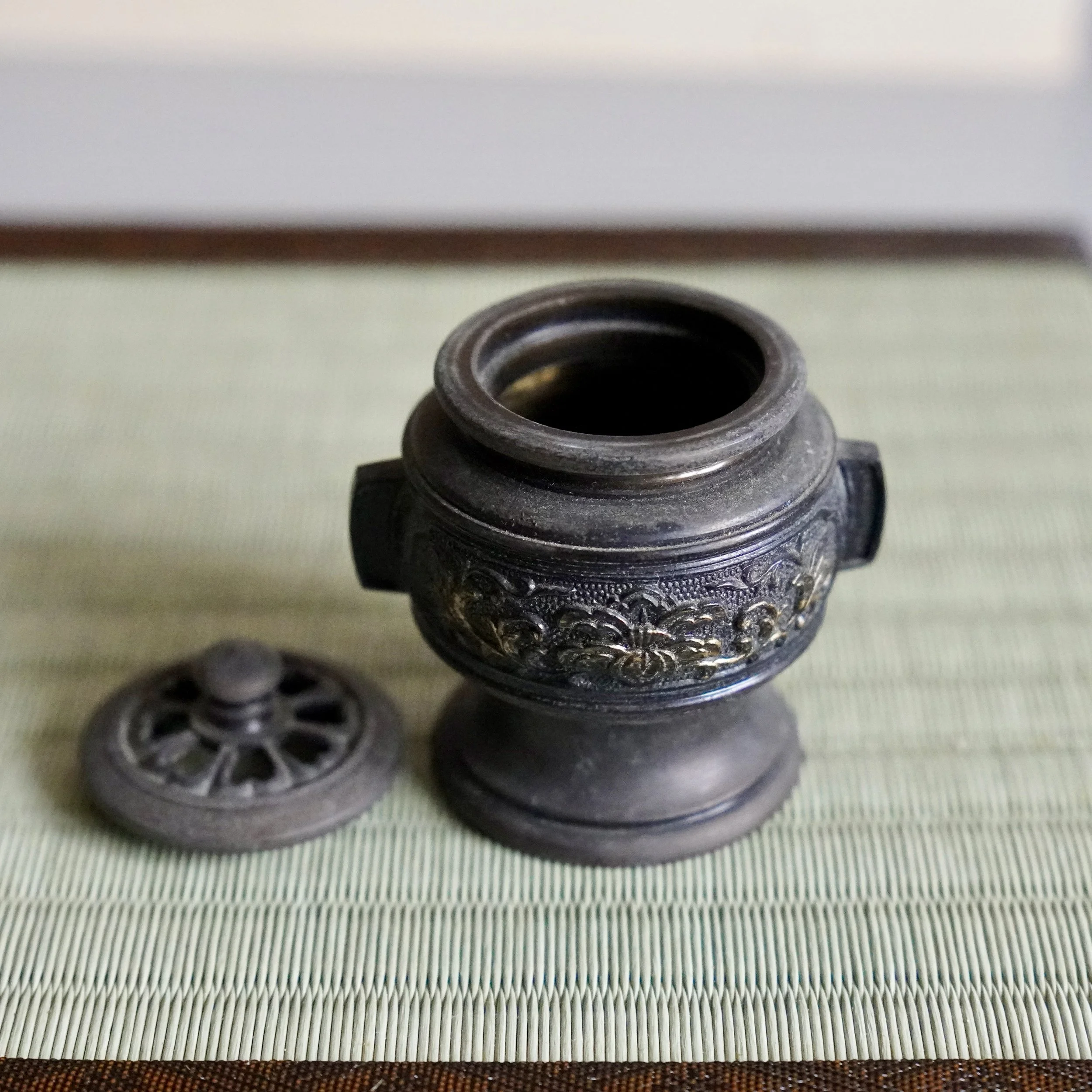
Every temple I visit in Japan has the same quality of quiet, and it starts with three things: scent, sound, and a presence that holds the space. Here is how to bring that same intention home, starting with a single kōro and the concept of ma.
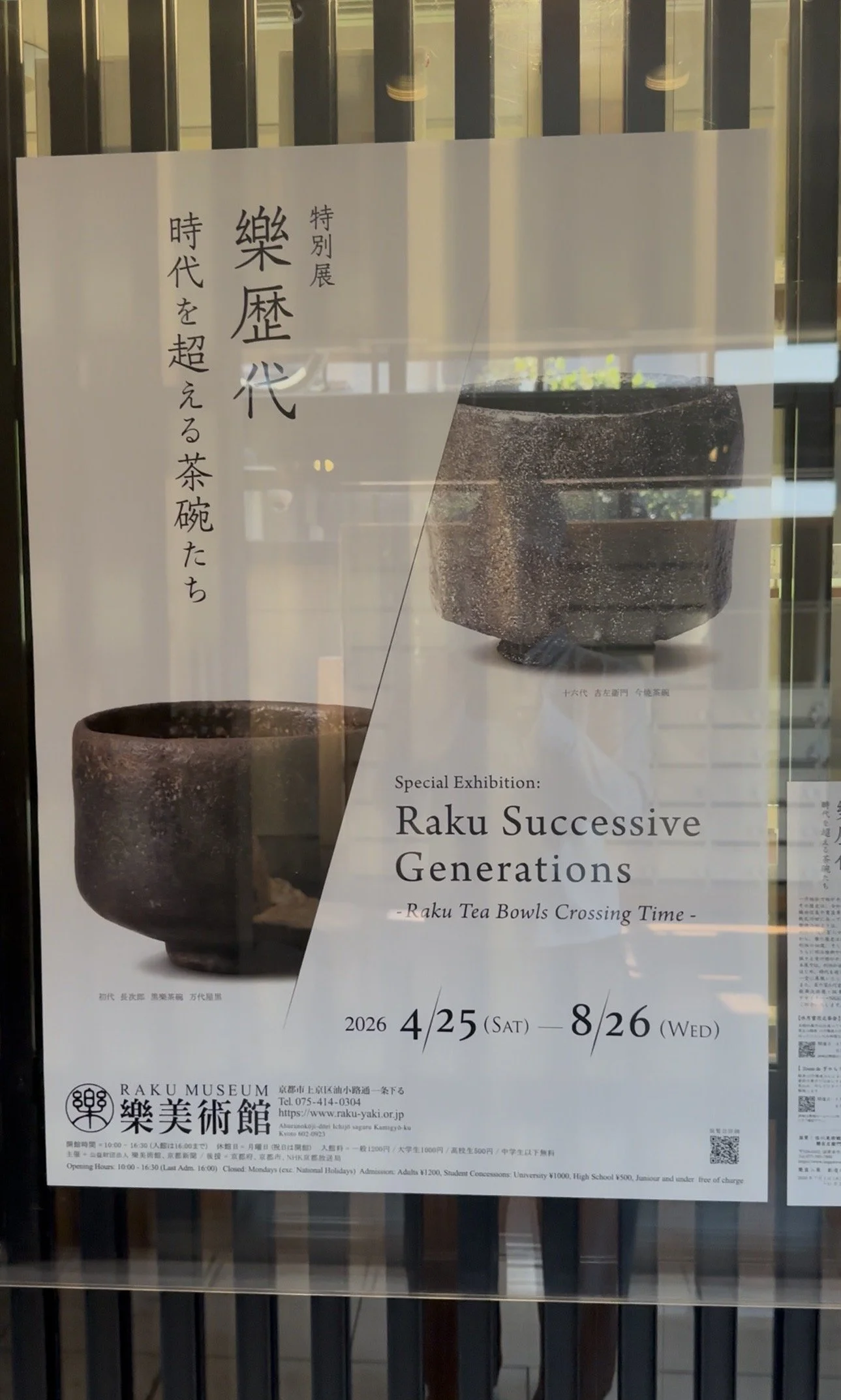
Inside the Raku Museum in Kyoto during the Raku Successive Generations exhibition. Chawan from Chōjirō to the 16th Kichizaemon, a quiet garden, and one idea about tradition that stayed with me.
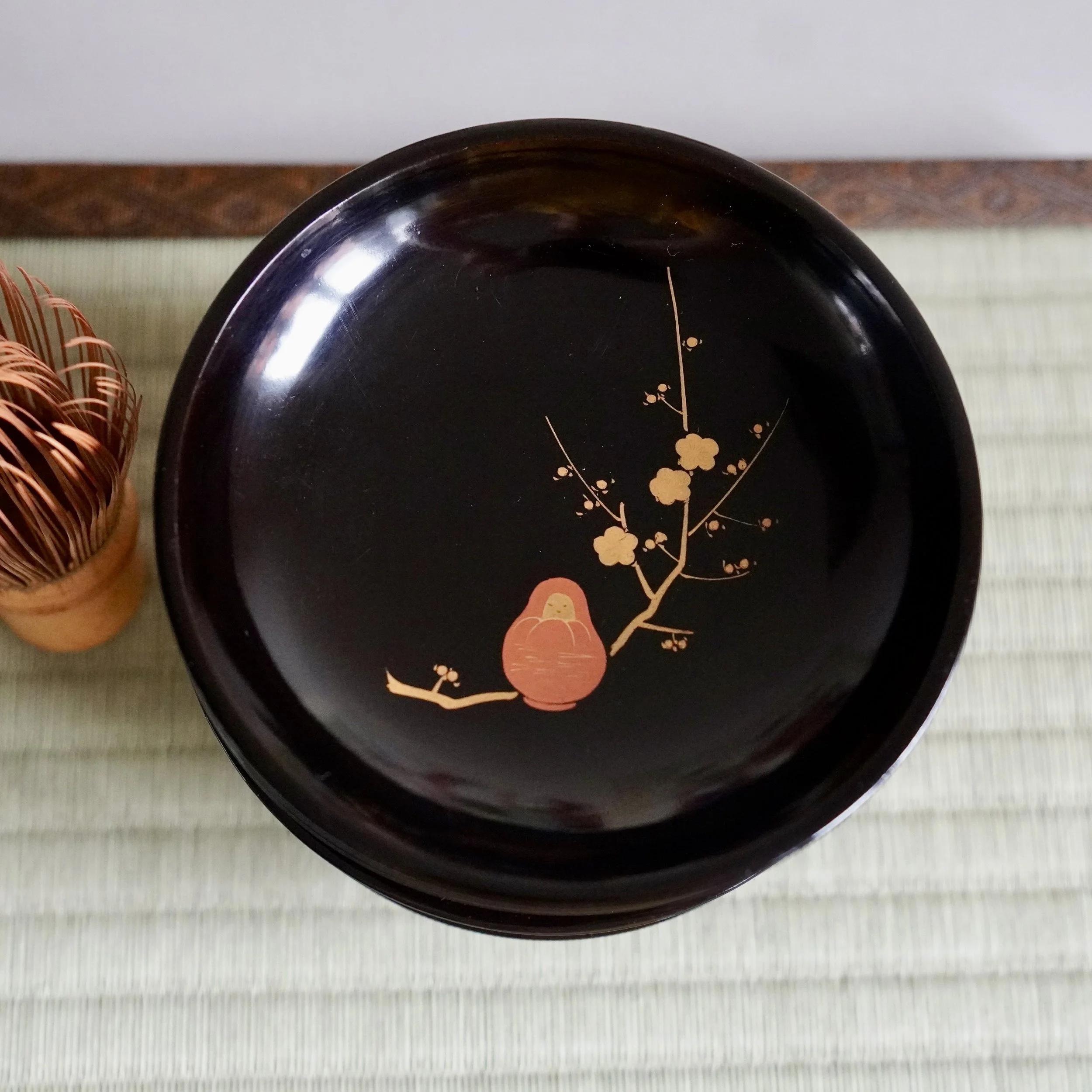
Urushi looks fragile and behaves like the opposite, until it meets a sunny windowsill or a winter radiator. Here is what actually damages lacquerware, what does not, and the handful of habits that keep a piece looking the way it did the day it was finished.
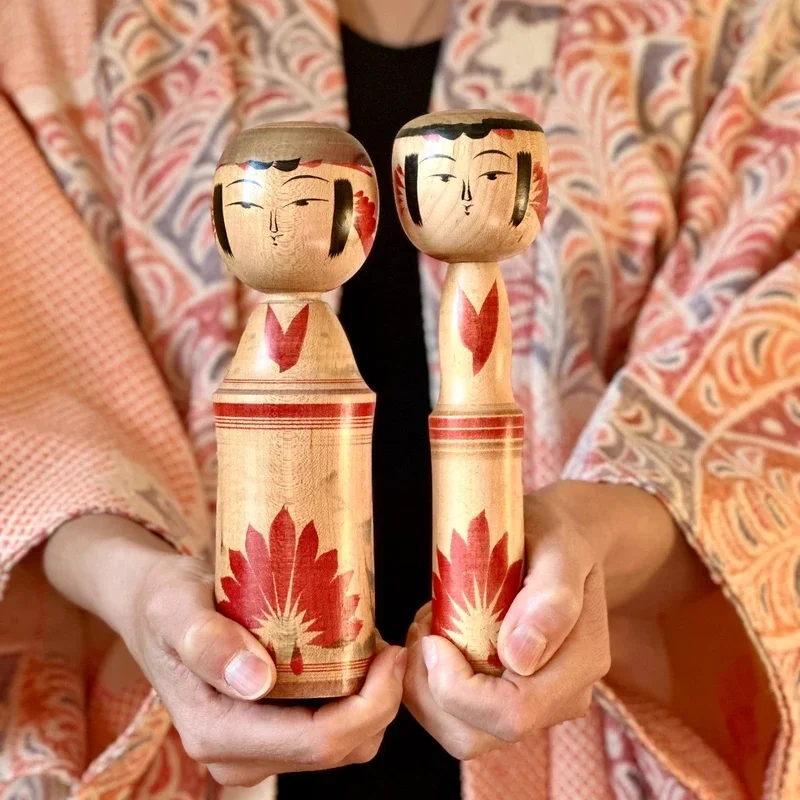
A kokeshi asks for very little once it has found the right spot. Grouped in threes on a shelf, alone on a windowsill out of direct sun, or standing next to something entirely unrelated, like a stack of books or a single dried branch. Here is what I have learned about placing them so they actually get looked at, instead of disappearing into a room.
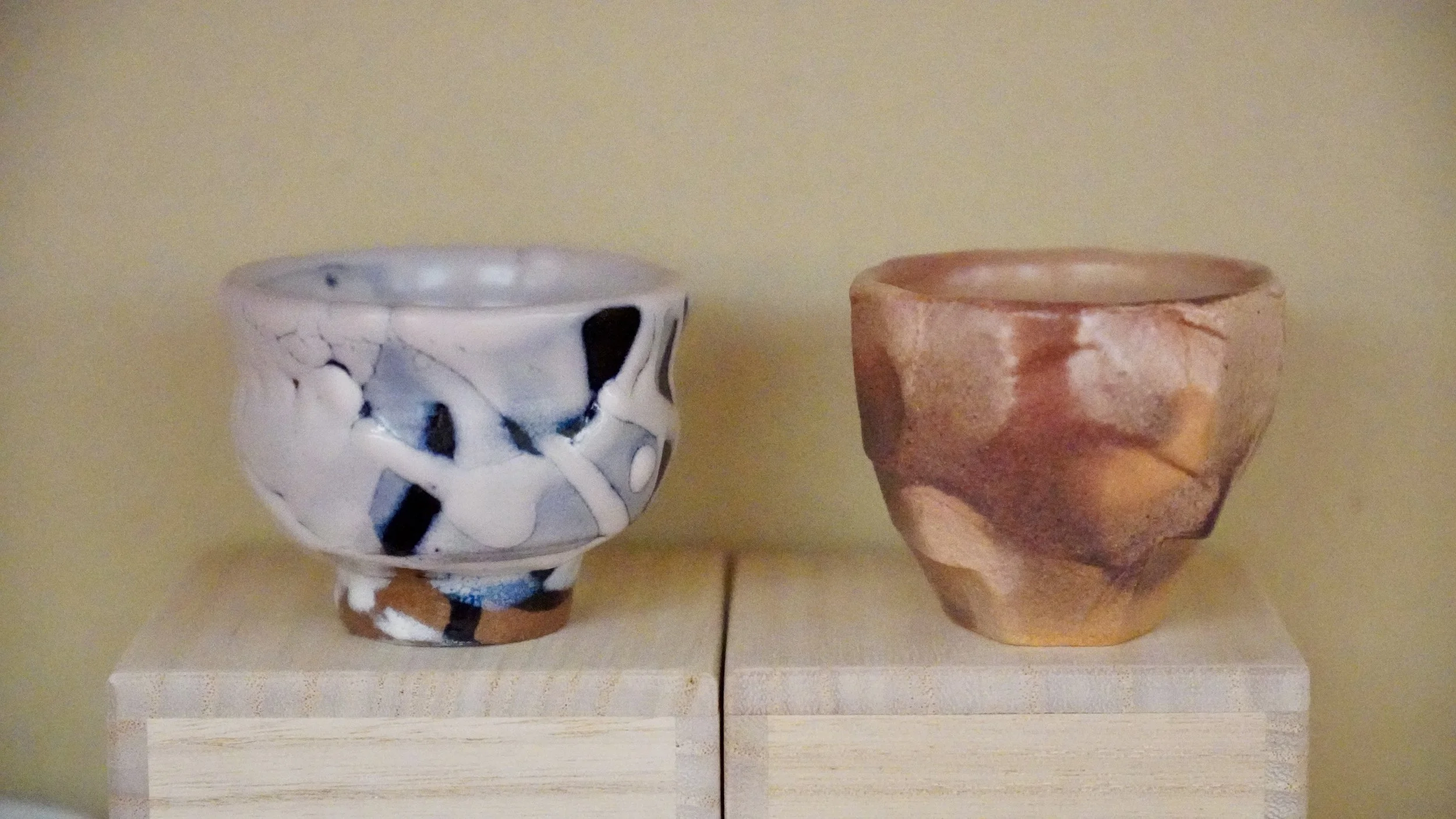
Every ceramic piece I bring home has already been through decades of hands before mine. A chawan changes colour with tea over the years, a vase collects mineral marks if you let it, and neither of those things is damage. Here is what actually matters when you look after one.
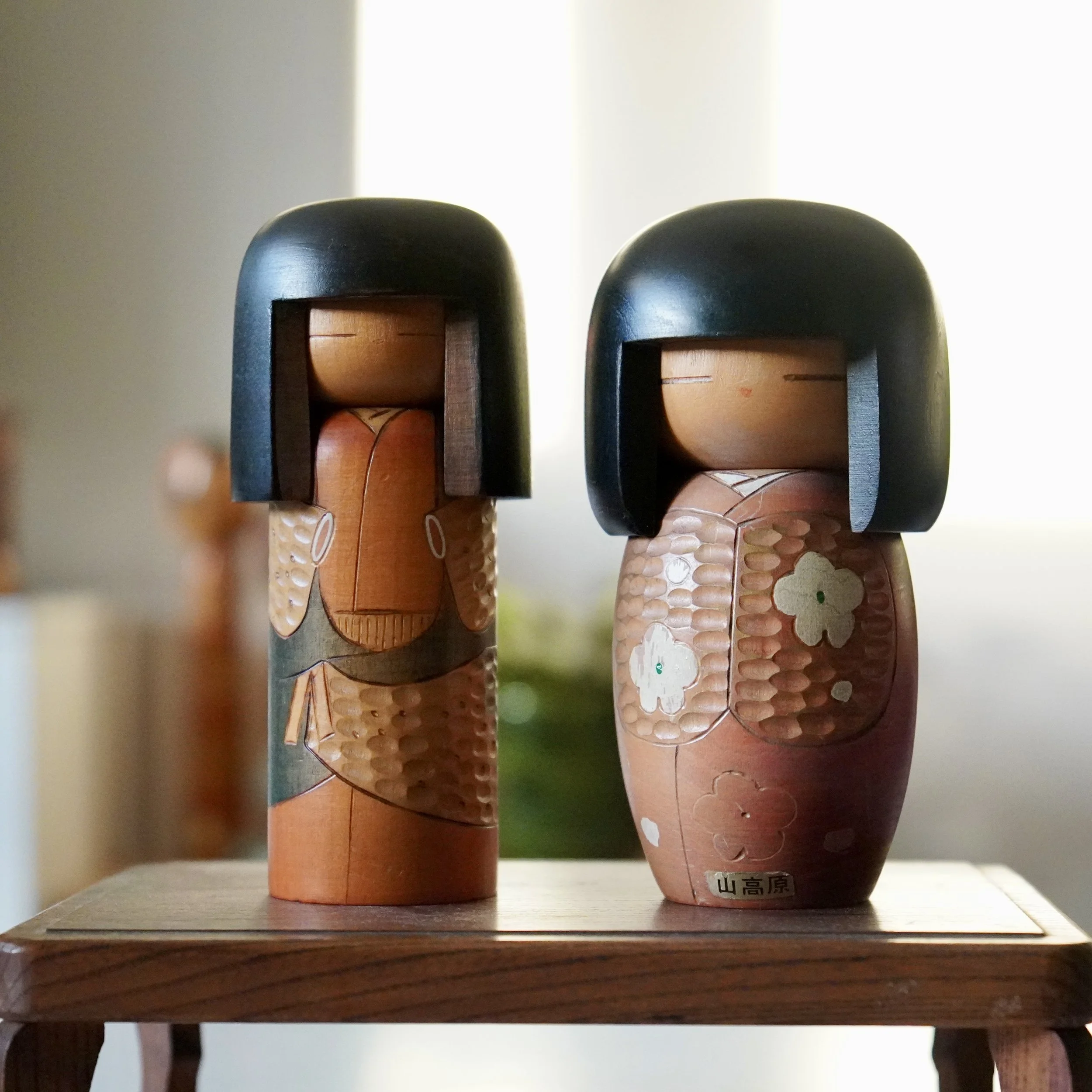
A week in the heartland of kokeshi: Fukushima. From climbing Mount Bandai before sunrise to studying the unique facial expressions in the work of masters like Ichiro and Sato Fumio. Discover how the landscape and deep-rooted woodcarving traditions shape these authentic vintage treasures.
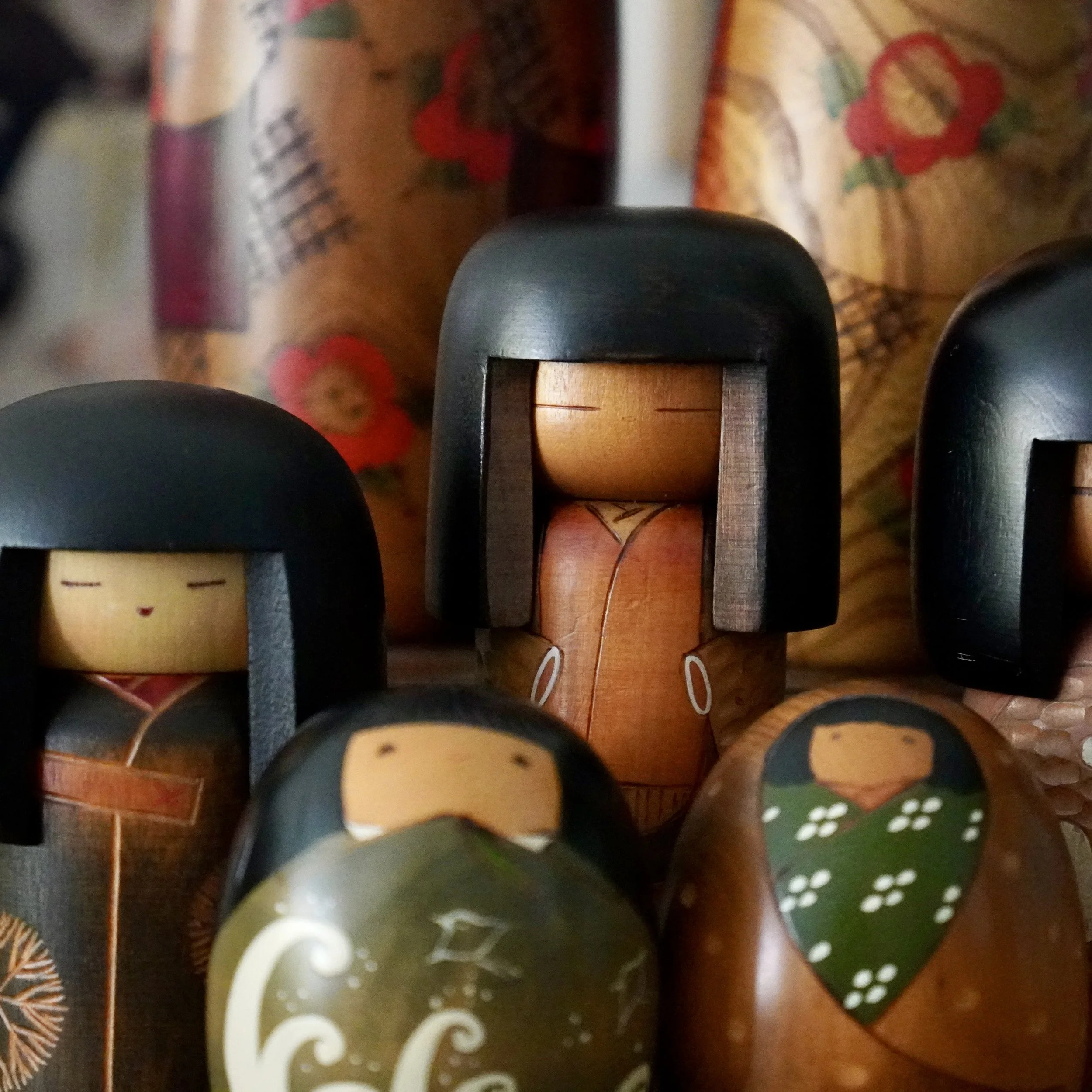
What draws you to a kokeshi is rarely the name on the base. It is the grain showing through the dark wood, the mark the tool left, and the two lines that somehow become a face. A close look at how makers like Usaburo and Sansaku Sekiguchi work with and against the wood itself.
This chawan is lighter than it looks, which is the first thing you notice picking it up. The rim stays fairly calm, an even white, but your eye drops toward the base and that is where the crackle really lives, dense and a little chaotic compared to the rim above it, tea stains settled into every line of it. Someone used this bowl, and used it often enough that its history is written right into the glaze. Outside there is less drama. The white just fades out unevenly on its way down, and somewhere before the foot it gives up entirely, leaving bare reddish clay that is rough enough to feel the difference with your thumb.
This piece carries the signature of Tamamura Shōgetsu, whose kiln in Hagi has stood since 1952. Hagi ware ages the way almost no other tea ceramic does, the glaze slowly taking on colour and character through use, something tea drinkers have a specific word for. The box has its own small story too: an inscription inside notes the bowl was given as a gift in May 1972, back when there was only one Shōgetsu working the kiln, since the name did not pass to a second generation until 1988.