
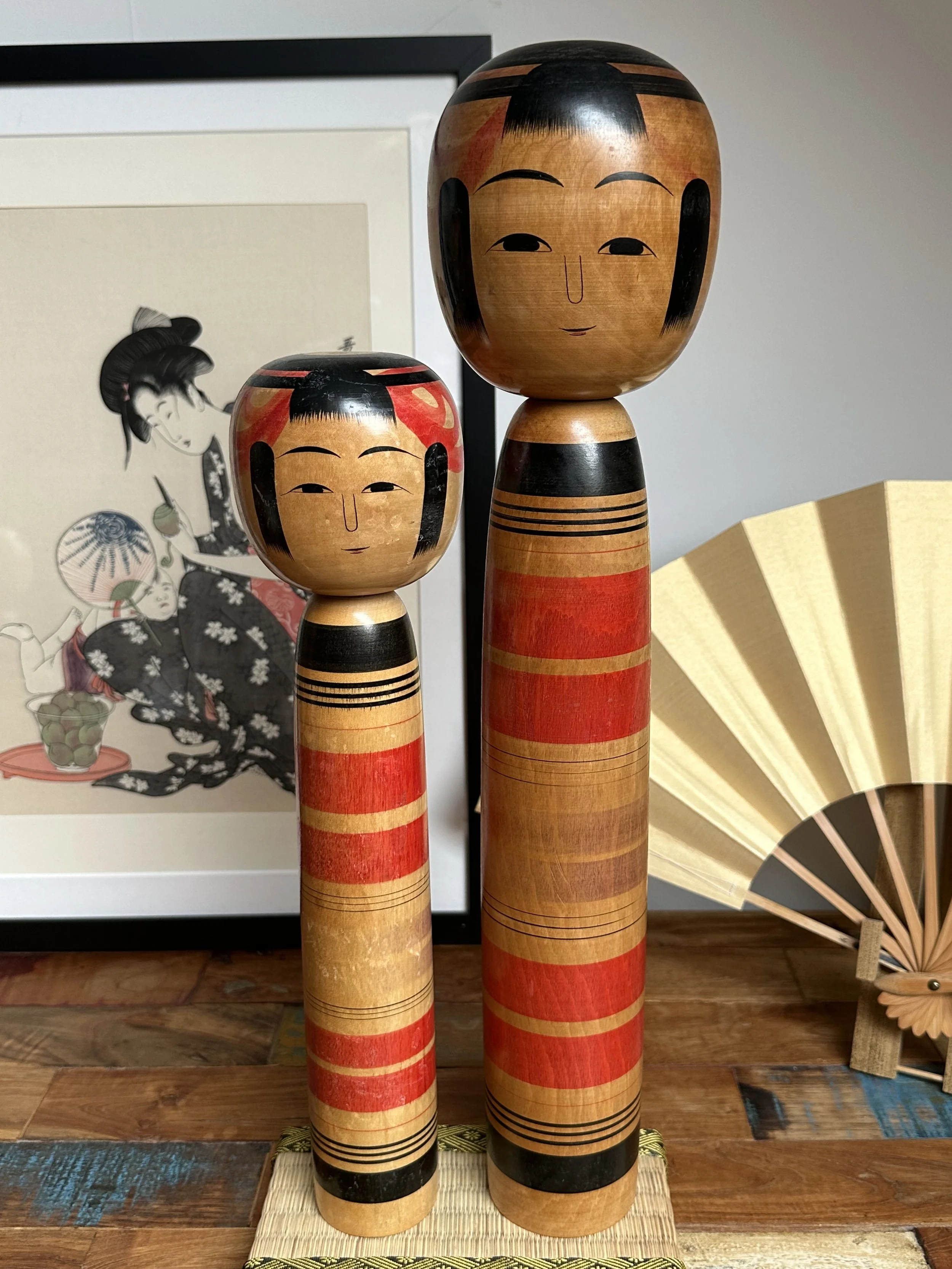
Meet the maker: Abe Ichirō
Abe Ichirō (阿部一郎) worked within the Matsunoya house of the Tsuchiyu tradition. This page is deliberately incomplete: an earlier attribution error involving this maker means his visual identification points still need physical reverification before they can be published with confidence.
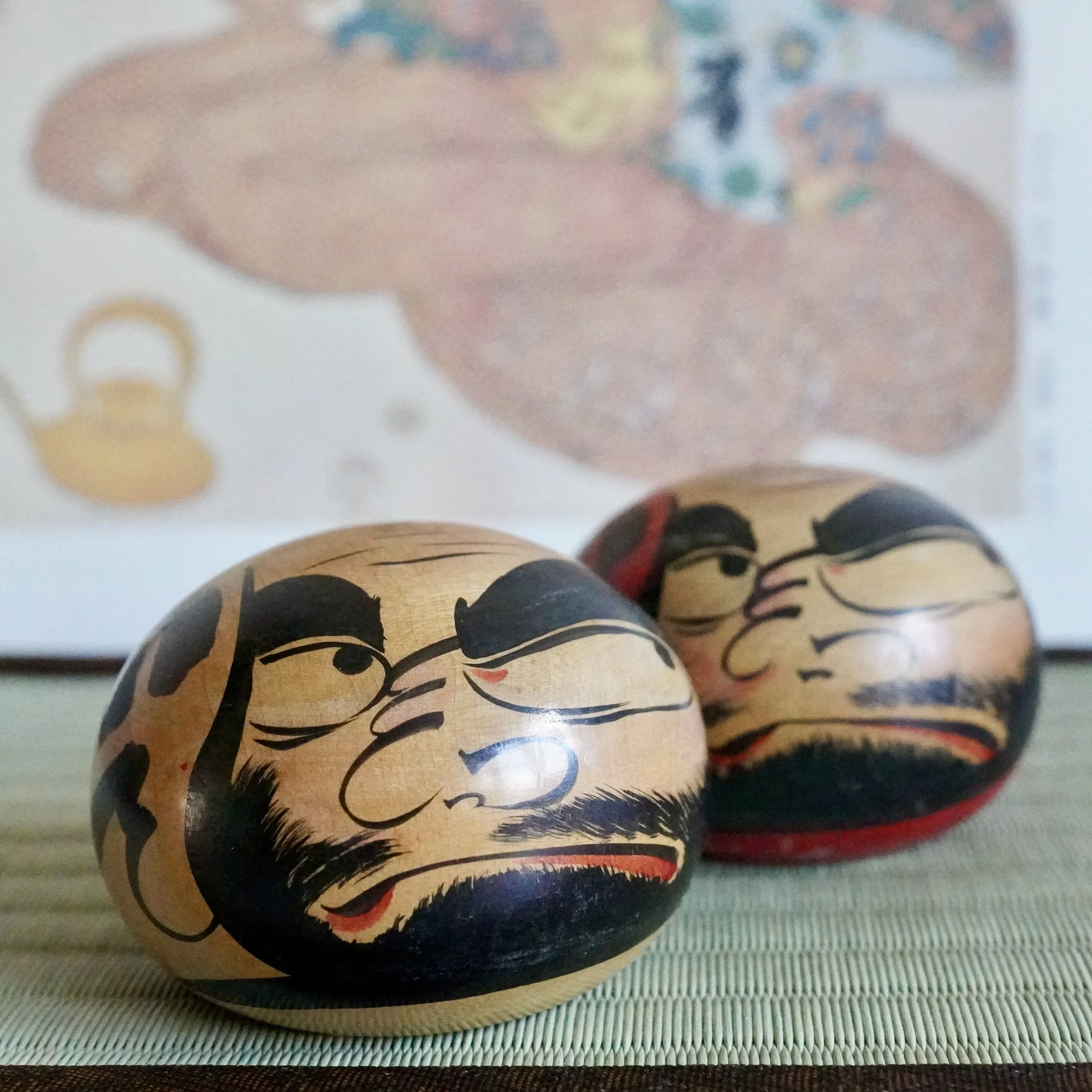
Meet the maker: Satō Zenji
Satō Zenji (1925 to 1985) was a Tsugaru kokeshi craftsman from Nuruyu Onsen, Kuroishi, Aomori, trained under master Mori Hidetarō. He helped revive the postwar Nuruyu kokeshi tradition, touring Japan to demonstrate the craft and training several apprentices. Learn how to recognise his signature and style.
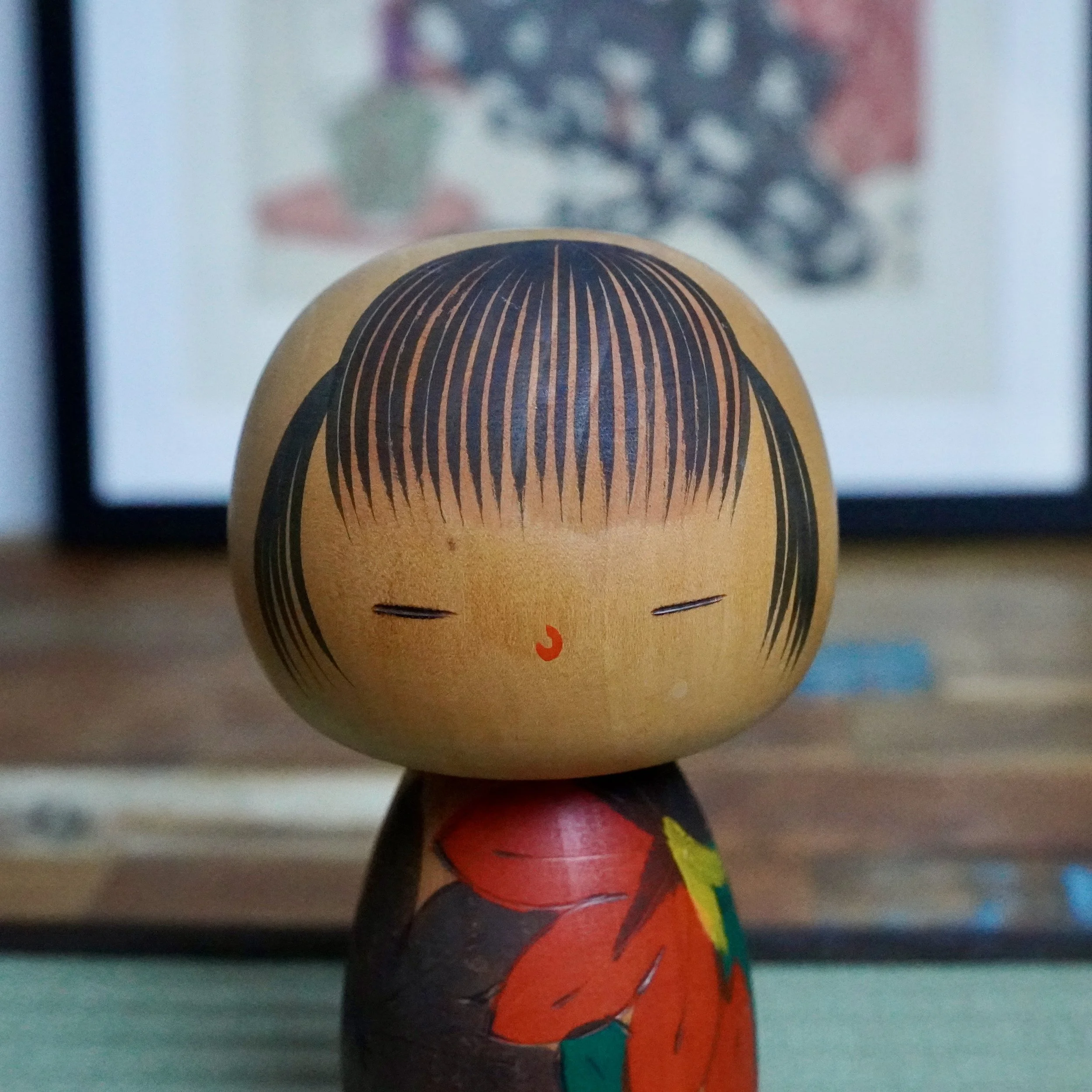
Meet the maker: Yuji Kawase
Yuji Kawase (川瀬祐志, b. 1938) is a sōsaku kokeshi maker from Kiryu, Gunma Prefecture, known for carved and painted autumn foliage, floral and botanical motifs, and warm, earthy colour palettes. His work received the Japan Modern Kokeshi Craftsman Association Award in 1973.
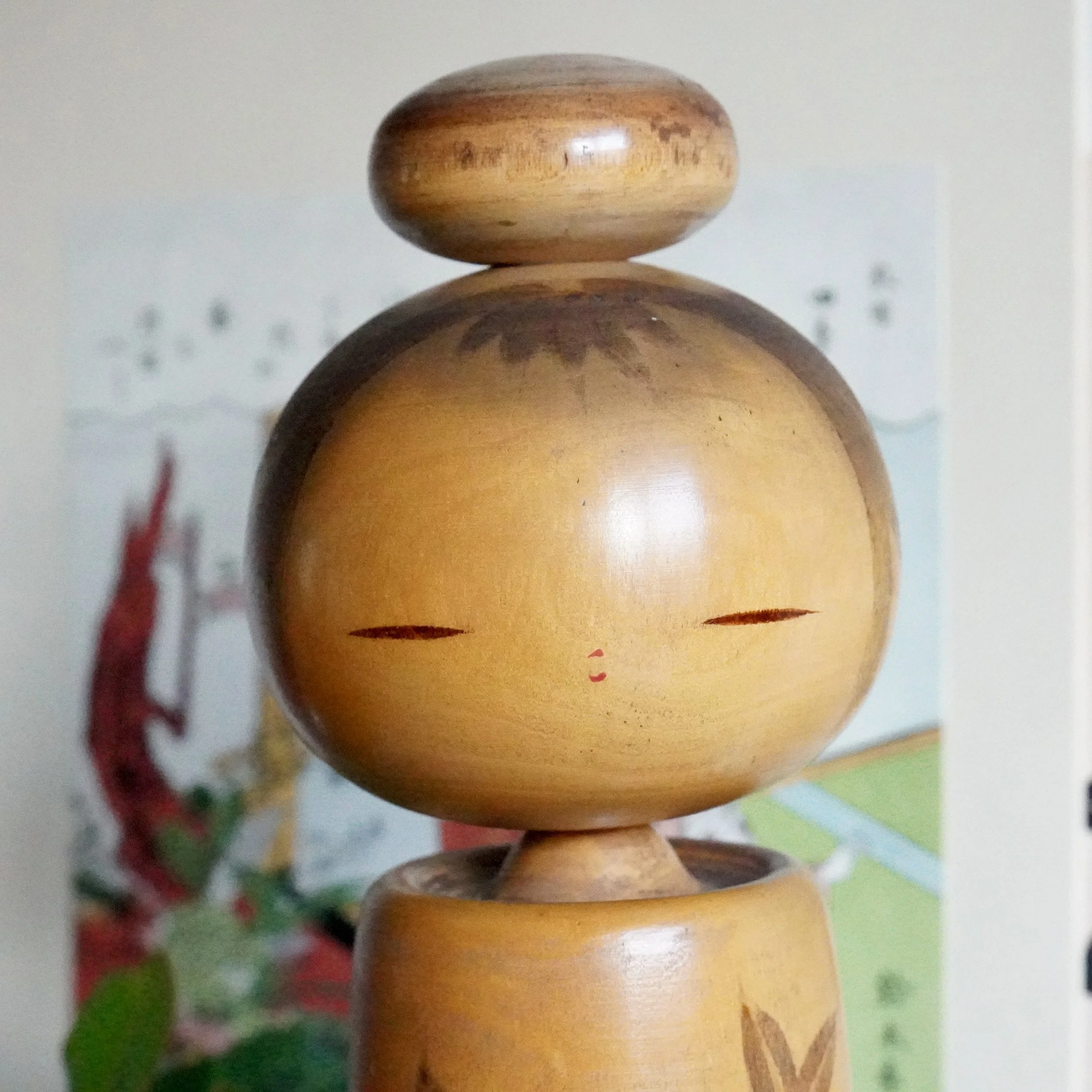
Meet the maker: Kano Chiyomatsu
Kano Chiyomatsu, born 1935 in Gunma prefecture, is an award winning sōsaku kokeshi artist whose work was twice presented to the Japanese Crown Prince and Crown Princess. His designs appeared in official Japanese middle school art textbooks between 1993 and 2001, and he received the Prime Minister's Award on multiple occasions.
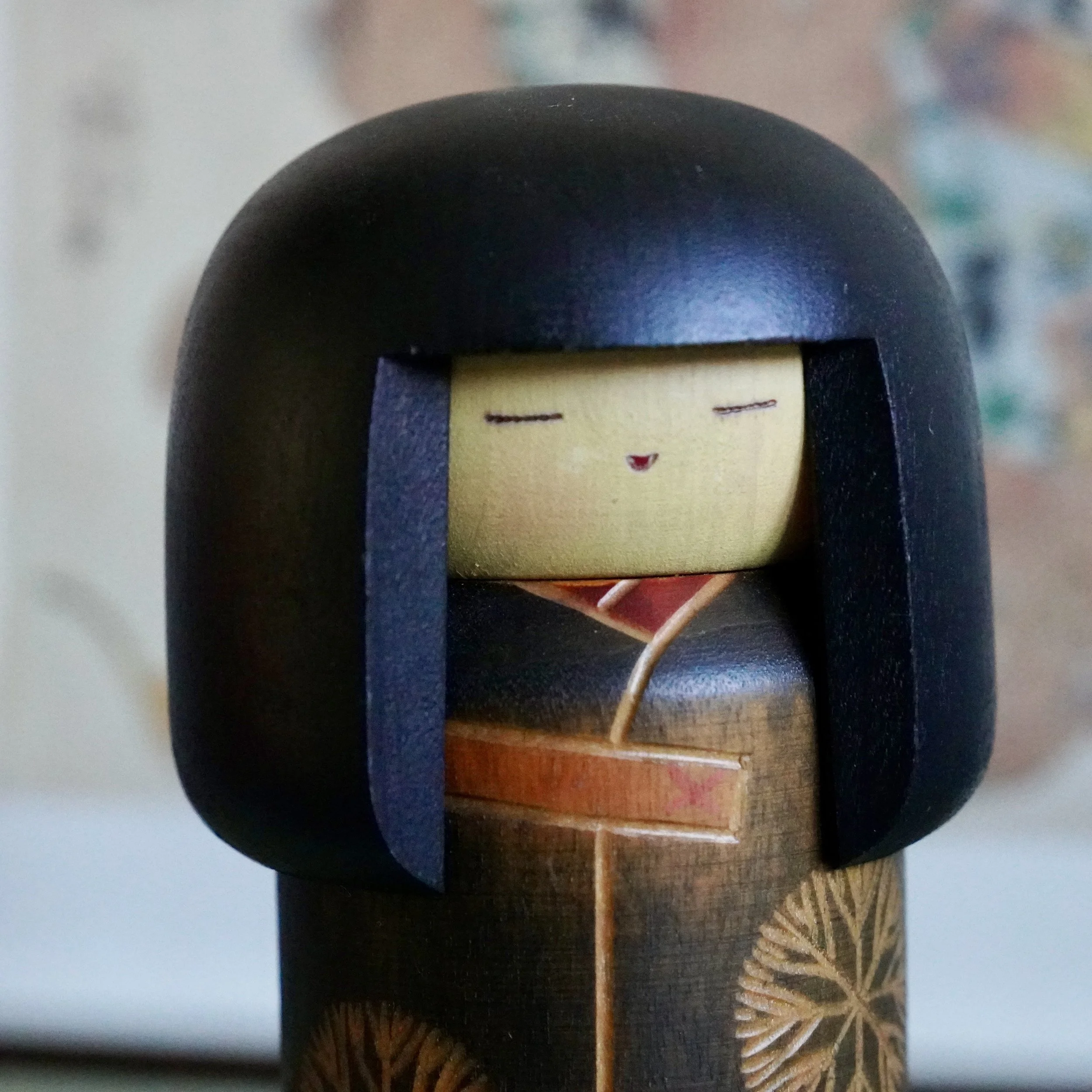
Meet the maker: Sekiguchi Sansaku
Sekiguchi Sansaku, born 1925 in Gunma prefecture, carved rather than painted his decoration, cutting kimono patterns straight into the wood. In 1978 he was designated a Contemporary Master Craftsman by the Japanese government. A survivor of wartime service in Manchuria and Siberian internment, he hoped his craft could carry a quiet wish for peace forward to new generations.
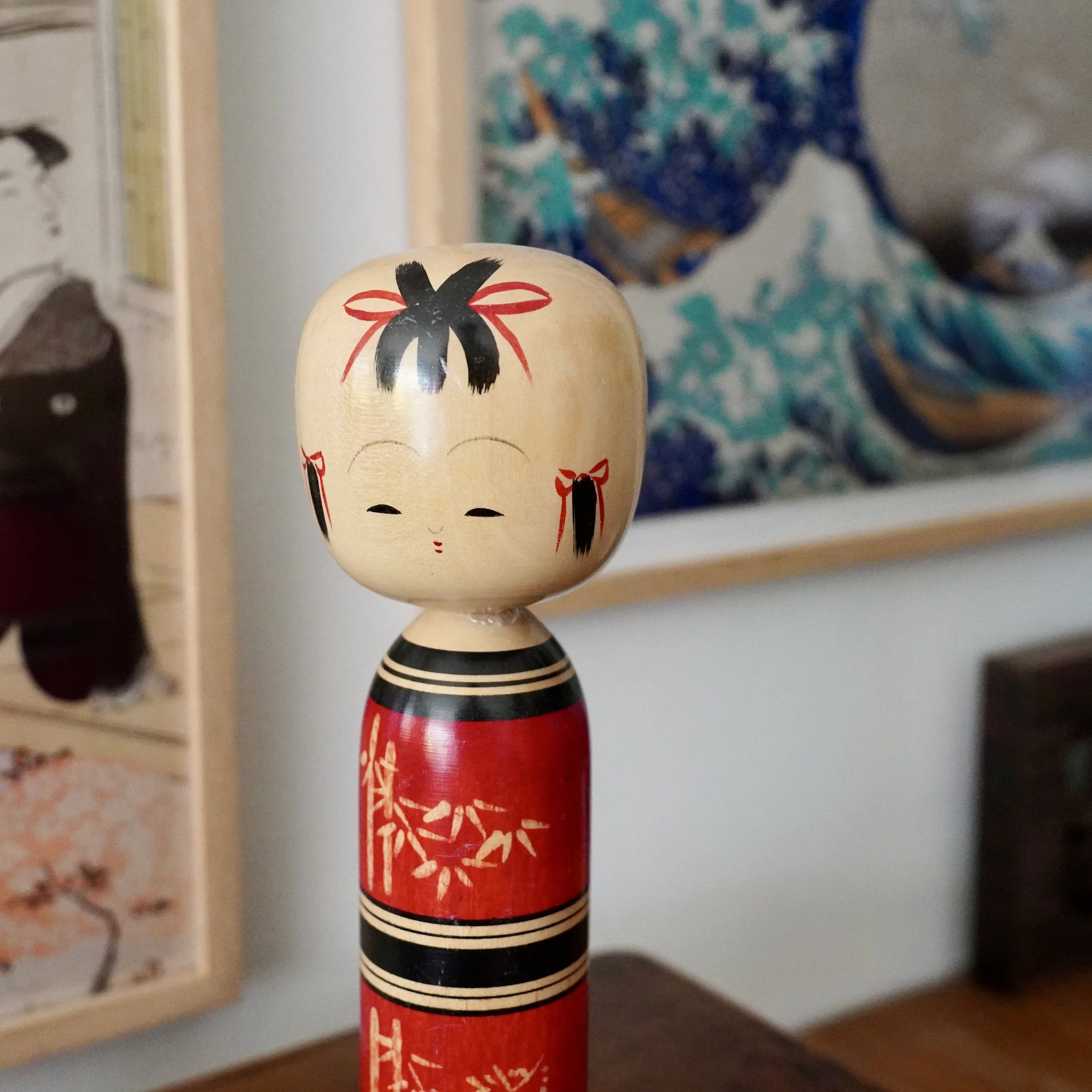
Meet the maker: Kawamura Shōji
Kawamura Shōji (川村昭治) was a Yamagata-kei dentō kokeshi maker from Miyagi Prefecture, active during the Shōwa period. His work spans both a traditional bamboo-motif register in bright red and black, and a darker, more abstract register worked in aged keyaki wood. Signed pieces carry a katakana hanko reading カワムラ (Kawamura).
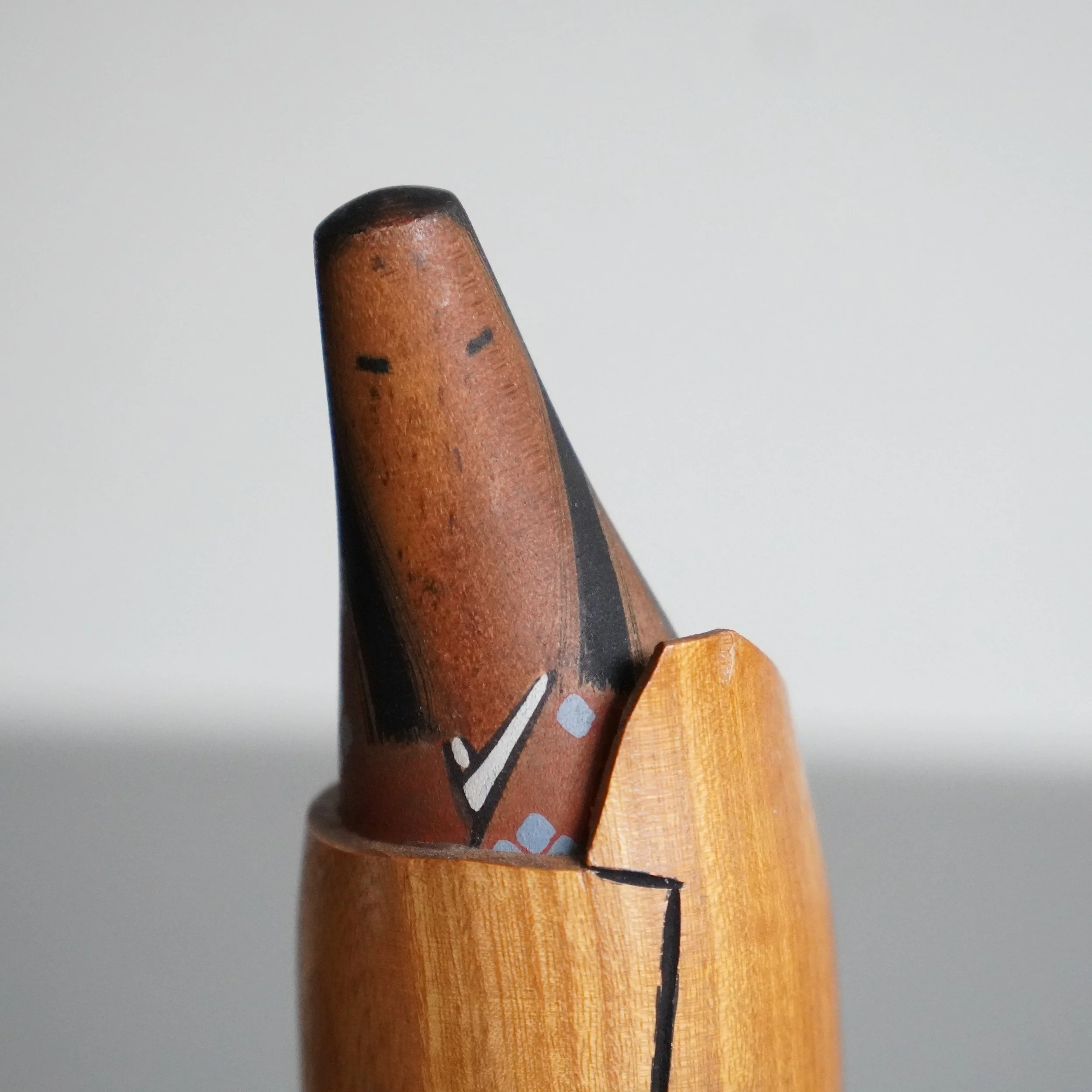
Meet the maker: Seiju Kon
Seiju Kon (aka Seijyu Kon), a sōsaku kokeshi artist trained in the Tsugaru tradition, best known for stylised Heian noblewomen in the oshinobi dōchū travelling incognito pose and Noh theatre figures, worked in naturally stained hinoki, paulownia, and cherry wood.
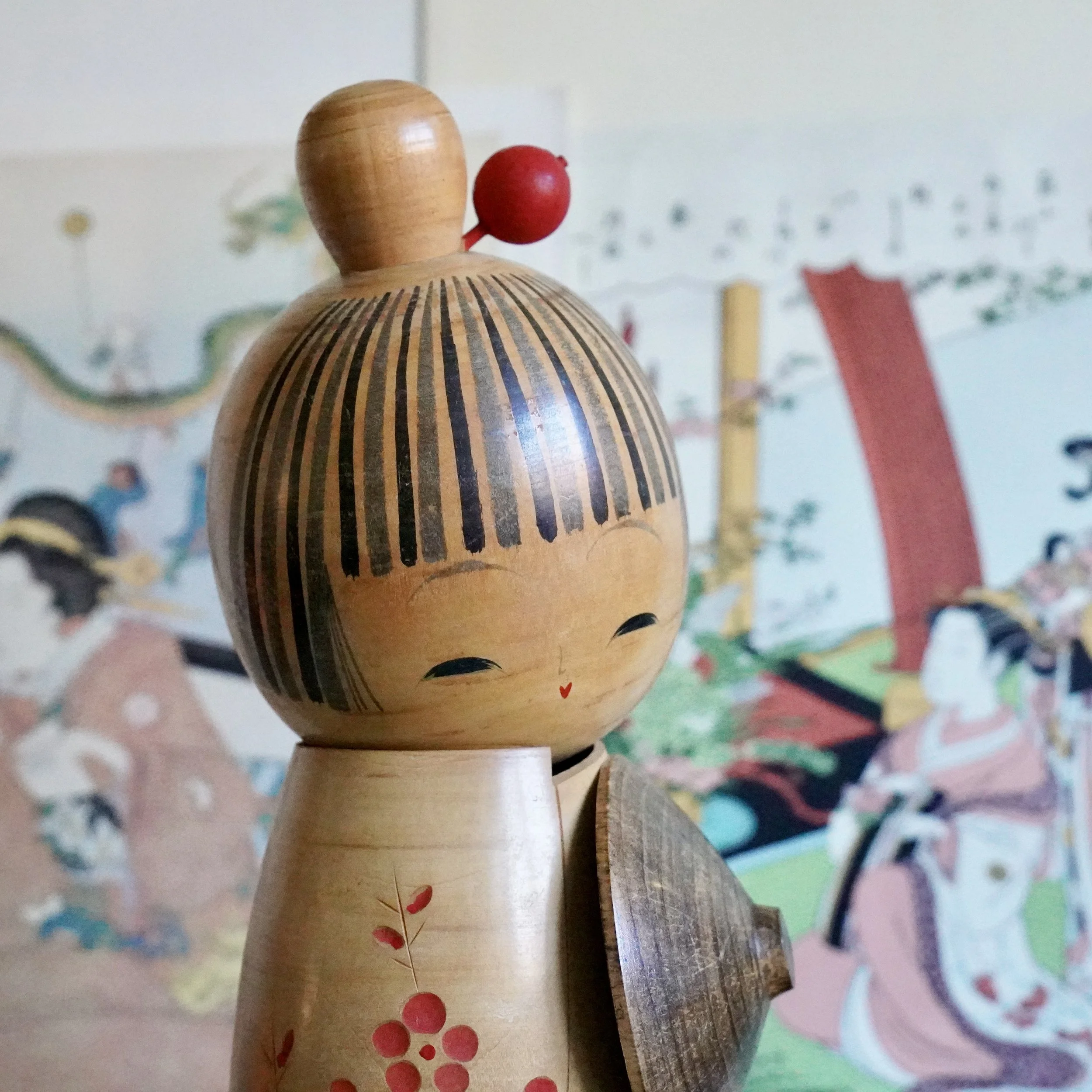
Meet the maker: Sato Suigai
Sato Suigai (1920), sōsaku kokeshi artist from Gunma Prefecture and winner of Japan's Prime Minister's Award. Known for carved plum blossom motifs, dowel-jointed kasa figures, and a signed output ranging from ambitious sculptural pieces to simpler lacquered and omiyage-style dolls.
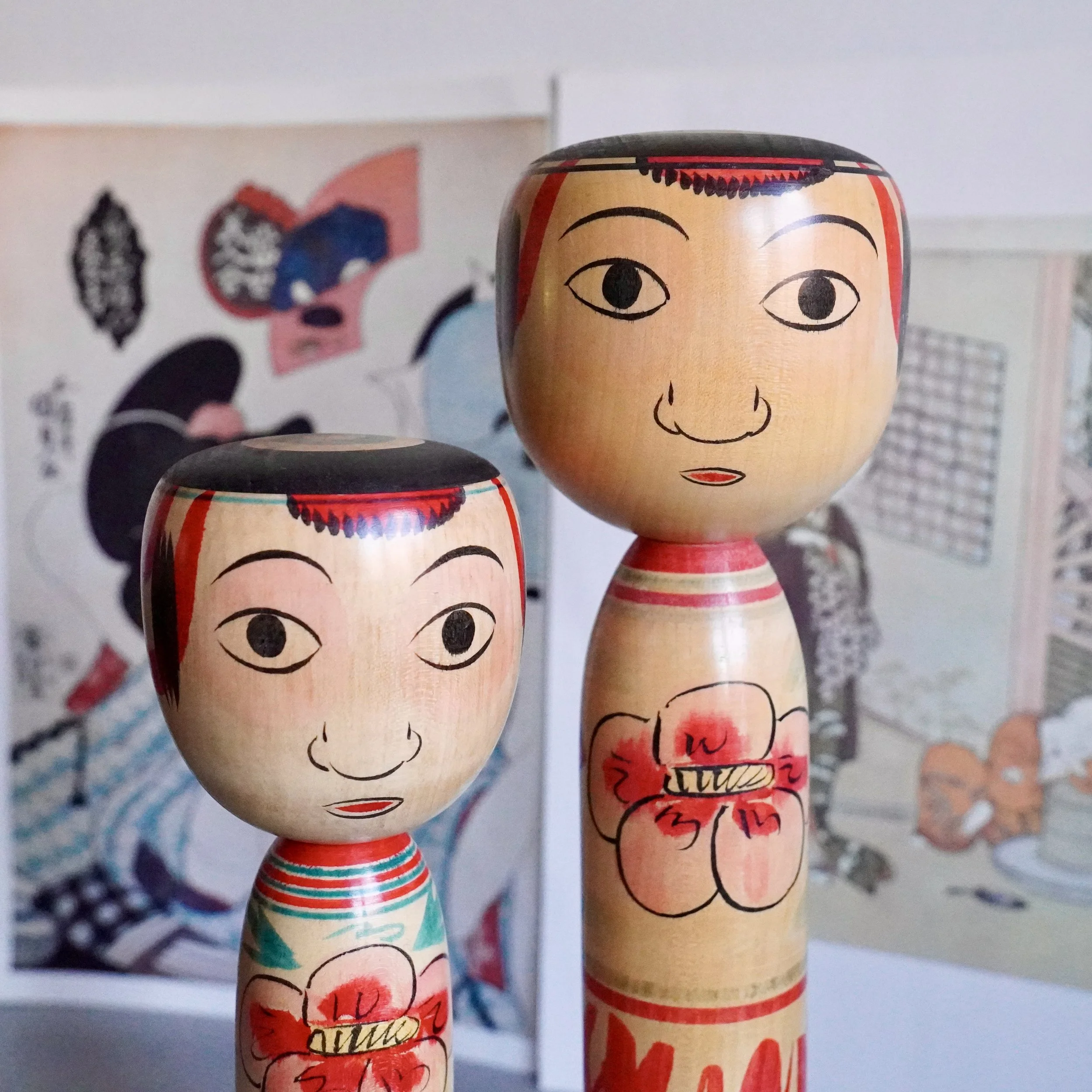
Meet the maker: Saito Tokuju
Saito Tokuju (1926 to 2021) apprenticed under Iwamoto Yoshizo in Nakanosawa and spent his working life making Takobozu kokeshi, becoming a central figure within the Takobozu no Kai. Meet the maker behind our signed Nakanosawa kokeshi.
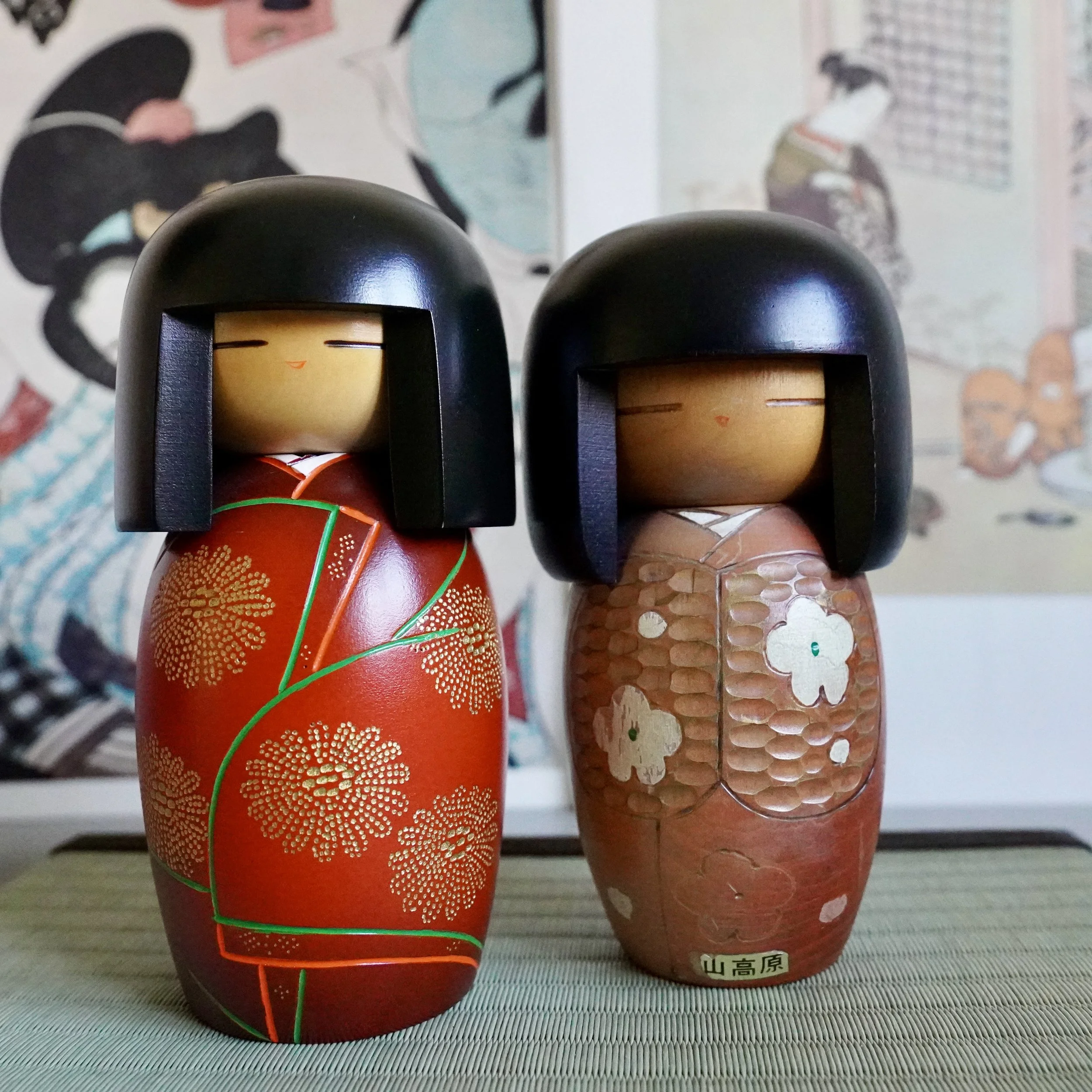
Meet the maker: Kisaku
A recognised sōsaku kokeshi signature from Gunma Prefecture, known for deep carved kimono patterns and a warm terracotta palette. No confirmed name, birthplace or biography has ever surfaced, only the mark itself and the work behind it.
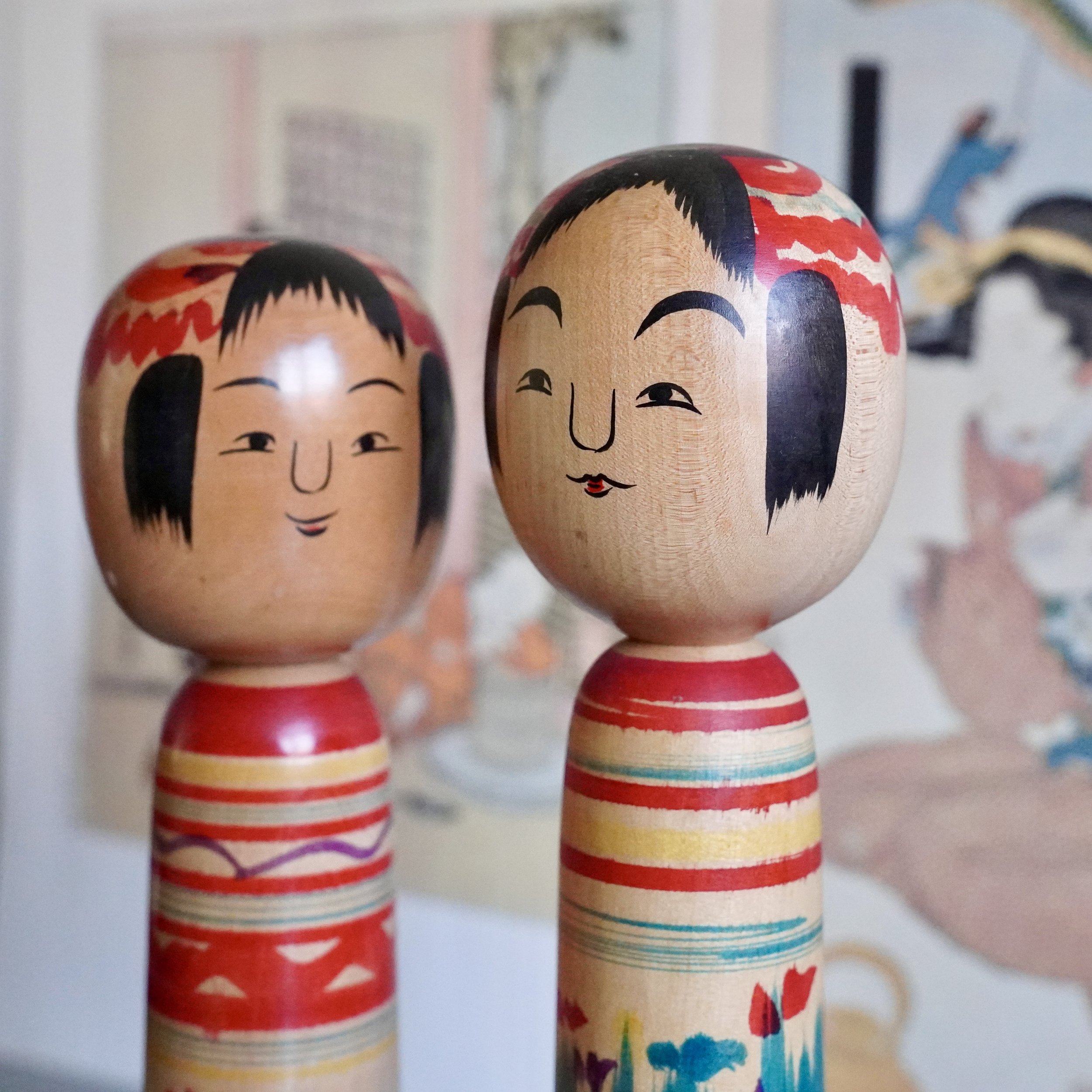
Meet the maker: Jinnohara Kazunori
A former restaurant owner in the hot spring village of Tsuchiyu, who picked up woodturning in his late thirties and spent the rest of his life reconstructing a kokeshi style that had nearly disappeared.
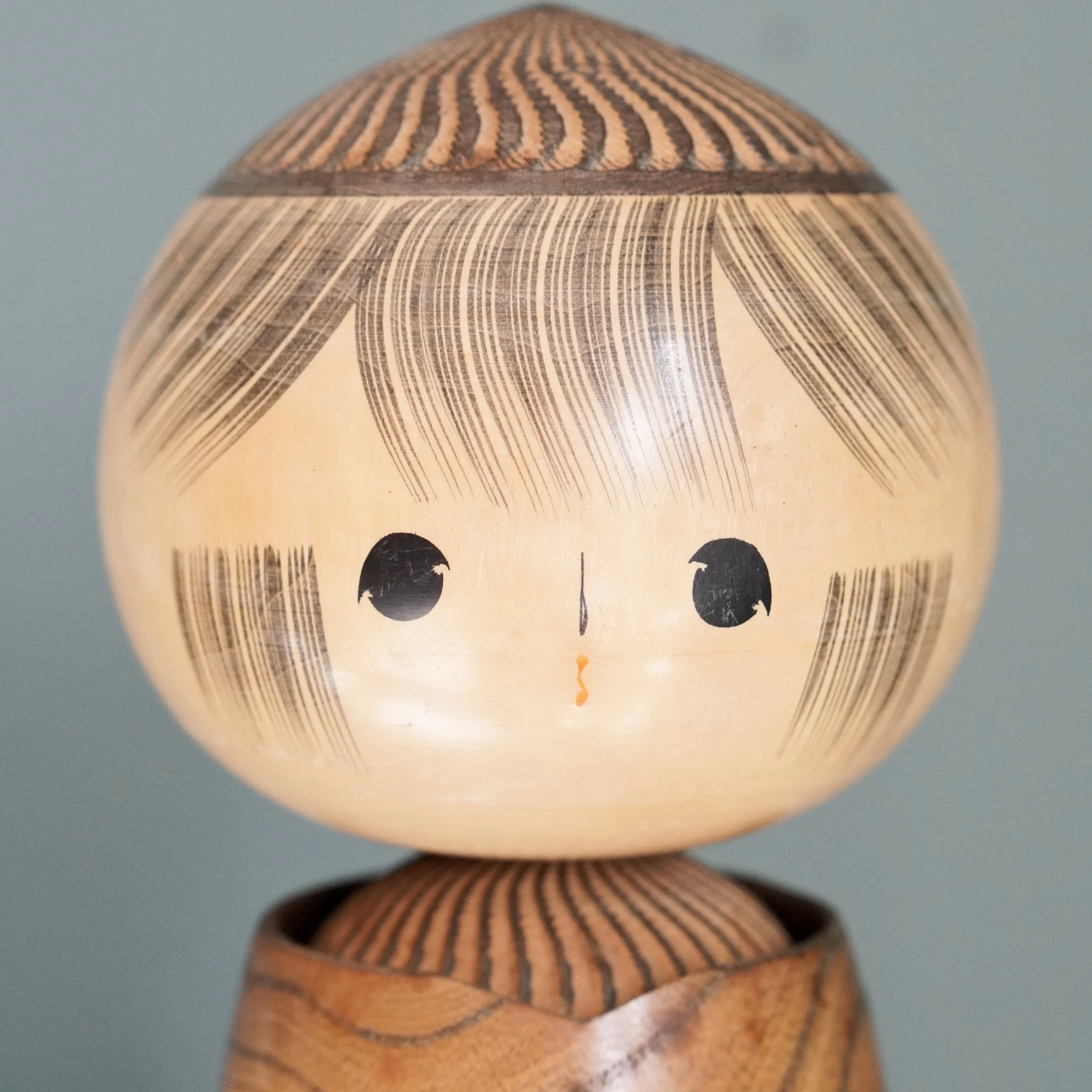
Meet the maker: Tamura Kōgei (Chie & Noboru Tamura)
A husband and wife workshop in Gunma, married over fifty years: his bare keyaki grain and quiet, downward gaze, her kawaii pigtails and occasional samurai figures, side by side under one roof.
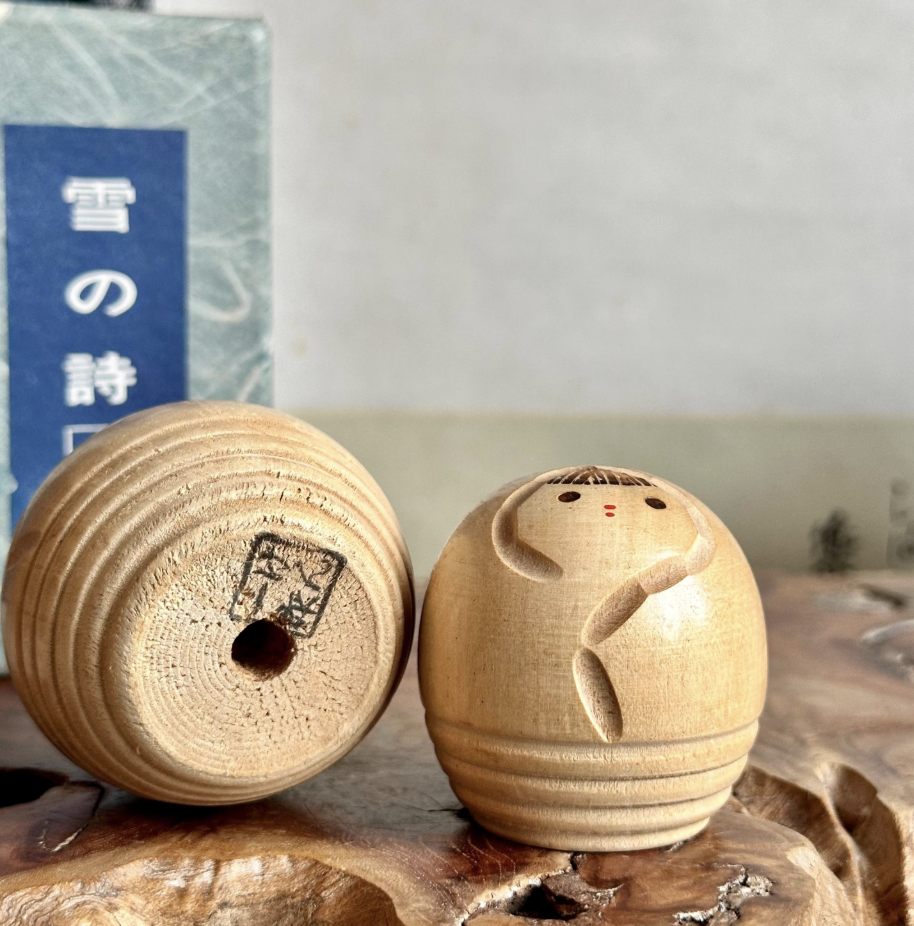
Meet the maker: Murakami Kenichi
Yamagata artist Kenichi who let the wood speak for itself, using bare grain and fine wood-burned lines instead of paint, and a recurring theme of quiet, half-hidden faces.
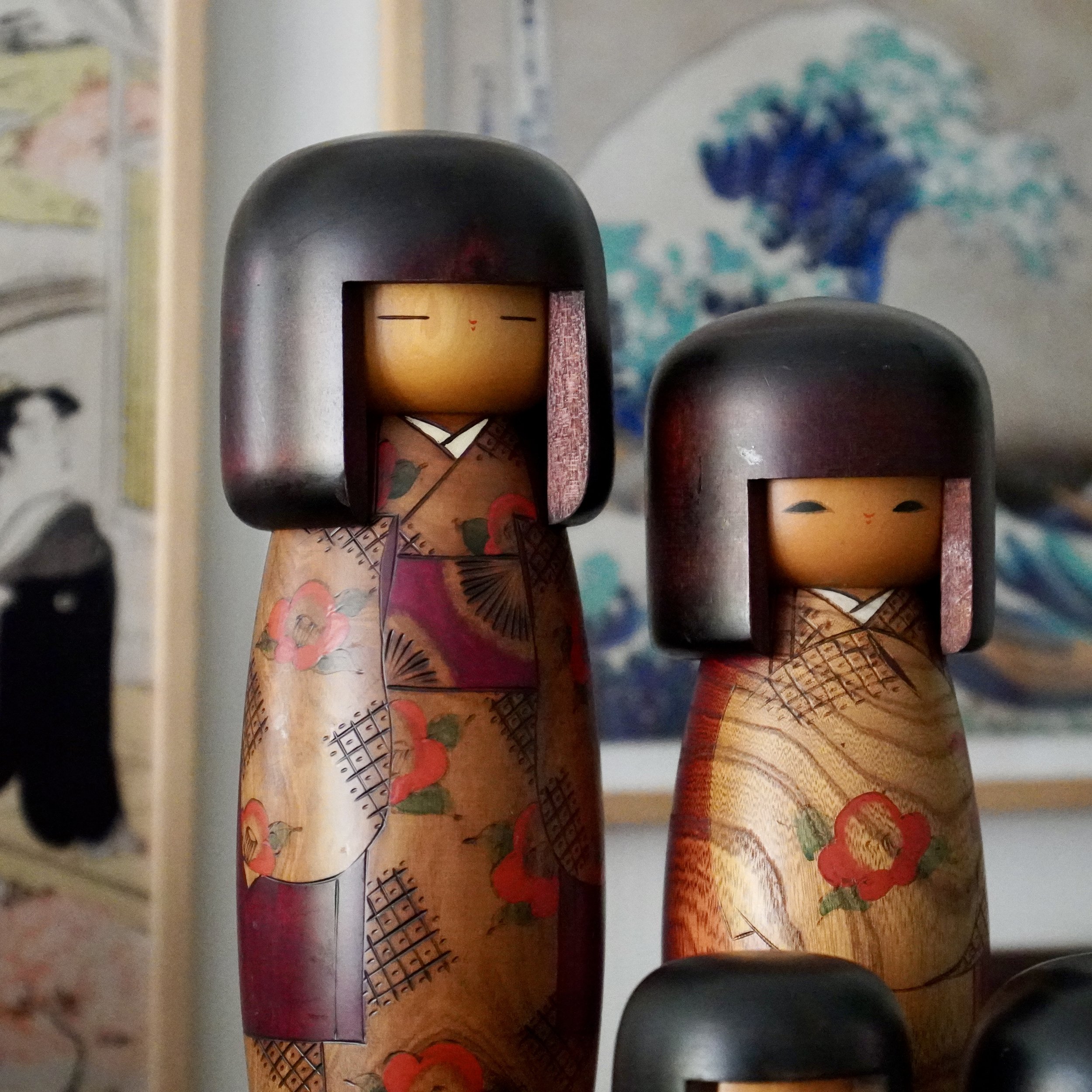
Meet the maker: Usaburō Kokeshi (founded by Okamoto Usaburō)
The founder of Usaburo Kokeshi, known for a carving and baking technique that gave his pieces a texture no other workshop attempted, and for the camellia design that once caught the eye of an emperor.