
Meet the maker: Usaburō Kokeshi (founded by Okamoto Usaburō)
Usaburō Kokeshi is a Japanese kokeshi workshop founded in 1950 by Okamoto Usaburō in Shinto Village, Gunma Prefecture. The studio grew through several artisans trained directly by its founder, including his son Yūji Okamoto, and later through two of Yūji's own sons. Pieces carry a red Usaburō workshop seal used across every artisan and generation, and some makers, including Yūji, also sign select pieces personally. The workshop has been recognised with the Prime Minister's Award and the Minister of International Trade and Industry Award, among others.
Who was Usaburō
Usaburō Kokeshi began in 1950, when Okamoto Usaburō (岡本卯三郎, 1917 to 2009) founded his workshop in Shinto Village, Gunma Prefecture, after years working with artificial stone and metal crafts of his own invention. Once he turned to kokeshi, he developed a technique of carving into the wood and lightly baking the cuts, giving his pieces a three-dimensional, textured surface that few other workshops attempted at the time.
He also worked with wood species long considered unsuitable for kokeshi, including keyaki and chestnut, expanding what the form could look like. His piece Kantsubaki, Camellia in Winter, was purchased by Emperor Shōwa, and among his honours were both the Prime Minister's Award and the Minister of International Trade and Industry Award.
Usaburō trained his 3 children and 2 grandchildren directly, so the workshop expanded as a family enterprise through multiple heirs rather than relying on a single successor.
His son, Yūji Okamoto (岡本有司), born in Shibukawa City in 1948, studied under him from the age of twenty-two and became the maker most associated with continuing the studio, later recognised by Gunma Prefecture in 2013 for his role in leading the region's creative kokeshi industry.
Working alongside Yūji, also trained directly by the first Usaburō, was his daughter Yoshie Okamoto, who in 1985 became the first woman to win the Prime Minister's Award at the All Japan Kokeshi Contest.
And his second son Nobuyuki Ishisone with his wife Yachiyo Ishisone, both of whom developed their own recognised styles within the workshop.
Yūji himself went on to receive the Prime Minister's Award, the Minister of International Trade and Industry Award, and the Minister of Education, Culture, Sports, Science and Technology Award at the National Modern Kokeshi Exhibition in 1997.
Two of Yūji's sons carried the workshop into a further generation. Yoshihiro Okamoto, born in 1972, trained under the first Usaburō from the age of twenty and works with a dynamic style that leans into the natural grain and texture of the wood. Hiroyuki Okamoto, born in 1974, is known for kokeshi with a design language that appeals to children, work that led him to found kokechi, his own line of kokeshi made under the craftsman name Usaburō's grandson. The workshop remains active in Shinto Village today, still working from locally sourced Gunma timber.
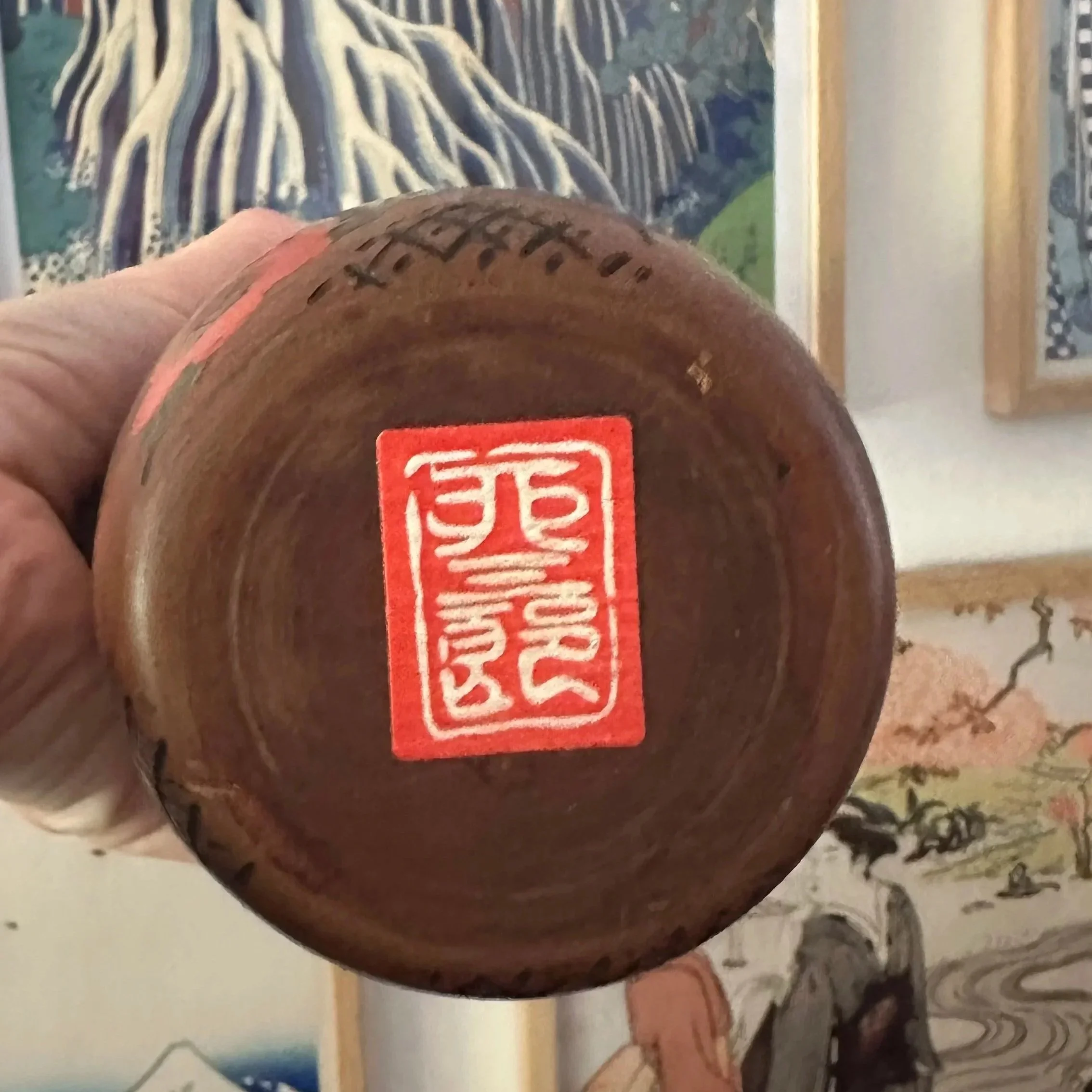
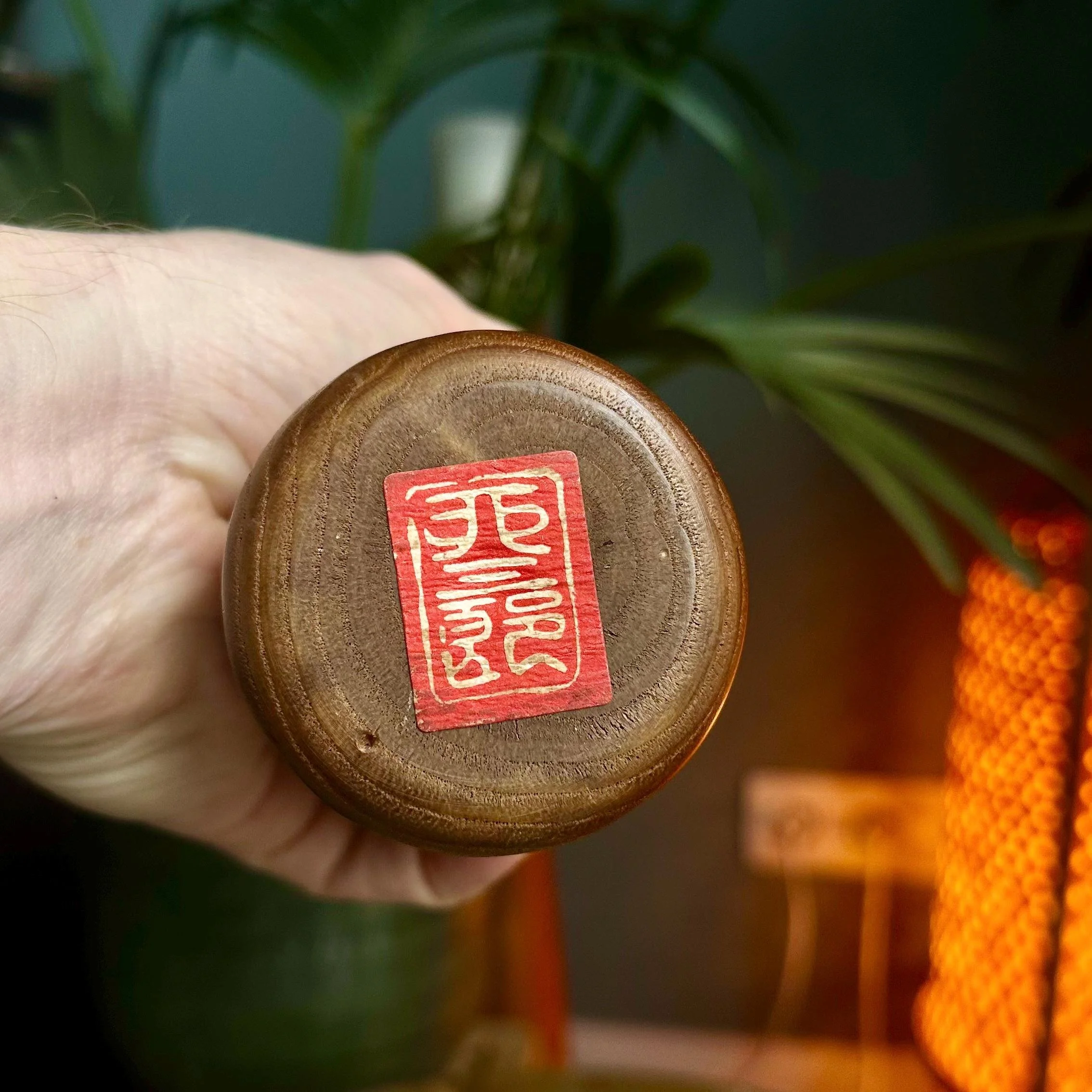
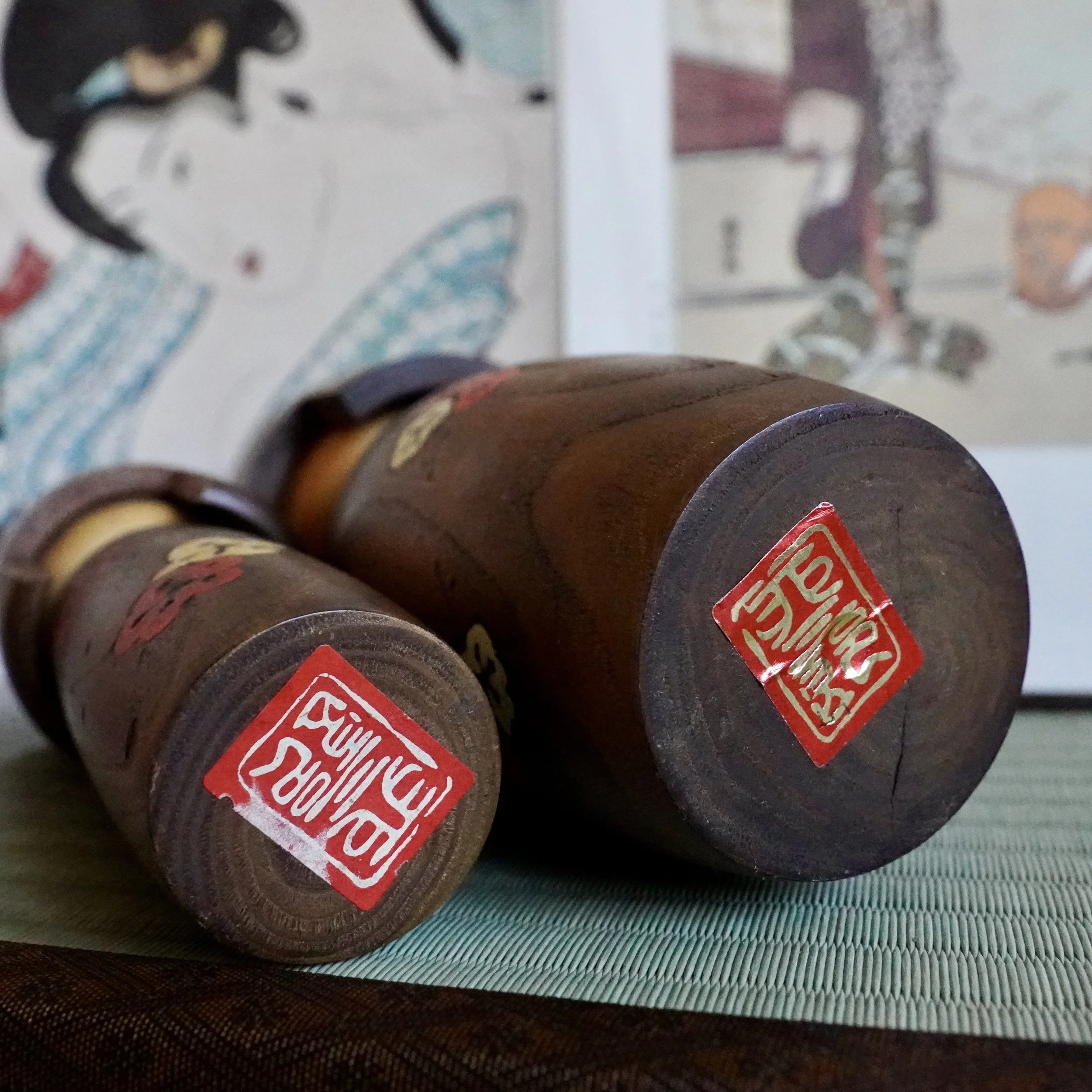
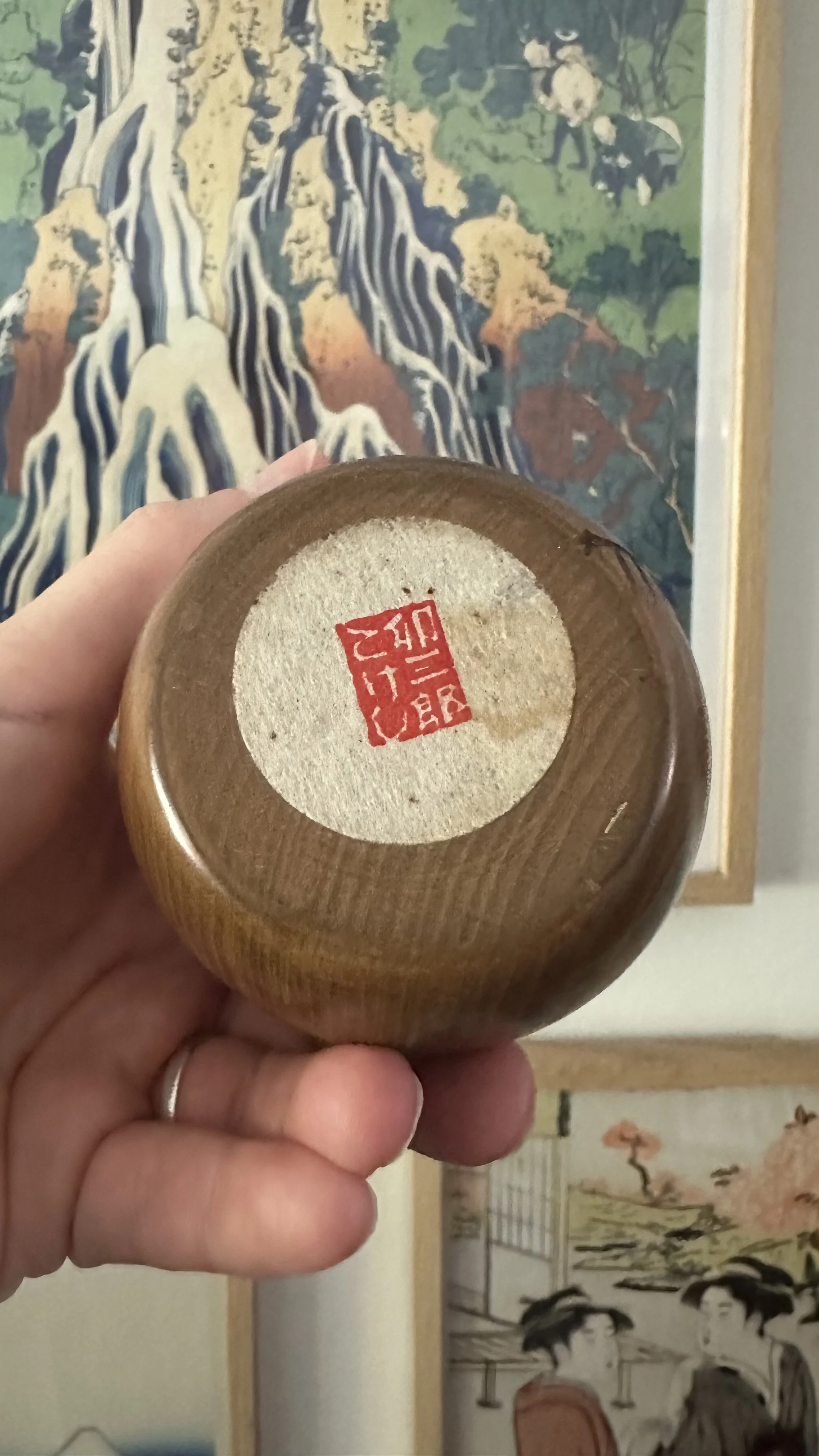
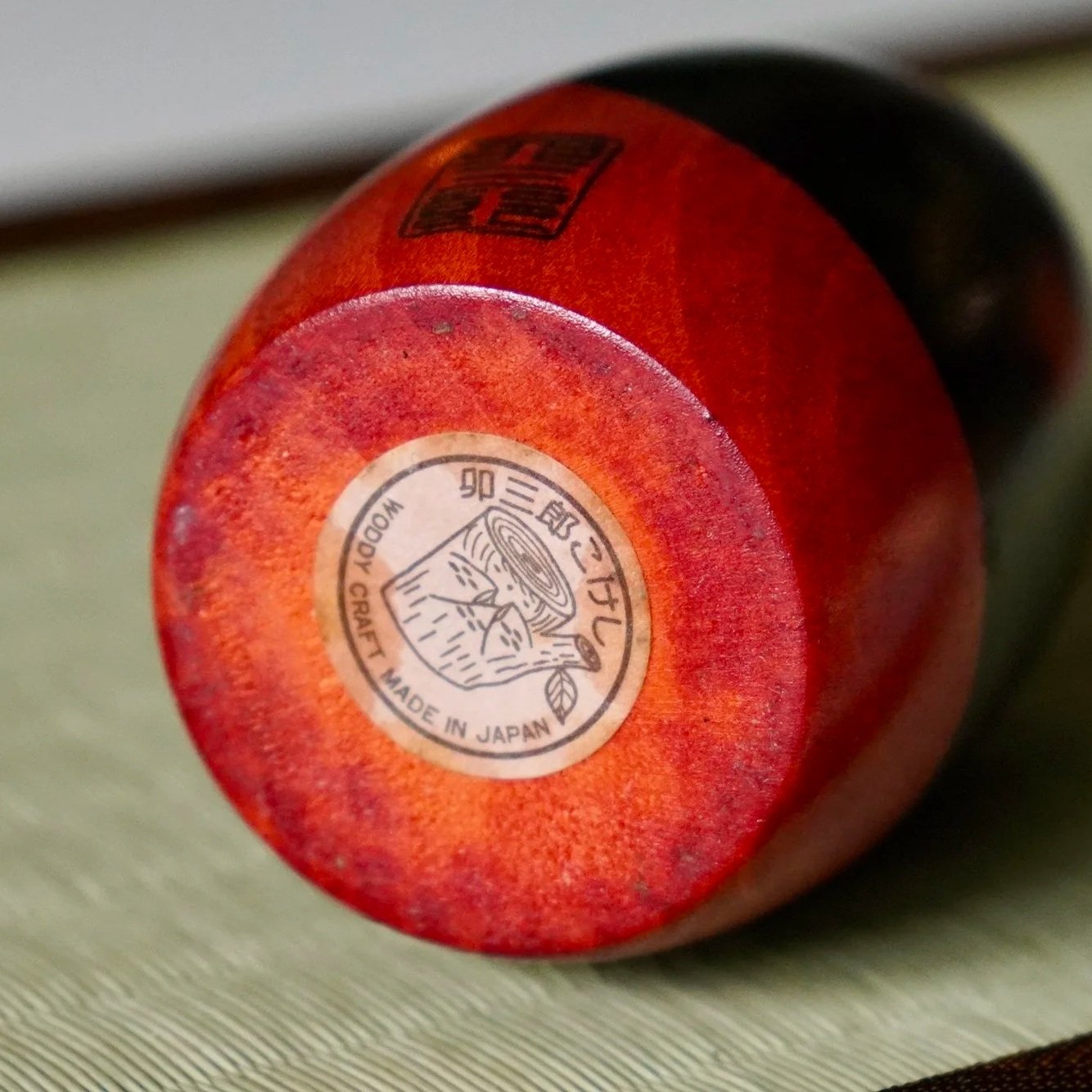
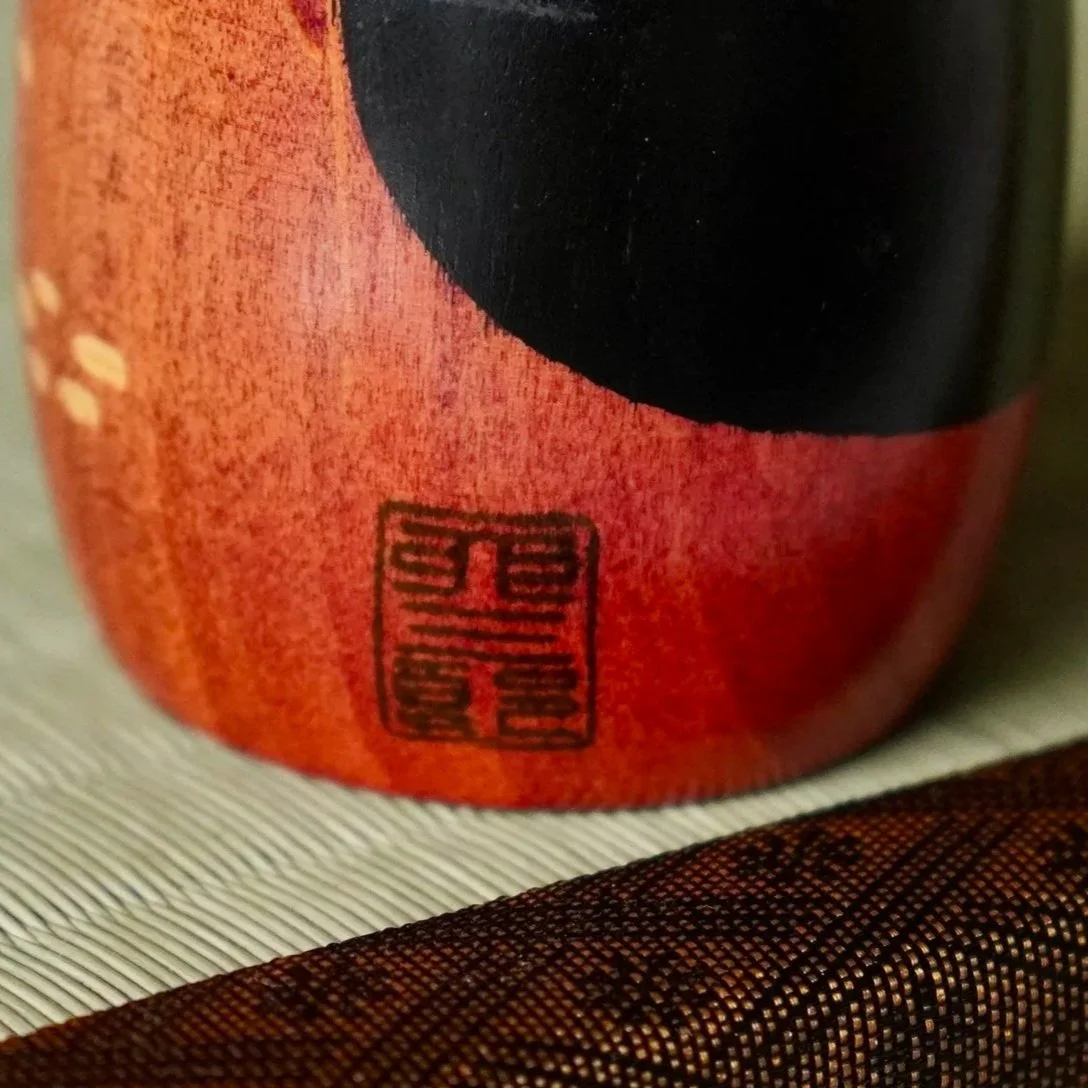
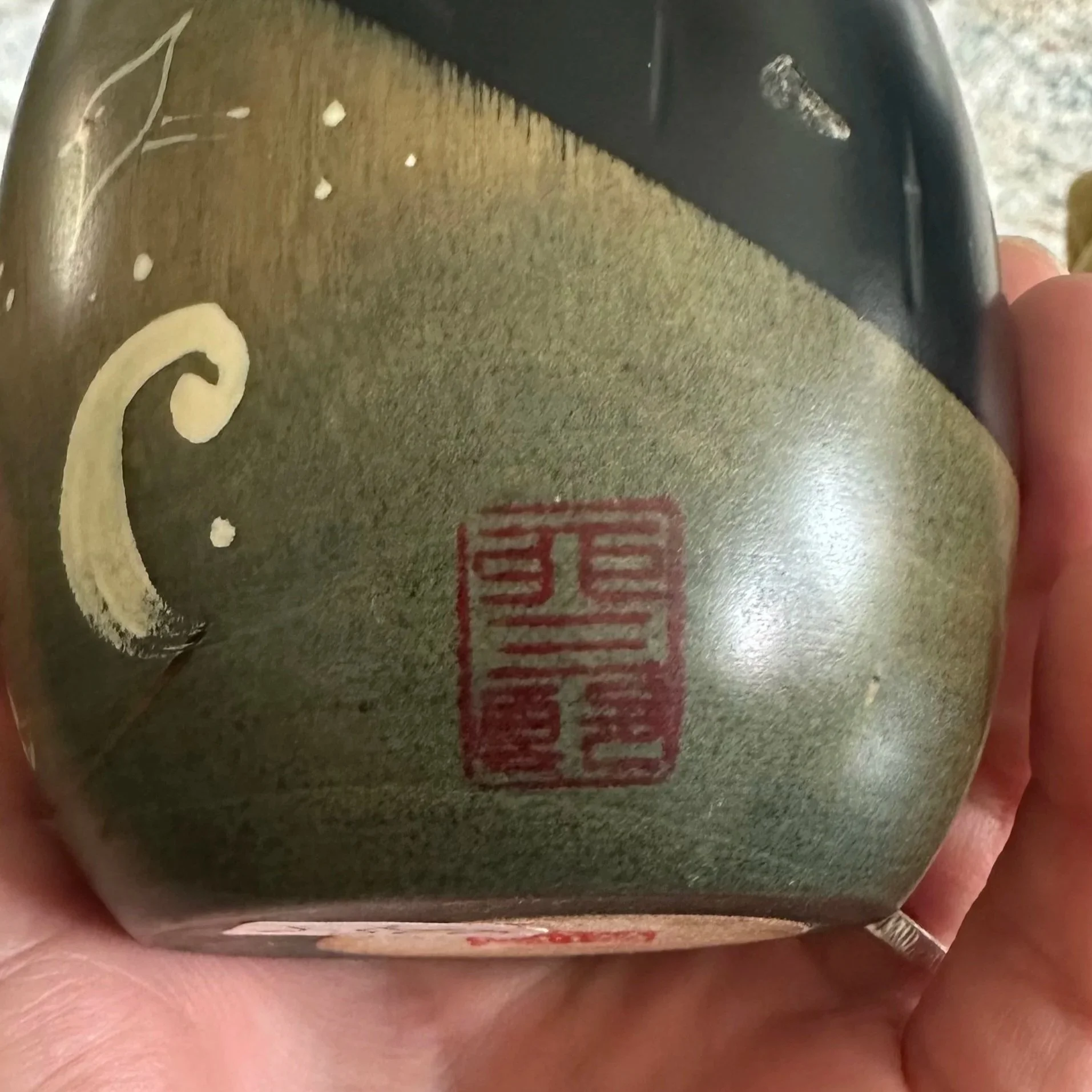
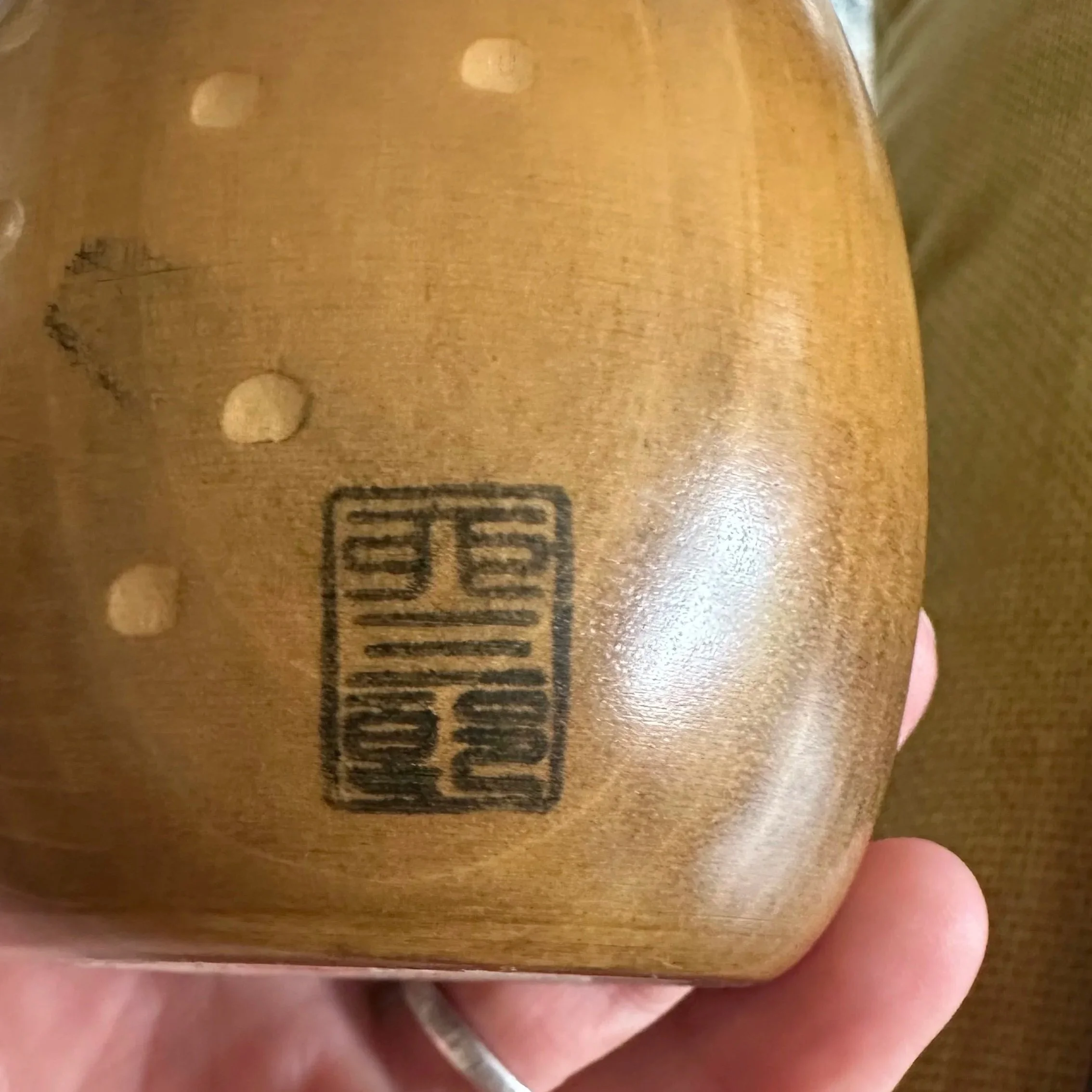
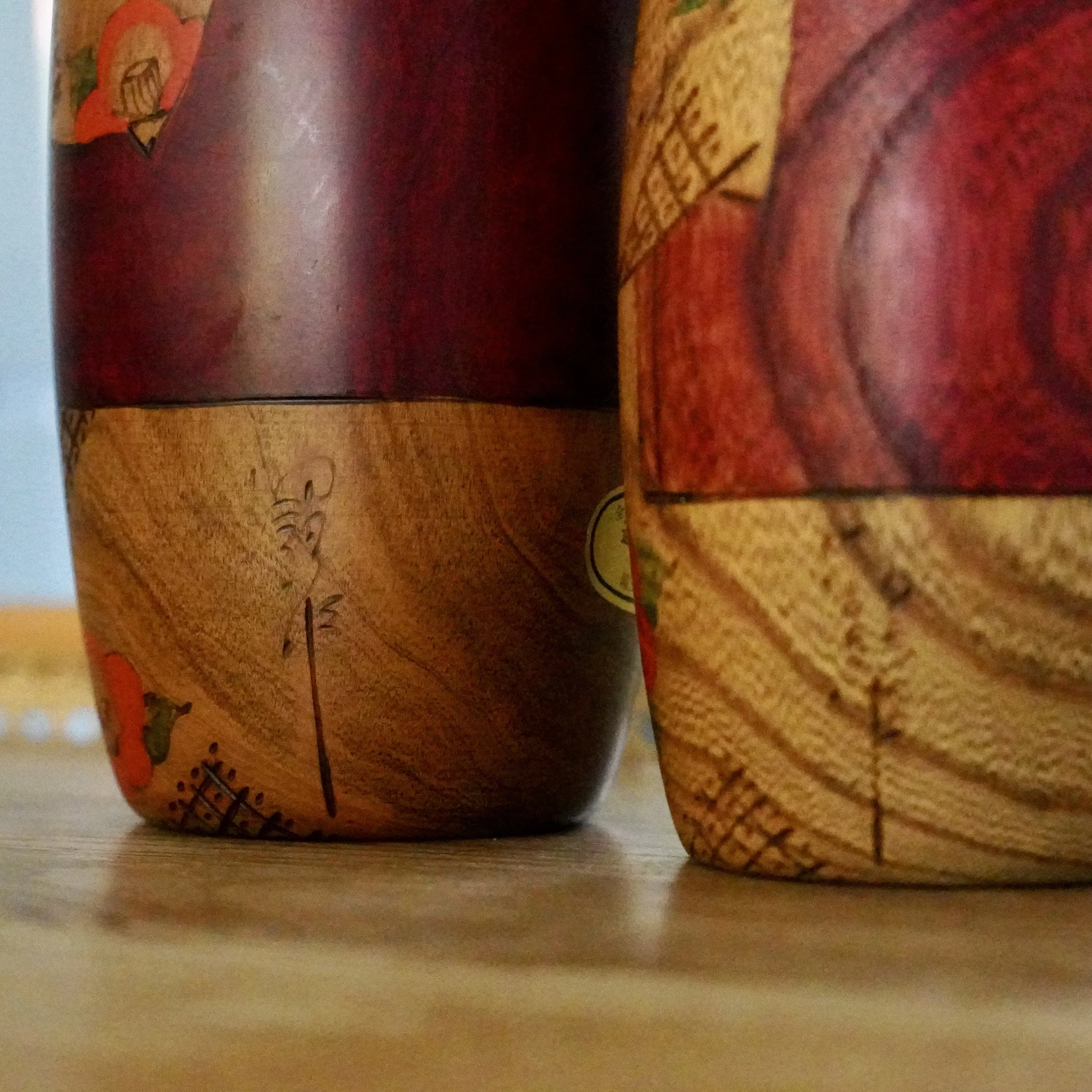
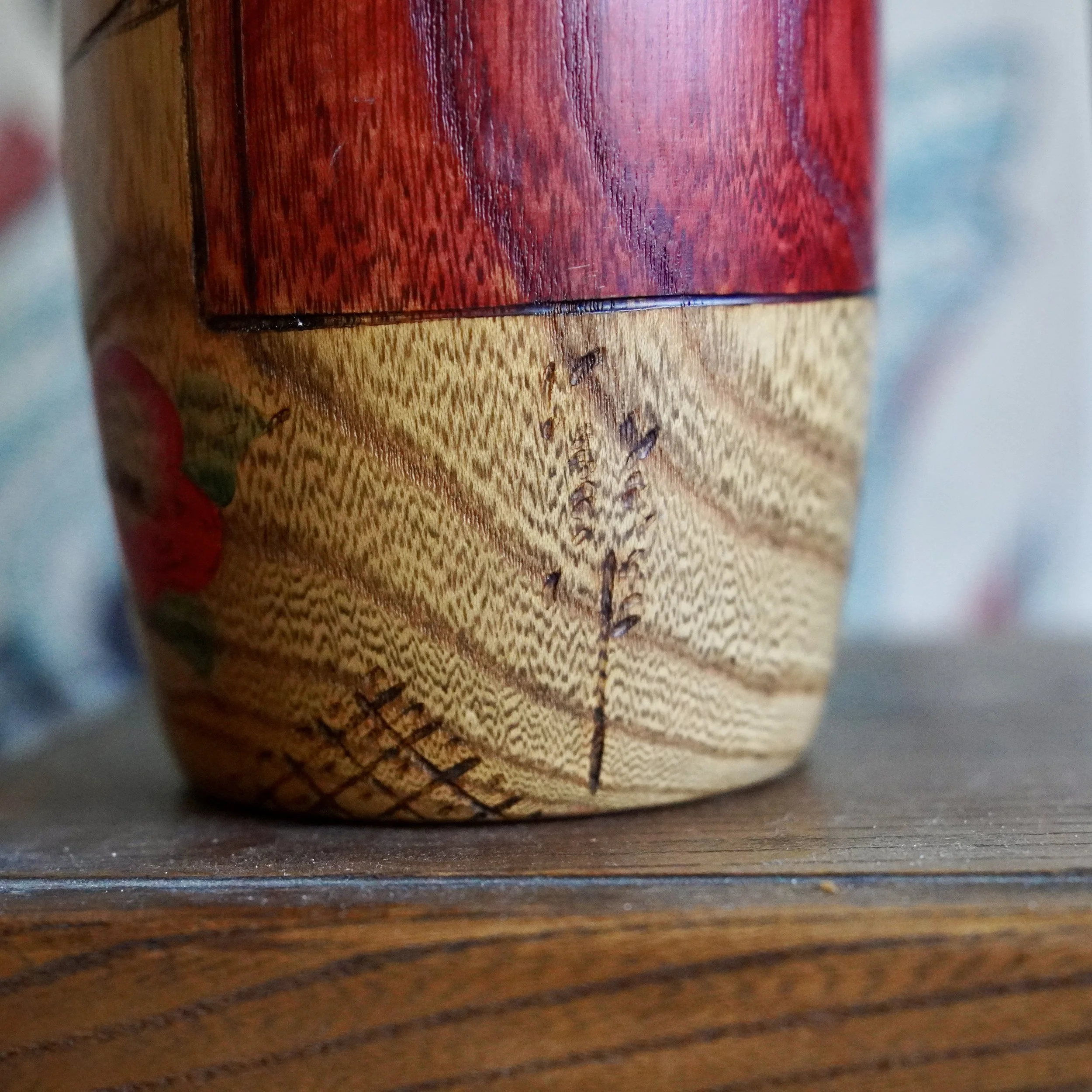
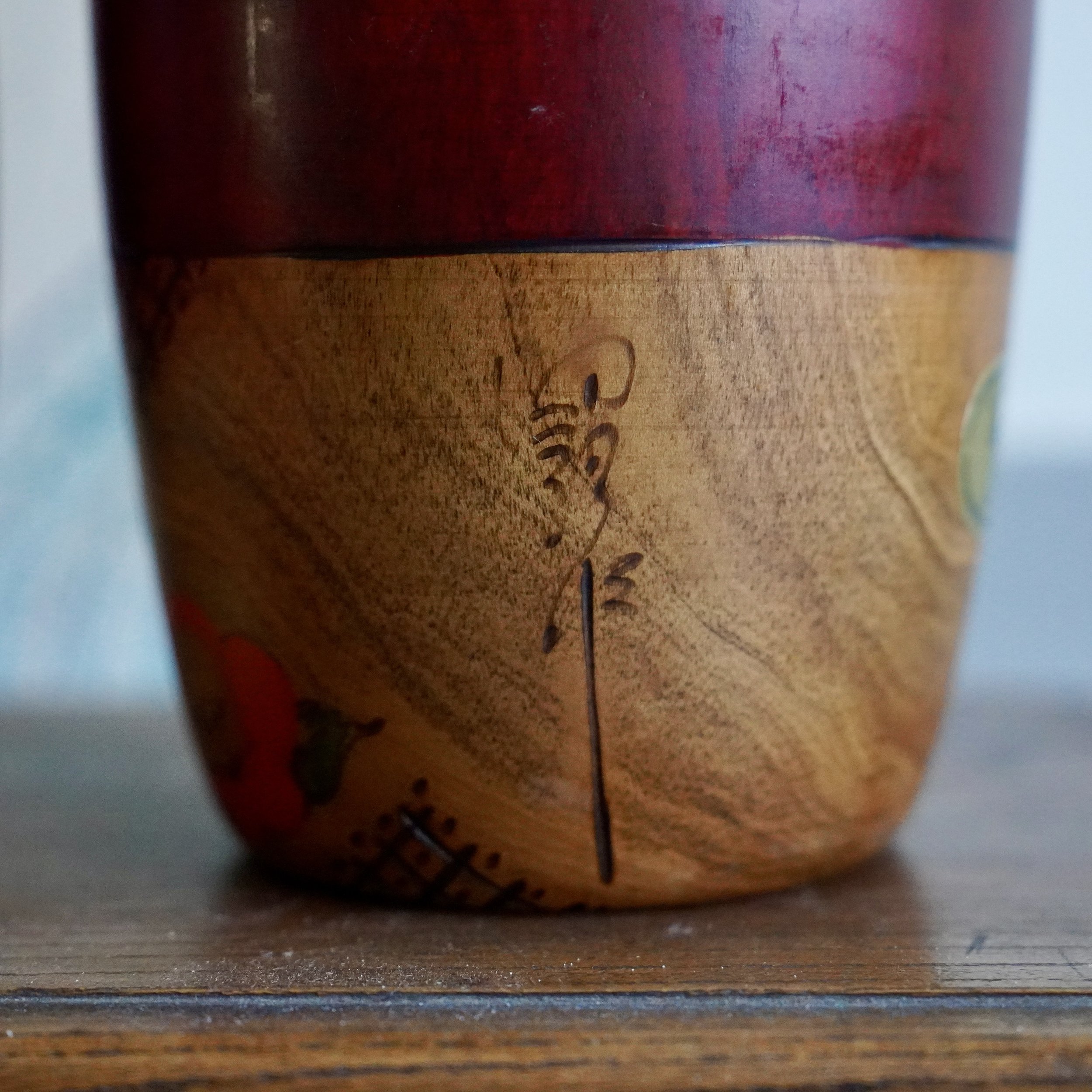
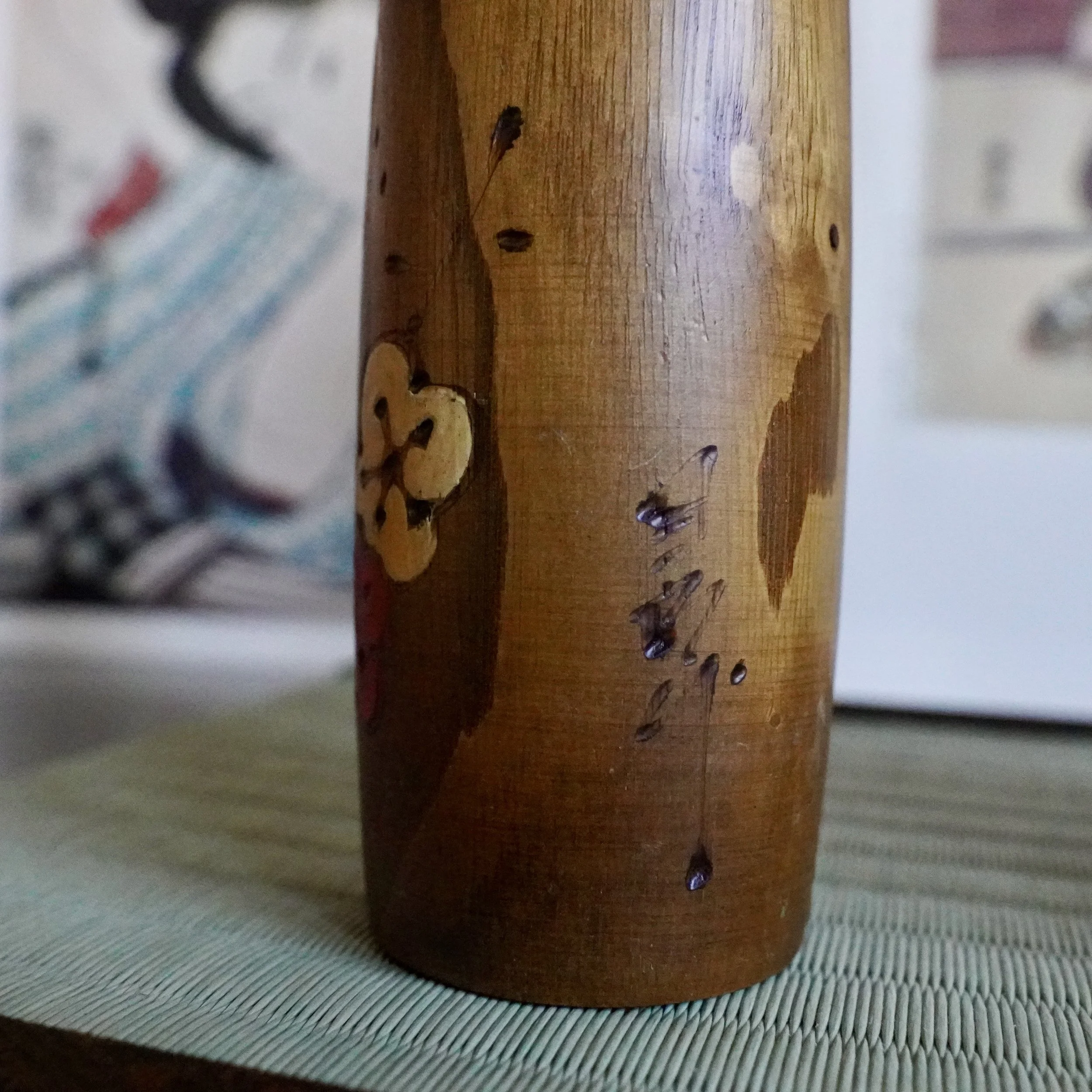
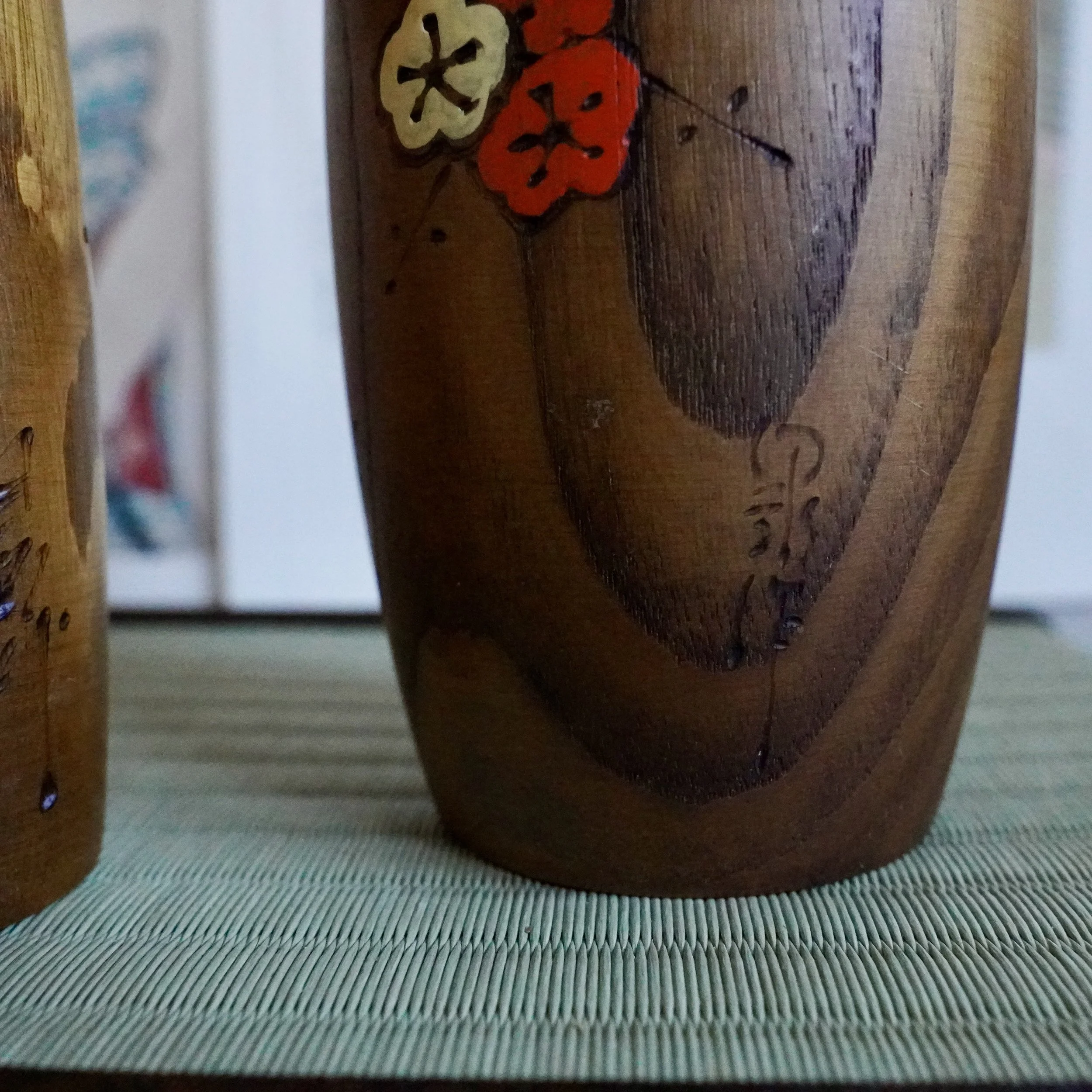
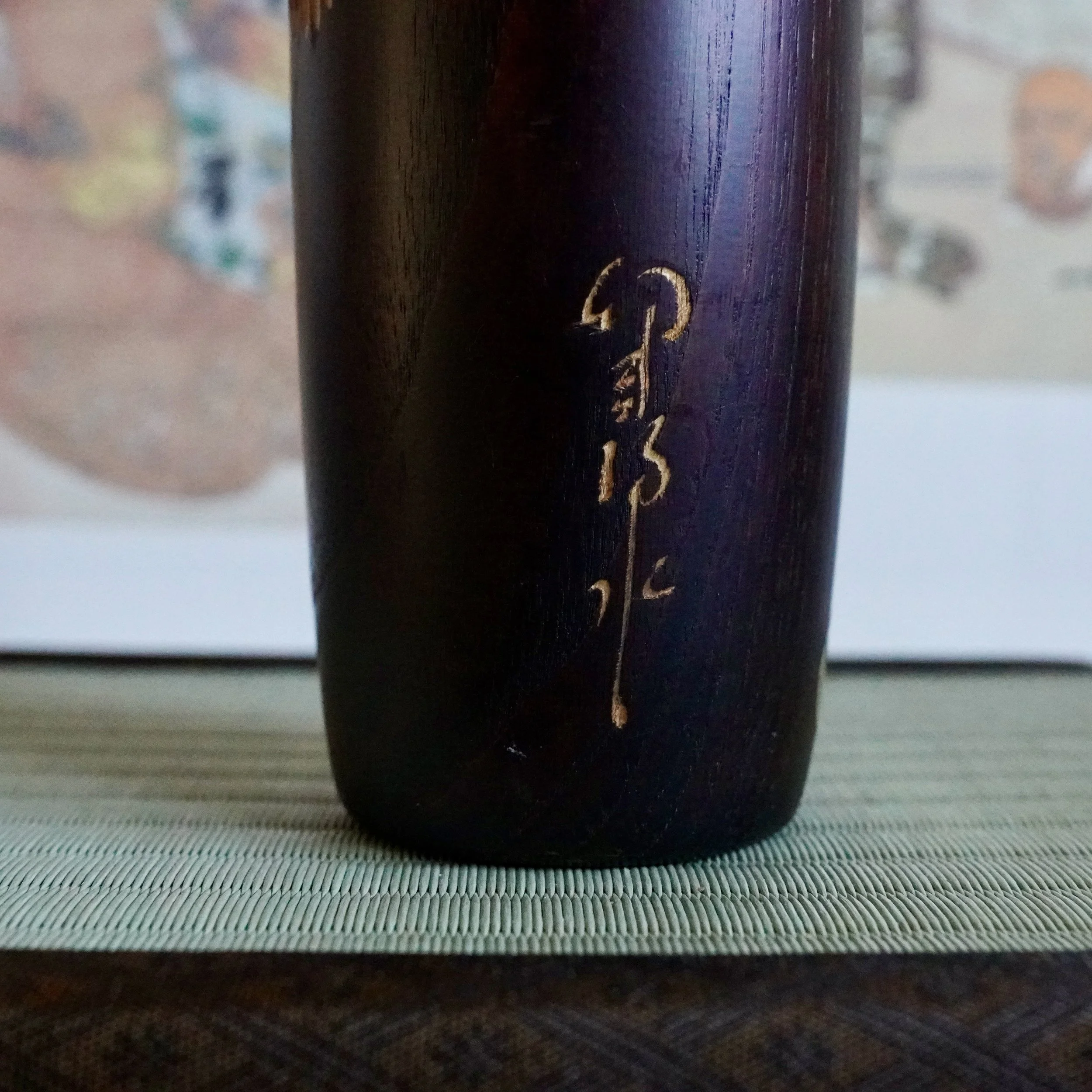
The workshop marks its pieces with a red seal reading Usaburō (卯三郎), the studio's own name, used across every generation and every artisan working under it, rather than tied to one individual maker. Some makers, including Yūji Okamoto, also sign certain pieces personally, in either burned or carved characters, distinct from the studio seal.
How to recognise Usaburō Kokeshi’s style
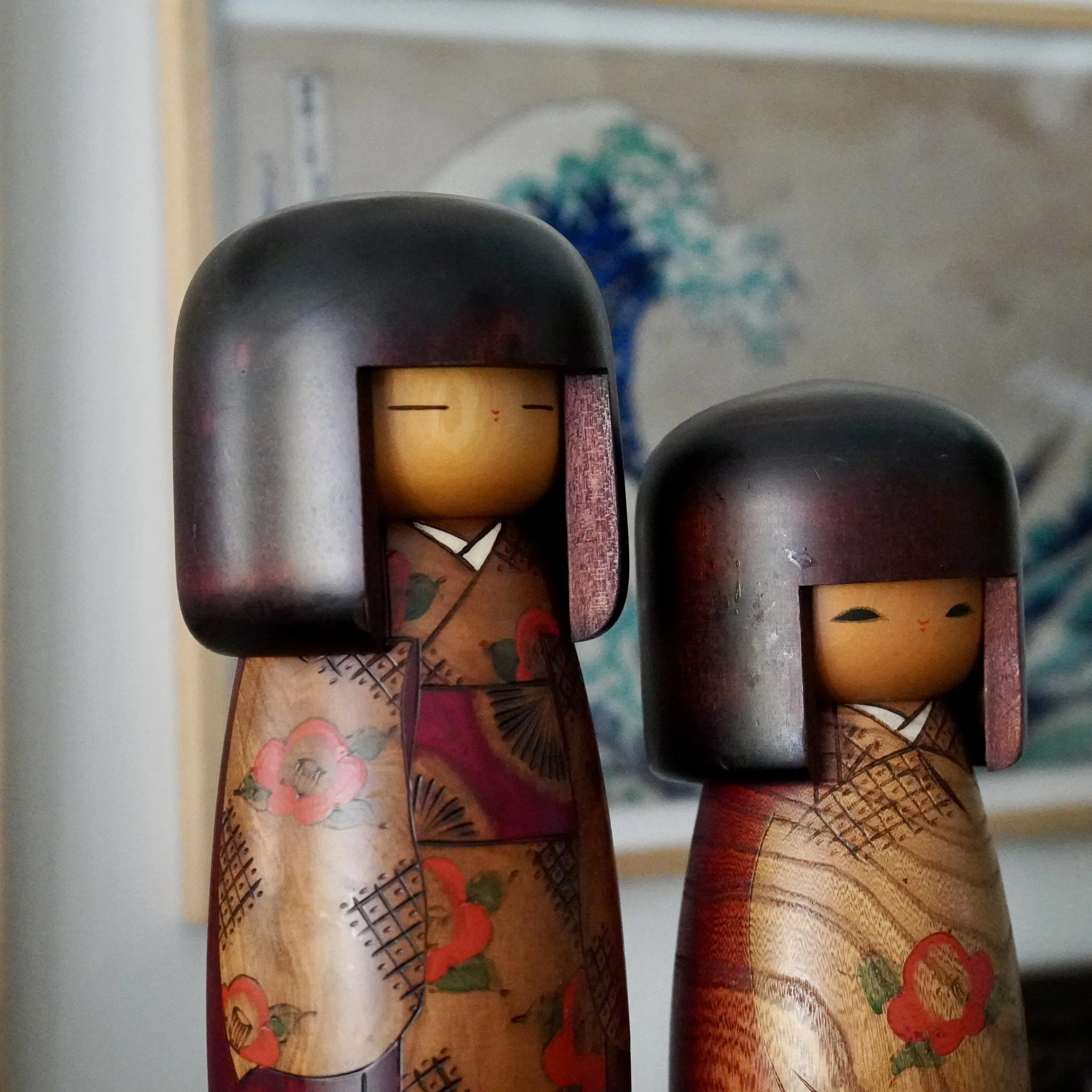
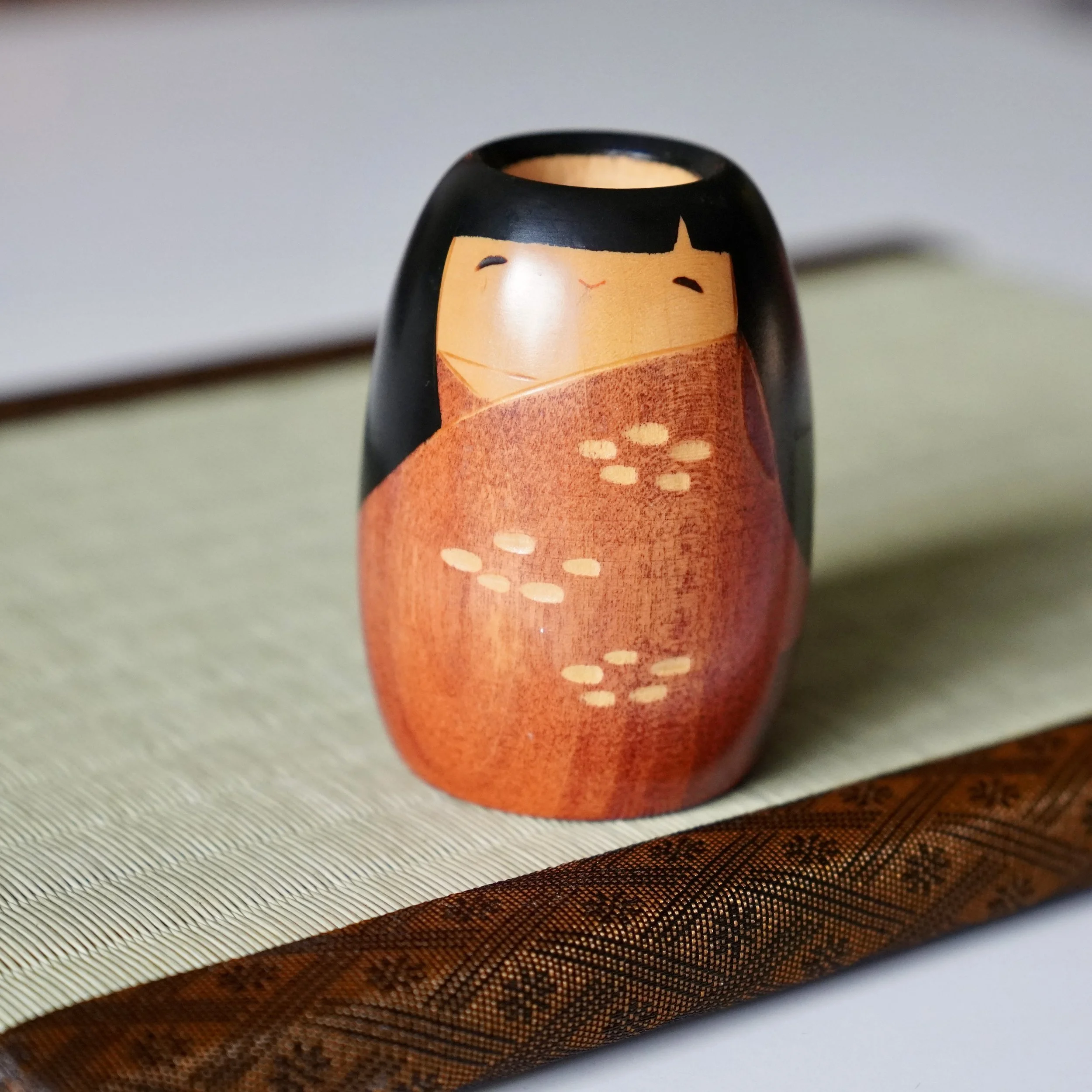
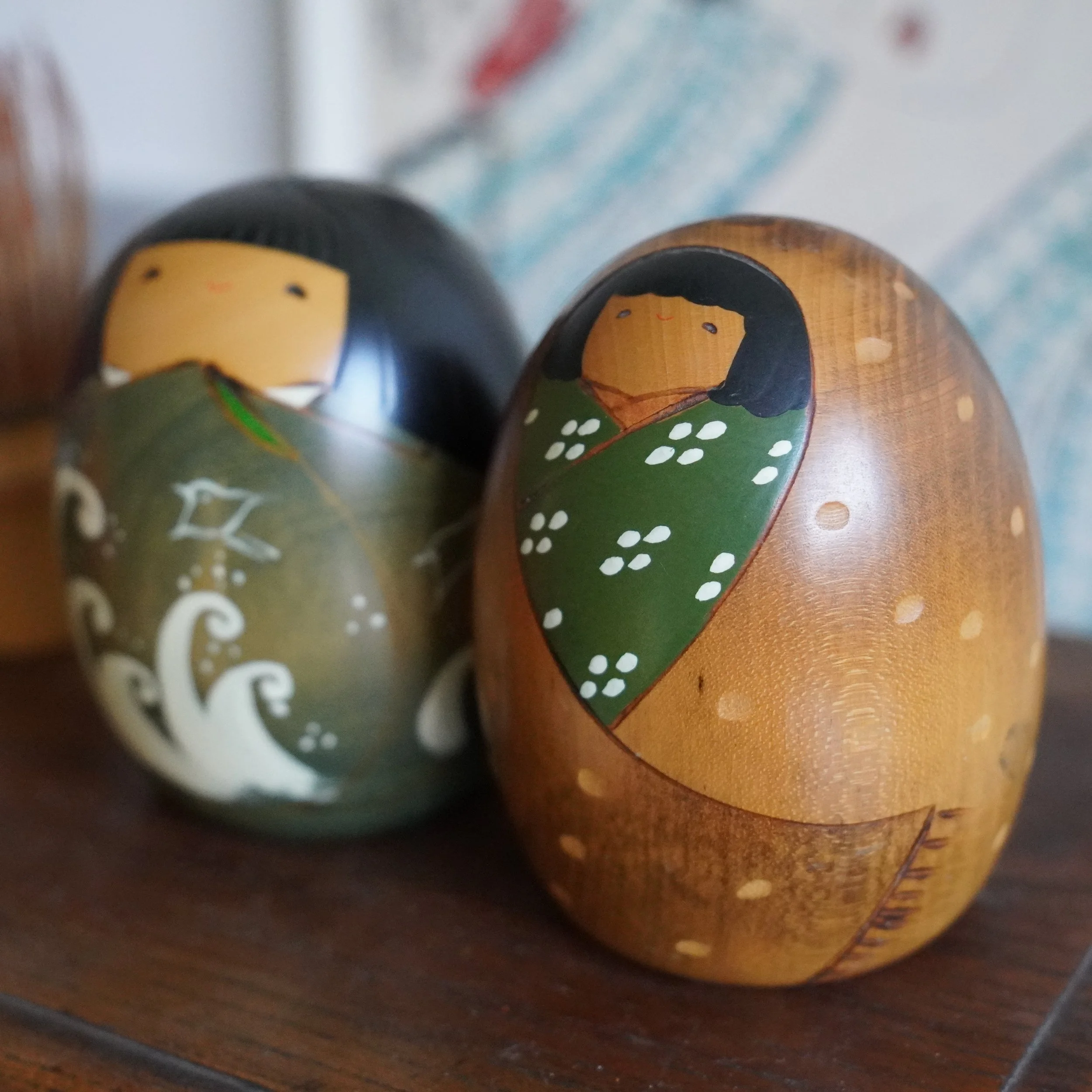
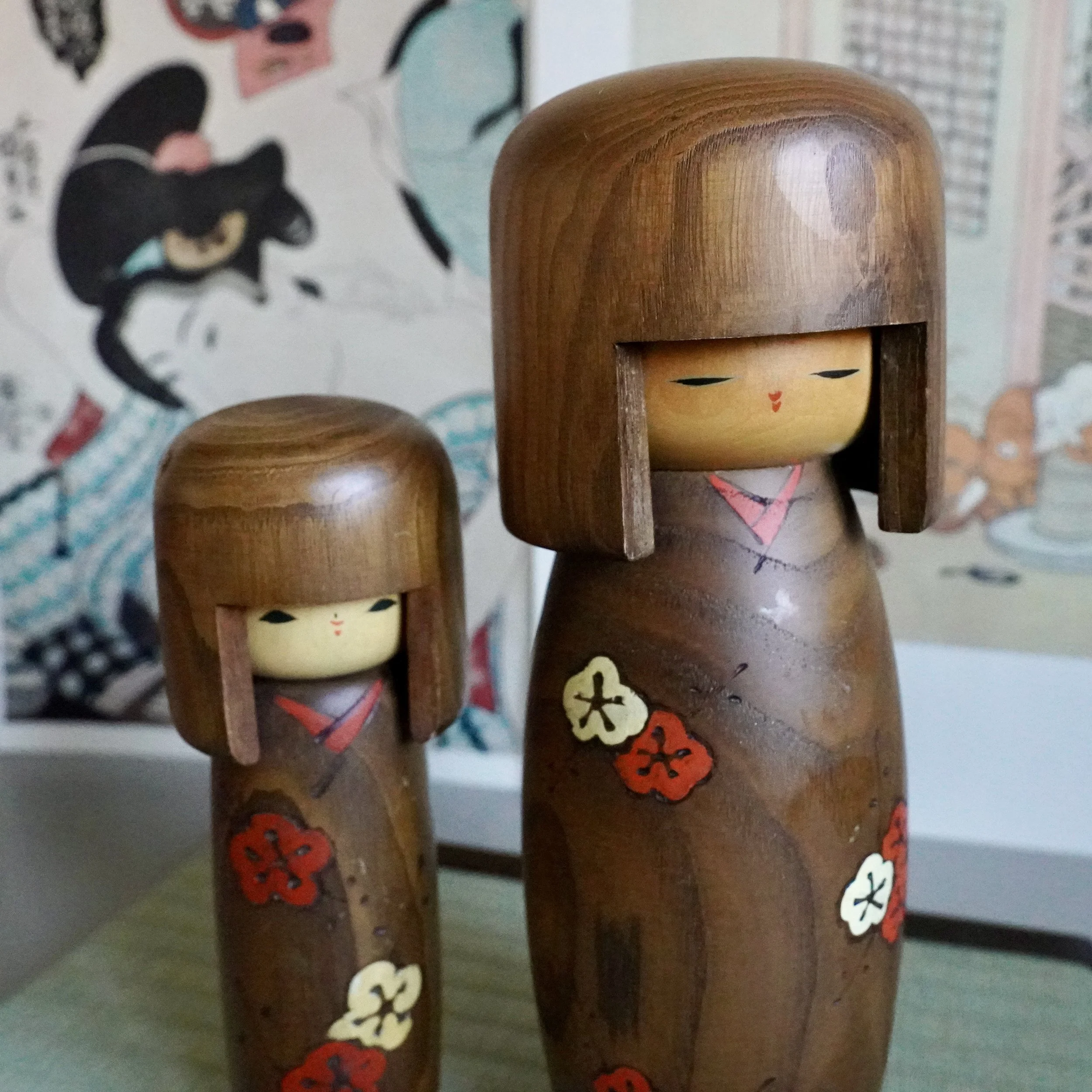
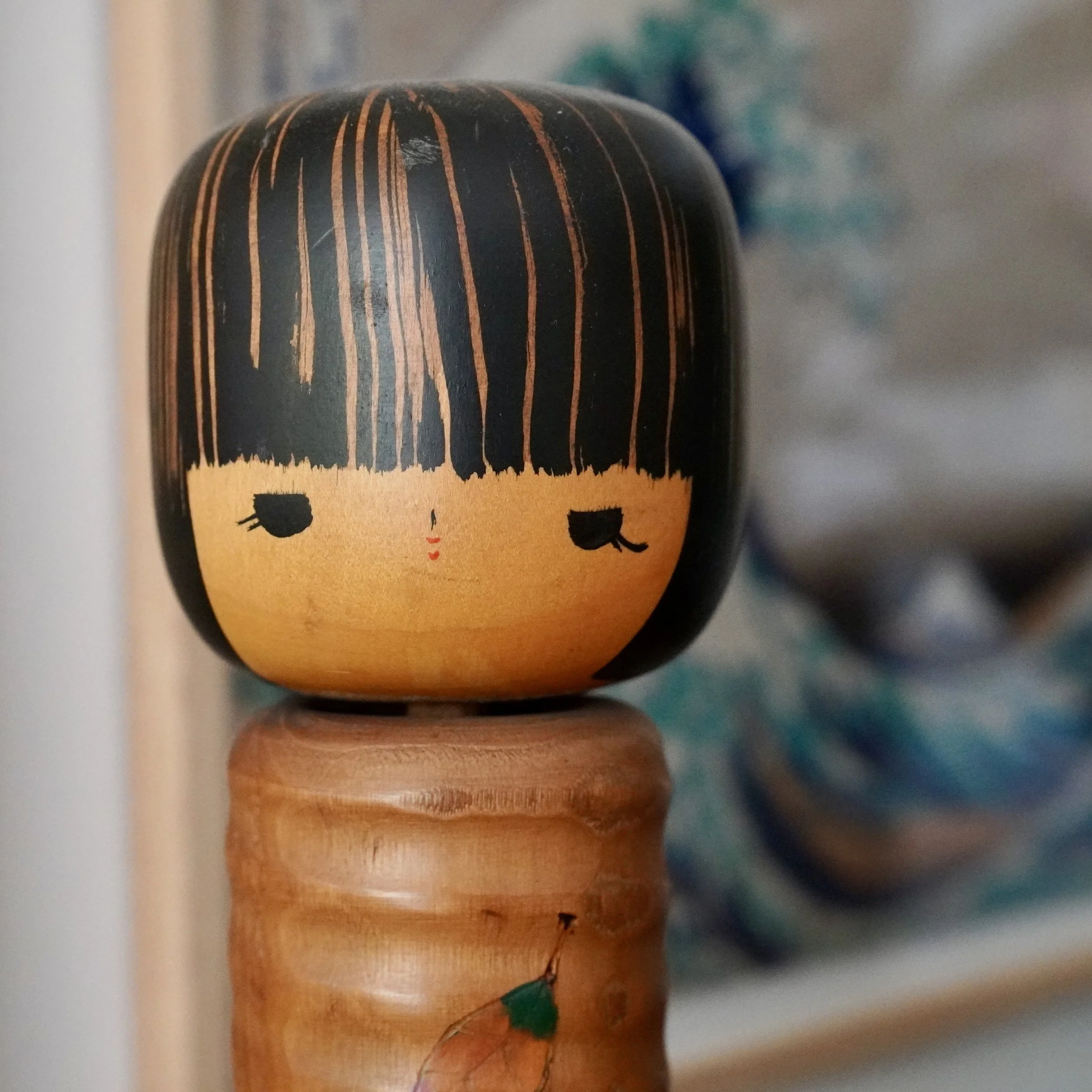
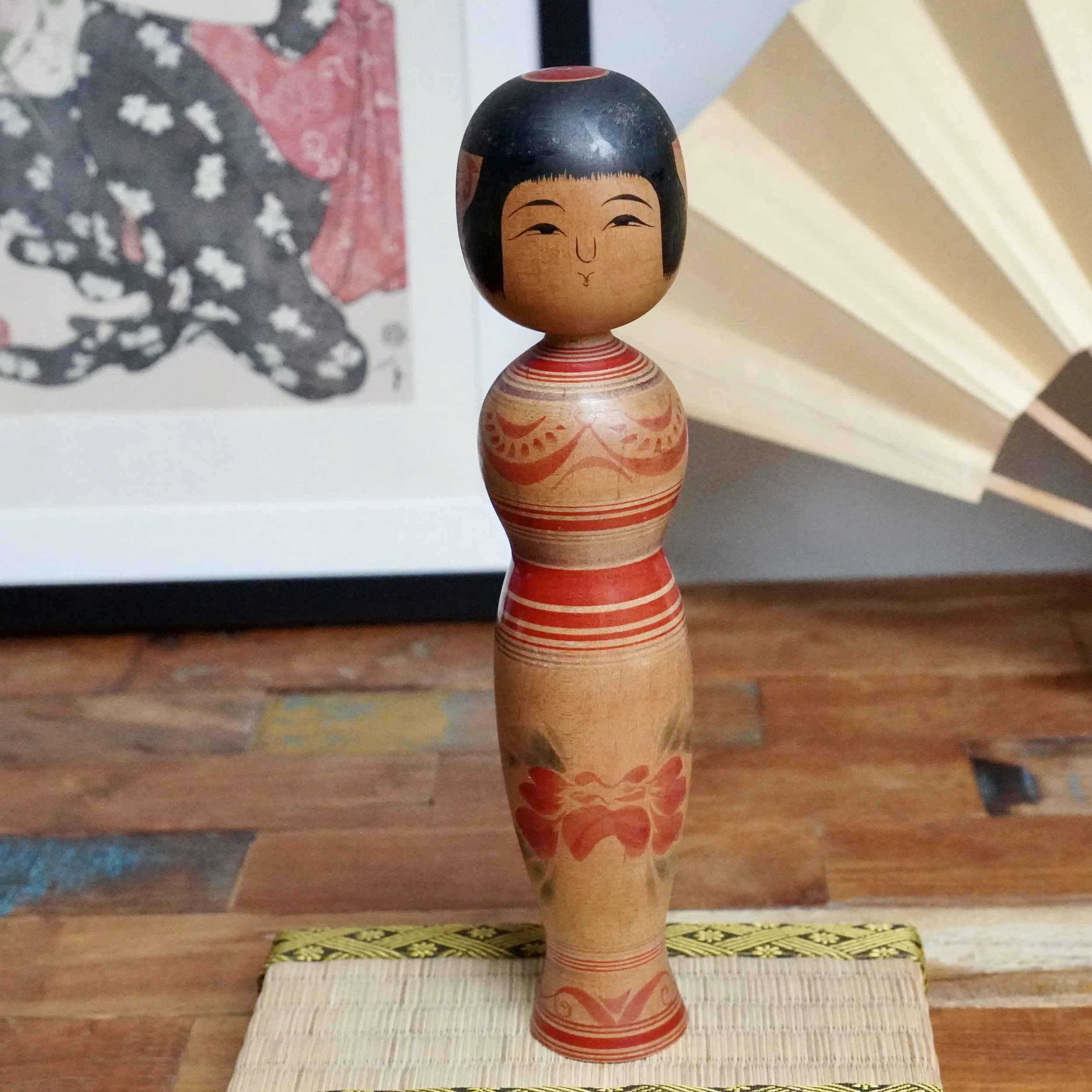
Look first at the surface itself rather than the paint: genuine pieces show a carved and lightly baked texture cut directly into the wood, giving the decoration a raised, tactile quality that flat-painted kokeshi never have. Camellia and maple motifs are common, often set against the visible natural grain rather than a fully painted body.
Material is a second clue. Usaburō worked with keyaki and chestnut at a time when most kokeshi makers avoided both, so a piece in either of these woods, rather than the more common cherry or dogwood, points toward this workshop.
Because several artisans worked under the same studio name, individual pieces vary more than you might expect from a single-maker workshop. A softer, domestic scene favours Yūji Okamoto's hand, a bold graphic motif reads closer to Yoshihiro, and a design built around a child's world of shapes and colour points toward Hiroyuki.
Two marks confirm it: the red Usaburō studio seal, used consistently across every generation of makers, and occasionally a personal signature burned rather than stamped into the wood, distinct from the studio seal itself.
→ Curious how the yakie burning technique actually works? I wrote about it
→ Want to know more about the care these wooden kokeshi need? The kokeshi care guide has what you need.
How to recognise a genuine piece
Three different marks can appear on a genuine piece: the red Usaburō Studio seal, used across generations, a stamped square hanko seal and occasionally a maker's own personal signature burned or carved into the wood rather than stamped.
Look also for the carved-and-baked surface texture rather than flat paint, particularly where camellia or maple motifs sit against the visible grain of the wood, and for wood species like keyaki or chestnut, less commonly used by other workshops. Competition award stickers, where present, are original to the piece and were never reapplied after the fact.
Signatures and stickers in our archive
The carve and burn technique: decoration cut into the wood, then lightly scorched so the line stays dark and doesn't fade. Camellia and maple motifs against visible natural grain.
Usaburo Kokeshi stickers and stamps:
Yuji Okamoto signature:
Meet the Usaburō kokeshi in collection
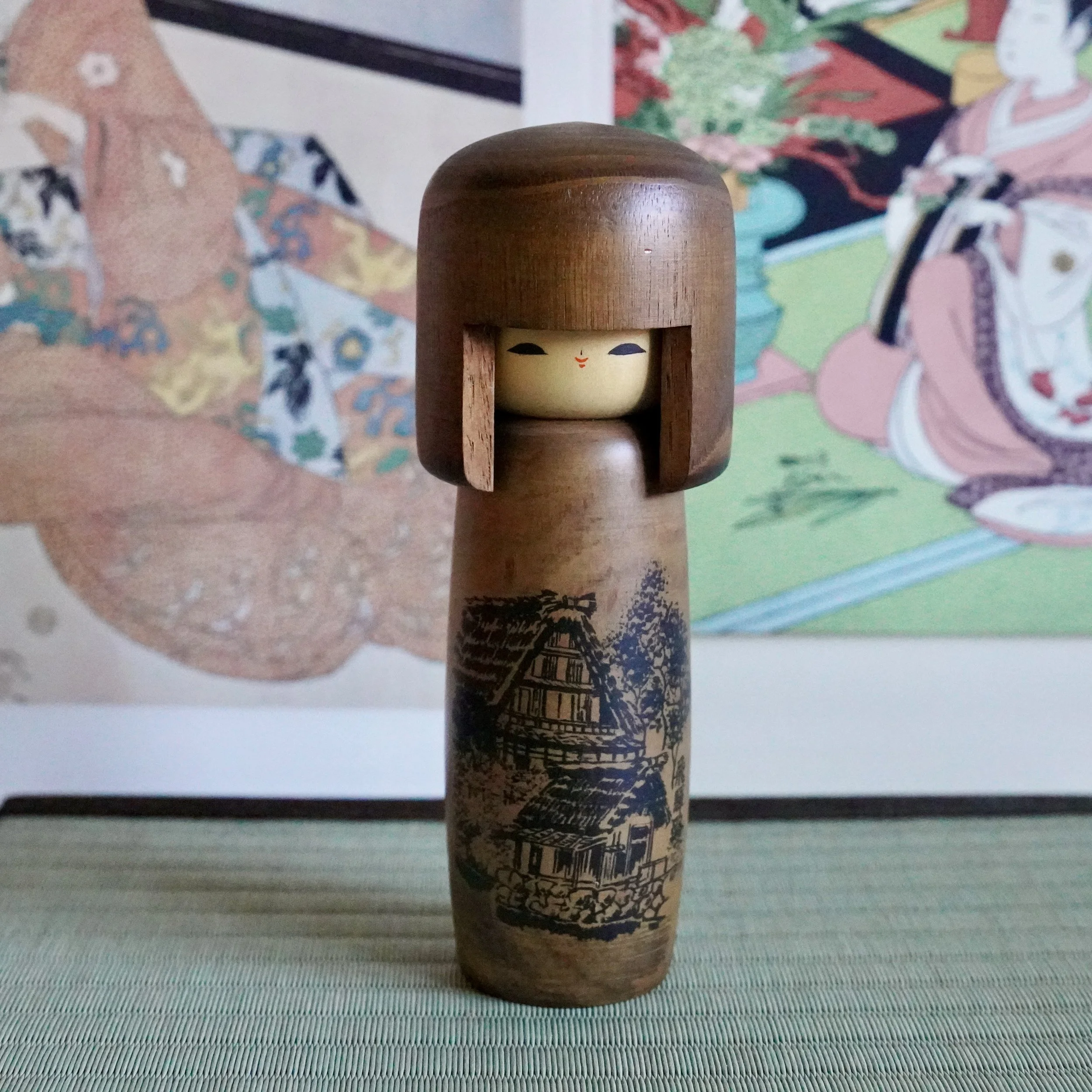
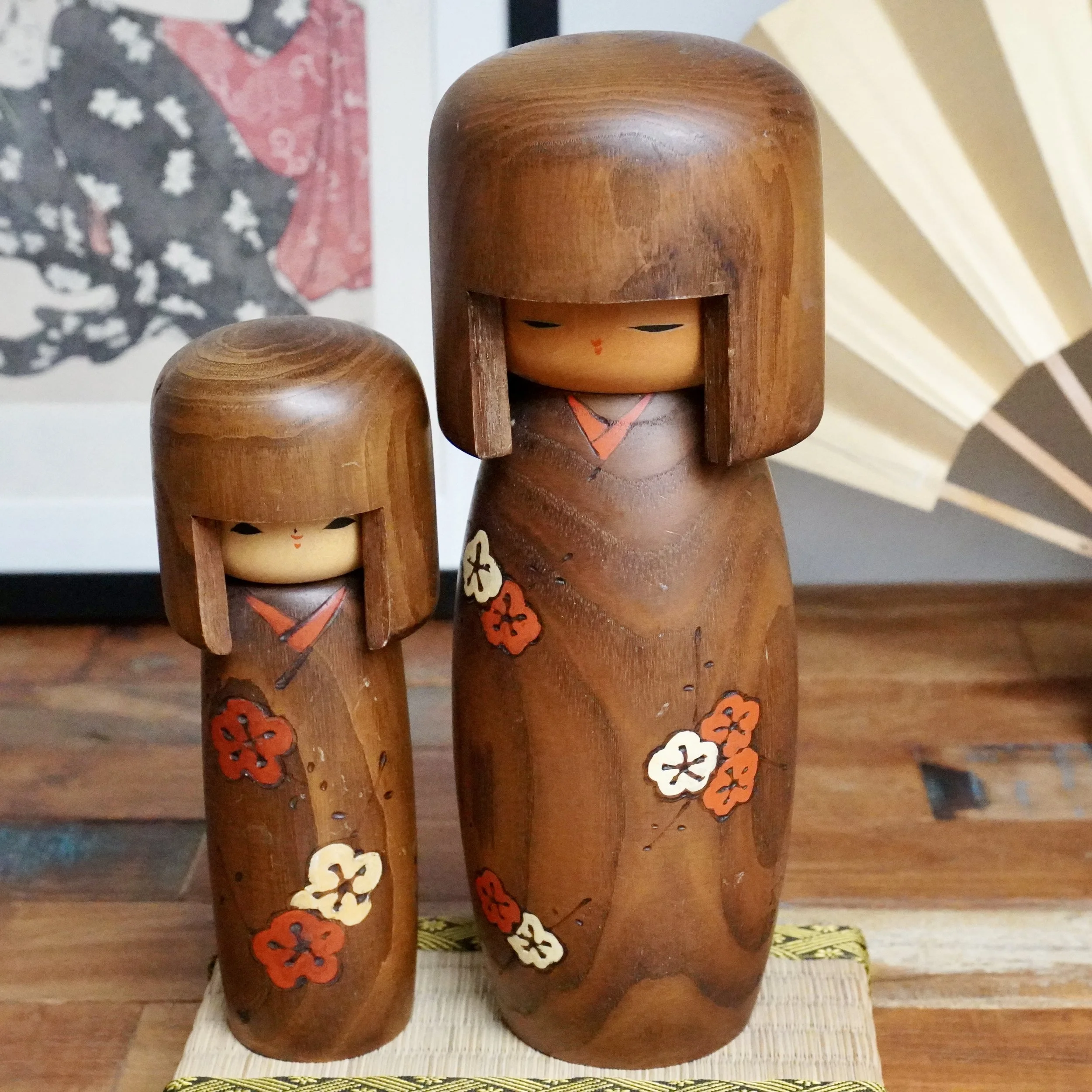
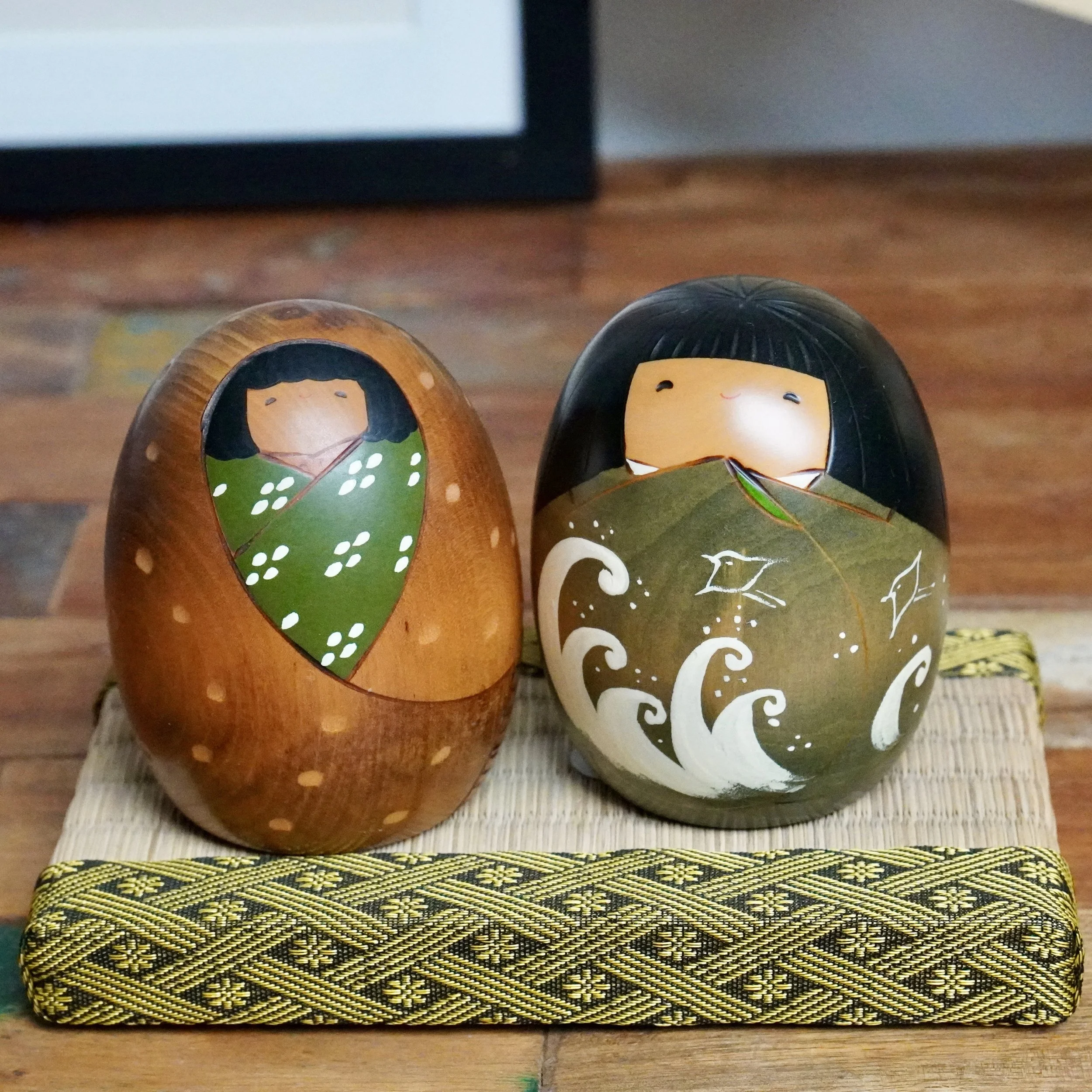
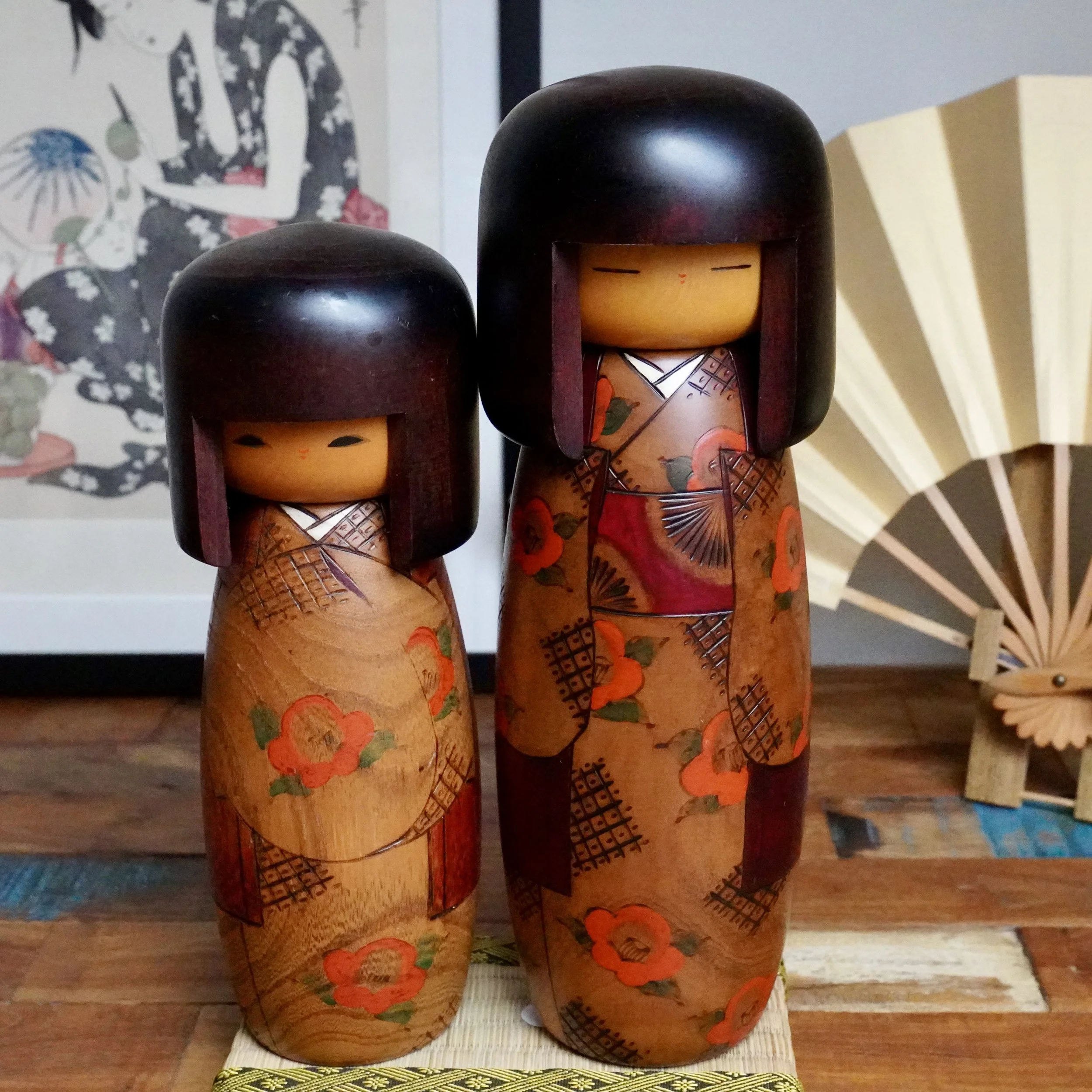
Sources
Physical examination of the seal, construction, and any award stickers on the pieces themselves
Information shared by dealers and specialists in Japan at the time of purchase
Usaburō Kokeshi, official workshop website: founder biography
Usaburō Kokeshi, official workshop website: craftsmen biographies
Soulportals, Kokeshi Village artisan archive: Okamoto Usaburō
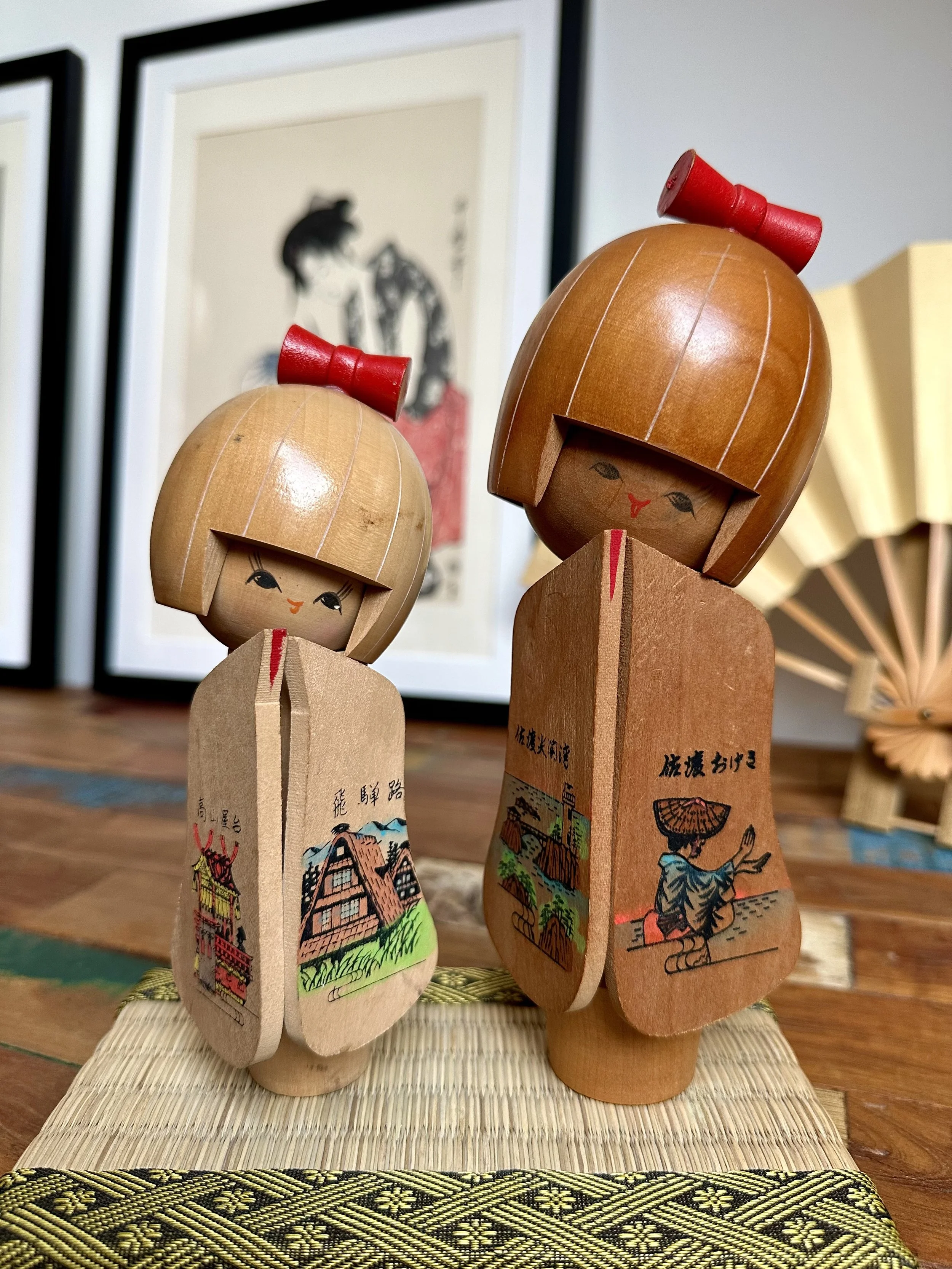
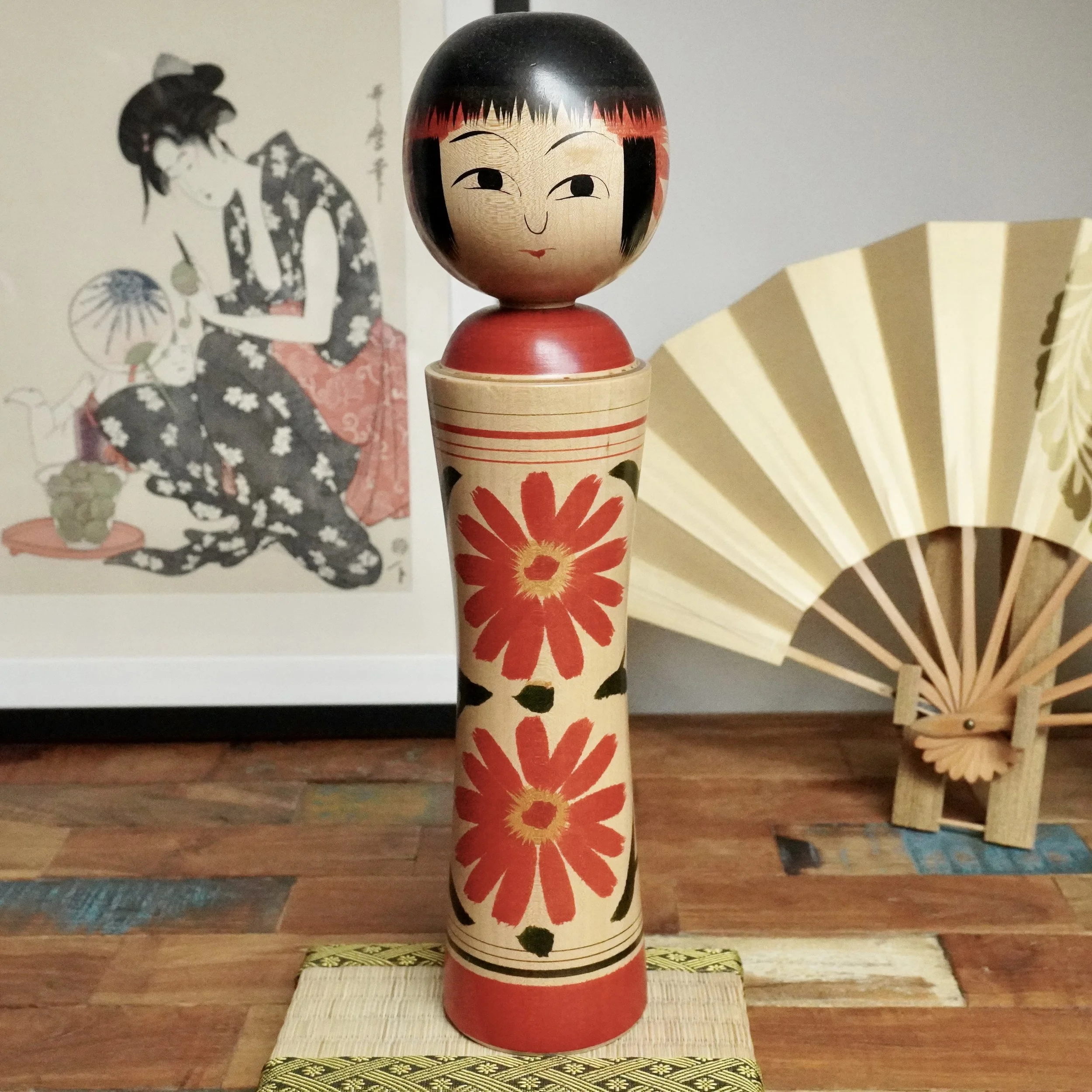
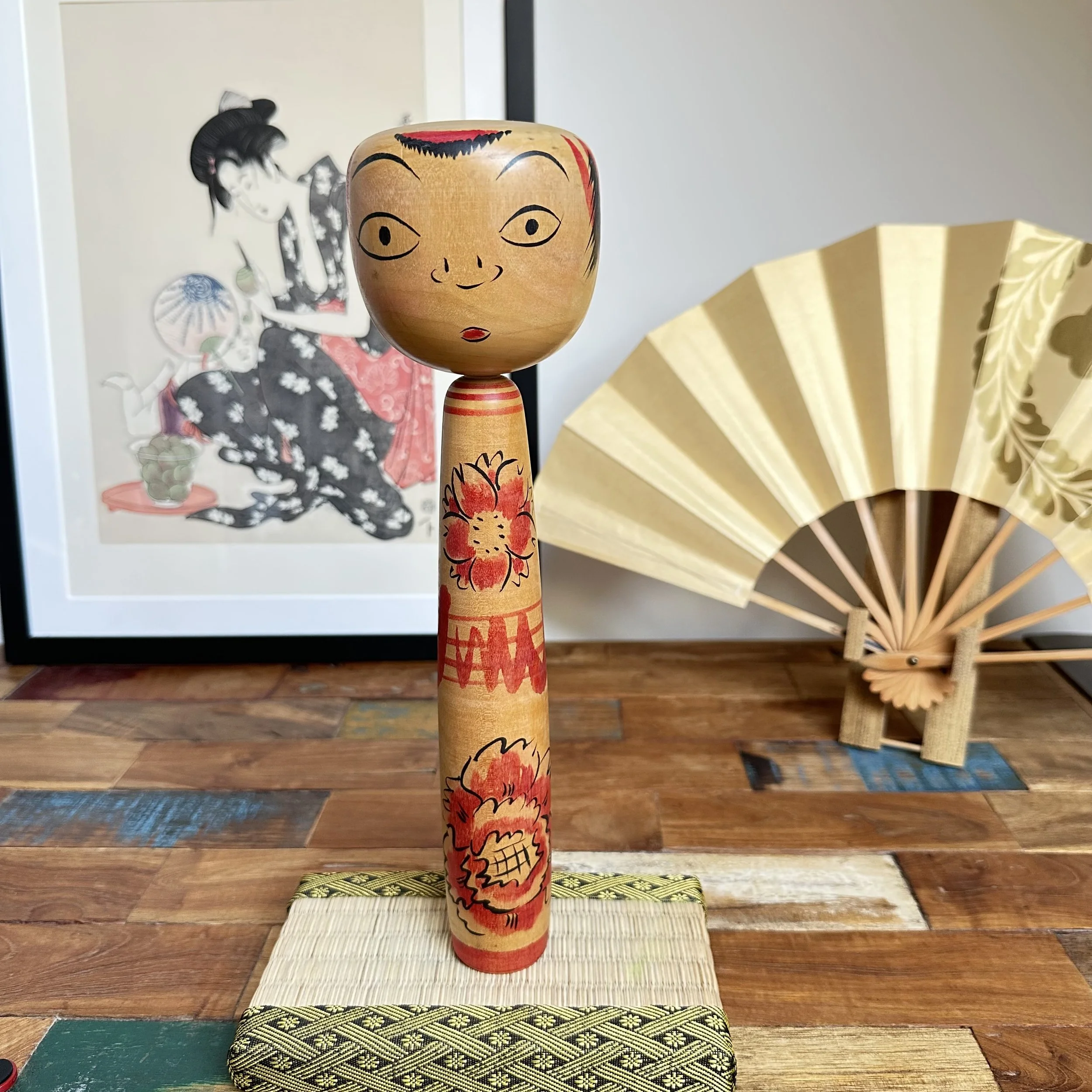

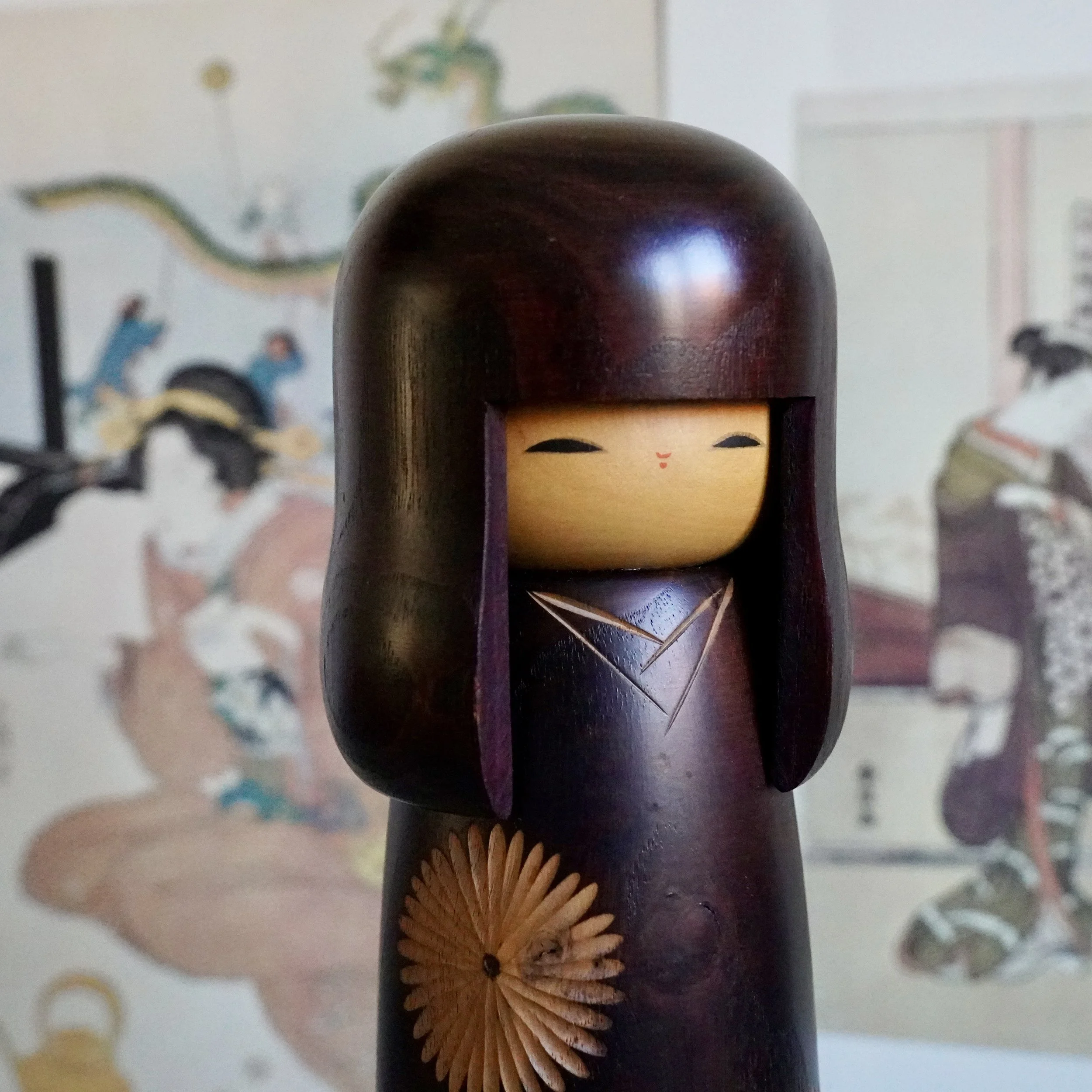
The wood here is stained almost to the point of black, but hold it under a lamp and it turns, deep brown catching the light across grain of the rounded okappa hair. Against that dark ground sit two chrysanthemum medallions in pale, untouched wood, their petals radiating out in fine ridges, close enough to touch and count. The face is set low and quiet, downcast eyes, a small red mark for a mouth, the kind of stillness that makes you stop scrolling and just look at it for a second longer than you meant to.
This is a sōsaku kokeshi signed by Yuji Okamoto, second generation maker at Usaburō, the Gunma workshop that has been making kokeshi since around 1950 and today ships its work to collectors across the world. What makes this particular figure worth pausing on is what is stuck to its base: the original gold award sticker from the All Japan Kokeshi Concours, the country's oldest and largest kokeshi competition, held every year in Shiroishi. This piece carries the Forestry Agency Director-General's Award, one of the recognised honours given out at that event alongside the Prime Minister's Award. It was made to be judged against the best kokeshi in Japan, and it won something.
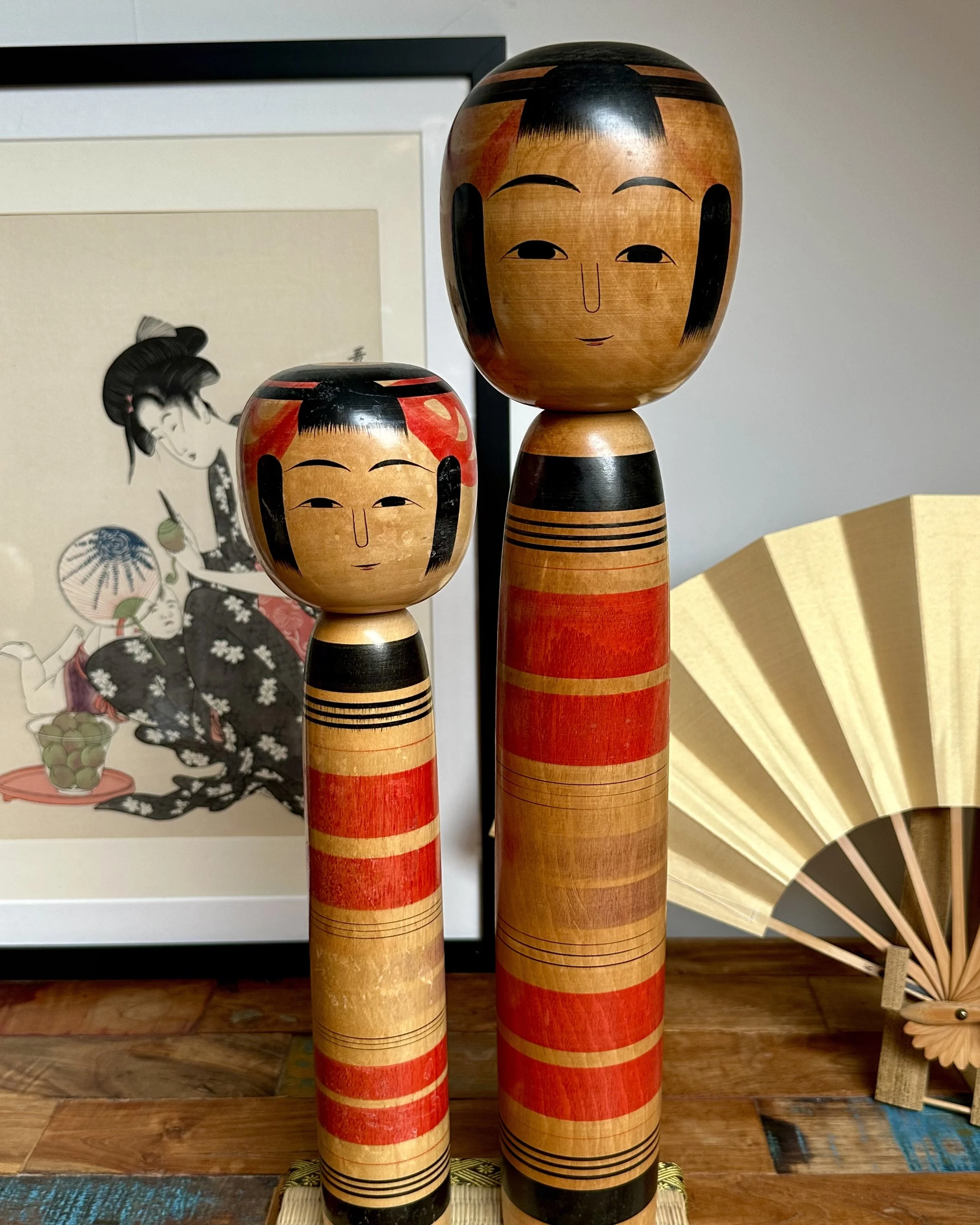
The sticker on the larger of these two pieces carries exactly that award. The grain visible beneath the kimono decoration is central to what Usaburo built his reputation on: the wood is not hidden, it is part of the design.
Interested to read more about the woodworking on kokeshi like these? I wrote about it in my journal.