
My journey through the Mountains of Fukushima and the kokeshi I meet throughout Japan
There are eleven officially recognised traditional (dentō) kokeshi styles, each tied to a specific village or family lineage in the Tōhoku region, including Naruko, Tōgatta, and Tsuchiyu. Sōsaku (creative) kokeshi emerged after the Second World War, made by artists working outside those regional traditions. This entry covers a sourcing trip through Fukushima, the traditional heartland of kokeshi craft, and how to read a maker's identity through nose shape, eye shape, and eyebrow angle.
Most people stick to the big cities. Kyoto, Tokyo, Osaka, where the famous markets are and the inventory moves fast. But not me. My favourite finds come from the hidden parts of Japan, where the air is thin and the history is thick.
Fukushima is one of those places. This region is the heartland of kokeshi, where the winters are long and the woodcarving traditions run deep. I spent a week here, winding through mountain passes and visiting workshops tucked away in quiet valleys, meeting the people who still keep these traditions alive.
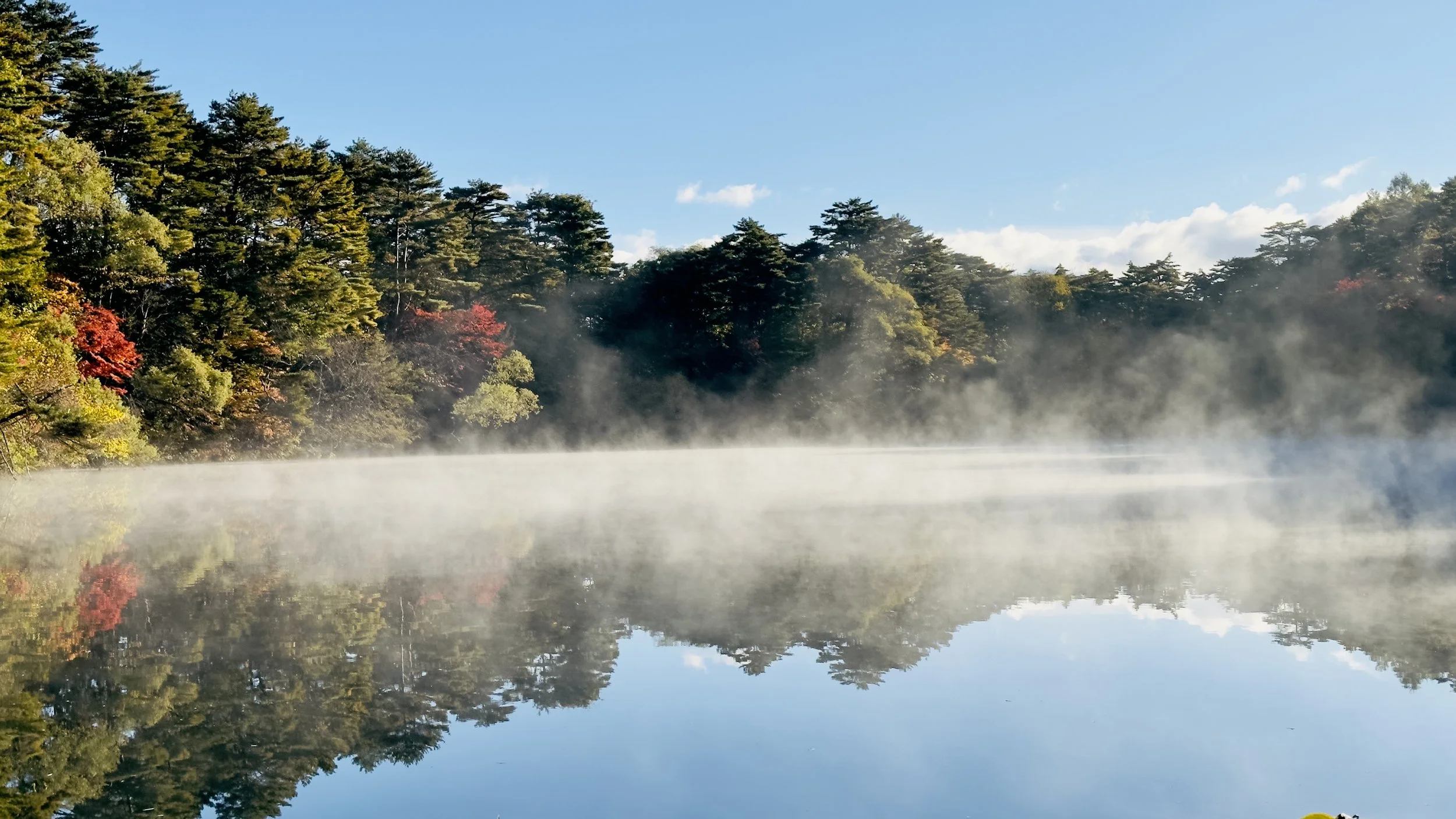
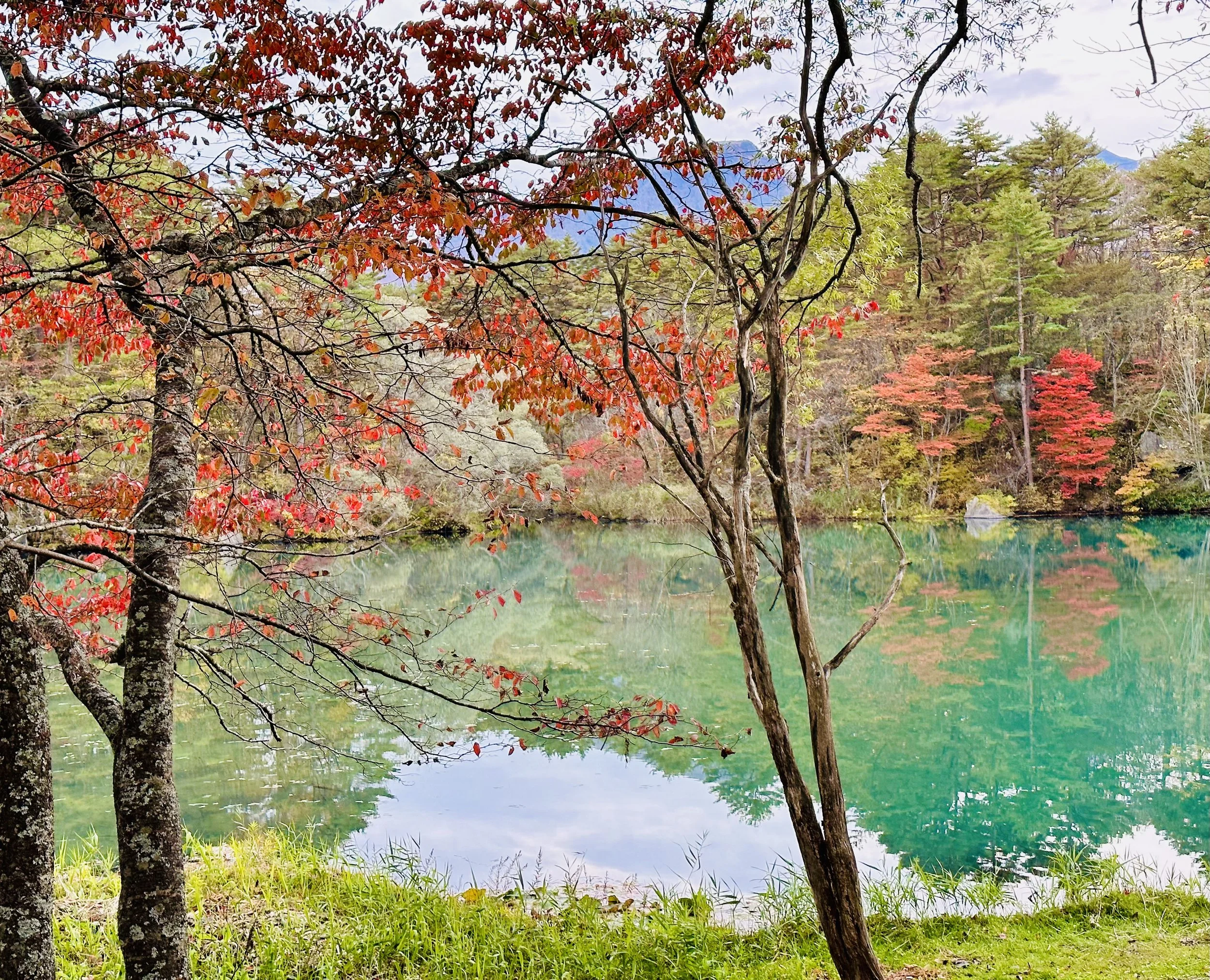
I climbed Mount Bandai before the sun was fully up. Standing there, watching the mist peel off the peaks, I thought about how much of Japan you miss if you only ever see the famous parts.


Dentō or Sōsaku? The types of Kokeshi
If you are new to collecting kokeshi, the first thing that surprises you is how different they can look from one another. Some are neat and cylindrical with simple painted flowers, clearly following a pattern you could almost recognise from across the room. Others look like nothing you have ever seen. A round amber sphere with autumn leaves, or a figure with carved arms hugging itself. They are all called kokeshi, and yet they seem to come from entirely different worlds.
They do. There are two types, and once you understand the difference, you will never look at a shelf of kokeshi the same way again.
Dentō kokeshi: the tradition that rules everything
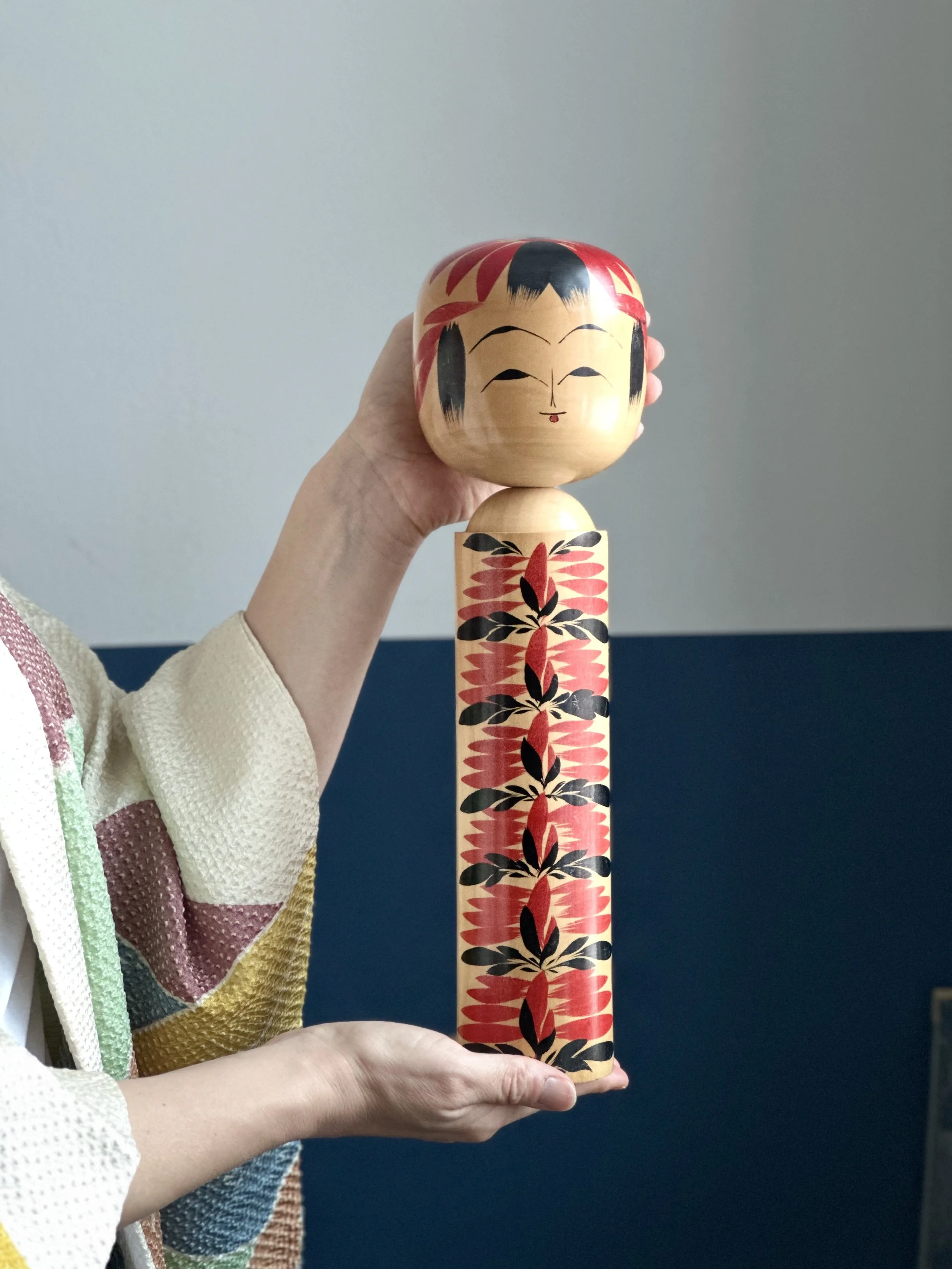
The key word is strict. Traditional kokeshi are not open to free interpretation. They are the legacy of a craft passed down through generations, deeply rooted in specific villages and family lineages. The maker does not decide one morning to use a different body shape. A Yajiro maker does not invent a new eye form. The tradition is the tradition.
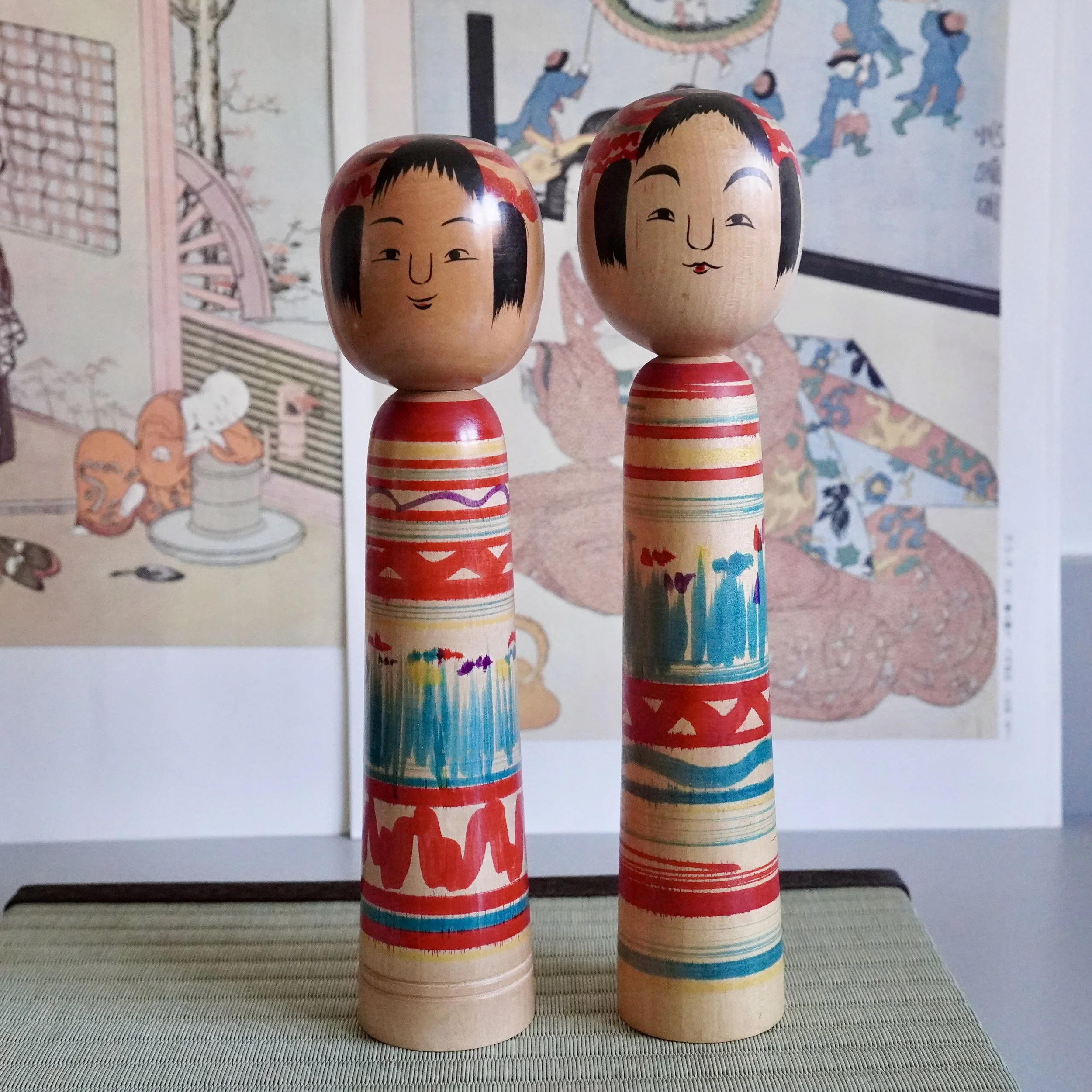
There are eleven officially recognised traditional styles, each tied to a specific region in the Tōhoku region. Like Naruko from Miyagi, famous for the squeaking sound when the head is turned. Tōgatta with its slender body and straight shoulders. Tsuchiyu from Fukushima with its rounded hairstyle and gently turnable head.

Sōsaku kokeshi: when the rules disappeared
After the Second World War, something shifted in Japan. A generation of artists and woodworkers began asking what kokeshi could be if they were not bound to a school, a family style.
Sōsaku artists had day jobs as painters, teachers, designers. They came to the lathe from outside the lineage and experimented with story telling kokeshi.
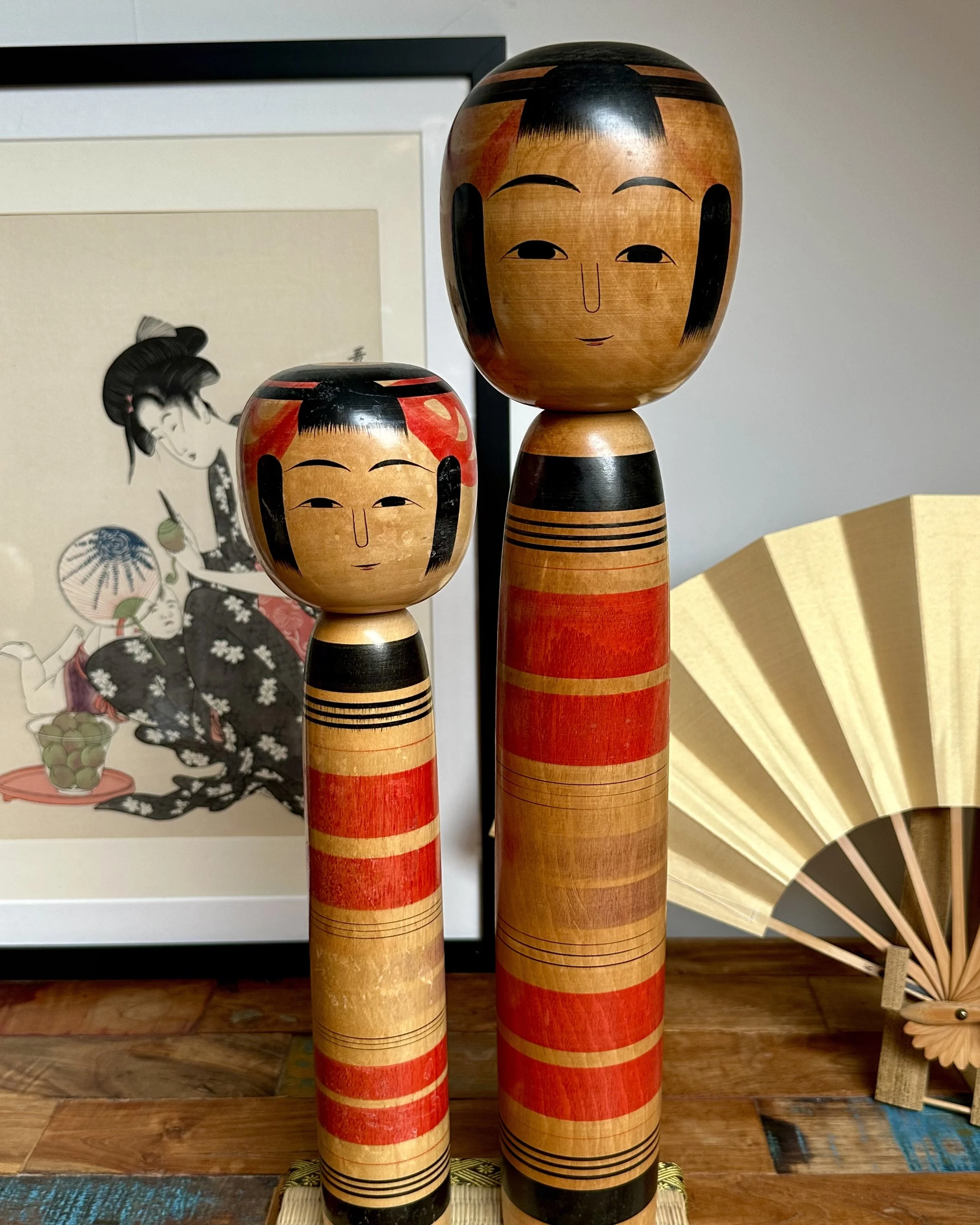
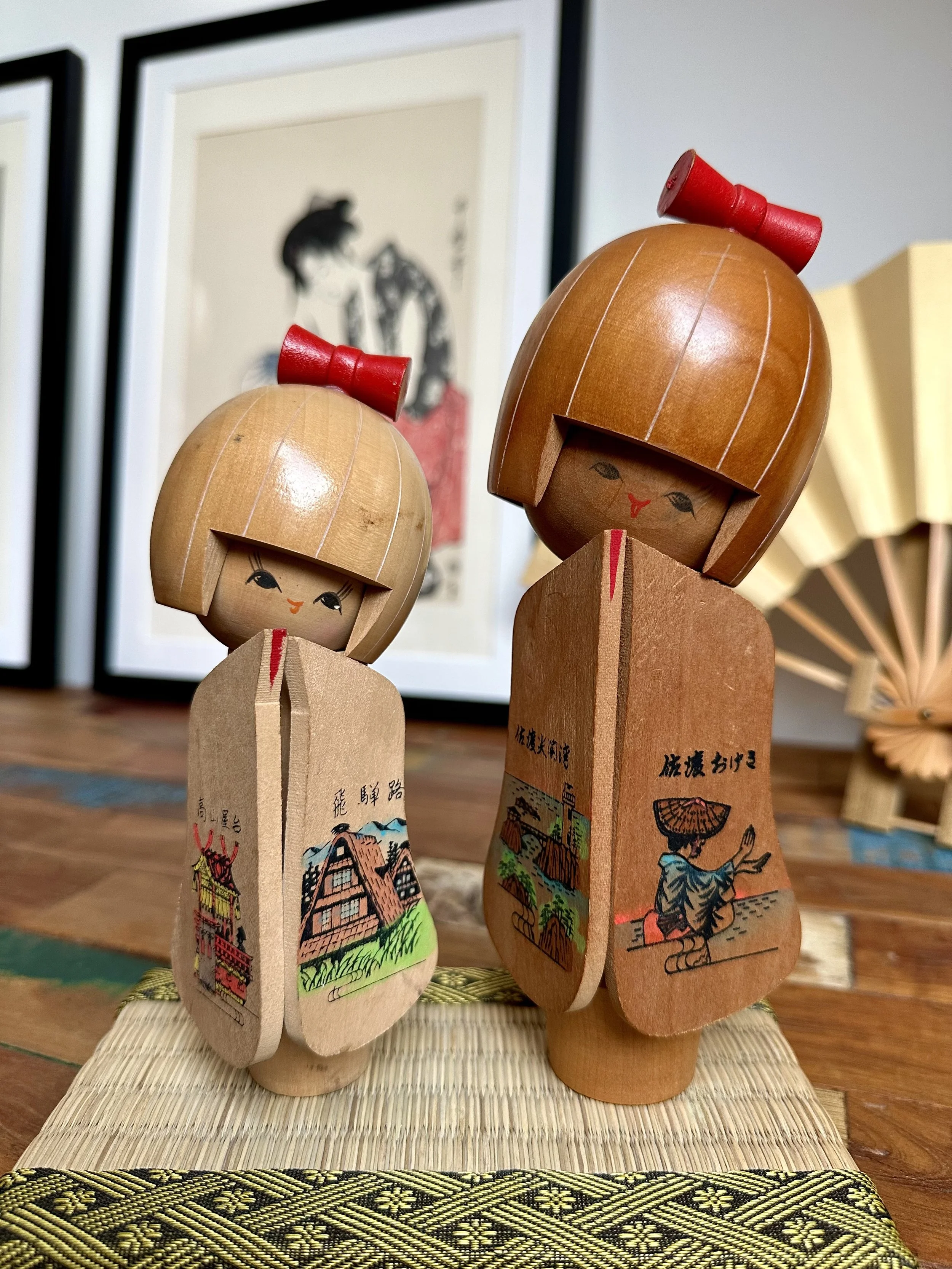
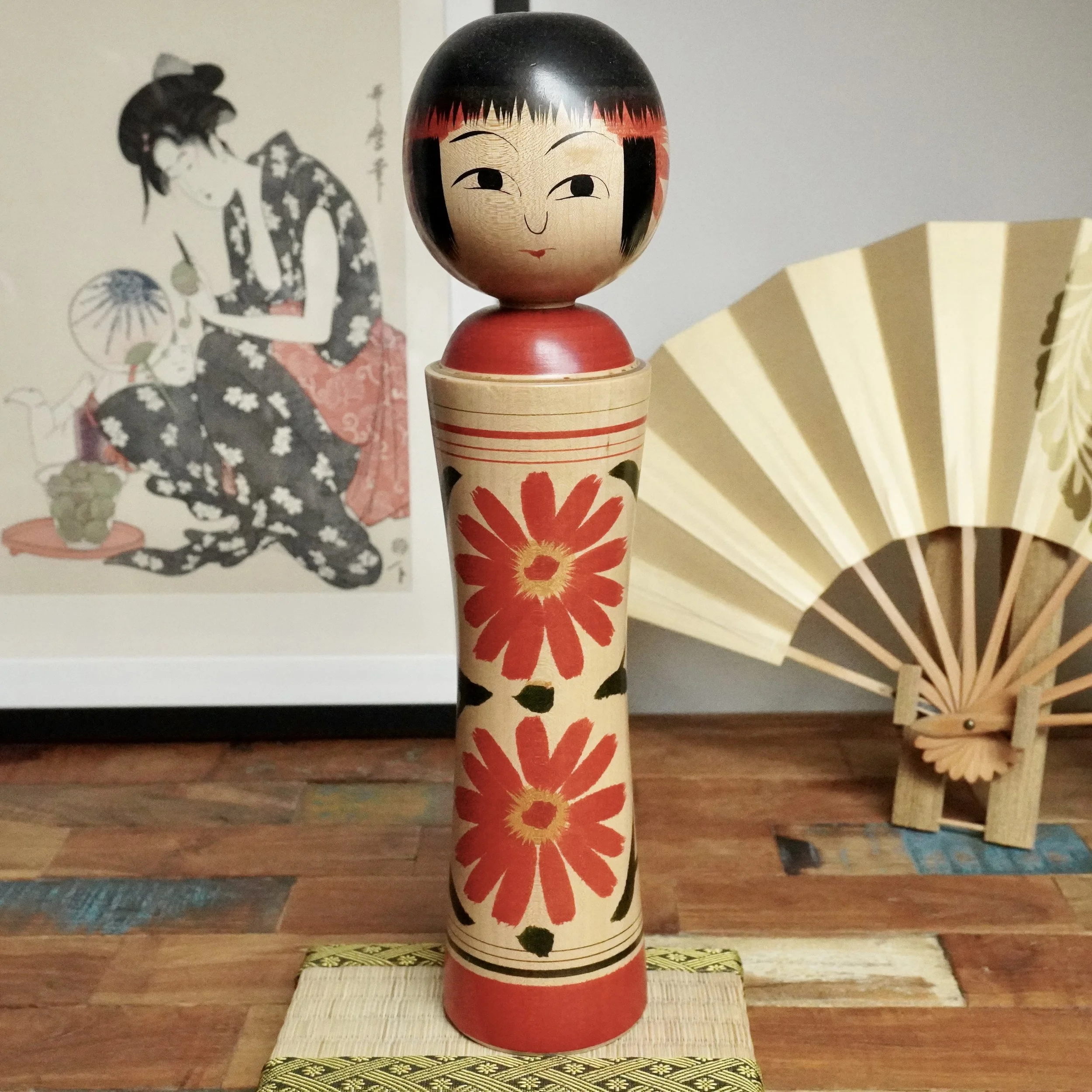
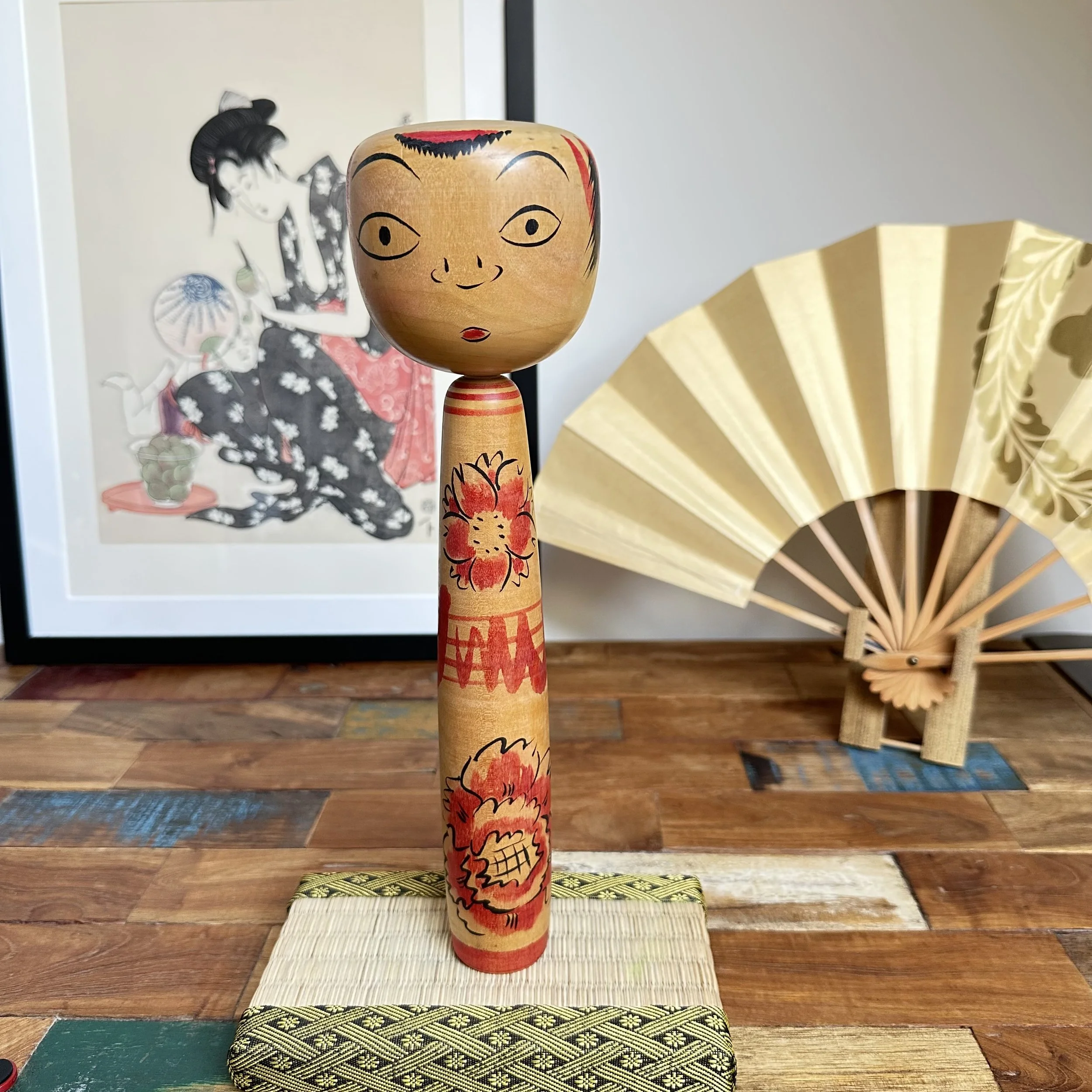
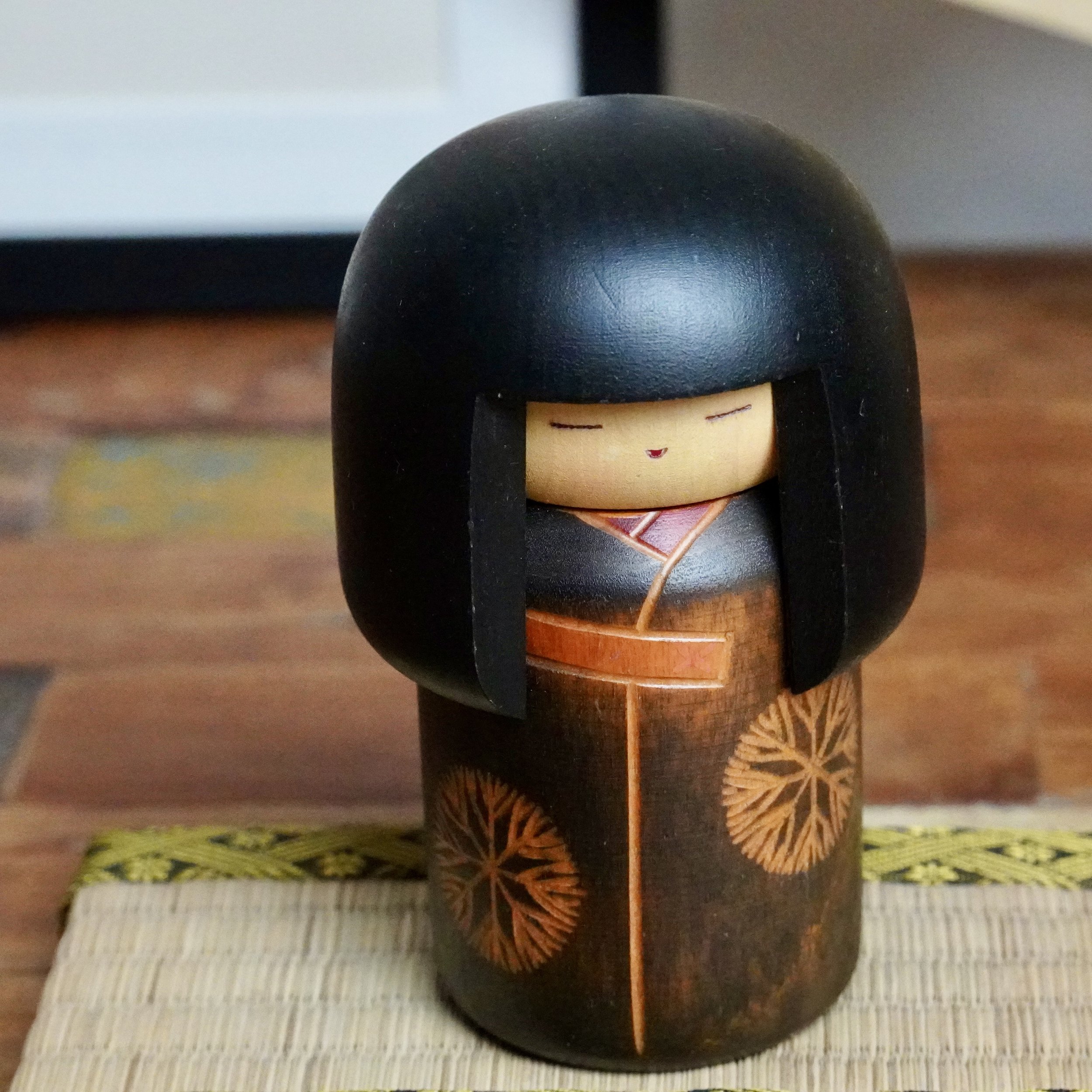
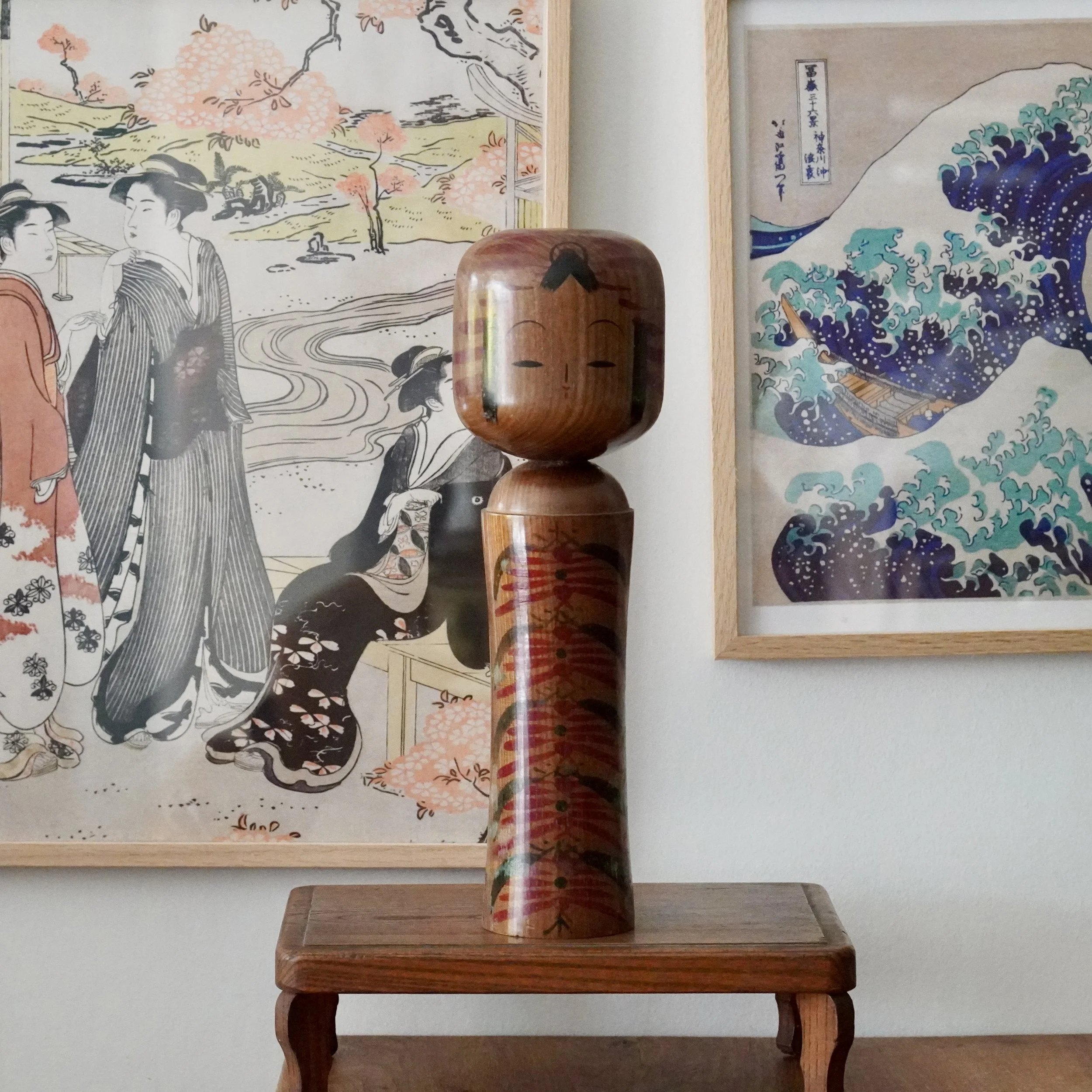
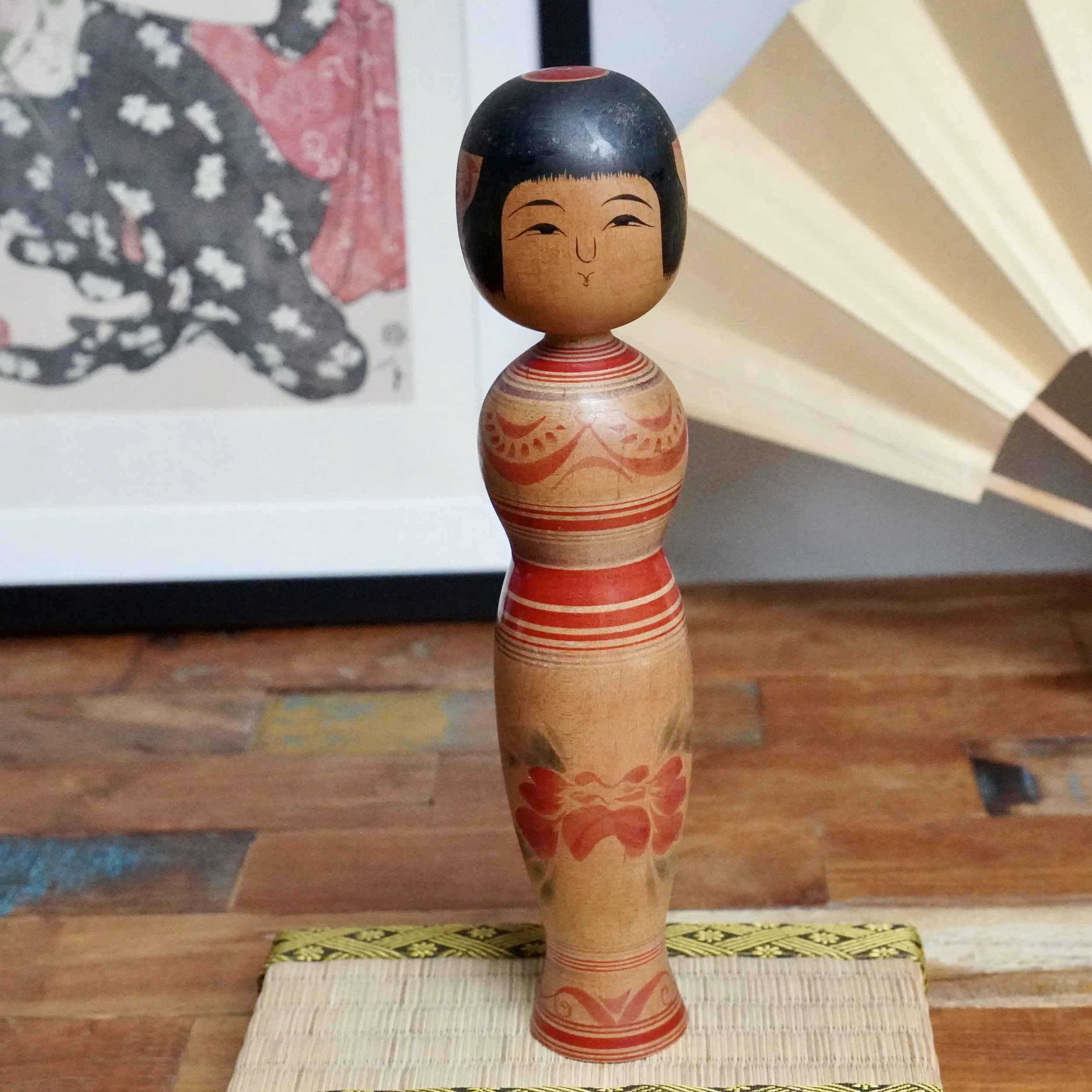
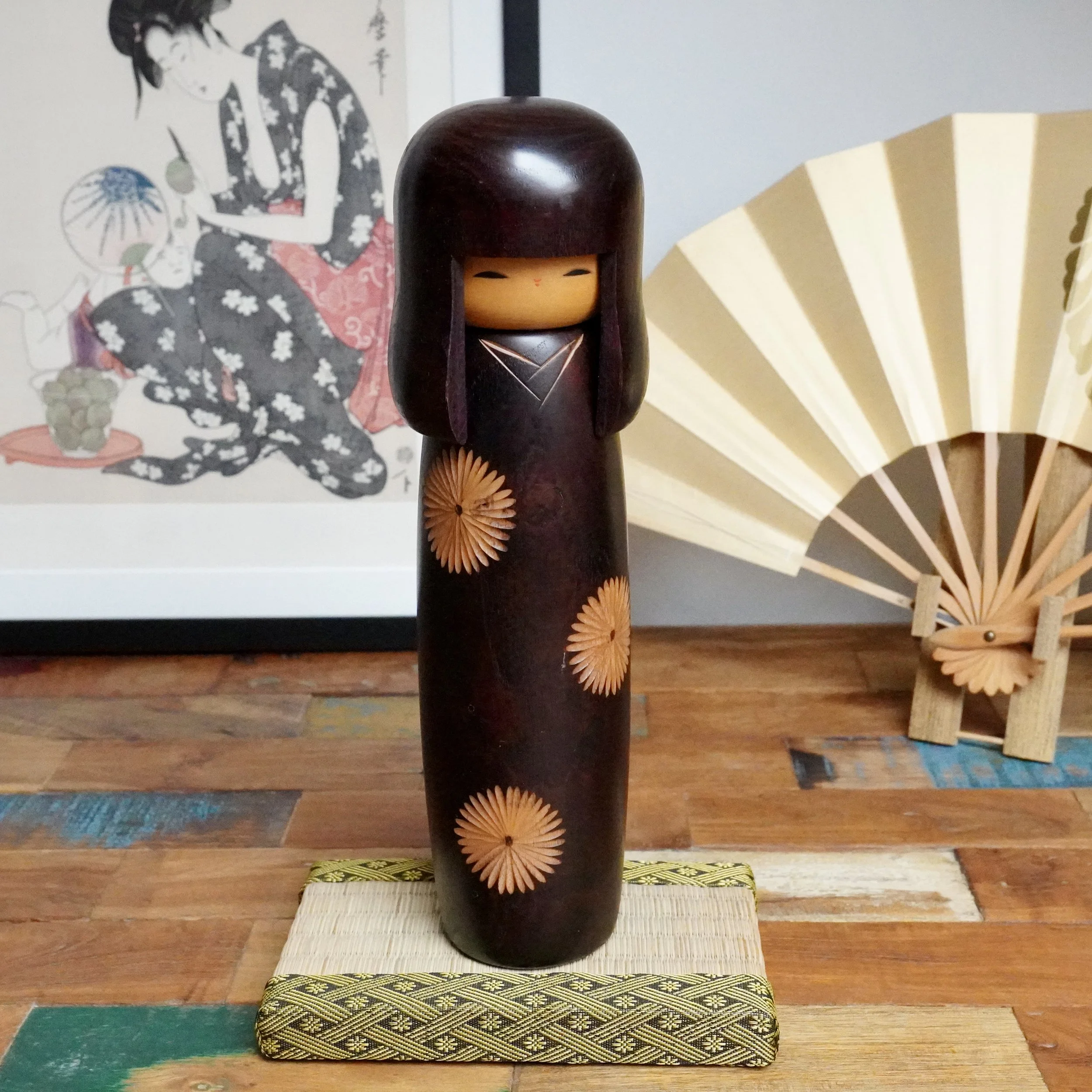
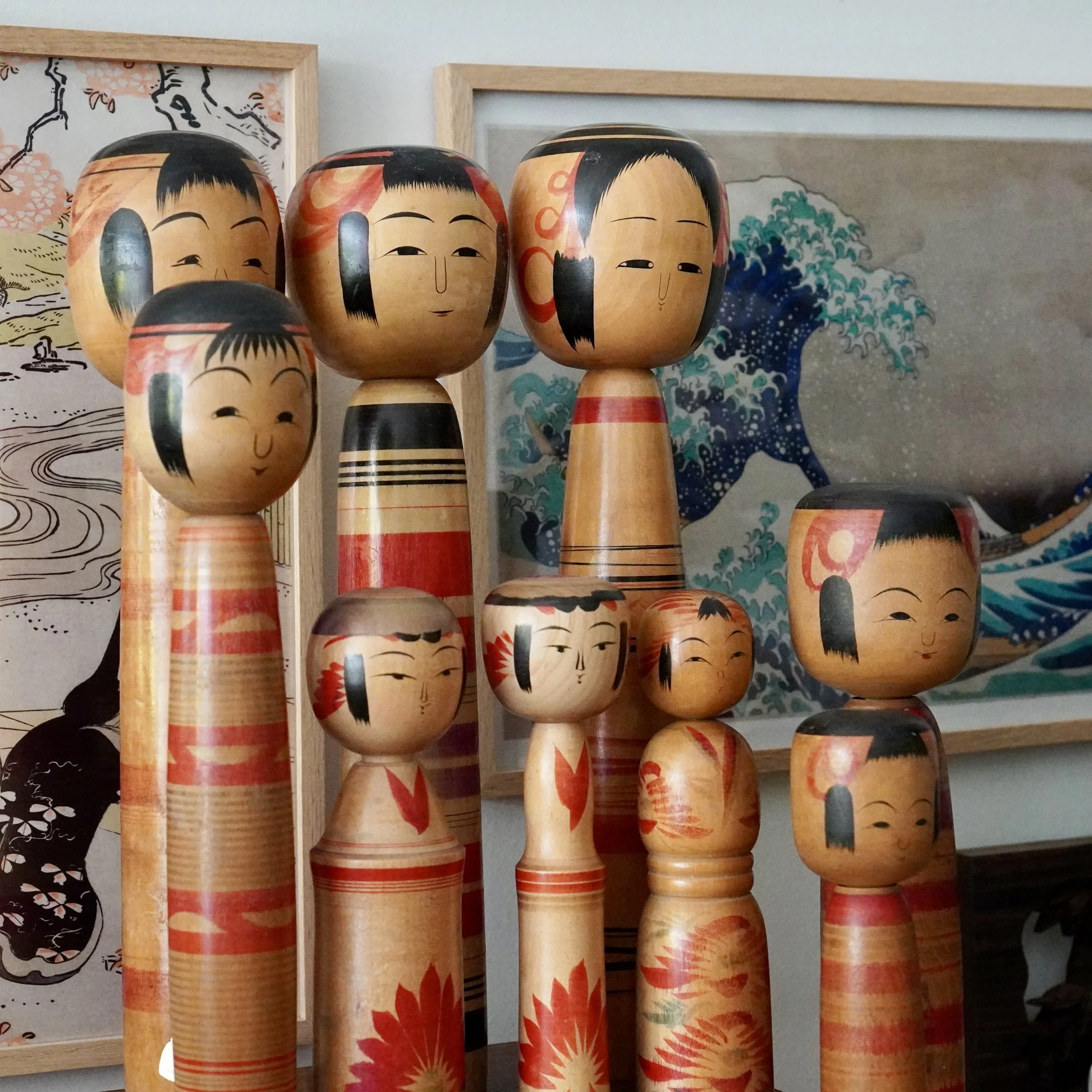
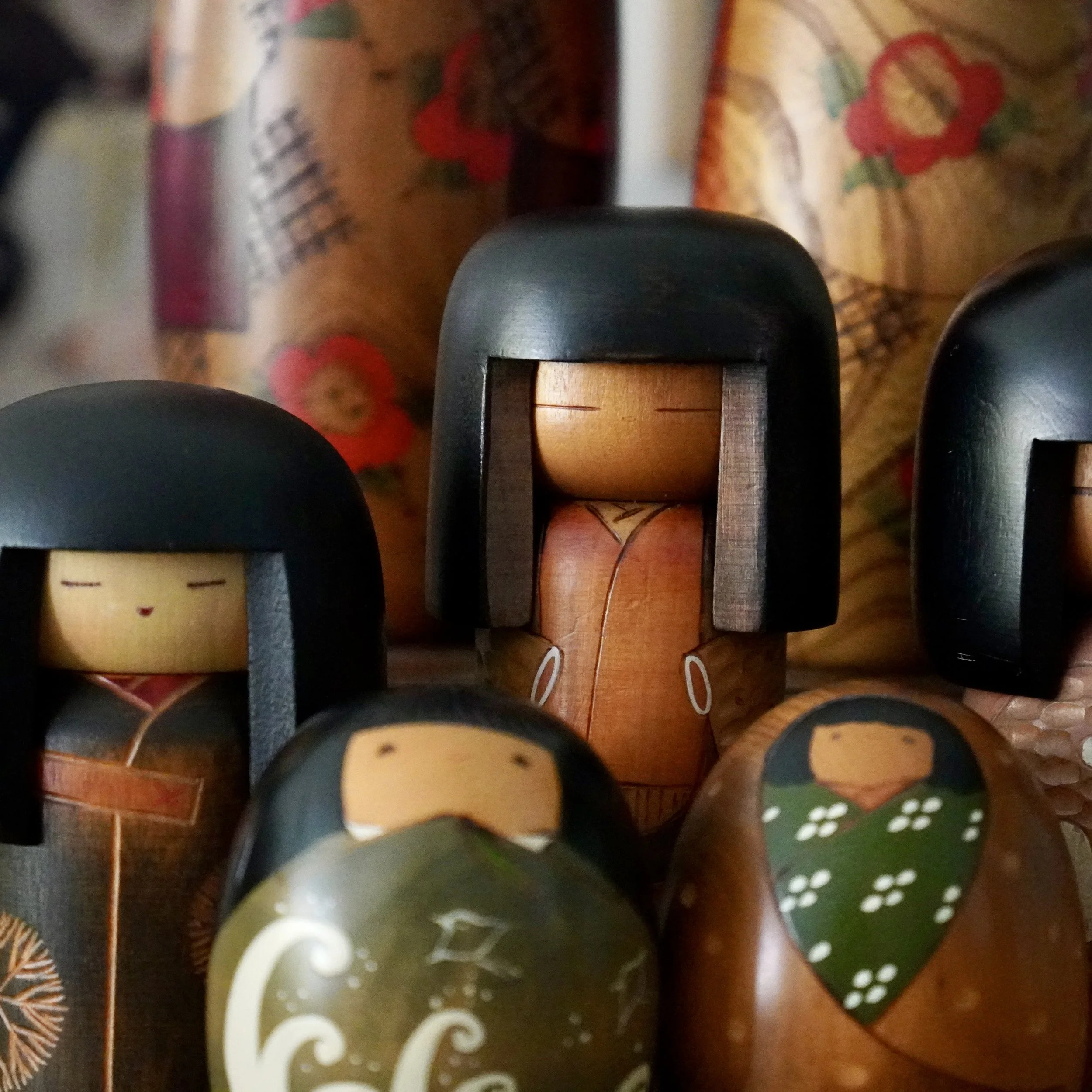
These are the ones I often hunt for. The four pieces below give you a sense of how wide that creative range actually was.
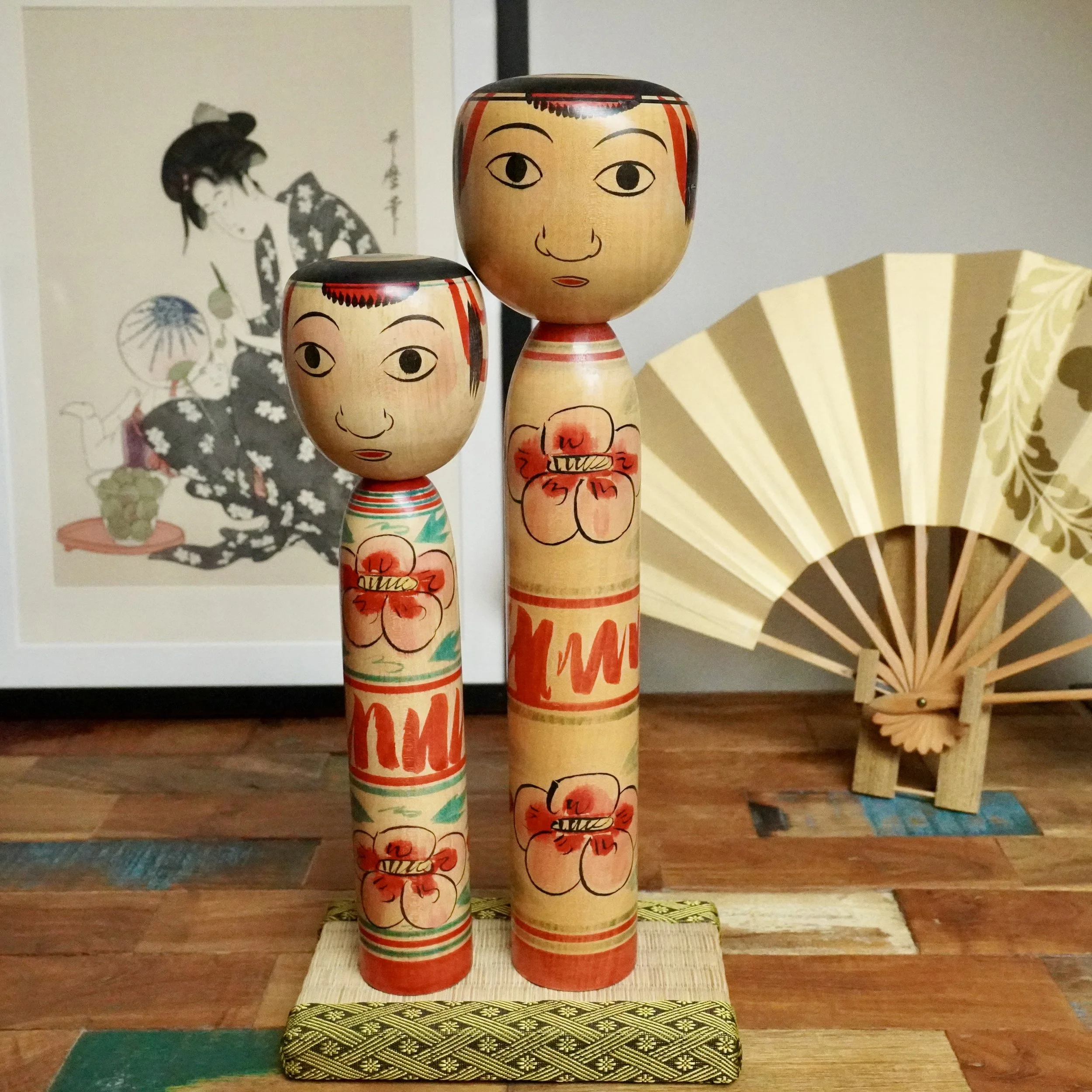
Traditional kokeshi: the art is in the eyes and the noses
There is a moment, when you pick up a kokeshi for the first time, when you realise the face is doing something. It is not just painted on. It is saying something. And once you learn to read it, you cannot stop.
I have been collecting and sourcing Japanese kokeshi for years now, and the faces are still what draw me in first. Before I check the bottom for a signature, before I look at the body decoration or the wood. The face gives it away.
Not just the mood of the doll, but the hand of the maker. Every artist leaves their fingerprints in the eyes.
If you look closely at a kokeshi friend, you’ll notice that some makers have signatures that aren't written on the bottom, but painted on the face.
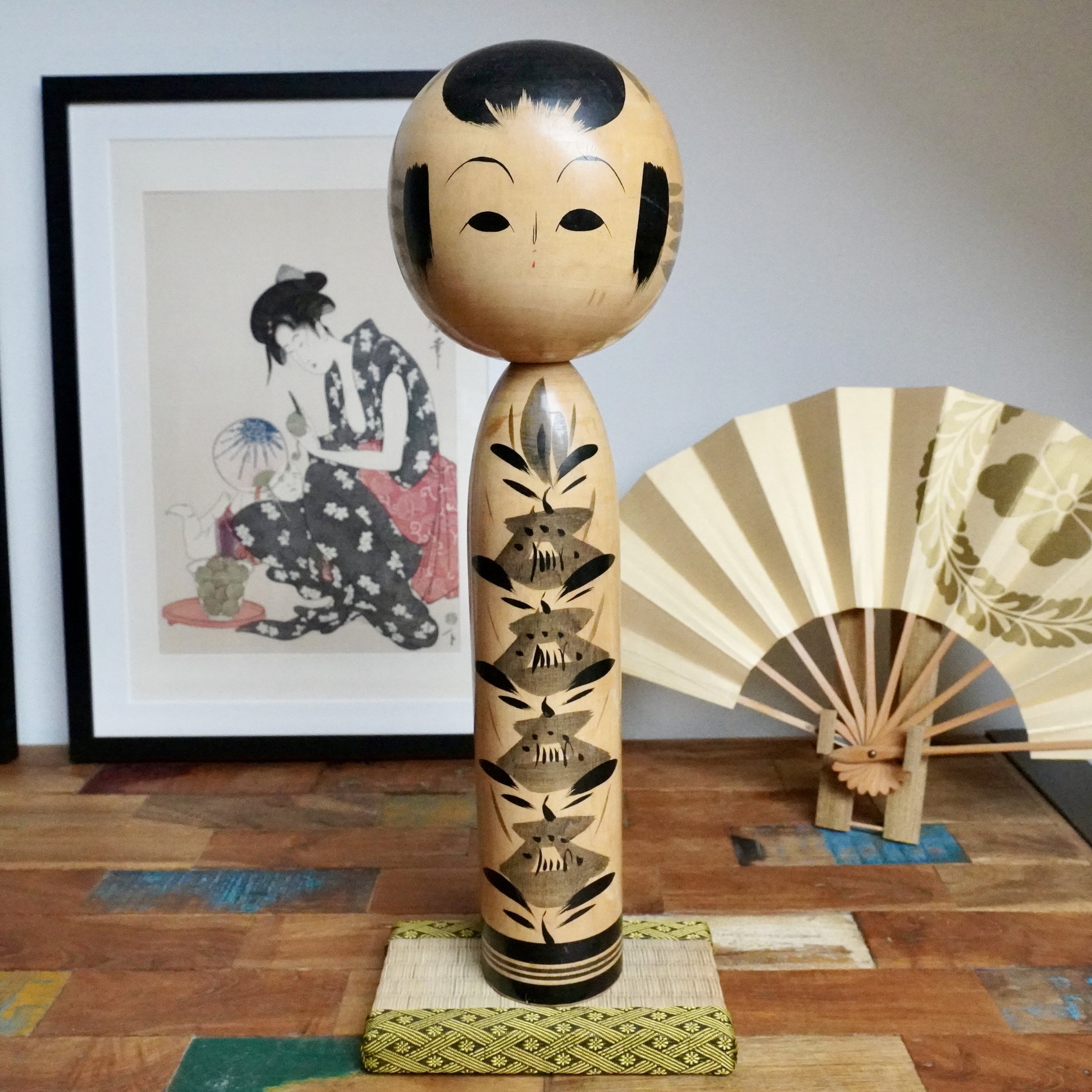
The nose is the big giveaway. Take the work of Abe Ichiro. While most makers use a simple dot or a couple of lines, Ichiro is famous for his long, elegant noses. It gives his dolls a dignified, almost noble expression that stands out in any display.
🔎 Look close: what differences can you see? 👇
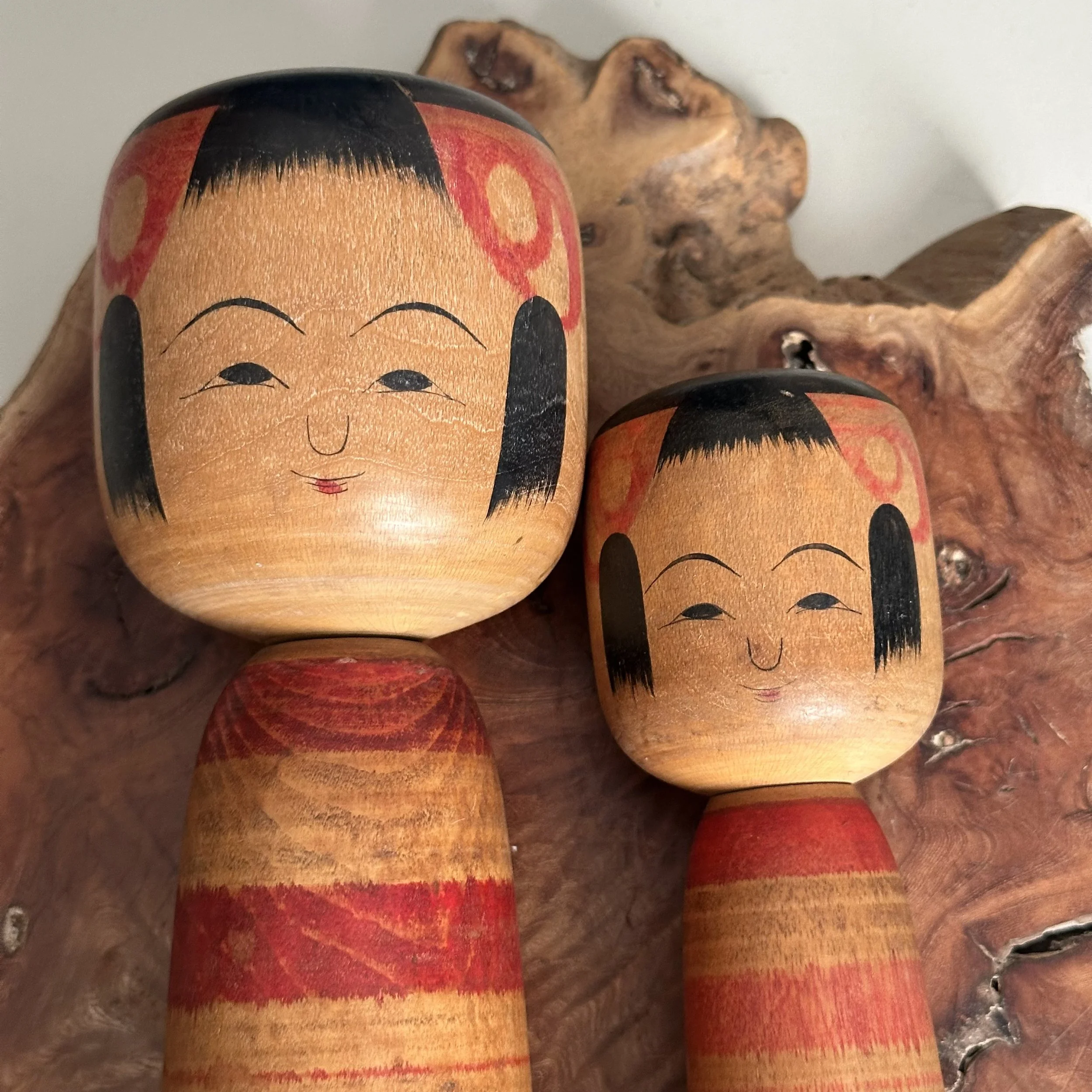
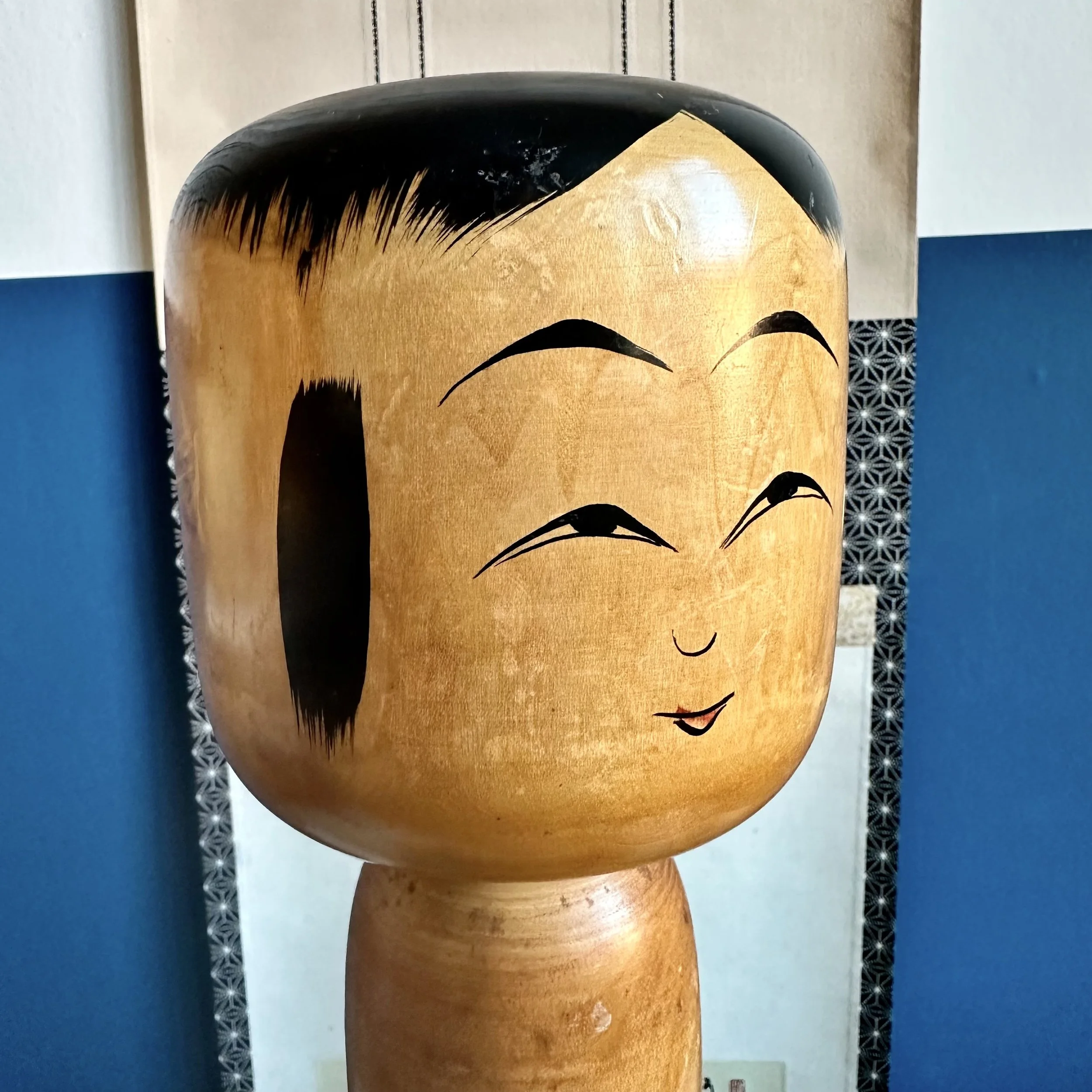
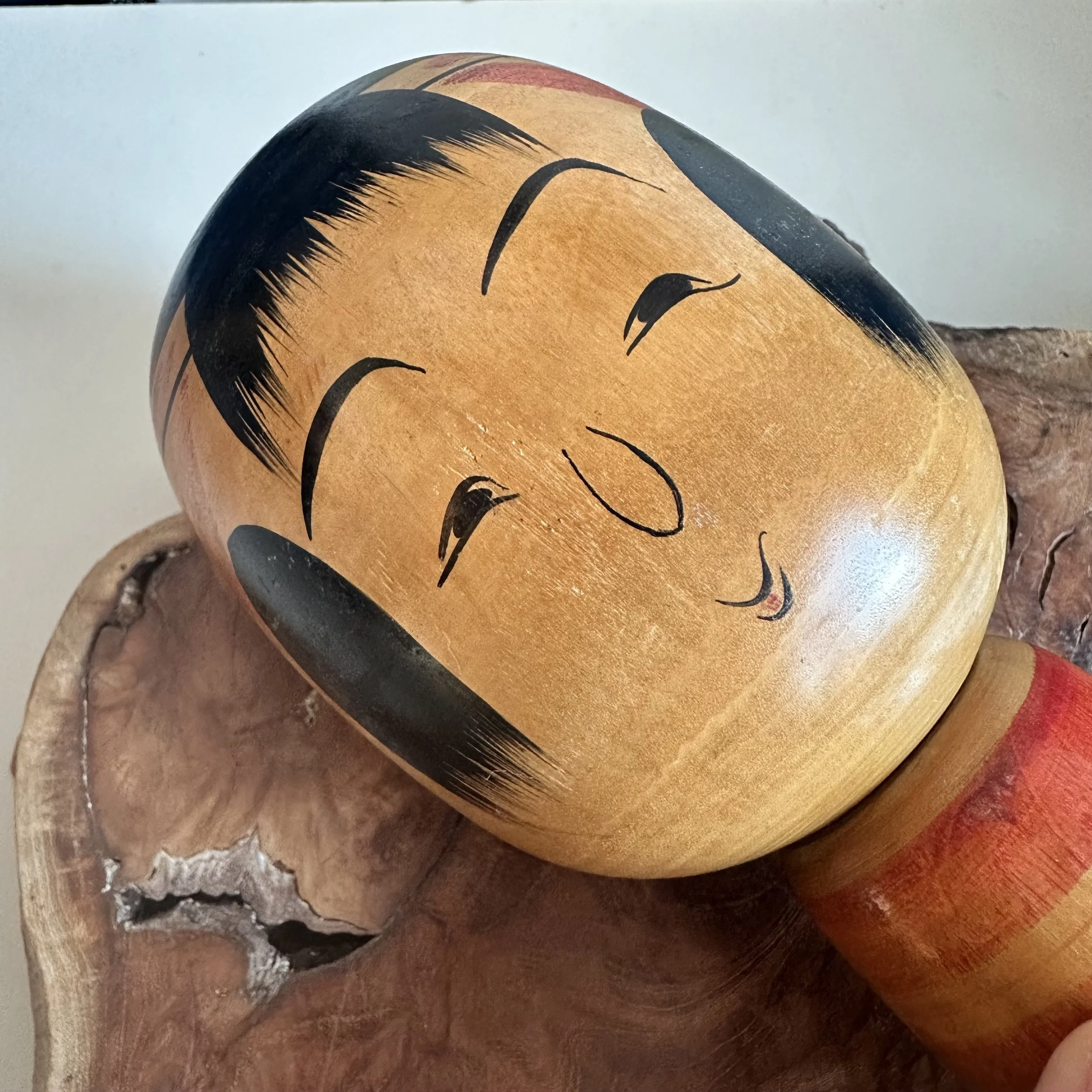
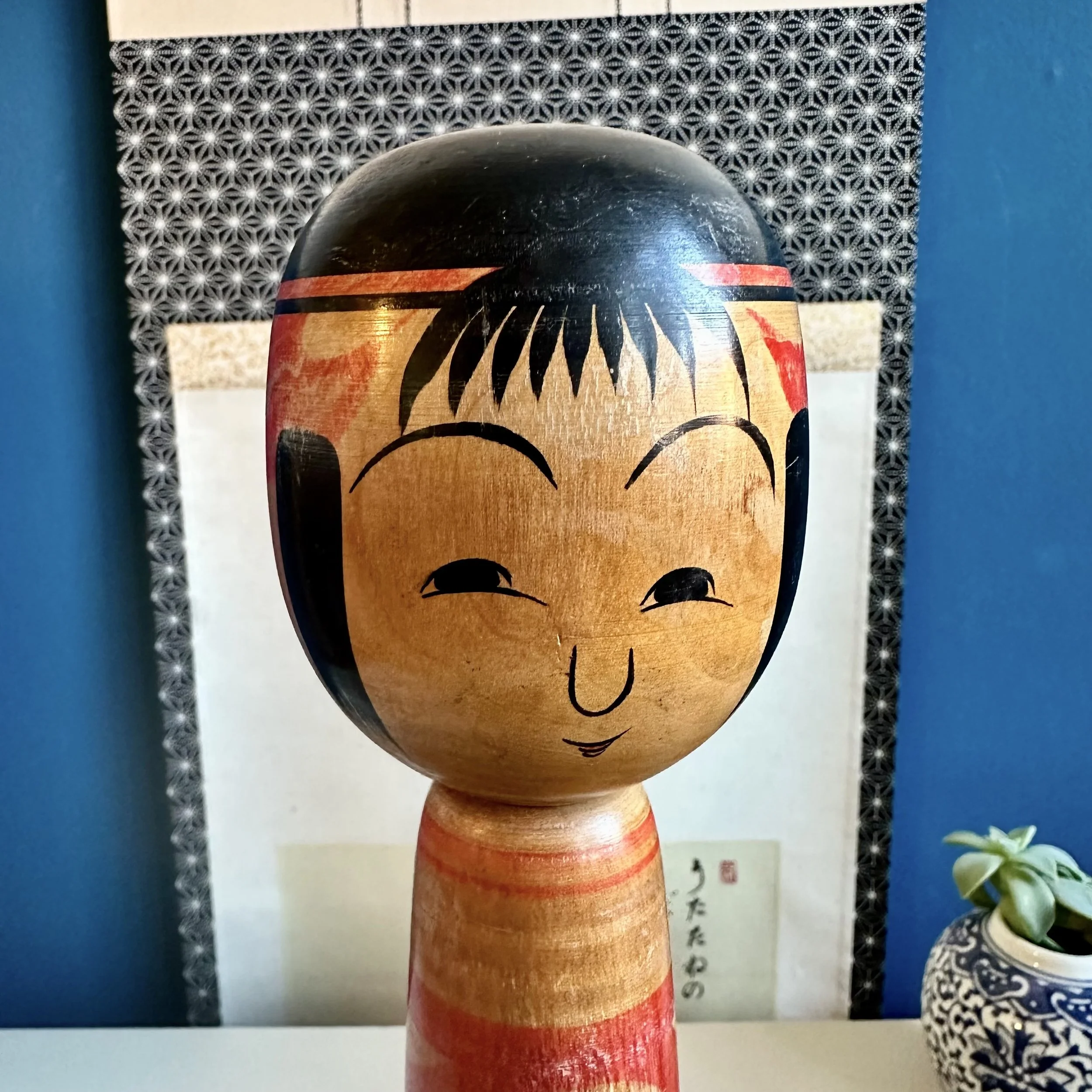
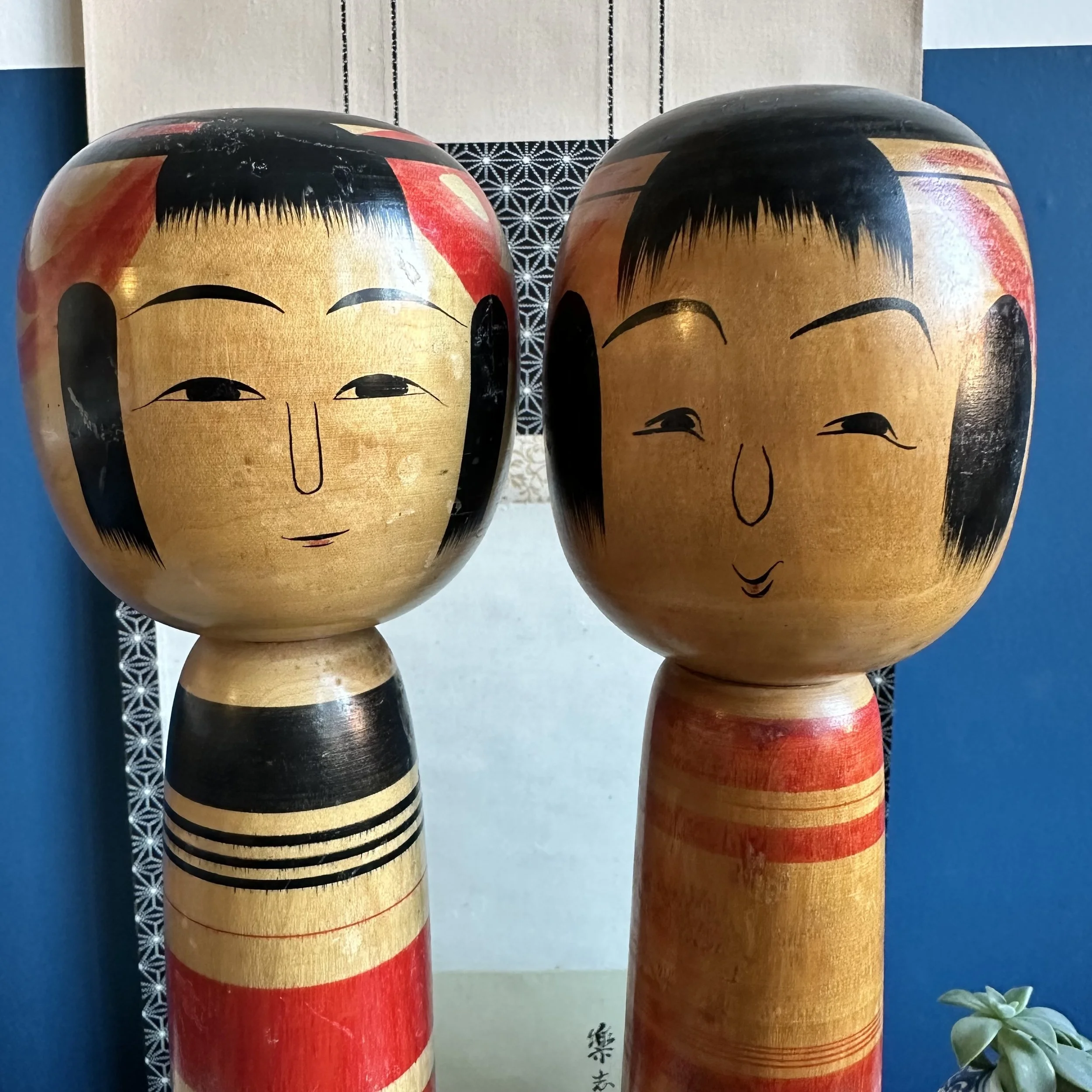
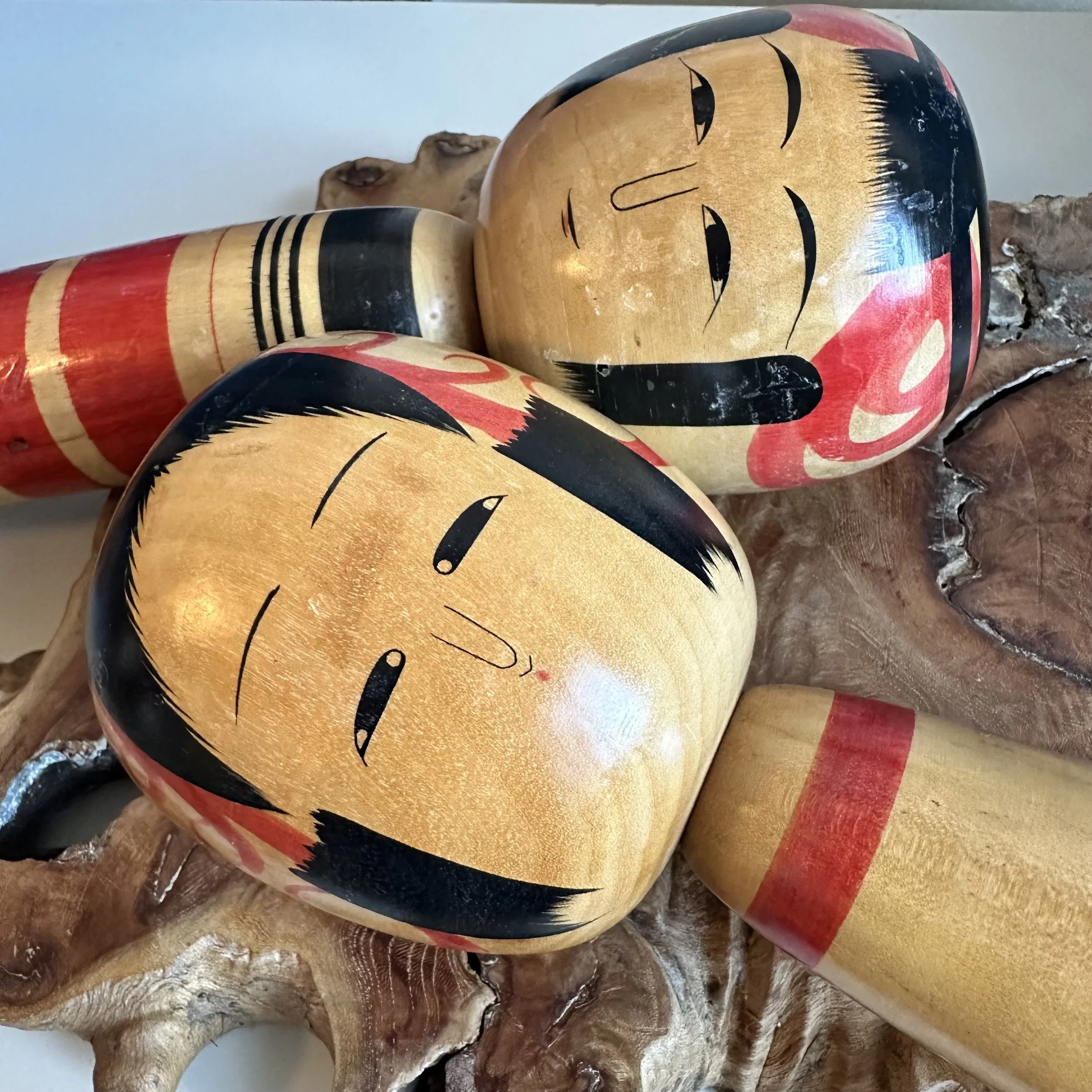
Number 1 and 2 have short noses whilst the others have longer ones. The others are Ichiro’s work. The first one is and the second one is a Tōgatta kokeshi signed by Sato Fumio.
Then you have the eyes. Some makers, like Inoue Harumi, favor those peaceful, hooded eyes that make the doll look like it’s mid-meditation and very relaxed. Whilst Ichiro’s look like they have their tongue in their cheek as if they had a funny thought.
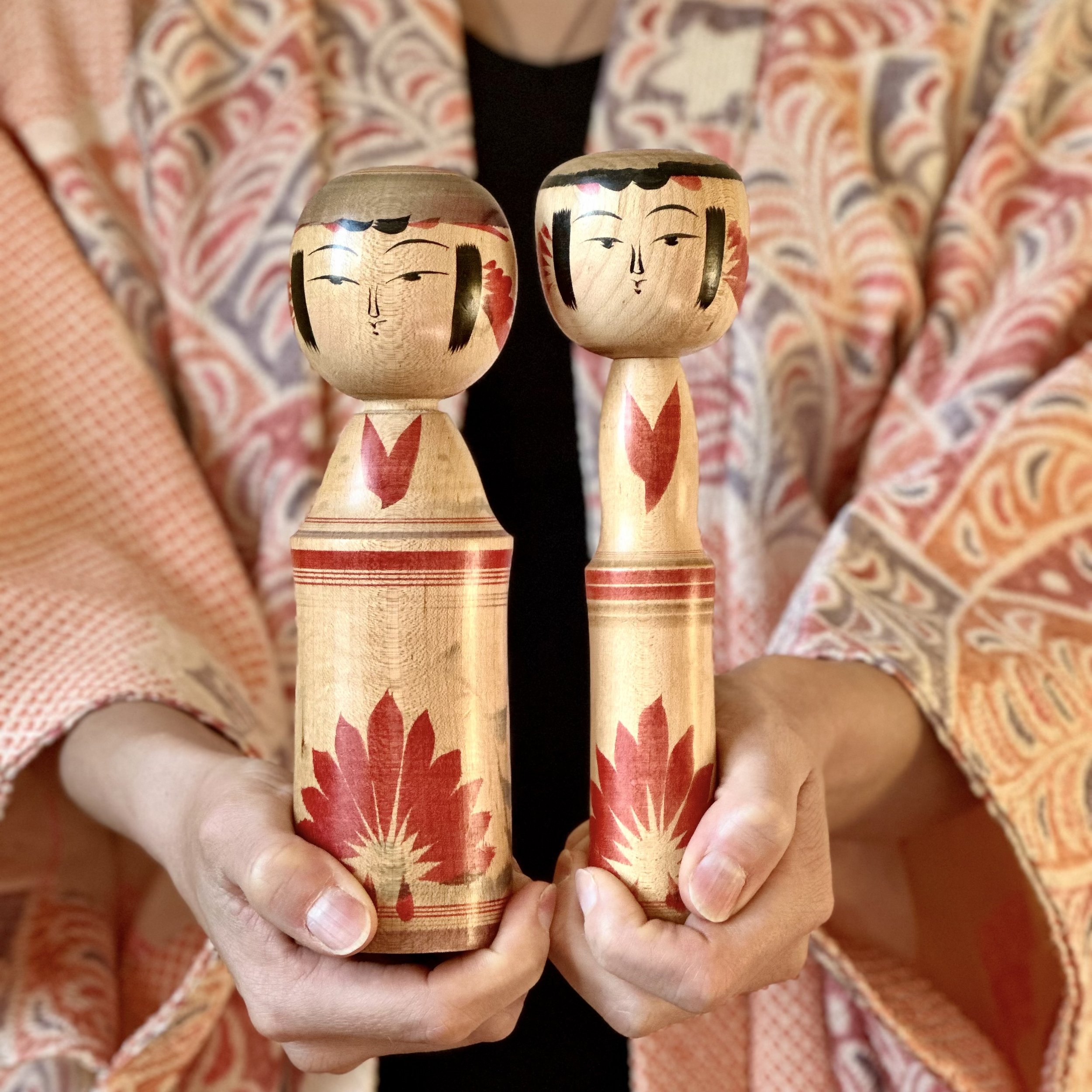
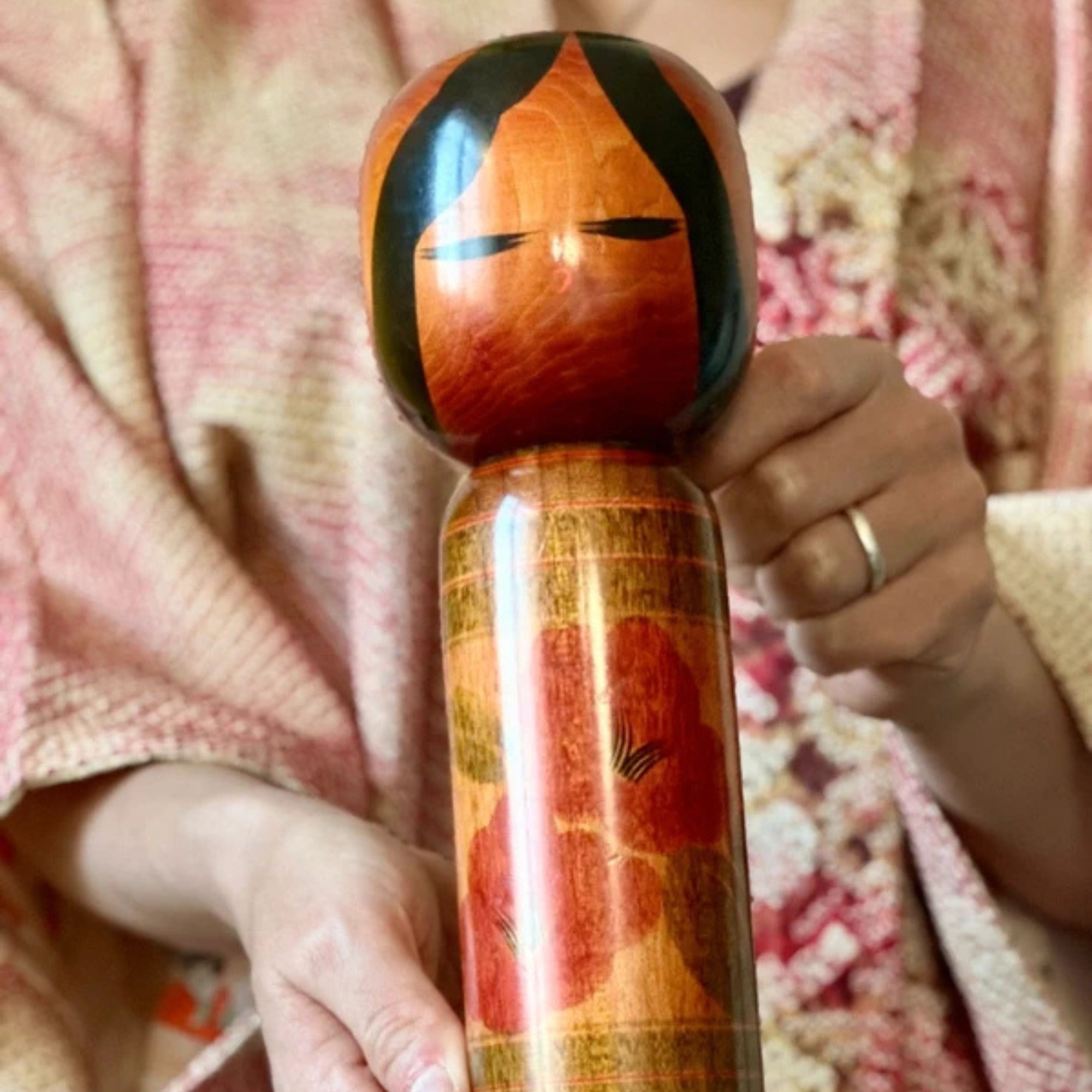
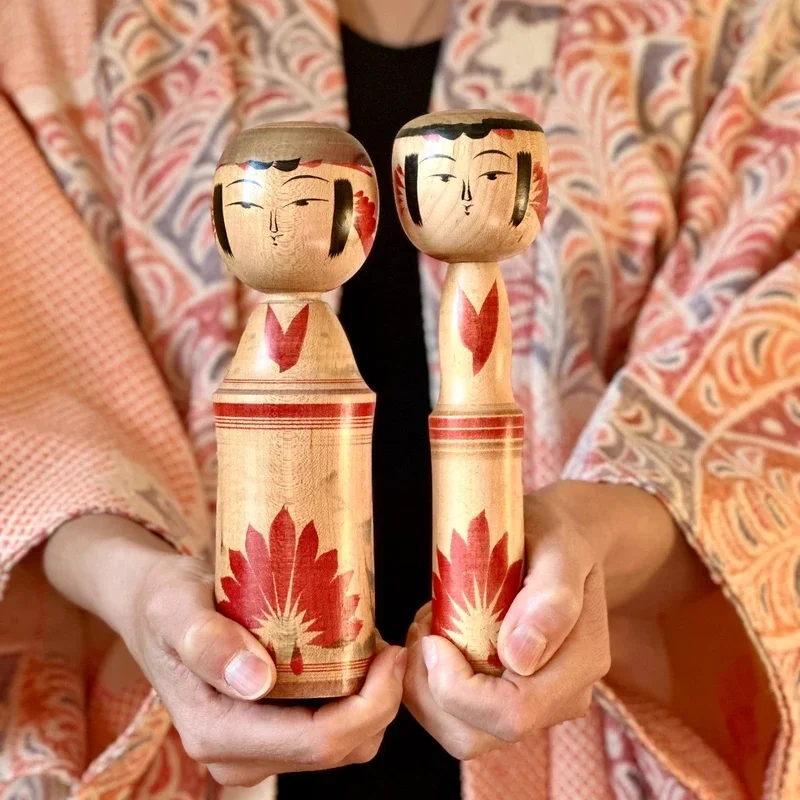
The two kokeshi I am holding in the photograph above are by Inoue Harumi, a maker working in the Yajiro tradition.
She is the perfect illustration of what I mean about eyes as a signature. Her dolls have these wonderful hooded, downward-gazing eyes, heavy-lidded, serene, almost meditative. Looking at them, you feel the doll is mid-thought, somewhere peaceful and far away.
See their shop listing for more details here.
Creative kokeshi: where traditional ends and creative begins
The dolls above are all what collectors call dentō kokeshi. In their traditional style, tied to a specific regional school with established conventions around shape, decoration and face. But in the mid-twentieth century, a new wave of makers emerged who wanted to work outside those rules.
They called this movement sōsaku kokeshi — creative kokeshi. And this is where things get genuinely strange and wonderful.
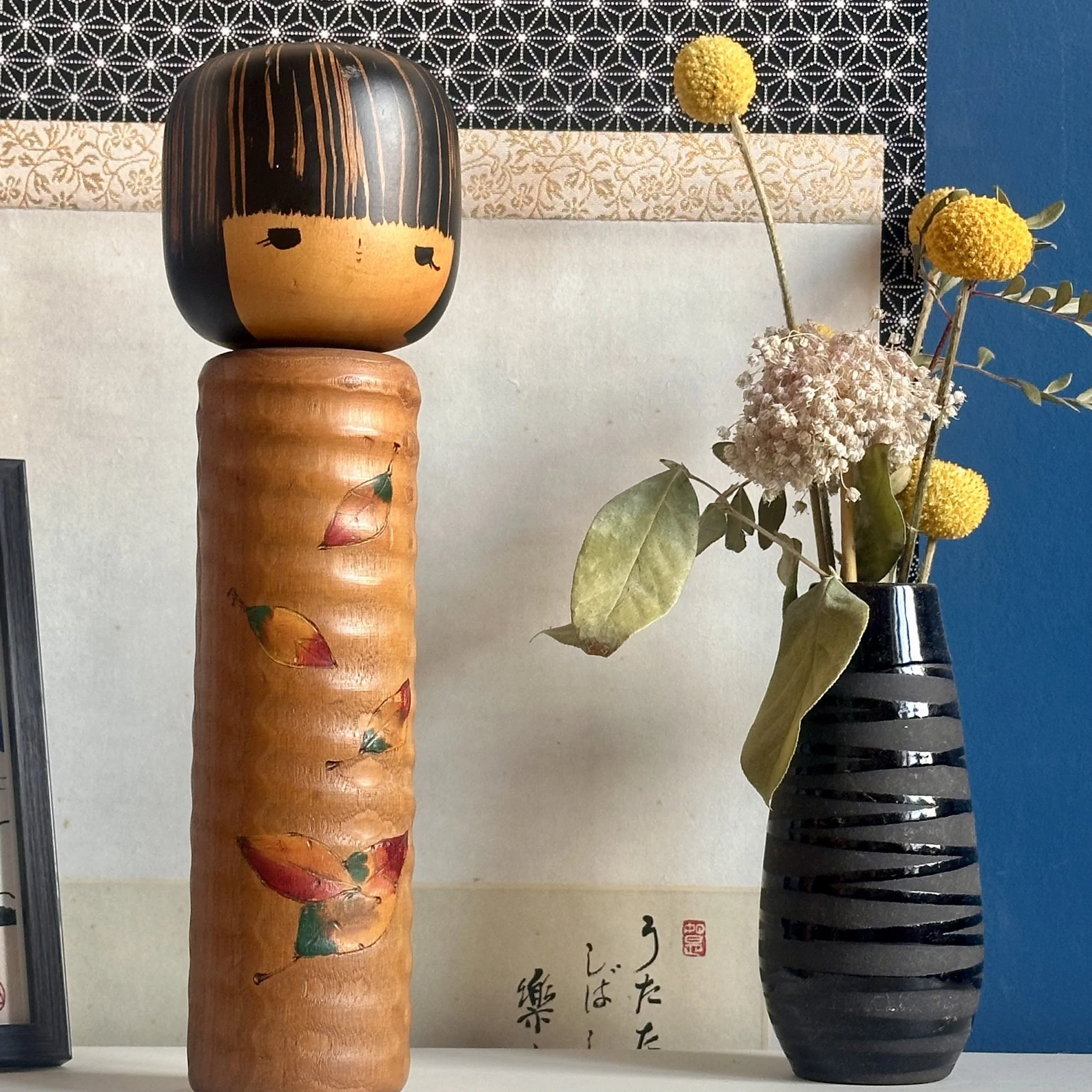
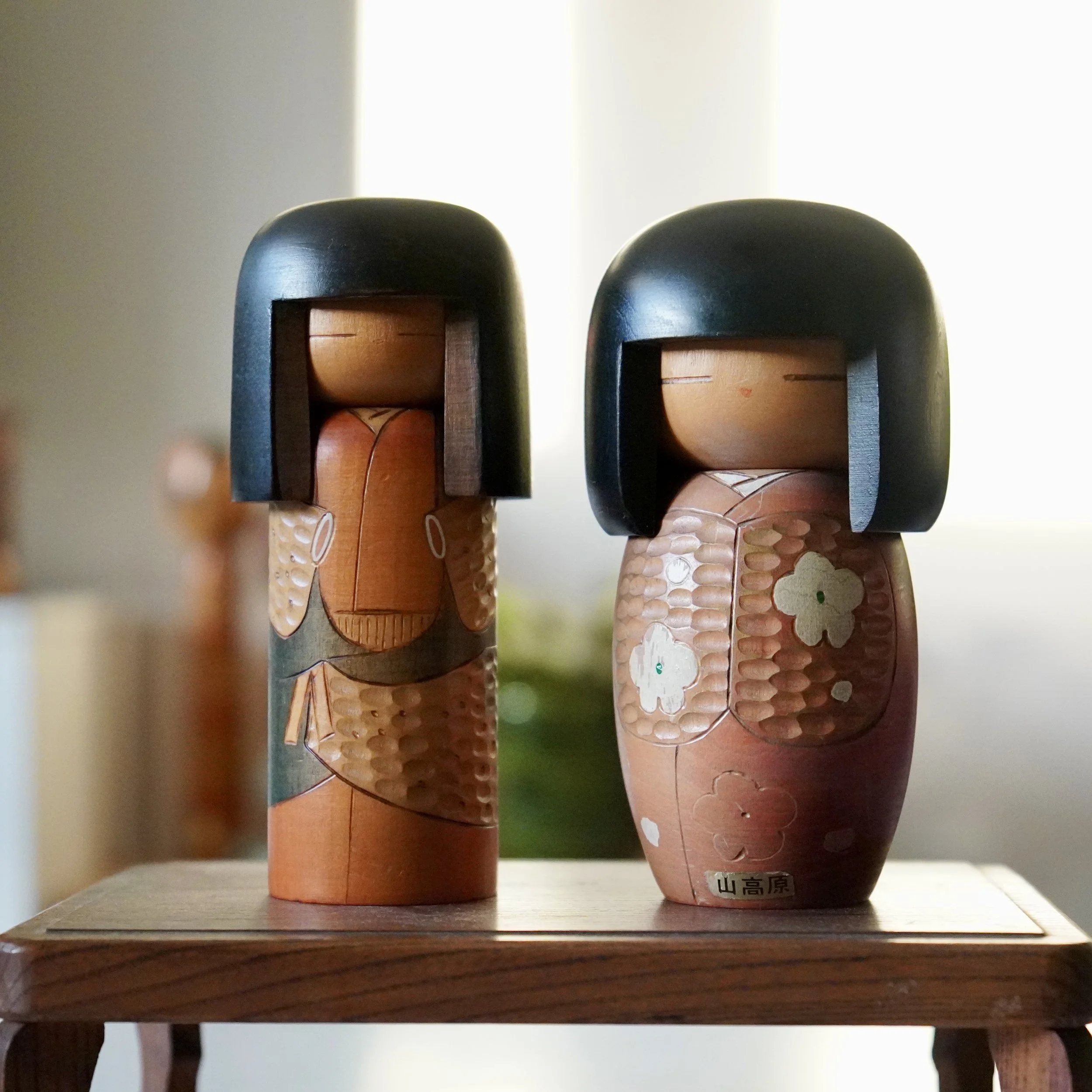
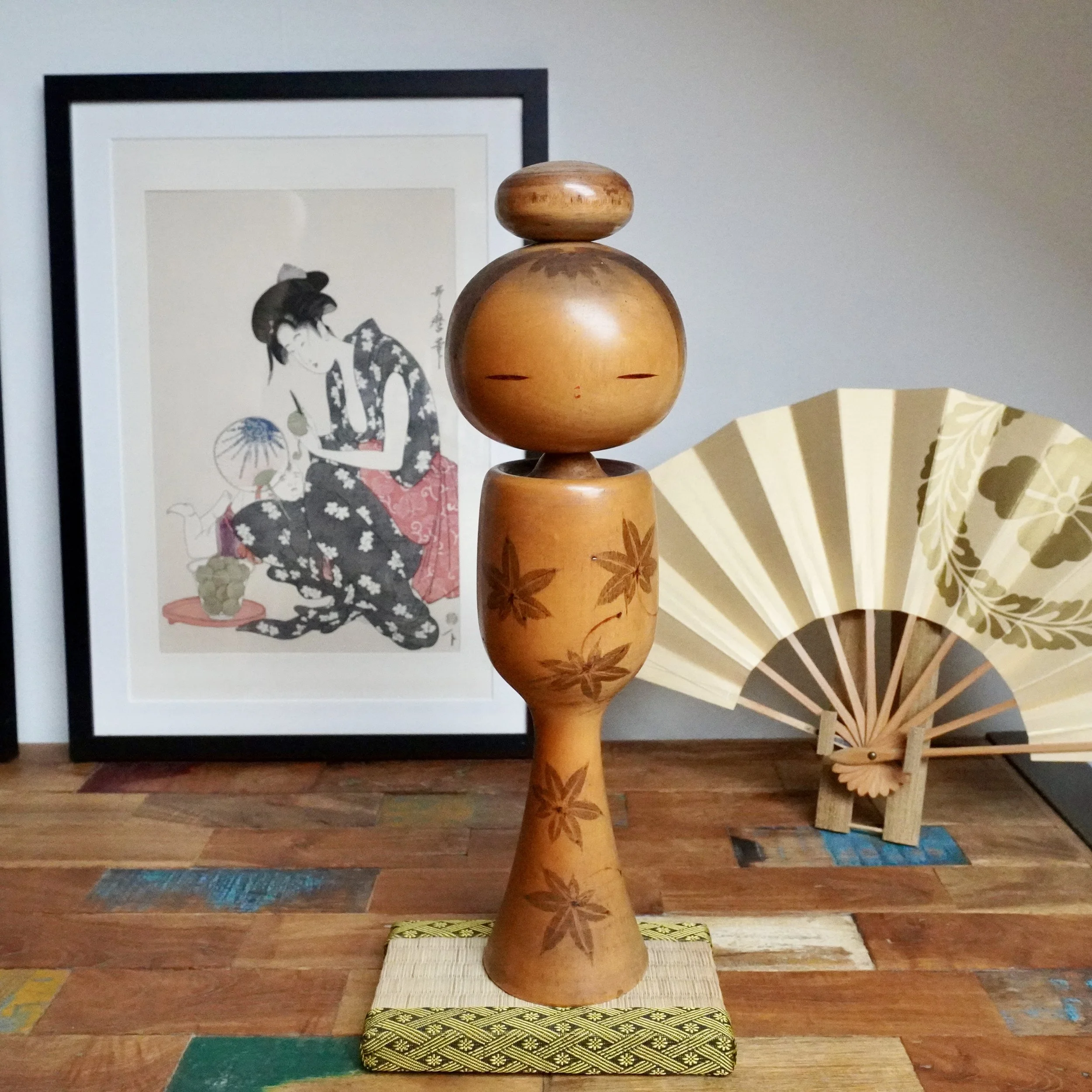
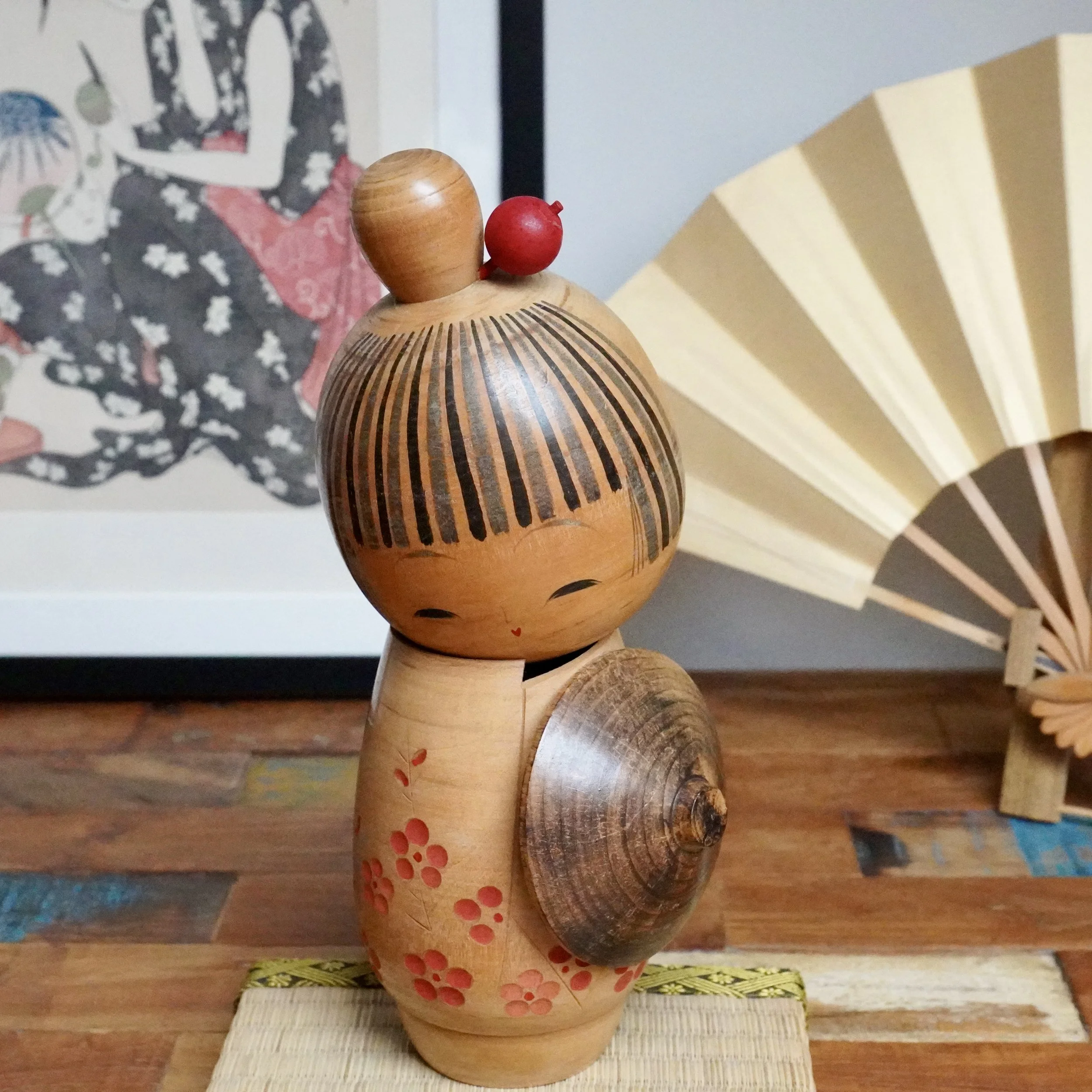
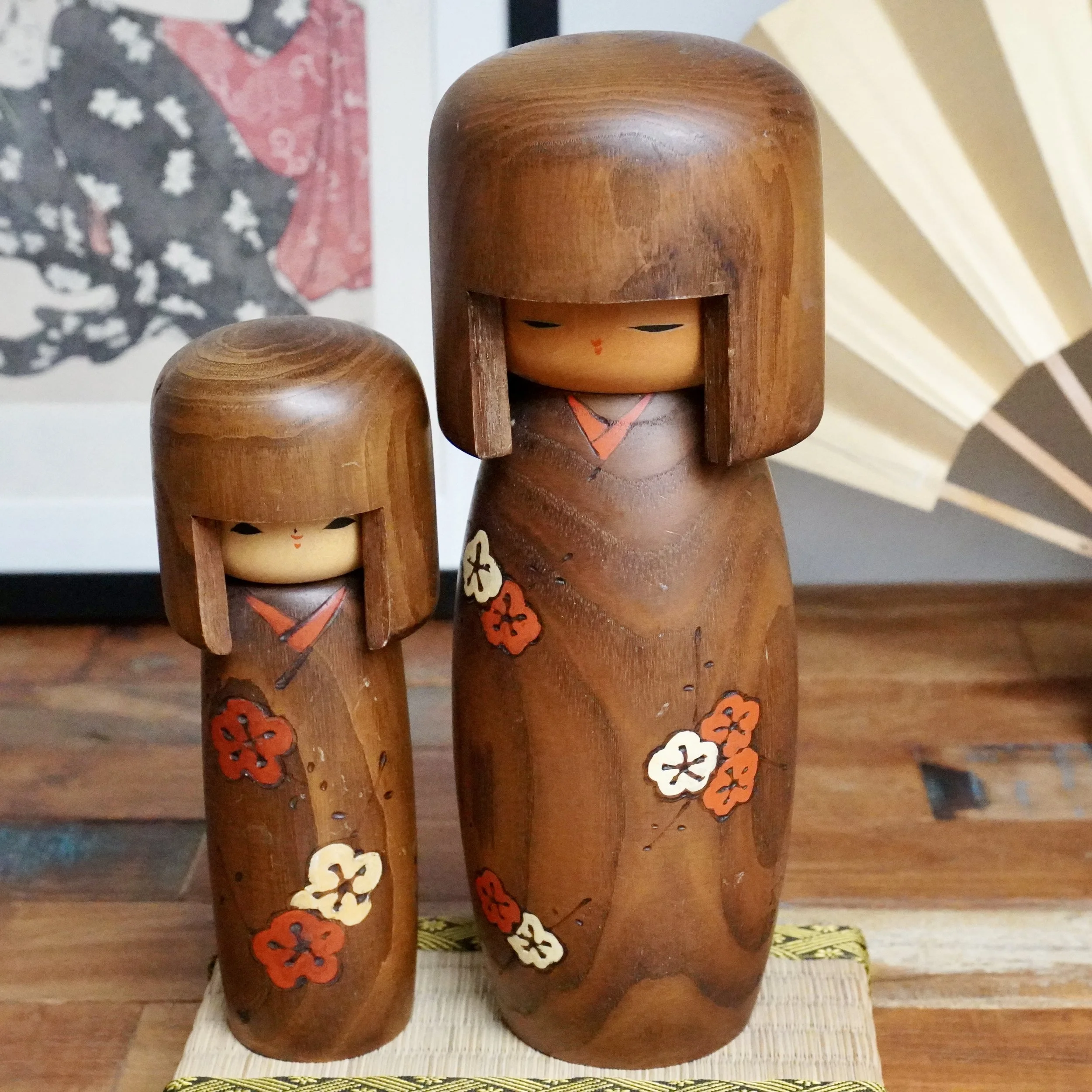
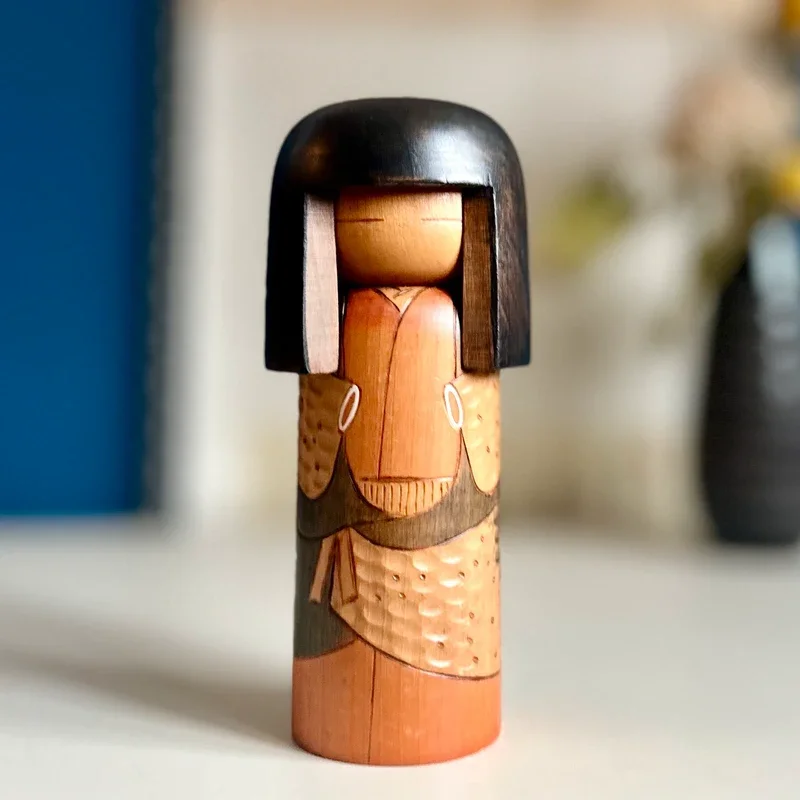
The first lady has a lovely ribbed body and scattered momiji maple leaves and is made by Usaburo.
If any single name defines the sōsaku world, it is his.
He started making kokeshi in 1950 with no interest in following what had come before, introducing a carving-and-burning method using Nichrome wire that nobody had applied to kokeshi before.
The corrugated chatter-work body on this piece is entirely his invention. It is a structural technique he developed to work with the wood rather than against it.
More details: click to view her listing
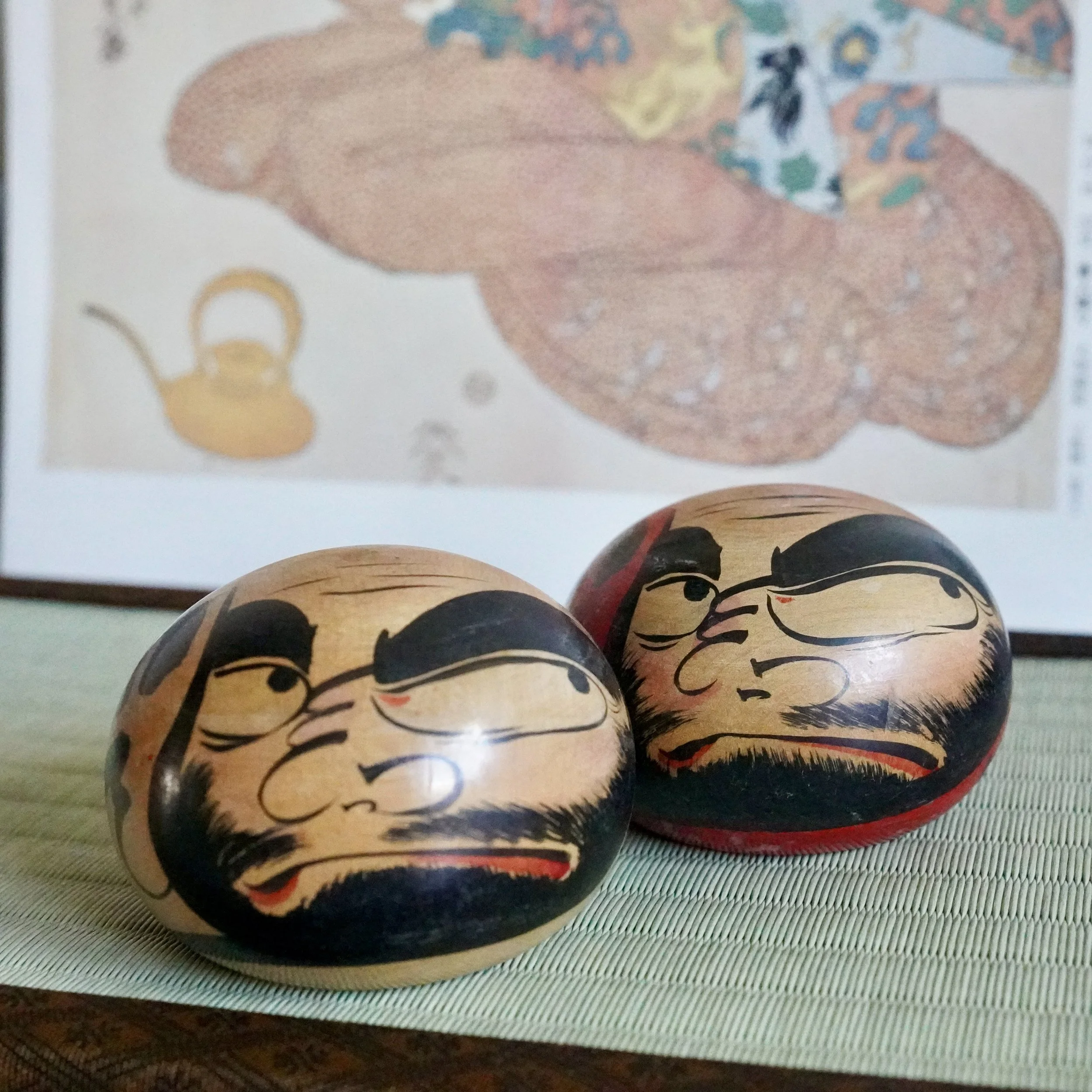
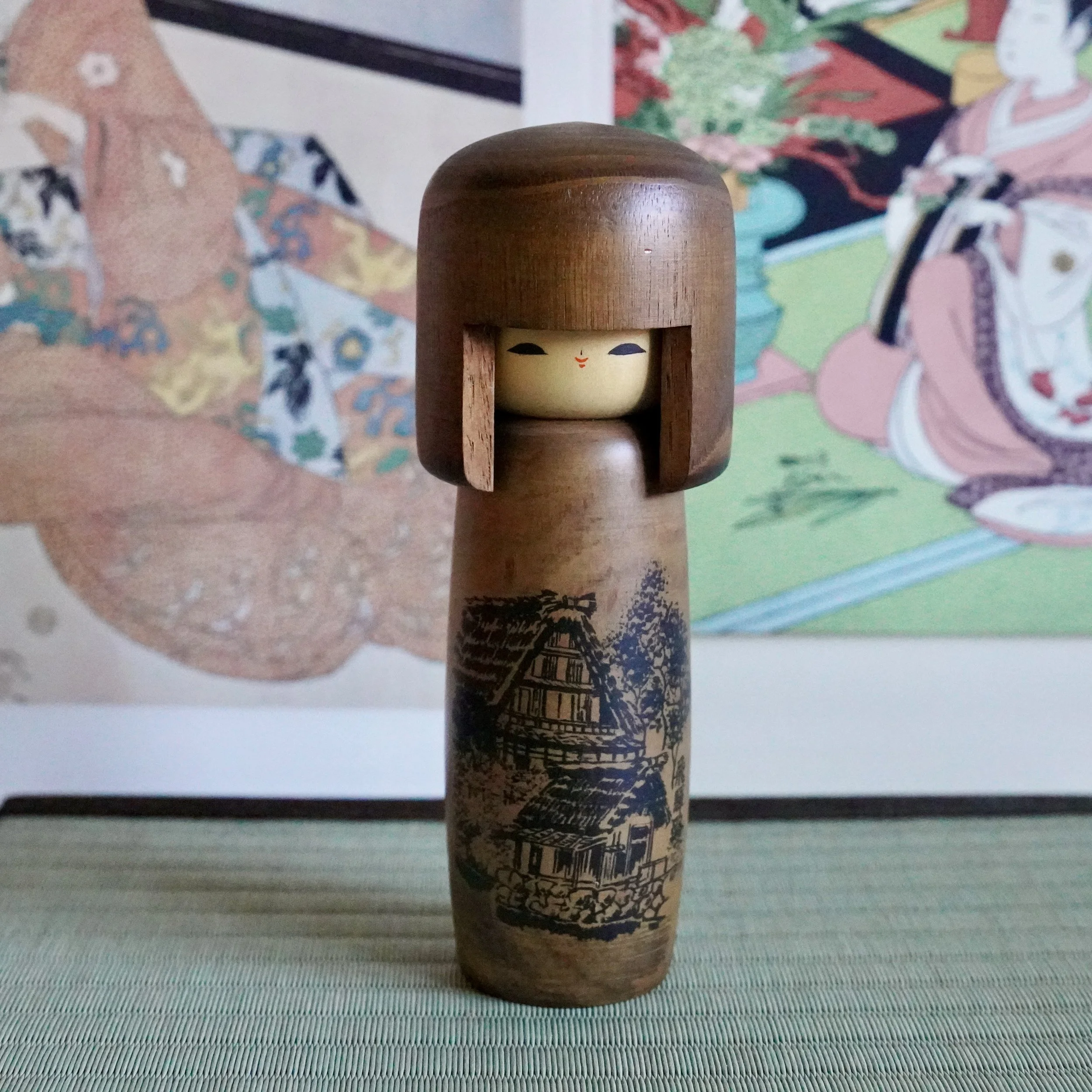
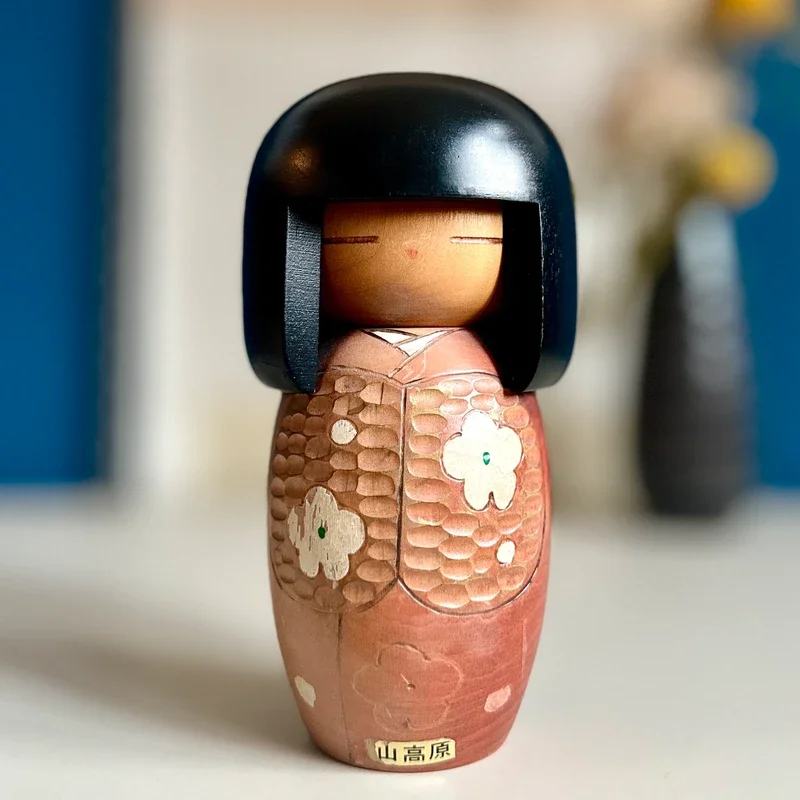
The second photo is from a cute pair from Kenichi Murakami (1929–1991). He was born into a family of woodworkers.
He first studied oil painting before turning to kokeshi around 1946.
He primarily created dolls with minimal decoration, emphasising the natural wood itself, and loved to capture the innocence of a young child through deep carving and horizontal cut lines.
More details: click to view their listing
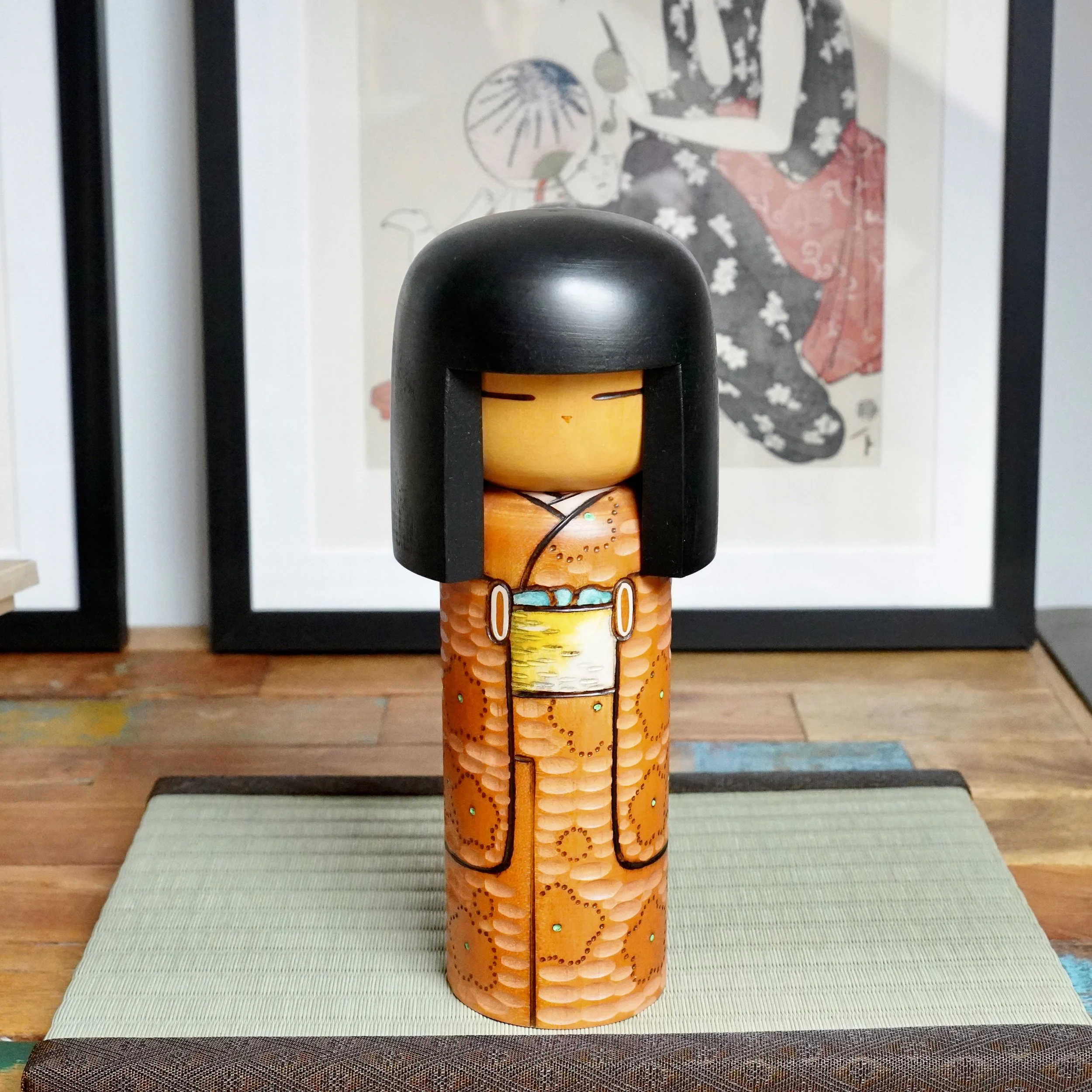
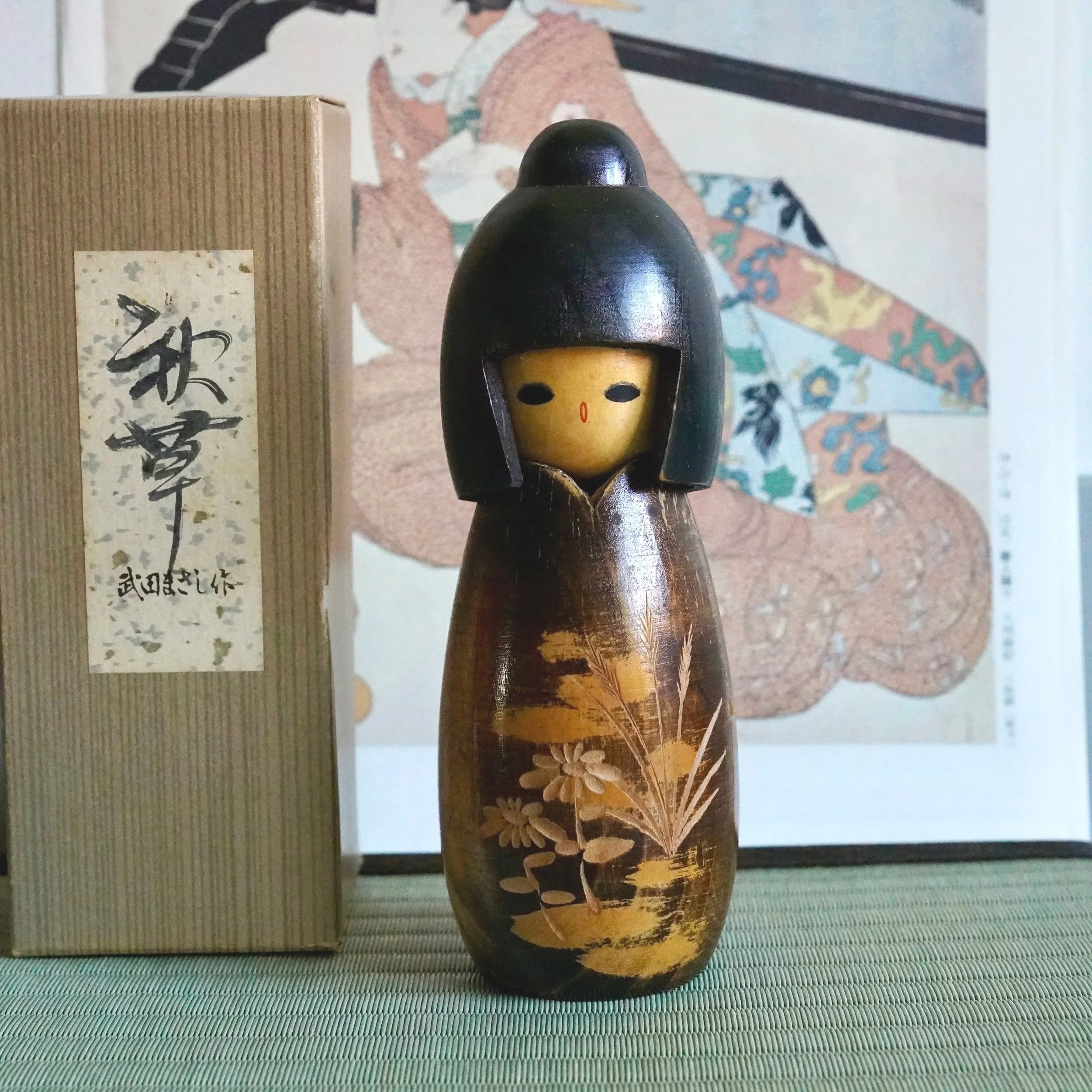
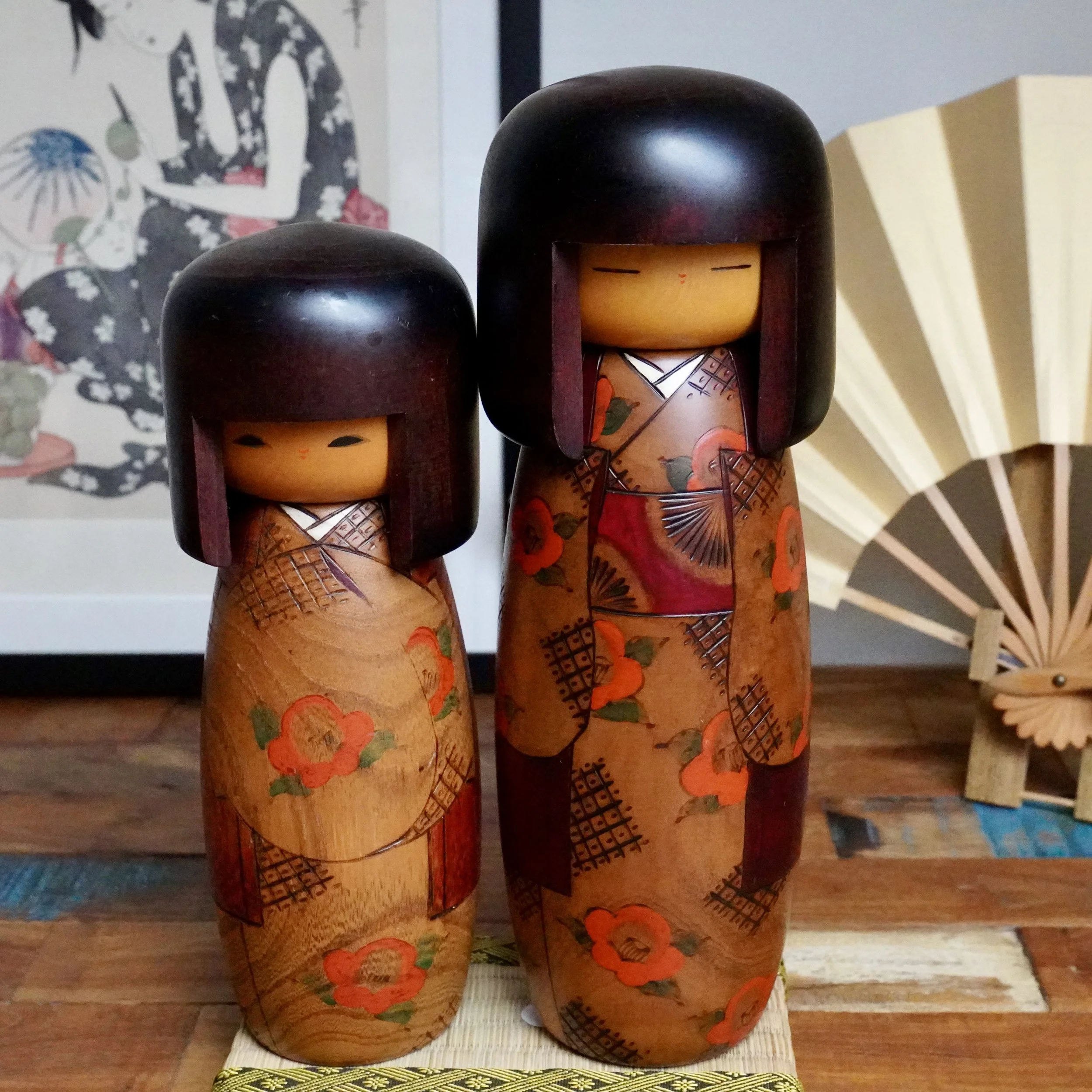
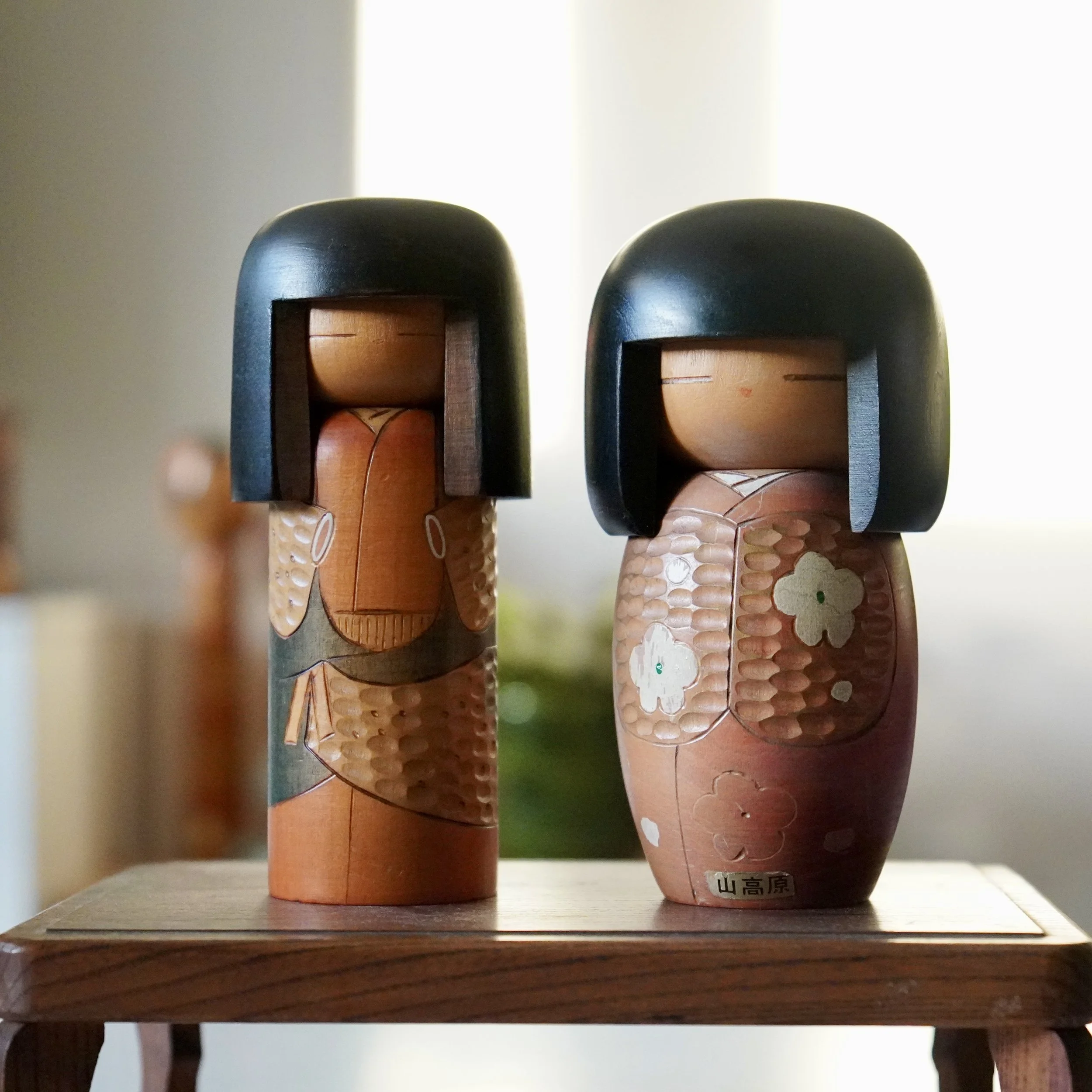
The third set of ladies are by the hand of Kisaku
They are a good reminder that not every great sōsaku maker left a paper trail.
His full name has never been reliably documented, even among serious collectors, and yet his work is immediately recognisable: the structured figure, the textured kosode, the carved body that feels architectural rather than decorative.
The 1970s produced many makers like this: skilled, prolific, collected internationally, and quietly anonymous.
More details: click to view the left doll’s listing and the right doll’s listing
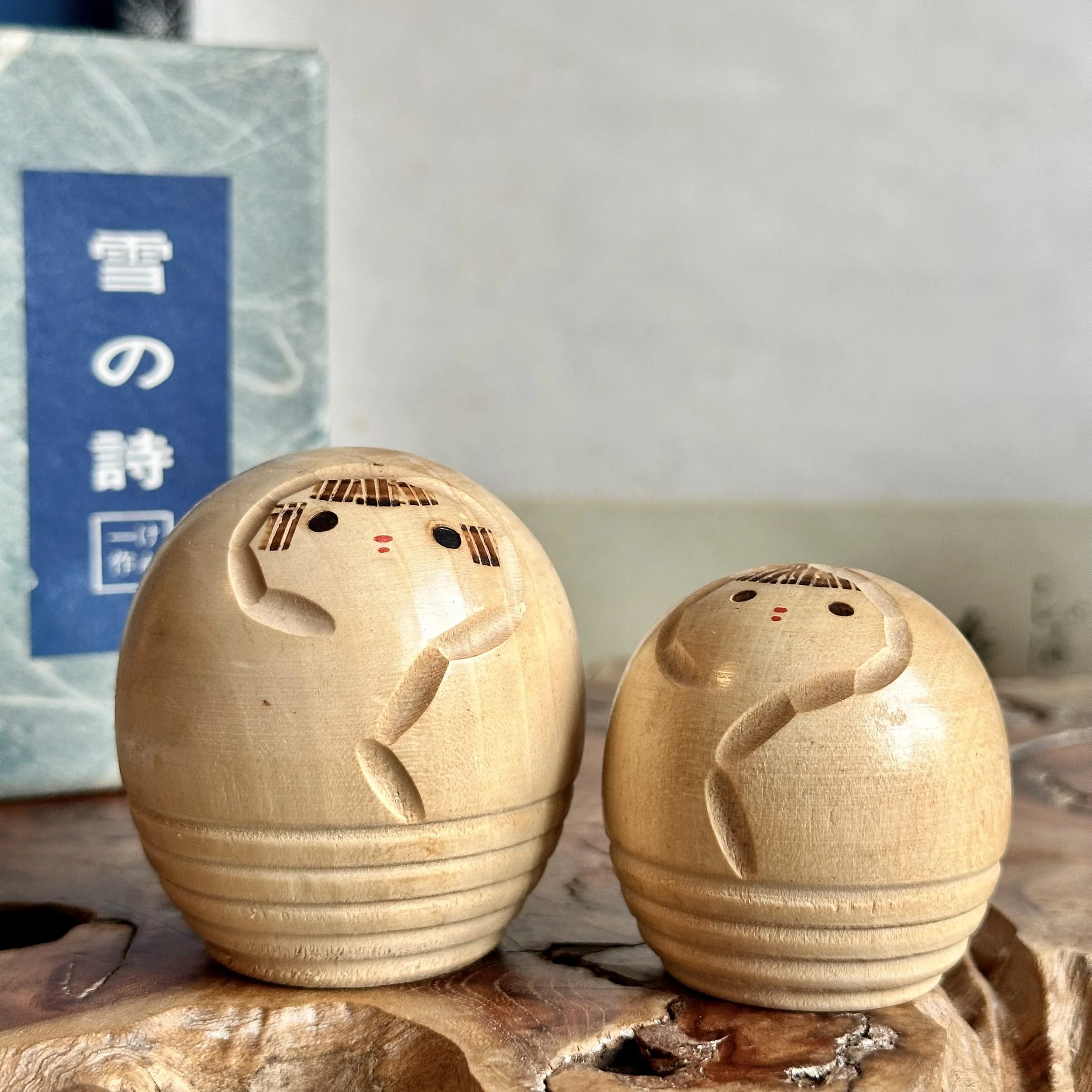
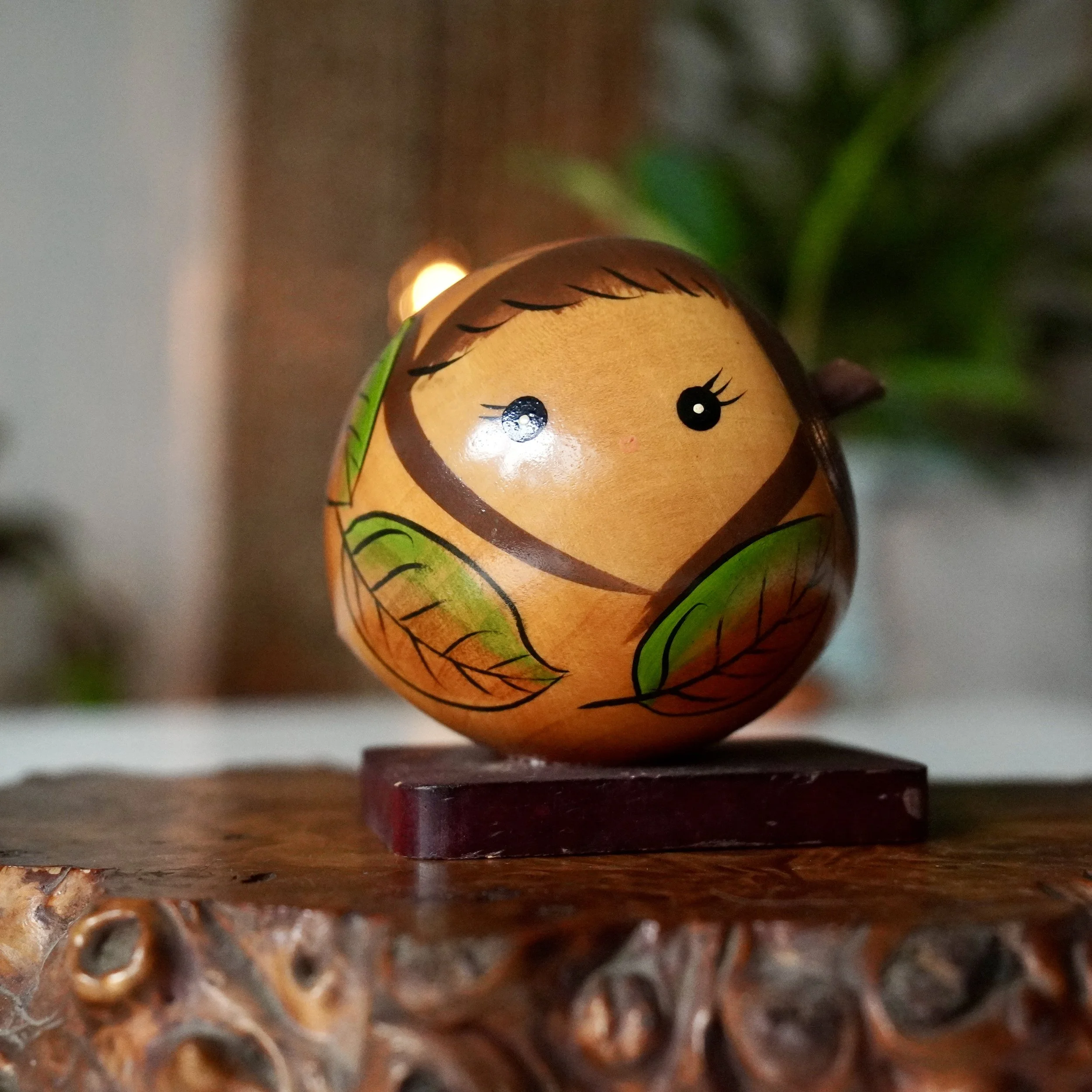
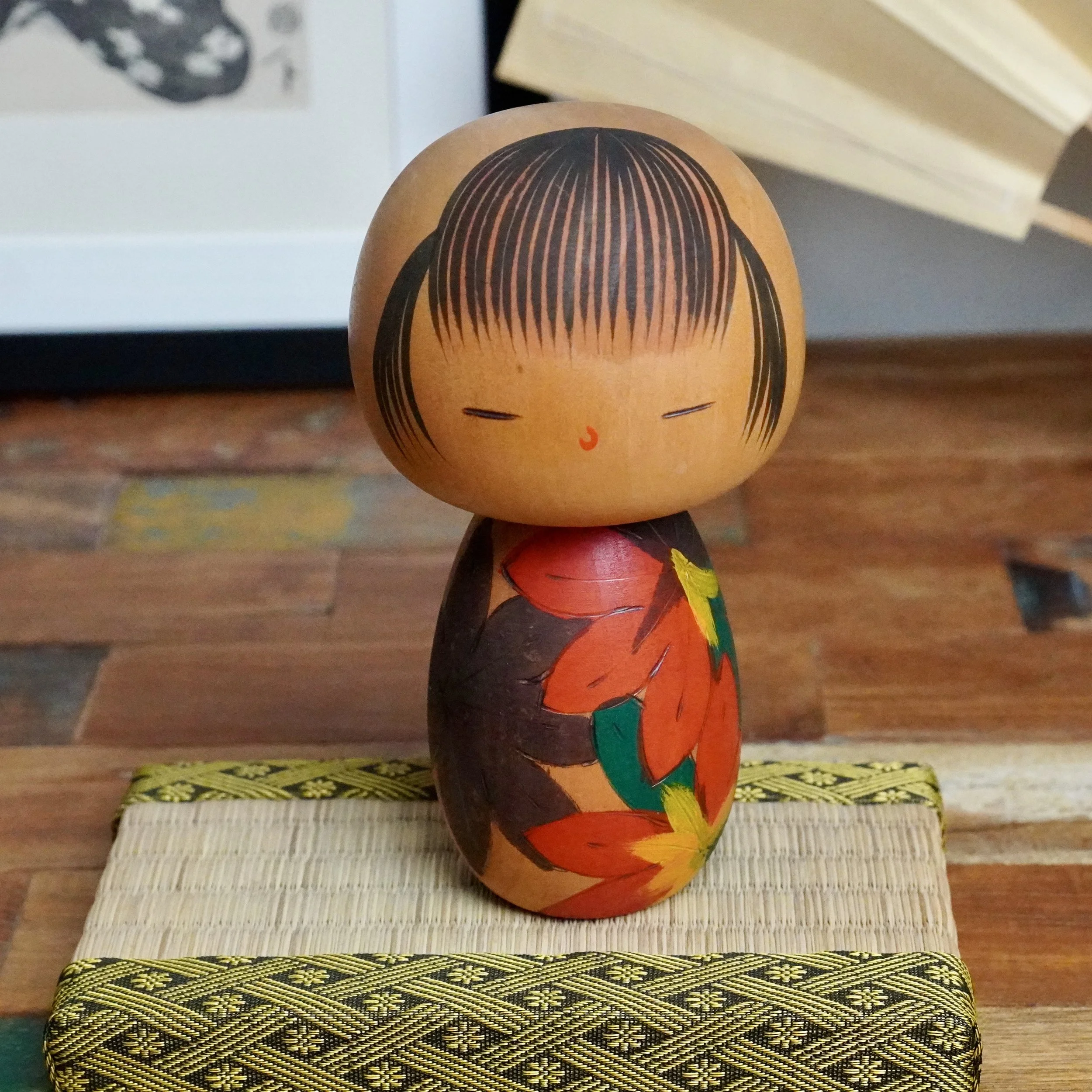
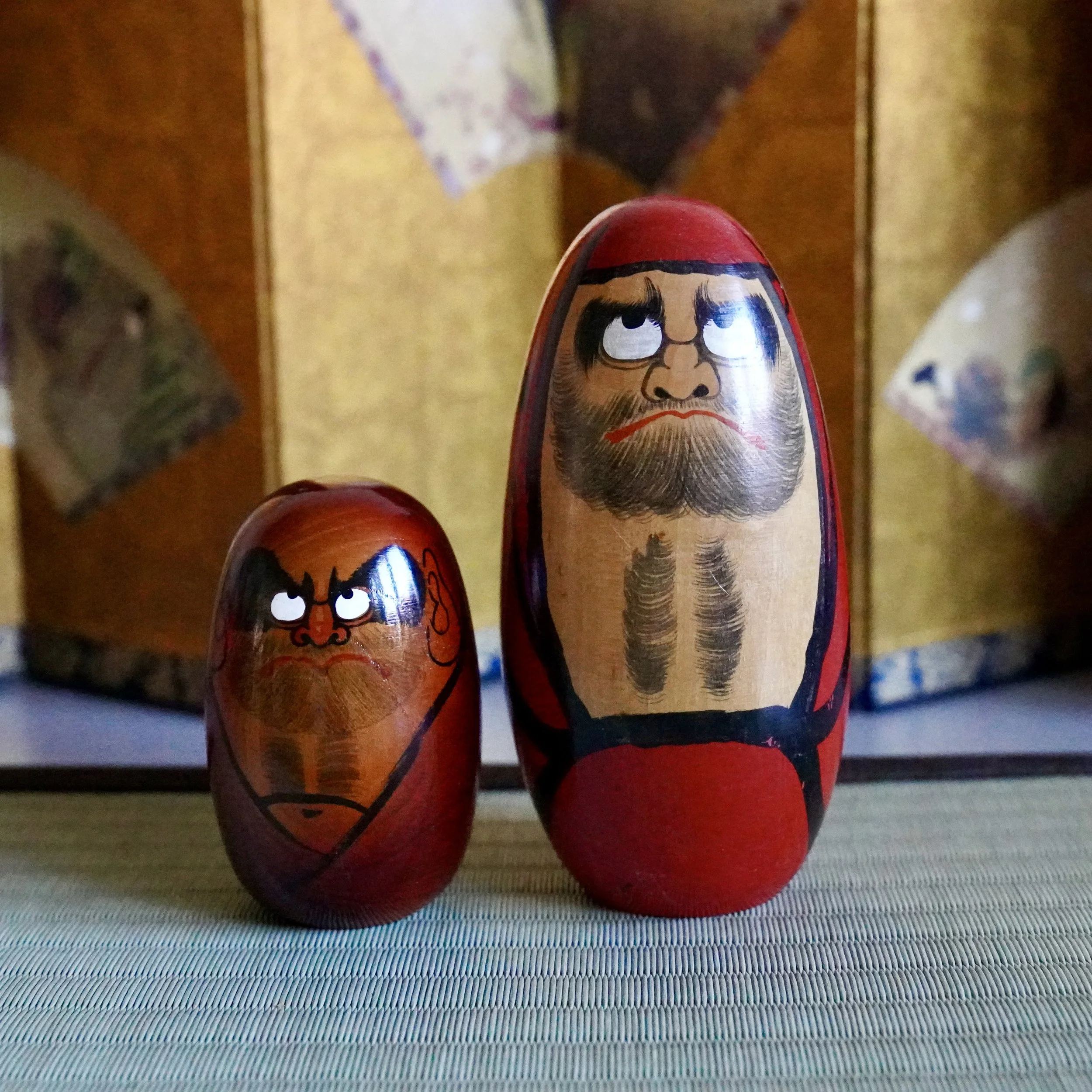
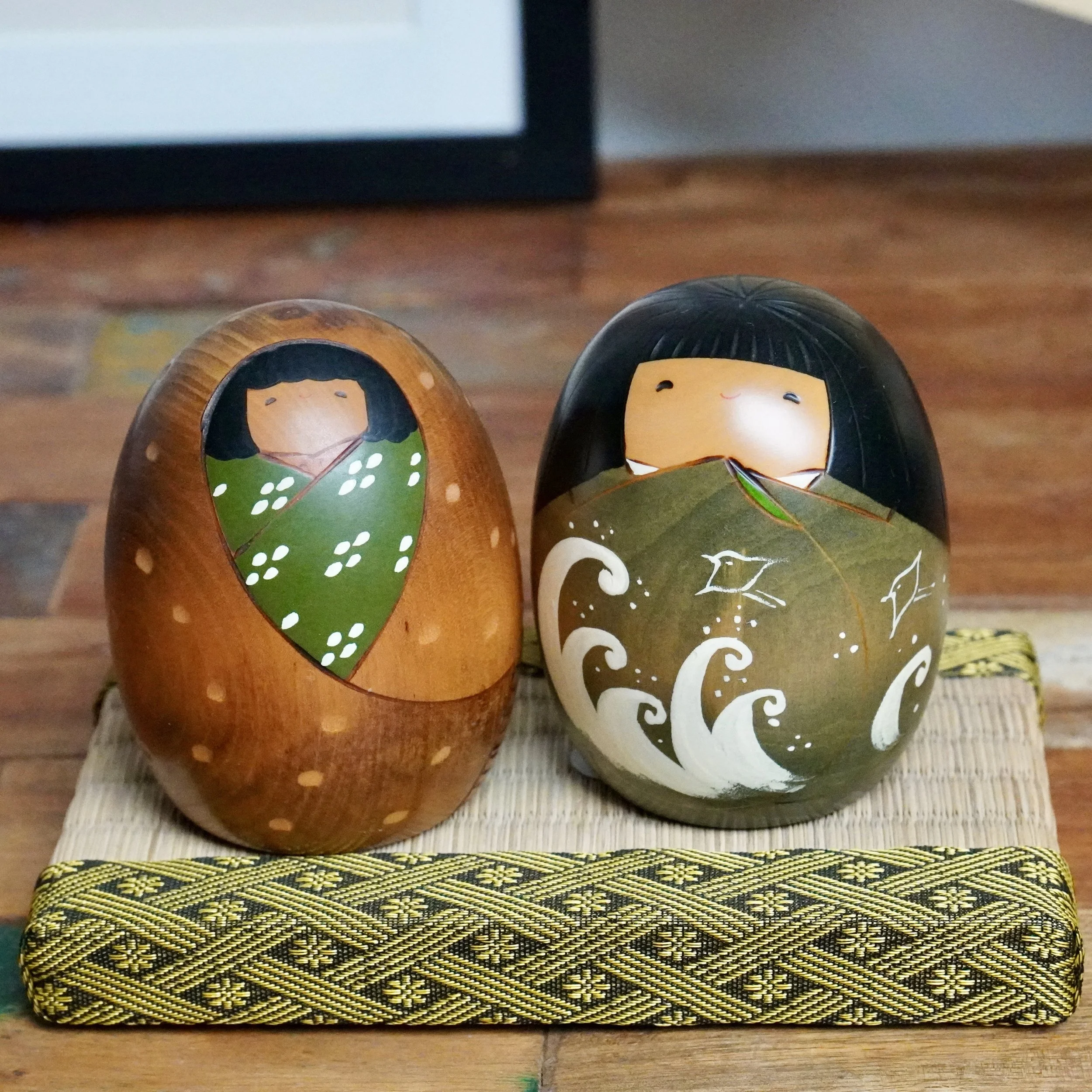
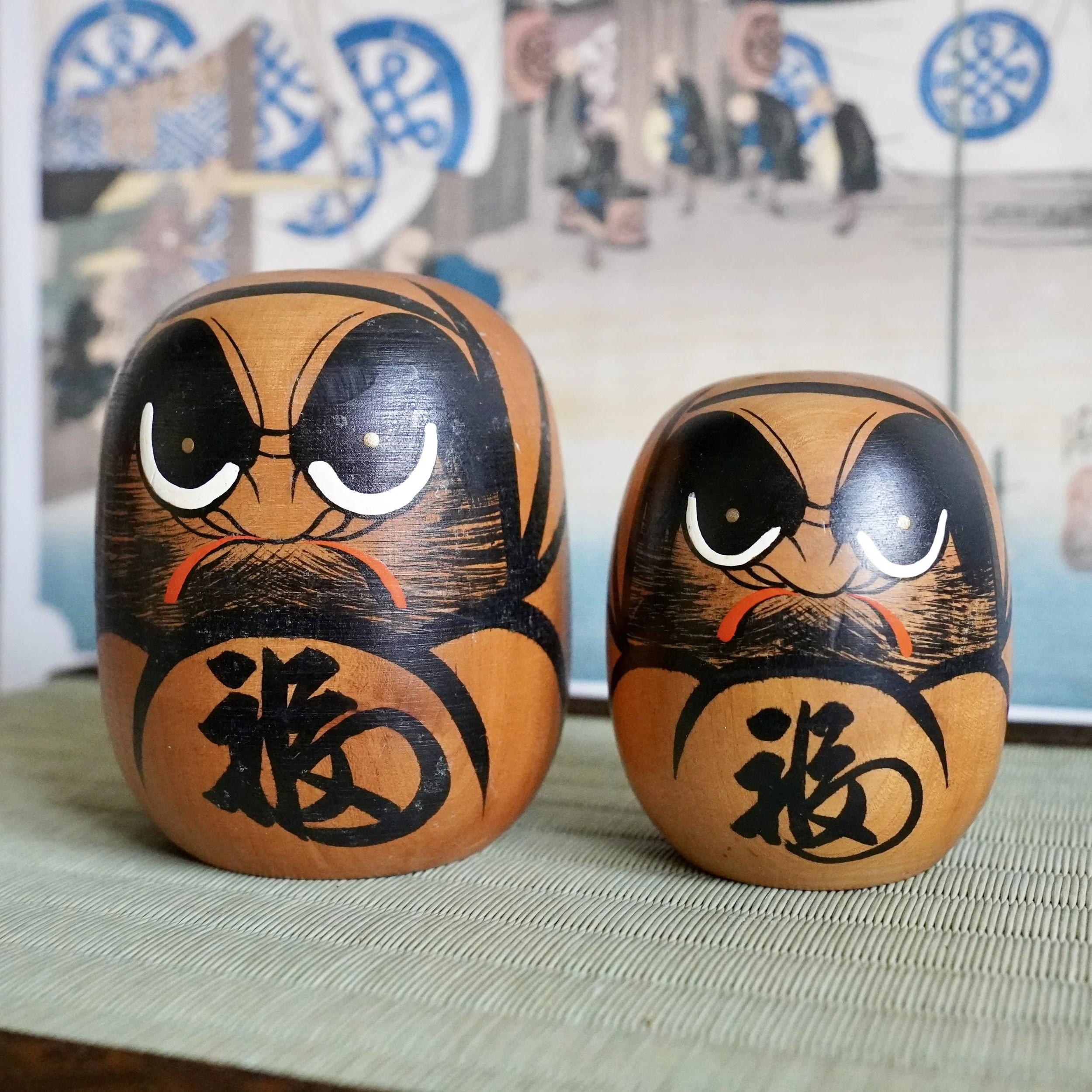
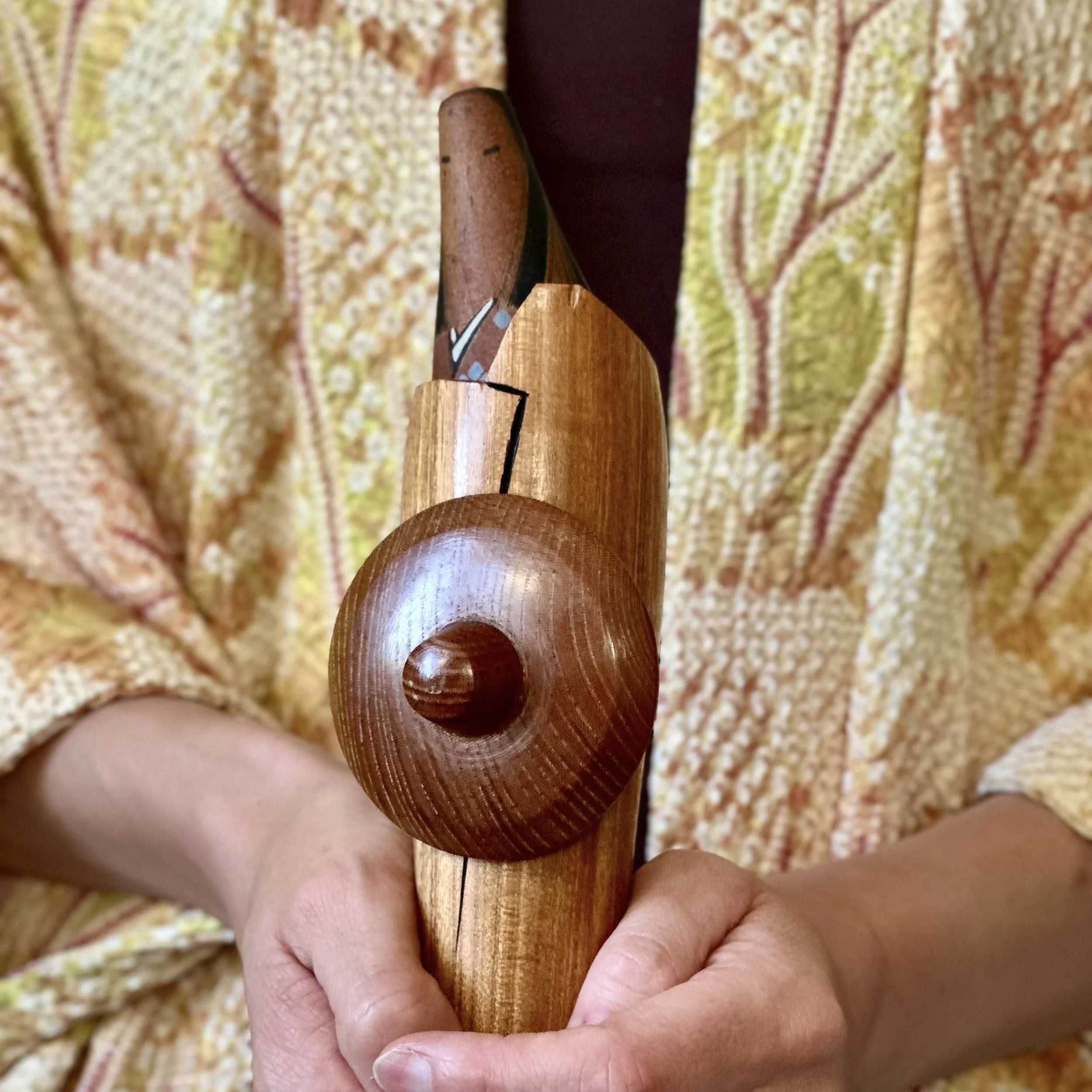
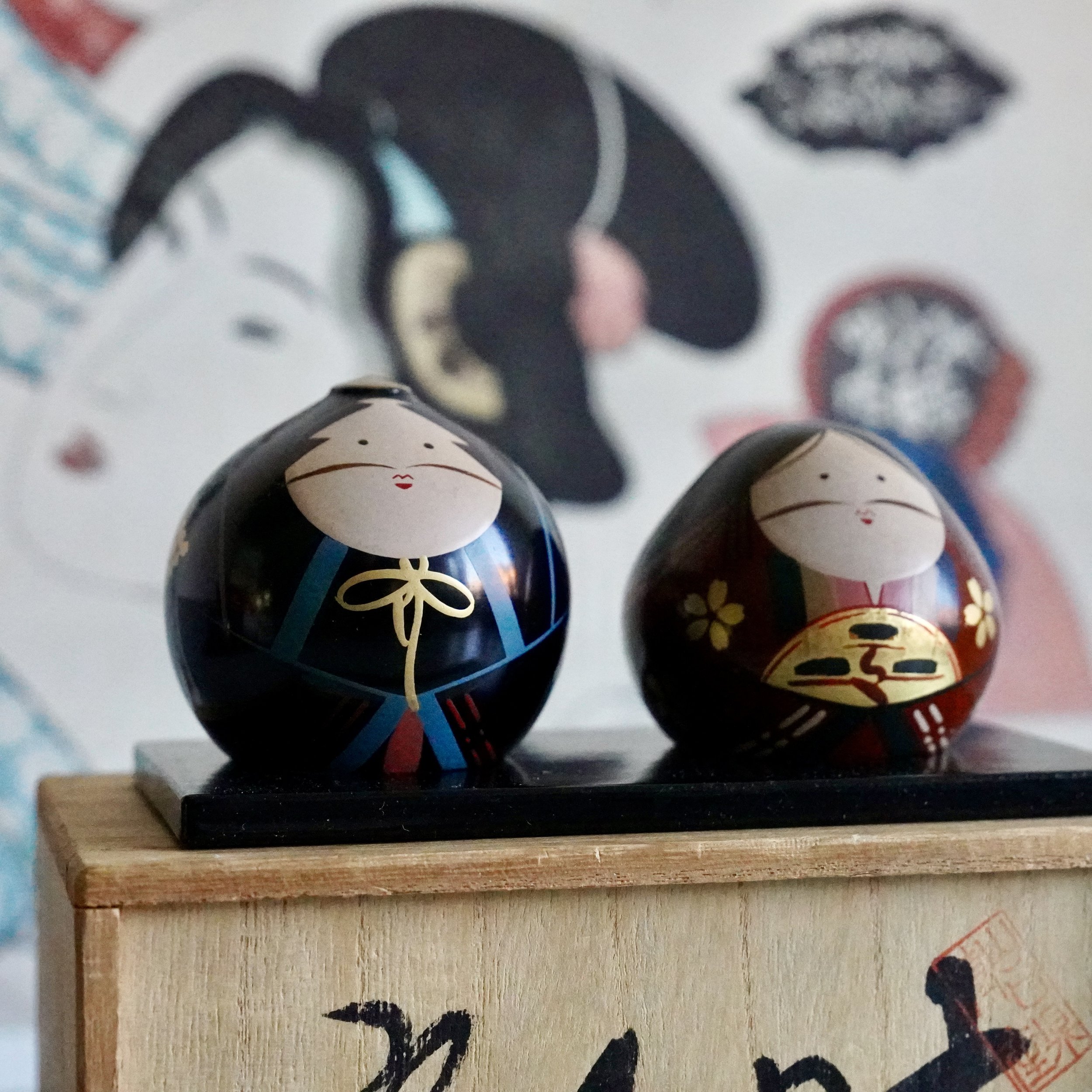
Last but not least, the fourth little acorn-shaped piece in the creative section is by Tamura Chie 千栄
She is an award-winning sōsaku maker and one of a very small number of women to have built a serious reputation in the creative kokeshi world.
This piece is a perfect example of why her work endures. She did not paint an acorn onto a doll. She turned the entire doll into an acorn. That is a completely different idea.
In a craft world that has been almost entirely male for its entire history: skills passed father to son, apprenticeships run through family lineages with little room for outsiders, let alone women.
More details: click to view her listing
How I look at a face now
When I pick up a kokeshi, I turn it slowly and look at the nose first, then the eyes, then the eyebrows if there are any.
🤥 Nose shape tells me the regional family it comes from.
👀 Eye shape tells me the individual maker’s temperament.
😌 Eyebrow angle tells me the mood of that particular day in the workshop.
A kokeshi is not a mass-produced object. Even among signed makers, no two are exactly the same. That is what makes them worth collecting: not as decoration, but as small portraits of the people who made them.
This trip was particularly special. I found pieces from makers I had been looking for across multiple trips, and the landscape of Fukushima gave everything a context I had not expected. The mist on the lakes, the long mountain light, the workshops in the valleys below. This is where these dolls come from. You feel it when you hold them.
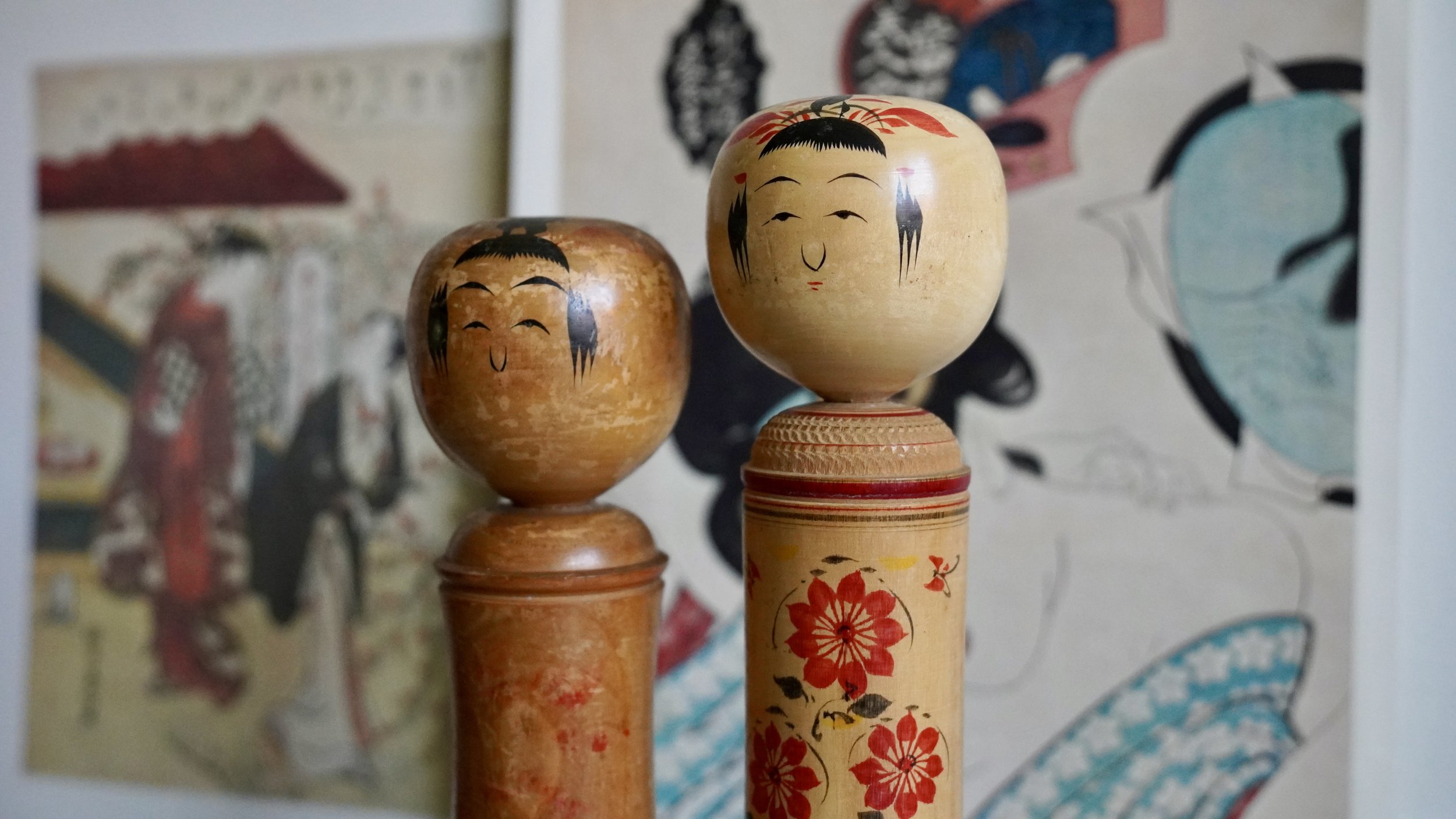
Naruko kokeshi by Sakurai Shoji and Sakurai Akihiro side by side, showing near-identical painted faces from father and son
Sometimes you find kokeshi with the exact same face. That’s what happened to me here. See the resemblance? They were made by a father and his son. The father, Sakurai Shōji (桜井昭二), was born in Naruko in 1927. The son, Sakurai Akihiro (桜井昭寛), was born there in 1951. Both made kokeshi their entire lives. Both signed their work with the same family name on the base, in the same Naruko tradition their family has held for five generations.
Read more about this duo that's so alike but with 80 years of life in between them, in my journal.

Gorgeous views make every sourcing trip very worth the journey
My trip was particularly special. I managed to find pieces from the true masters and learn a lot about the styles and meaning.
And the views from the hikes were just breathtaking.
Read more
A selection of other journal posts about kokeshi makers and how to read their work.
→ Curious what actually happens in the wood before a face even appears? I wrote about the grain, the burn marks, and the chisel work behind a kokeshi's expression.
→ Curious where to place a piece like this once it's home? High shelves are where kokeshi go to become invisible.Here's what actually works.
→ One rule matters more than any other with an old kokeshi: never water, ever.The full care guide has the rest.
→ Curious how Tsuchiyu compares to the other ten traditional kokeshi lines? Read the full guide.
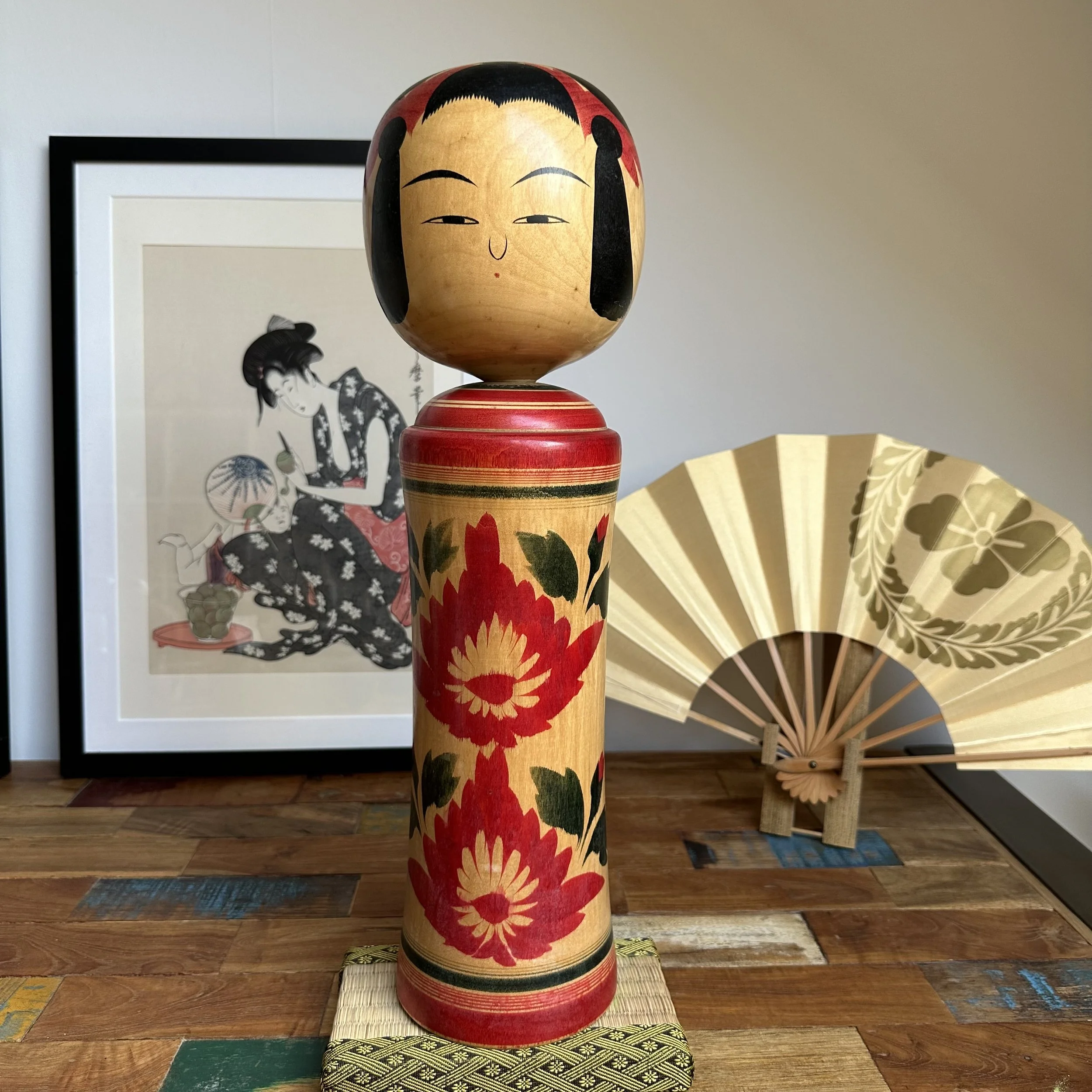
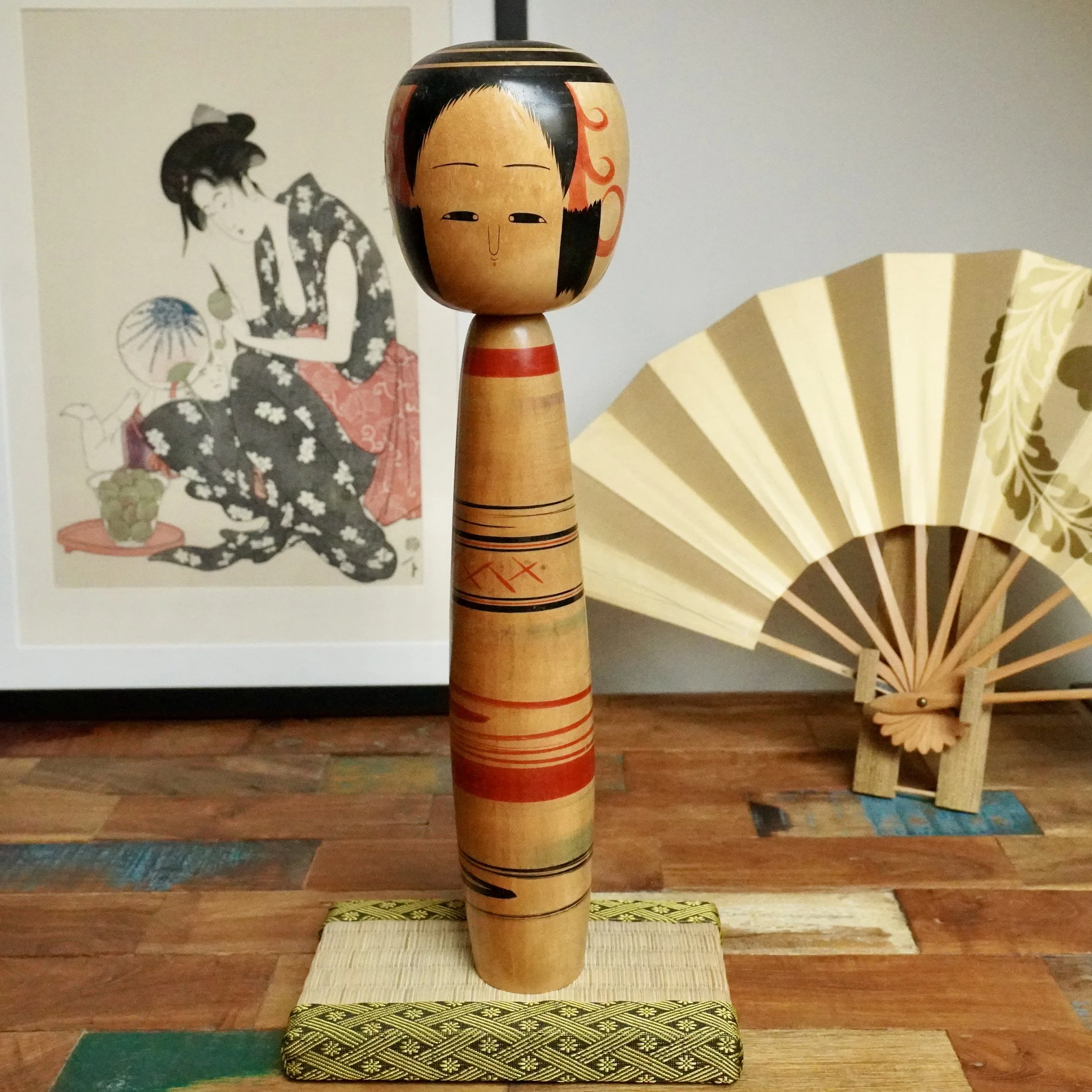
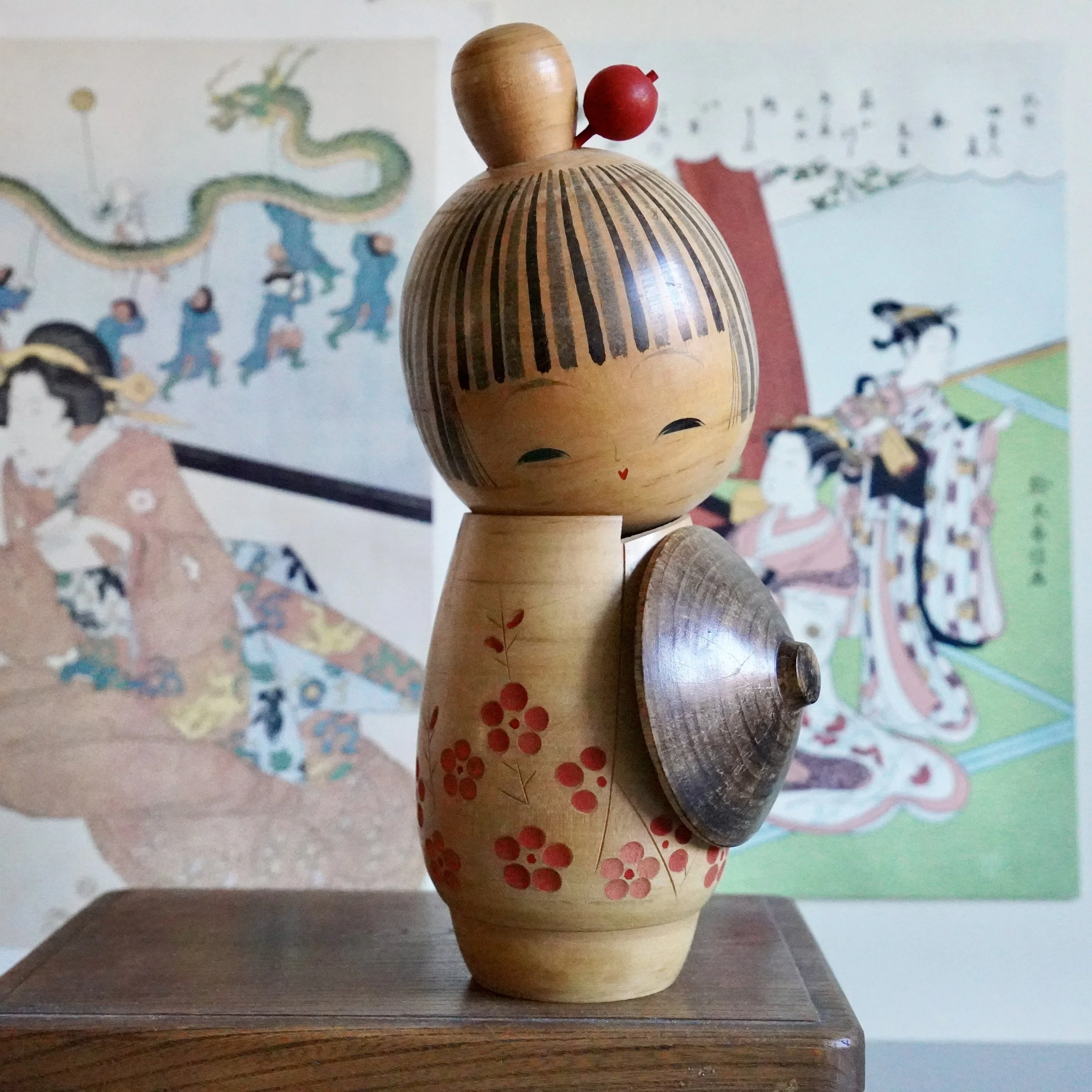
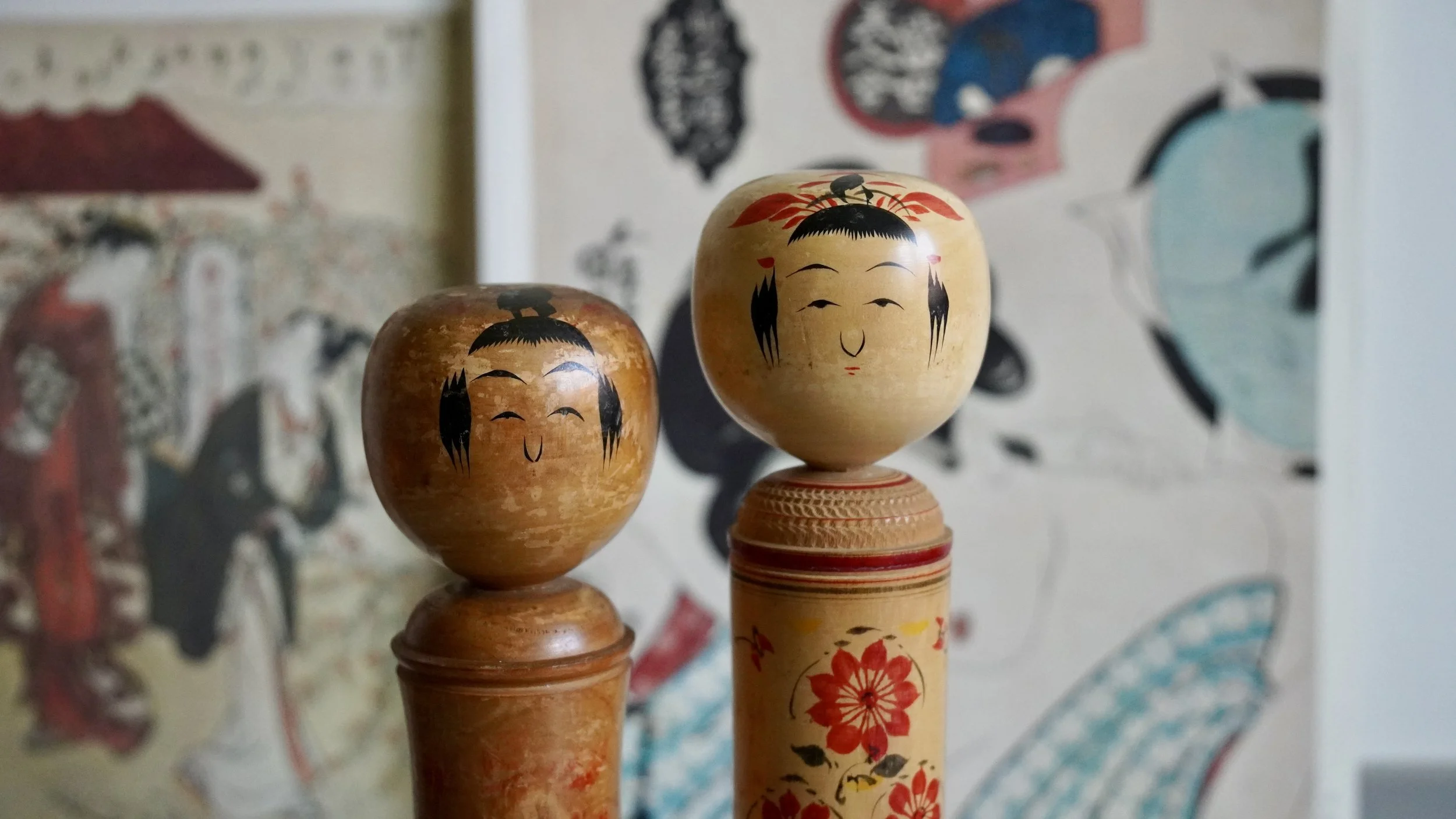
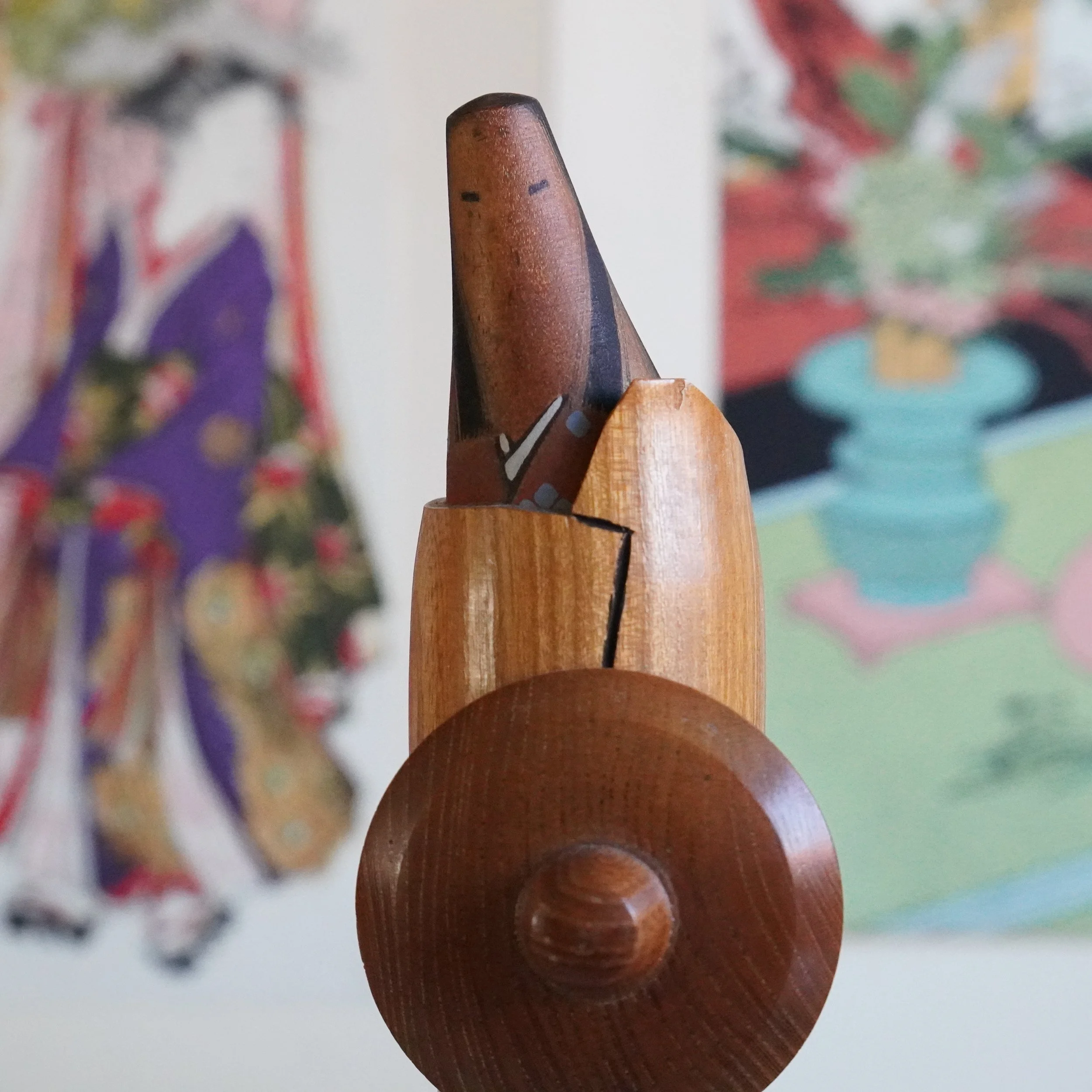
Soft, narrow eyes under thin brows, black side locks hanging straight beside the cheeks, and chrysanthemums in strong red on pale wood: from the front this kokeshi looks calm, and from above it is busy. At 39 cm it stands comfortably on a shelf or sideboard, and the head turns, so you can choose which way it looks at the room. If you would like it to have company, his brother Yusa Fukuju's Kanji-type is almost half a metre tall, is in the collection too and goes very well with it.
Takahashi Morio was the grandson of Takahashi Kanji and ran the family workshop Takakan after the war, training many of the Naruko makers who came next. The pattern is the Kanji-type, his grandfather's kokeshi, which his father Sakari rebuilt in 1952 and which the Kokeshi Wiki counts among the first successful reconstructions. This one carries his own name on the base.
→ Want to understand the difference between dentō and sōsaku kokeshi? I wrote about it, with a trip through Fukushima along the way.
→ Curious how Naruko compares to the other ten traditional kokeshi lines? Read the full guide.