
Caring for your vintage ceramics: chawan, yunomi and ikebana vases
Rinse chawan and yunomi with warm water only, never soap or the dishwasher, and let them dry fully before storing. Whether a piece needs special care depends less on whether it is glazed than on how it was fired. Pre-warm cold bowls before pouring hot tea, change vase water every two to three days, and know that the fine crackle called kan'nyū is not damage, it is the piece aging with use.
Owning a vintage Japanese ceramic piece is more than having it.
It is a connection to a craft tradition, to the hands that made it, and to everyone who used it before you. With the right care, it will outlast you too.
These pieces were made for daily use. They are not fragile. But they are porous, and that changes how you look after them, slightly differently depending on what the piece is actually for. Chawan and yunomi hold tea for minutes at a time. A vase holds water for days. The steps below cover all three.
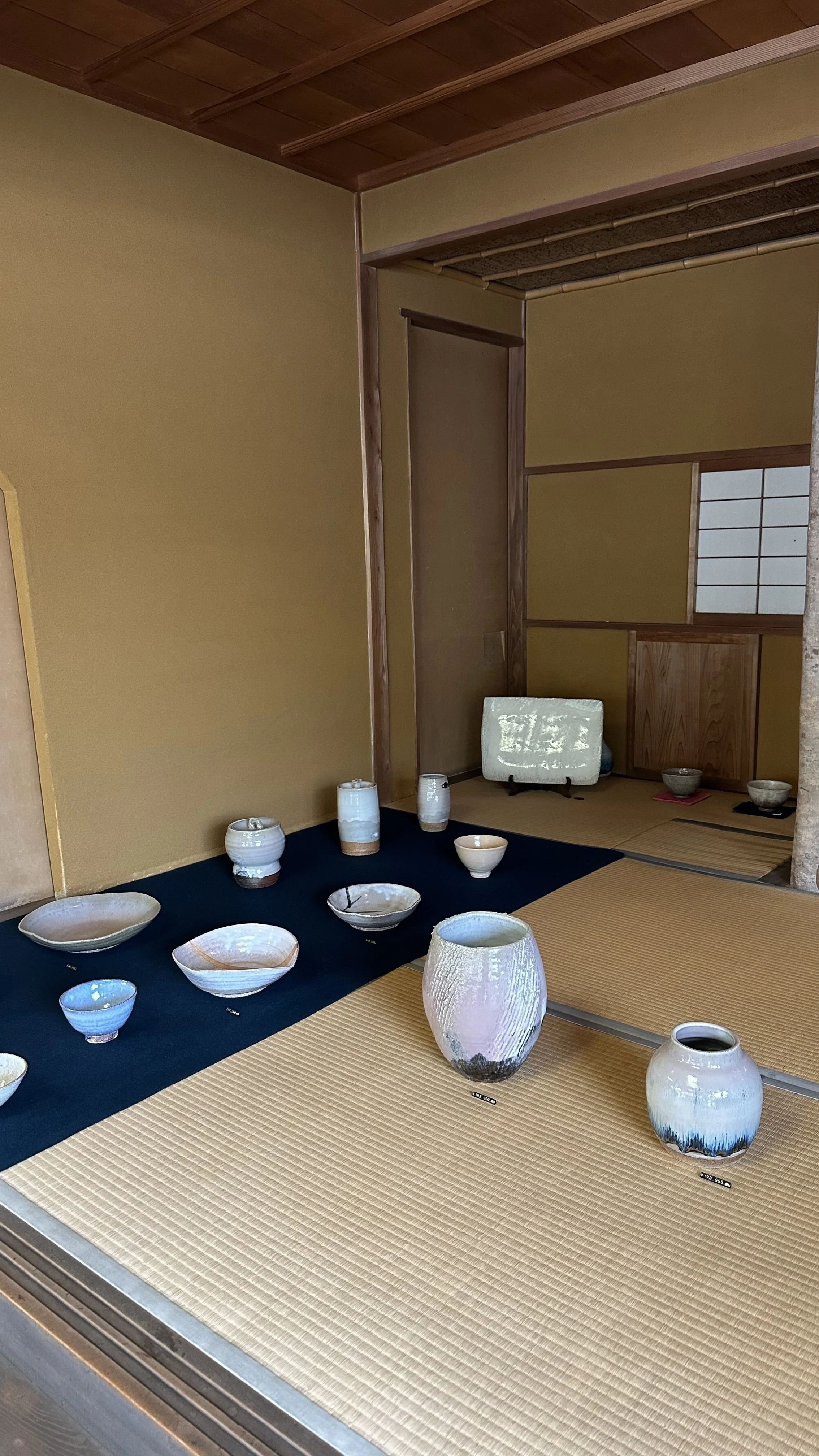
Glaze and porosity are not the same thing
Two separate questions decide how a piece behaves once it comes home. The first is whether it is glazed or unglazed, meaning whether a glass-like coating was applied over the clay before firing. The second, entirely separate question is whether the clay itself is porous or dense, and that comes down mostly to firing temperature, not glaze.
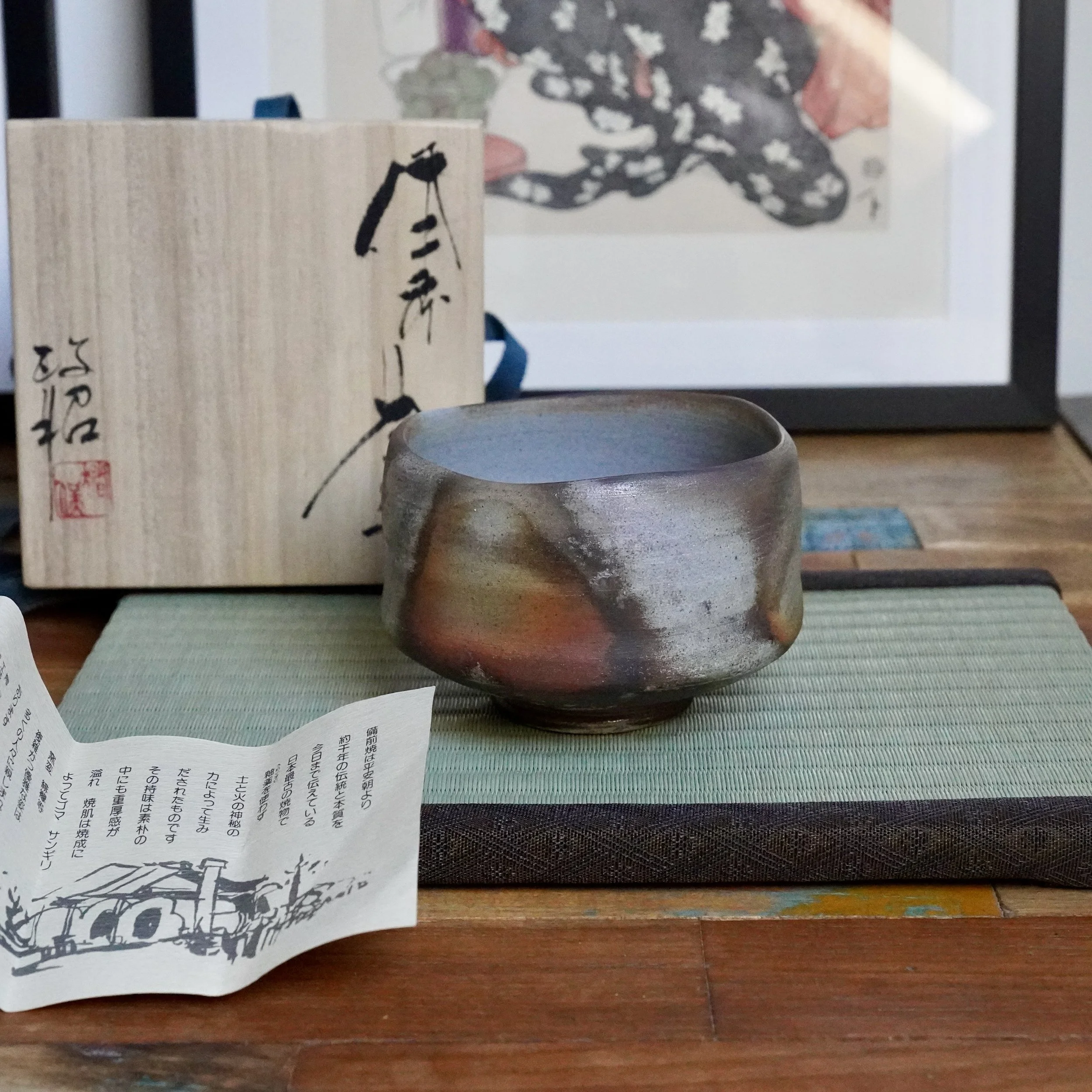
Unglazed does not automatically mean porous. Bizen yakishime is fired unglazed, but at extremely high temperatures, 1200 to 1300 degrees Celsius, hot enough that the clay itself partially vitrifies during firing. The surface tightens and closes as it fires, so a Bizen piece, despite carrying no glaze at all, ends up relatively dense and forgiving.
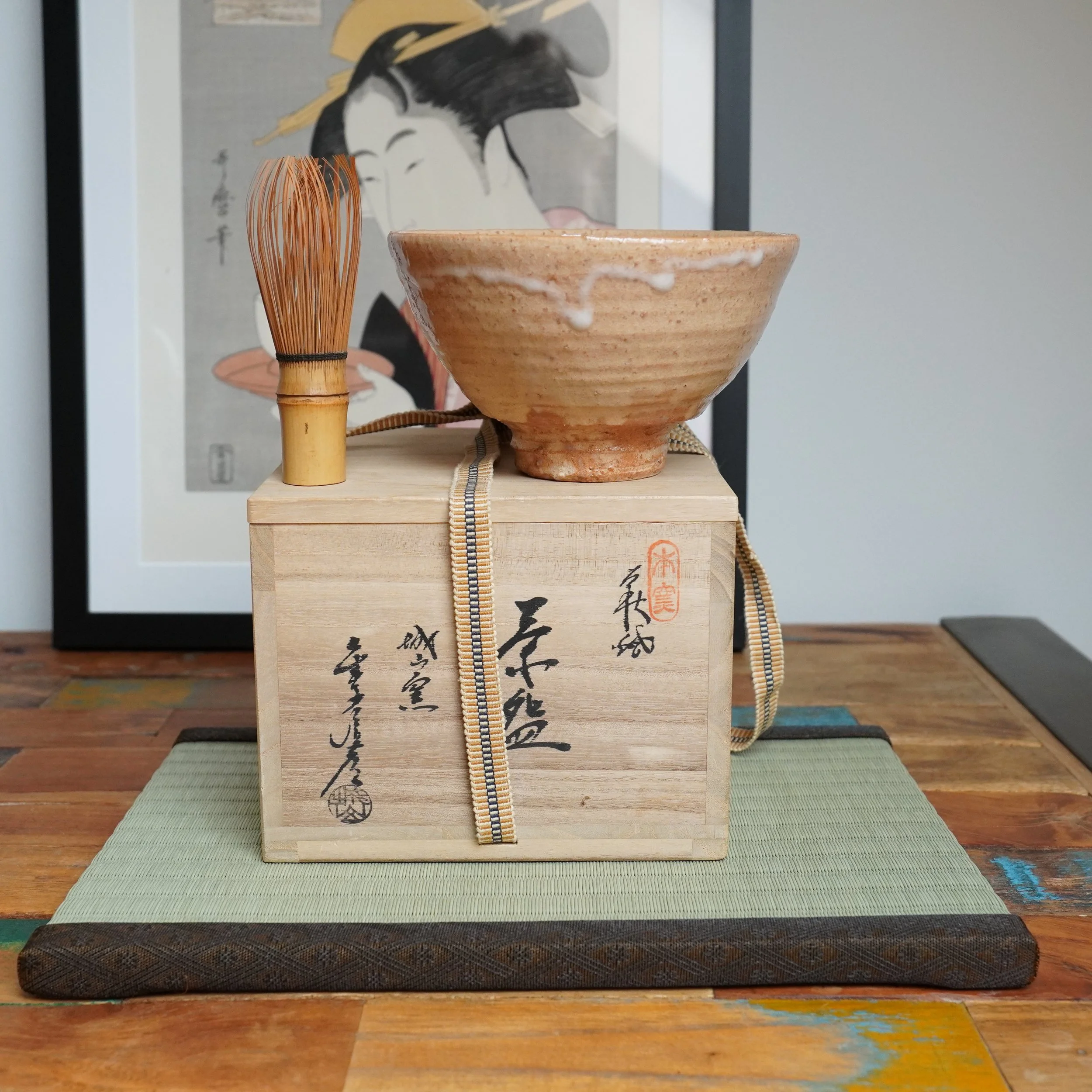
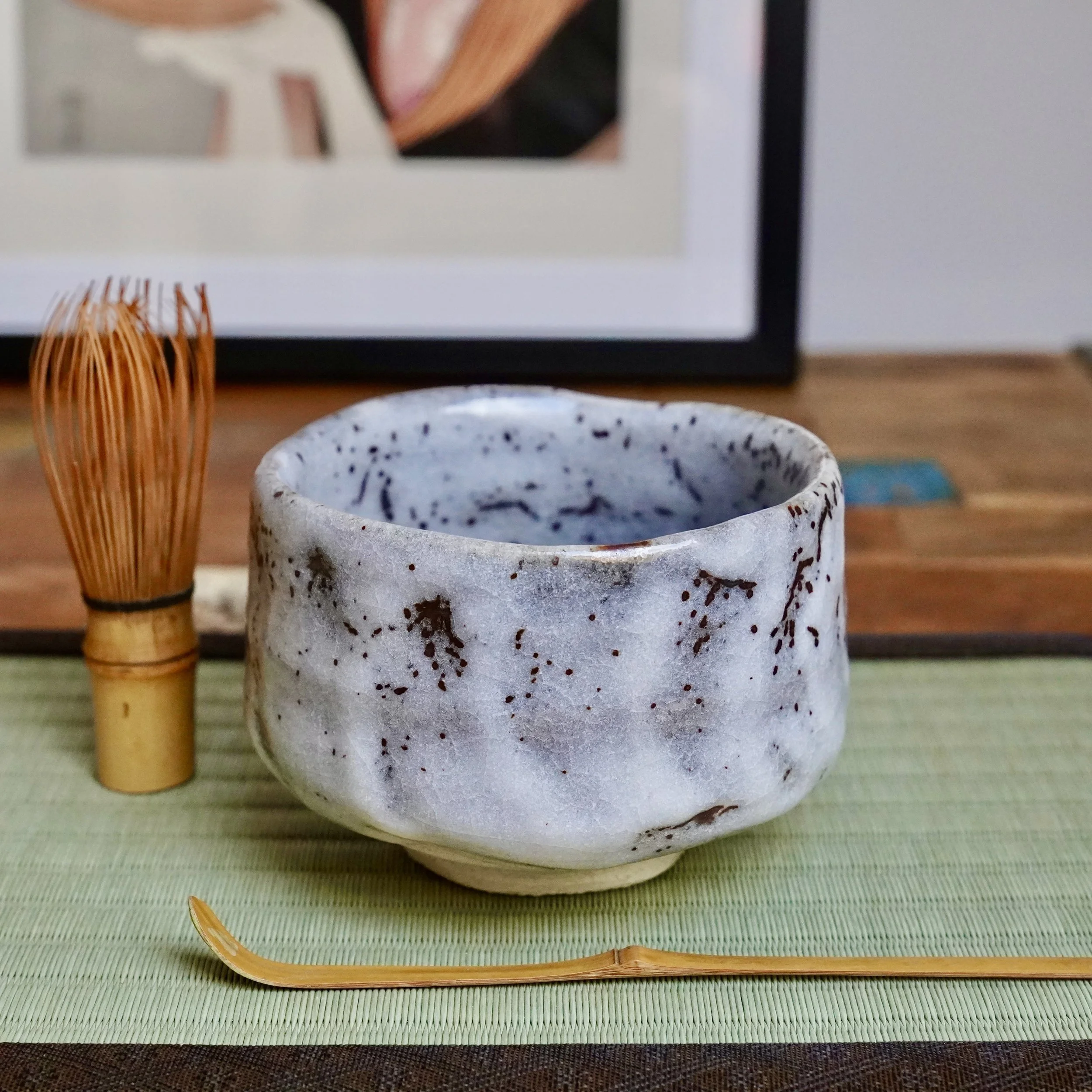
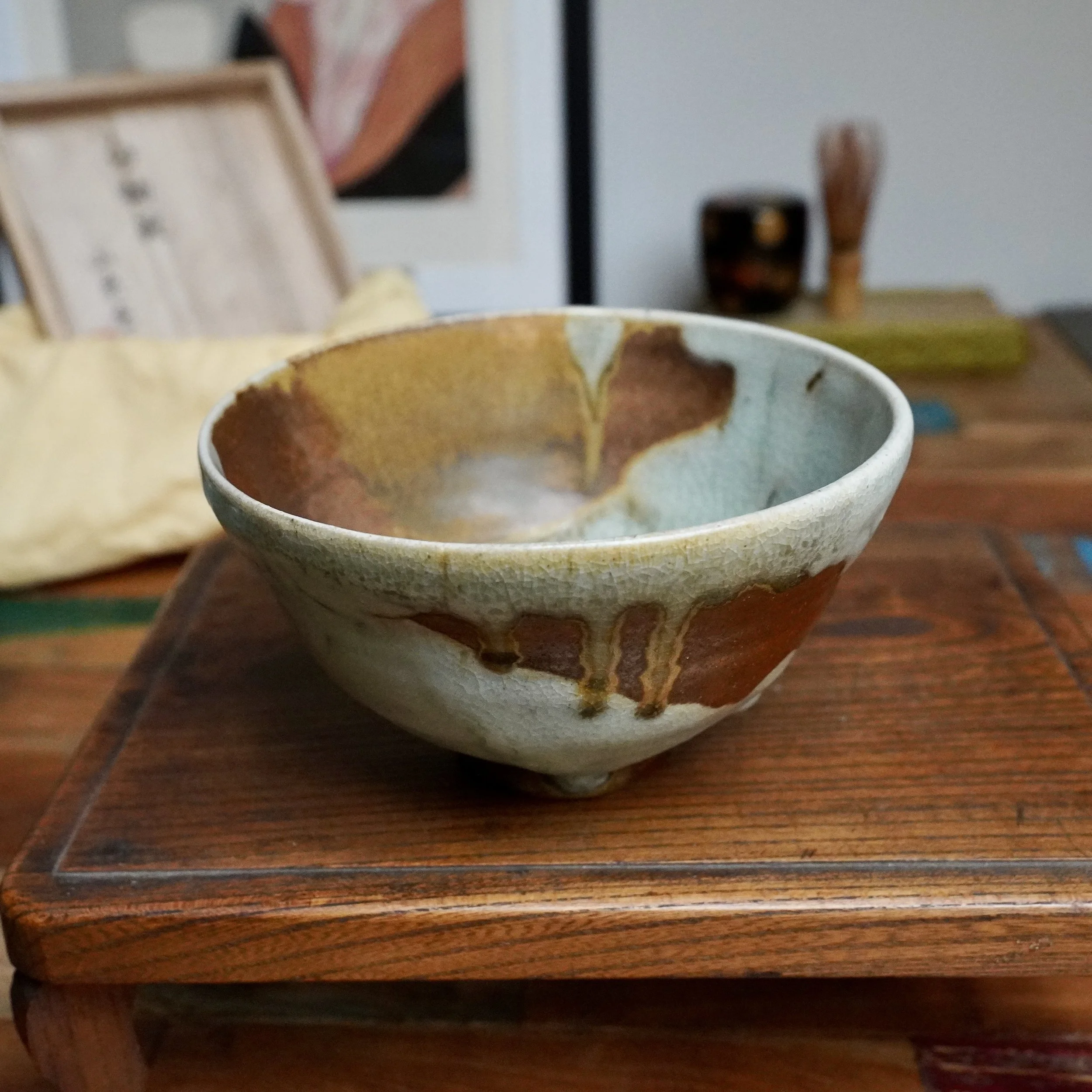
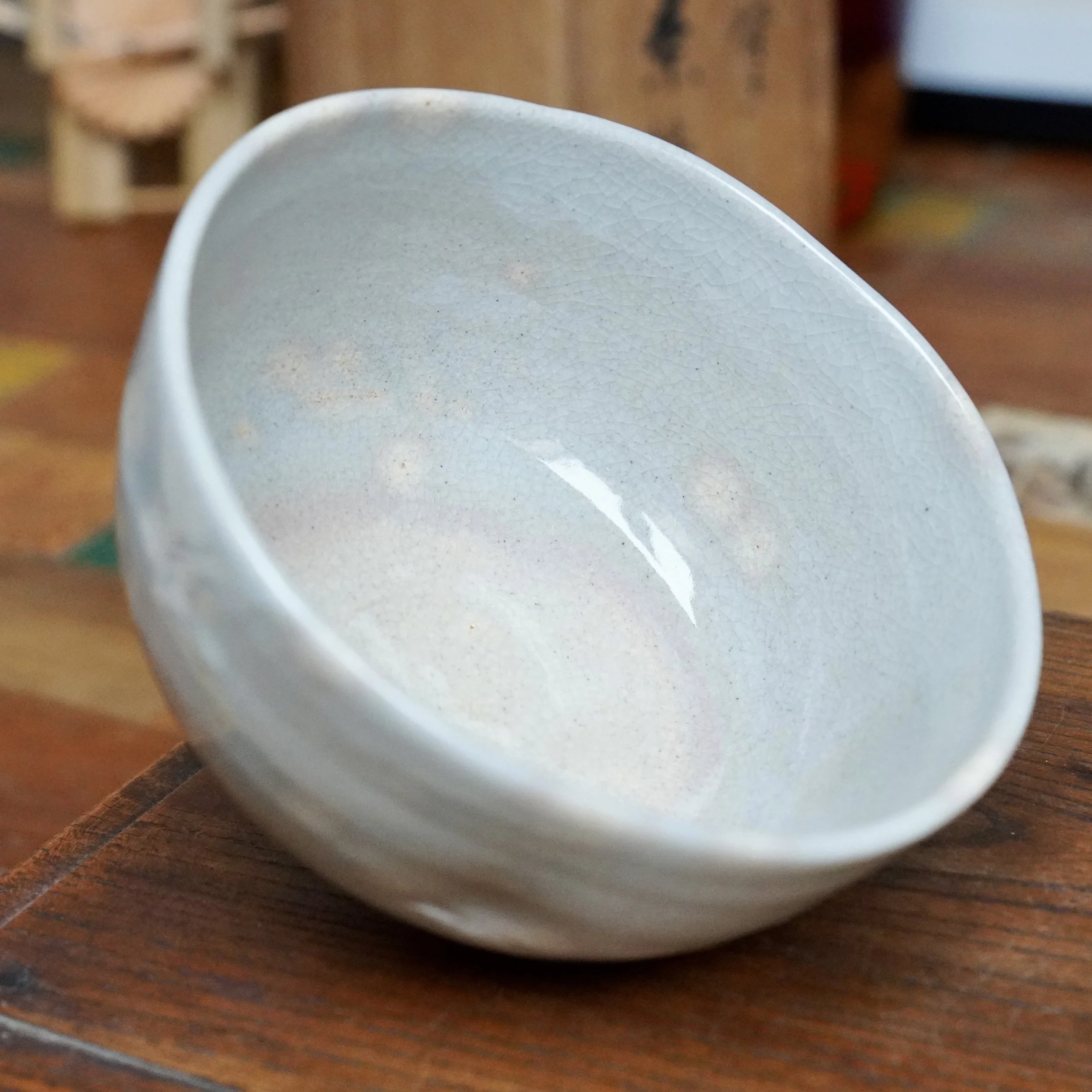
Glazed does not automatically mean sealed, either. Most glazed ware, Shino, Oribe, and typical Kyō-yaki among them, forms a continuous glassy layer that closes the surface off from water almost completely. But Hagi-yaki breaks that pattern. Its glaze is deliberately soft and slightly porous by design, and over years of use it develops kan'nyū, a fine network of crackle lines running through the glaze itself. Water and tea seep into those cracks the same way they would seep into unglazed clay, which is exactly why a glazed Hagi chawan needs the same careful drying a porous piece would.
Raku being the other exception. It carries a glaze, but the body underneath is fired at only 750 to 1000 degrees Celsius, so the clay never vitrifies and stays genuinely porous. It absorbs water readily and needs longer, more careful drying.
So the honest way to think about a new piece is not glazed versus unglazed. It is: how was this fired, and does the surface, glazed or not, actually let water through. That is the question that decides everything below.
Step 1: Before the first use, waking the clay
Vintage ceramics have often been sitting dormant for years. Before you use your chawan or yunomi for the first time, give it a gentle soak in lukewarm water for ten to fifteen minutes. This allows the clay to slowly rehydrate and prevents it from absorbing too much liquid too quickly on first use.
Never pour boiling water directly into a cold bowl. Pre-warm it first with lukewarm water, then gradually increase the temperature. The clay and the glaze expand at slightly different rates, and a sudden temperature shock can cause stress in the material over time.
Denser, high-fired pieces such as Bizen yakishime need less of this than porous, low-fired ware. A short rinse and a brief soak is usually enough. Raku, the most porous of them, takes a longer first soak, up to an hour, and Step 6 below covers the exceptions.
Step 2: Daily cleaning, keep it simple
Rinse your bowl with warm water immediately after use. That is all it needs. Use your fingers or a very soft cloth to remove any residue. No sponges, no abrasive materials.
Do not use dish soap. The porous clay will absorb detergent just as readily as it absorbs tea, and your next cup will taste of it. Water is enough.
A chawan or yunomi should never go in the dishwasher. The heat, the pressure and the detergents will damage the glaze and accelerate crazing in ways that have nothing to do with the beautiful transformation you want.
Step 3: Understanding the glaze and what it does over time
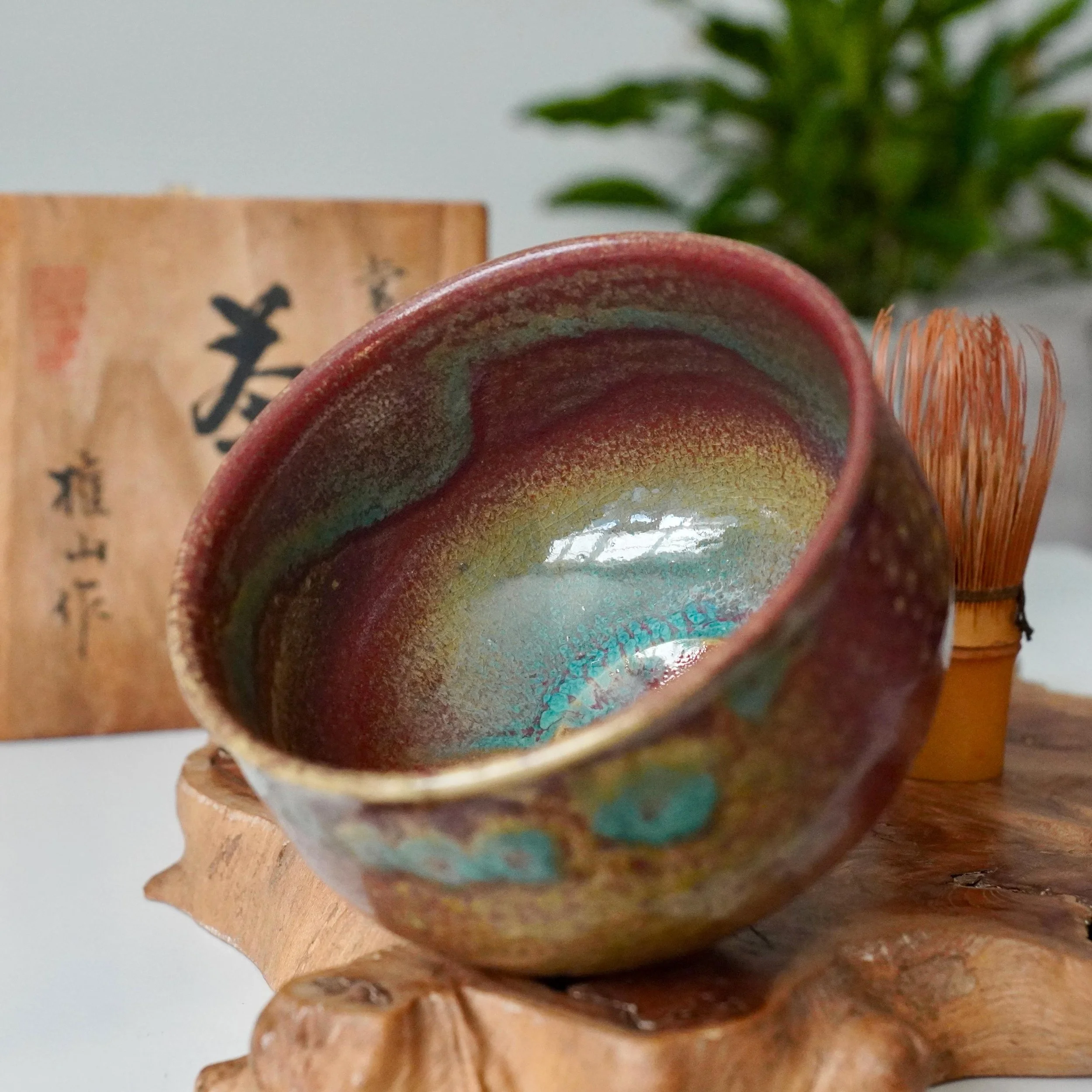
Over weeks and months of use you will notice tiny lines appearing across the glaze. This is kan'nyū, crazing, and it is not damage. It is the bowl beginning to record its life with you. Tea slowly seeps into those fine cracks, staining them amber or brown. The surface gradually warms in tone. After years of use the bowl becomes uniquely yours, marked by your particular tea practice and no one else's.
If you want to slow the colour change, soak the bowl in plain water for a few minutes before each use. The clay will absorb water instead of tea. Most people do not do this. They want the transformation.
Not every piece ages this way. Fully glazed ware, Kutani yunomi for example, are less porous than something like Hagi-yaki, and will stay closer to their original colour. That is not a flaw, it is simply a different clay and glaze doing what it was made to do.
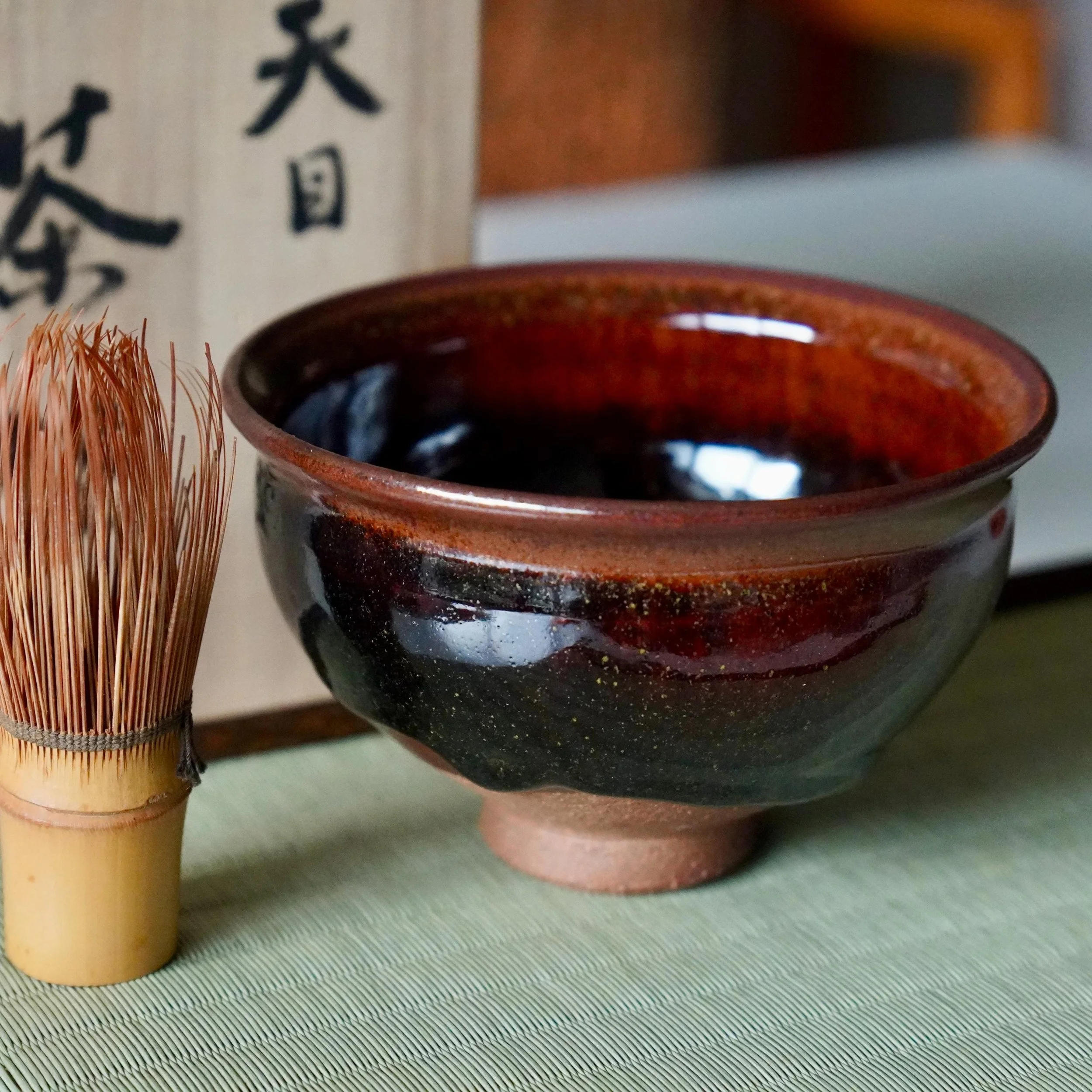
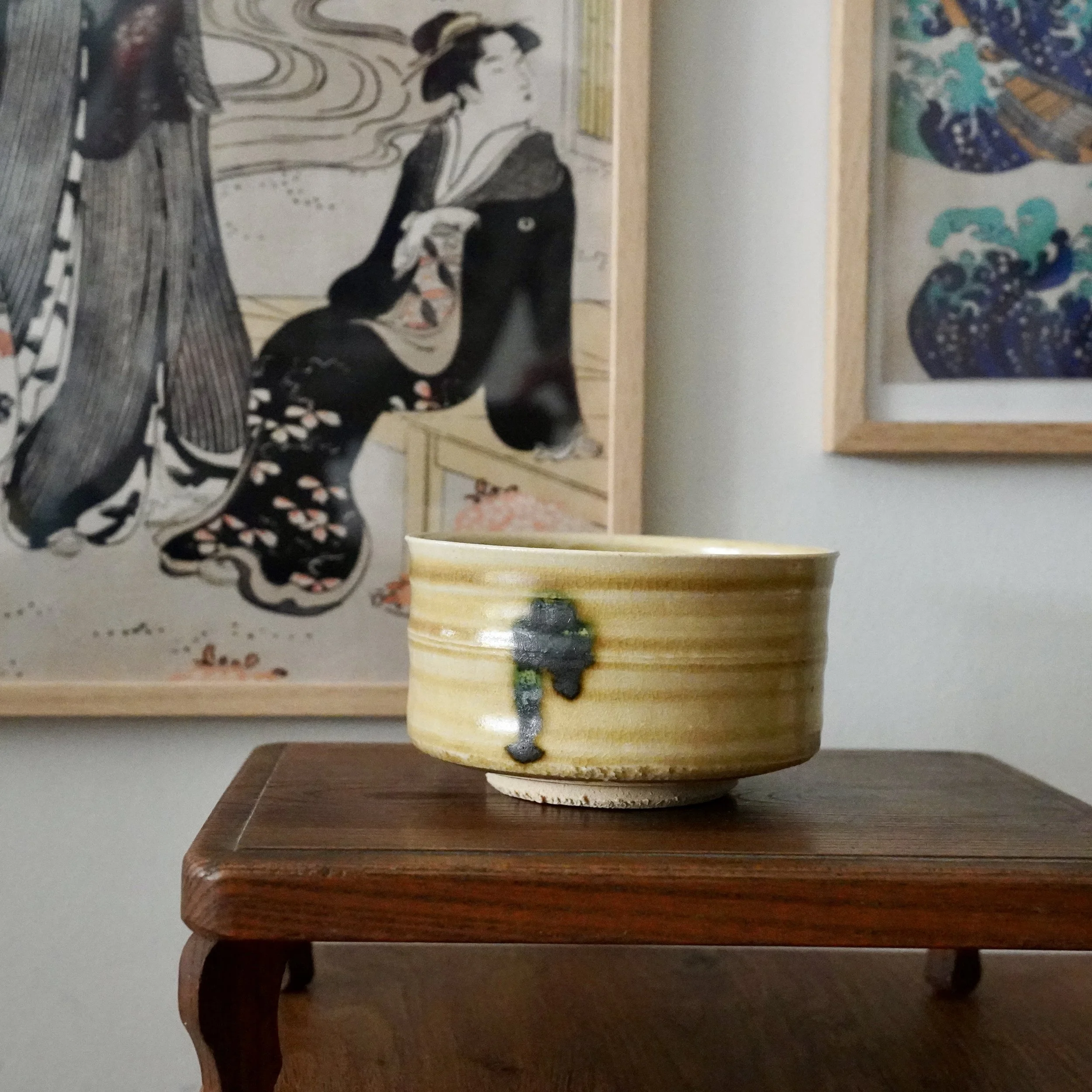
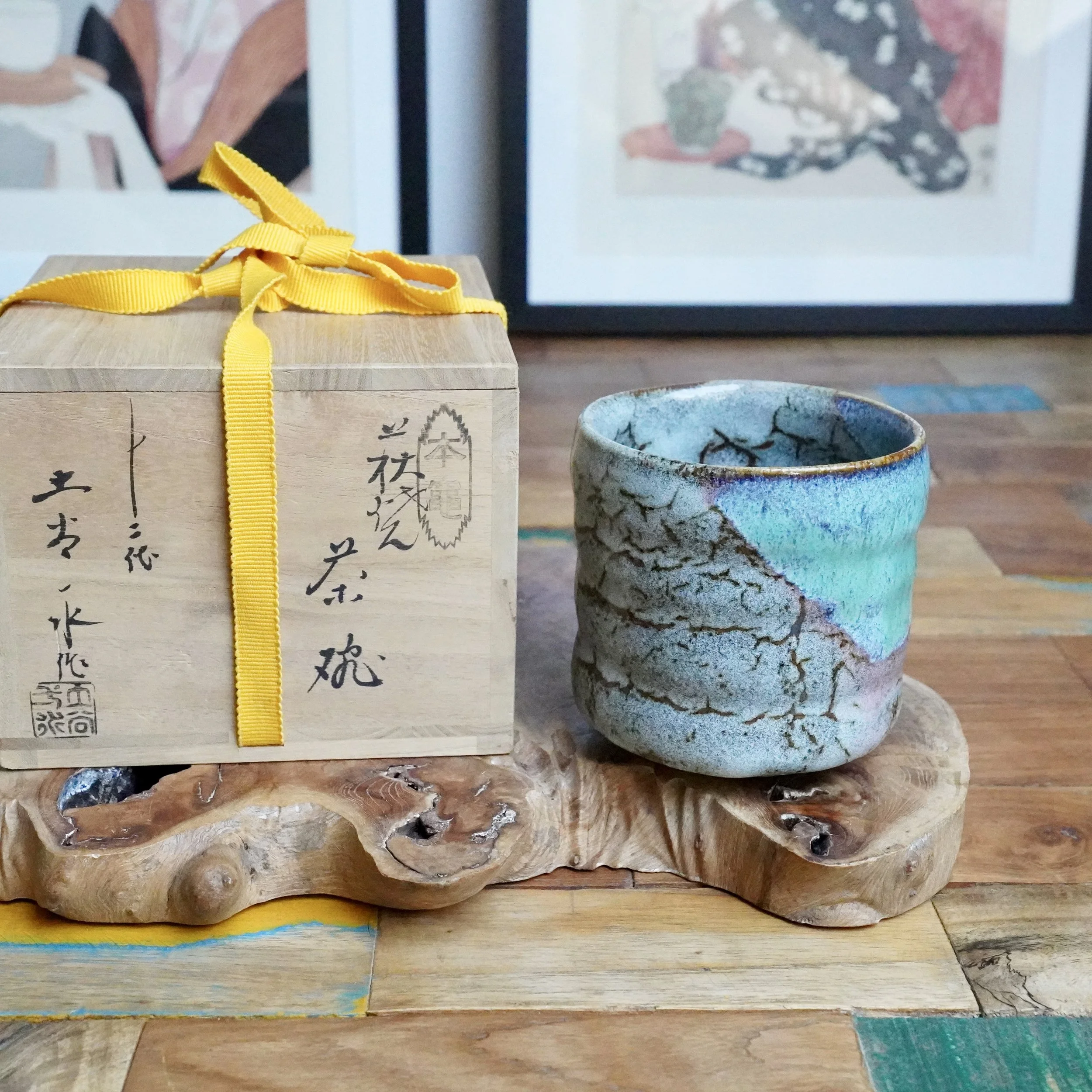
A small number of pieces show a crystalline or heavily pooled glaze rather than an even, smooth surface, often visible as a thicker, glassier patch where the glaze has gathered during firing. This behaves differently again: it is not about porosity, but about the glaze's own chemical stability at that thicker pooling point. With pieces like this, keep the water on the luke-warm side rather than very hot, and rinse and dry the piece fairly soon after use rather than letting tea sit in it for a long stretch.
Step 4: Drying and storage
This is the step most people skip and the one that matters most.
After rinsing, pat the piece dry with a clean towel and then let it air dry completely before putting it away. Do not place it upside down on a flat surface, prop it slightly so air can reach the foot. Leave it for several hours, ideally overnight.
A damp piece stored in a closed box or a dark cupboard will develop mould inside the clay. Once that happens, the flavour of your tea is affected permanently. It is not difficult to avoid: just make sure it is fully dry before you put it away.
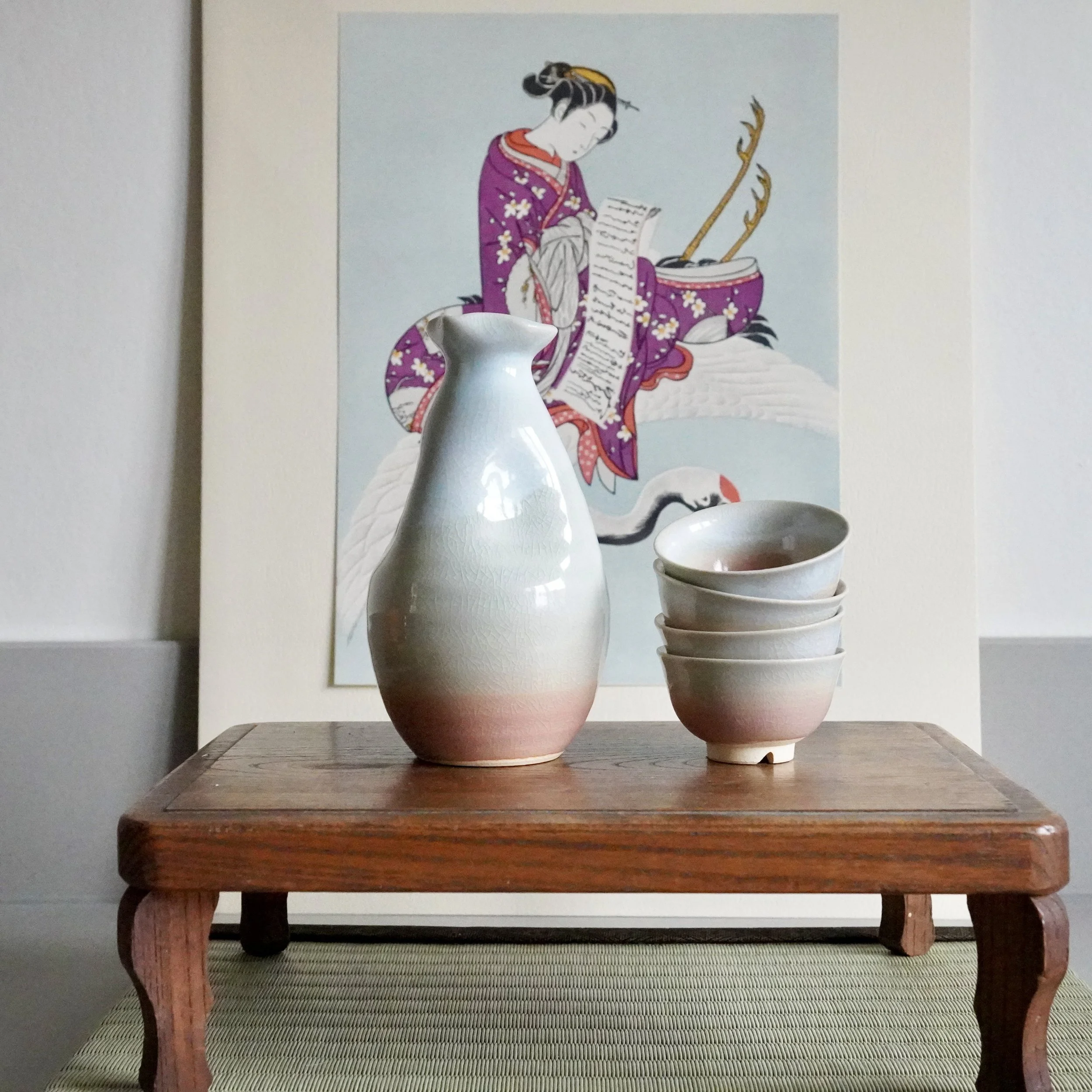
If a yunomi set is drying together, give each piece its own space rather than stacking them while still damp. Trapped moisture between two pieces is where problems start.
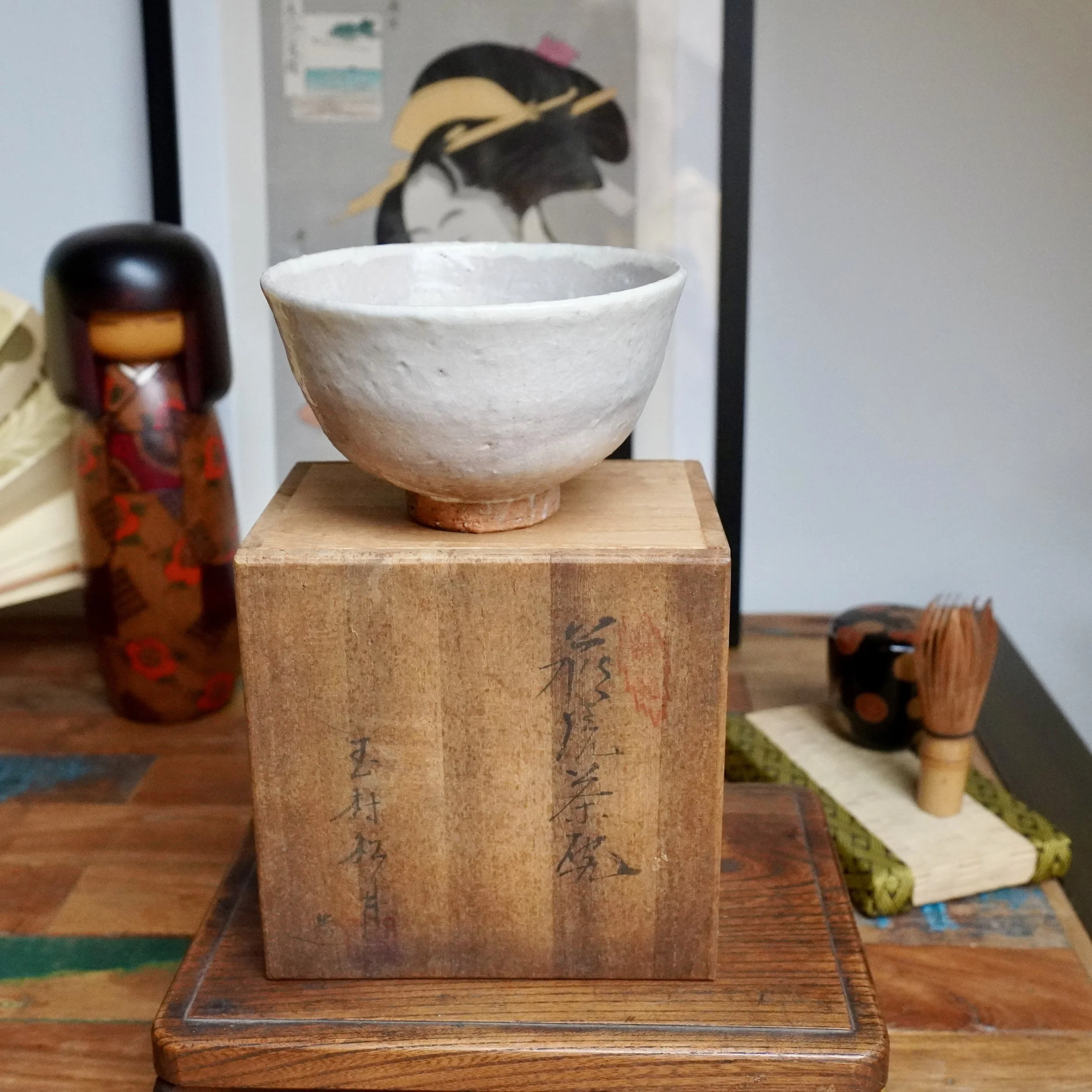
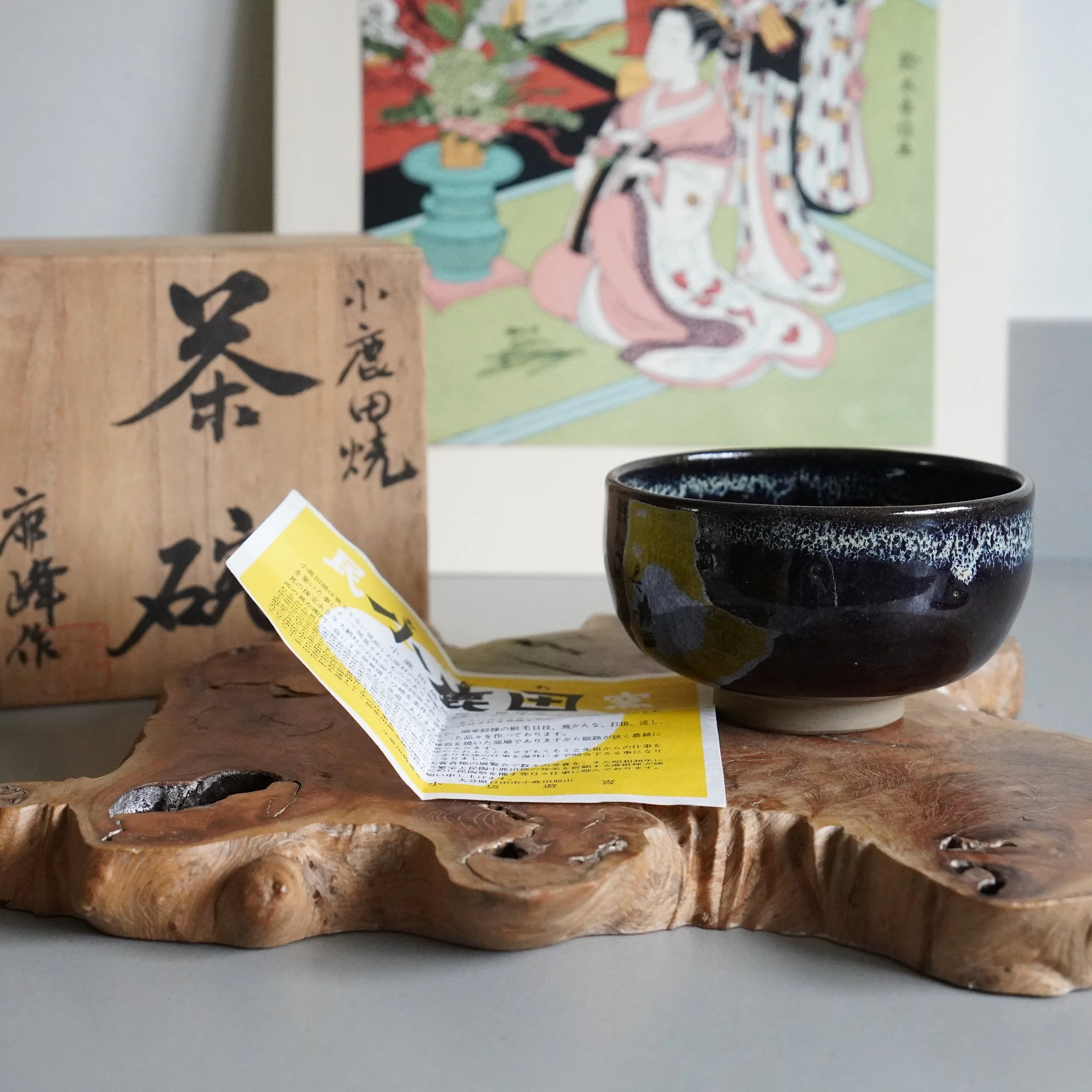
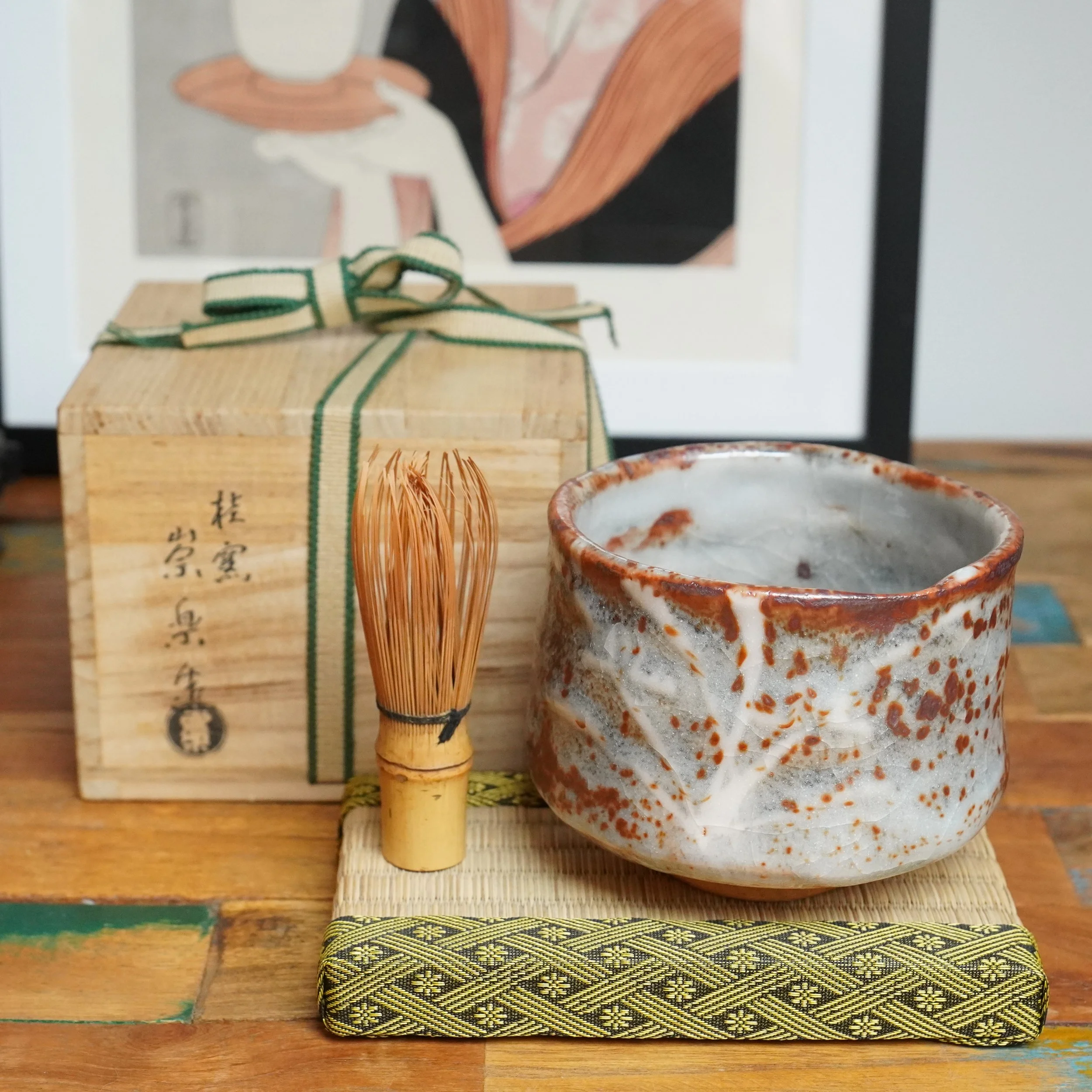
If your piece came with a tomobako, the signed wooden box, store it there once it is completely dry. Never while it is still damp.
Step 5: Ikebana vases, a different kind of water problem
A vase holds standing water for days at a time, which chawan and yunomi never do. That water carries minerals, plant residue and bacteria, and if it sits too long it can leave a faint ring or cloudy deposit on the inside of the glaze.
Change the water every two to three days when the vase is in use, and rinse the inside thoroughly each time, not just a quick swirl.
If a mineral ring has already formed, a soak in lukewarm water with a small amount of white vinegar, followed by a gentle rinse, will usually lift it. Avoid abrasive brushes on painted or gilded interiors.
When the vase is not in use, make sure it is completely dry before storing it, for the same reason as Step 4.
Step 6: Raku and Bizen, two kinds of clay, two kinds of care
Both Raku and Bizen are fired without glaze, and both can be described as porous ceramics if you stop there. But they behave very differently in daily use, because they are fired at very different temperatures, and treating them the same way will either over-baby a Bizen piece or under-care a Raku one.
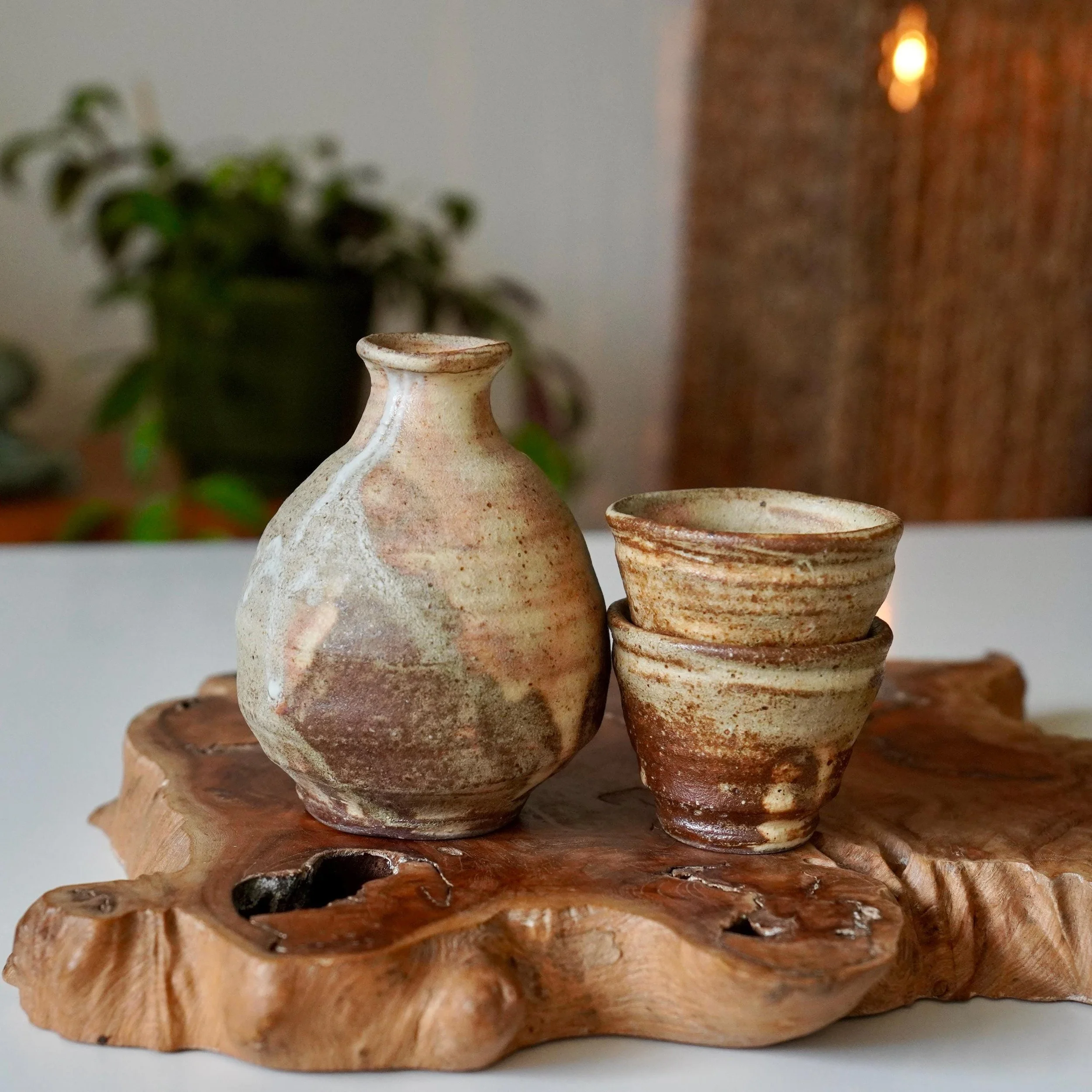
Bizen yakishime. Because Bizen fires so hot that the clay itself tightens during firing, it needs comparatively little fuss. Rinse a new piece and let it soak in plain water for ten to fifteen minutes, or up to a few hours if you want to be thorough, before its first use with tea or sake. After that, rinse with hot water only, no soap, and let it dry fully before putting it away. Never stack Bizen pieces wet, that is where mould starts. Bizen is also one of the few ceramics where use is genuinely meant to change it: oils from your hands and residue from tea or sake slowly seep into the clay over years, a process called youhen, deepening and smoothing the surface. That is not a problem to prevent. It is the point.
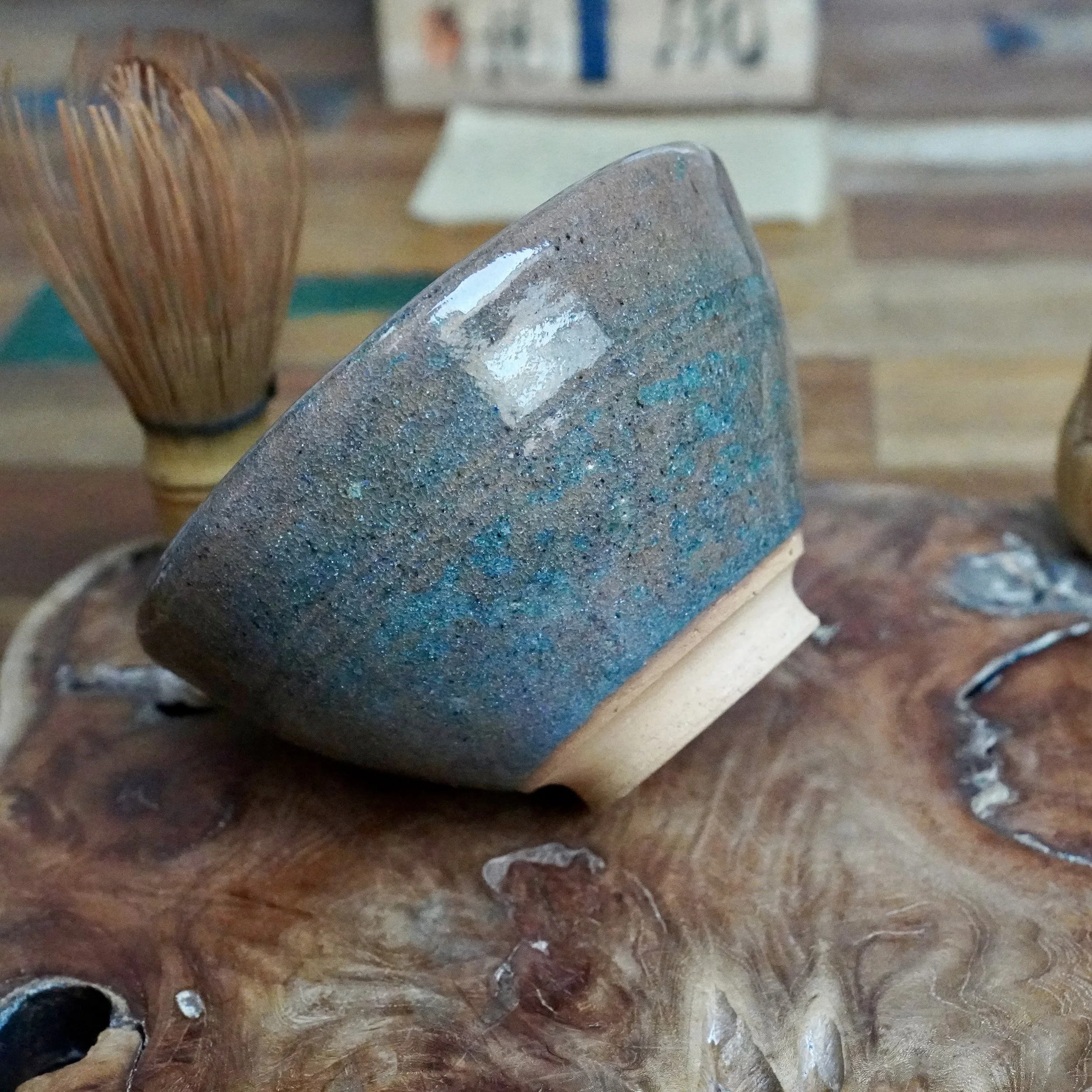
Raku. Raku is fired at much lower temperatures than Bizen and never vitrifies in the same way, which makes it a considerably more porous, more absorbent body. A brand new Raku chawan can seep a small amount of water through the base or release a little dark residue into the soaking water the first few times you clean it, particularly if it has sat unused for a long time. This is normal and not a fault in the piece.
To clean a Raku piece properly, soak it in room temperature water, never above roughly 70 degrees Celsius, for half an hour to an hour, then gently scrub with a soft toothbrush. Baking soda sprinkled directly onto the surface with a little water helps lift ingrained residue. After cleaning, resist the urge to use the piece straight away. Let it dry for at least three to five days, longer in humid weather, ideally in a room with stable temperature and airflow. Repeating the soak and scrub two or three times is normal for a piece that has not been cleaned in a while, one pass rarely finishes the job.
Once dry, before each use, a soak of five to ten minutes is enough, long enough to let the clay absorb water instead of tea without becoming saturated. The first time you use a piece, and after a long period in storage, soak it longer, from about fifteen minutes up to an hour, in lukewarm water. Soaking for too long before use will make the piece noticeably wet when you pour, so keep the pre-use soak brief and reserve the longer deep soak for actual cleaning.
Temperature changes are what damage Raku fastest. If you pour hot water into a Raku chawan, let it cool down on its own rather than moving it into cold air or rinsing it under a cold tap straight after. A sudden shift in temperature is far more likely to stress the clay than the water itself.
A faint earthy or musty scent after use is also characteristic of Raku's open, low-fired structure, not a sign of a problem. It usually settles with regular use as the clay adjusts to contact with liquid, though some owners prefer to keep a strongly scented piece on a shelf rather than in daily rotation. Either is a fine way to enjoy it.
Traditional raku glazes can contain lead. Japanese guidance for tableware advises using raku only for preparing whisked matcha, and keeping acidic liquids such as fruit juice, wine or vinegar out of the bowl.
Step 7: A faint scent after use, and when it means something
Some porous ware, Raku especially, and to a lesser extent unglazed Bizen-yaki or Shigaraki-yaki, can hold onto a faint earthy or musty scent after contact with liquid, even once fully rinsed and dried. This is a characteristic of the clay body itself, fired at low temperatures with an open, absorbent structure, not a sign that something has gone wrong.
If a piece develops this after its first use, a soak in hot water with a small amount of dissolved baking soda, followed by a thorough rinse and full air drying, will usually help.
What you do next is really a matter of taste. Some owners keep using the piece daily and find the scent fades naturally within a few uses, as the clay settles into its new relationship with liquid. Others prefer to let a piece like this live on a shelf rather than in daily rotation, and that is just as valid a way to enjoy it. There is no wrong answer here, only what you personally want from the piece.
Read more
Journal: Curious about the wider Hagi tradition, and how the crackle glaze changes with years of use? Read the full story in the journal.
Journal: Want to what happens when water meets a porous Hagi-yaki chawan through its kan'nyū crackle glaze? I wrote a short piece on karahai.
Makers: Curious about the hands behind pieces like these? Meet the makers currently in the collection.
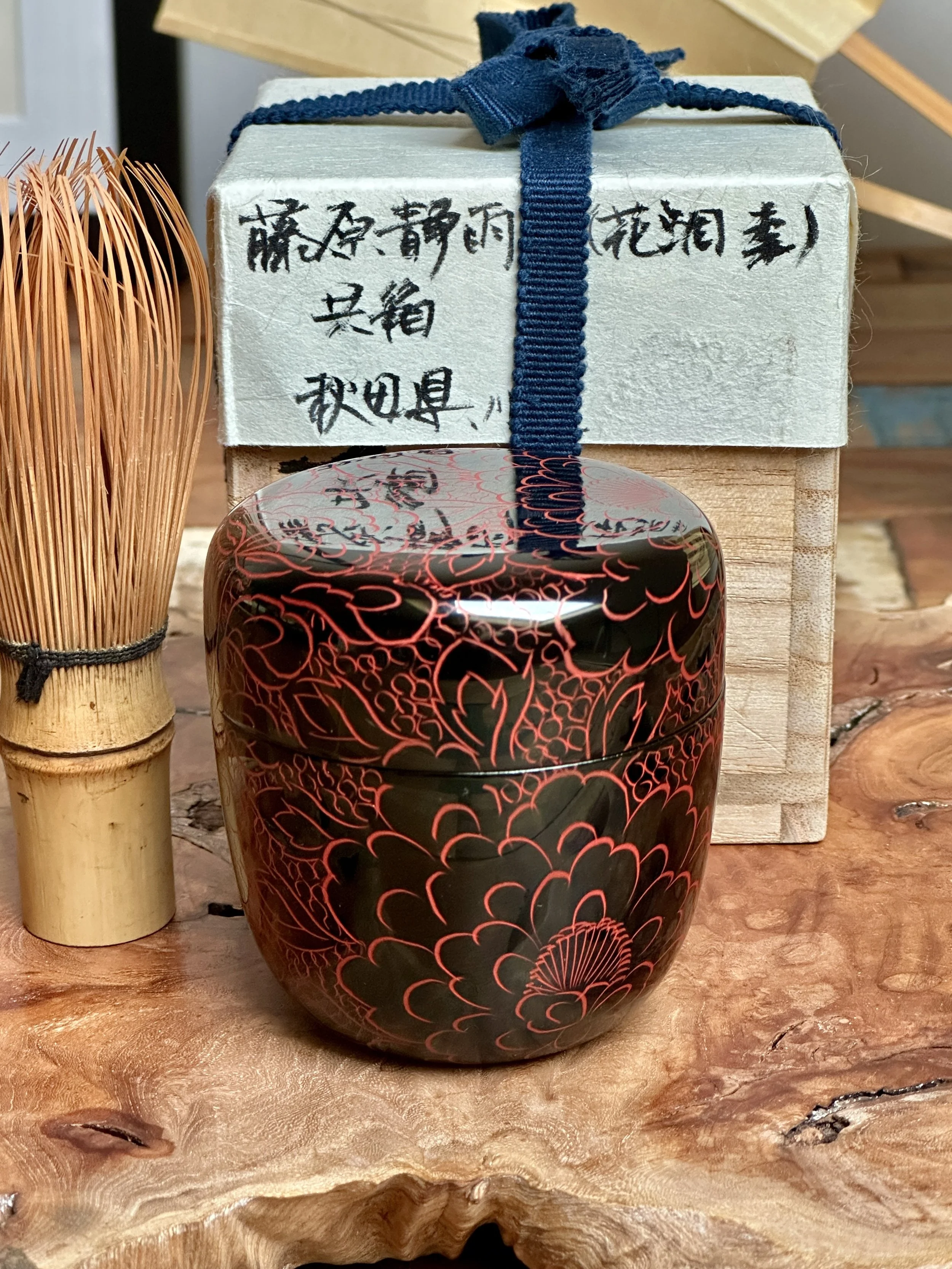
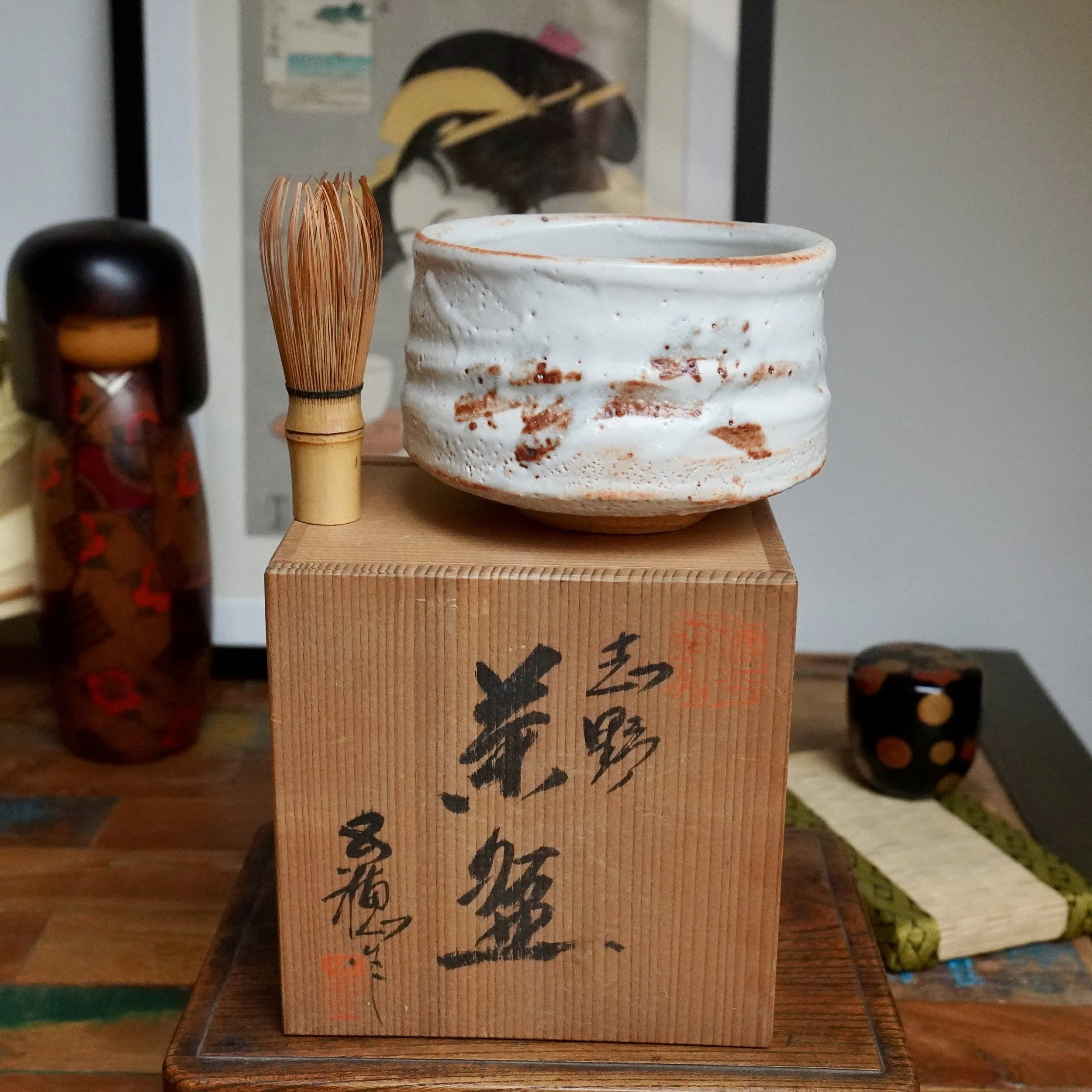

Black so deep it looks like still water, and scattered across it, crests in gold and in red, none of them quite where you expect. The gold ones are soft and matte, while the red ones carry tiny flecks of gold that wake up when you turn the lid toward the light. It sits in the palm like a smooth pebble and is hard to put down. It is the kind of small object that makes a shelf, a desk or a tea tray look considered.
It was made by Hariya Yūsai, a makie artist from Ishikawa who is recognised in Japan as a Traditional Craftsman, and he signed and sealed the wooden box himself. That box is why it feels complete: the natsume, the box that names its maker and its style, and the yellow cloth that came with it have stayed together. If you make matcha, this is a proper tea caddy with a real maker behind it. If you don't, it is still something you will want to keep in sight.