 Image 1 of 20
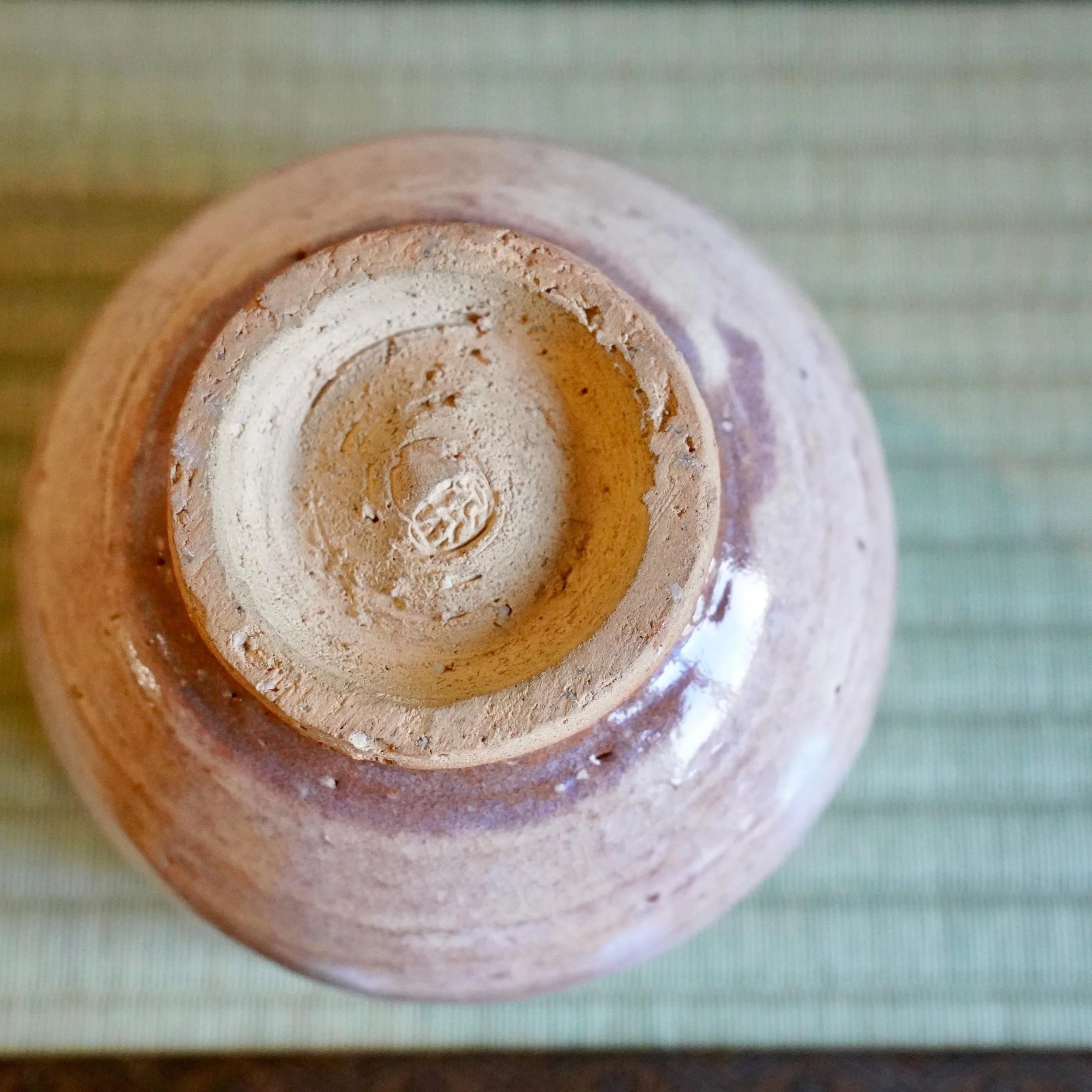 Image 2 of 20
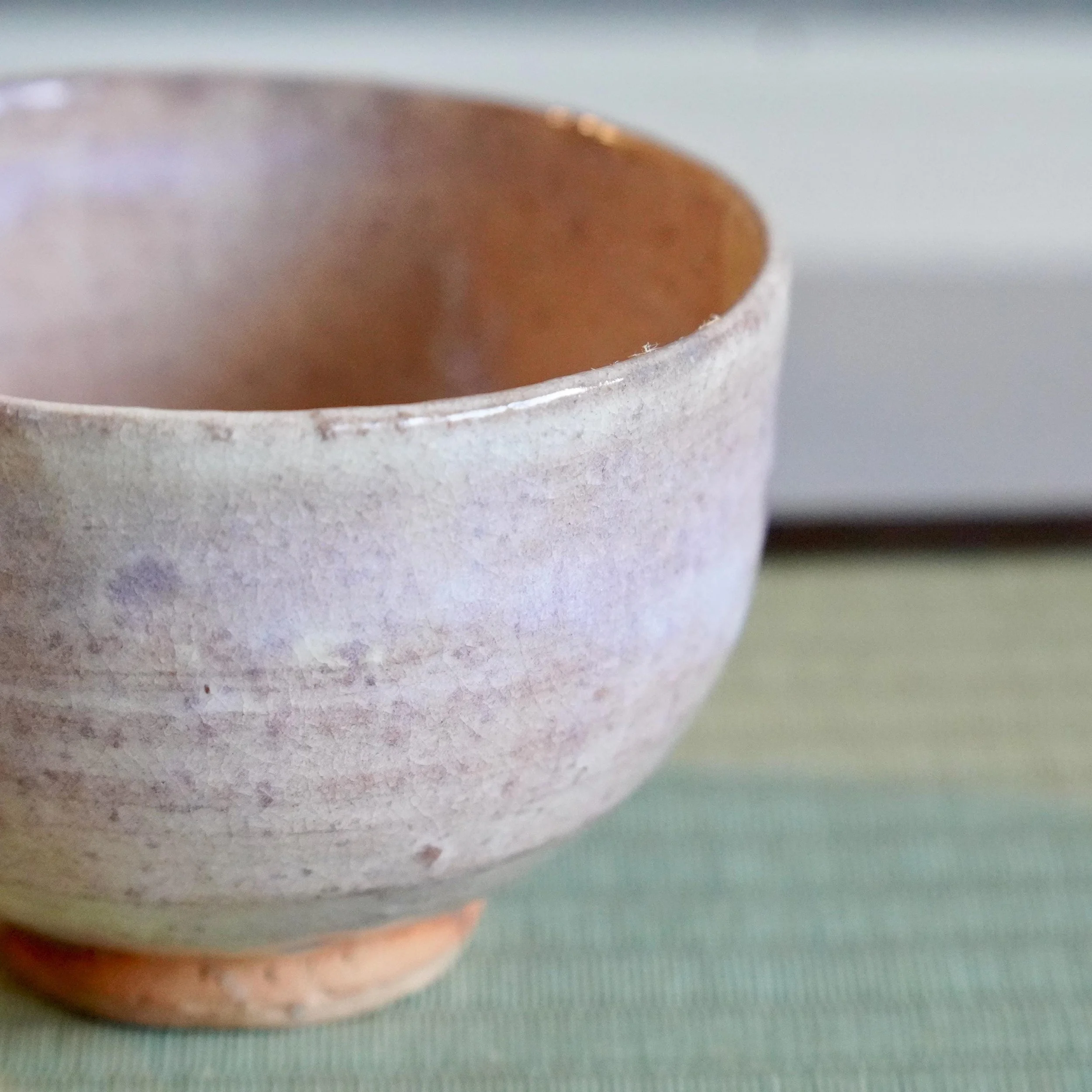 Image 3 of 20
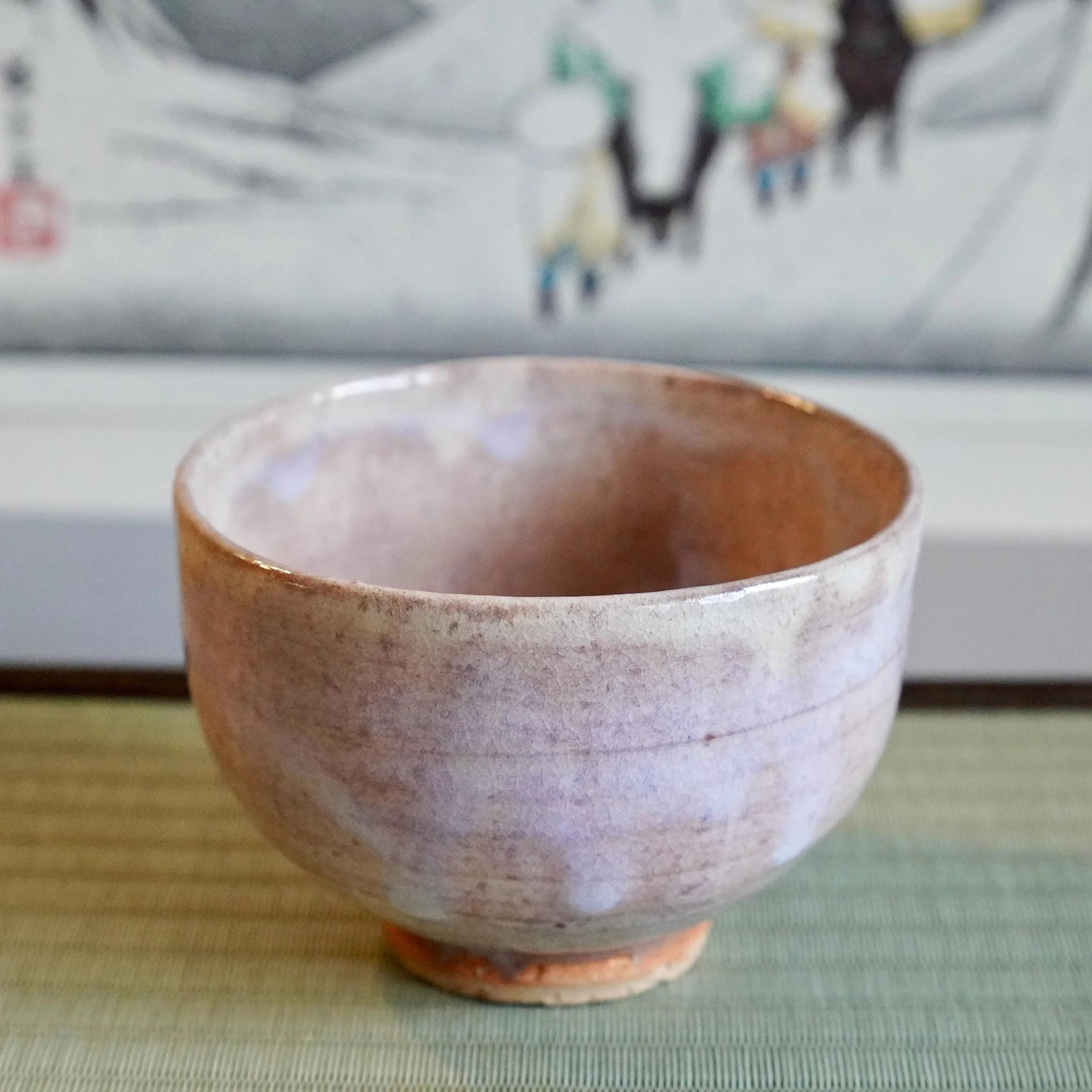 Image 4 of 20
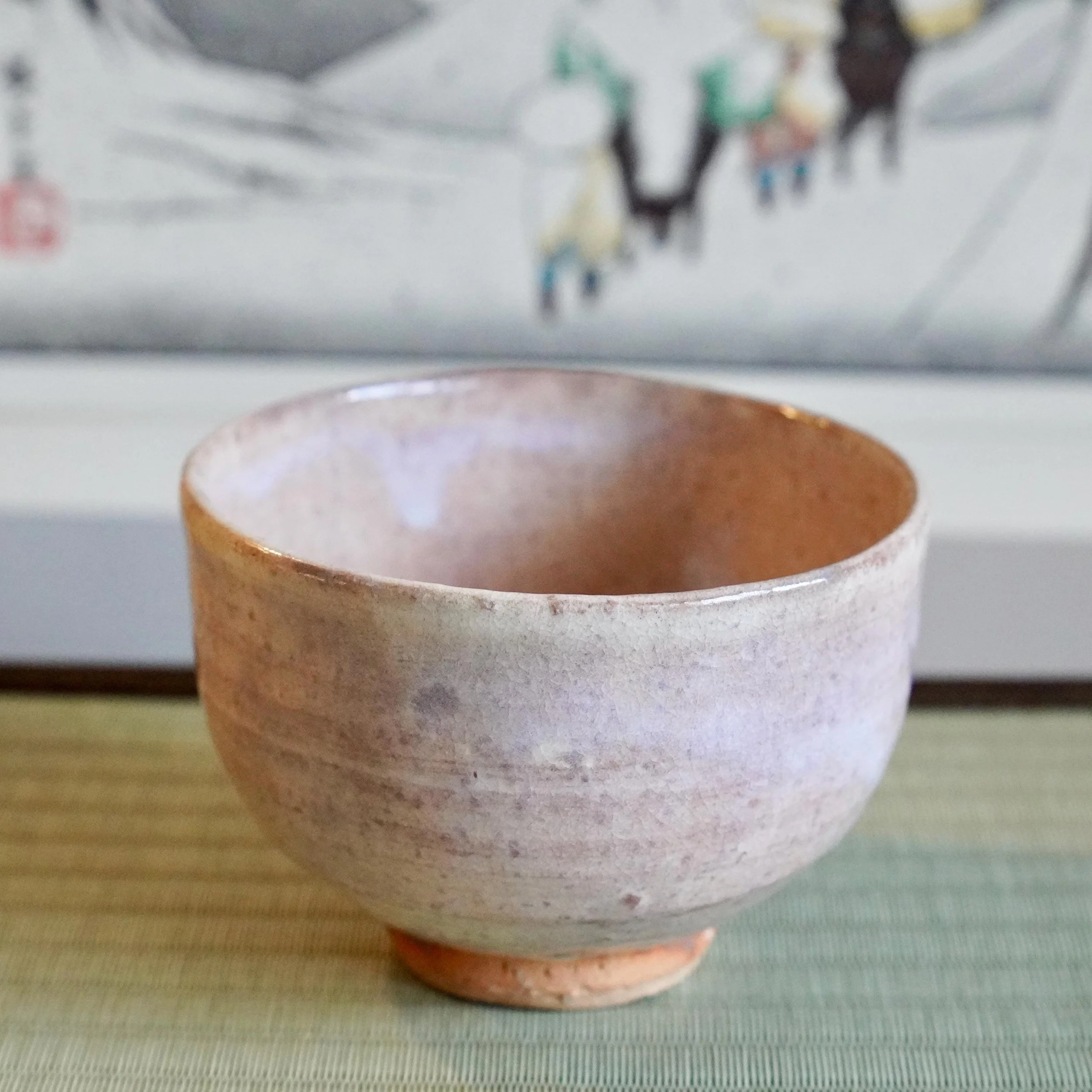 Image 5 of 20
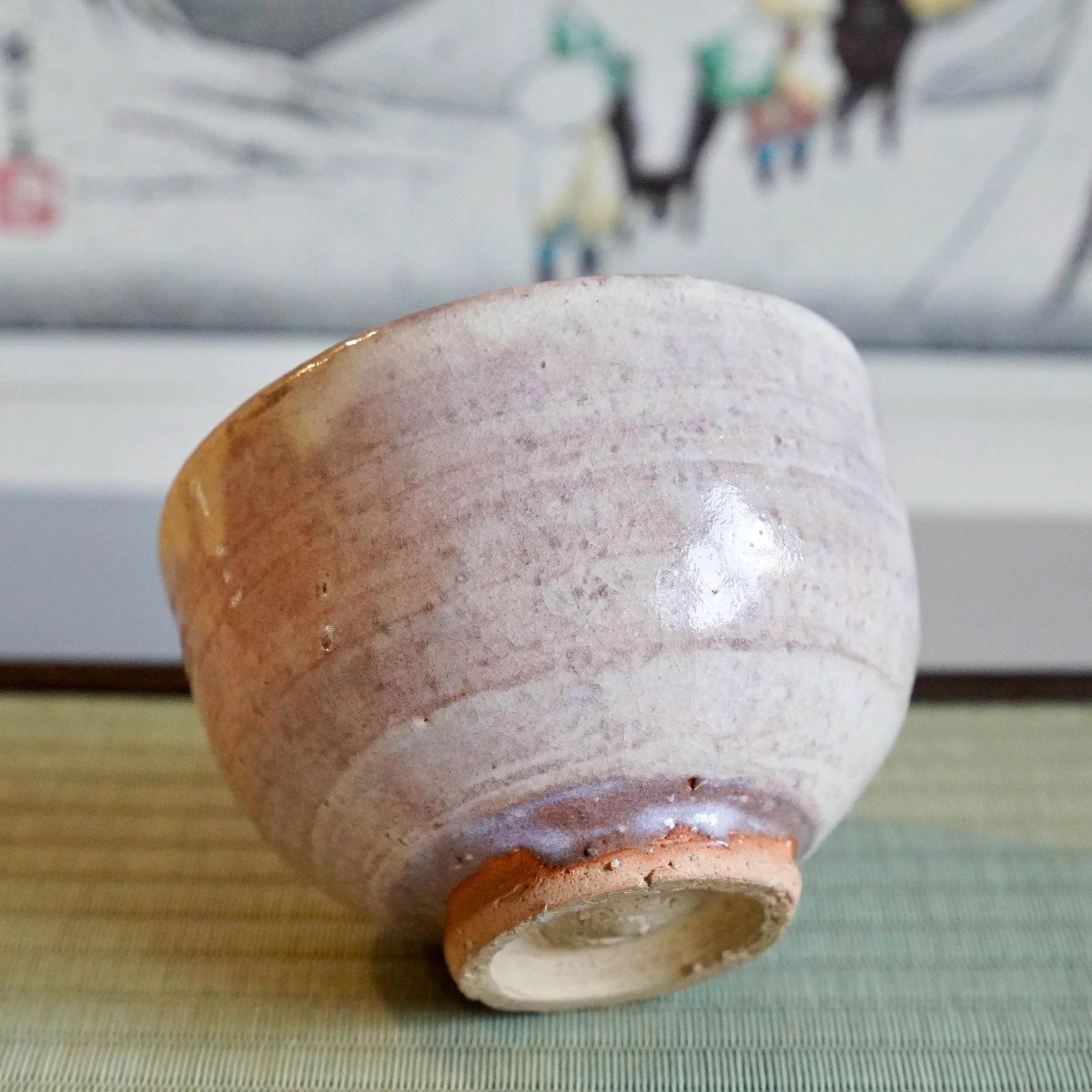 Image 6 of 20
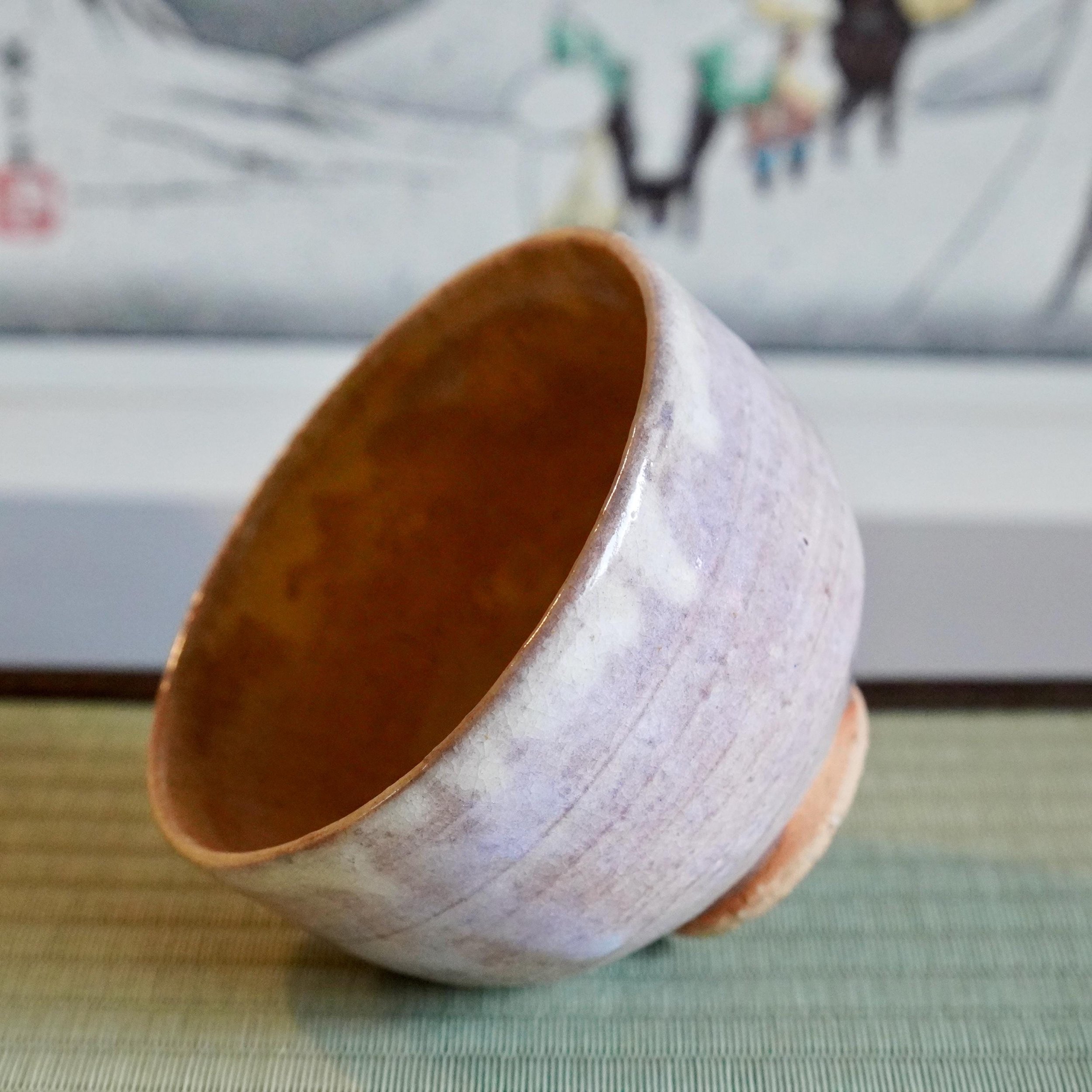 Image 7 of 20
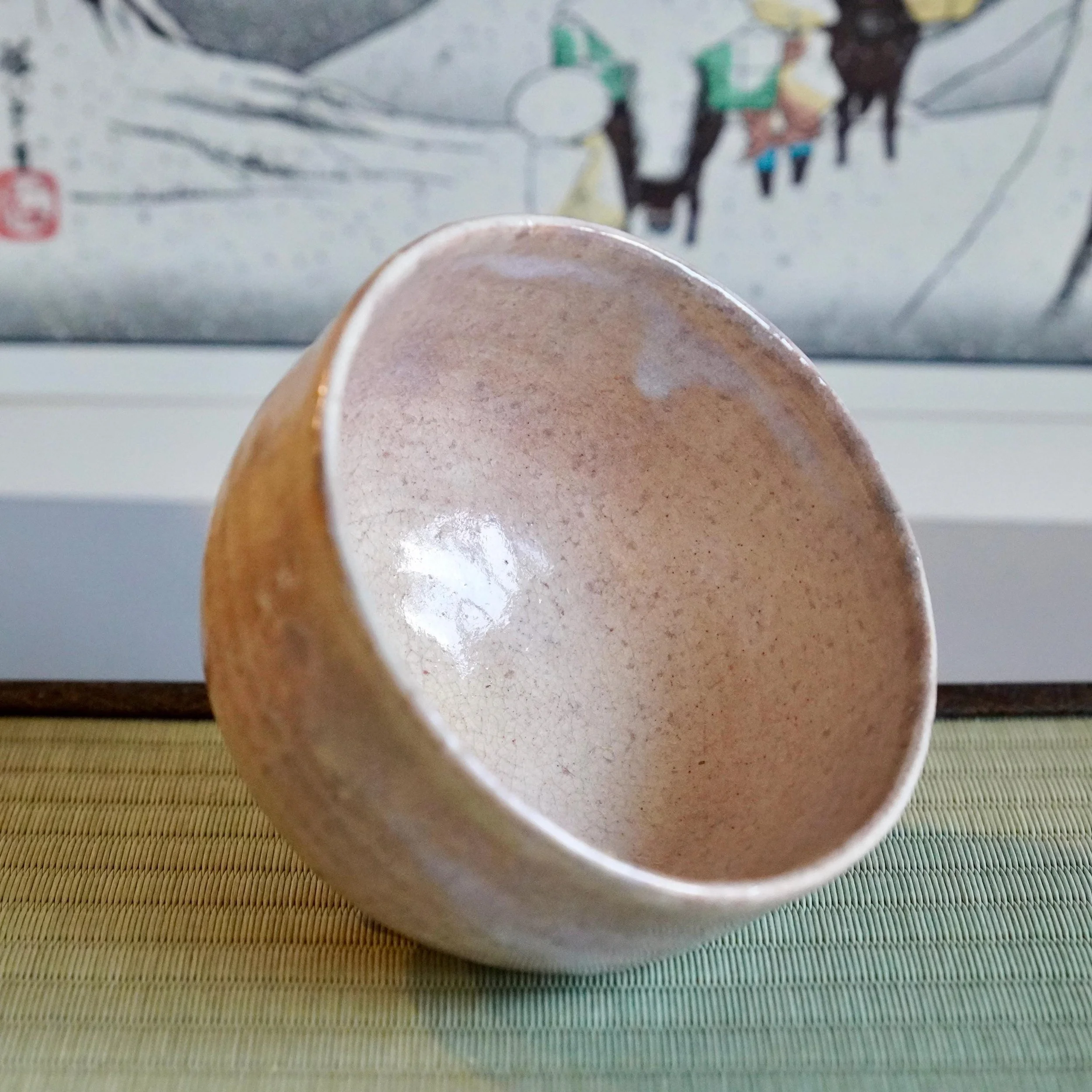 Image 8 of 20
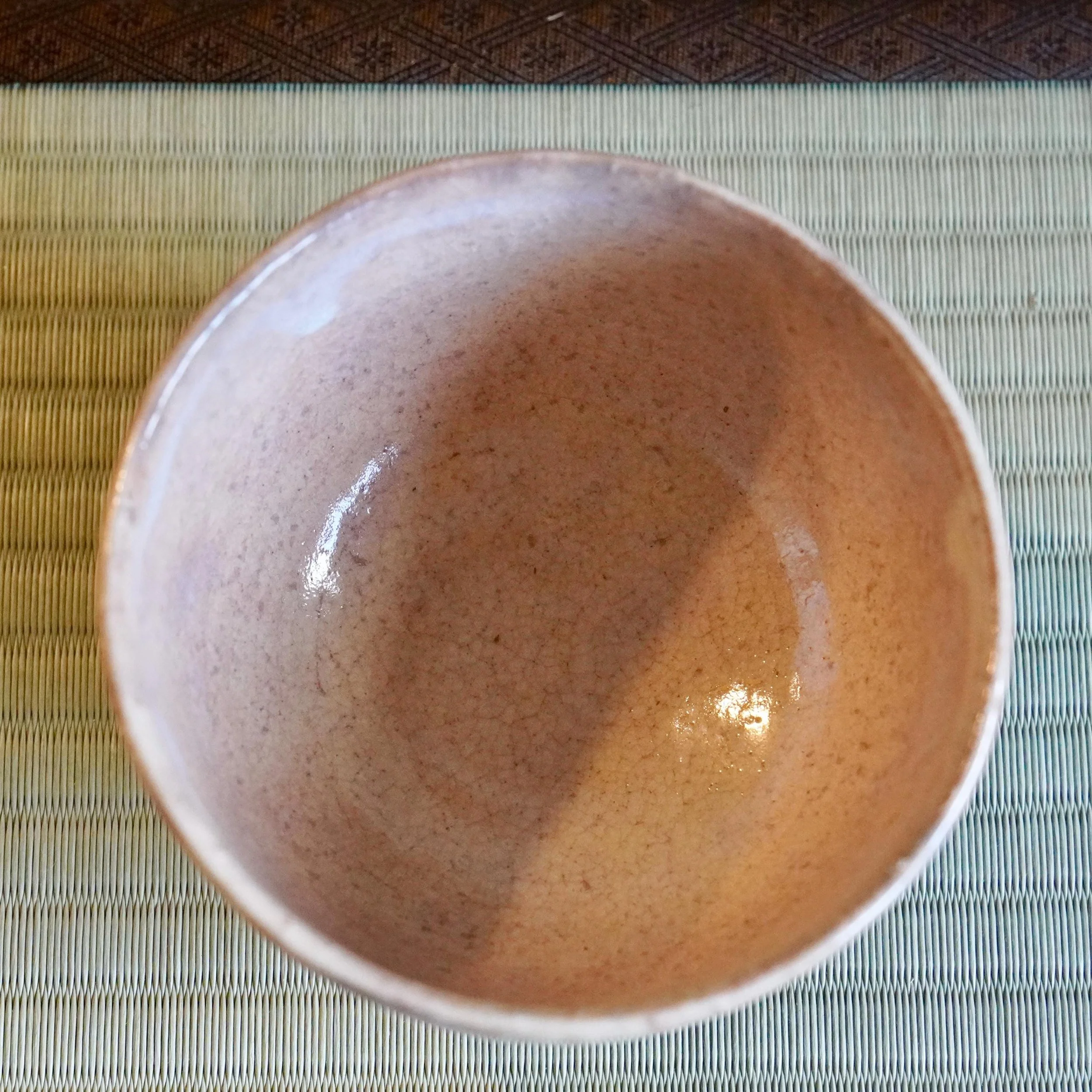 Image 9 of 20
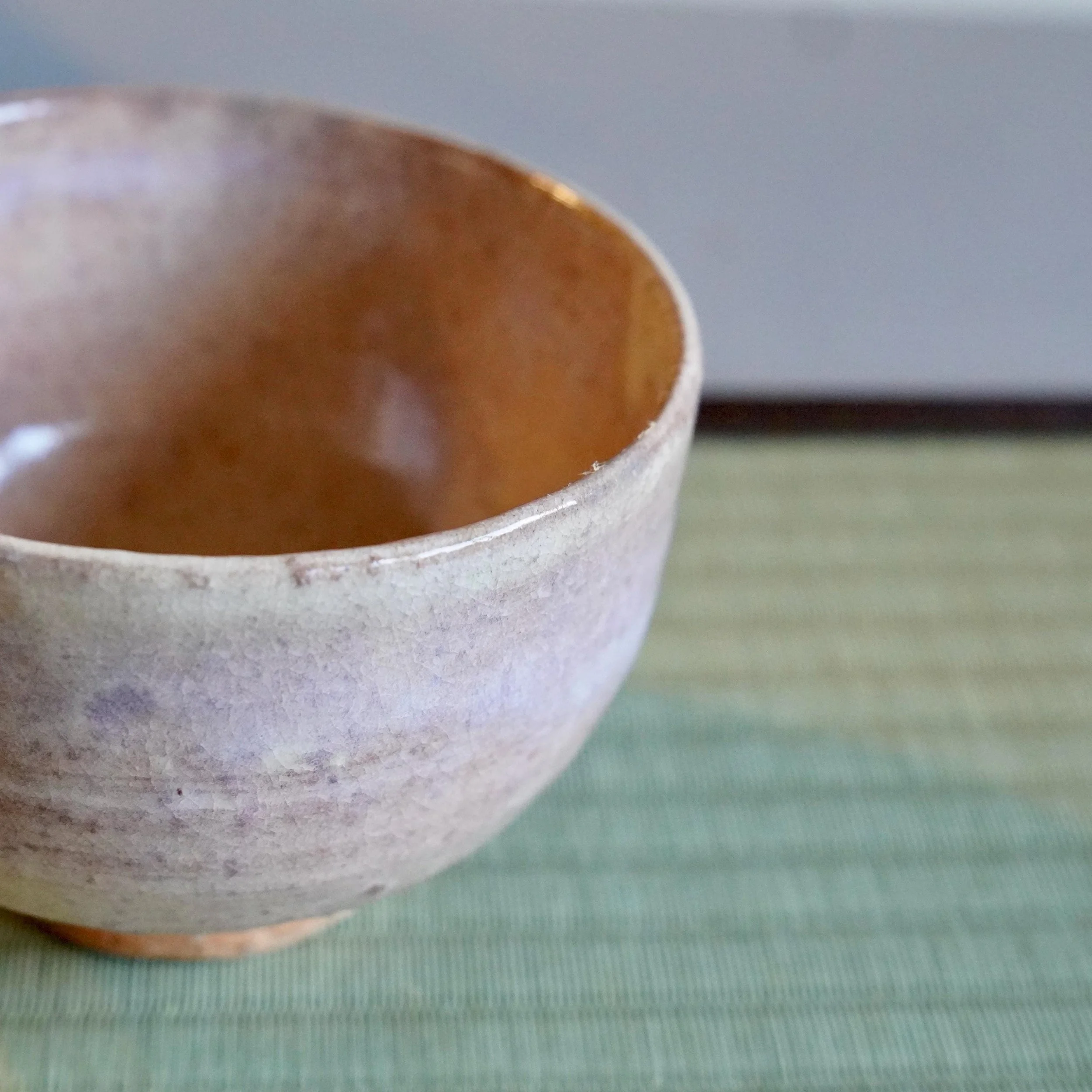 Image 10 of 20
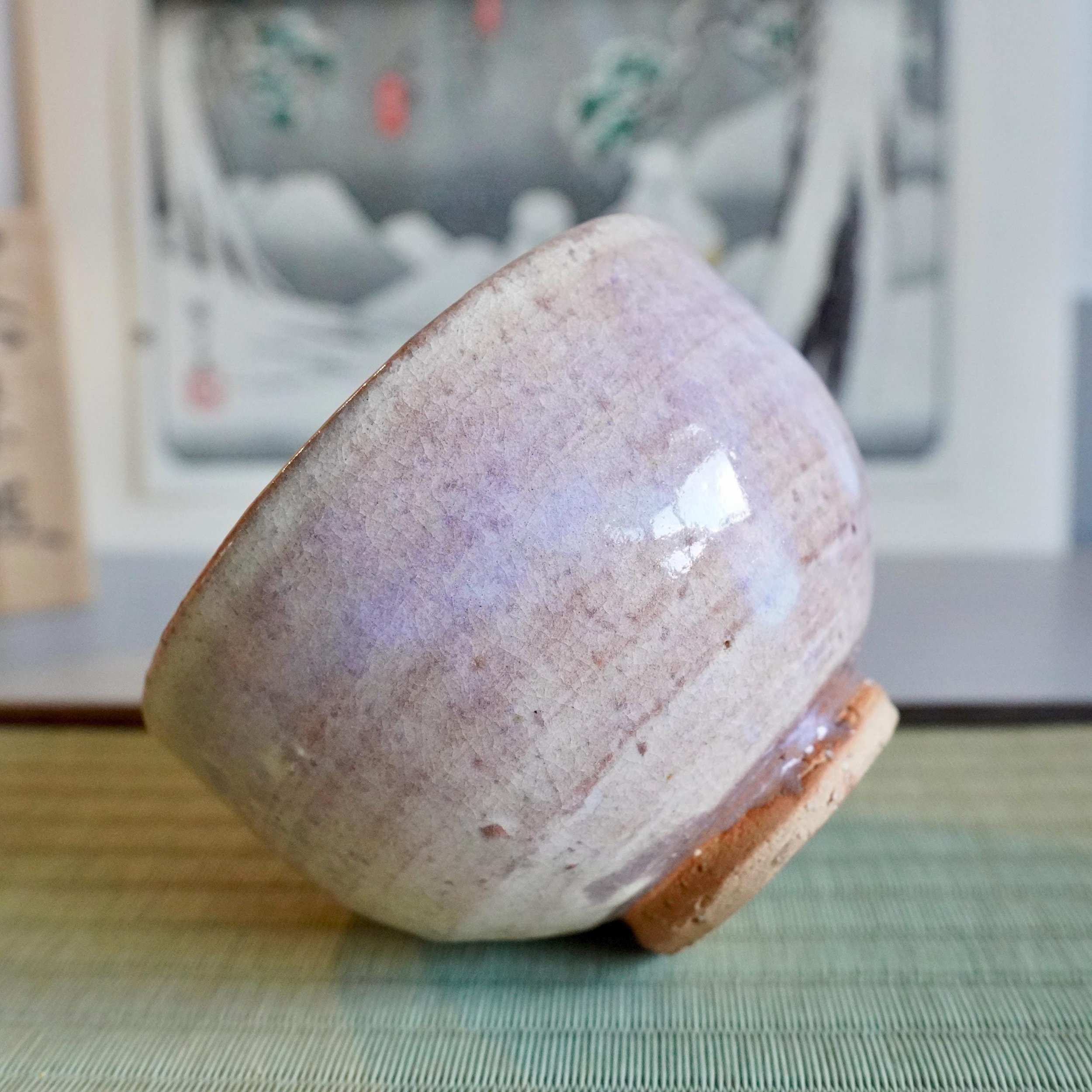 Image 11 of 20
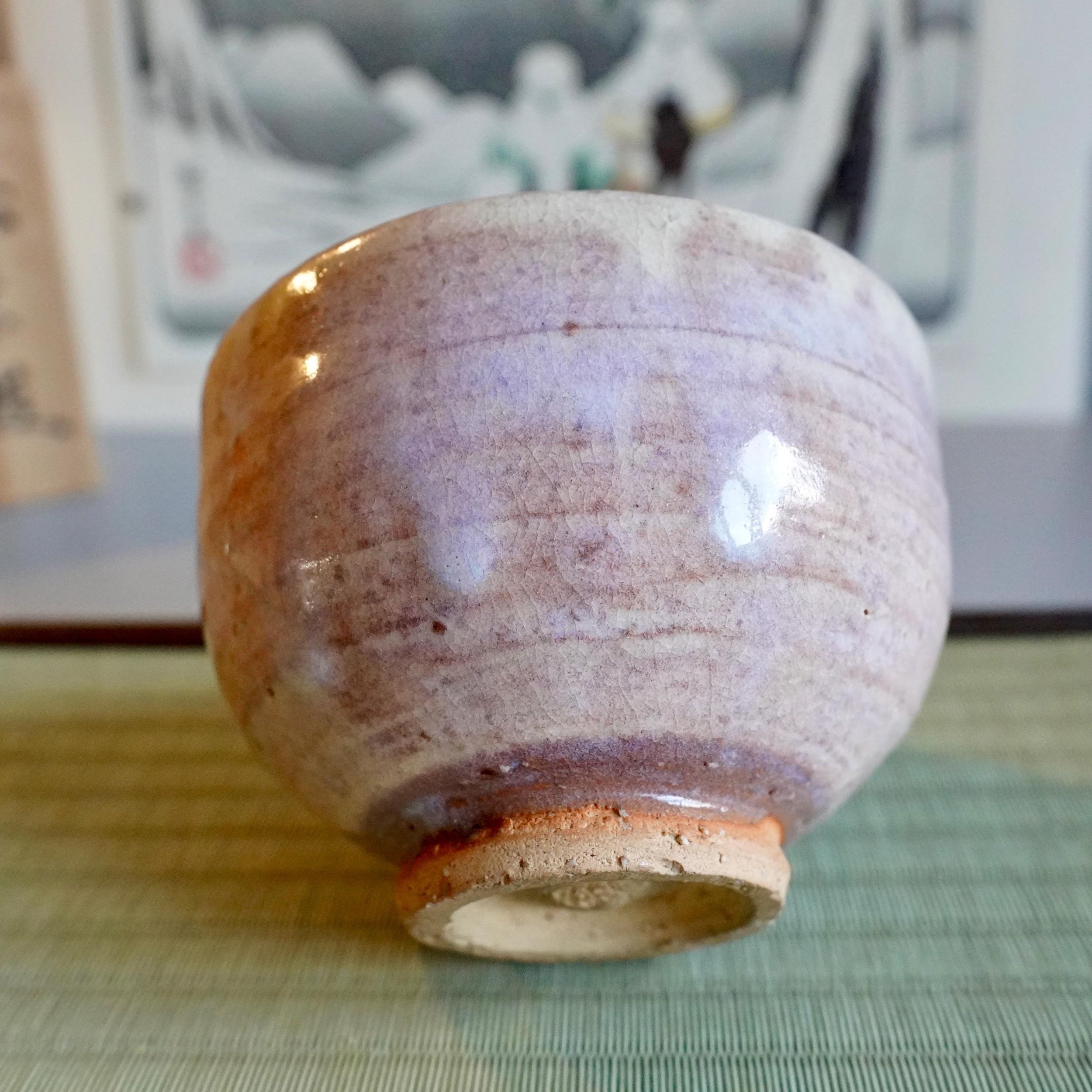 Image 12 of 20
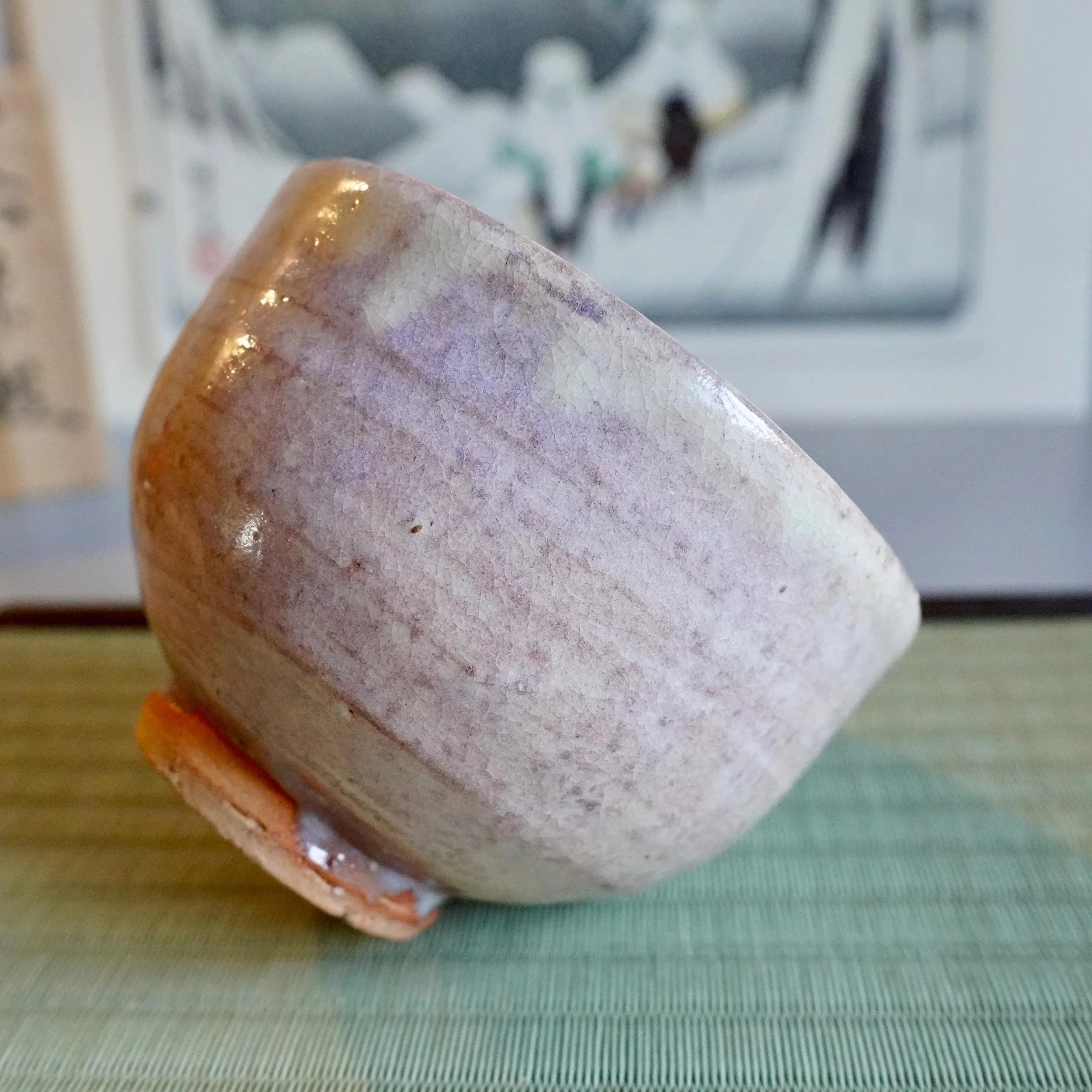 Image 13 of 20
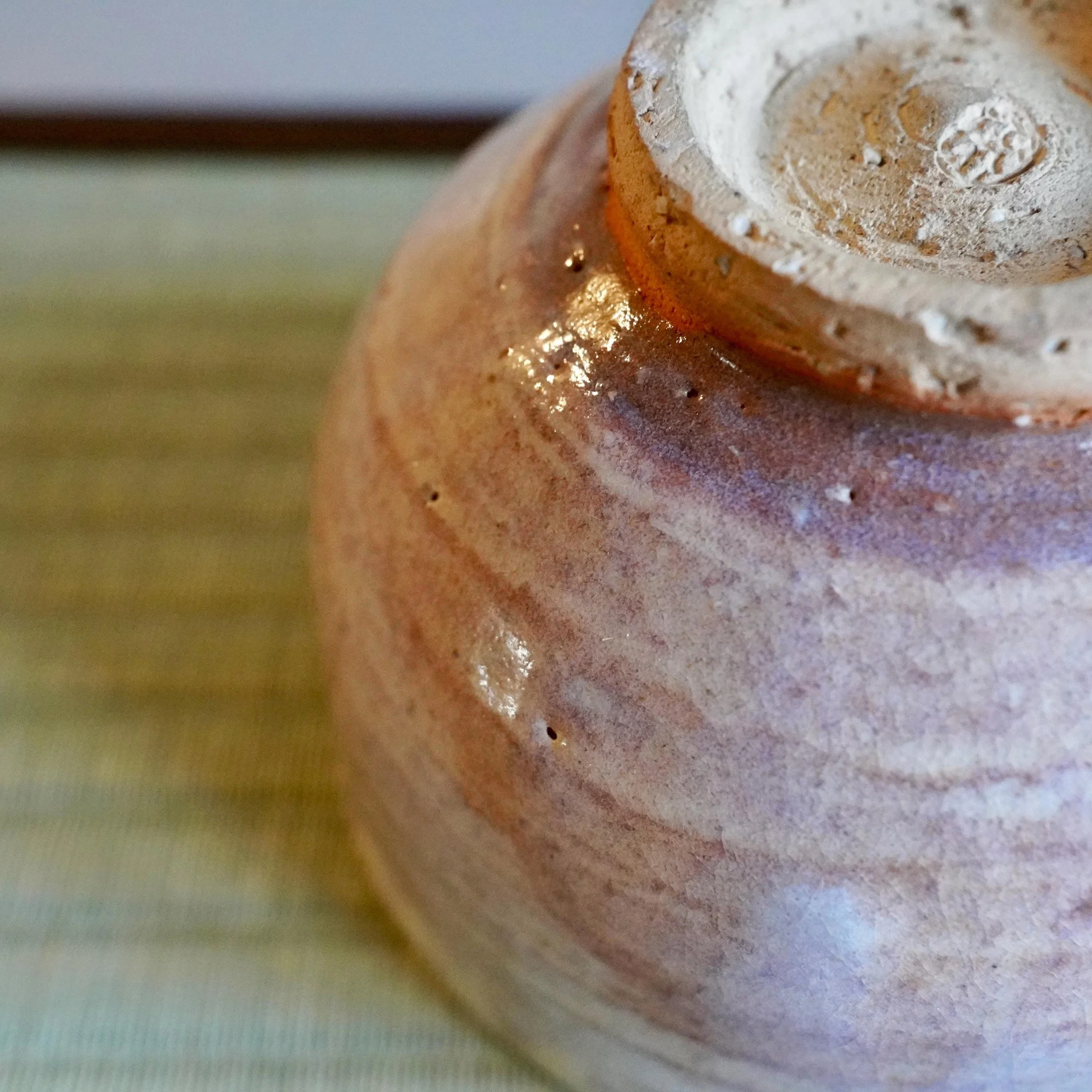 Image 14 of 20
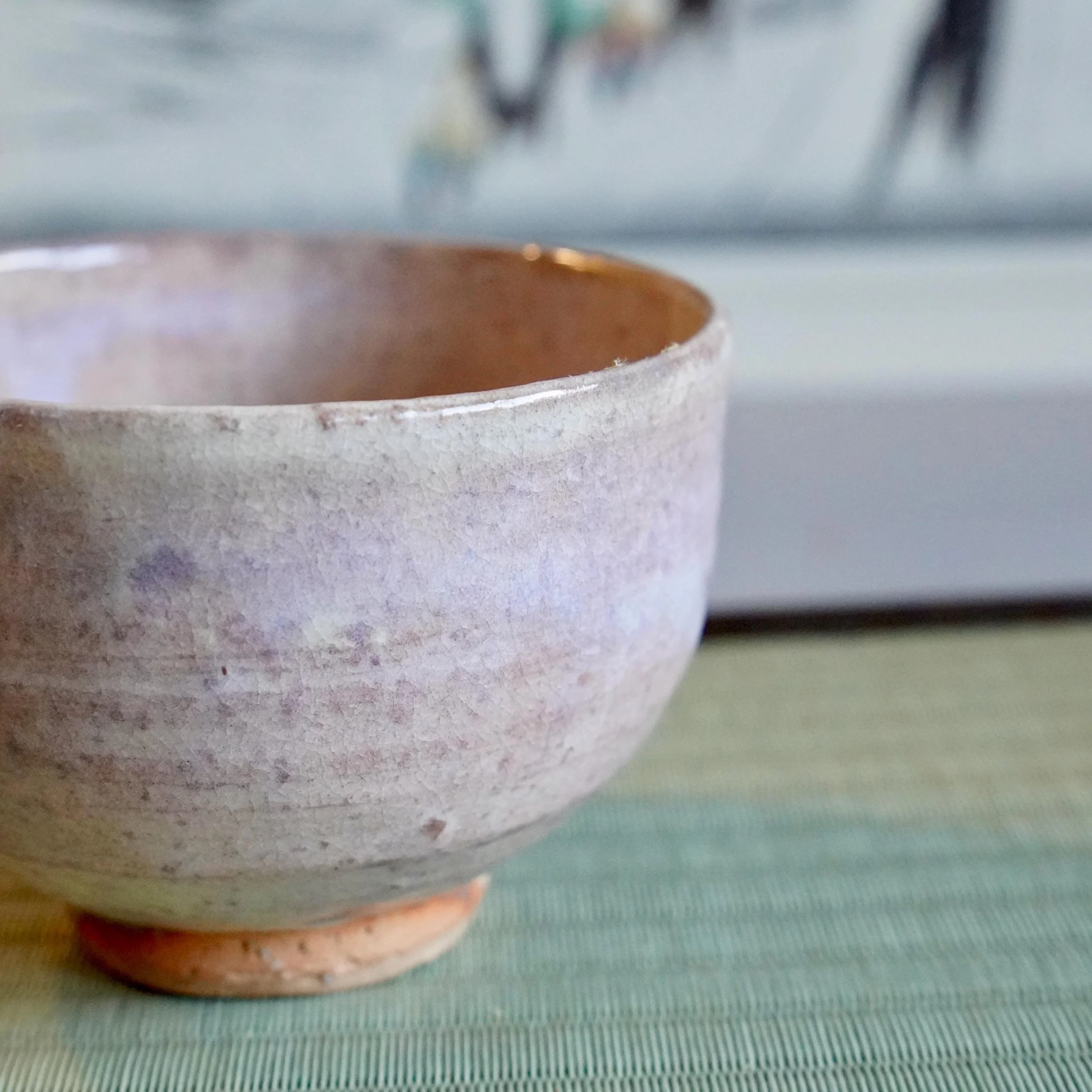 Image 15 of 20
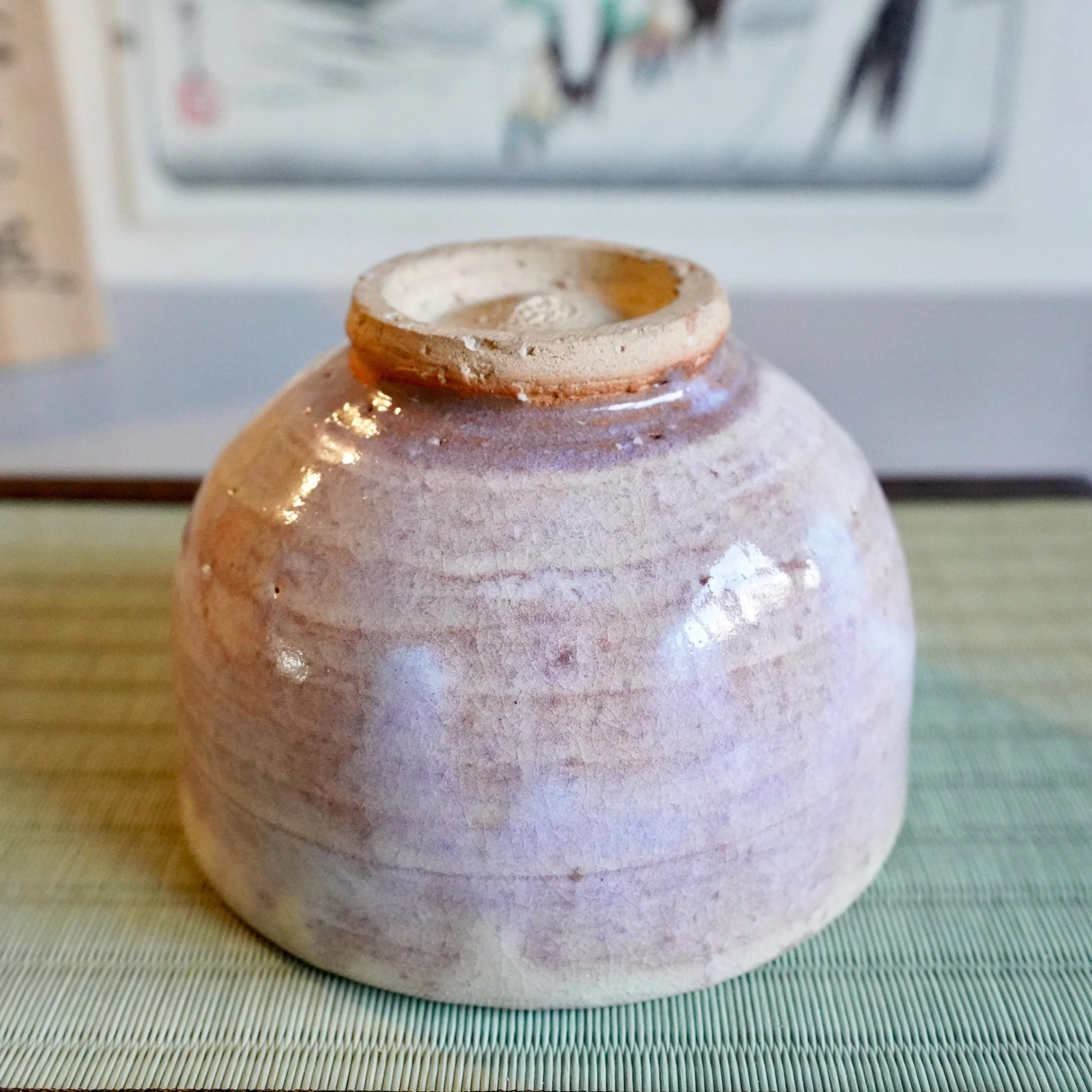 Image 16 of 20
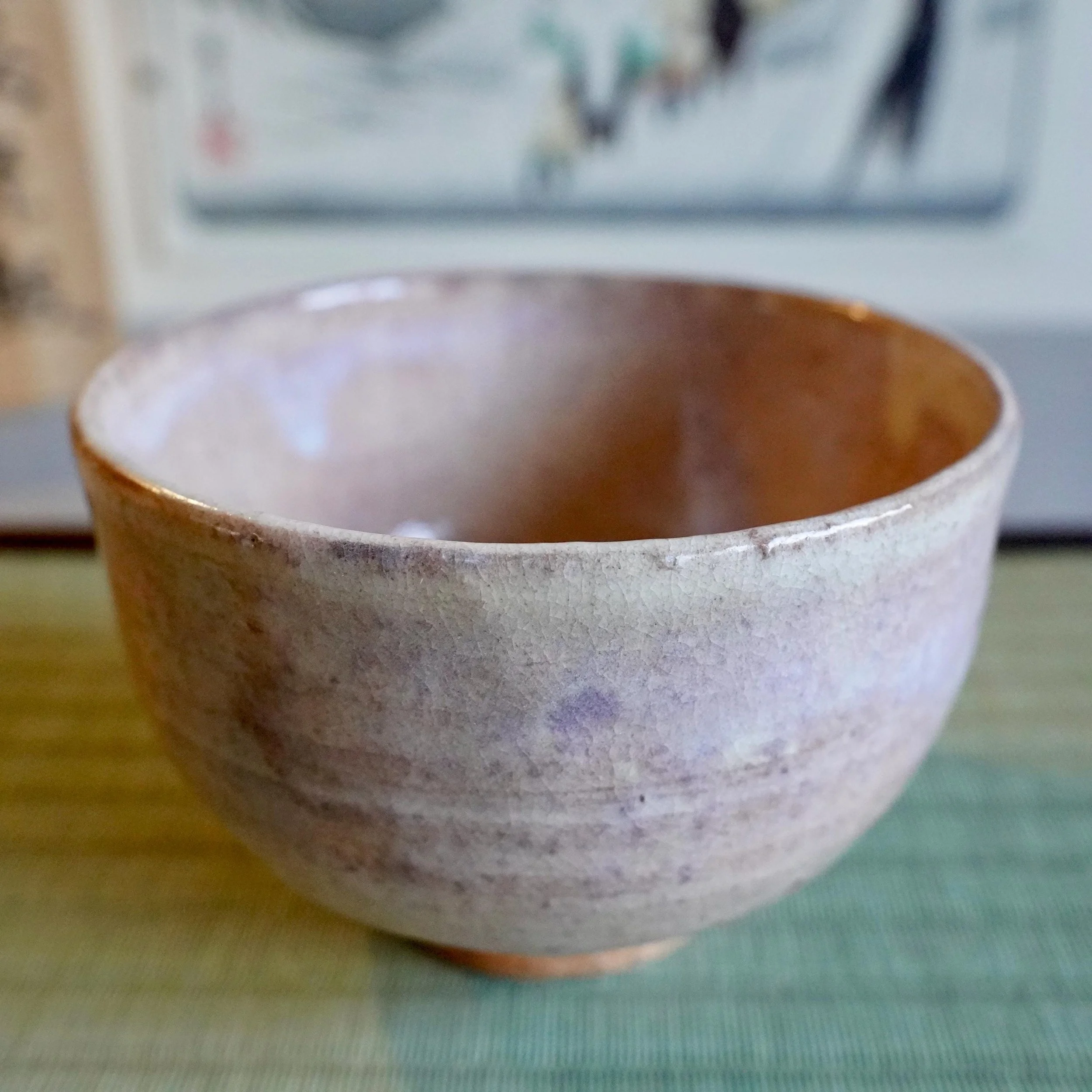 Image 17 of 20
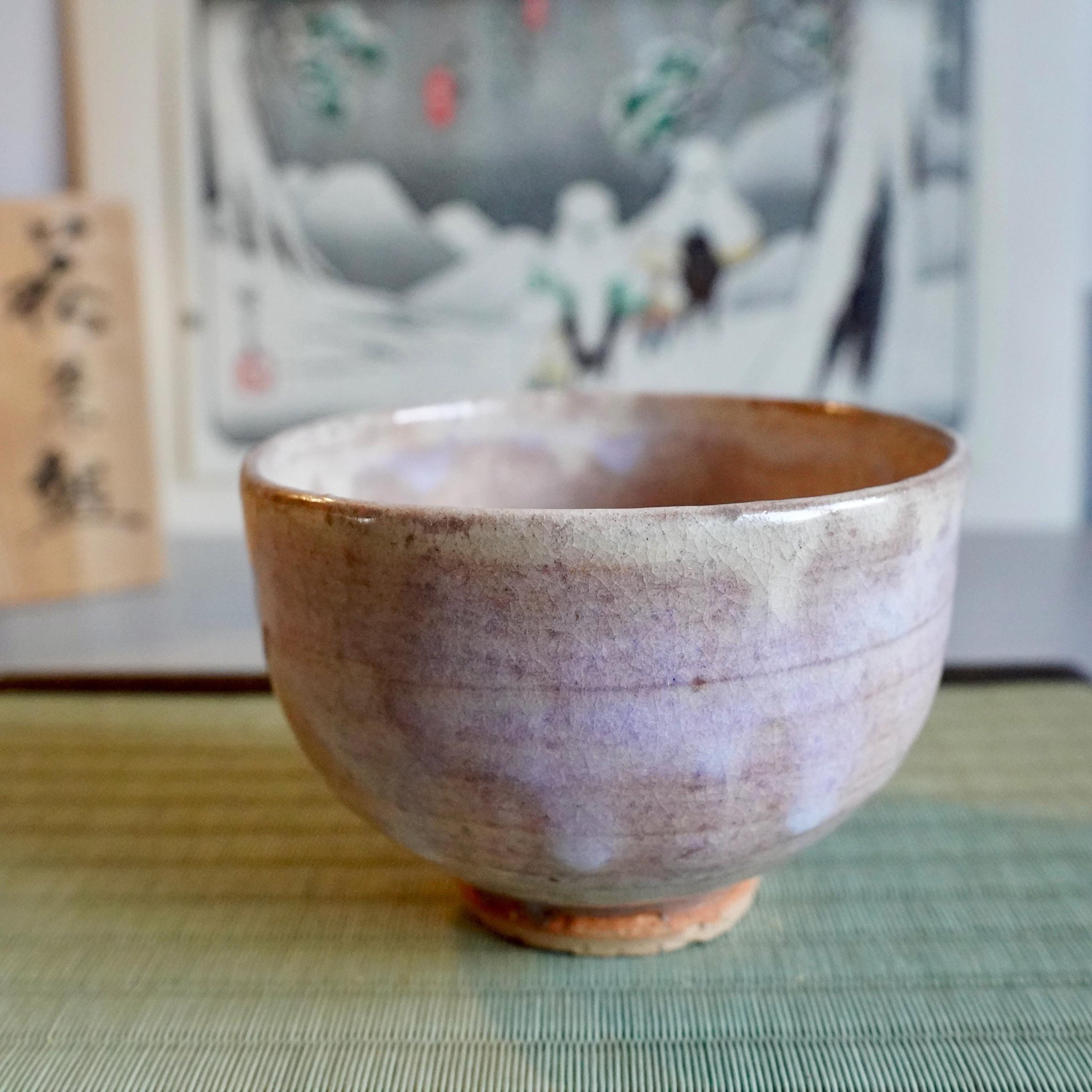 Image 18 of 20
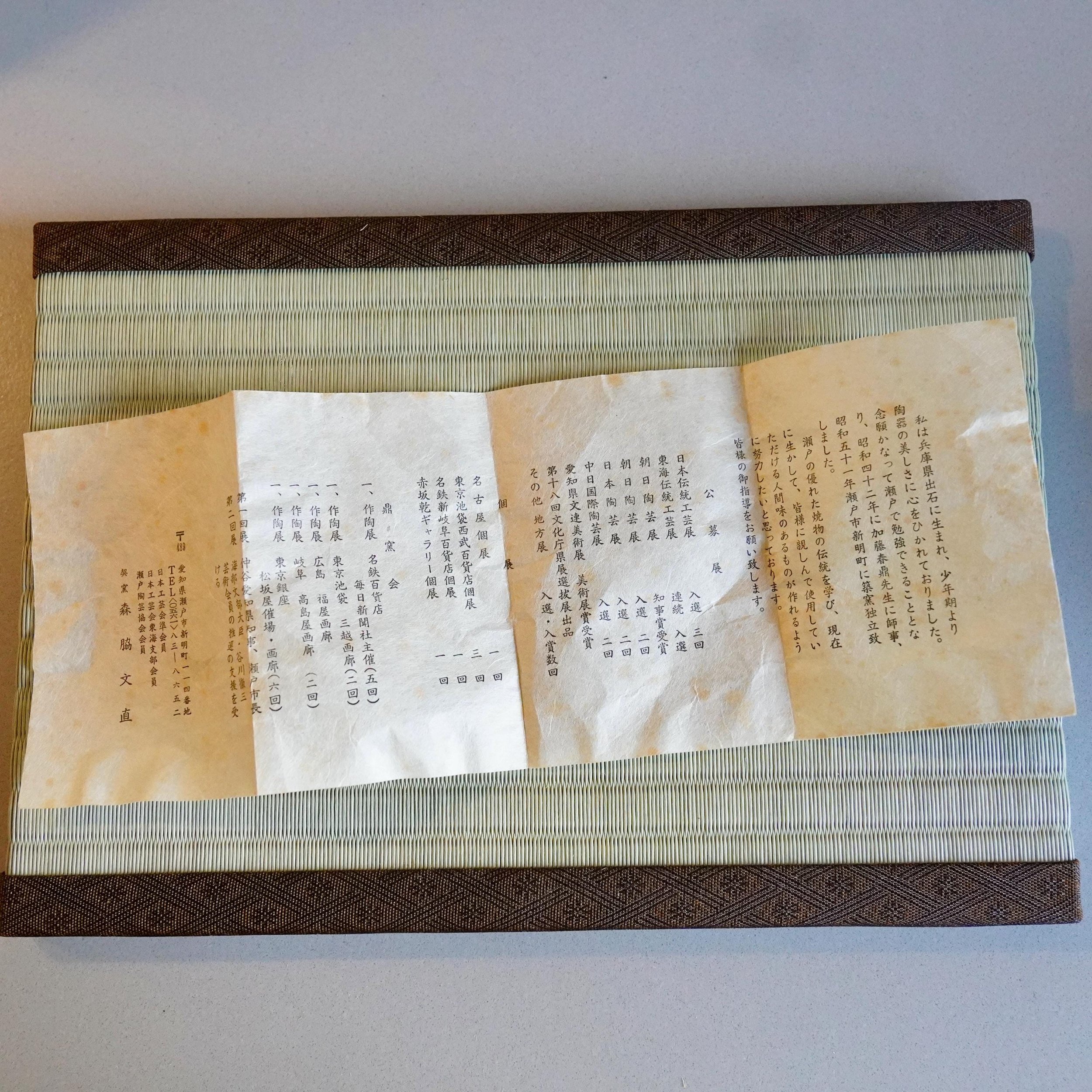 Image 19 of 20
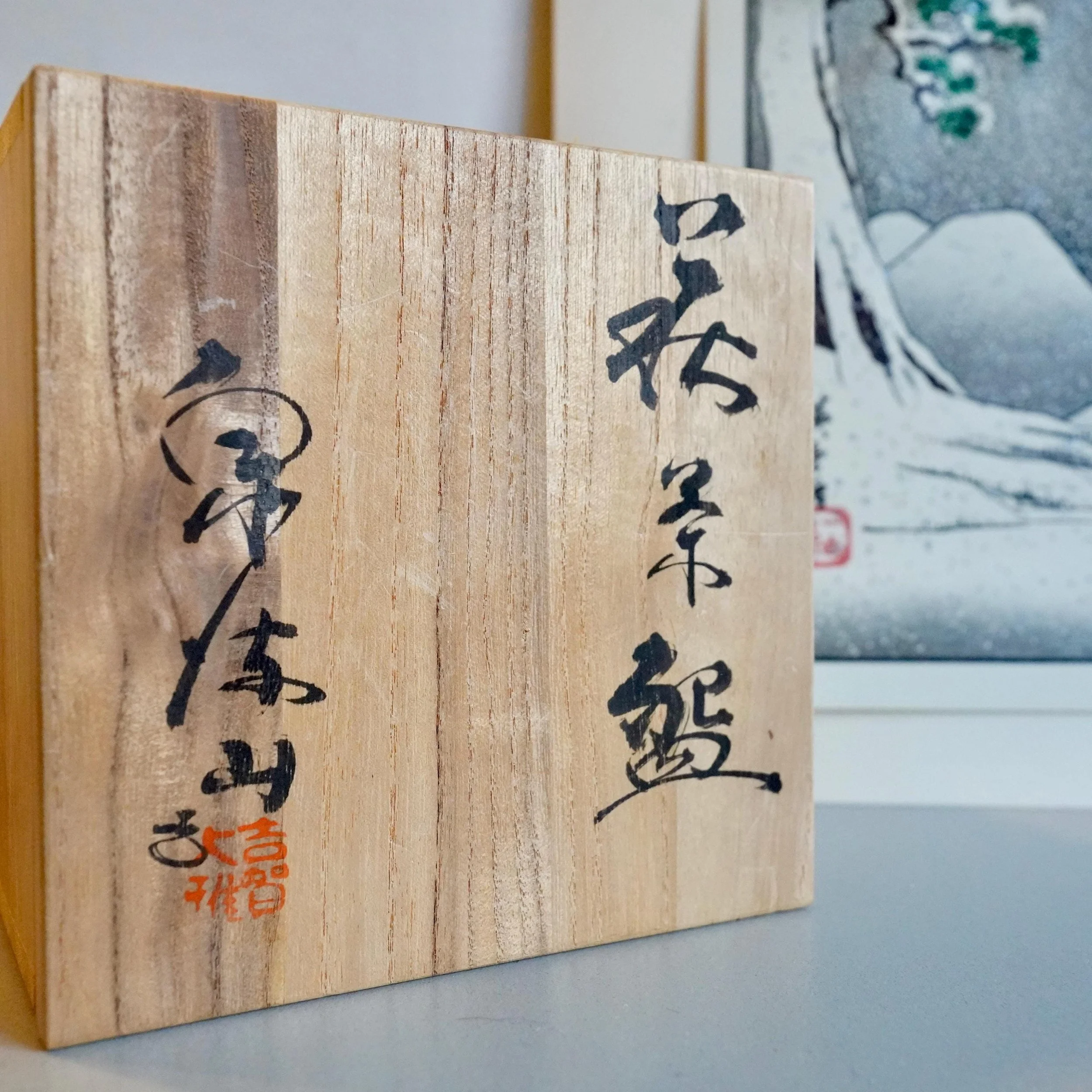 Image 20 of 20
What makes this chawan special
The up close look and feel
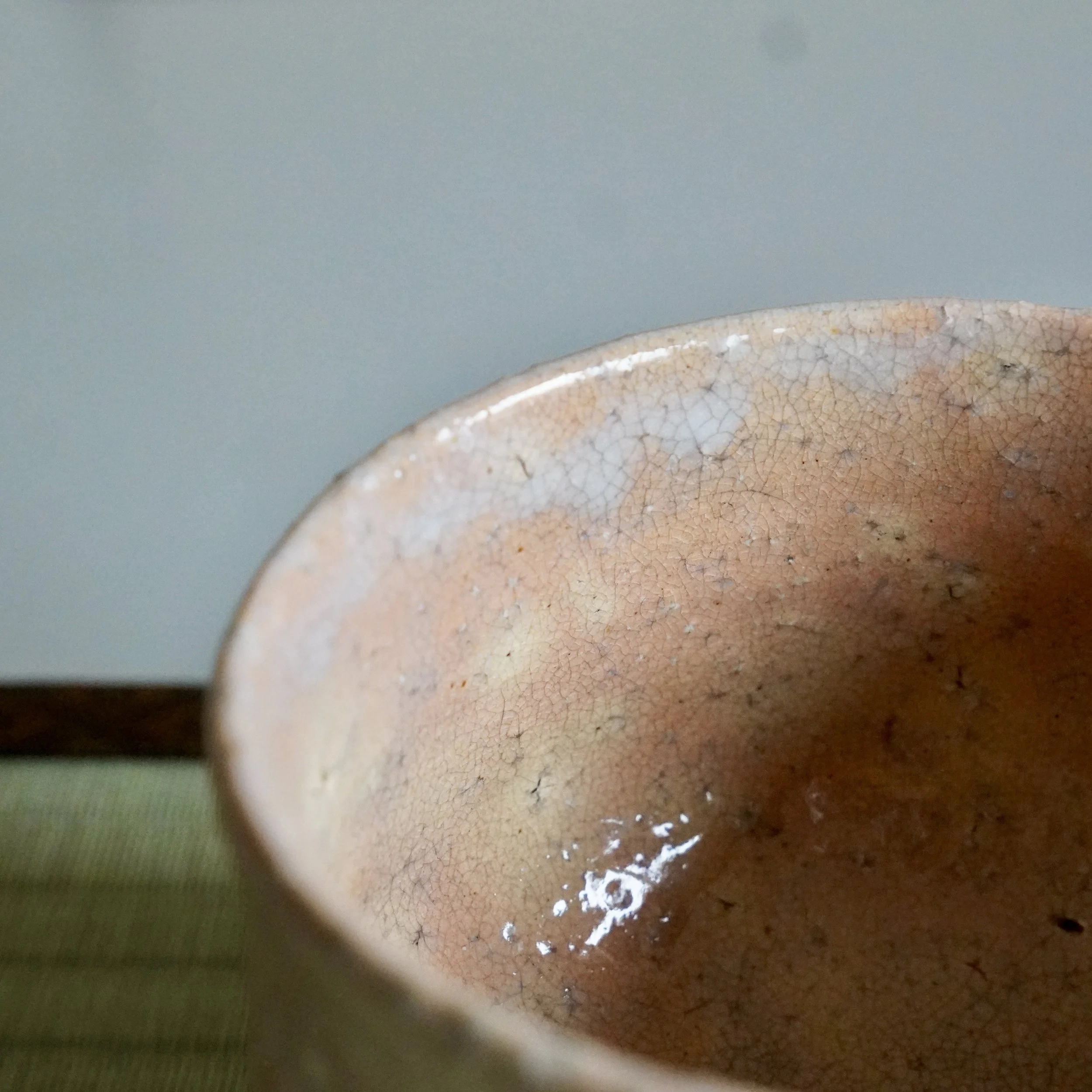
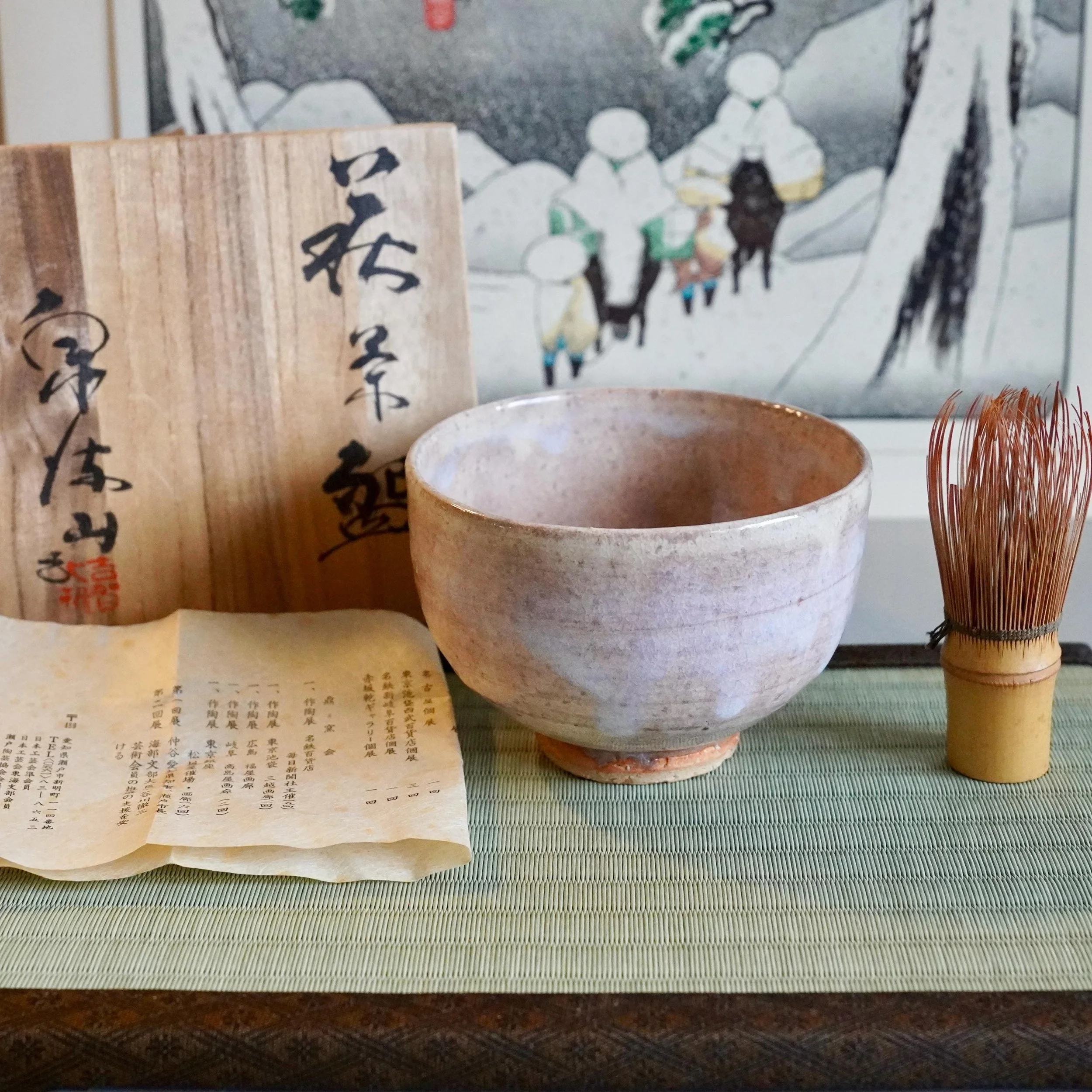
The glaze is soft and powdery to the eye: pale pinkish-lavender on the exterior, warming slightly toward the foot where it thickens and deepens. Throwing rings circle the body like the growth rings of a tree, visible through the glaze without interrupting it. The craquelé is fine and even across the surface, a web of hairline cracks that catches the light differently at every angle.
The foot is left rough and unglazed, as is traditional in Hagi-yaki. Once you start using this bowl, the clay at the foot and through the crazing will slowly absorb the tea, and the colour will begin to deepen. That change belongs to you.
Charming details
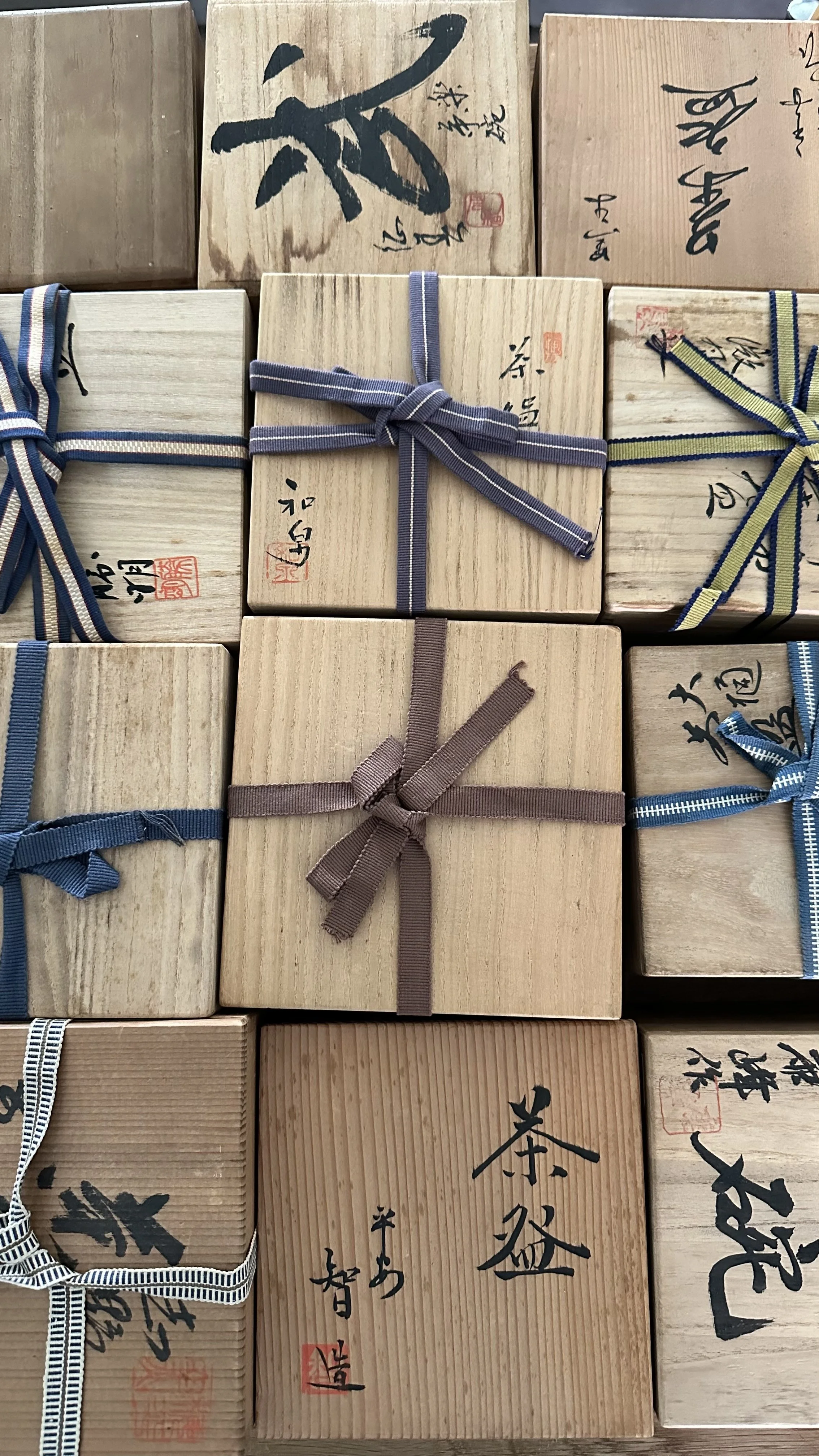
Turn the bowl upside down and look carefully at the interior of the foot ring: there is a small impressed seal pressed into the clay before firing, Moriwaki Fumitada's personal mark. The same seal, alongside his calligraphic signature, appears on the wooden tomobako.
This bowl is also accompanied by an original shiori, a handwritten personal statement from the maker himself, describing his training, his approach to ceramics, and his full exhibition record. Documents of this kind travel with very few pieces at this price point. They give the object a biography that stays with it.
-
Made by 森脇文直 Moriwaki Fumitada
Born in 1948, Toyooka, Hyogo Prefecture
Kiln: 契窯 (Chigiri-gama), Seto, Aichi Prefecture
Trained under the second-generation 加藤春鼎 (Katō Shuntei) from 1967
Kiln established 1976
Full member, Japan Craft Association (日本工芸会正会員), since 1982
Governor's Prize, 8th Asahi Ceramic Art Exhibition, 1970
Tokai Traditional Crafts Exhibition: selected 27 times from the inaugural edition in 1970
Japan Traditional Crafts Exhibition (日本伝統工芸展): selected 8 times from 1973
-
Seto, Aichi Prefecture.
Shōwa period, approx. 1976-1982.
-
Height: approx. 8.7 cm
Diameter: approx. 12.5 cm
Weight: approx. 375 g
-
Excellent condition. No chips or cracks.
Appears unused.
-
Hagi-yaki clay is porous by nature: rinse with warm water only after use, no soap.
The glaze will craze over time, and tea will slowly absorb into the clay, gradually deepening the colour.
It is what Hagi ware is made to do and what tea drinkers have valued in these bowls for centuries.
Allow to dry fully before storing in the wooden box.
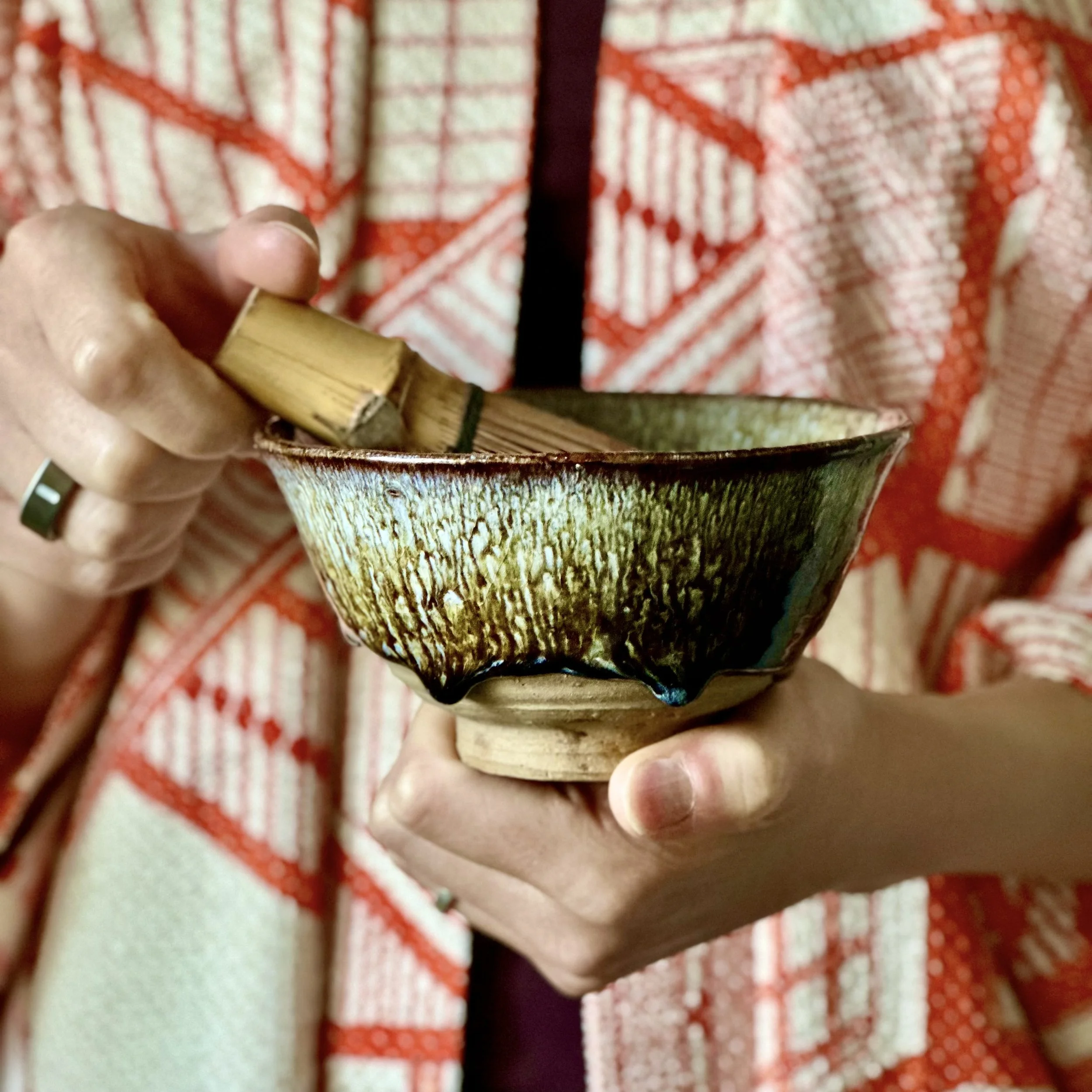
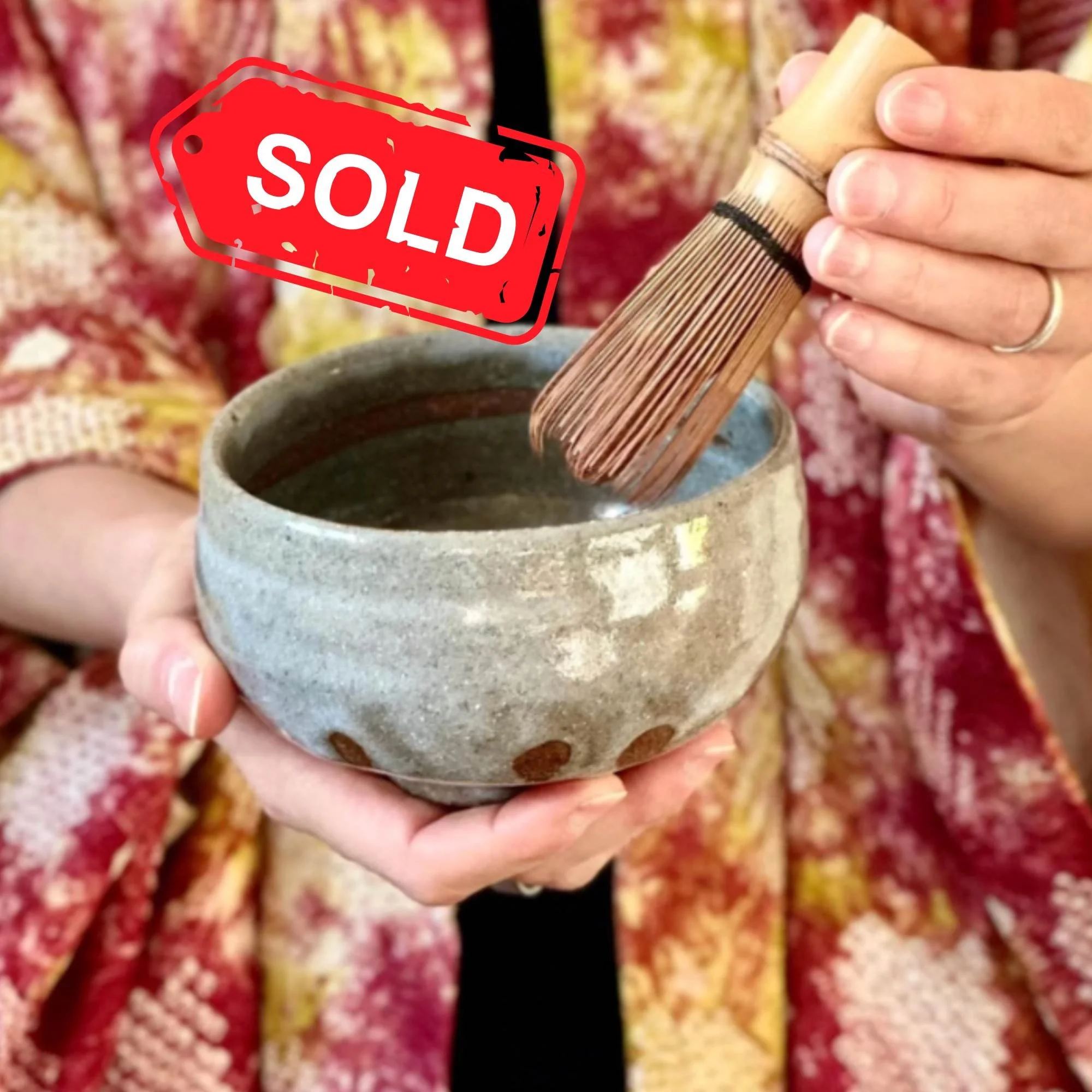
*Decorative items such as the whisk are for styling
and scale purposes only and not included in the sale
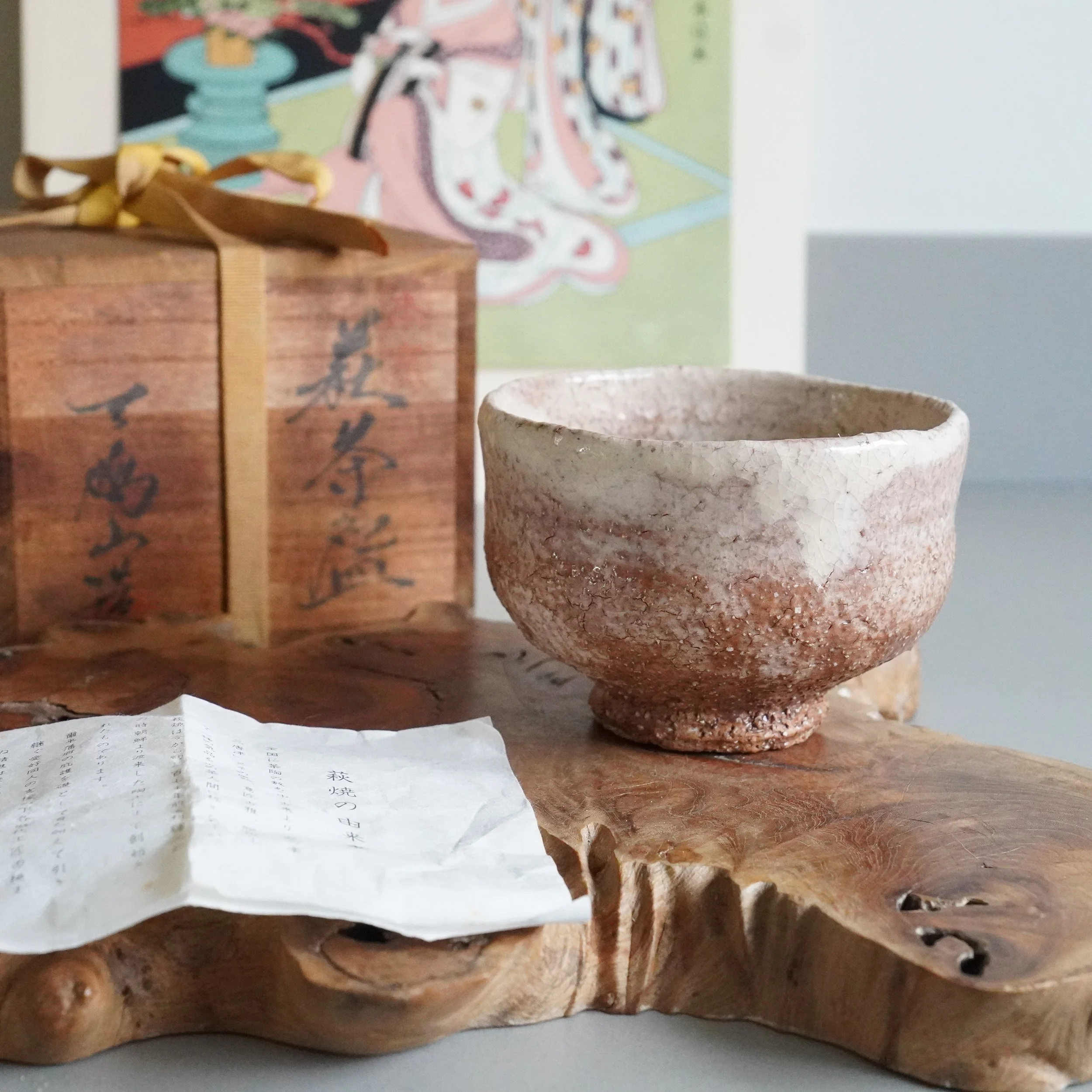
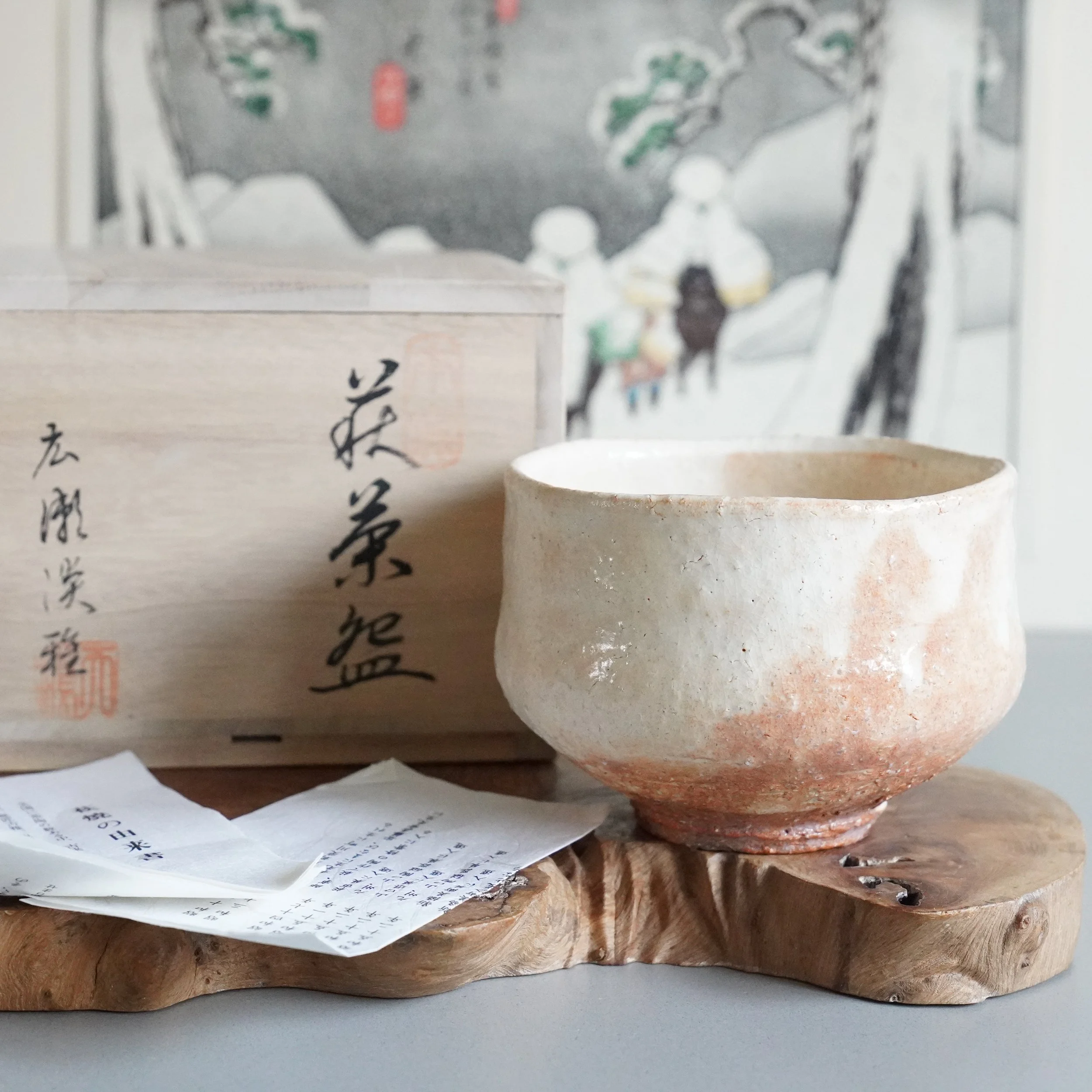
Other Moriwaki Fumitada chawan:
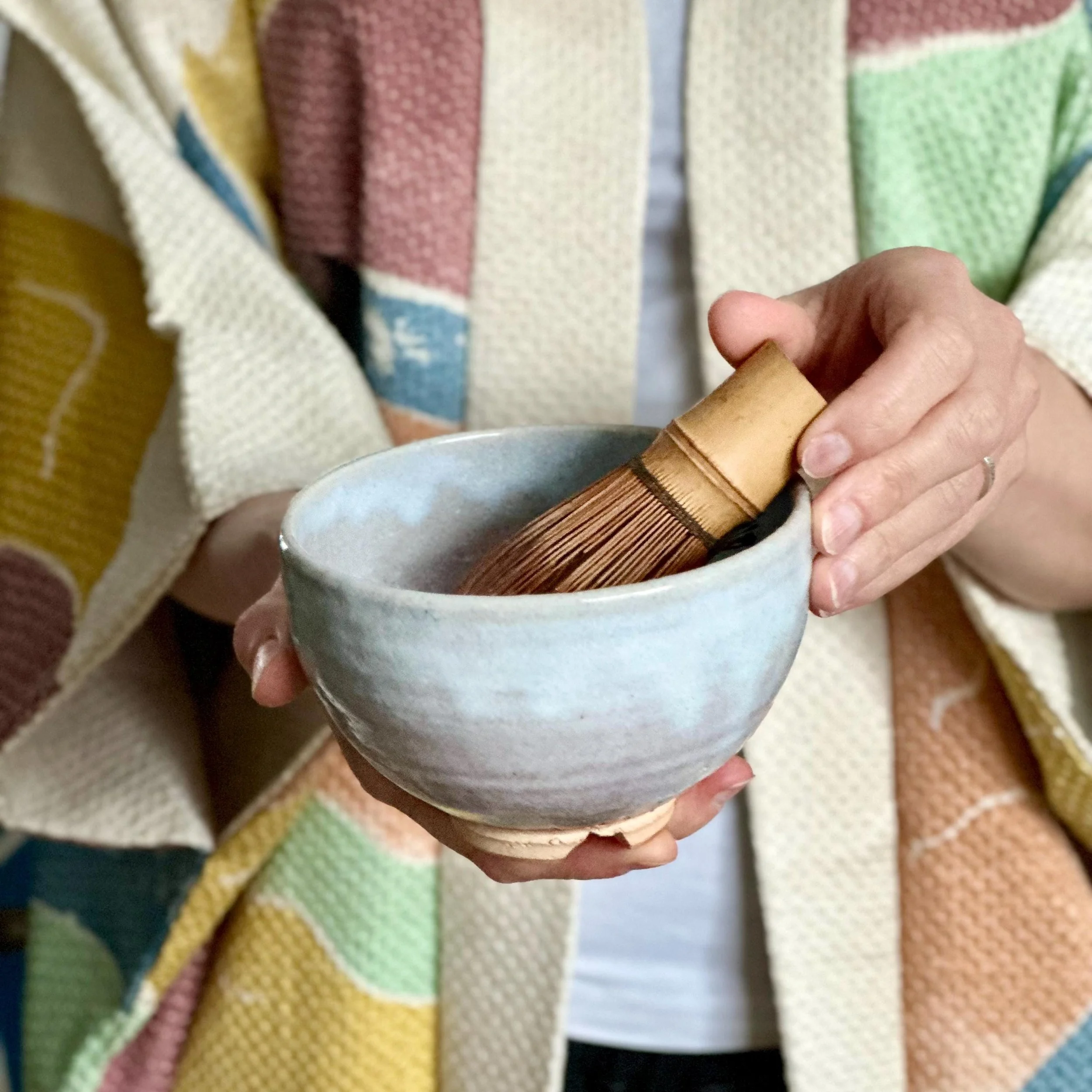
The glaze on this chawan is the quiet kind. Soft white shifting into blue-grey and pale lilac depending on the light, a surface that looks different in morning sun than in lamplight. The form is generous and low, the kind of bowl that settles into both hands rather than sitting in them.
Hagi ware asks to be held. In the tea ceremony it is the object that passes through the most hands, that is turned and considered from every angle, that is meant to reward this kind of attention over years and decades of use.
The porous clay body gradually absorbs tea, shifting slowly in color, deepening where the glaze cracks finest.
Moriwaki Fumitada made this bowl at his Chigiri-gama kiln in Seto, where a decades-long practice in the technical traditions of Japanese ceramics underlies work that carries Hagi-yaki's quieter, more intuitive qualities.
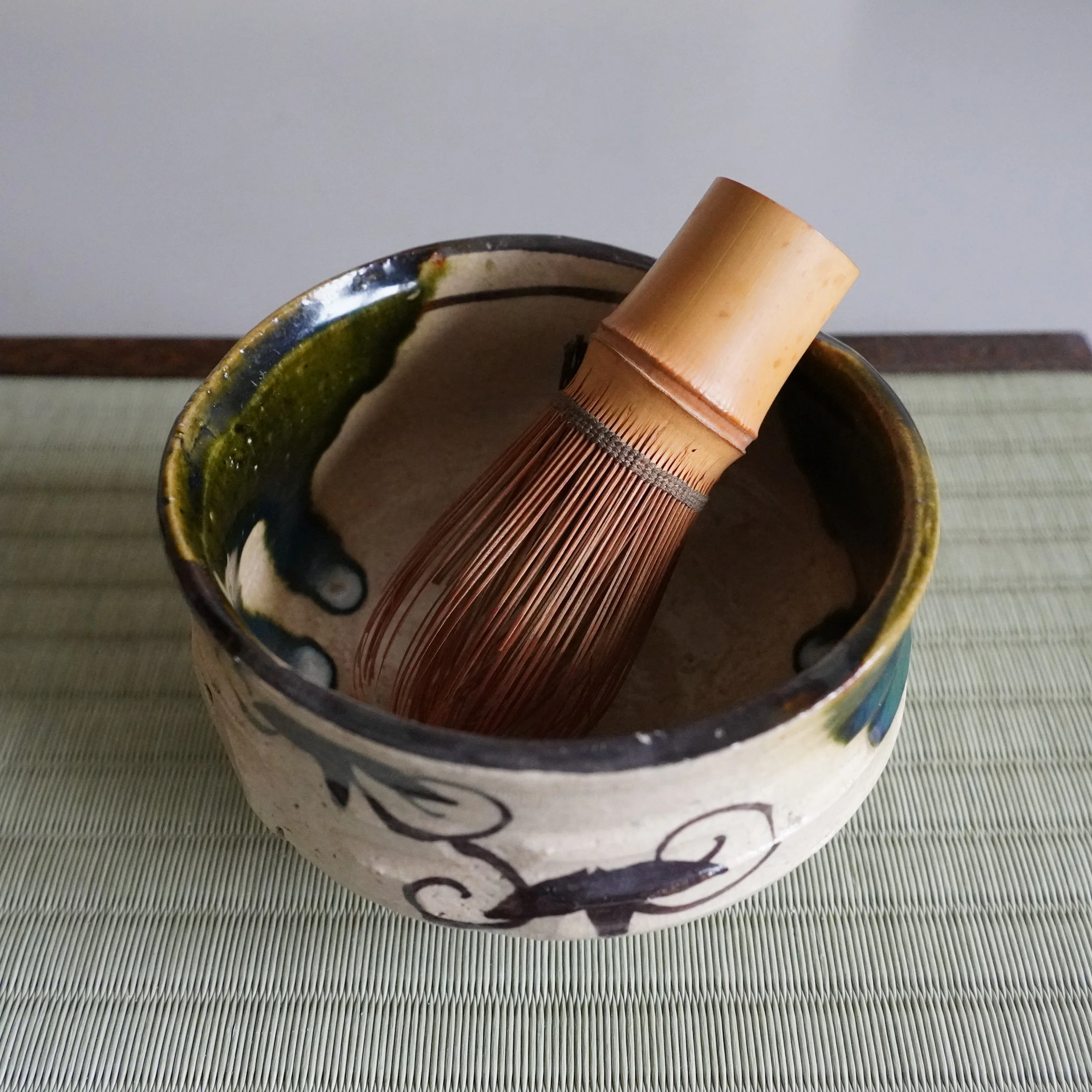
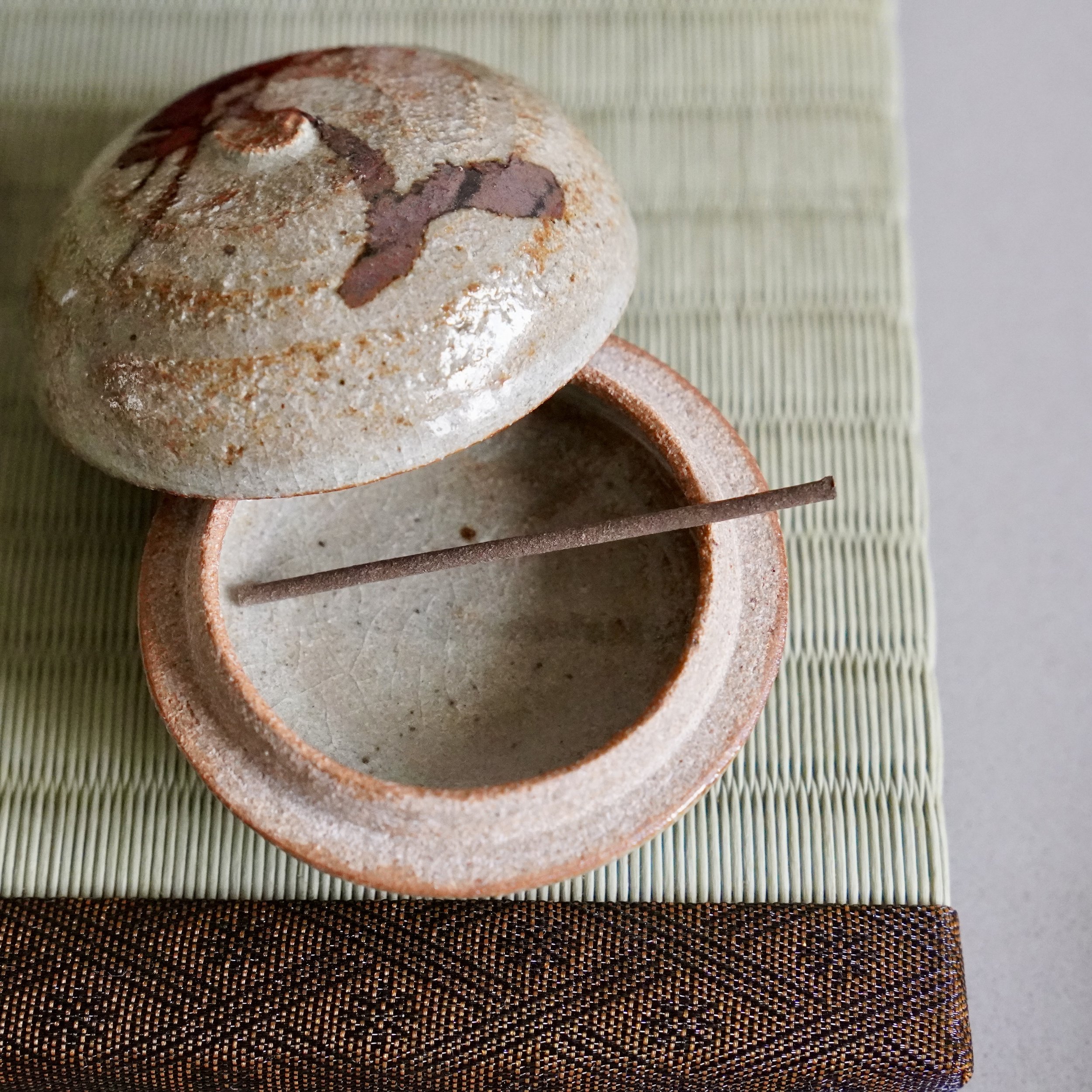
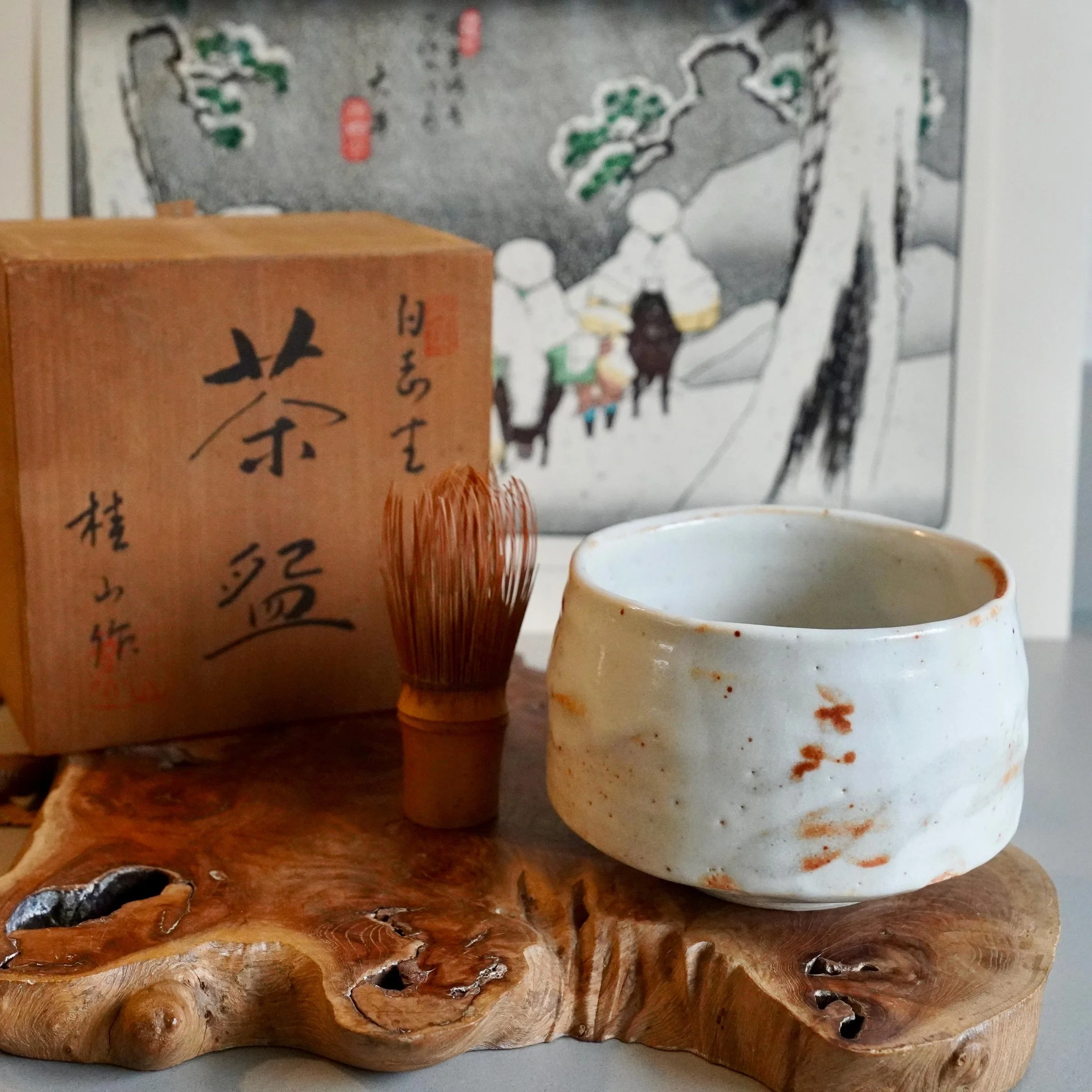
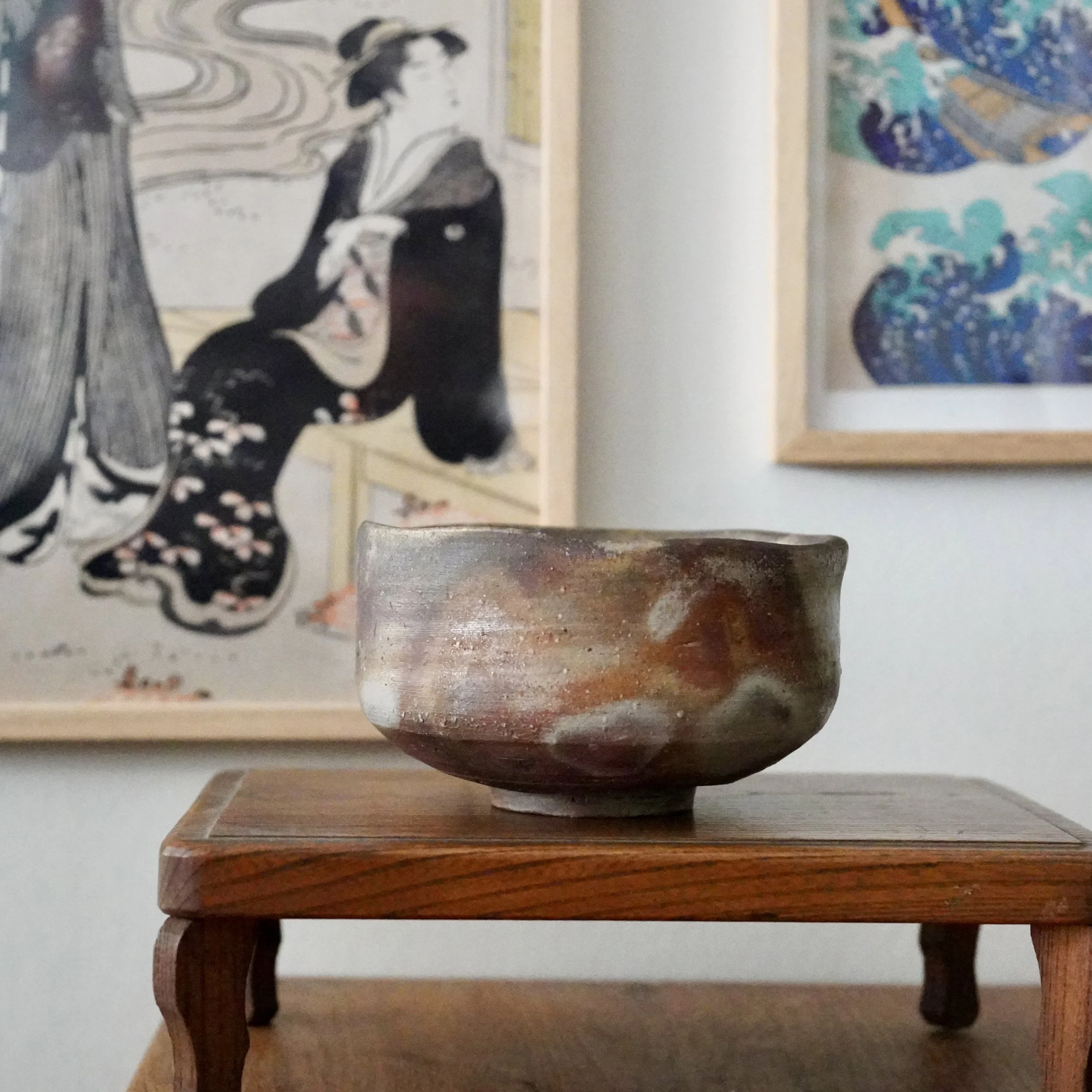
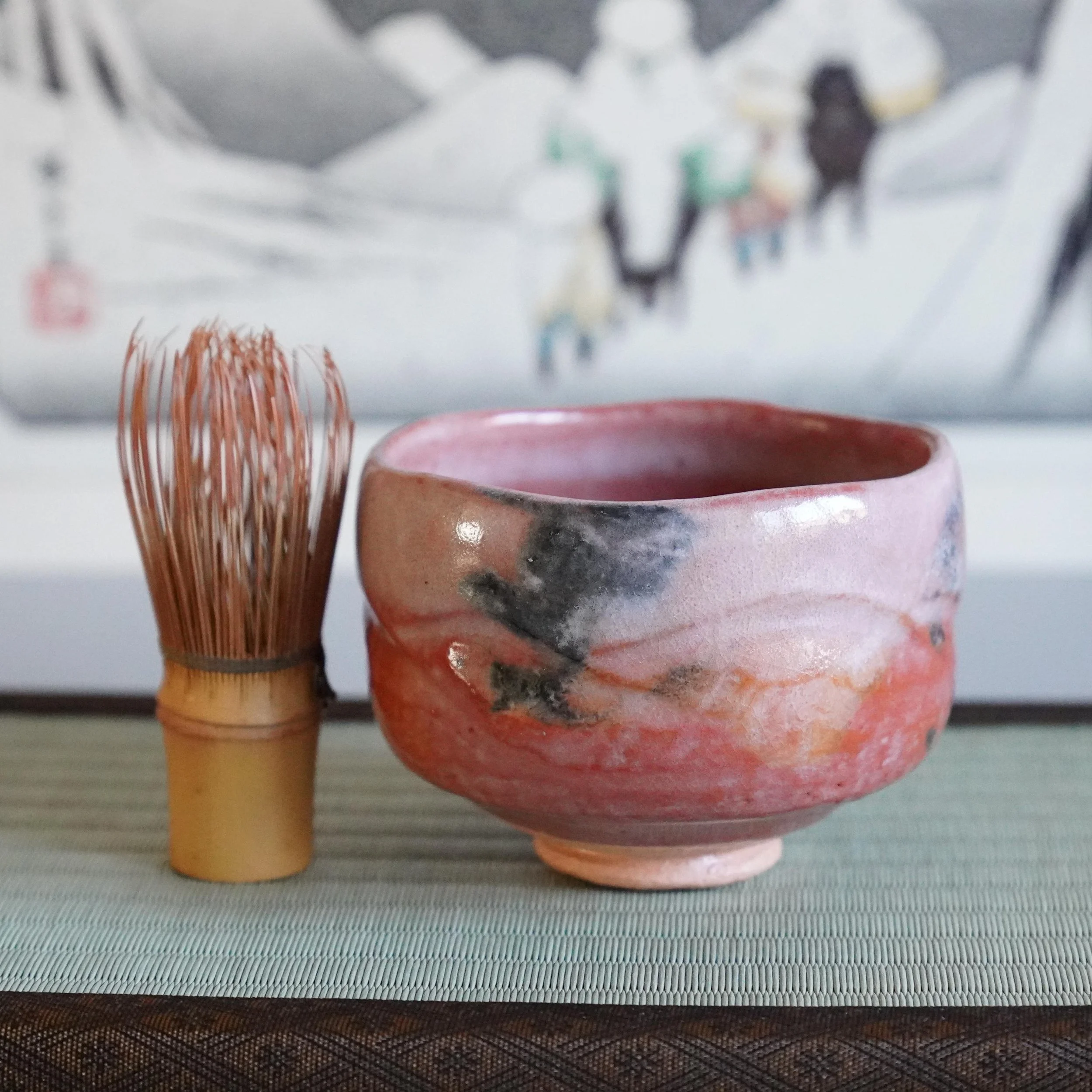
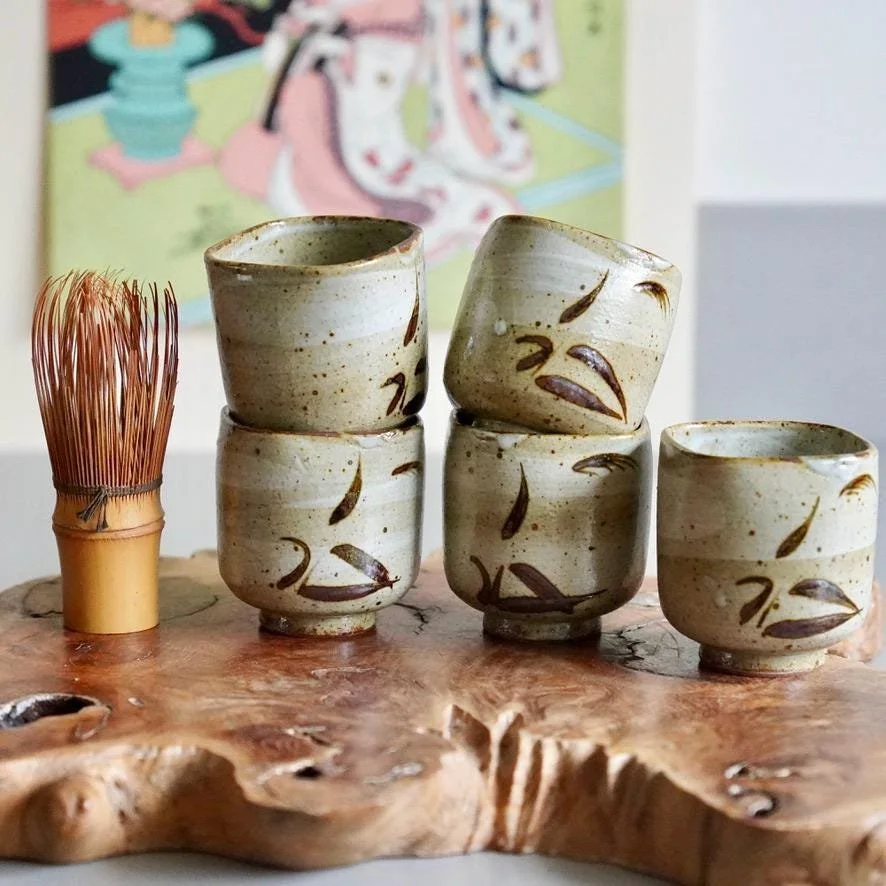
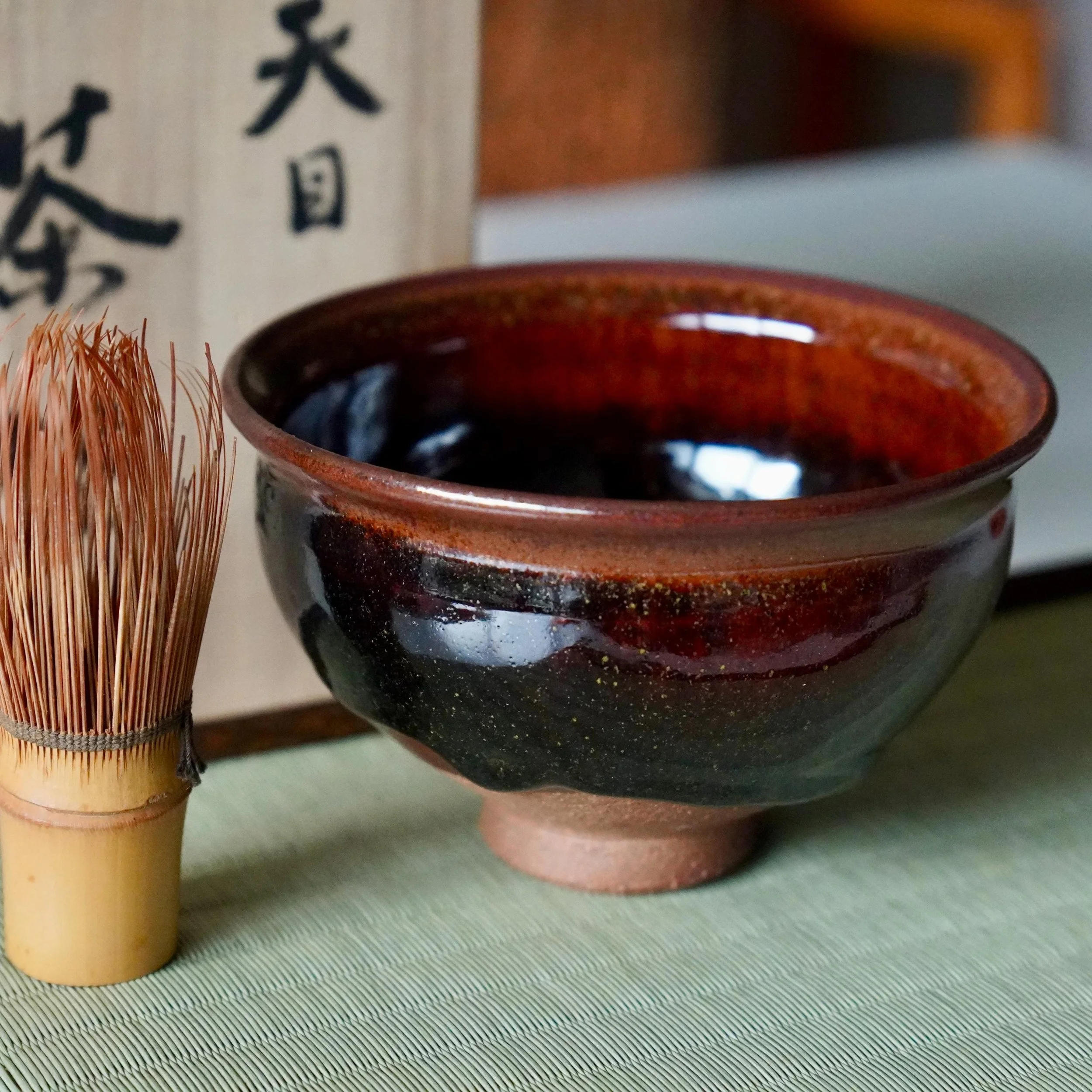
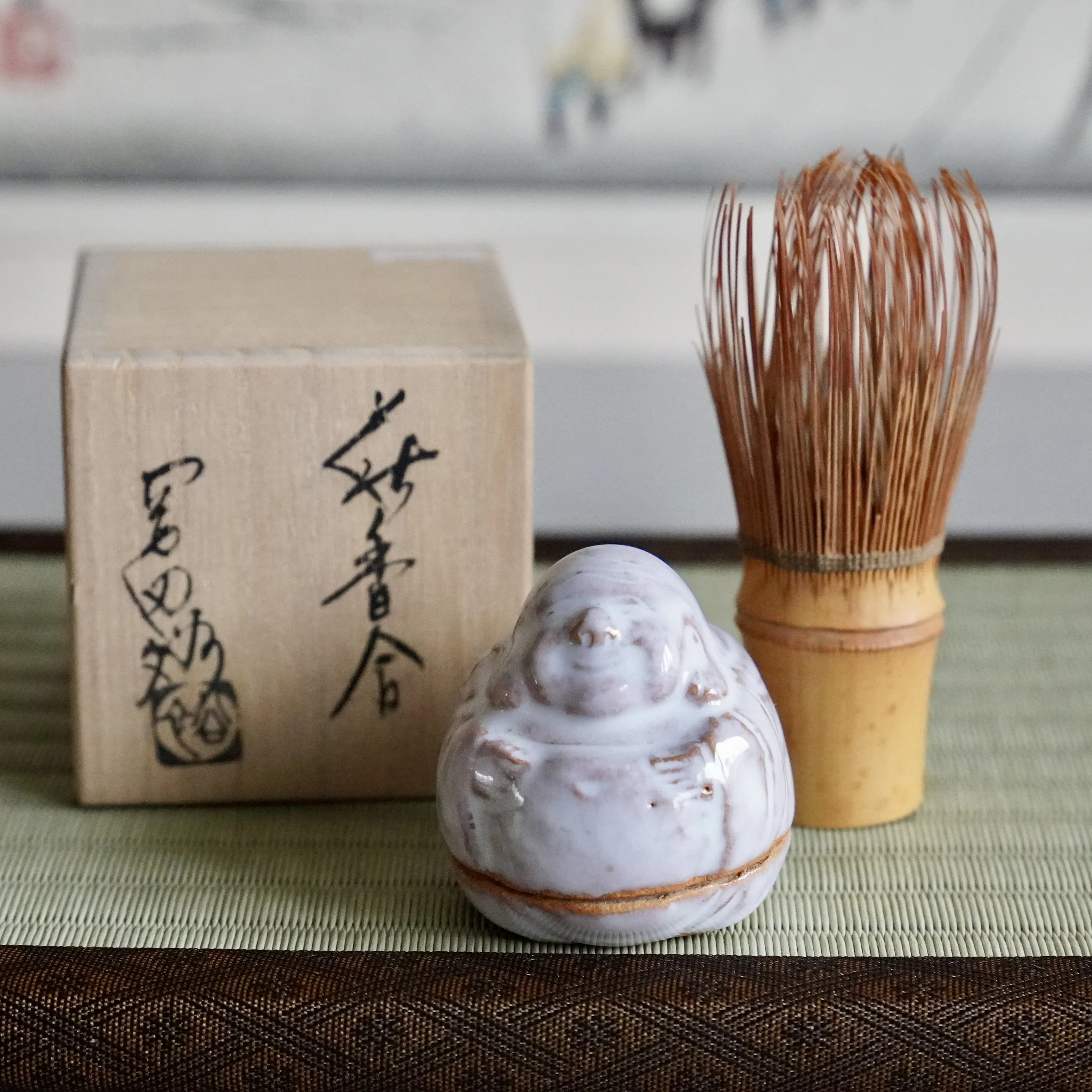
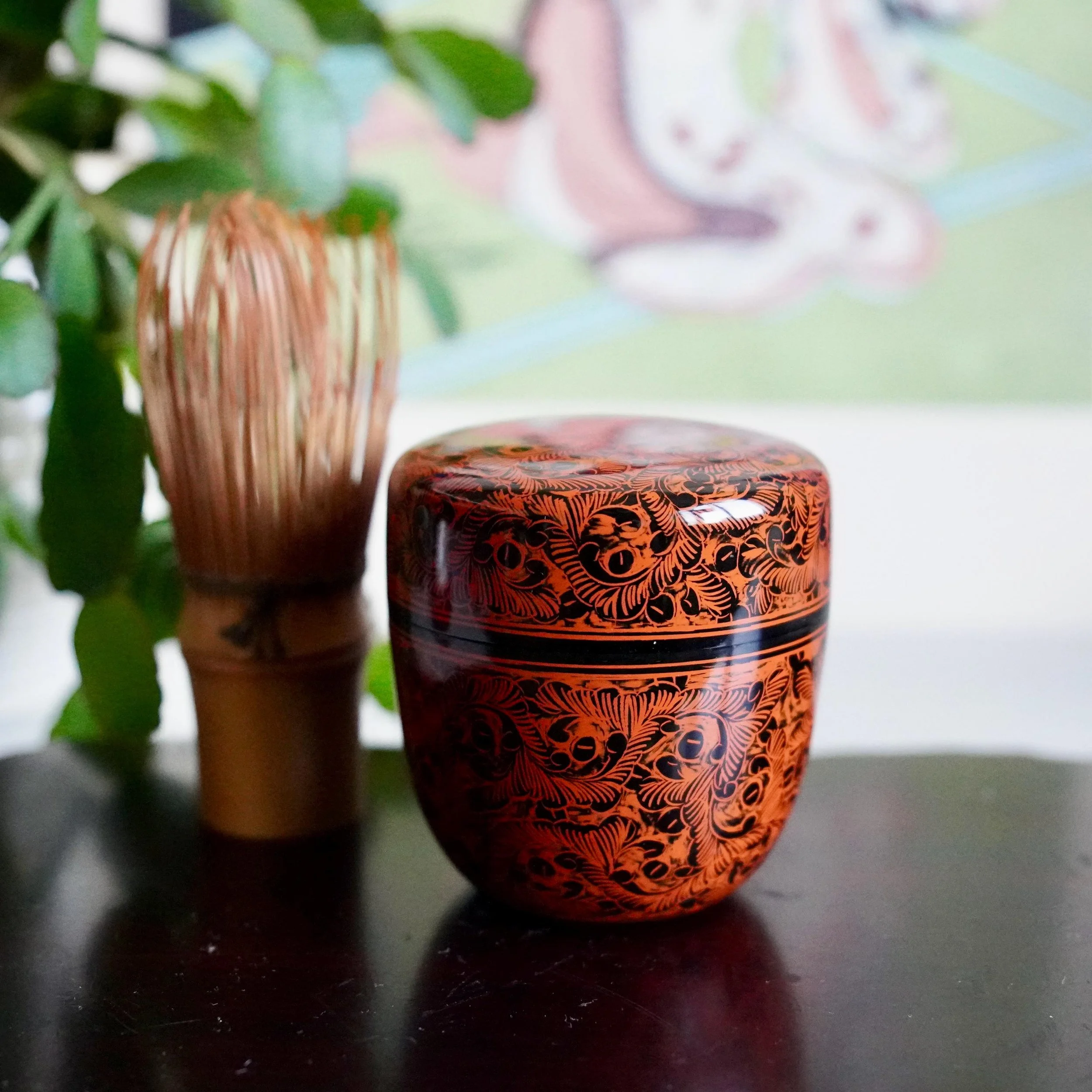
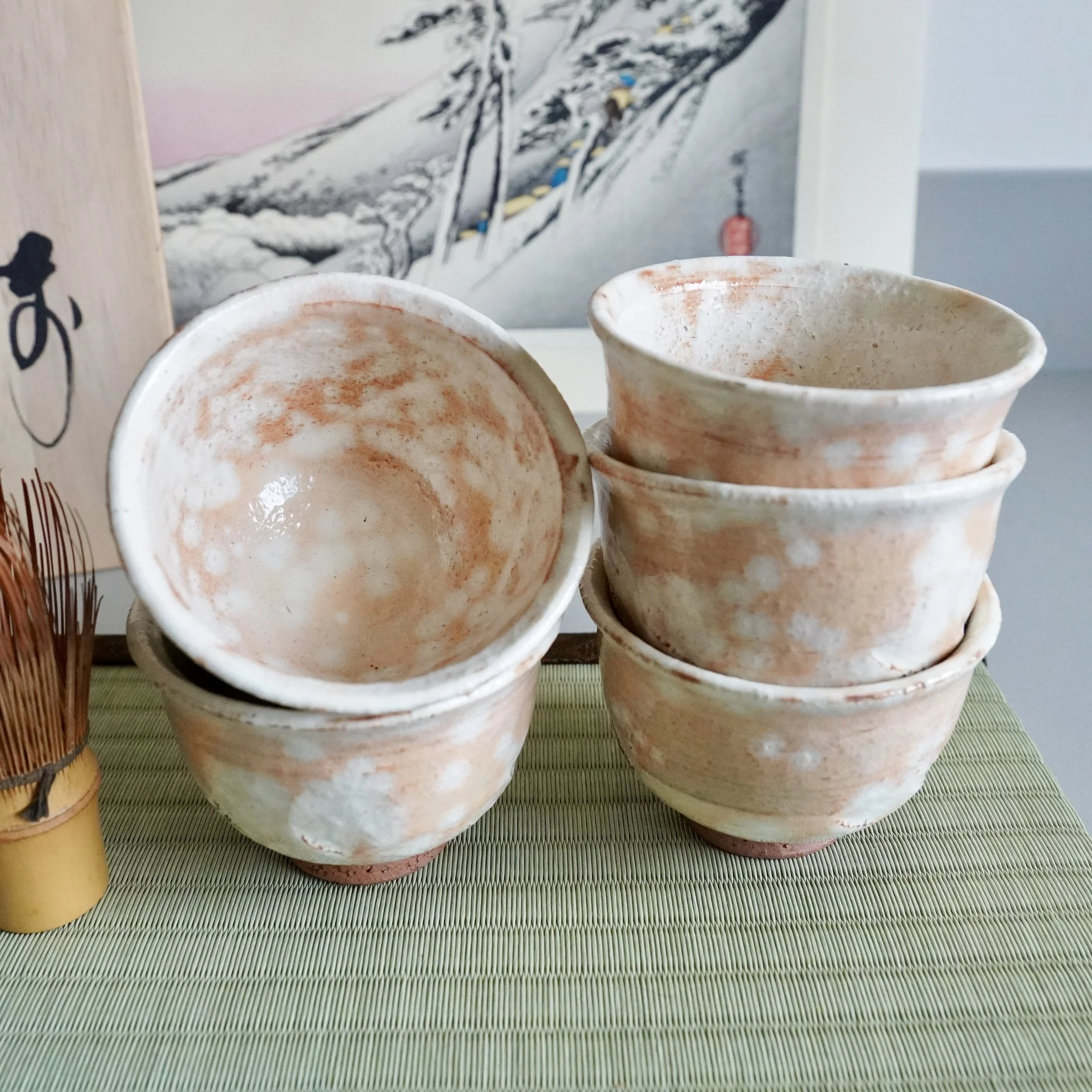
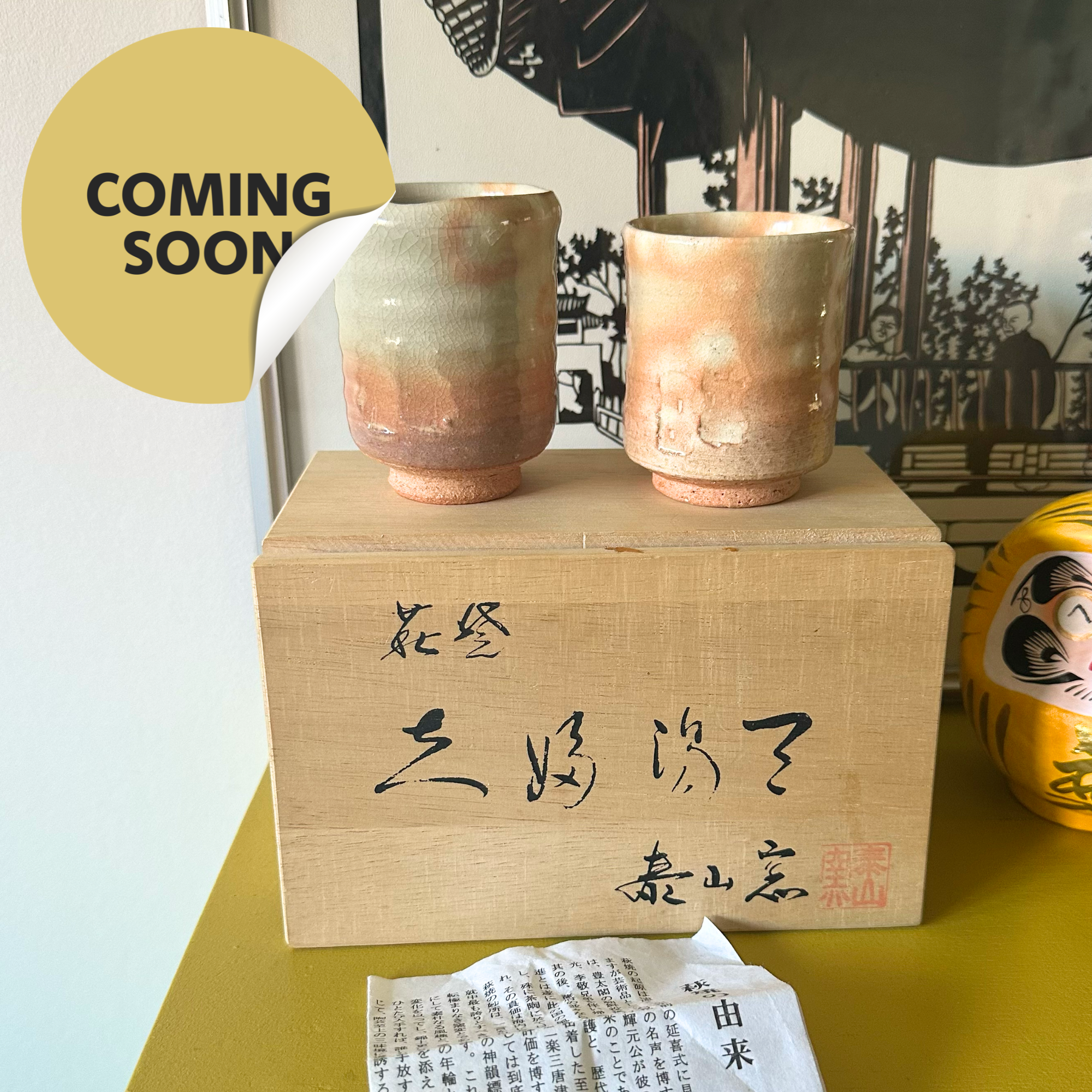
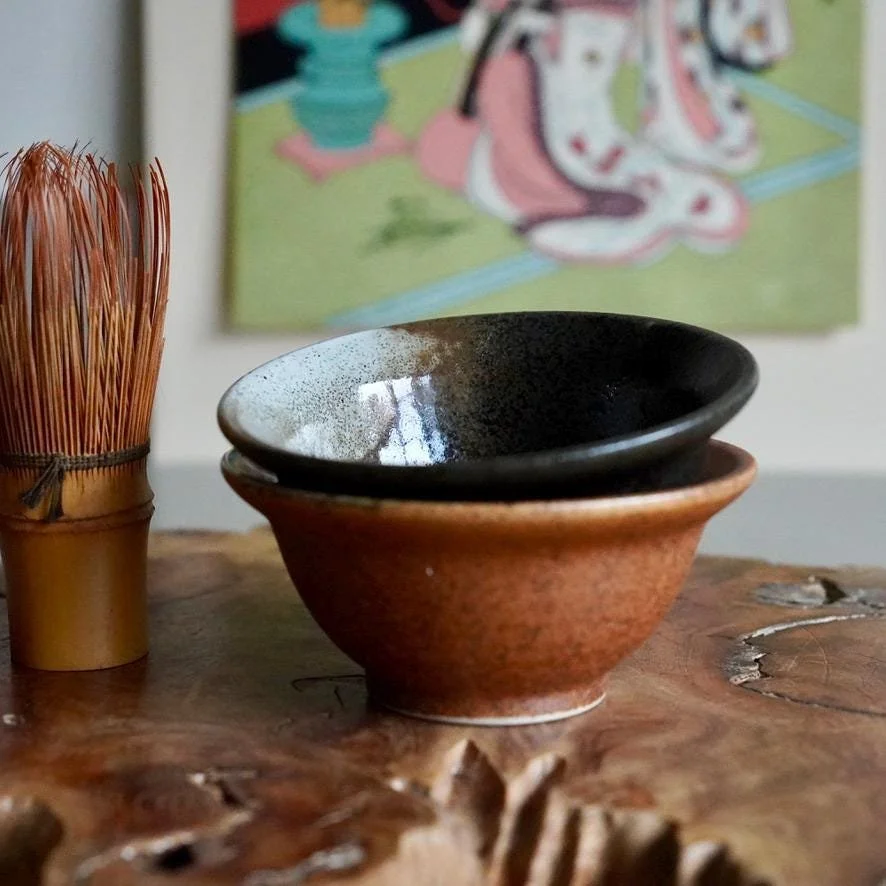
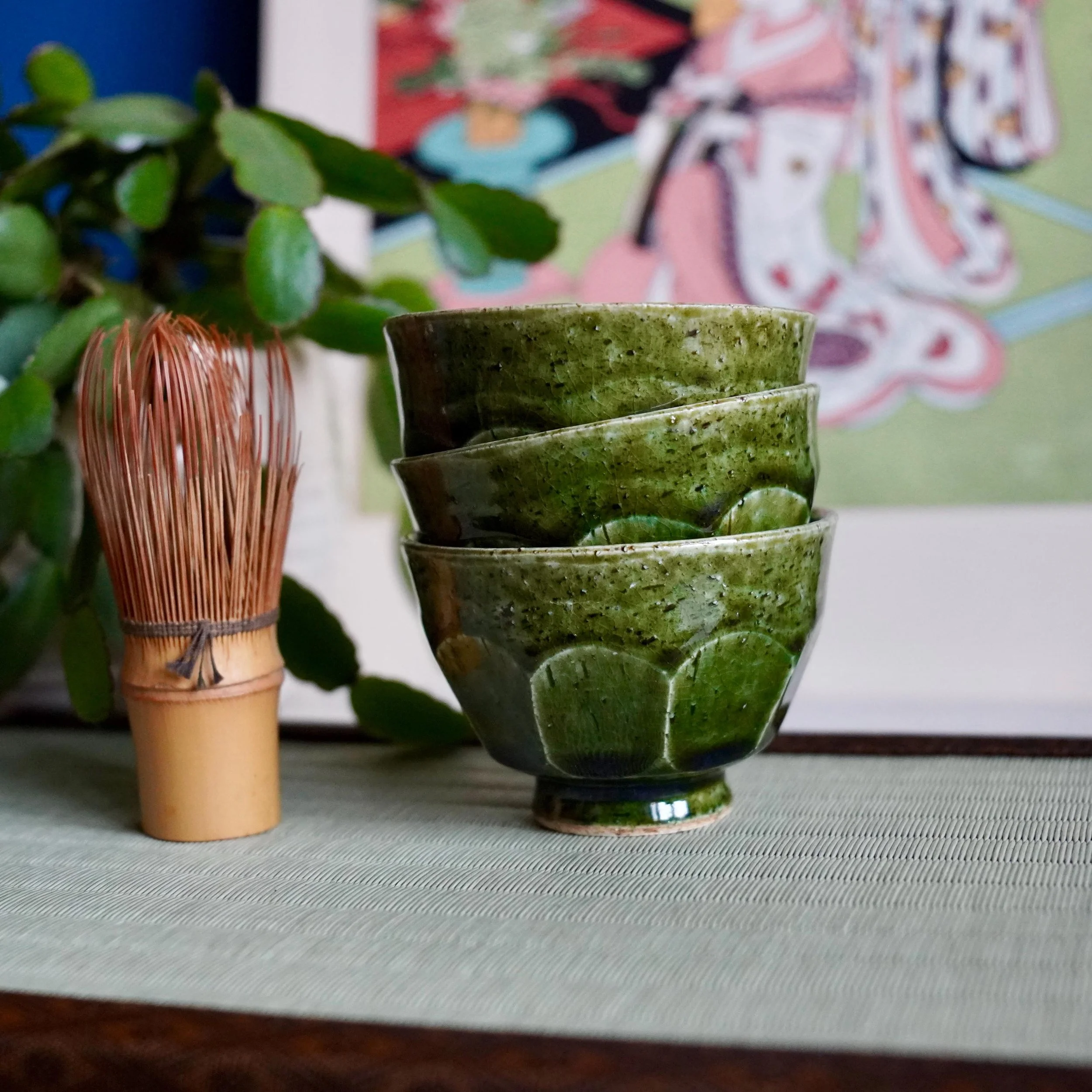
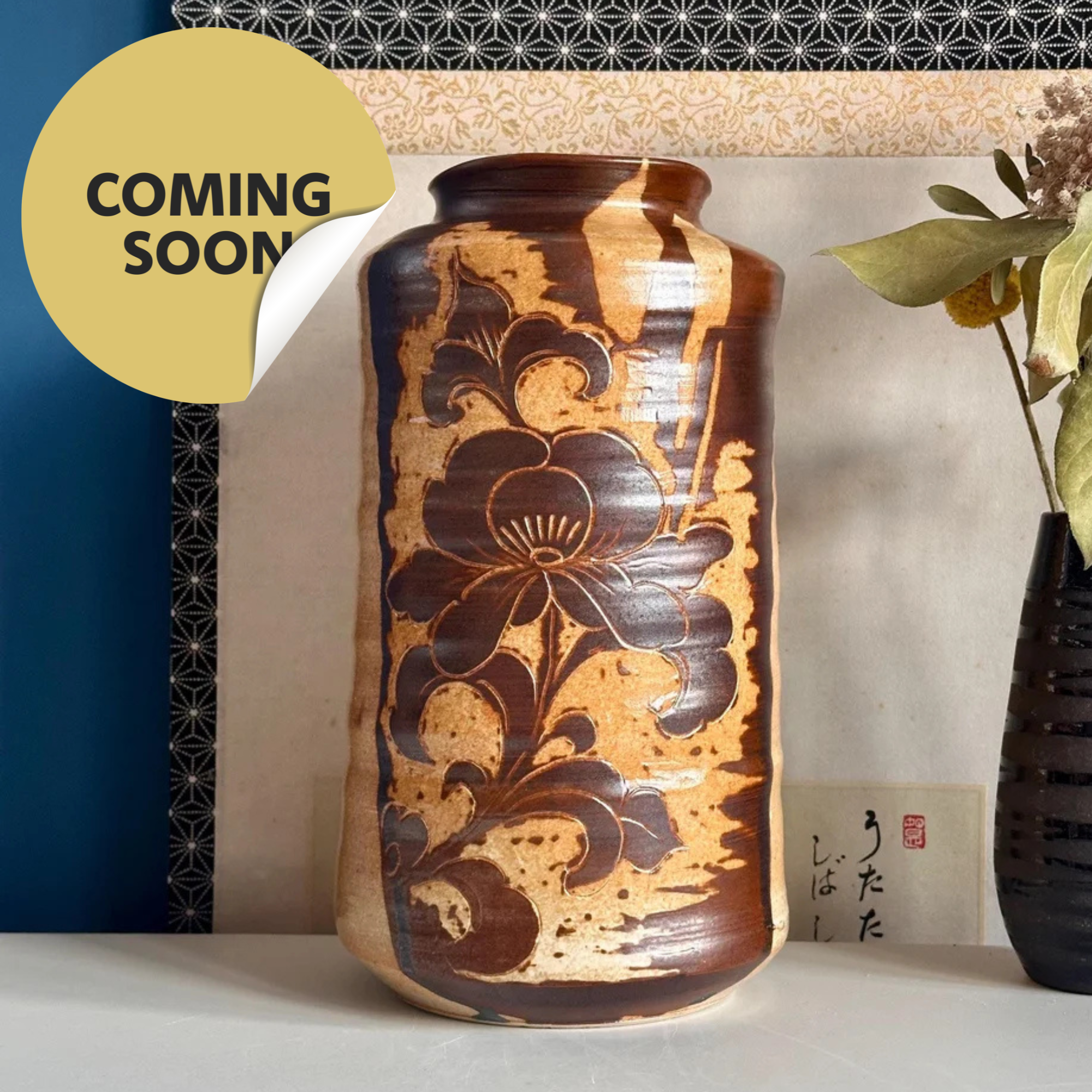
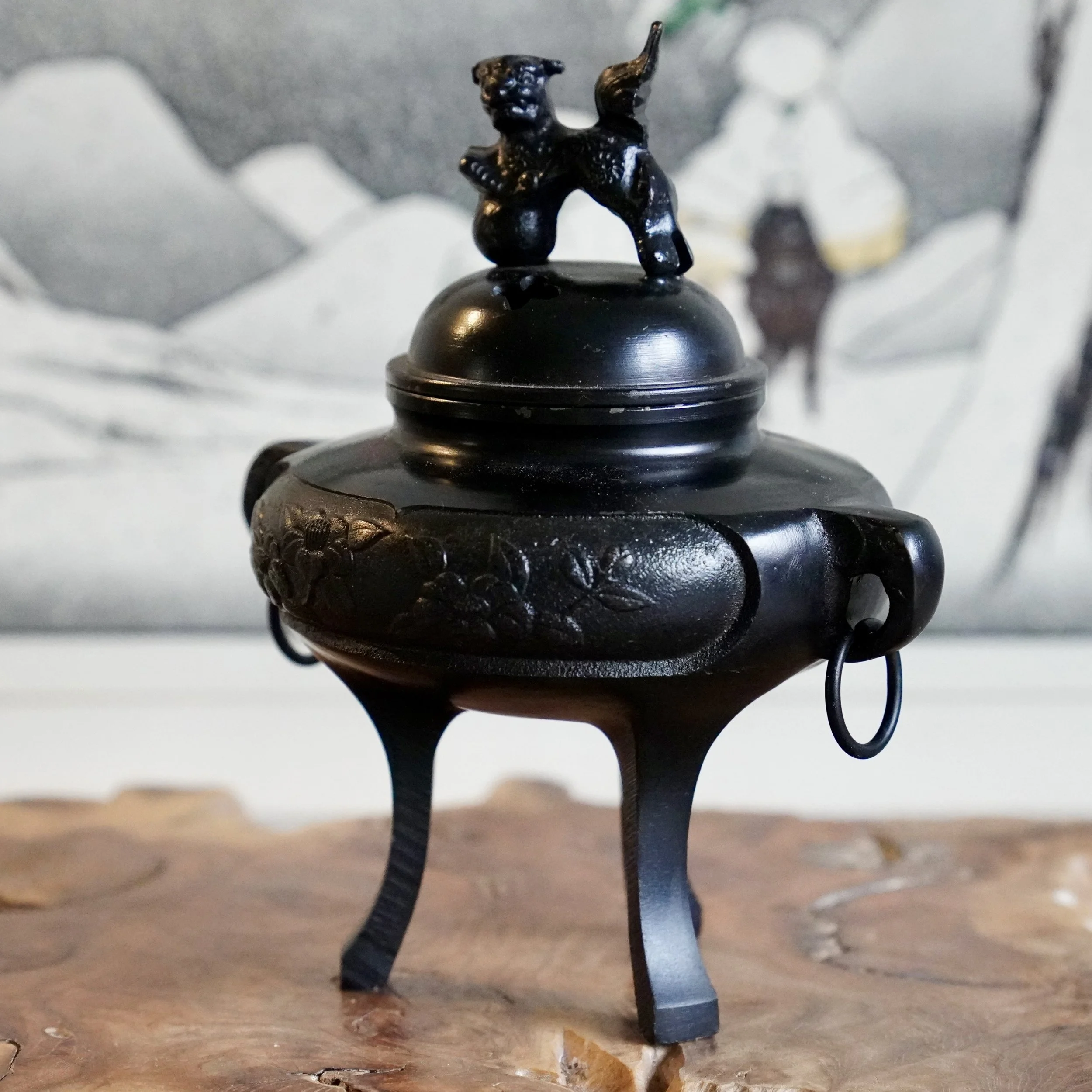
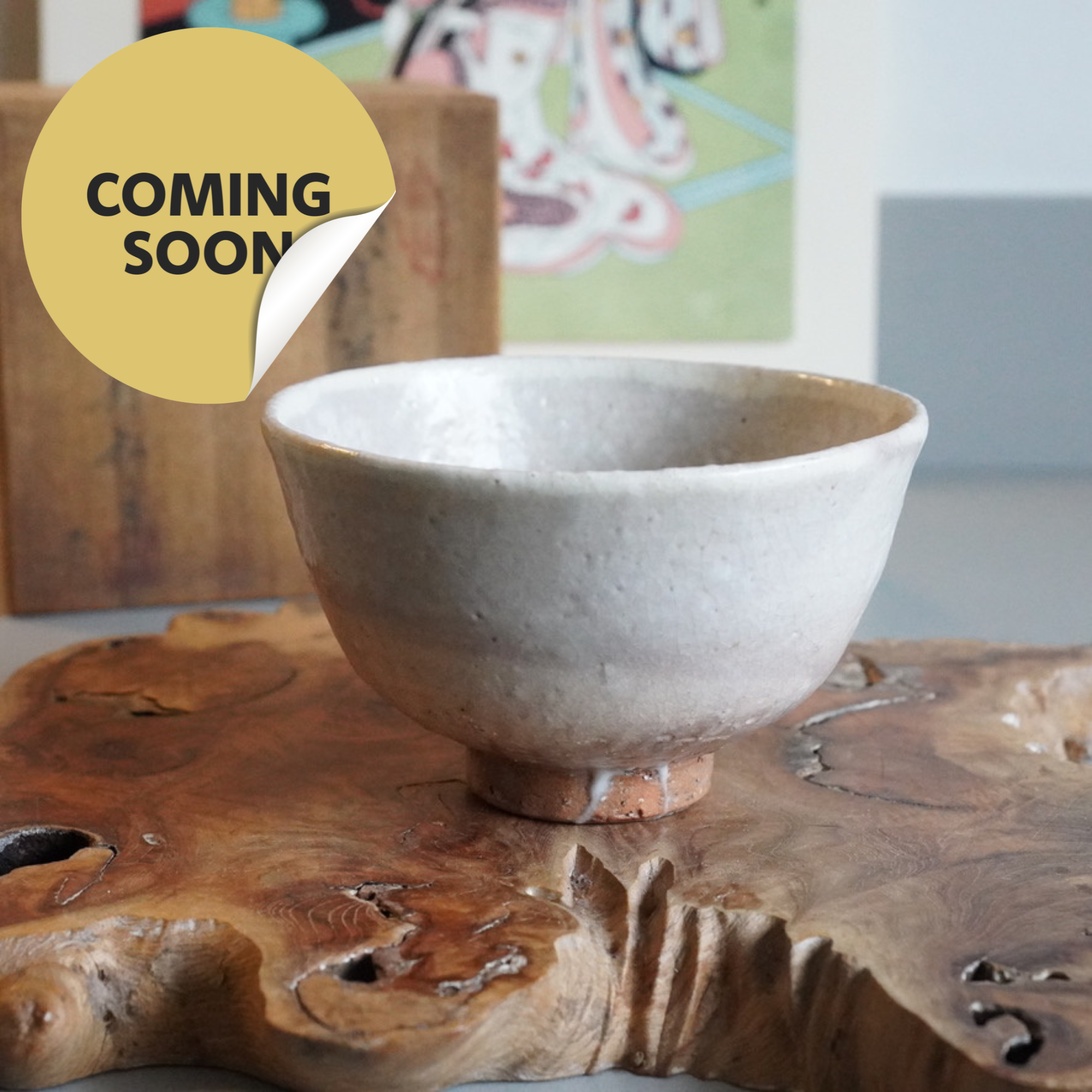
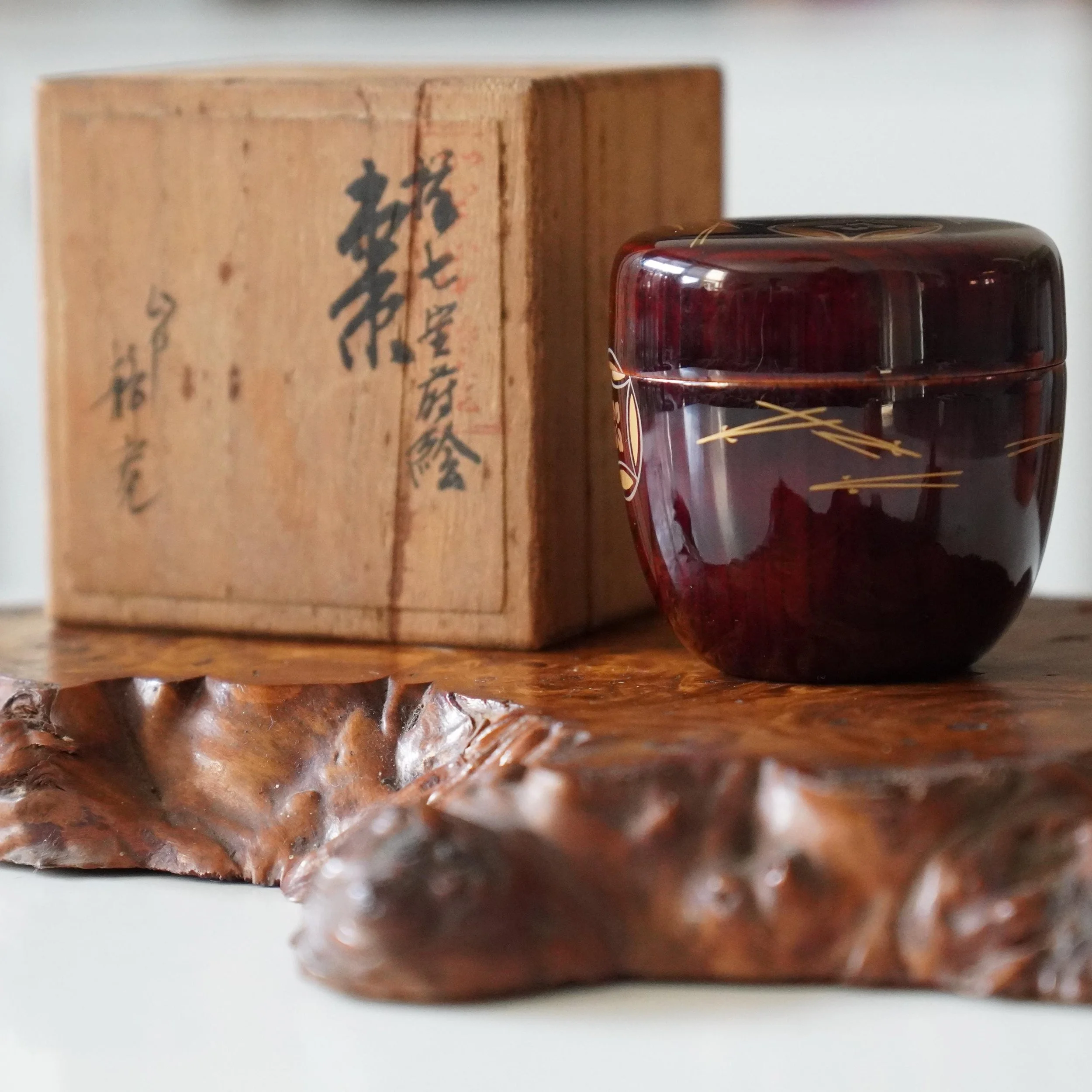
Meet our other tea ceremony items
Questions before you buy?
Since my items are one-of-a-kind pieces, I want to ensure they reach you perfectly.
Questions about the history or condition?
Need a custom shipping quote or shipping outside the EU?
Prefer to see more detailed photos or a video?
Reach out to me directly. I'm here to help you find the perfect piece for your home.
✉️ hello@kaikoandco.com
💬 Instagram DM: @bykaikoandco