
Bizen-yaki: the Okayama tradition without glaze
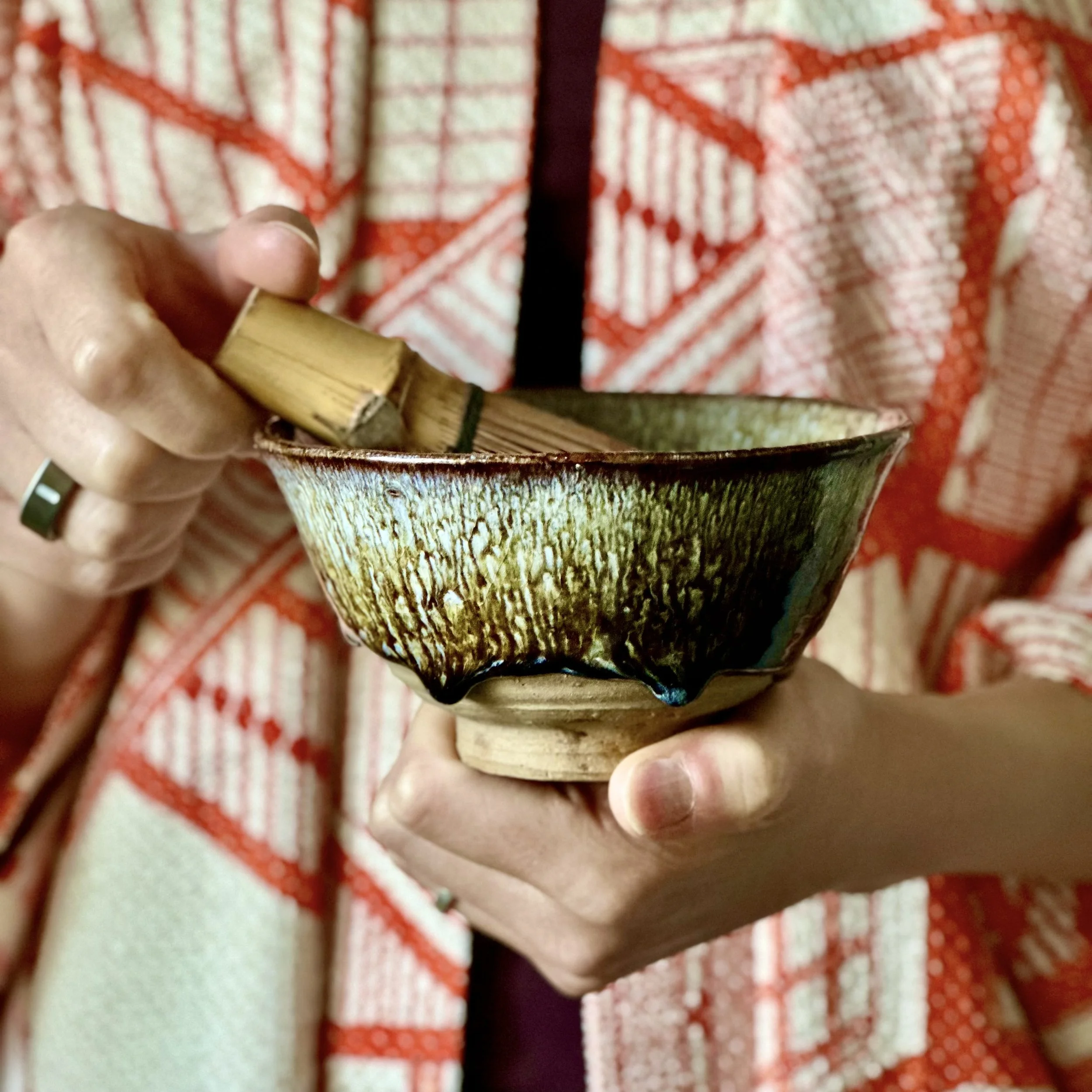
Bizen-yaki is one of Japan's six ancient kiln traditions, made without glaze since the Kamakura period, roughly 800 years ago, in Imbe, Okayama Prefecture. All surface color and pattern comes from the kiln itself: hidasuki (scarlet lines from rice straw wrapped around the piece), goma (sesame-seed-like ash deposits), sangiri (blue-grey to black from a reduced-oxygen firing), and shiro-Bizen (white clay with red hiiro marks where flame touched it directly). A single firing takes ten to fourteen days.
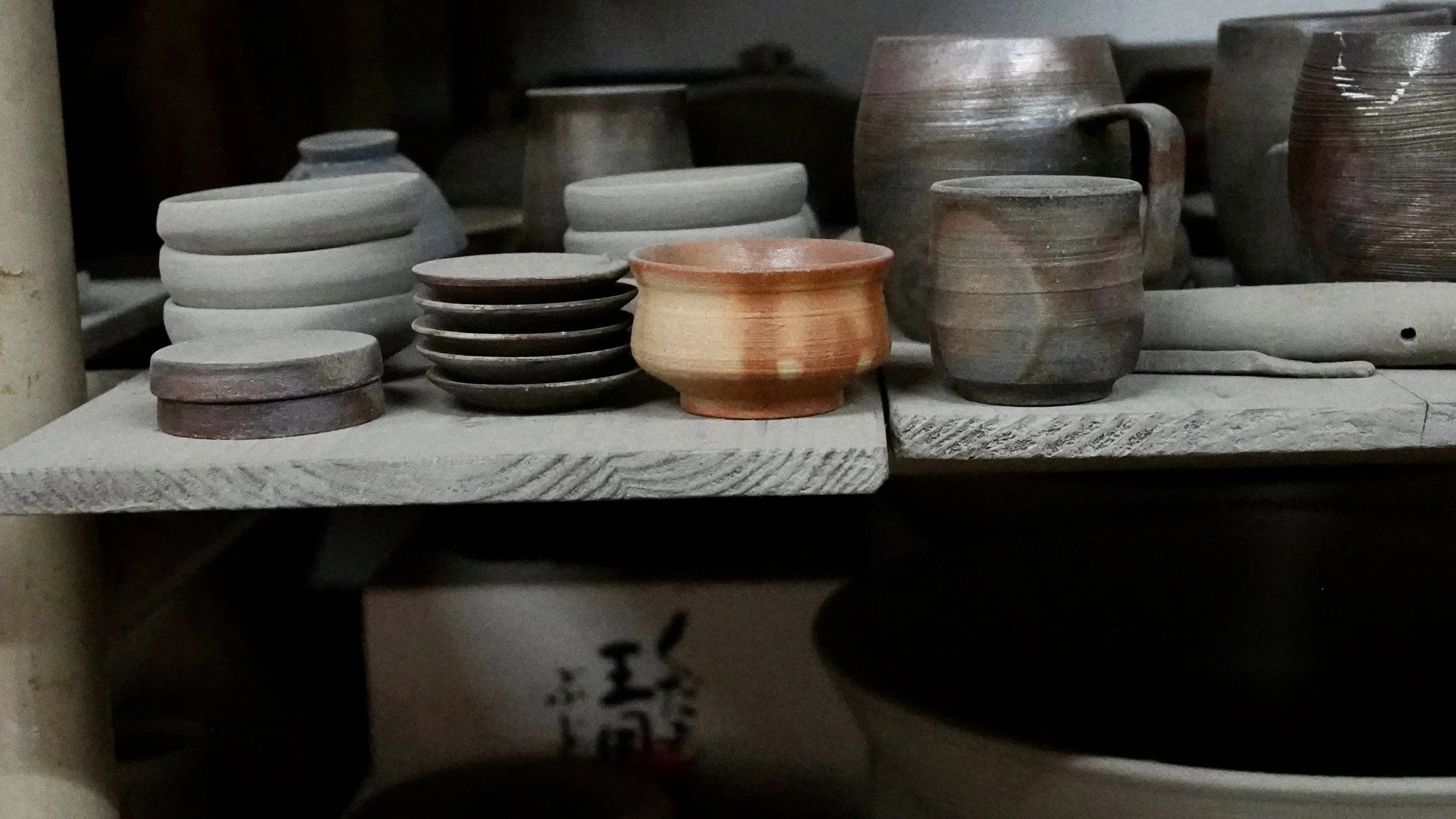
Everything that happens to the surface of a Bizen piece happens in the kiln, through the interaction of clay, fire, ash, and whatever the potter has placed around or on the piece before loading. The result is called yōhen, kiln effects, and it is the entire vocabulary of Bizen surface work.
This means that the styles of Bizen are not glaze colors chosen from a palette. They are outcomes of specific firing conditions: some deliberately created, some encouraged but never fully controlled, some discovered by accident and then repeated for centuries because the result was beautiful.
Understanding the styles means understanding what was happening inside the kiln when that specific piece was made.
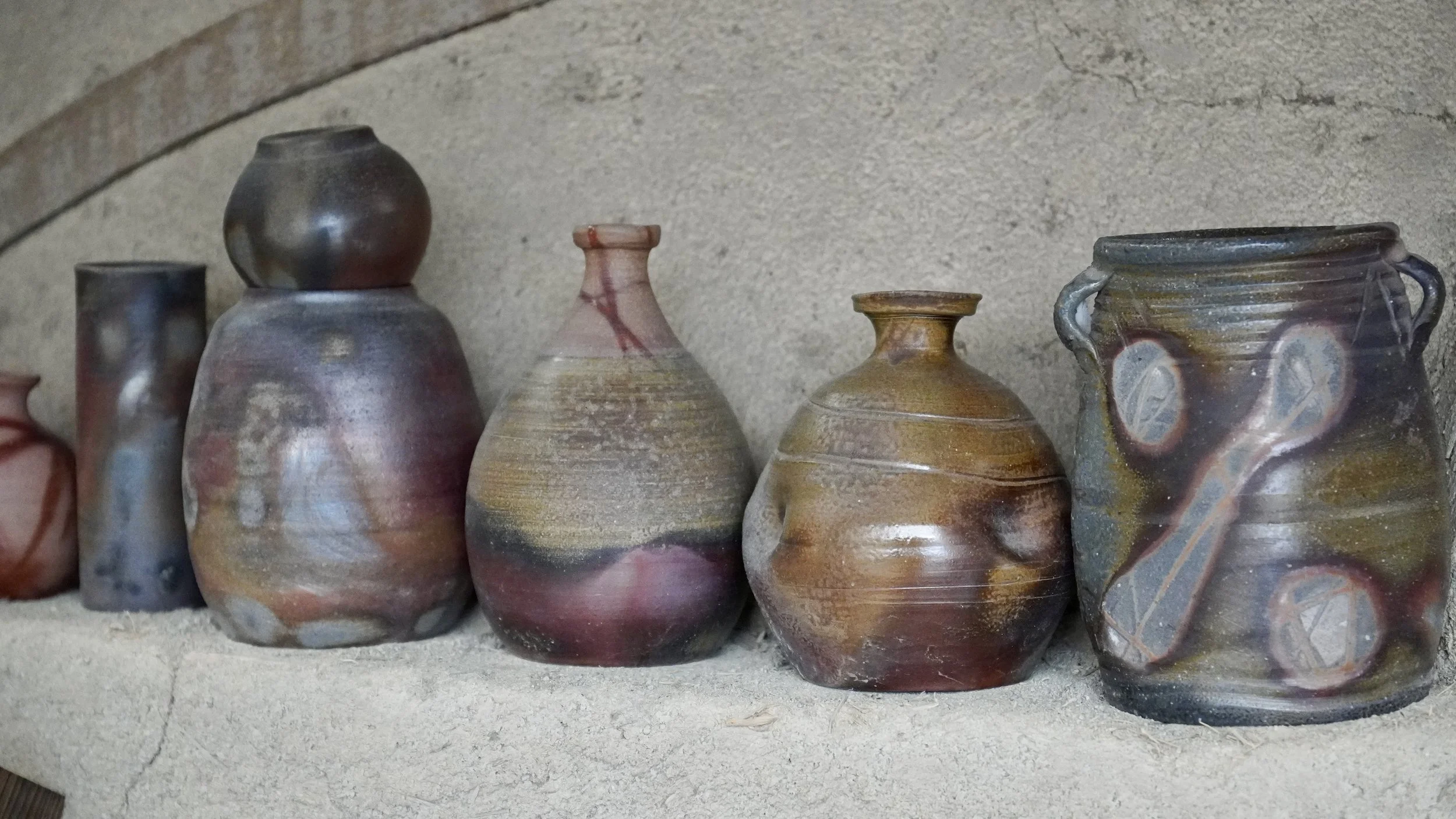
Bizen-yaki ceramics lined up on the edge of a noborigama kiln in Imbe Okayama Japan, showing kiln effects side by side
Bizen is one of Japan's six ancient kilns, with continuous production since the Kamakura period roughly eight hundred years ago. The clay, called hiyose, is dug from rice fields in the Imbe area of Okayama Prefecture three to five meters underground. After digging it is left outside exposed to wind and rain for one to two years before processing begins. This is not optional. The clay needs that time to become workable. The total preparation from ground to wheel is measured in years, not weeks.
Because there is no glaze to cover anything, the clay is everything. Every quality of the finished piece, its color, its texture, its response to fire and ash, comes directly from the clay body and from where that piece was positioned in the kiln for ten to fourteen days of continuous wood firing.
Here is what the main Bizen styles actually are and how they are made.
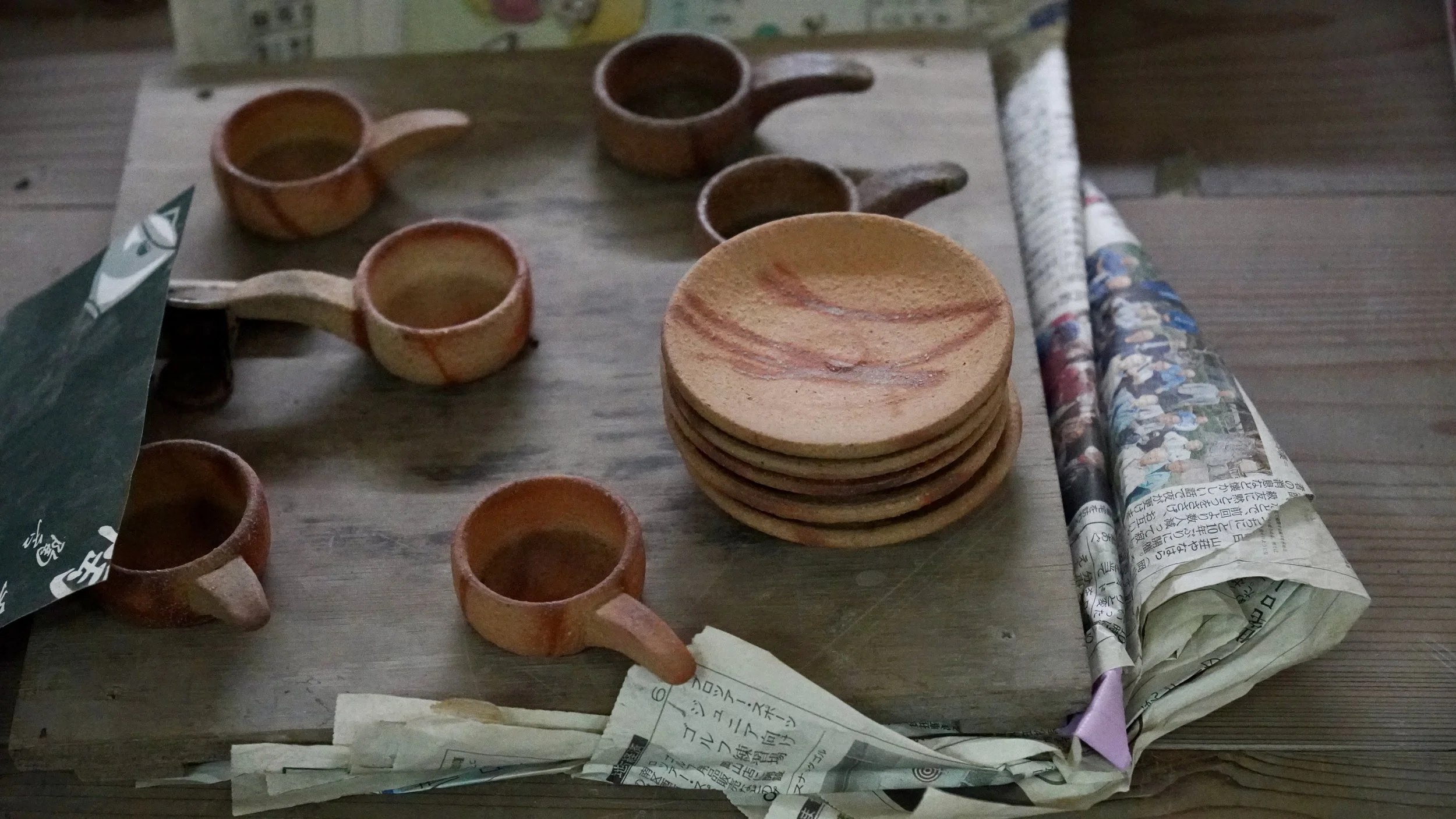
Hidasuki: the scarlet lines
Hidasuki is the most recognized Bizen style, and its origin was an accident.
The characteristic red, orange, and vermilion lines running across the surface look as though they were painted with a brush. They were not. Rice straw is wrapped around the piece before it is loaded into the kiln. During the long firing, a chemical reaction occurs between the alkalines in the straw and the iron in the clay, producing the scarlet marks. The straw itself burns away completely. What remains are its traces, fixed permanently into the clay surface at high temperature.
Potters originally wrapped straw around pieces simply to stop them sticking together in the kiln during firing. The marks were noticed, recognized as beautiful, and from that point on the technique became intentional. The straw is now soaked in salted water before use and wrapped in deliberate patterns to influence where the lines fall. But influence is not control. The final result depends on where the piece sat, how the flame moved around it, and how the straw and clay interacted at that specific temperature in that specific firing.
Hidasuki pieces tend to have a warm, pale clay ground with the red lines crossing it. On pieces placed close to the firebox the ground deepens to orange or amber from the intensity of the heat. No two hidasuki pieces carry the same marks.
Goma: the sesame seeds
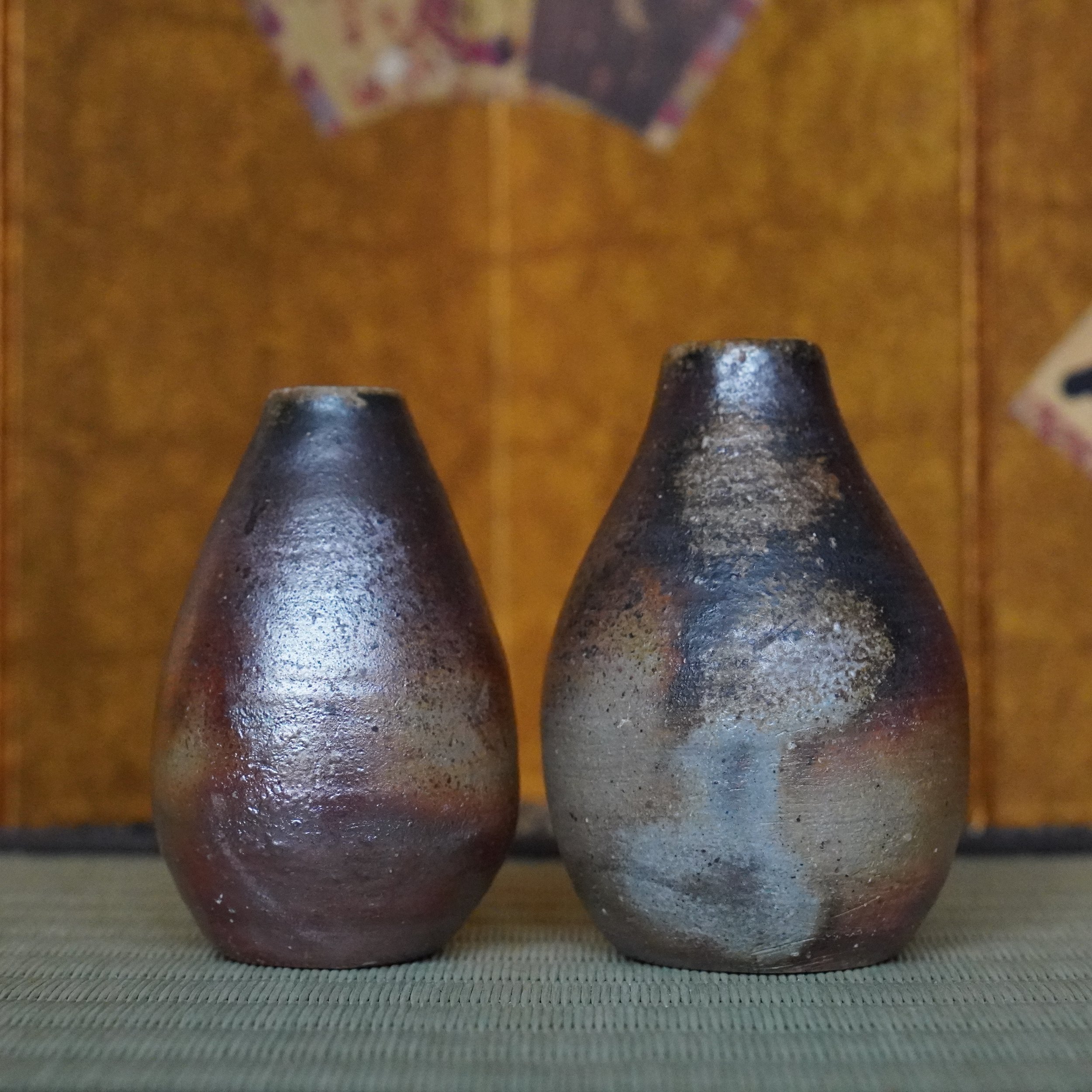
Bizen-yaki vases with goma tamadare pooled ash deposits in ochre-gold on dark red-brown yakishime clay, wood-fired unglazed stoneware Imbe Okayama Japan
Goma means sesame seeds in Japanese, and the name is exactly right. Small dots and patches of glassy, warm ochre to brown deposit scattered across the surface: that is what pine ash looks like when it lands on clay at over 1200 degrees Celsius, melts, and fuses in place as the kiln cools.
During the ten to fourteen days that a Bizen kiln burns, pine ash is constantly becoming airborne inside the kiln and settling on whatever surfaces face the flow. Where it lands in quantity it melts into a glossy deposit. Where it lands lightly it leaves a faint shimmer. Where it pools and runs before solidifying it leaves a drip, called tamadare, a falling drop.
Goma is most abundant on pieces placed close to the firebox, where the most ash travels. Pieces further back in the kiln receive less. The distribution of goma on a piece is therefore a record of its position during the firing, how far it was from the fire, how directly it faced the ash flow.
A lightly gomad piece has a dusting of warm ochre dots against the clay. A heavily gomad piece can be almost entirely coated in thick, glassy deposits in colors ranging from pale yellow to deep brown to occasional greens where the ash chemistry produced something different. Both are correct. The variation is the point.
Sangiri: the dark one
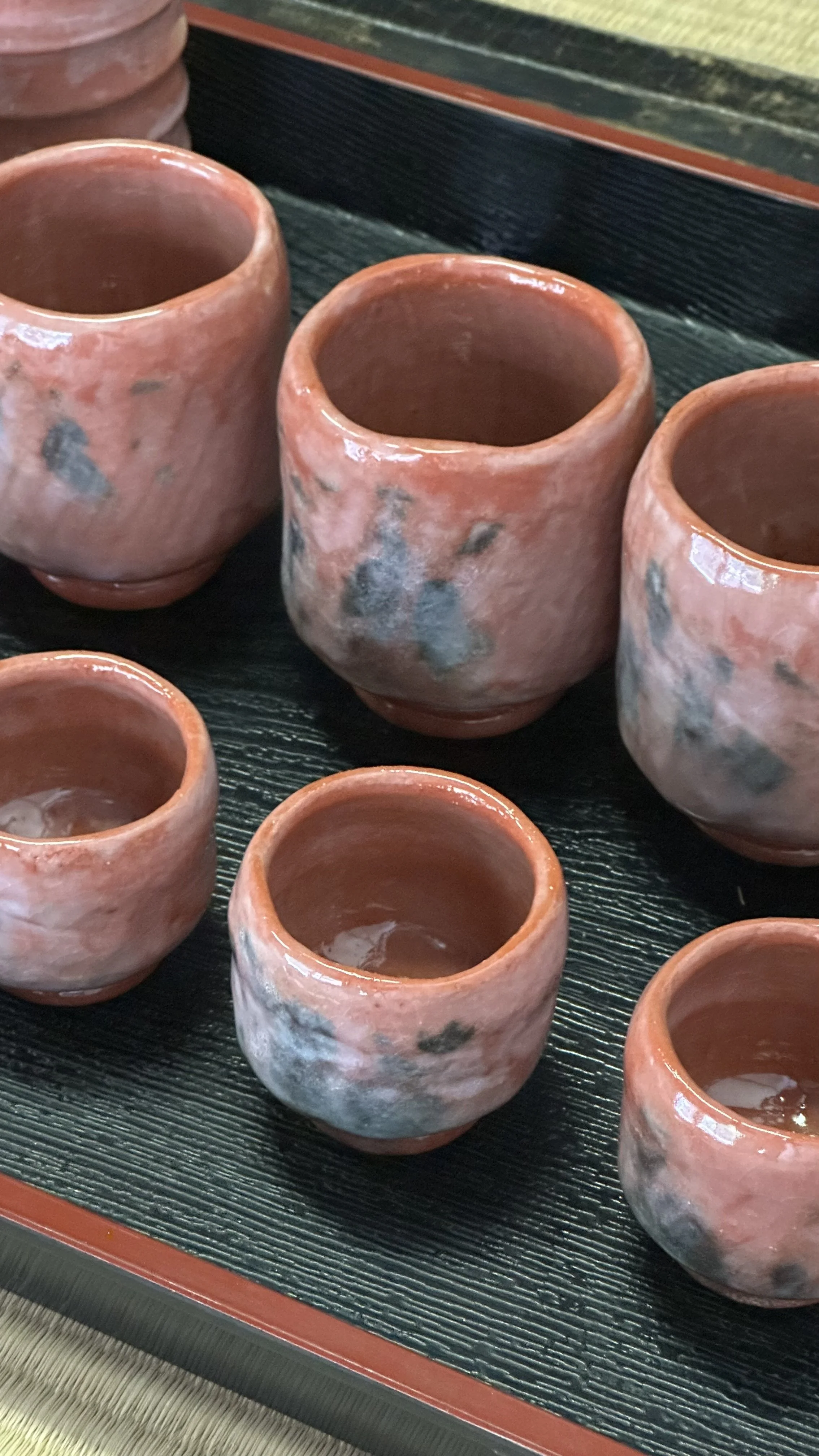
Sangiri is the style that produces the deep blue-grey to black surface you see on the darker Bizen pieces, and it is the most dramatic departure from the warm reddish-brown of standard Bizen.
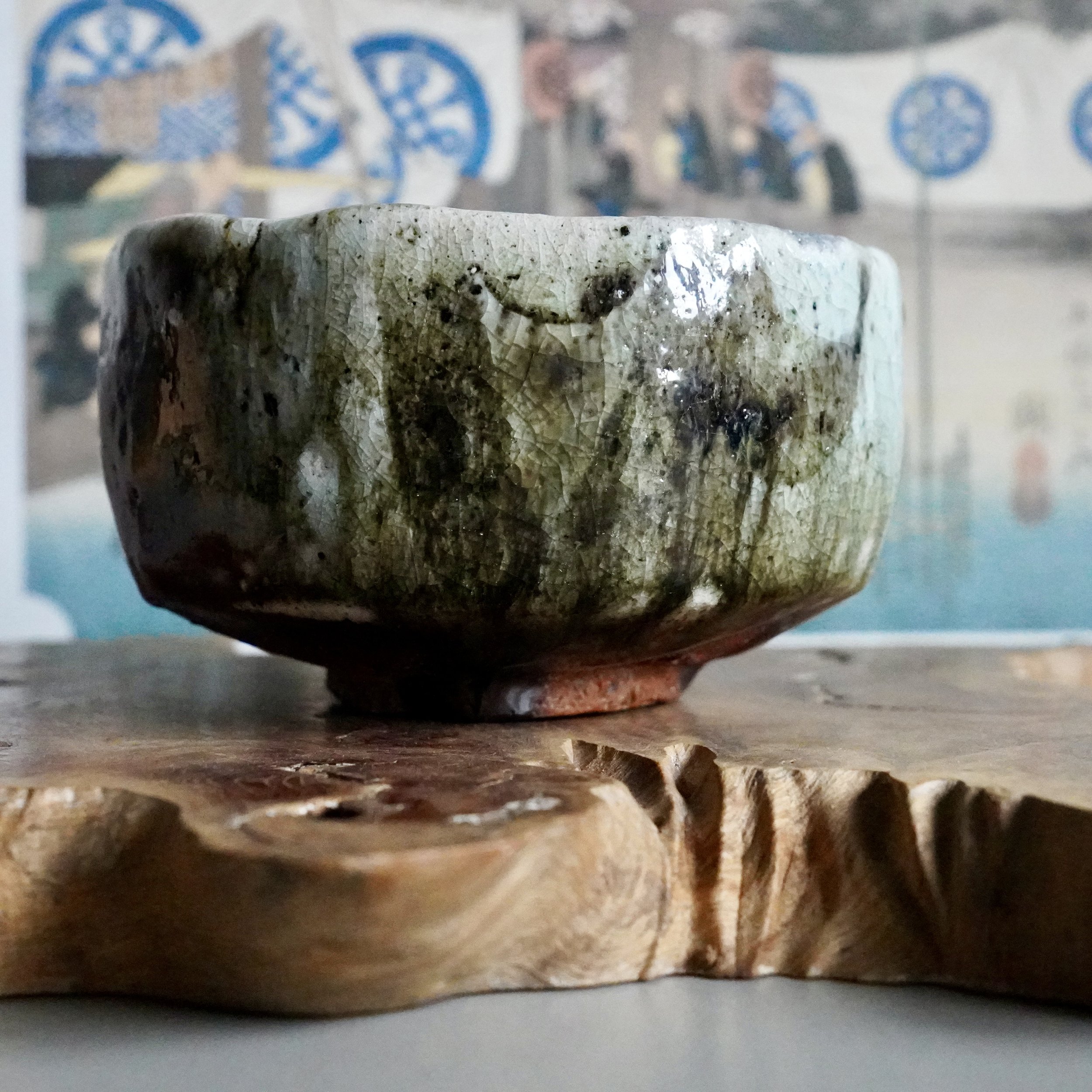
The name refers to the wooden cross-slats used to separate chamber sections in the noborigama climbing kiln. Pieces placed in positions near these slats, buried in ash and away from direct flame, experience a strongly reducing atmosphere: oxygen-depleted, smoky, chemically different from the rest of the kiln. In this environment the iron in the clay undergoes a different chemical reaction than it does in the oxidizing heat near the firebox. The result is the blue-grey to black that defines sangiri.
The color range within sangiri is wide. Some pieces come out a deep, even charcoal. Others show a shifting gradient from dark to lighter grey where the reduction was stronger in some areas than others. Occasionally, where the sangiri effect is strongest and most even, the surface develops a quality that collectors describe as resembling polished metal: a very subtle sheen on the matte clay body, cool and quiet.
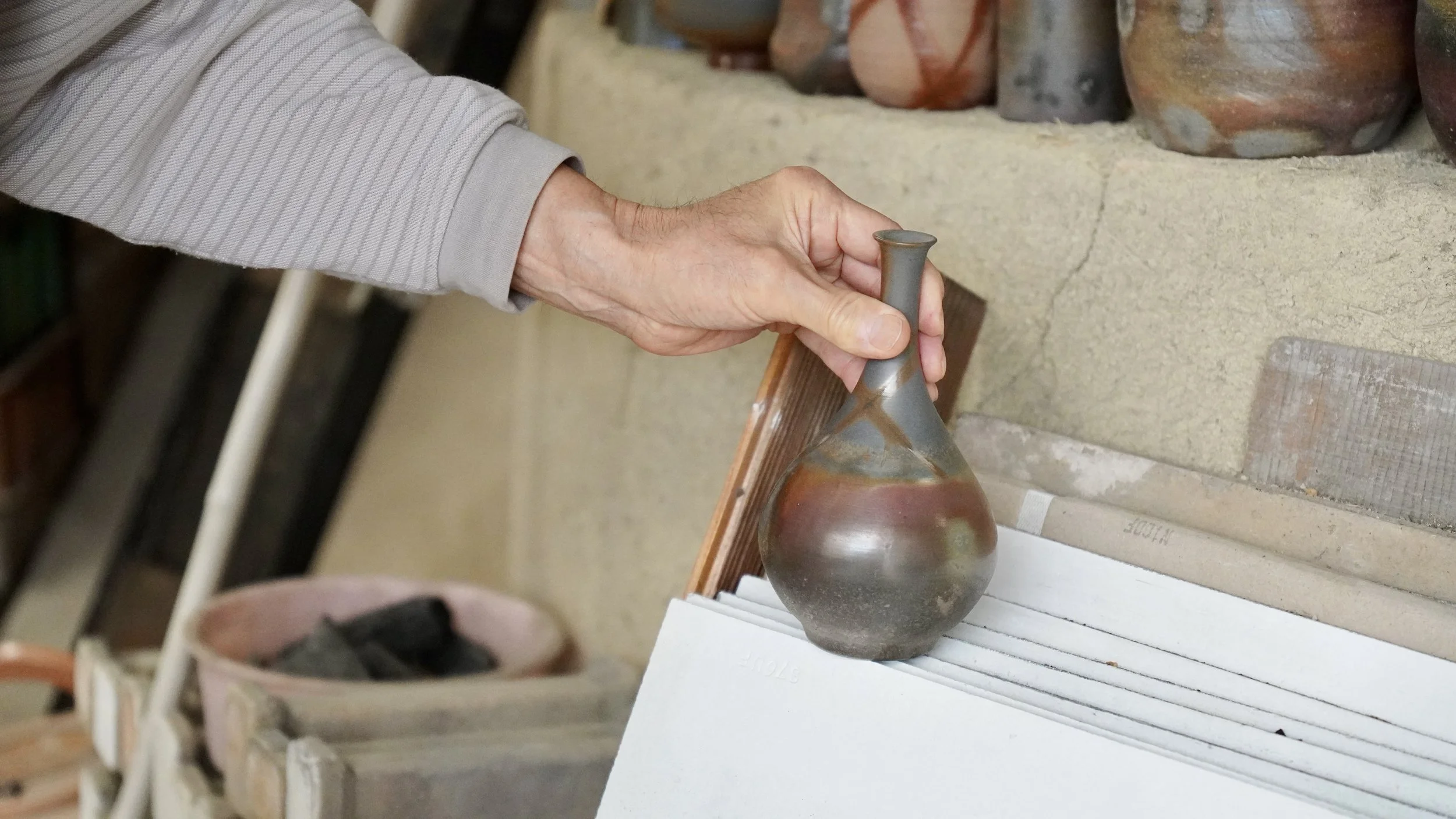
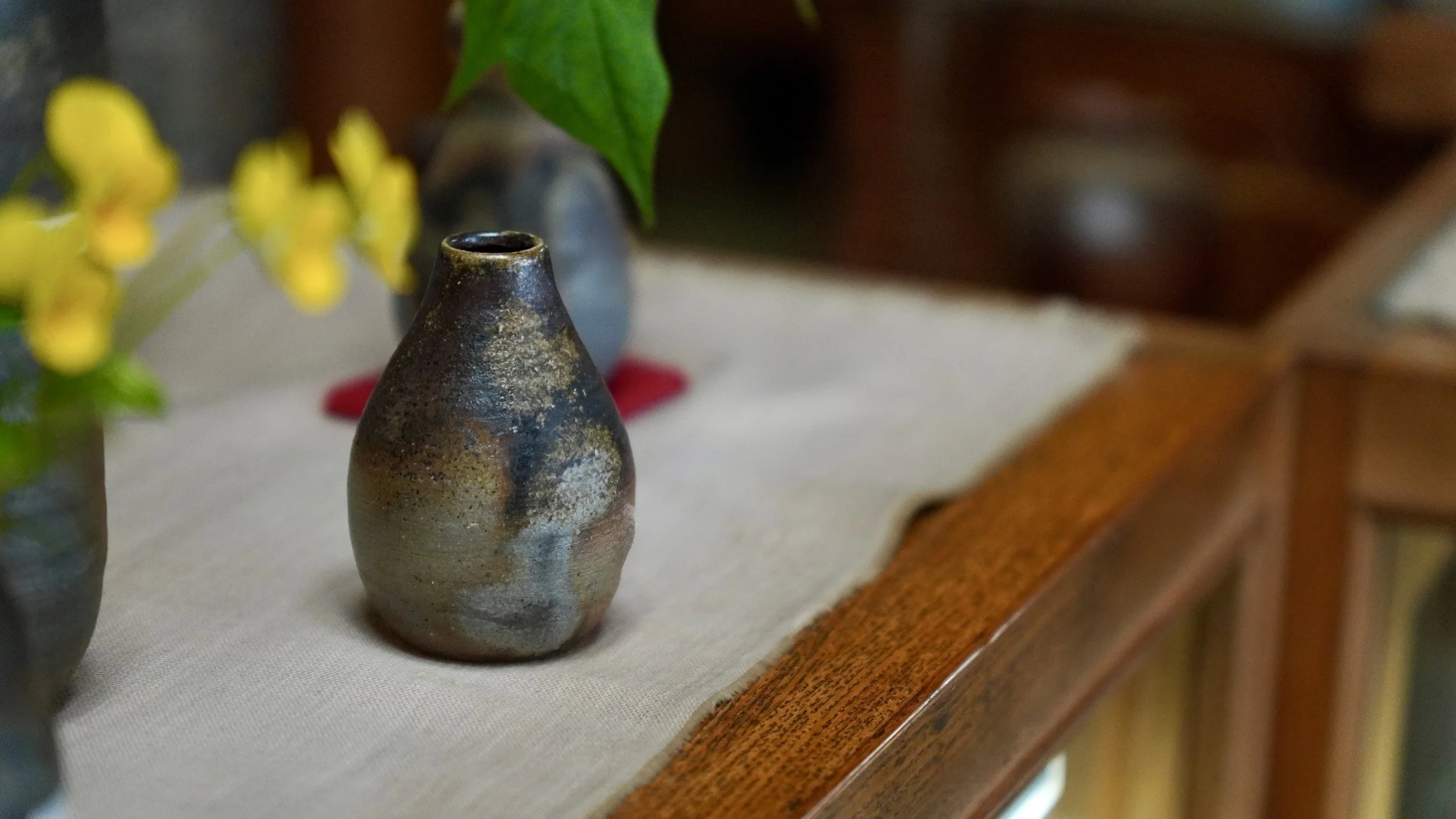
Today potters can also achieve sangiri deliberately by throwing charcoal into the kiln at the end of firing, which rapidly consumes the remaining oxygen and creates a locally reducing atmosphere. This is called sumi-sangiri, charcoal sangiri.
Sangiri pieces have a completely different presence from hidasuki or goma. Where hidasuki is warm and linear and goma is earthy and scattered, sangiri is cool, still, and quietly powerful. In the tea ceremony it is valued precisely for this quality: it does not draw attention to itself.
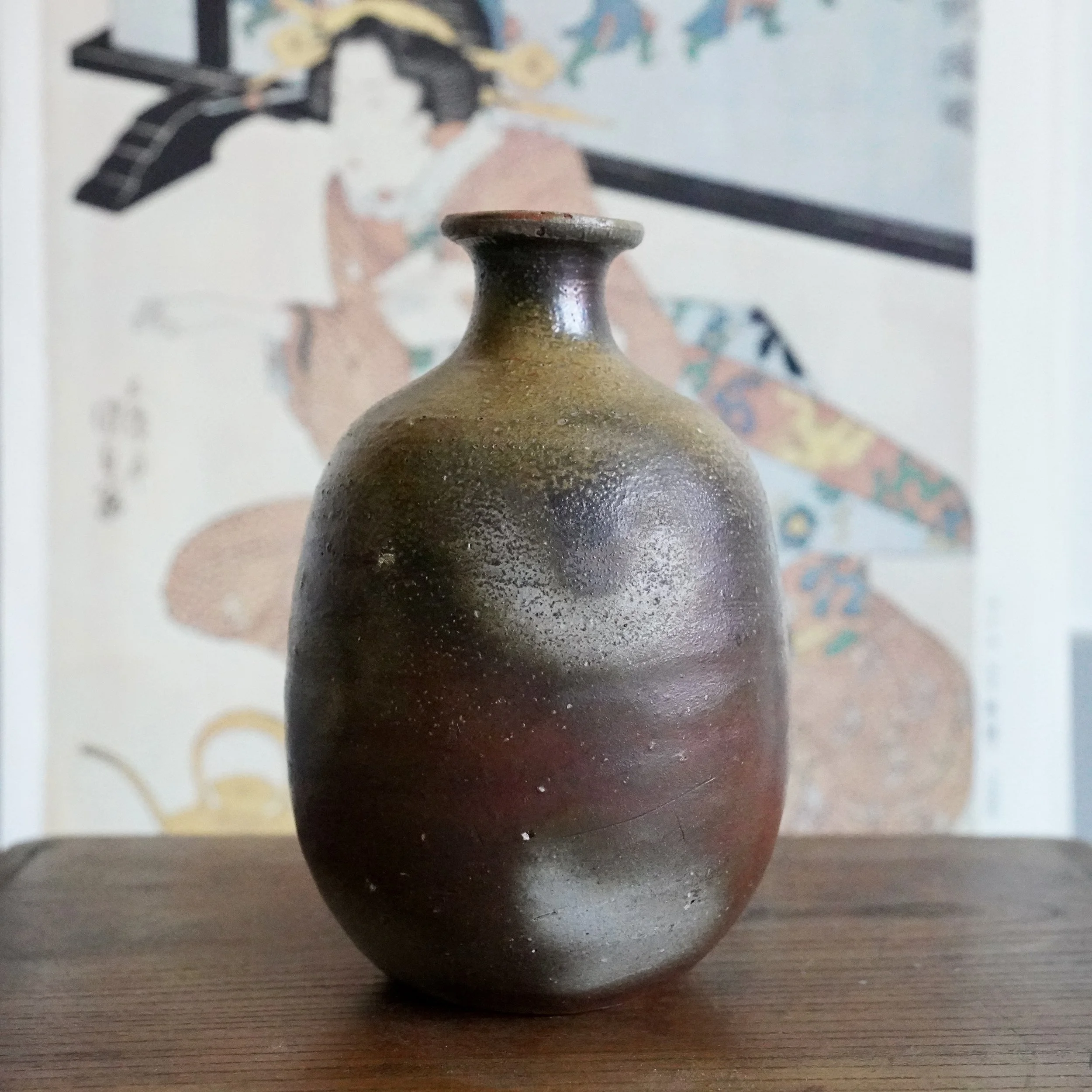
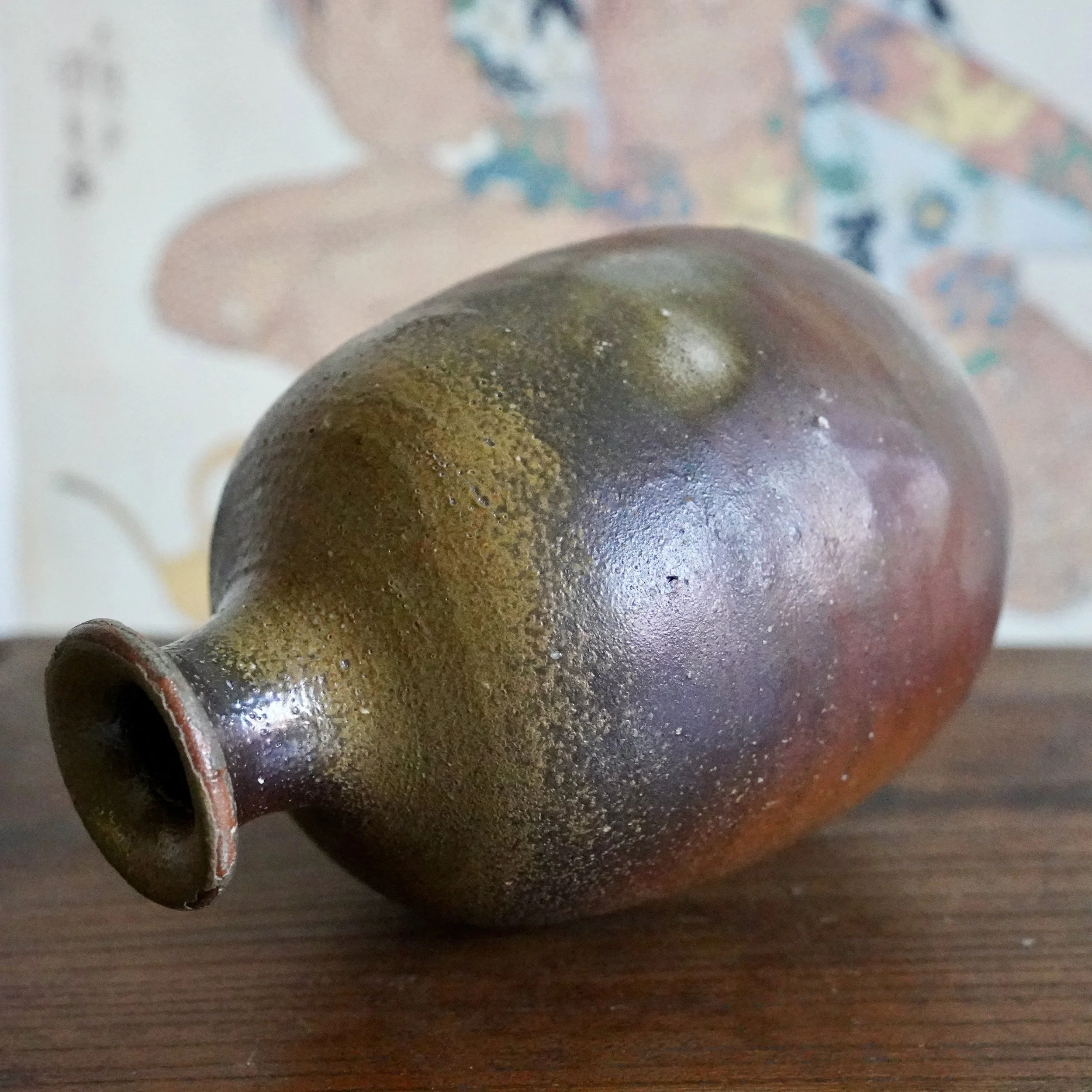
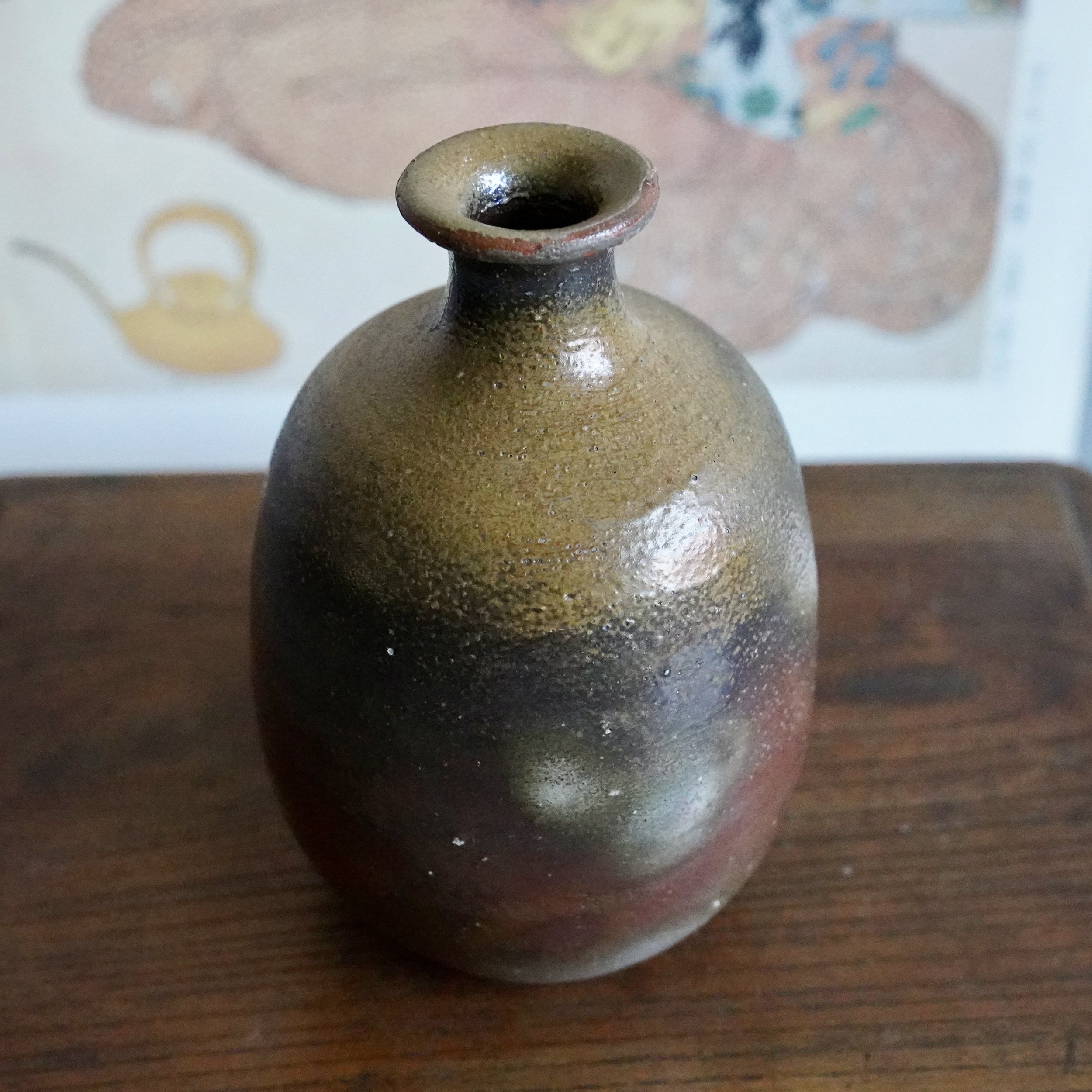
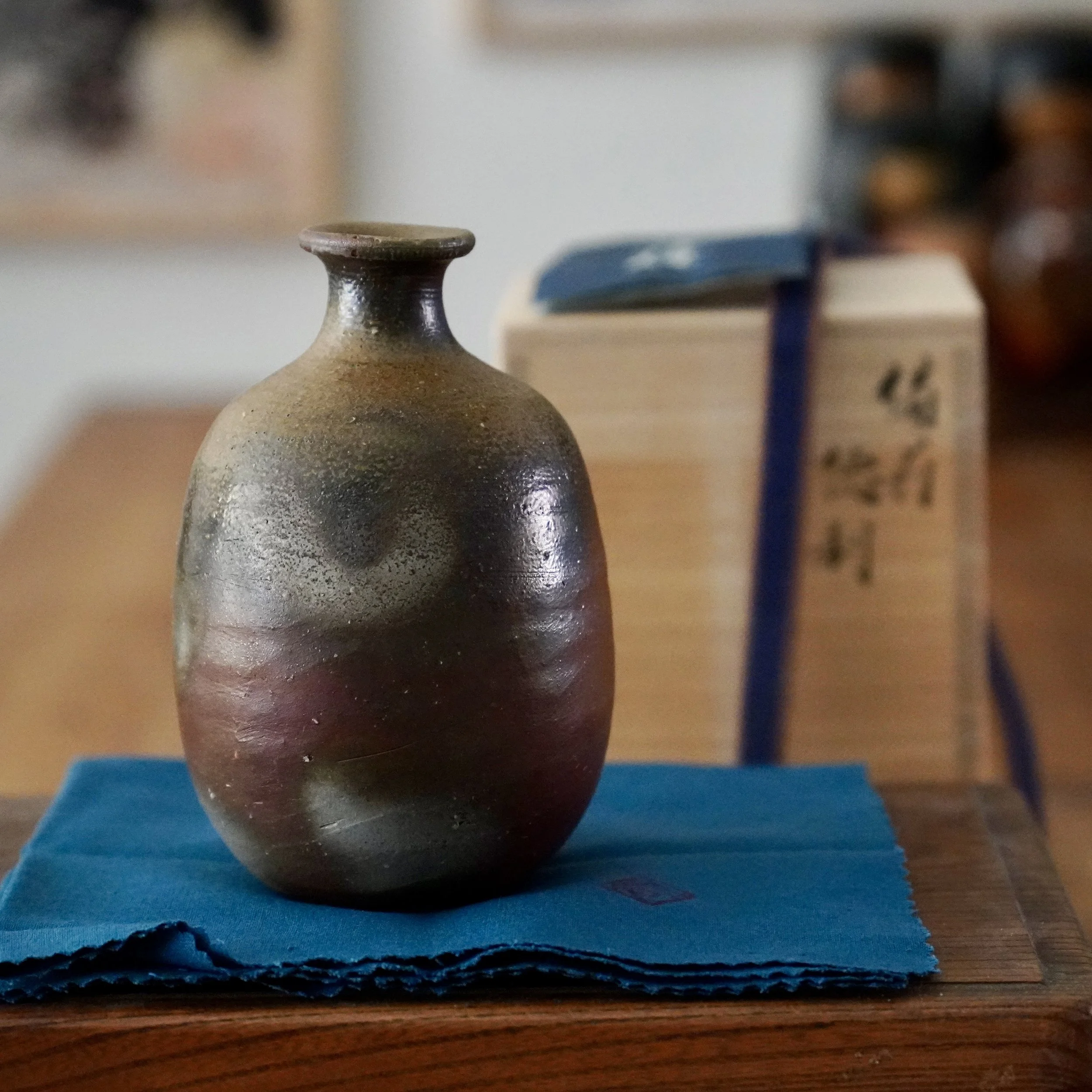
If you have been looking for a Bizen piece where the surface itself tells the story, signed by a member of one of Bizen's known pottery families, this one is currently listed. View the Isezaki Sō tokkuri here.
Shiro-Bizen: the white
Shiro-Bizen, white Bizen, is the last style and in some ways the most surprising, because it exists in two completely different forms that look similar but are made entirely differently.
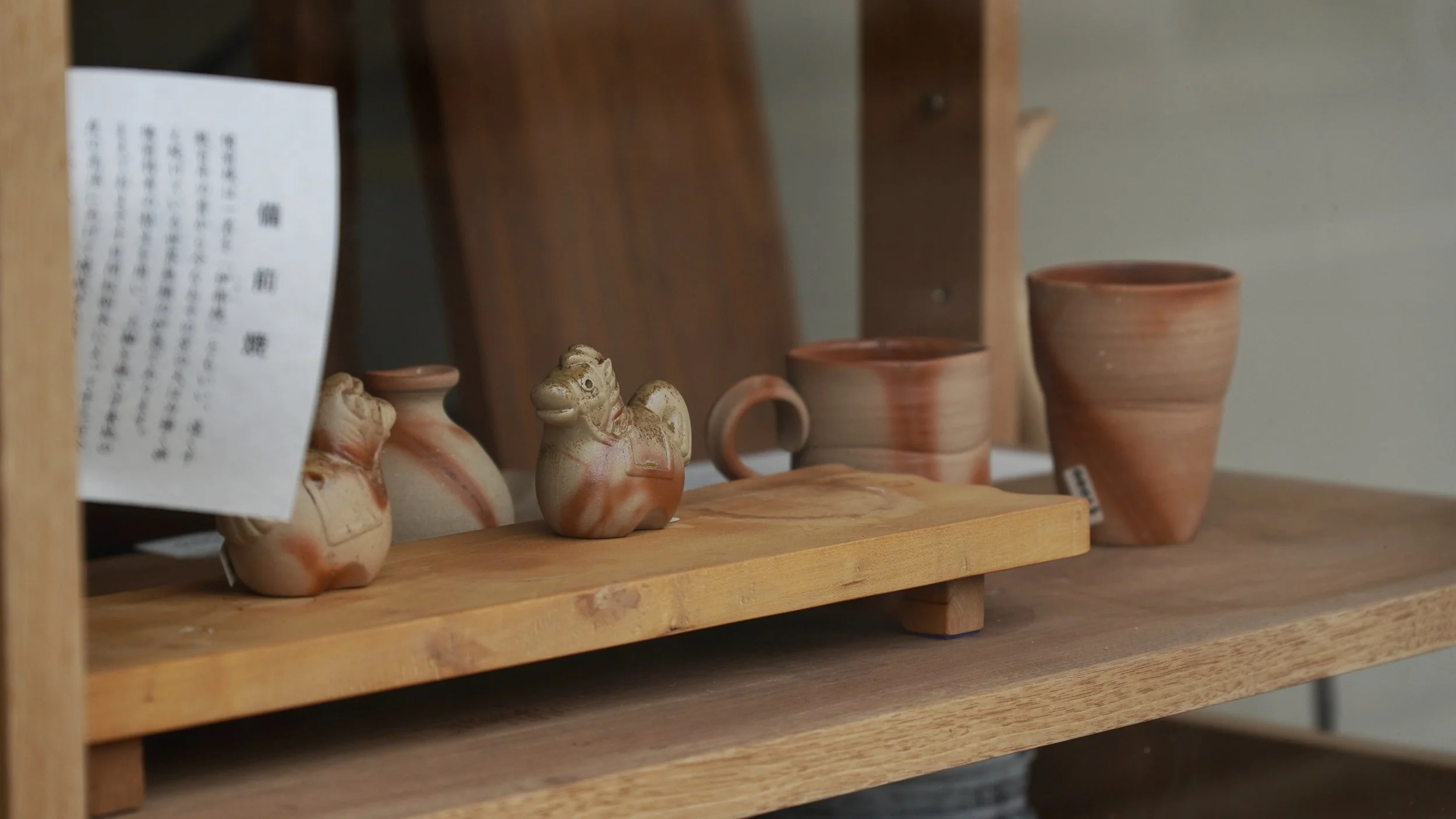
The older form dates from the 17th century. When glazed wares from Imari, Kyoto, and Seto began to dominate the Japanese market, some Bizen kilns responded by applying a white or transparent glaze to their pieces. This was genuinely the exception within Bizen, the one style that added something to the surface rather than letting the kiln decide. The white glaze provided a sheen and a lightness that unglazed Bizen could not offer, while the clay body underneath remained unmistakably from Imbe: dense, heavy, with its characteristic presence in the hand. These pieces were often produced as gifts for government officials and the imperial court.
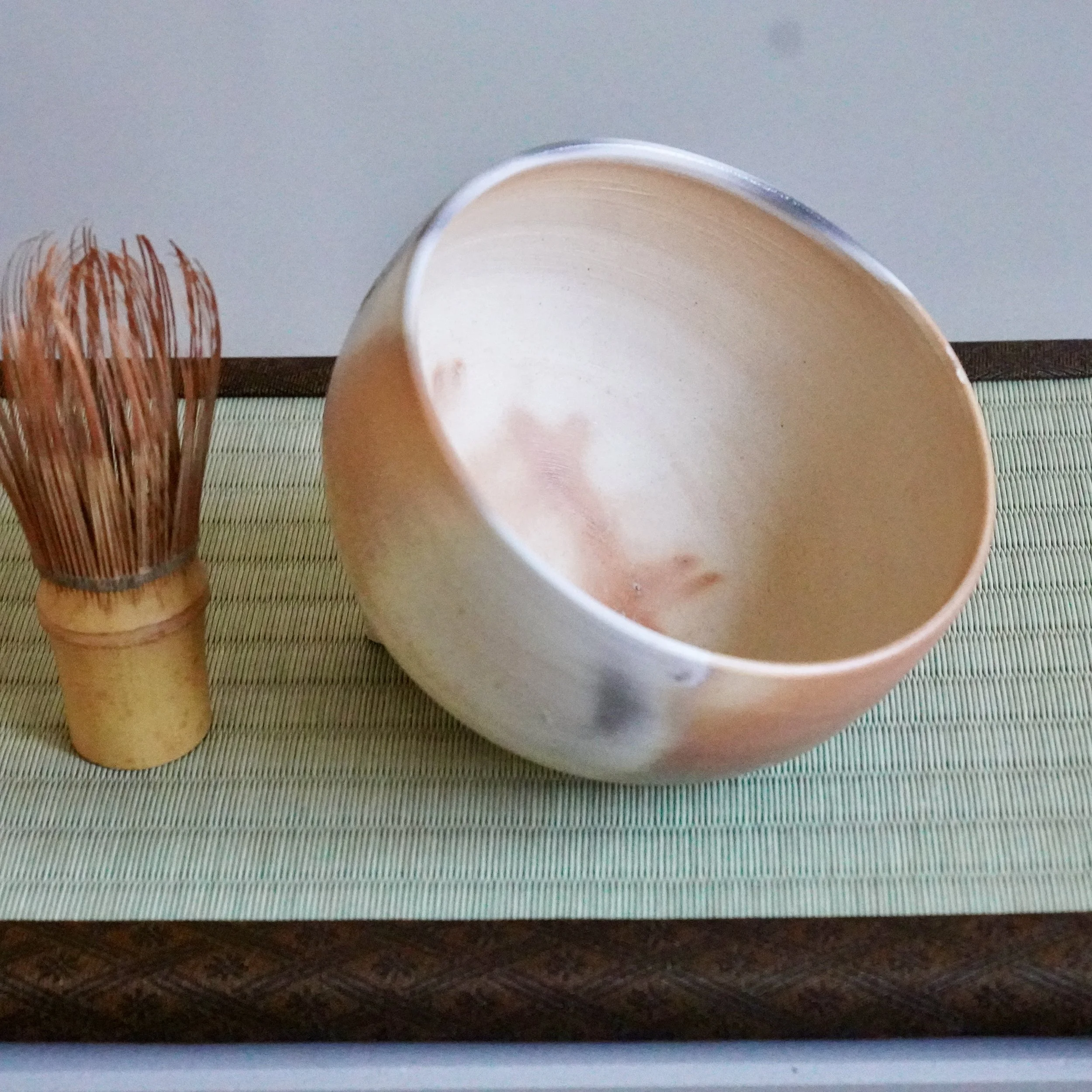
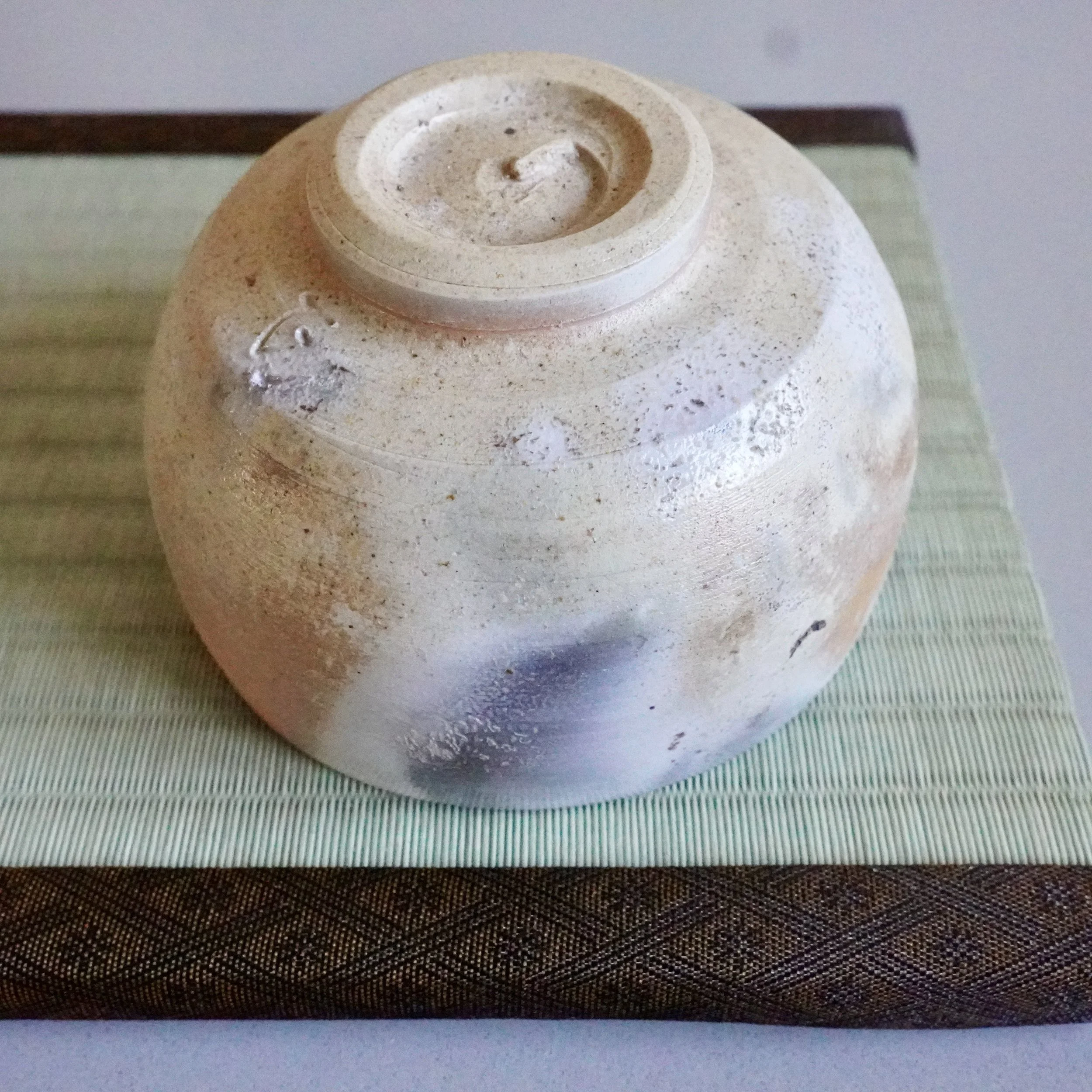
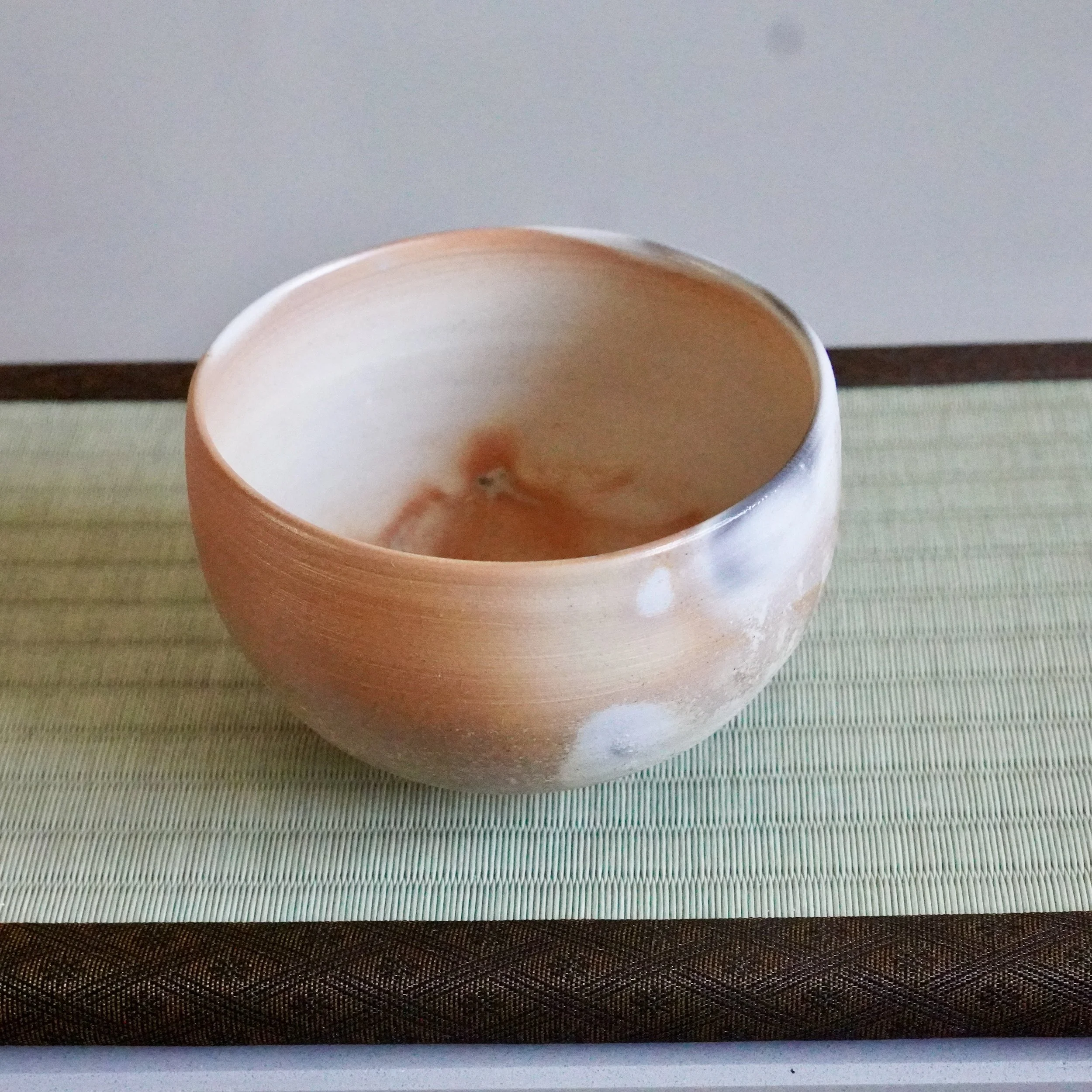
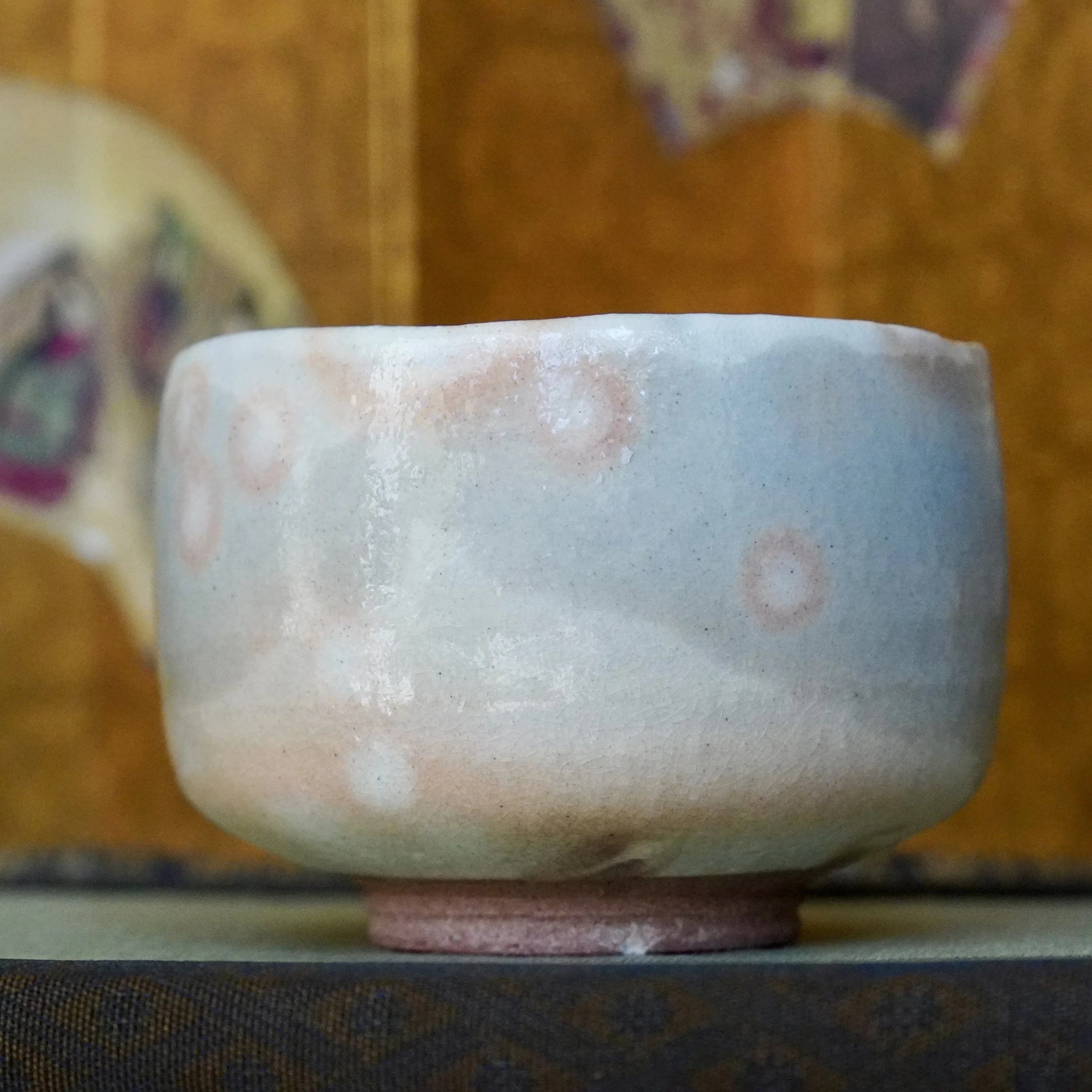
The more significant form for contemporary collectors is shiro-Bizen yakishime, and it works entirely differently. By using clay with a very low iron content and firing it without any glaze, potters found that the piece emerges white from the kiln not because of any coating but because of the clay itself. Where standard Bizen hiyose clay is dark and iron-rich, turning reddish-brown during firing, the clay used for shiro-Bizen yakishime contains almost no iron. It does not turn. It fires pale.
What happens to the surface is determined entirely by the fire. Where flame touches the piece directly, hiiro marks form: soft flushes of crimson, coral, and amber against the white ground. These are not painted and not predicted. They are where the flame was. On a well-fired shiro-Bizen yakishime piece the hiiro marks move across the surface with the logic of fire itself, pooling and fading according to position and airflow during those ten to fourteen days of continuous burning.
The result is the quietest surface in Bizen. No goma speckle, no hidasuki lines, no sangiri drama. Just white clay, a long firing, and wherever the flame decided to leave its mark.
Some shiro-Bizen pieces carry silver or platinum lustre accents applied after the main firing, a later development that adds a metallic quality to the pale surface and creates a visual contrast between the warmth of the hiiro marks and the cool of the metal.
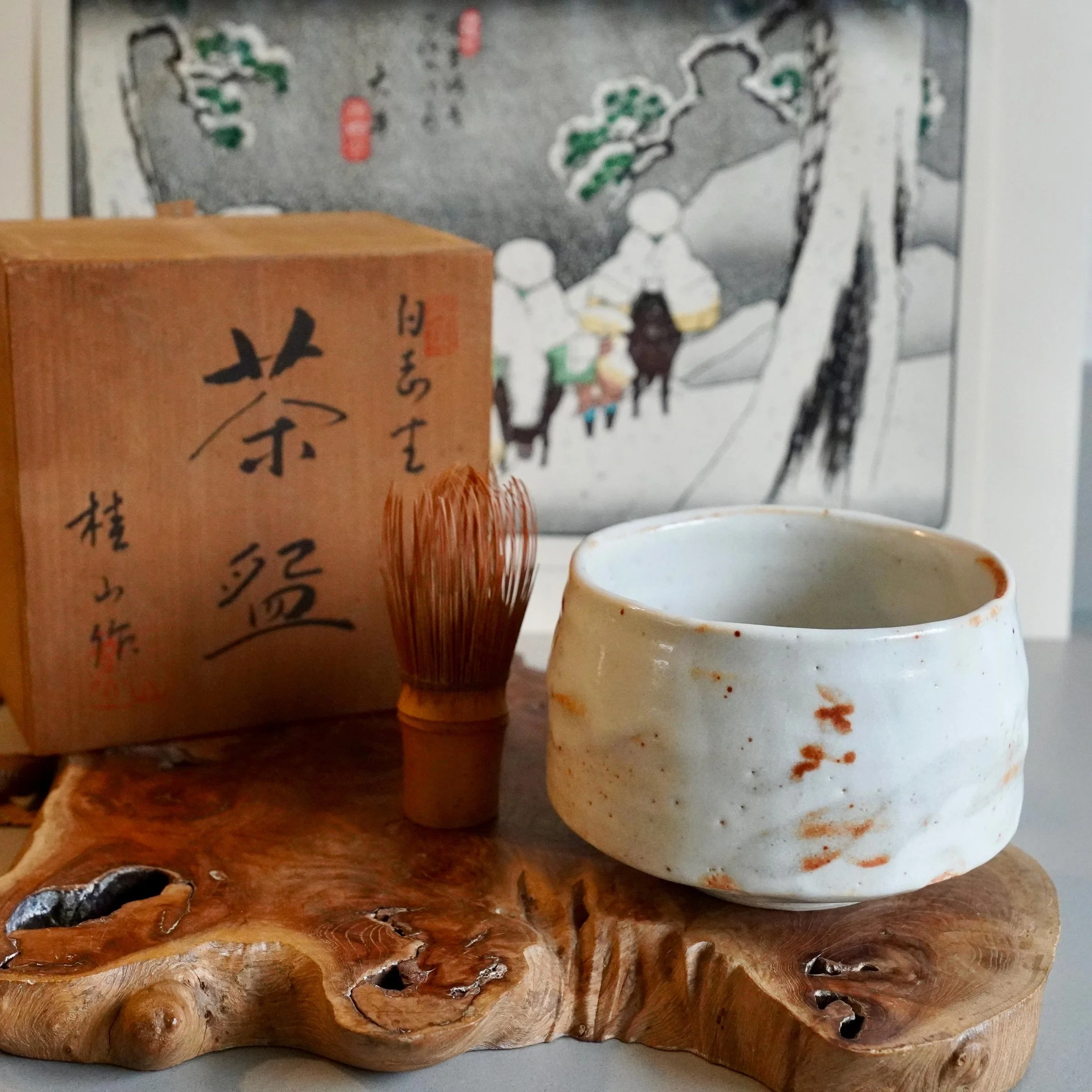
If you want to see this in person, this shiro-Bizen yakishime summer chawan named Hakuchō, "White swan," signed by Motoyama Izumi from the late Shōwa period, is currently listed in the shop.
Reading a Bizen piece
When you hold a Bizen piece, the surface tells you which style it is.
Scarlet lines crossing the clay: hidasuki.
Scattered ochre and brown dots: goma.
Deep blue-grey to black: sangiri.
Pale white with crimson flushes: shiro-Bizen yakishime.
Many pieces combine more than one effect. A hidasuki piece may also have goma deposits where ash reached the surface between the straw wrappings. A sangiri piece may have patches of lighter clay where the reduction was incomplete. A shiro-Bizen piece may show both hiiro marks from direct flame and faint goma from ash that reached it.
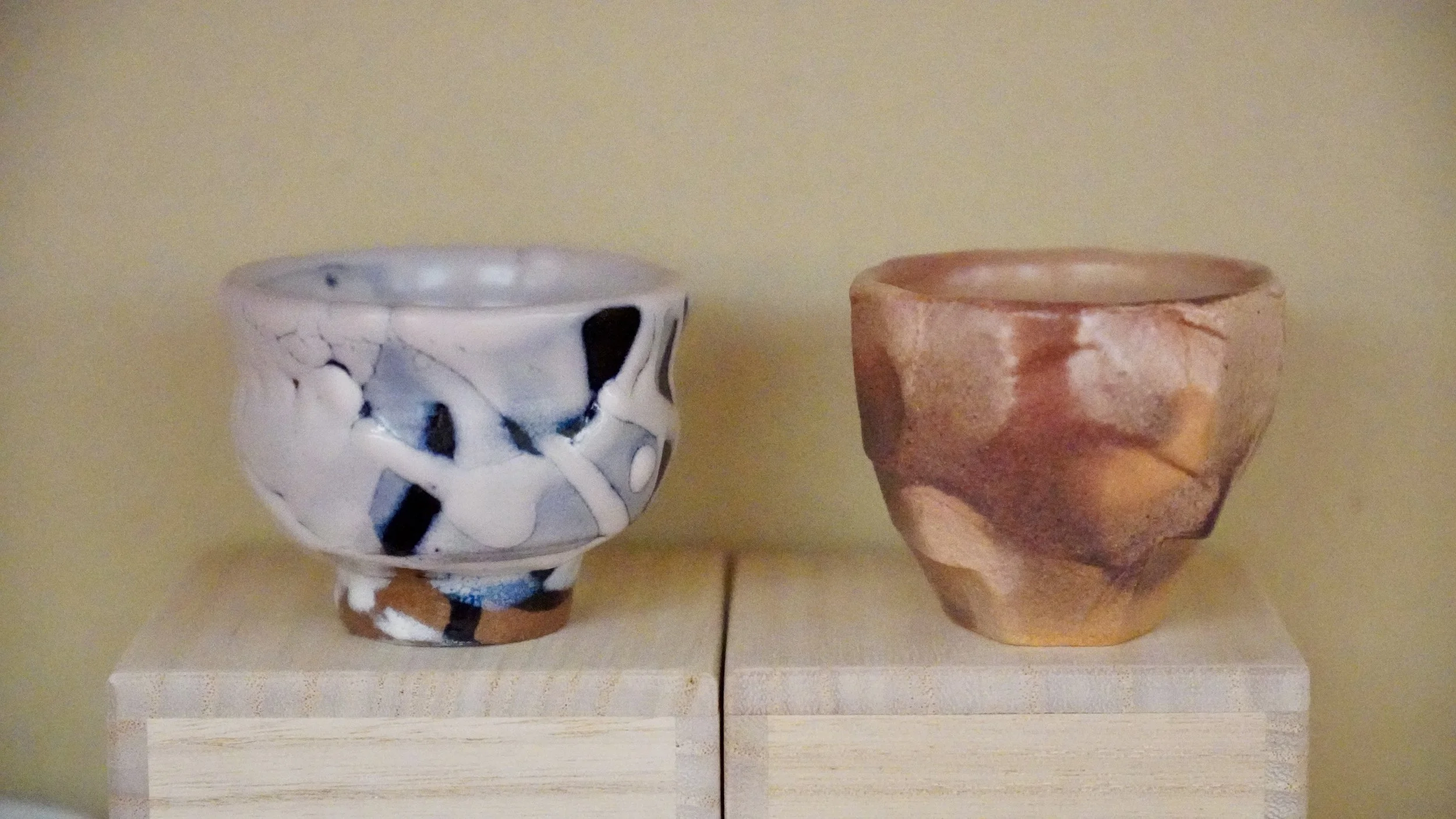
Wide variety of Japanese pottery. Can you spot the Bizen?
They are what ten to fourteen days in a wood-burning kiln looks like. Every Bizen piece is a record of a specific firing. No two are the same because no two firings are the same and no two positions in the kiln produce the same result.
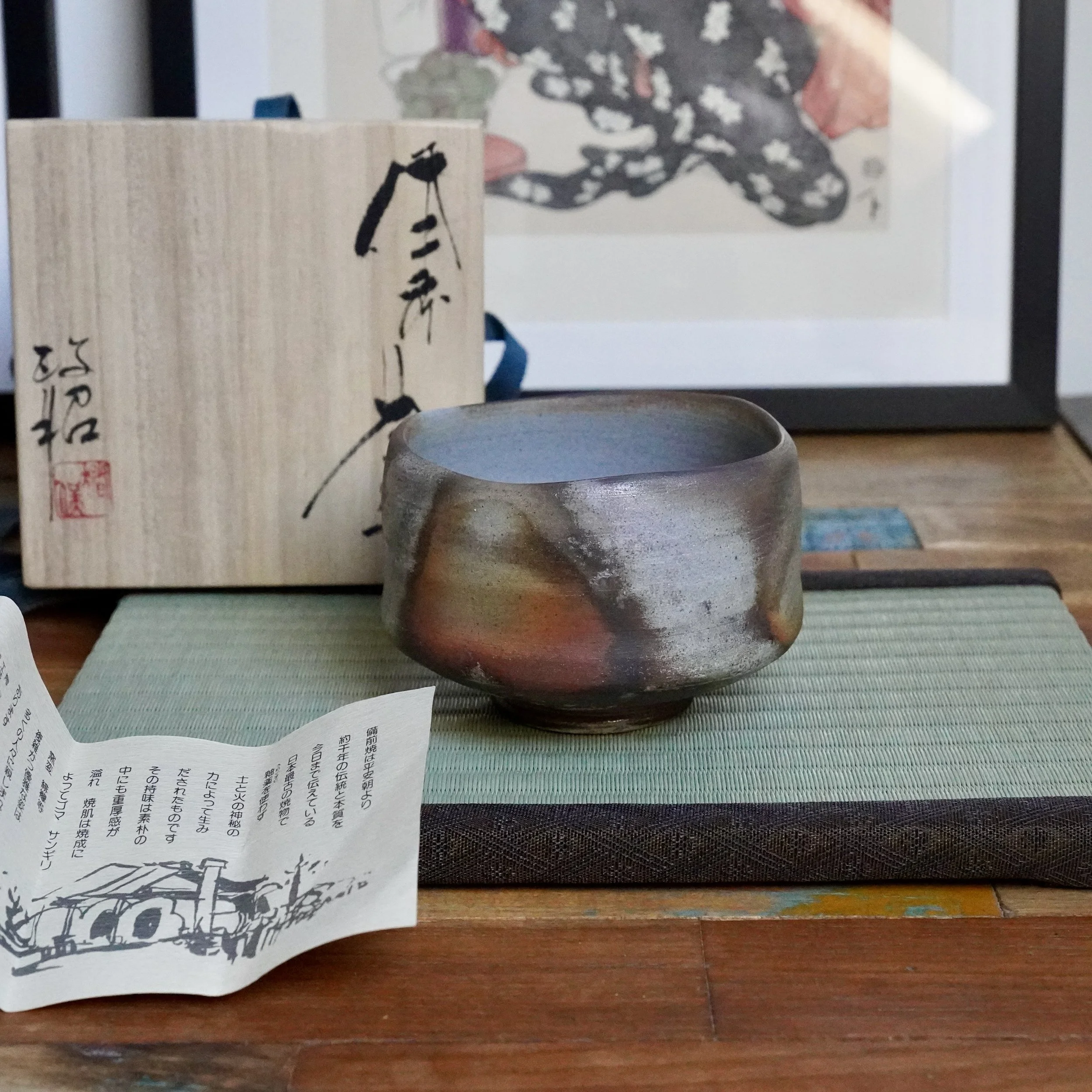
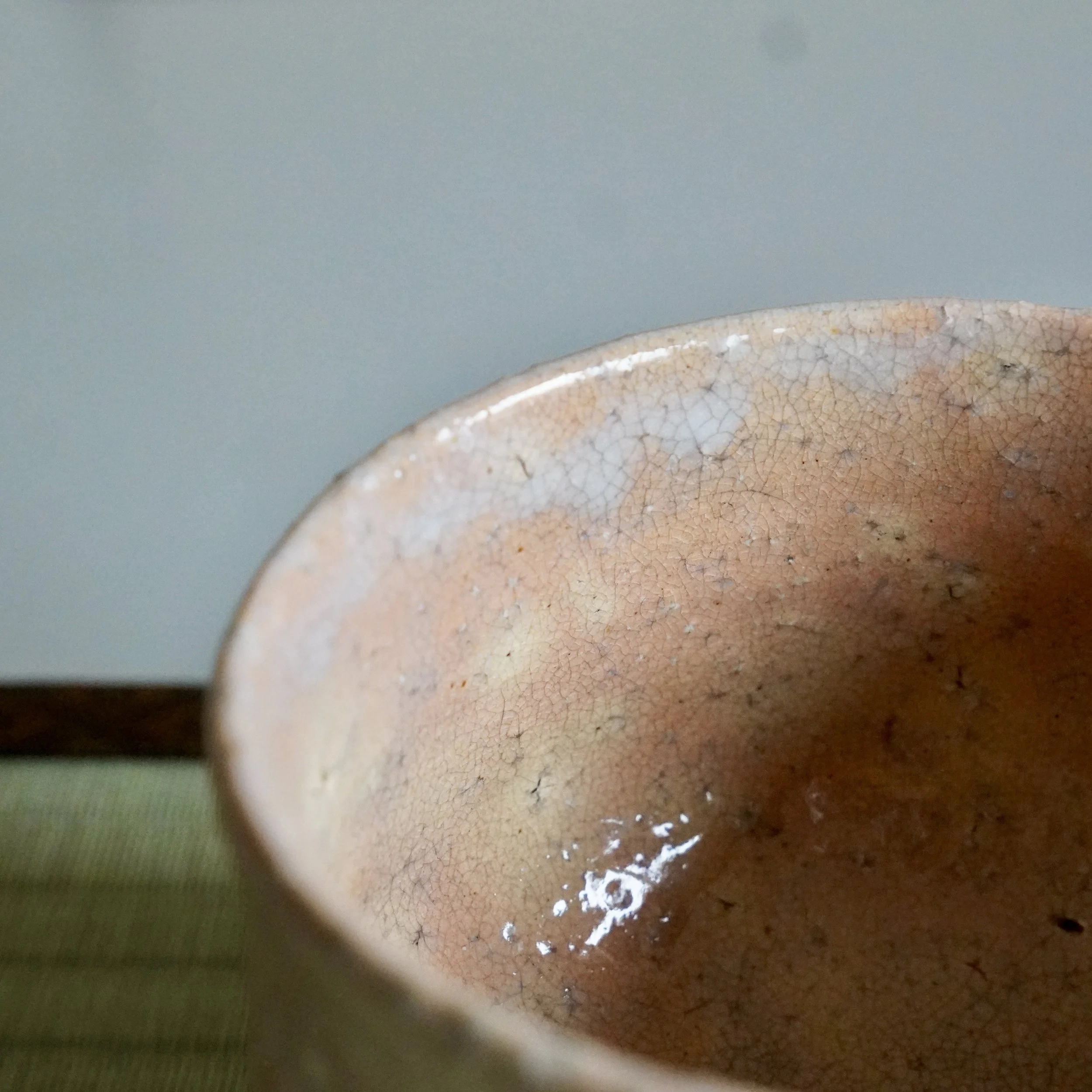
Like this one below: purple, deep crimson, ashy grey, a band of pale white on the inside where the heat had settled differently. Yakishime is the practice of placing unglazed clay in a wood-fired kiln and letting the fire decide the rest. In the Bizen tradition this has been practiced for over a thousand years, and the surfaces it produces, rough clay, fire-born colour, marks that record the firing like a landscape
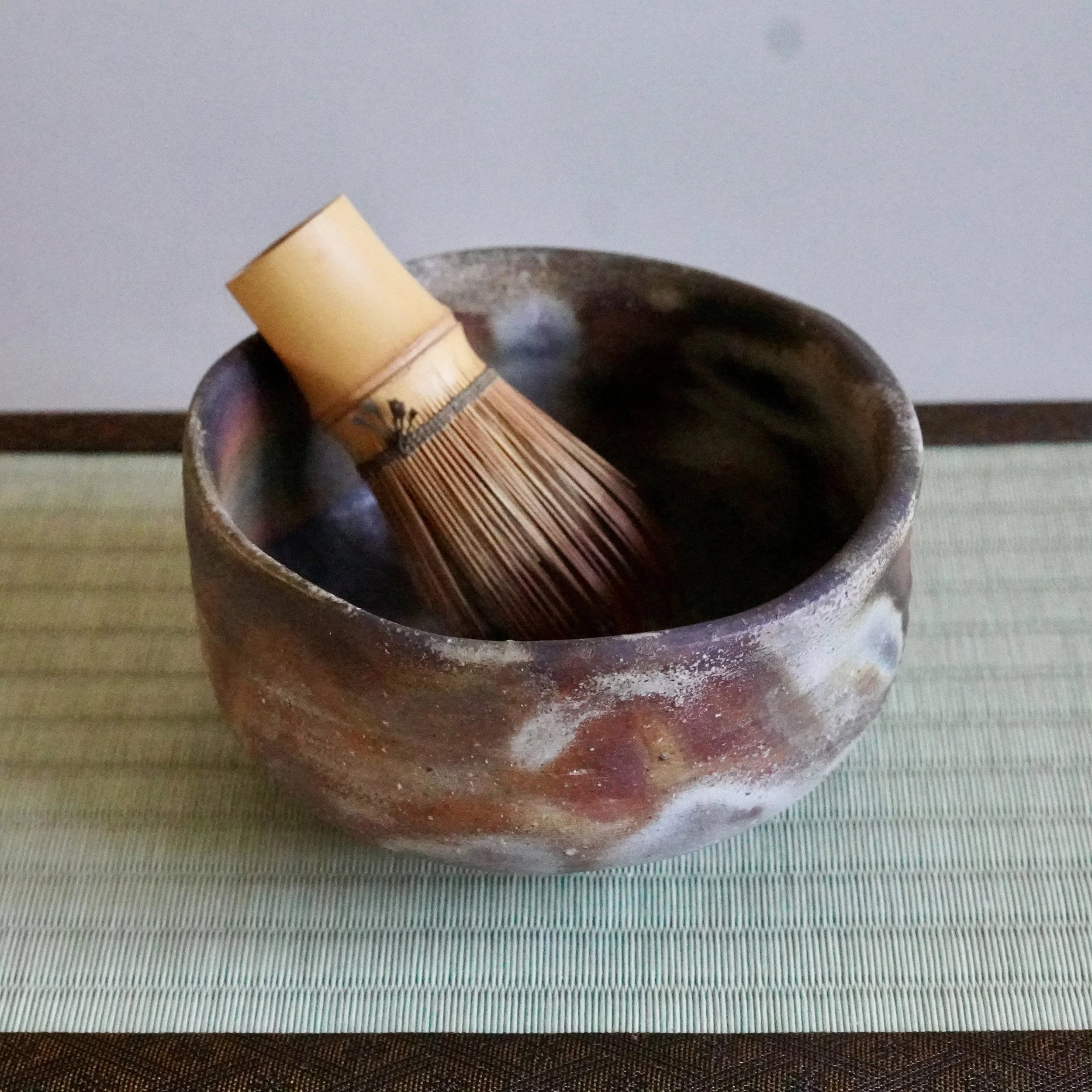
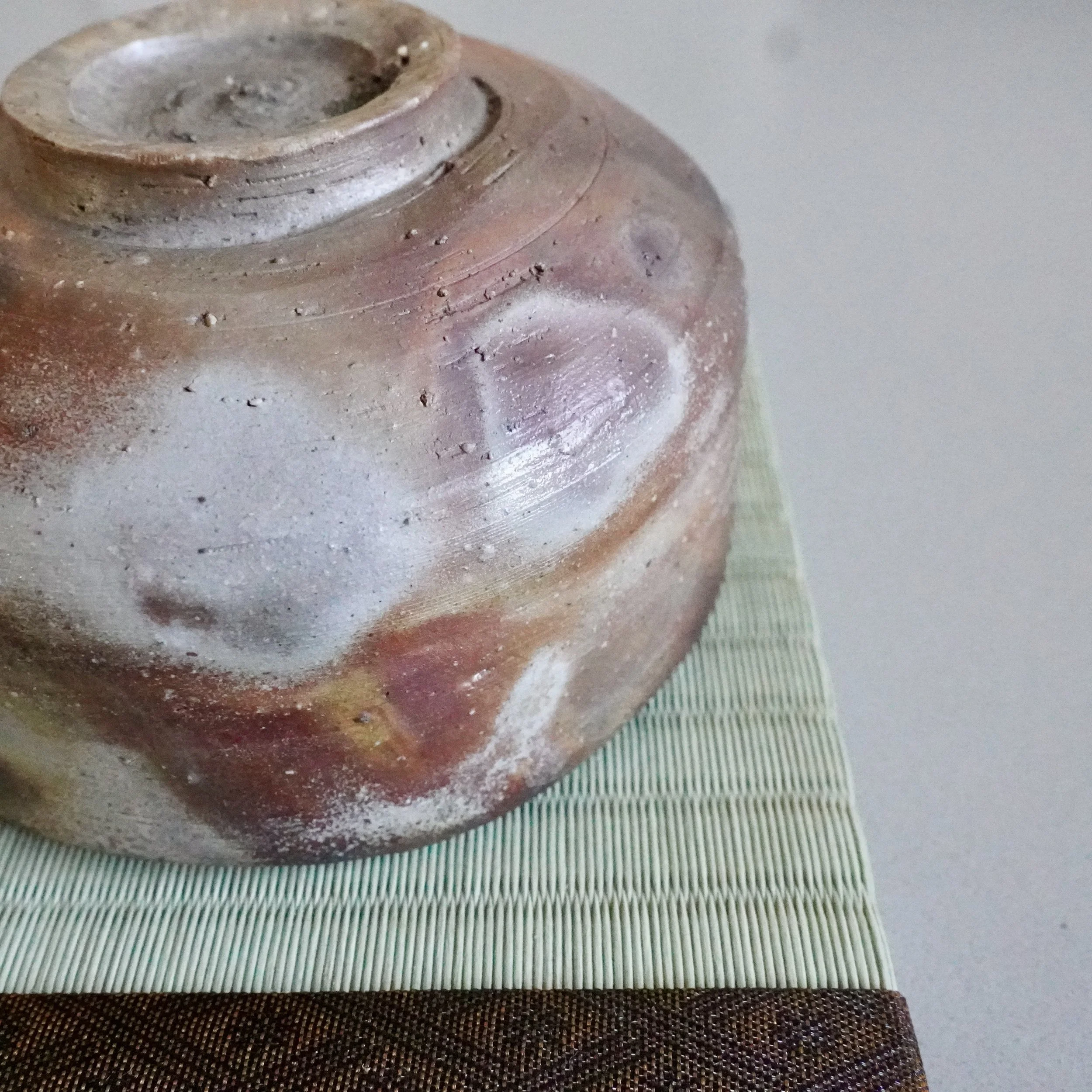
This particular chawan is the one carrying that ash-fired budō-iro colour, signed by Gekifūsei with its original tomobako.
If you have been looking for a Bizen piece that shows what the fire actually does, this one is currently listed in the shop. View the Tekifu chawan here.
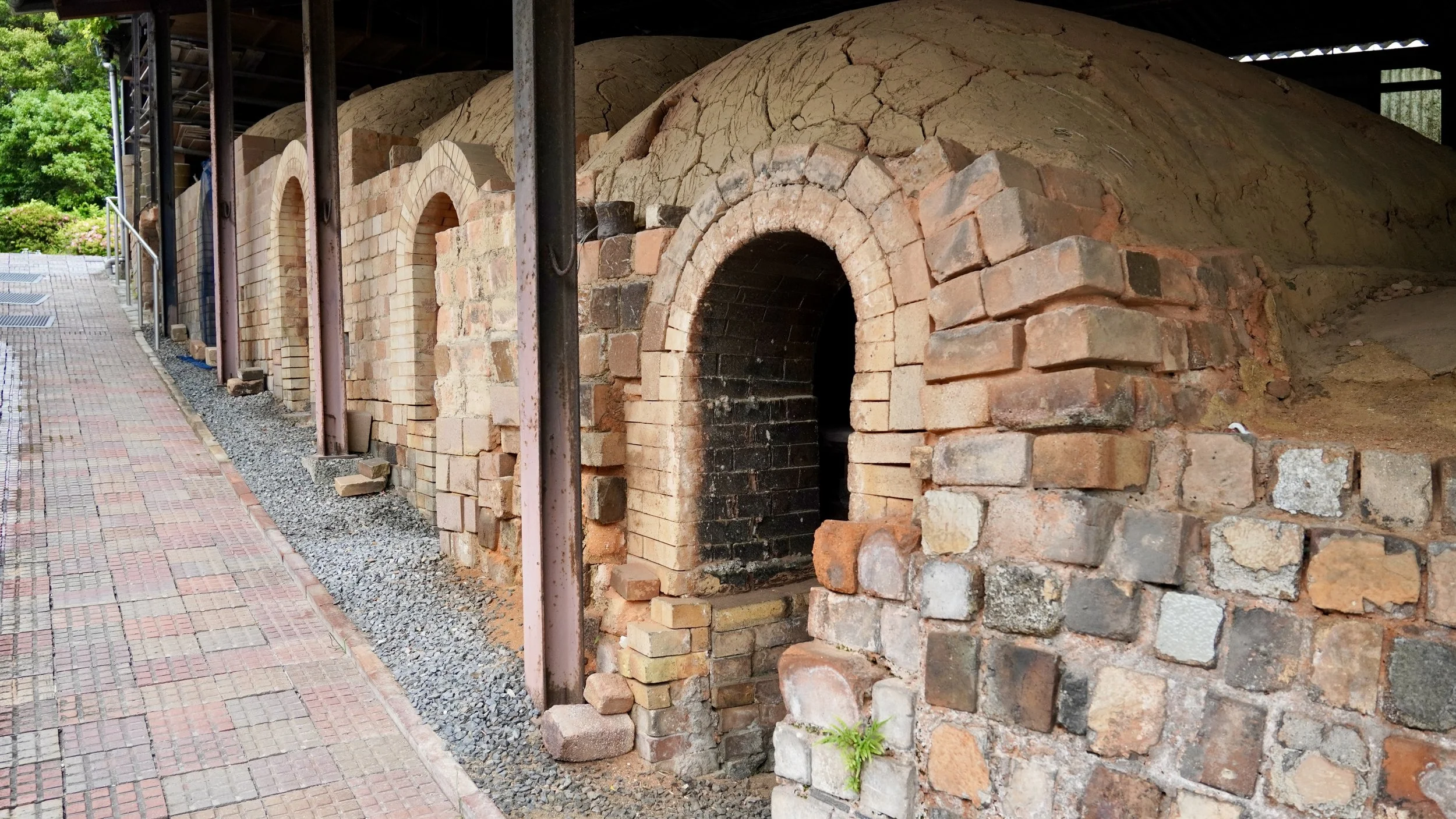
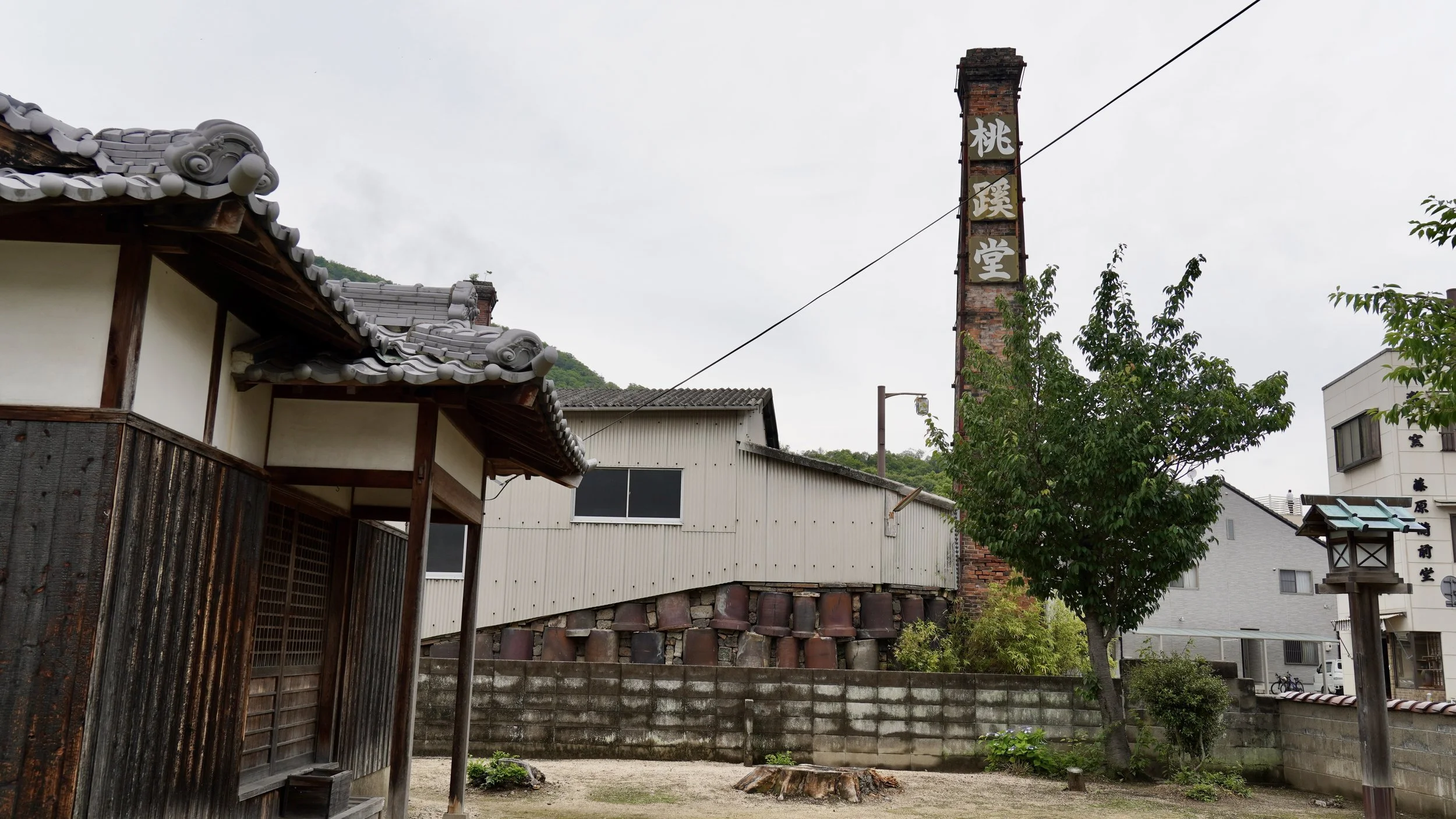
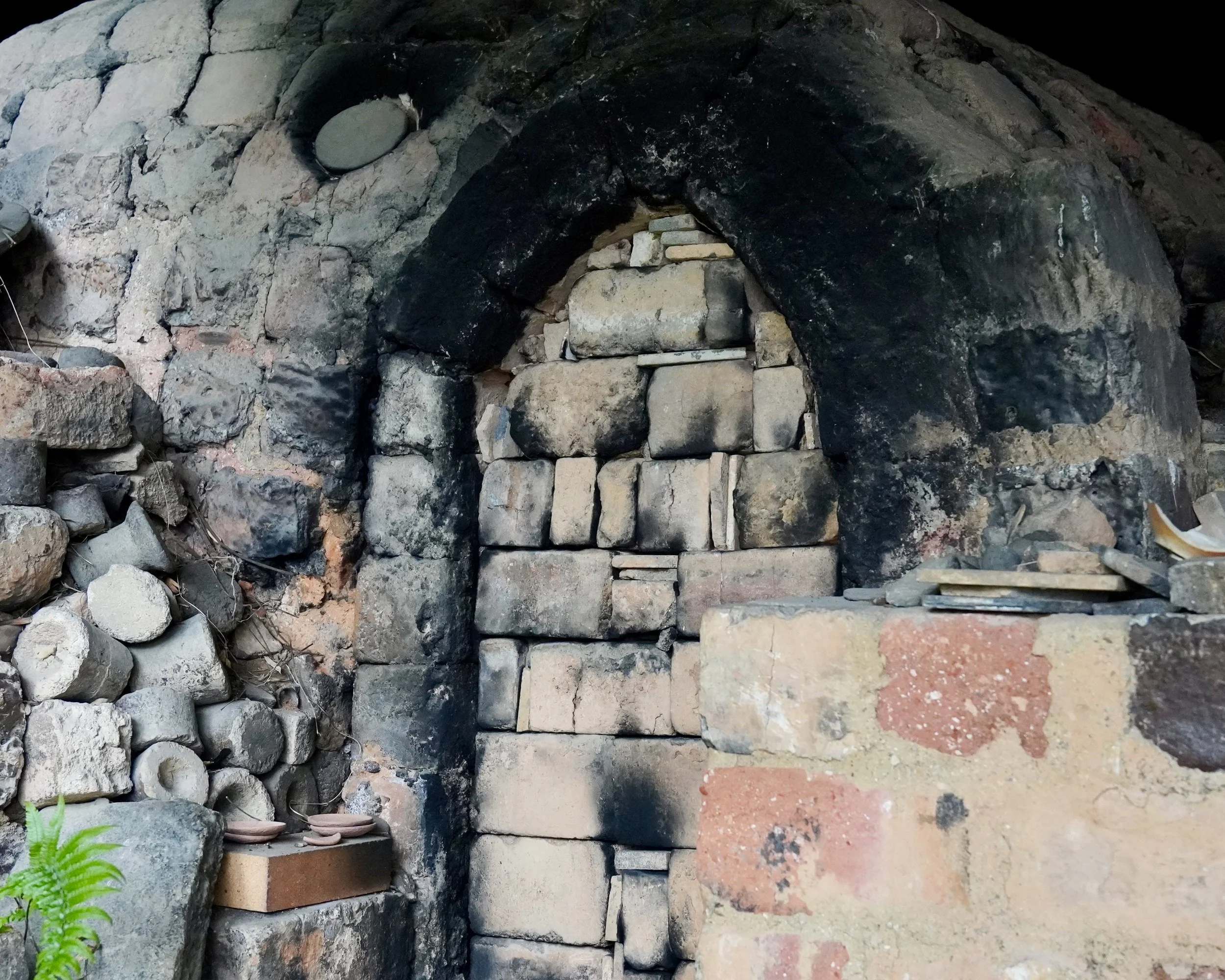
Kiln mouth of a wood-burning kiln, blackened by decades of continuous use.
What I love most about sourcing Bizen is not the finished piece, it is visiting the kilns and workshops.
I have walked through workshops in Imbe, Bizen where the wood is stacked for the next firing and the walls are stained from decades of smoke, and talked to potters who can tell you, just by looking at a piece, roughly where in the kiln it sat.
That kind of knowledge only comes from doing this for a lifetime, and every time I get to hear it firsthand, I learn something I did not know before.
It is one of the reasons I keep going back.
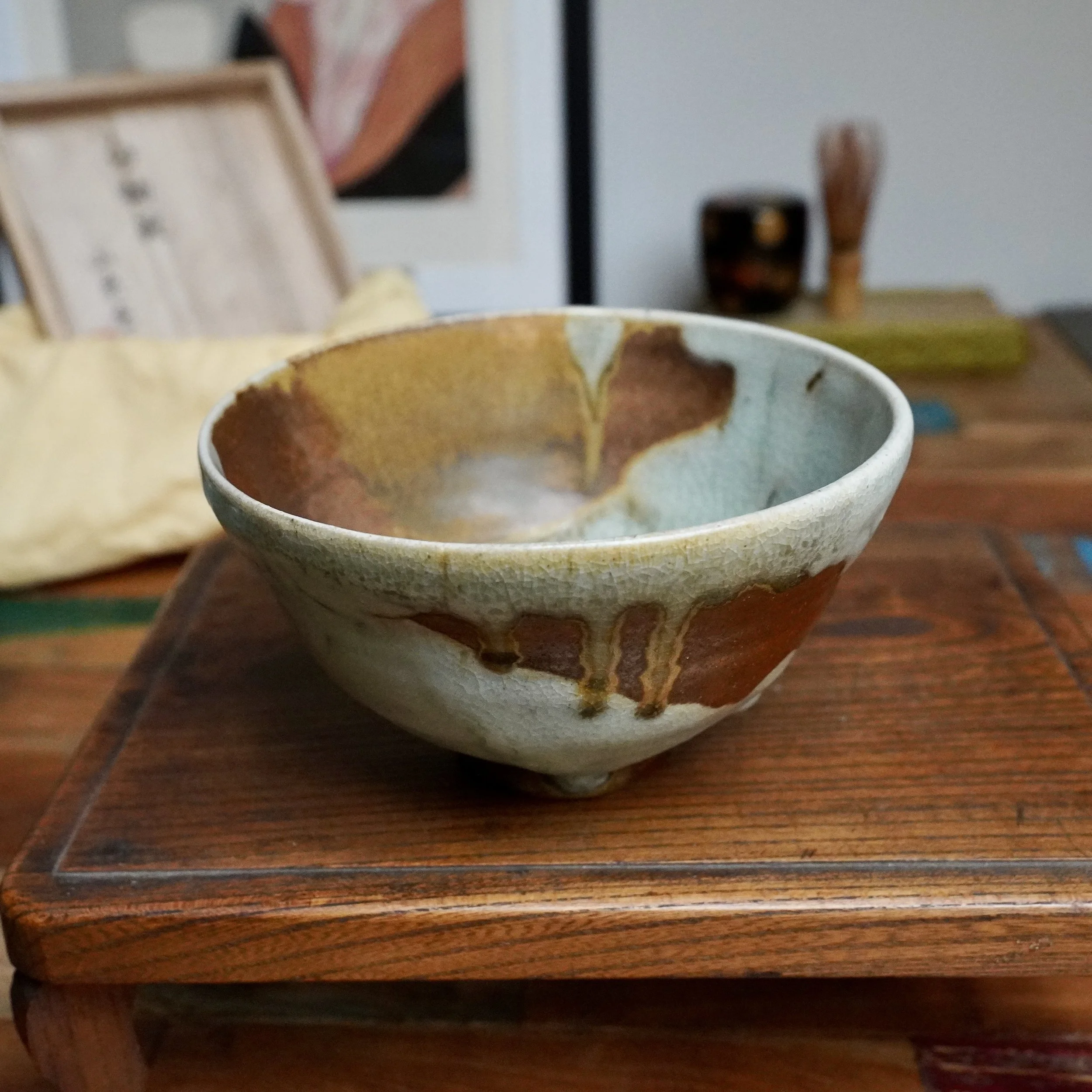
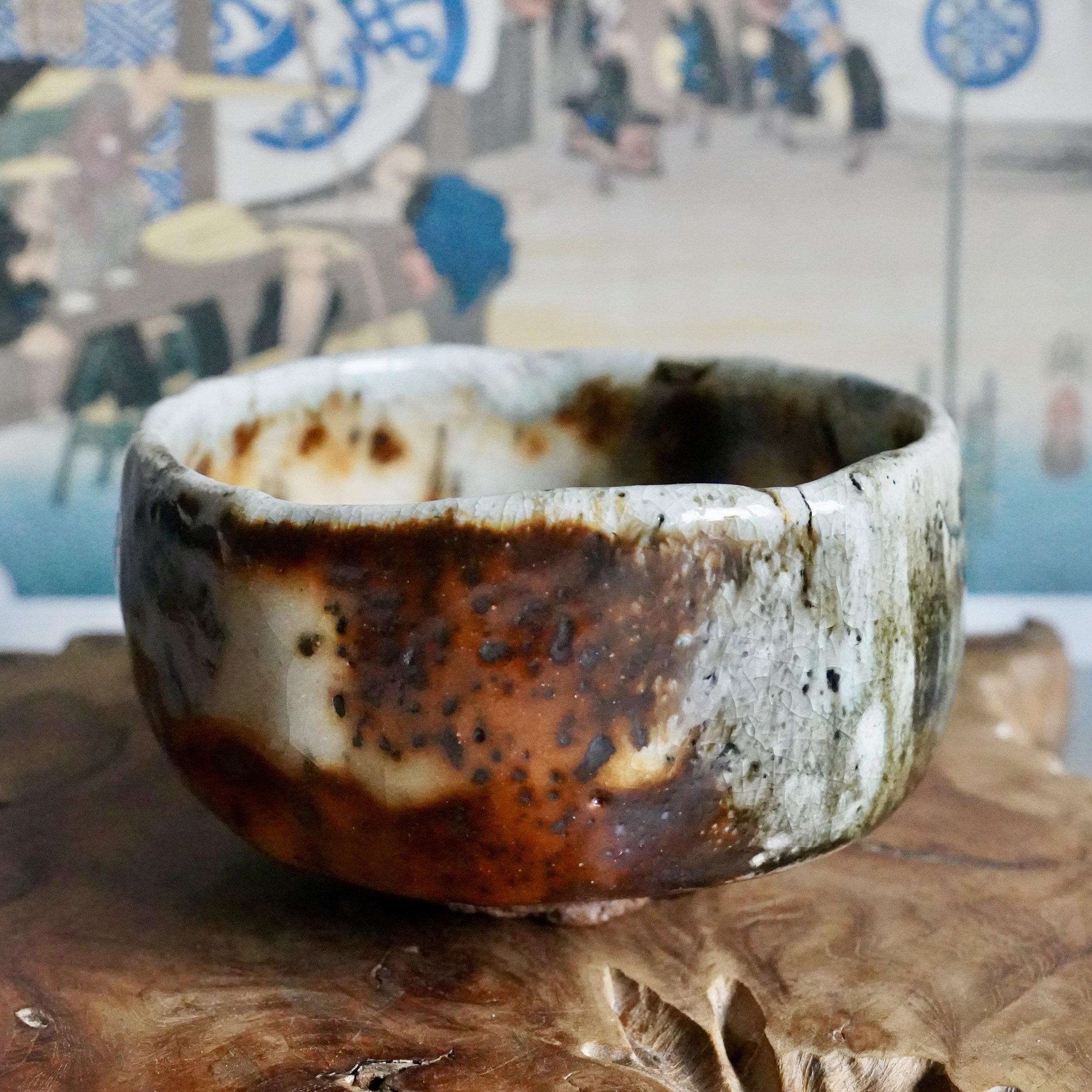
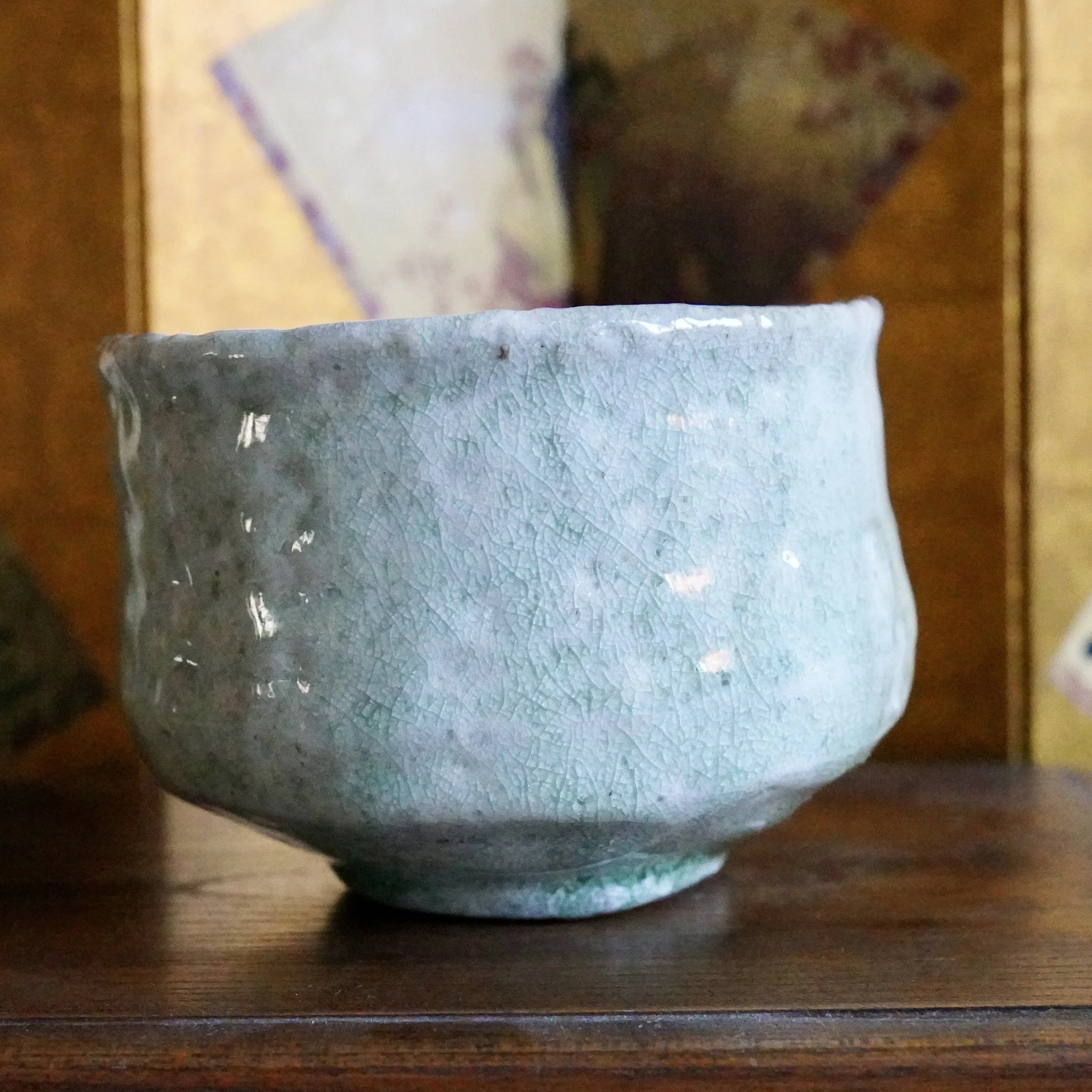
Tea ceremony items in collection
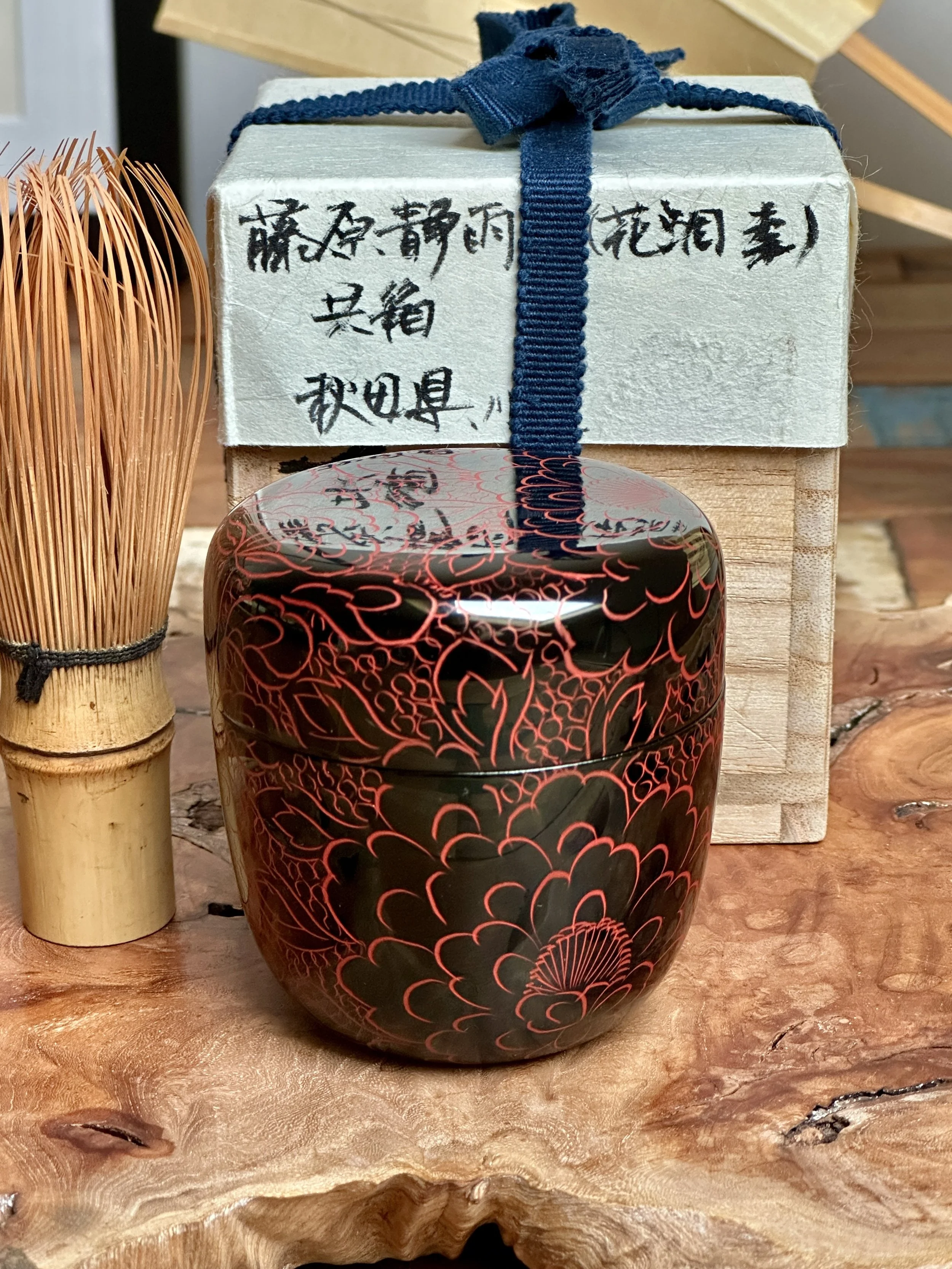
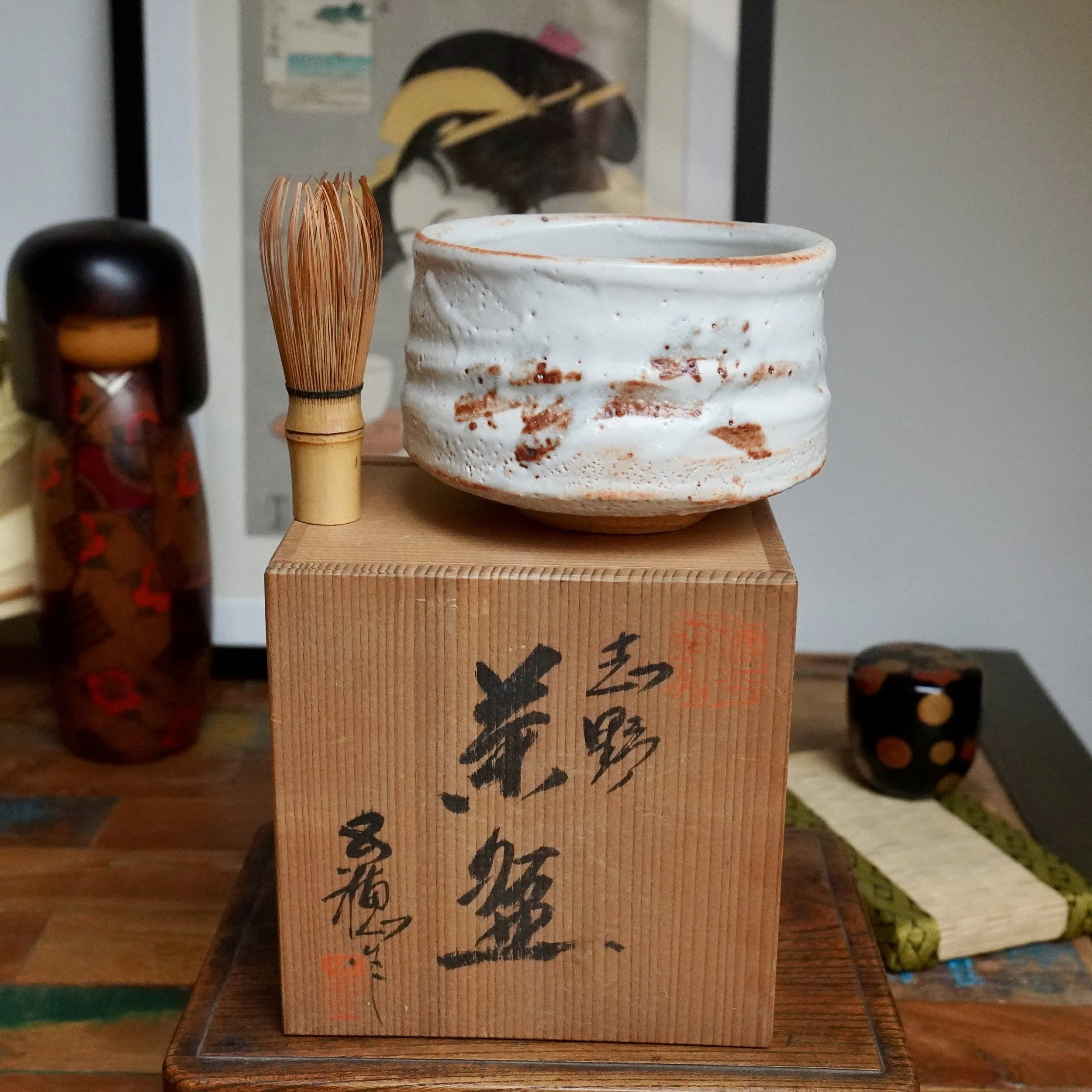
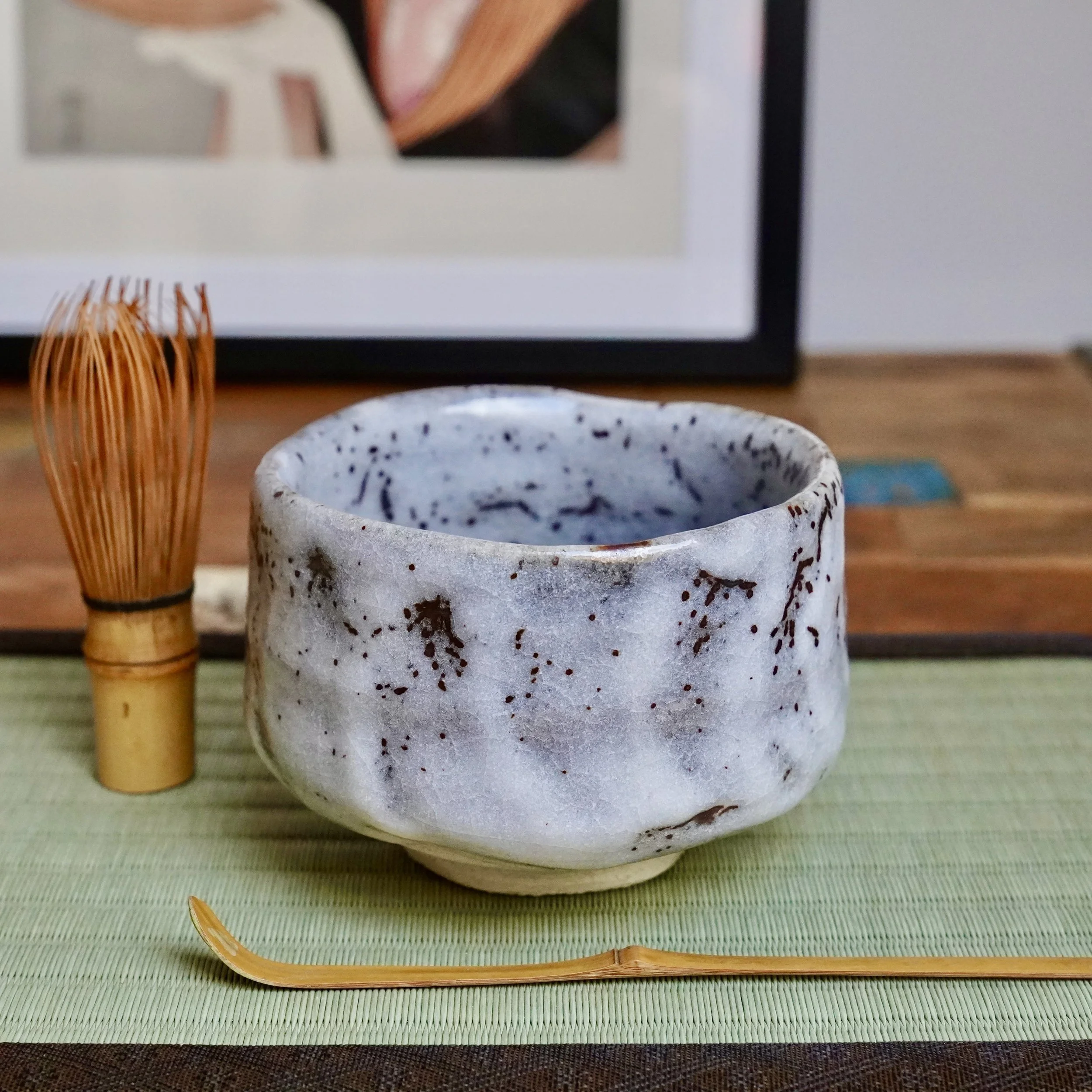
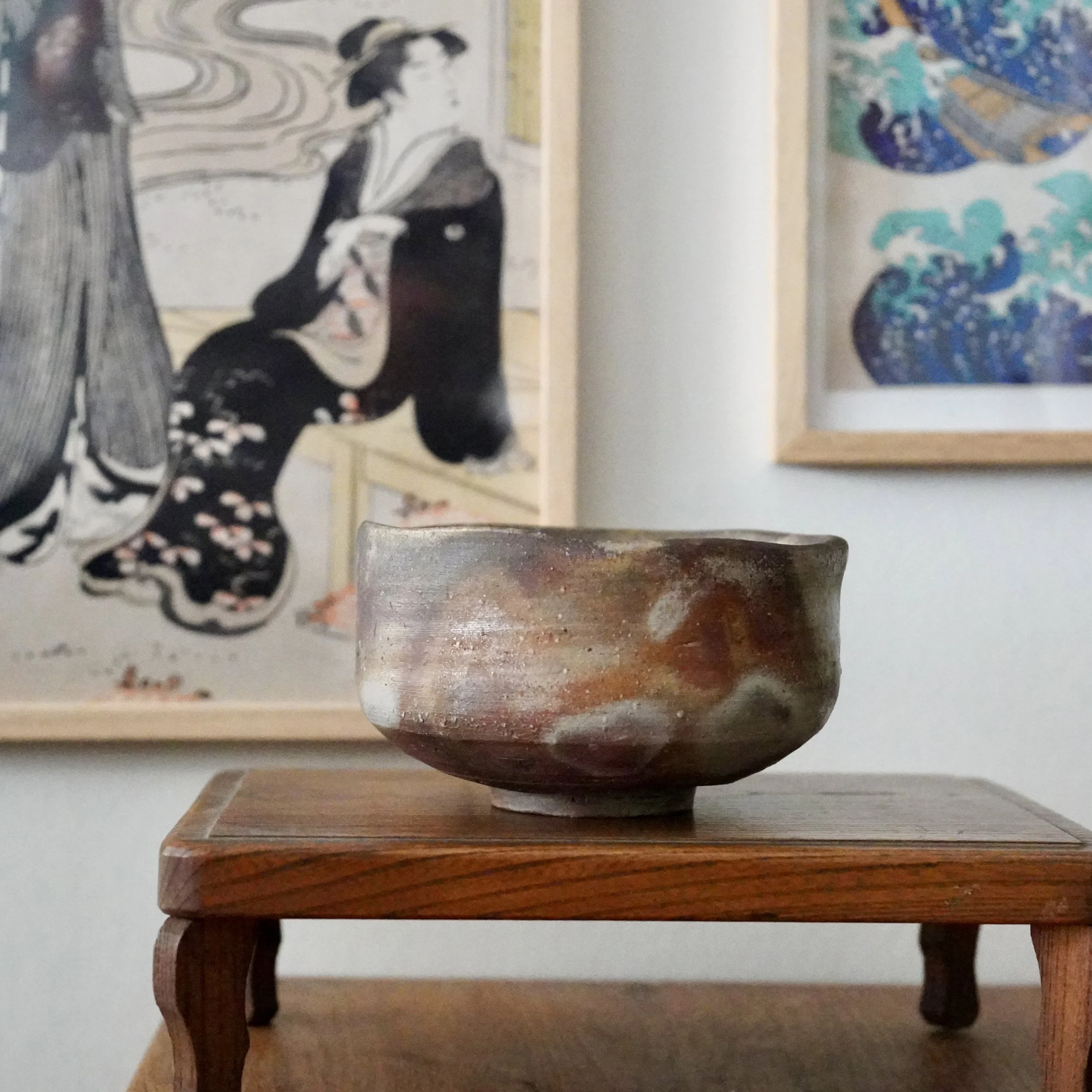
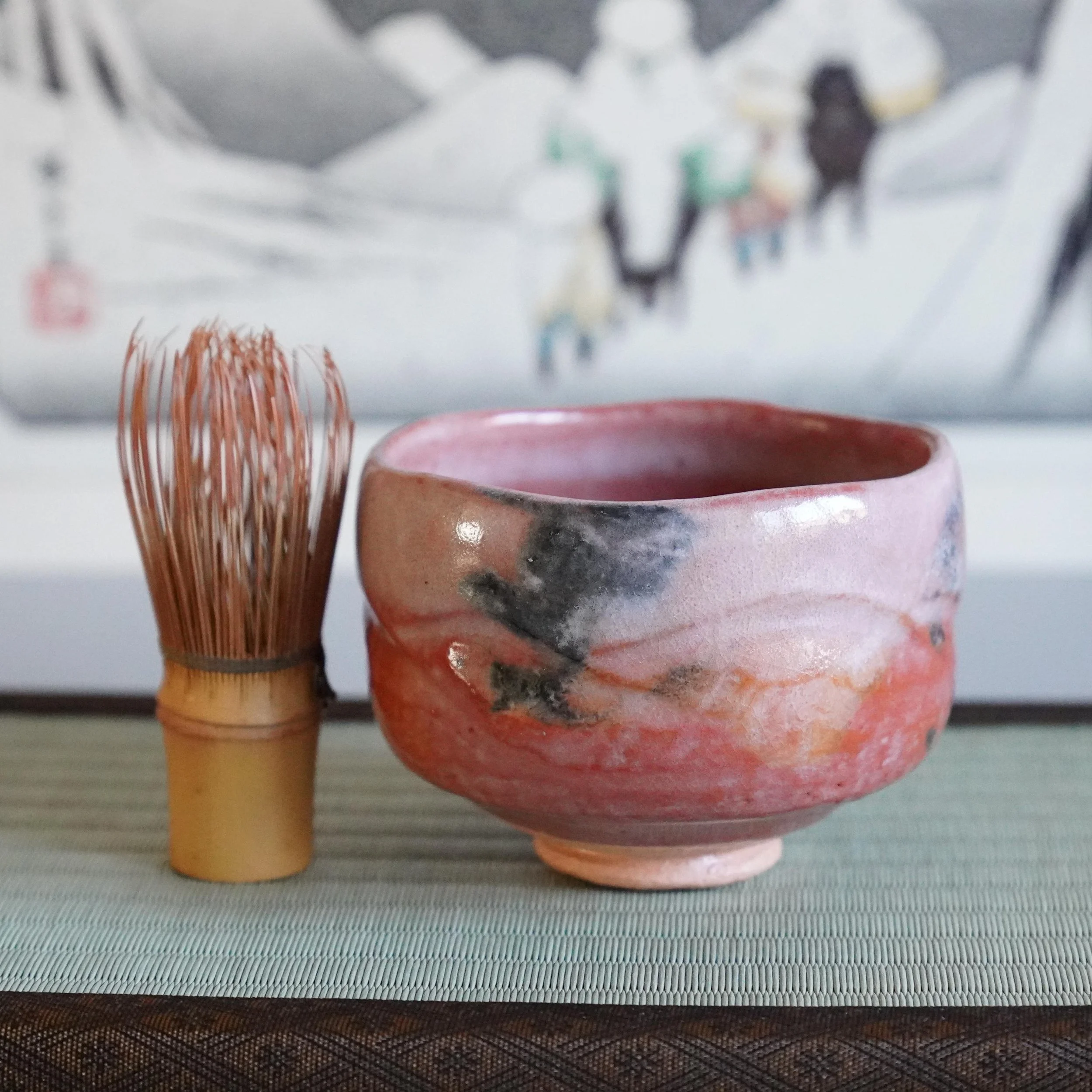
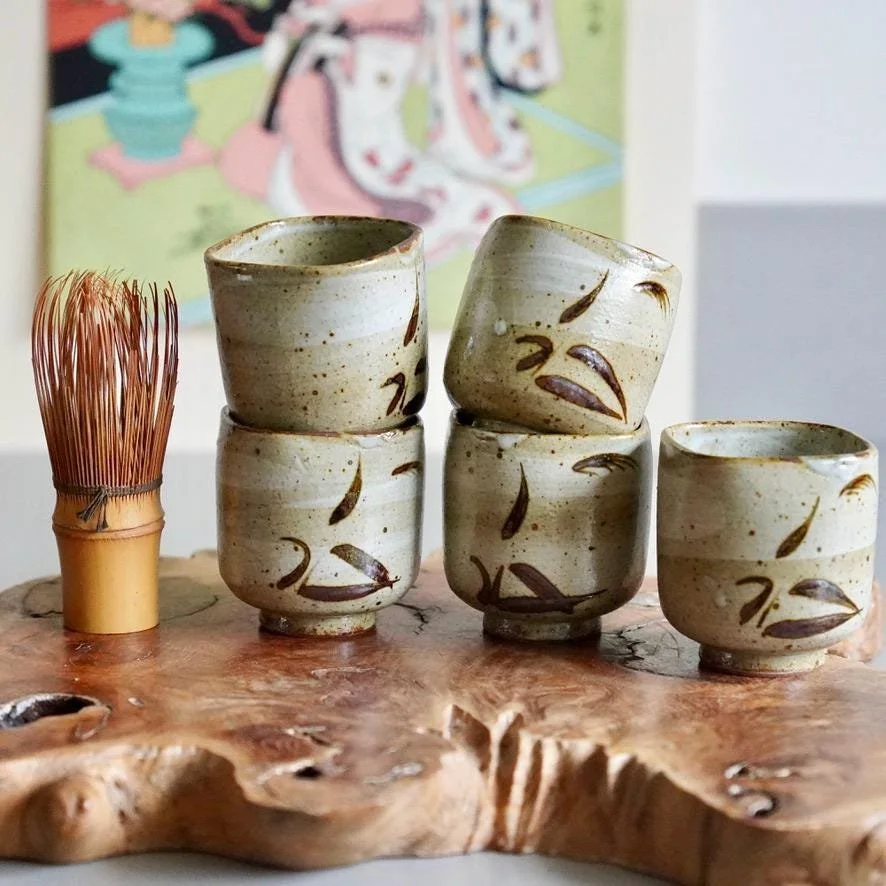
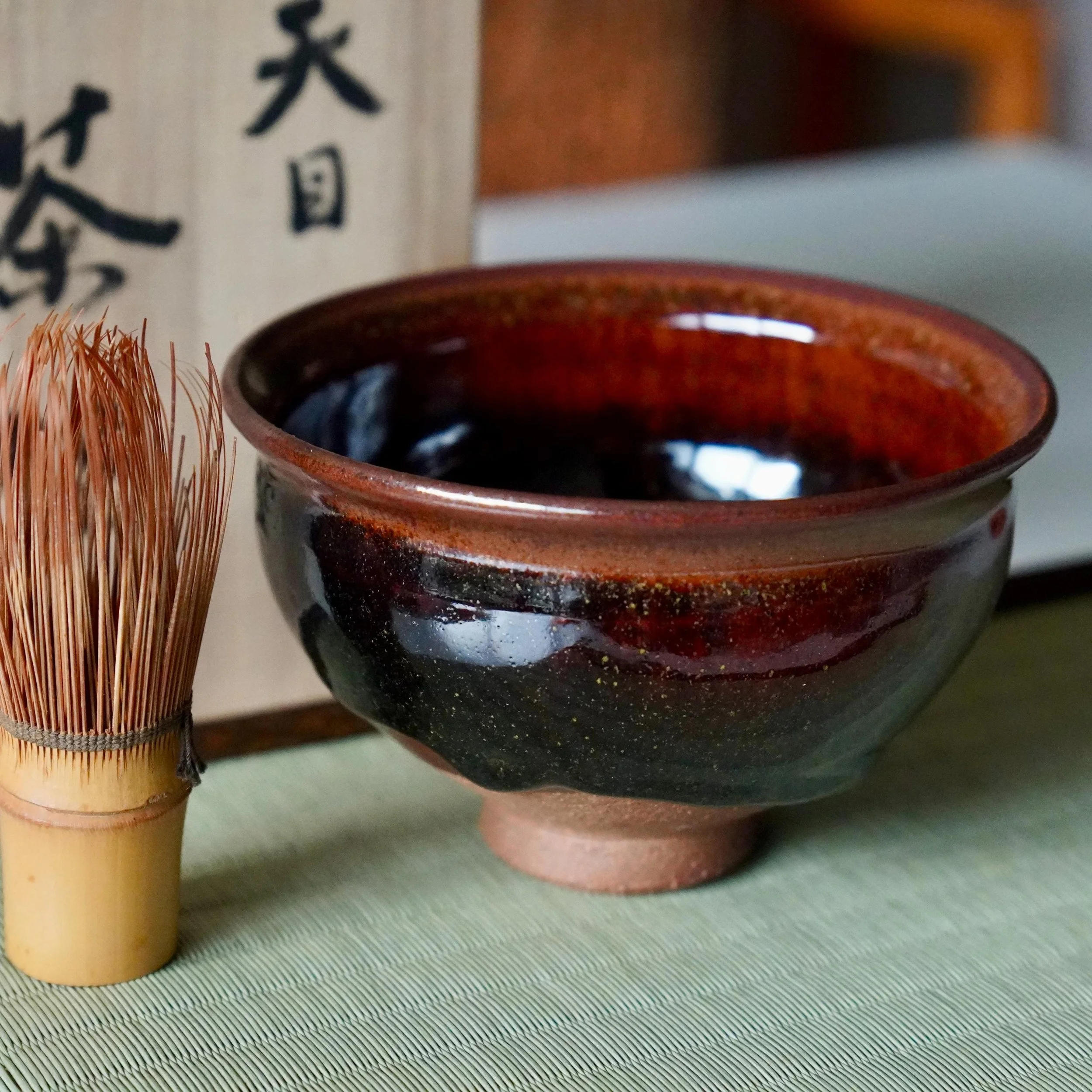
Read more
A selection of other journal posts about wood-fired and glaze-free traditions in Japan.
→ Curious what makes a chawan's weight and shape matter as much as its glaze? I wrote about it in my journal.
→ Bizen has no glaze at all, but Raku goes the opposite direction, formed entirely by hand rather than on a wheel. I stepped inside a two hundred year old Kyoto kiln that still works this way: Inside a 200-year-old Kyoto raku-yaki kiln
→ Curious how a family kiln passes its own glaze from one generation to the next? I visited one in Hagi where father and son work under the same roof with two entirely different palettes: One of my favorite mornings in Hagi, at the Okada kiln
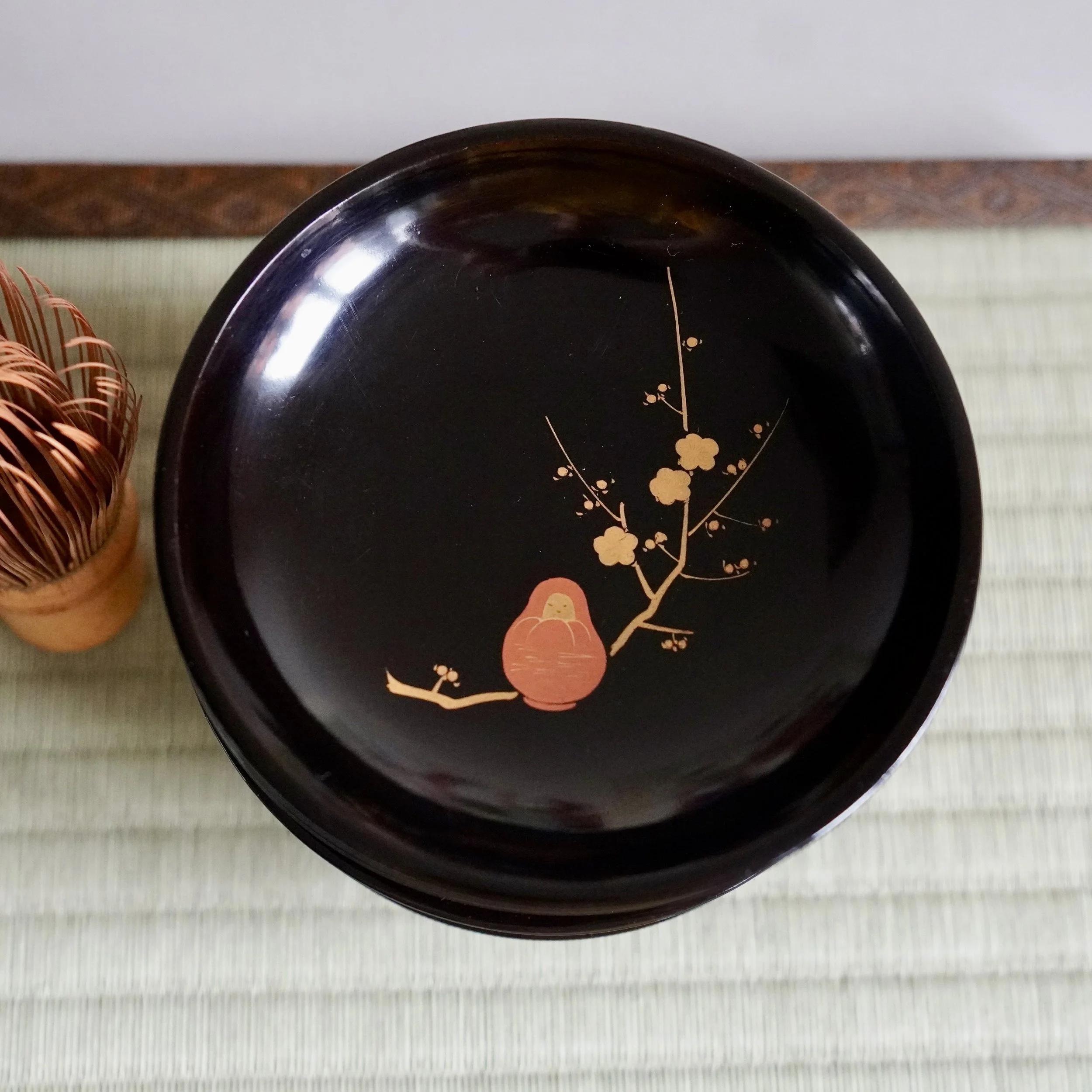
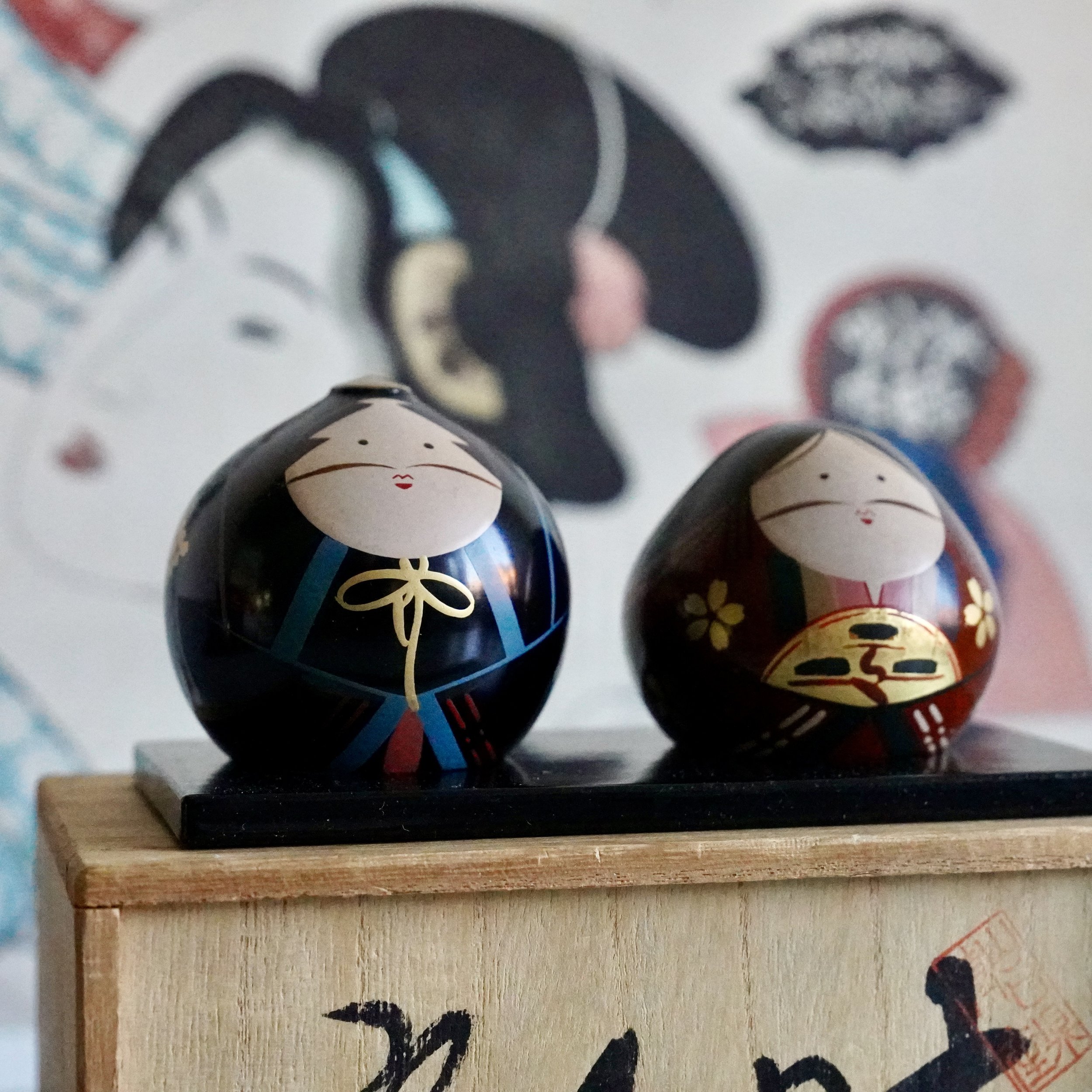
Black so deep it looks like still water, and scattered across it, crests in gold and in red, none of them quite where you expect. The gold ones are soft and matte, while the red ones carry tiny flecks of gold that wake up when you turn the lid toward the light. It sits in the palm like a smooth pebble and is hard to put down. It is the kind of small object that makes a shelf, a desk or a tea tray look considered.
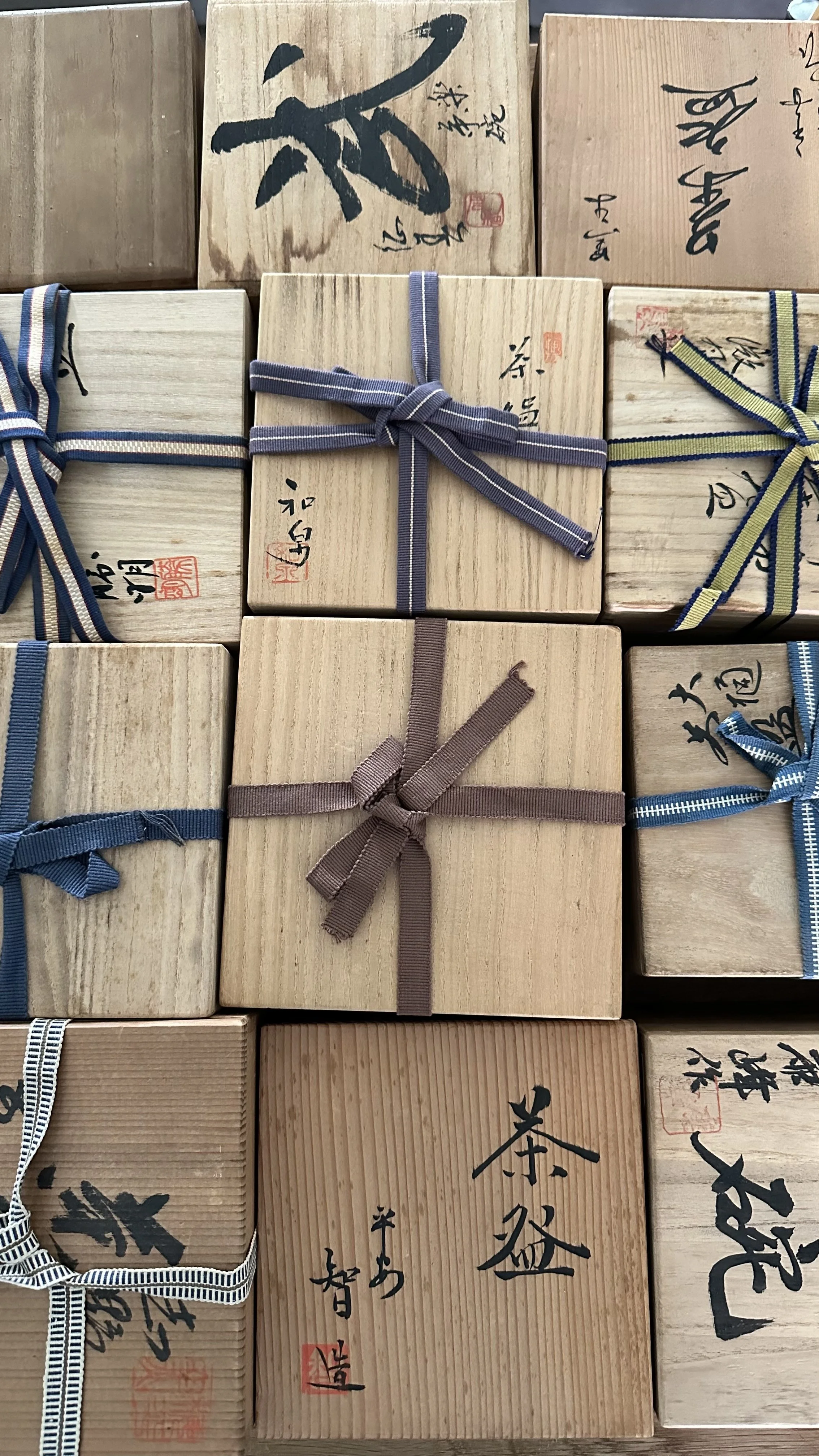
It was made by Hariya Yūsai, a makie artist from Ishikawa who is recognised in Japan as a Traditional Craftsman, and he signed and sealed the wooden box himself. That box is why it feels complete: the natsume, the box that names its maker and its style, and the yellow cloth that came with it have stayed together. If you make matcha, this is a proper tea caddy with a real maker behind it. If you don't, it is still something you will want to keep in sight.