
Meet the maker: Shibaoka Tōsendō, Kōzan-gama
Shibaoka Tōsendō, working under the kiln name Kōzan-gama, has fired Bizen-yaki in Imbe since 1912, now in its third generation. Alongside its traditional yakishime output, the kiln is known for a rare blue-green ao-Bizen effect and, more recently, for a small ceramic robot mascot made by one of the current generation's sons.
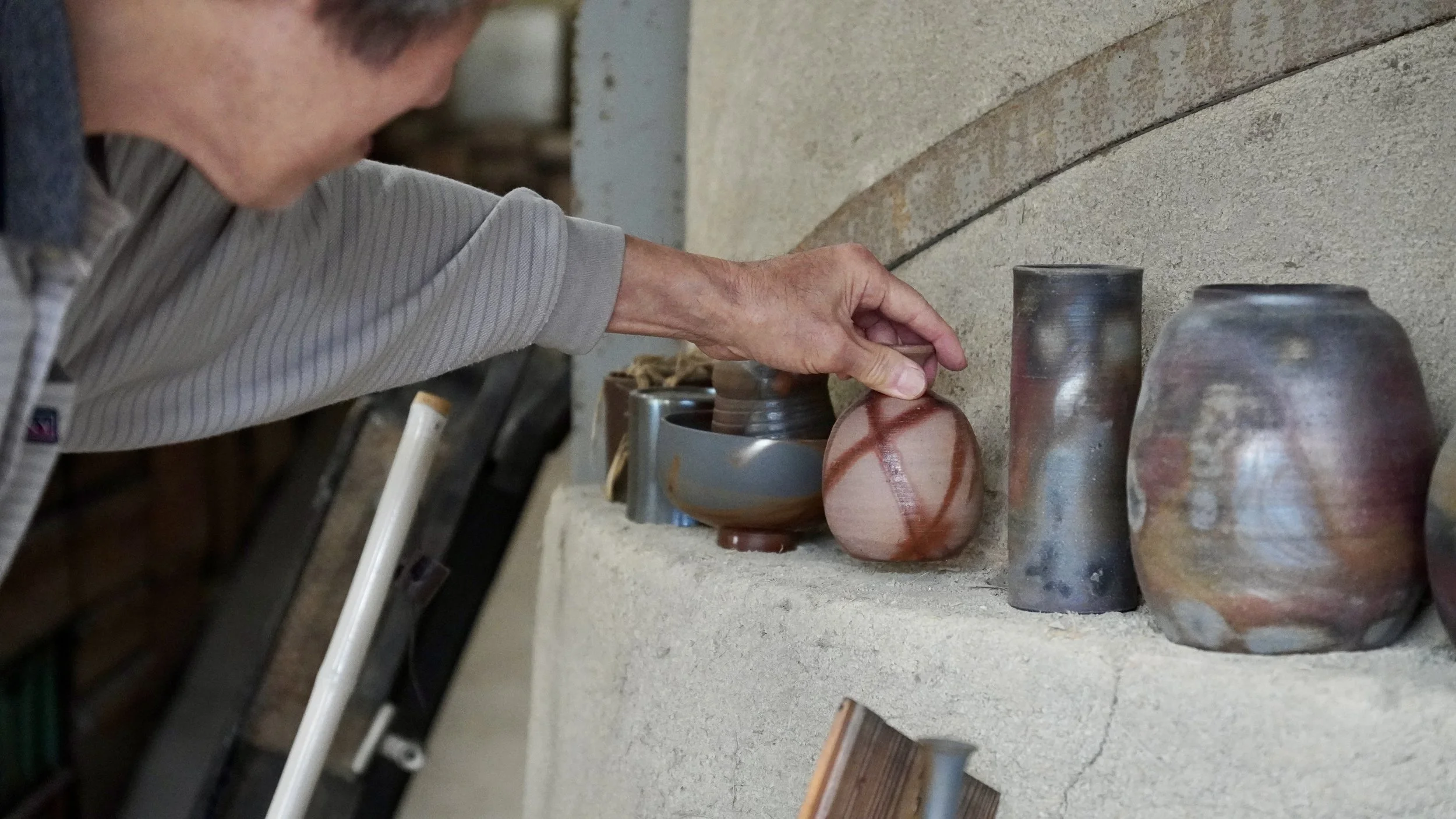
Shibaoka Masashi, third-generation Kōzan, reaching for a hidasuki-marked piece at Kōzan-gama.
Who is behind Kōzan-gama?
Shibaoka Tōsendō (柴岡陶泉堂) was founded in Imbe, Bizen, in 1912 (Taishō 1) by the first-generation Shibaoka Kōzan (柴岡香山). The kiln relocated to its current site in 1931. It has stayed in family hands ever since: the second-generation Kōzan, Shibaoka Tsuyoshi (柴岡強), began working the kiln in 1937 and took over its name and management after the first generation's death, continuing to work under it for over fifty years. In 1983 he became the first person in Bizen ceramics recognised as a Traditional Craftsman (伝統工芸士) specifically for this kiln.
The third-generation Kōzan, Shibaoka Masashi (柴岡正志), began working at the kiln in 1966 and formally took the Kōzan name in 1998, following his father's death. He received his own Traditional Craftsman recognition in 2008, and, like his father before him, has continued to focus specifically on ao-Bizen work. On a visit to the kiln, Masashi himself was at the kiln mouth during an active firing, and one of his two sons was working alongside him.
His two sons, Shibaoka Chikara (柴岡力) and Shibaoka Hisashi (柴岡久), joined the family workshop in 1995 and 2001 respectively, and both now work as recognised Bizen-yaki artists in their own right, producing both traditional forms and more contemporary pieces alongside the kiln's established output. Hisashi's work was selected in 2016 for The Wonder500, a Japanese government programme identifying 500 regional craft products for international promotion, and he has since collaborated on ceramics projects with Starbucks Japan and Panasonic, work that sits well outside the kiln's traditional output but grew directly out of it.
The kiln has built several noborigama on its grounds over the decades, including new climbing kilns in 1971, 1981, and, at a second location at Sen'yō-ga-hara, in 2009. The 2009 kiln, the one most recently active, held its first firing that same year. In 2012 the kiln marked its hundredth anniversary with commemorative exhibitions at department stores in Okayama and Kurashiki.
What sets their work apart
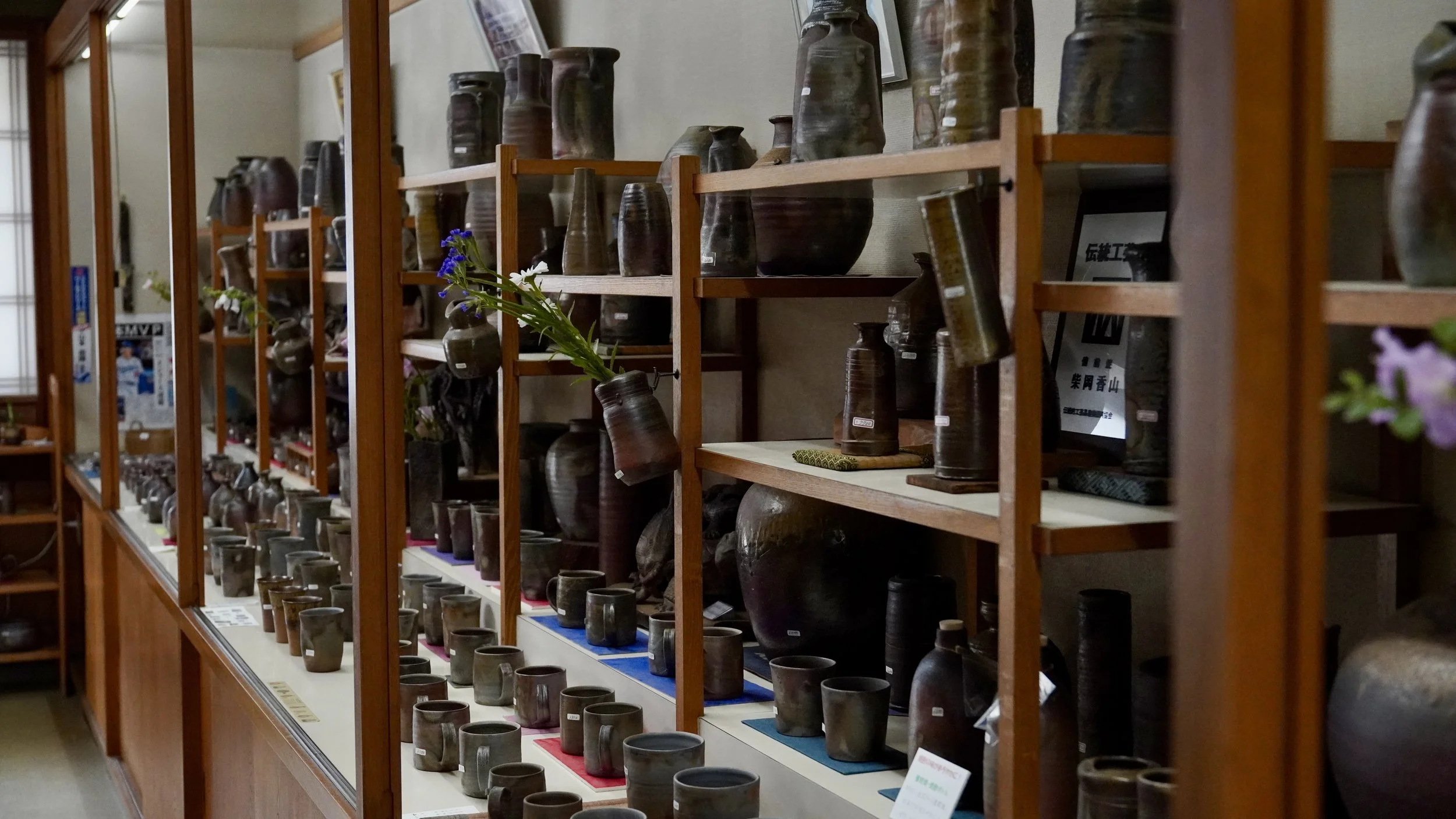
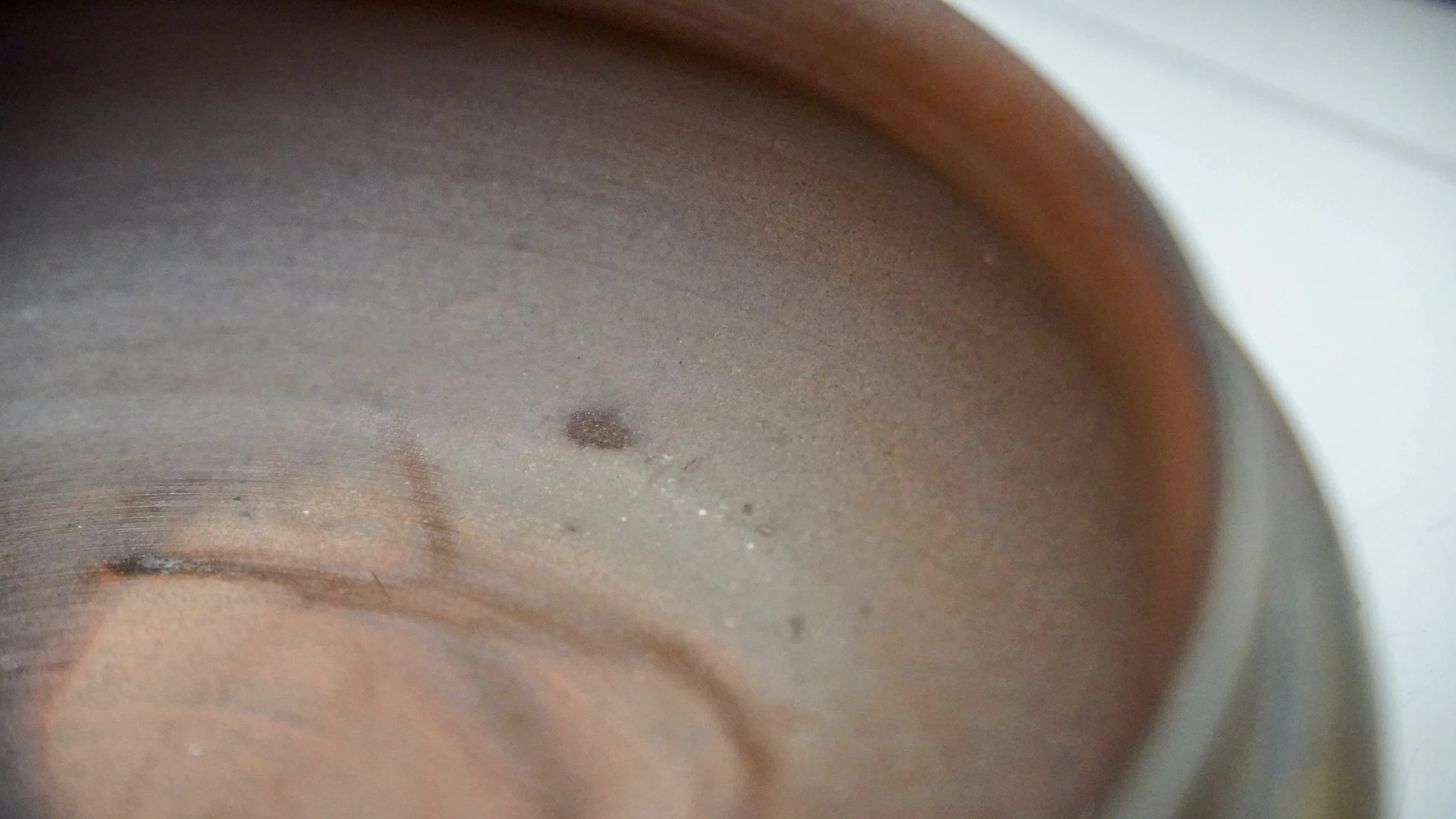
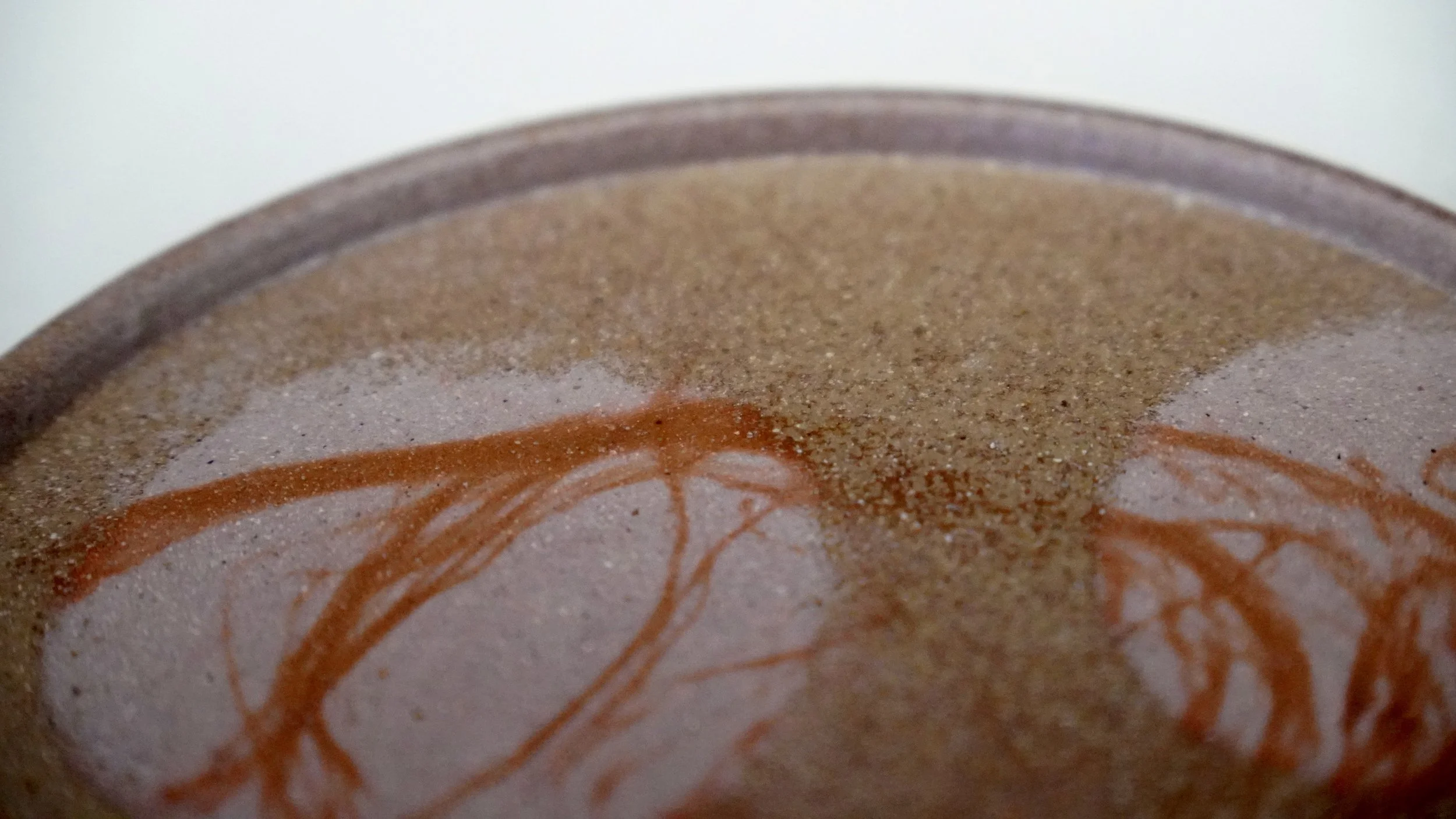
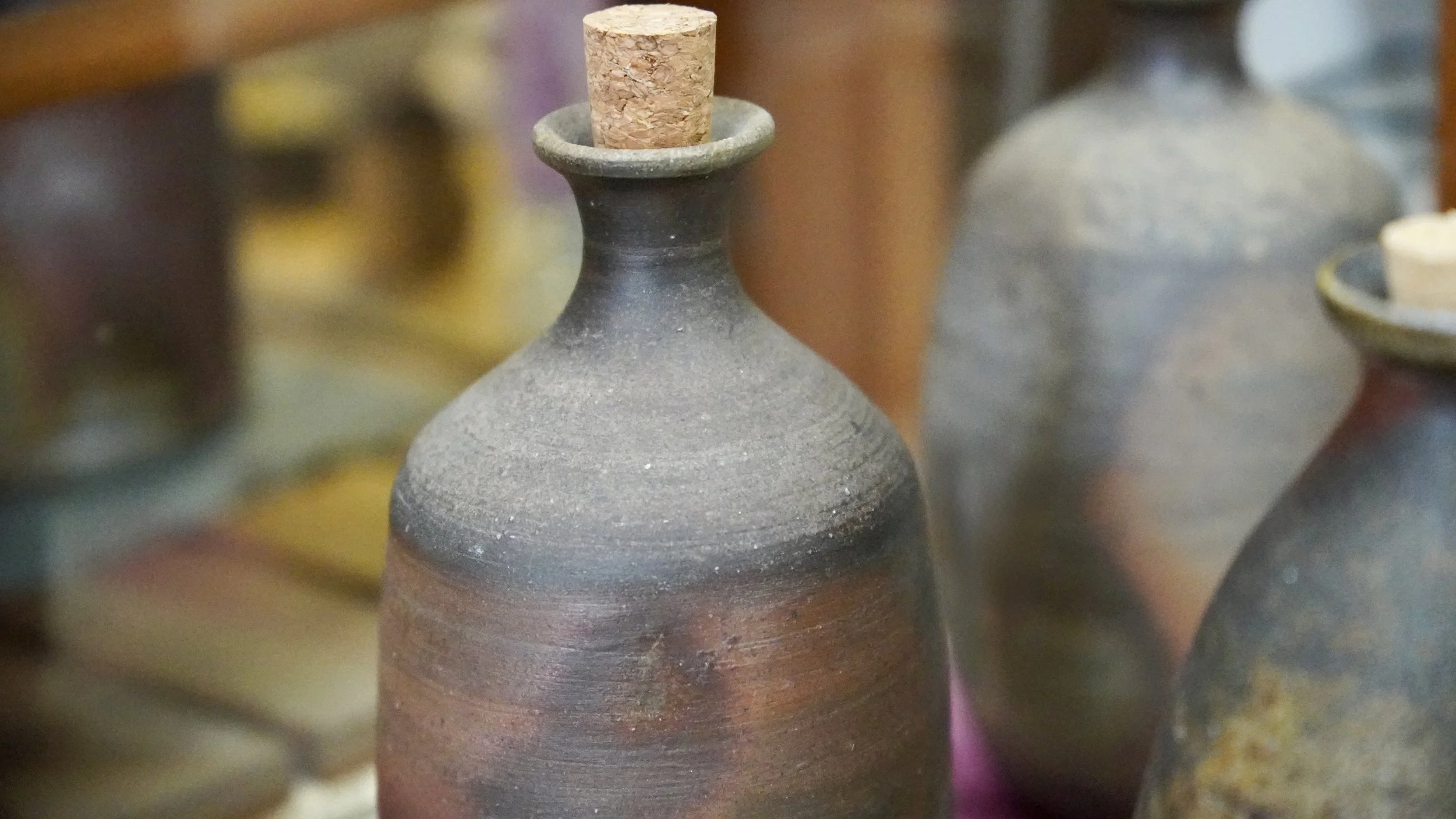
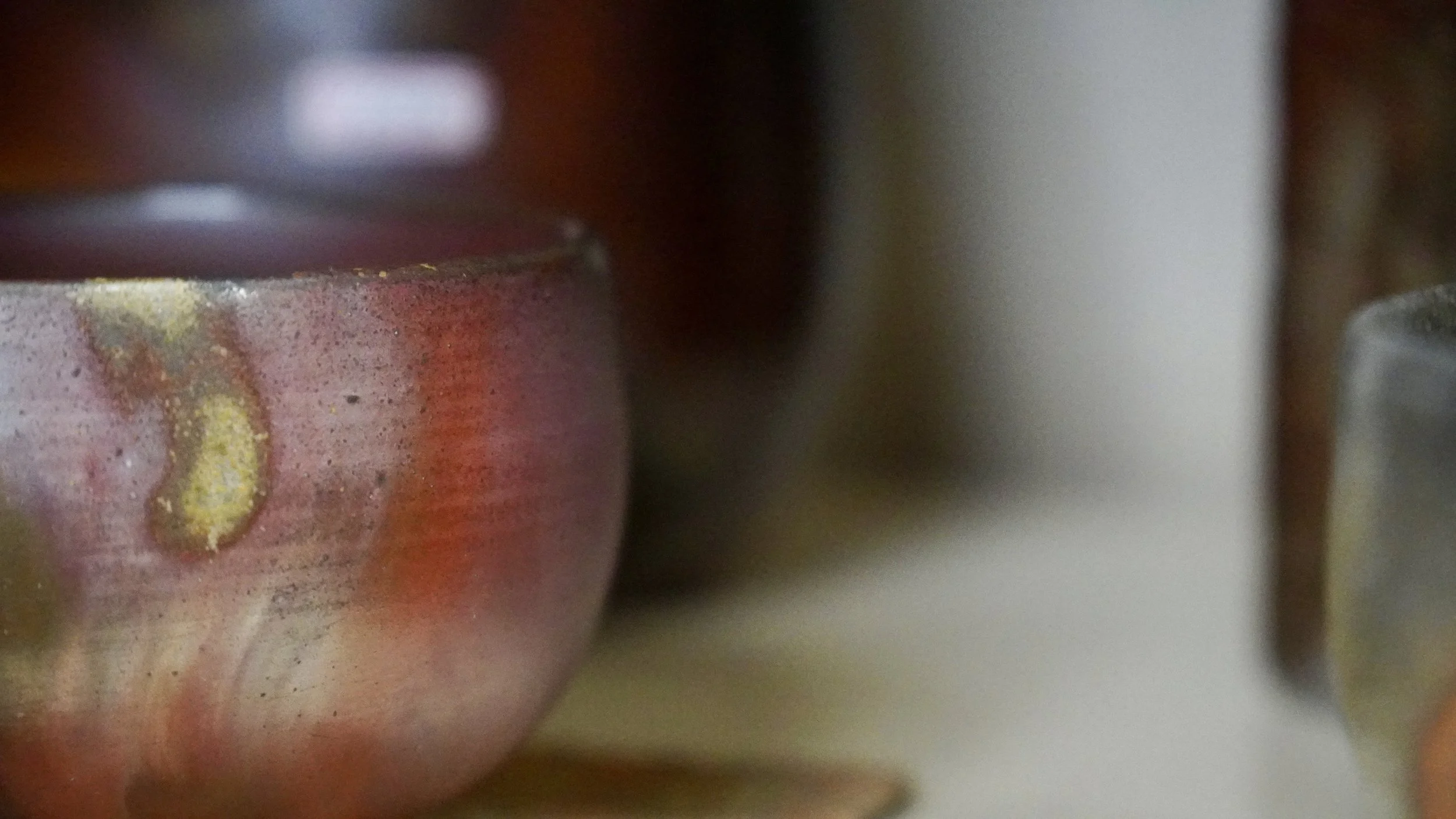
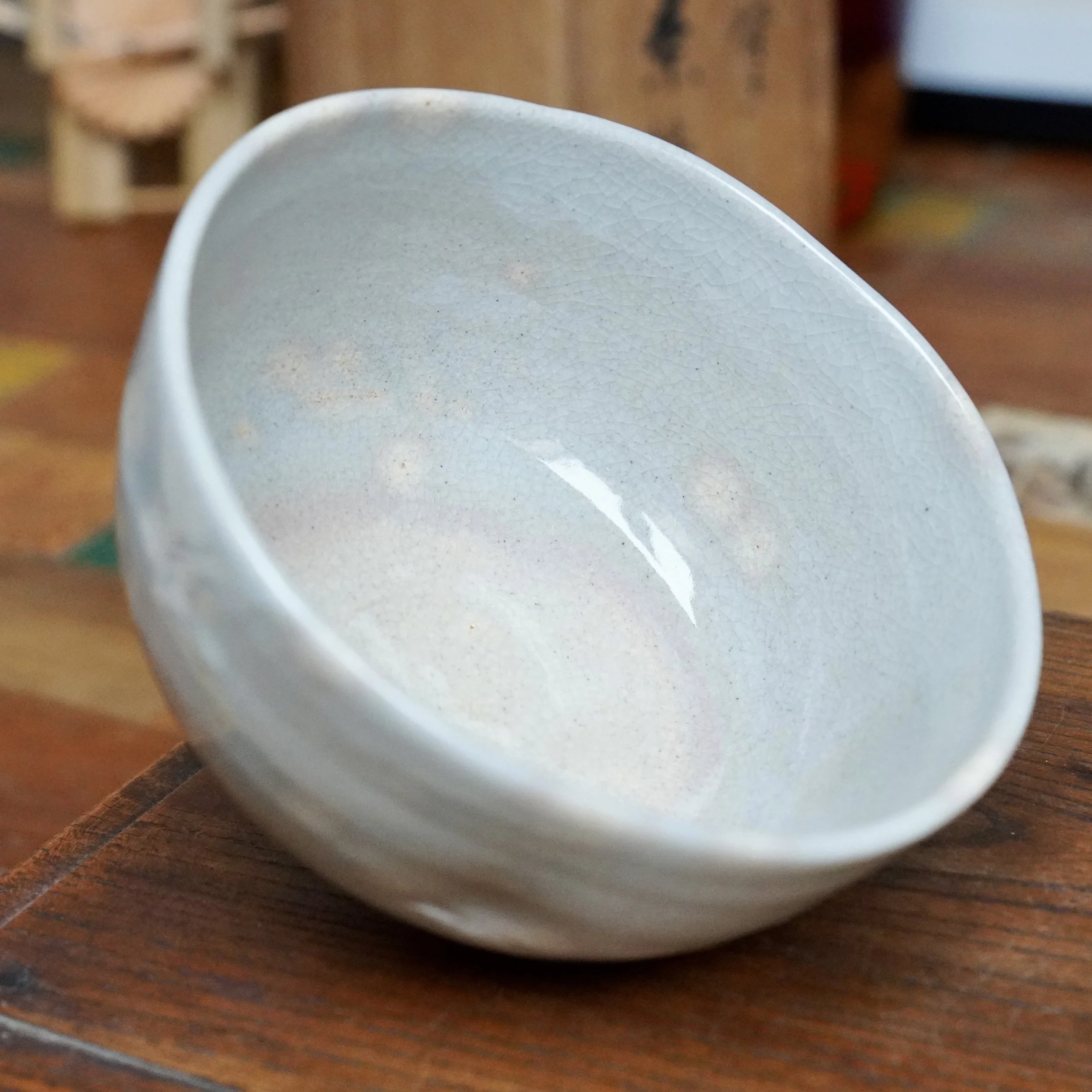
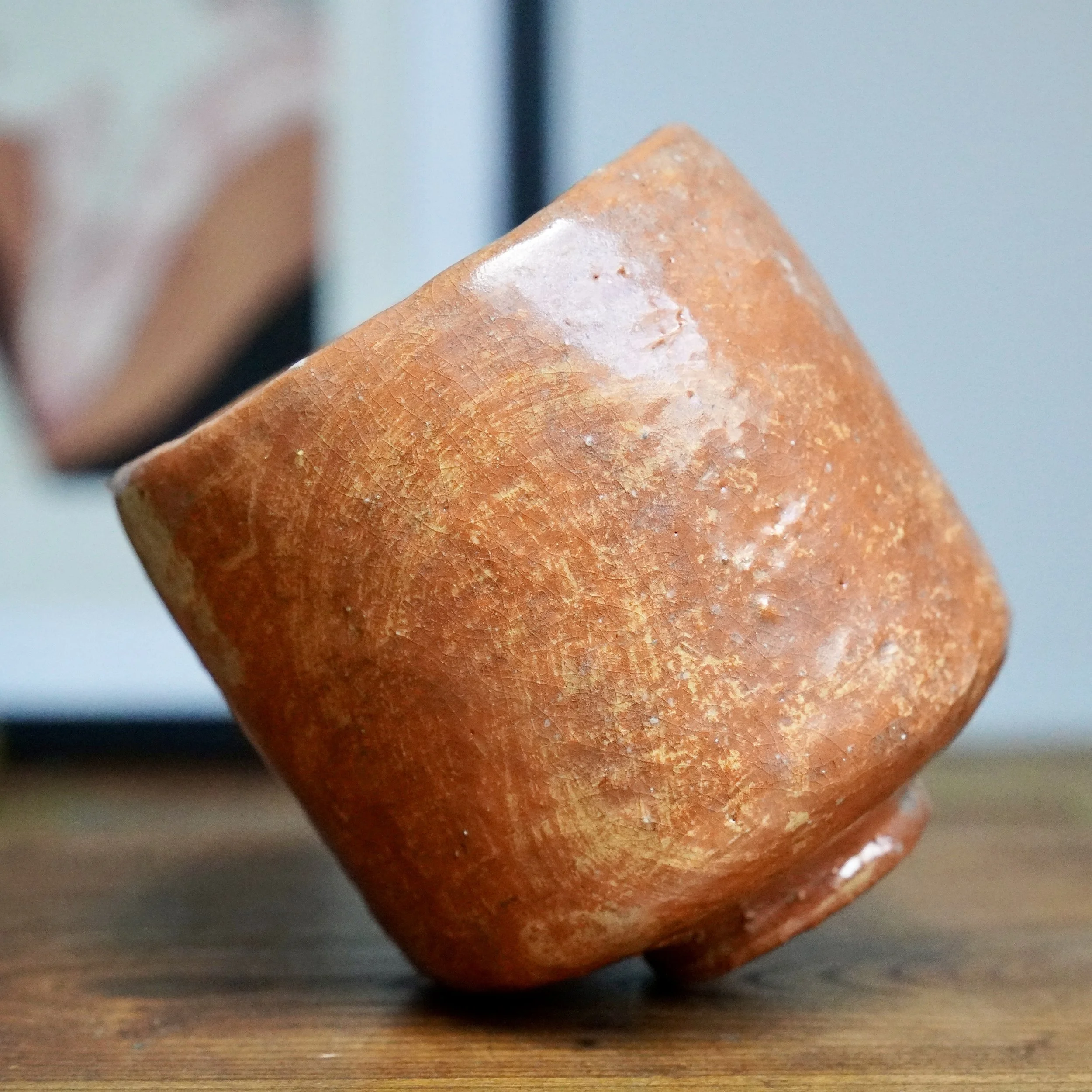
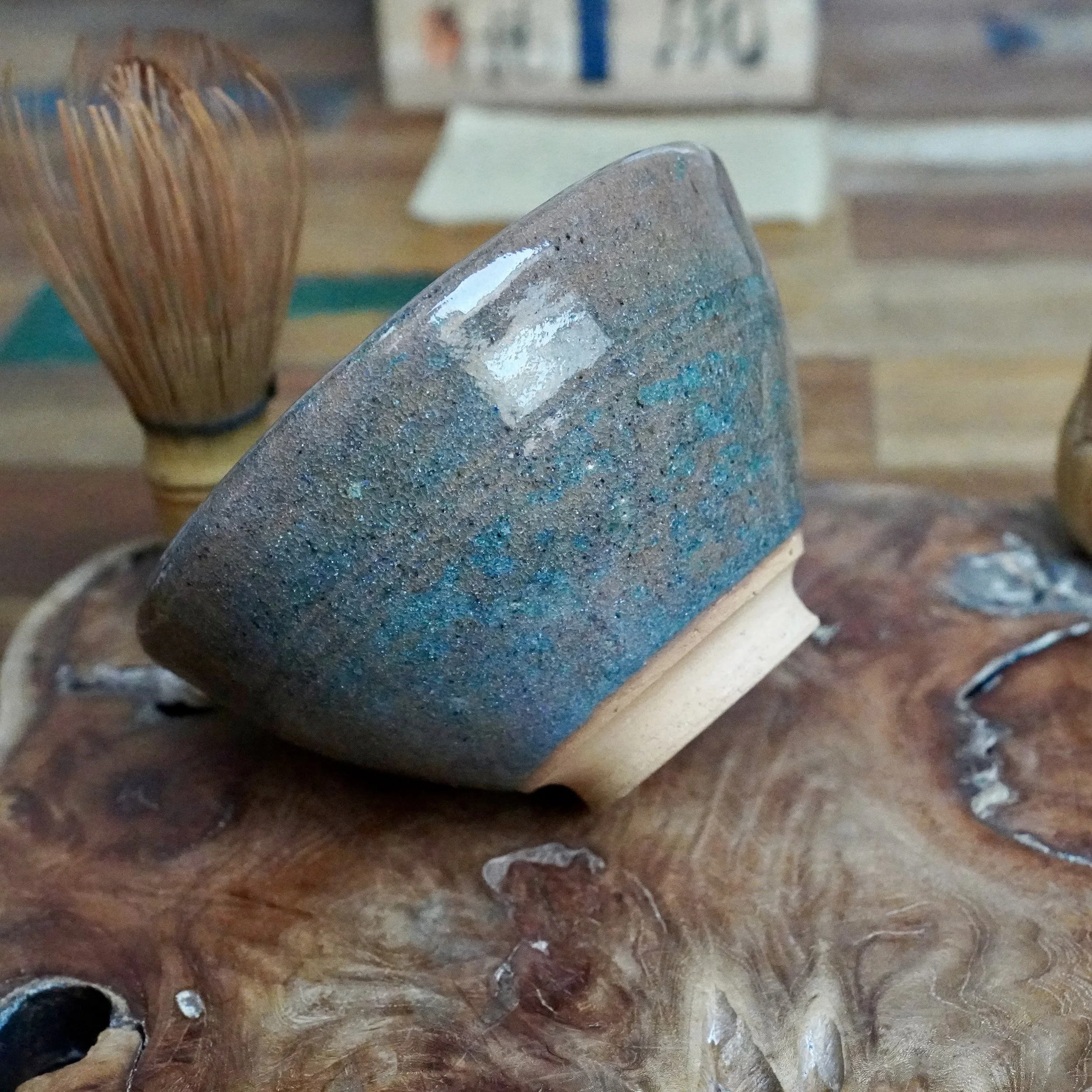
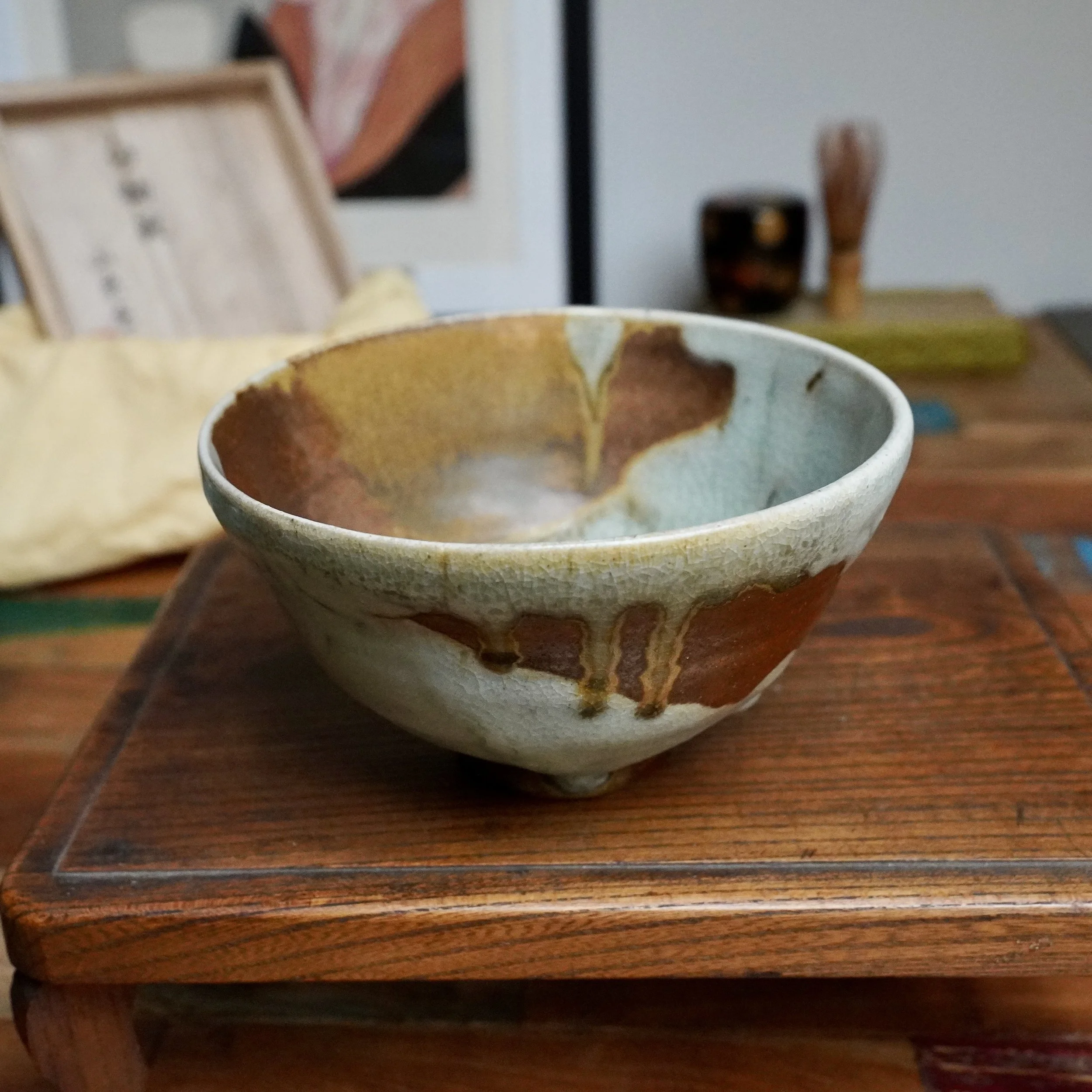
Work from this kiln spans a genuinely wide range: vases, tea ceremony objects, sake ware, tableware, storage jars, and even ceramic lamps, reflecting the kiln's stated aim of combining an unpretentious, useful form with the warmth and natural beauty of clay and fire. The clay body tends toward a dense, dark red-brown to grey-purple ground, consistent with standard Bizen hiyose clay, with sangiri and goma effects both well represented across the kiln's output. Where ao-Bizen appears, the surface takes on a cool blue-green to grey cast rather than the more common warm reddish tones, a genuinely distinctive marker for this kiln's work specifically. The kiln's showroom also displays the more playful, figurative side of its current generation, including the BIZENYAKI-ROBOT mascot, alongside the classical yakishime pieces.
The Bizen-Yaki robot
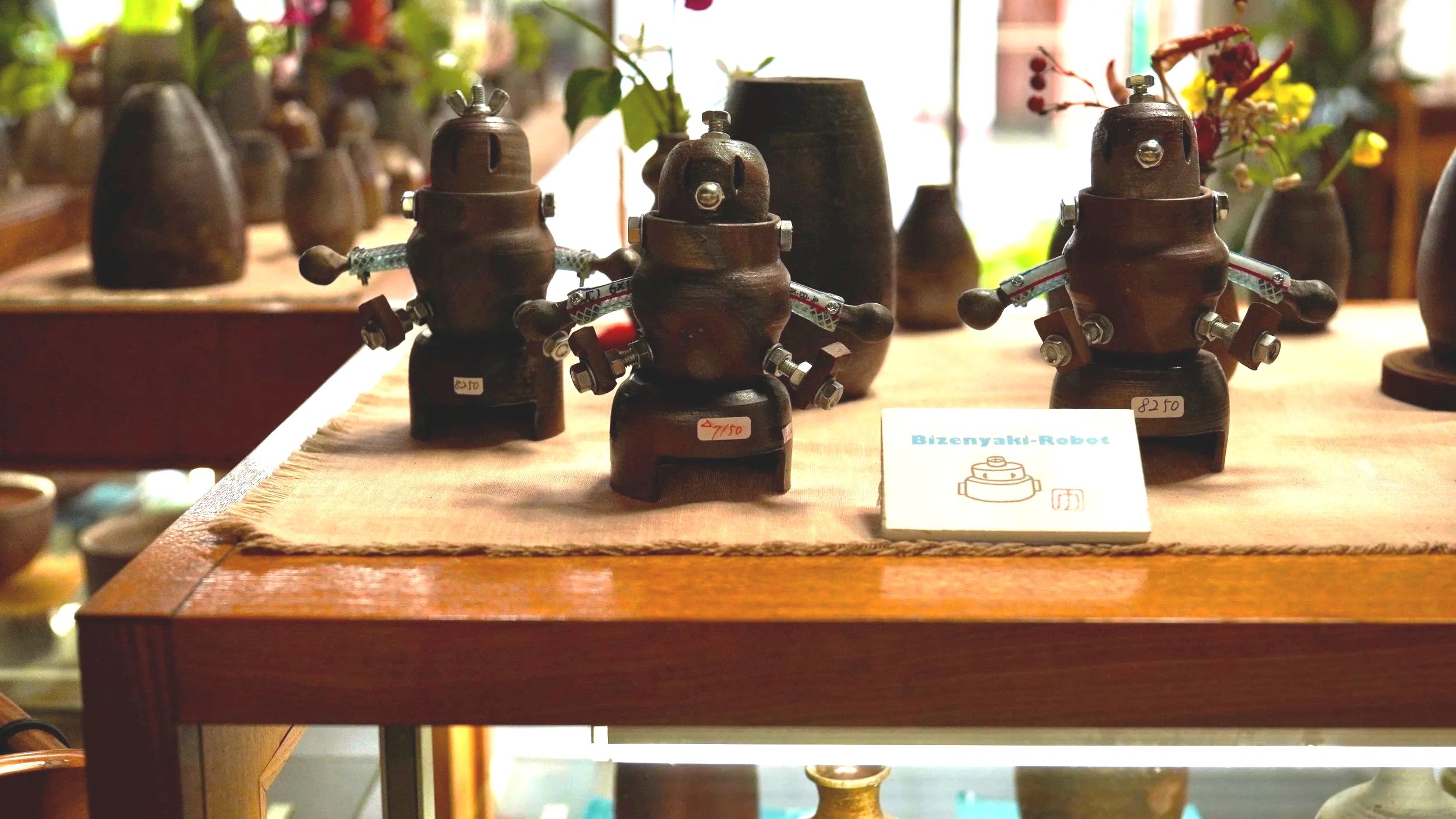
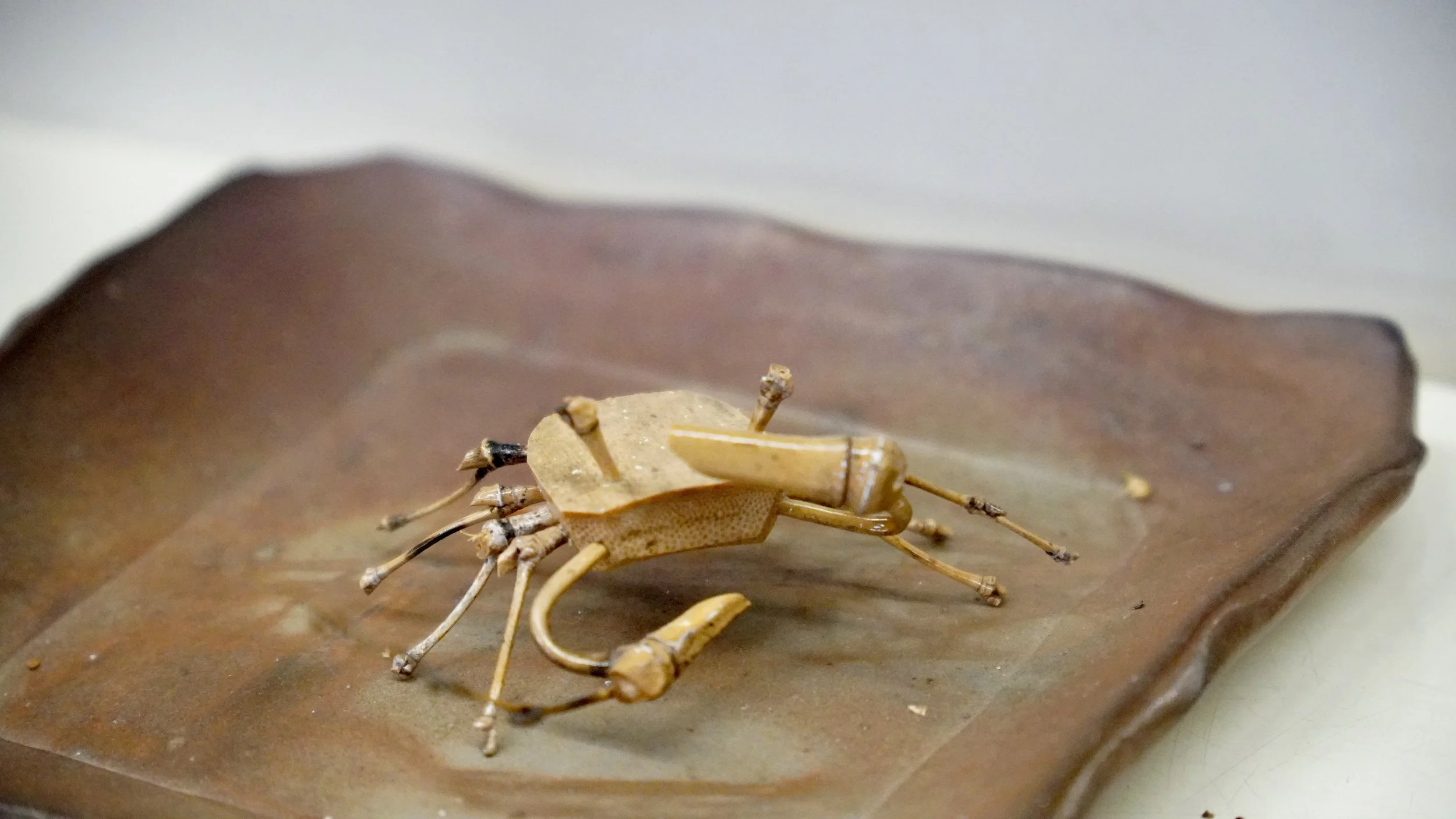
The BIZENYAKI-ROBOT, Shibaoka Chikara's mascot creation, lined up in the shop display in Imbe.
Yes, you have read this right. The current generation has taken the kiln in a genuinely playful direction. Shibaoka Chikara (柴岡力) created the BIZENYAKI-ROBOT, a small mascot figure with a Bizen-fired ceramic head and body, hand-assembled afterward with visible screws and rubber-tube joints. The robot has become something of a fixture, kept on display at the front of the shop and recognised locally as a piece of the kiln's personality rather than a curiosity. Chikara and his brother Hisashi have both continued in this vein alongside their traditional work, producing figurative and contemporary pieces, animals, dinosaurs, robots, that sit deliberately apart from the kiln's classical output.
How to recognise a genuine piece
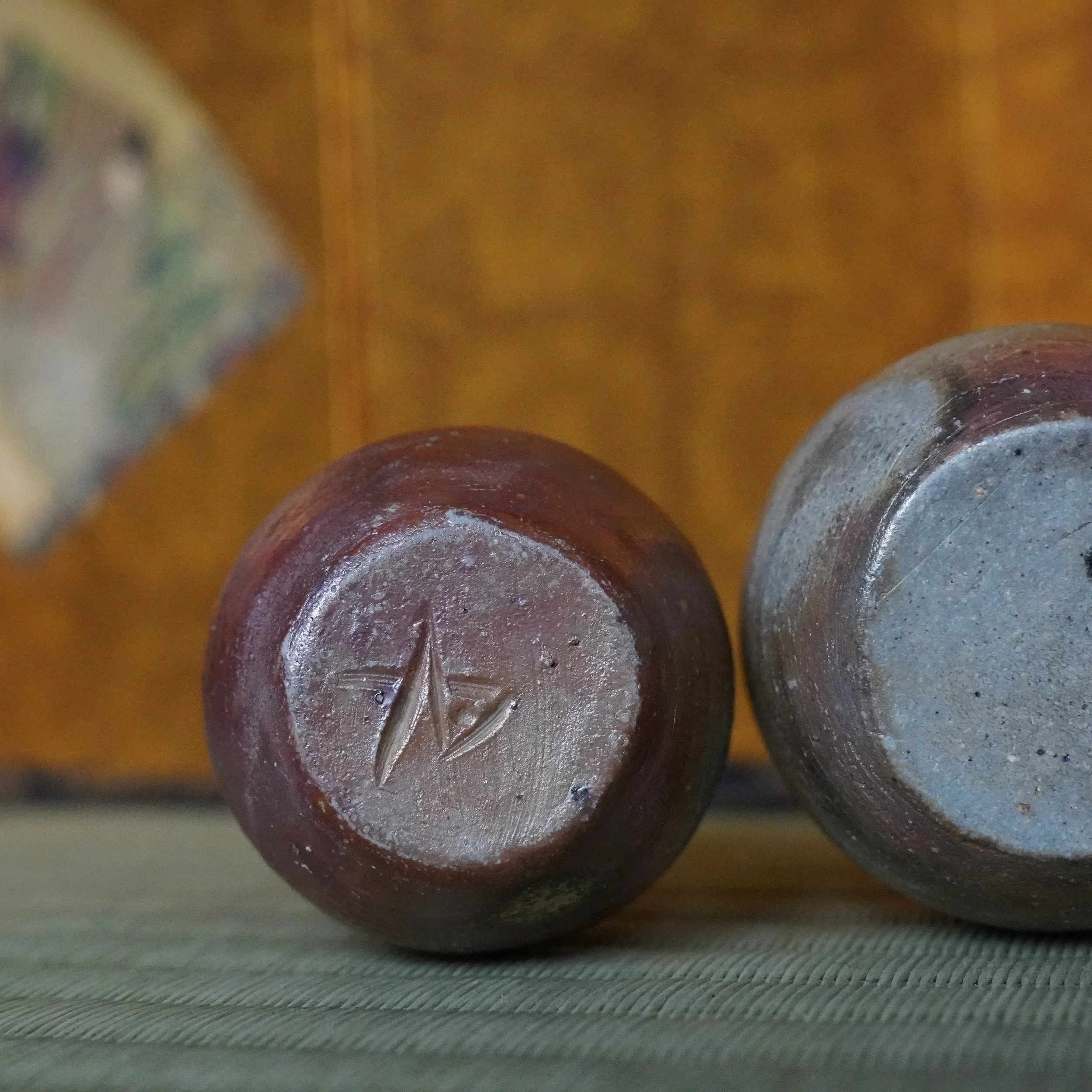
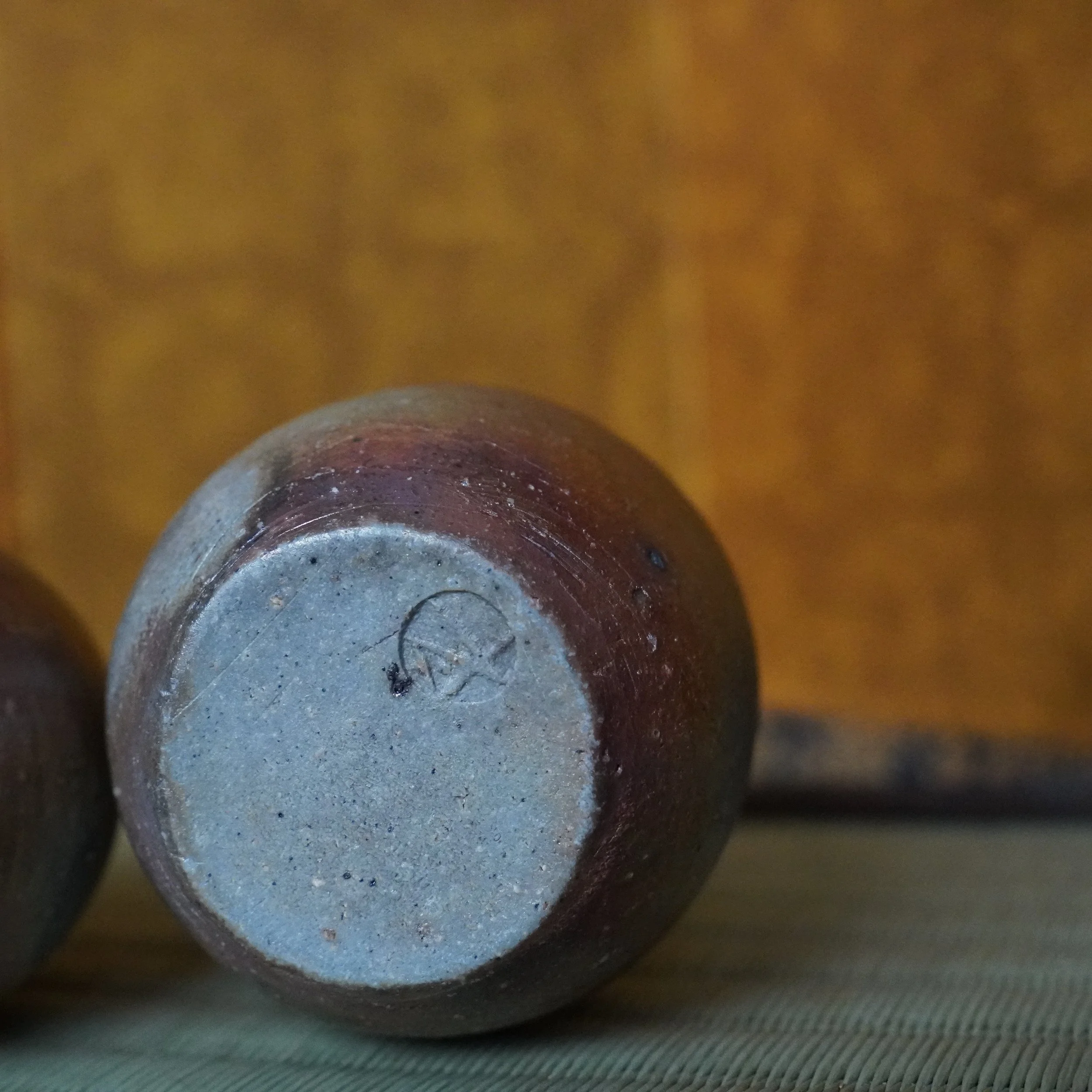
Pieces from this kiln are typically signed on the base with the kiln's registered mark, a stylised triangular or fan-shaped stamp.
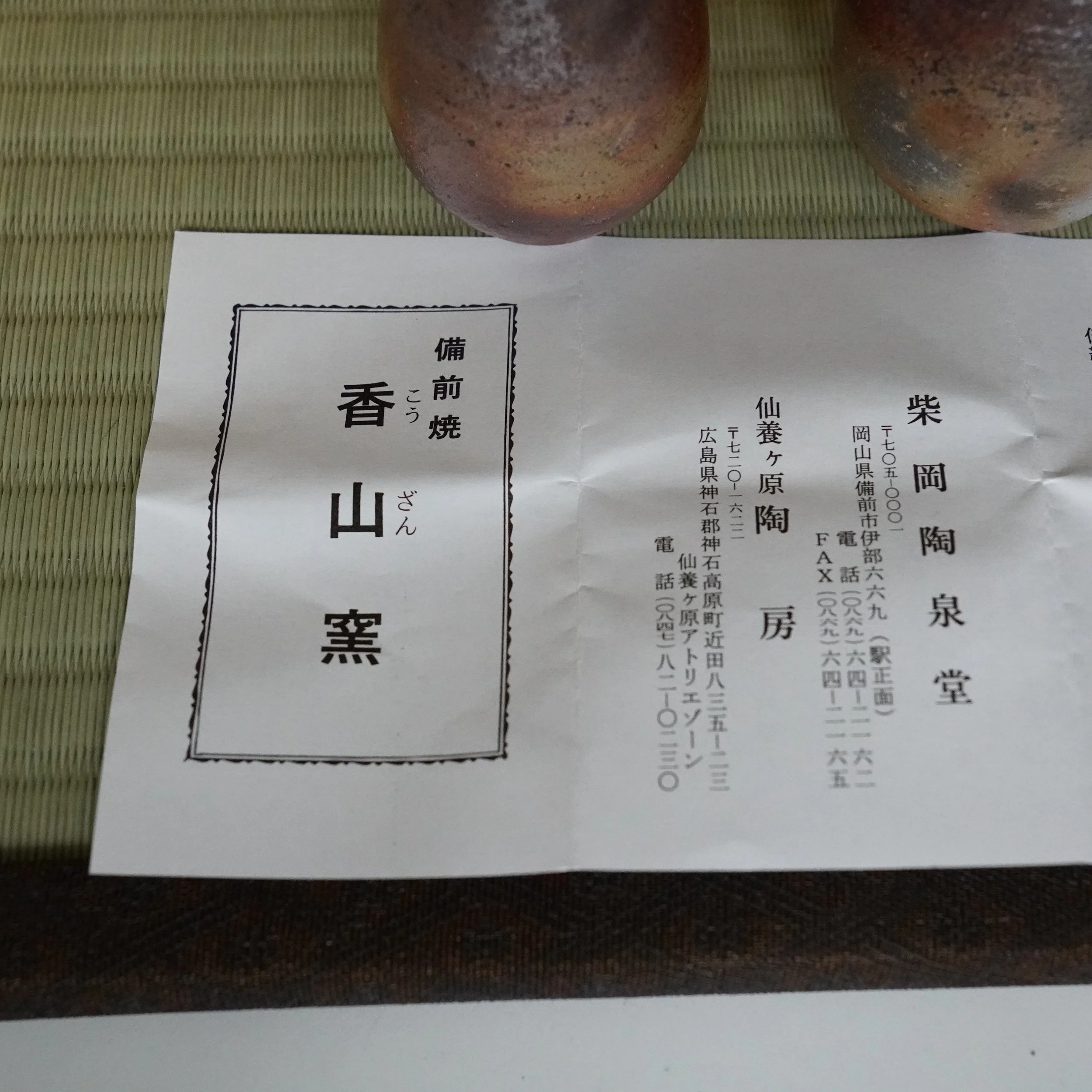
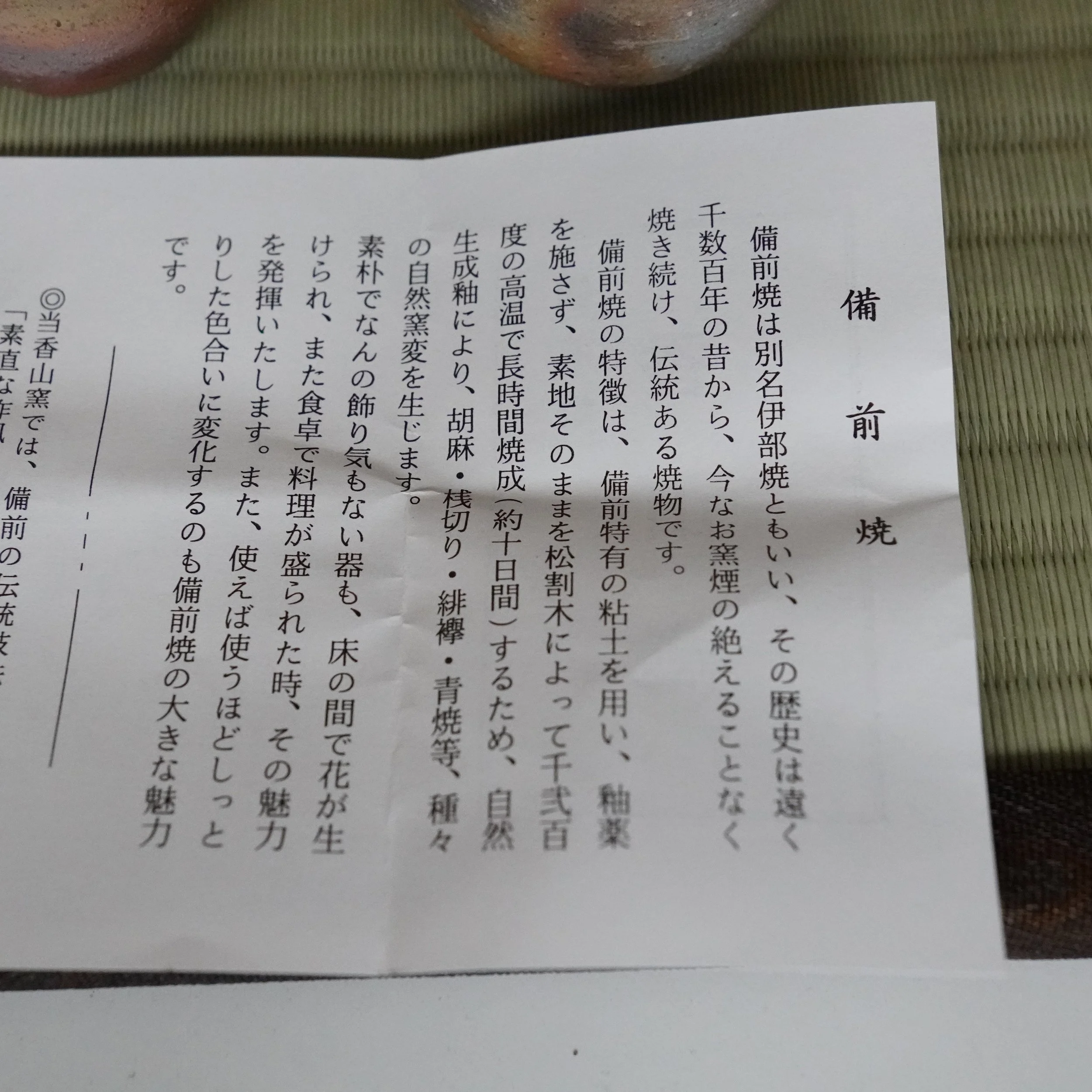
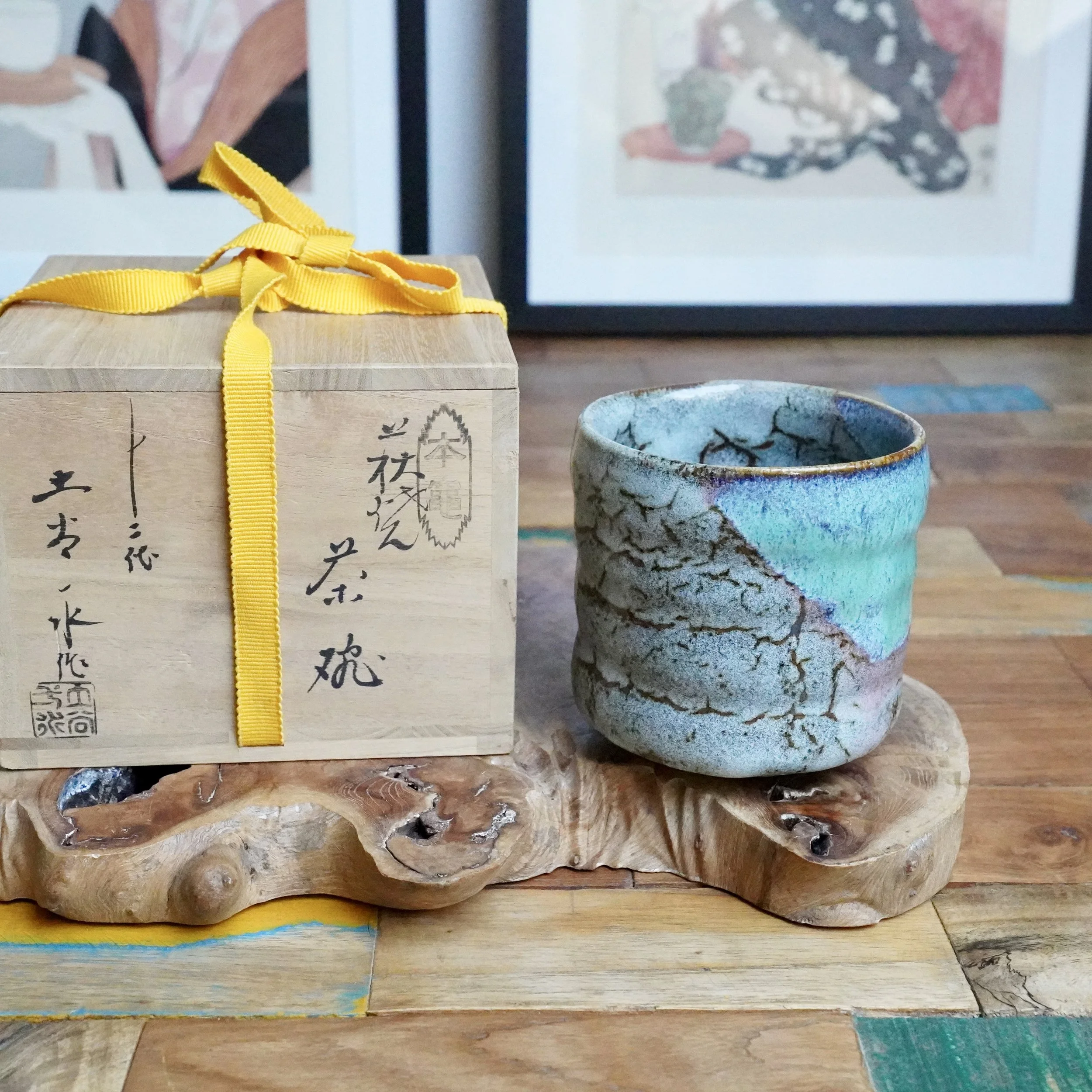
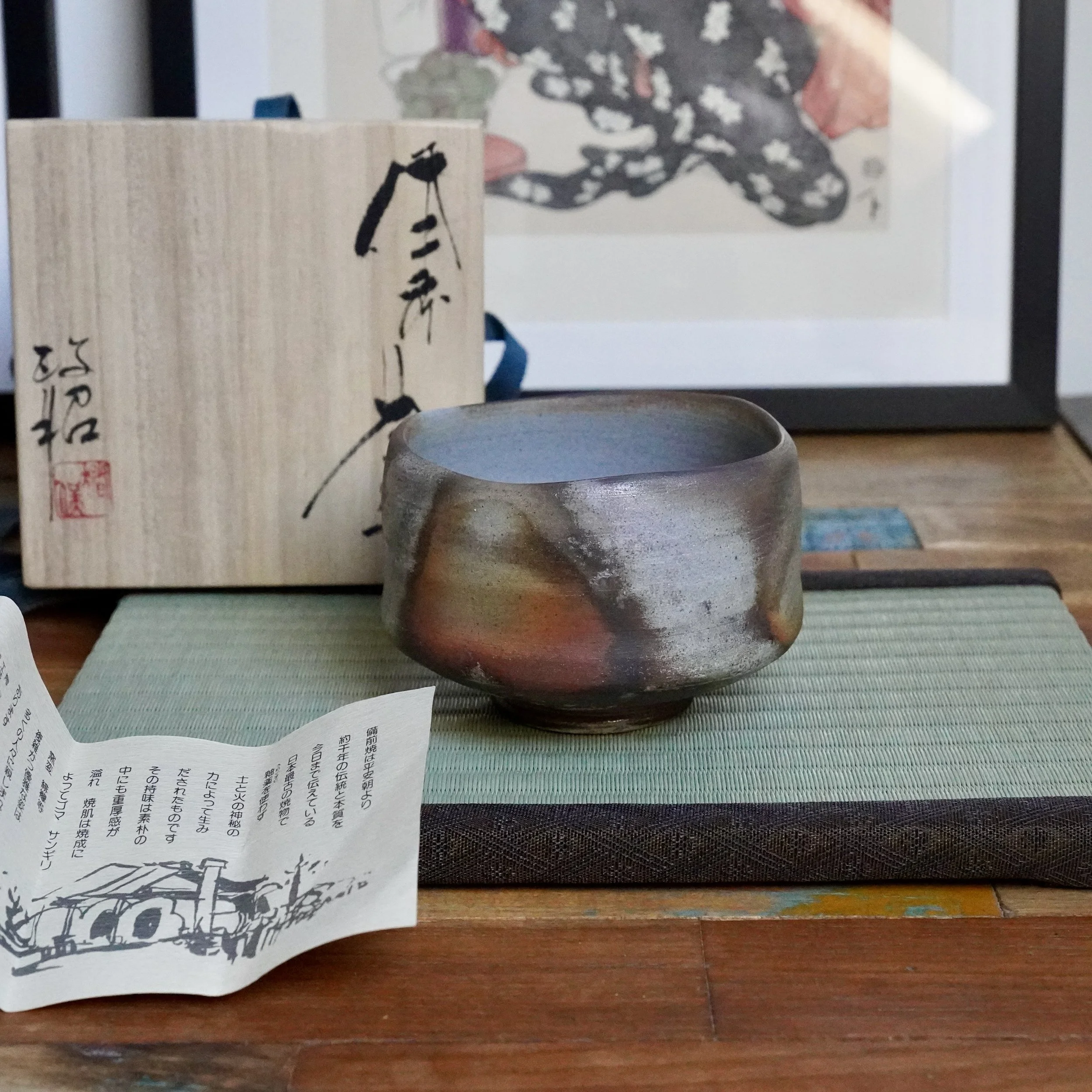
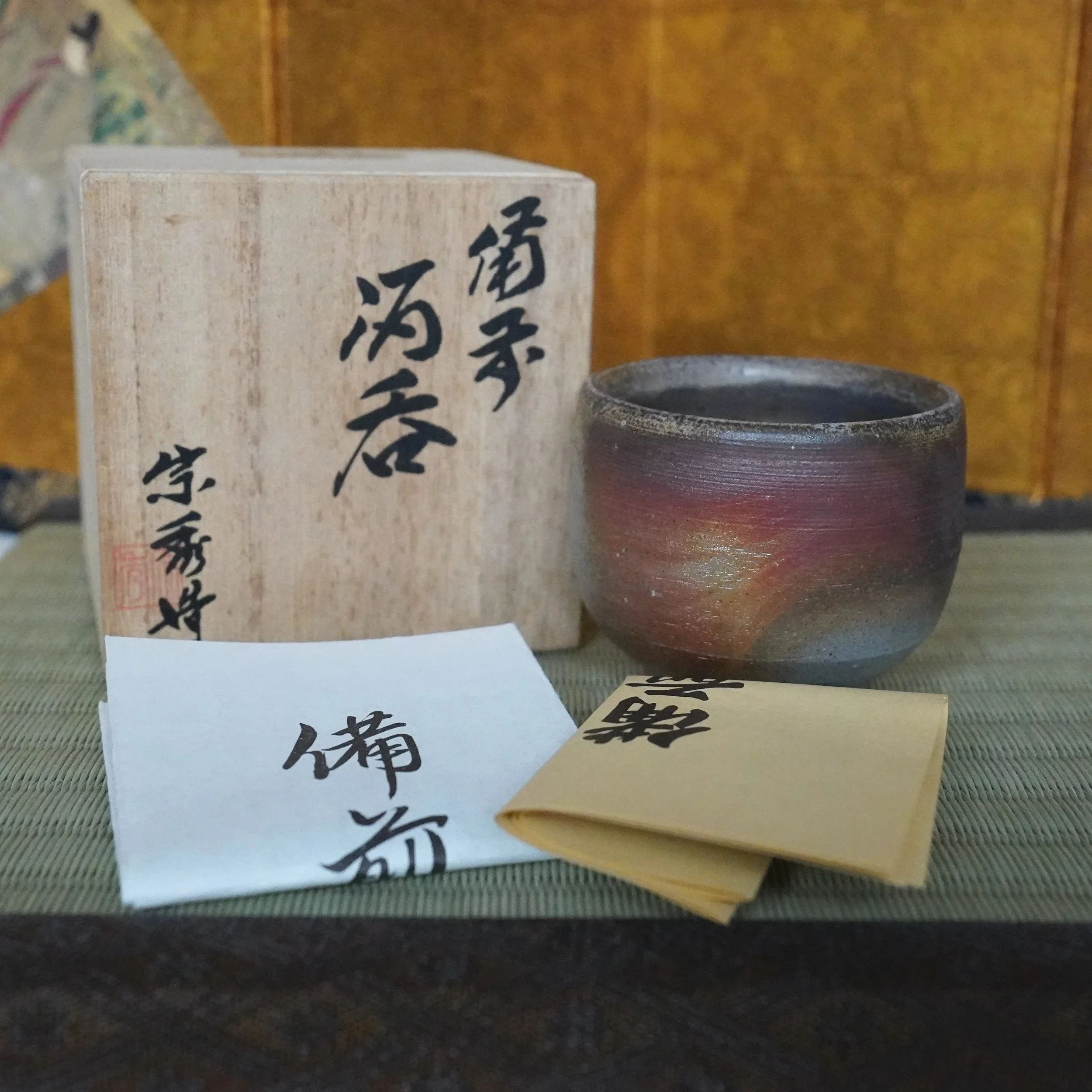
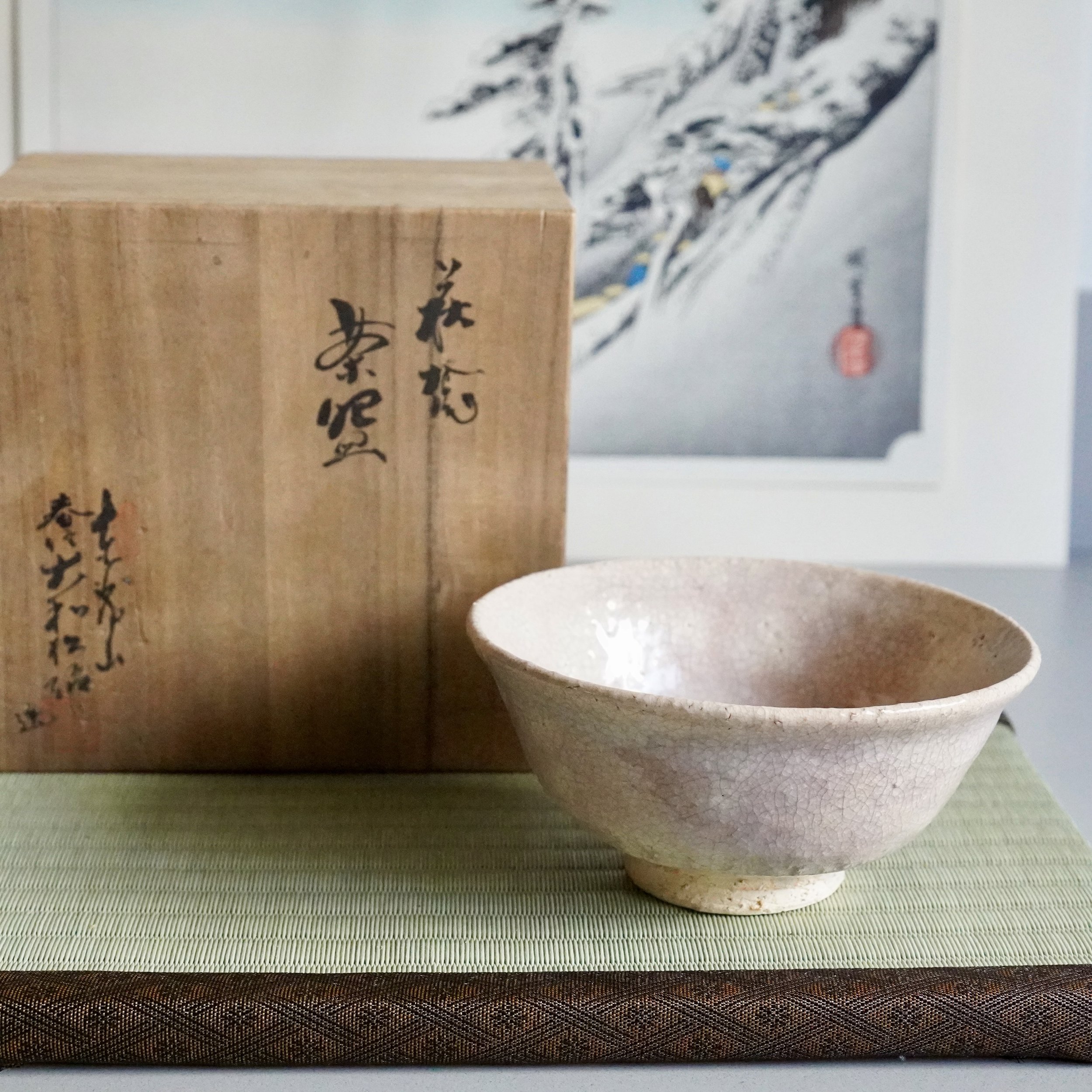
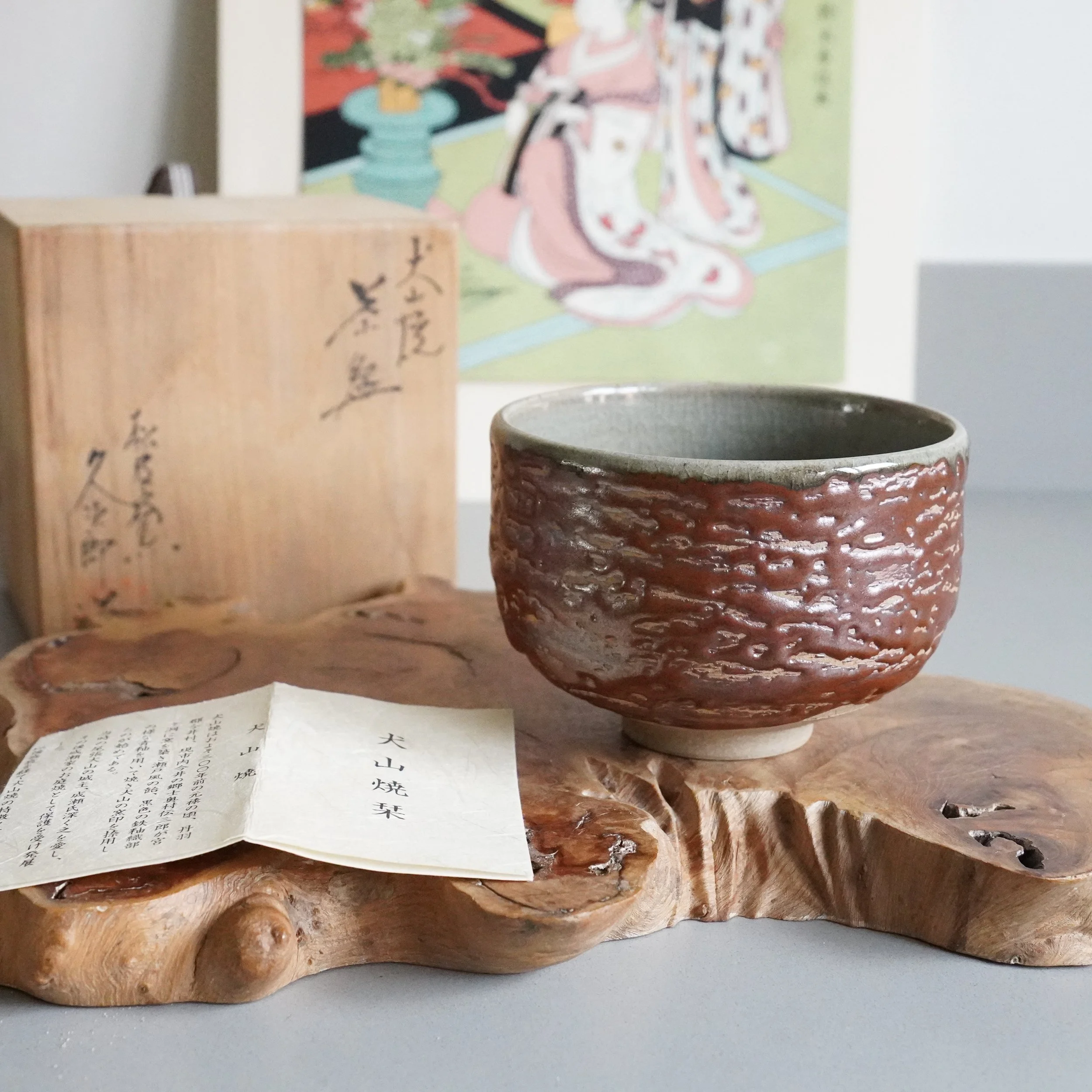
Higher-end or gift pieces may come with an original tomobako inscribed with the piece type and signed by the maker, sometimes accompanied by the kiln's own paper documentation.
Signatures and shiori of Shibaoka Tōsendō, Kōzan-gama in our archive
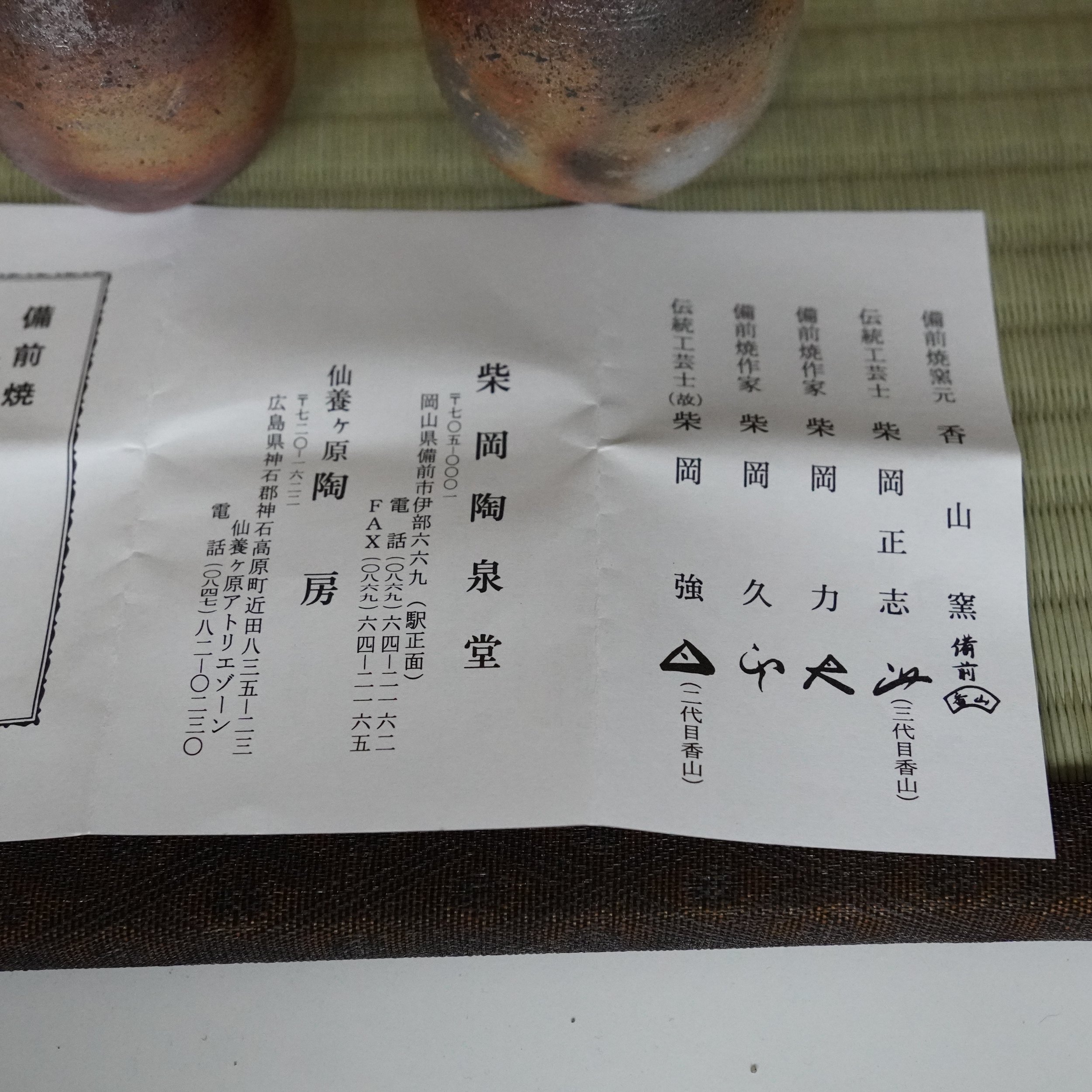
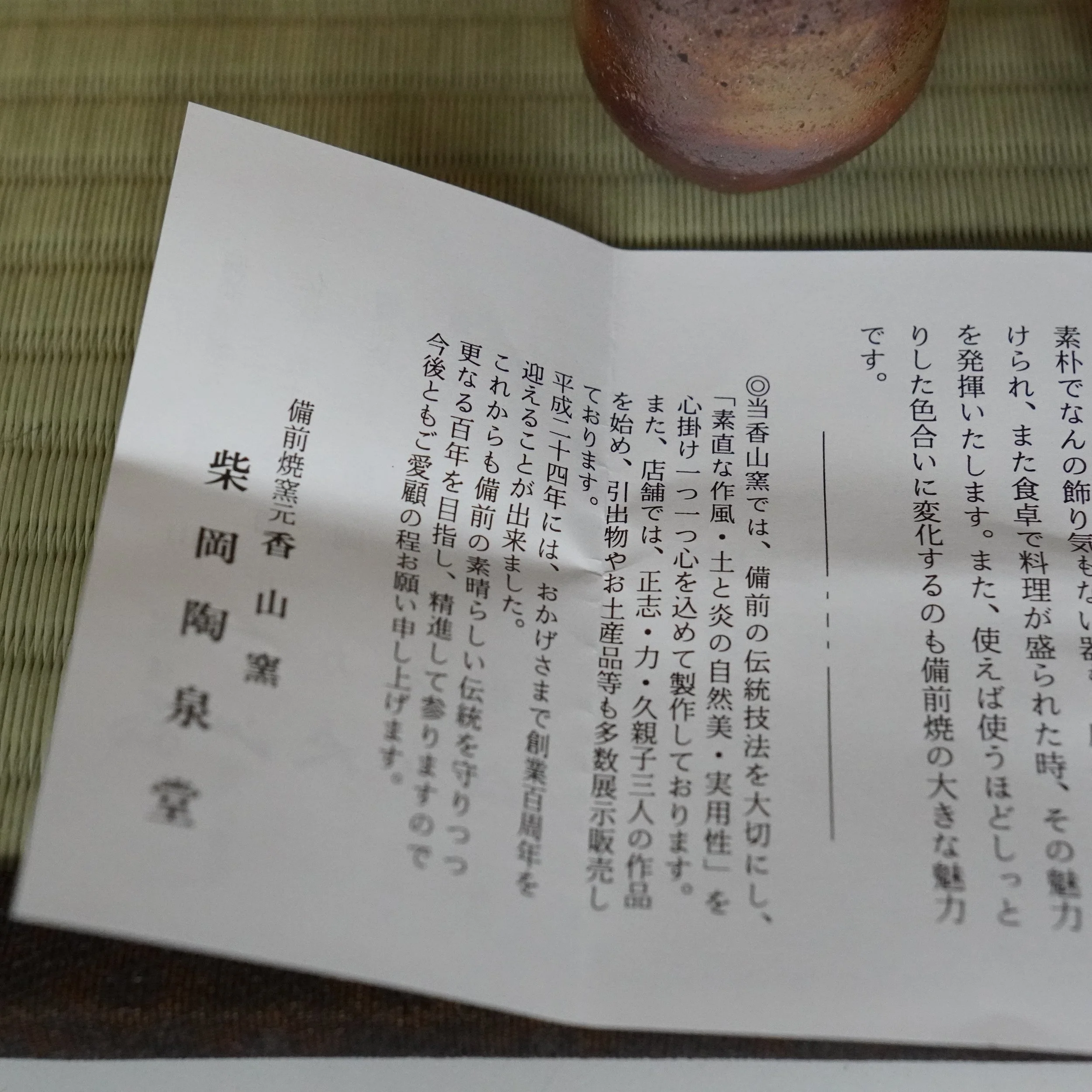
Meet the Shibaoka Tōsendō, Kōzan-gama items in collection
Sources
Physical examination of the seal, construction, and any award stickers on the pieces themselves
Information shared by dealers and specialists in Japan at the time of purchase
Confirmed directly by the Shibaoka family during a visit to the kiln
Official kiln website: shibaoka-tousendou.com, specifically the Artist page and Hisashi Shibaoka's profile
Bizen Pottery Cooperative (岡山県備前焼陶友会) maker profile: touyuukai.jp, citing Bizen-yaki Sakka Kamamoto Meikan (備前焼 作家・窯元名鑑), Sanyo Shimbun, 2011
Bizen Tourism Association spot listing with detailed kiln timeline: bizen-kanko.com
Bizen Pottery Town Project Council, background on the kiln's ao-Bizen tradition: bizen-town.okayama.co
Okayama Prefecture tourism feature on the BIZENYAKI-ROBOT, created by Shibaoka Chikara: okayama-kanko.jp
Read more
→Ash-glazed stoneware like this asks for the same gentle handling as any glazed ceramic, rinsed by hand, dried fully, kept away from sudden temperature changes. Read the full guide here
→ Fourteen days, one fire: what it actually takes to fire a Bizen kiln. A visit to Shibaoka Tōsendō during an active firing, standing at the kiln mouth while the family read the fire by eye and ear alone. Read the full visit in my journal.
→ The styles of Bizen-yaki: hidasuki, goma, sangiri explained. Read the guide.
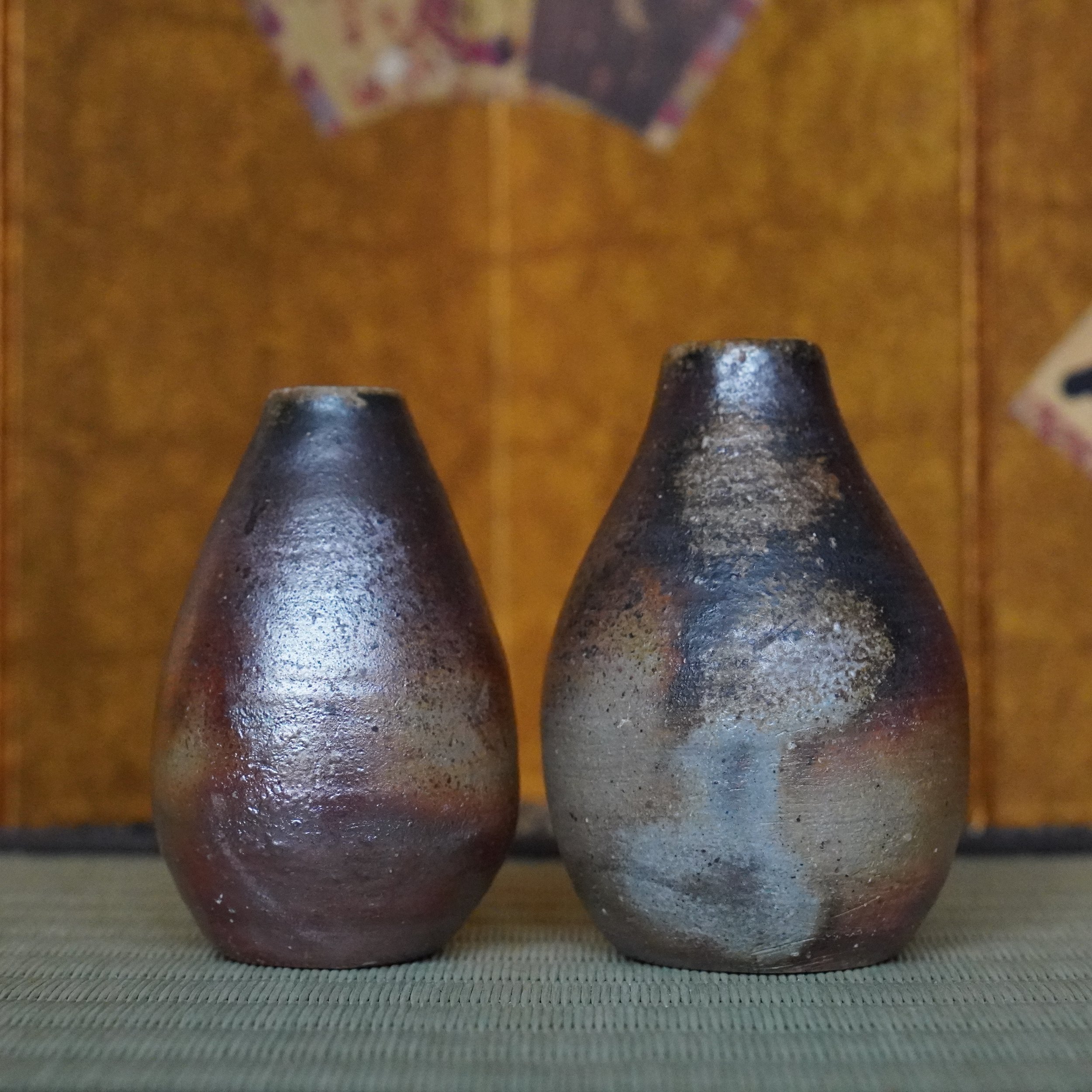
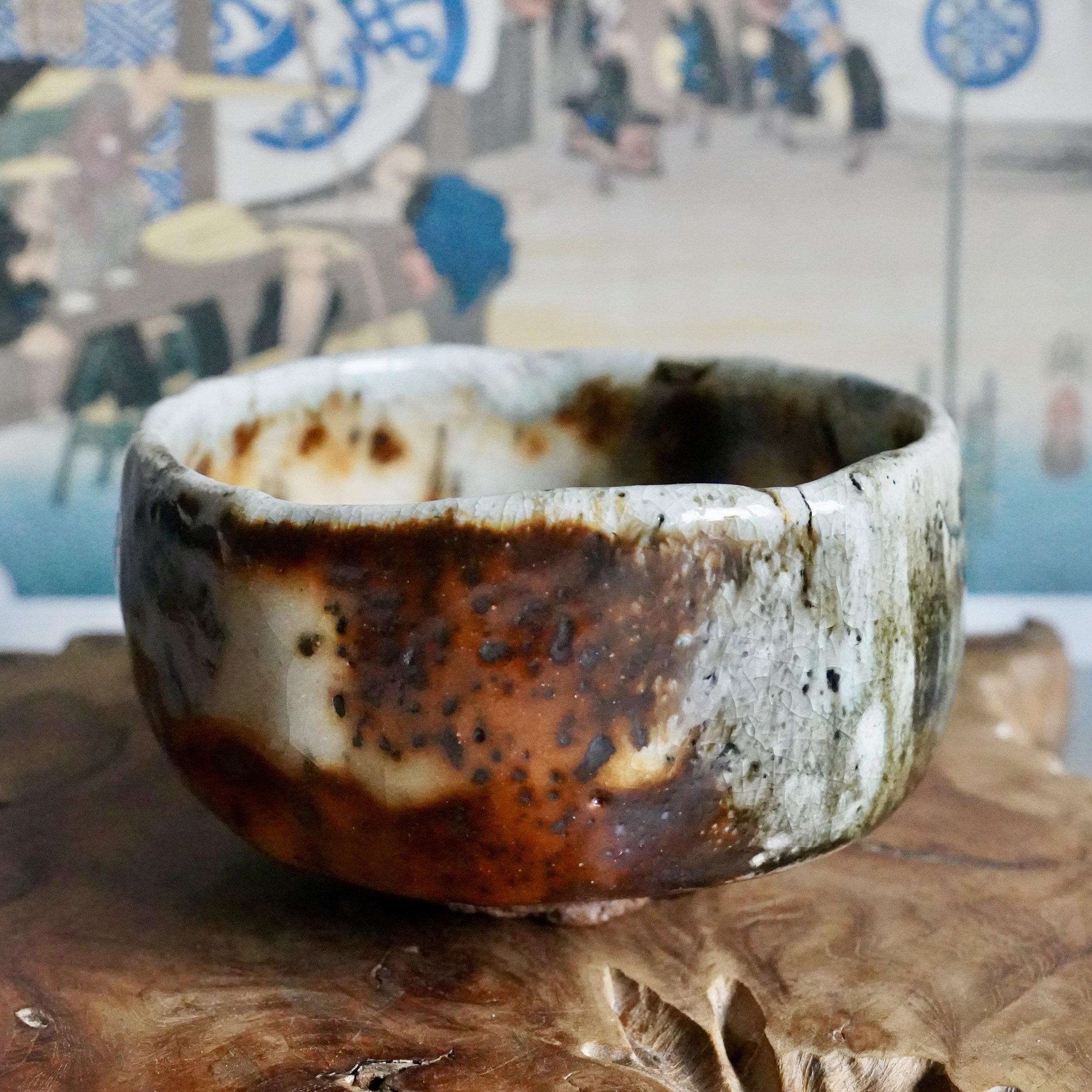
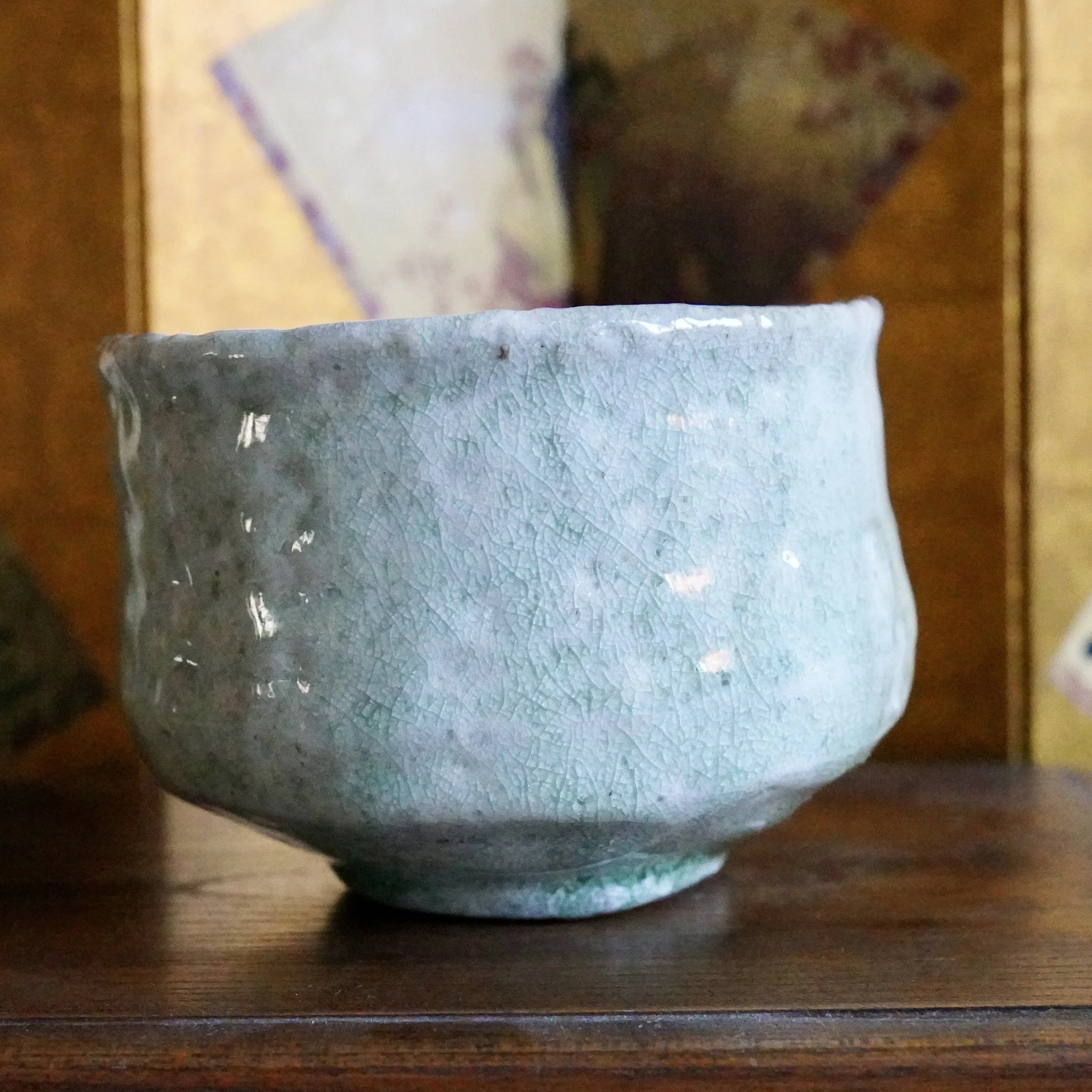
Two small teardrop vases, narrow at the neck and full through the shoulder, standing close enough together that they read as a pair without being identical. One leans toward deep aubergine with a soft silver mist rolling across the front, almost metallic where the light catches it. The other runs cooler still, a wash of silvery blue-grey shifting into warm rust low on the body. Neither would look complete alone. Together they hold a conversation, one leaning warm, the other leaning bright.
Both carry the maker's mark of Shibaoka Tōsendō, working under the kiln name Kōzan-gama in Imbe since 1912. The kiln has stayed in one family for three generations, currently the third-generation Kōzan, Shibaoka Masashi, working alongside his sons Chikara and Hisashi. A pair like this, thrown at the same time and fired side by side in the same noborigama, is a small, physical record of one firing at a kiln that has kept its own fire burning for over a century.
→ Fourteen days, one fire: what it actually takes to fire a Bizen kiln. A visit to Shibaoka Tōsendō during an active firing, standing at the kiln mouth while the family read the fire by eye and ear alone. Read the full visit in my journal.