
One of my favorite mornings in Hagi: come with me to the Okada kiln
Okada Seiun-zan is a Hagi-yaki kiln in Yamaguchi Prefecture, firing since the Edo period, now run by its eighth generation, Okada Yū, alongside his son Yasushi. Yū developed ensai, a reddish, cloud-like slip technique inspired by his travels along the Silk Road. Yasushi developed tanseiyu, a pale blue glaze named for the Sea of Japan. This entry covers a visit to the kiln, its noborigama climbing kiln, and the reclamation basin where broken shards are dissolved back into usable clay.
I went to Hagi with one goal in mind: to actually understand how Hagi-yaki is made, not from a book or a listing description, but by standing in the workshops where it happens. Over one stretch of days I visited three kilns in Yamaguchi, each one answering a different part of that question. This is the first of those three visits. Okada sparked my interest also because I have one of their pieces in my collection.
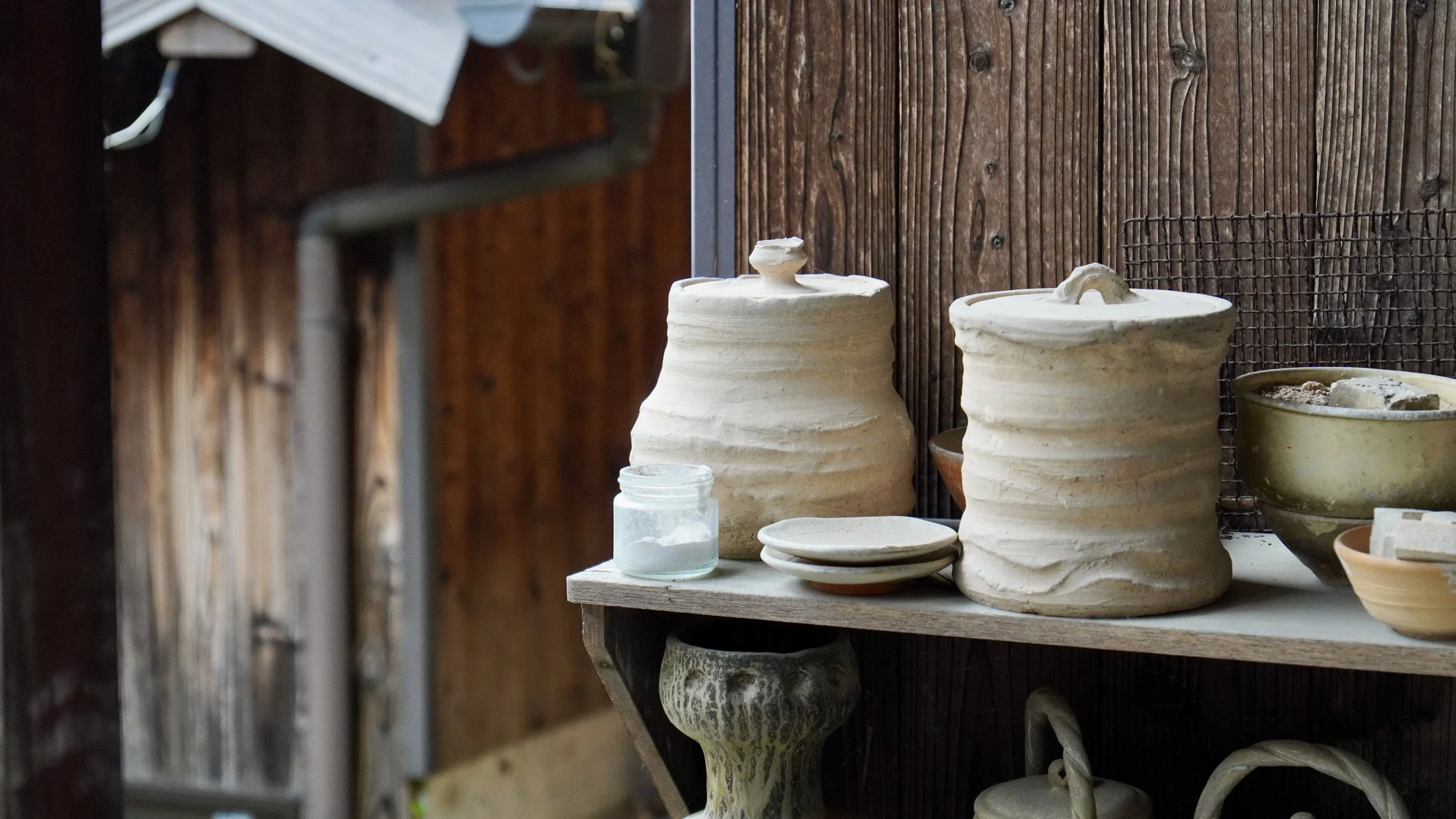
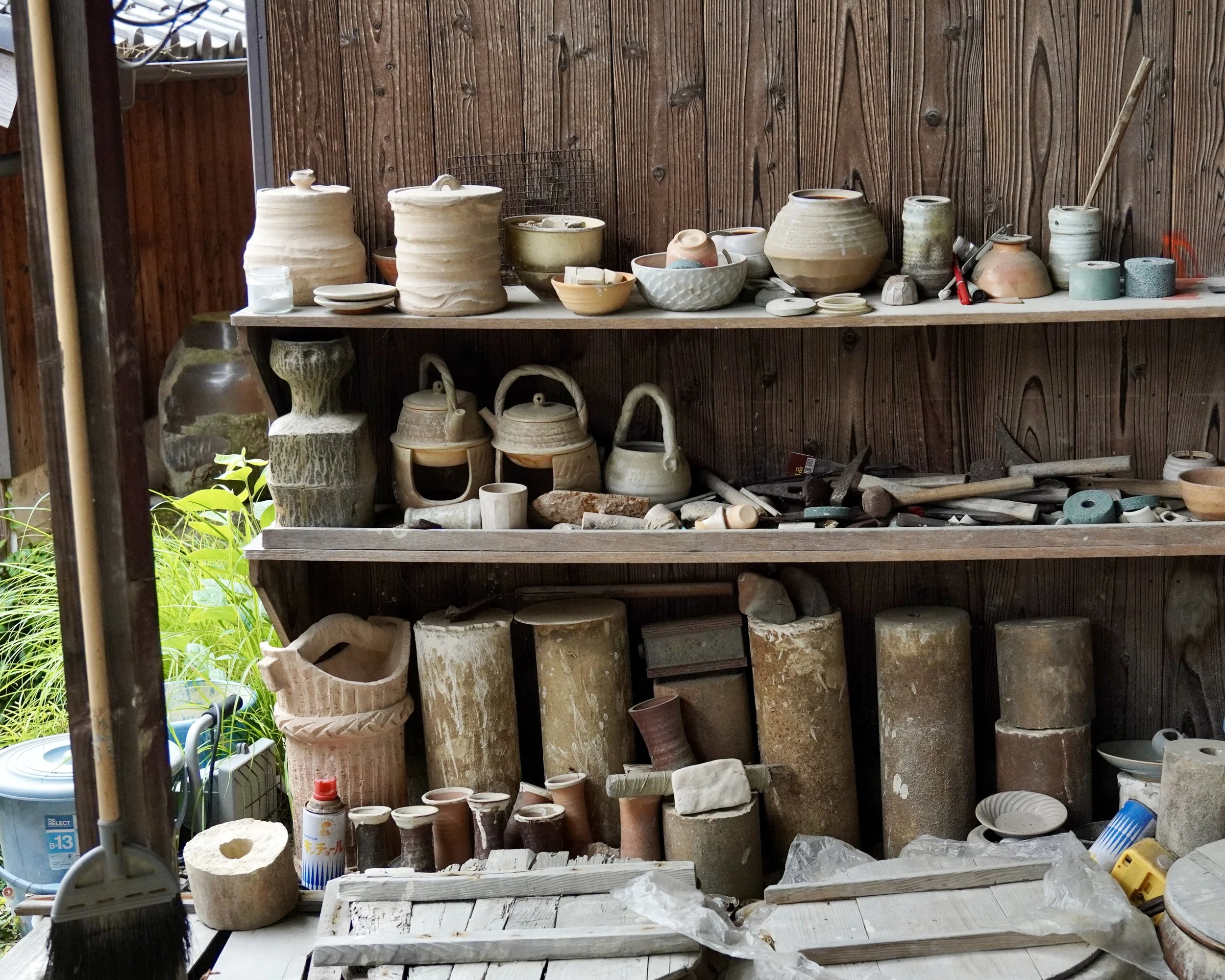
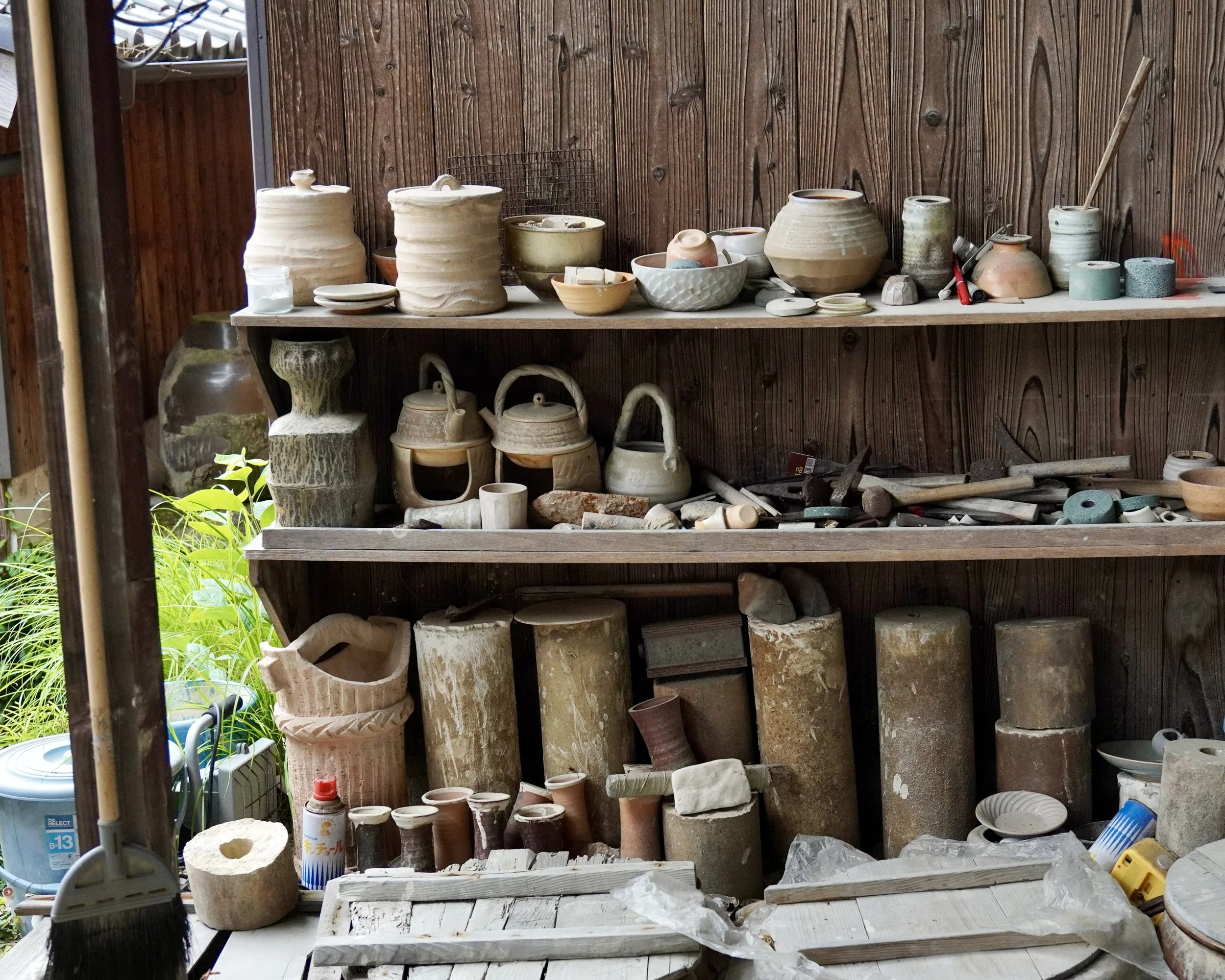
The Okada kiln has been firing in Hagi for more than two hundred years, since the Edo period, and I felt that the moment I walked in. Not because anyone told me, but because of what was just lying around. Unglazed jars waiting their turn on shelves along the back wall. Kettles with their handles curved mid-arc. Tools worn smooth from decades of hands that were not mine and never would be. I remember standing there for a second longer than necessary, doing the math in my head, trying to imagine how many mornings it takes to wear a tool down like that. Nothing here had been arranged for a visitor. It felt like walking into the middle of something that had simply never stopped.
Before we even reached the workshop, the garden around the entrance had already slowed me down. Someone clearly tends to it with real care, flowers set out with the same attention you would expect inside a showroom, not the kind of planting that just happens to survive. It felt like a small preview of what was waiting inside: a family that takes care of things, whether that thing is a two hundred year old kiln or a flower bed by the front step.
→ Want to know more about the eight generations behind this kiln, and how to recognise a genuine piece? Meet Okada Yū and Okada Yasushi on the maker page.
Okada Yū is the eighth generation to run this kiln, and today he shares the work with his son, Yasushi. Yū himself was not there the day I visited, and I will admit I was disappointed for exactly a moment, before Yasushi's wife, his daughter-in-law, started the tour and that disappointment disappeared entirely. She spoke about this place the way you talk about a family member you have watched grow up. Patient, warm, clearly used to explaining things to people who do not yet know what they are looking at, and generous with her time in a way that made me feel like less of an interruption and more like a guest.
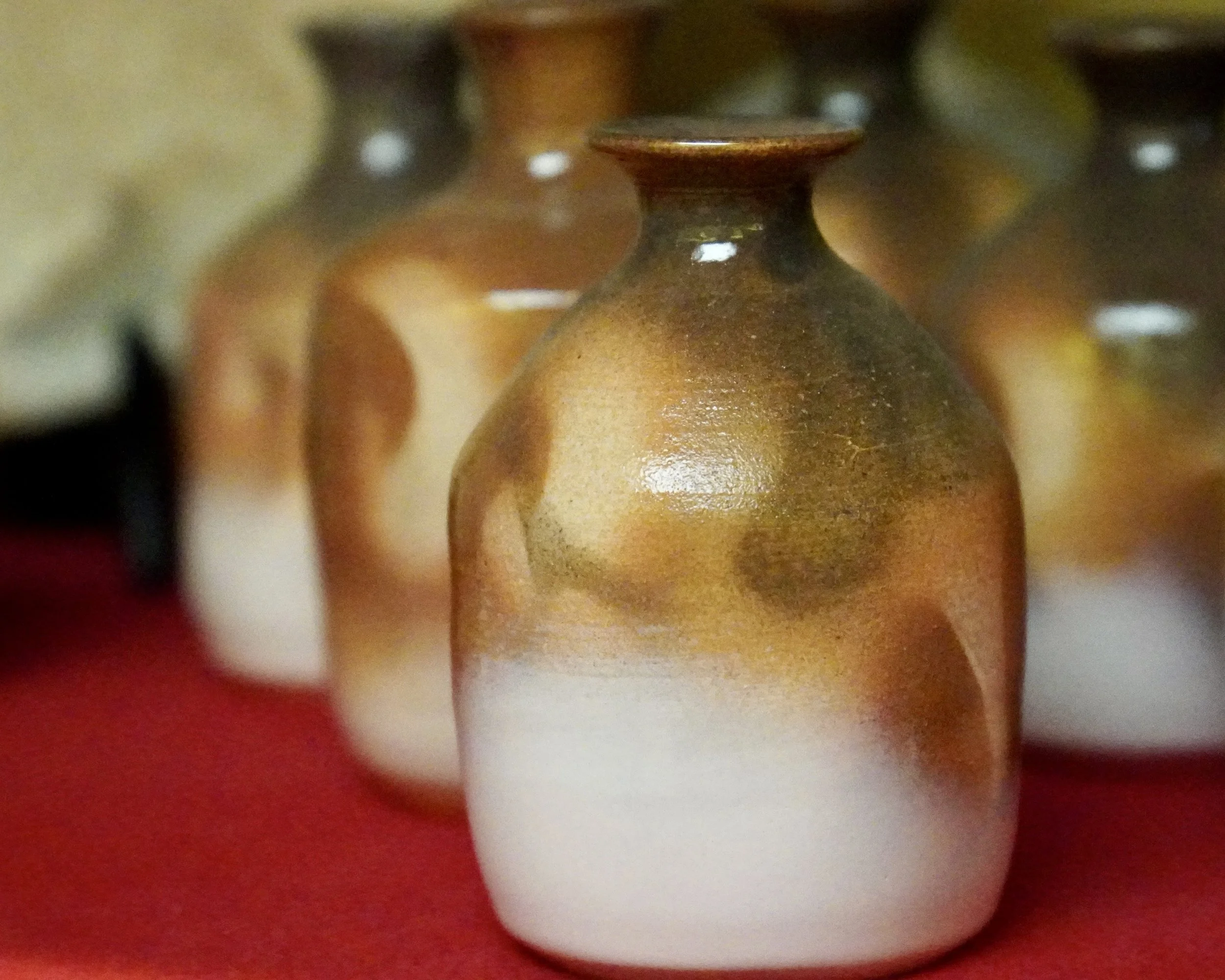
Even in a forgotten corner near a pair of work gloves, one glazed pot already carried a hint of what I would find waiting in the showroom: a reddish, cloud-like bloom across its surface, the same pattern I would soon learn had a name: ensai.
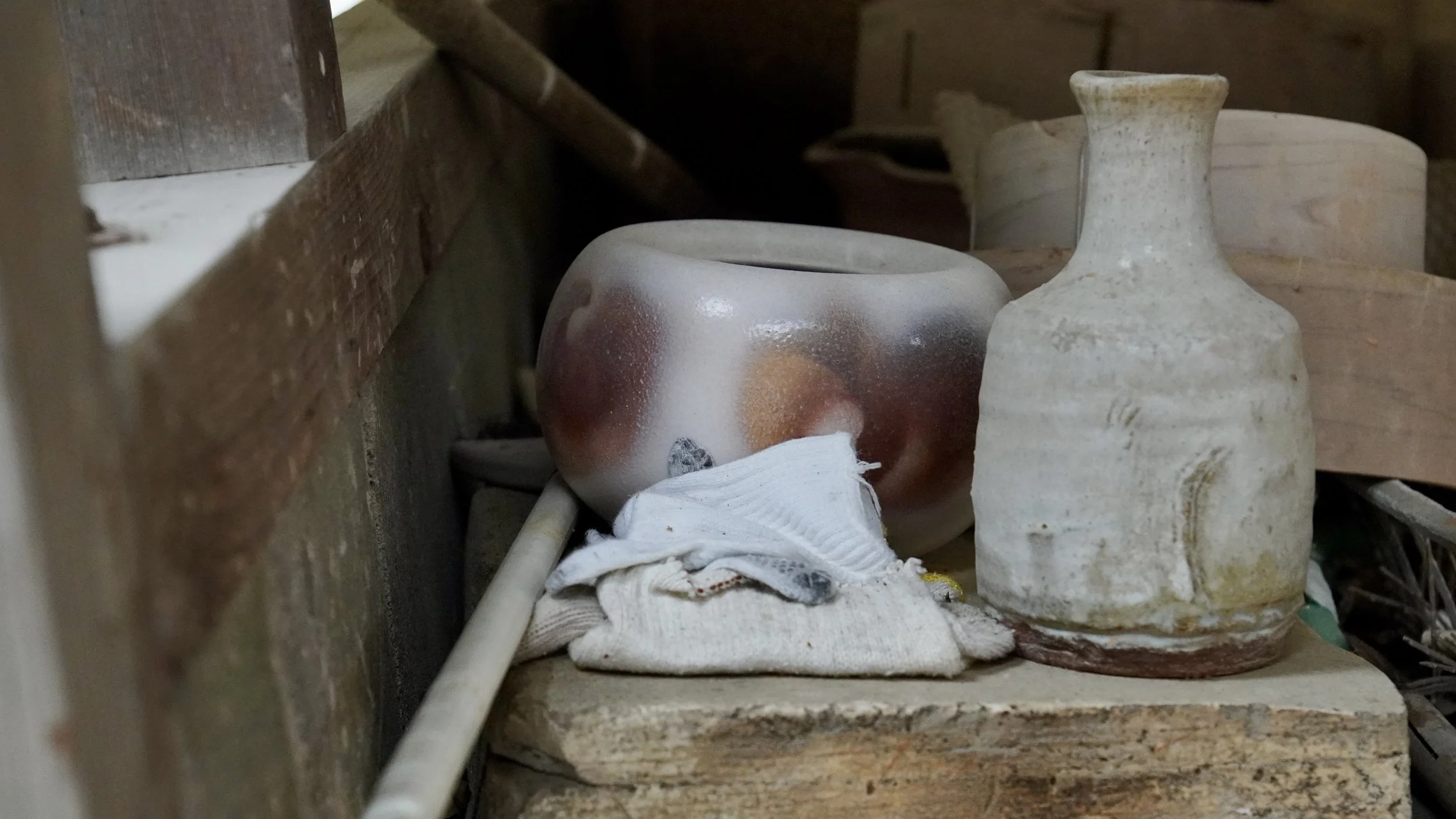
A wall built from fifty years
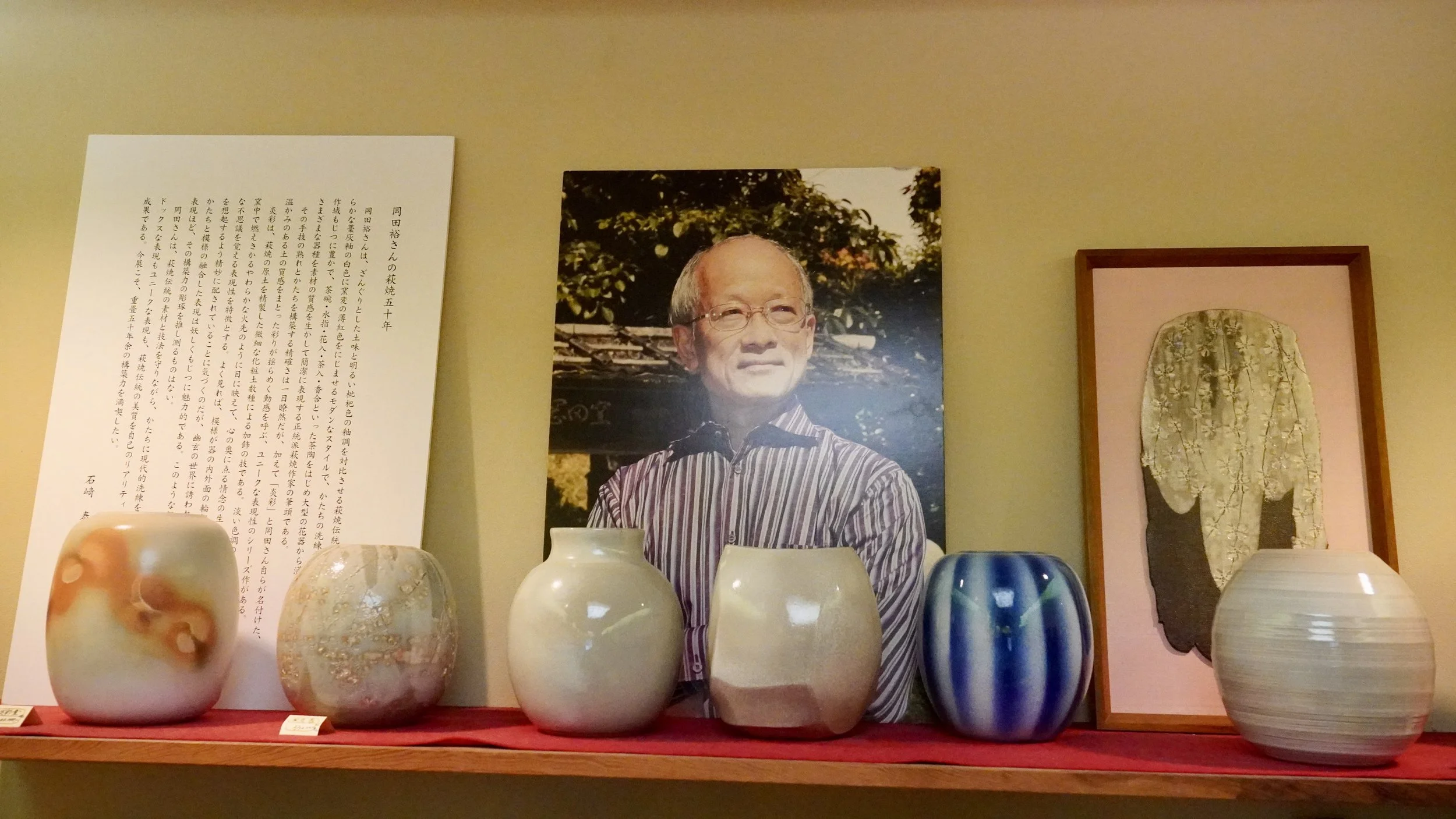
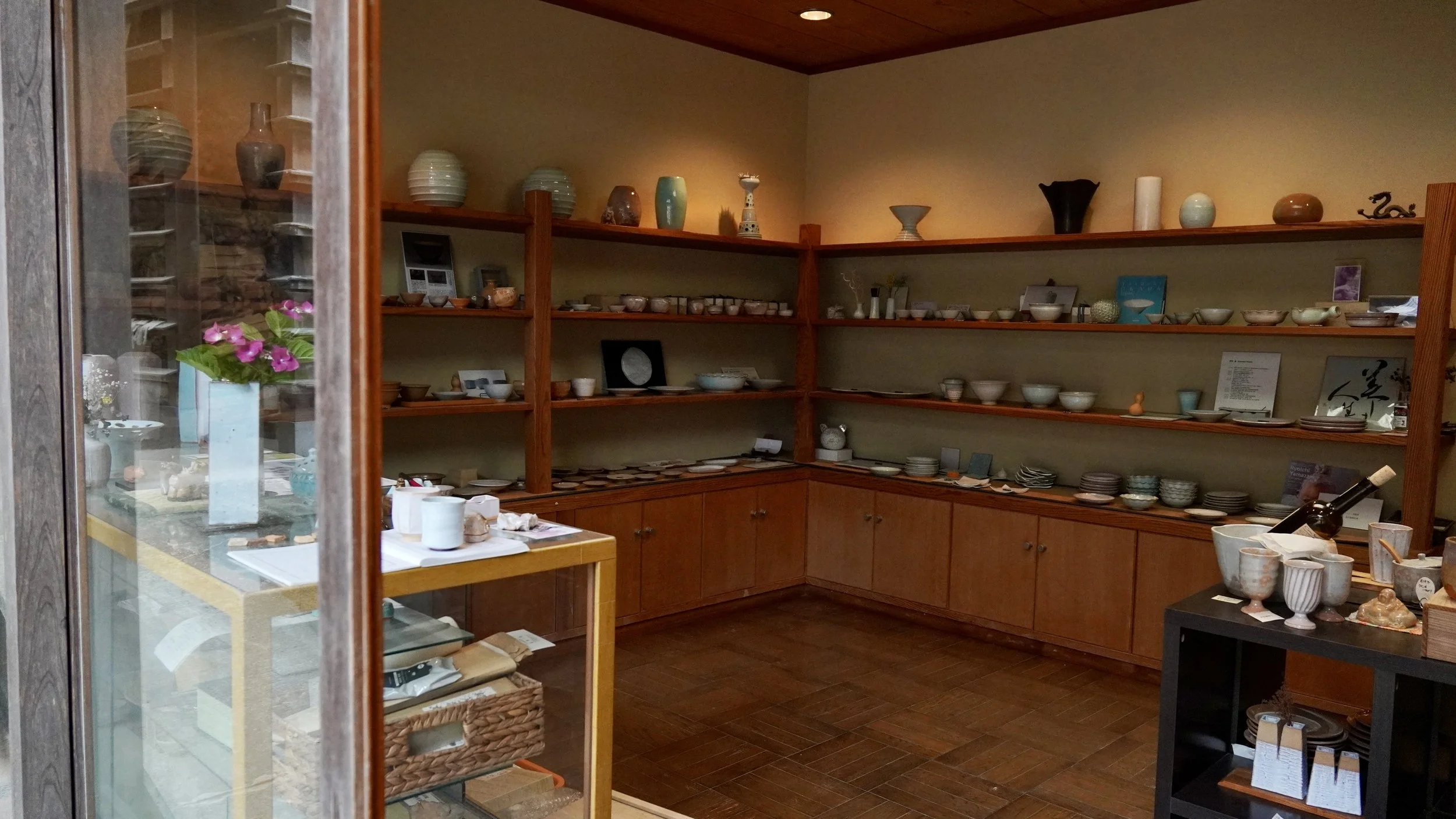
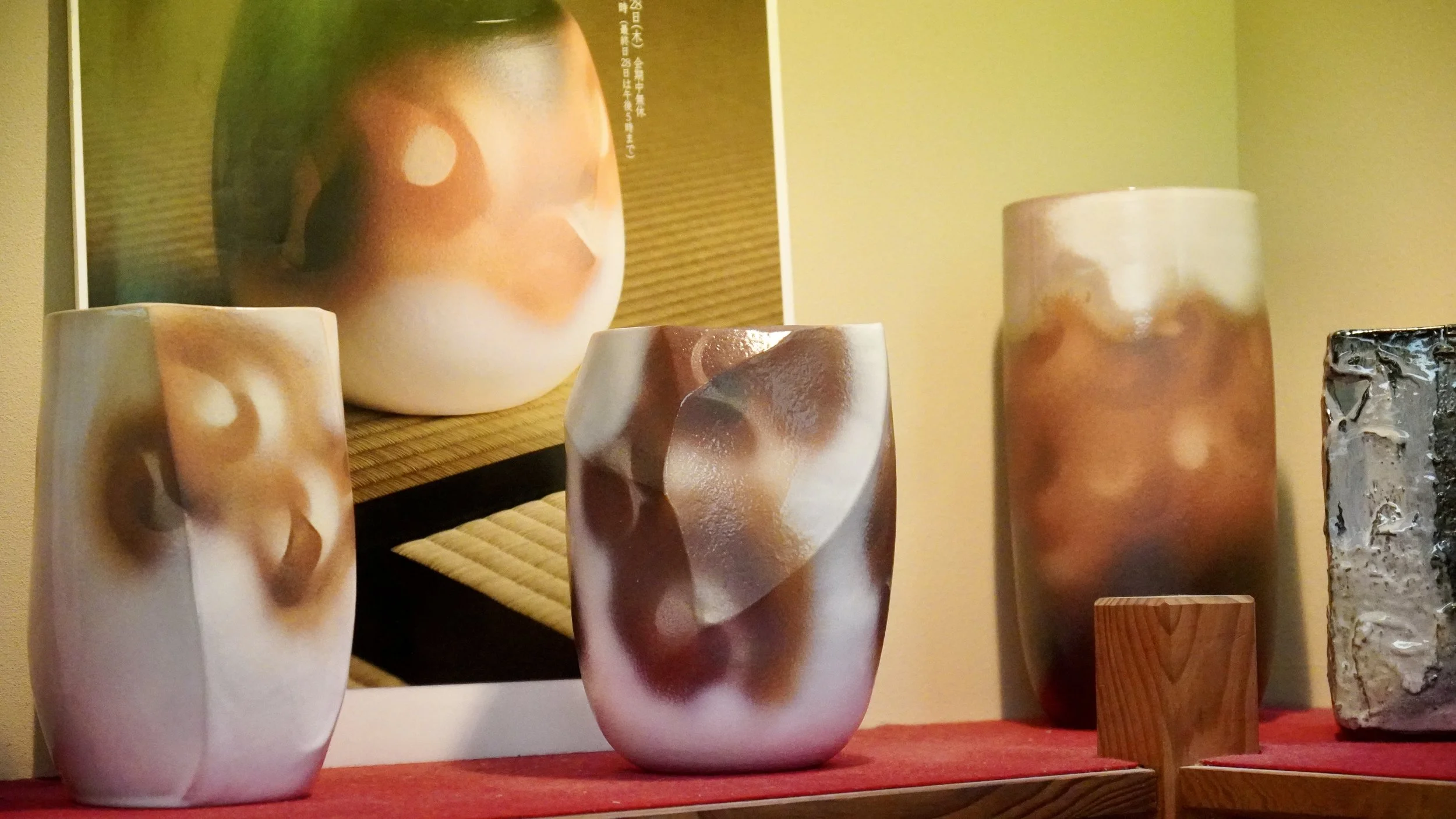
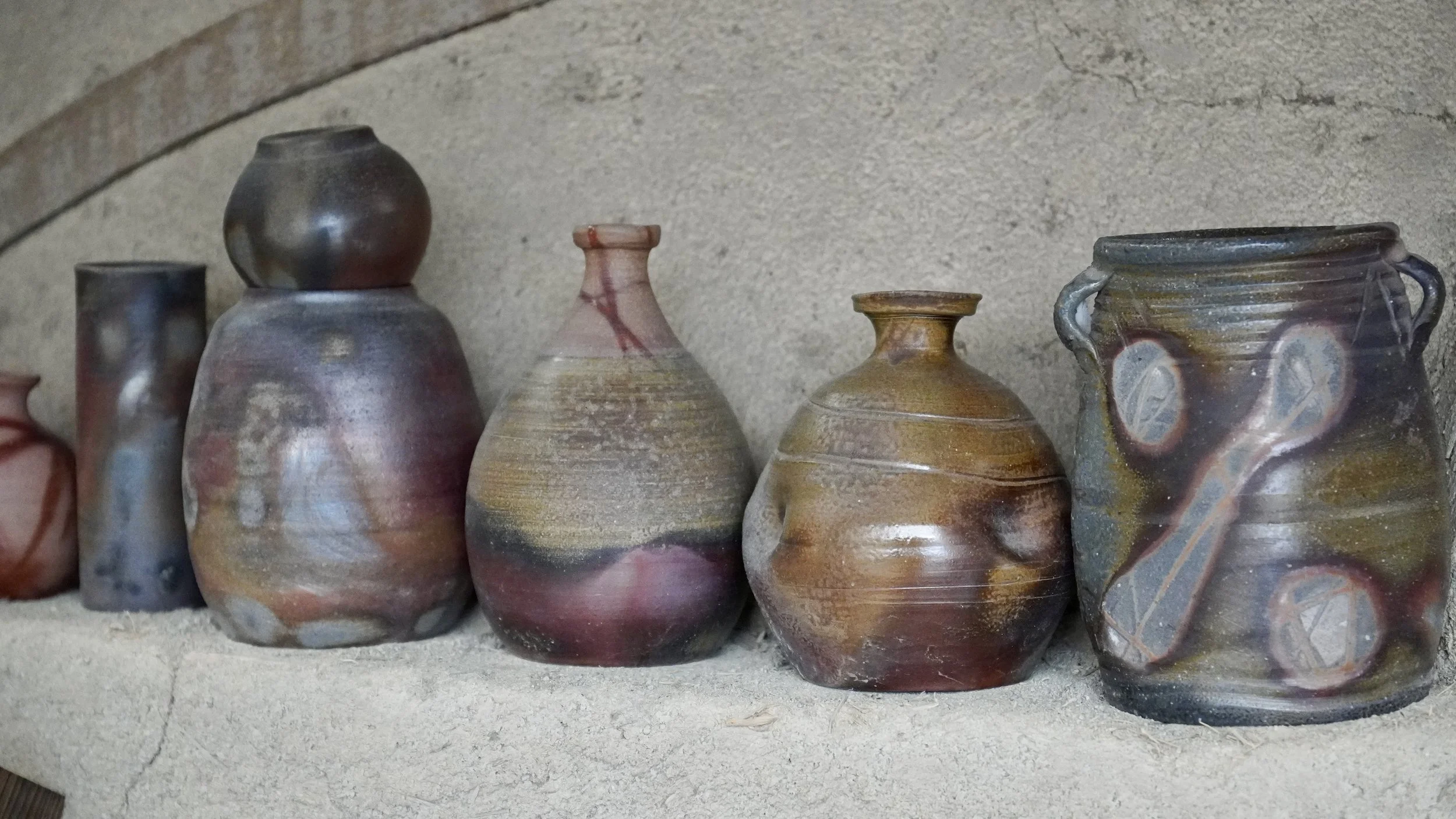
A small display near the main showroom stopped me before I had even registered why. A portrait of Yū, younger, next to a printed history of his career and a row of his vases, each one a different direction his glazes had taken over the decades.
I found myself doing something I do not normally do in a showroom: standing still and just looking, back and forth, from the young face in the photograph to the vases in front of me, trying to connect the style to the Hagi I knew.
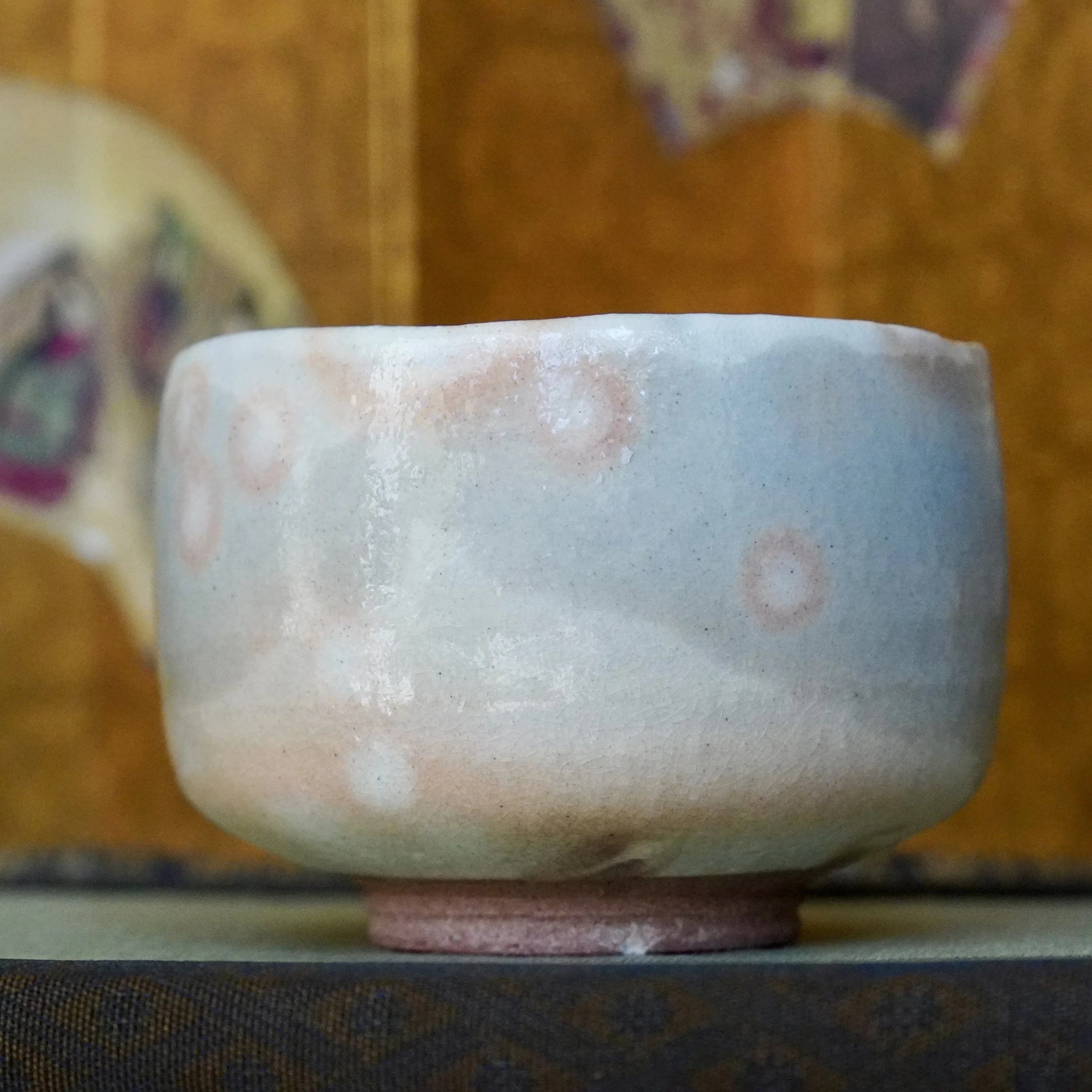
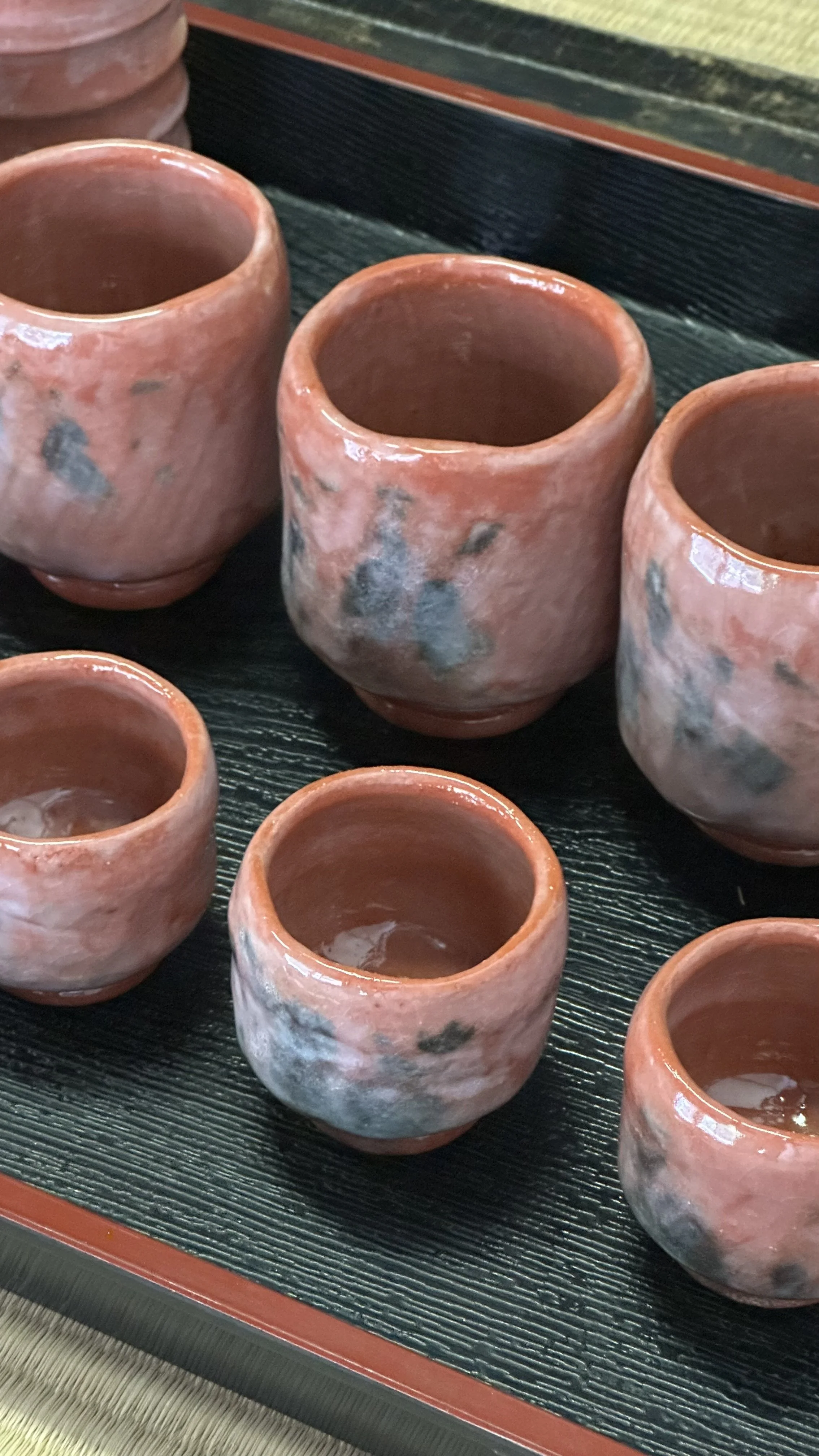
But this one is deep and mottled in rust and ash tones, clouds of reddish brown breaking across a pale ground exactly like the pot I had seen tucked in the corner near the gloves.
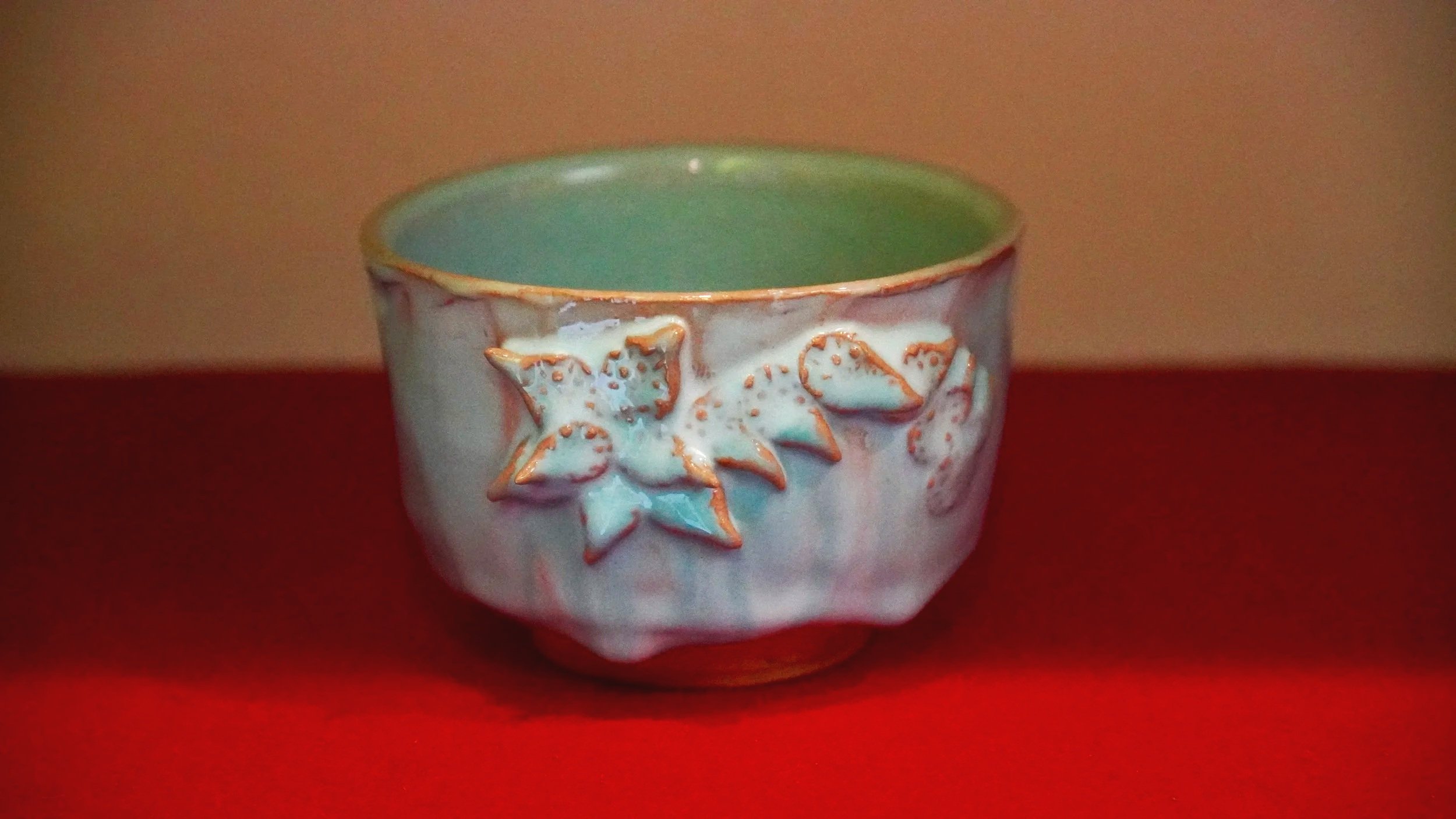
That bloom belongs to Yū's ensai technique, developed from what he brought back from travels along the Silk Road, slip applied through stencils and sprayed onto the surface before firing, producing a reddish, flame-like transformation across a white ground.
Fifty years of a person's working life had somehow been distilled into six objects and one photograph, and that felt like more than I usually get from an entire museum room.
A blue that belongs to the next generation
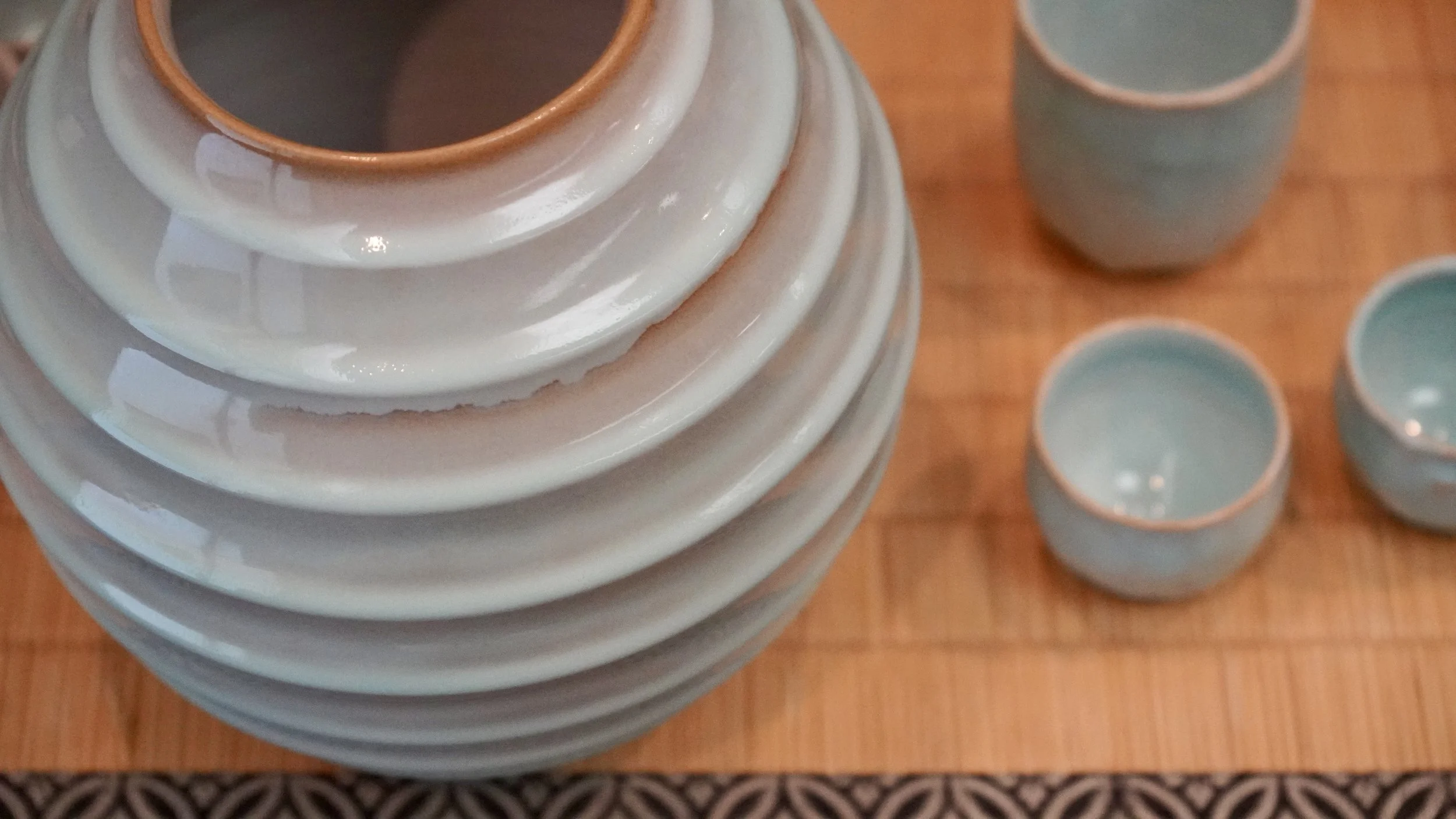
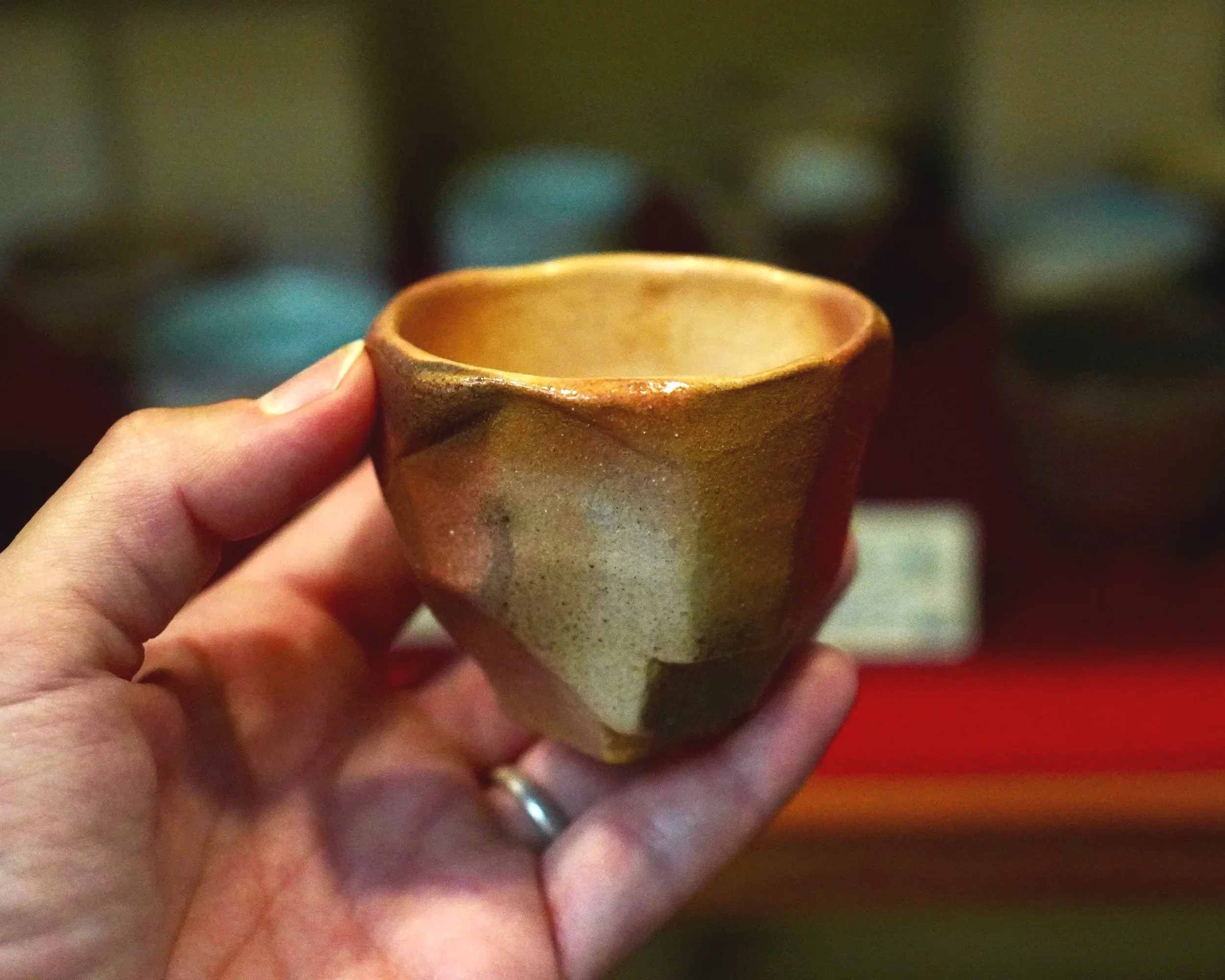
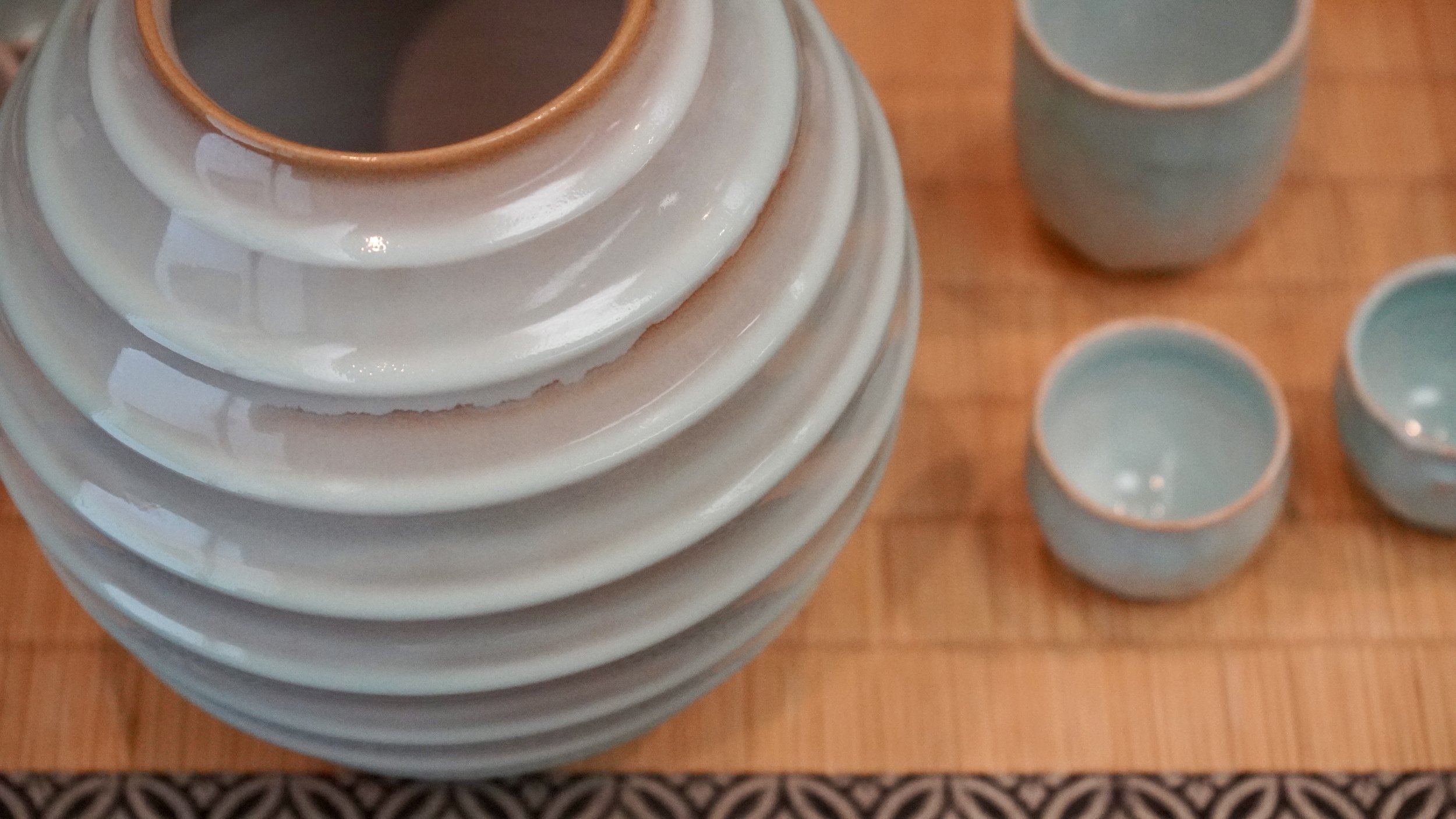
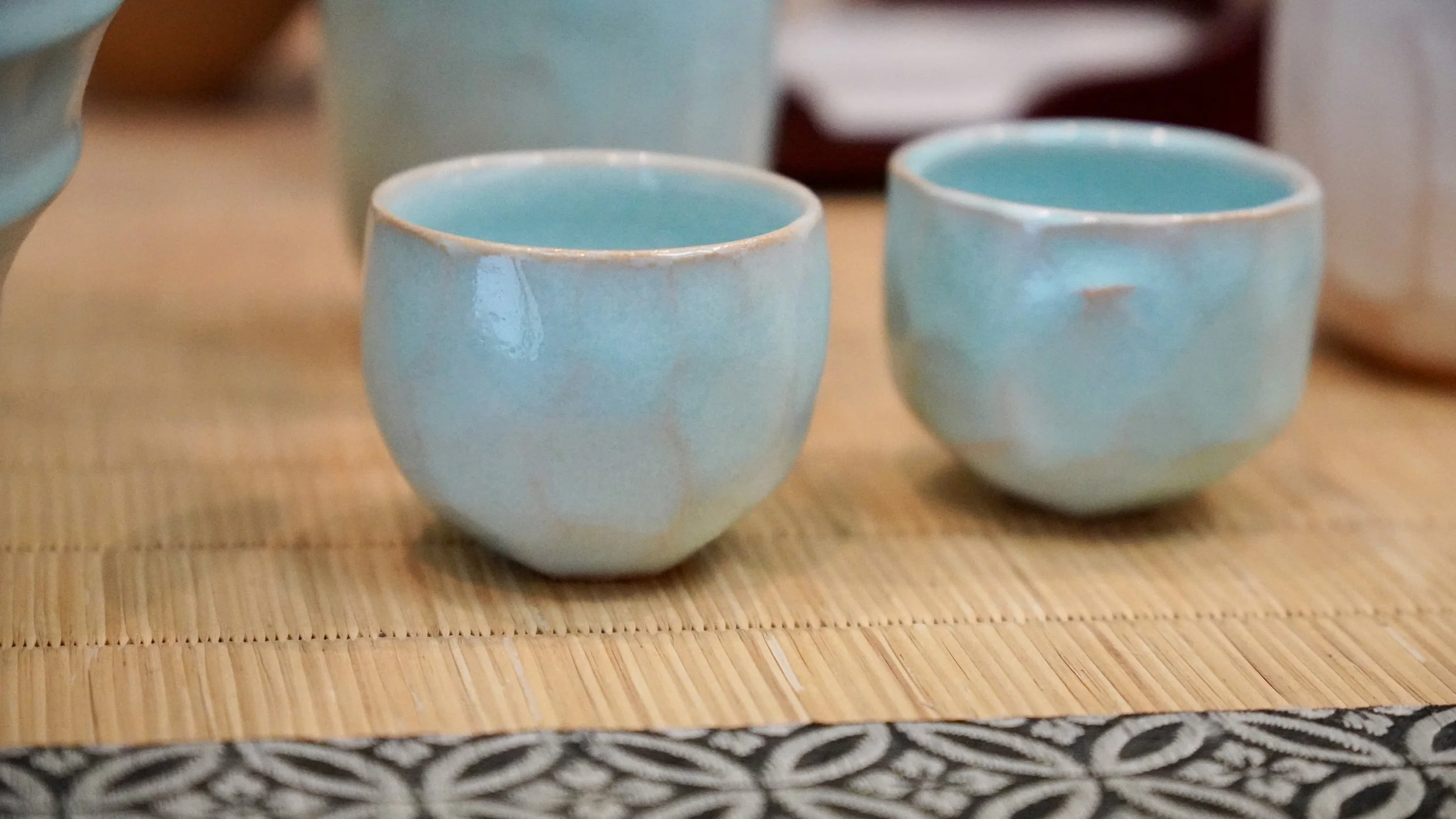
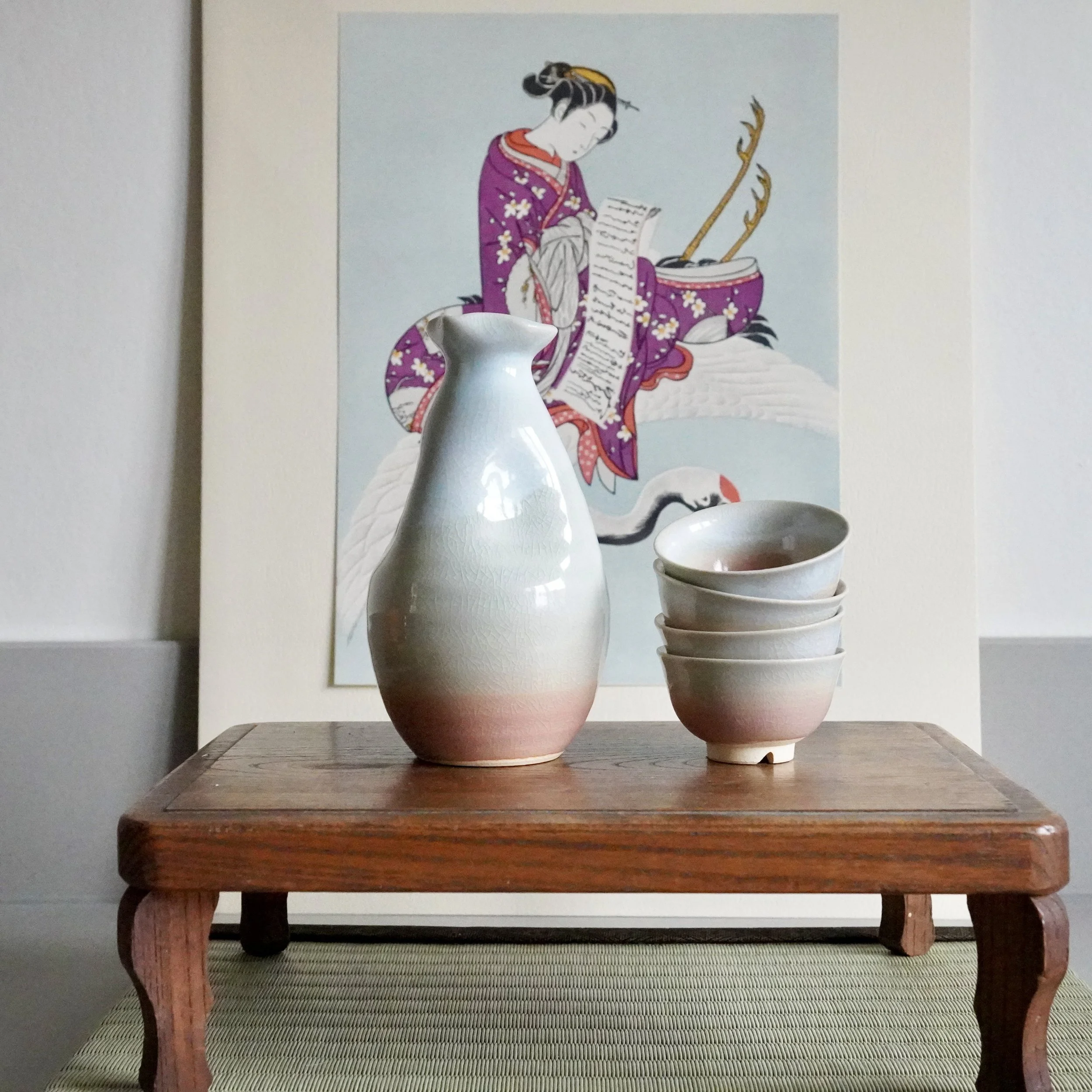
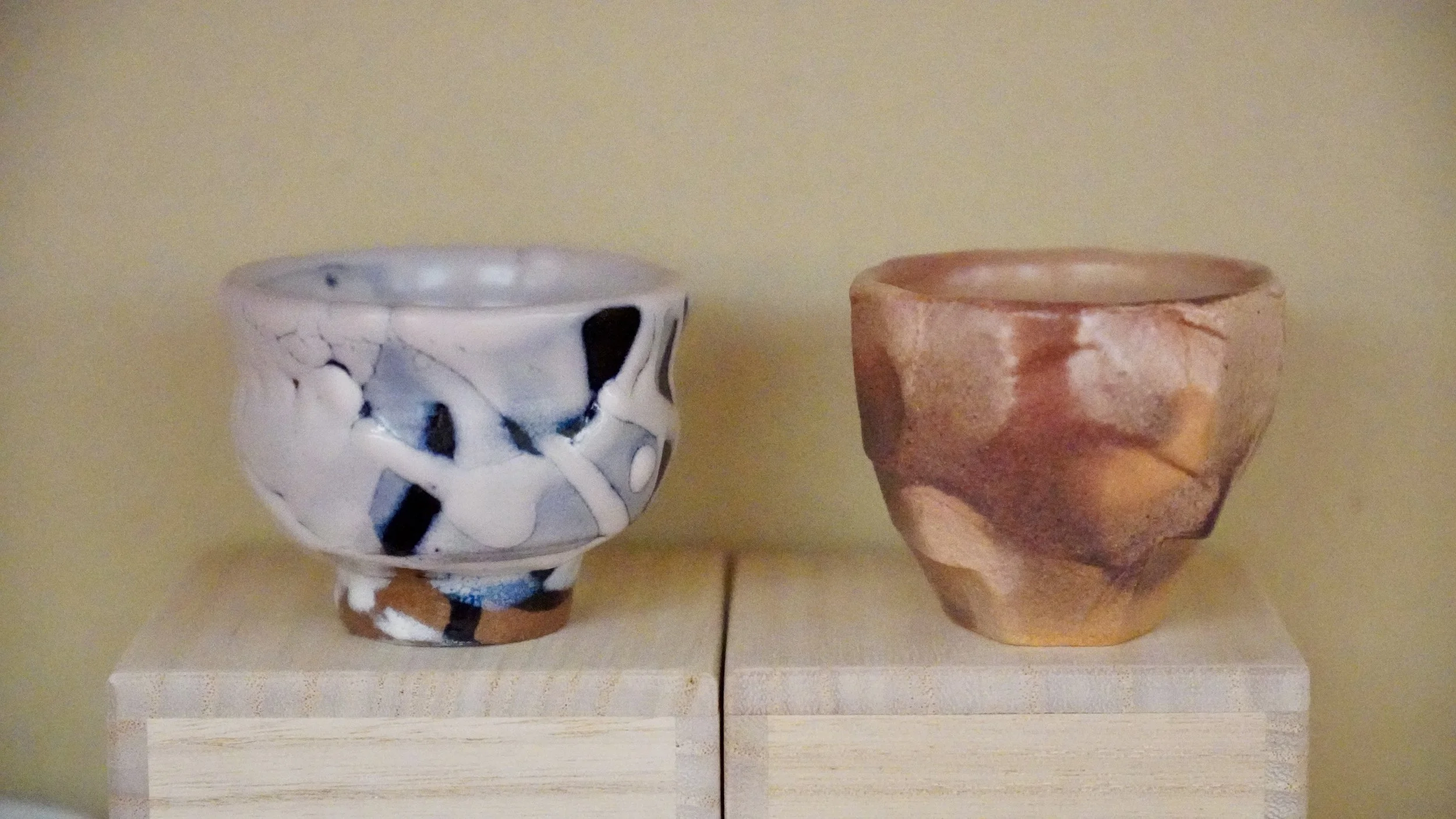
Further into the workshop, two small cups sat on a tatami mat, and I actually laughed a little when I saw them, because the color had nothing rustic about it at all. Clear, pale blue, cool and quiet, closer to sky than clay. After everything warm and earthy I had been looking at, it felt almost like walking into a different season.
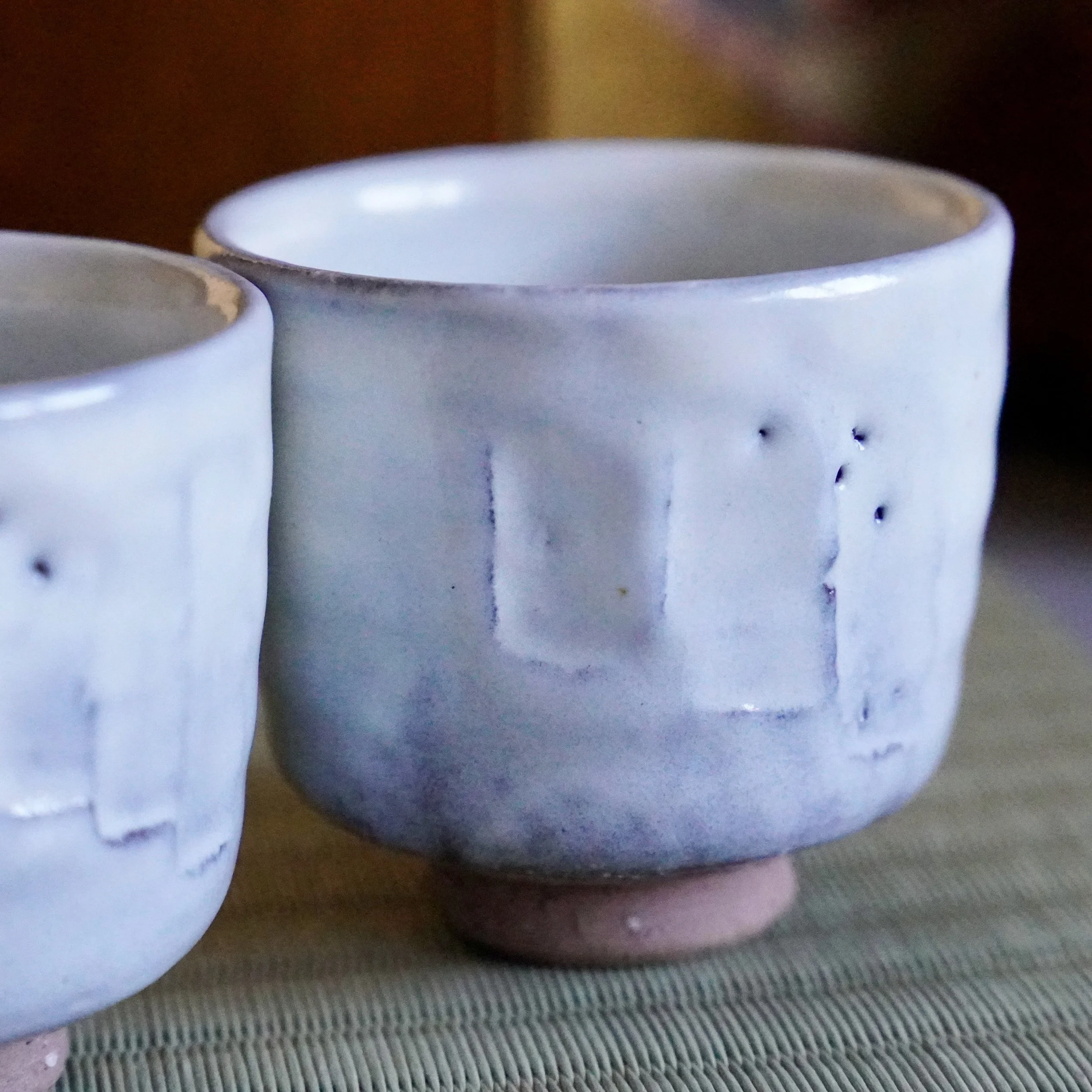
This is tanseiyu, the glaze Yasushi developed within his father's own workshop, named for the clear color of the Sea of Japan along this coast. Standing between his father's deep, flame-colored ensai pieces and Yasushi's own pale blue, I felt something I had not expected to feel in a pottery workshop: a kind of quiet tension between two people who love each other and still refuse to make the same thing.
Same clay, same family, same roof, and two potters working in registers that barely overlap. I liked that far more than I expected to.
What happens to the bowls that do not make it
When I went outside, right next to the mound of broken shards sat a basin of murky water, old tools resting against its concrete edge. I almost walked past it without asking what it was. Then it was explained to me what actually happens there, and I felt a small jolt of understanding I had not braced for: this is where the broken pieces go to dissolve, softened back down into slip until the clay becomes usable again.
The mound itself is what genuinely stopped me in my tracks. A huge pile of dried, broken shards spread across the yard, some barely fragments, a few still recognisably parts of pots, and one small, cracked but whole vessel resting near the top as if someone had simply set it down and walked away. I crouched down next to it for a while. It did not look like waste to me. It looked oddly moving, actually, this pile of everything that had not worked, sitting right there in the daylight, right next to the water that would eventually dissolve it back into something usable again.
Wood, stacked and waiting
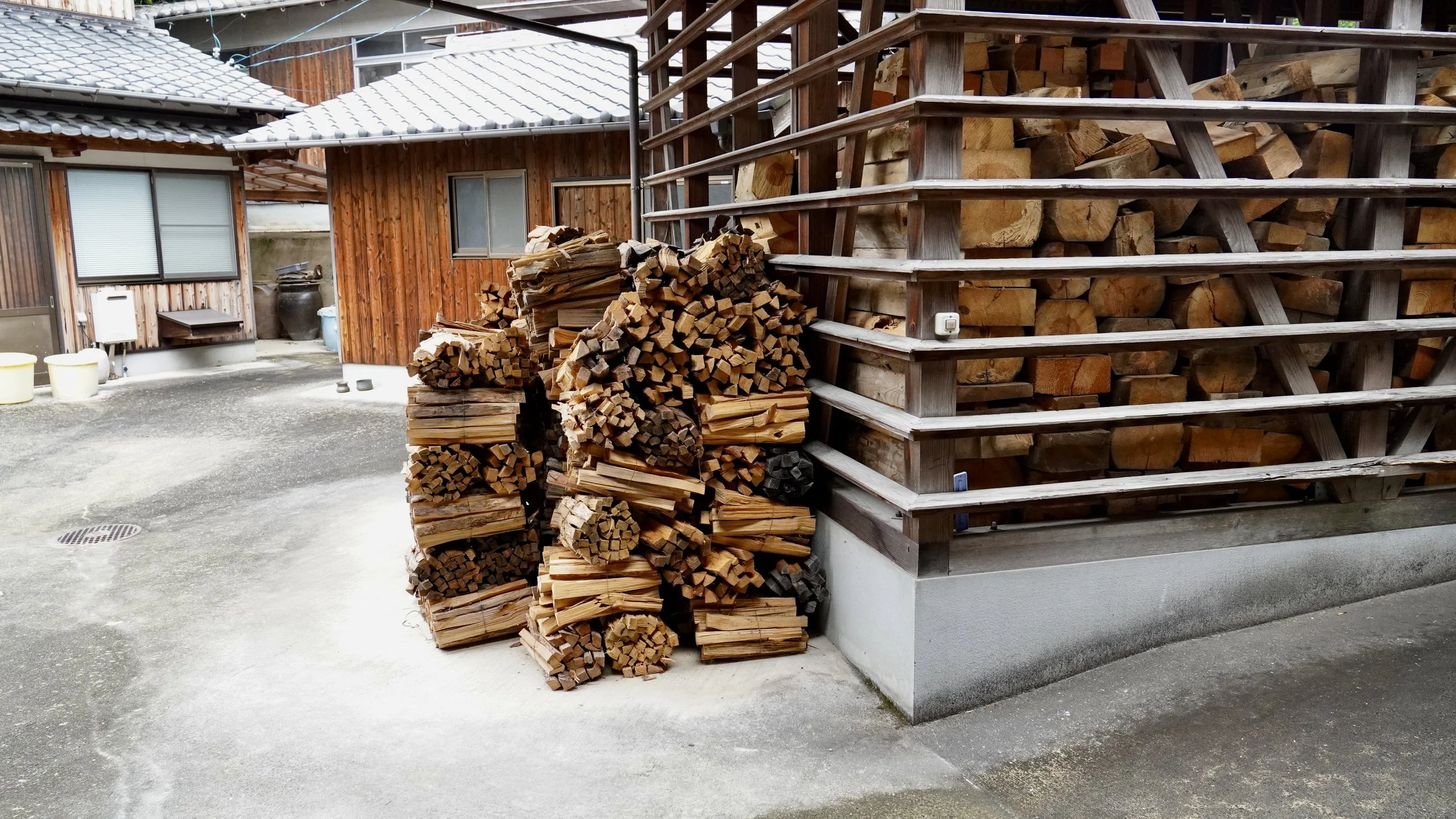
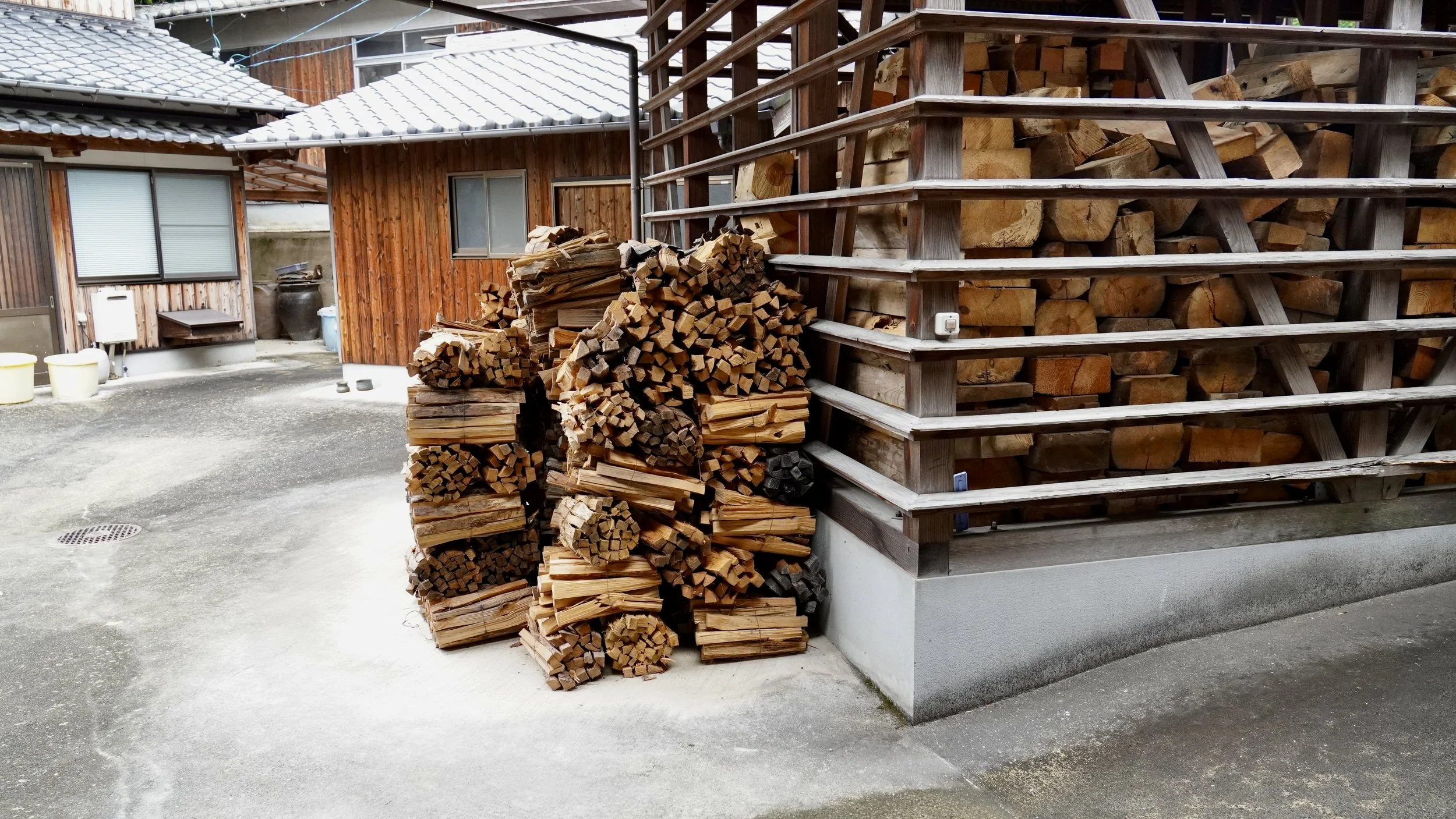
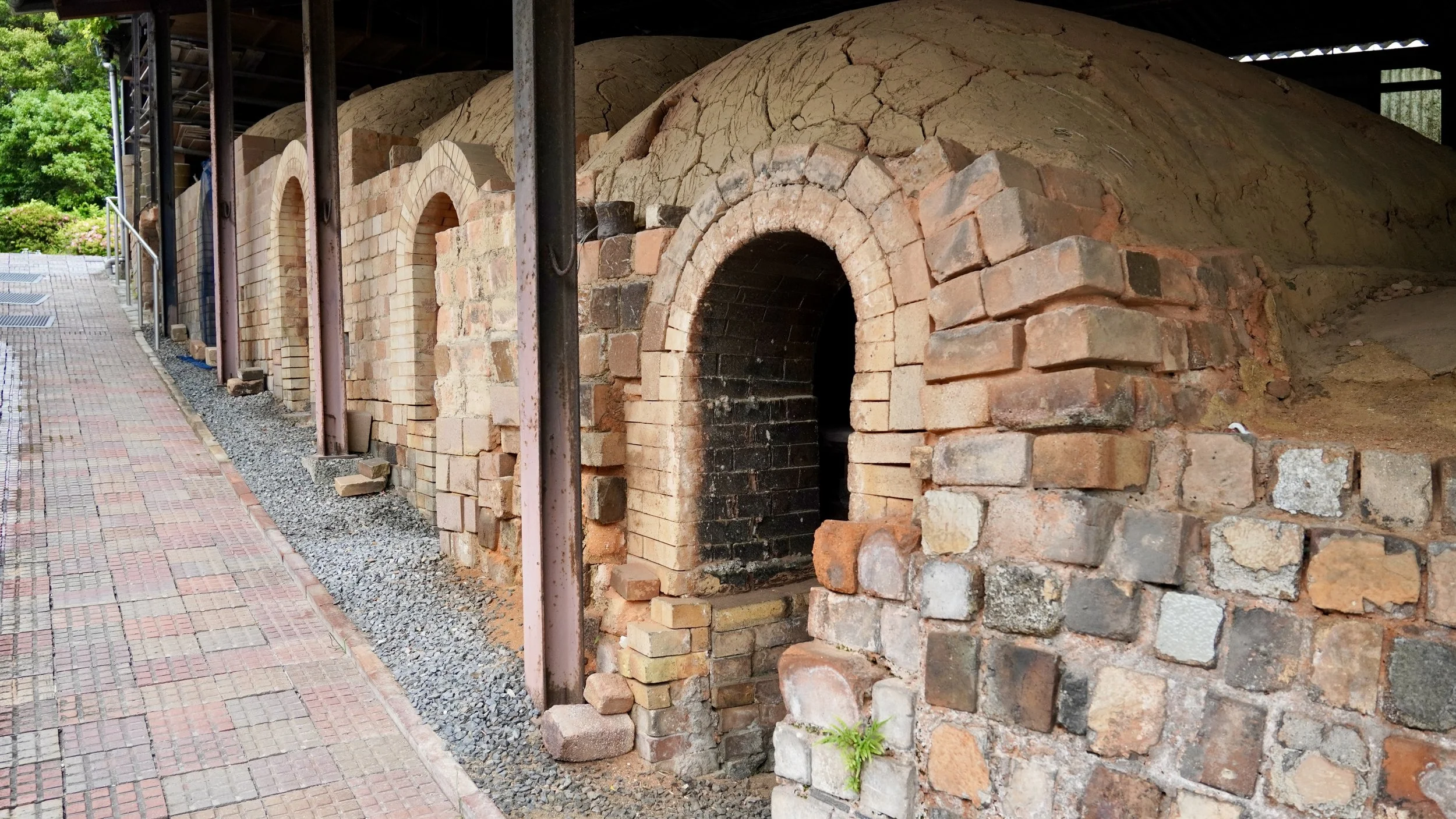
Firewood filled dense columns against the workshop wall, more of it stacked again further along near the kiln itself, and it was only standing next to it that I understood, physically, what firing a noborigama actually costs. Not as a fact I had read somewhere, but as a wall of wood taller than I am, right in front of me.
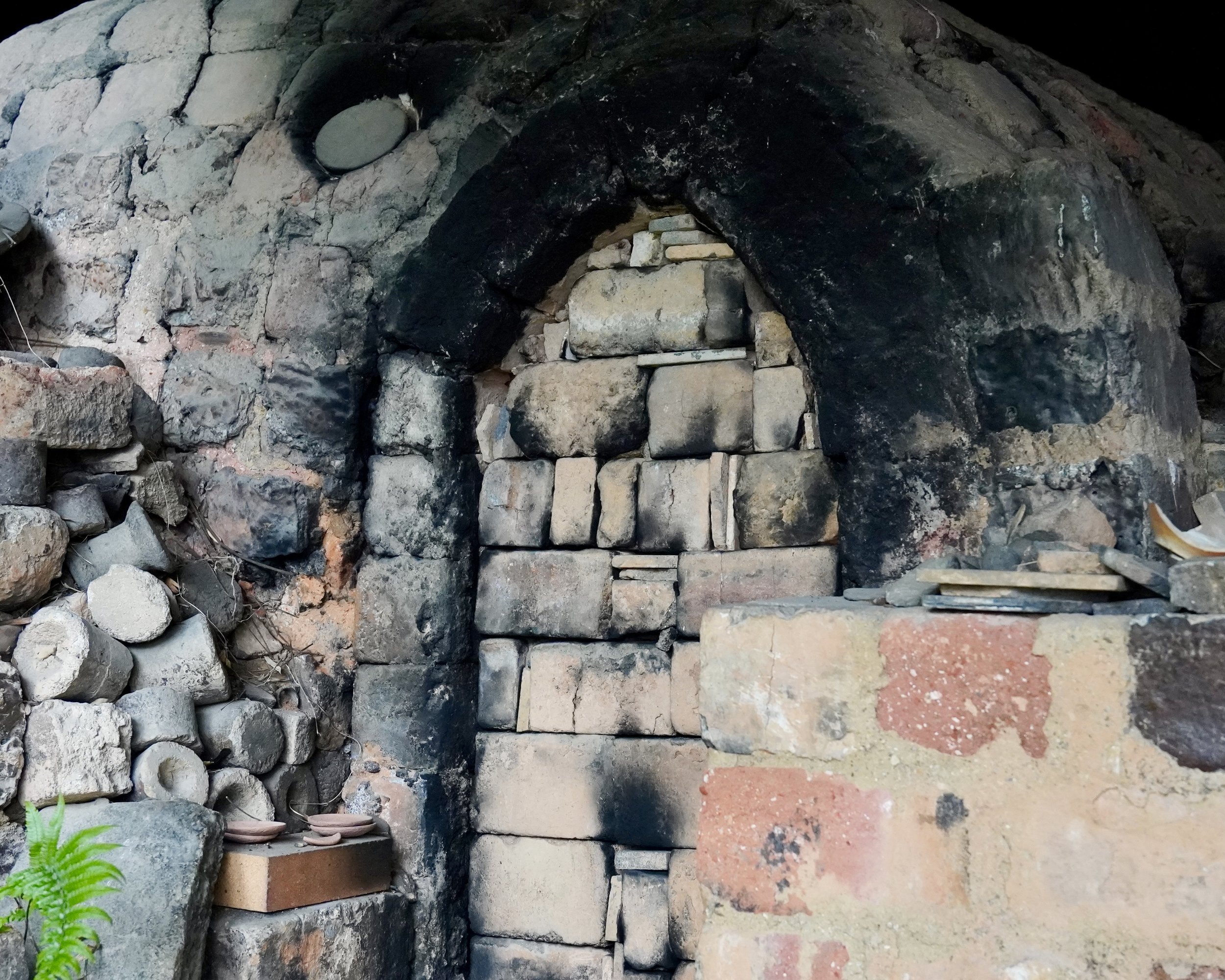
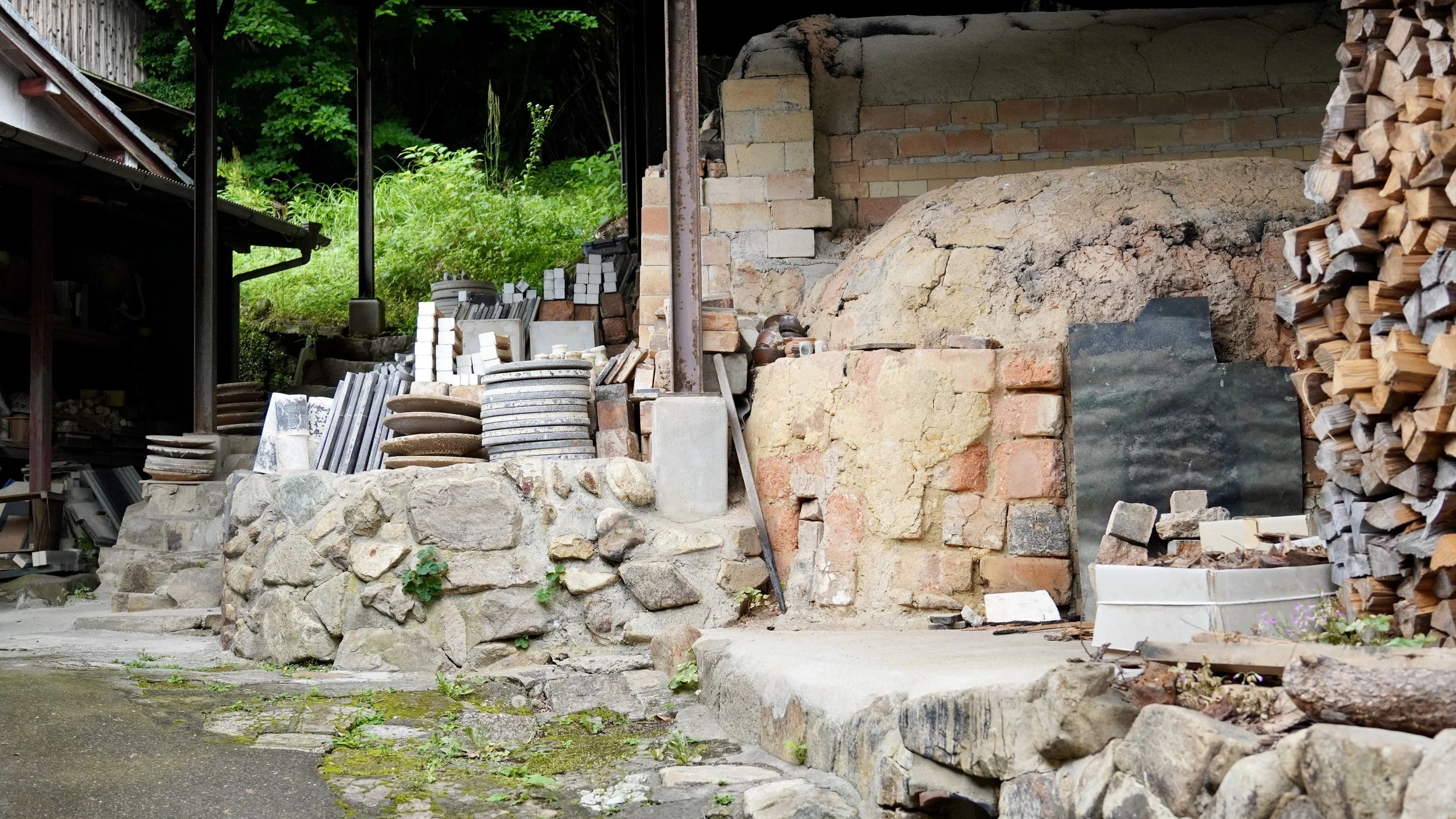
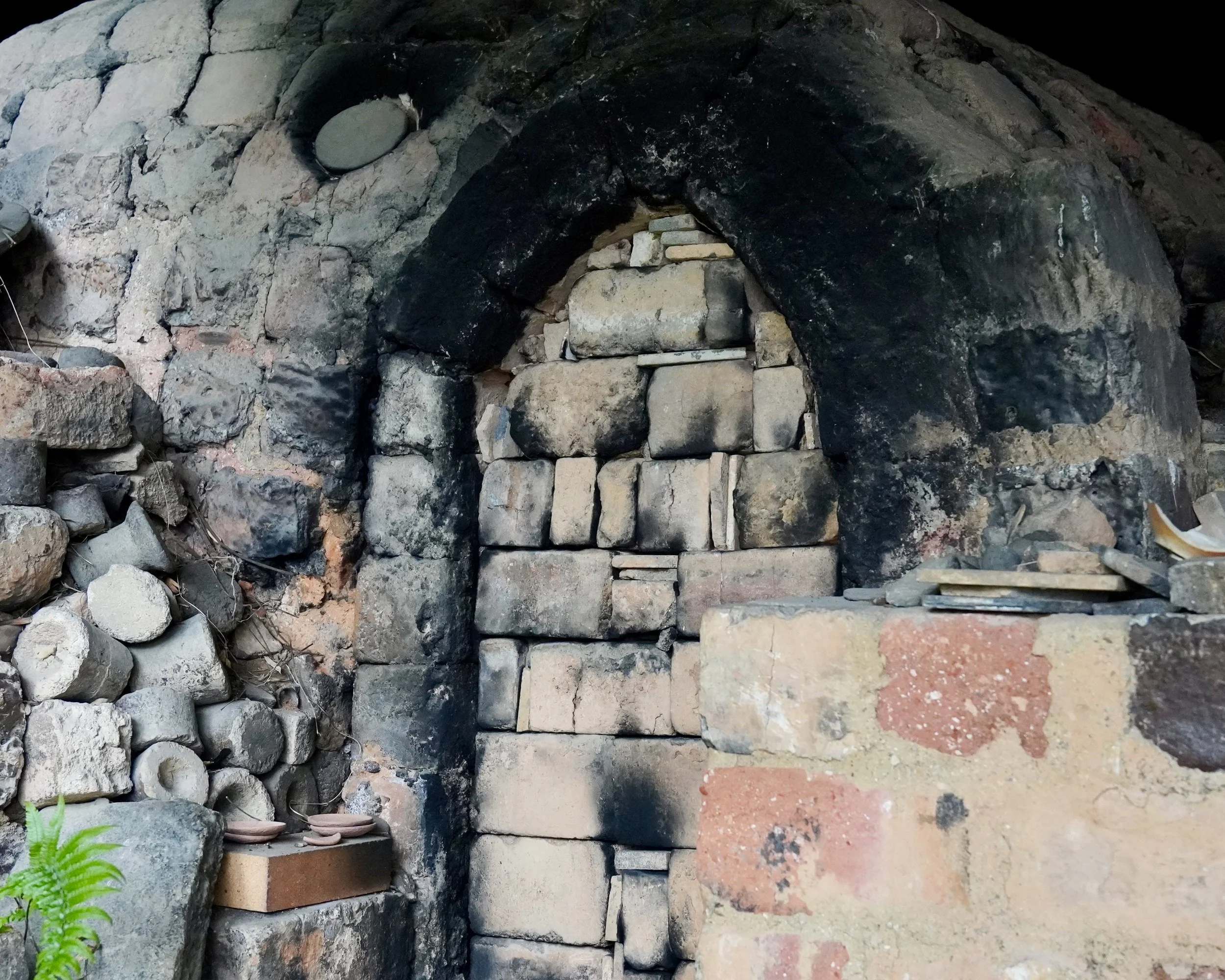
The kiln itself sits further back, a long structure of stacked stone and fired brick, its arched mouths dark and scorched black from years of use. It was not firing the day I visited, and I was almost glad of that. Standing next to it cold and quiet, I could take my time with it, walk around it, put my hand near the opening, without the heat and the noise of an actual firing pulling my attention away.
A cat, bought on the way out
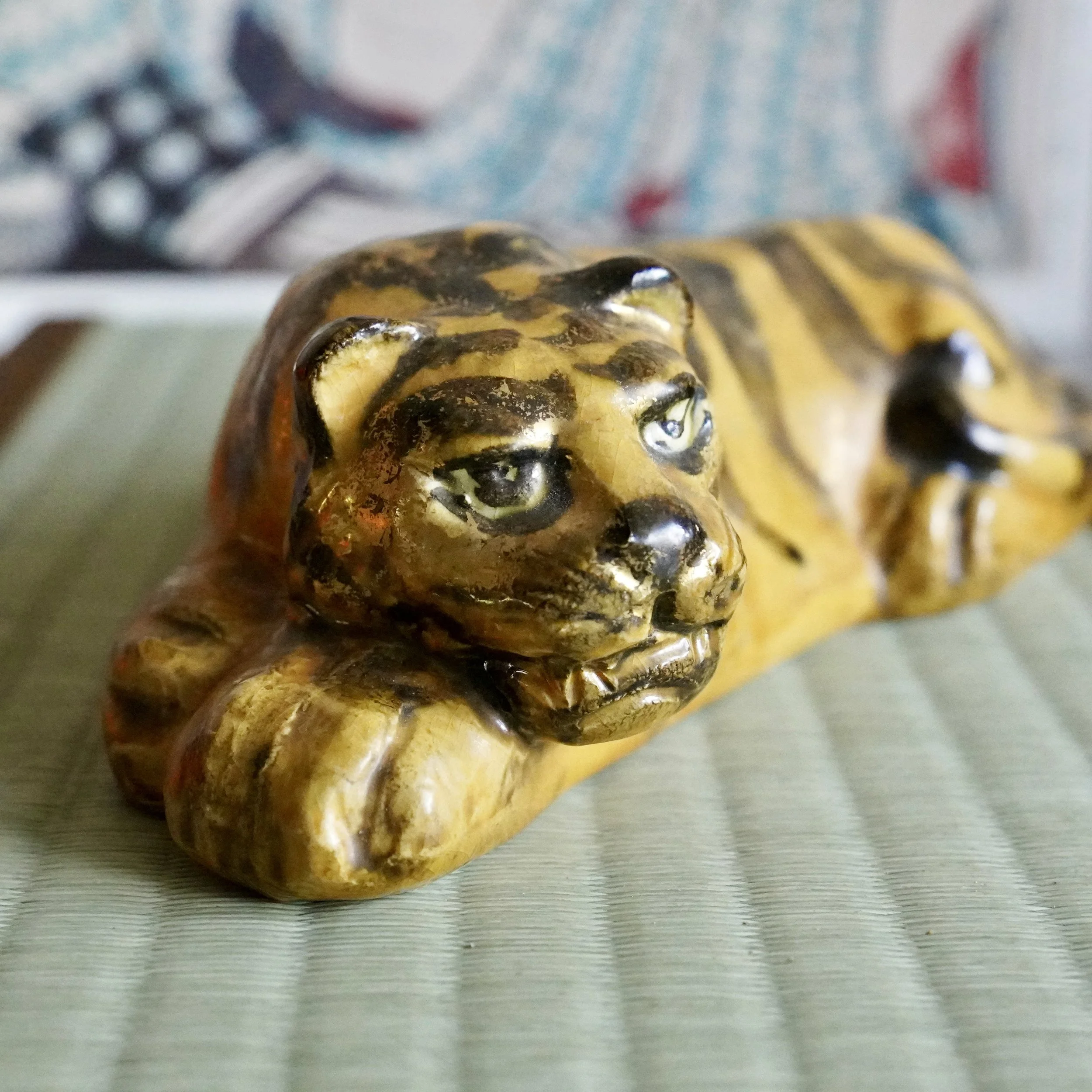
Near the entrance, three small glazed cats sat on a wooden shelf, and something about them undid me a little. Glossy, warm toned, each one slightly different from the last, made by the youngest member of the family currently working here, a young relative already shaping and glazing her own small figures alongside three generations of potters with far more experience than she has.
I bought one before I left, almost without deciding to. It just felt like the right way to leave a place like this: carrying home something made by the newest hands in a two hundred year old line, right alongside everything made by the generations working ahead of her. It sits on my desk now, and every time I see it I think less about the kiln itself and more about that whole afternoon.
Where the day went next
Before I left, Okada’s wife made a phone call on my behalf, to a workshop further along the same street. Tenchozan, she said, an entirely different way of working the same clay. I had not planned for a second stop that day. I am glad one potter's family decided, without my asking, to open the door to another's.
I went to Hagi to understand how this pottery is actually made, and by the end of these three visits, I did. Not from a diagram or a paragraph in a book, but from clay under my own fingernails and three completely different sets of hands showing me how they get there. This is only the first stop.
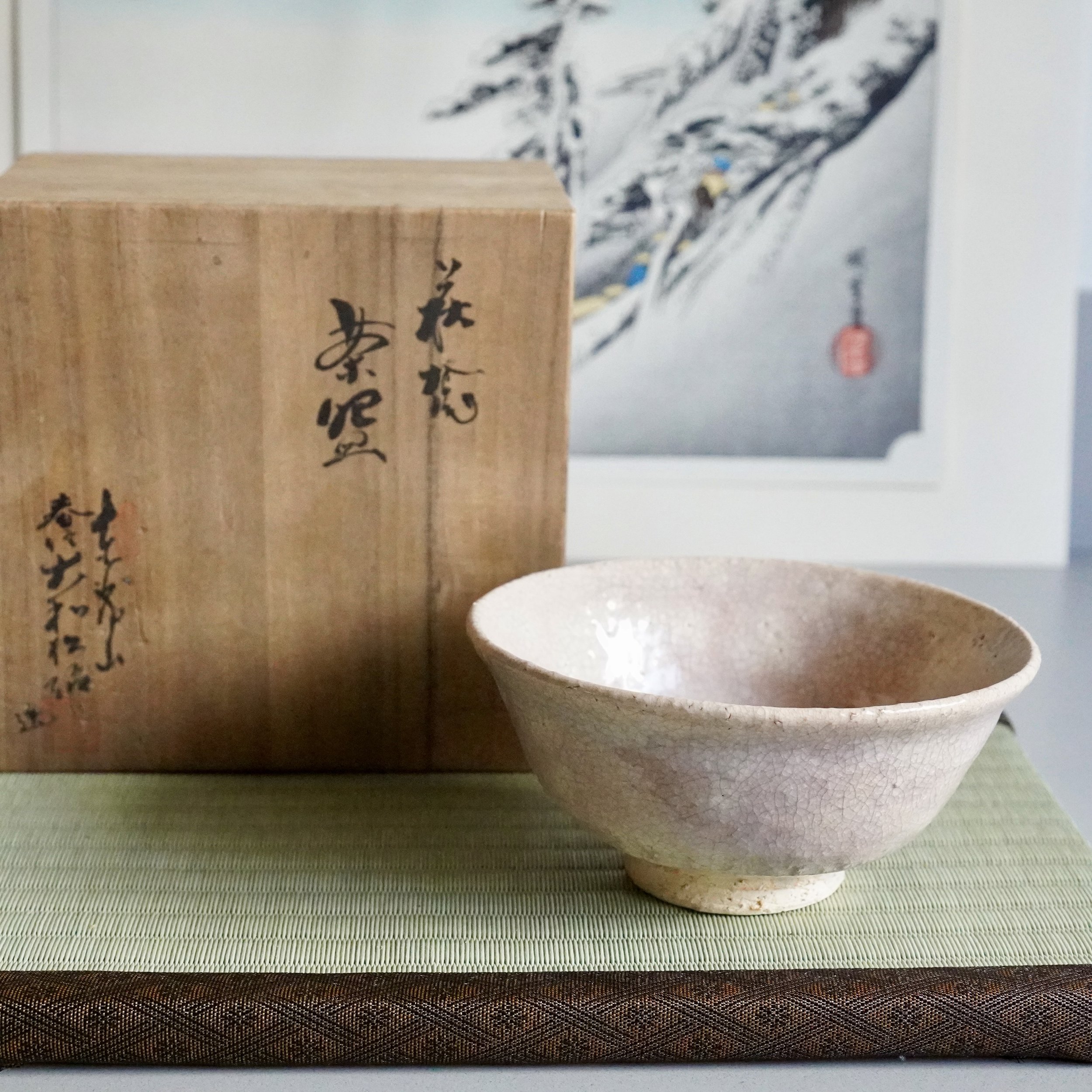
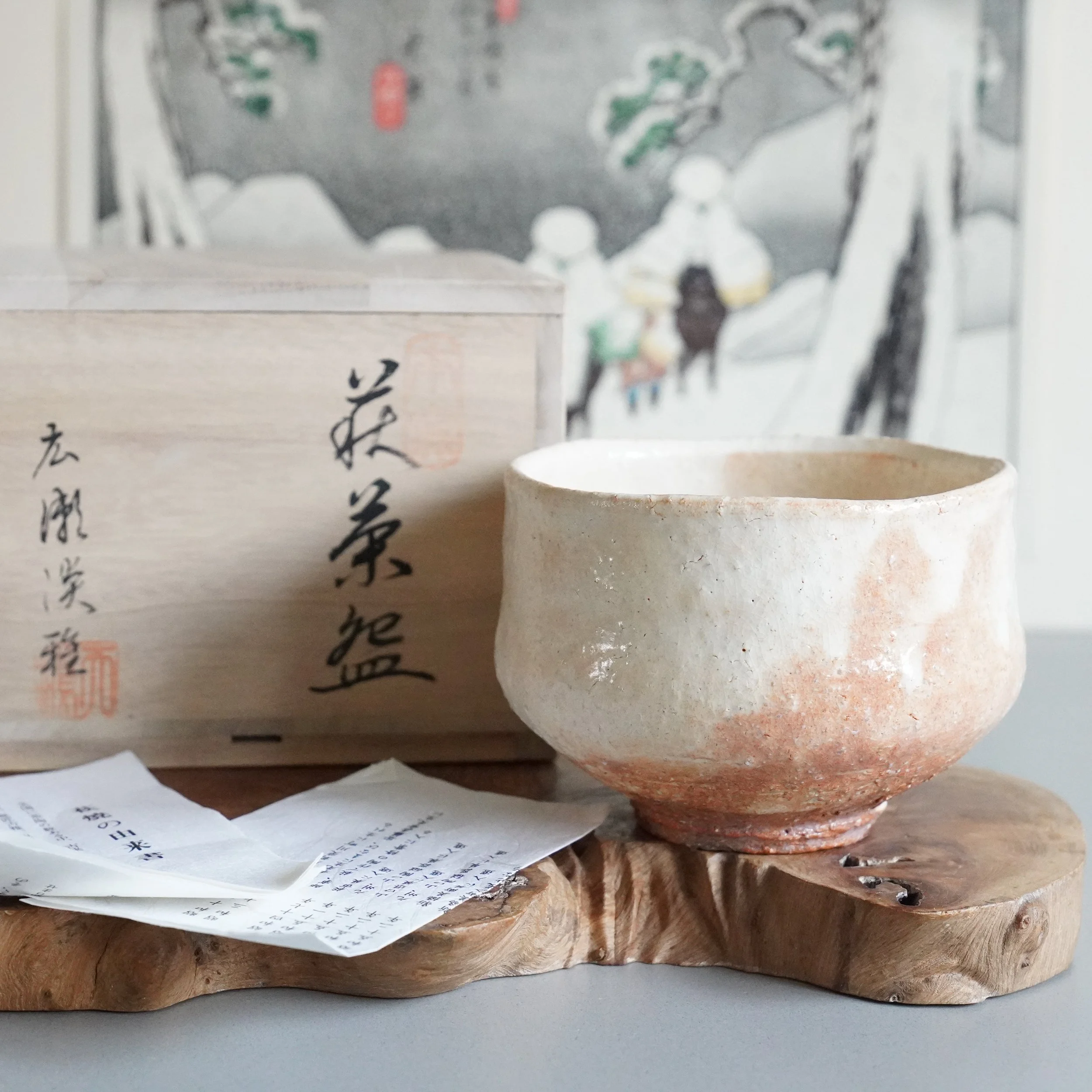
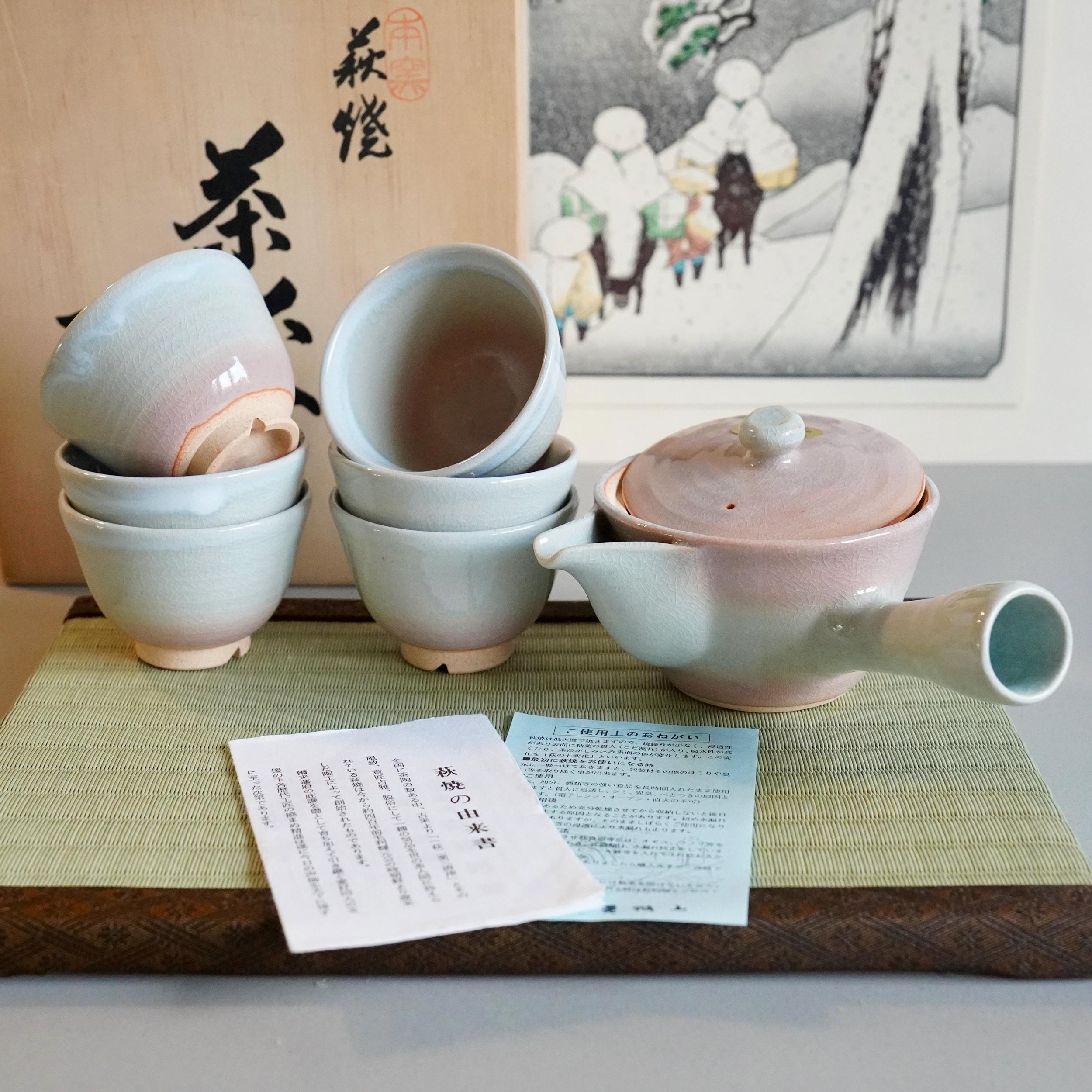
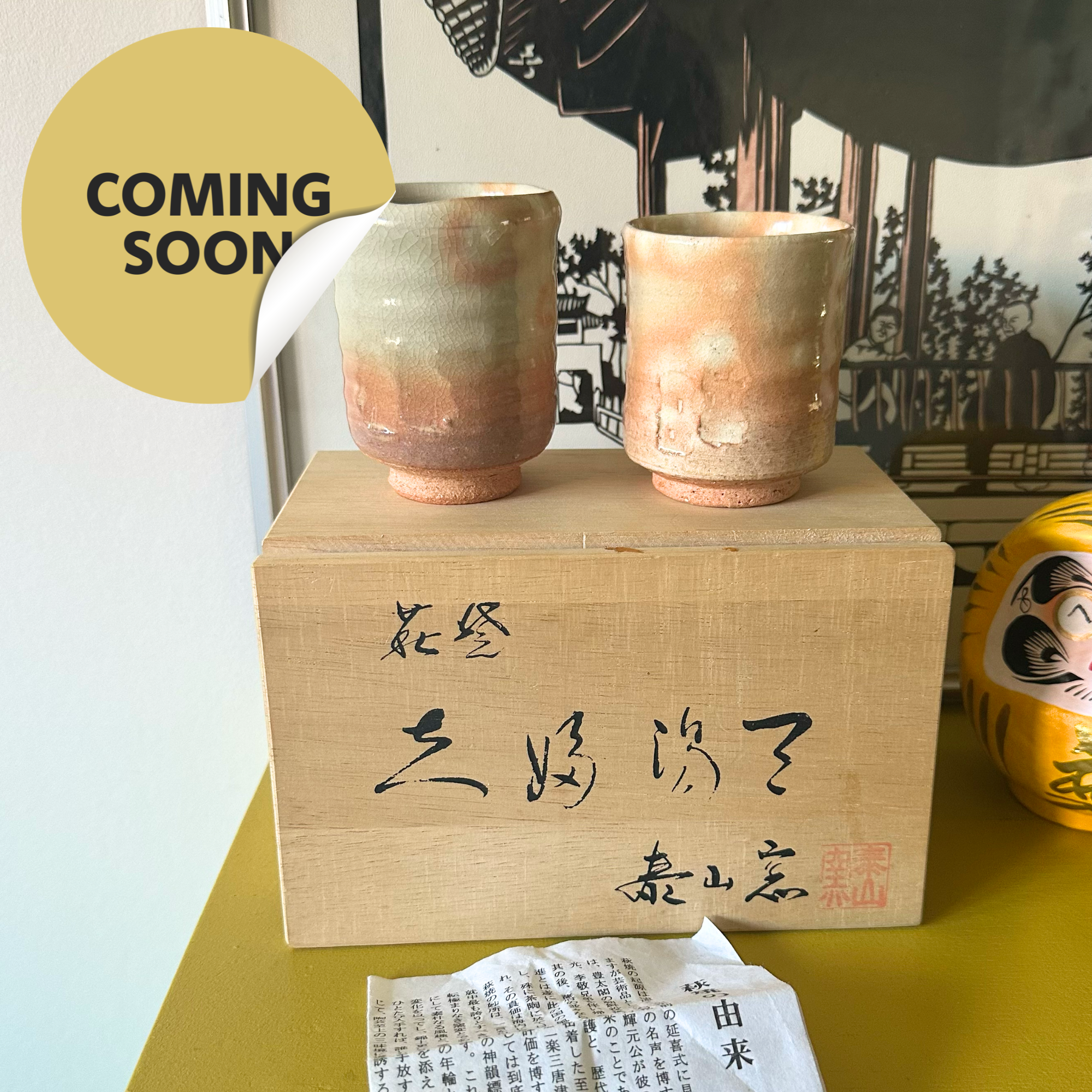
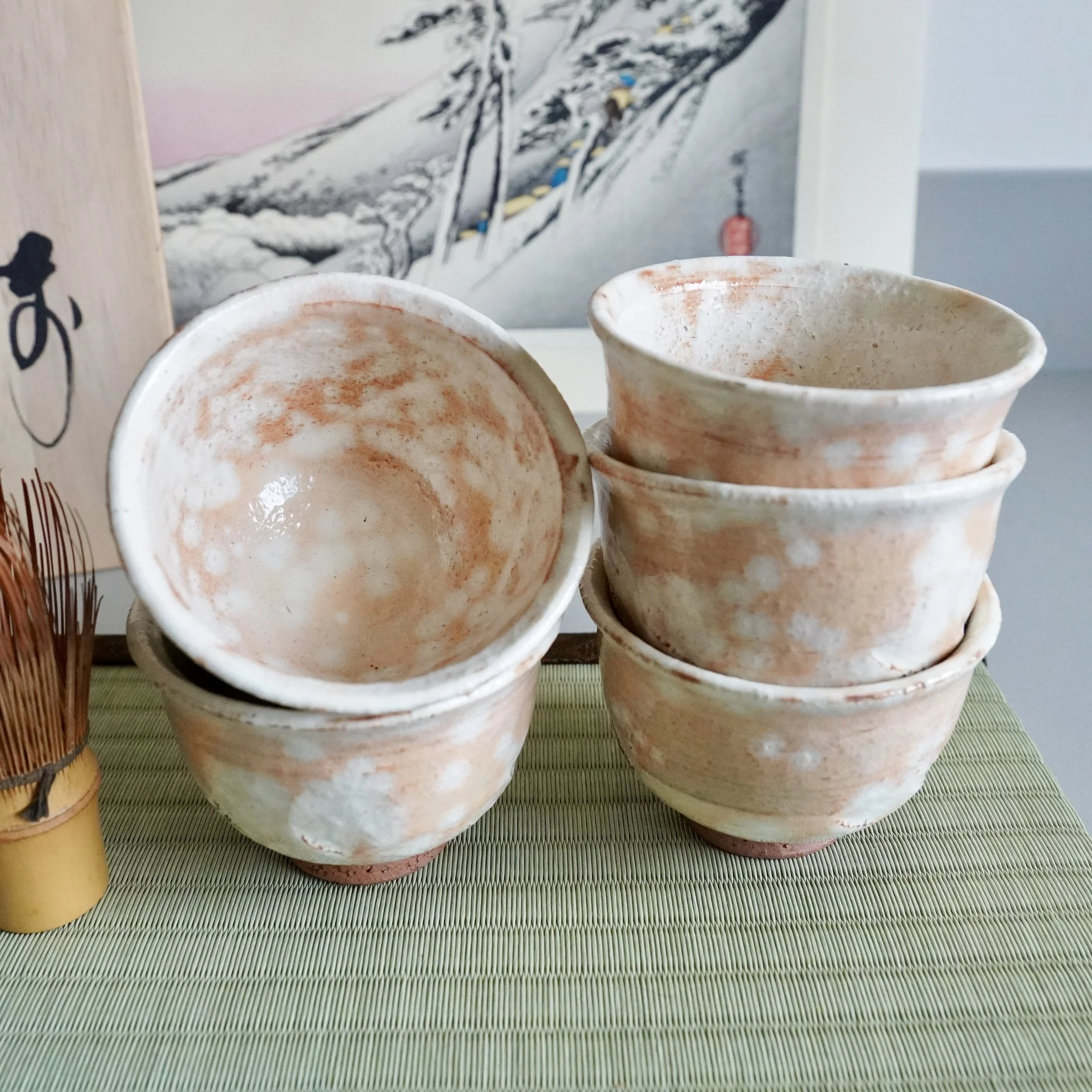
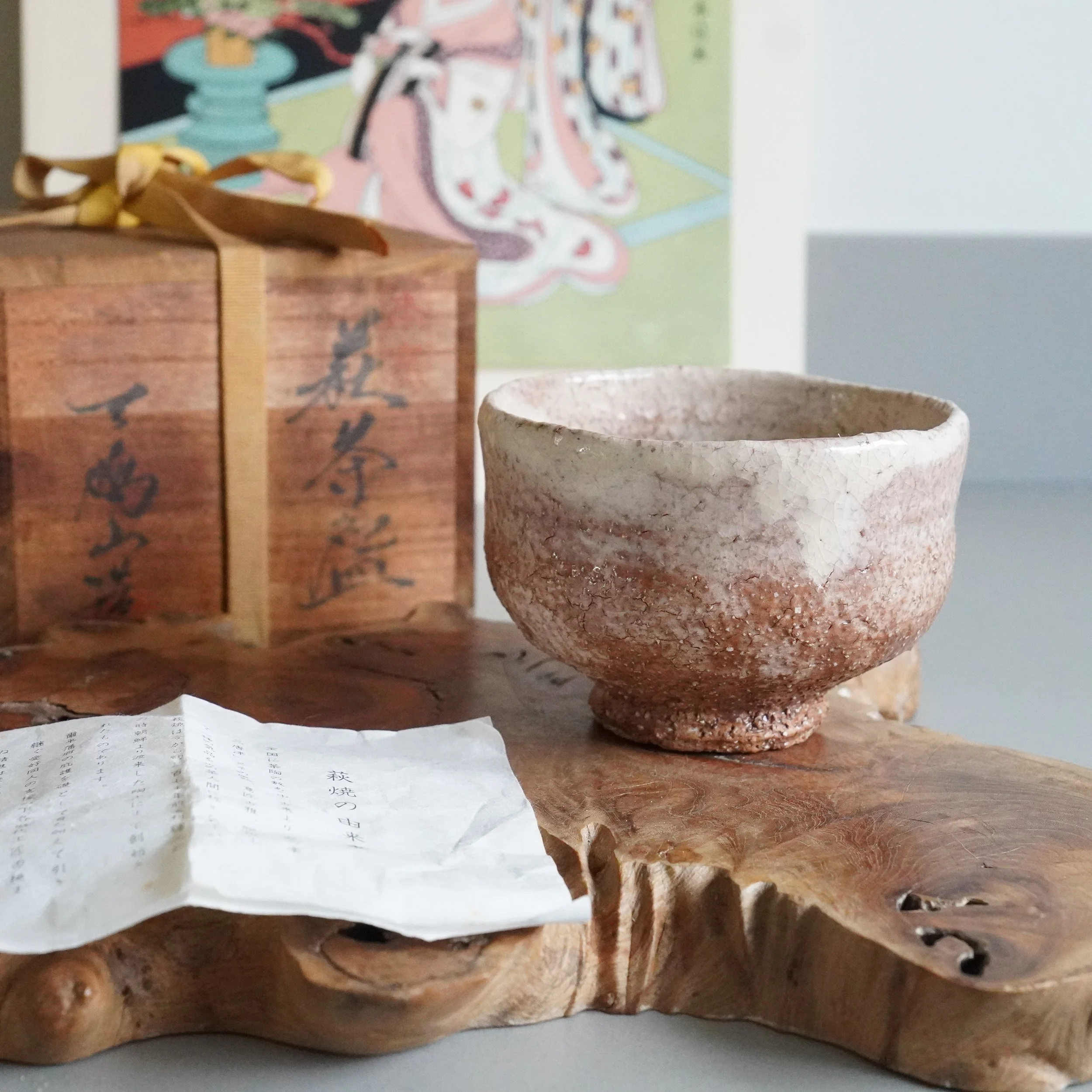
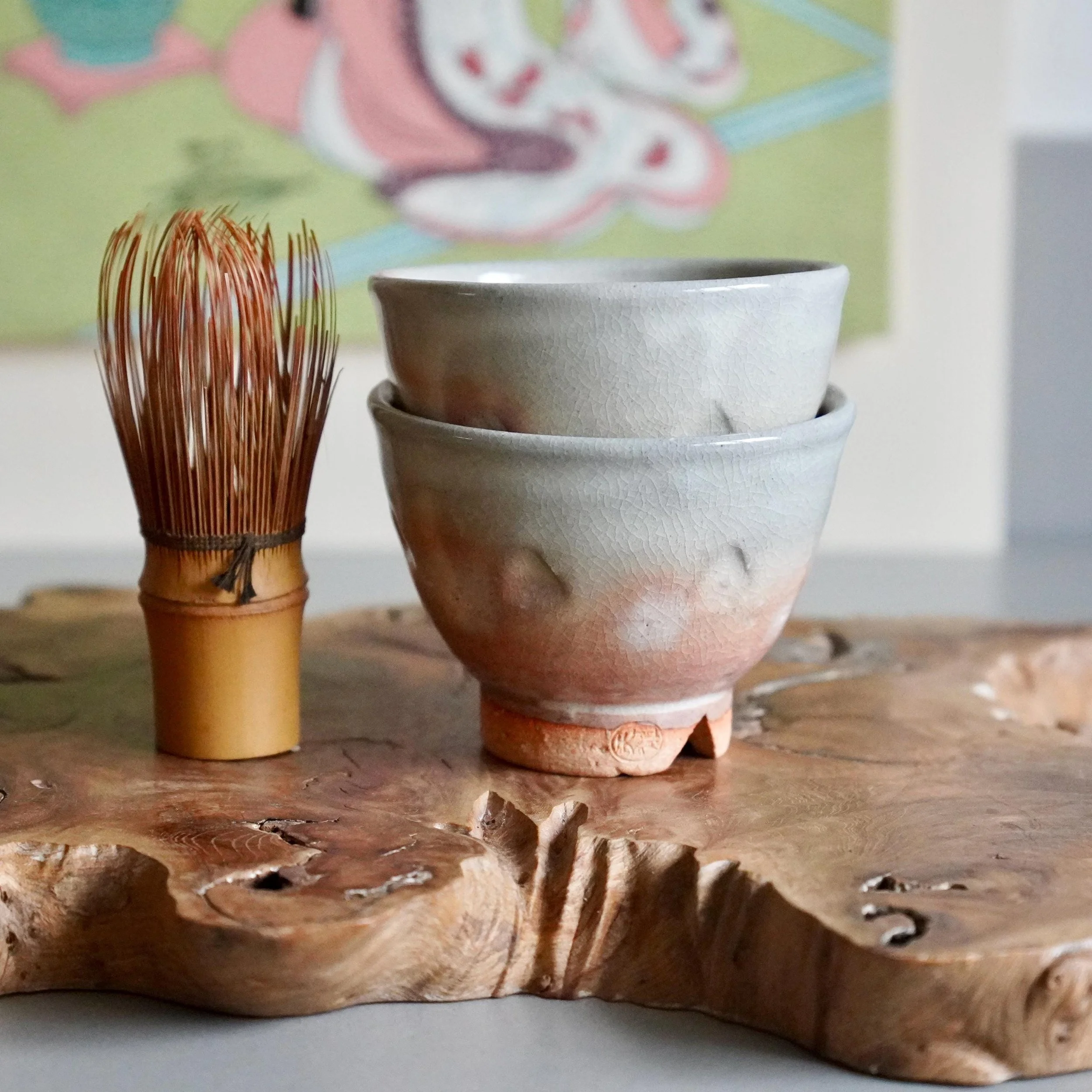
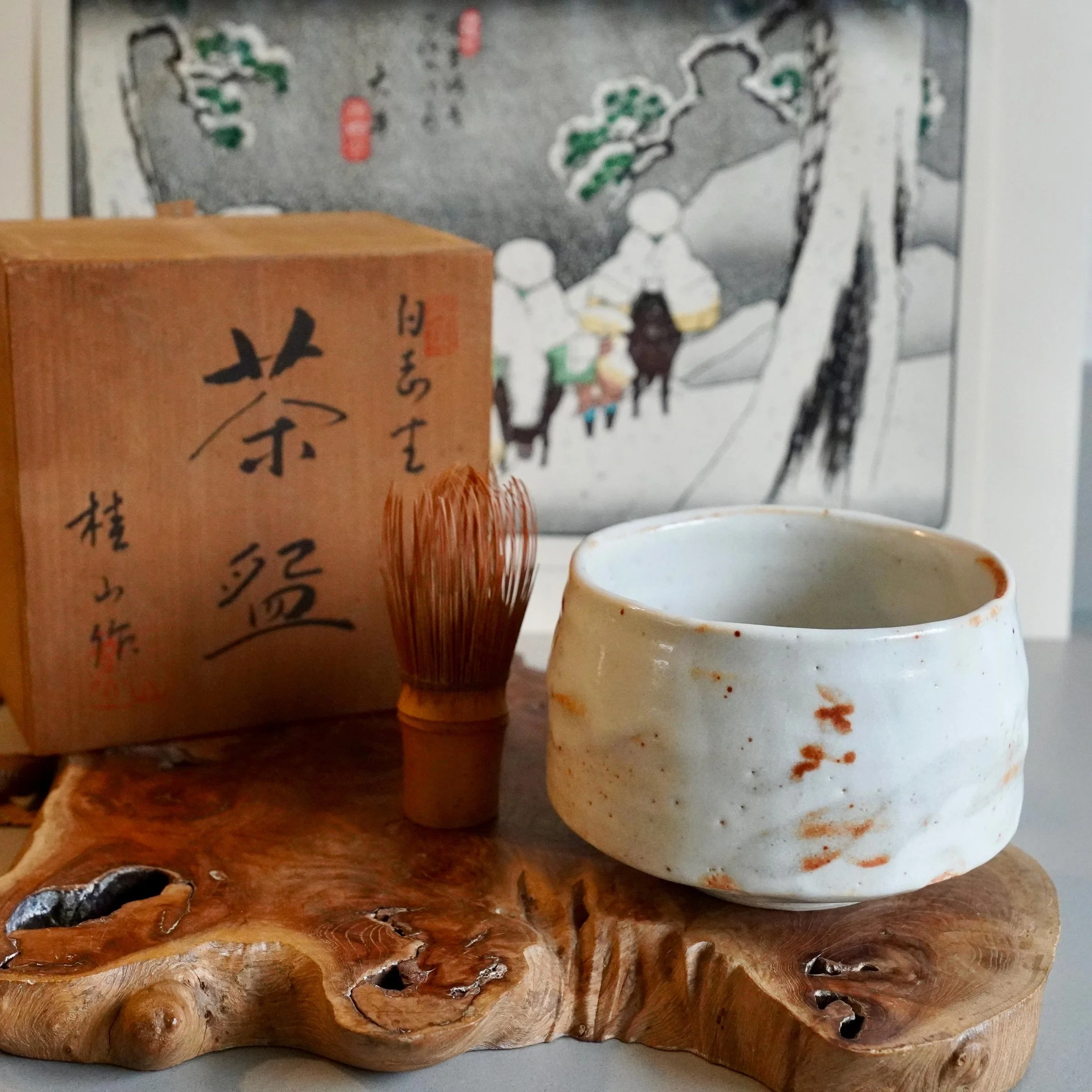
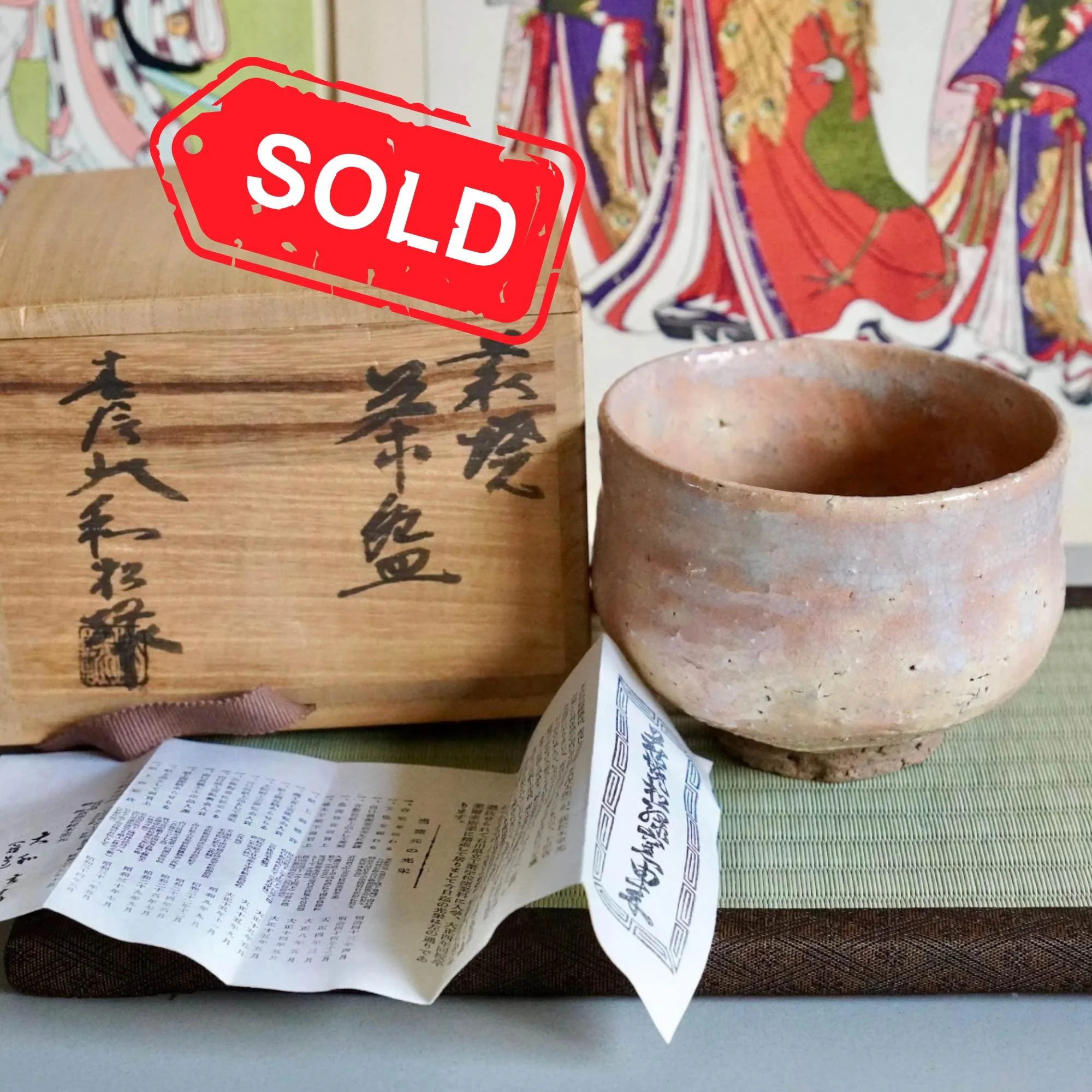
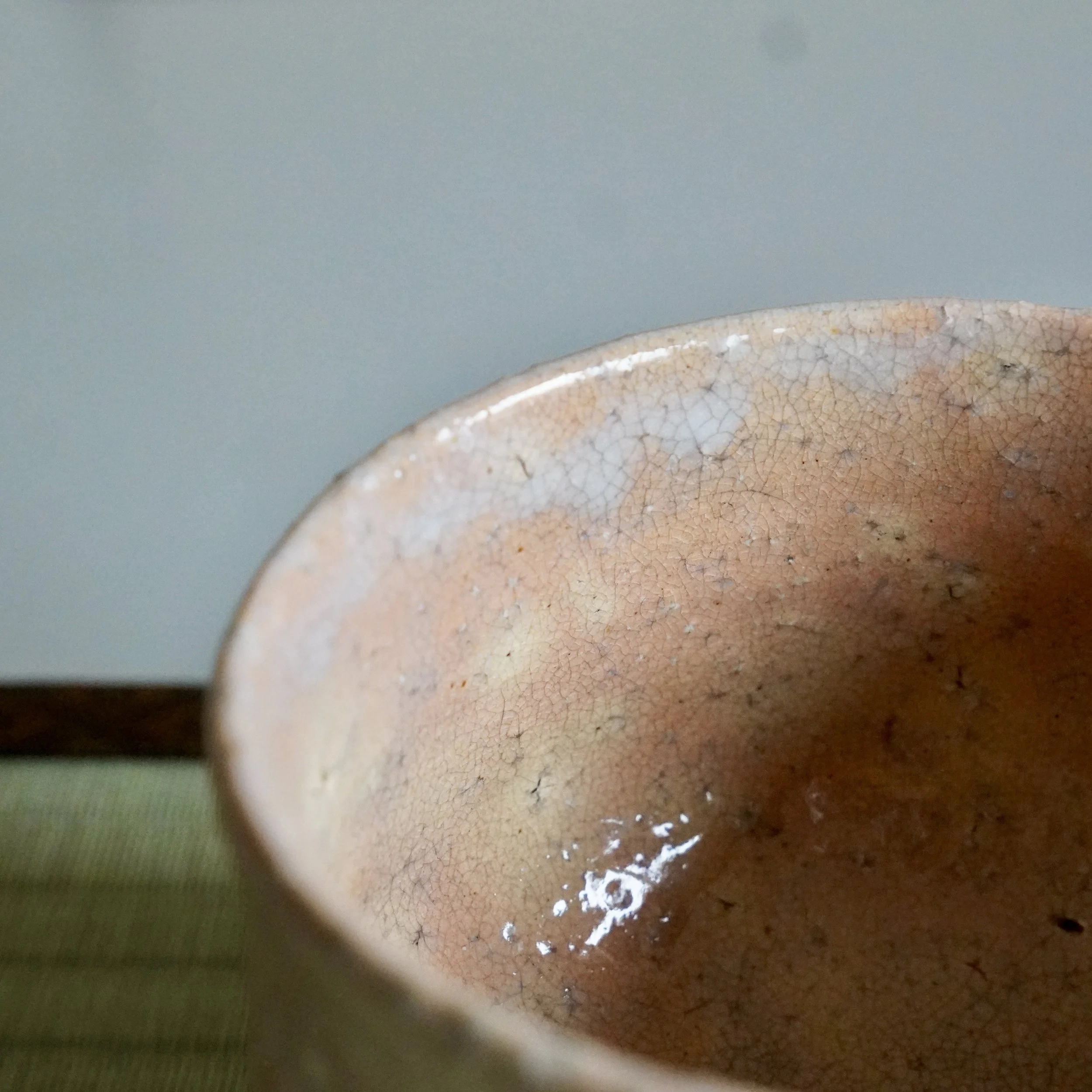
The Okada pieces in collection
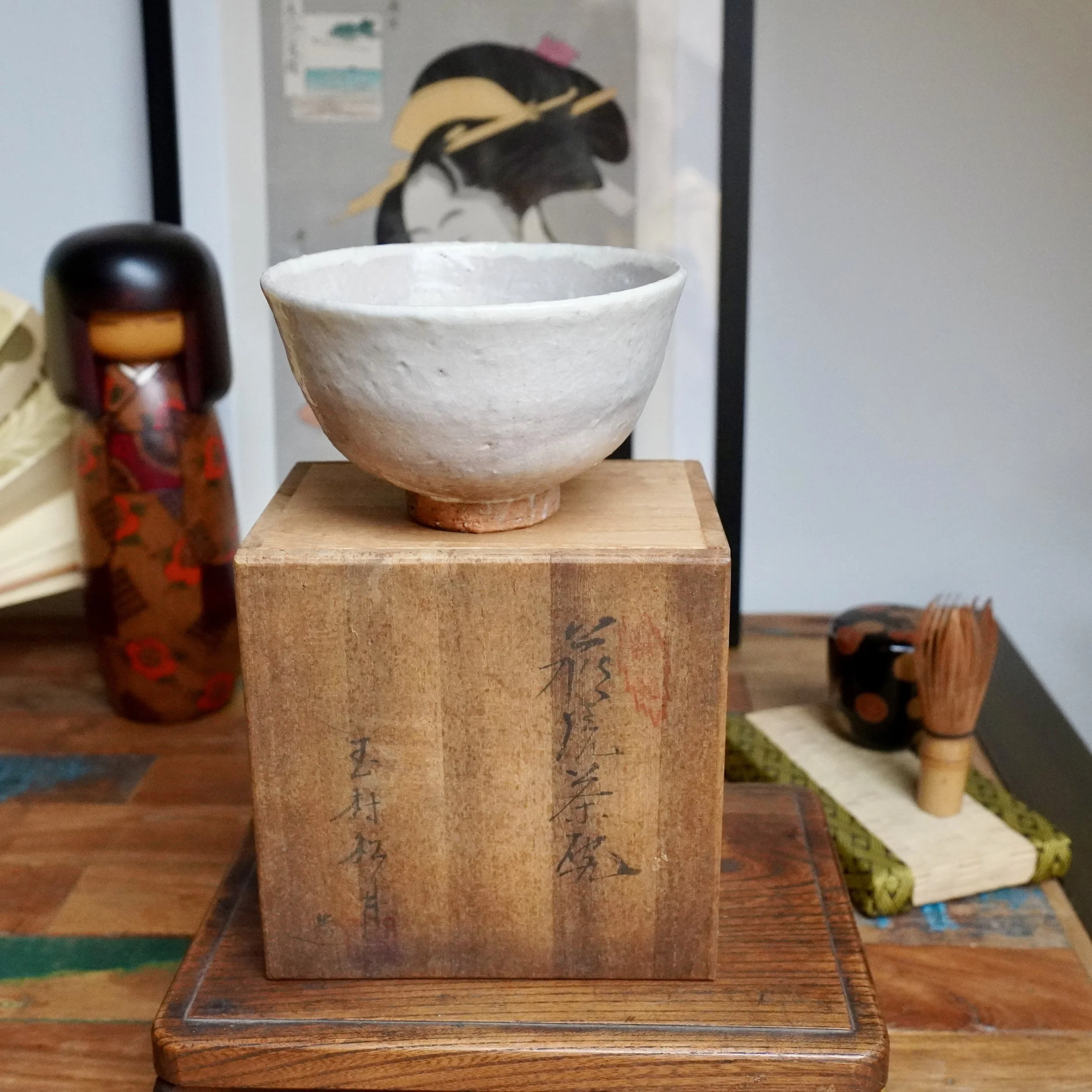
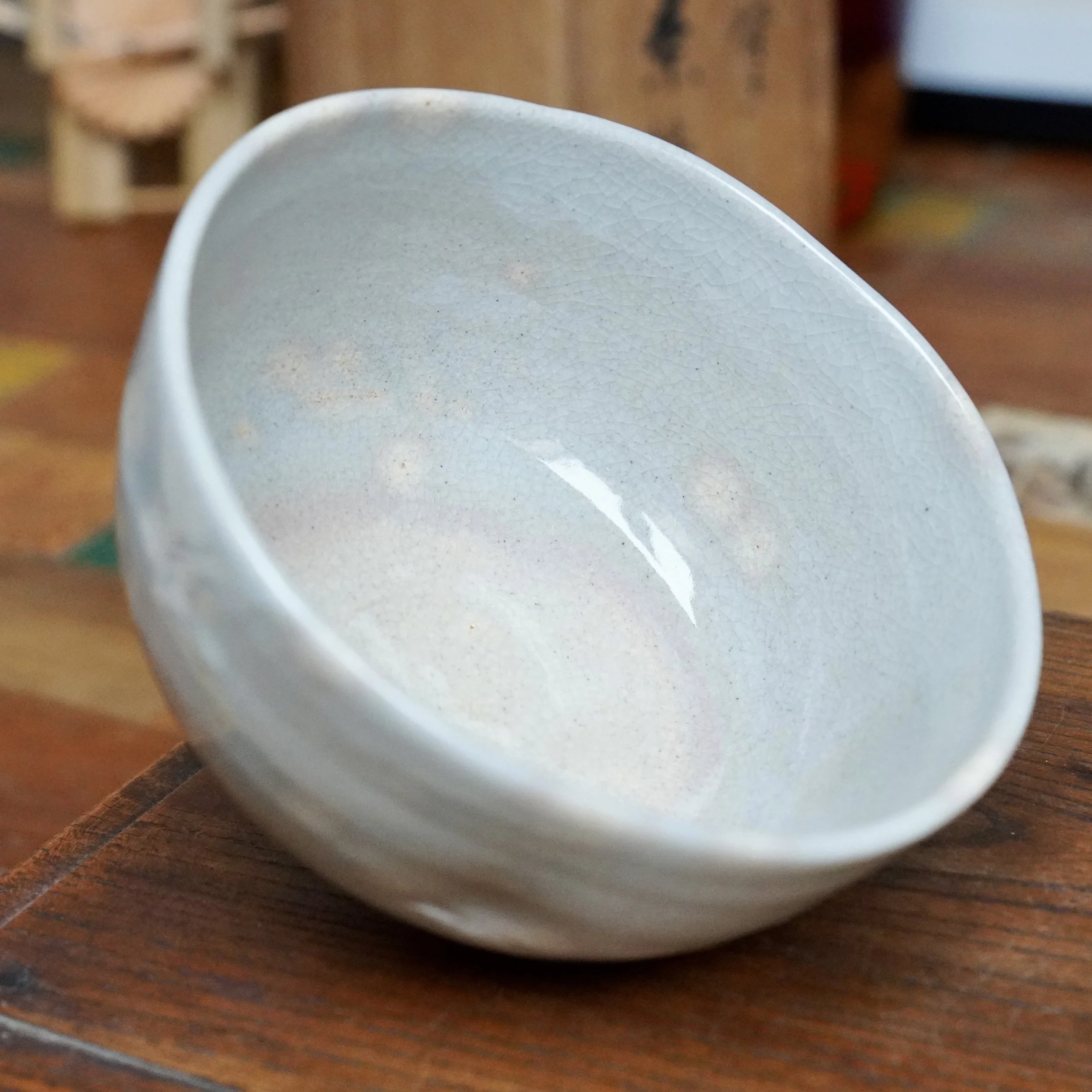
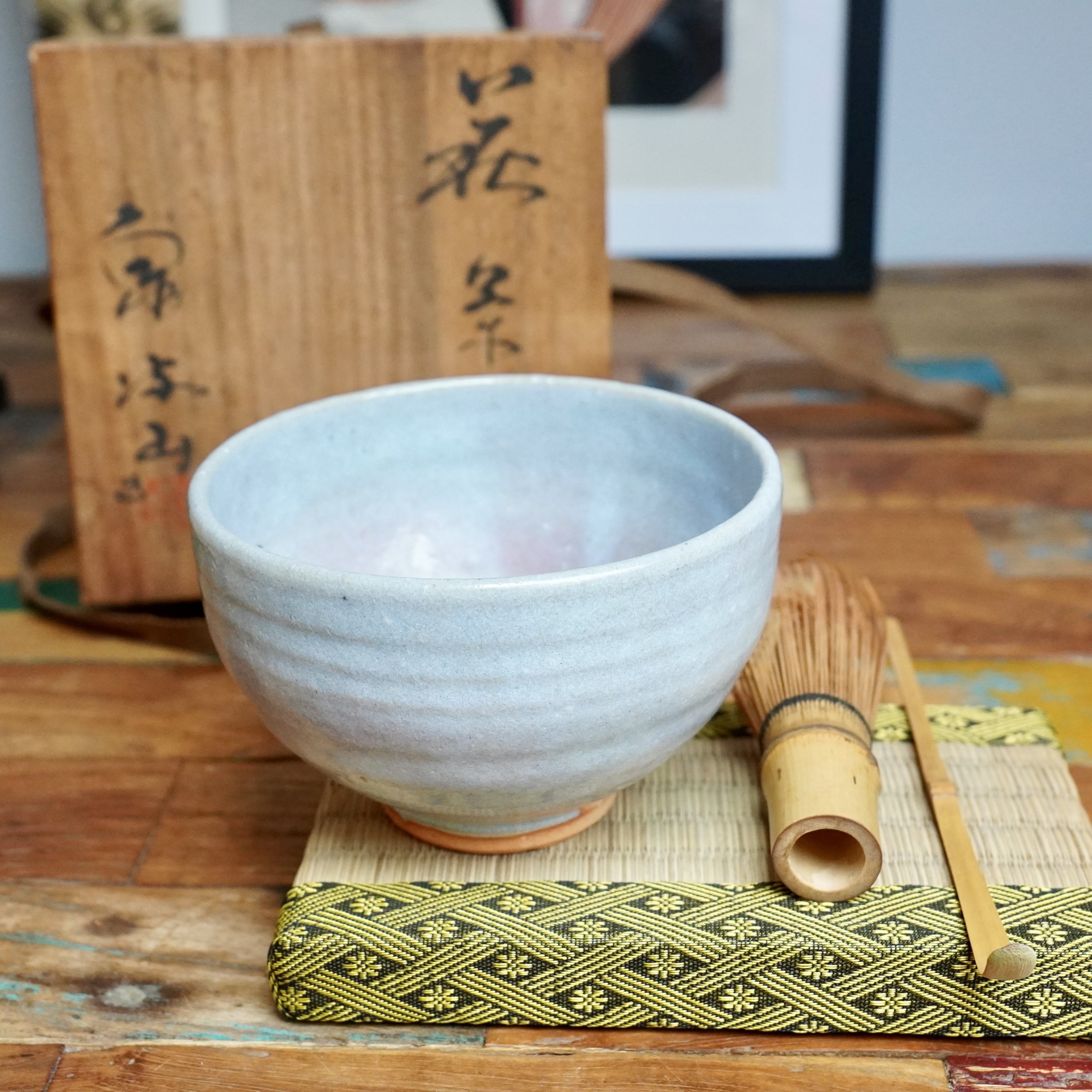
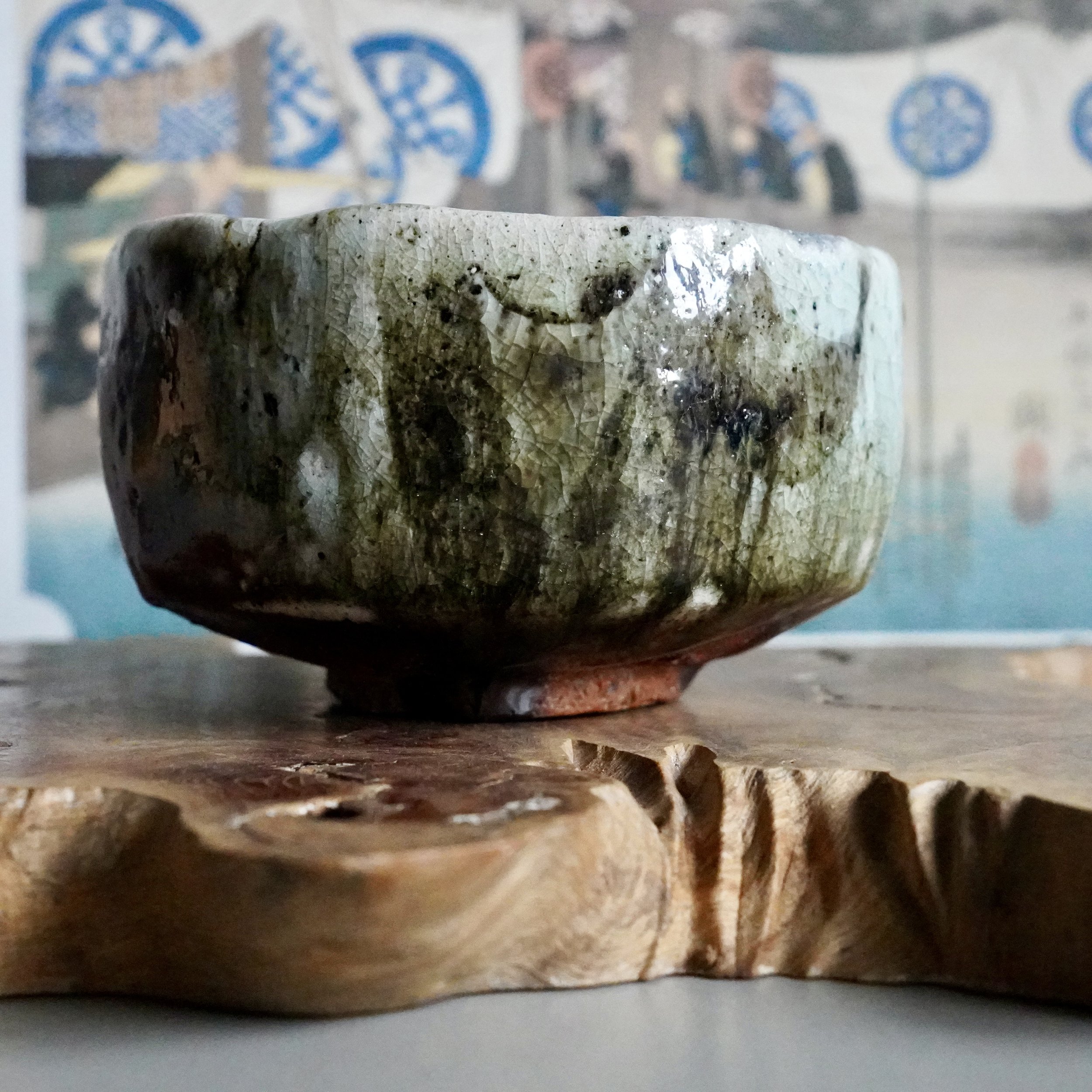
Hagi yaki in the collection
Read more
A selection of other kiln visits and glaze traditions from Japan.
→ Hagi-yaki isn't meant to stay the same. Read how the glaze itself keeps changing, in my journal.
→ Curious what that crackle actually does the moment it meets tea? I filled a Hagi chawan with water and watched it happen in real time: What happens when water meets Hagi-yaki
→ Ensai and tanseiyu both come from a kiln that lets fire and slip decide the surface. Bizen goes even further: no glaze at all, only what ten to fourteen days in the flame leaves behind. Bizen-yaki: the Okayama tradition without glaze
→ Curious how to care for a piece like the Okada kogo in the shop?I wrote a full ceramics care guide.
→ Want to know more about the eight generations behind this kiln, and how to recognise a genuine piece? Meet Okada Yū and Okada Yasushi on the maker page.
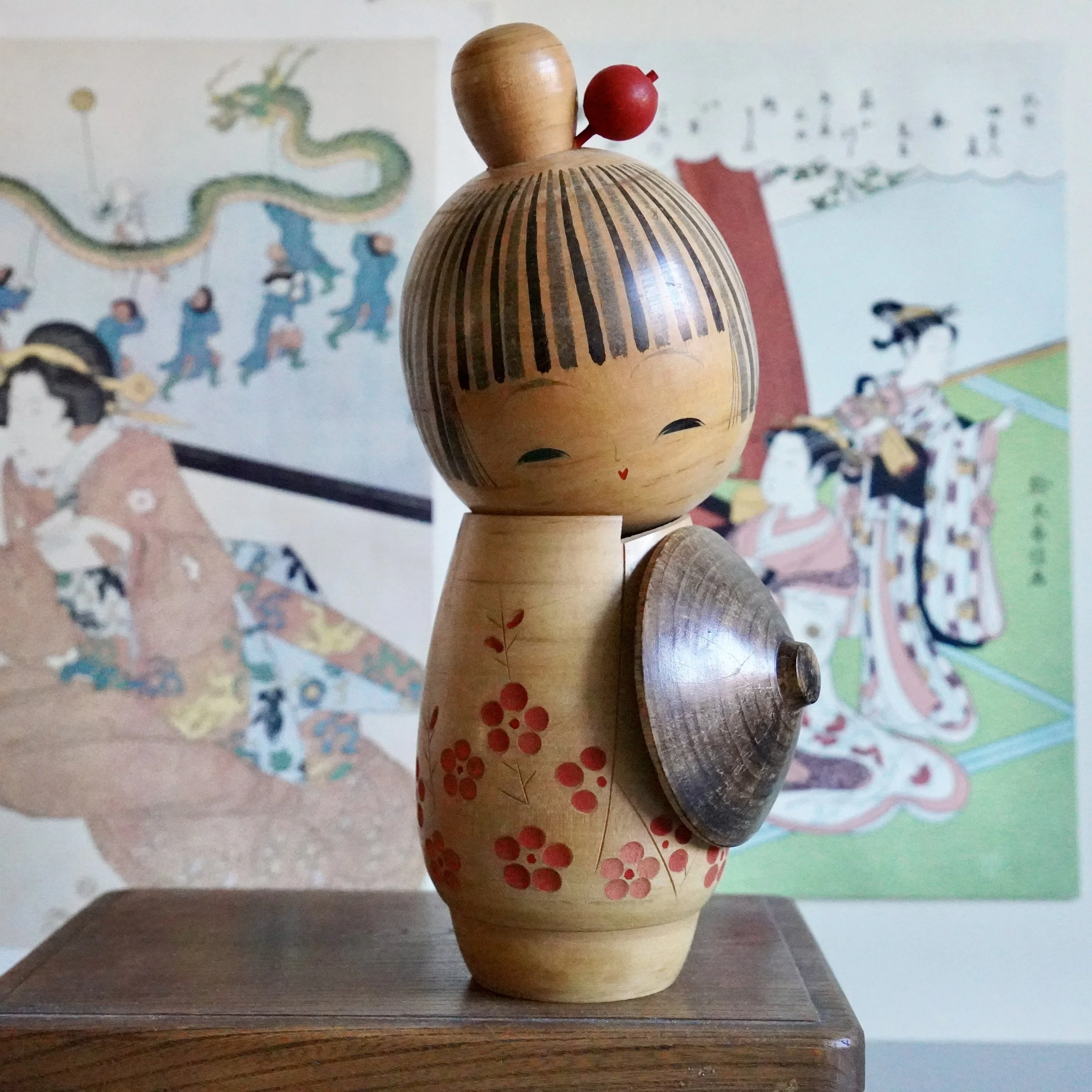
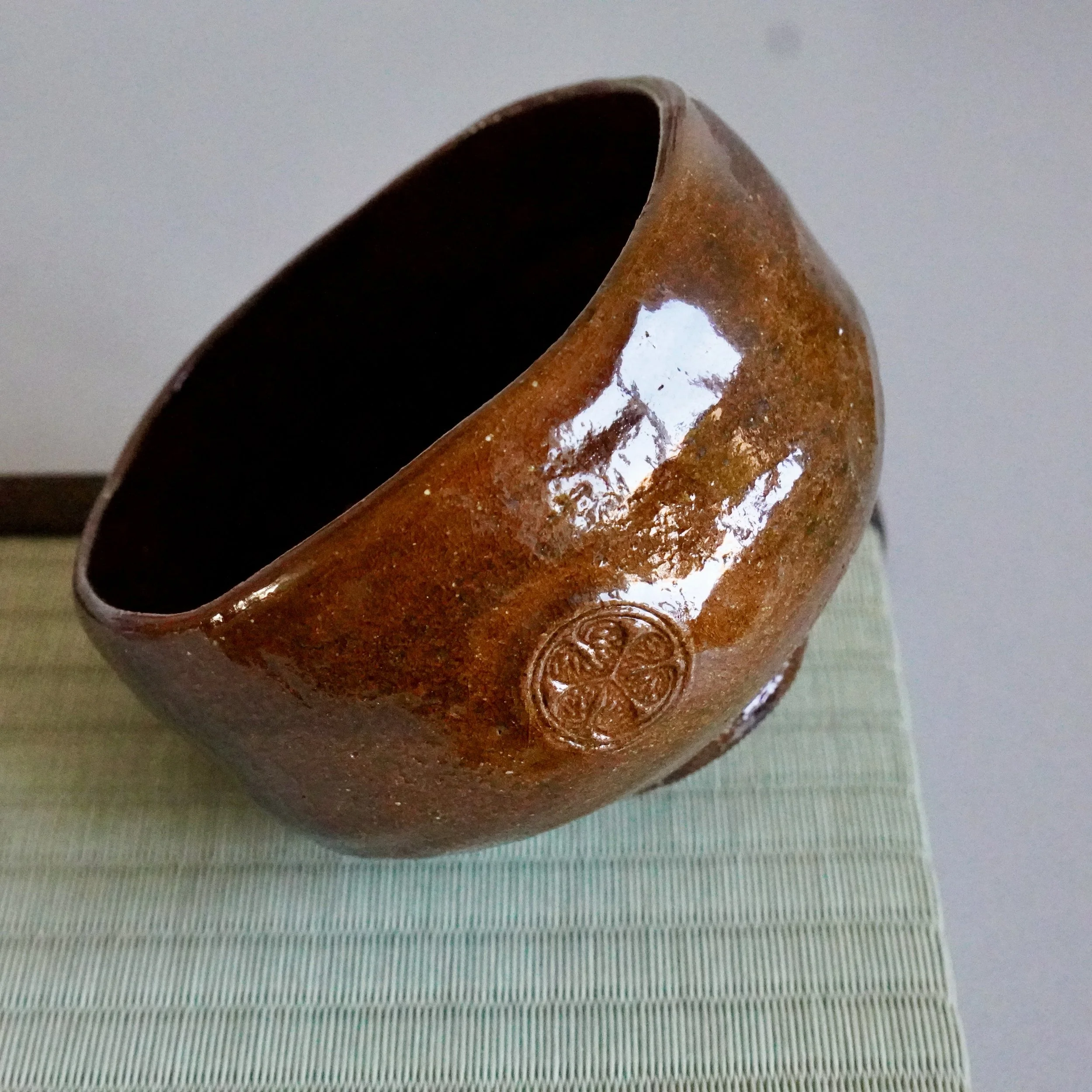
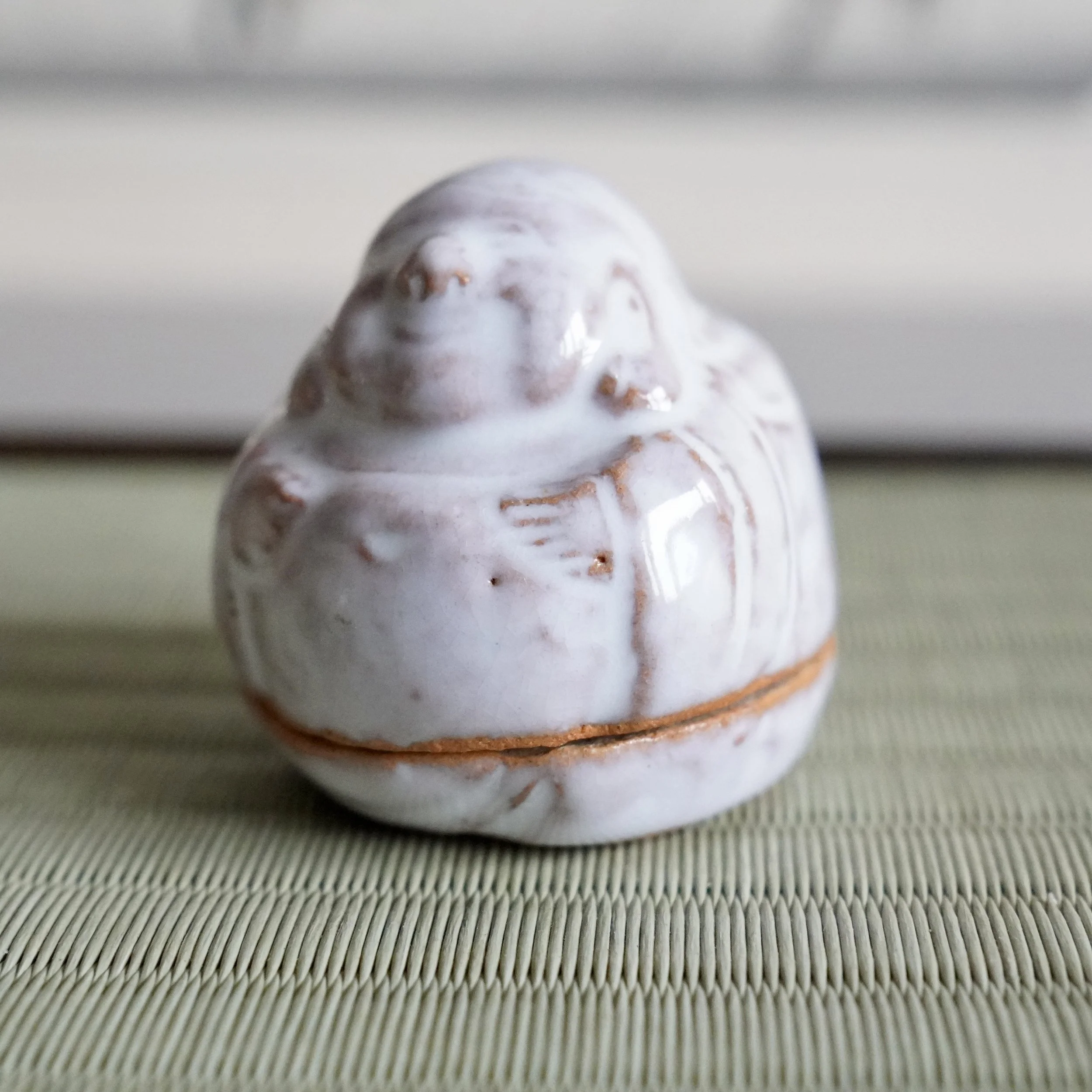
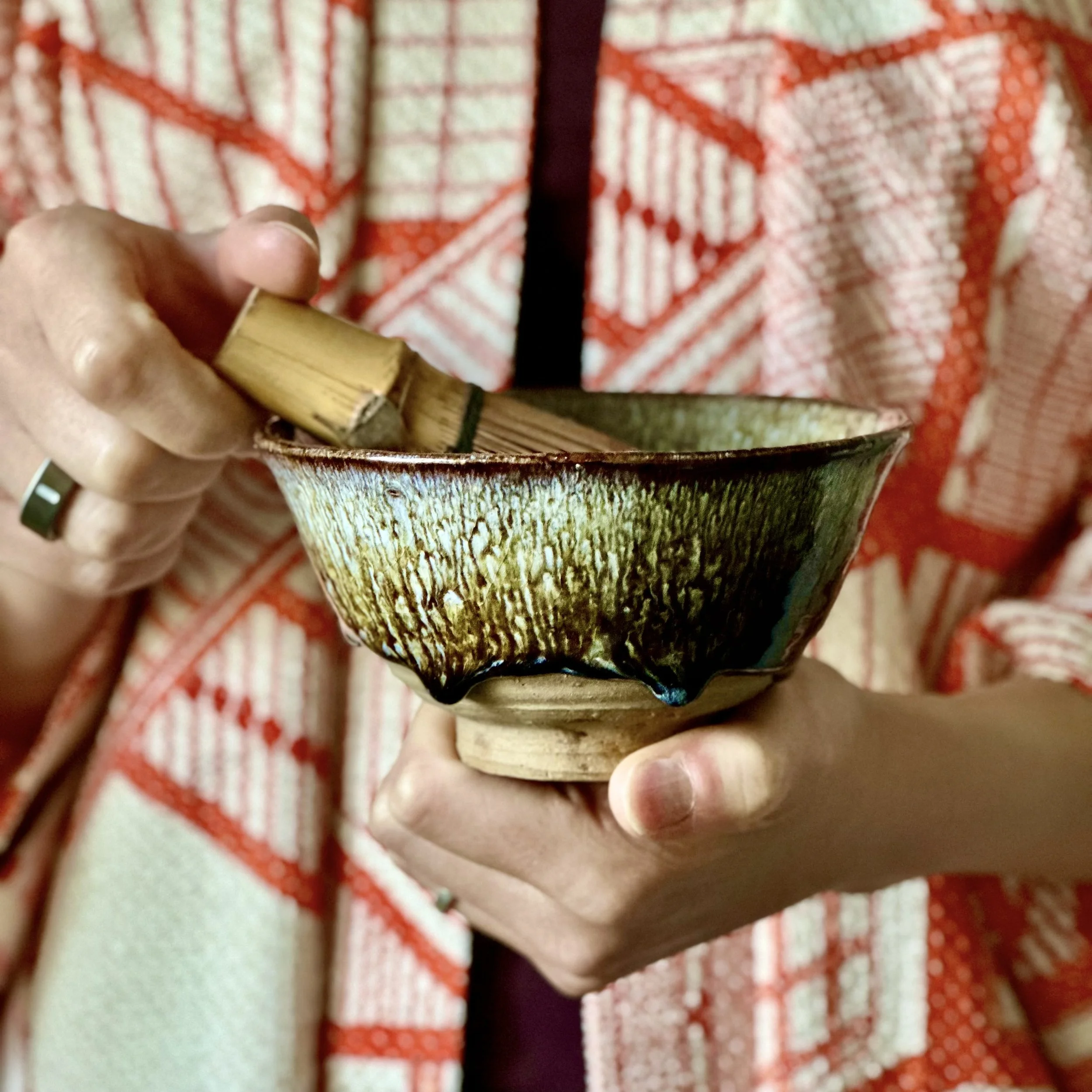
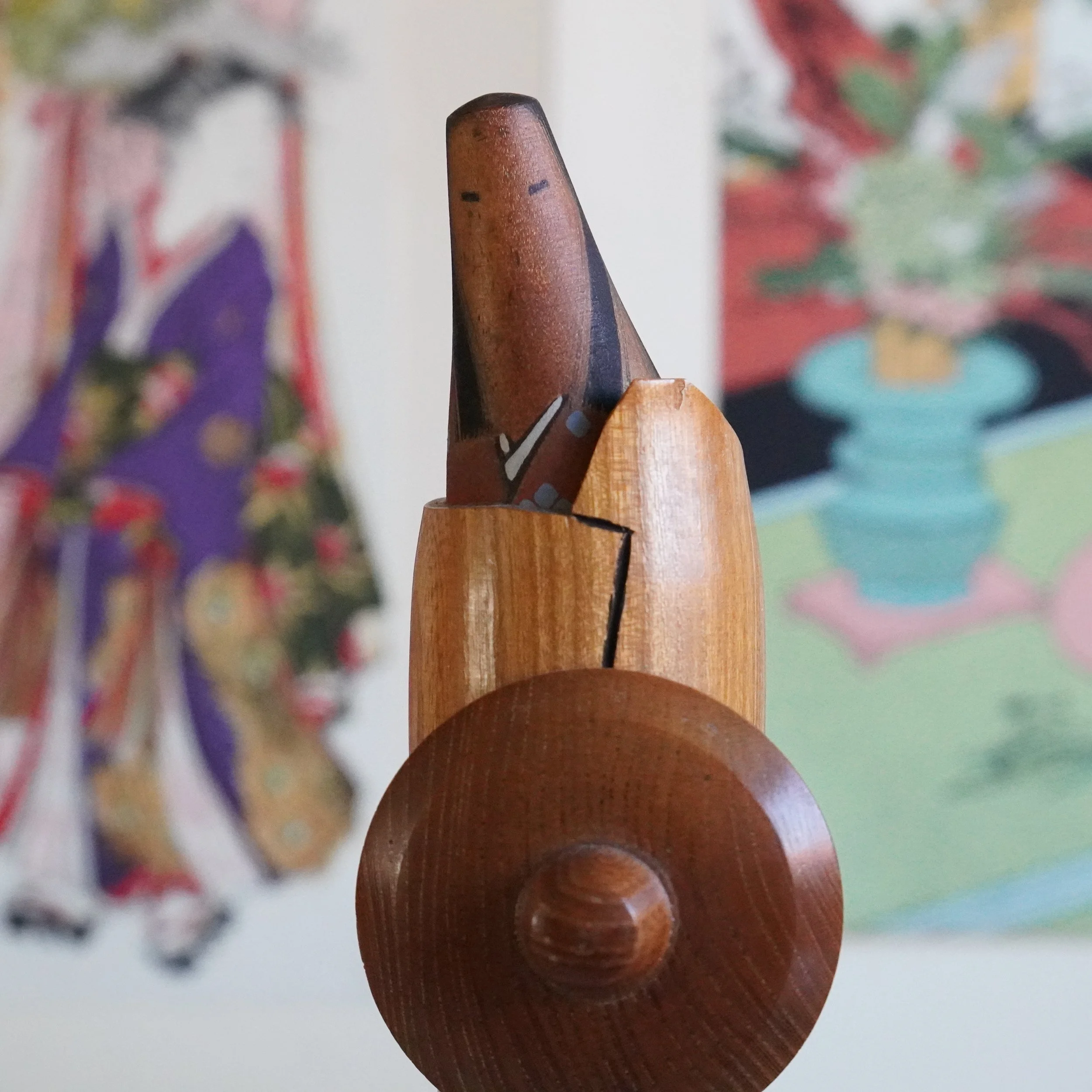
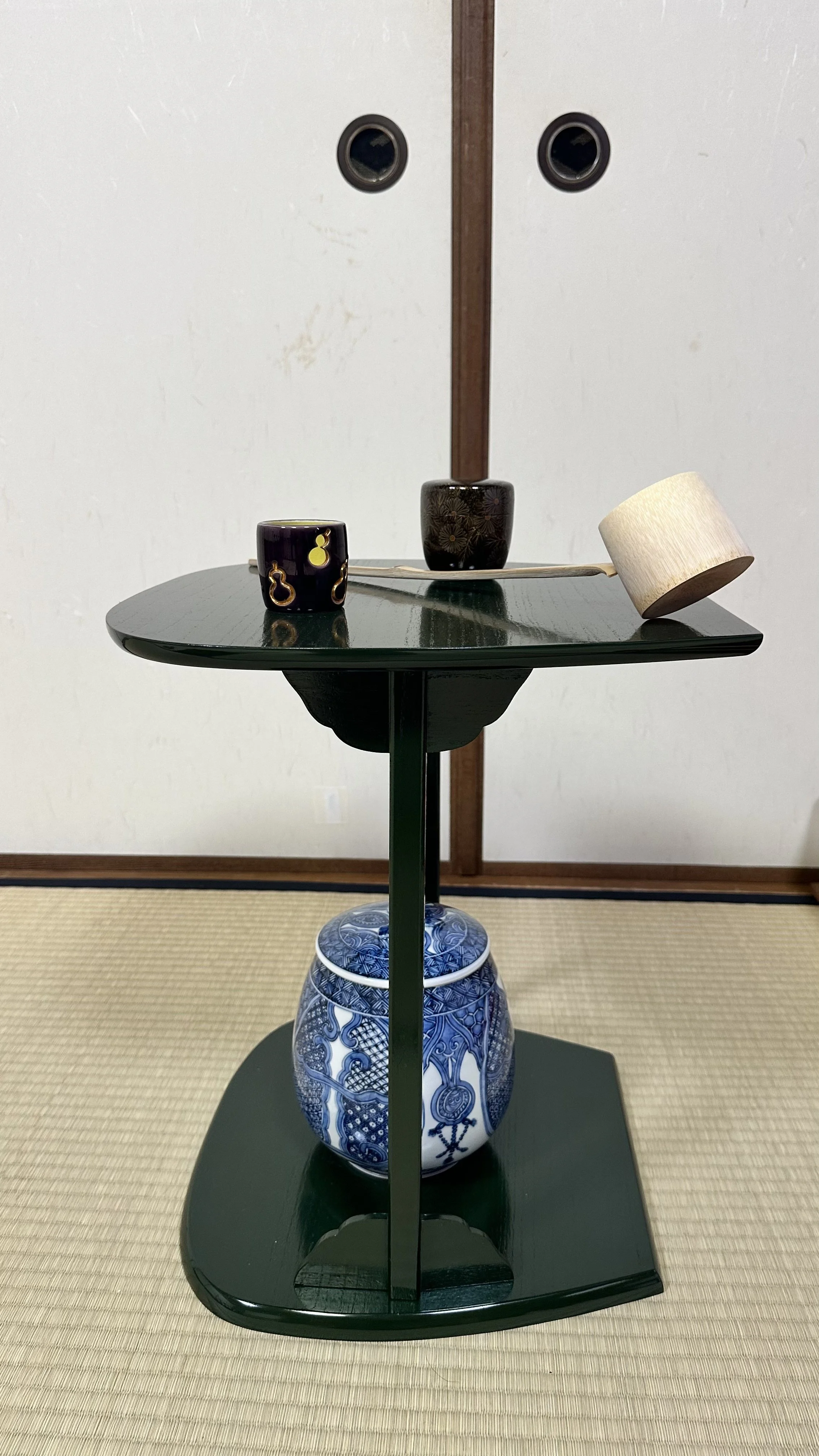
Some objects are immediately recognizable for what they are. This one is. The moment you lift the lid, you know exactly who is sitting in your hands: Hotei, the laughing god of contentment, belly forward, expression completely at ease.
Produced at the Seiun-zan kiln in Hagi, Yamaguchi Prefecture, by Okada Yutaka: eighth-generation master of a kiln that has been firing continuously since the Edo period, and holder of the Yamaguchi Prefecture designation for Intangible Cultural Property in Hagi-yaki.
This is not a decorative object made for the tourist market. It is a serious tea ceremony piece with full provenance.
There's a whole philosophy behind why a kogo is left open after use. Read it in my journal.
Plus, I spent a morning at this specific Hagi kiln, read about it here.