
Fourteen days, one fire: what it actually takes to fire a Bizen kiln
Bizen-yaki is never glazed and never painted. Everything visible on a finished piece was decided during the firing itself, by potters who spend two weeks feeding a kiln by hand, reading the fire instead of a dial. On a return visit to Shibaoka Tōsendō, the Kōzan-gama kiln in Imbe, here is what that actually looks like from the inside.
I went back to Shibaoka Tōsendō, the Kōzan-gama kiln in Imbe. Not for new pieces this time, though I came home with a few anyway, but to see the part of Bizen-yaki that never makes it into a product photo: the firing itself.
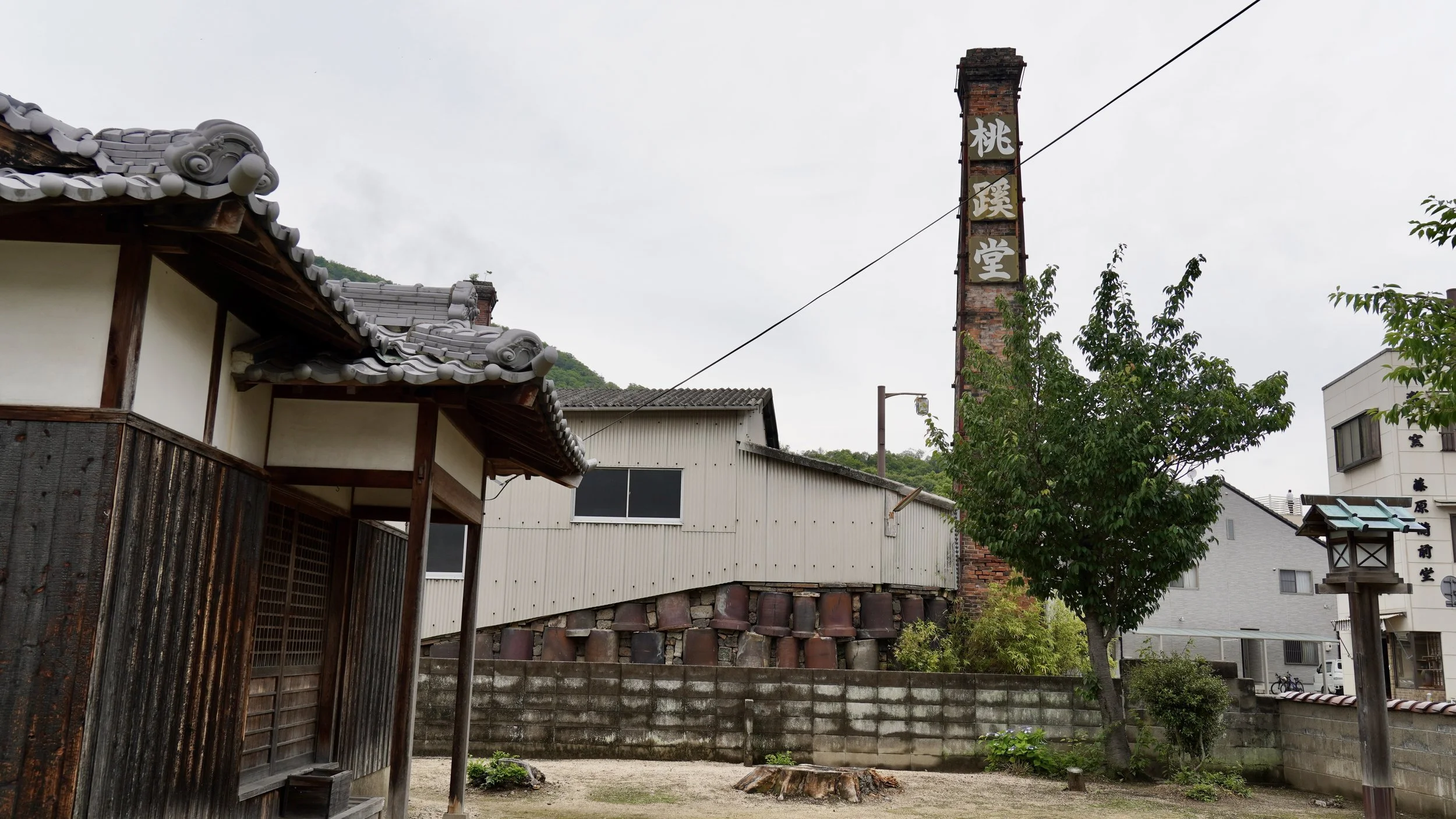
Shibaoka Tōsendō has worked this ground since 1912, when the first-generation Kōzan founded the kiln. It is still a family operation more than a century later: the third-generation Kōzan, Shibaoka Masashi, works alongside his sons Chikara and Hisashi, all three recognised as traditional craftsmen in their own right. The noborigama I stood in front of was rebuilt in 2009, the most recent of several the family has raised on this site since the 1970s.
I had written before about what the different Bizen styles look like, hidasuki, goma, sangiri, shiro-Bizen, and how each one records a different set of conditions inside the kiln. What I had not seen up close was the two weeks that produce those conditions. This time I stood in front of the kiln mouth while it was burning, and asked the questions I had not thought to ask on my first visit.
Before the fire: the wood
Firing a Bizen kiln does not start with fire. It starts with wood, and specifically with red pine, akamatsu. Other woods will burn, but red pine carries a resin content that oak, cedar or beech do not, and that resin is part of what produces the ash effects Bizen is known for. Less resin, less goma.
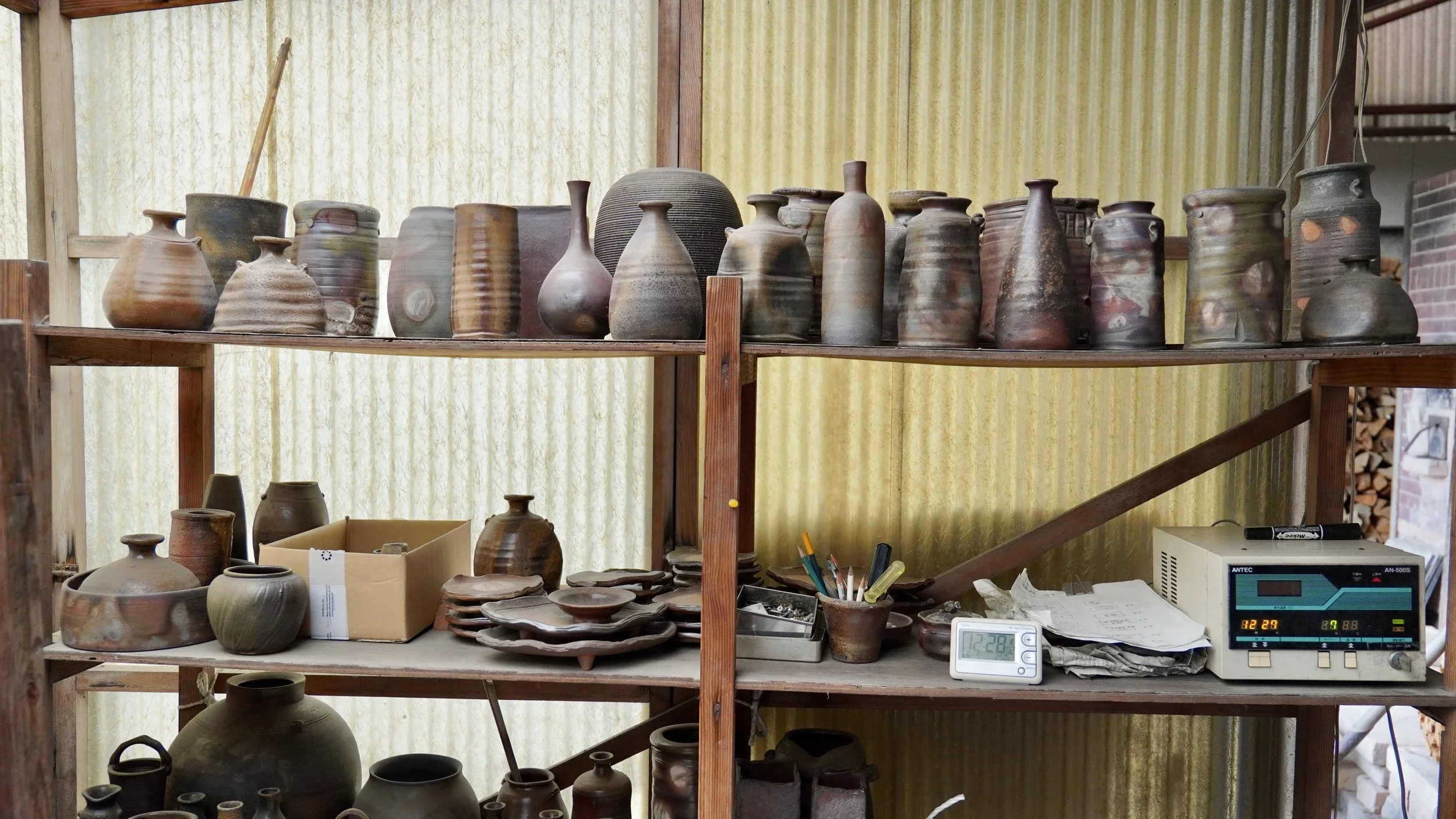
The wood I saw stacked at the workshop was not the split, hand-sized logs I had expected. Some of it was chopped small and dry enough to catch instantly. Some was almost splintered, more bark and shard than log, kept separately and used differently depending on what the fire needs at a given moment. A pile of paper sacks near the workshop entrance held charcoal, kept ready for a different purpose entirely: charcoal thrown into the kiln late in a firing starves the oxygen locally and pushes a piece toward sangiri, the grey-black effect that has nothing to do with the wood fire itself.
None of this is improvised on the day. The wood has usually been drying for a year or more before it is used, because damp wood burns unevenly and an uneven burn shows on every piece inside.
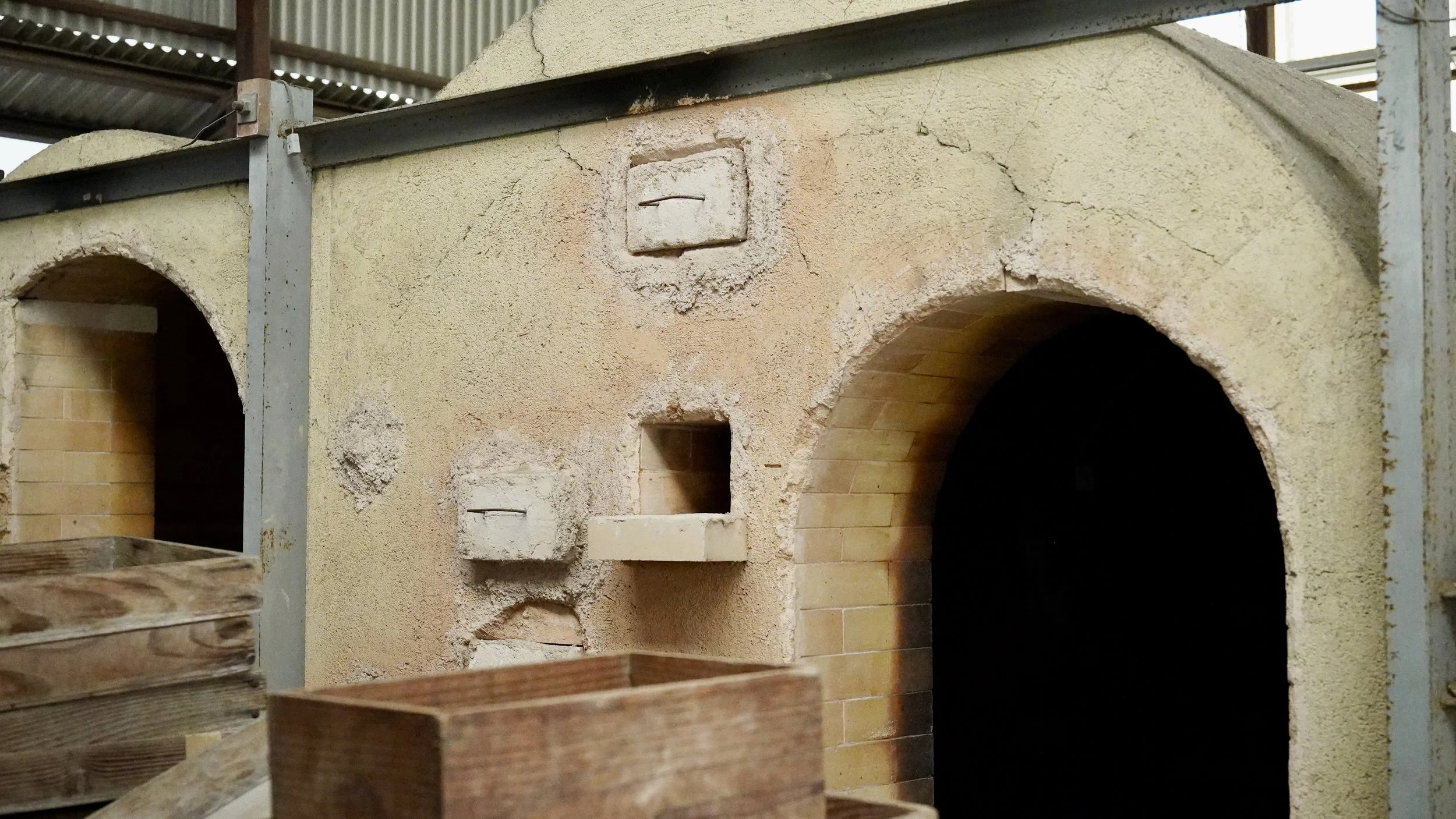
Before any of that wood goes in, the kiln has to be packed. A noborigama, a climbing kiln built into a slope with multiple chambers rising one above the other, holds hundreds of pieces at once, and where each one sits is not incidental. Pieces near the firebox get the most direct heat and the heaviest ash fall, which is where you find the strongest goma. Pieces further back, or tucked near the wooden slats that separate chamber sections, sit in a smokier, lower-oxygen pocket, which is where sangiri develops. A potter loading the kiln is already deciding, in a rough sense, what kind of surface each piece is likely to come home with. Rough, because the fire still has the final word.
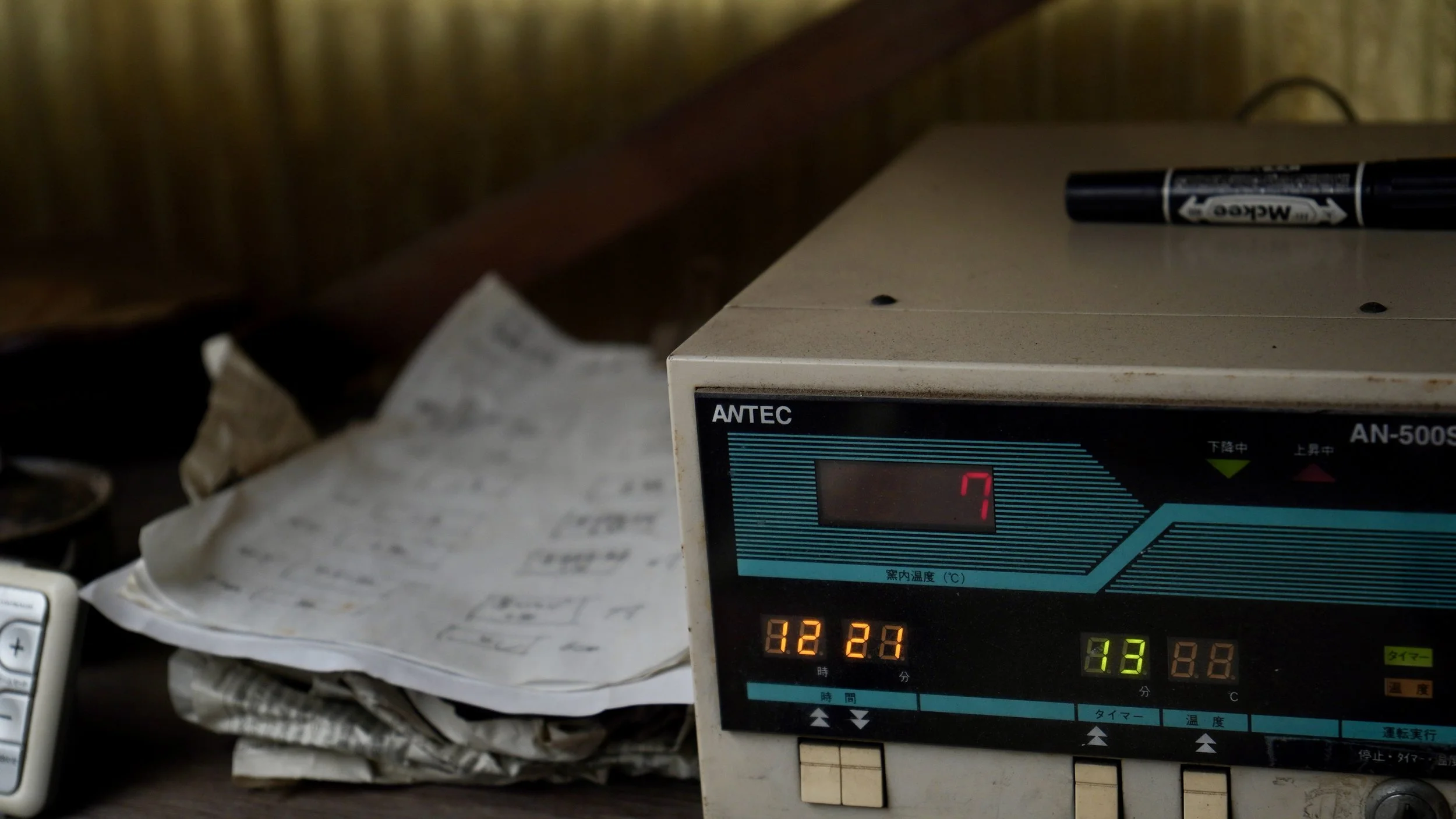
Inside the firebox
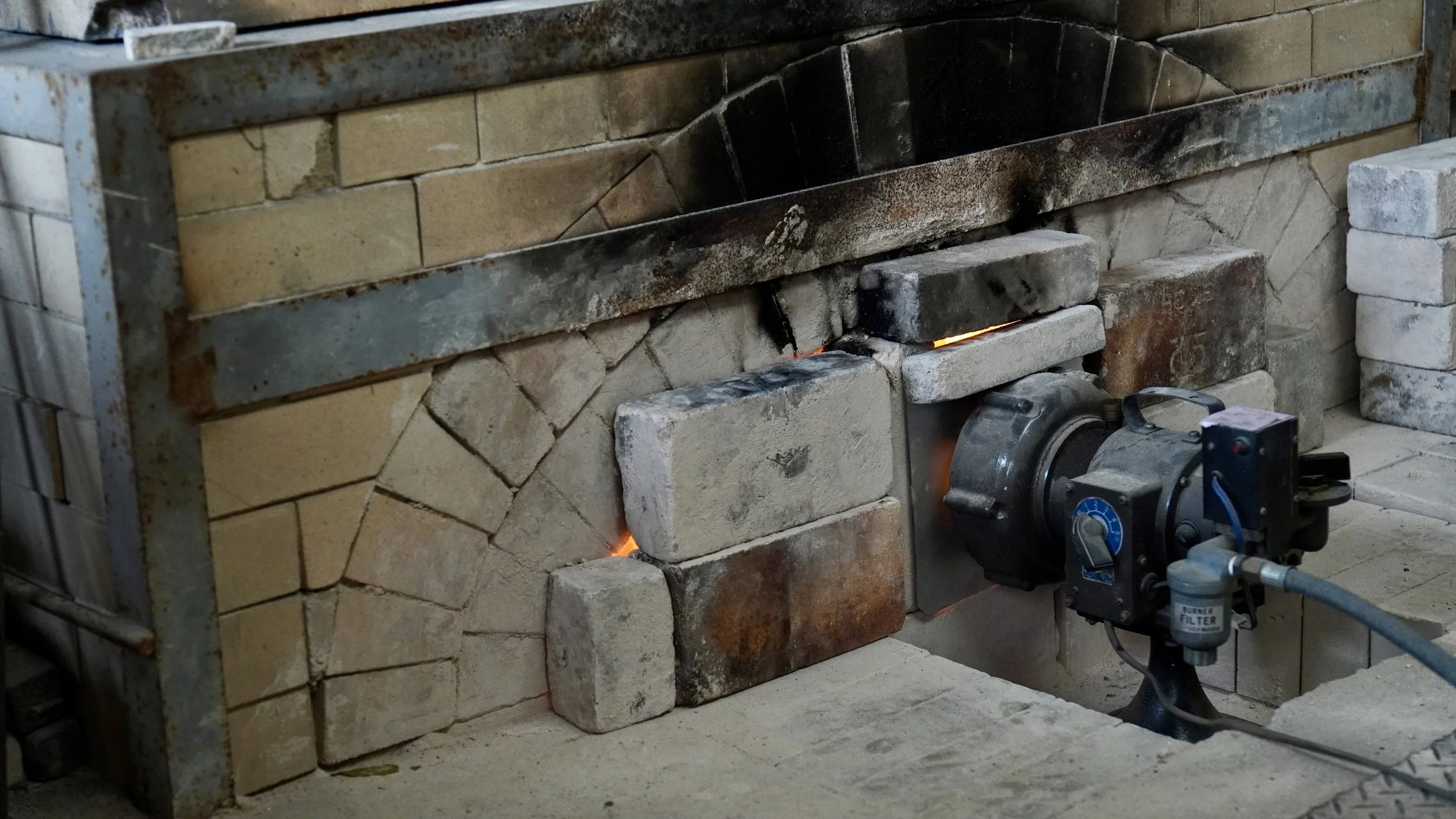
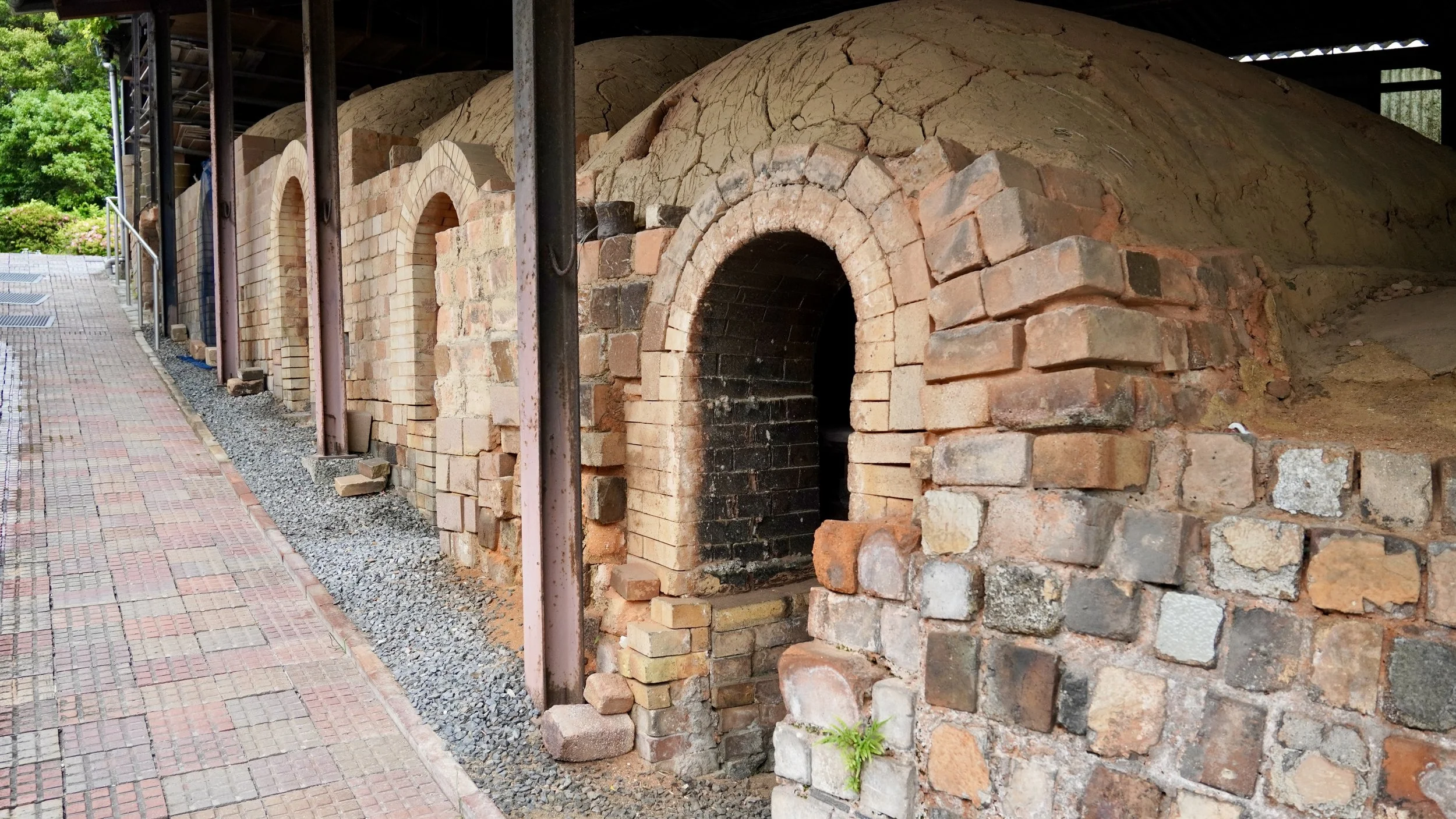
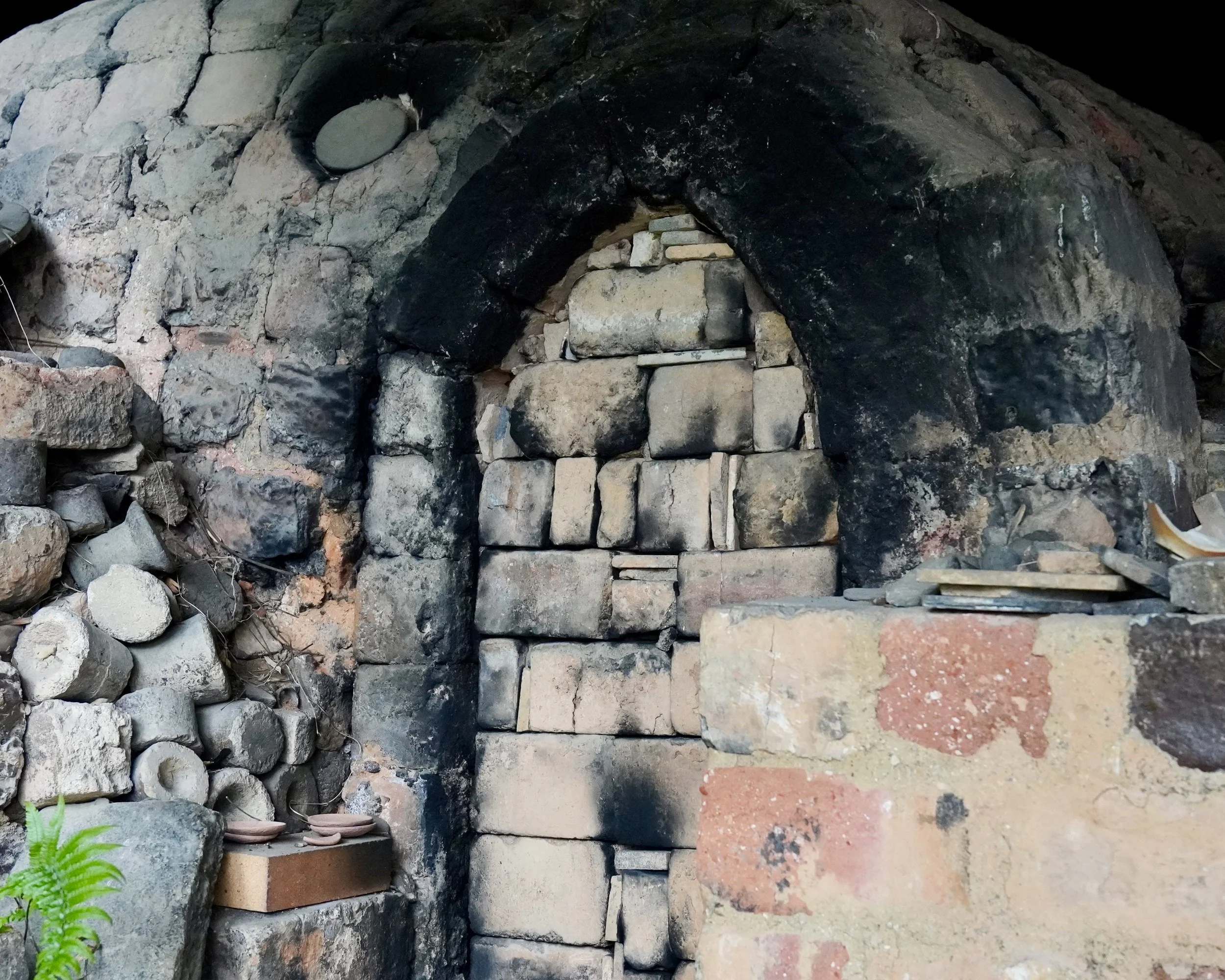
What struck me most standing at the kiln mouth was how physical the whole operation still is. The firebox entrance is an arched opening built from firebrick, blackened and scorched from decades of continuous use, no two bricks quite the same colour anymore. Through the gap you could see straight into the fire: a small industrial blower feeding air into the base of the flame, a metal dial on the burner housing that is about as close to a control panel as this process gets, and beyond it, orange light where the wood was actively burning.
There is a rhythm to this that has nothing to do with a clock. A timer panel sits near the kiln, and a handwritten log gets kept as the firing goes, but neither of those is what actually tells the Shibaoka family how the firing is going. The colour of the flame where it exits the chimney, the sound of the draft pulling through the chambers: that is what tells you whether to feed the fire more wood, and when. This goes on hour after hour, day and night, for the full ten to fourteen days a Bizen firing takes. There is no way to open the kiln partway through to check. Once it is sealed and lit, the real information is what the fire itself is telling you, and reading that correctly is not something you learn quickly. At a kiln that has stayed in one family for three generations, it comes from watching a father do it before you, and his father before him.
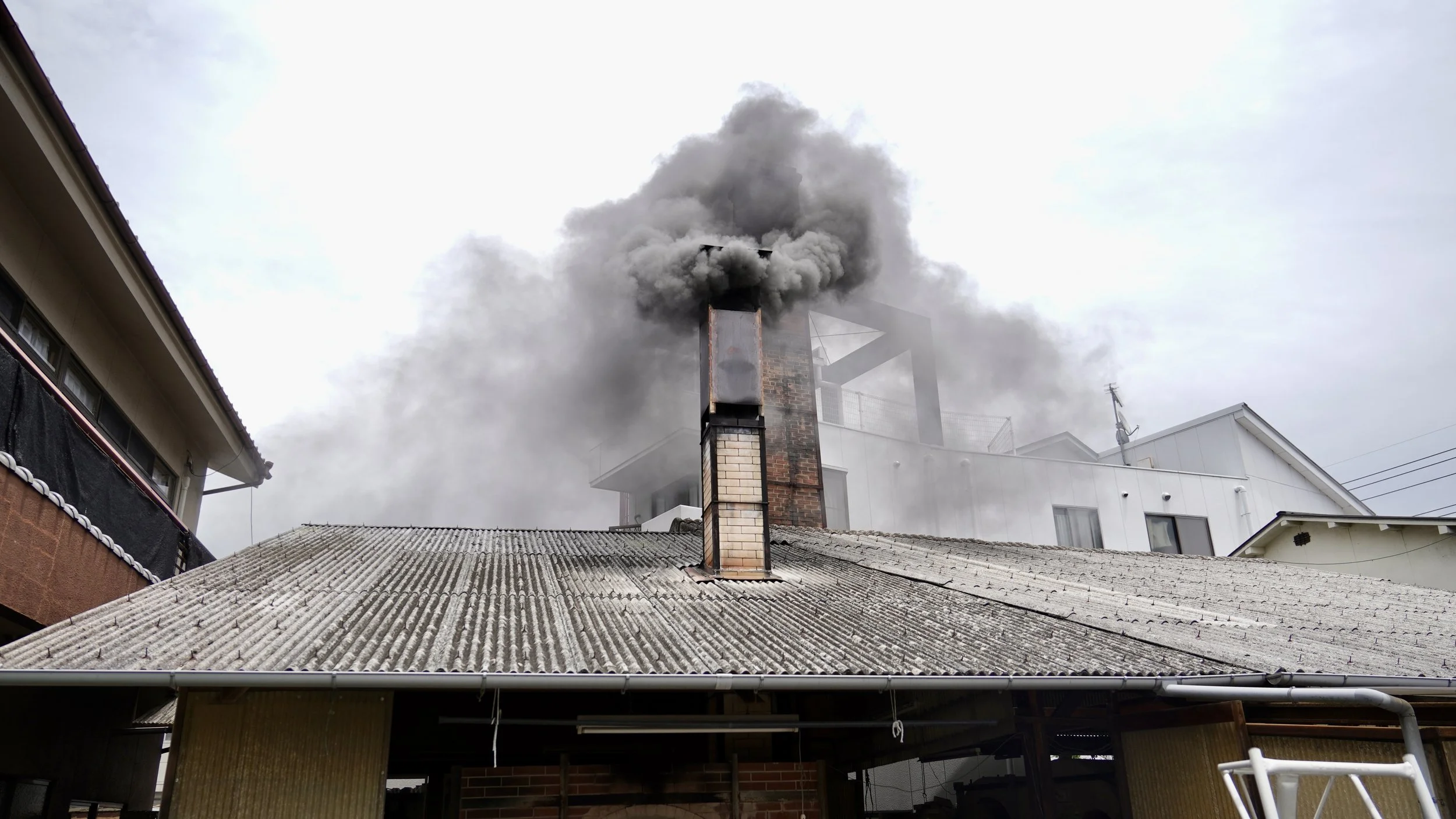
The chimney above the workshop roof told its own part of the story. On the day I visited, thick dark smoke was pouring out of it in heavy plumes, rolling out sideways before rising, dense enough to be visible from streets away. That density of smoke says something specific to someone who knows how to read it: how the fire is burning, how much oxygen it is getting, roughly what stage of the firing this is. To me it just looked dramatic. To the Shibaoka family it was information.
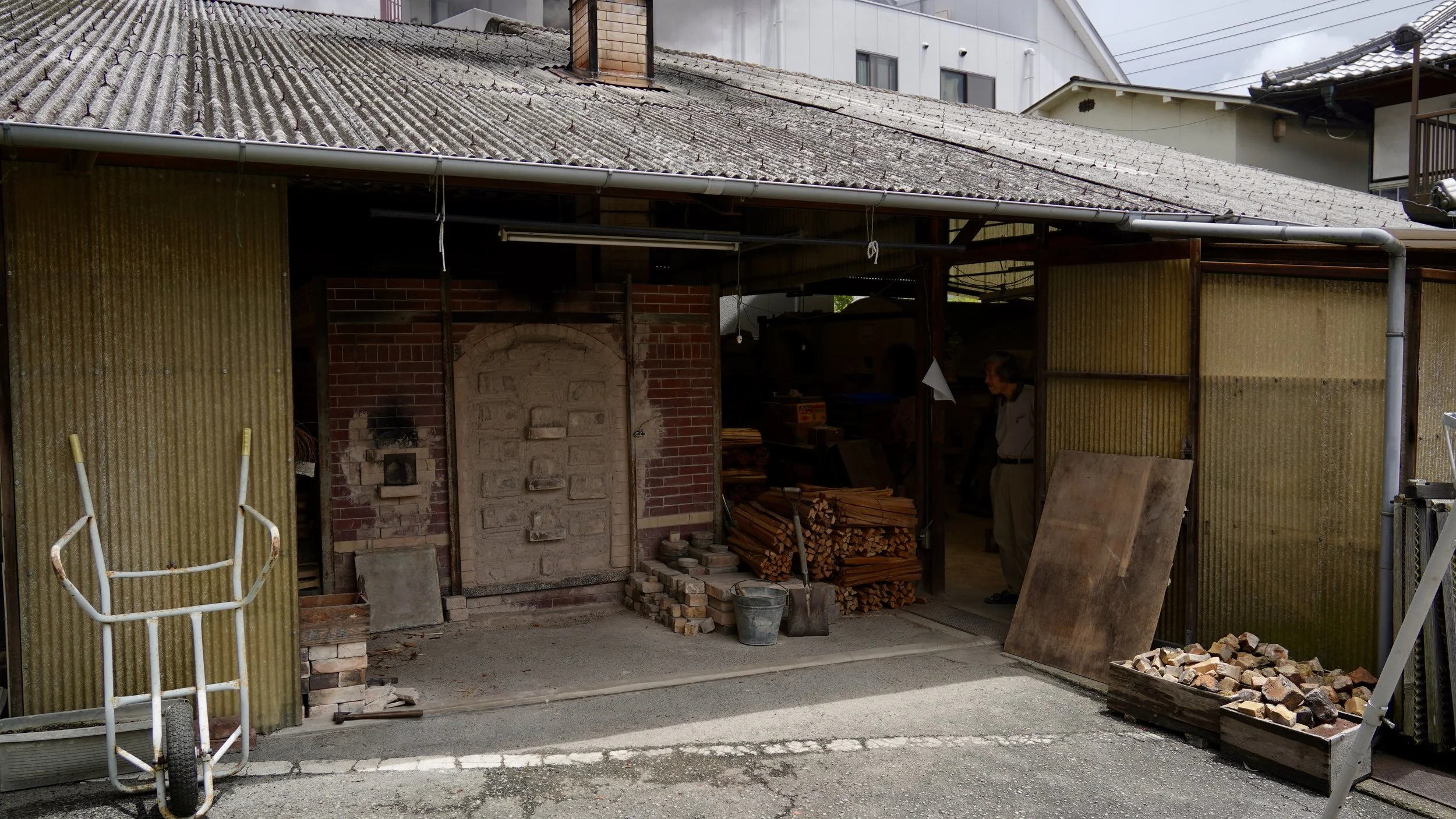
The kiln door at Shibaoka Tōsendō, firewood staged and ready beside it.
What survives, and what does not
Not everything makes it through fourteen days at 1200 to 1300 degrees Celsius. Pieces can crack from thermal stress, collapse if they were placed somewhere the heat proved too uneven, or simply come out wrong, a flat, lifeless surface where nothing interesting happened during the burn. This is priced into the process from the start. A kiln firing is not a guarantee of success for every piece inside it, and a shelf full of finished bricks and broken kiln furniture near the workshop, stacked and waiting to be reused or discarded, is a quiet reminder of how much heat this structure has absorbed over the years, and how much of it eventually gives out.
When the firing finally ends, the fire is left to die down on its own. Nobody forces the kiln open early. It cools for days before anyone touches the chambers, and only then does the potter find out, piece by piece, what the fire decided.
Why I keep going back
I do not think you fully understand a Bizen piece until you have stood in front of the kiln that made it. It is one thing to read that a firing takes ten to fourteen days. It is another to stand at the firebox of a kiln three generations of one family have kept burning since 1912, and feel how much of this process is still just a person, a pile of pine, and the patience to keep feeding a fire for two weeks without ever being able to look inside.
That is what I come back for. Not just the pieces, though I always bring some home, but the chance to stand next to a family that has spent a hundred years learning to read a fire that gives you no other way in.
Even after the kiln, the clay keeps telling you things. The first thing the Shibaoka family does with a piece straight out of the kiln is rinse the ash off it, and while it is still wet, that is already a small test in itself: how quickly the water disappears into the surface tells you how porous that particular piece turned out. Yakishime is unglazed by definition, so that porosity is not a flaw to correct later. It is simply part of what the piece is, visible within minutes of coming out of a fire that took two weeks to finish.
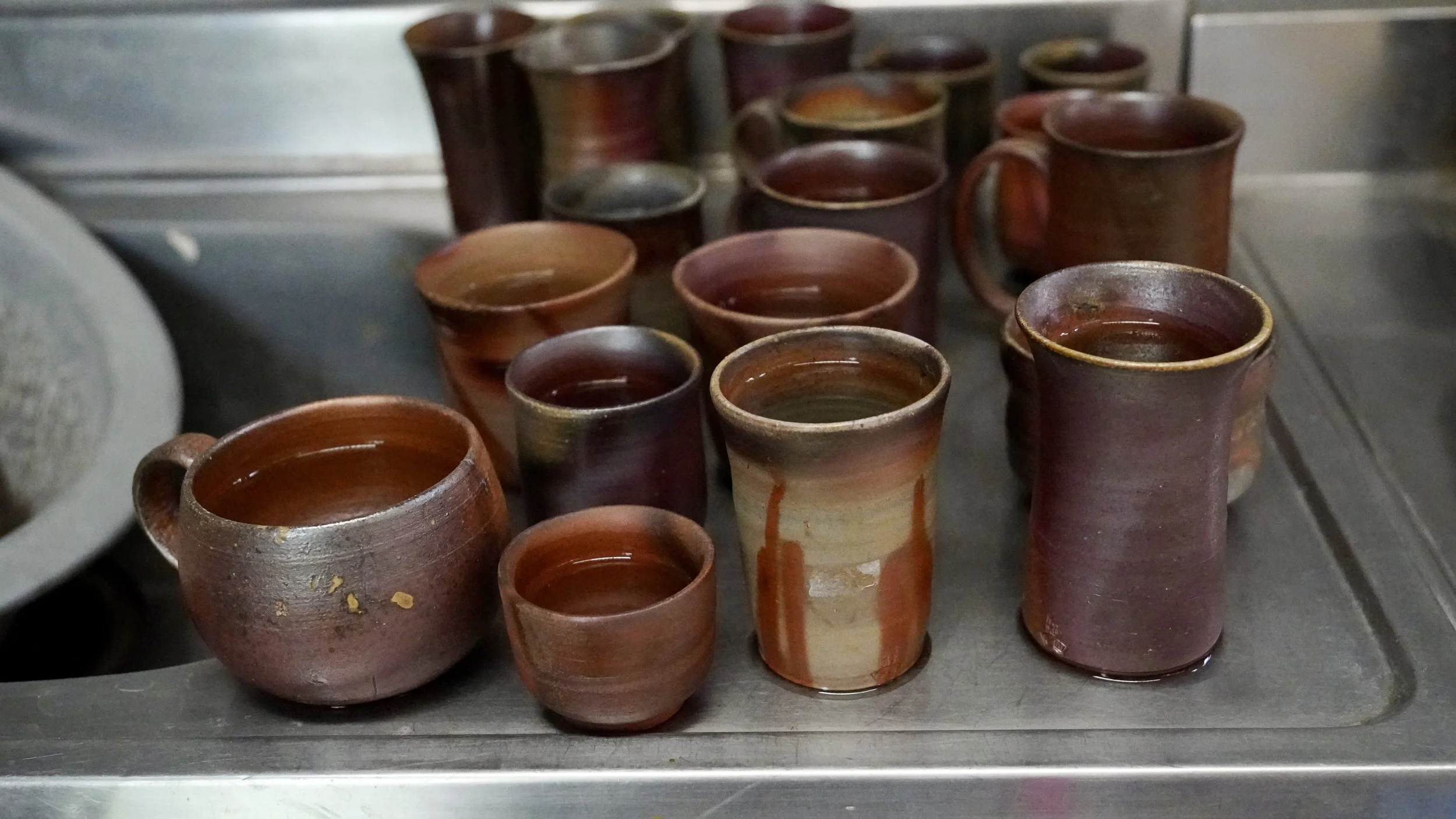
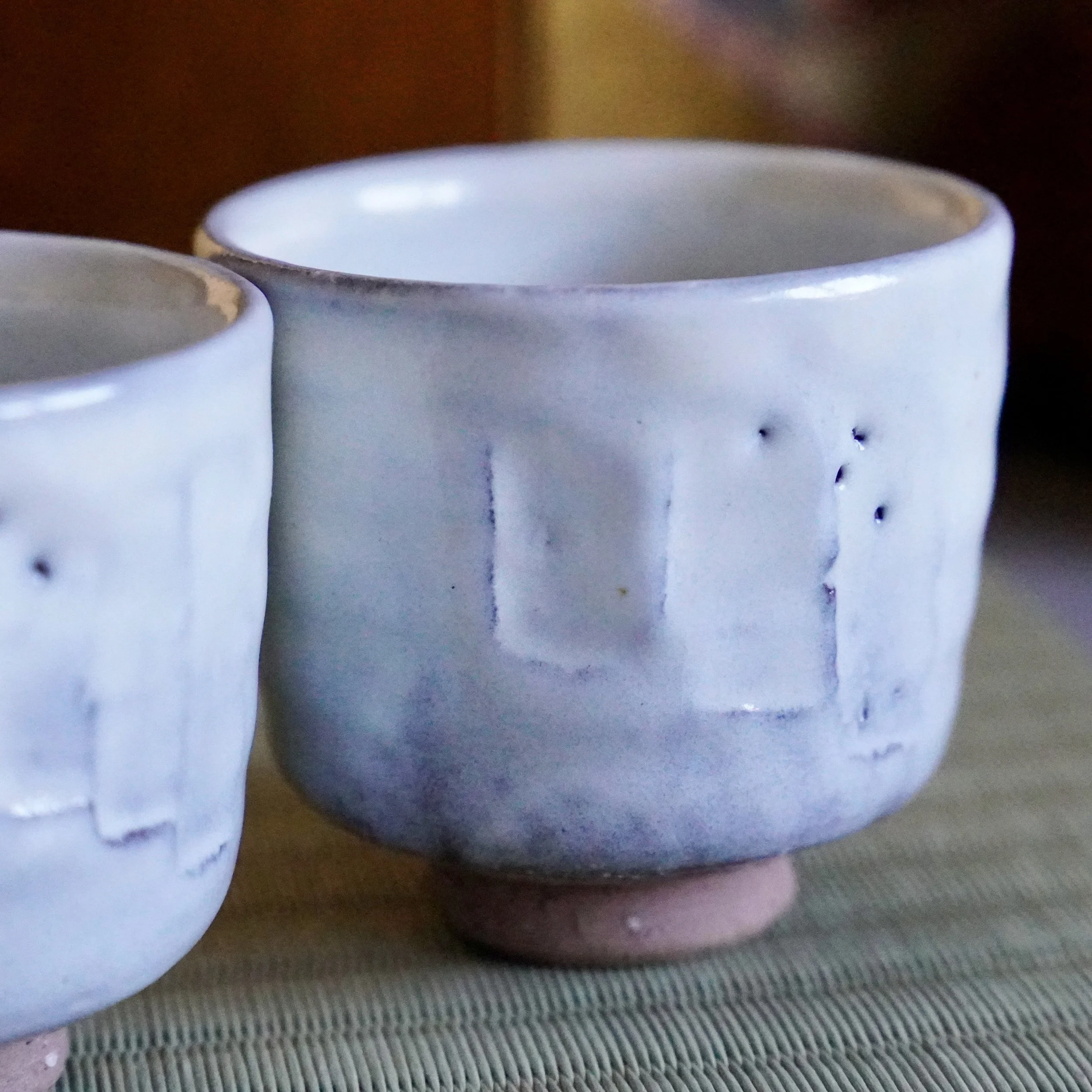
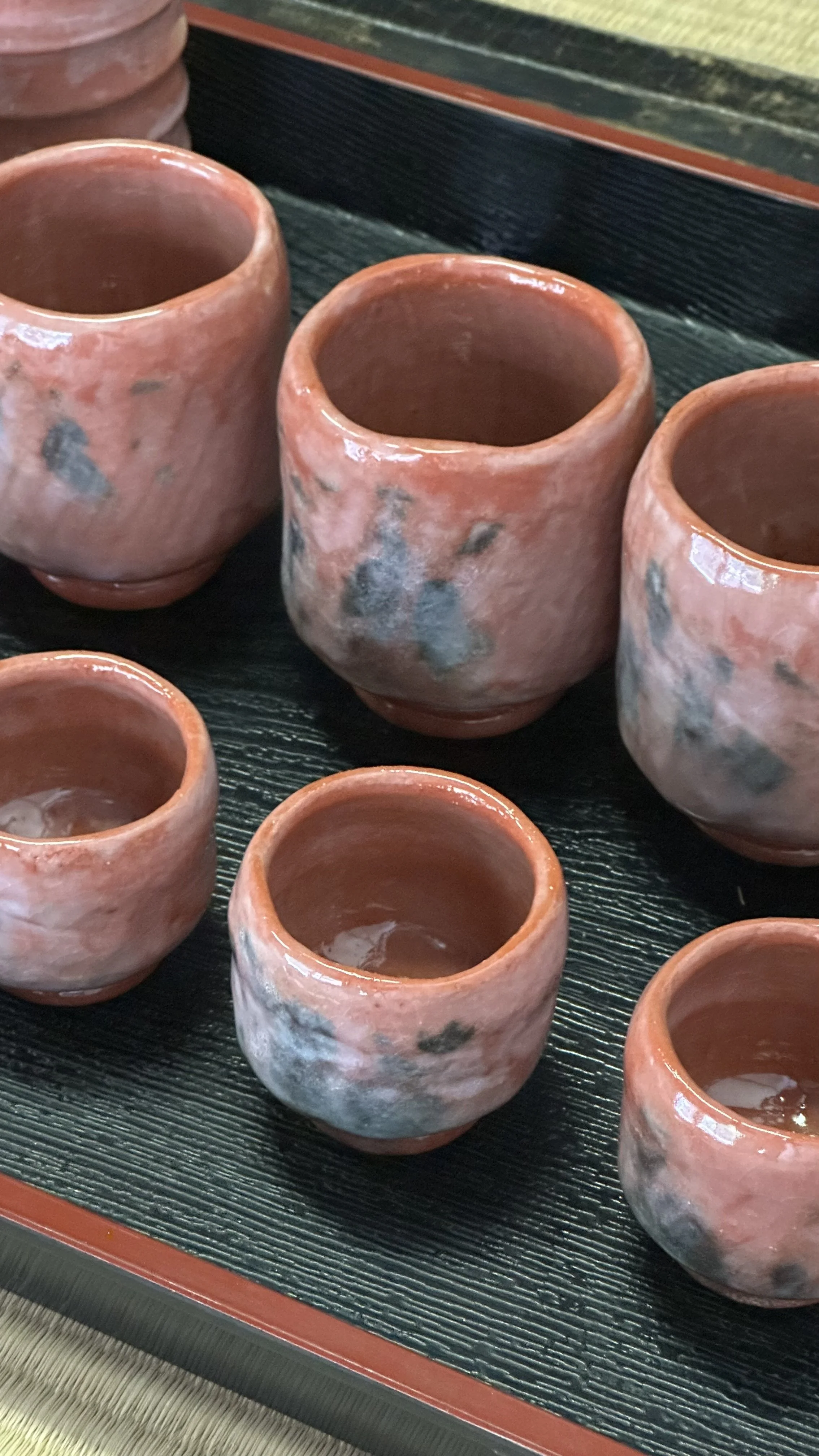
Freshly fired cups, rinsed clean of ash and soaked briefly to test how the unglazed clay absorbs water.
Read more
→ Curious what the fire actually leaves behind? Read about the different Bizen styles, hidasuki, goma, sangiri and shiro-Bizen, read more in the journal post: Bizen-yaki: the Okayama tradition without glaze.
→ Want to know who was actually feeding that fire? Meet Shibaoka Tōsendō, three generations at the Kōzan-gama kiln.
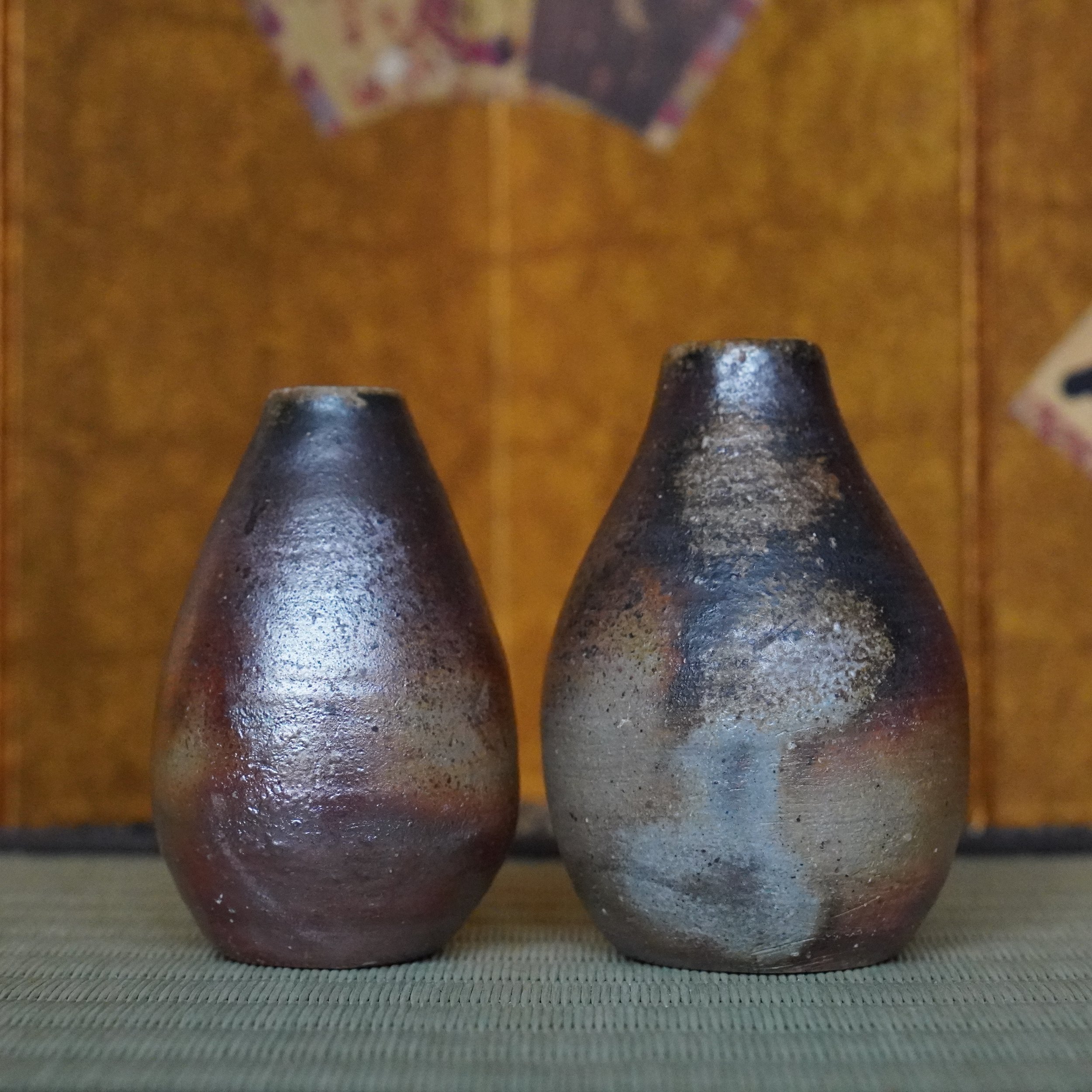
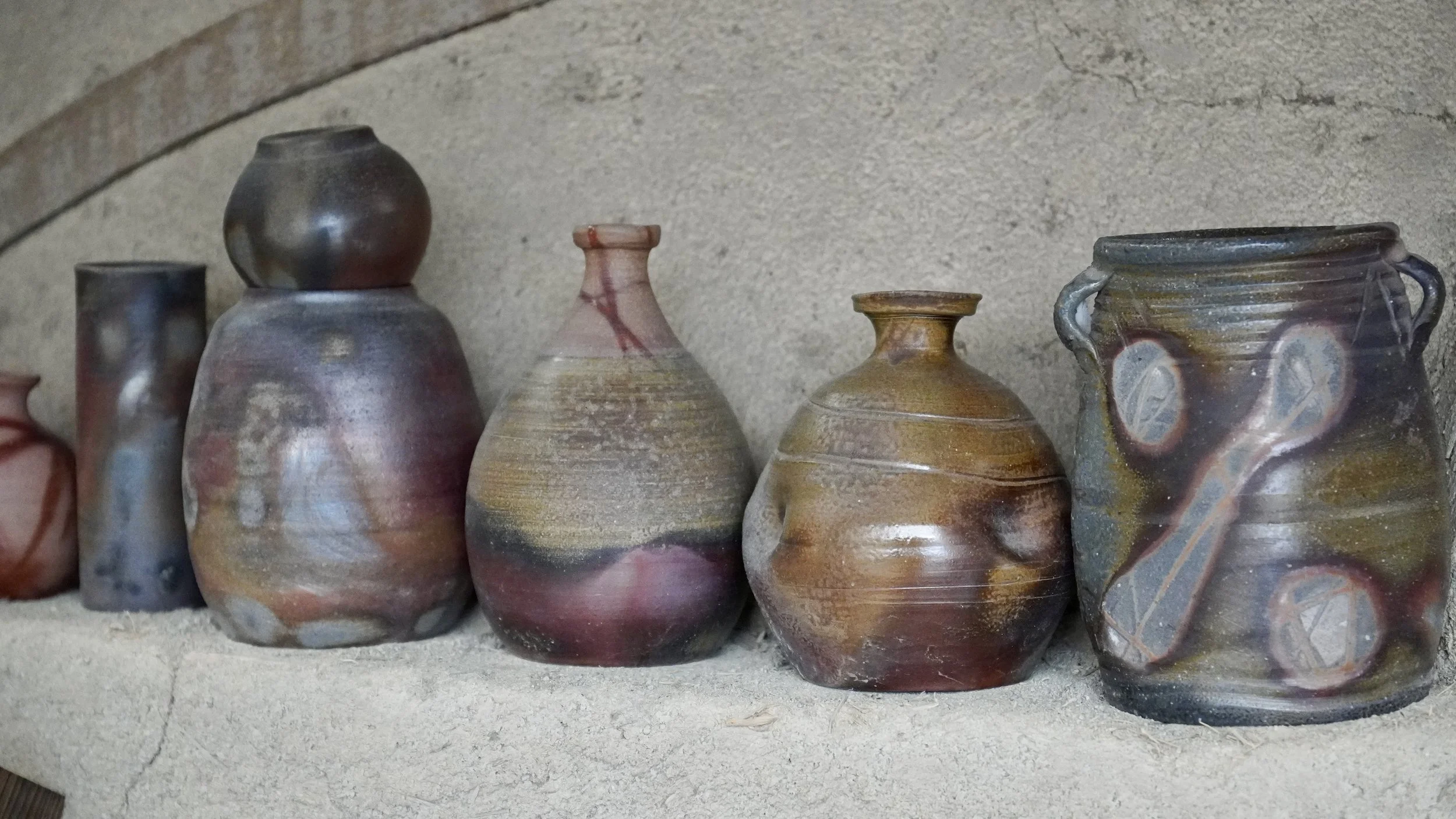
→ Two vases fired side by side in this exact kiln came out completely different.
→ Once a wood-fired piece leaves the kiln, the care it needs changes completely. Read the full ceramics care guide.
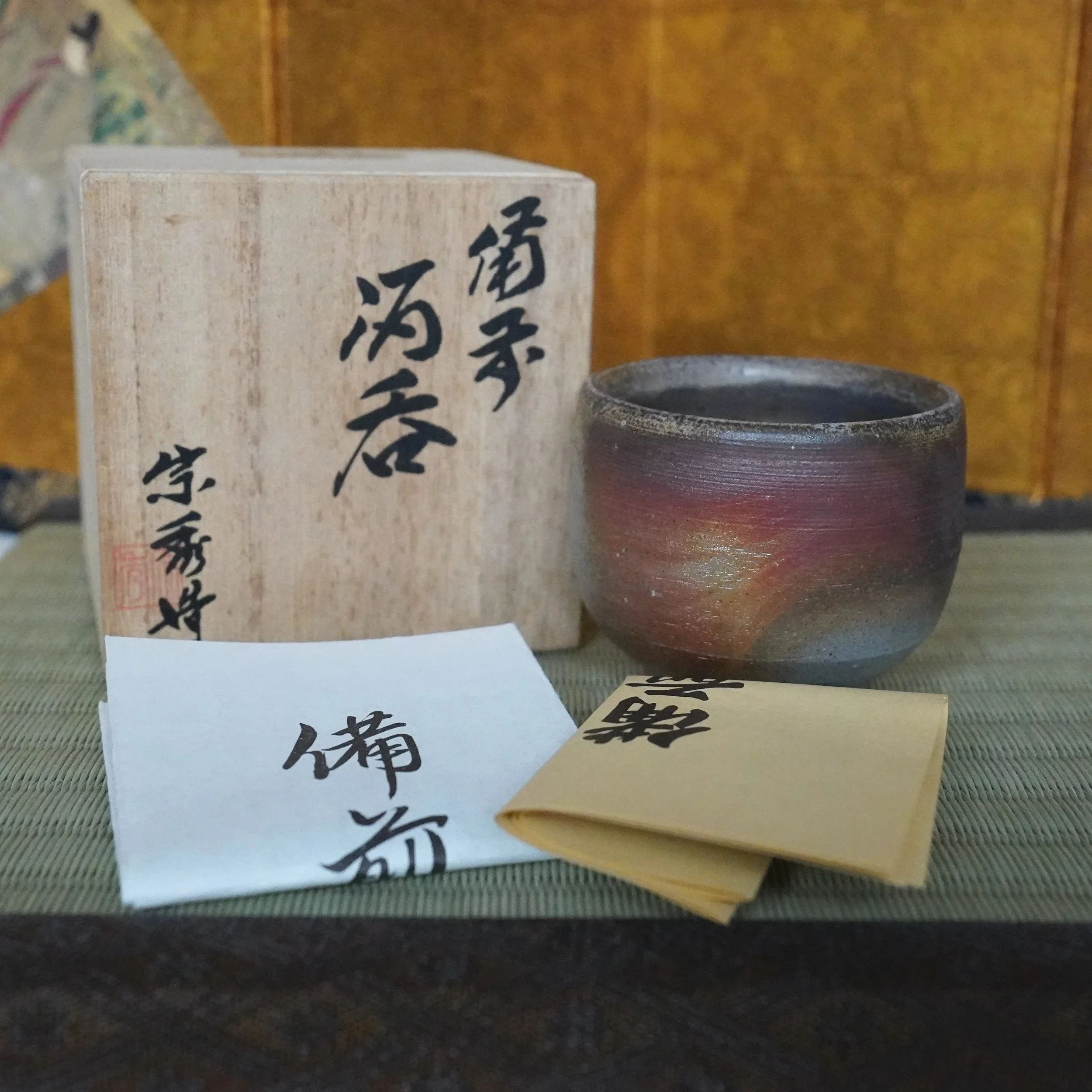
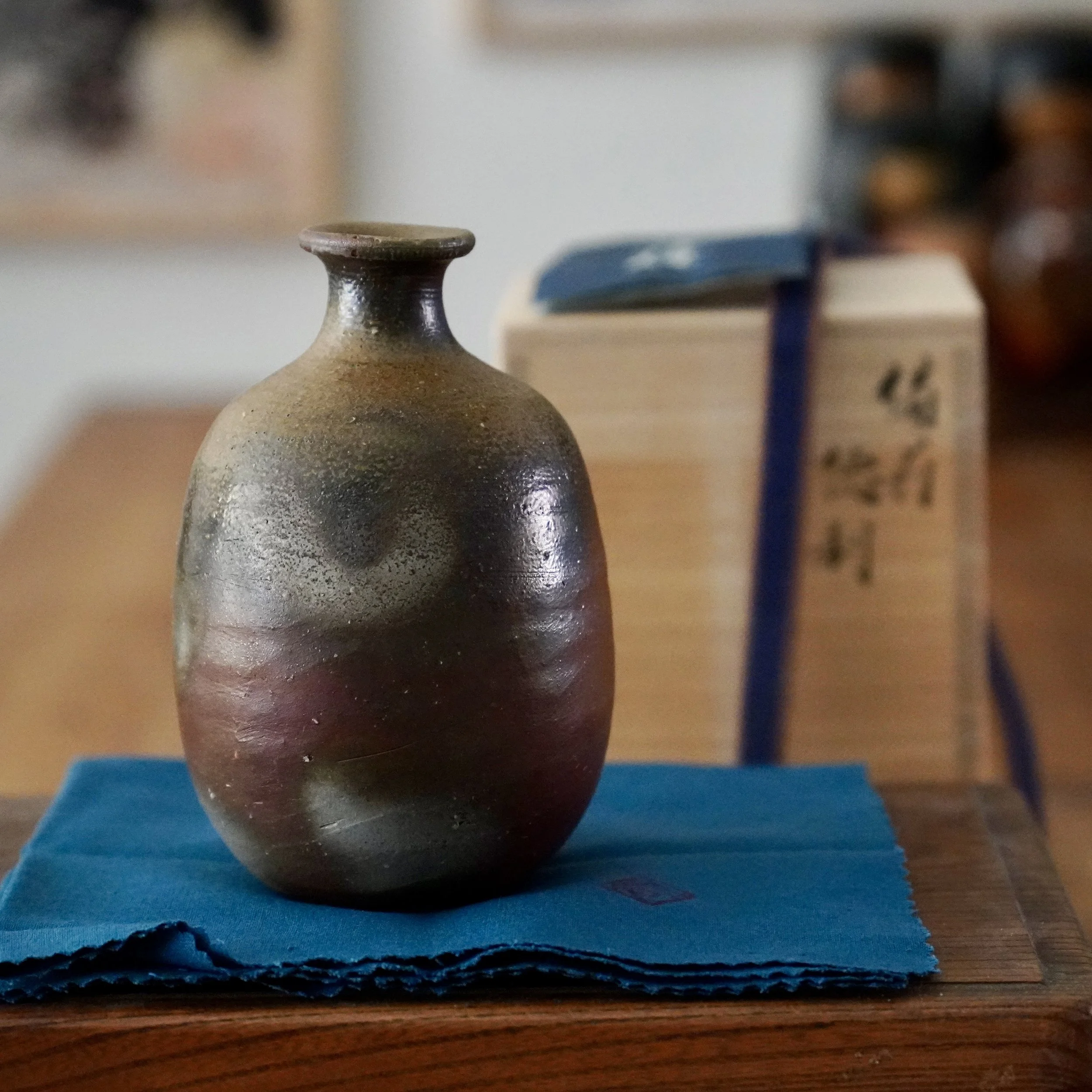
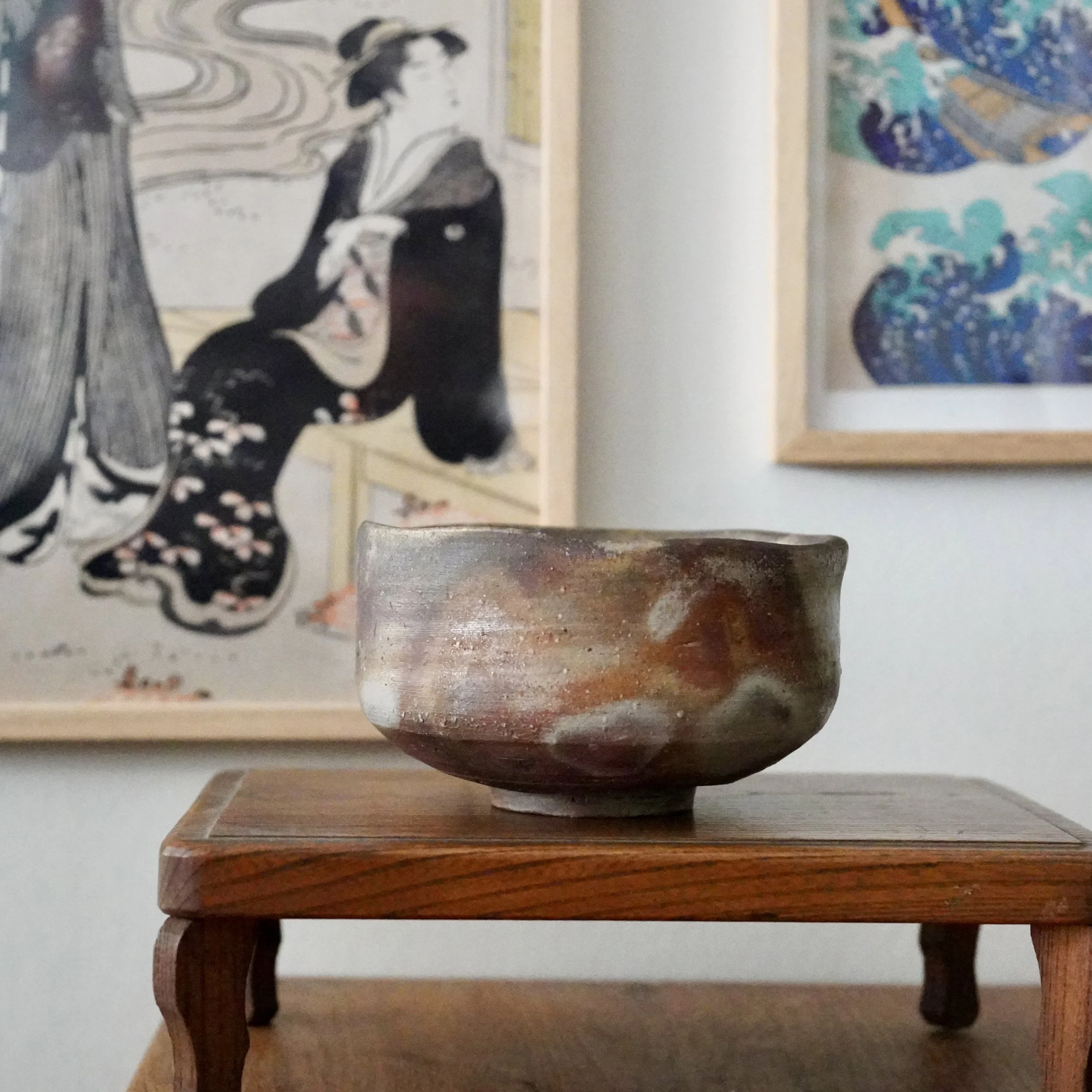
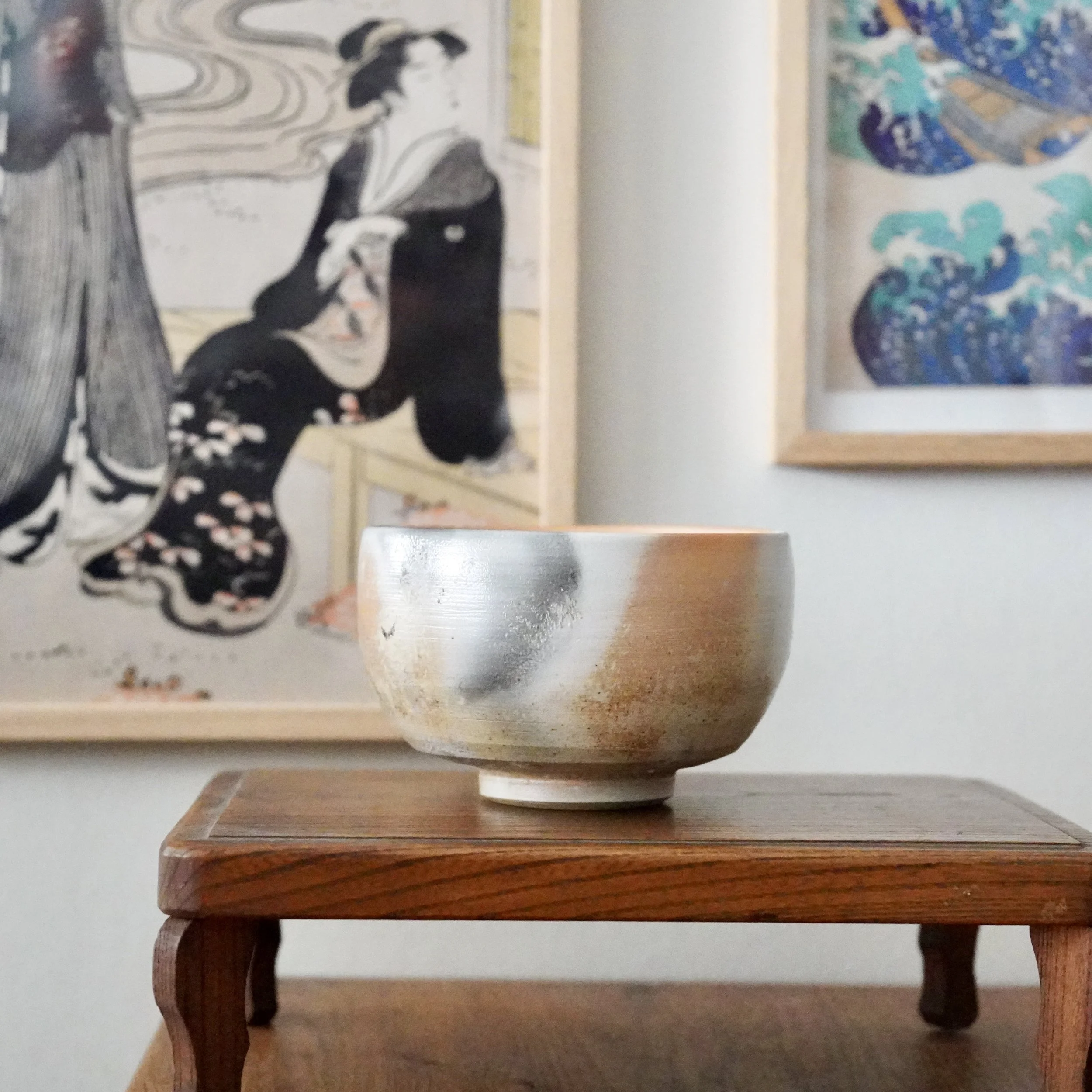
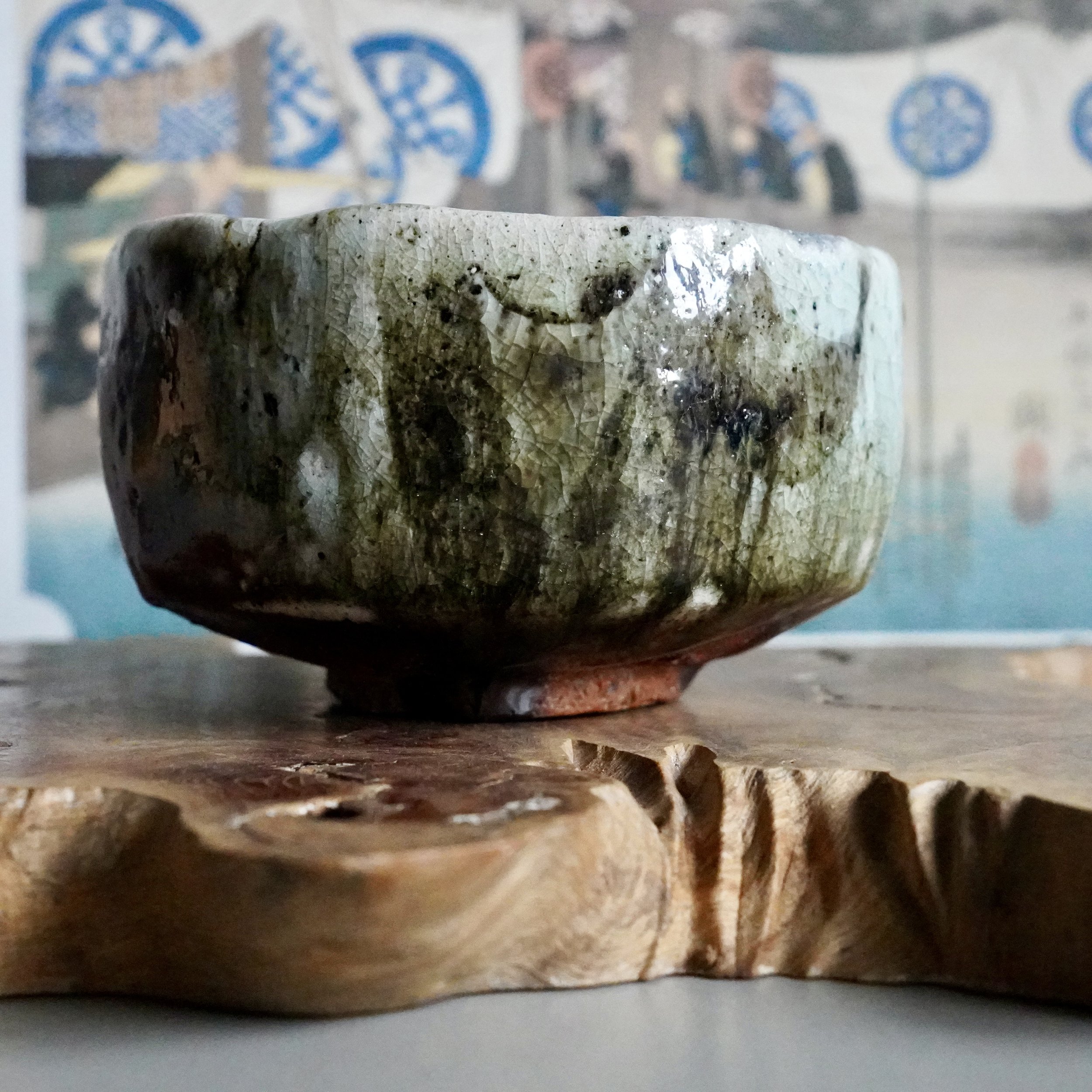
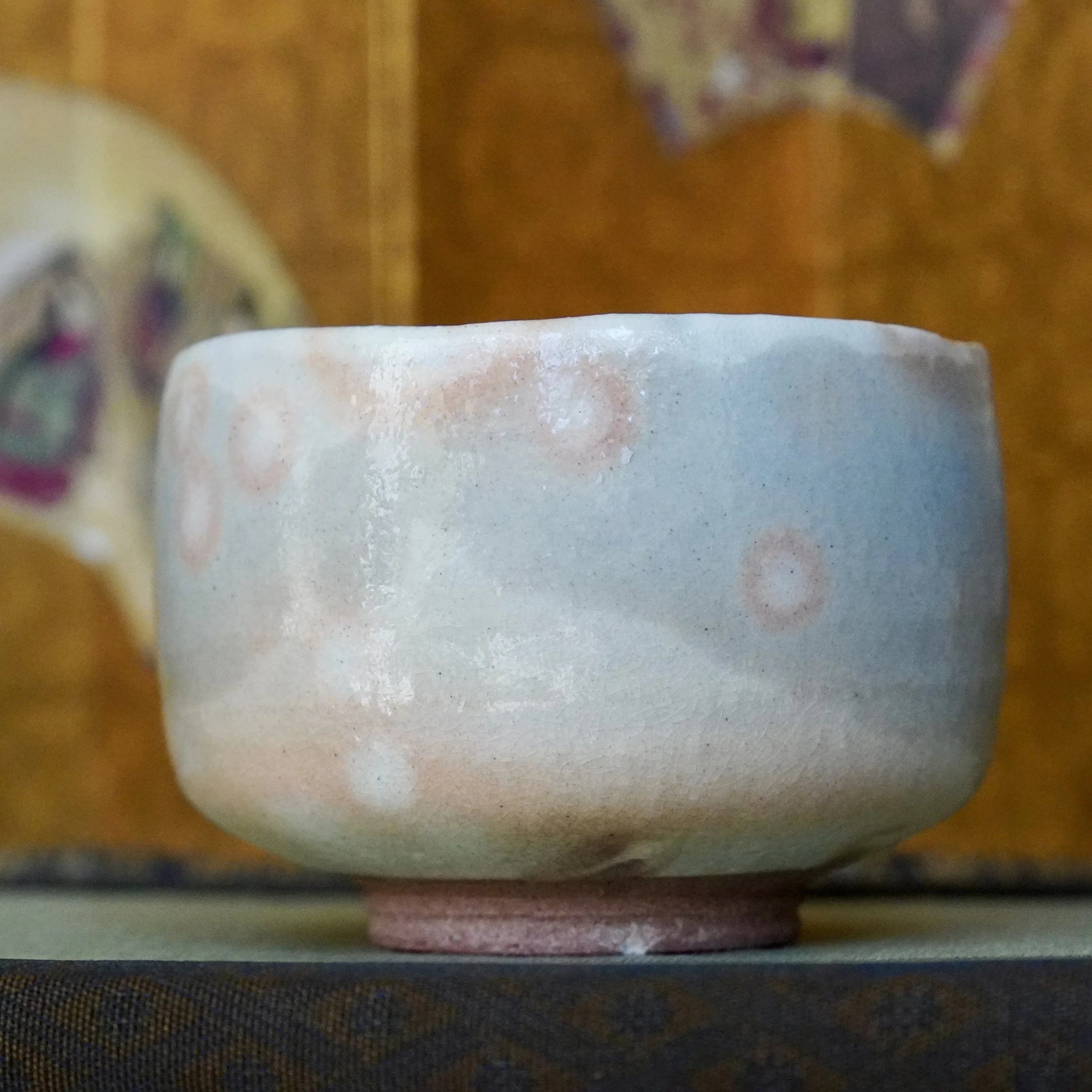

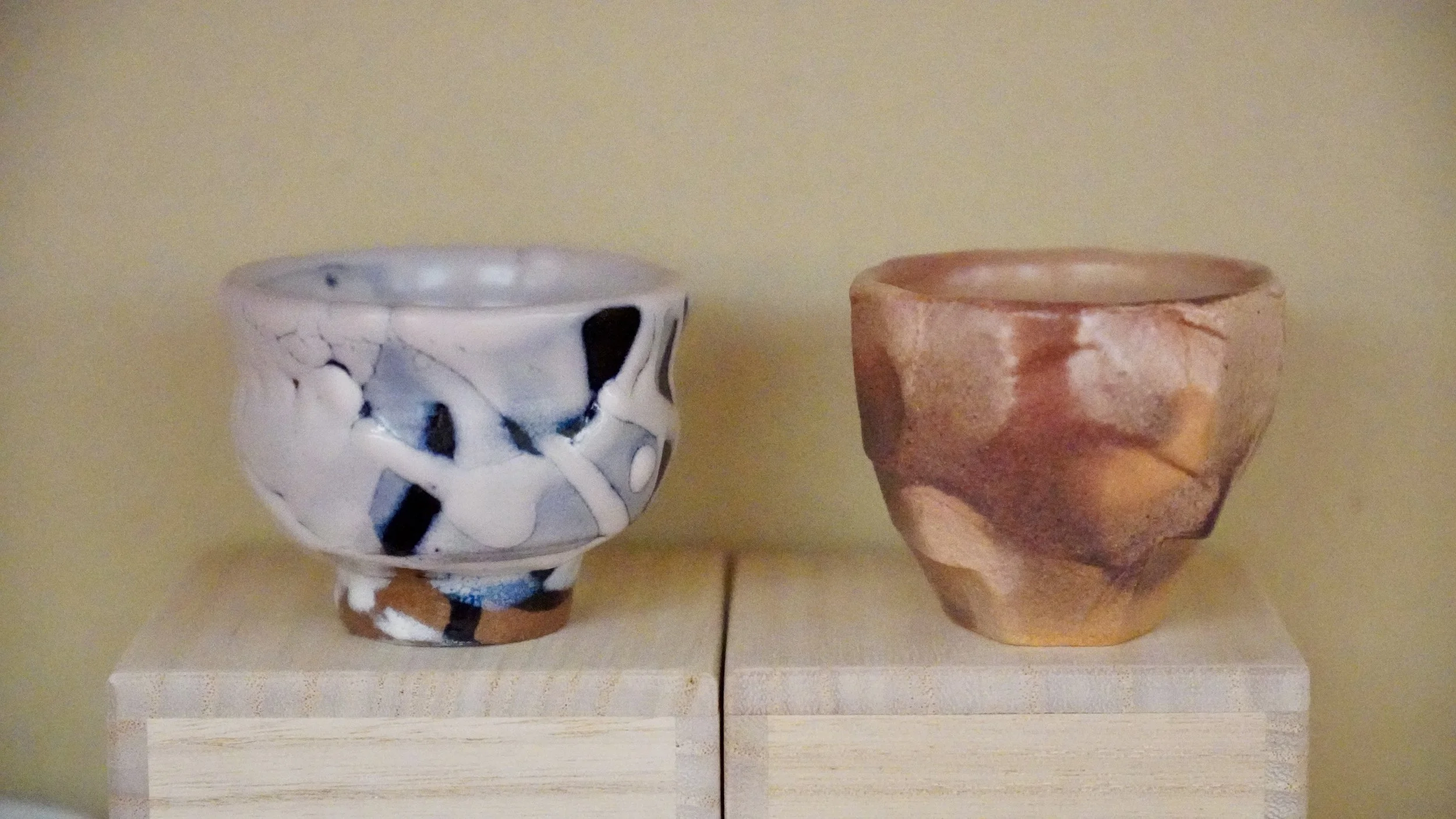
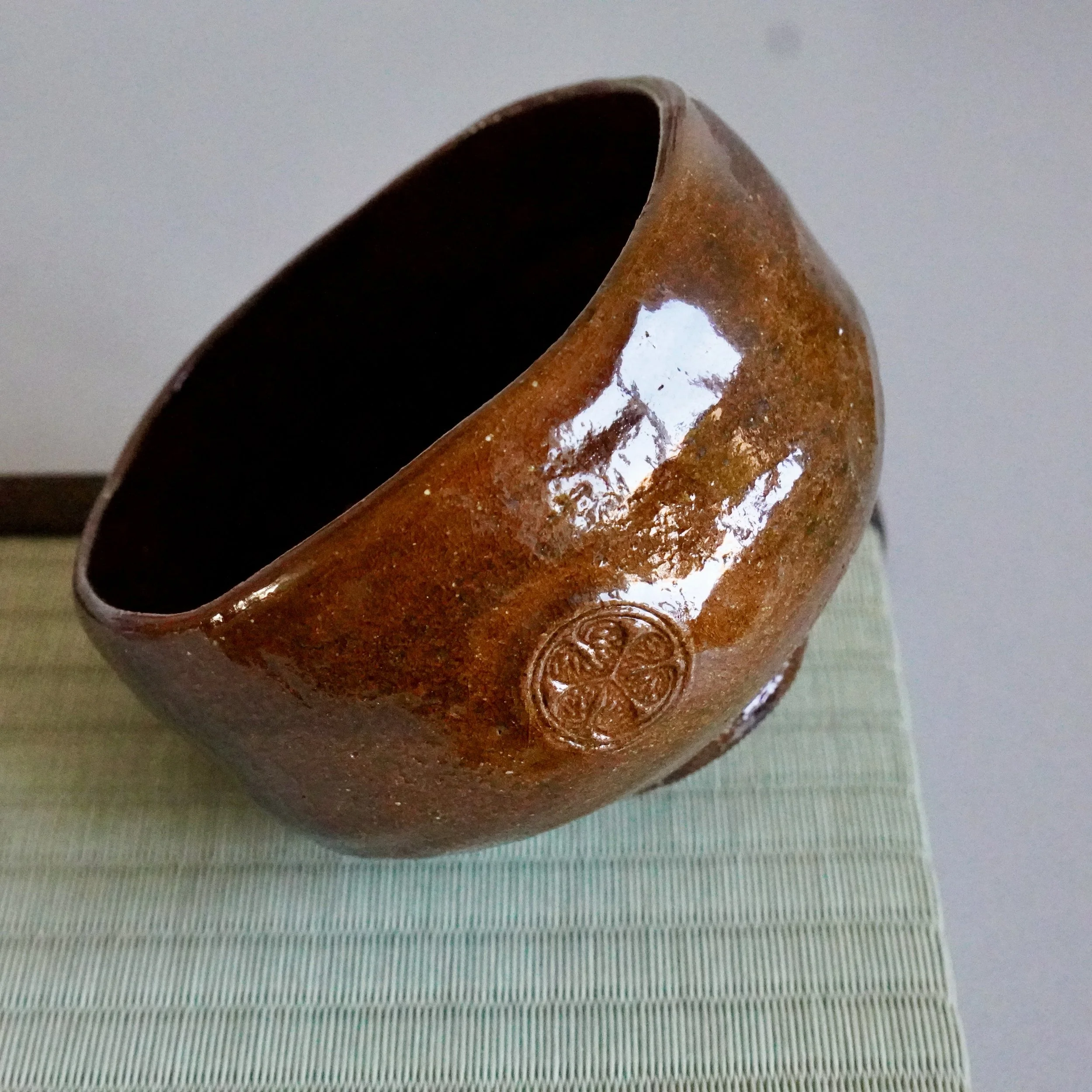
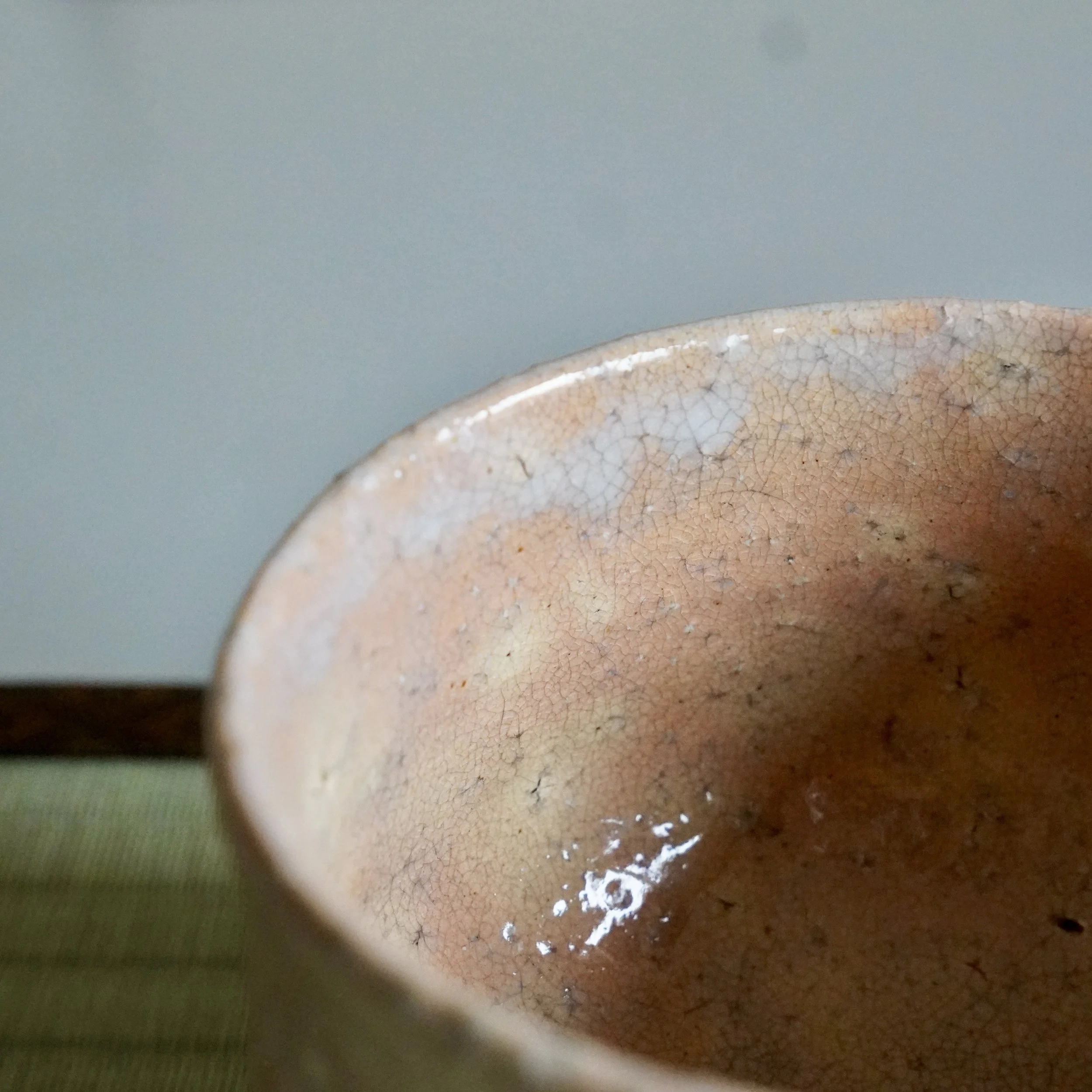
The clay tells you everything before you even touch it. One side has gone the colour of embers still holding heat, deep rust and burnt orange bleeding into ash grey where the flames never quite reached, and across the rim that grey turns almost silver, dusted like the first frost on a window. No glaze was ever applied here. Every mark, every shift in tone, is the direct signature of ten days or more inside a wood fired kiln, clay and flame negotiating the surface between them.
This bowl carries the seal of Inomata Masaaki, a Bizen potter based at the Saizōbō kiln in Okayama prefecture and one of the region's certified Dentō Kōgeishi, a formally recognised Traditional Craftsman title awarded by the prefecture. He built his own climbing kiln and became independent in 1975, after training under a respected Bizen workshop, and has spent the decades since inside a tradition that dates back over a thousand years to Japan's oldest surviving pottery kilns. A chawan carrying his signature is not a stylistic guess. It is a documented piece from a working master within one of the Six Ancient Kilns of Japan.
→ Fourteen days, one fire: what it actually takes to fire a Bizen kiln. A visit to Shibaoka Tōsendō during an active firing, standing at the kiln mouth while the family read the fire by eye and ear alone. Read the full visit in my journal.