Image 1 of 17
Image 2 of 17
Image 3 of 17
Image 4 of 17
Image 5 of 17
Image 6 of 17
Image 7 of 17
Image 8 of 17
Image 9 of 17
Image 10 of 17
Image 11 of 17
Image 12 of 17
Image 13 of 17
Image 14 of 17
Image 15 of 17
Image 16 of 17
Image 17 of 17
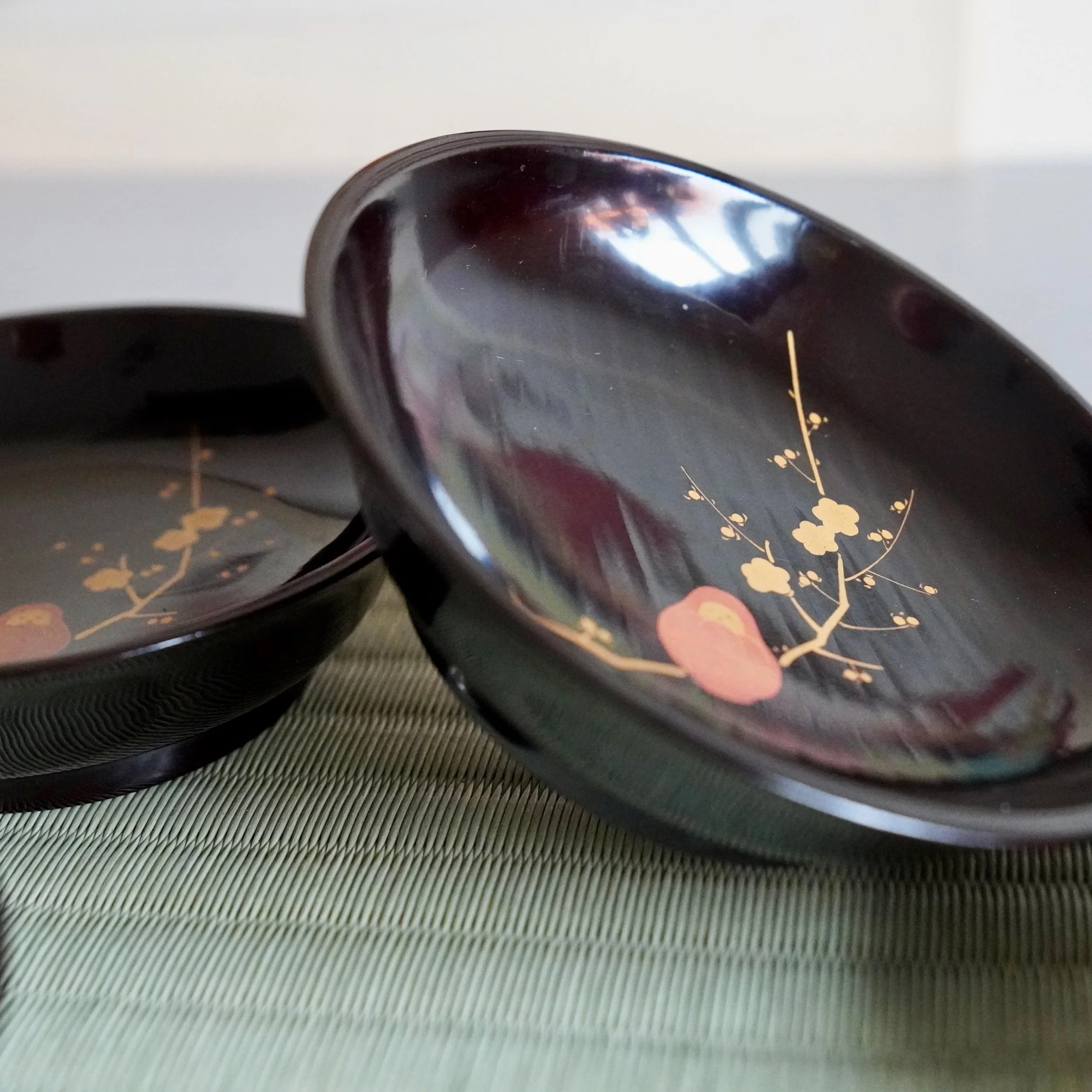
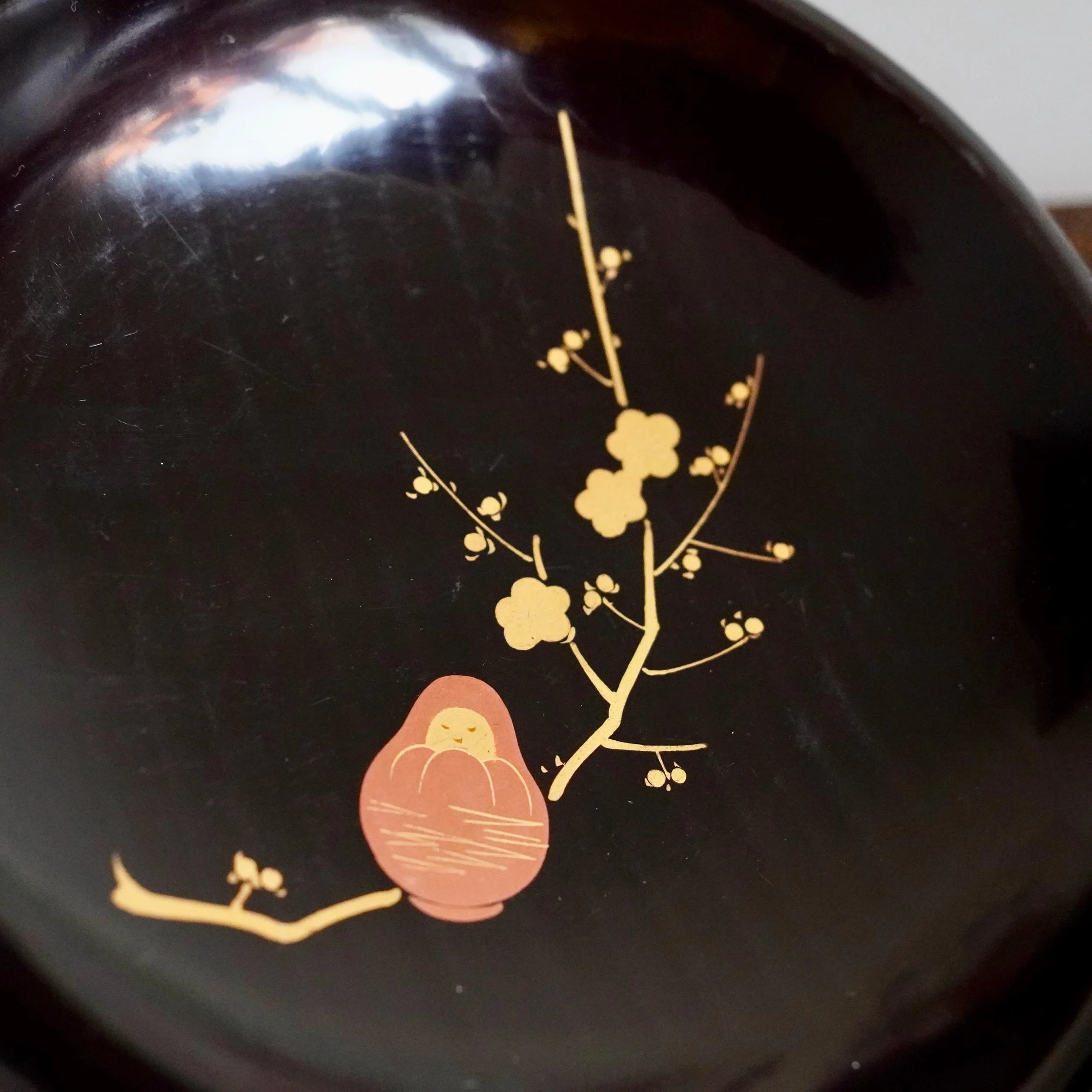
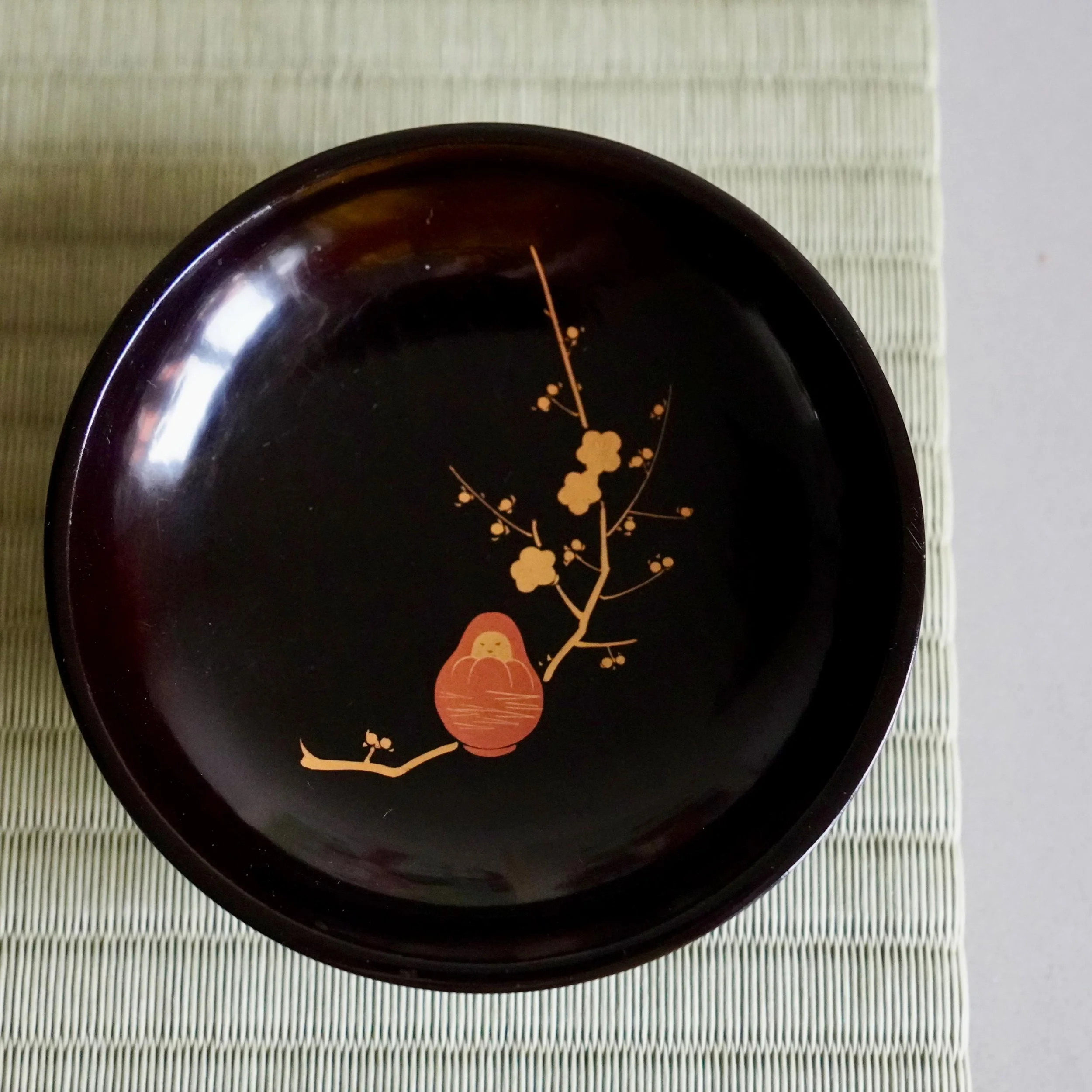
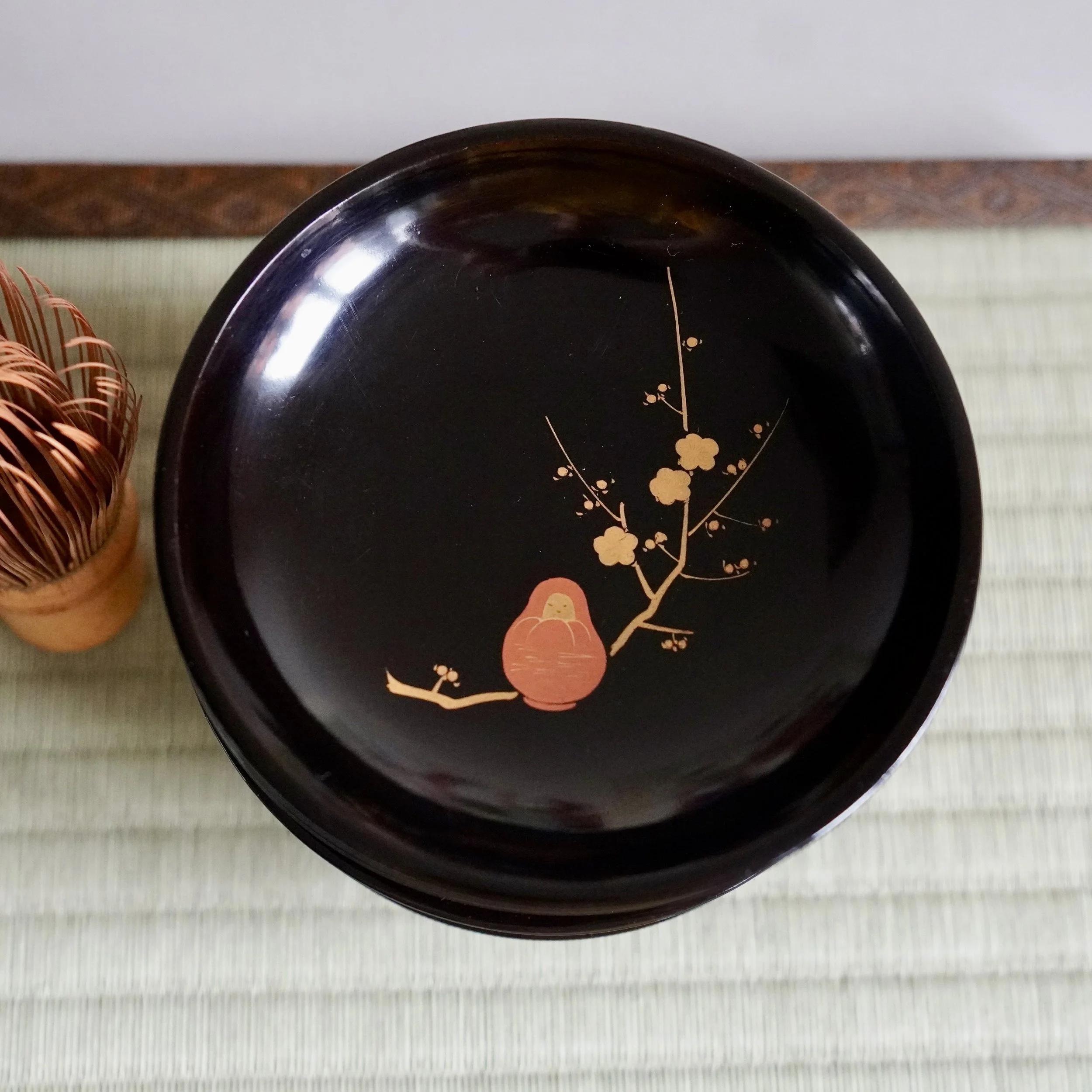
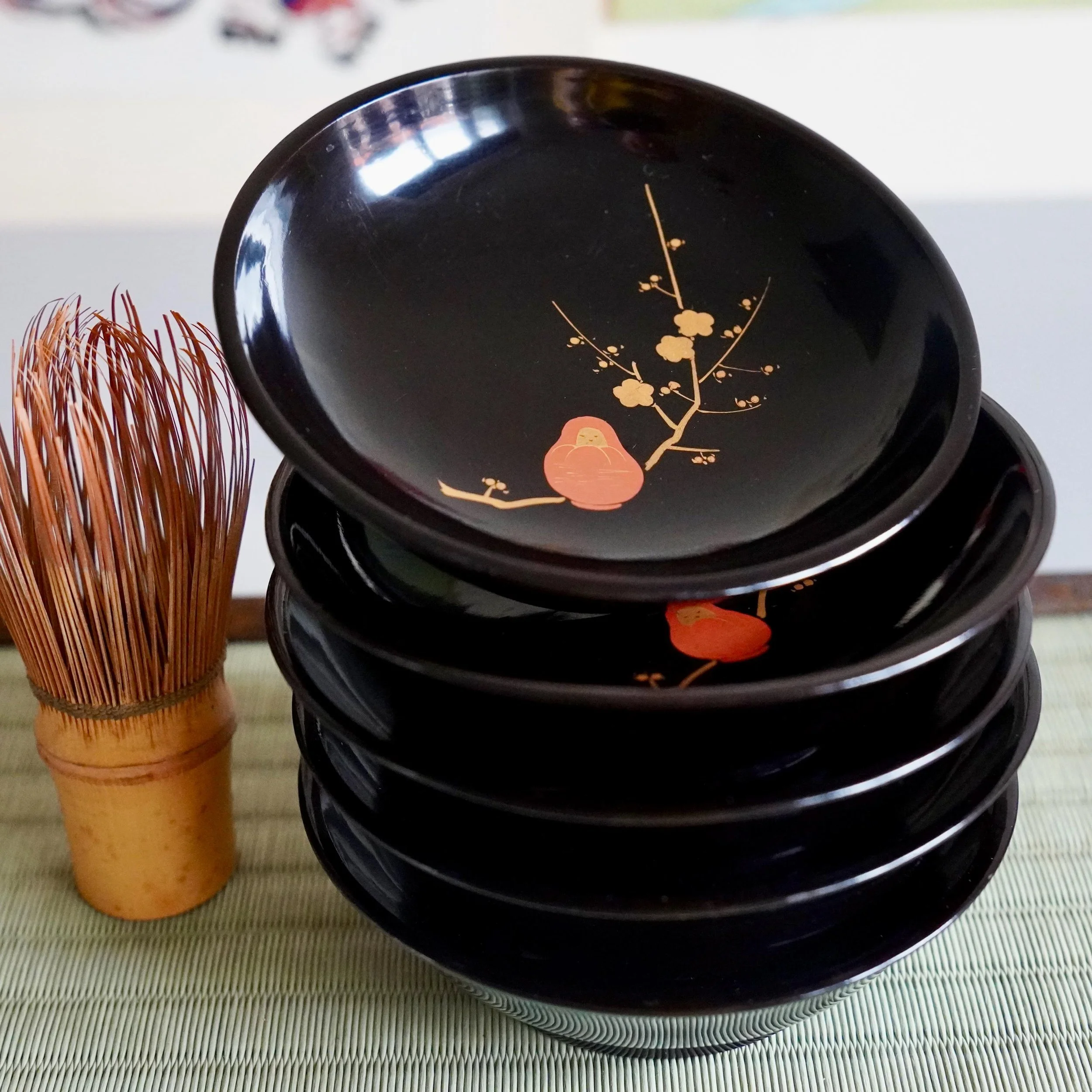
Set of five black urushi kashizara tea ceremony plates with maki-e plum and Daruma, Shōwa period
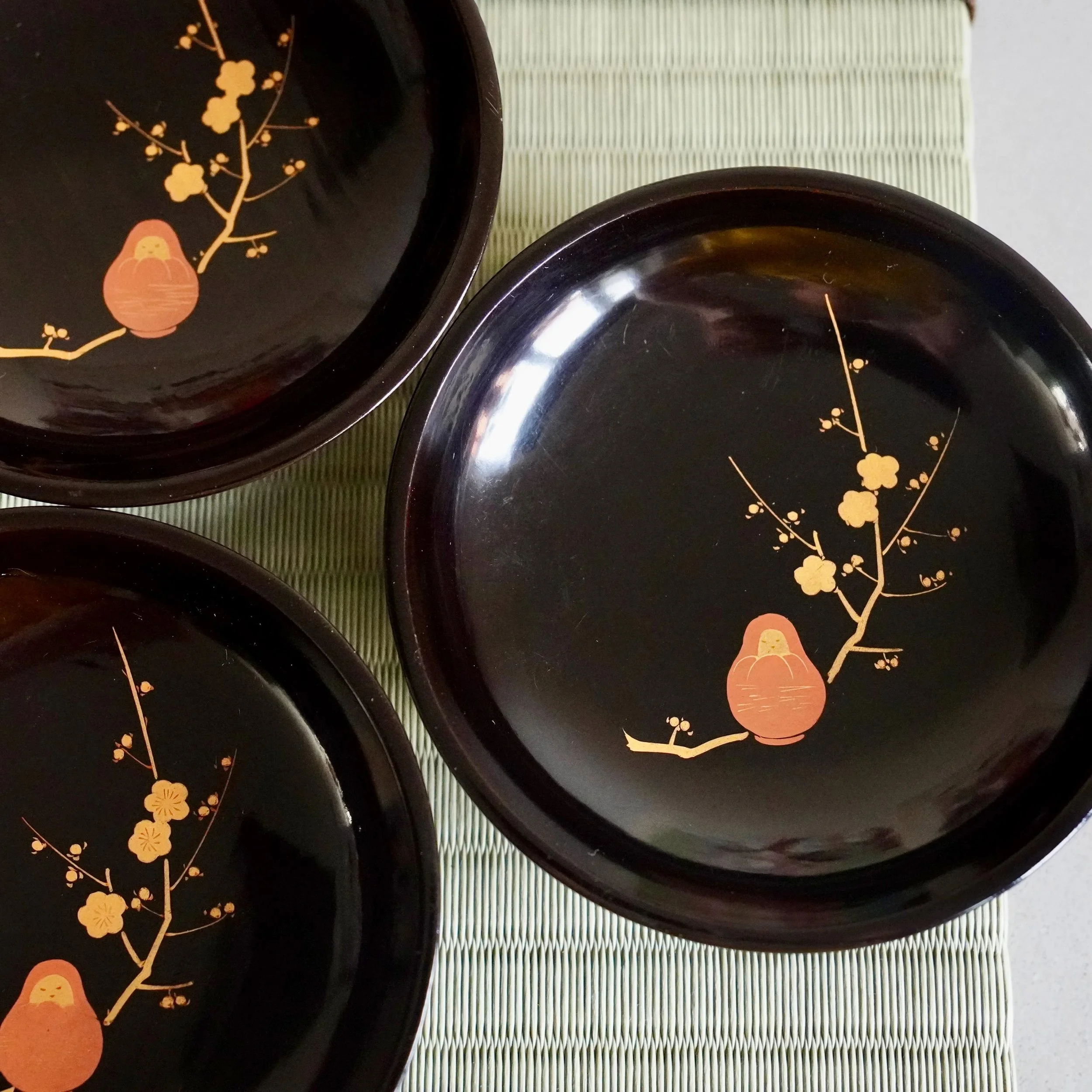
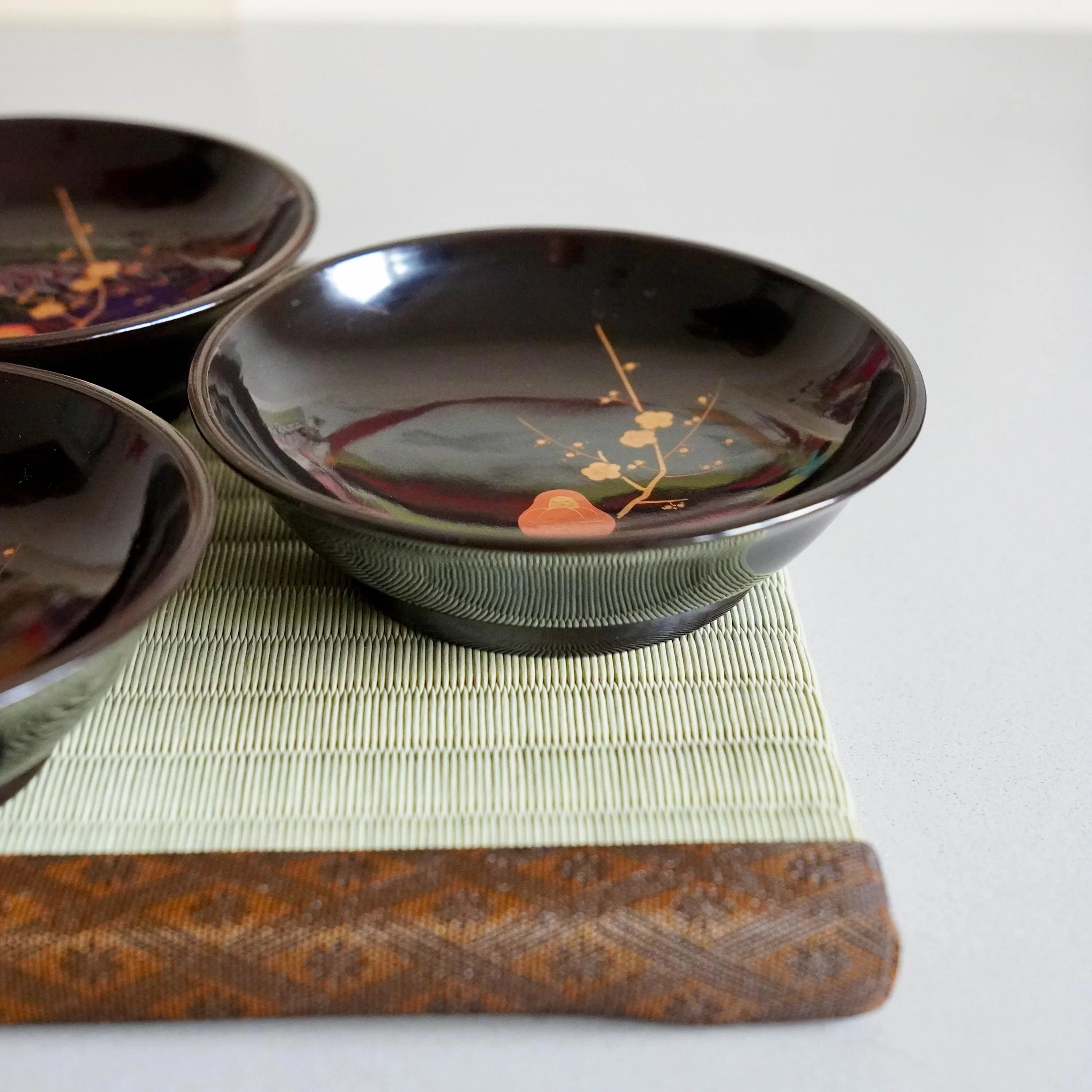
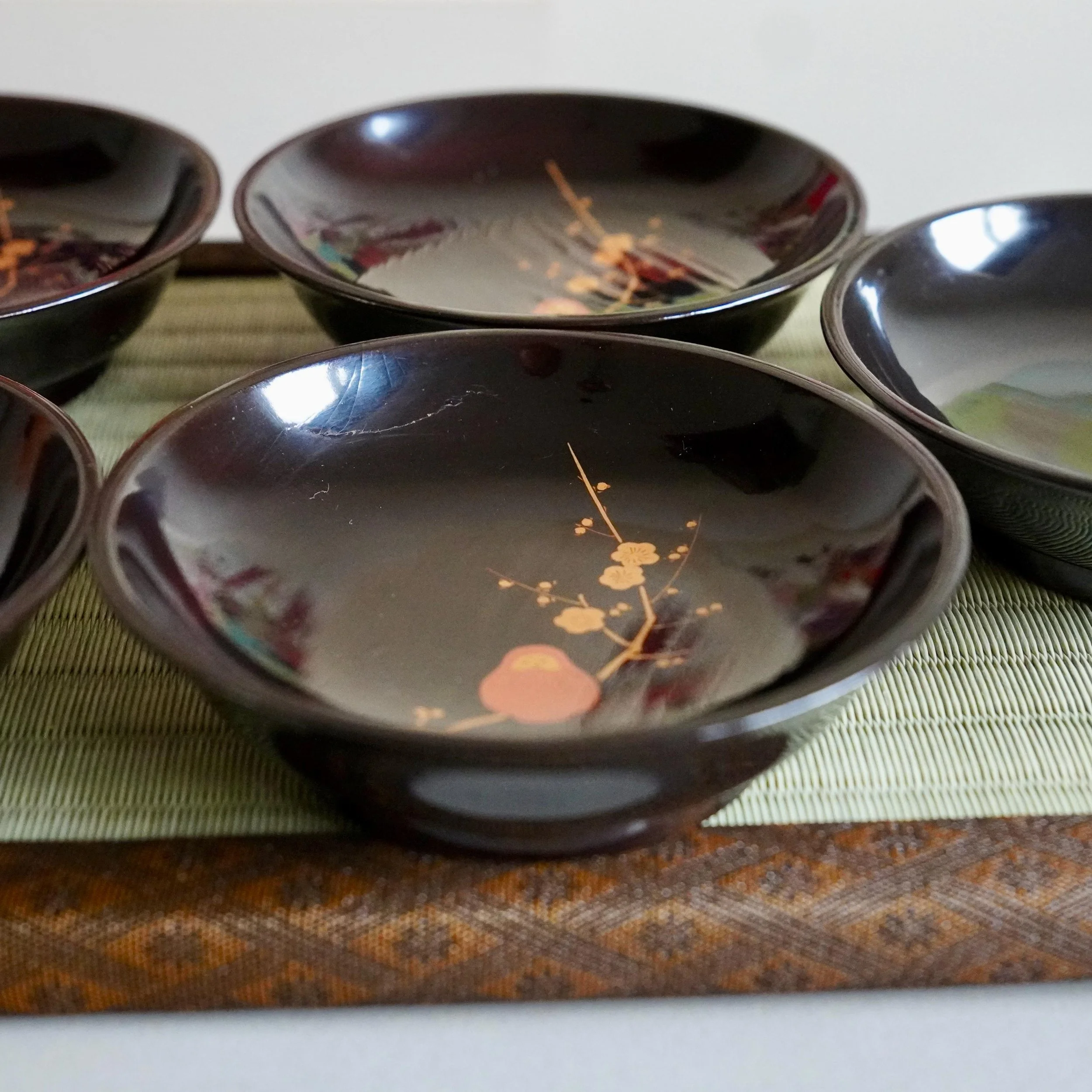
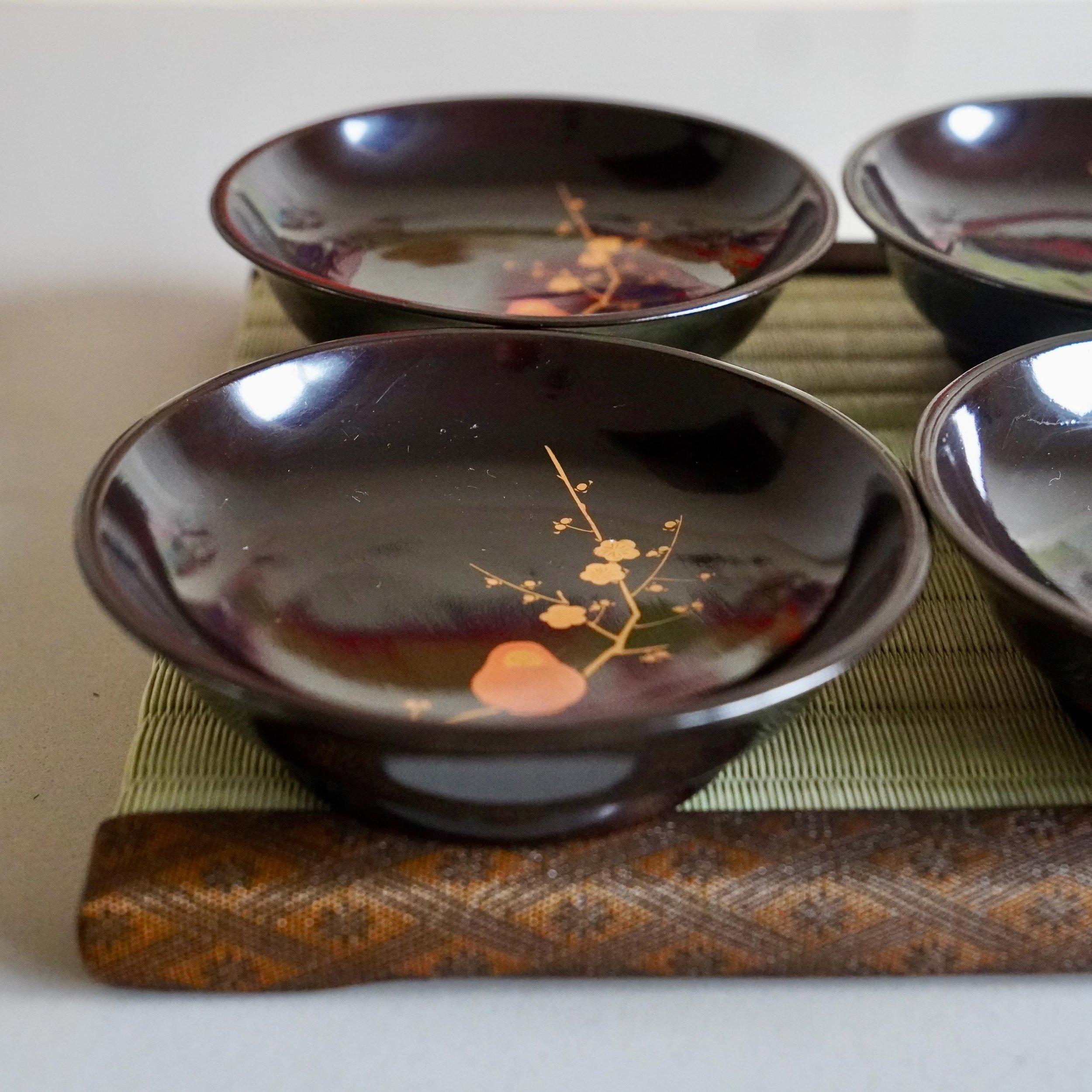
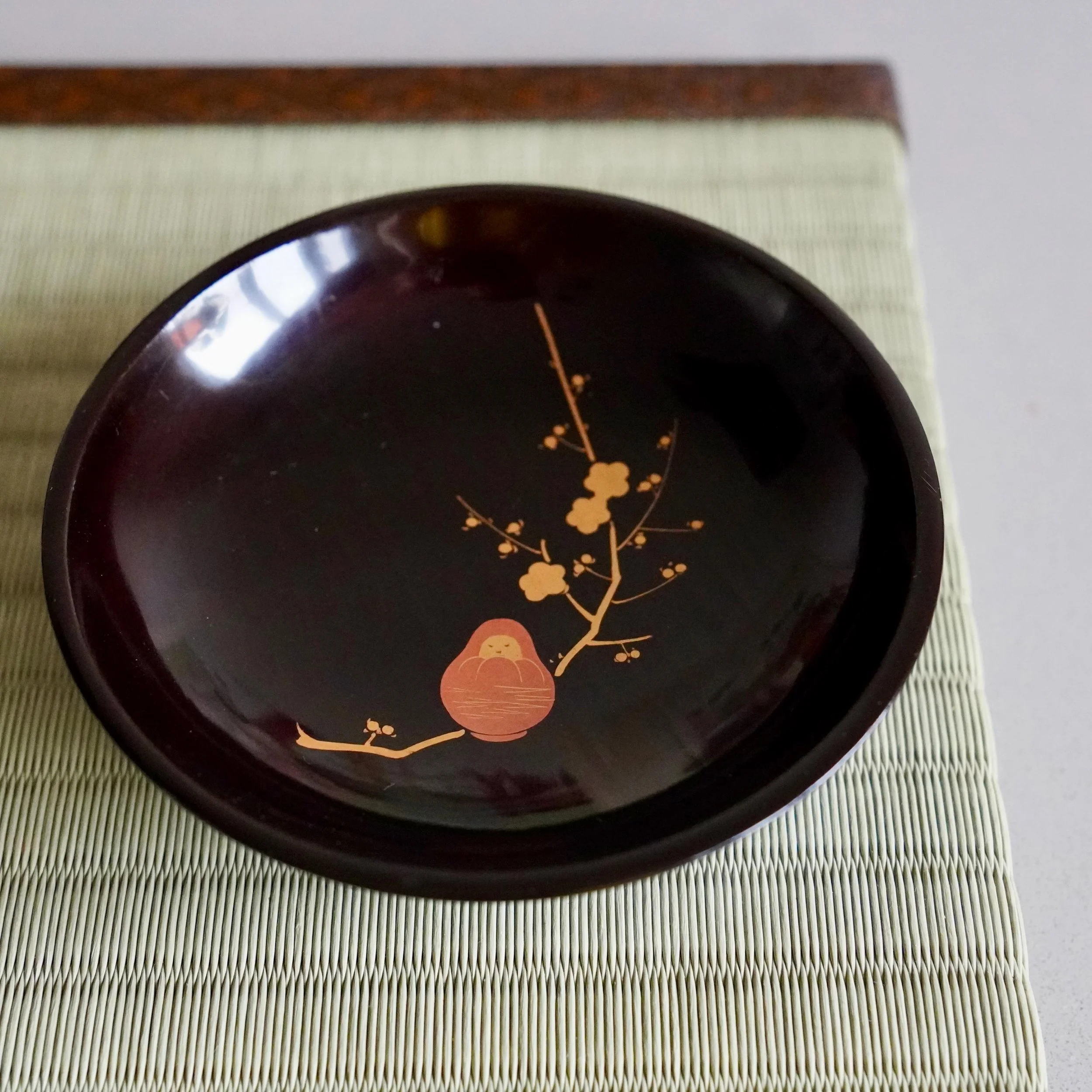
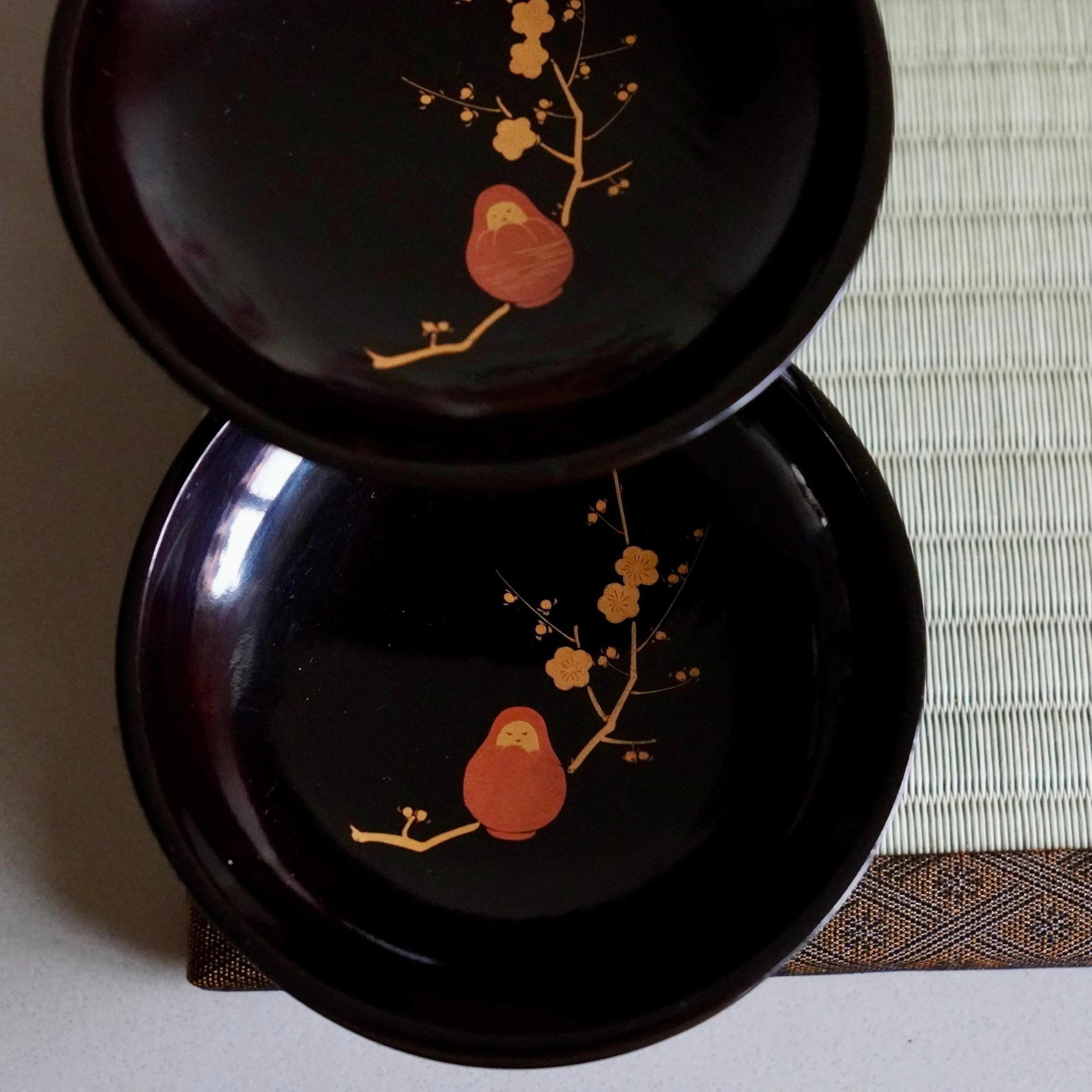
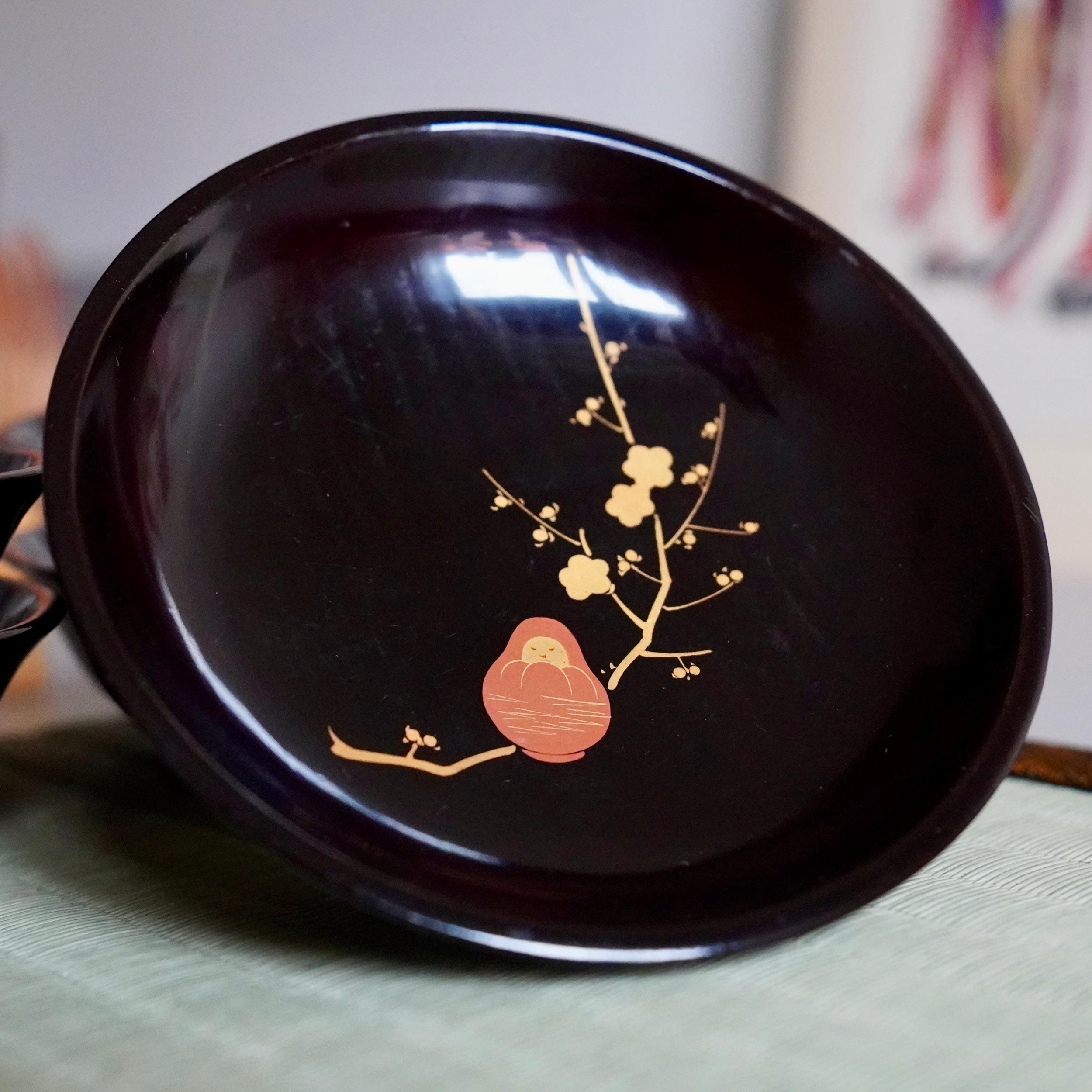
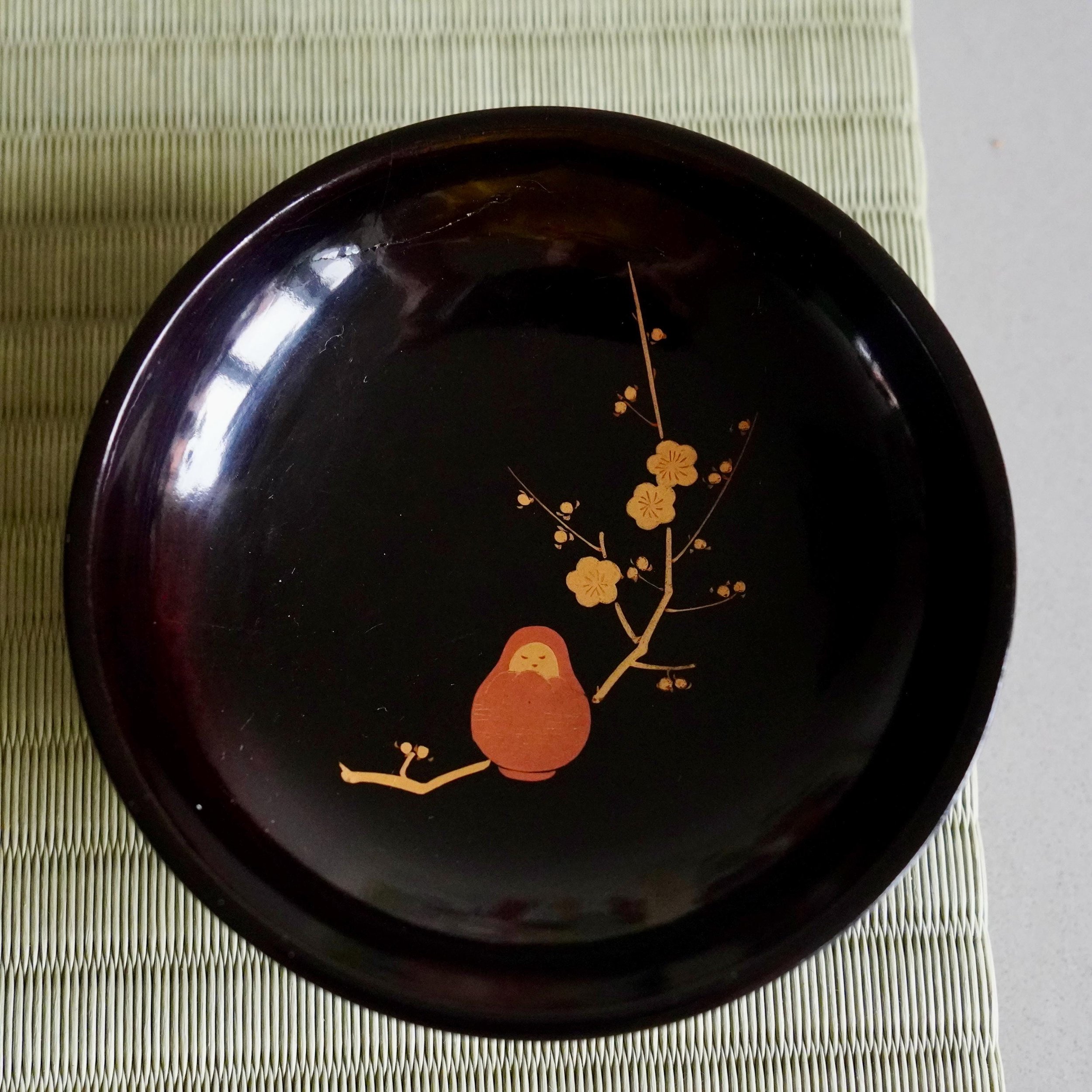
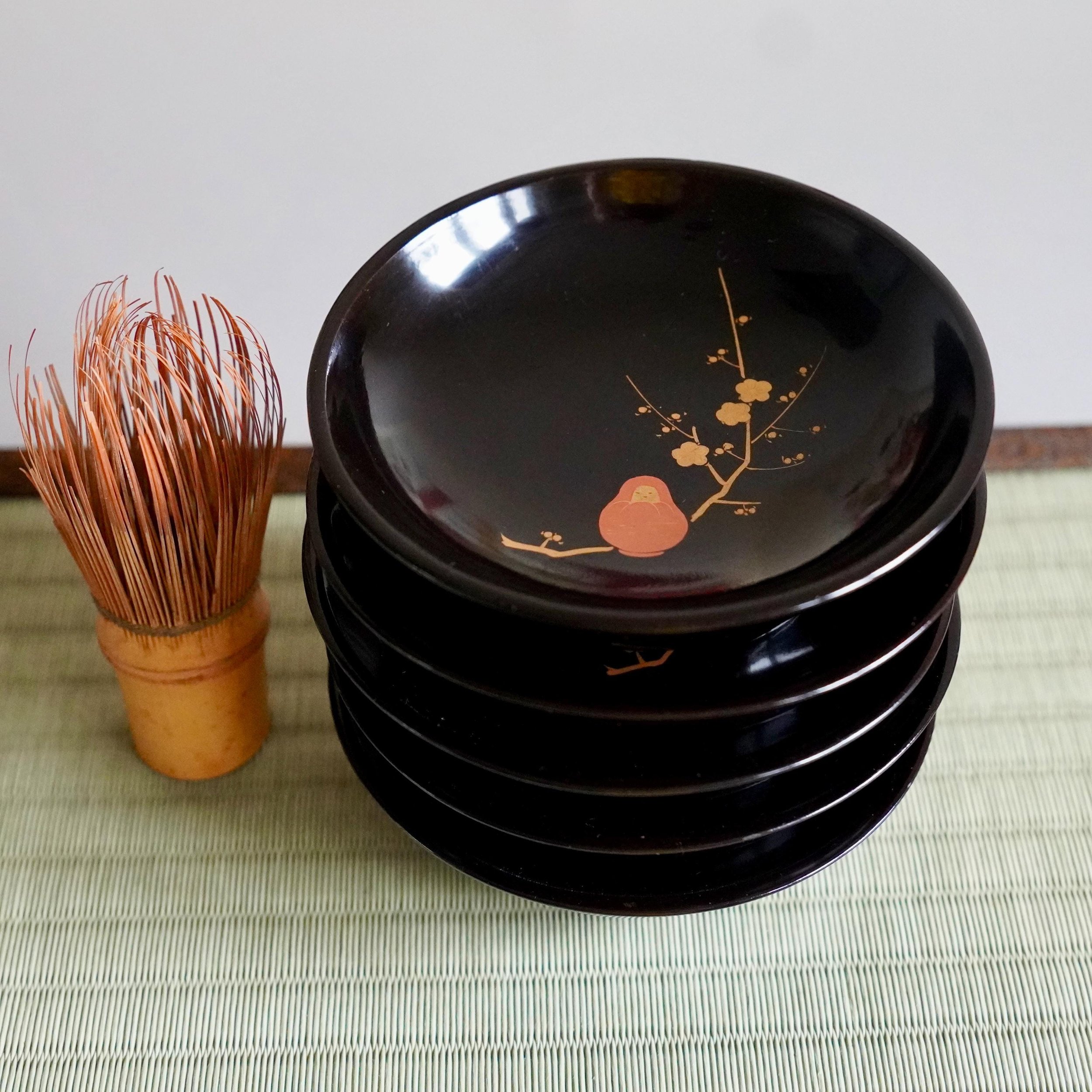
Five small plates, each carrying the same quiet scene.
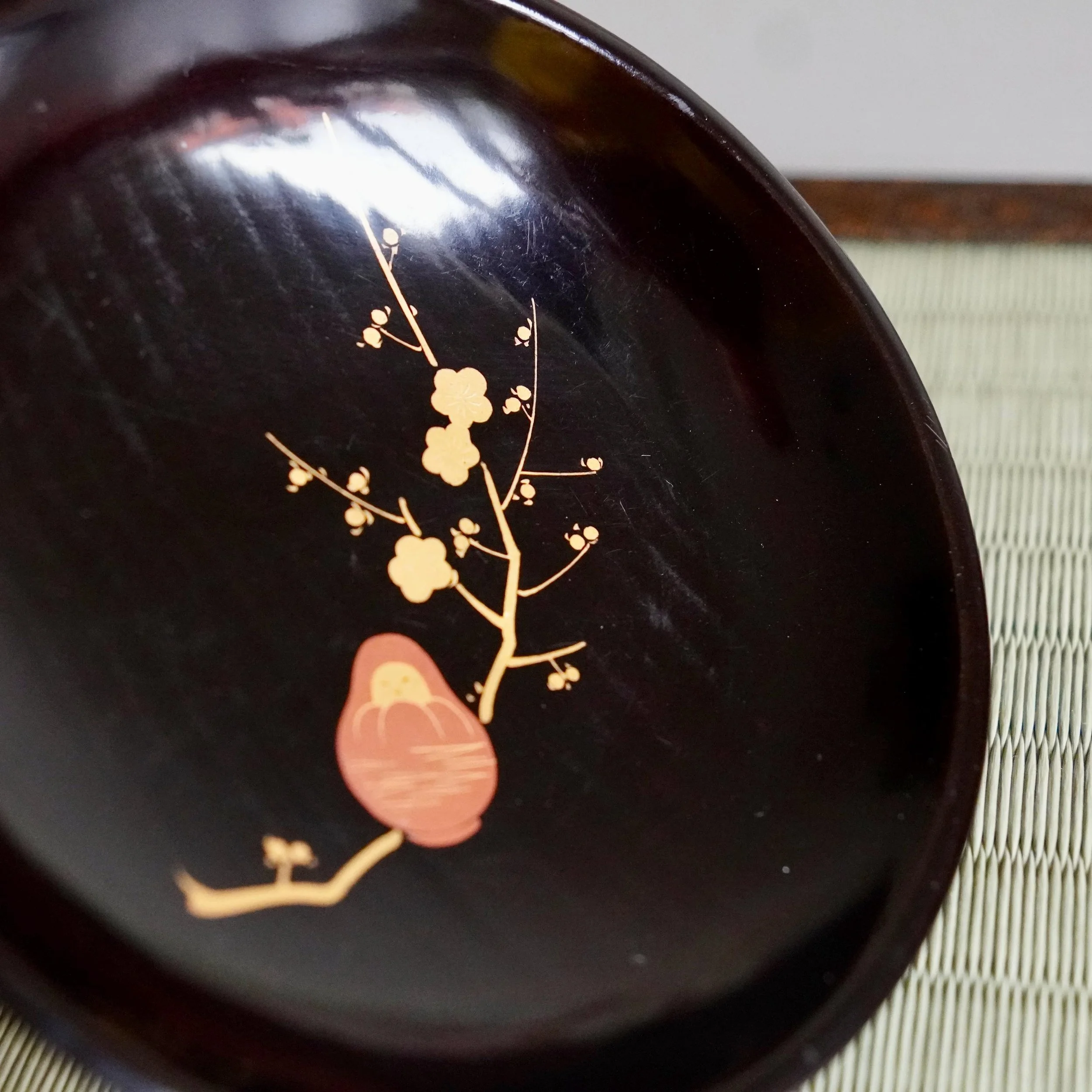
A gold plum branch in bloom, and beside it a red Daruma, round and still. The black lacquer makes both motifs glow as if lit from underneath. It's a combination that would have been immediately familiar to any Japanese household. And still is.
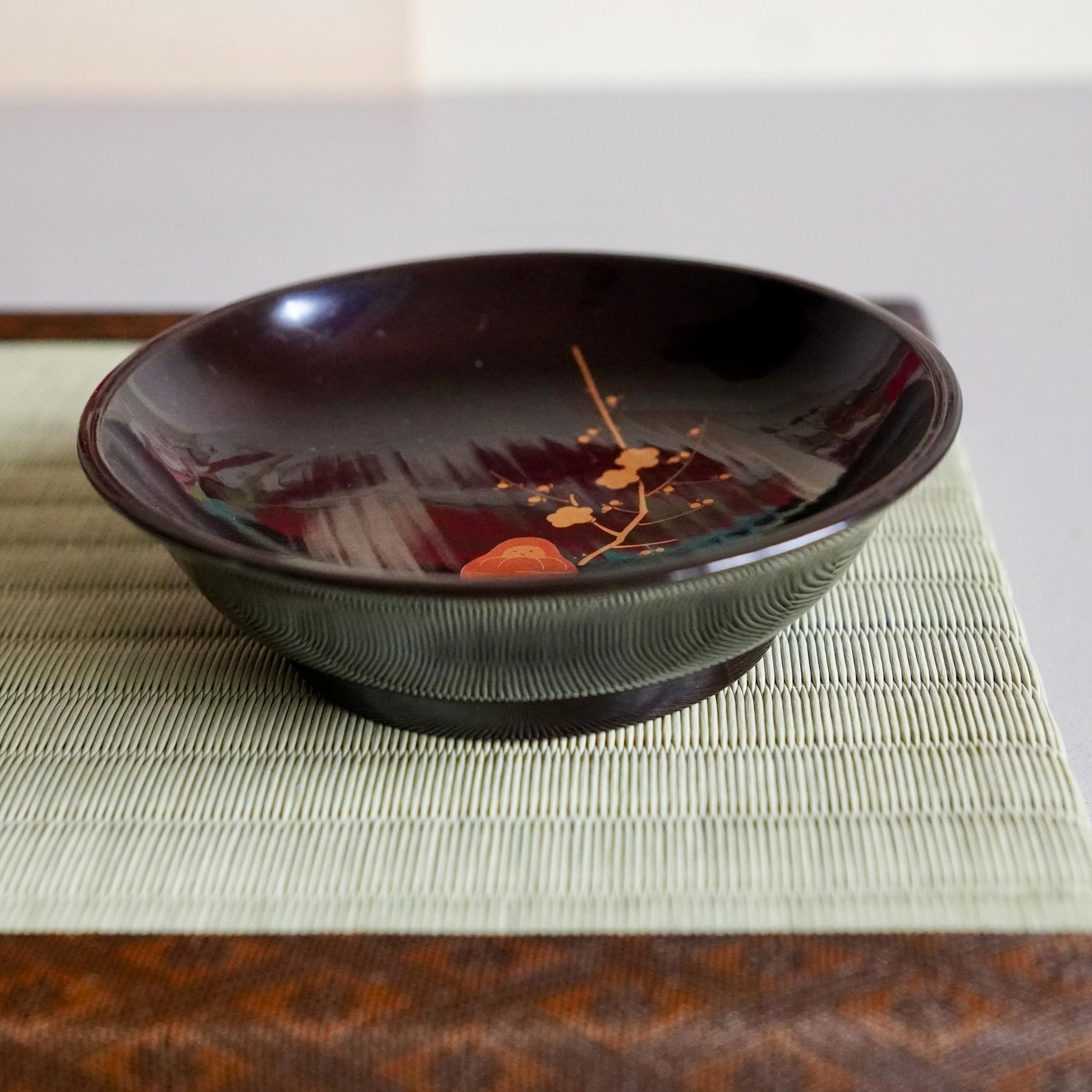
These are kashizara, the small lacquered plates used to serve wagashi sweets at tea ceremony or at the start of a formal meal. It is decorated in a combination of gold hiramaki-e for the plum branch and painted red urushi for the Daruma figure. The wood grain is visible through the lacquer on the interior, which gives each plate a slightly different depth of tone.
Five small plates, each carrying the same quiet scene.
A gold plum branch in bloom, and beside it a red Daruma, round and still. The black lacquer makes both motifs glow as if lit from underneath. It's a combination that would have been immediately familiar to any Japanese household. And still is.
These are kashizara, the small lacquered plates used to serve wagashi sweets at tea ceremony or at the start of a formal meal. It is decorated in a combination of gold hiramaki-e for the plum branch and painted red urushi for the Daruma figure. The wood grain is visible through the lacquer on the interior, which gives each plate a slightly different depth of tone.
What makes this kashizara laquerware set special
The look and feel up close
The lacquer has a depth that only comes from hand-application: built up in layers, polished between each one. Picking up a plate it feels lighter than it looks, the wood inside warm rather than cold.
The Daruma sits low and compact on the surface, the plum branch reaching around it with a precision that only becomes clear when you look closely at the individual blossoms.
Charming details
The plum and Daruma is one of the most considered pairings in Japanese decorative tradition. Plum blooms in late winter while the ground is still frozen, which made it a symbol of perseverance long before cherry blossom became better known.
Daruma, the round figure based on the Buddhist monk Bodhidharma, represents the same idea from a different angle: the doll falls over and rights itself, always. Together they make a motif about continuing. For a set of plates used at the start of a tea gathering, that's a considered choice, not just decoration.
-
Urushi lacquer on wood.
Decoration: gold hiramaki-e (plum branch and blossoms) combined with painted red urushi lacquer (Daruma figure).
Five is the standard number for a formal Japanese place setting, sized for a gathering of five guests.
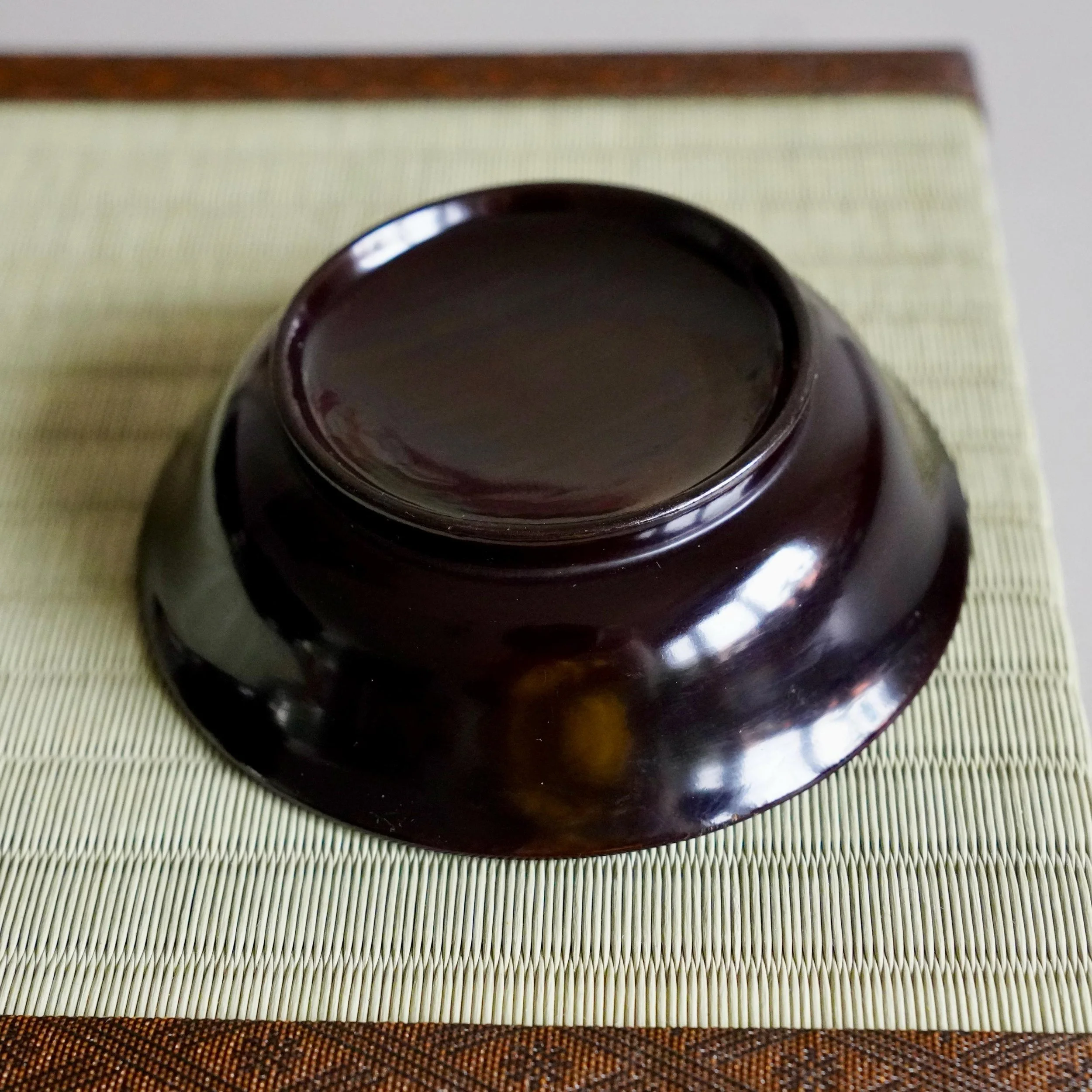
The plates stack cleanly, each interior protecting the exterior of the plate below.
Sourced in Matsuyama, Ehime Prefecture.
-
Shōwa period, ca. 1950s-1970s based on the style which is consistent with Shōwa period workshop production
-
Diameter: approx. 11.5 cm
Height: approx. 3.4 cm
Weight full set: approx. 321 g
-
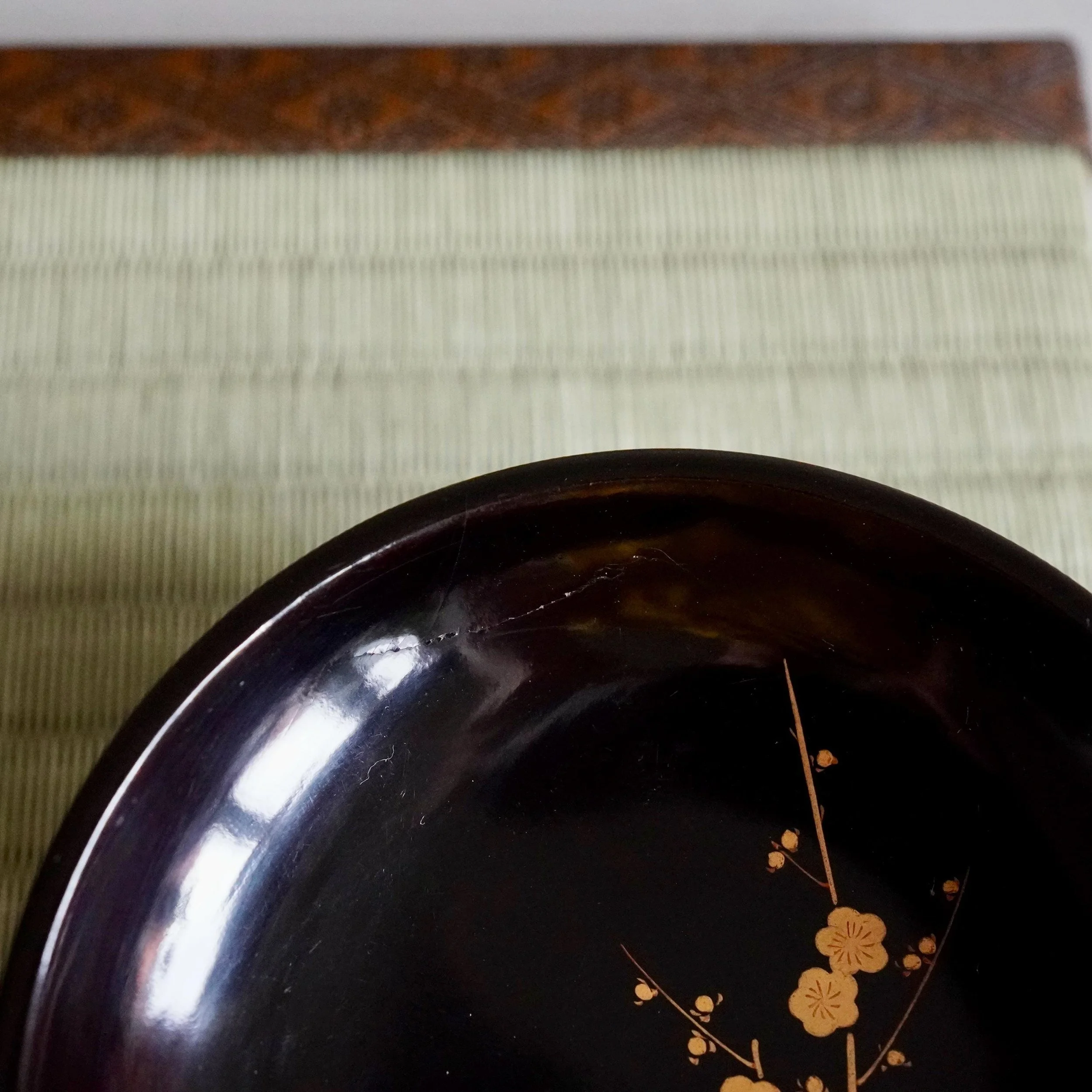
Good vintage condition.
Minor traces of use consistent with age.
No chips or cracks.
Lacquer intact on all five plates.
-
Urushi lacquer should never go in the dishwasher or microwave, and shouldn't be soaked in water.
Wipe clean with a soft damp cloth and dry immediately.
Keep out of direct sunlight.
These plates are entirely usable for dry sweets or small foods, but avoid oily or very wet preparations directly on the surface.
More info in the Care Guides.
*Decorative items such as the whisk and plank are for styling
and scale purposes only and not included in the sale
Five small plates, each carrying the same quiet scene.
A gold plum branch in bloom, and beside it a red Daruma, round and still. The black lacquer makes both motifs glow as if lit from underneath. It's a combination that would have been immediately familiar to any Japanese household. And still is.
These are kashizara, the small lacquered plates used to serve wagashi sweets at tea ceremony or at the start of a formal meal. It is decorated in a combination of gold hiramaki-e for the plum branch and painted red urushi for the Daruma figure. The wood grain is visible through the lacquer on the interior, which gives each plate a slightly different depth of tone.
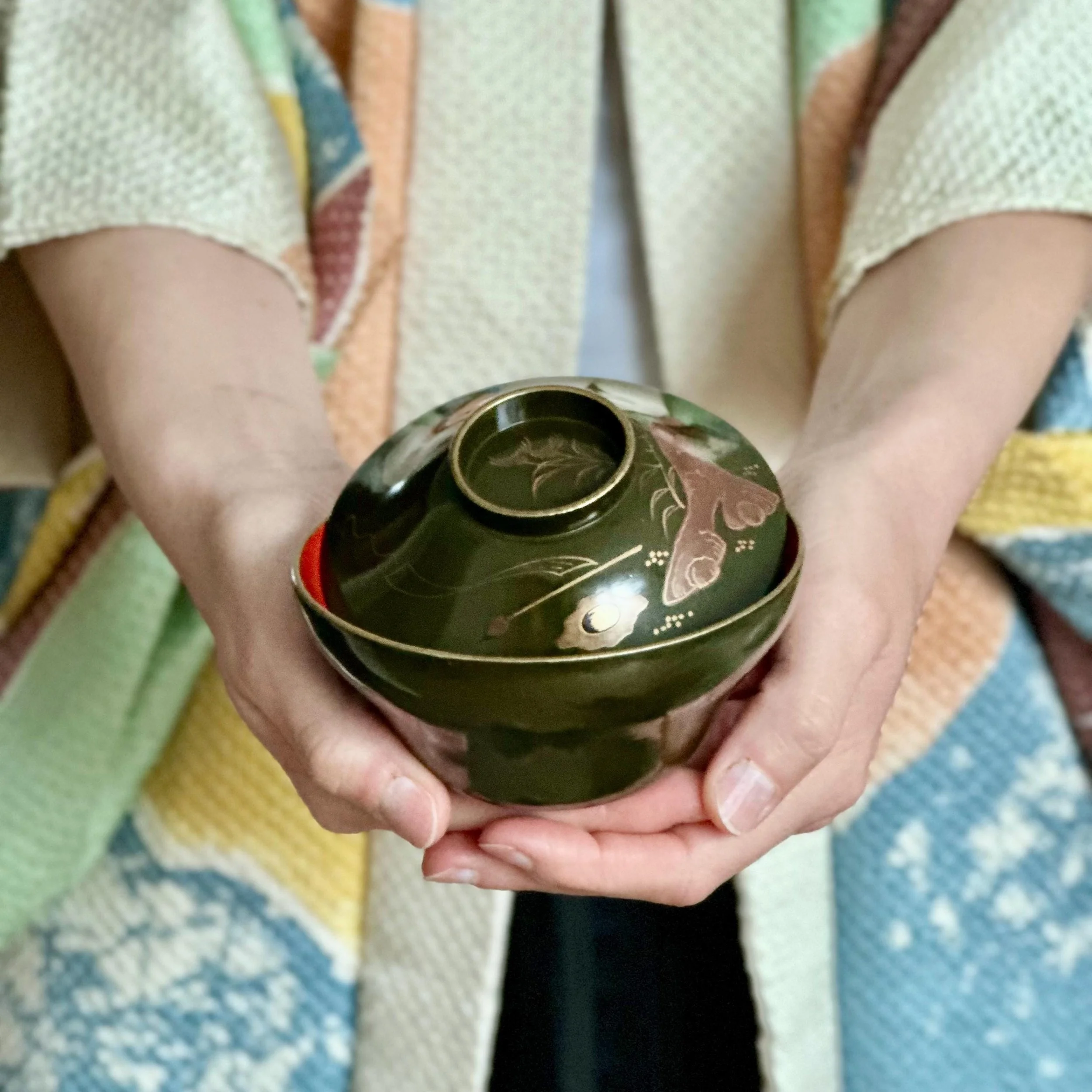
Three deep green bowls, each with its own scene in gold: shells and water plants, pampas grass with a bird in flight, sunflowers on long stems. Together on a shelf they make a quiet set. Picked up one by one, each becomes something separate.
These are owan, the lidded bowls that appear at every formal Japanese meal where broth or rice is served with ceremony rather than just hunger. A matched set was considered part of a household's kept things, something to bring out for guests. That these three have survived together this long, each one with a different scene, is itself a small piece of luck.
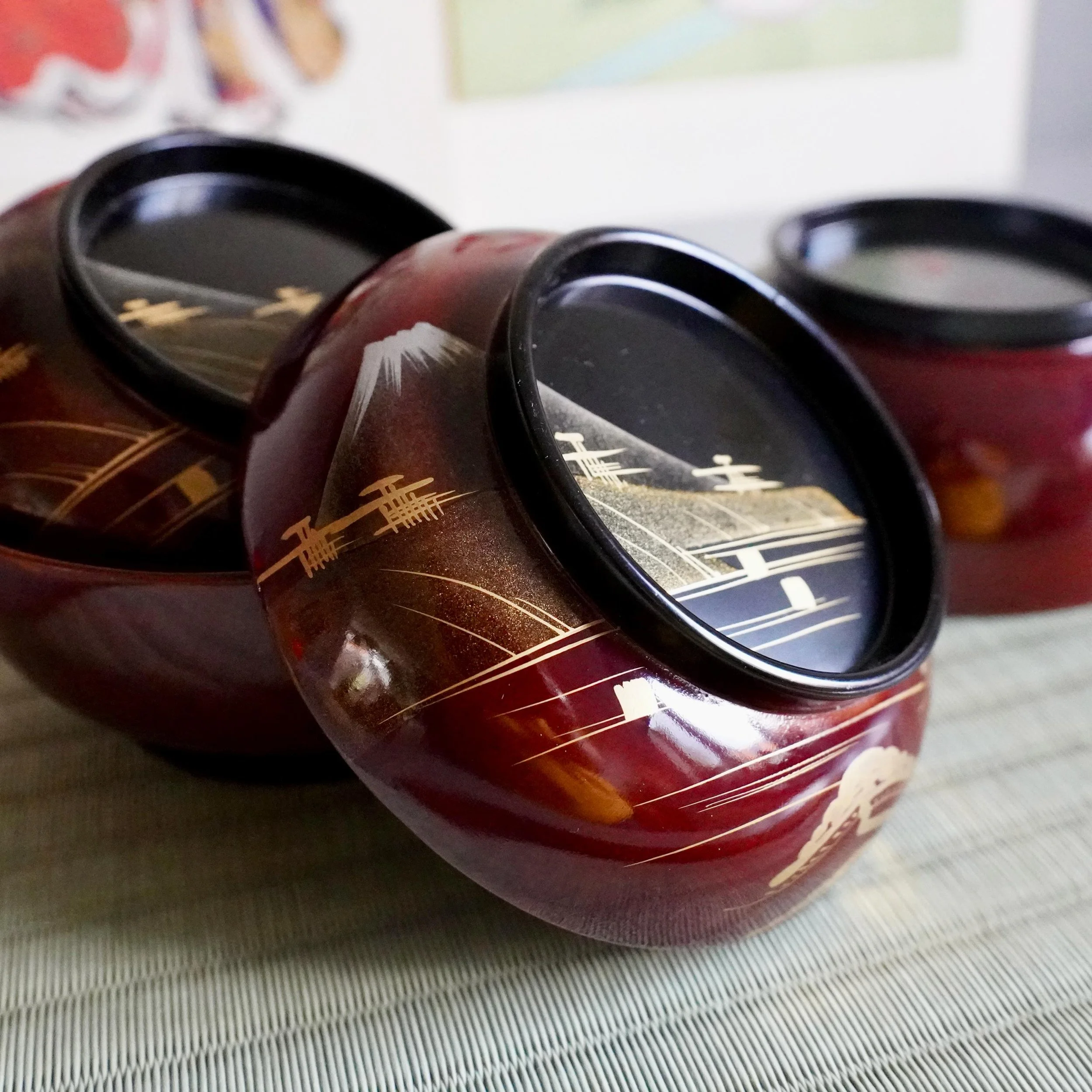
There is a color in Japanese lacquerware that has no good equivalent in Western craft: a deep oxblood red, warm enough to hold light, layered beneath a translucent black finish so that both colors live in the same surface at once. These two bowls with fitted lids have it.
The technique is called tame-nuri, and what it does to this particular shape, a round generous bowl with a low footing and a domed lid, is to make the red pull through wherever light hits the curve. The Mount Fuji scene in gold maki-e wraps fully around both bowls so that the landscape only reveals itself completely when you rotate them in your hands.
The bowls are signed by the Tanitake workshop (谷竹), based in Matsuyama on the island of Shikoku. Matsuyama has a long tradition of lacquerware production, and the pieces that came out of its established workshops were made for household use at a level that assumes the work will last. The maki-e on these bowls is not a tourist souvenir motif.
The gold application is precise, the scene is composed, and the combination of tame-nuri depth with gold decoration is a combination that requires skill in both techniques to execute well.
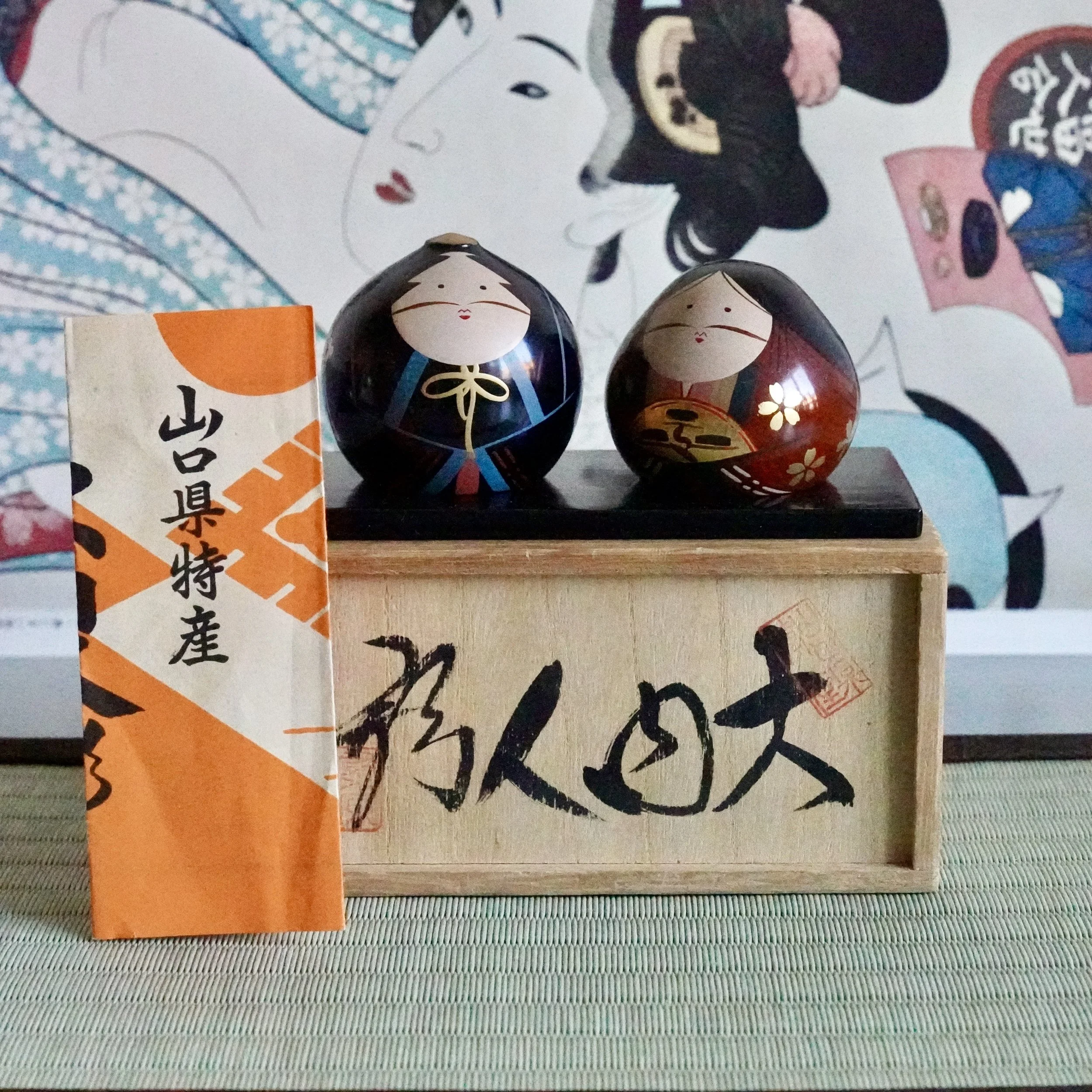
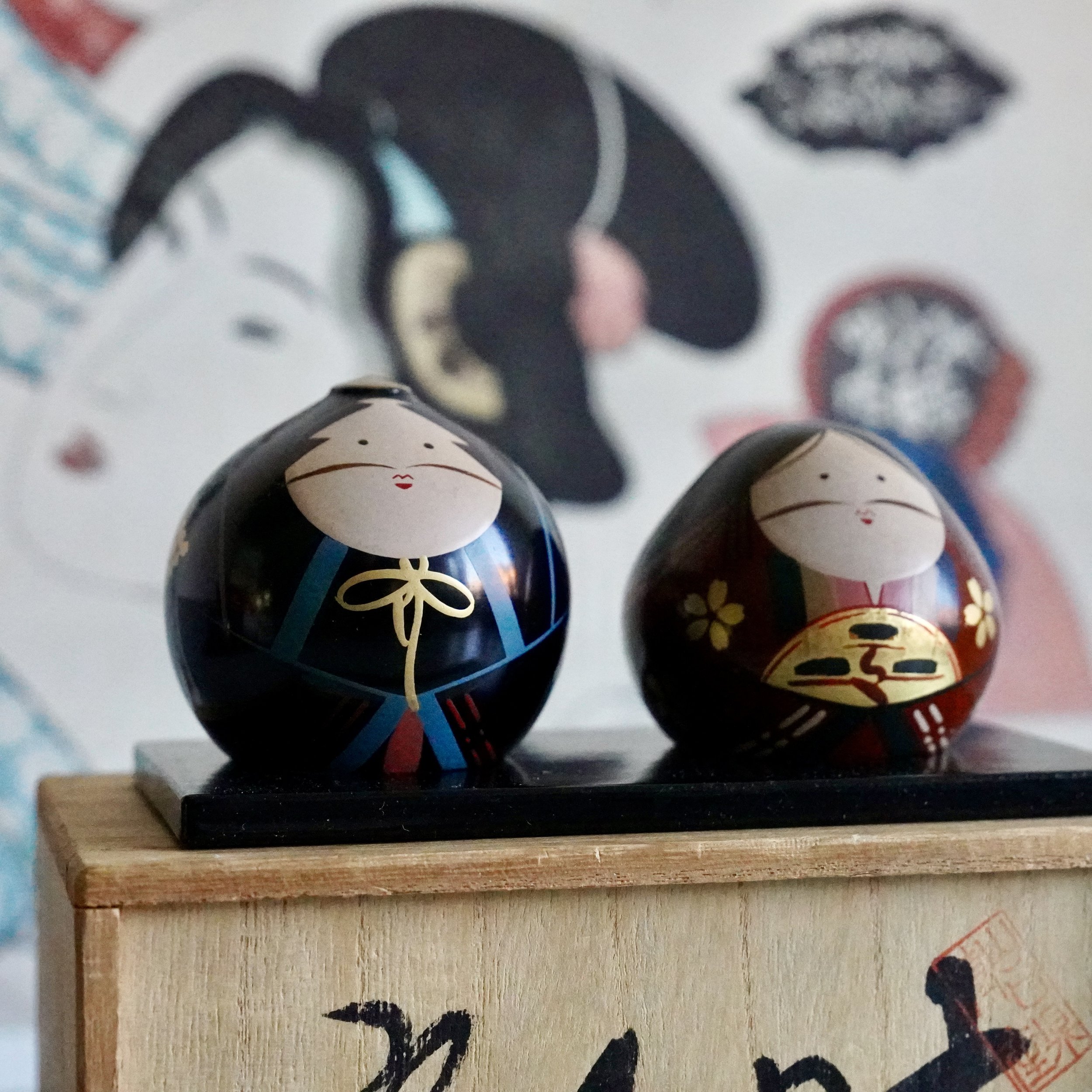
Two round forms sit on a black lacquered stand: the bride in the deep red specific to Ouchi-nuri, painted with gold and pink sakura and holding a miniature fan; the groom in high-gloss black with a blue kimono and a white cord at the chest. The pair is small enough to cup in both hands. The lacquer catches the light the way very few surfaces do.
Ouchi-nuri is a lacquer tradition from Yamaguchi, designated as a national traditional craft of Japan alongside Hagi-yaki. These dolls were made by the Kuwahara workshop (桑原大内塗漆器大内人形製作所), one of the established makers in Yamaguchi City, and they come with their original tomobako and the workshop's documentation leaflet. A pair with their original box and their documentation leaflet like this is genuinely uncommon to find outside Japan.
Read more about where I found them in my sourcing journal.
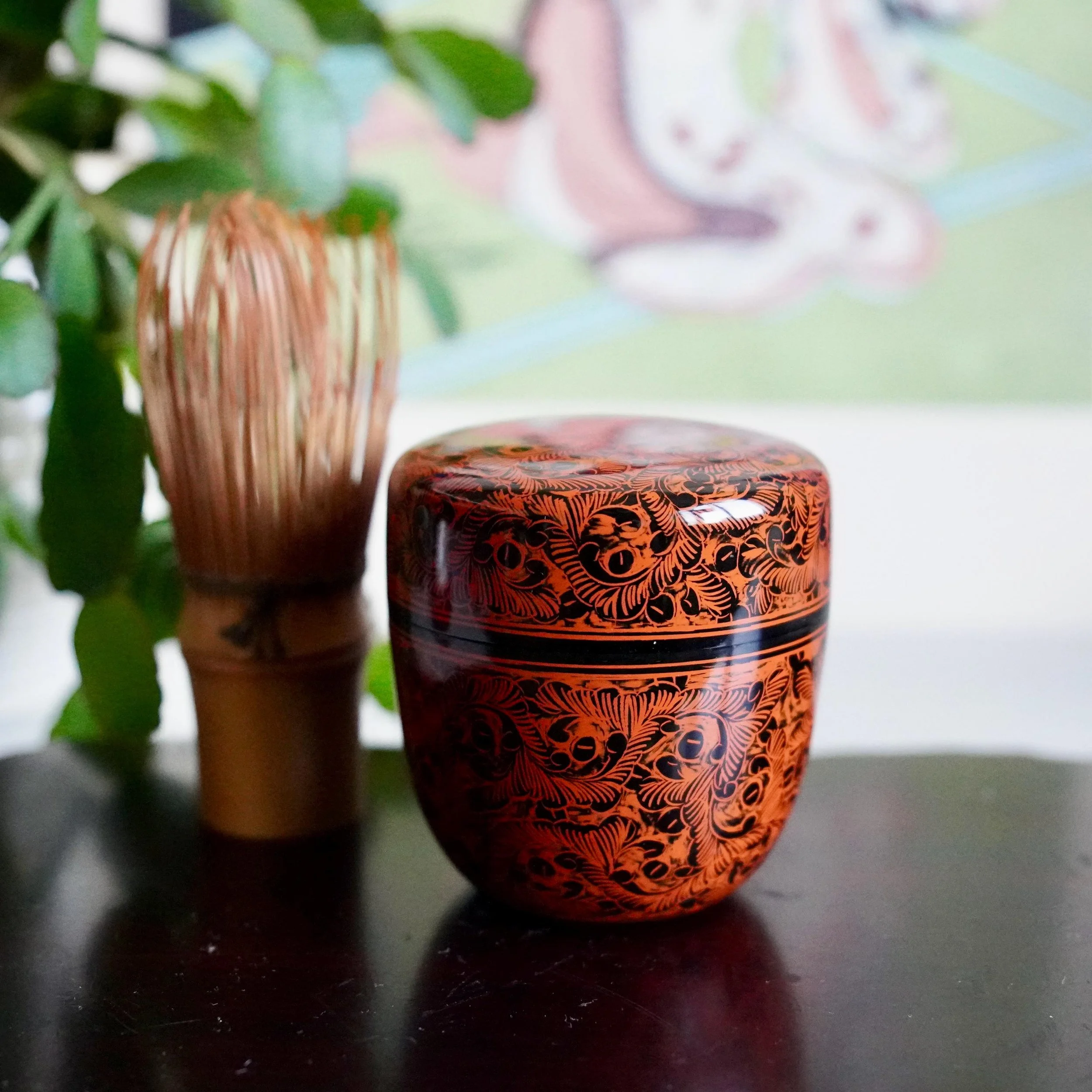
A fine karakusa motif winds across the surface, deep red carved into jet black lacquer. The pattern is continuous, one vine curling into the next without a clear start or end, which is exactly the point. Karakusa has stood for eternity and prosperity in Japanese decorative art for centuries, and here it wraps the natsume completely, catching the light differently depending on the angle you hold it at.
This piece was made by Sakamoto Sessai, who trained under Kurosai, the younger brother of Tamakaji Zōkoku, the founder of the Sanuki kinma tradition in Takamatsu on the island of Shikoku.
What makes this specific case special is that the set is still completely intact. The original wooden box with the signature of the master is included, as is the description from the antique shop in Matsuyama where I found this natsume. It is a real find for anyone who appreciates genuine Japanese tea ceremony craftsmanship.
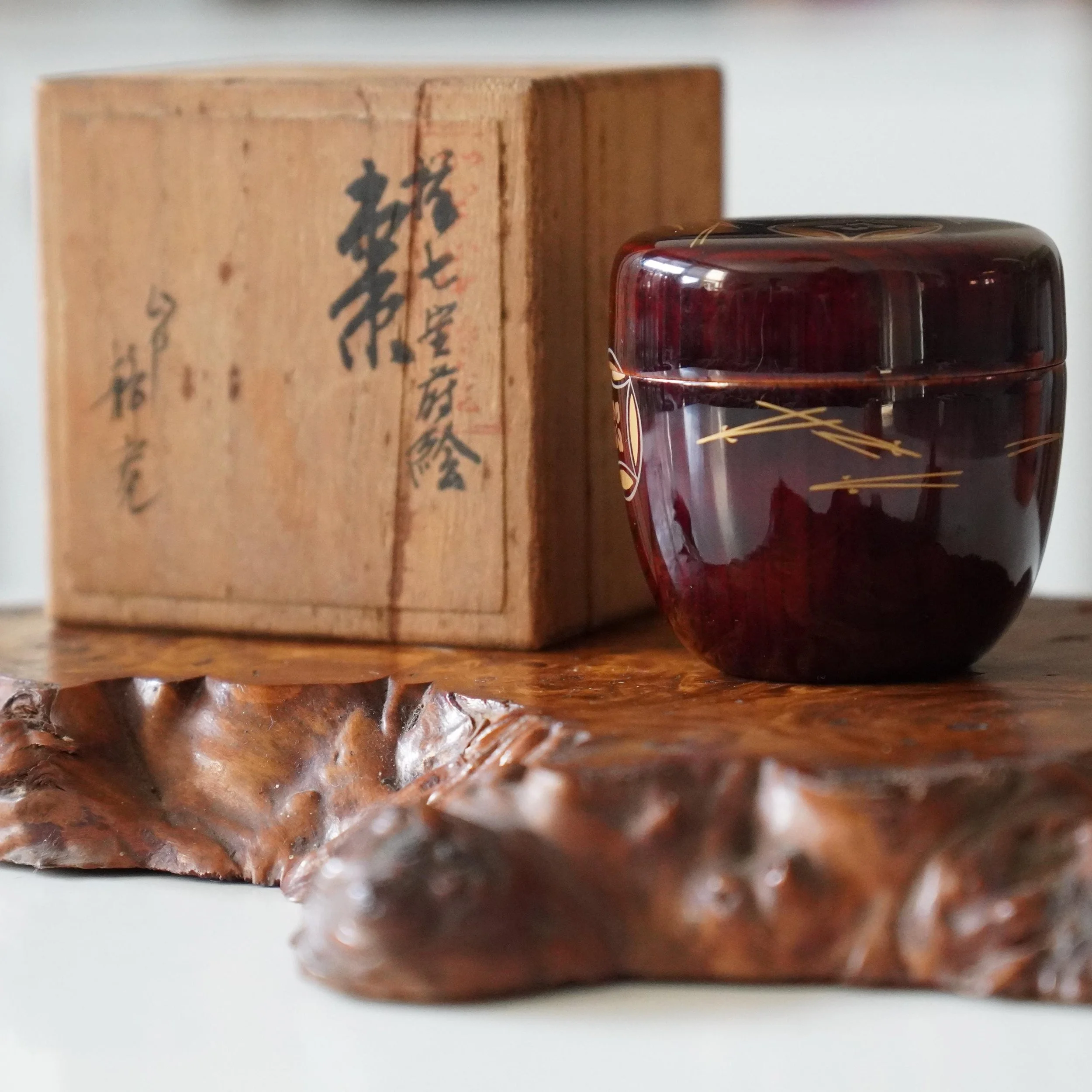
This natsume immediately caught my eye with its deep, rich red hue and the incredible luster of the authentic Urushi lacquer.
I acquired this piece in Kyoto, though its roots lie in the prestigious Kaga region. This is an area world-renowned for producing Japan’s finest lacquerware. It was crafted by the master Sakashita Yūhō during the Showa period.
A beautiful detail to add is that the Tame-nuri technique used by Yūhō actually "lives" with you. Because the top layers of lacquer are semi-transparent, they gradually become clearer over decades of exposure to light. This means the wood grain and the deep red glow you see now will become even more vivid twenty years from today.
What makes this find truly special is that it remains tucked away in its original wooden tomobako box, which proudly bears the Kaga name: 加賀.
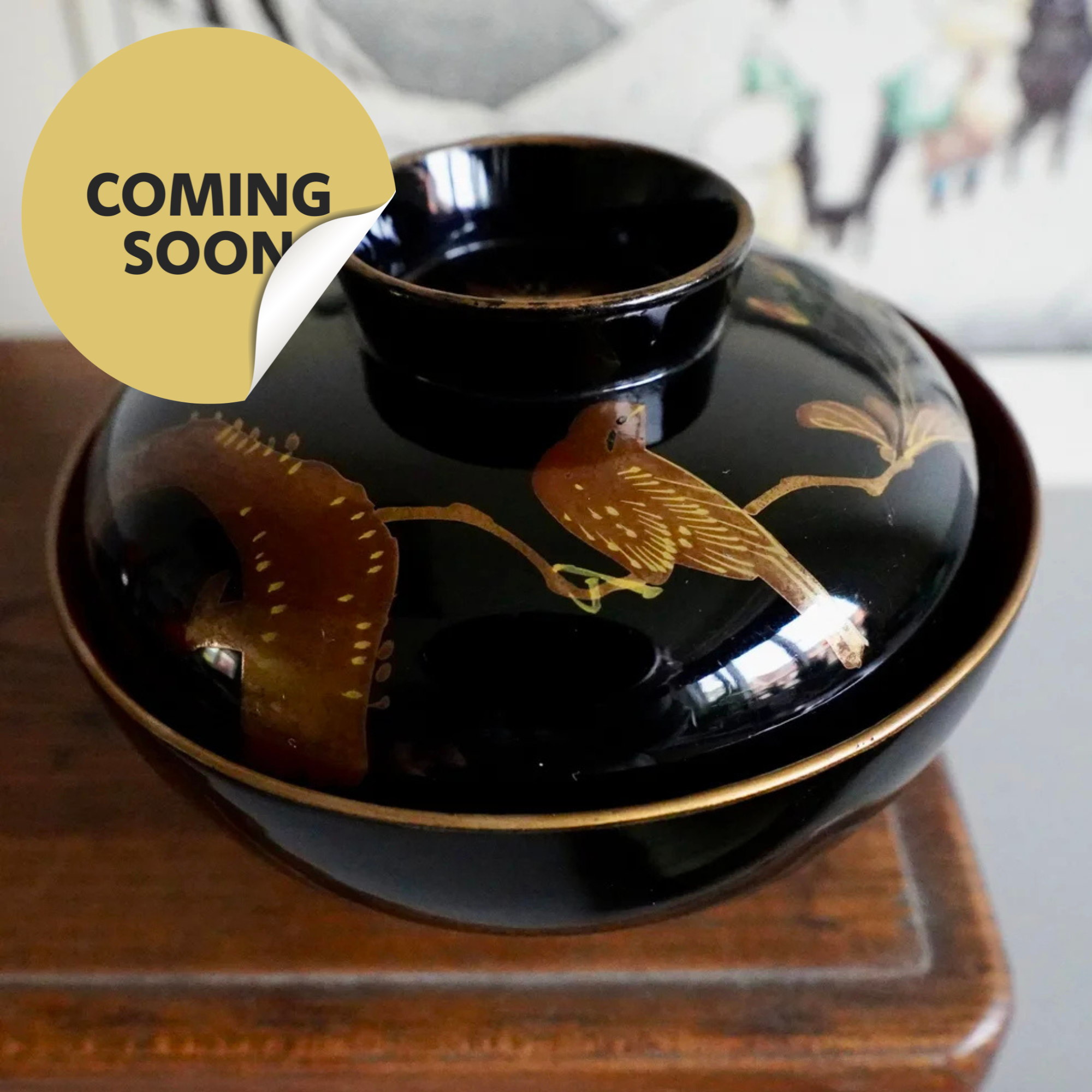
I work through my finds in small batches as each piece takes time to research, photograph and write properly. But some items are too good to sit invisible in the backlog, and if you have been looking for a set of three wooden lacquerware bowls with their lid and a gorgeous golden bird print, I want you to know this one exists.
A set of three vintage Japanese shikki lacquerware bowls. The exterior is finished in a high-gloss black urushi lacquer that provides a reflective surface. Each piece is adorned with subtle maki-e work in gold, featuring bird and tree patterns. The interior reveals the organic texture of the wood with a warm, red-toned finish.
Material: Authentic black urushi lacquer and gold maki-e. These items remain in exceptional vintage condition, retaining their deep luster and the clarity of the gold decorations. They have been preserved with great care through the years.
The full listing, photographs and price will follow. Want to know the moment it goes live? Scroll down.
👇
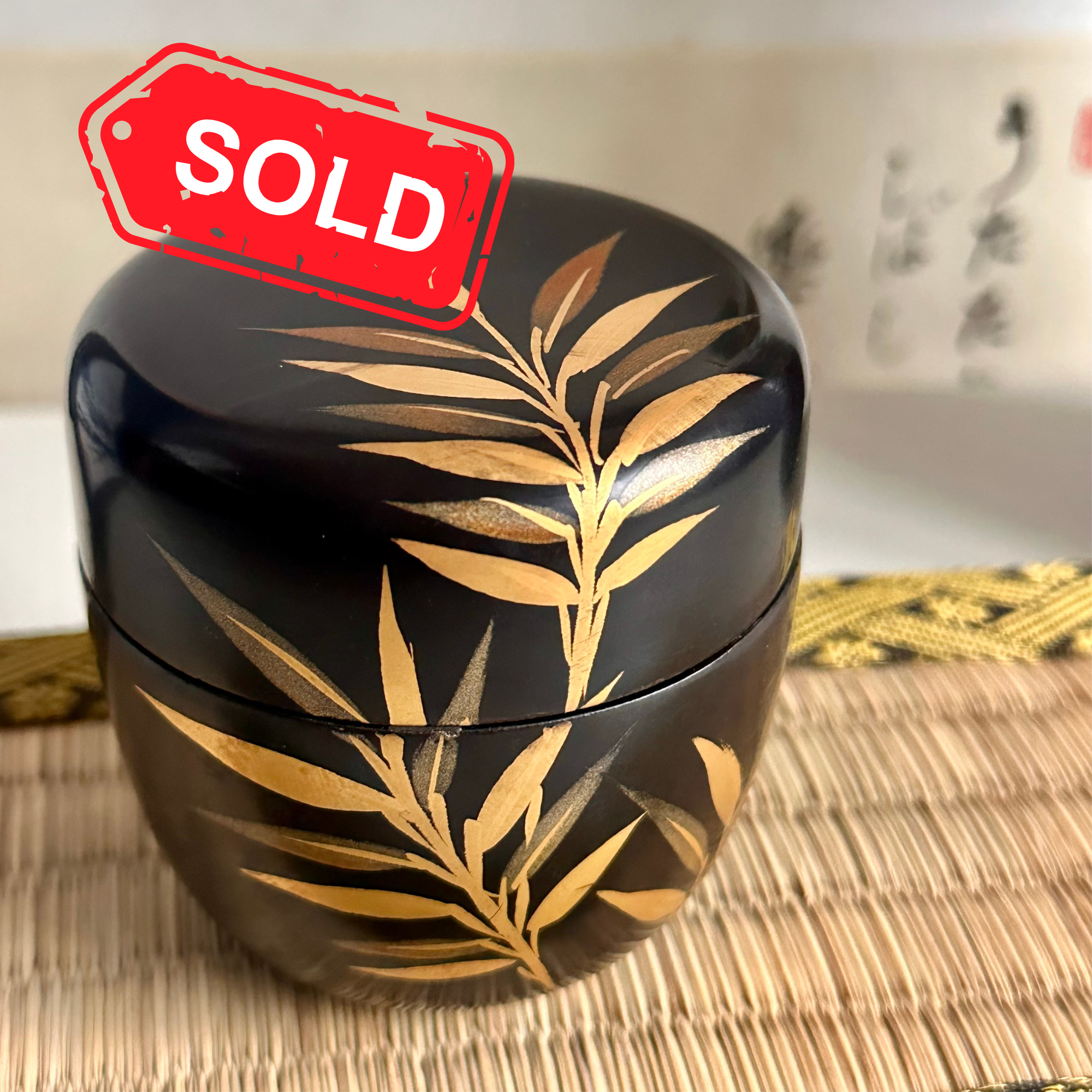
Notice: This natsume has found a new home. If you are looking for something similar, scroll down.
Item details
This lovely antique Japanese Natsume (matcha caddy) is a piece of history with a soul. Sourced in Okayama and dating back over 90 years, it carries the graceful character of a long life lived at the heart of the tea ceremony.
The caddy is finished in deep, midnight-black Urushi lacquer. The lid and sides are richly decorated with an intricate floral and leaf motif using the highly prized Maki-e technique. In this traditional process, fine gold powder is delicately sprinkled into wet lacquer, creating a shimmering, textured design that has stood the test of time.
Whether you are a practitioner of the tea ceremony or simply love a mindful tea moment, this natsume brings a touch of old-world Japan to your ritual. Very nice find for a matcha lover who appreciates the beauty of wabi-sabi. The Japanese aesthetic of finding beauty in imperfection and age.
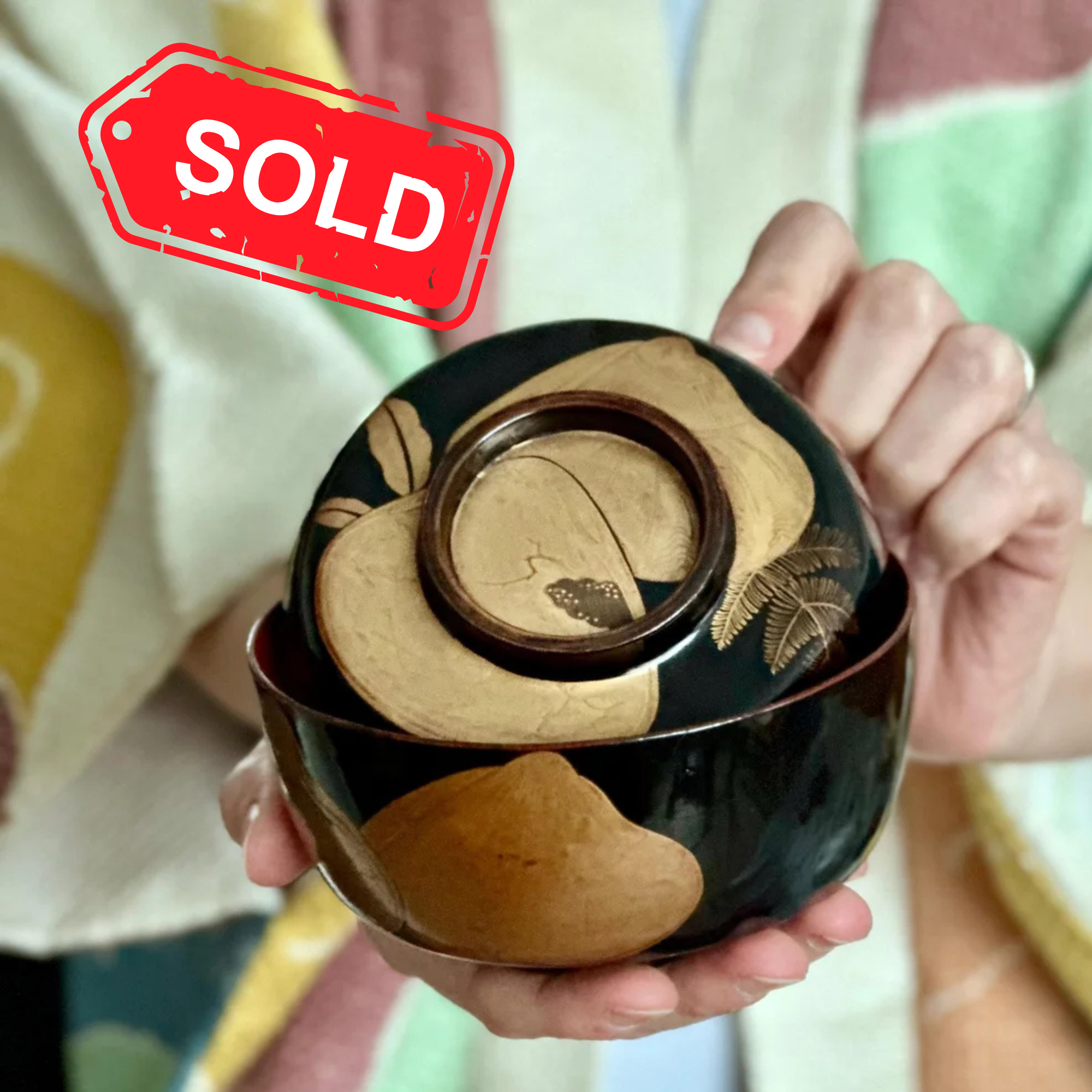
These lovely owan have found a new home. If you are looking for something similar, scroll down.
A stunning trio of traditional Japanese lacquerware bowls (shikki) that carry nearly a century of history. These elegant covered bowls come from Okayama and showcase the timeless beauty of Japanese craftsmanship.
The deep, glossy black lacquer finish is absolutely mesmerizing - that mirror-like shine that only comes from authentic urushi (Japanese lacquer). Each bowl features delicate gold leaf decoration depicting bamboo or leaf motifs, applied using traditional maki-e technique. The lids fit perfectly, and the natural wood grain peeks through the warm honey-colored interior.
Details
- Set of 3 nesting bowls with lids
- Diameter: 12 cm each
- Height: 8 cm each
- Black urushi lacquer with gold leaf maki-e decoration
- Natural wood base with warm honey-toned interior
Remarkable condition for their age. The lacquer still has that deep shine, and the gold leaf decoration remains vibrant. These have been lovingly cared for over the decades.
Notice: This natsume has found a new home. If you are looking for something similar, scroll down.
Item details
A black urushi lacquer natsume with maki-e crane decoration, Japan, ca. Shōwa period (1926 to 1989). The rounded body and domed lid are lacquered in deep mirror-black, with two cranes painted in gold across the surface using the classic maki-e technique, in which gold powder is applied to the wet lacquer layer by layer. The wings are detailed and the composition follows the full curve of the form.
The natsume is the tea caddy used in Japanese tea ceremony to hold thin matcha for usucha preparation. This type, in black lacquer with crane motif, sits within a long tradition of auspicious tea utensils. The crane (鶴, tsuru) is one of the most enduring symbols in Japanese decorative arts, associated with longevity and good fortune.
Items you may also like
Questions before you buy?
Since my items are one-of-a-kind pieces, I want to ensure they reach you perfectly.
Questions about the history or condition?
Need a custom shipping quote or shipping outside the EU?
Prefer to see more detailed photos or a video?
Reach out to me directly. I'm here to help you find the perfect piece for your home.
✉️ hello@kaikoandco.com
💬 Instagram DM: @bykaikoandco
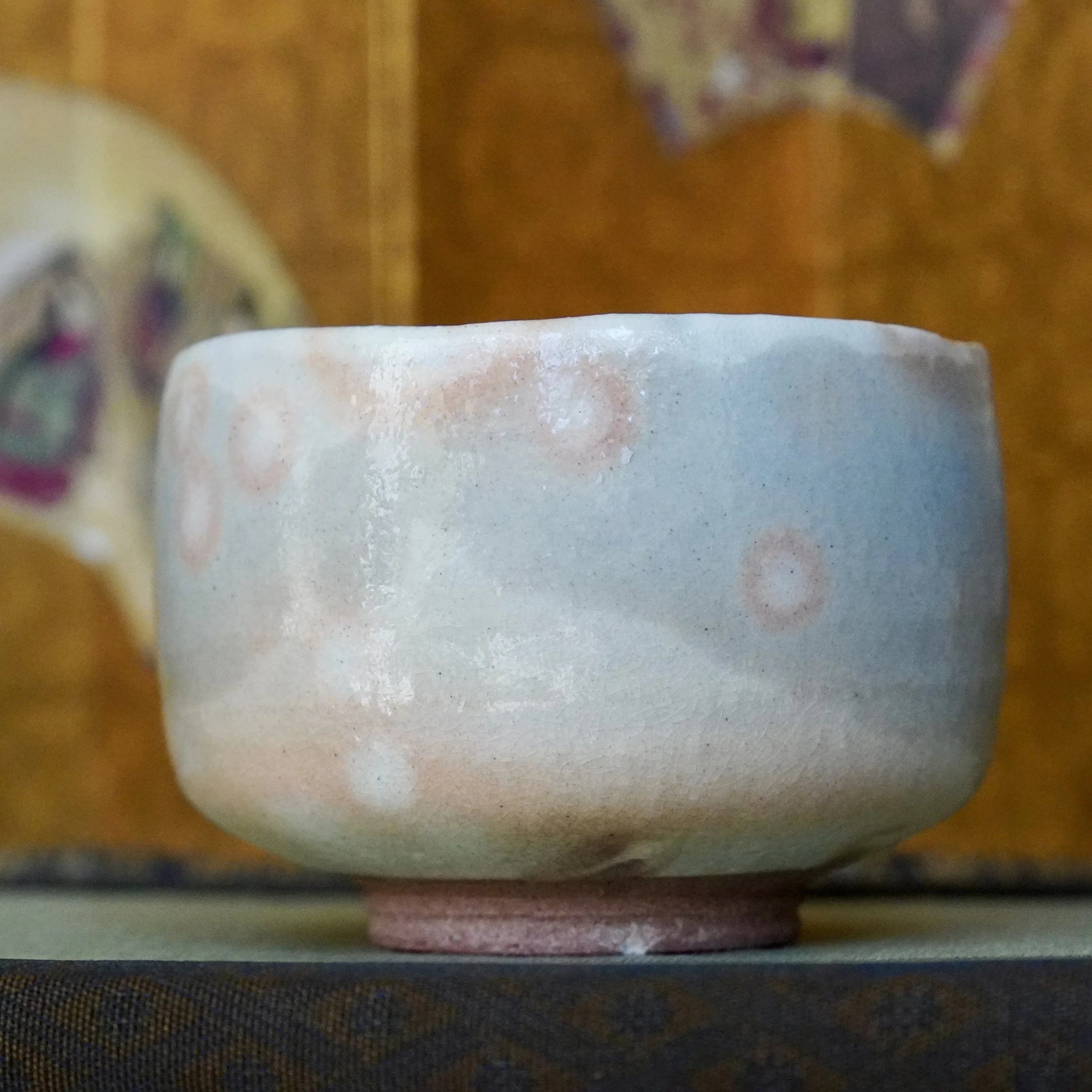
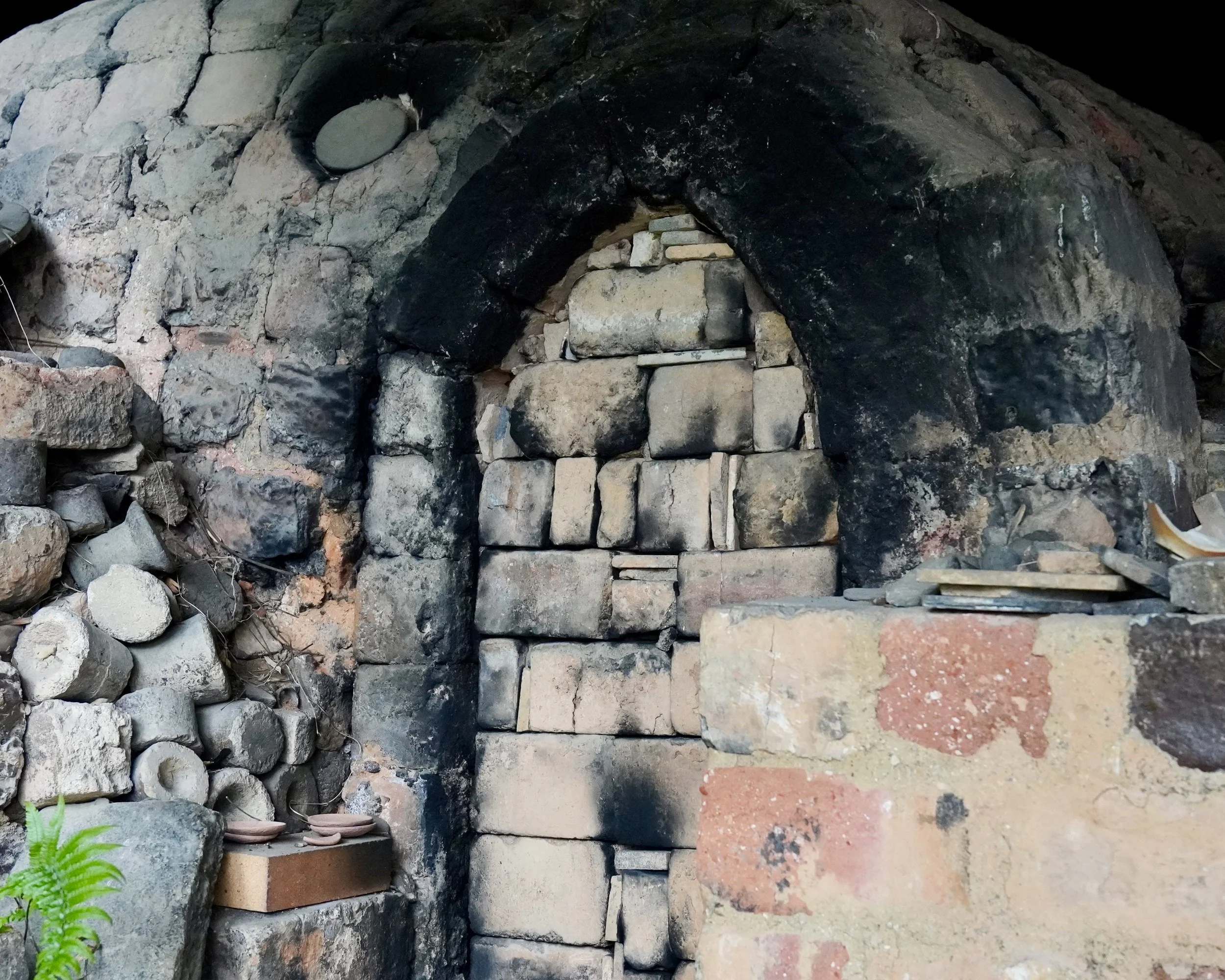
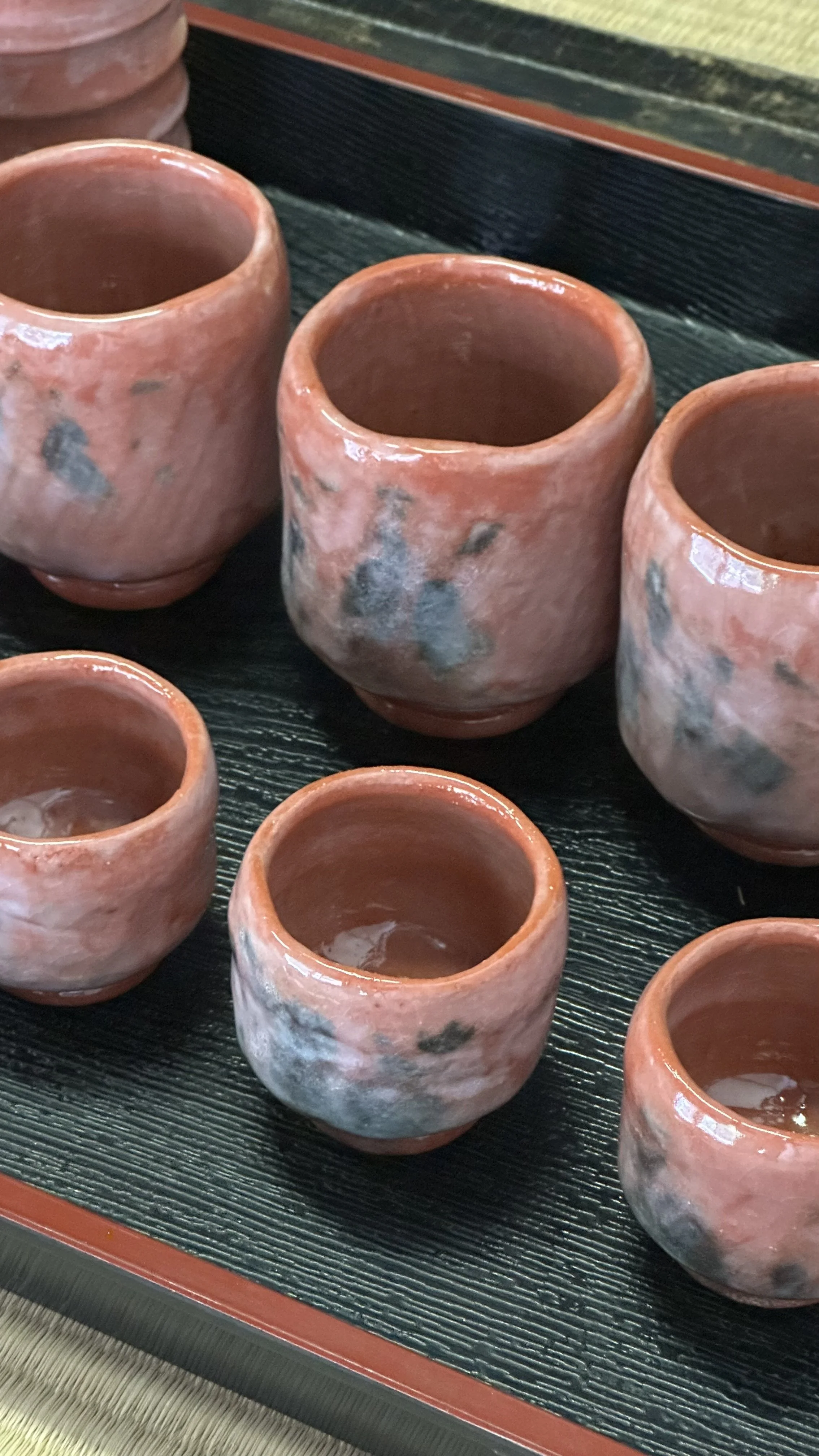
I filled a Hagi chawan with water and watched what happened. Within a minute, the glaze showed exactly how it will change with years of tea, and four other pieces revealed just how differently that process can unfold, starting long before the kiln, in the clay itself.
Three generations under one roof, a blue glaze that surprised me, and a cat I bought on the way out. One of my favorite mornings in Hagi, at the Okada kiln.
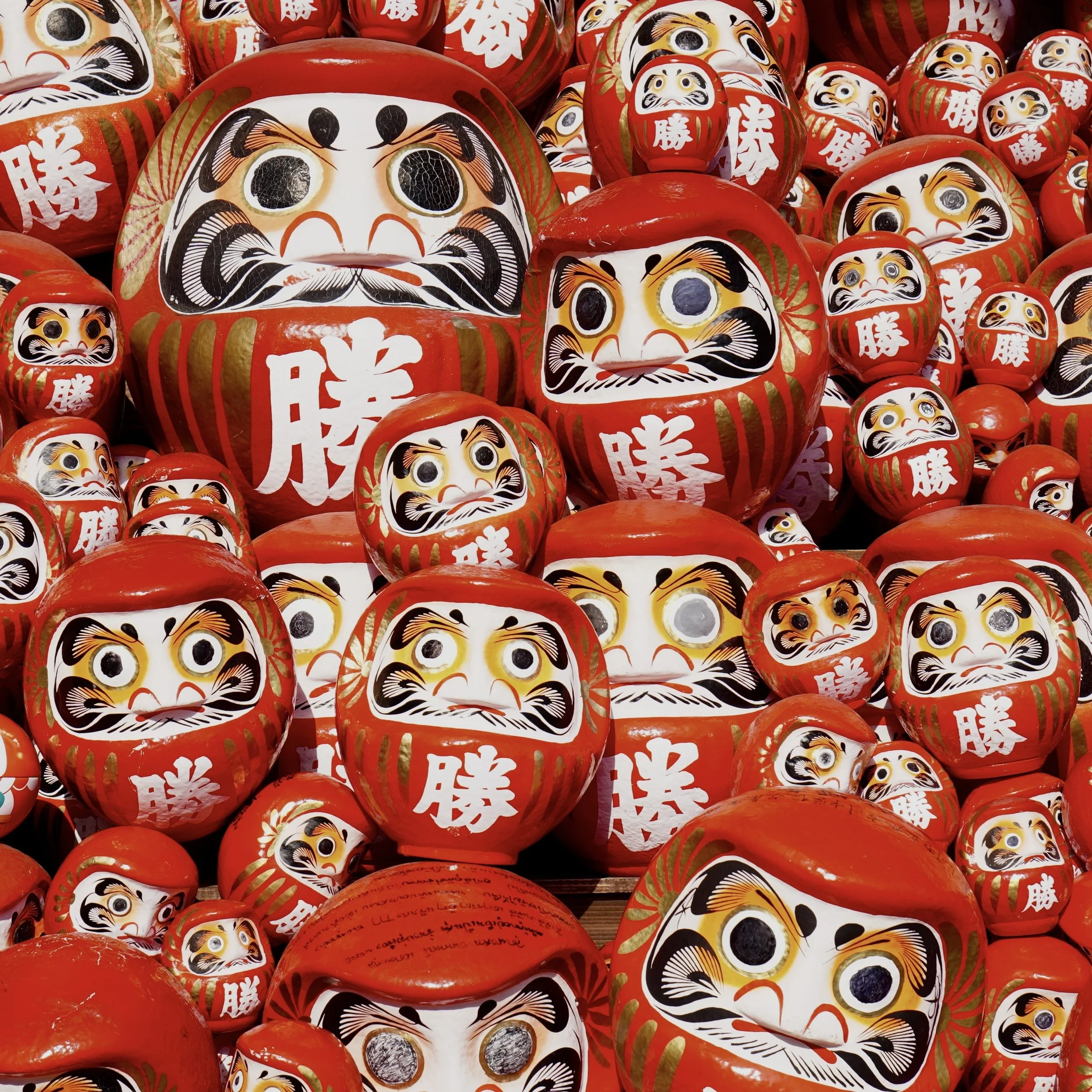
Perched in the forested hills of Minoh, Katsuo-ji is known throughout Japan as the Daruma Temple, thousands of red daruma cascading down its steps, each one carrying someone's wish. A visit that changed how I see the wooden daruma in our own collection.
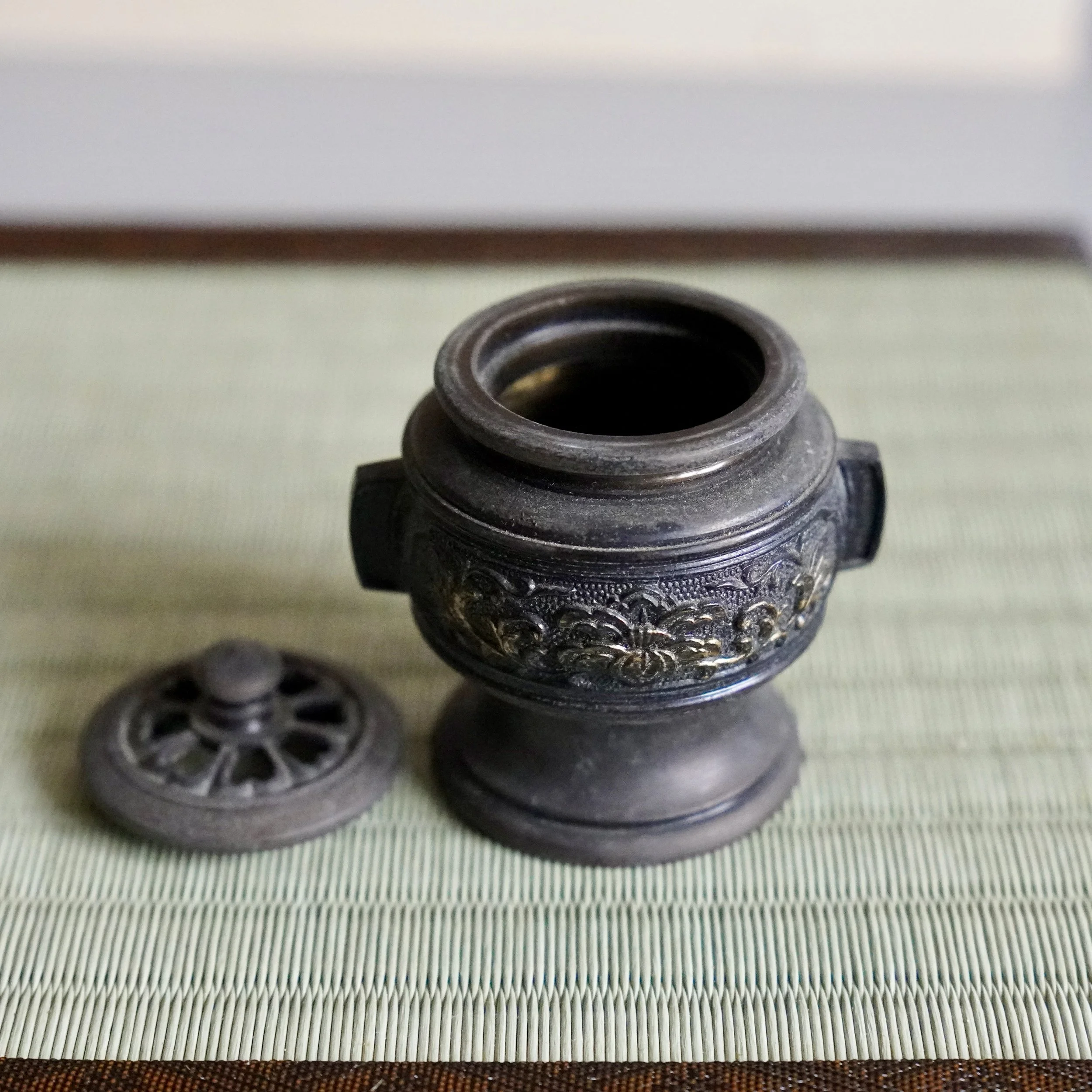
Every temple I visit in Japan has the same quality of quiet, and it starts with three things: scent, sound, and a presence that holds the space. Here is how to bring that same intention home, starting with a single kōro and the concept of ma.
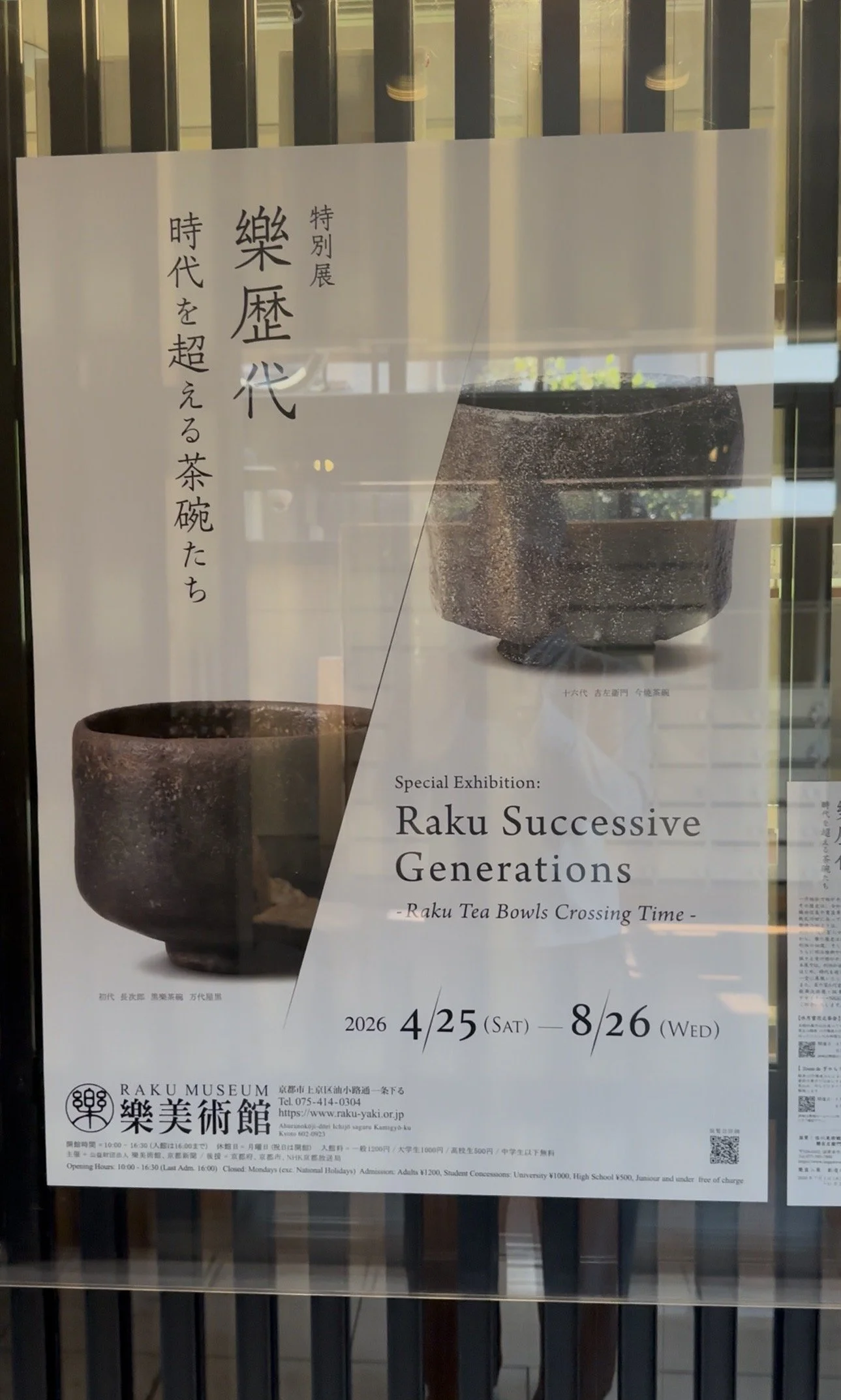
Inside the Raku Museum in Kyoto during the Raku Successive Generations exhibition. Chawan from Chōjirō to the 16th Kichizaemon, a quiet garden, and one idea about tradition that stayed with me.
Urushi looks fragile and behaves like the opposite, until it meets a sunny windowsill or a winter radiator. Here is what actually damages lacquerware, what does not, and the handful of habits that keep a piece looking the way it did the day it was finished.
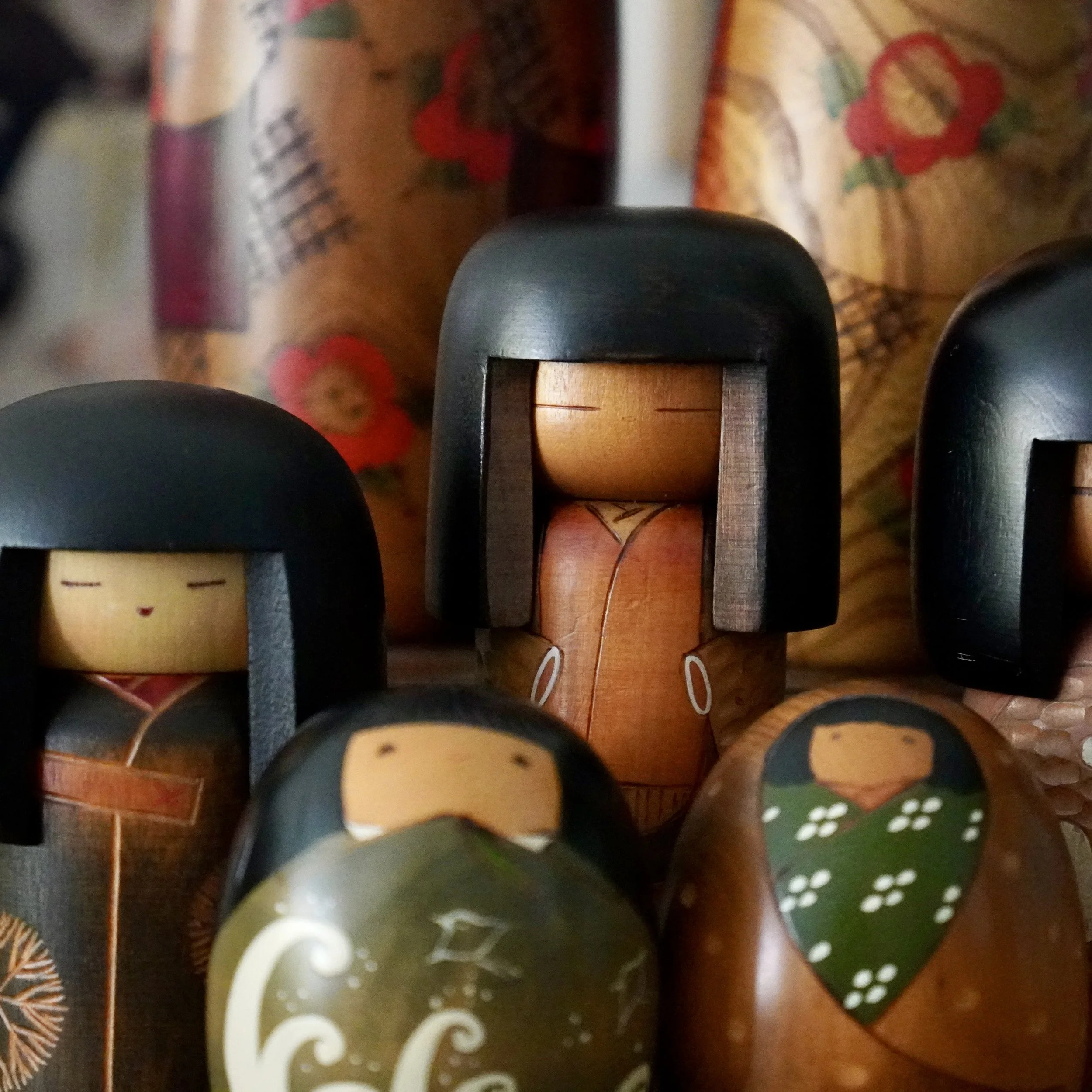
A kokeshi asks for very little once it has found the right spot. Grouped in threes on a shelf, alone on a windowsill out of direct sun, or standing next to something entirely unrelated, like a stack of books or a single dried branch. Here is what I have learned about placing them so they actually get looked at, instead of disappearing into a room.
Every ceramic piece I bring home has already been through decades of hands before mine. A chawan changes colour with tea over the years, a vase collects mineral marks if you let it, and neither of those things is damage. Here is what actually matters when you look after one.
A week in the heartland of kokeshi: Fukushima. From climbing Mount Bandai before sunrise to studying the unique facial expressions in the work of masters like Ichiro and Sato Fumio. Discover how the landscape and deep-rooted woodcarving traditions shape these authentic vintage treasures.
What draws you to a kokeshi is rarely the name on the base. It is the grain showing through the dark wood, the mark the tool left, and the two lines that somehow become a face. A close look at how makers like Usaburo and Sansaku Sekiguchi work with and against the wood itself.
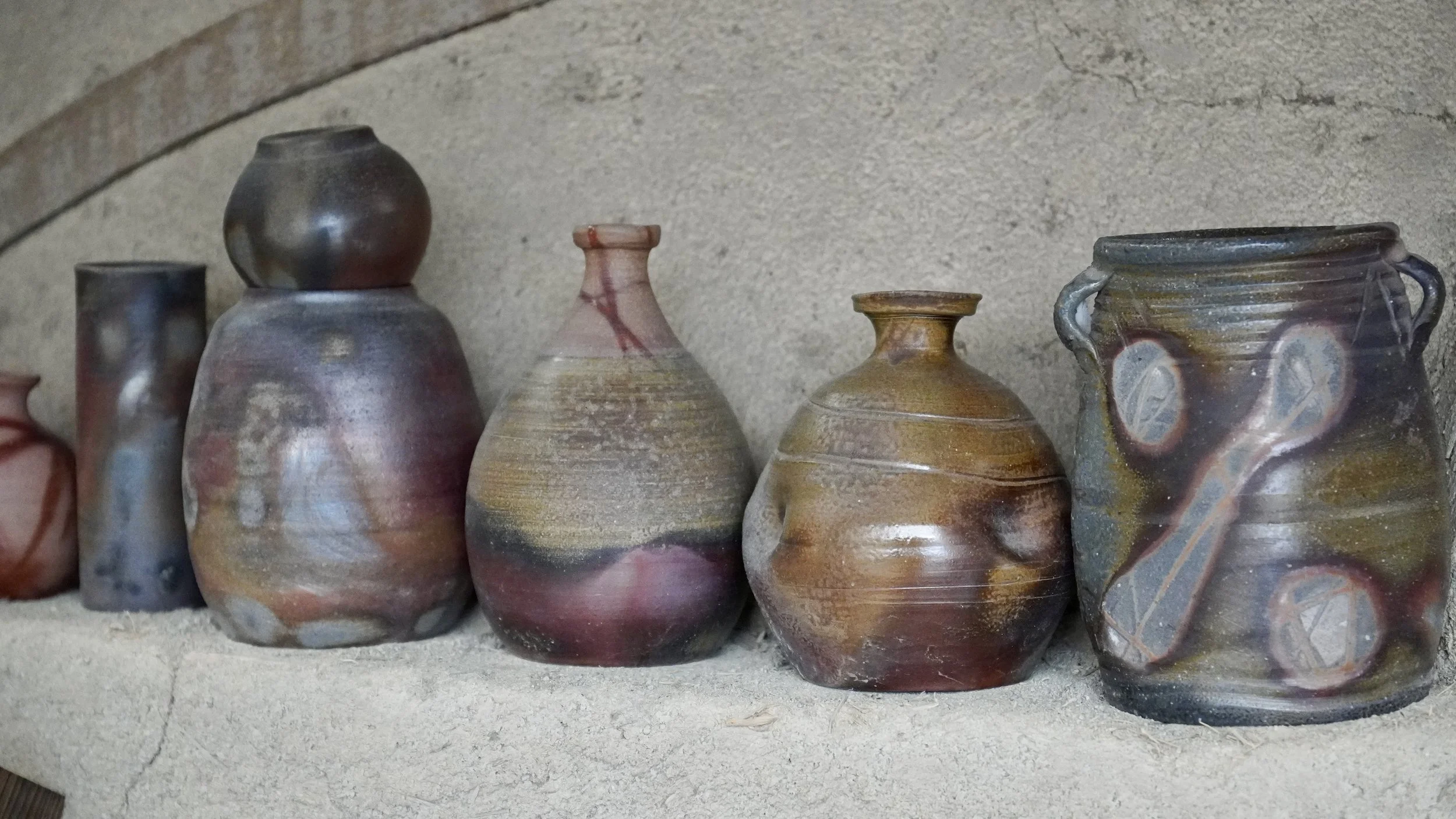
Bizen-yaki has no glaze. Every color, every mark, every surface effect is made in the kiln by fire, ash, and position. This guide explains what hidasuki, goma, sangiri and shiro-Bizen actually are, how they are made, and what to look for when you buy.
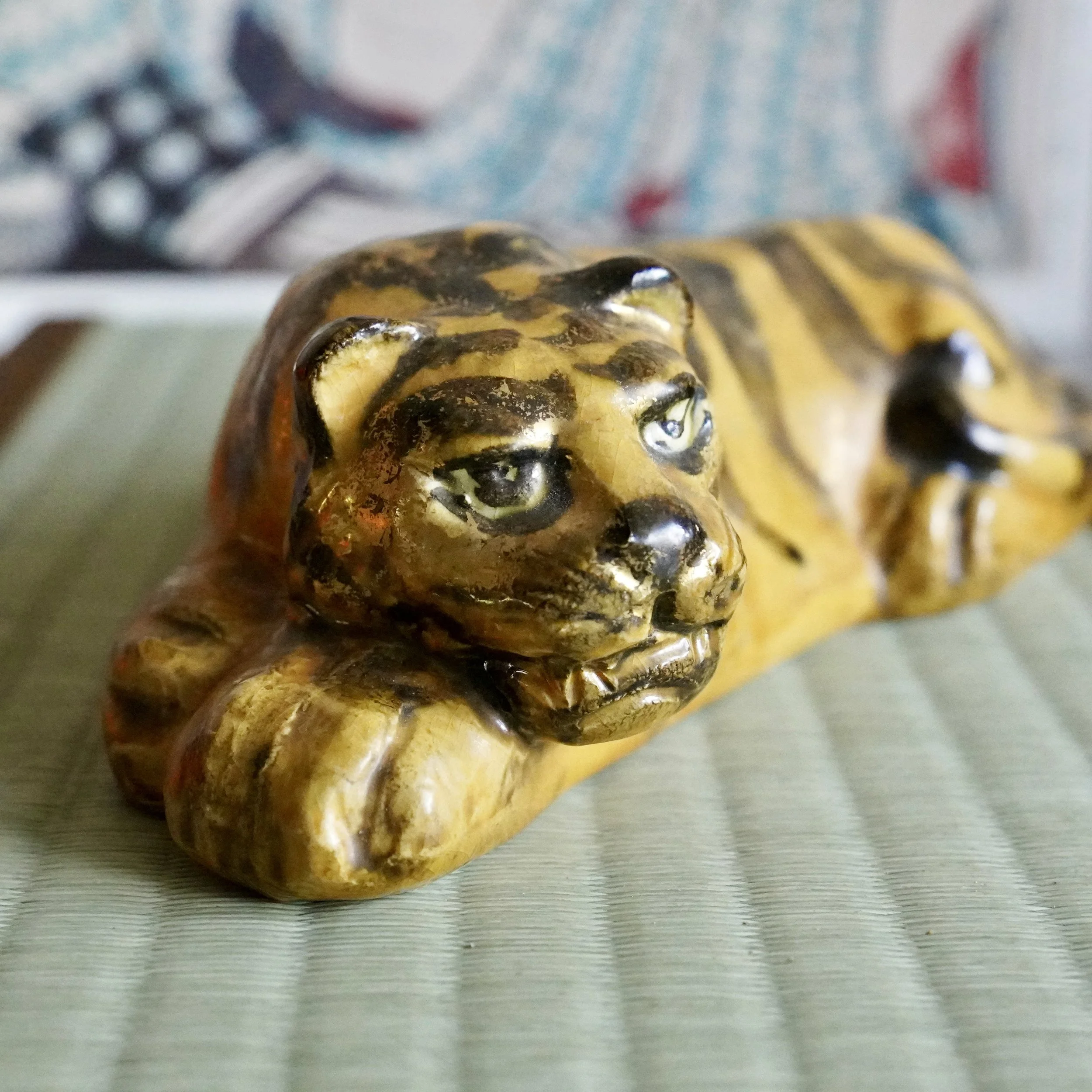
There is a small tiger on my desk with gold worn down to almost nothing on its ears and shoulders. It was made for a Year of the Tiger, in Kyoto, by a kiln lineage going back to 1771. The wear is not damage. It is exactly what the gold was always going to do.
Behind the curtain at Raku Studio Waraku in Kyoto's Gion district. How aka-raku and kuro-raku tea bowls are hand-formed, fired, and finished with charcoal by 8th generation master Kawasaki Motoo. A sourcing diary entry from KAIKO&CO.
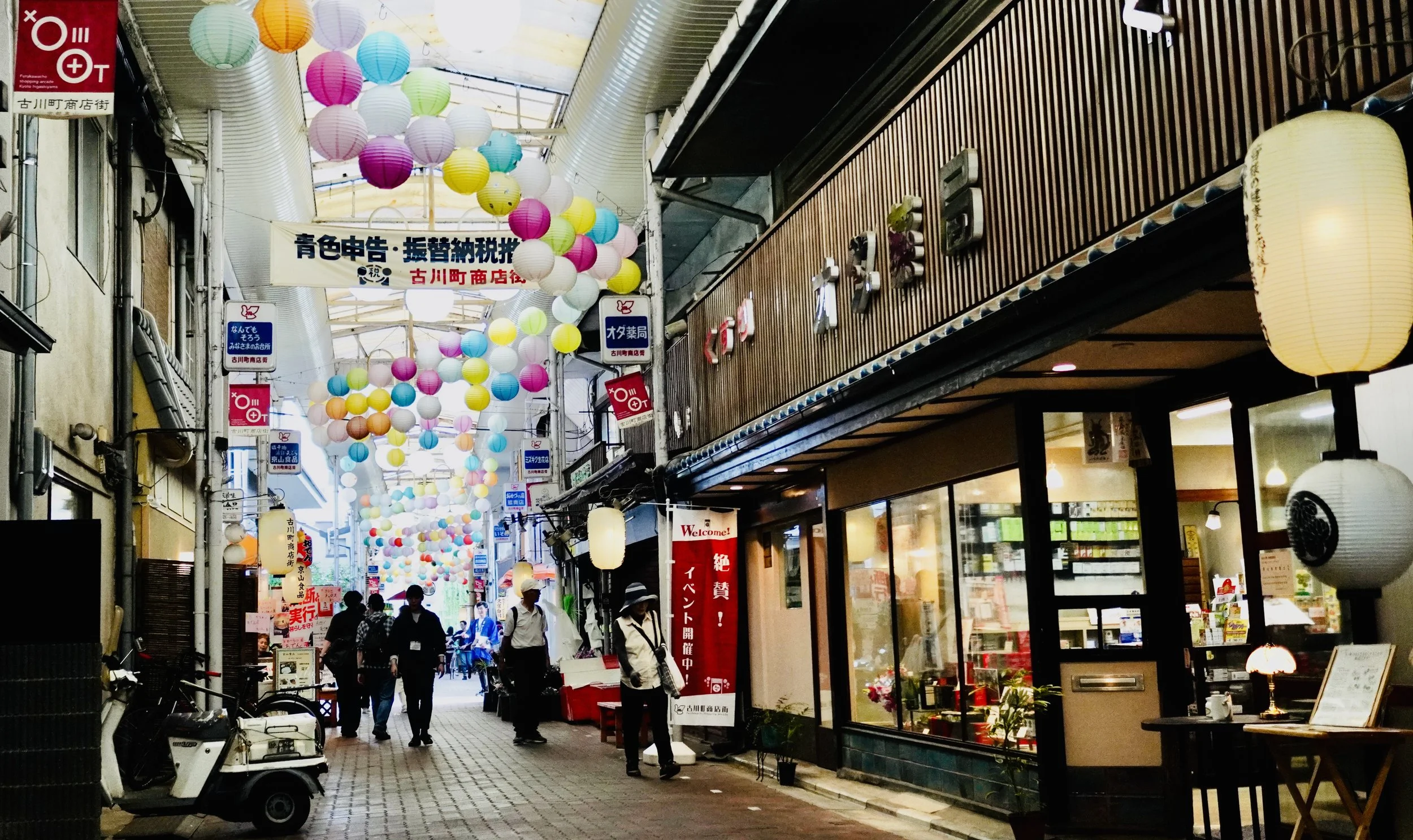
Furukawacho Shotengai in Higashiyama: an arcade frozen in the 1970s, a kimono specialist with six haori I had not expected to find, and a folder of 1895 Kyoto lithographs from an antique bookstore tucked behind a curtain. Day three of my Sourcing Week in Japan series in Kyoto and Okayama.
An antique market stall on temple grounds in Tokyo's Yanaka cat town, a lacquered doll pair from the ‘50’s with a story about a homesick bride, and a cat print.
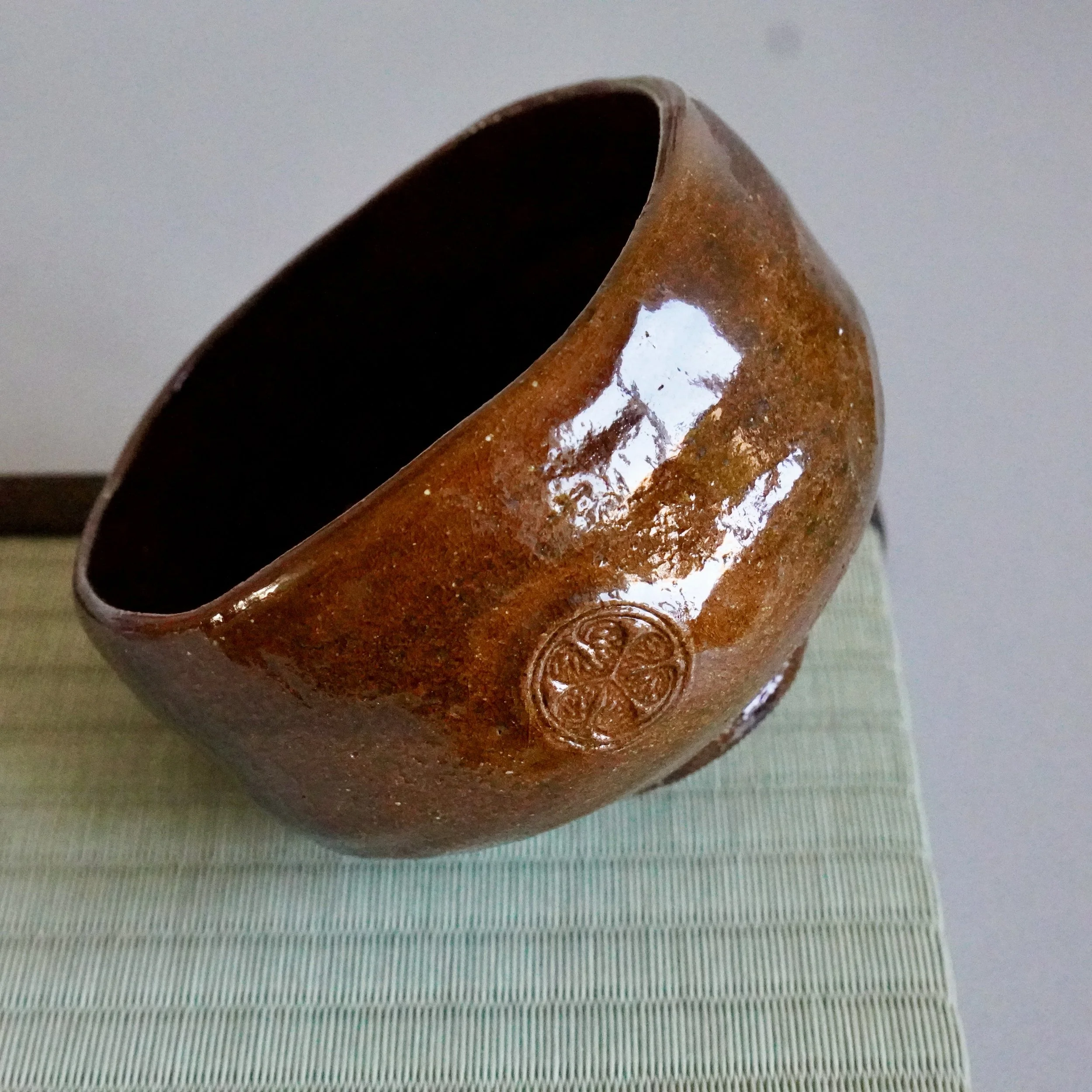
A Kyoto potter stayed behind in Kanazawa in 1666, and the Raku family sent a glaze north with him, one built for the cold. Eleven generations later, that same amber glaze still catches the light.
The first thing you see is the orange. The high-contrast vermillion that has been Japan's colour of celebration for centuries. Against it, an Okina mask appears in gold on each lid: rendered as an object, complete with the silk cords used to tie it to an actor's face, as if it has just been set down between acts.
They are “owan”, the lacquered covered bowls used at every formal Japanese table: New Year's meals, kaiseki, wedding banquets. The combination of vermillion exterior and black interior is a classic of the form. This pair carries maki-e decoration of Okina, the most sacred figure in the Noh repertoire, and dates from somewhere between the late Meiji and early Shōwa periods.