
Three objects for your Japanese meditation corner, and why each one matters
The covered corridor at Heian Shrine, Kyoto. The kind of considered space this post is about.
Every time I step into a Japanese temple, before I see anything, I smell it. Incense that has been burning in the same walls for decades, sometimes centuries. There is a particular quality to that scent that I have never found anywhere else. It is not perfume. It is time.
What strikes me most about Japanese culture, after years of sourcing trips through Kyoto, Osaka, and quieter places I will not name, is how deliberately it arranges space for attention. Not for productivity, not for aesthetics, but for the kind of quiet that lets you arrive somewhere. A tea room. A temple garden. A tokonoma alcove with one scroll and one stem of something seasonal. These are not decorative choices. They are invitations to slow down.
You can build something like that at home. Not a replica of a Japanese temple, but a corner that carries the same intention: this is different from the rest of the day. Here, things are done with care.
Start with the concept of ma
Before you place anything, understand ma (間). It is the Japanese concept of negative space: the meaningful pause between notes, the emptiness between objects, the silence that gives sound its shape.
A meditation corner with too many objects has no ma. The eye has nowhere to rest and neither does the mind. Leave space around each object. Leave some of the surface empty. That emptiness is not decoration. It is function.
This is also why the corner does not need to be large. A single shelf works. A low wooden tray on the floor. A windowsill if the light is right. The size is not what matters. The intention is.
A kōro like this one opens the session, long before you sit down.
The kōro: the object that opens the session
Scent reaches the nervous system faster than any other sense. Before you sit, before you close your eyes, lighting incense signals the body that something is changing. This is different from what came before.
A kōro is a Japanese incense burner, ceramic or bronze, designed to hold burning incense safely while releasing the smoke upward. Some are simple and unglazed, three-legged and spare. Some have pierced lids with animal finials: a lion, a komainu, a dragon. The ones I source in Japan are old, which means they have already absorbed decades of incense smoke and use. That history is part of what they bring into a room.
One kōro is enough. It does not need to be large. Light it before you sit, and let the scent do what it has been doing in Japanese temples for a thousand years.
One strike, then let go completely. That is the whole instruction.
A sound instrument: marking the threshold
Every formal practice in Japan, whether Zen meditation, temple ceremony, or tea, begins and ends with sound. A bell, a drum, a bowl: something that rings and then fades, marking the boundary between ordinary time and the time of practice.
In your corner, one sound instrument is enough. Choose based on what the sound does to you personally. A deep singing bowl fades slowly and pulls you inward. A hand bell is sharper and more immediate, a clear signal rather than an invitation. A mokugyo, the wooden fish drum, grounds you in rhythm if you sit with a chant.
You do not need to know which is right before you try. Hold one. Strike it. Listen until the sound is gone. Your body will tell you.
A komainu like this one. Guardian at the shrine gate, or on a shelf at home, the intention is the same.
Something that holds the space
In Japanese homes, a meditation corner or butsudan always has a figure or object that holds the space. Not decoration: a presence.
This can be a lucky god. Hotei for contentment, his belly full and his expression completely at ease. Daikoku for abundance. Benzaiten for creativity and flow. Or a komainu, the guardian lion-dog found at the entrance of Shinto shrines and sometimes on kōro lids, warding off what should not enter. Or simply a ceramic figure that means something to you personally, that you look at before you sit and that looks back.
The Japanese do not think of these as superstition. They are a way of stating what the space is for. The object carries the intention you bring to it.
How to begin
Start with a kōro and a stick of incense. Light it before you sit down each morning. That is the whole practice to begin with.
When that feels established, add the sound instrument. Then, if you want it, the figure that holds the space. Build slowly. Leave the surface more empty than full. Come back to the same corner every day and let it become the place where you return to yourself.
And if the corner is small, that is fine. More than fine, actually.
In Japan, enormous temple complexes stand alongside tiny hokora, small roadside shrines sometimes no bigger than a shoebox, tucked into a wall, beside a tree, at the corner of a street. Both are tended. Both are taken seriously. Both receive the same incense, the same small offering, the same moment of pause.
Your corner does not need to be a temple. It needs to be yours. Used every day, with attention. That is what makes it sacred.
Restraint is not minimalism for its own sake. It is the understanding that each object needs space to be seen, and that the eye, like the mind, needs somewhere to rest. If you are buying things to fill the corner, you have missed the point. The corner is not for display. It is for return.
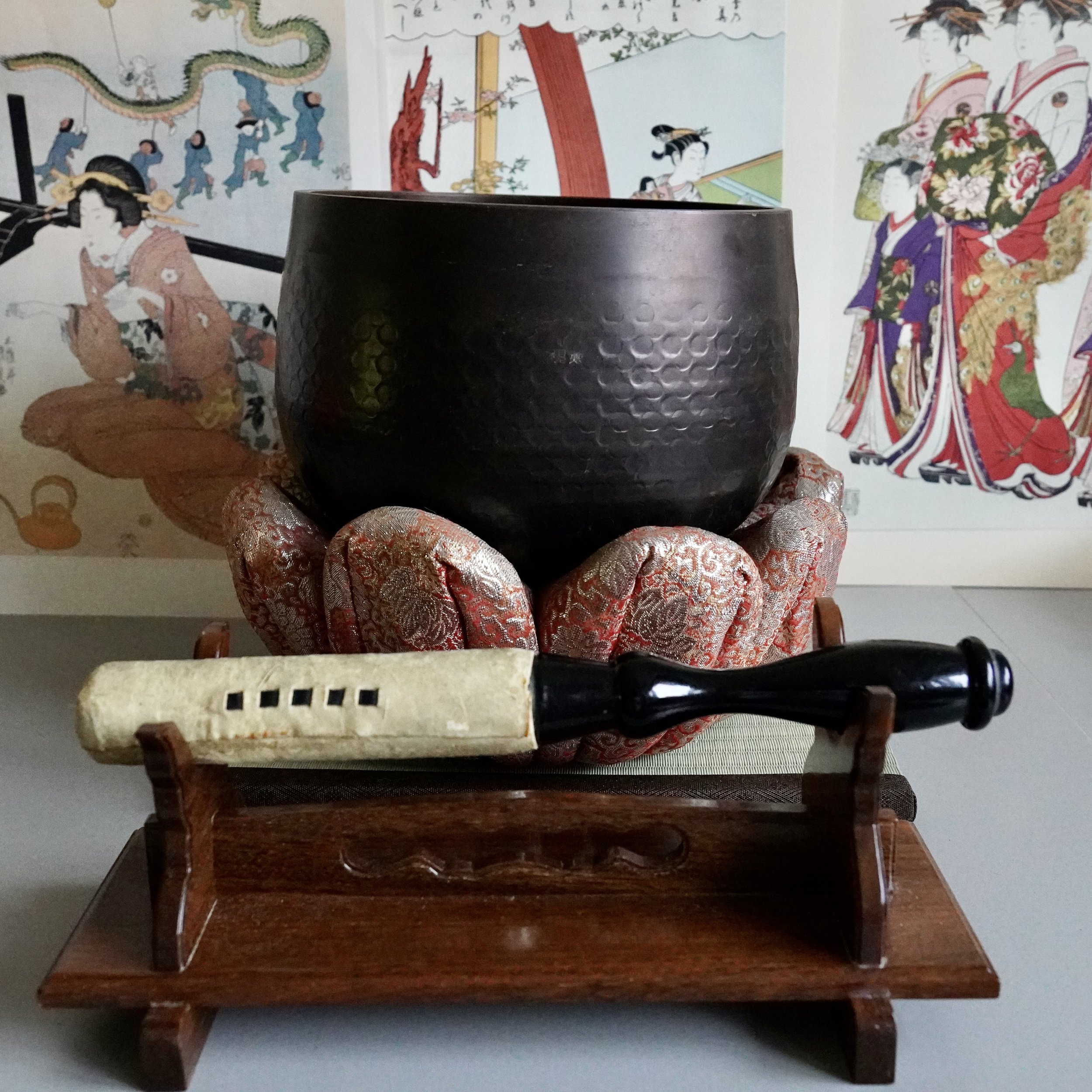
Most orin you come across fit in one hand. This one does not. It takes up real space, dark bronze gone almost black in the low points and warm brown where the light lands, its whole surface alive with tiny hammered ripples that never quite repeat themselves. Rest your palm against it and the cold of the metal surprises you every time, heavier than a bowl this size has any right to be. You do not so much notice this piece as feel the room shift around it.
Strike it, and it does not simply ring, it opens. The tone spreads outward and keeps going, long past the point where a smaller bell would have already gone quiet, the kind of deep, unhurried resonance that once called a temple hall to attention rather than a single room to prayer. Turn it over and a stamped mark reads 堤製, signed by Tsutsumi, a name history has otherwise let go of. What remains is the sound itself, and the sense that whoever made this understood exactly what they wanted it to do to a room.
Read more about the objects for your Japanese meditation corner, and why each one matters in my journal.
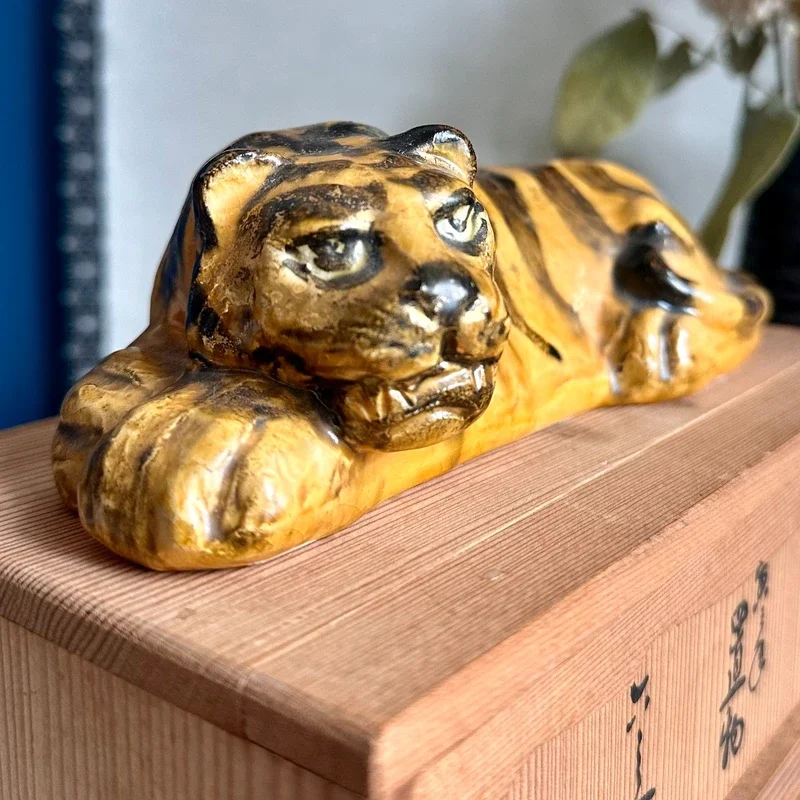
The tiger lies with its head turned toward you, one paw forward, the weight of the body settled. The glaze is warm amber with dark brown stripes, and the face is painted with enough specificity that you know exactly what kind of animal this is without needing to be told. It is not decorative in the way of a souvenir. It is a studied likeness. Something about the expression, slightly open-mouthed, the eyes directed outward, makes it feel more alert than resting.
Kiyomizu Rokubei VI (六代清水六兵衞, 1901 to 1980) came from a kiln lineage that had been making animal okimono as part of its output since the 18th century. Zodiac animals made at the Rokubei studio were considered collector pieces, sold at high-end establishments throughout Japan. This tiger is signed with the 六兵 personal name seal pressed into the base, and comes in its original tomobako inscribed 寅置物, tiger okimono. A piece likely made for a Year of the Tiger, most probably 1950 or 1962.
Read more about this tiger made for its own year and the kinsai gold Kyoto tradition in my journal.
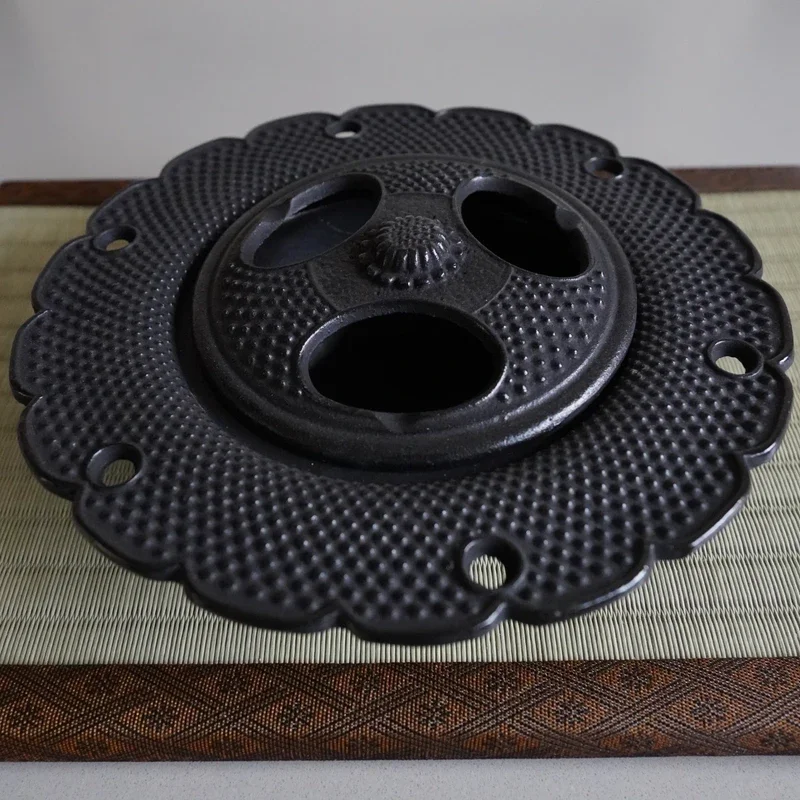
Nearly a kilogram of matte black Nambu cast iron, every surface covered in the arare dot pattern — the raised hailstone texture that has defined this craft tradition for centuries. This kōro sits low and wide, shaped as a chrysanthemum in full bloom, its scalloped outer edge giving it a silhouette that reads clearly from across the room. The three openings are proportioned with care against the flower form, and the raised bud at the centre draws the eye exactly where the smoke will rise.
This piece was made by Iwachu, the Morioka foundry established in 1902 that became the definitive name in Nambu tekki. Their 岩鋳 seal on the base is a guarantee that has meant something for over a century: the piece is what it says it is, made the way it was always made, in the ironworking tradition that took root in Iwate Prefecture under the Nanbu clan lords of the Edo period and received National Traditional Craft designation from the Japanese government in 1975. A Shōwa-period Iwachu kōro in this condition, apparently unused, is not something that turns up often.
Read more about the objects for your Japanese meditation corner, and why each one matters in my journal.
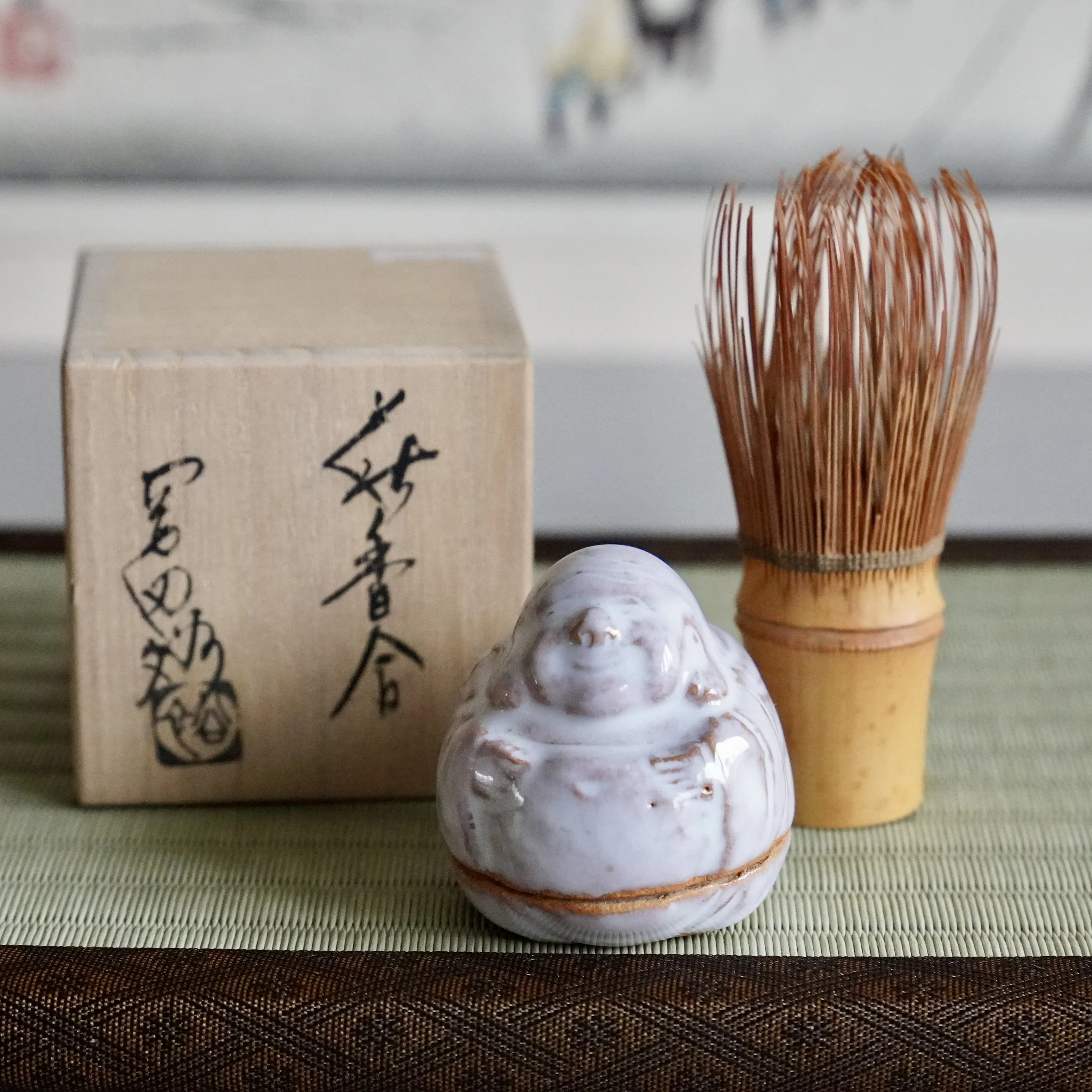
Some objects are immediately recognizable for what they are. This one is. The moment you lift the lid, you know exactly who is sitting in your hands: Hotei, the laughing god of contentment, belly forward, expression completely at ease.
Produced at the Seiun-zan kiln in Hagi, Yamaguchi Prefecture, by Okada Yutaka: eighth-generation master of a kiln that has been firing continuously since the Edo period, and holder of the Yamaguchi Prefecture designation for Intangible Cultural Property in Hagi-yaki.
This is not a decorative object made for the tourist market. It is a serious tea ceremony piece with full provenance.
There's a whole philosophy behind why a kogo is left open after use. Read it in my journal.
Plus, I spent a morning at this specific Hagi kiln, read about it here.
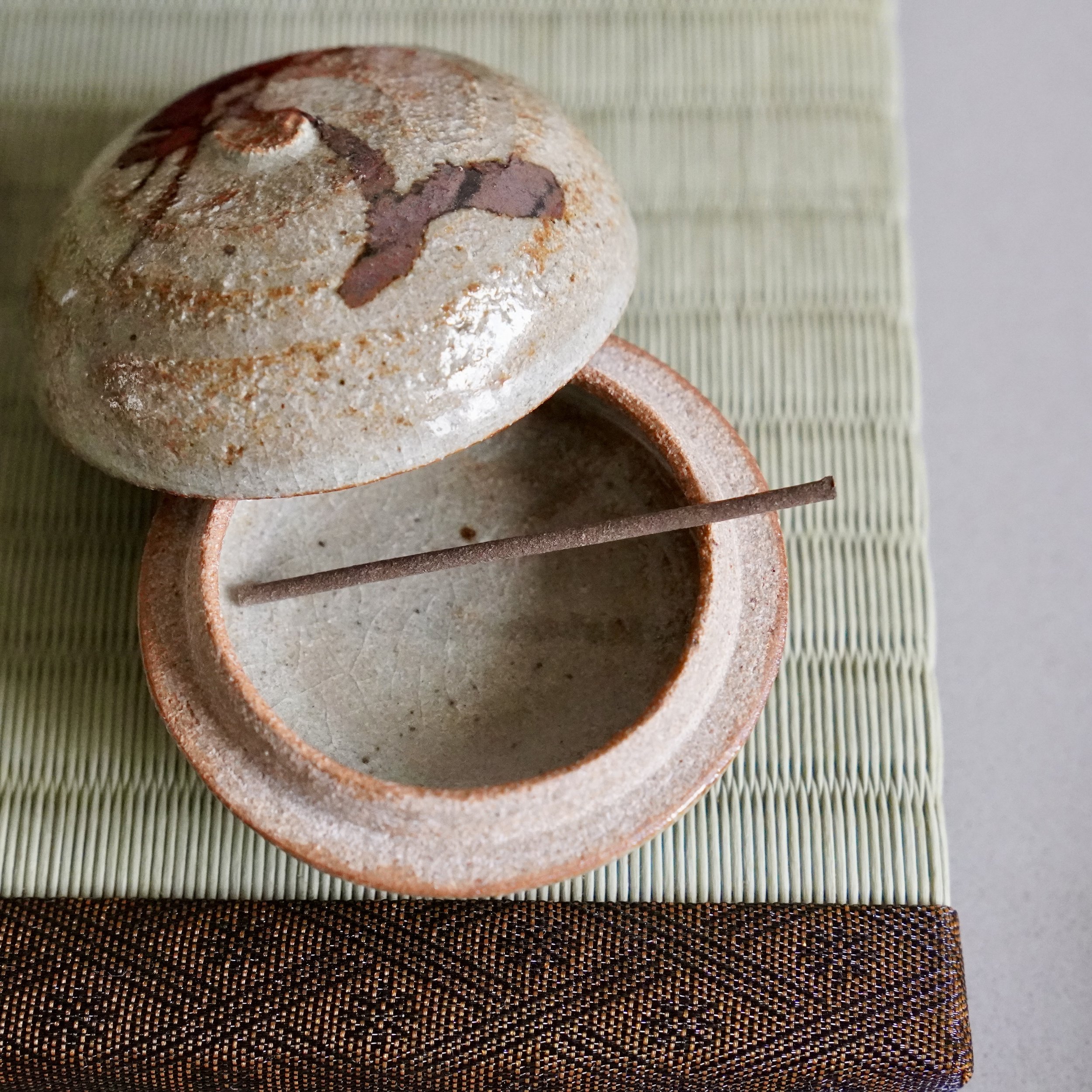
This is not a commercial production but a purpose-made ceremonial gift from the heart of the Japanese tea world.
The gift itself is an e-Karatsu kōgō, an incense container for use in the tea ceremony, made specifically for this occasion by Inoue Koji of the Kyōzan-gama in Karatsu.
This kōgō was never for sale. It was made to be given: a ceremonial gift commissioned by the headquarters of the Urasenke Tankōkai in Kyoto to mark a recipient's 88th birthday, the milestone the Japanese call beiju. The letter that accompanies it states that the gift comes from Zabōsai, the 16th generation iemoto of Urasenke, the living guardian of one of the three great tea lineages descending directly from Sen no Rikyū.
What you are looking at is not a commercial production. It is a document of the tea world in use.
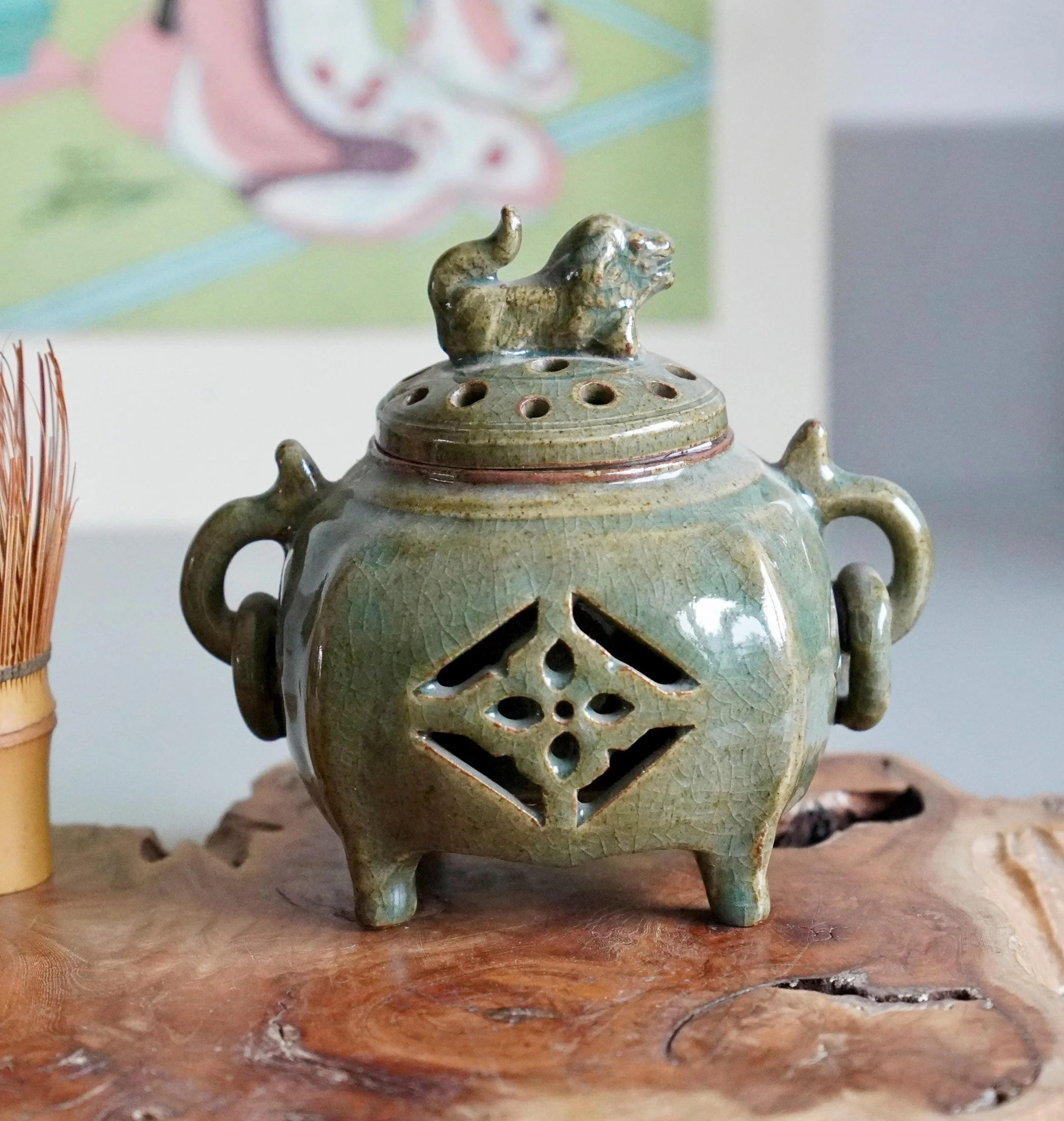
The komainu perched on the lid is hand-modelled, and no two of its features are quite the same, which tells you everything about how this kōro was made.
The maker signed in hiragana on the base: Inamino Kōzan, a name that places him in the Inami plain of Hyogo Prefecture and gives his studio the name "mountain of good fortune".
Made during Meiji to early Shōwa period, this incense burner stands on three feet with twin ear handles and a body pierced in a reticulated geometric pattern through which the incense smoke escapes. The form is classical and well-proportioned. The execution is careful throughout.
The perforations do not just release the smoke, they slow it. It drifts out in thin threads rather than rising in a single column, dispersing through the pattern before it reaches the air.
The celadon craquelé follows the glaze across every surface including the cutwork edges, which means the crazing formed after the piece was pierced and fired complete. The fine network of lines reads differently in different light, darker in shadow, almost invisible where the glaze catches the reflection.
Curious what a kōro like this can actually be used for at home? I wrote about building a quiet corner around scent and sound, in my journal.
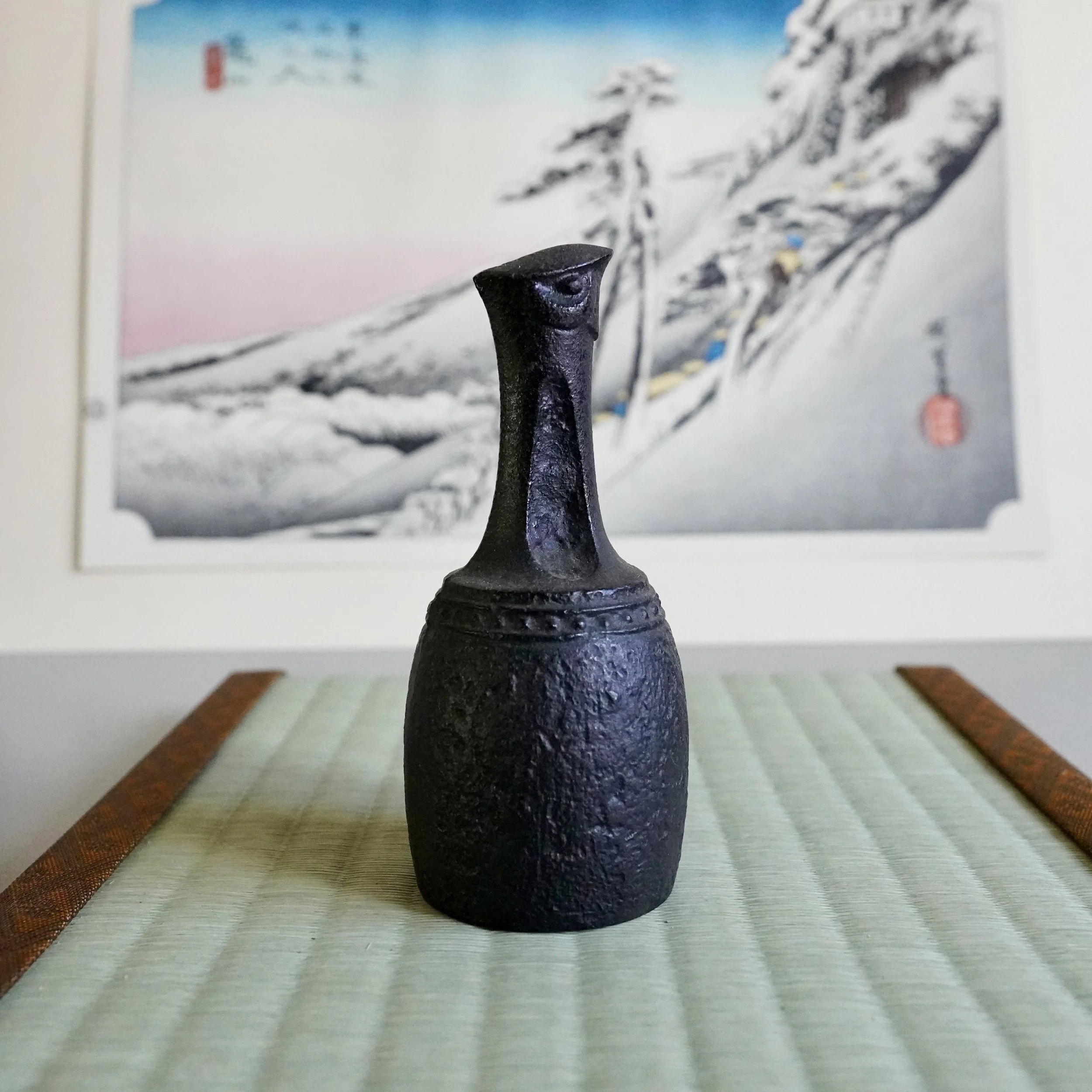
This is a bell that reads as a bird before you notice it is a bell. The long neck rises from a barrel-shaped body in one unhurried arc, ending in a small rounded head with the faintest suggestion of an eye. The surface is rough, almost granular: the deep charcoal black of seasoned Nambu cast iron. It sits very still on a table and looks as if it has always been exactly there.
The form represents the yamadori, the copper pheasant that is the official bird of Iwate Prefecture, where Nambu Tekki has been made since the seventeenth century. Nanbu cast iron is one of Japan's designated national traditional crafts, known for its distinctive rough texture, its resonance, and a durability measured in centuries rather than years. This bell is a small, very quiet piece of that tradition.
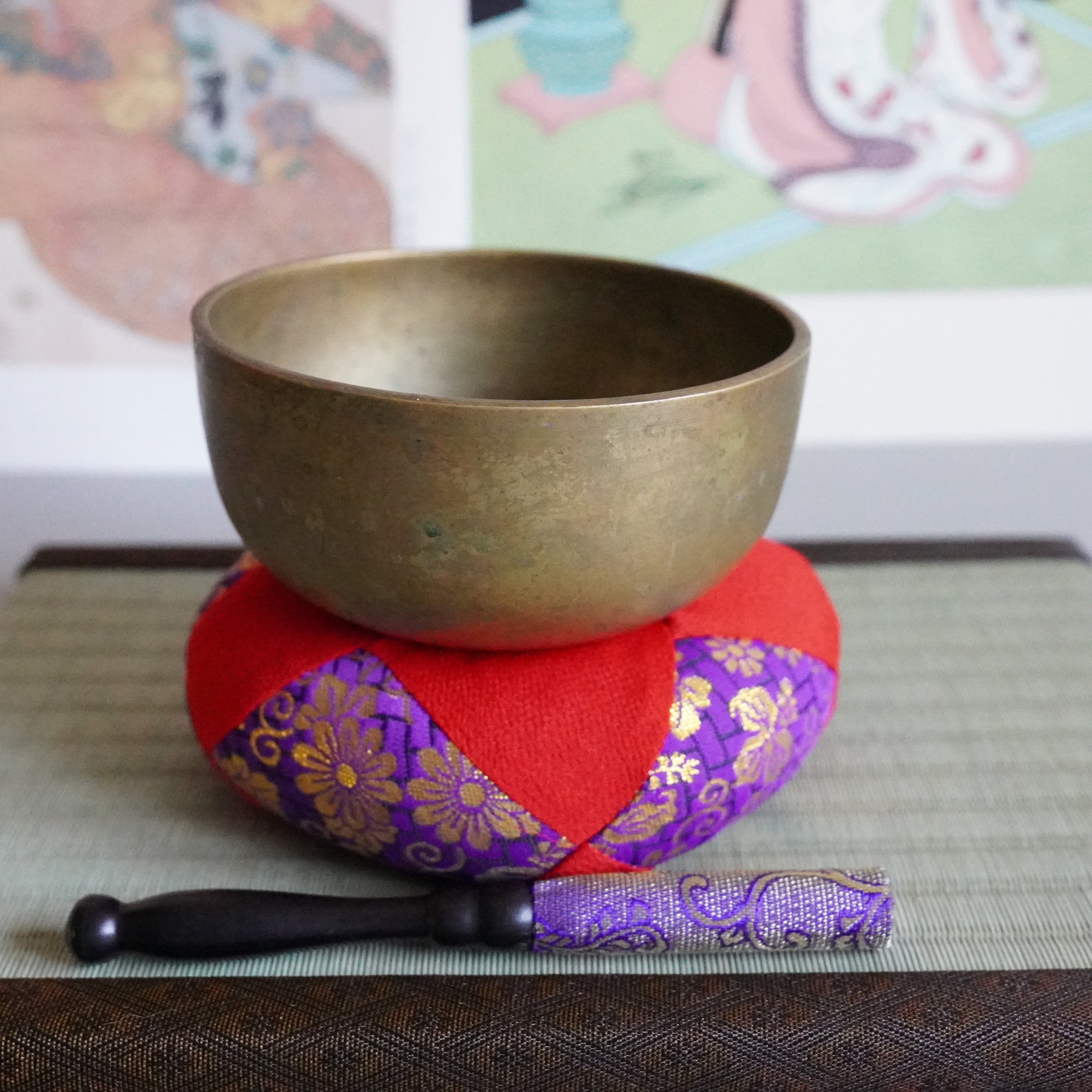
The gold has gone soft with age, the kind of colour that only comes from decades of handling, not from any finish applied at the factory. Turn it in the light and the surface shifts from warm brass to a deeper, almost smoked bronze, with faint marks from a life spent being picked up, set down, and struck. It sits low and solid in the hand, small enough to hold in one palm but heavy enough to feel substantial the moment you lift it.
Bowls like this one marked the beginning and end of prayer in Japanese Buddhist temples, before they found their way onto home altars and, eventually, into meditation spaces far outside Japan. This one has clearly been used, not displayed. The wear across the rim and the aged wooden striker that comes with it suggest years of quiet, repeated use rather than a life spent in a cabinet.
Read more about the objects for your Japanese meditation corner, and why each one matters in my journal.
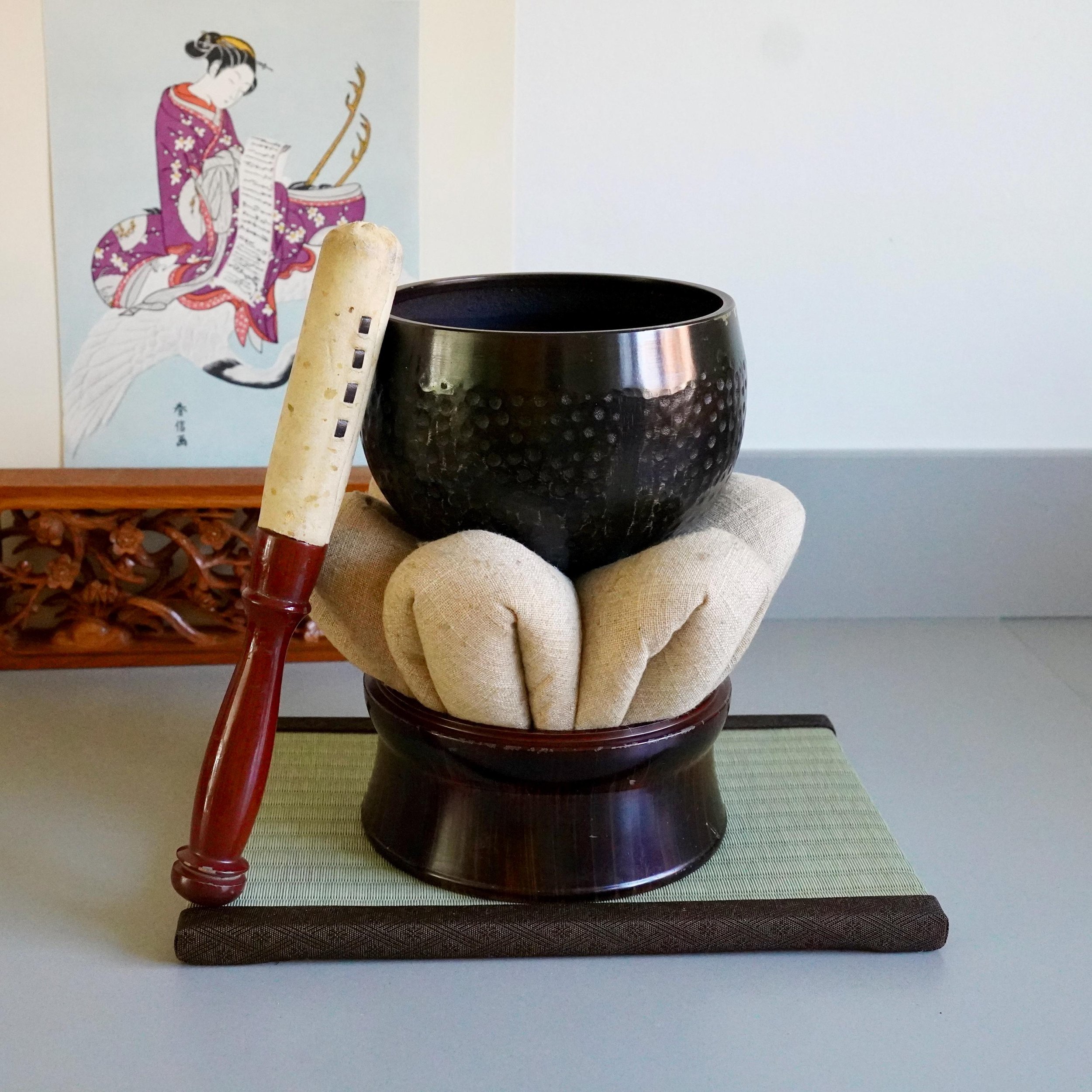
This rare temple singing bowl from the Showa era is a heavy, resonant treasure, sourced directly from Kyoto. Cast in solid bronze, its surface features a hand-hammered tsuchime finish that catches the light, shifting from deep graphite to warm amber as you move around it. It is a substantial piece with a grounded presence even before it is struck.
Place it in a meditation room or on a yoga studio altar and it will hold its own. It has the weight and presence of a genuine temple object, which is exactly what it is. If you work with somatic healing, breathwork, or mindfulness practice, the depth of the tone carries well even in a larger space. The set is entirely original and complete, standing 24 cm tall. It includes the bronze bowl, a dark red-brown lacquered wood stand, and a mallet with a matching red handle.
Read more about the objects for your Japanese meditation corner, and why each one matters in my journal.
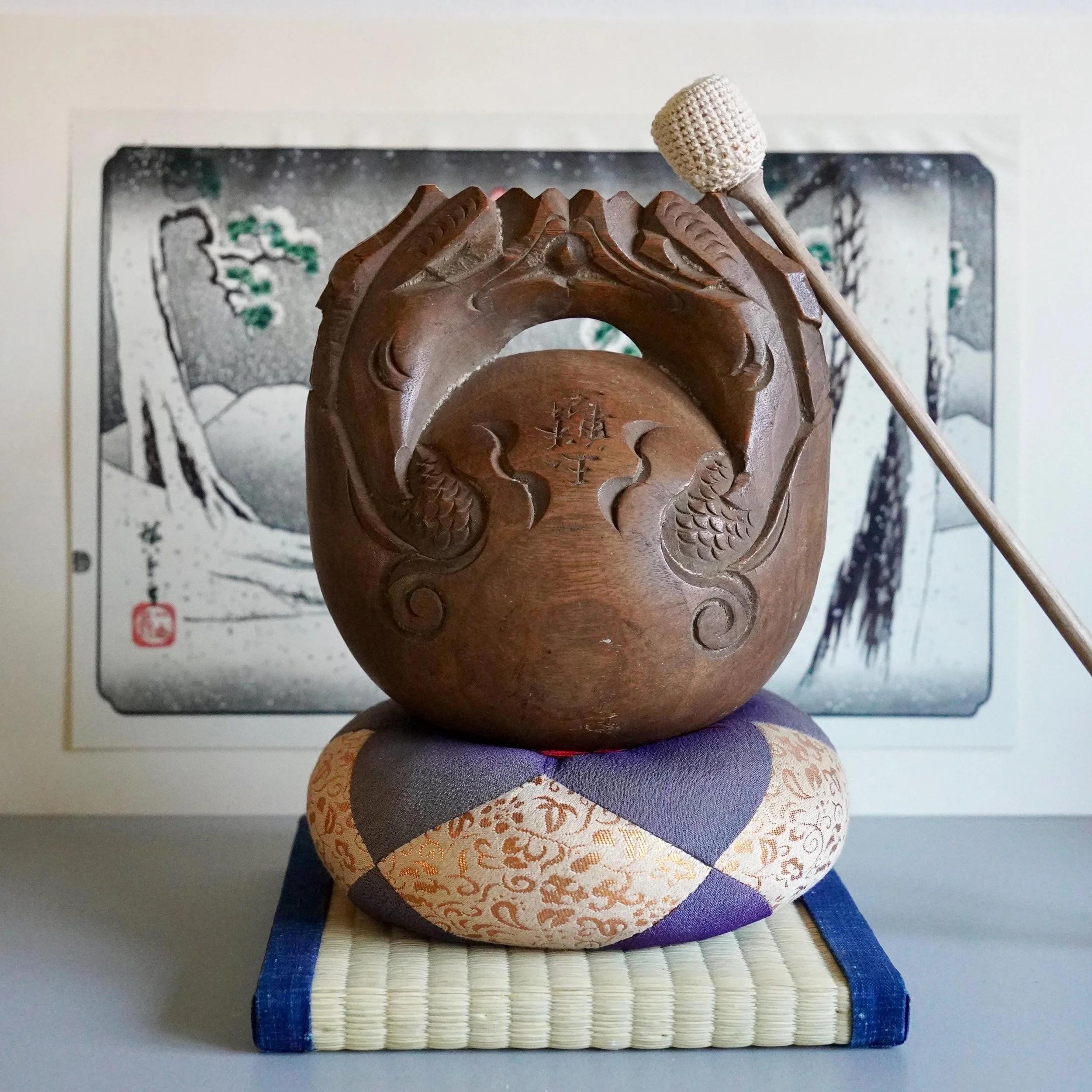
Two dragon fish arch over the hollow opening of the drum, their bodies sweeping down and around, the sacred pearl held between them at the crown. The wood is a warm amber-brown, the grain running through the carved surfaces, the patina settled unevenly into the recesses the way only time and temple incense can produce it.
The mokugyo has been central to Zen and other Buddhist practice since the Edo period, when chanting sutras to its steady beat became embedded in Japan's temple tradition. This piece bears the 玉鱗 (Gyokurin) quality mark from a workshop in Ichinomiya, Aichi Prefecture, the region that remains the primary center for domestic mokugyo production in Japan. The mark identifies the highest grade of hand-carving, made for serious temple use.
Read more about the objects for your Japanese meditation corner, and why each one matters in my journal.
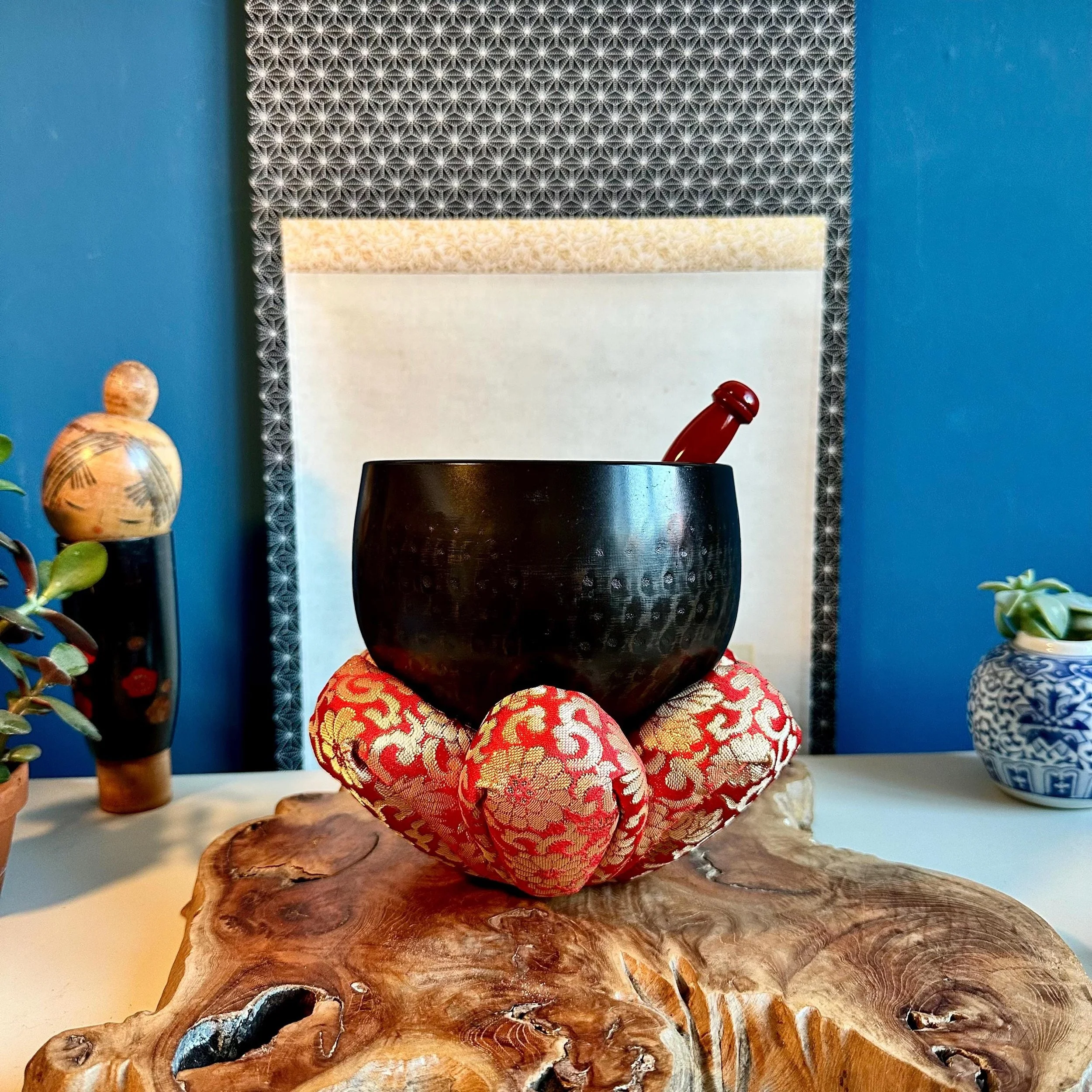
The weight is the first thing you notice. At 611 grams, this bronze orin sits solidly in the hand, dense and grounded. Strike the rim and the sound opens in layers: a clear initial tone that deepens as it spreads, sustained long enough to follow from a single breath to the next. This is what solid bronze does that cheaper alloys cannot match.
This is a Showa-period orin, ca. 40-60 years old, hand-hammered and sourced in the Nagano region of Japan.
It was cast from bronze and shaped by hand using the tsuchime (槌目) technique: each hammer mark was struck individually, shaping the wall of the bowl and influencing its resonance at the same time. The sound of a vintage orin deepens with age as the metal settles; this bowl has had decades to find its tone.
Comes with a brand-new professional striker and a luxury brocade cushion for optimal resonance.
Read more about the objects for your Japanese meditation corner, and why each one matters in my journal.
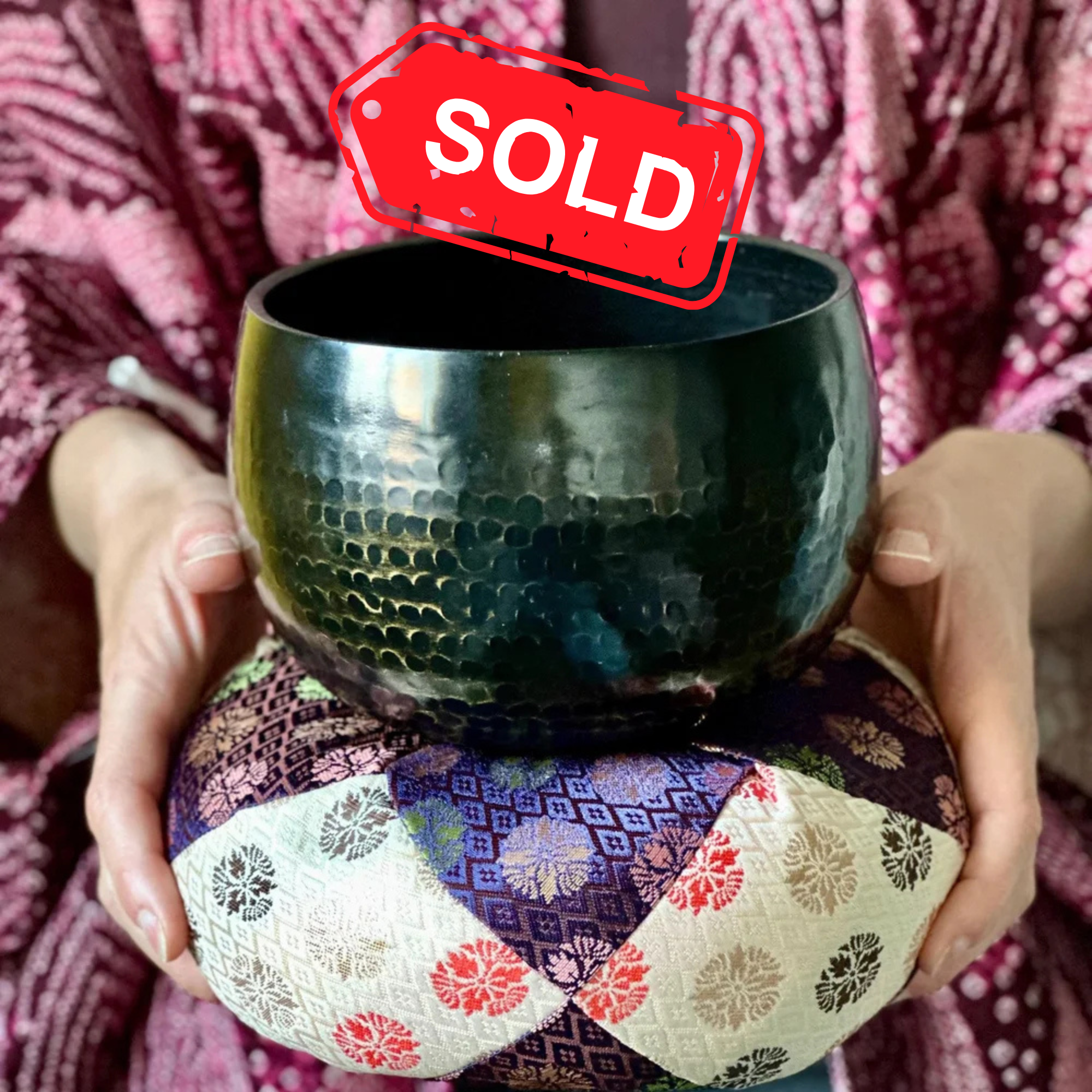
💡 Update: This piece has found a new home. If you are looking for something similar and cannot find it in the shop, scroll down
Item details:
Bring a profound sense of peace to your space with this impressive vintage Japanese Orin singing bowl. Sourced directly from Takamatsu (Shikoku), this bronze masterpiece carries the prestigious Hon Te Uchi (本手打) stamp—the highest quality hallmark in Japan, guaranteeing the bowl was entirely hand-forged according to centuries-old traditions.
The additional Ryū (Dragon - 龍) signature refers to the foundry, representing strength and superior tonal purity.
With a diameter of 15 cm, this bowl produces a deep, layered resonance with a long-lasting sustain. Its visual beauty is equally striking: the deep, dark finish has been subtly polished over the hammer marks, allowing the golden bronze alloy beneath to shimmer through. It is perfect for meditation, breath-work, or as a calming focal point in your home.
Specifications:
Quality: Hon Te Uchi (Authentic Hand-Forged)
Signature: Ryū (Dragon - 龍)
Weight: 613 grams (bowl only)
Dimensions: approx. 15 cm diameter, 12 cm height
Era: Shōwa period (approx. 40–60 years old)
Condition: Exceptional vintage condition; no dents, like new
Included: Brand new professional striker and luxury brocade cushion
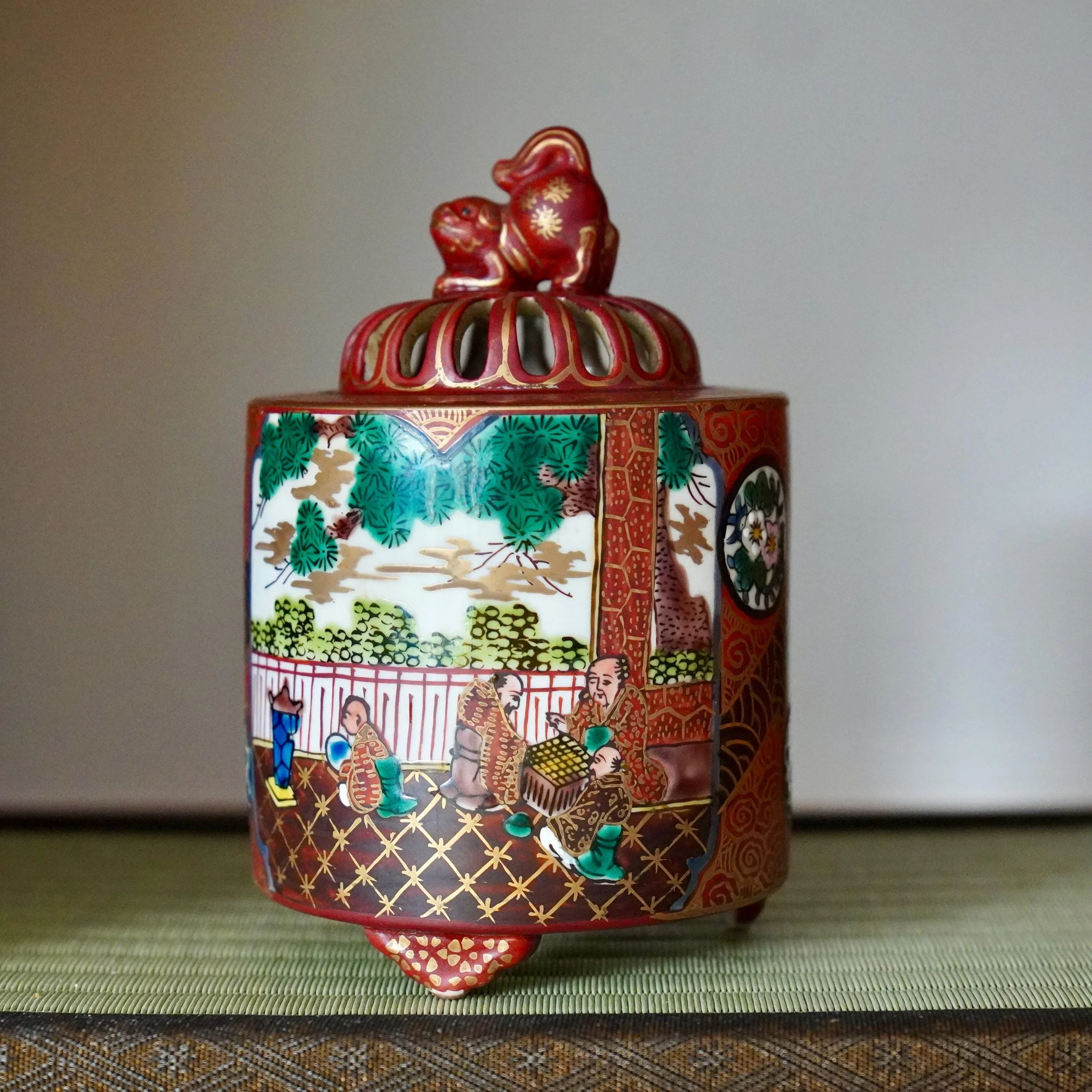
Six sides, six scenes.
Scholars under pine trees, a blue longevity character, floral medallions, gold lattice across the lower body: every surface of this hexagonal kōro carries decoration, and none of it repeats.
The pierced lotus lid is topped by a hand-modelled shishi guardian lion in the same deep iron-red, with gold detailing across his body.
This is Kutani aka-e, the saturated red-ground style from Ishikawa Prefecture that became one of Japan's most recognisable ceramic exports. This koro dates to the Shōwa period, ca. 1950-1970, and carries the red 九谷 (Kutani) mark on its base. It comes with its wooden storage box and, inside the bowl, a thin residue of ash from previous use.
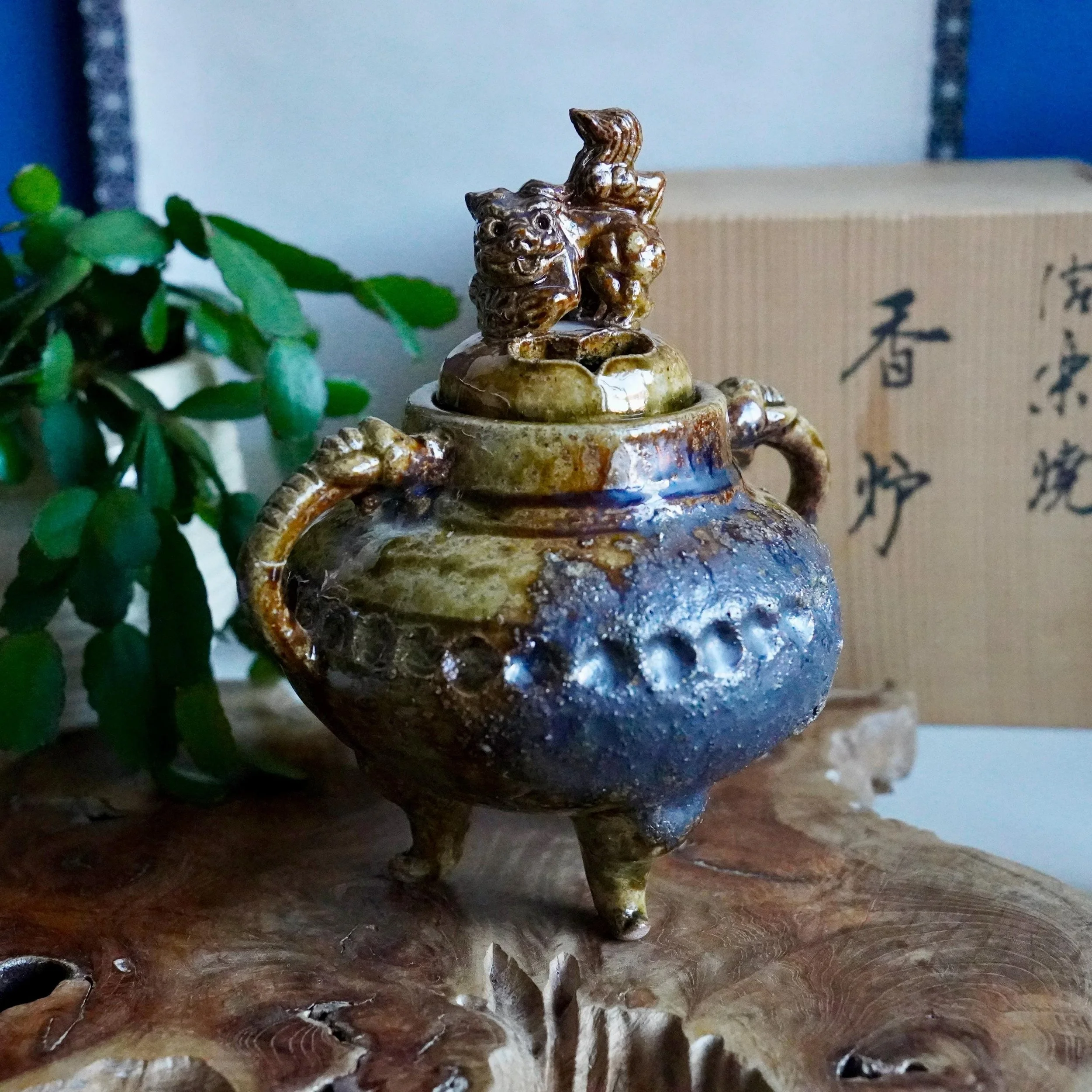
The glaze is what stops you here. Deep amber and bronze pool across the shoulders, then shift into a stormy blue-grey lower down the belly, alive with texture where the wood ash settled unevenly during firing. No two kilns fire the same way twice, which means no other piece looks quite like this one.
On the lid, a small shishi, part lion, part dog, sits mid-pose, claws gripping the knob beneath it. The sculpted handles on either side echo the same restless energy. This is an object you keep circling back to look at.
A kōro like this was used to purify a room before meditation or ceremony, to mark the quiet shift from day into evening, or simply to settle a busy house. The base carries an impressed workshop stamp, and the original wooden box holds matching calligraphy alongside a personal red hanko seal, a level of documentation that vintage Japanese ceramics rarely arrive with intact.
Read more about the objects for your Japanese meditation corner, and why each one matters in my journal.
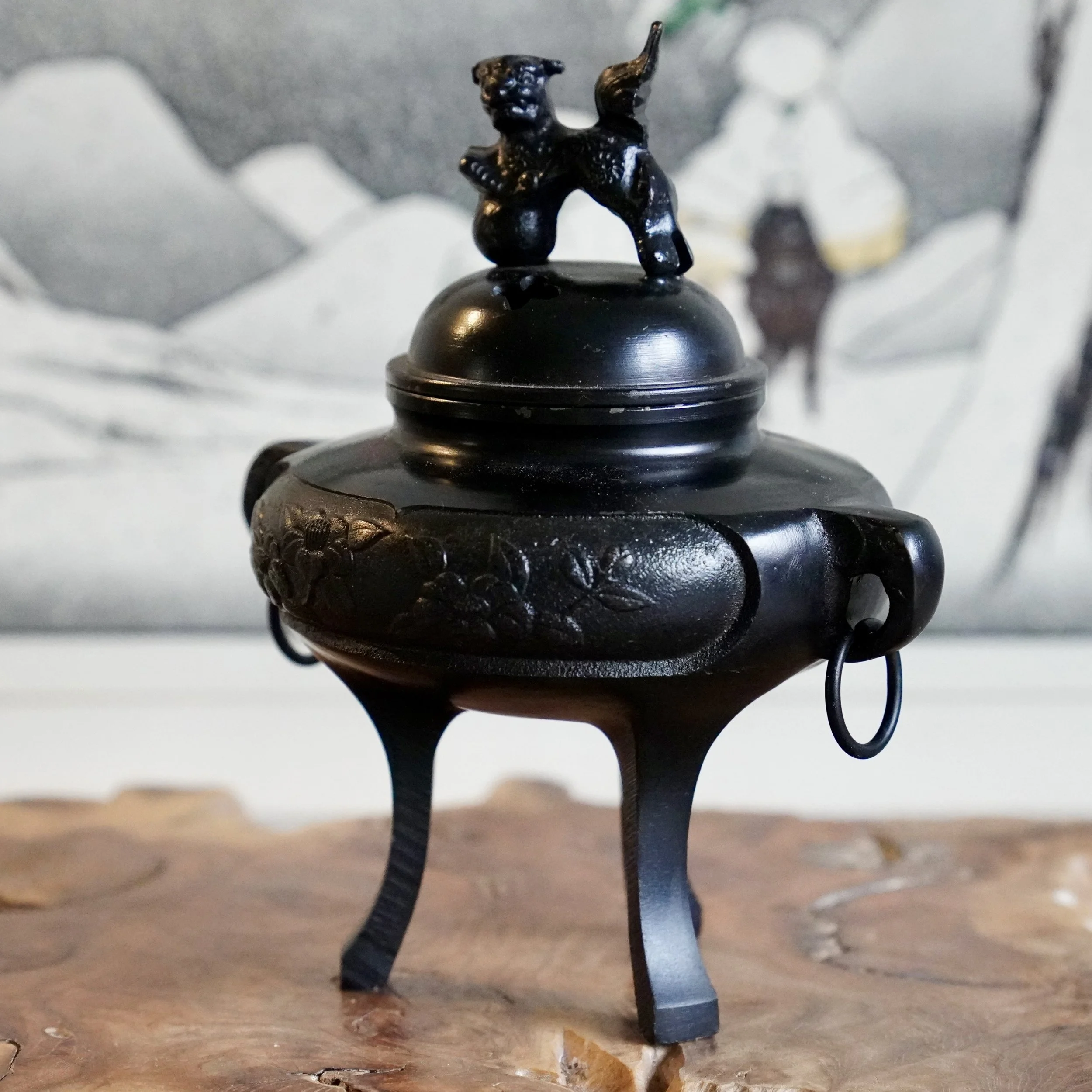
There is something about burning incense in a kōro that was made for exactly that. The smoke rises differently when the object has weight, history, a reason for existing.
This kōro sits on three legs, nearly a kilogram of dark bronze, a shishi guardian lion on the lid looking out over whoever lights the incense below. It asks to be placed somewhere intentional: a windowsill, a low table, a corner that needed something quiet and permanent.
The relief on the body shows Matsuyama Castle, pressed into the bronze by a craftsman named Masahide in Takaoka in 1984. Takaoka has been Japan's centre for bronze casting for over 400 years, and this piece carries that lineage in its weight and the sharpness of its casting.
It was made as a commemorative gift for a local cooperative, which means someone once chose it carefully for a specific occasion. Now it can find a place in yours.
Read more about the objects for your Japanese meditation corner, and why each one matters in my journal.
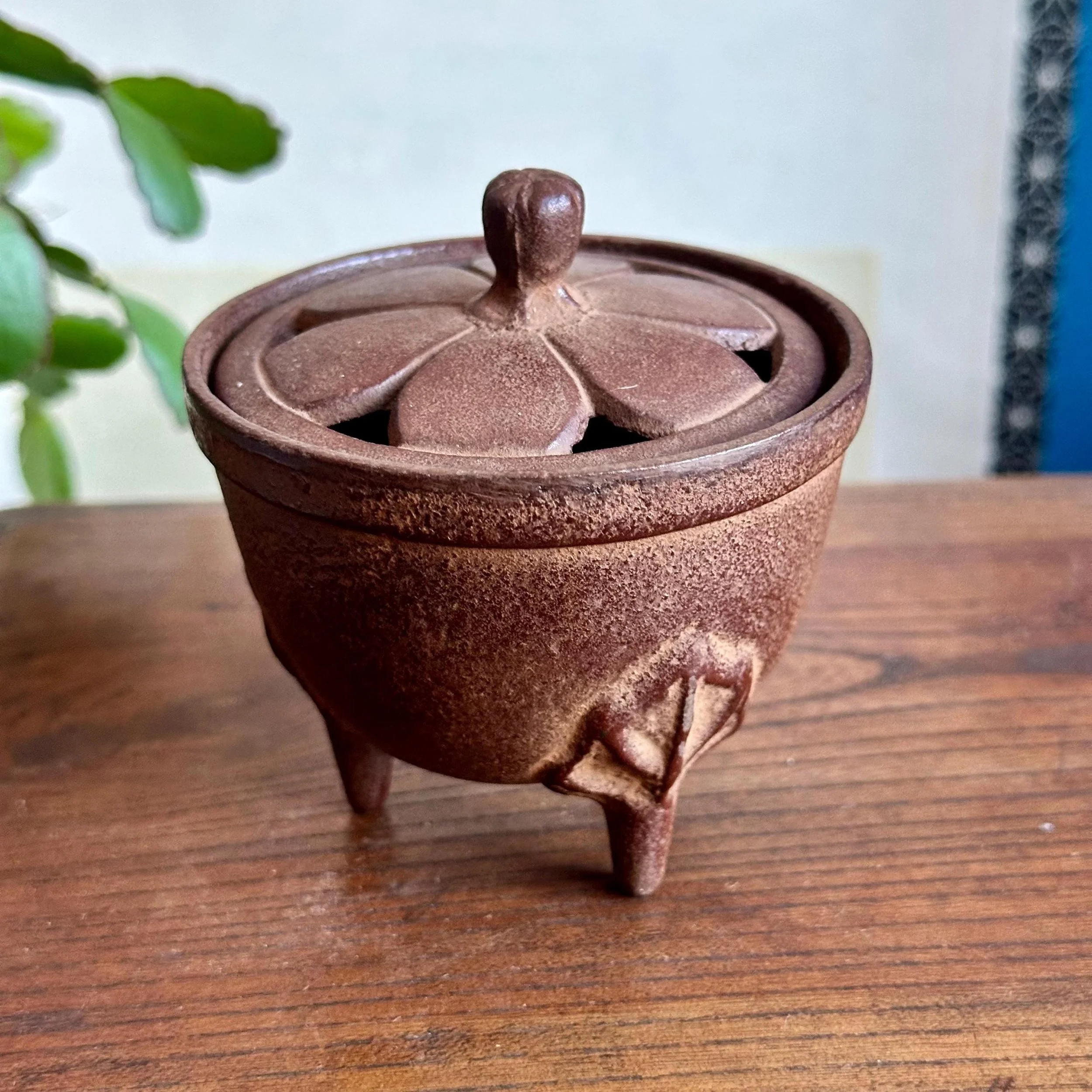
The weight of cast iron is its first greeting. Three short legs, a round belly, and a lid cut through with a five-petalled flower. The iron has darkened over the decades into a warm reddish brown that photographs cannot quite capture, and the casting texture catches the light in a way that makes the surface look almost alive. This is the kind of object you pick up and do not immediately put down.
This koro was made by Iwachu (岩鋳), Morioka's most recognised ironware foundry and one of the defining names in the Nanbu Tekki tradition. That tradition has its roots in the mid-17th century, when the ruling Nambu clan invited a Kyoto kettle-maker north to produce vessels for the tea ceremony. Iwachu has been part of that lineage since 1902, and its foundry stamp carries enough weight that the company explicitly warns buyers against imitations.
Read more about the objects for your Japanese meditation corner, and why each one matters in my journal.
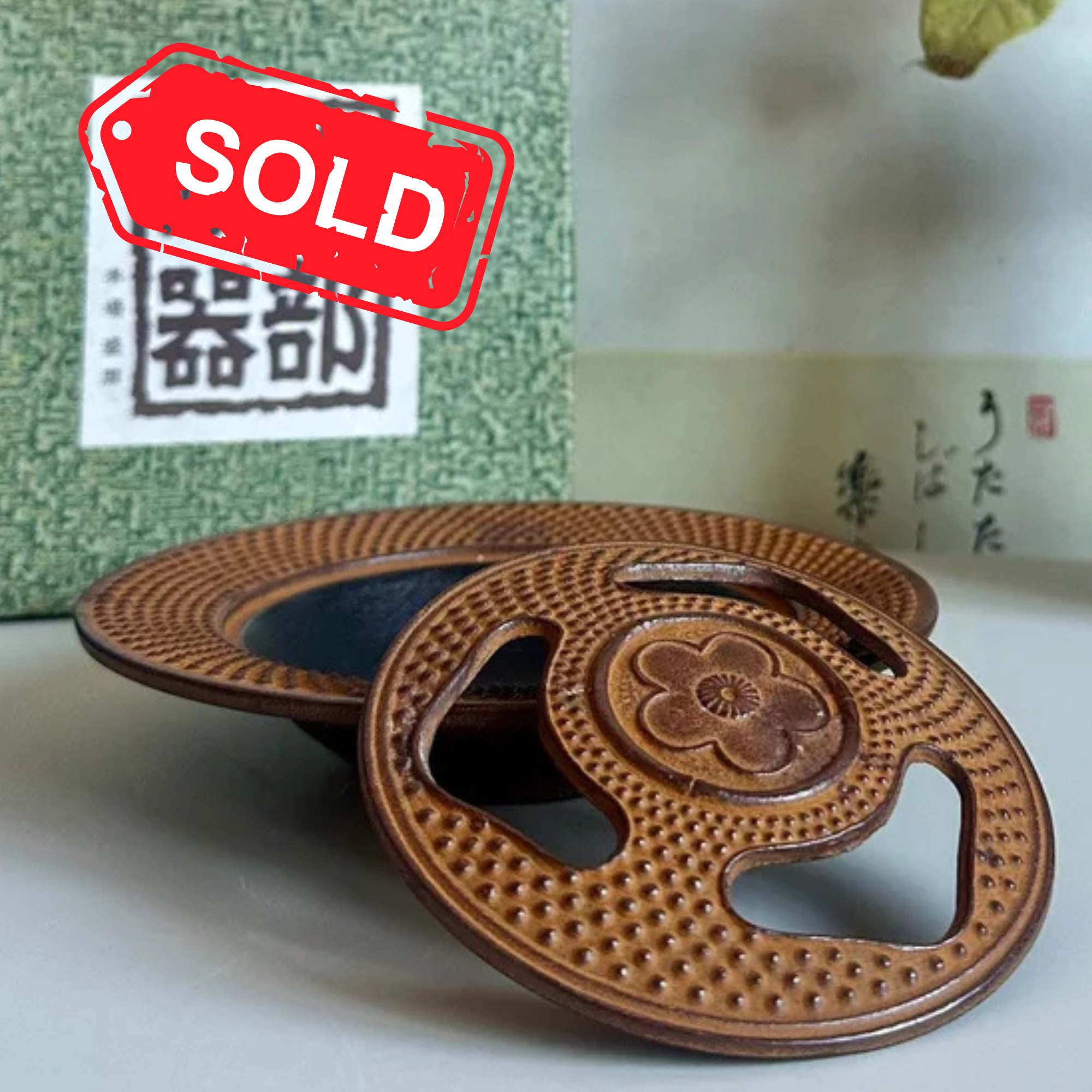
This piece has found a new home. If you are looking for something similar, scroll down.
A wide, low tray-form kōro in Nanbu Tekki sand-cast iron, entirely covered in the arare hailstone pattern, made in 1970 and never used. The base carries a full inscription pressed into the iron before casting: 長岡市公共下水道中部ポンプ場, Nagaoka City Public Sewage Central Pump Station, dated the sixth of March, Shōwa 45. This is a kinenhin, a commemorative gift object produced by a Nanbu Tekki foundry to mark the completion of a public infrastructure project, intended for the engineers, officials, and contractors involved. Original box with the 南部鉄器 mark included.
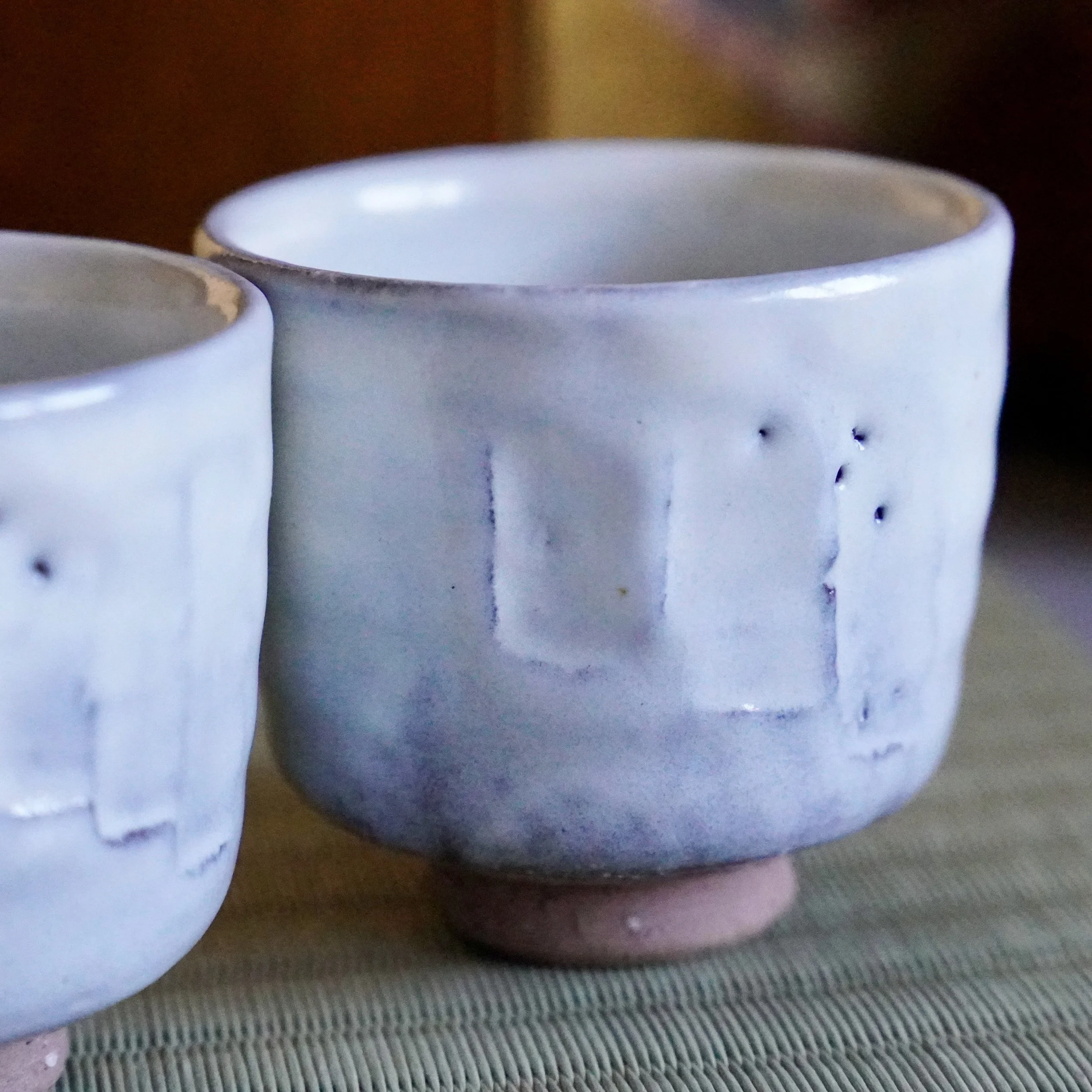
Tiny pinholes scattered across a thick glaze, a texture called su-ana, tell you more about Shino and Hagi ceramics than most people realise. Here's what causes it, and why potters never smoothed it away.
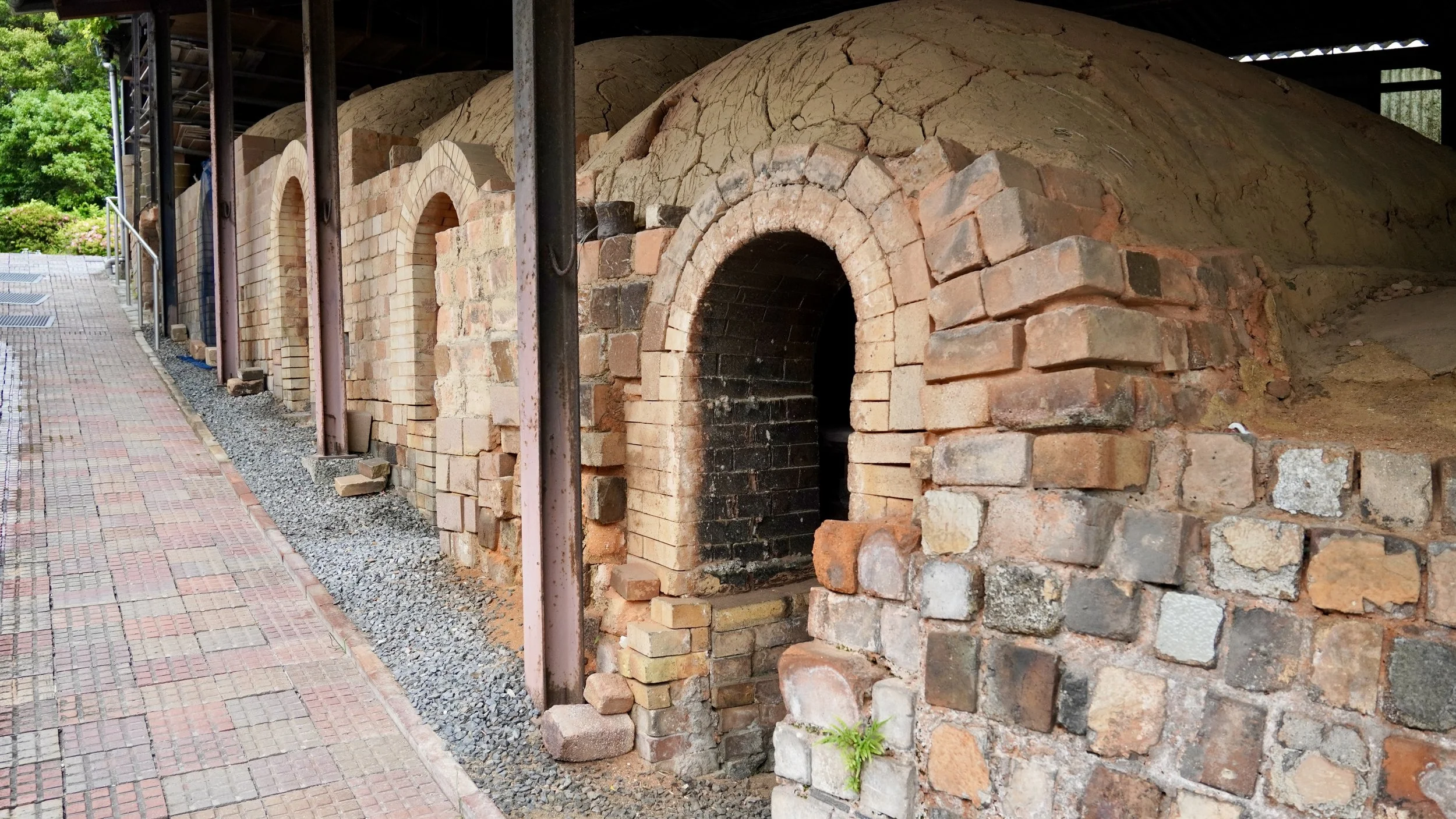
Senryūzan (泉流山) is a Hagi-yaki kiln in Yamaguchi Prefecture founded in 1826, tracing its roots back further still to the late Edo-period Obata-yaki tradition. The kiln was led for decades by Yoshiga Taibi, a recognised Person of Cultural Merit, and is now run by his son Yoshiga Hatao. Senryūzan still fires in a wood-burning noborigama, one of the few climbing kilns in Hagi still worked this way.
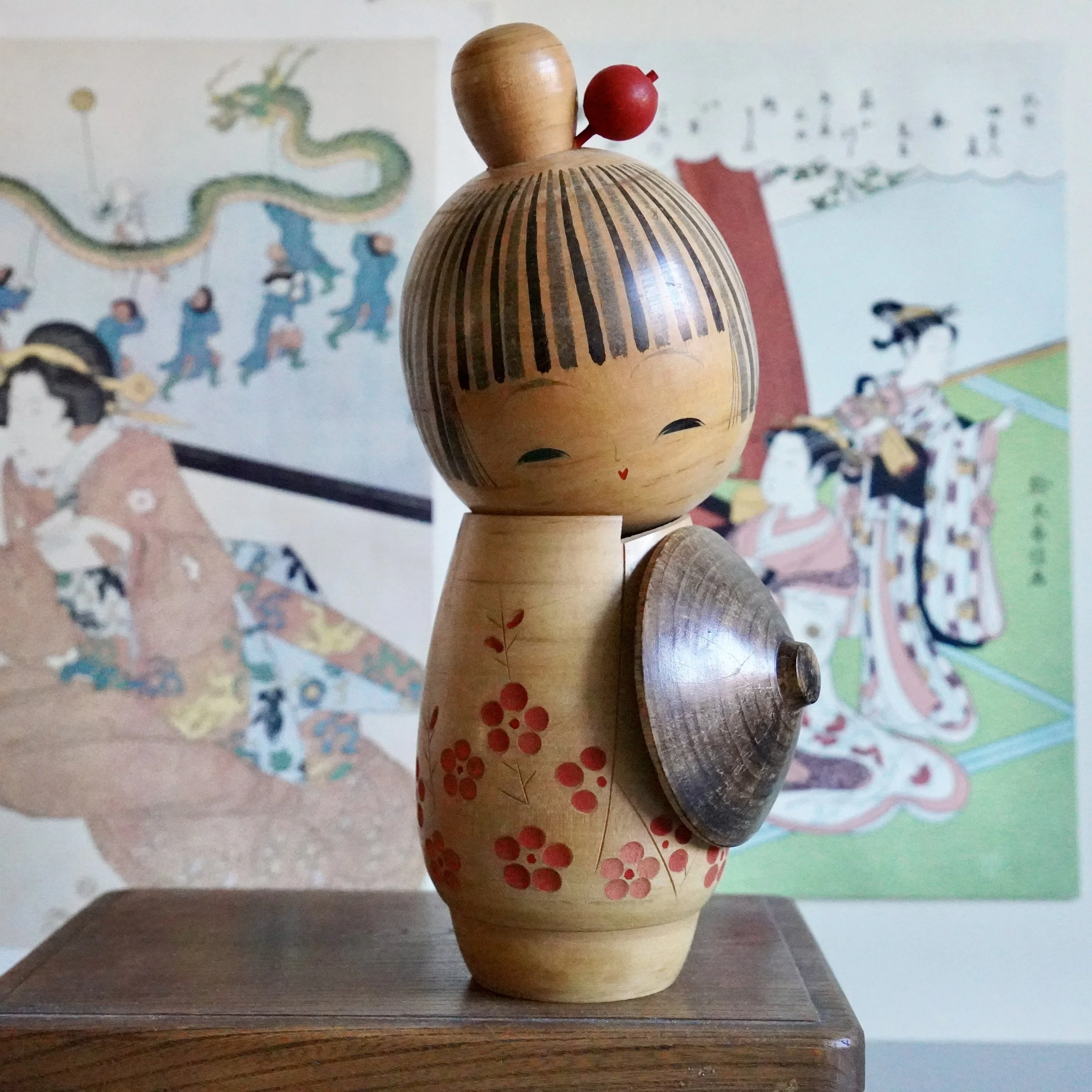
Oshinobi dōchū, travelling incognito, shows a Heian noblewoman shielding her face with a kasa hat while journeying in disguise. Two pieces in the collection, by Sato Suigai and Seiju Kon, show how differently that same story can be built in wood.
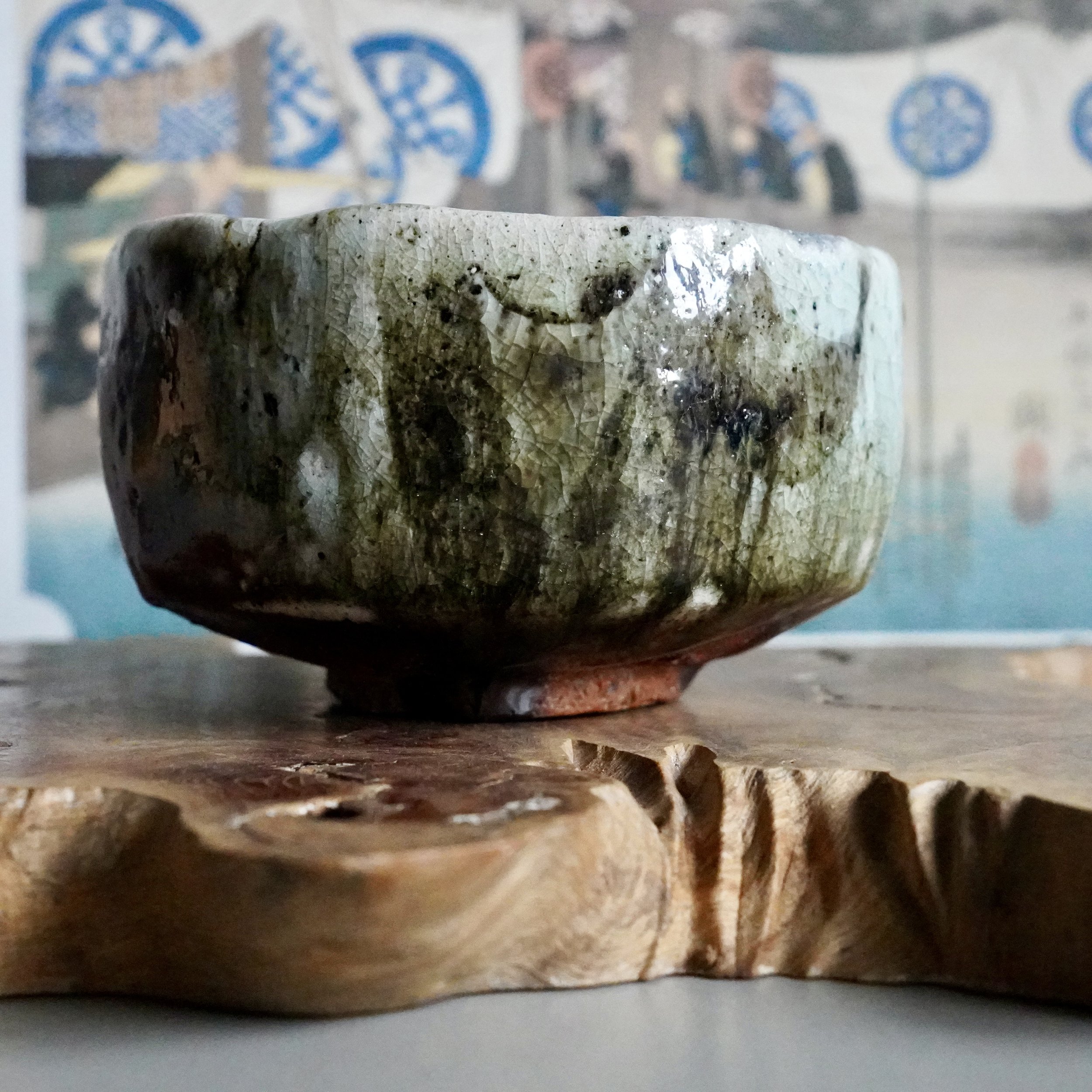
This chawan was fired at the Kakuzan-gama, a kiln built in 1959 inside the Kyoto headquarters of Ōmoto, a Japanese religious movement, by Kaneshige Sozan, a member of Bizen's most celebrated pottery family. It is signed by Deguchi Eiji, who served as Ōmoto's Sōchō (director) from 1958 to 1962. A single white glaze on this bowl developed rust, near-black and crystalline blue effects during firing, the result of flame position, ash deposit and heat variation inside a wood kiln, not of painting or decoration.
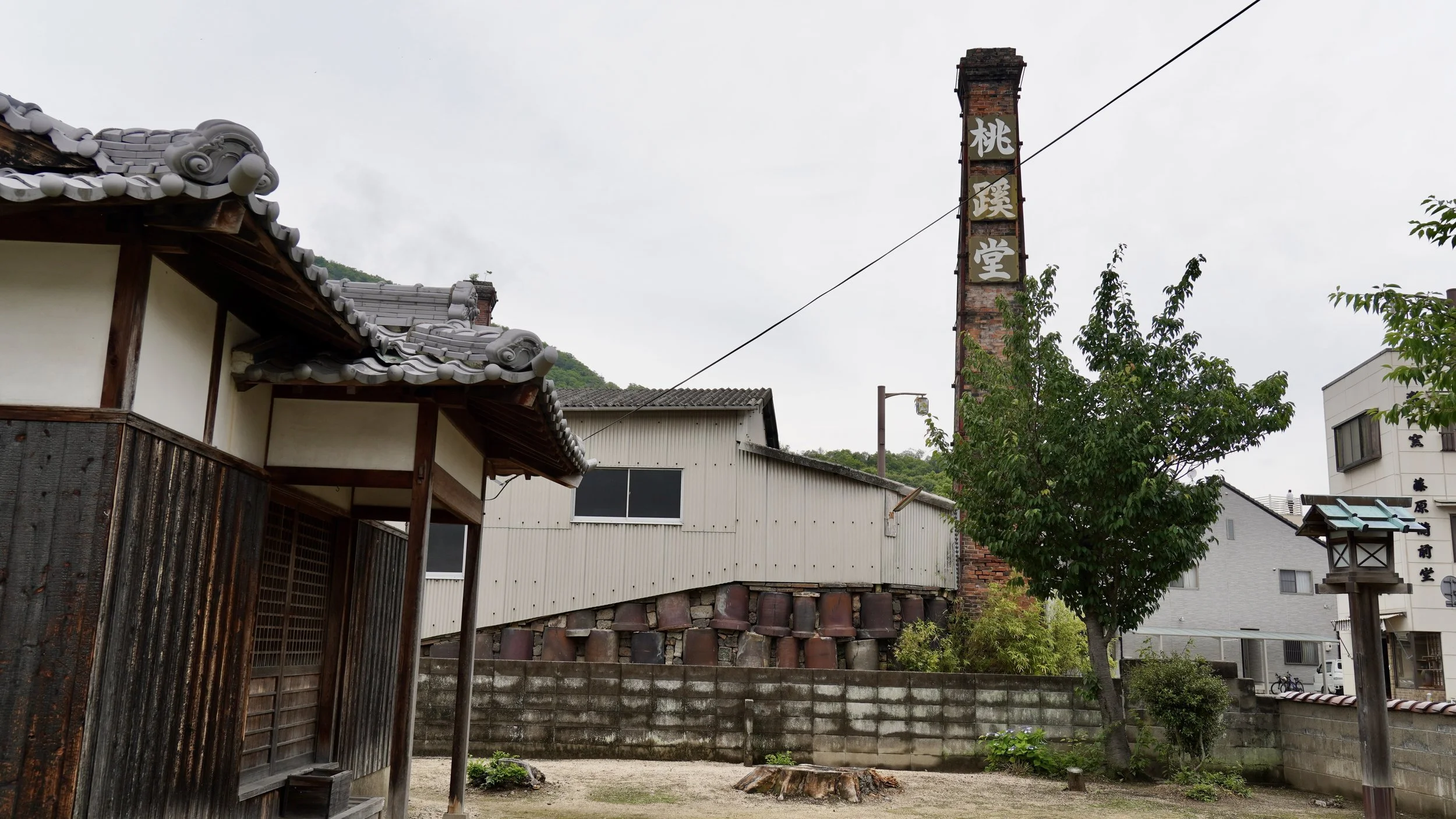
Bizen-yaki is never glazed and never painted. Everything visible on a finished piece was decided during the firing itself, by potters who spend two weeks feeding a kiln by hand, reading the fire instead of a dial. On a return visit to Shibaoka Tōsendō, the Kōzan-gama kiln in Imbe, here is what that actually looks like from the inside.
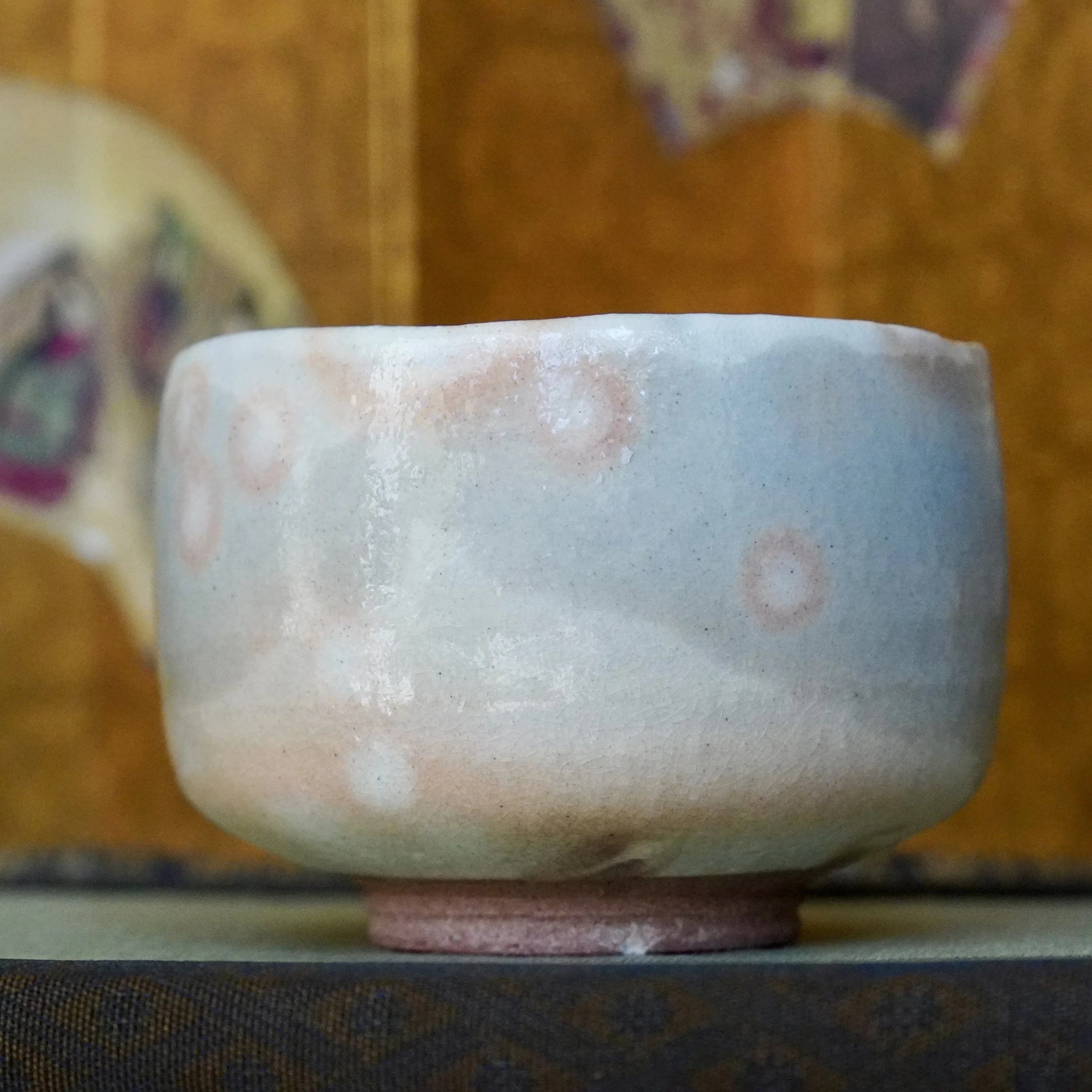
I filled a Hagi chawan with water and watched what happened. Within a minute, the glaze showed exactly how it will change with years of tea, and four other pieces revealed just how differently that process can unfold, starting long before the kiln, in the clay itself.
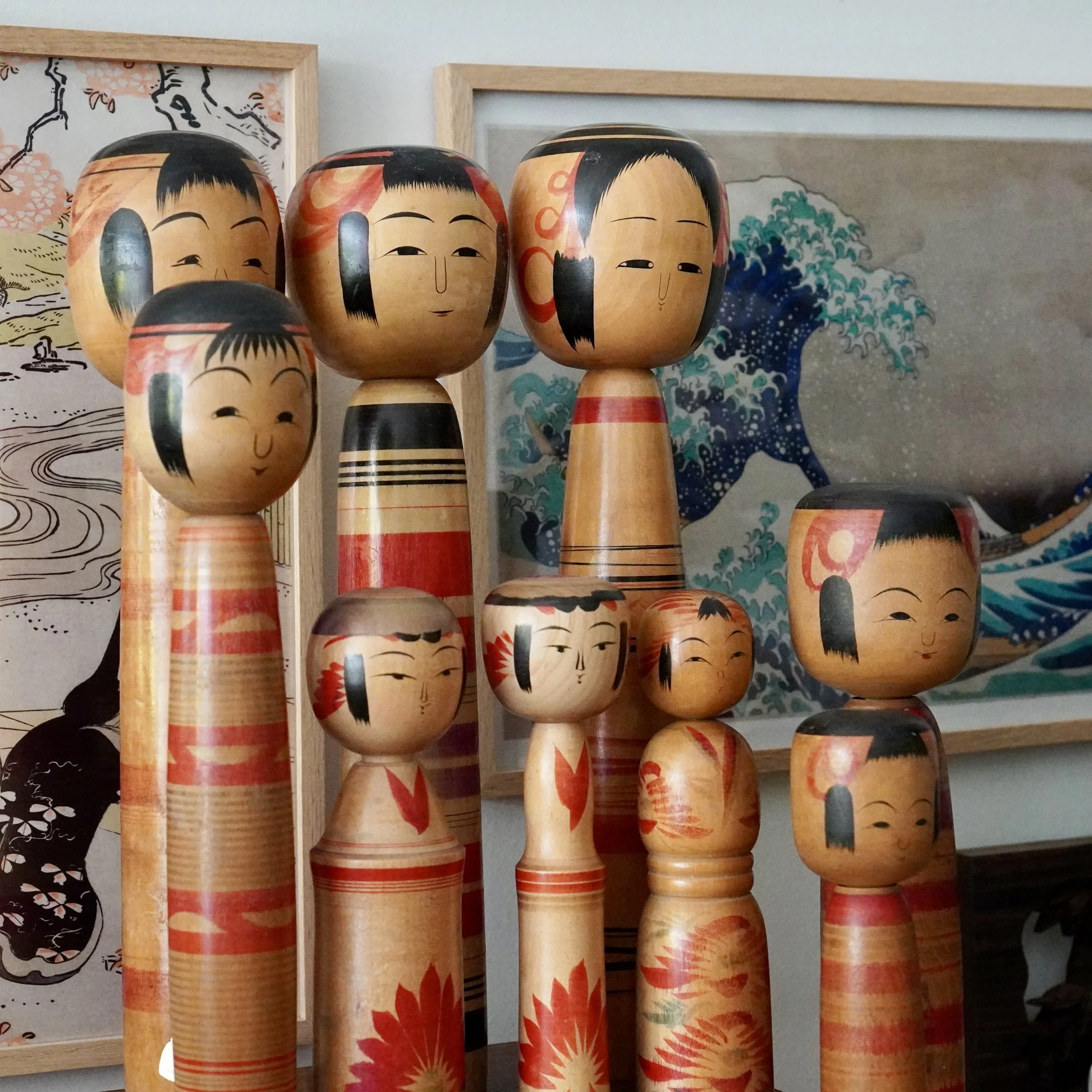
Every kokeshi carries the place it comes from before it carries anything else. A guide to the eleven regional traditions of Tōhoku, and how to recognise each one on sight.
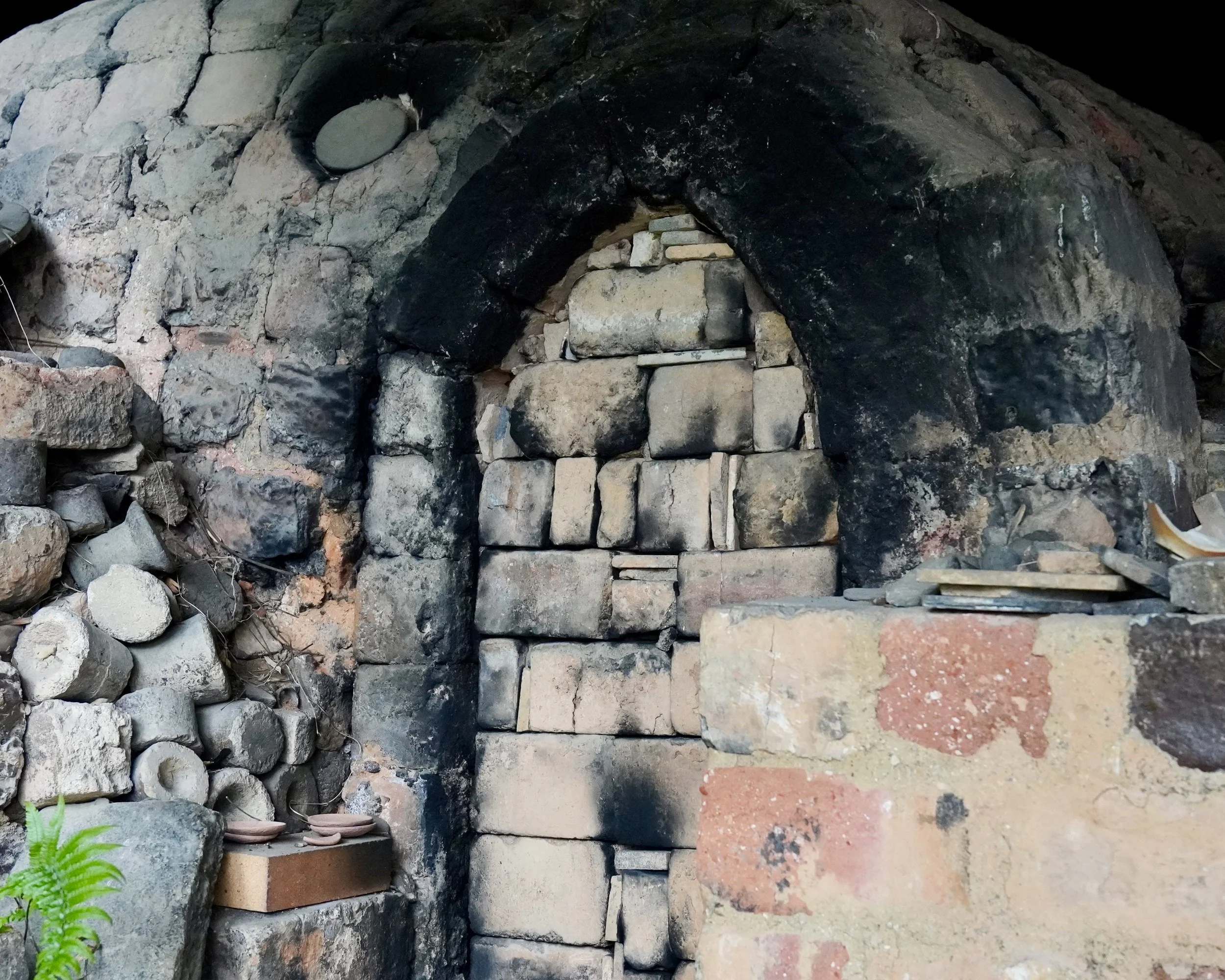
Three generations under one roof, a blue glaze that surprised me, and a cat I bought on the way out. One of my favorite mornings in Hagi, at the Okada kiln.
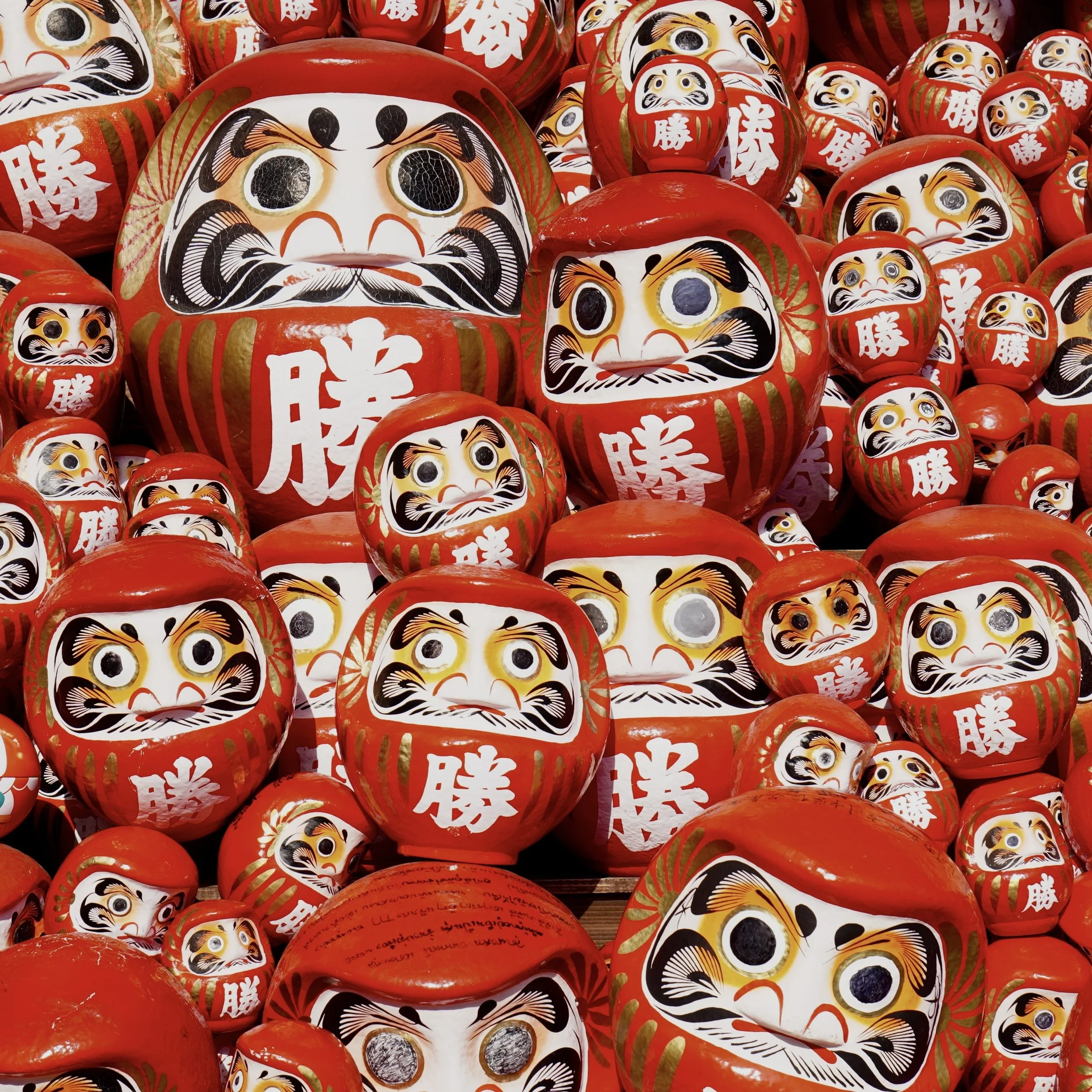
Perched in the forested hills of Minoh, Katsuo-ji is known throughout Japan as the Daruma Temple, thousands of red daruma cascading down its steps, each one carrying someone's wish. A visit that changed how I see the wooden daruma in our own collection.
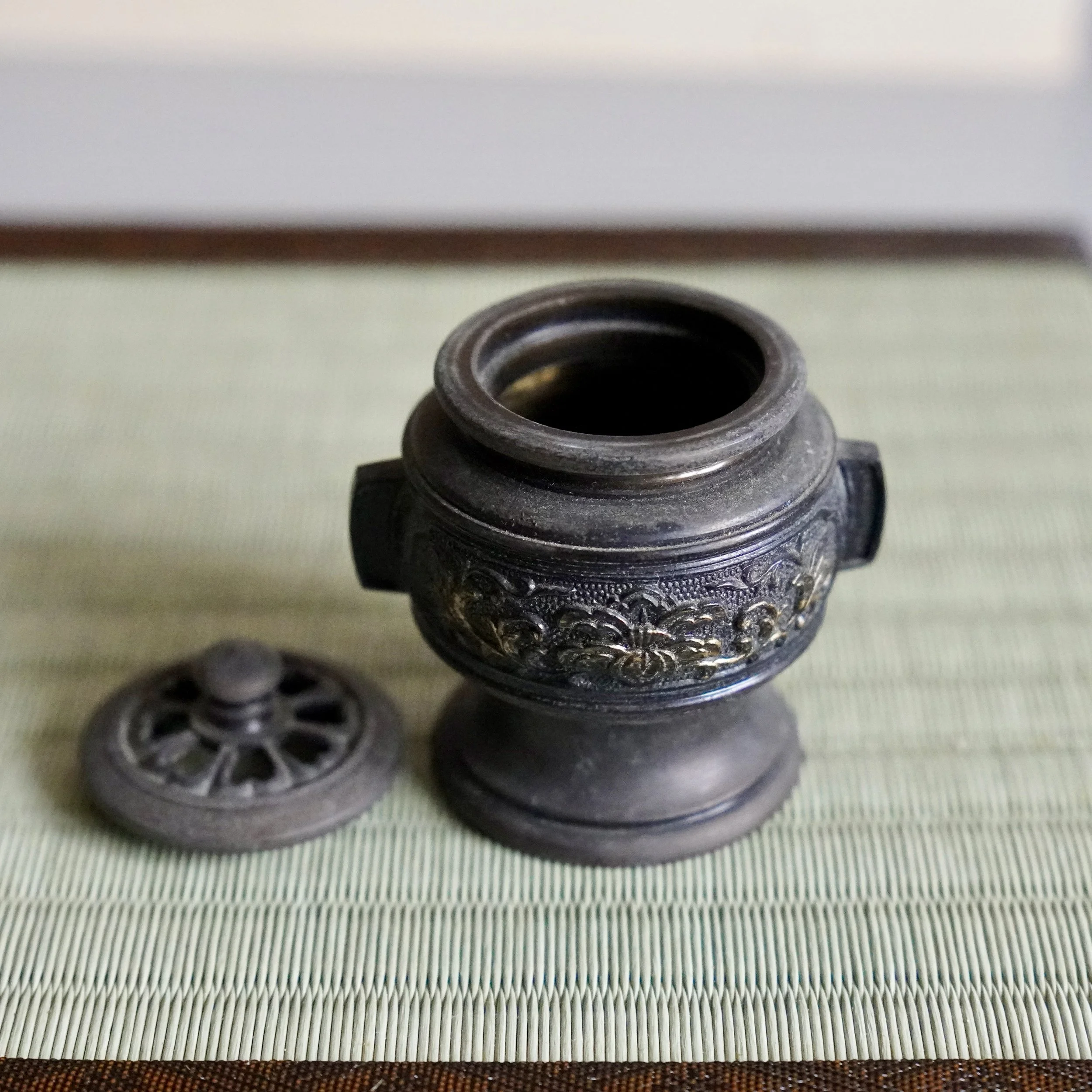
Every temple I visit in Japan has the same quality of quiet, and it starts with three things: scent, sound, and a presence that holds the space. Here is how to bring that same intention home, starting with a single kōro and the concept of ma.
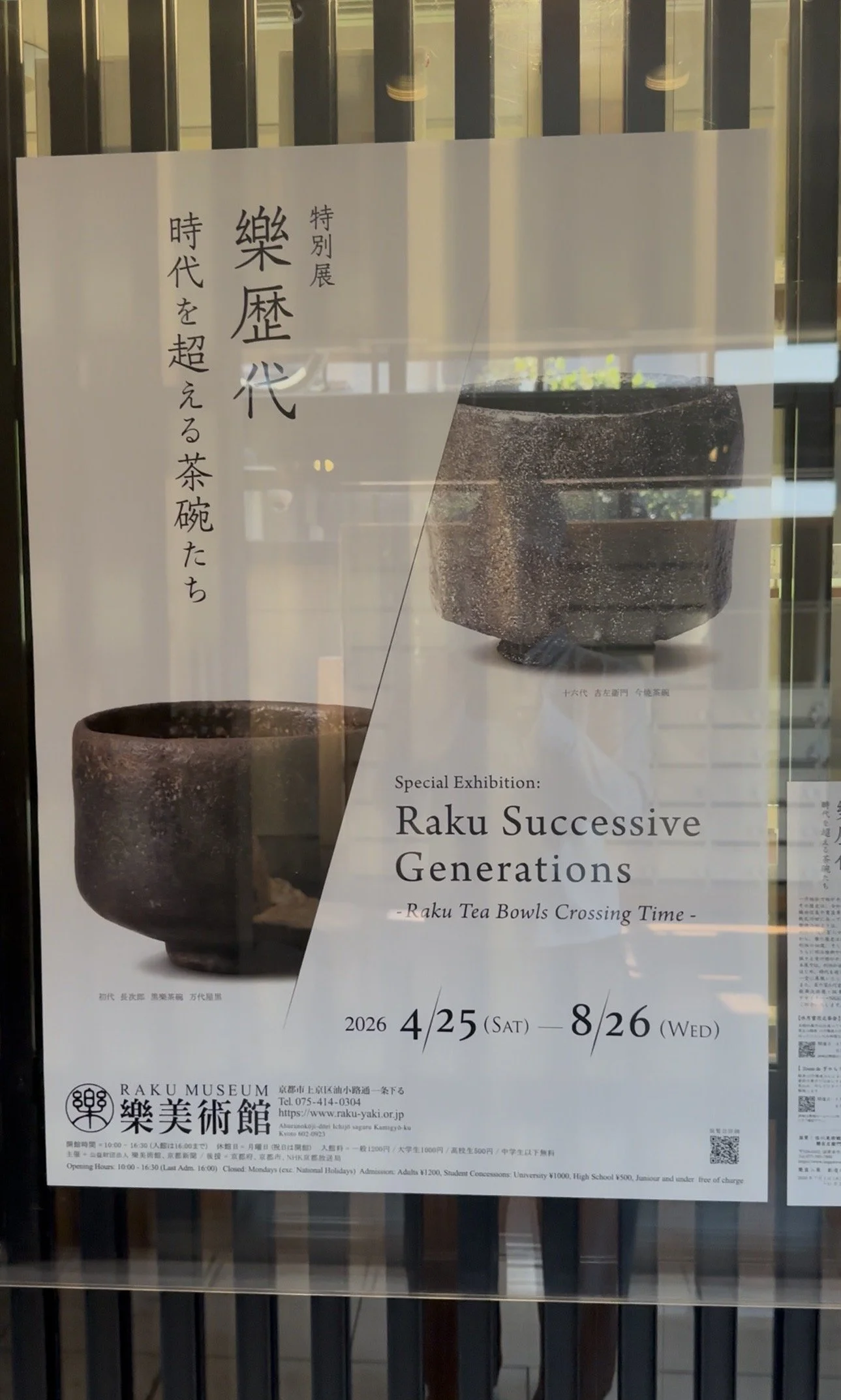
Inside the Raku Museum in Kyoto during the Raku Successive Generations exhibition. Chawan from Chōjirō to the 16th Kichizaemon, a quiet garden, and one idea about tradition that stayed with me.
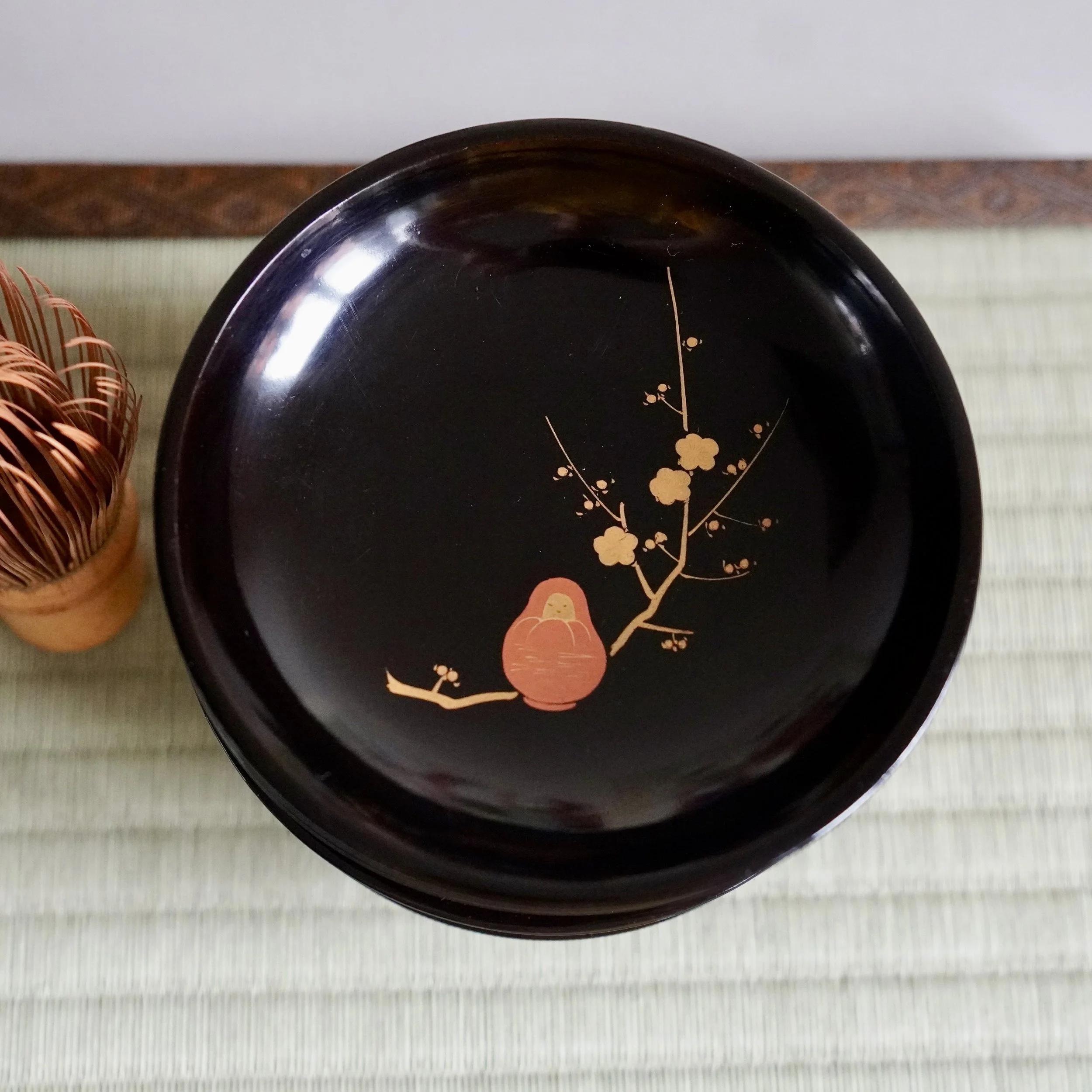
Urushi looks fragile and behaves like the opposite, until it meets a sunny windowsill or a winter radiator. Here is what actually damages lacquerware, what does not, and the handful of habits that keep a piece looking the way it did the day it was finished.
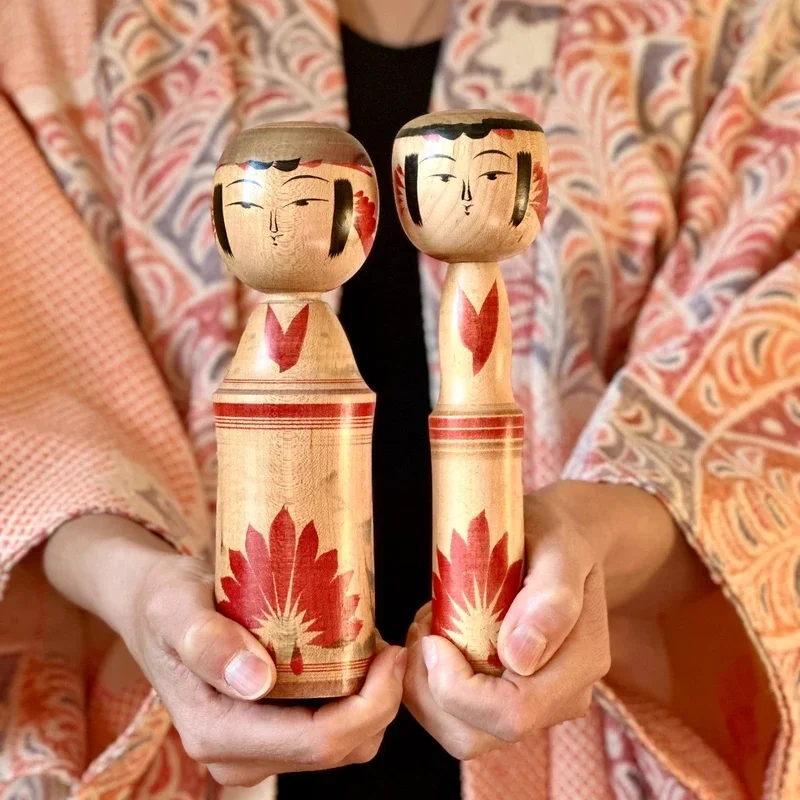
A kokeshi asks for very little once it has found the right spot. Grouped in threes on a shelf, alone on a windowsill out of direct sun, or standing next to something entirely unrelated, like a stack of books or a single dried branch. Here is what I have learned about placing them so they actually get looked at, instead of disappearing into a room.
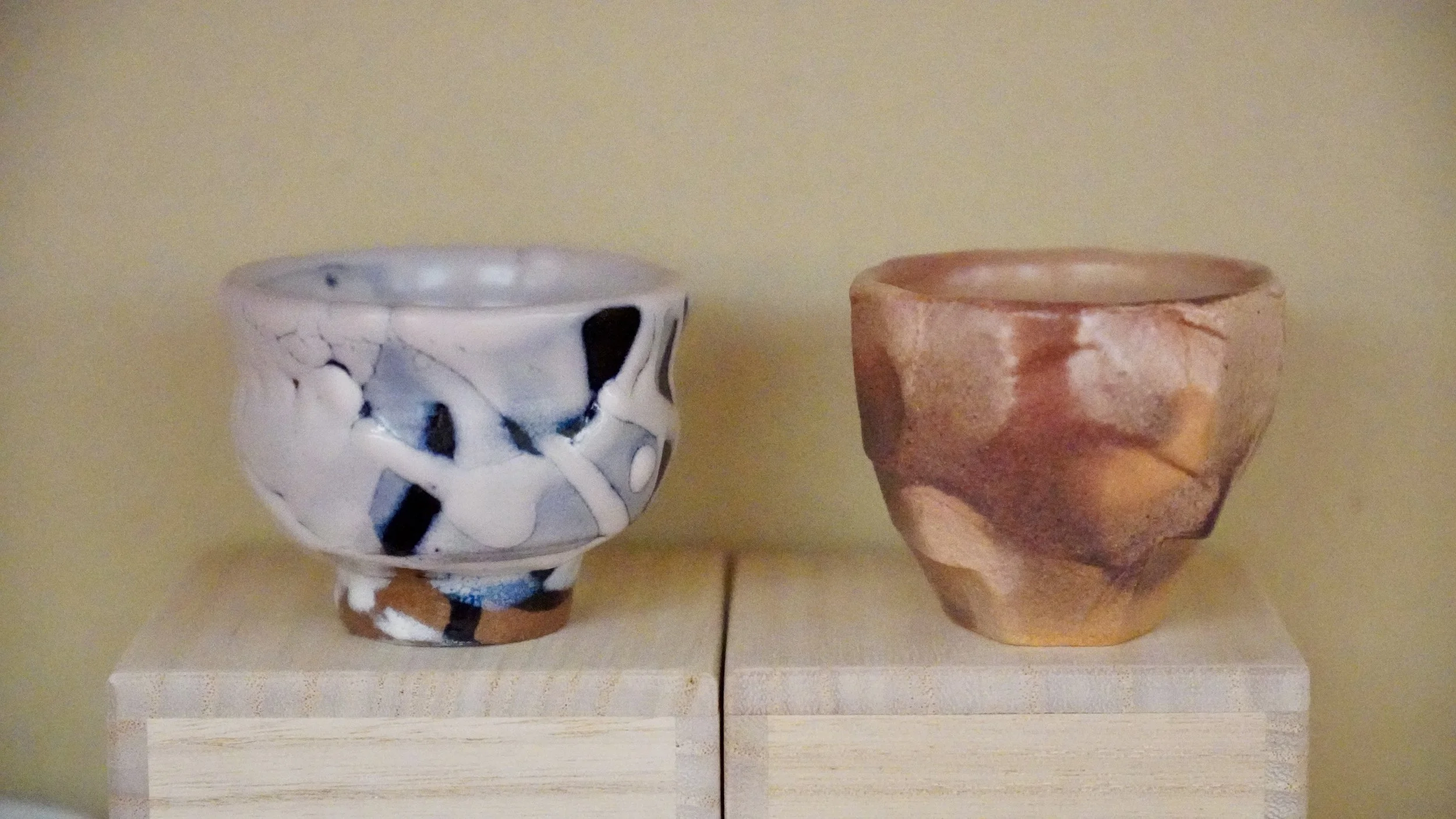
Every ceramic piece I bring home has already been through decades of hands before mine. A chawan changes colour with tea over the years, a vase collects mineral marks if you let it, and neither of those things is damage. Here is what actually matters when you look after one.
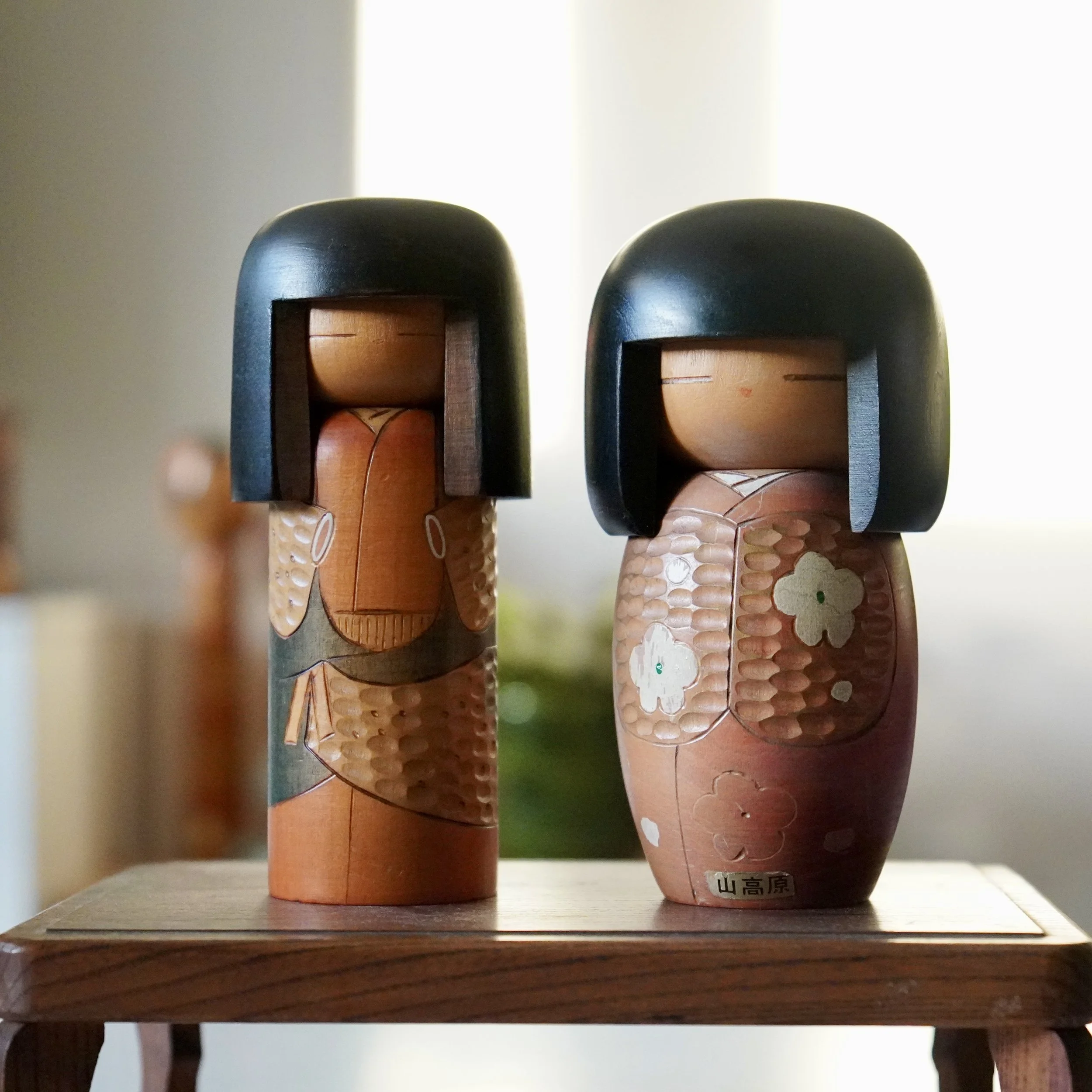
A week in the heartland of kokeshi: Fukushima. From climbing Mount Bandai before sunrise to studying the unique facial expressions in the work of masters like Ichiro and Sato Fumio. Discover how the landscape and deep-rooted woodcarving traditions shape these authentic vintage treasures.
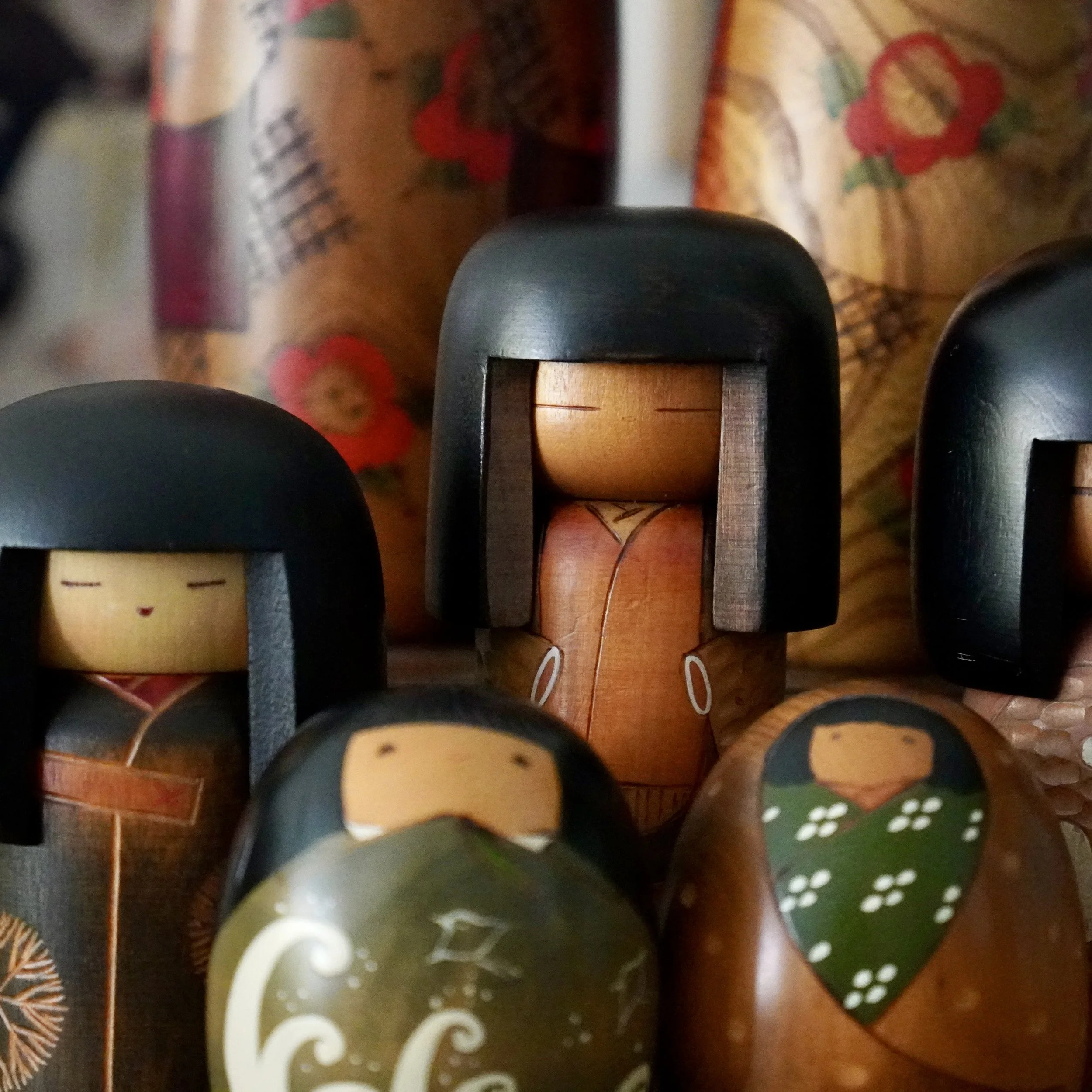
What draws you to a kokeshi is rarely the name on the base. It is the grain showing through the dark wood, the mark the tool left, and the two lines that somehow become a face. A close look at how makers like Usaburo and Sansaku Sekiguchi work with and against the wood itself.
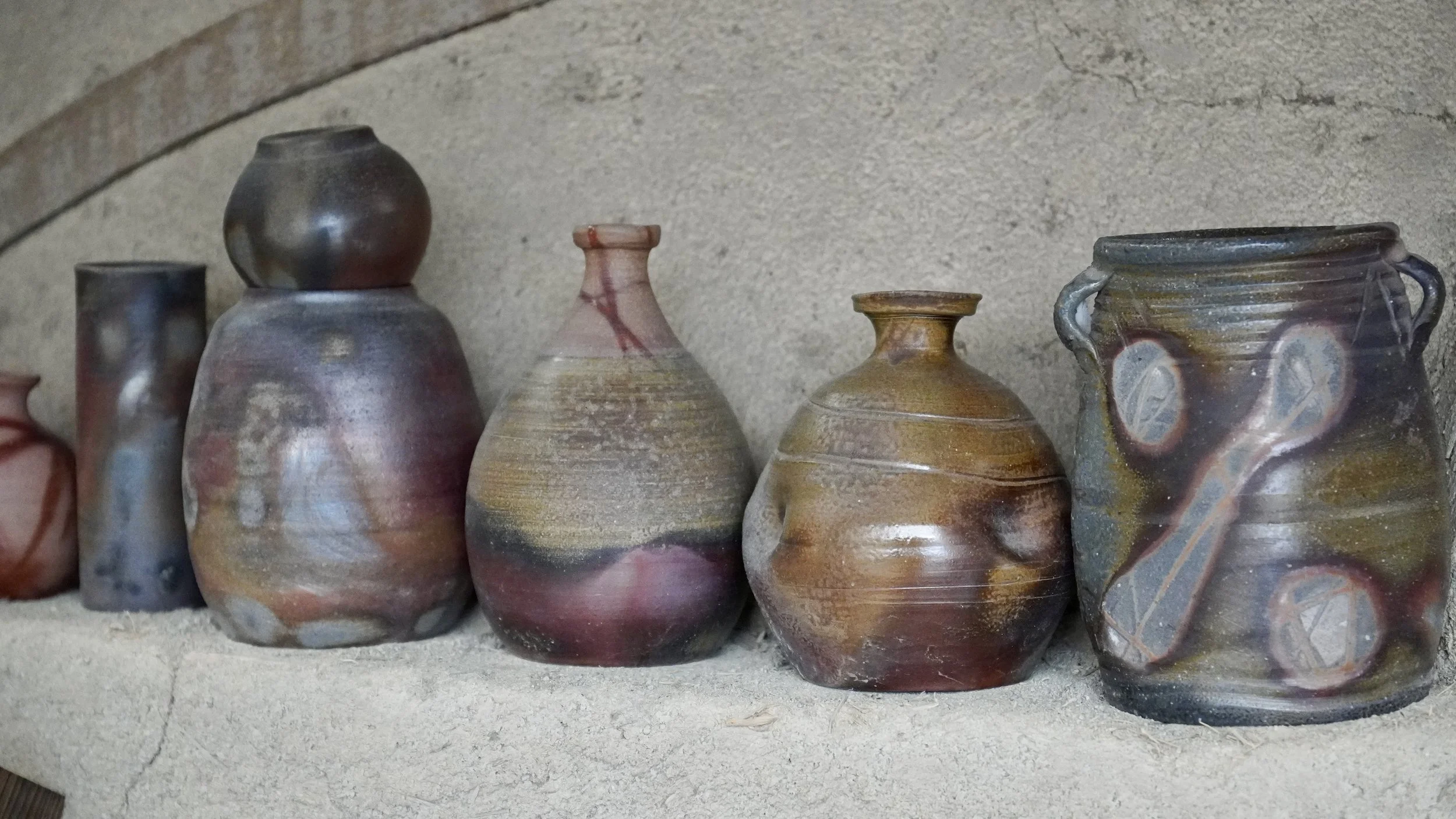
Bizen-yaki has no glaze. Every color, every mark, every surface effect is made in the kiln by fire, ash, and position. This guide explains what hidasuki, goma, sangiri and shiro-Bizen actually are, how they are made, and what to look for when you buy.
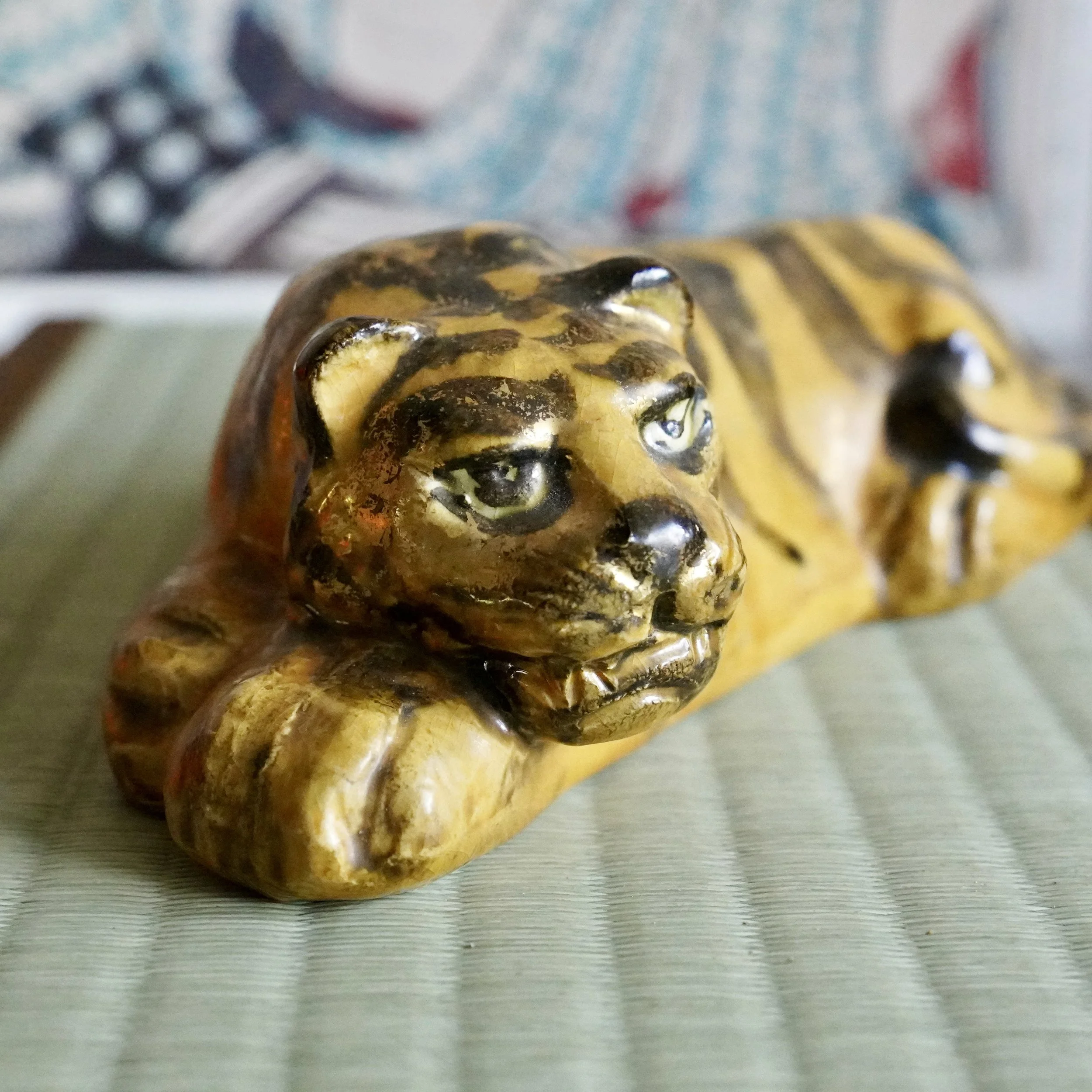
There is a small tiger on my desk with gold worn down to almost nothing on its ears and shoulders. It was made for a Year of the Tiger, in Kyoto, by a kiln lineage going back to 1771. The wear is not damage. It is exactly what the gold was always going to do.
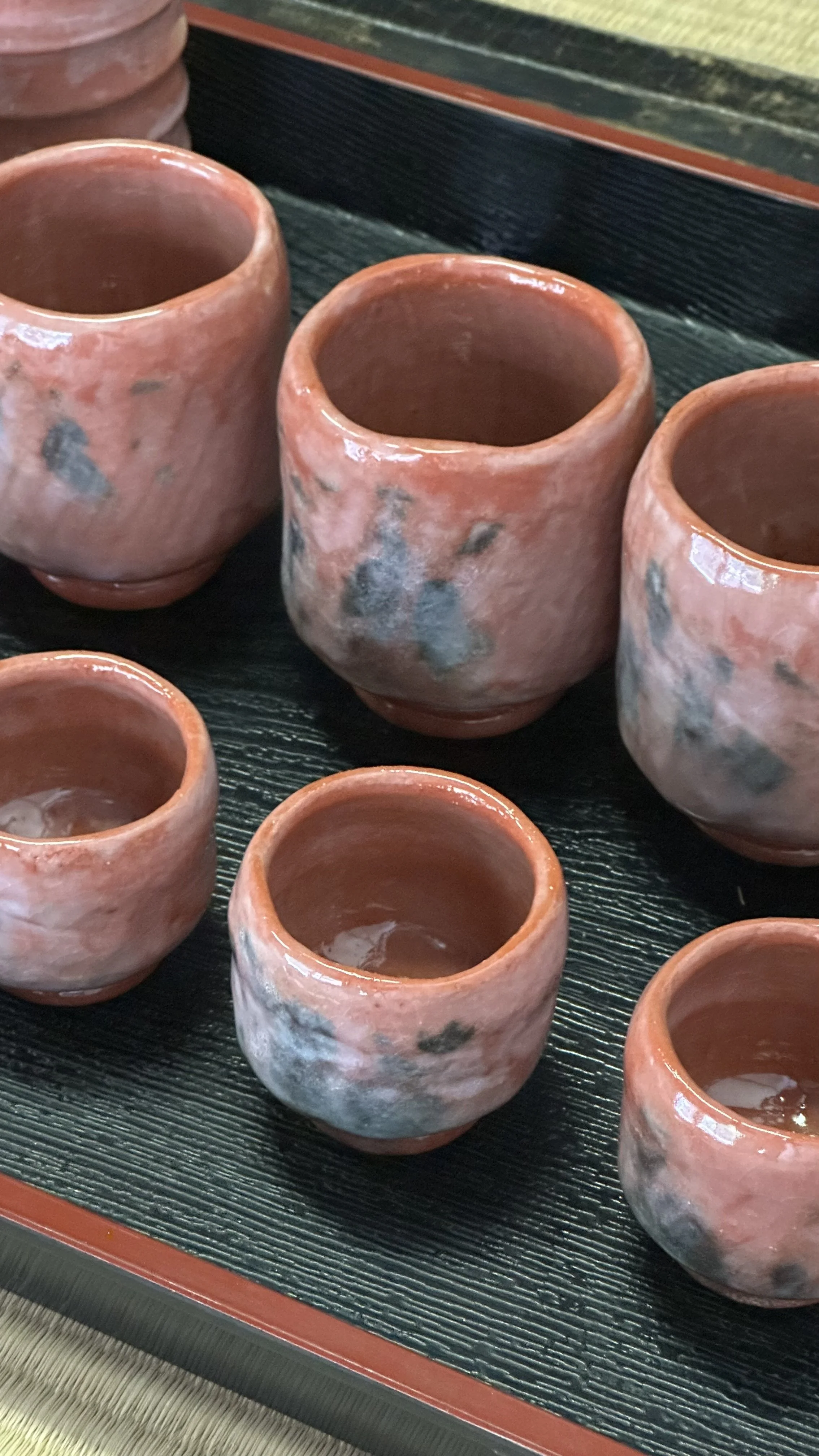
Behind the curtain at Raku Studio Waraku in Kyoto's Gion district. How aka-raku and kuro-raku tea bowls are hand-formed, fired, and finished with charcoal by 8th generation master Kawasaki Motoo. A sourcing diary entry from KAIKO&CO.
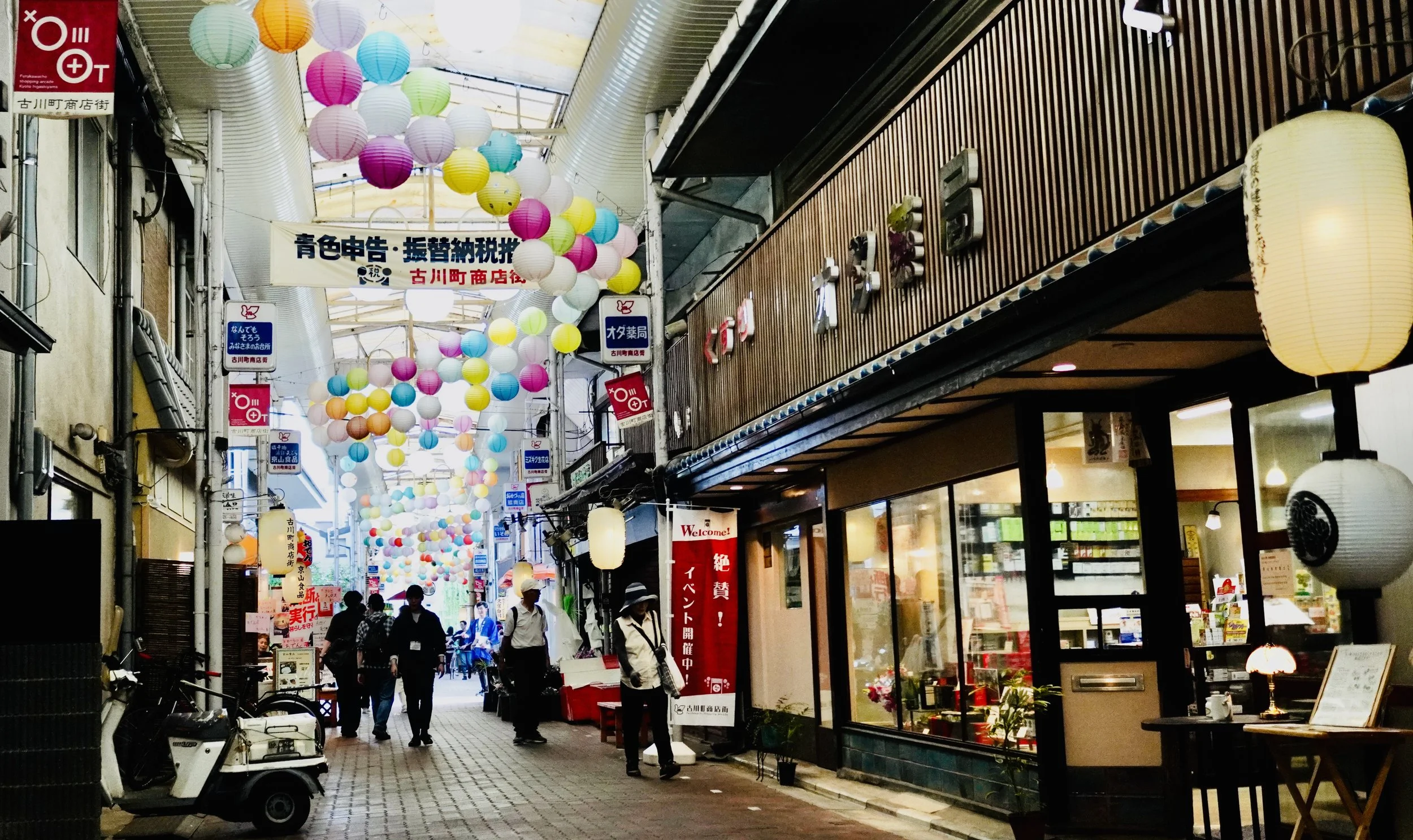
Furukawacho Shotengai in Higashiyama: an arcade frozen in the 1970s, a kimono specialist with six haori I had not expected to find, and a folder of 1895 Kyoto lithographs from an antique bookstore tucked behind a curtain. Day three of my Sourcing Week in Japan series in Kyoto and Okayama.
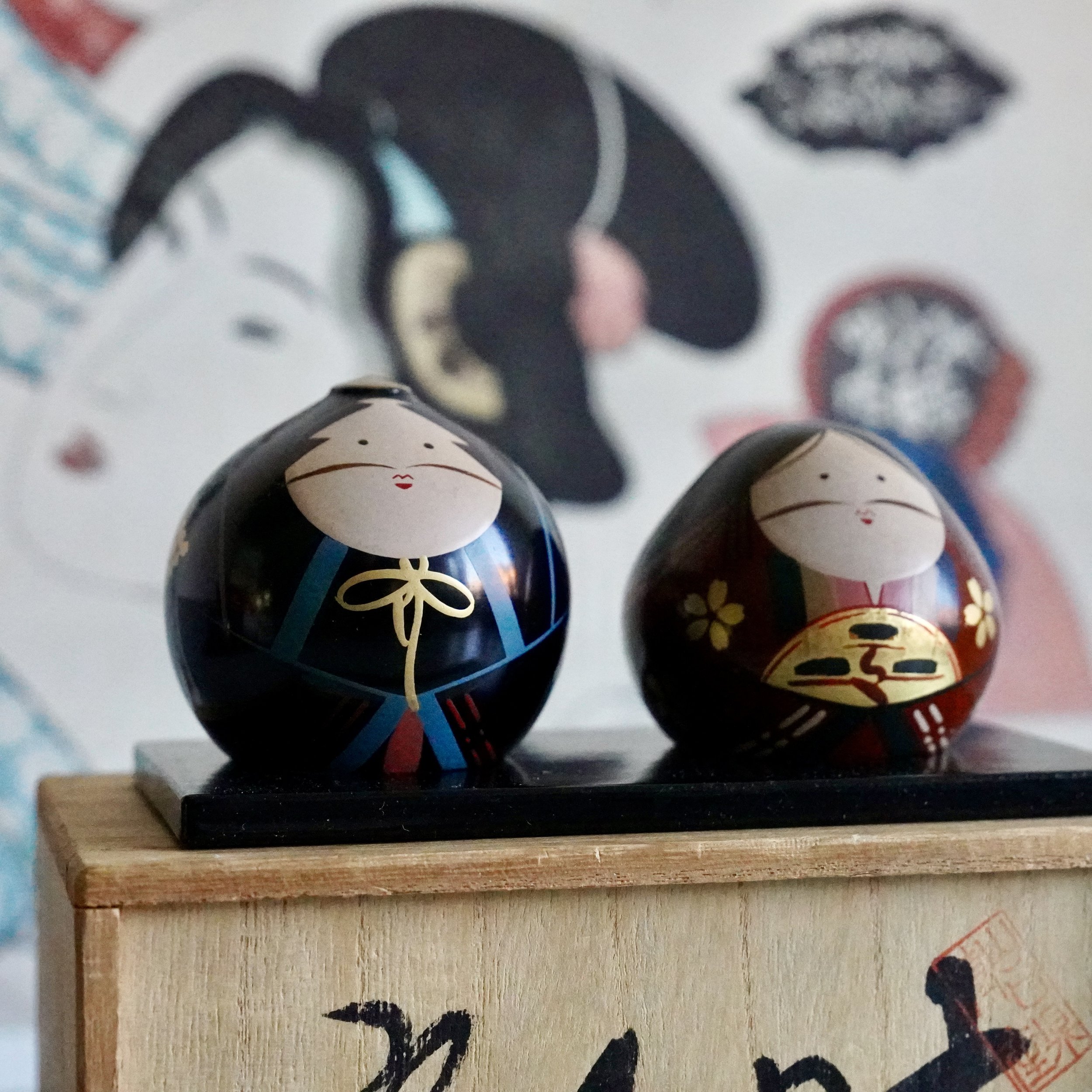
An antique market stall on temple grounds in Tokyo's Yanaka cat town, a lacquered doll pair from the ‘50’s with a story about a homesick bride, and a cat print.
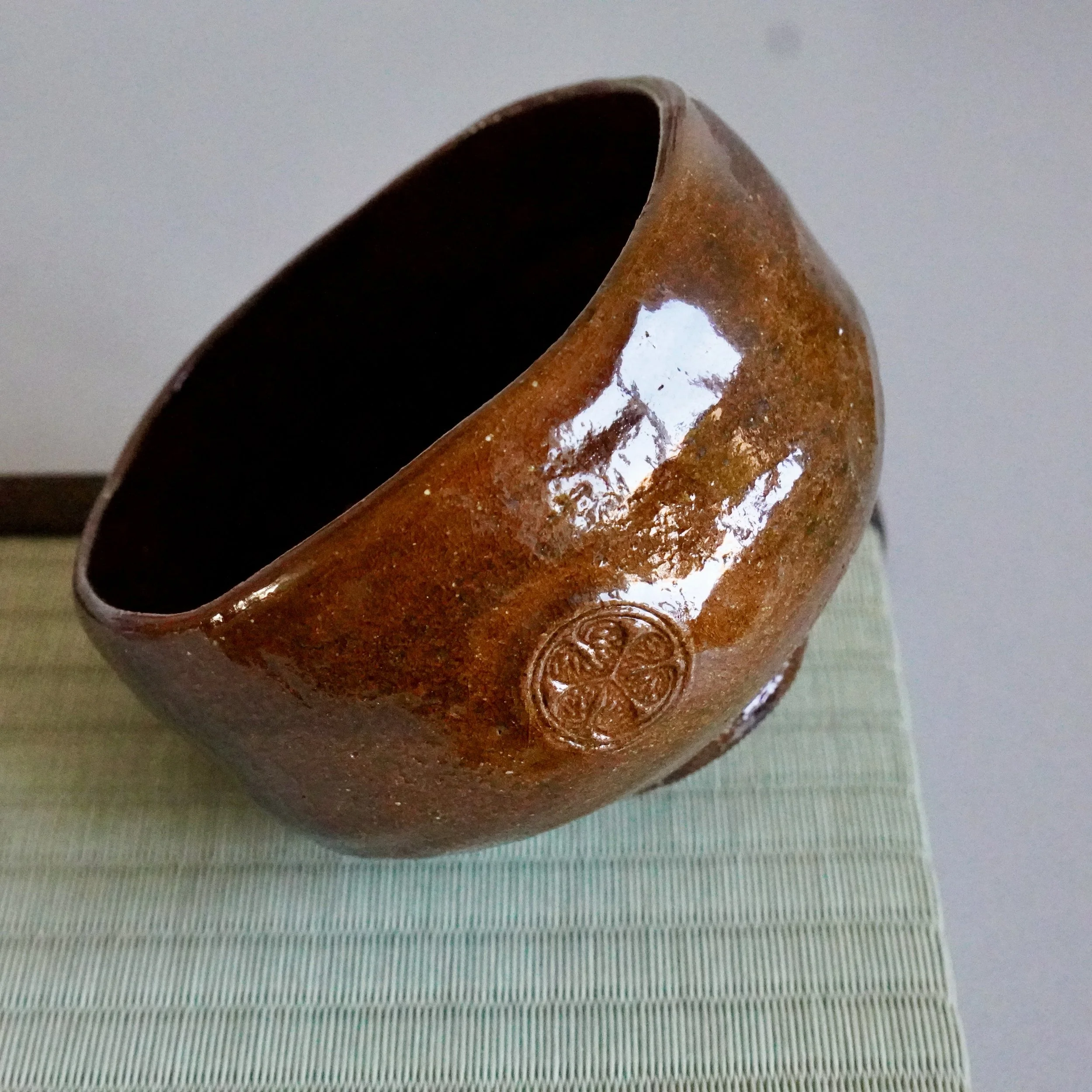
A Kyoto potter stayed behind in Kanazawa in 1666, and the Raku family sent a glaze north with him, one built for the cold. Eleven generations later, that same amber glaze still catches the light.
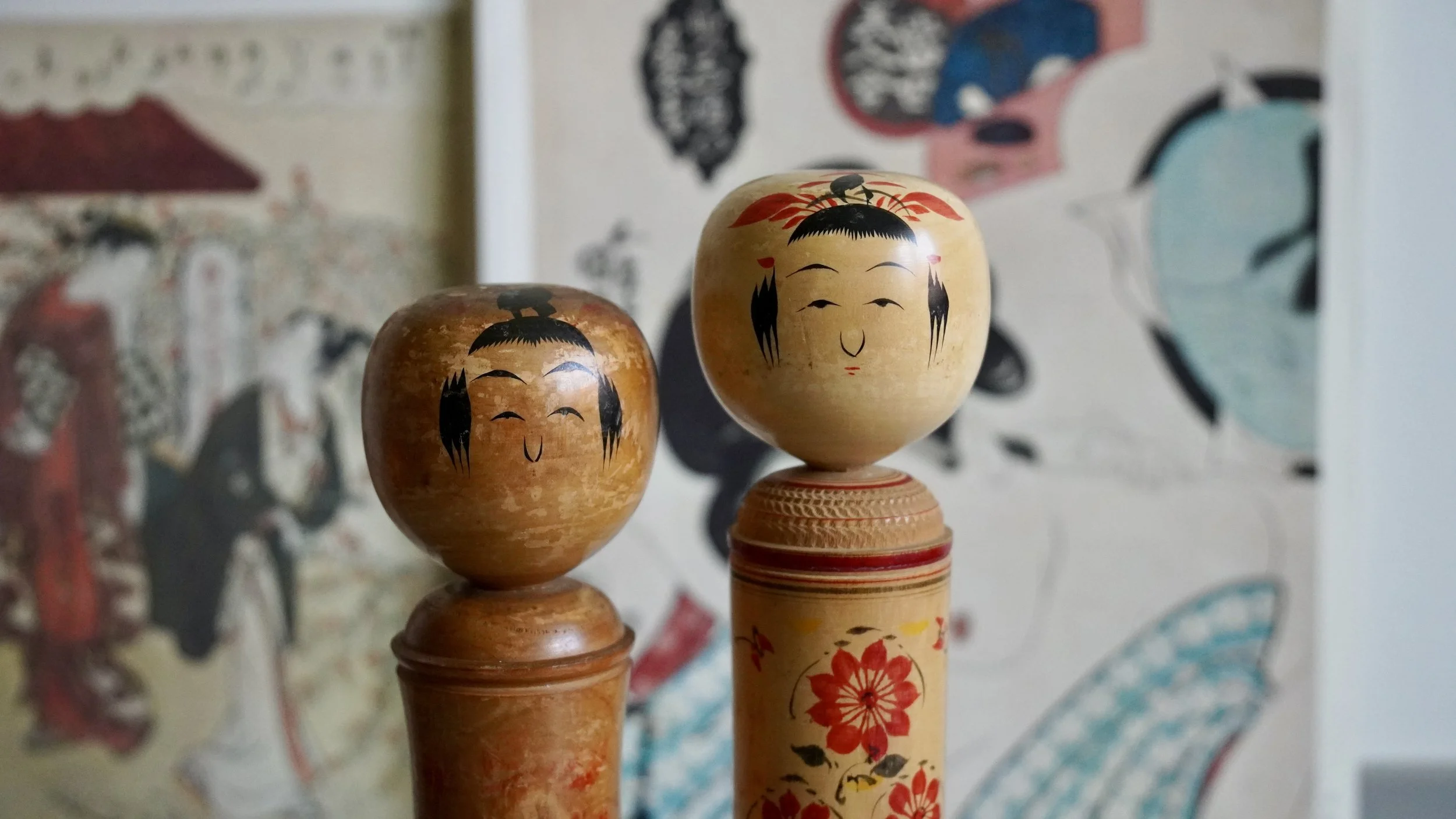
Two kokeshi, eighty years apart. Same face, different hands. The story of the Sakurai family and five generations of Naruko tradition.
Some supplier relationships take years to build. In Osaka I have a meeting over tea and chawan pieces that never reach any public market. Day two of my Sourcing Week in Japan series in Kyoto and Okayama.
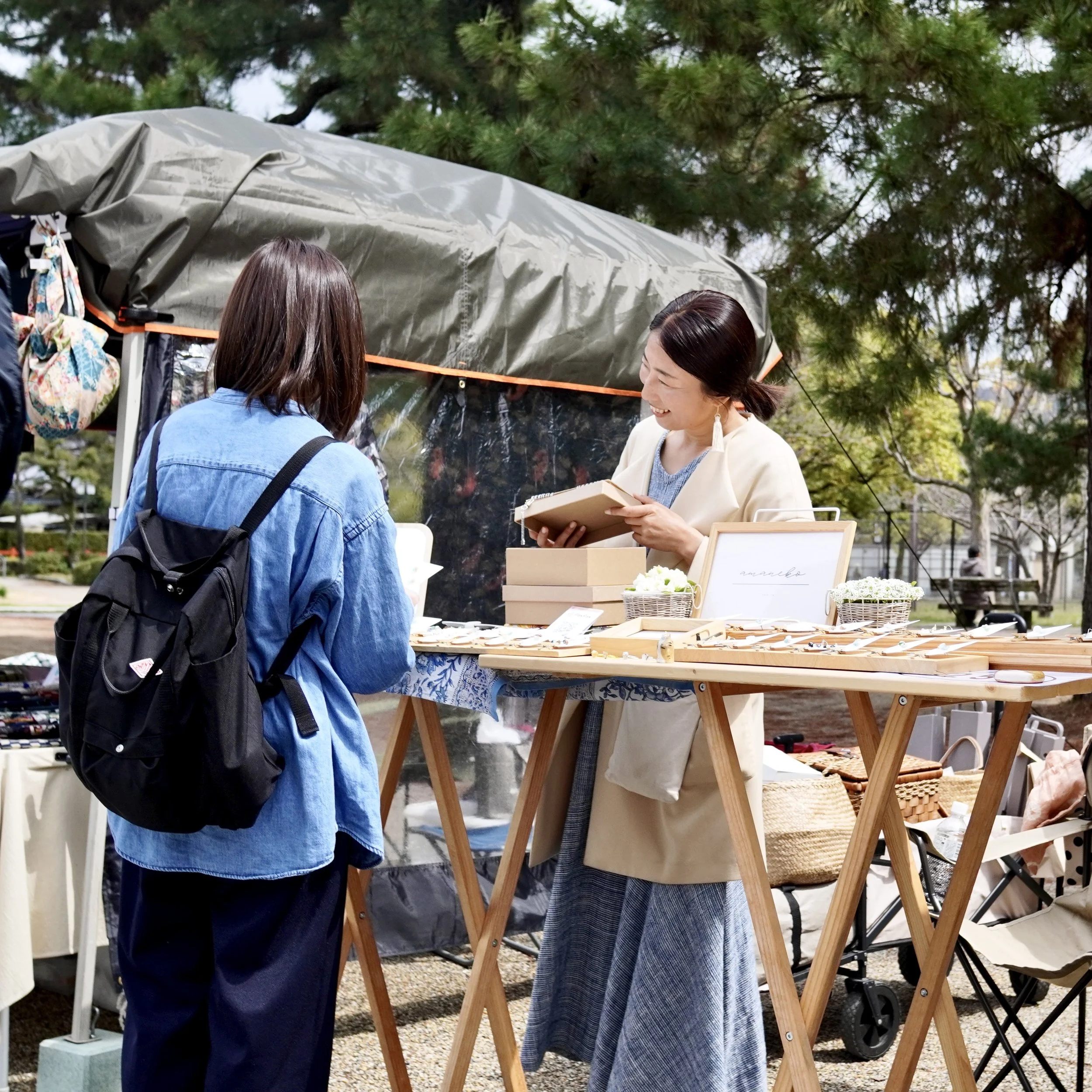
This is where the week begins. An early alarm, a heavy bag, and the first market of the trip: Kobo-san at Tōji Temple, Kyoto, at 5:30 in the morning. Day one of my Sourcing Week in Japan series in Kyoto and Okayama.
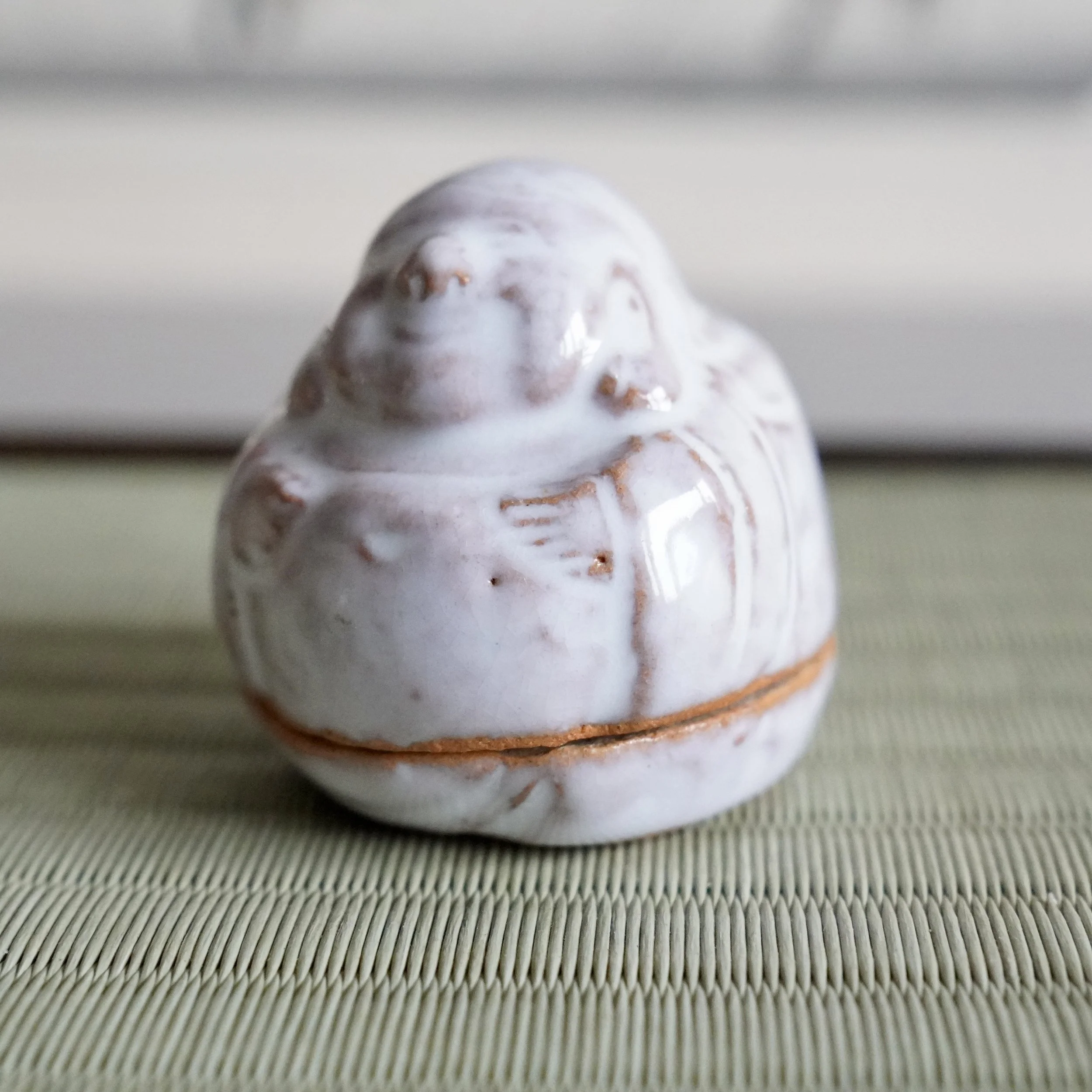
This is Hotei, the laughing god of contentment, made in soft Hagi-yaki. Hagi ware made by the hand of potter Okada Yutaka. He holds a single piece of incense. After that piece is placed near the charcoal, he sits empty for the rest of the session. Japan put its finest craft into this moment of emptying, and then into the silence after.
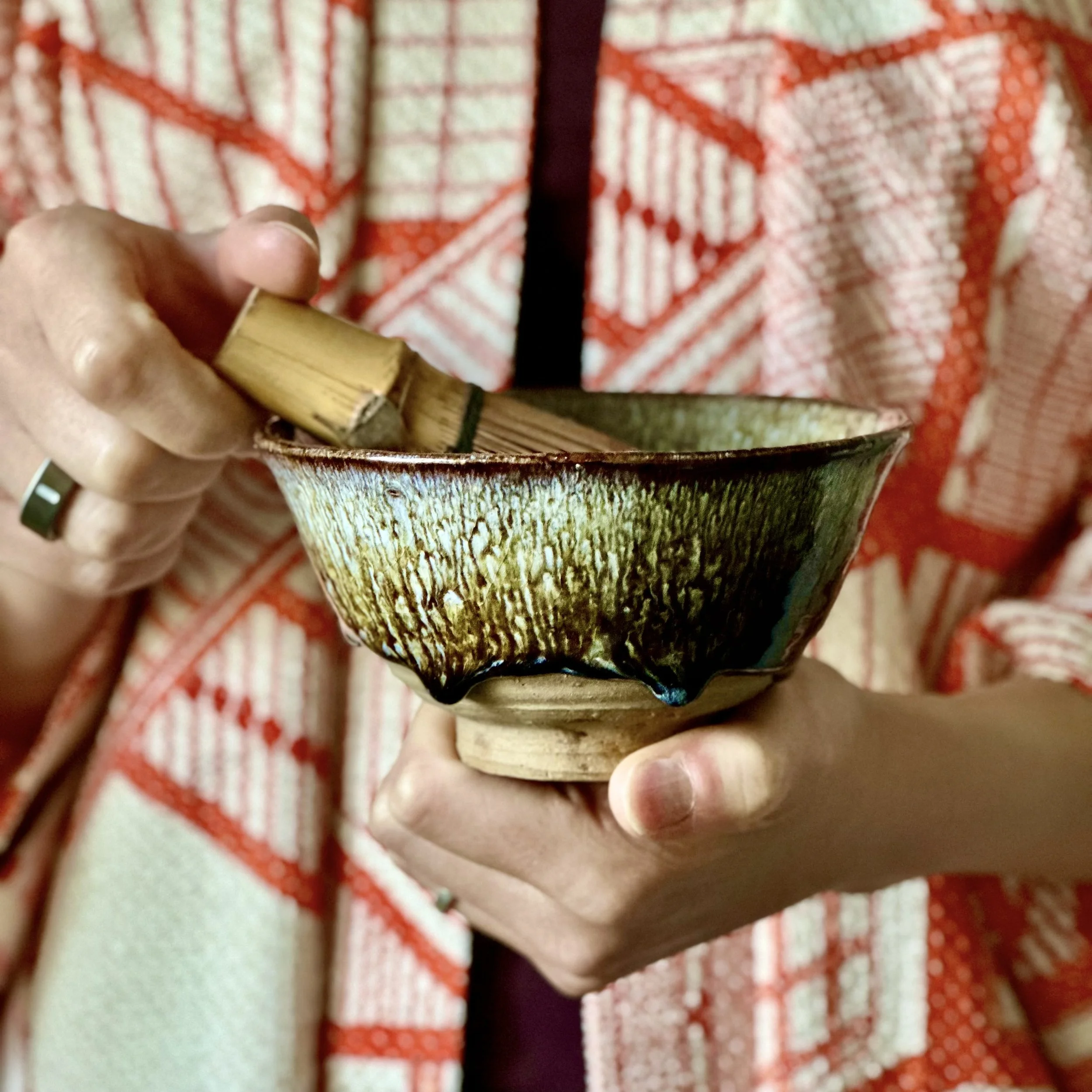
Before you taste the tea, you hold the bowl. Weight, diameter, the way the foot sits in your palm: these are not secondary details. They are the bowl. On what I look for when I source chawan in Japan, and why size tells you more than the glaze ever will.
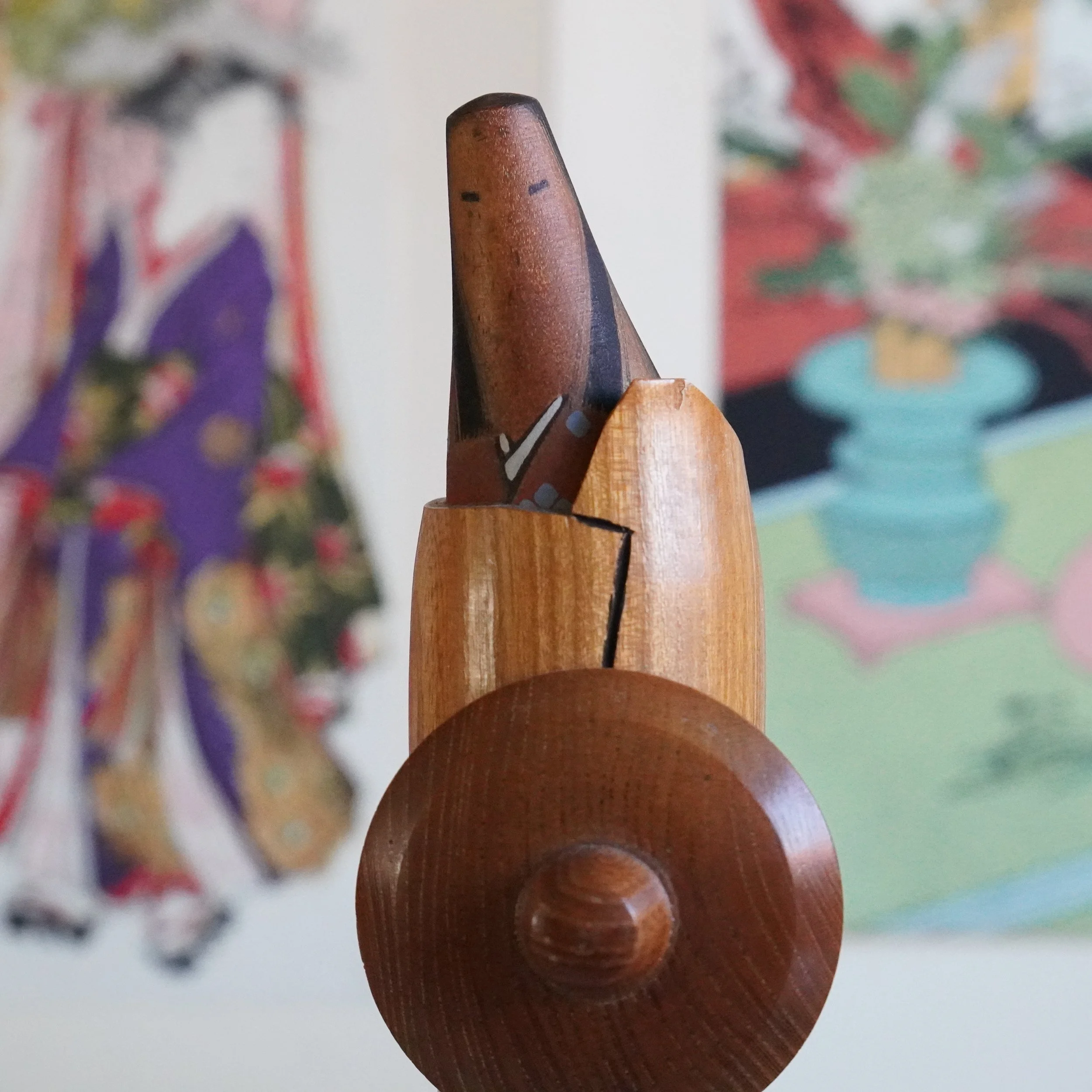
A kokeshi placed well in a room is more powerful than five grouped without thought. Here is what I have learned about height, background, and the quiet effect of giving one figure enough space to simply stand.
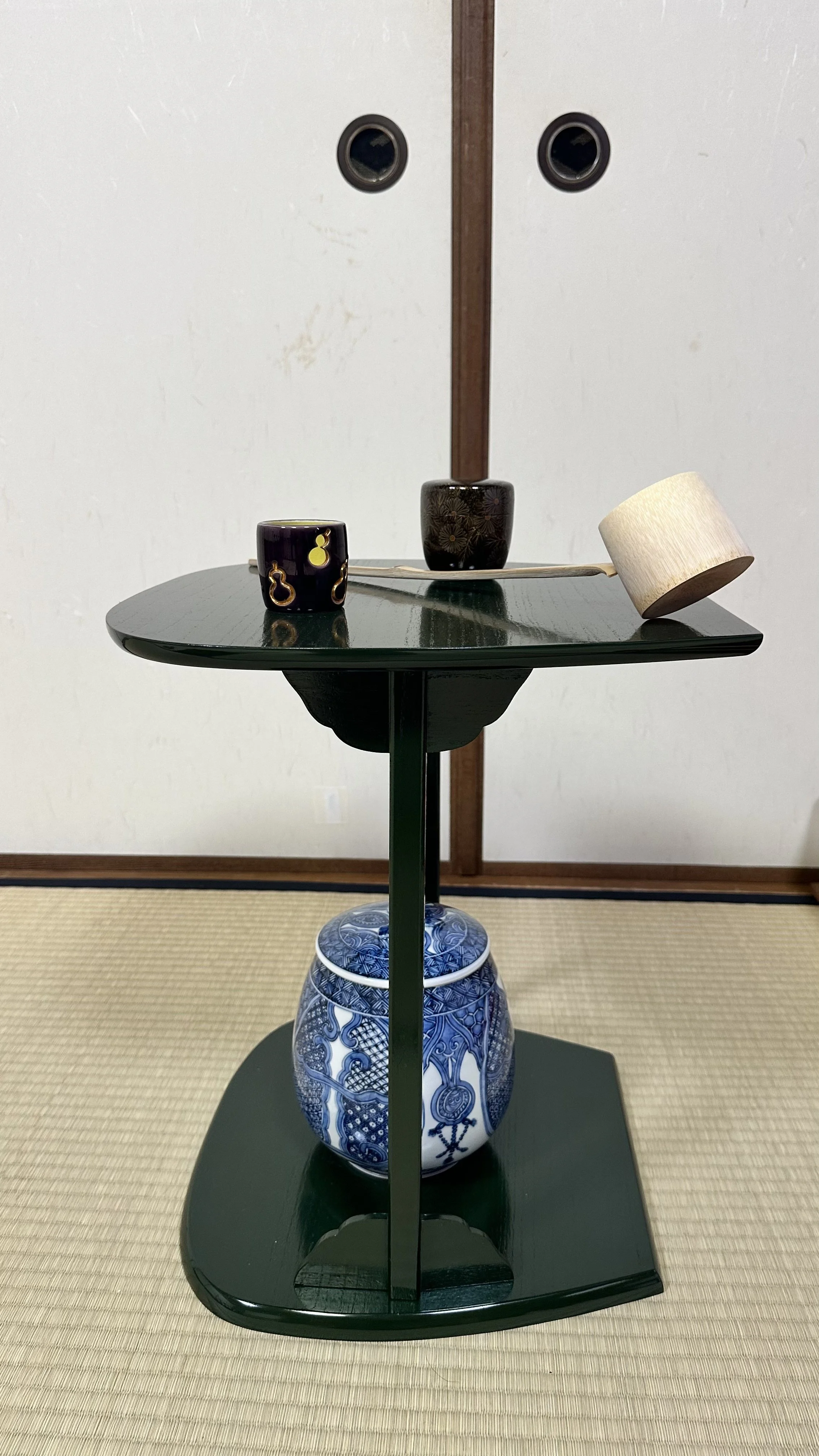
Every time I return from Japan, I carry objects built around a ritual. Not decorative pieces, but things that were made to slow things down. This is what I look for in each one, and why.
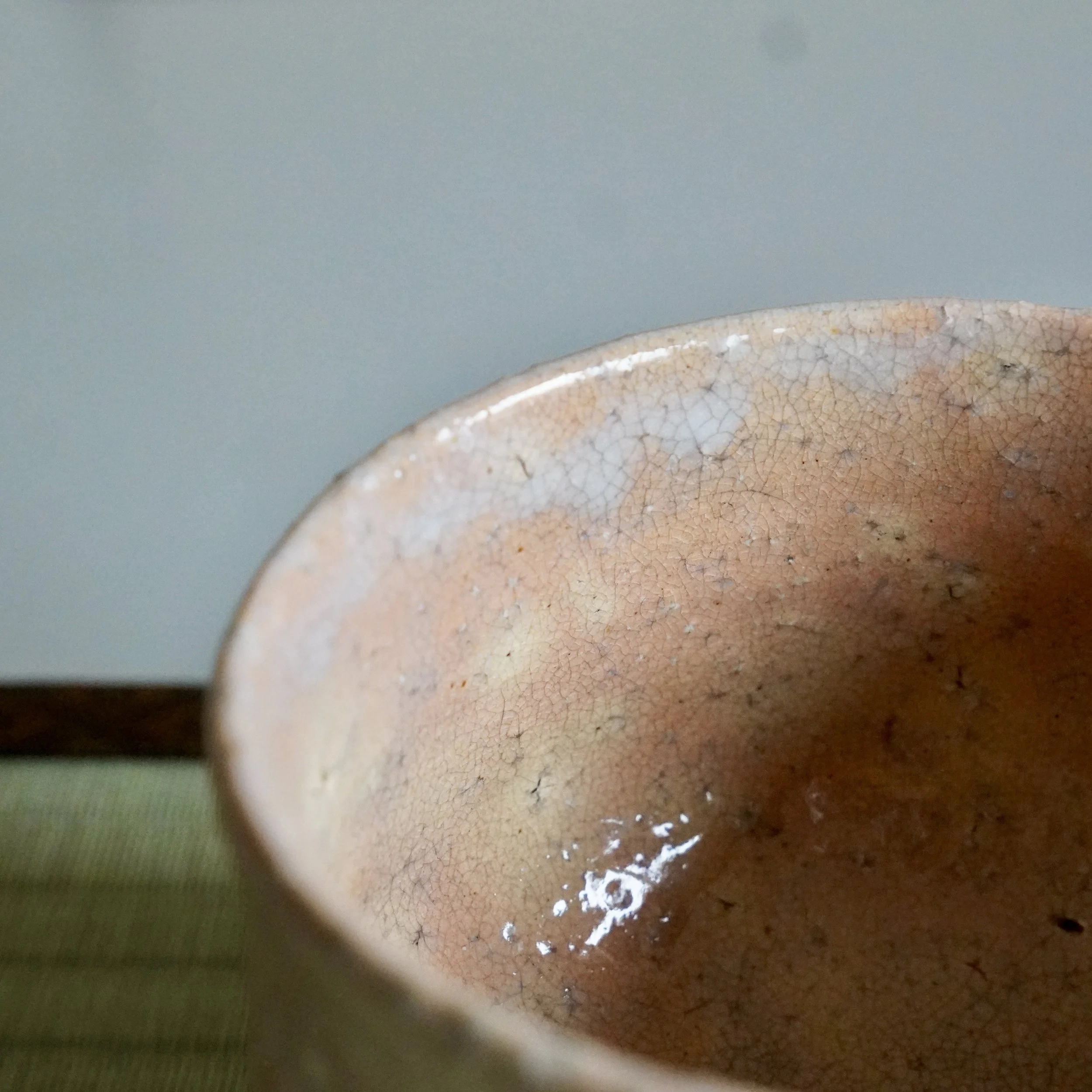
Hagi-yaki has been made in western Japan for over 400 years. What makes it special is what happens after you buy it. The bowl changes with every cup of tea you drink from it. That is why hagi-yaki is so loveable.
This one fits in the palm of one hand, small enough to forget it is bronze at all until you pick it up and feel the weight settle. The surface has softened into a deep, warm brown, dimpled all over from a hammer that clearly knew what it was doing.
Bells like this lived on home altars long before they found their way into meditation corners further from Japan, struck once to open or close a moment of quiet. This one sits on a cushion knotted from red silk and indigo brocade, with loose strands of coloured thread gathered at each seam.
The sound is very clear and bright.
Read more about the objects for your Japanese meditation corner, and why each one matters in my journal.