
 Image 1 of 20
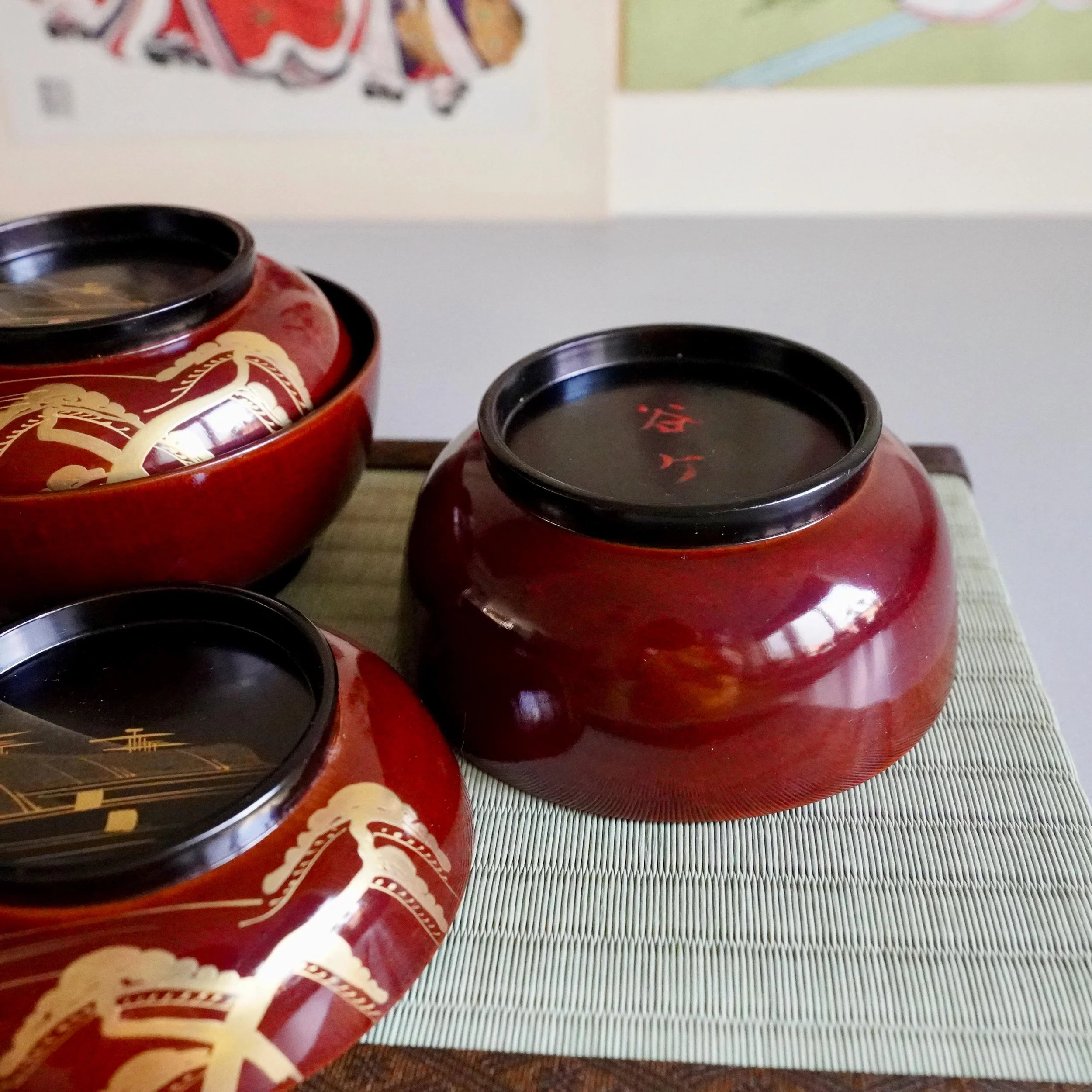 Image 2 of 20
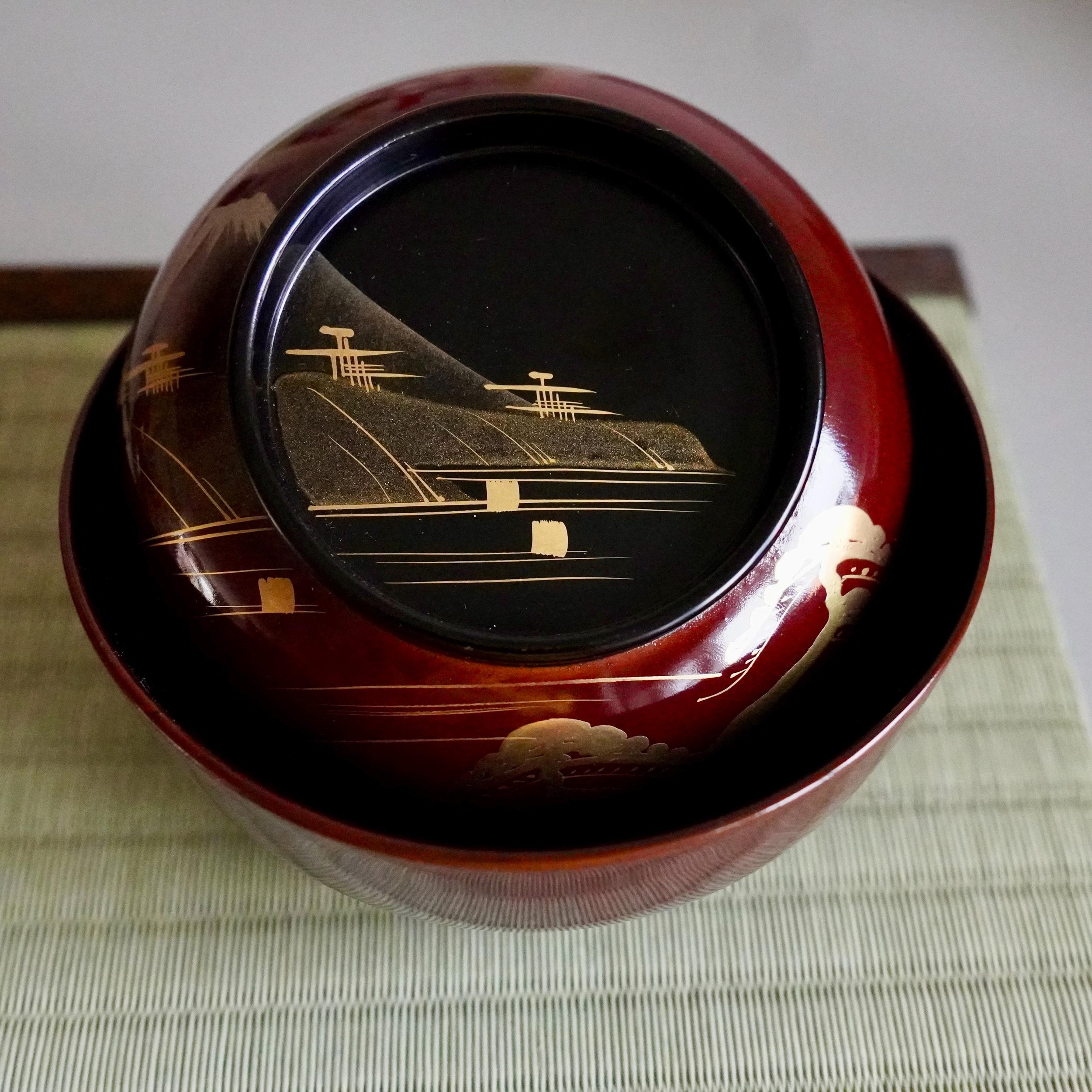 Image 3 of 20
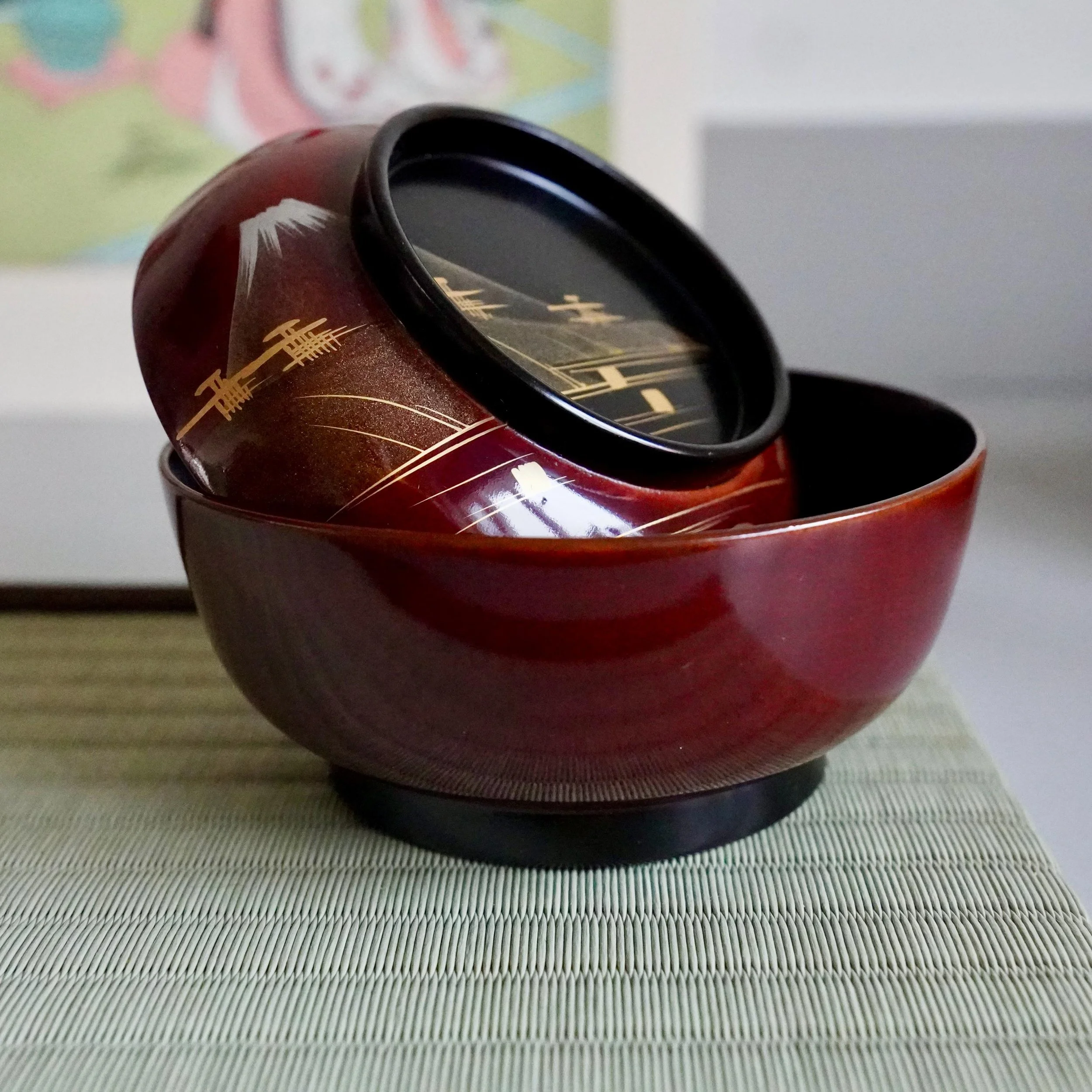 Image 4 of 20
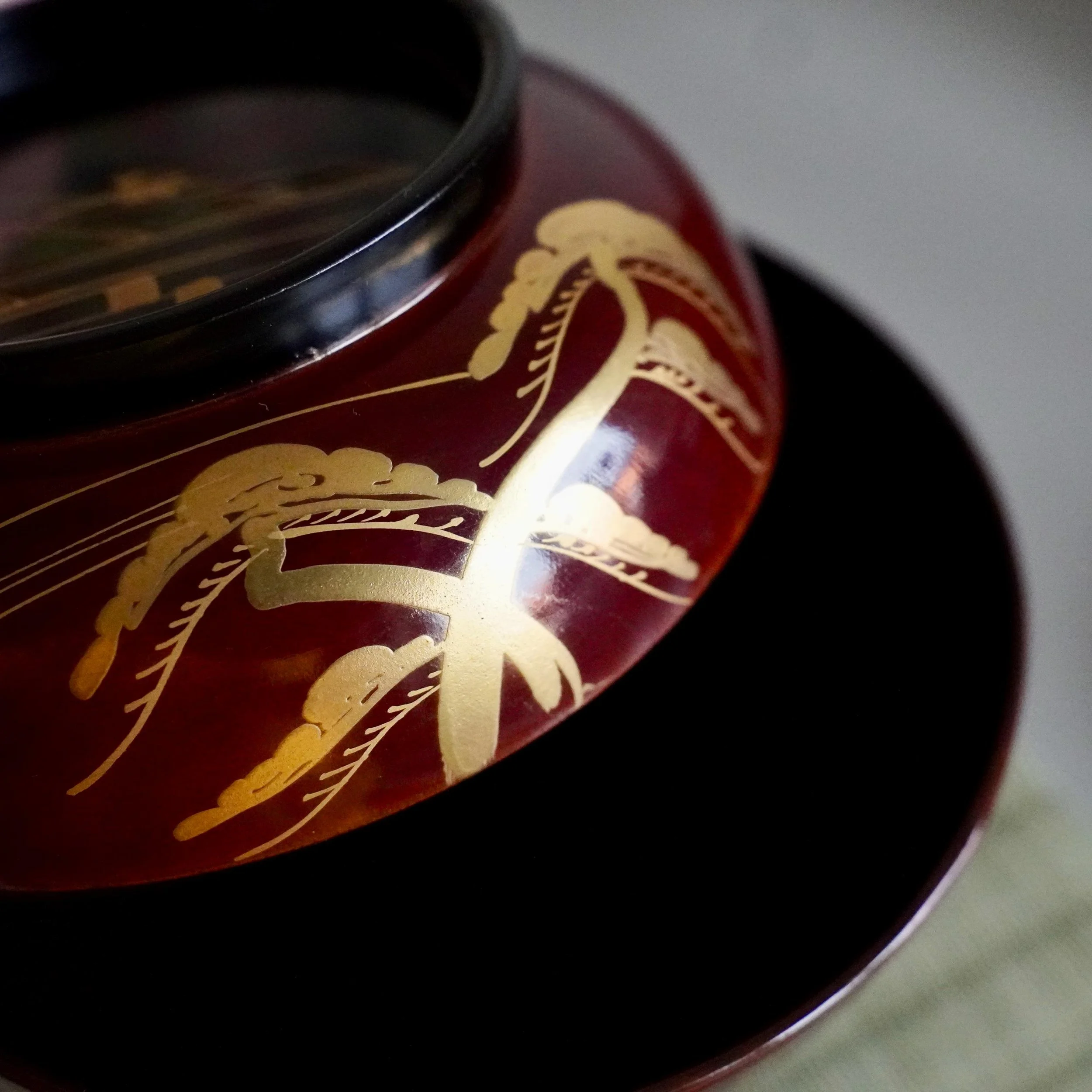 Image 5 of 20
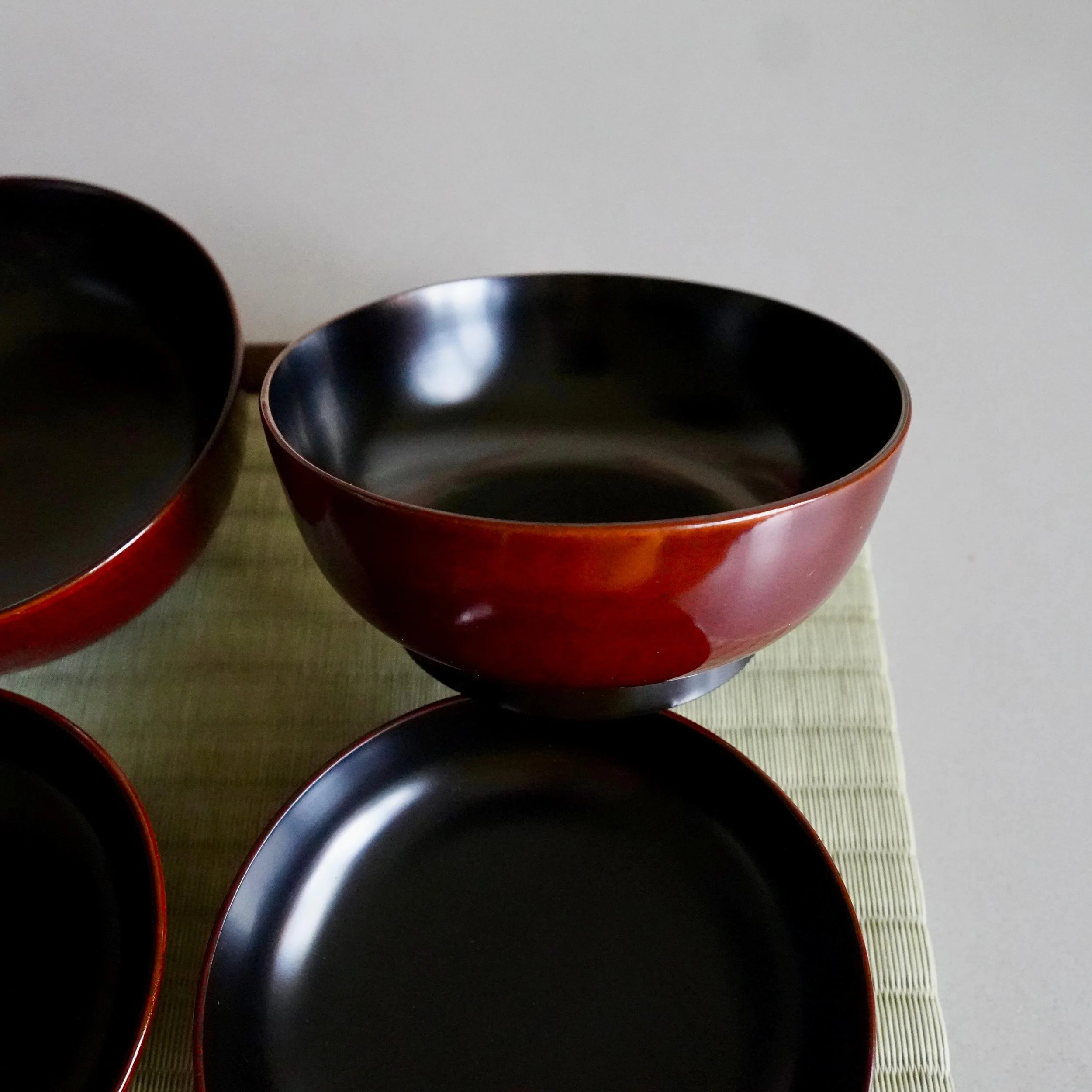 Image 6 of 20
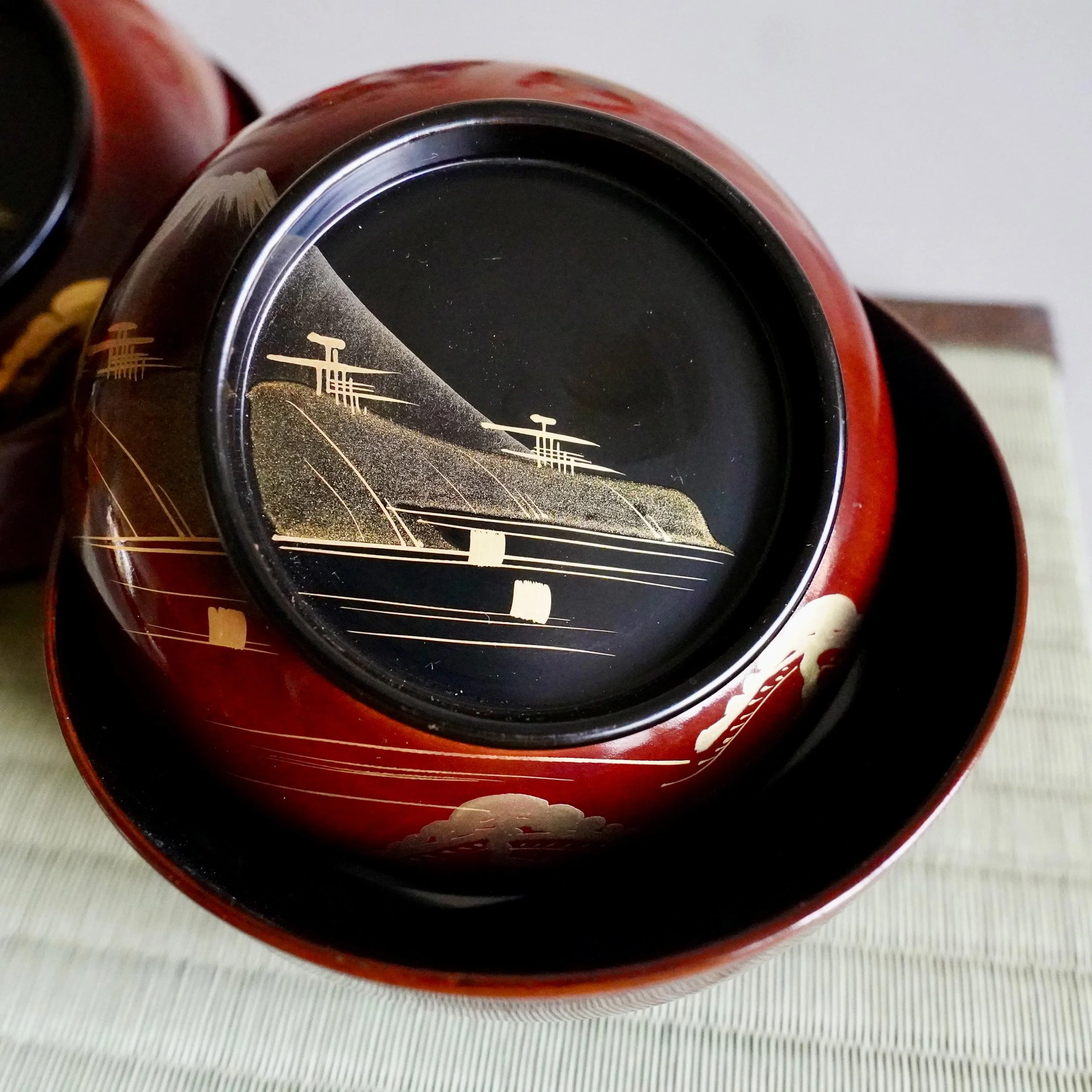 Image 7 of 20
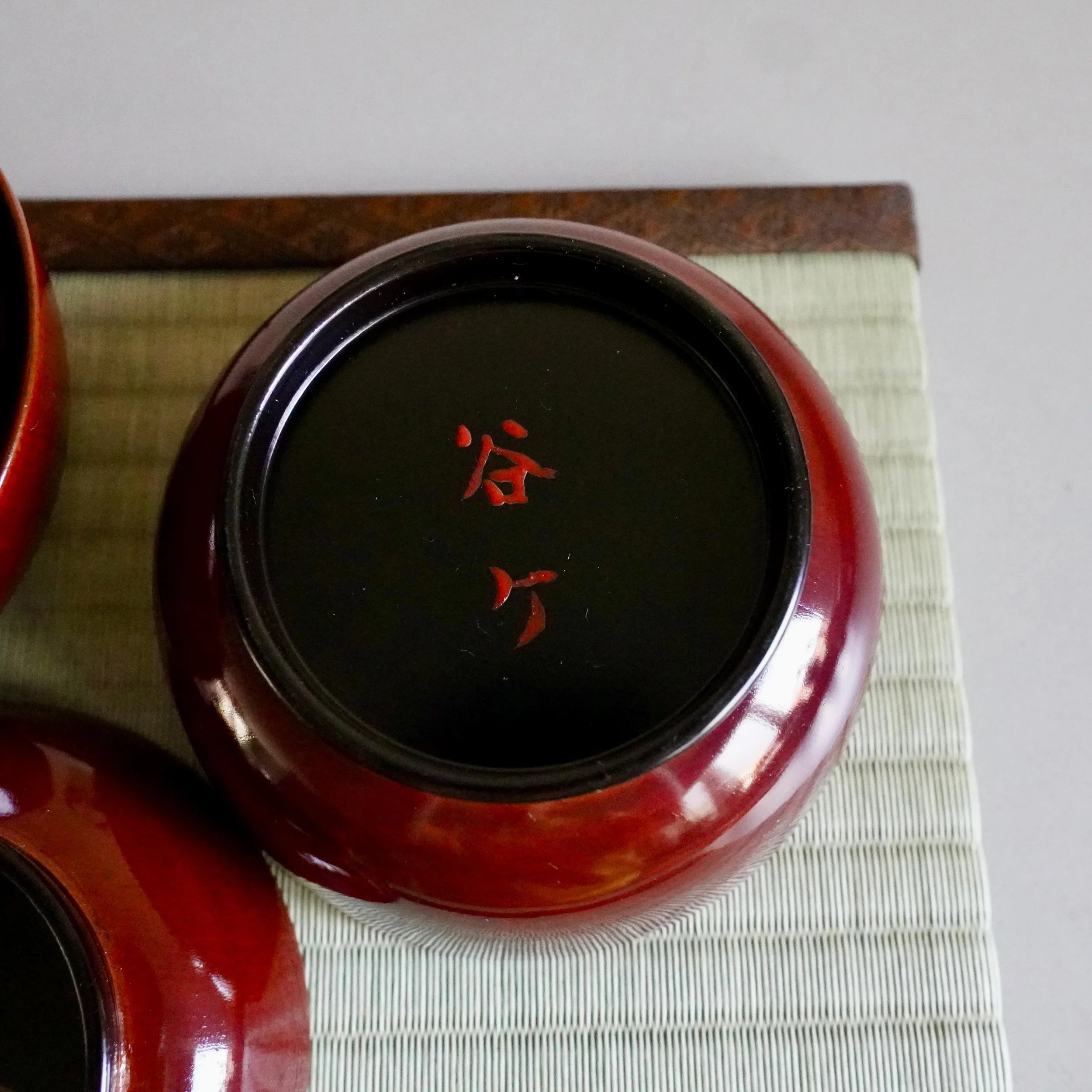 Image 8 of 20
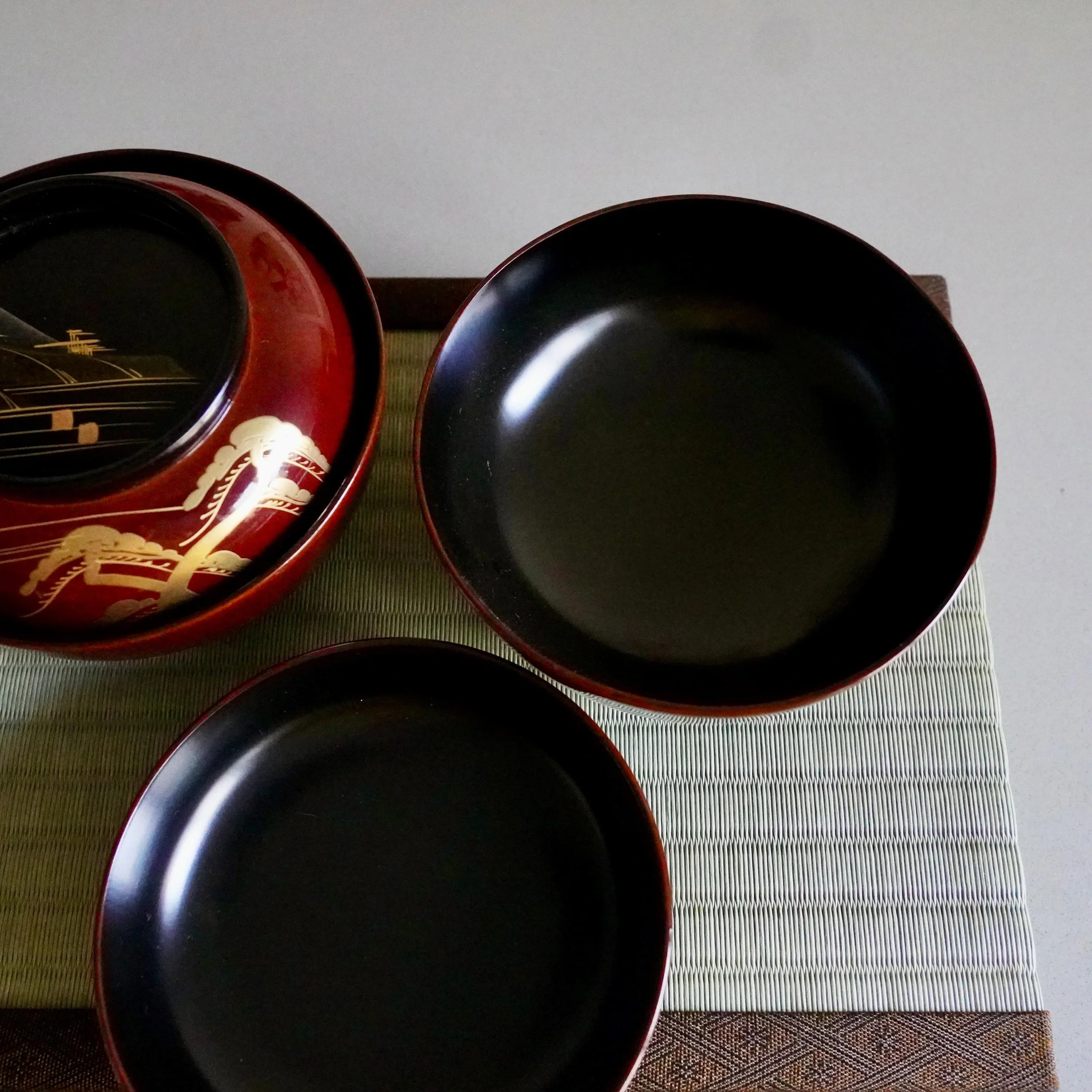 Image 9 of 20
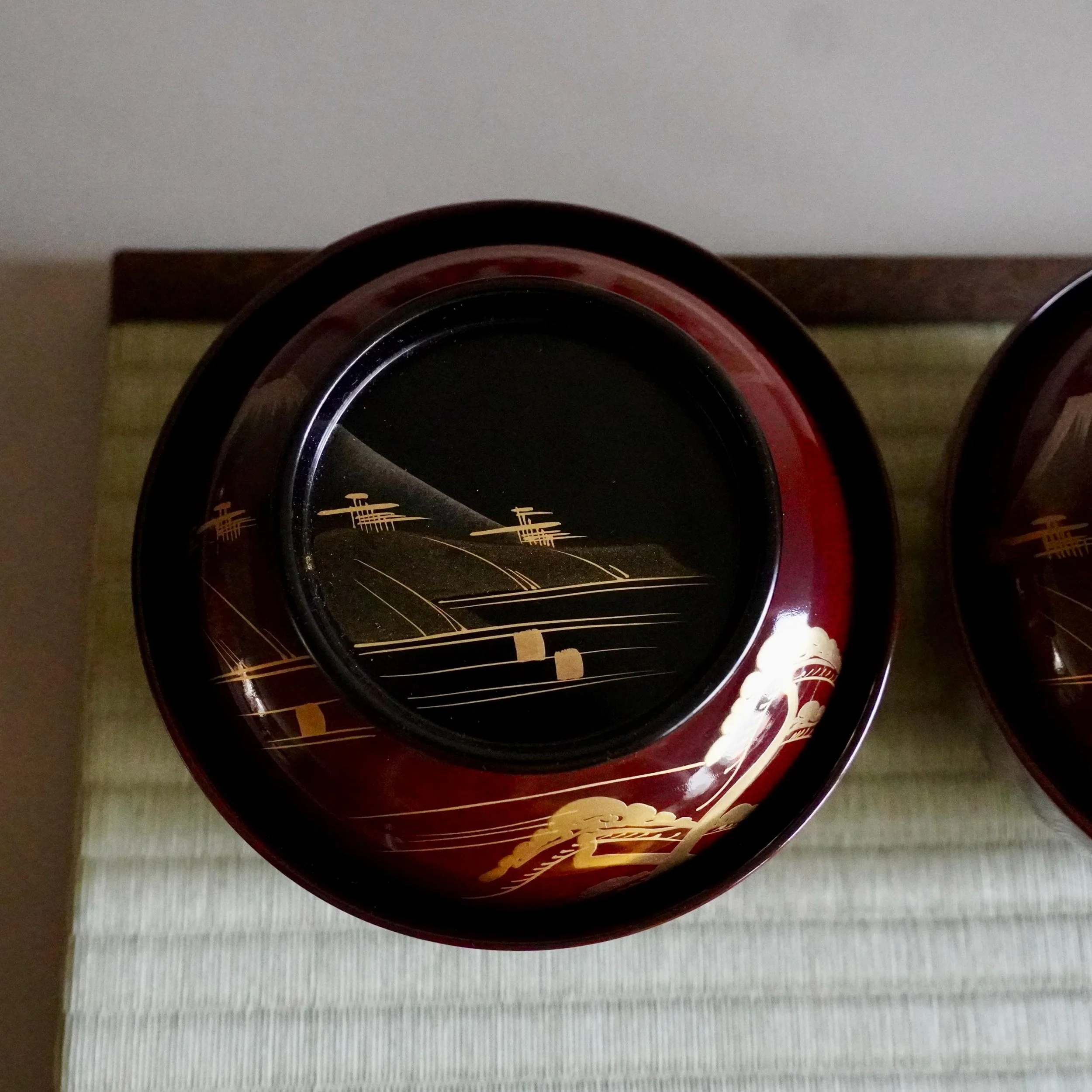 Image 10 of 20
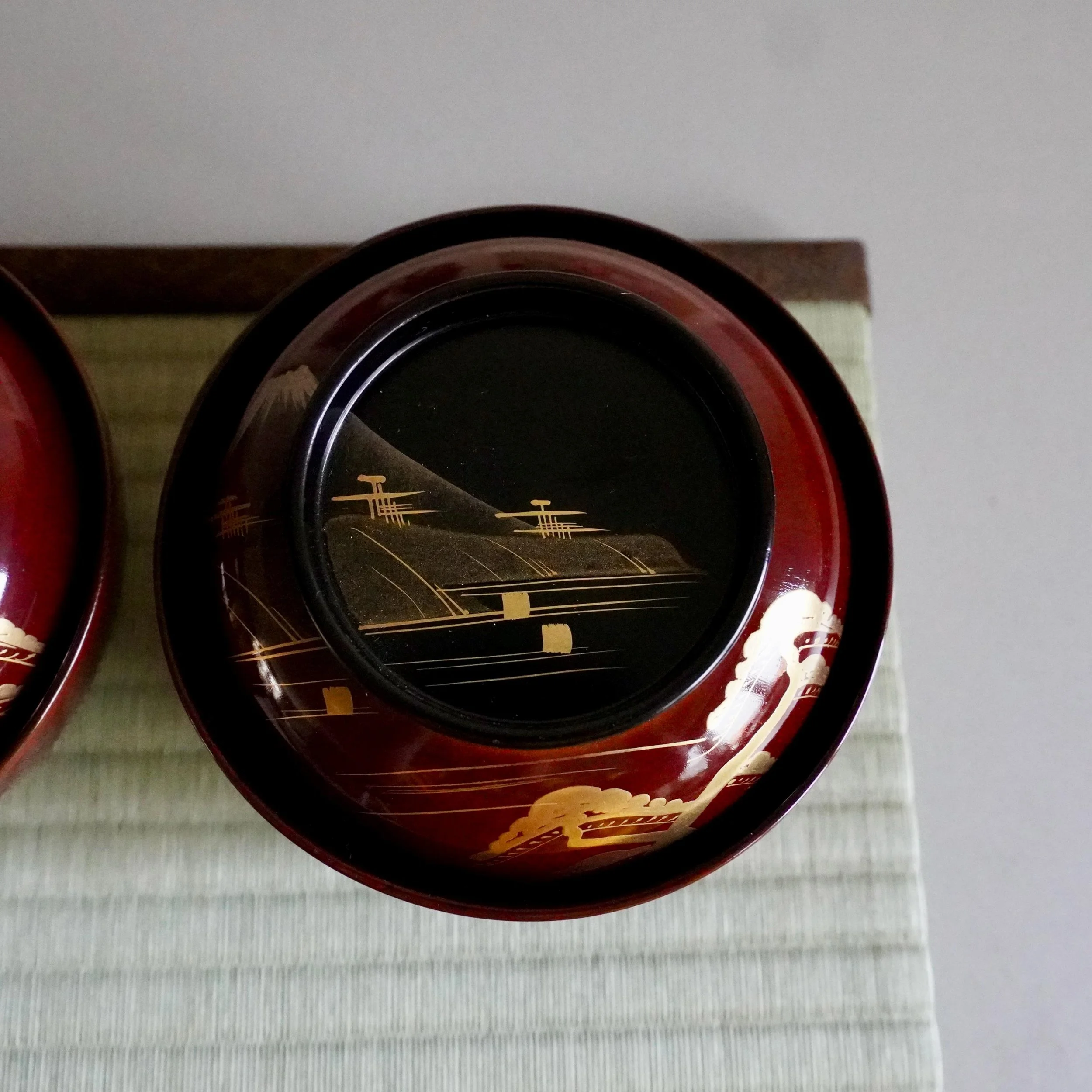 Image 11 of 20
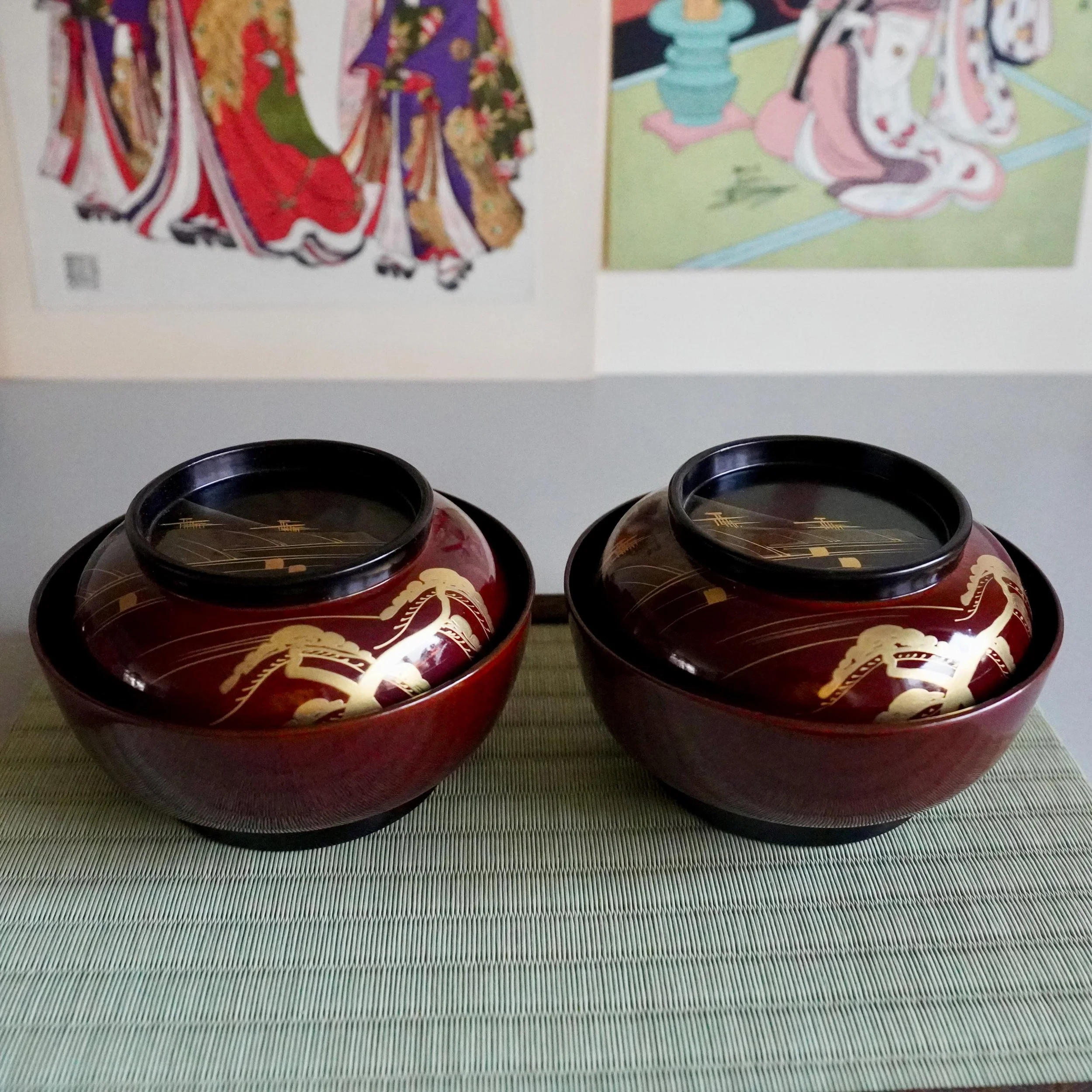 Image 12 of 20
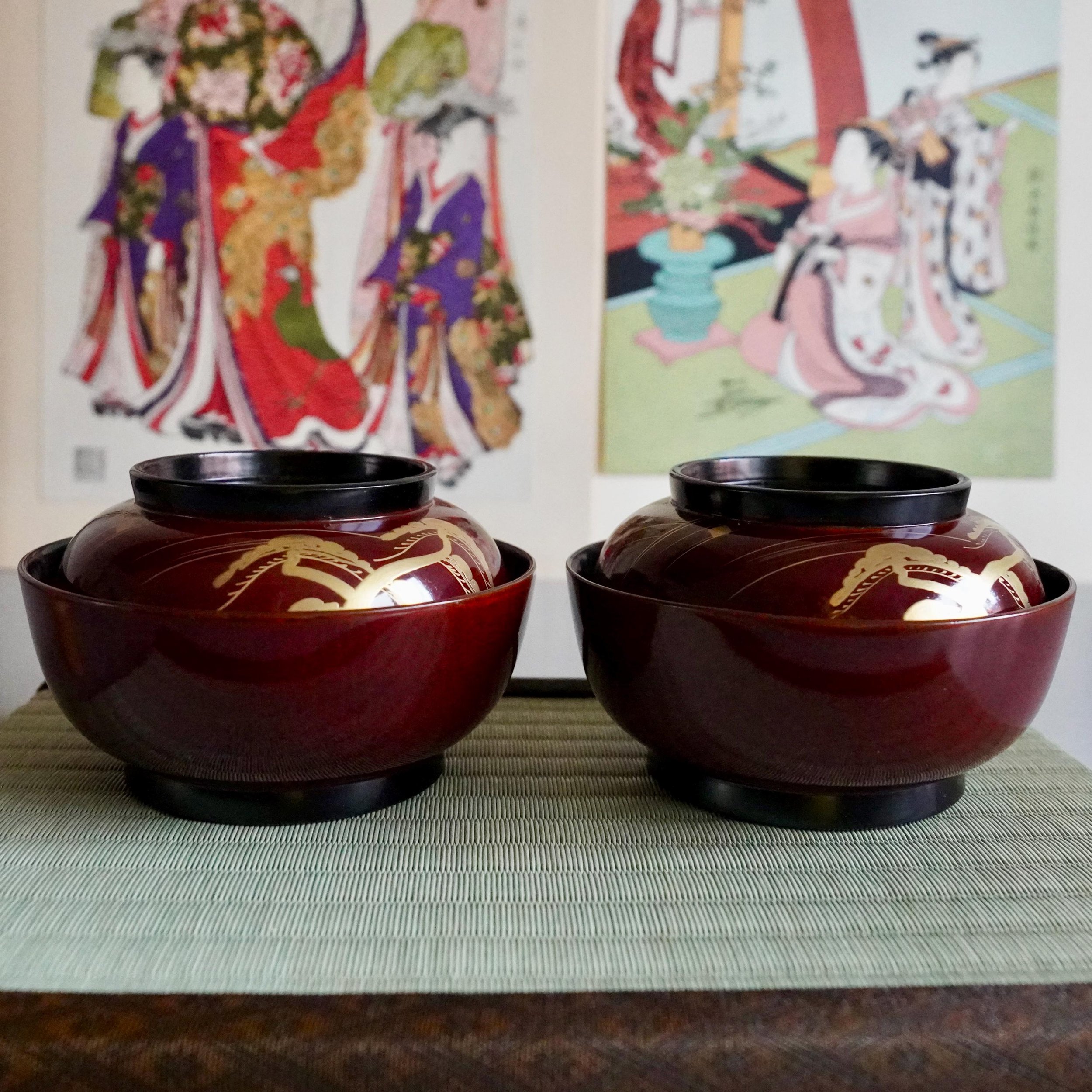 Image 13 of 20
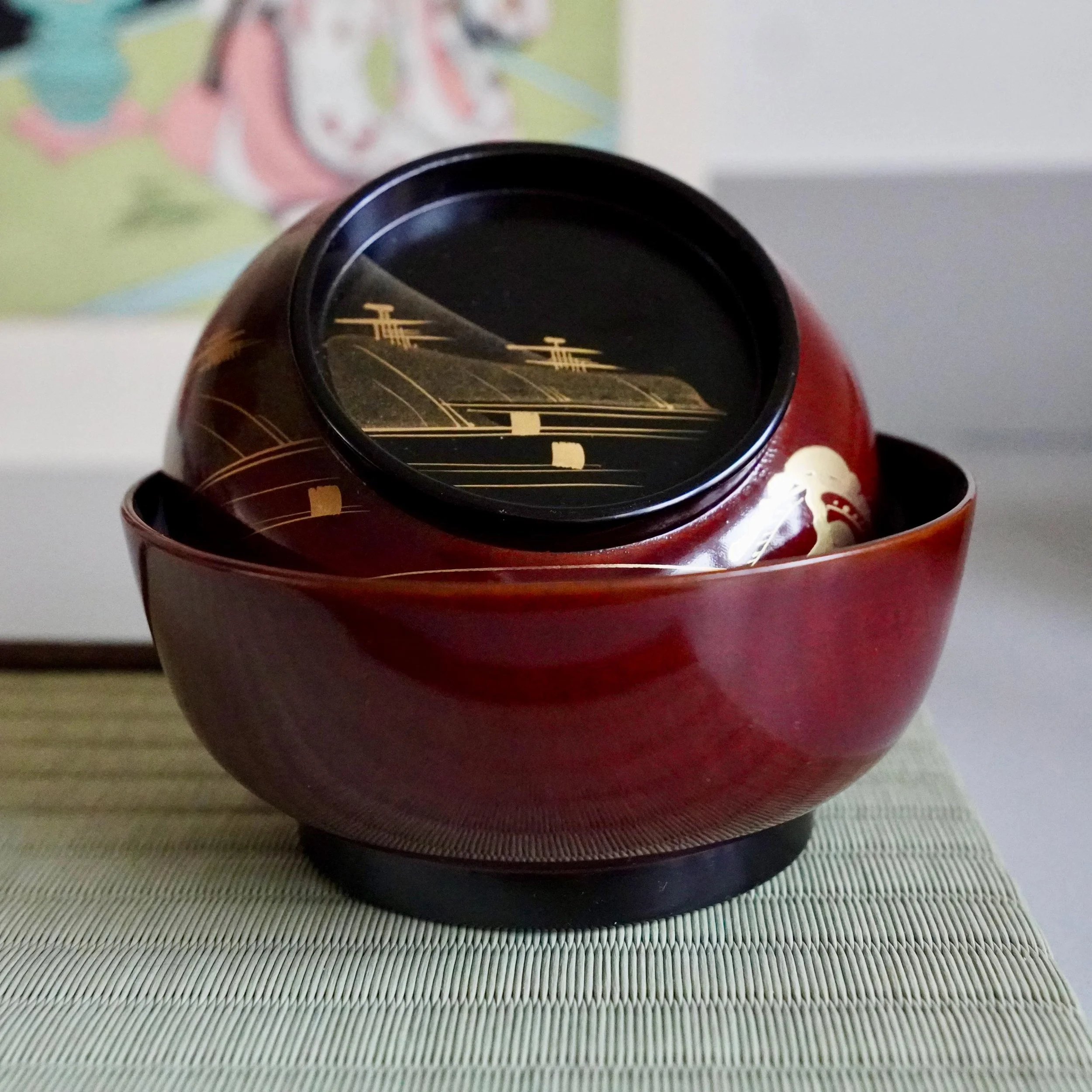 Image 14 of 20
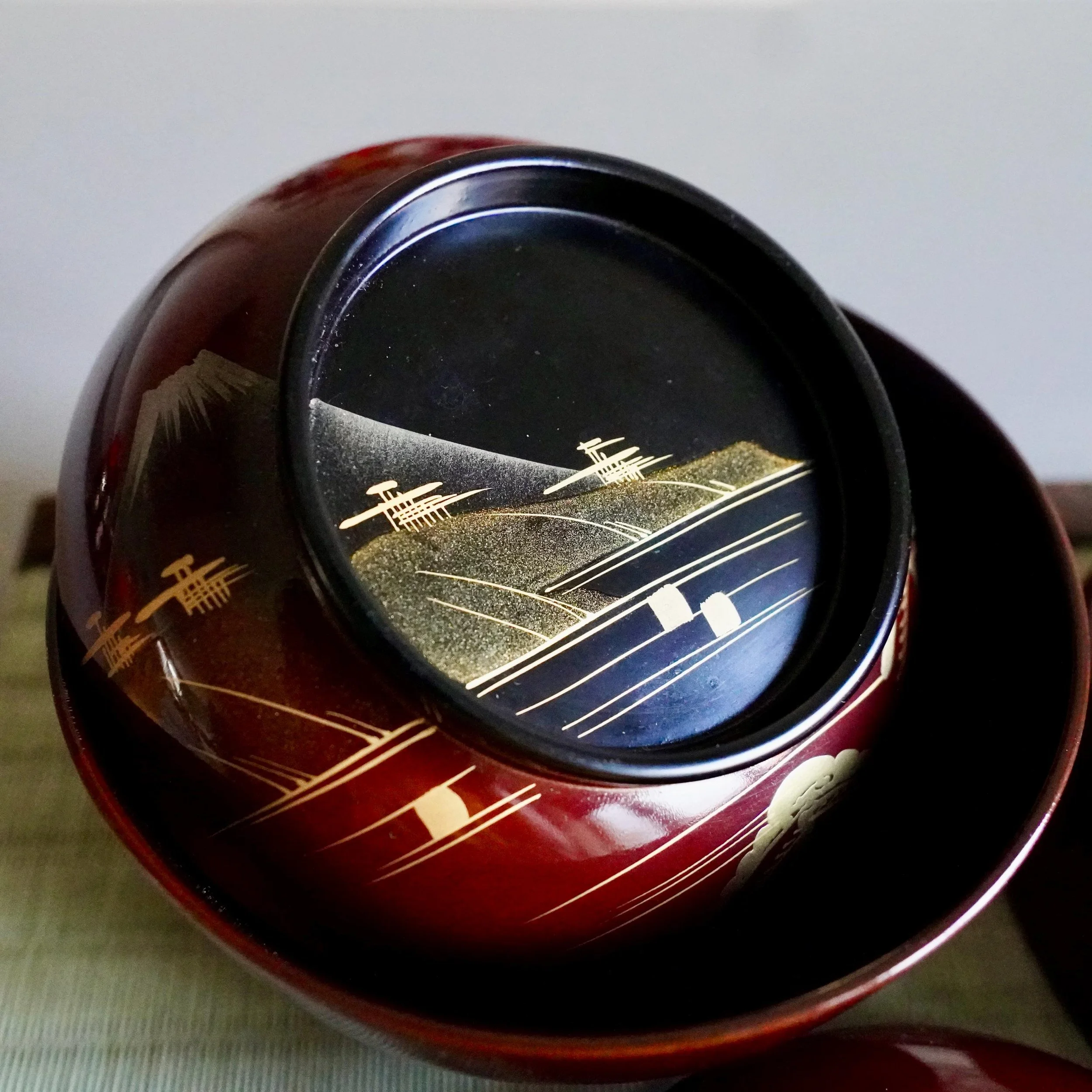 Image 15 of 20
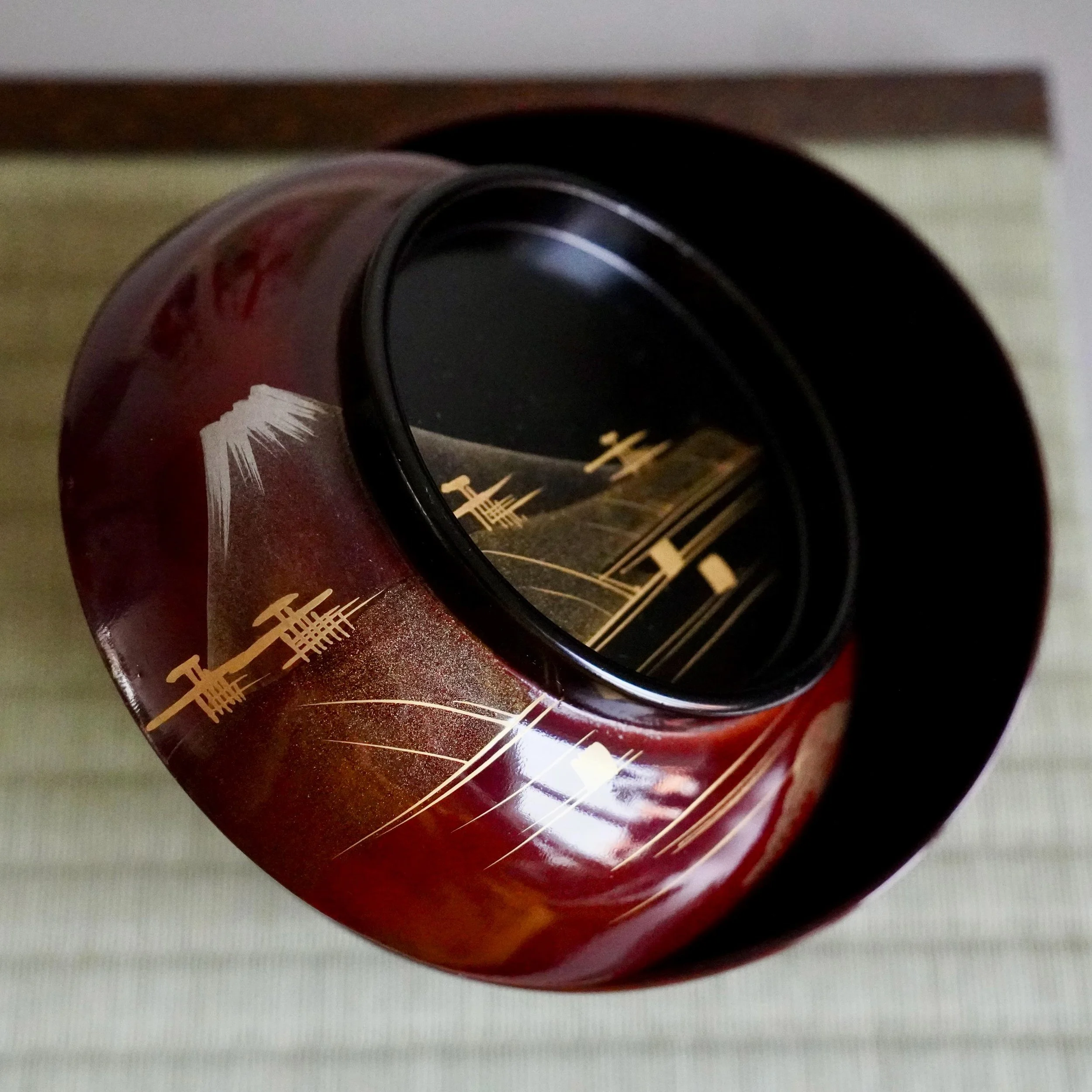 Image 16 of 20
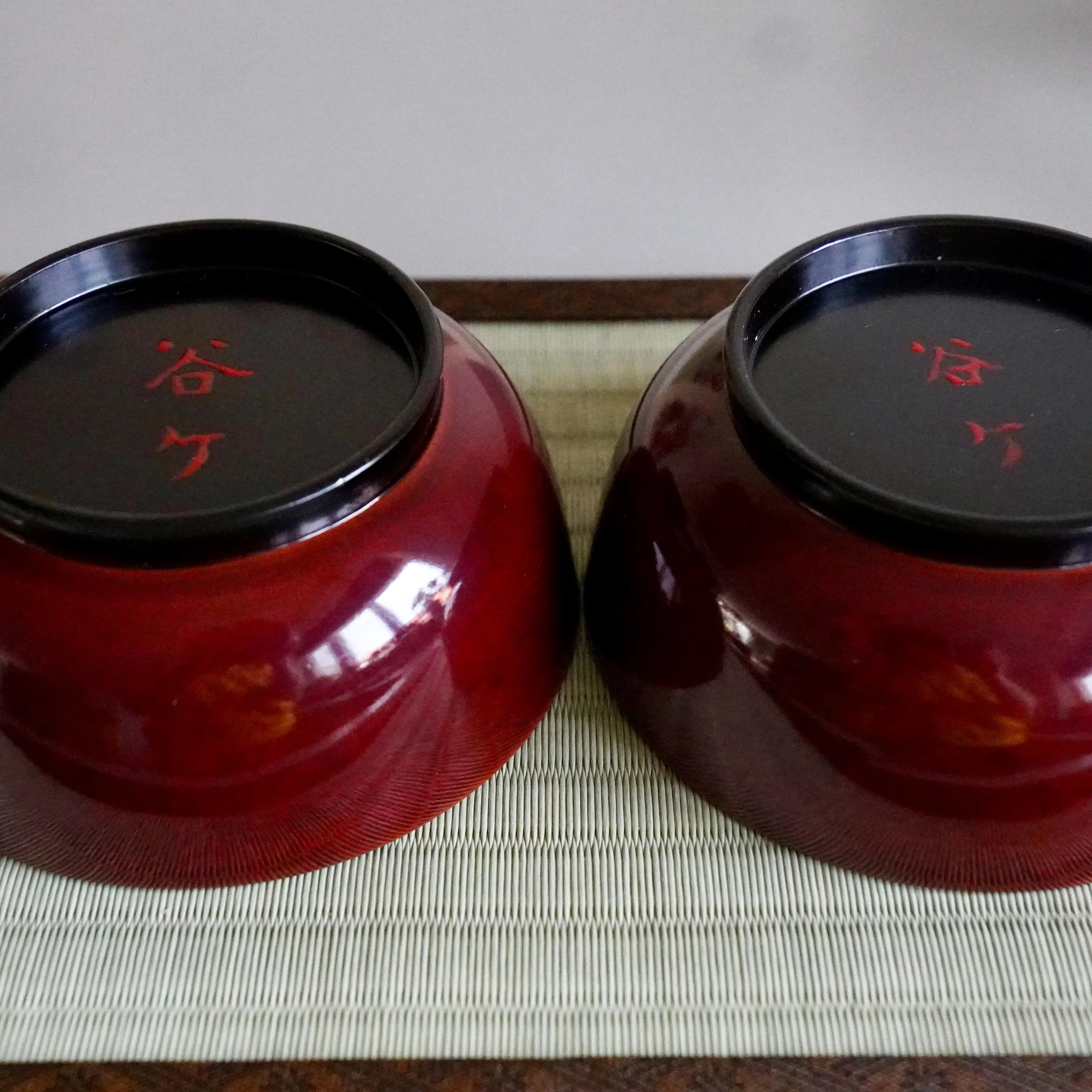 Image 17 of 20
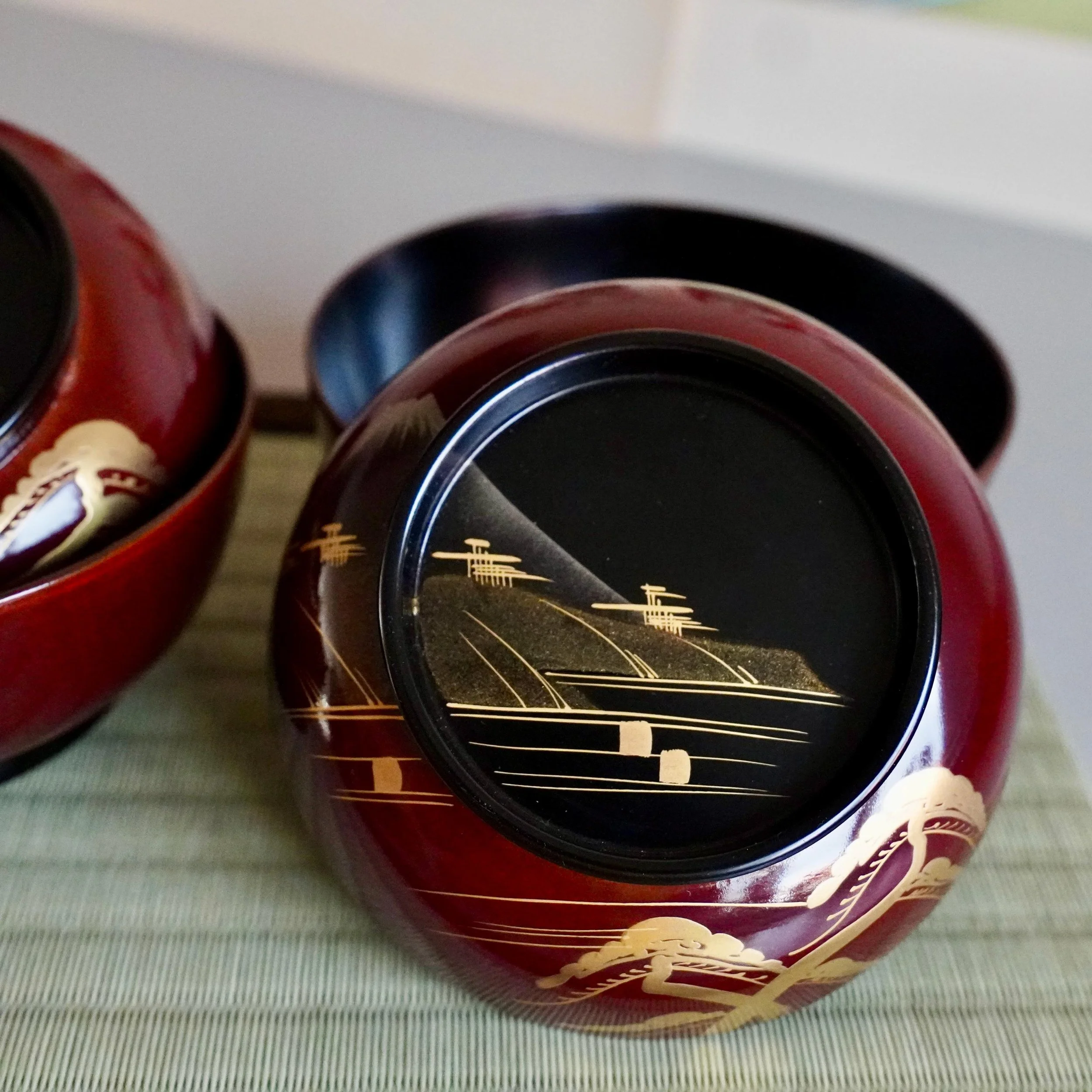 Image 18 of 20
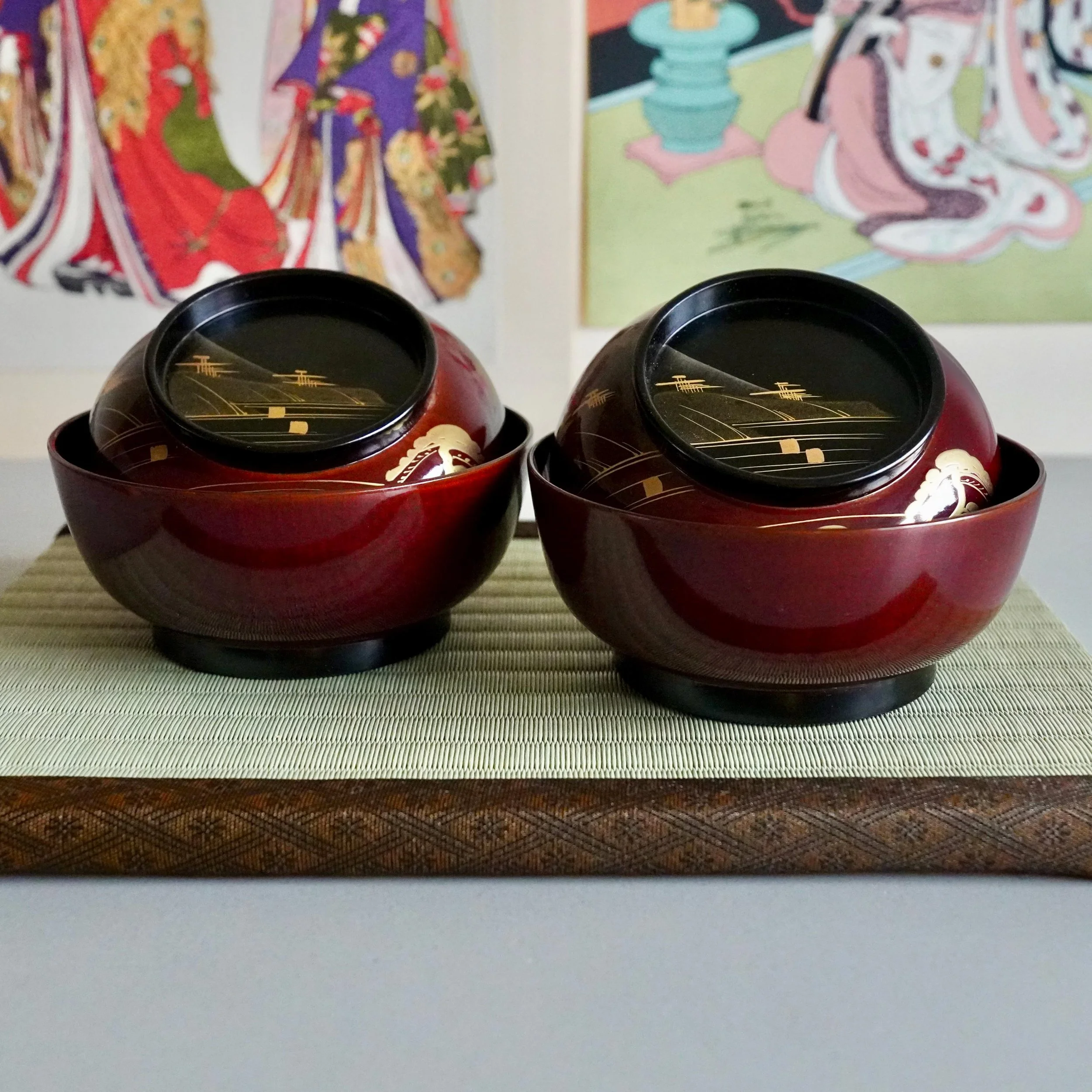 Image 19 of 20
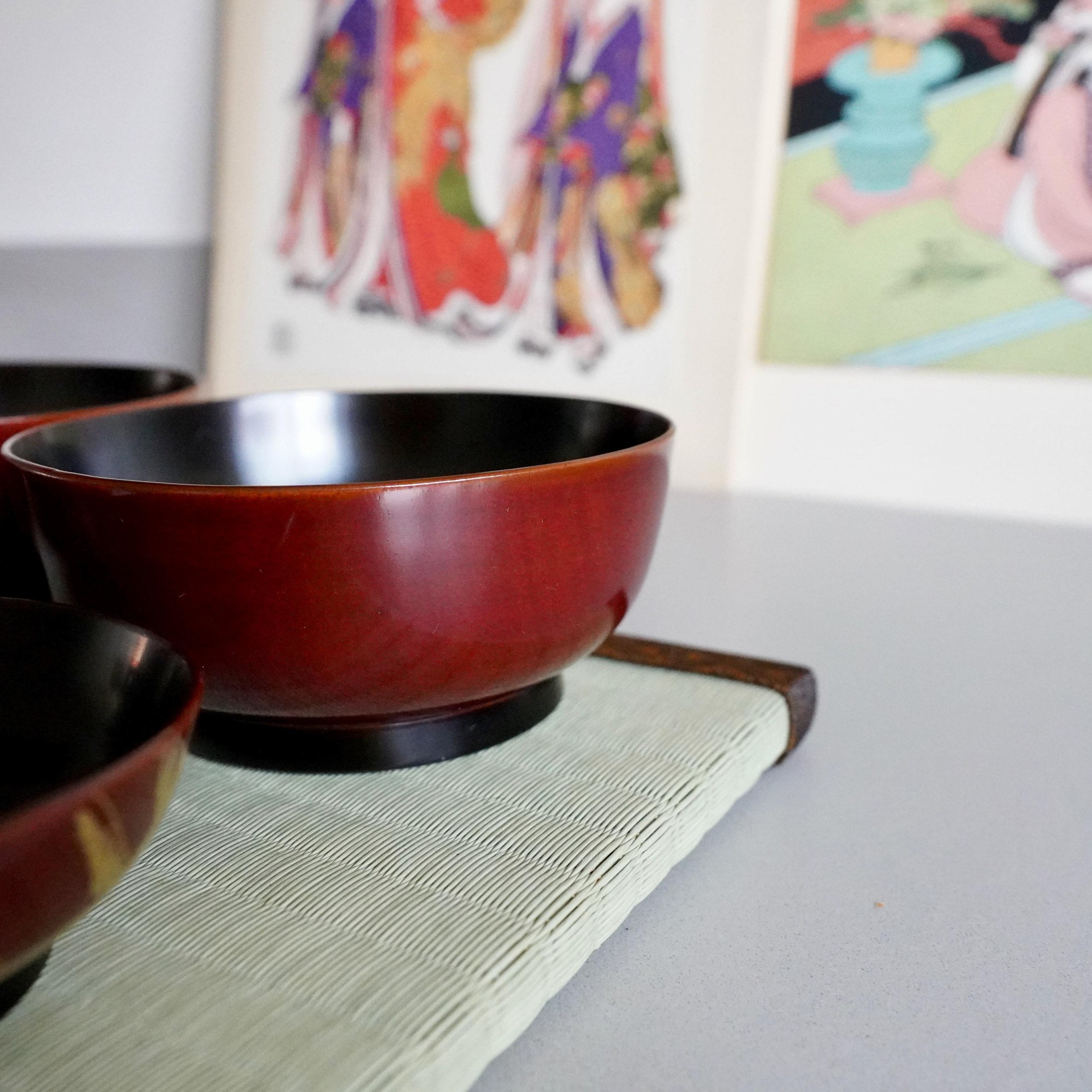 Image 20 of 20
What makes this urushi lacquer set special
The up close look and feel
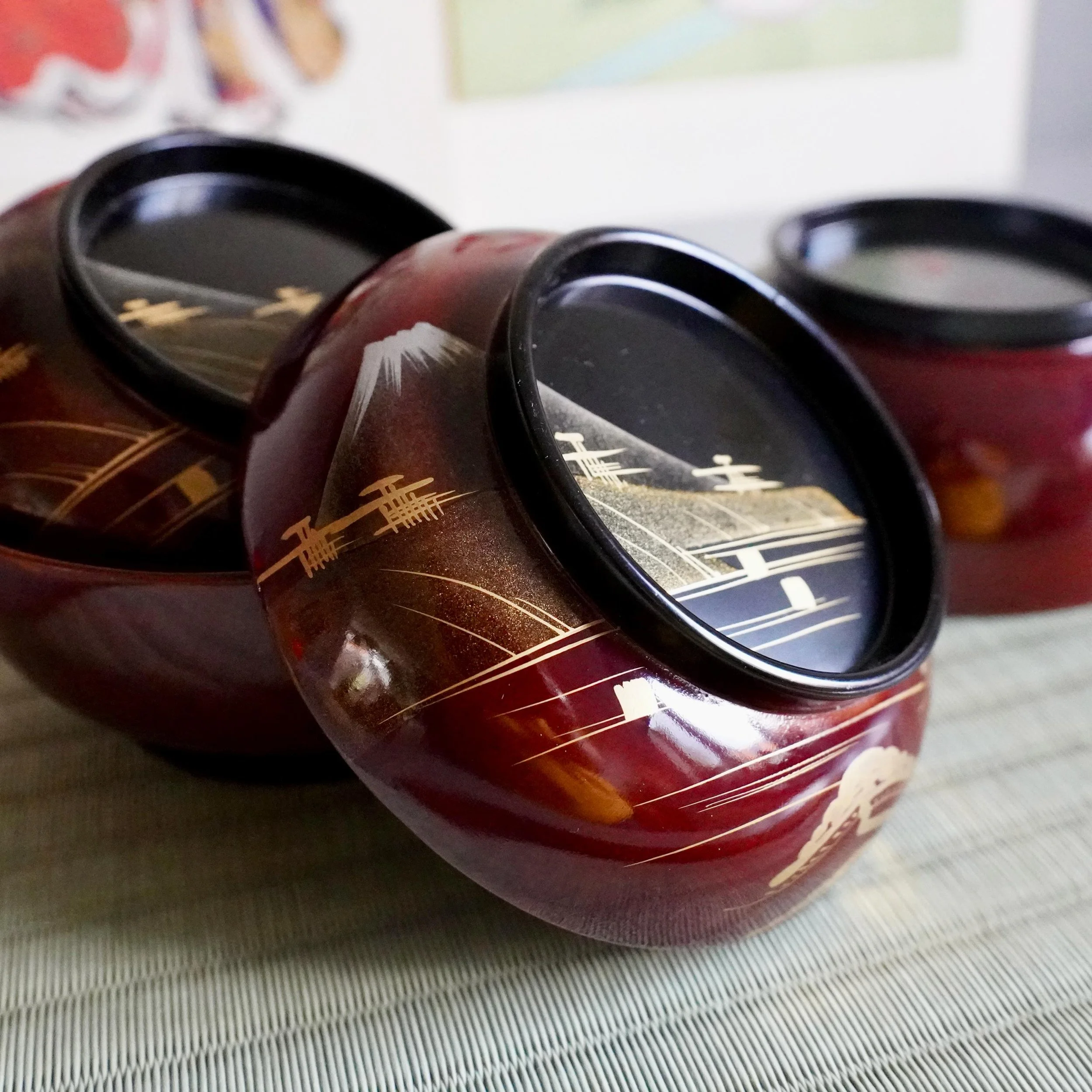
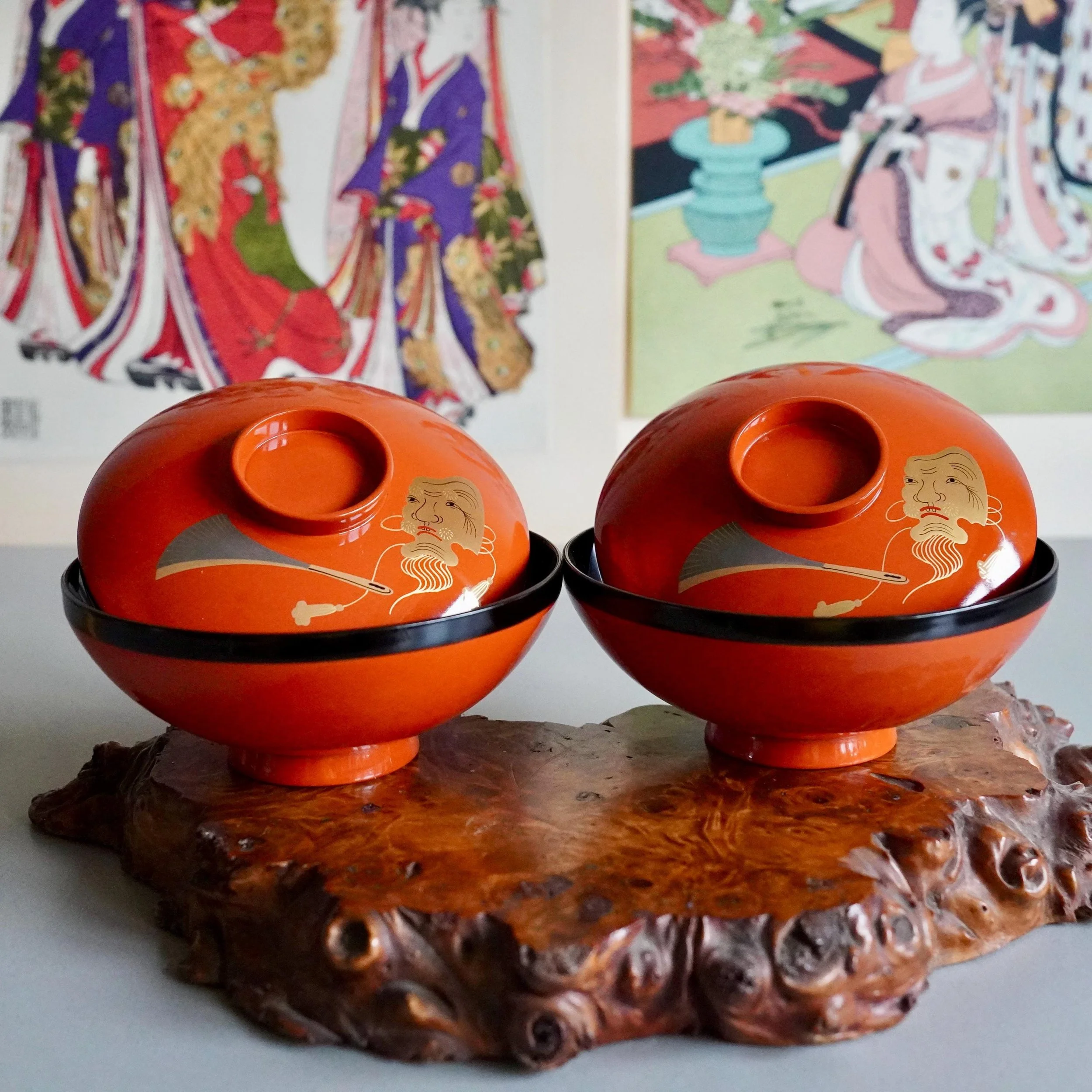
The tame-nuri surface is not one color but two held in suspension: the red underneath pulls through the black as you shift the bowl in the light, and the depth it creates is not something a photograph captures fully. In the hand, urushi lacquer over turned wood is warmer than ceramic and quieter than metal.
The gold of the maki-e is laid close enough to the surface that it reads as part of the lacquer itself, not applied on top of it. The lids sit flush and lift cleanly.
Charming details
The maker's signature on the base of each bowl is written in red lacquer on black, the same red that glows through the exterior. It is only visible when you turn the bowl over, two kanji applied with a fine brush.
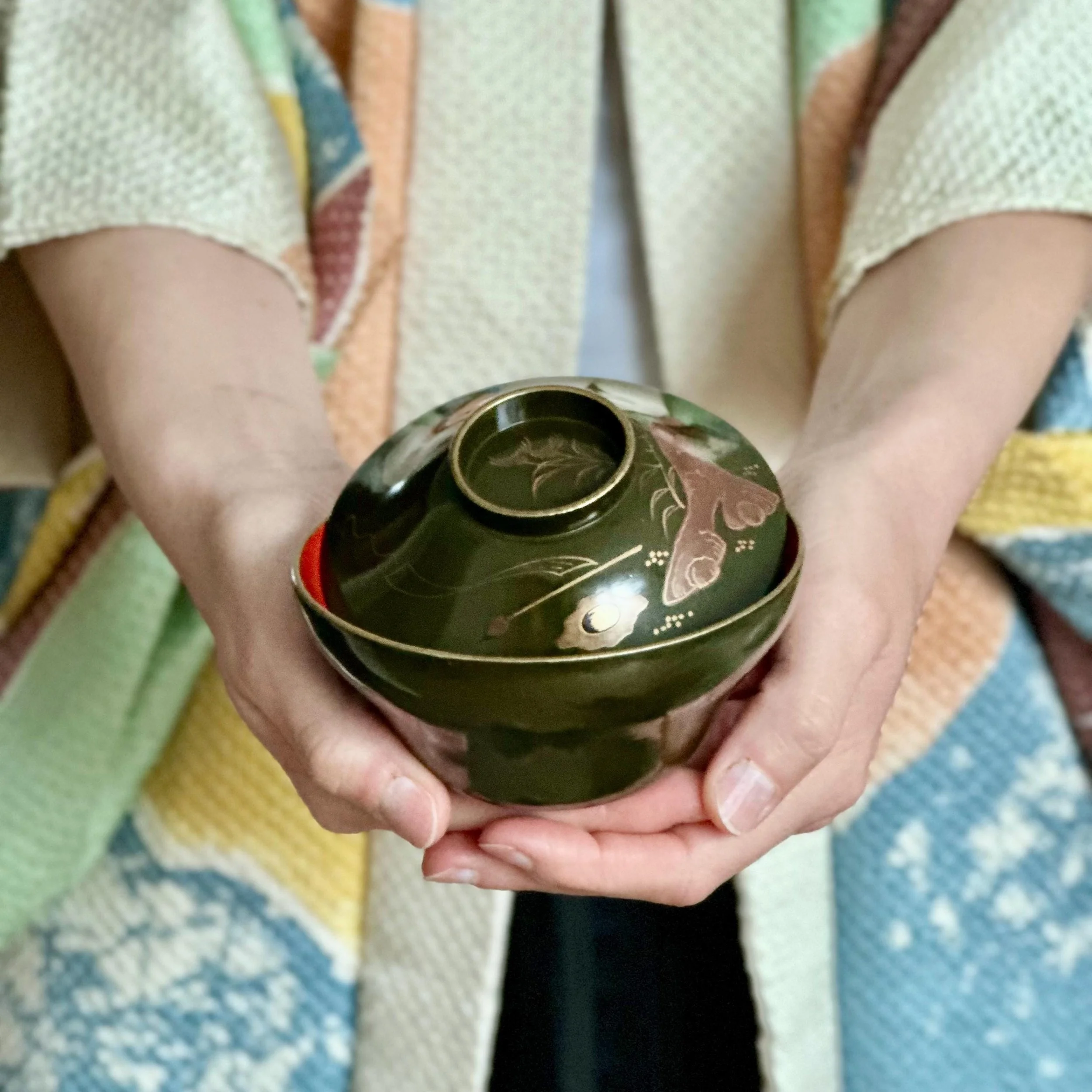
The Fuji scene wraps continuously around the full circumference, so the mountain and the pine branches only reveal themselves in full when you rotate each bowl slowly. There is no front and no back: the scene rewards the full turn.
-
Material: hand-turned wood, natural urushi lacquer.
Workshop name: Tanitake (谷竹)
Signed on the base of each bowl in red lacquer.
Source: purchased from an antique specialist in Matsuyama, Ehime Prefecture, Shikoku, Japan.
Techniques: tame-nuri (translucent black urushi over deep red base layer) and maki-e (gold powder applied to wet lacquer).
-
Matsuyama, Ehime Prefecture, Shikoku, Japan.
Shōwa period, ca. 1950 to 1975.
-
Set of 2 bowls with lids.
Diameter: approx. 13 cm per bowl.
Height with lid: approx. 8 cm per bowl.
Weight: approx. 270 gr for the set.
-
Excellent vintage condition.
Both bowls fully intact, no cracks, chips or repairs.
Lacquer finish well-preserved with no significant lifting or loss.
Consistent with display use rather than regular table use.
-
Keep urushi lacquerware out of direct sunlight: UV exposure fades the color and can cause the surface to crack over time.
Avoid placing near heat sources or in rooms with very low humidity, as dry air is damaging to urushi.
For cleaning, a soft dry cloth is usually sufficient.
If a mark needs more attention, use a lightly damp cloth and dry the surface immediately and gently.
Never use abrasive sponges, chemical cleaners, or anything sharp.
Urushi has its own rules. Read the Care Guide.
Items you may also like
Questions before you buy?
Since my items are one-of-a-kind pieces, I want to ensure they reach you perfectly.
Questions about the history or condition?
Need a custom shipping quote or shipping outside the EU?
Prefer to see more detailed photos or a video?
Reach out to me directly. I'm here to help you find the perfect piece for your home.
✉️ hello@kaikoandco.com
💬 Instagram DM: @bykaikoandco
Black so deep it looks like still water, and scattered across it, crests in gold and in red, none of them quite where you expect. The gold ones are soft and matte, while the red ones carry tiny flecks of gold that wake up when you turn the lid toward the light. It sits in the palm like a smooth pebble and is hard to put down. It is the kind of small object that makes a shelf, a desk or a tea tray look considered.
It was made by Hariya Yūsai, a makie artist from Ishikawa who is recognised in Japan as a Traditional Craftsman, and he signed and sealed the wooden box himself. That box is why it feels complete: the natsume, the box that names its maker and its style, and the yellow cloth that came with it have stayed together. If you make matcha, this is a proper tea caddy with a real maker behind it. If you don't, it is still something you will want to keep in sight.