
 Image 1 of 20
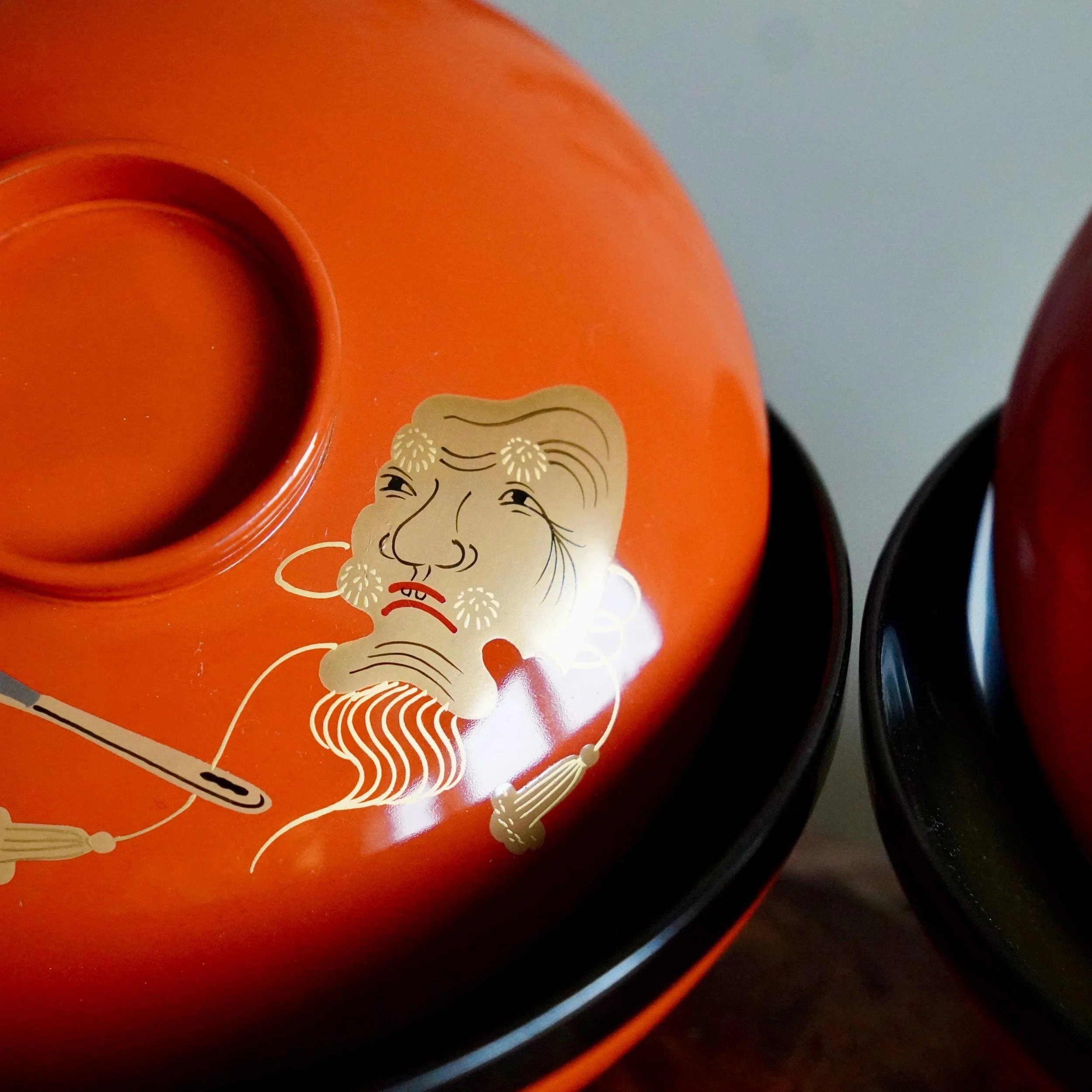 Image 2 of 20
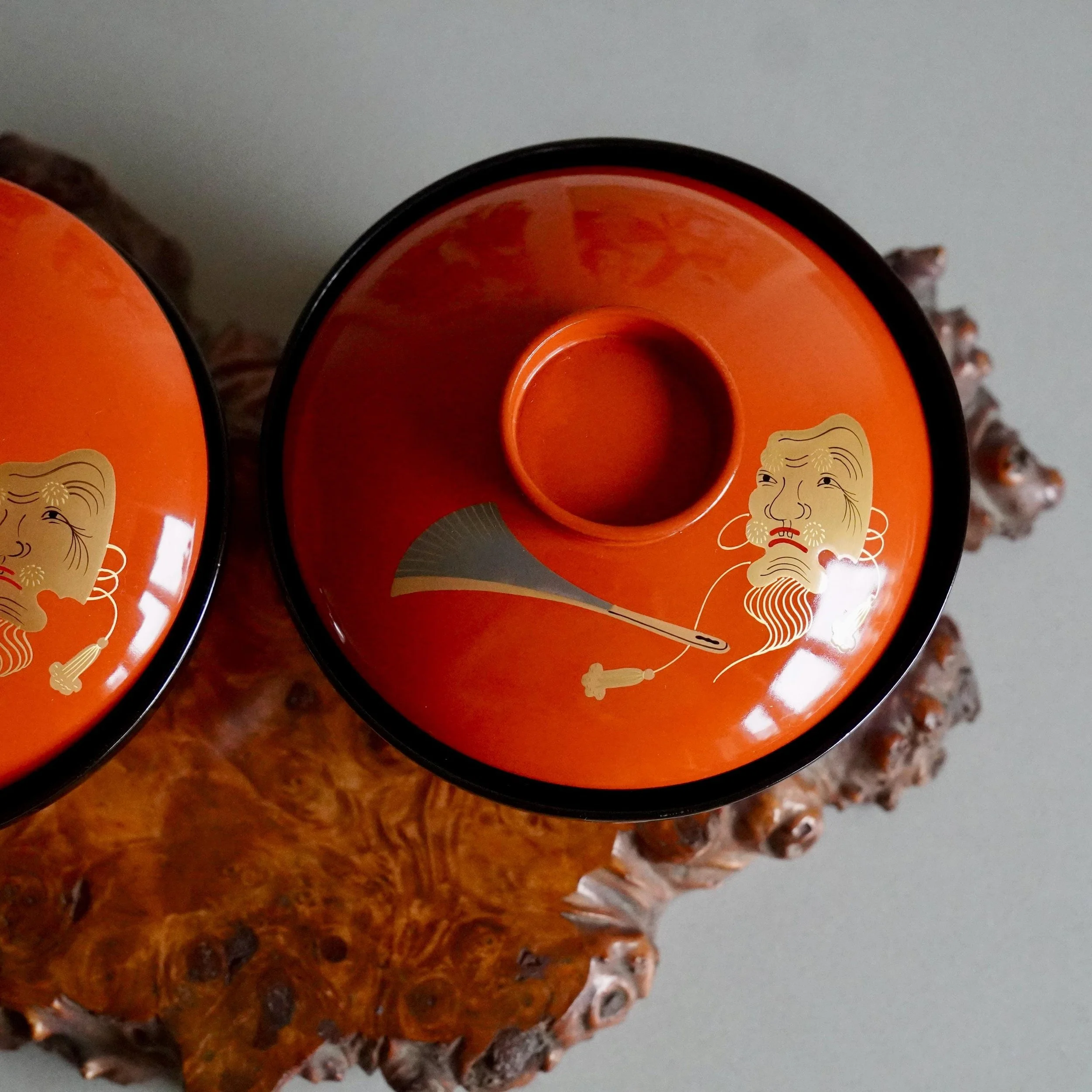 Image 3 of 20
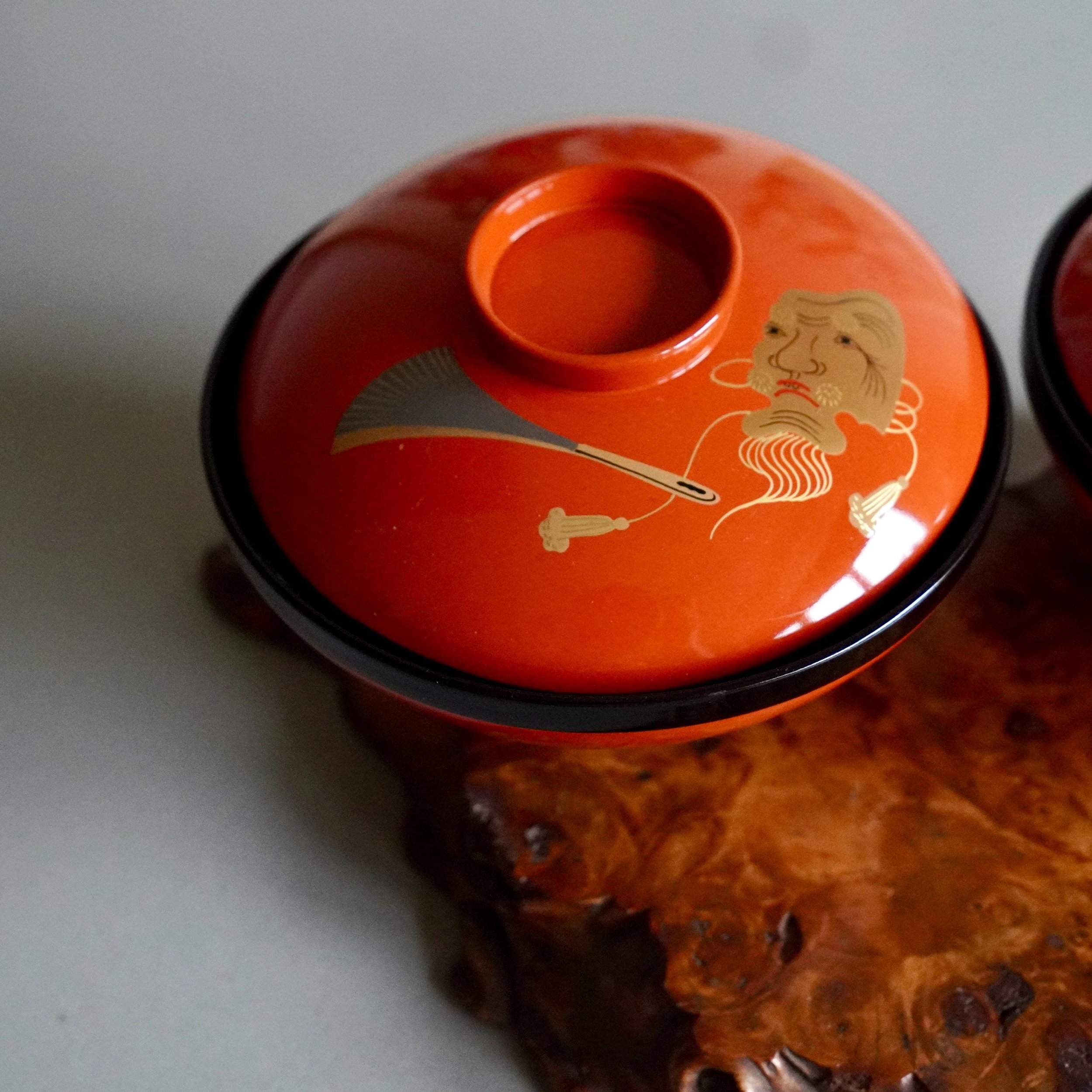 Image 4 of 20
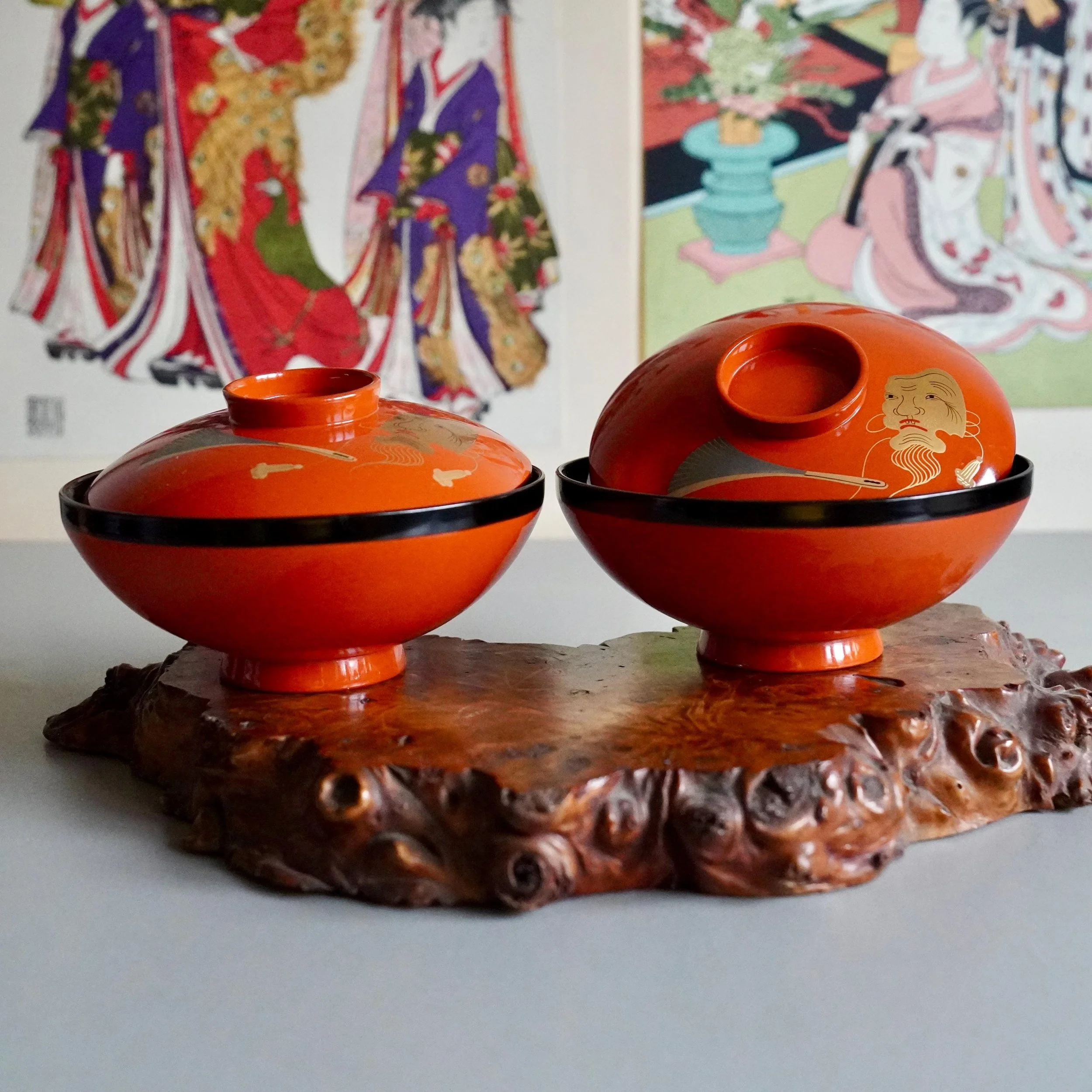 Image 5 of 20
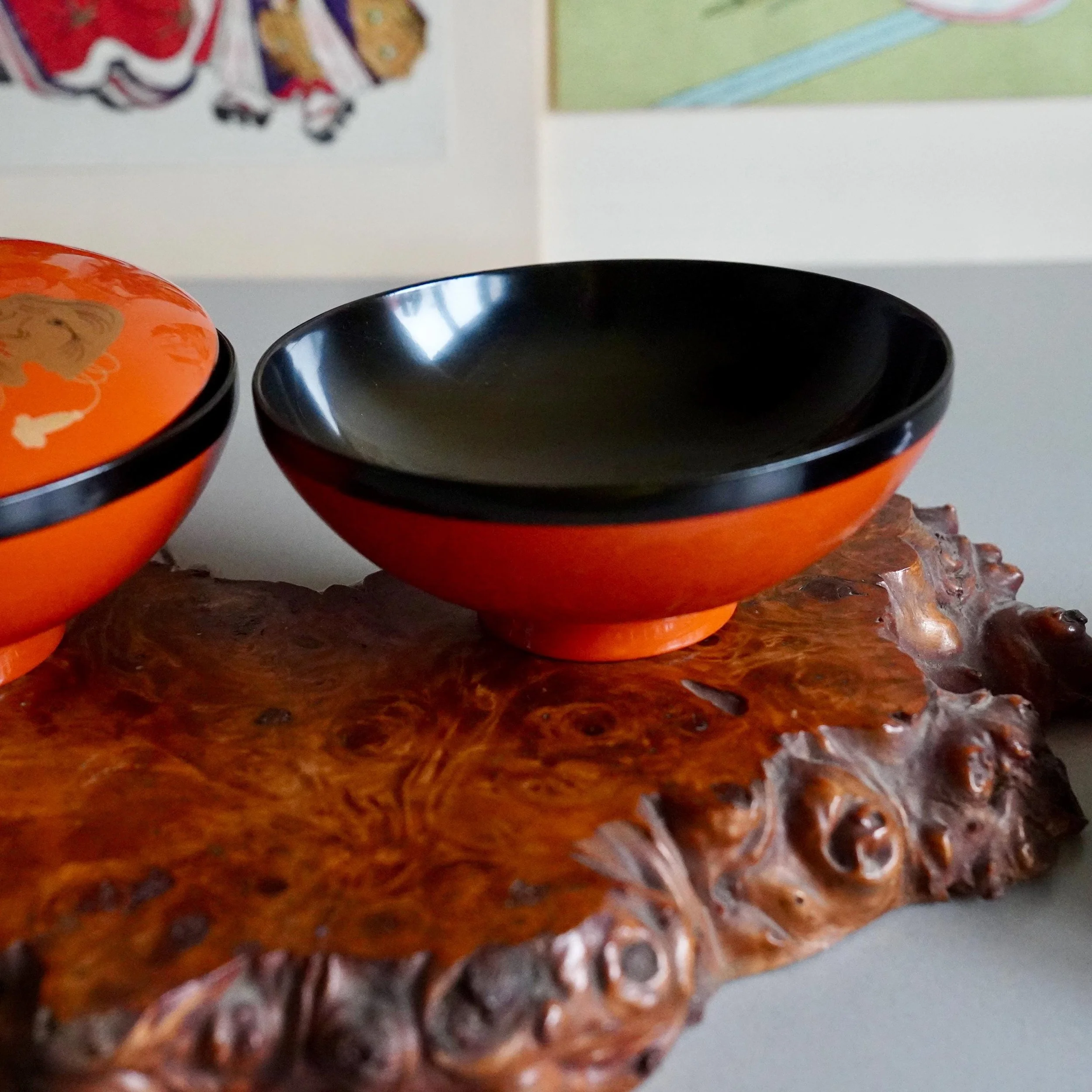 Image 6 of 20
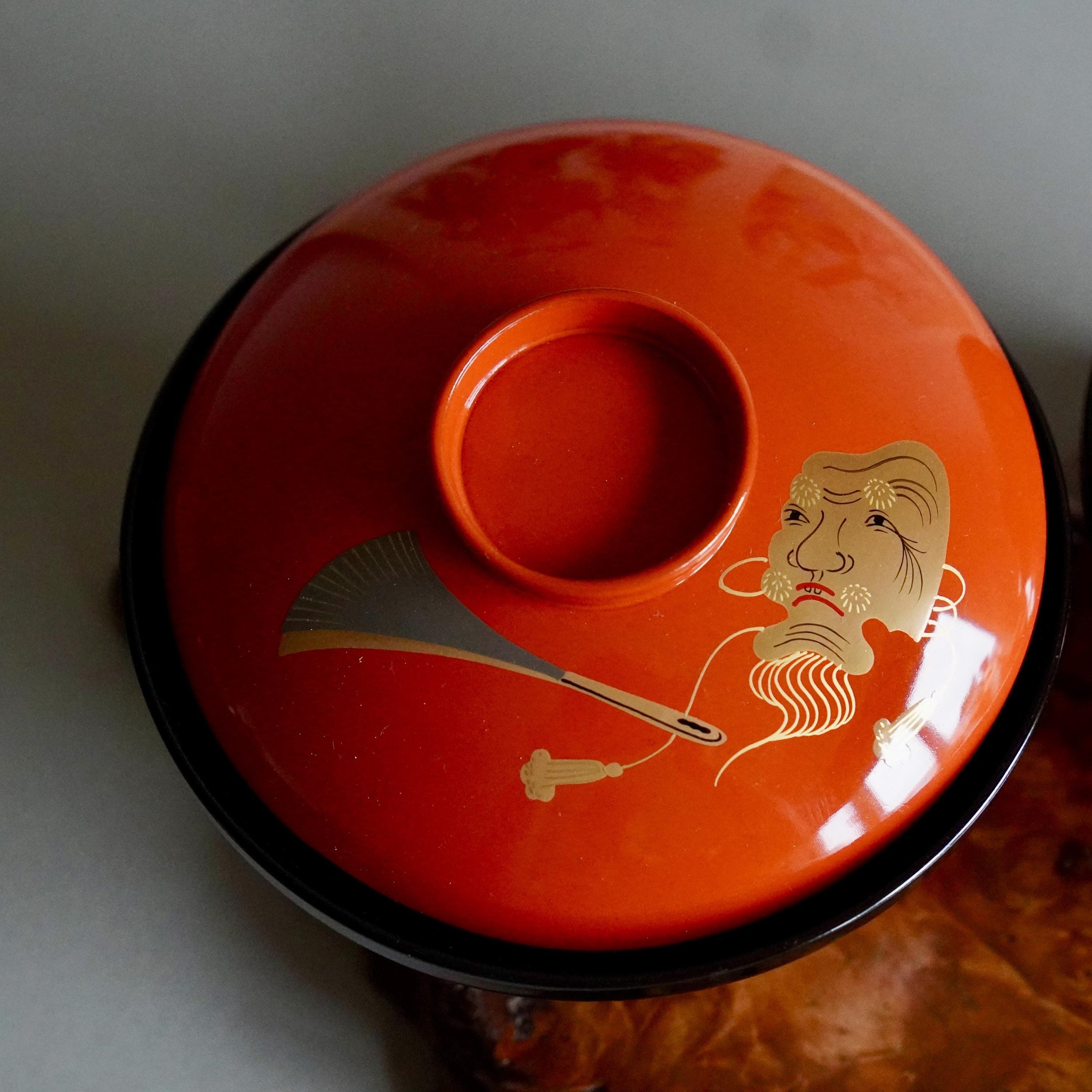 Image 7 of 20
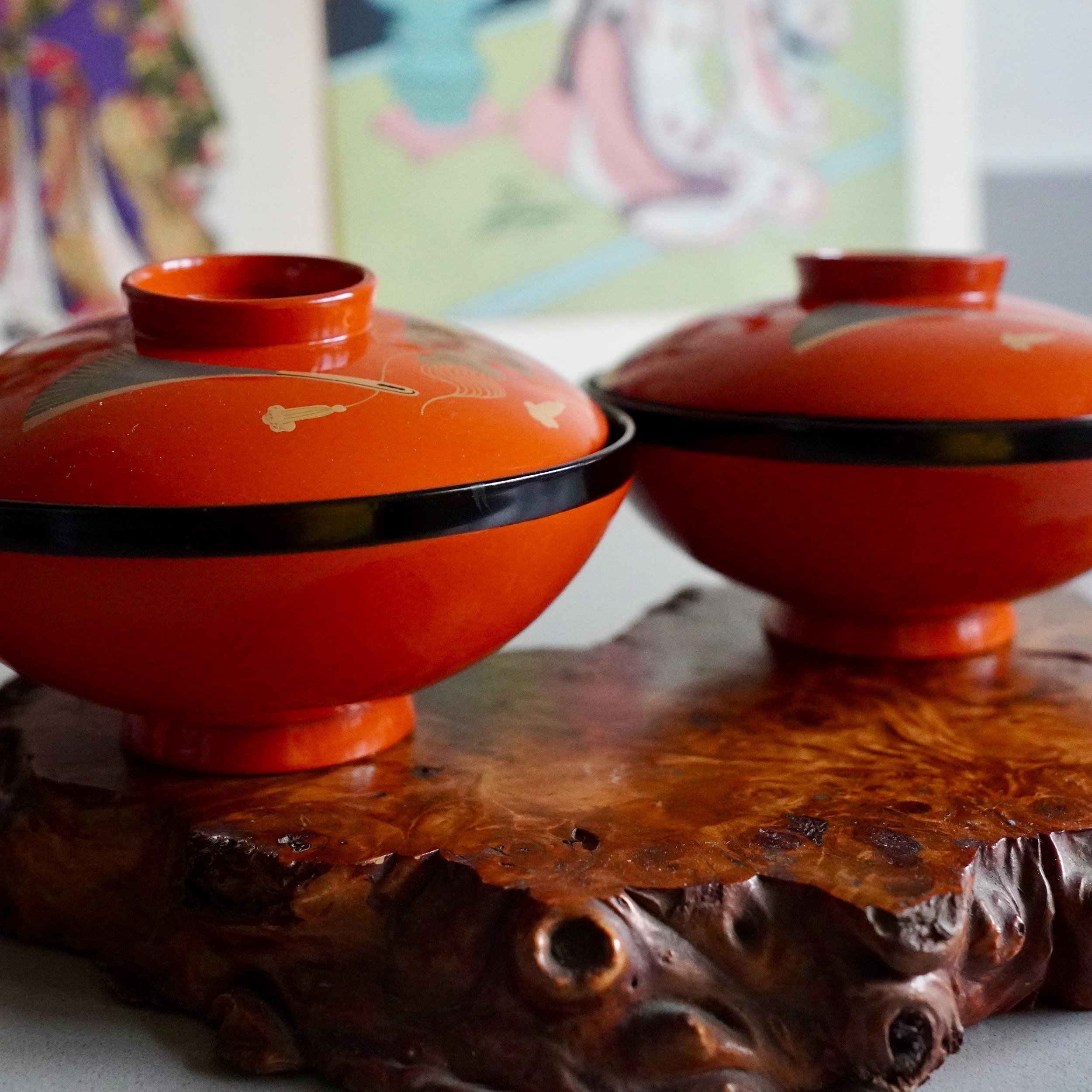 Image 8 of 20
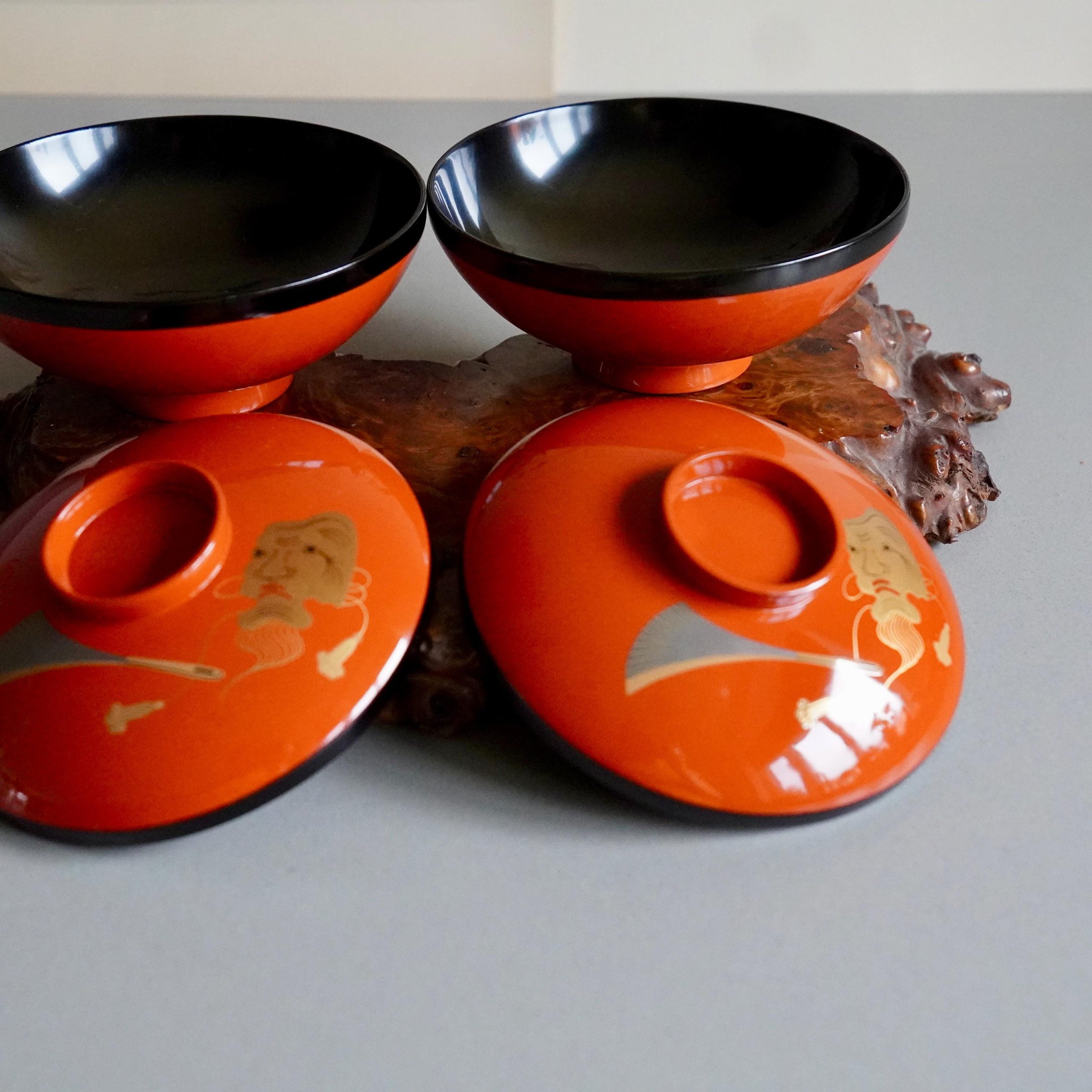 Image 9 of 20
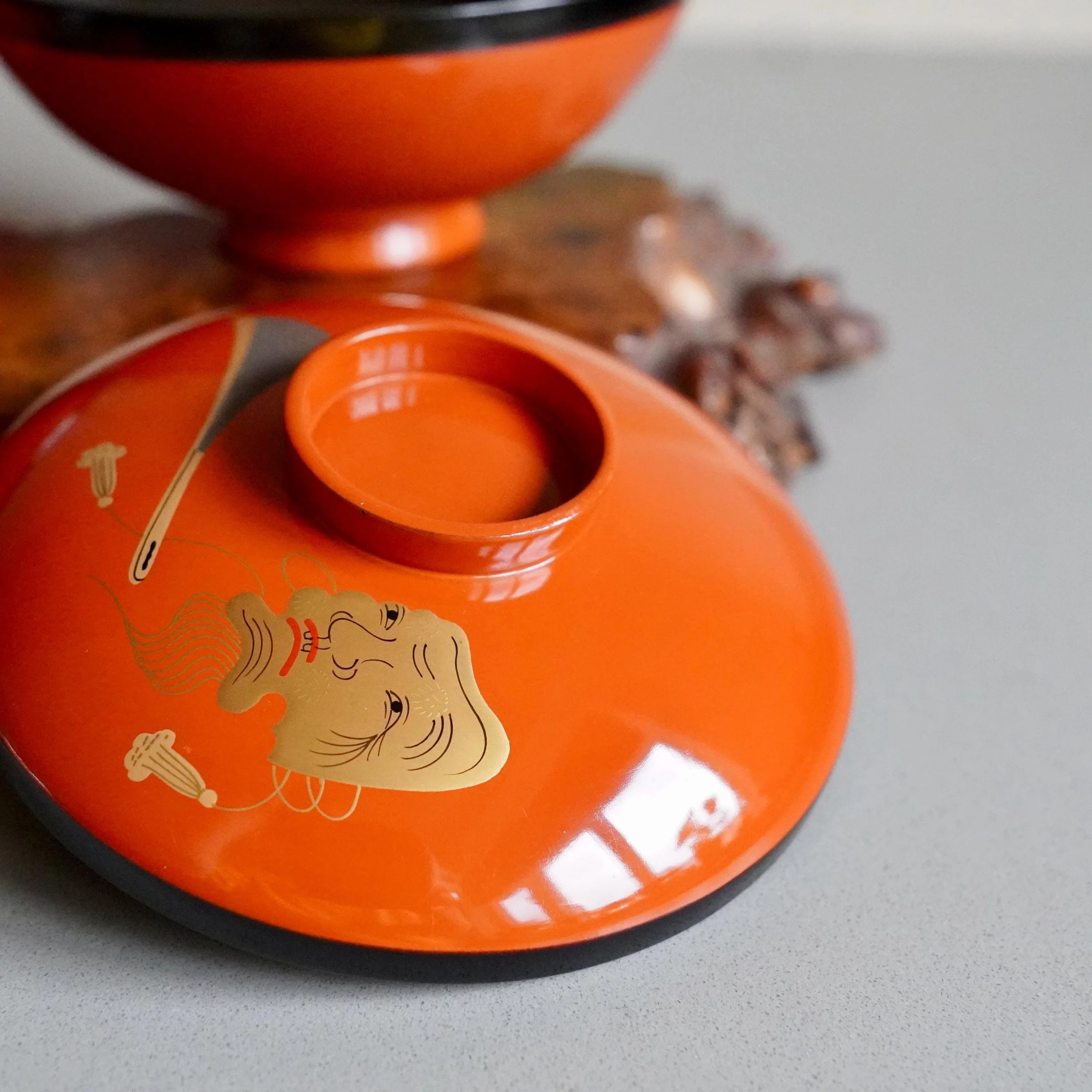 Image 10 of 20
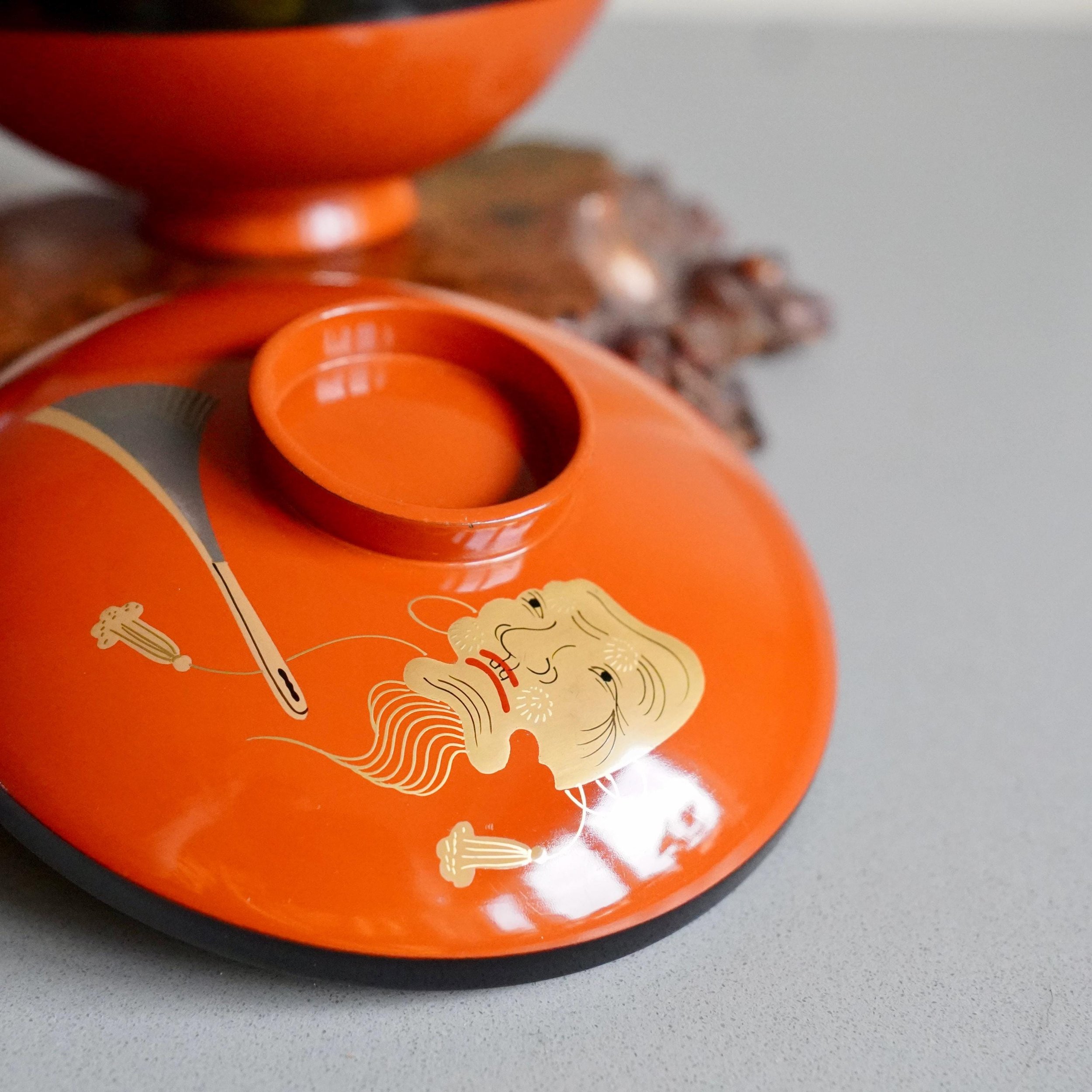 Image 11 of 20
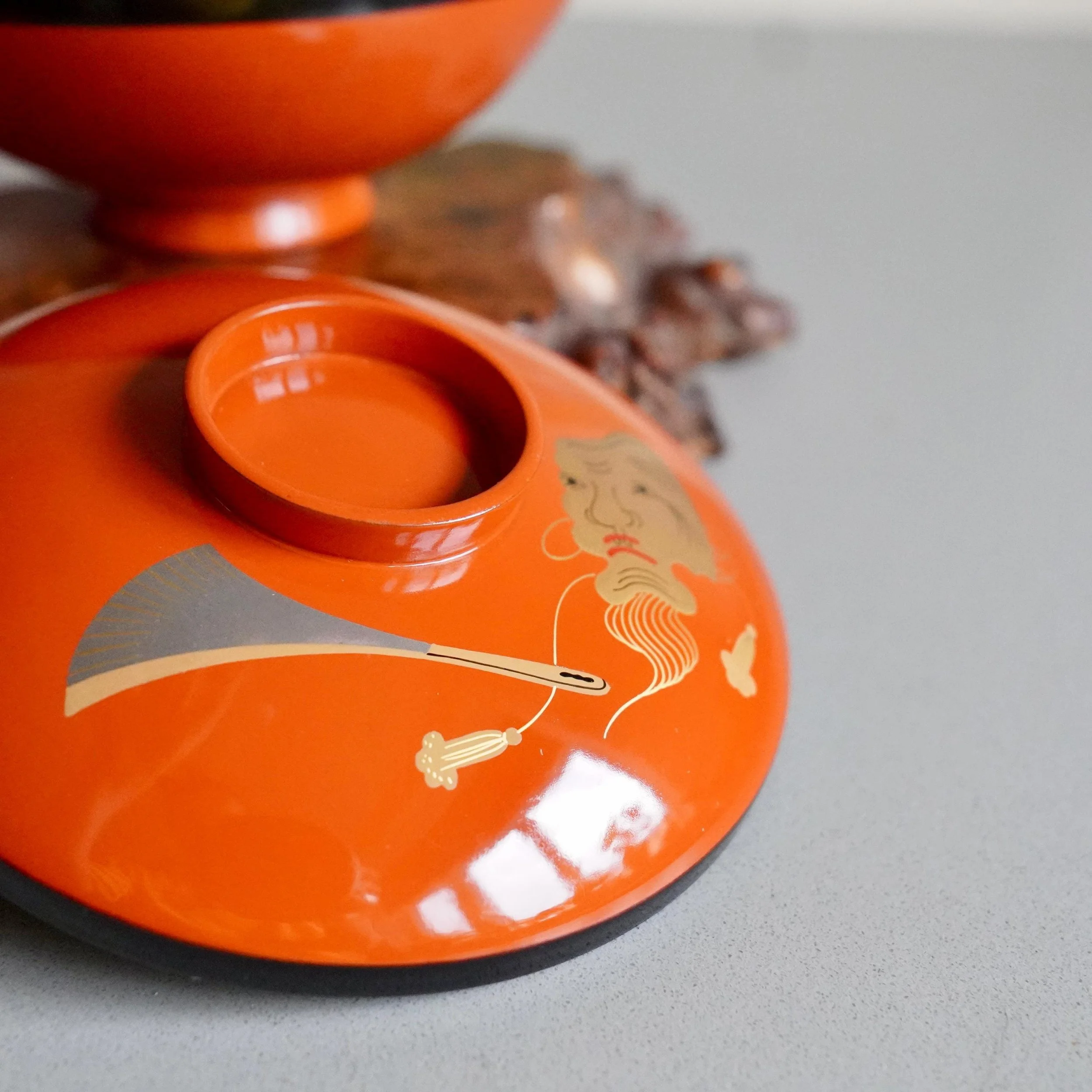 Image 12 of 20
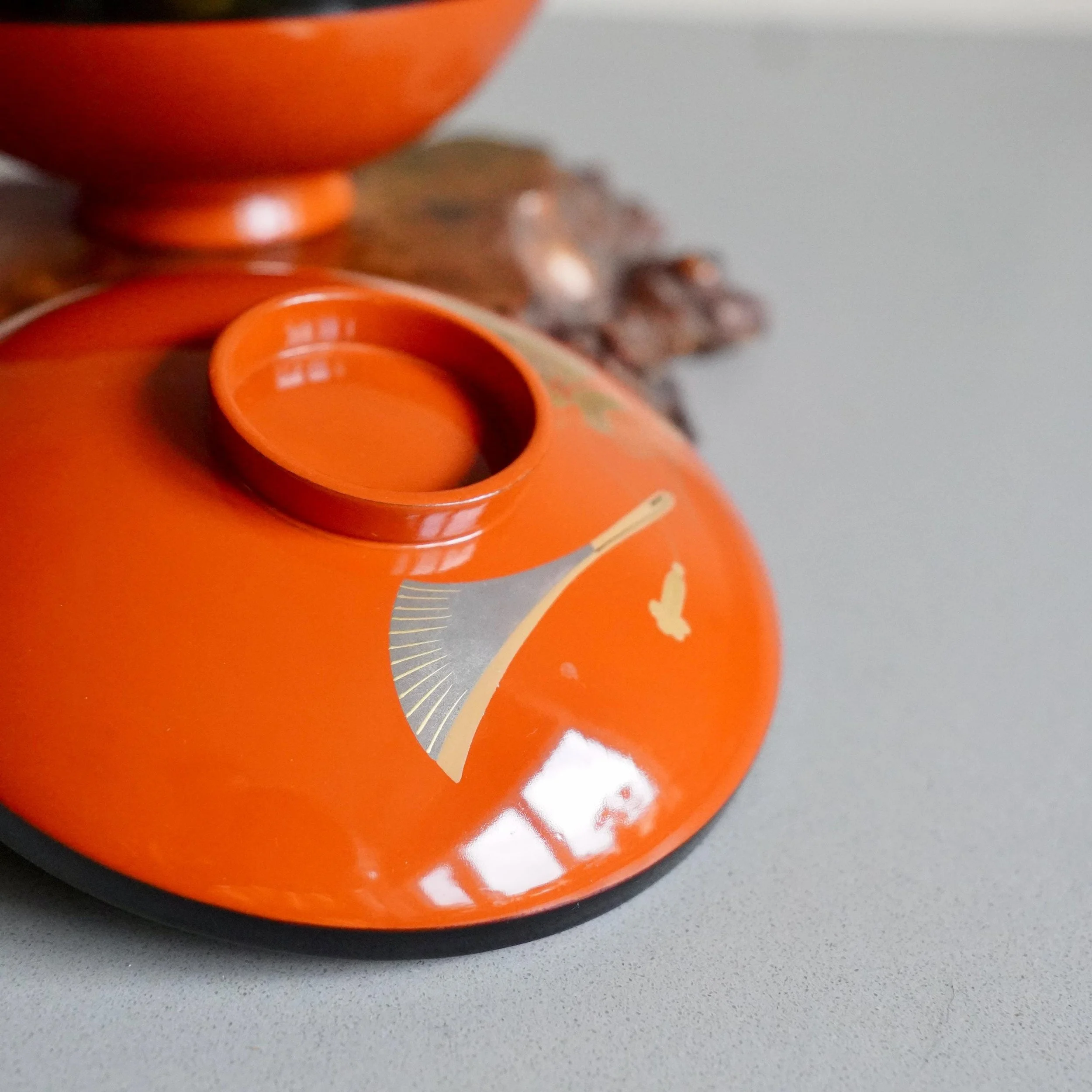 Image 13 of 20
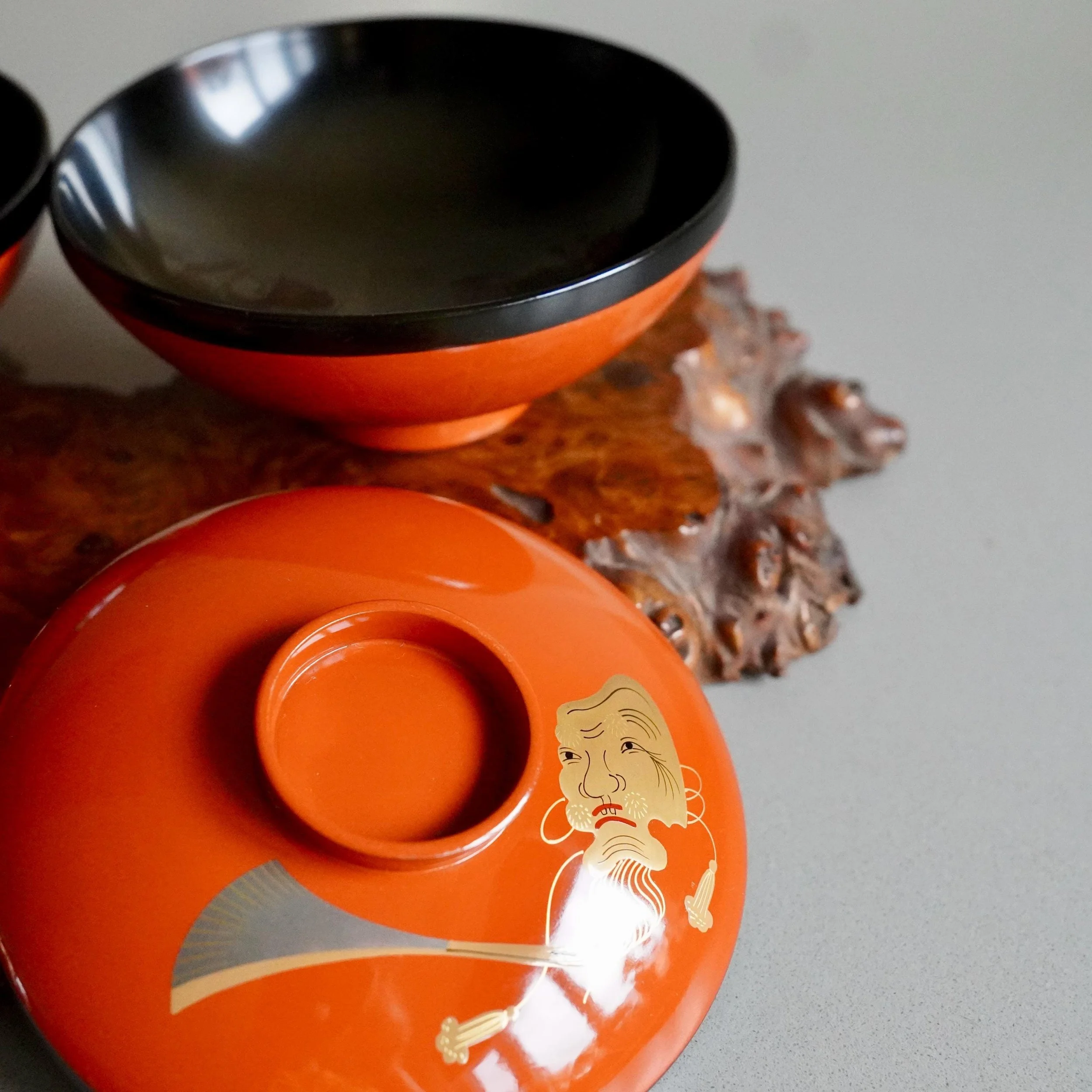 Image 14 of 20
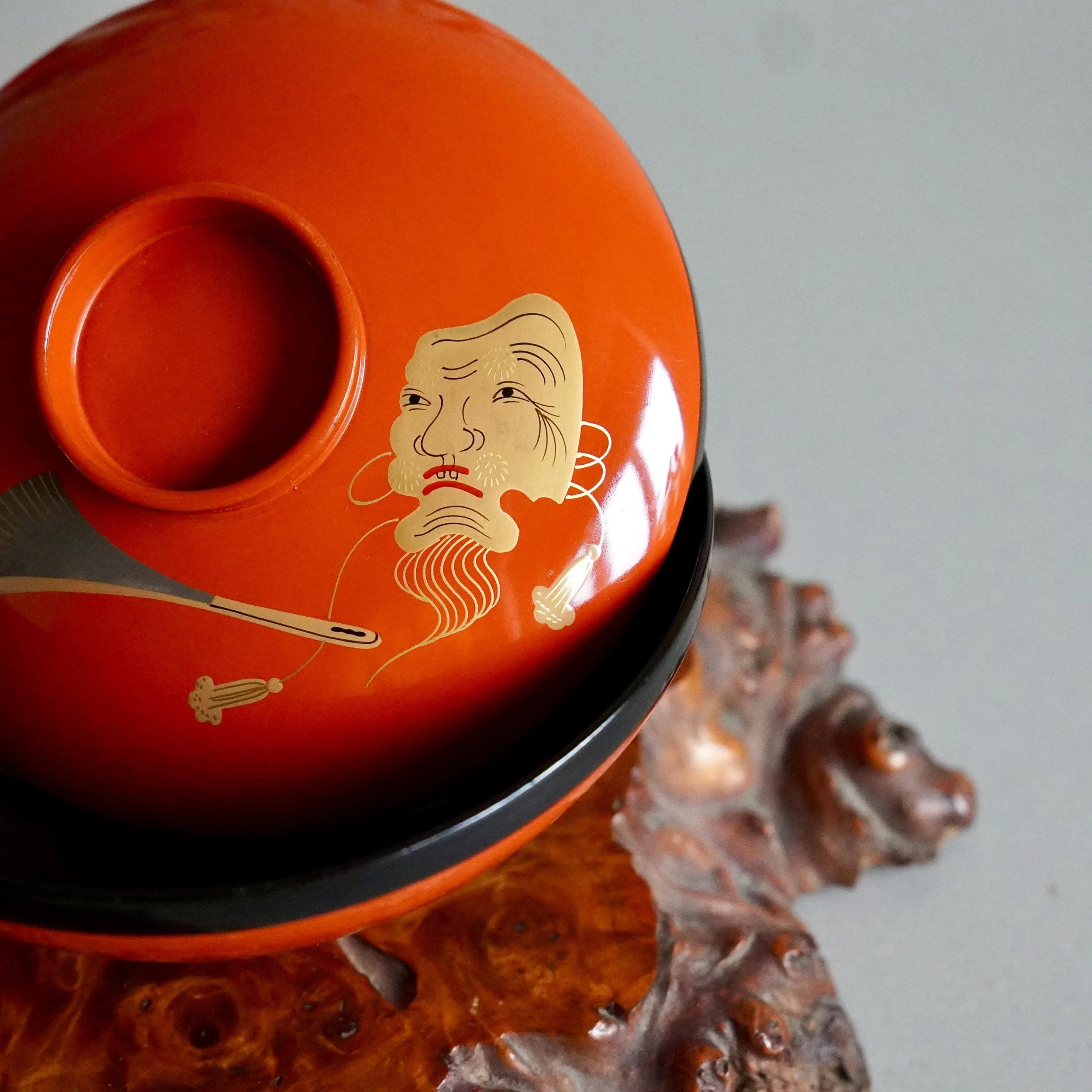 Image 15 of 20
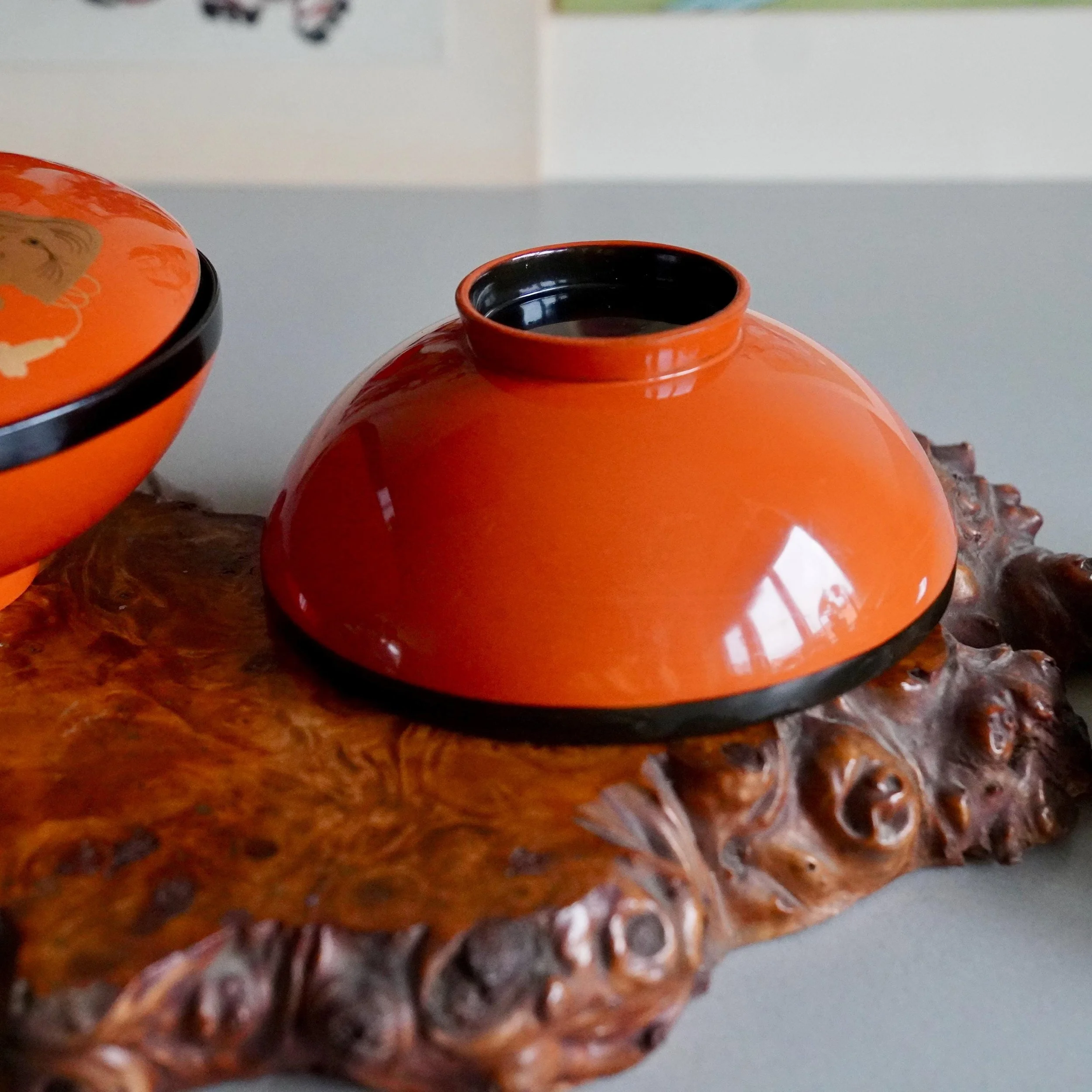 Image 16 of 20
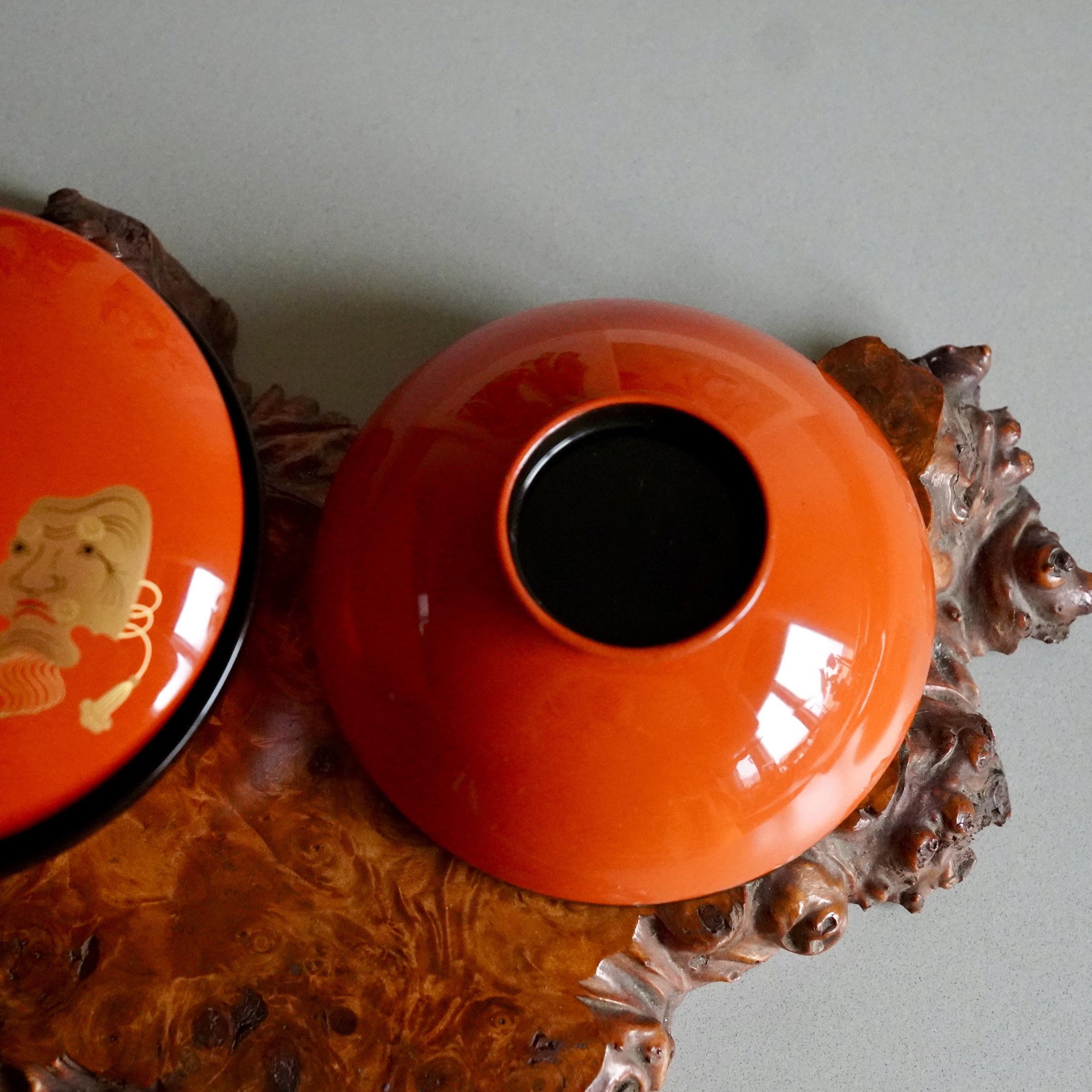 Image 17 of 20
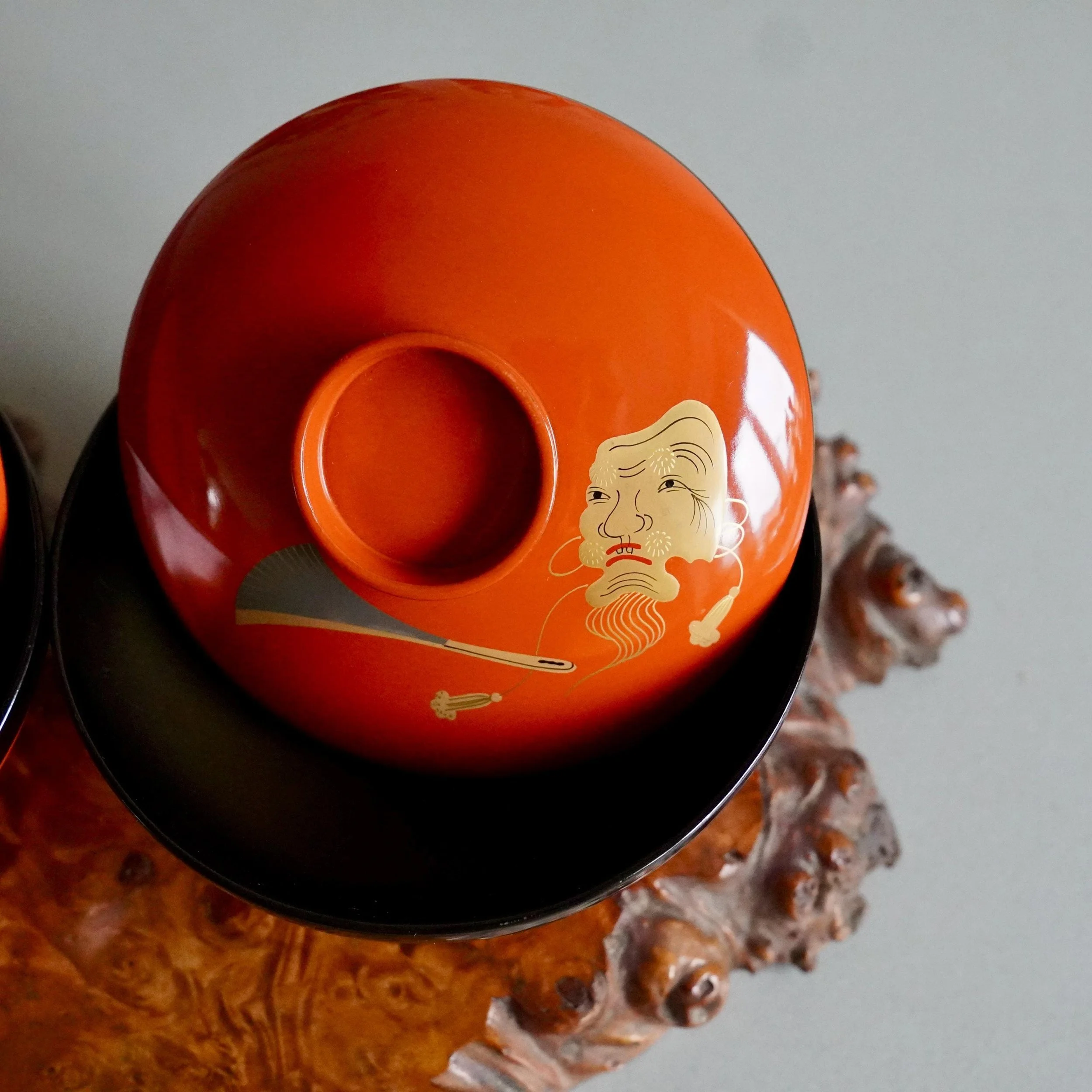 Image 18 of 20
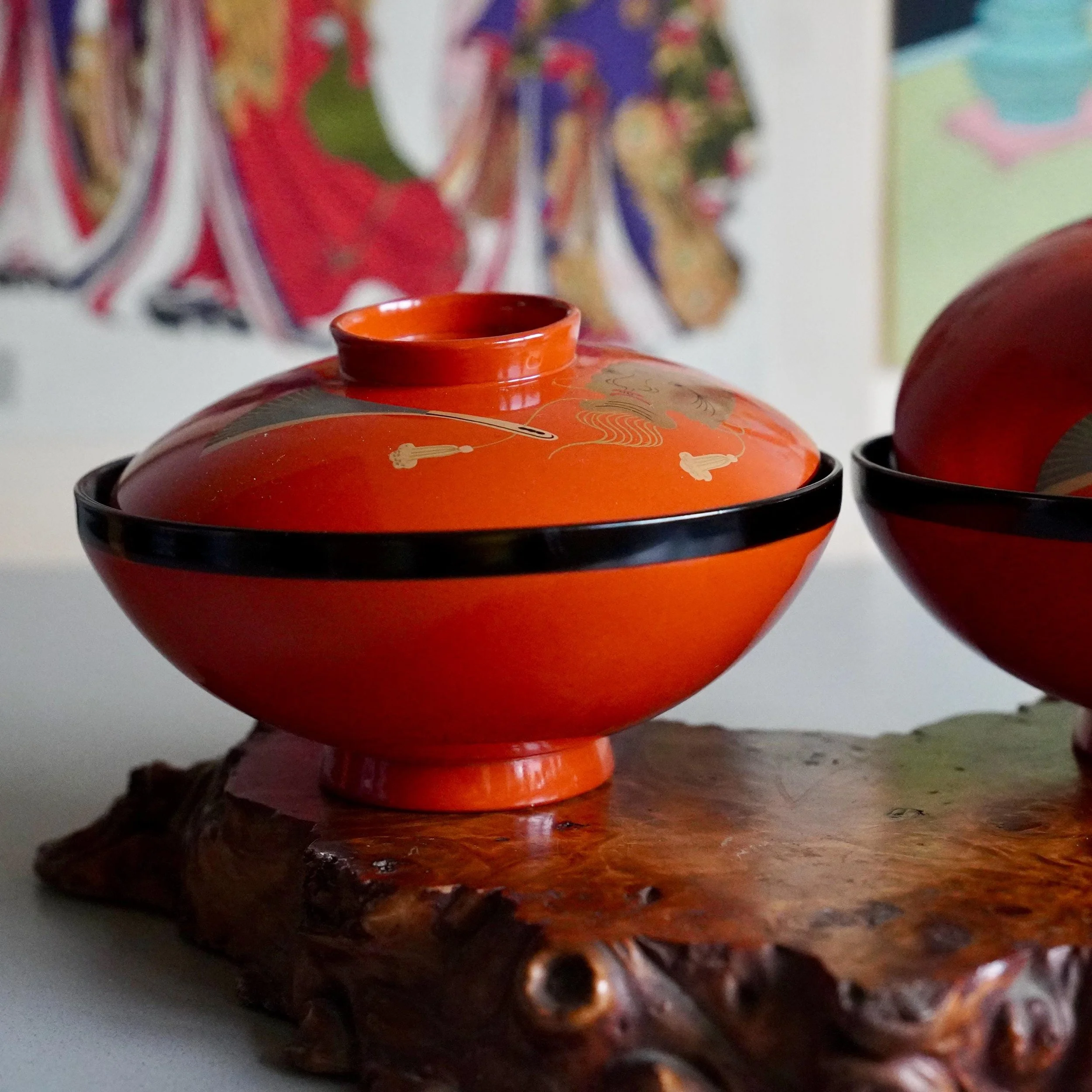 Image 19 of 20
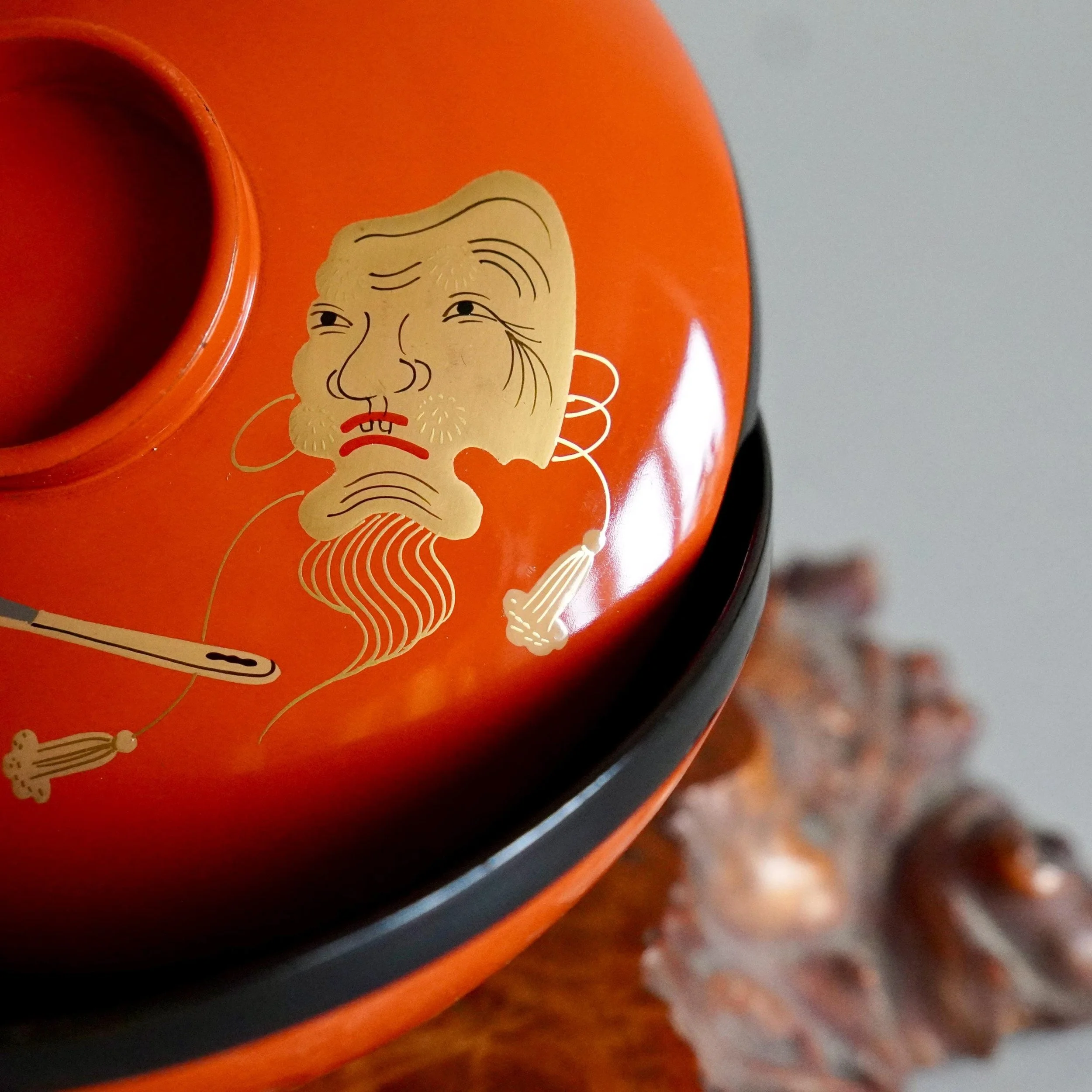 Image 20 of 20
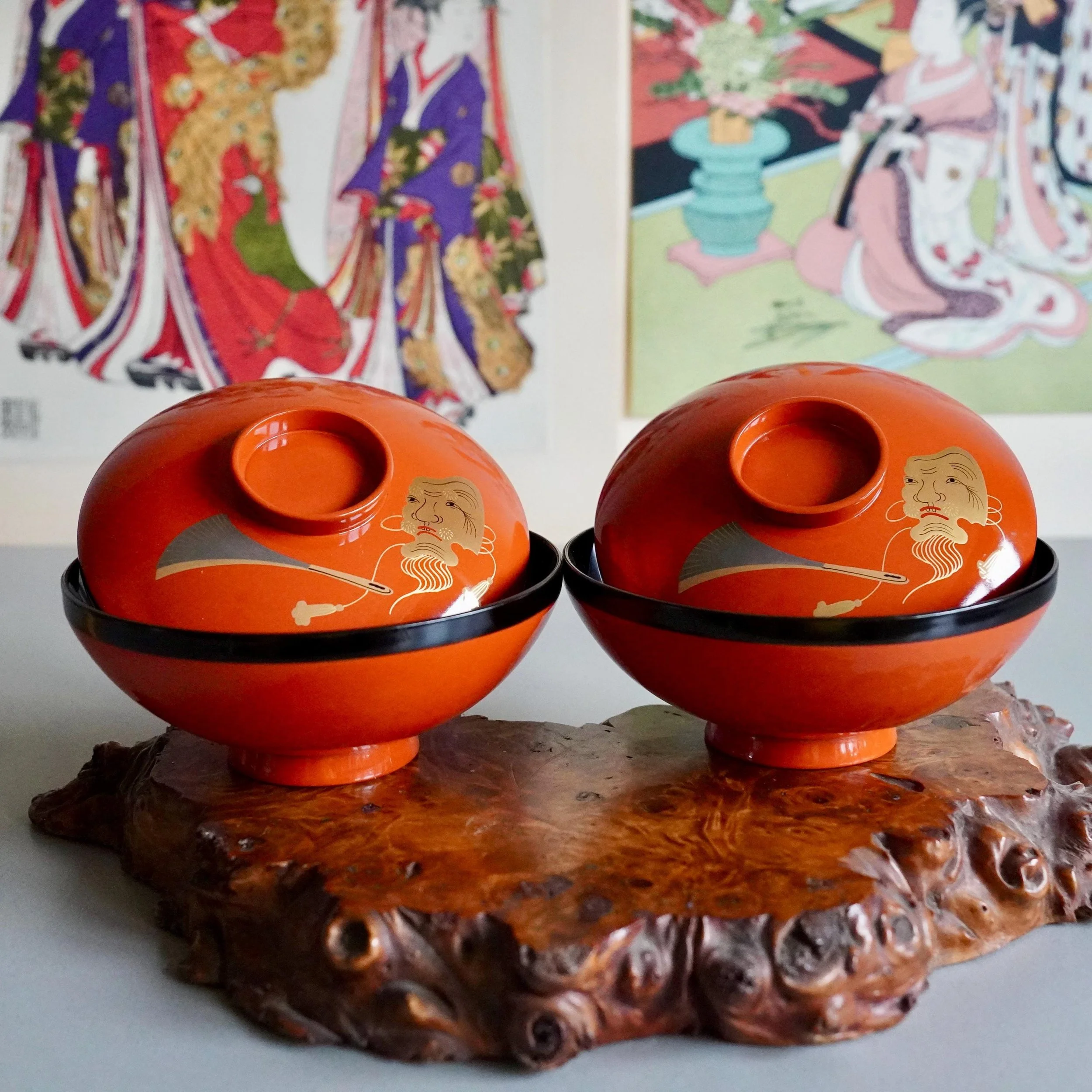
Vermillion urushi owan set with maki-e gold Okina mask, Meiji to early Showa period, ca. 1900 to 1930
The first thing you see is the orange. The high-contrast vermillion that has been Japan's colour of celebration for centuries. Against it, an Okina mask appears in gold on each lid: rendered as an object, complete with the silk cords used to tie it to an actor's face, as if it has just been set down between acts.
They are “owan”, the lacquered covered bowls used at every formal Japanese table: New Year's meals, kaiseki, wedding banquets. The combination of vermillion exterior and black interior is a classic of the form. This pair carries maki-e decoration of Okina, the most sacred figure in the Noh repertoire, and dates from somewhere between the late Meiji and early Shōwa periods.
The first thing you see is the orange. The high-contrast vermillion that has been Japan's colour of celebration for centuries. Against it, an Okina mask appears in gold on each lid: rendered as an object, complete with the silk cords used to tie it to an actor's face, as if it has just been set down between acts.
They are “owan”, the lacquered covered bowls used at every formal Japanese table: New Year's meals, kaiseki, wedding banquets. The combination of vermillion exterior and black interior is a classic of the form. This pair carries maki-e decoration of Okina, the most sacred figure in the Noh repertoire, and dates from somewhere between the late Meiji and early Shōwa periods.
What makes this owan set special
The look and feel up close
The lacquer surface is deep and glassy, built up in many layers and polished between each. The vermillion is strong and even across the curved exterior.
Picking up a bowl, the wood inside makes it lighter than you expect: warm in the hand, not cold like ceramic.
The gold maki-e sits slightly raised from the surface, and the detail in the mask face, the silk cords, and the tassel of the accompanying ceremonial object show themselves when you take the time for it.
Charming details
The mask depicted is Okina (翁), the oldest and most sacred character in the Noh repertoire, performed only at the most auspicious occasions: New Year, the opening of a new theater, important ceremonies.
Unlike other Noh masks, Okina is considered to embody a deity rather than represent one. Here, it's painted not as a worn mask but as an object: shown with the silk cords used to tie it to a performer's face, as if it has just been set down.
The accompanying tassel is the gohei, a ceremonial wand used in Shinto ritual, reinforcing the sacred rather than theatrical character of the scene.
-
Urushi lacquer on wood with hiramaki-e gold decoration.
The vermillion and black colour combination is a long-established pairing in Japanese lacquerware.
Sourced in Matsuyama, Ehime Prefecture.
-
The quality of the maki-e and the evenness of the lacquer ground are consistent with professional workshop production from the late Meiji period, early Shōwa ca. 1900-1930.
The linework in the Okina figure is fine and controlled, with the gold laid in thin, even strokes rather than the flatter, more simplified rendering that became common on mass-produced lacquerware from the 1930s onward.
The layered build of the lacquer ground, glassy and consistent across the curved surface, also points toward slower, more traditional workshop production rather than a rushed later piece.
None of this narrows the date to a specific decade. The vermillion and black colour combination, along with the Okina motif itself, remained in near-continuous use across Japanese lacquerware workshops for the better part of a century, with no significant stylistic shift that would let us pin this piece to, say, 1900 rather than 1930.
-
Width: approx. 13 cm diameter
Height: appro. 8 cm high (with lid)
Weight: approx. 220 grams
-
Excellent antique condition, no chips, cracks or repairs.
Minor surface wear consistent with age.
-
Urushi lacquer should never go in the dishwasher or microwave, and shouldn't be soaked in water.
Wipe clean with a soft damp cloth and dry immediately.
Keep out of direct sunlight, which fades both the vermillion and the gold over time.
If the surface loses its sheen, a small amount of food-safe oil on a soft cloth will restore the glow.
More info in the Care Guides.
*Decorative items such as the whisk and plank are for styling
and scale purposes only and not included in the sale
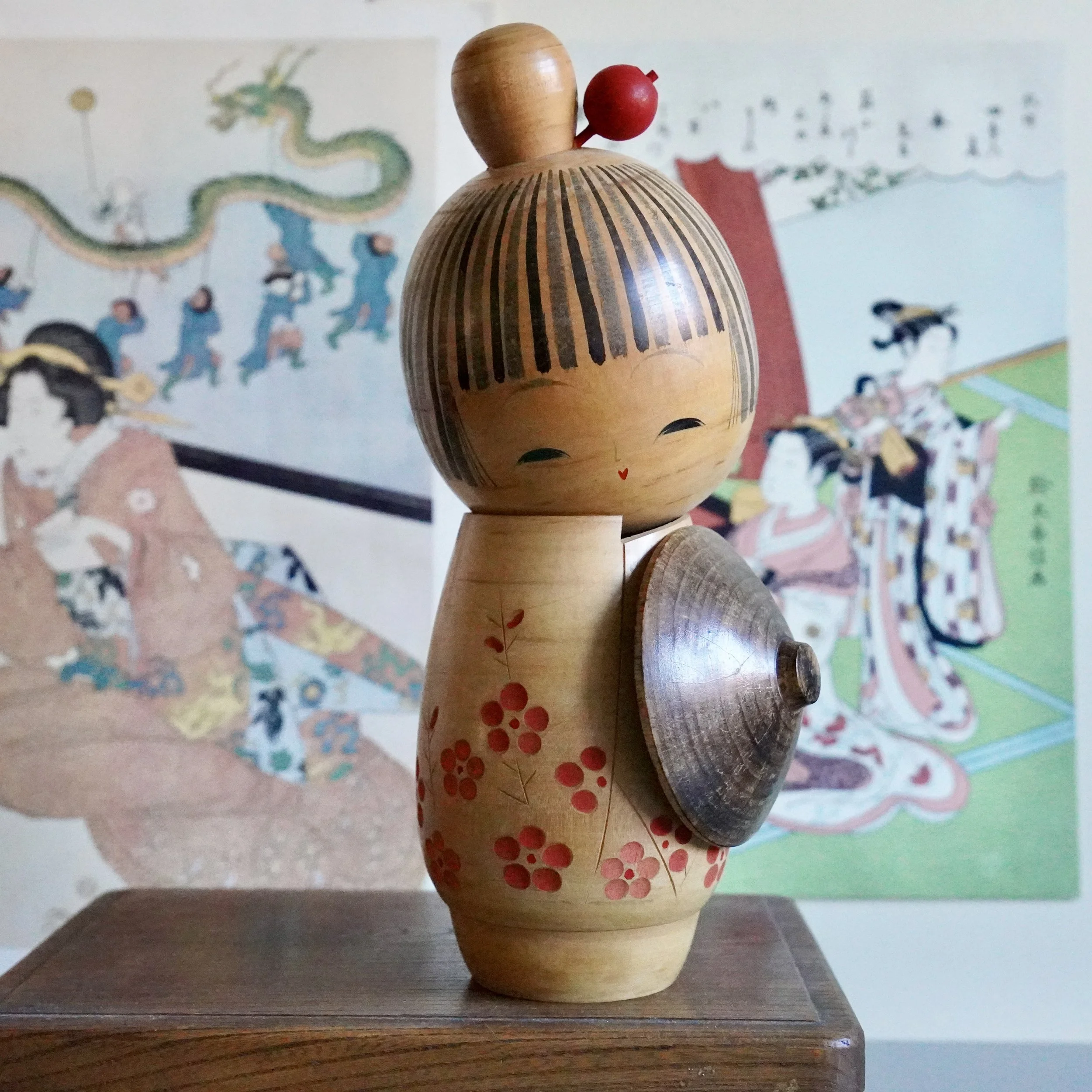
She stands taller than most kokeshi you will come across, and heavier too, with real weight settling into your palm the moment you pick her up. The head is covered edge to edge in fine combed striping, dark lines cut close together into a rounded cap, with a single red wooden bead perched at the crown like a stray plum bud. Sprays of red plum blossom trail down the body, each one carved first and filled with pigment after, and held against her side is a separately turned wooden kasa, a wide travel hat, raised the way a Heian noblewoman would once have lifted hers to shield her face on the road. Nothing about the proportions is timid: this is a maker working at full scale and full confidence.
The base carries the brush signature of Suigai, a painter who found his real language in wood. He spent a lifetime letting plants speak for people, plum blossom especially, always returning to it the way you return to a word that still means something. That instinct is what earned him Japan's Prime Minister's Award, but it is also simply what makes this particular figure feel considered rather than decorative. You are not buying a doll. You are buying the version of plum blossom one specific person kept coming back to, and decided, of everything he could have painted, this was worth painting again.
Interested to read more about the woodworking on kokeshi like these? I wrote about it in my journal.
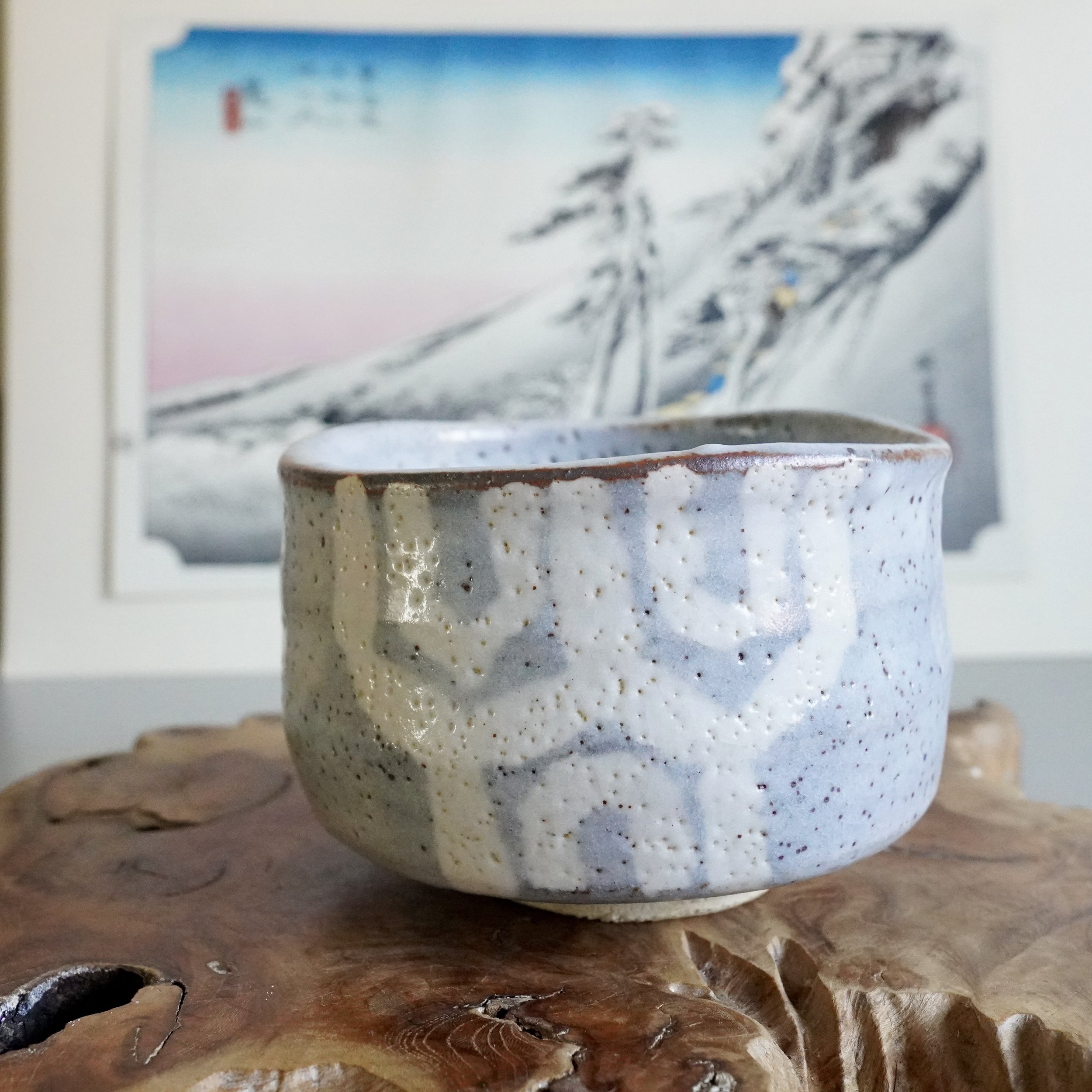
The glaze moves across this bowl like weather crossing a landscape, white where it lies thick, sliding into a soft blue grey where it thins, with a line of warm rust colored fire blush running unevenly along the rim where the clay broke through during firing. A carved geometric pattern circles the exterior, cut through the dark iron ground before the glaze was applied, so the pale clay shows through in a repeating motif that catches the light differently depending on where you stand. Small dark specks surface throughout the glaze, scattered without any pattern, the kind of detail that only shows itself once you start looking closely.
This bowl comes from the Han'emon-gama, a kiln in the Mino region of Gifu Prefecture whose own written history traces its family back through generations of potters working in the Shino tradition, one of the oldest white glaze traditions in Japanese ceramics and still closely tied to the tea ceremony today. The piece is signed with the kiln's stamp on the foot, and it comes with its original tomobako and an accompanying document that lays out the family's own account of its lineage. Owning it means owning a small, physical piece of that continuity.
New to chawan and wondering what to look for? Read about why size and weight change everything in my journal.
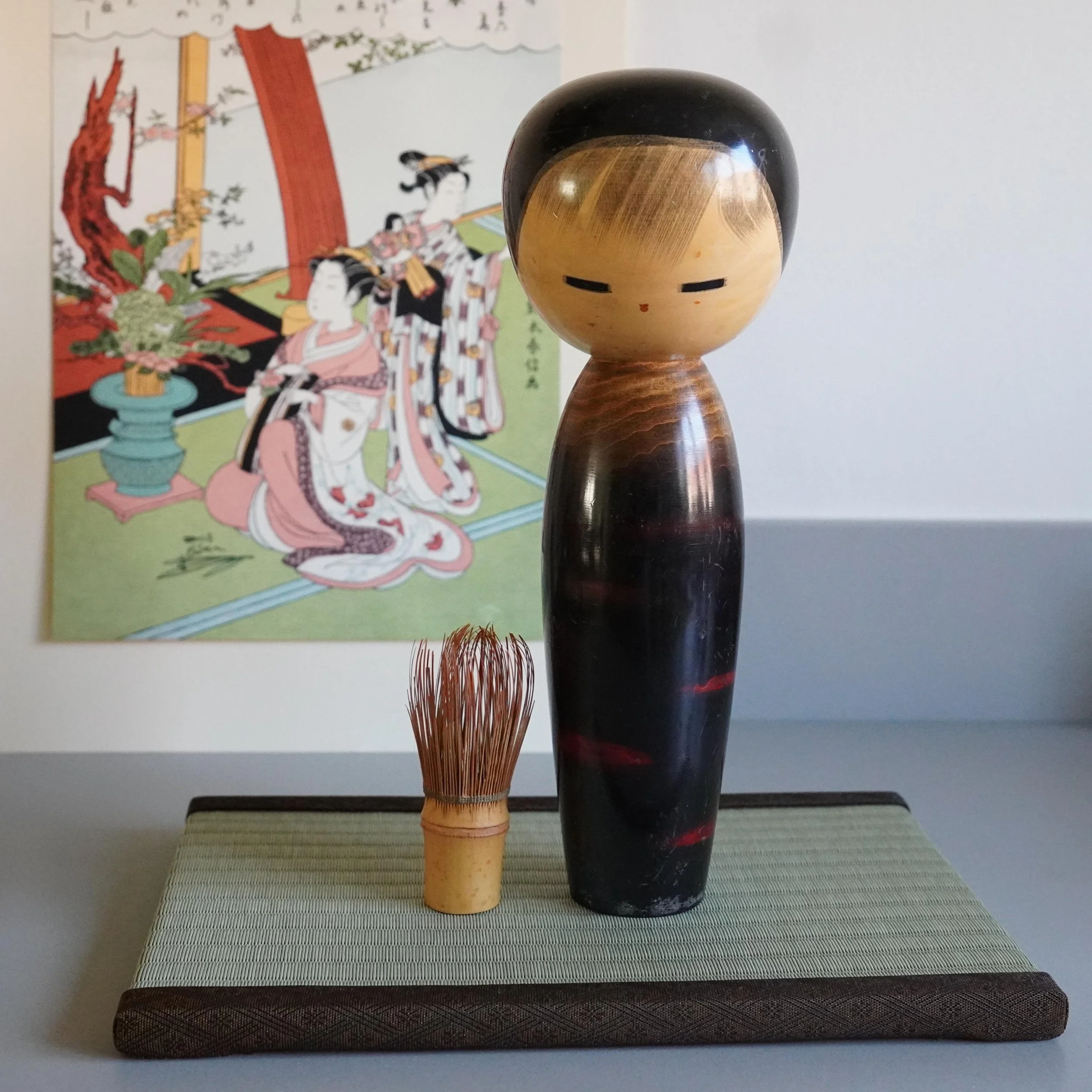
Her eyes are closed, her expression somewhere between sleep and prayer, and the wood beneath her seems to be moving. A pale, matte face gives way to a trunk of deep near black, streaked through with fine reddish lines that follow the grain like brushstrokes. Fine carved ridges wrap around her body, echoing the soft folds of a kimono without a single seam. She stands quietly, but she is not simple.
This design is called Chigozakura (“Cherry Blossom Child”) and it comes from the hands of Watanabe Masao. He is one of the founding figures of the sōsaku, the creative kokeshi movement that broke away from strict regional traditions in postwar Japan.
Watanabe spent decades collecting national awards for work exactly like this, and pieces from his hand now sit in museum collections abroad. Owning one is owning a small, quiet piece of that history, not a copy of a tradition but an original expression of it.
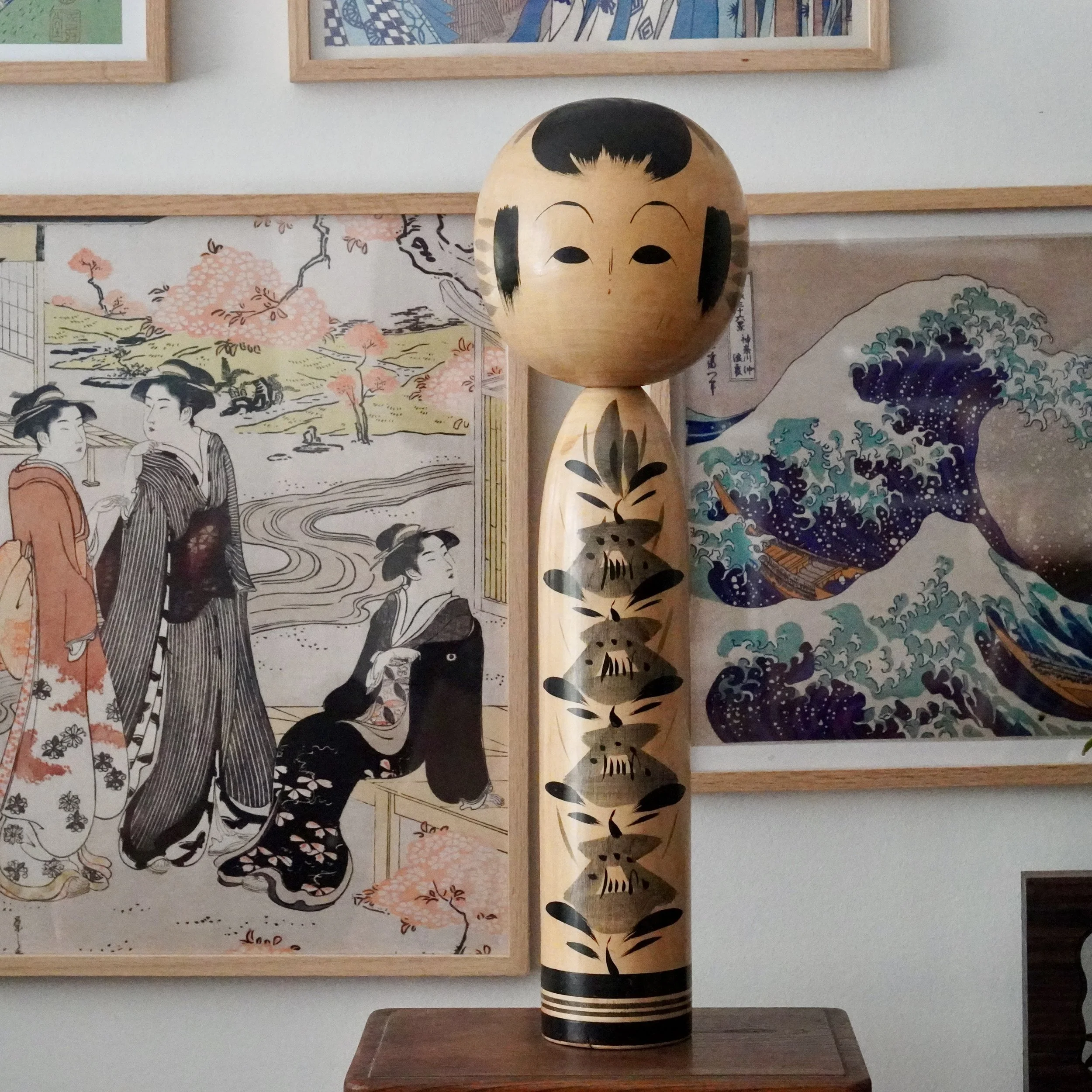
He looks caught mid turn. One section of his dark hair is brushed back in short, dry streaks, as if just ruffled, while the rest sits in a neat round cap above a calm, half lowered gaze. Down the long cylinder of his body, four flowers stack in grey and black, each bloom slightly different from the one above it, hanging leaves drifting between them. There is a stillness to him that a mass produced kokeshi rarely has, the kind that comes from a hand working without a template.
At 46.5 centimetres, this is not a doll you tuck onto a shelf and forget, it commands a room the way only a handful of vintage kokeshi can. The name on the base, Tetsuen, belongs to a small, tightly knit Shiraishi workshop where a style was considered worth keeping alive even after its maker was gone. Female kokeshi maker Chiyoko Hamatsu picked up the brush in her brother in law's memory and kept his flowers blooming for another four decades. Owning a piece like this means owning both the scale and the story, a kokeshi large enough to anchor a room and old enough to carry a small piece of a family's determination not to let something disappear.
Want to understand the difference between dentō and sōsaku kokeshi? I wrote about it, with a trip through Fukushima along the way.
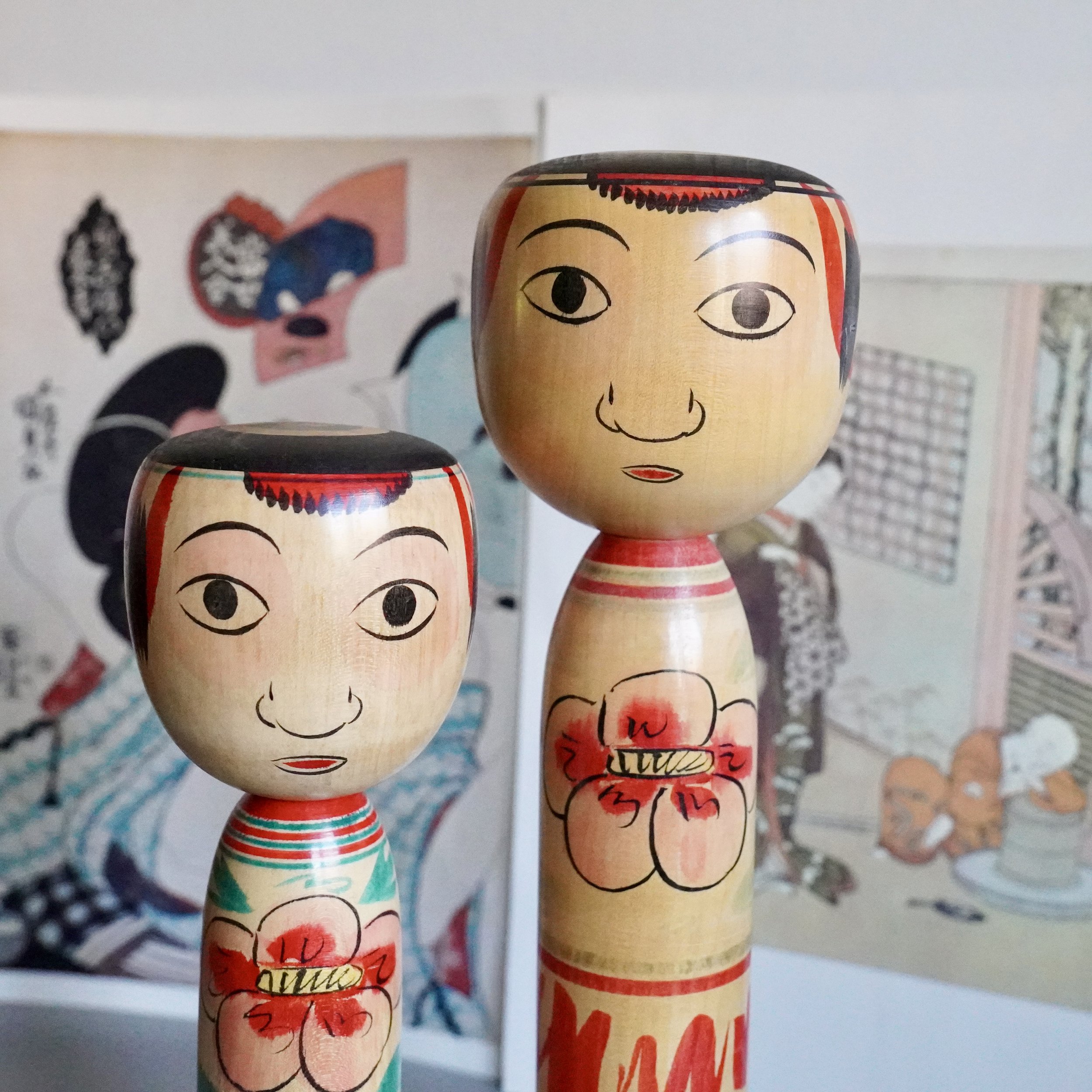
Two takobozu kokeshi standing shoulder to shoulder, the way they were clearly made to be seen. Both have that unmistakable oversized round head and the wide, startled eyes rimmed in red that give this Nakanosawa style its nickname, octopus priest.
This is not two random old kokeshi that happen to look similar. They come from one hand, a hand trained directly by Iwamoto Yoshizo, the man who carried this exact design forward after his father invented it. Tokuju spent the rest of his life protecting that design rather than putting his own spin on it. That is rare enough to be worth a spot on a shelf where you will actually see it every day, not tucked away as an investment. A signed pair like this, from a maker specialists still name when they talk about this style, is not something you will come across twice.
Want to understand the difference between dentō and sōsaku kokeshi? I wrote about it, with a trip through Fukushima along the way.
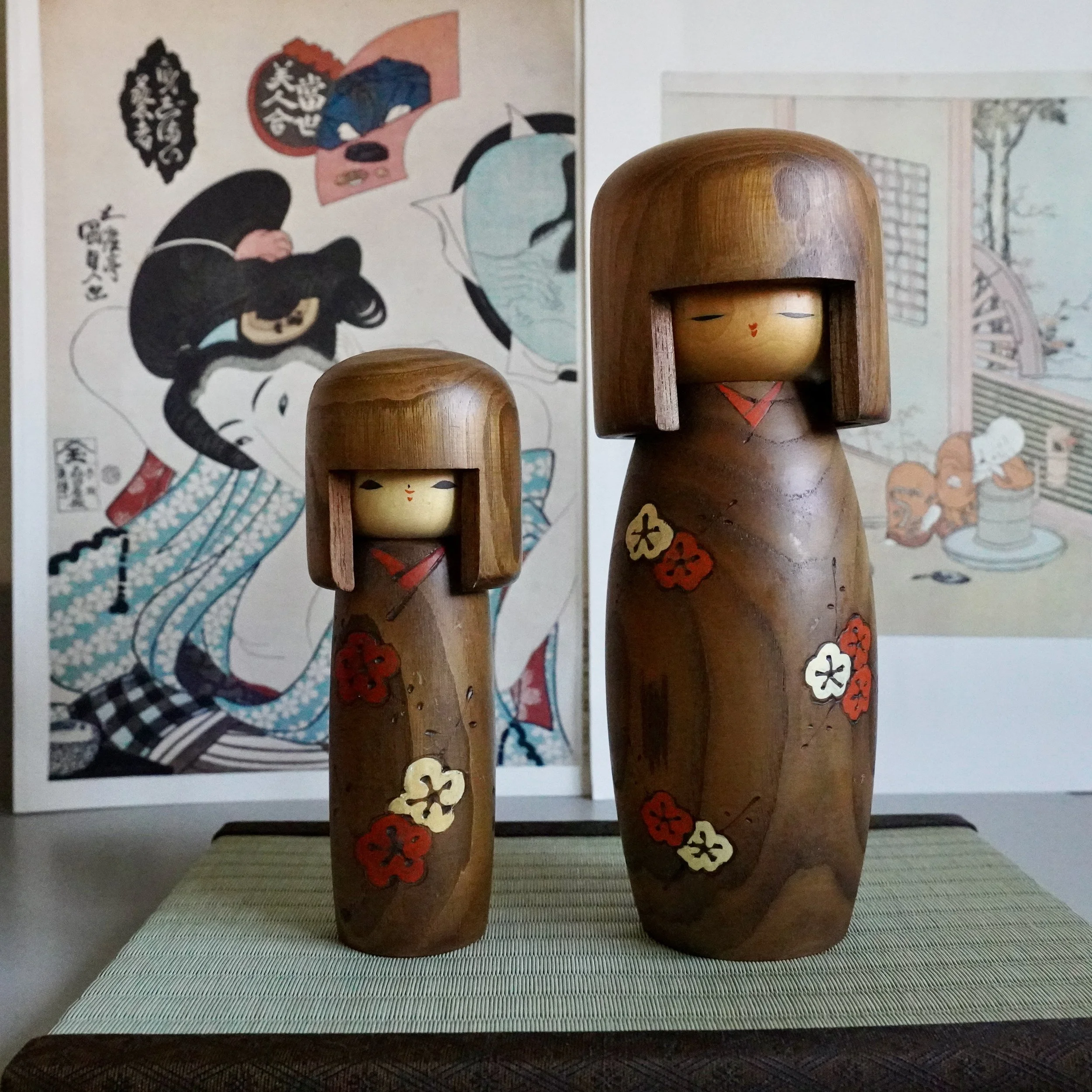
The hair on these two is the first thing you notice, and the last thing you expect. No black lacquer, no painted bob. Just the wood itself, left to show its own colour and grain, warm and pale where the light catches it. Below, plum blossoms scatter across both figures in red and cream, unhurried, some caught mid-branch as if the painter simply stopped when the flower looked right. The larger figure stands with quiet composure, the smaller one echoes her almost exactly, a pair clearly made to be seen together.
Usaburo's studio built its reputation on the opposite of this: a glossy black bob that became so recognisable it is often the first thing collectors associate with the name. This pair by Yuji Okamoto, second generation of the workshop, does something quieter. Leaving the natural wood exposed where paint would usually go asks the material to carry the character instead of colour doing it for him. It is the same hand and the same studio you find behind some of the most awarded creative kokeshi in Japan, working here in a lower key.
Interested to read more about the woodworking on kokeshi like these? I wrote about it in my journal.
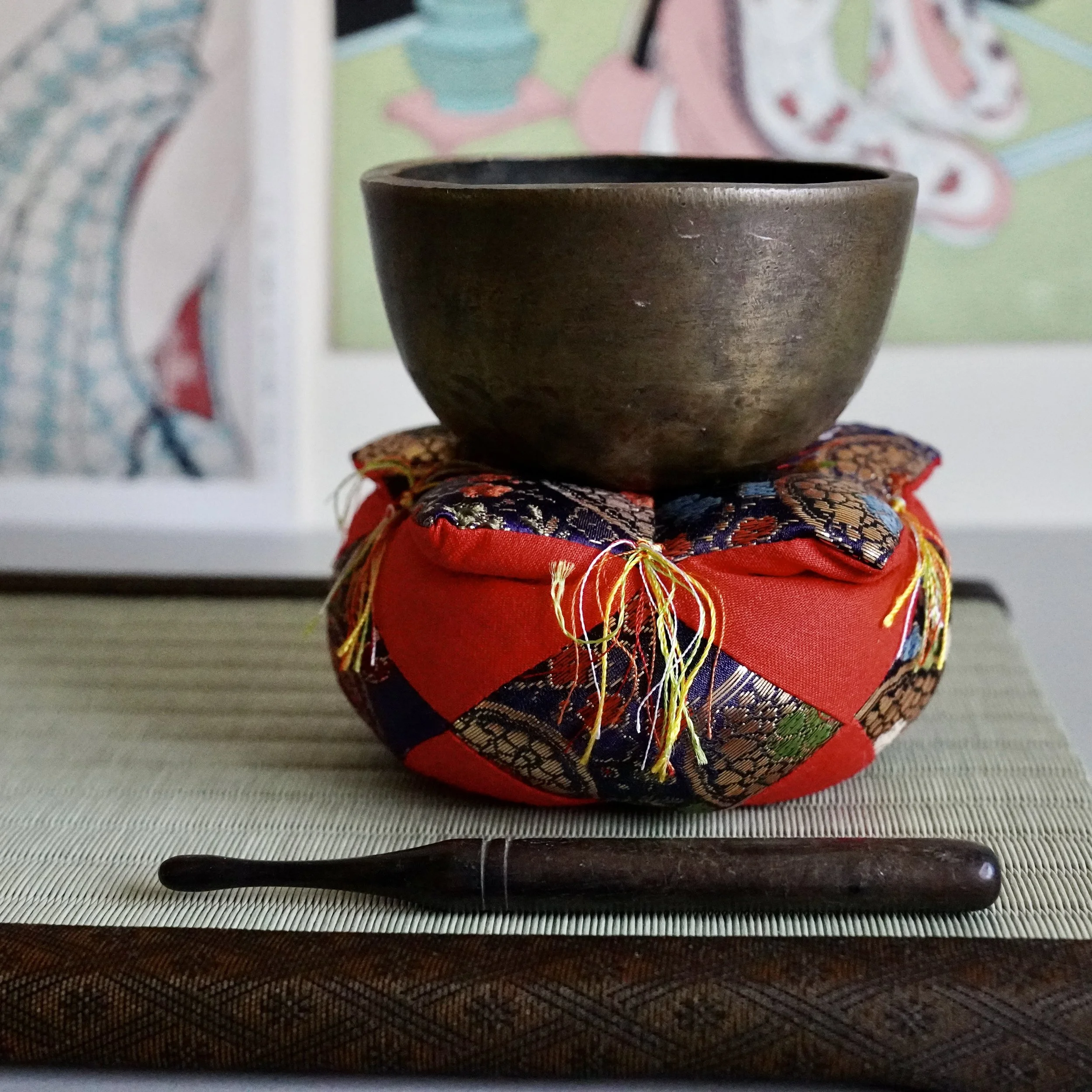
This one fits in the palm of one hand, small enough to forget it is bronze at all until you pick it up and feel the weight settle. The surface has softened into a deep, warm brown, dimpled all over from a hammer that clearly knew what it was doing.
Bells like this lived on home altars long before they found their way into meditation corners further from Japan, struck once to open or close a moment of quiet. This one sits on a cushion knotted from red silk and indigo brocade, with loose strands of coloured thread gathered at each seam.
The sound is very clear and bright.
Read more about the objects for your Japanese meditation corner, and why each one matters in my journal.
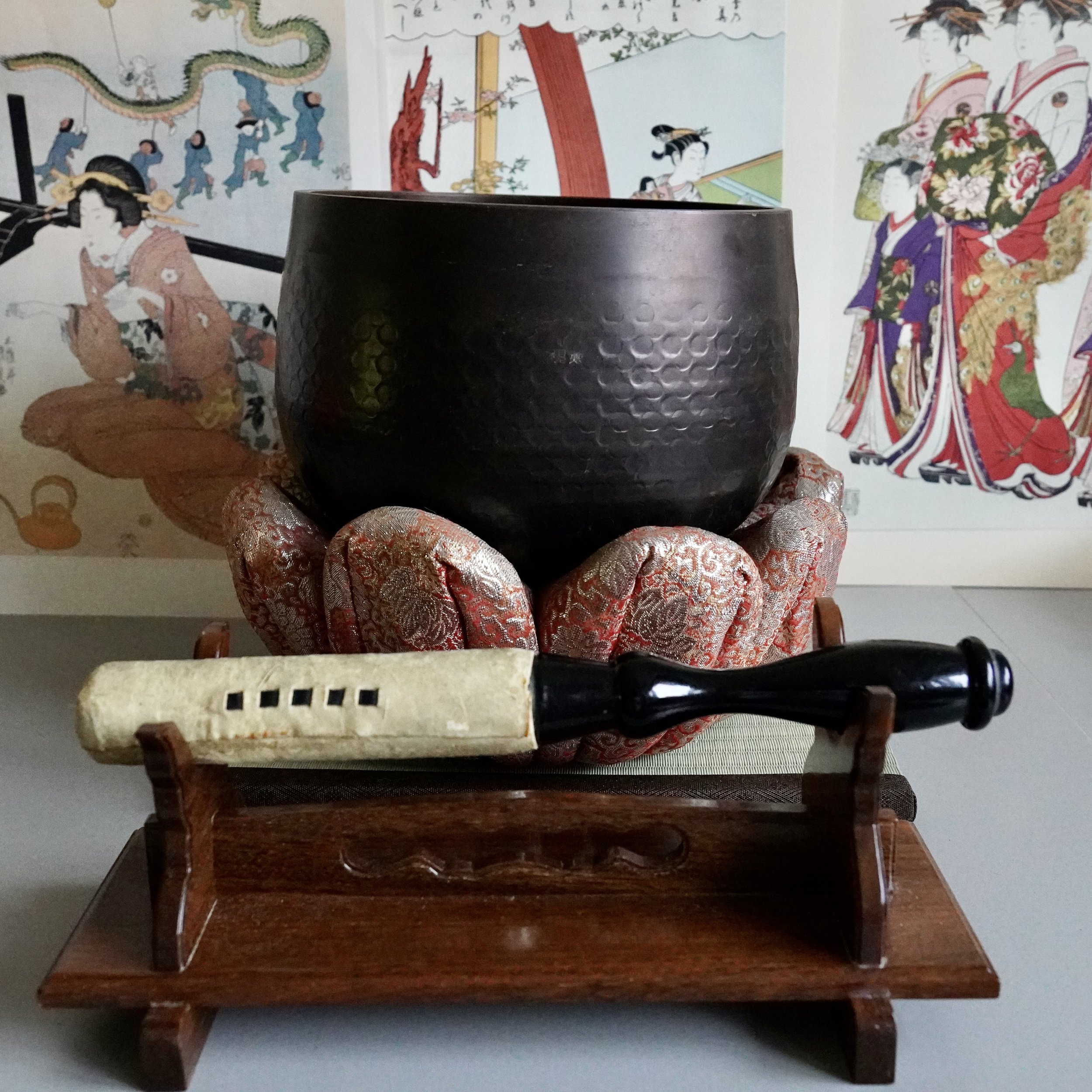
Most orin you come across fit in one hand. This one does not. It takes up real space, dark bronze gone almost black in the low points and warm brown where the light lands, its whole surface alive with tiny hammered ripples that never quite repeat themselves. Rest your palm against it and the cold of the metal surprises you every time, heavier than a bowl this size has any right to be. You do not so much notice this piece as feel the room shift around it.
Strike it, and it does not simply ring, it opens. The tone spreads outward and keeps going, long past the point where a smaller bell would have already gone quiet, the kind of deep, unhurried resonance that once called a temple hall to attention rather than a single room to prayer. Turn it over and a stamped mark reads 堤製, signed by Tsutsumi, a name history has otherwise let go of. What remains is the sound itself, and the sense that whoever made this understood exactly what they wanted it to do to a room.
Read more about the objects for your Japanese meditation corner, and why each one matters in my journal.
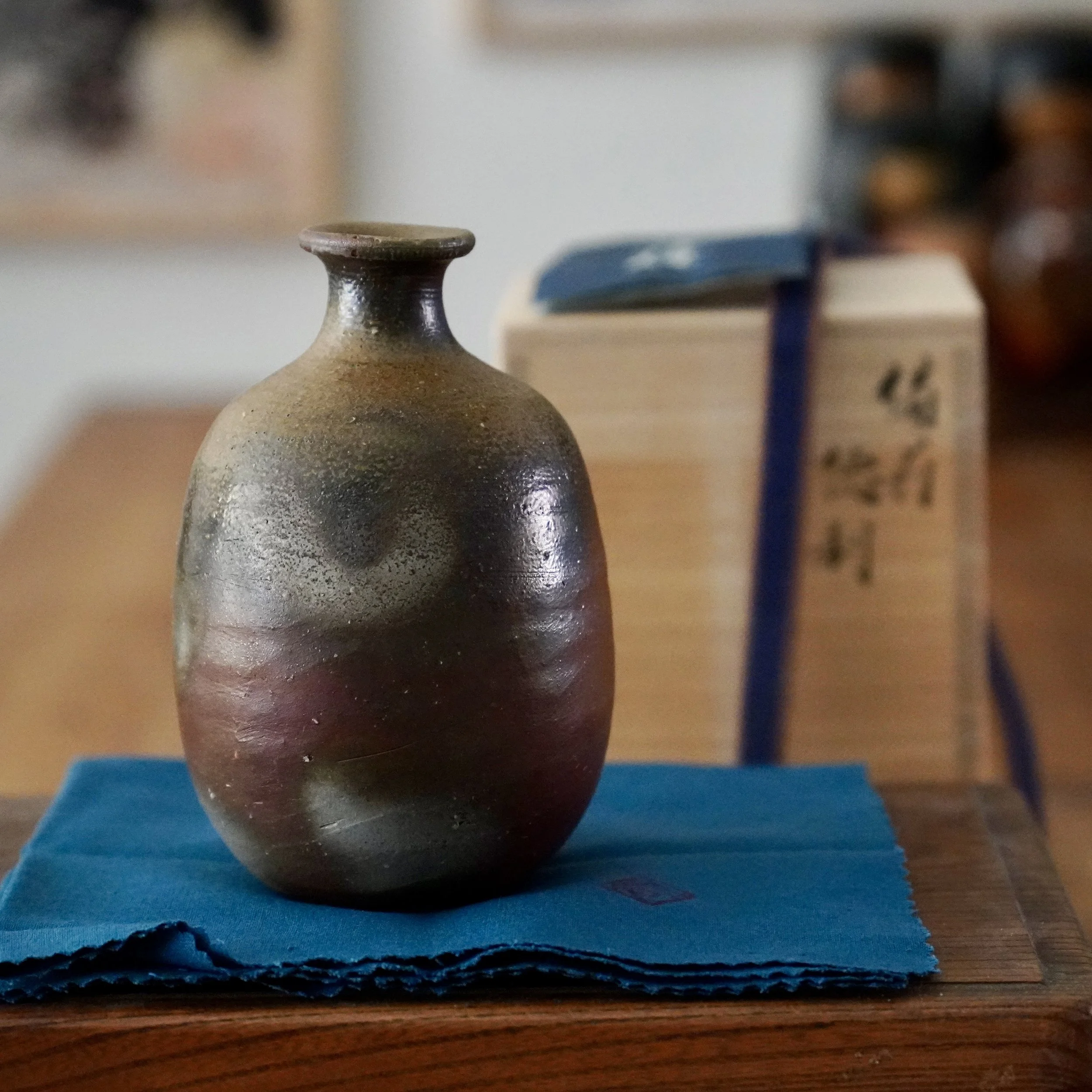
There is a quiet violence to how this tokkuri came out of the kiln. No glaze was ever applied, everything you see, the deep olive shoulder, the passages of smoky grey, the flush of aubergine low on the body, happened because ash and flame found this exact spot in the kiln and nowhere else. The form is rounded and a little heavy in the middle, the neck flares just enough to pour cleanly, and it sits with the kind of quiet confidence that unglazed stoneware only earns after firing for days.
This comes from Isezaki Sō, born into one of the defining pottery families of Bizen and a full member of the Nihon Kōgeikai, the Japan Craft Association, since 2004. He trained under Yamashita Jōji from 1987 and has spent the decades since collecting awards at the Nihon Dentō Kōgei-ten and the regional Chūgoku exhibitions that matter most within the tradition. Owning this is owning a piece from someone who has spent a working lifetime answering to that lineage, not performing it.
No glaze, no paint, just fire. I wrote about how Bizen gets its color, in my journal.
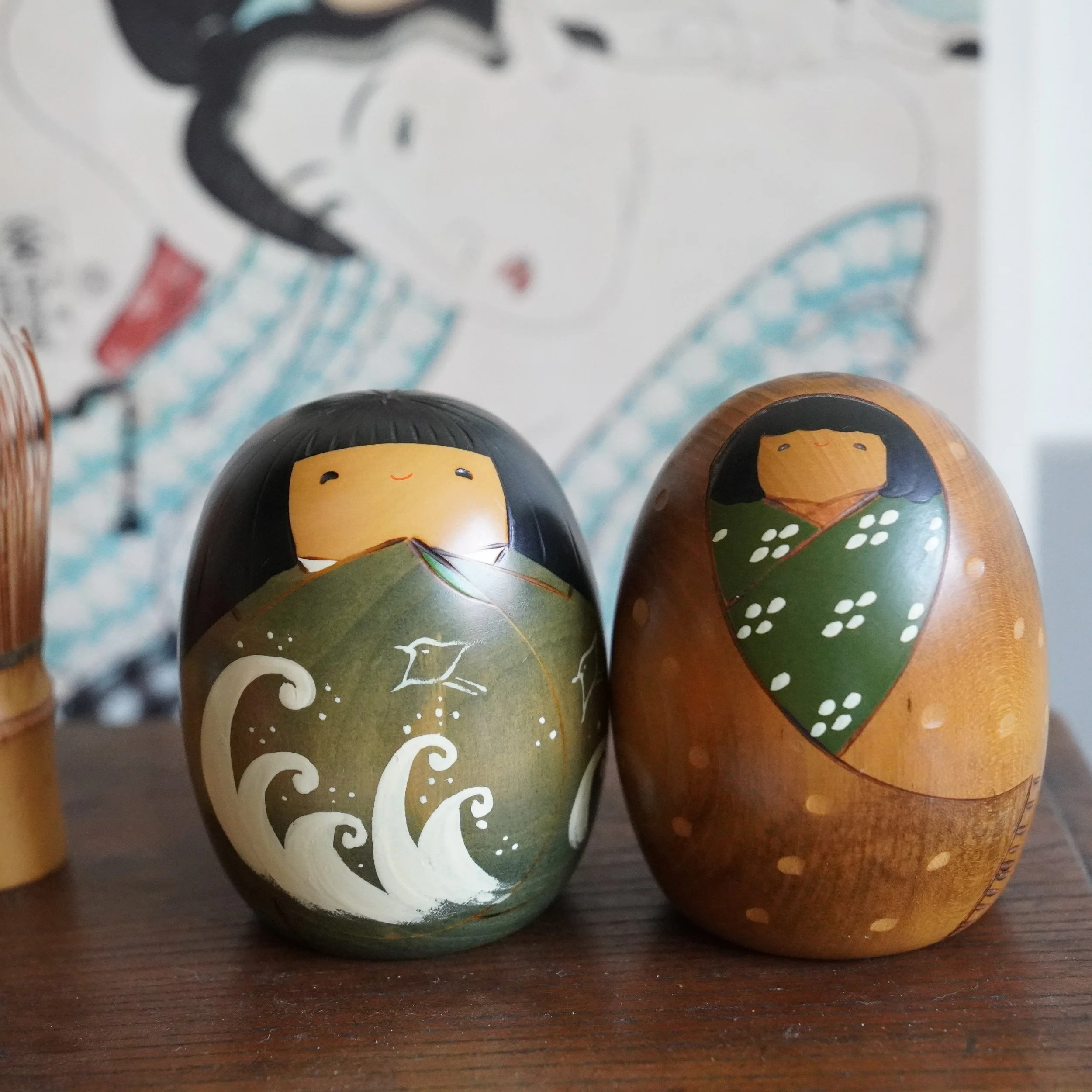
Two small egg-shaped figures, standing no taller than a teacup, each carrying its own season on its body. One is wrapped in soft olive waves that curl toward a pair of birds caught mid-flight. The other is scattered with dozens of white, snow-like specks that spill straight onto the kimono without a break. Side by side they hold a kind of quiet balance, warm summer green against honey-brown winter, two halves of the same idea standing a hand's width apart.
These two belong to Okamoto Usaburō's "Shiki no Uta," (Poem of the Four Seasons) a design created for his workshop at the foot of Mount Haruna in Gunma. Usaburō spent his career developing carving and burning techniques that let wood carry more expression than kokeshi traditionally allowed, work that eventually reached the collection of Emperor Shōwa.
This pair represents summer and winter from his four-part seasonal design, and the softer linework and gentle surface patina on both place them earlier in the workshop's long production history, well before the cleaner, more uniform look of the pieces made today.
Interested to read more about the woodworking on kokeshi like these? I wrote about it in my journal.
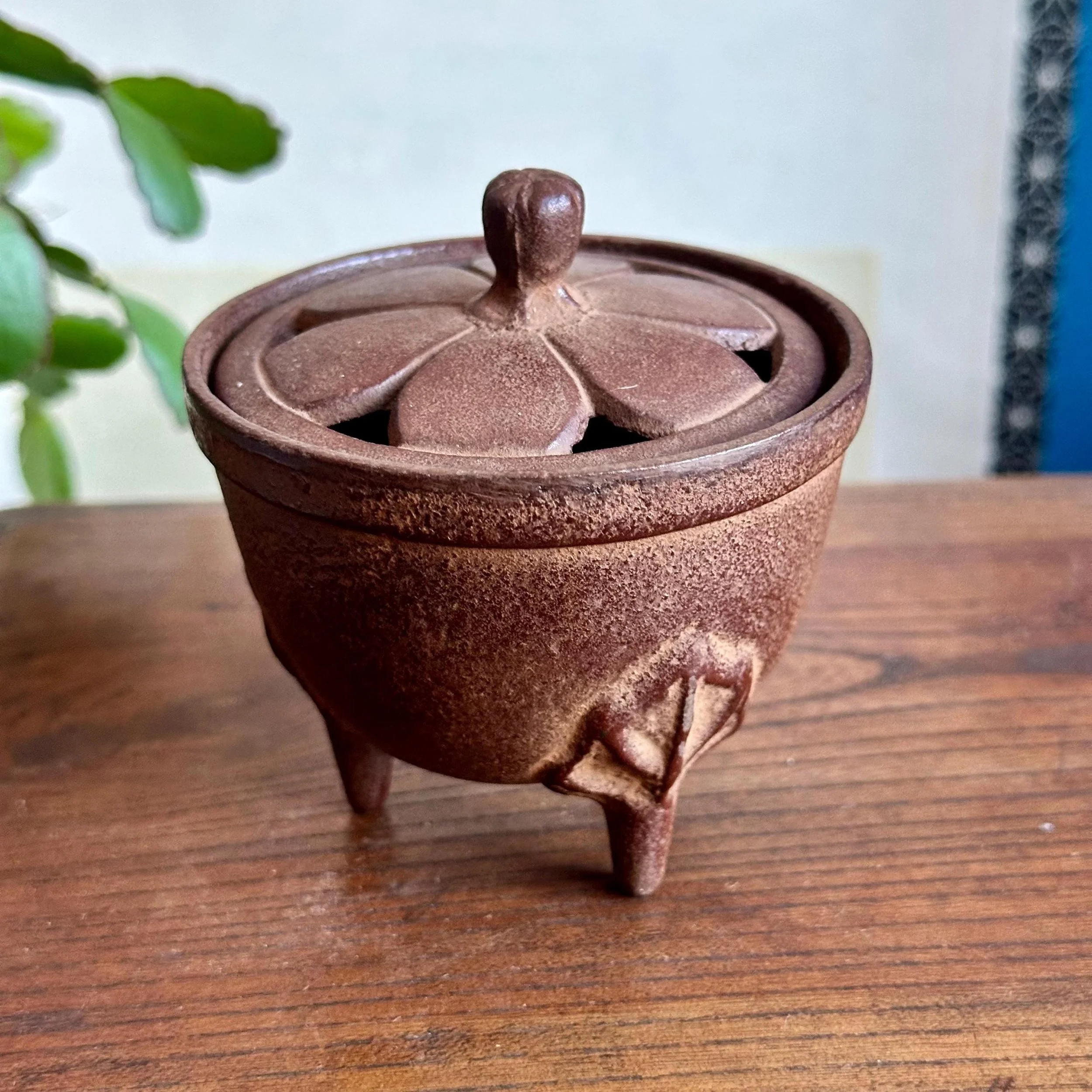
The weight of cast iron is its first greeting. Three short legs, a round belly, and a lid cut through with a five-petalled flower. The iron has darkened over the decades into a warm reddish brown that photographs cannot quite capture, and the casting texture catches the light in a way that makes the surface look almost alive. This is the kind of object you pick up and do not immediately put down.
This koro was made by Iwachu (岩鋳), Morioka's most recognised ironware foundry and one of the defining names in the Nanbu Tekki tradition. That tradition has its roots in the mid-17th century, when the ruling Nambu clan invited a Kyoto kettle-maker north to produce vessels for the tea ceremony. Iwachu has been part of that lineage since 1902, and its foundry stamp carries enough weight that the company explicitly warns buyers against imitations.
Read more about the objects for your Japanese meditation corner, and why each one matters in my journal.
The first thing you see is the orange. The high-contrast vermillion that has been Japan's colour of celebration for centuries. Against it, an Okina mask appears in gold on each lid: rendered as an object, complete with the silk cords used to tie it to an actor's face, as if it has just been set down between acts.
They are “owan”, the lacquered covered bowls used at every formal Japanese table: New Year's meals, kaiseki, wedding banquets. The combination of vermillion exterior and black interior is a classic of the form. This pair carries maki-e decoration of Okina, the most sacred figure in the Noh repertoire, and dates from somewhere between the late Meiji and early Shōwa periods.
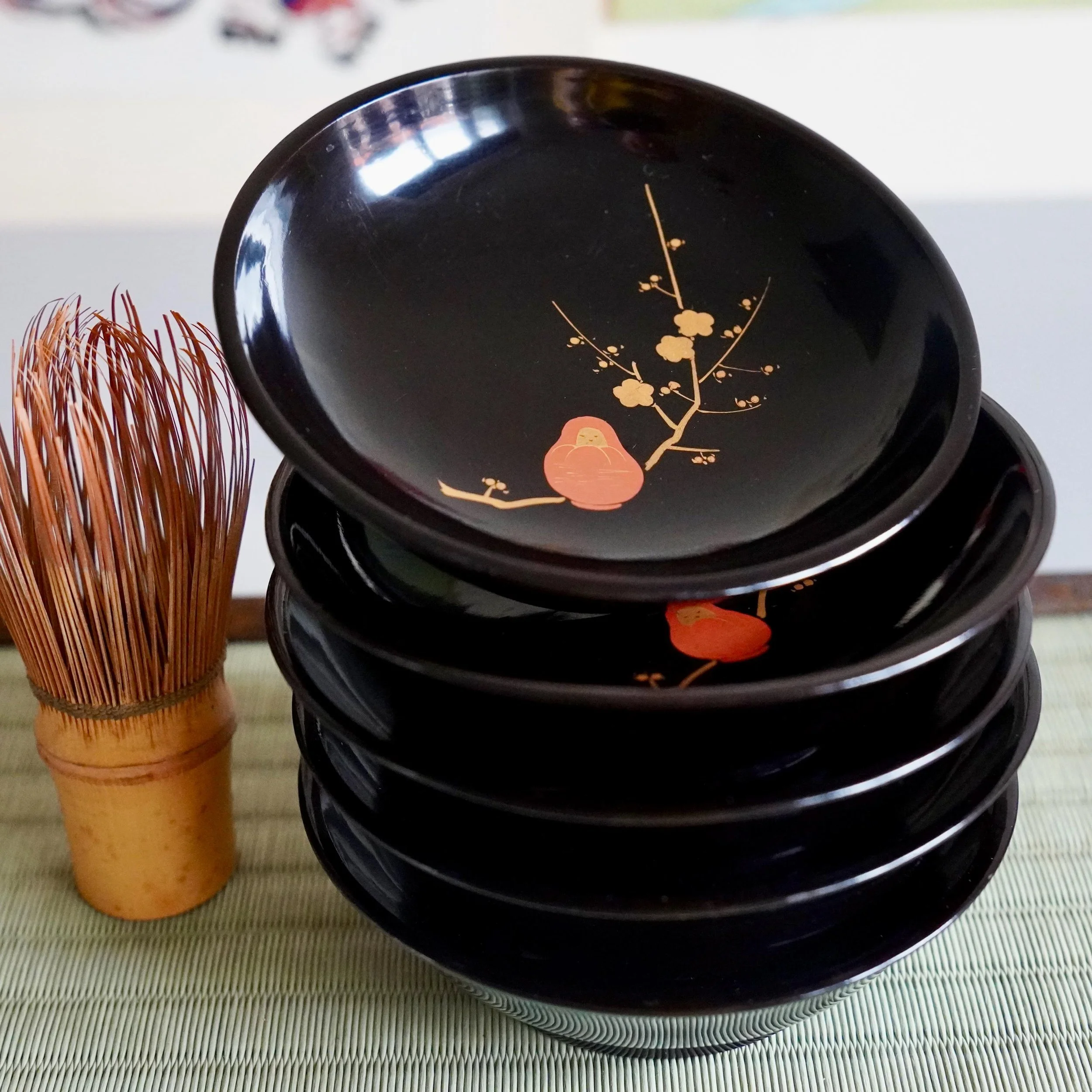
Five small plates, each carrying the same quiet scene.
A gold plum branch in bloom, and beside it a red Daruma, round and still. The black lacquer makes both motifs glow as if lit from underneath. It's a combination that would have been immediately familiar to any Japanese household. And still is.
These are kashizara, the small lacquered plates used to serve wagashi sweets at tea ceremony or at the start of a formal meal. It is decorated in a combination of gold hiramaki-e for the plum branch and painted red urushi for the Daruma figure. The wood grain is visible through the lacquer on the interior, which gives each plate a slightly different depth of tone.
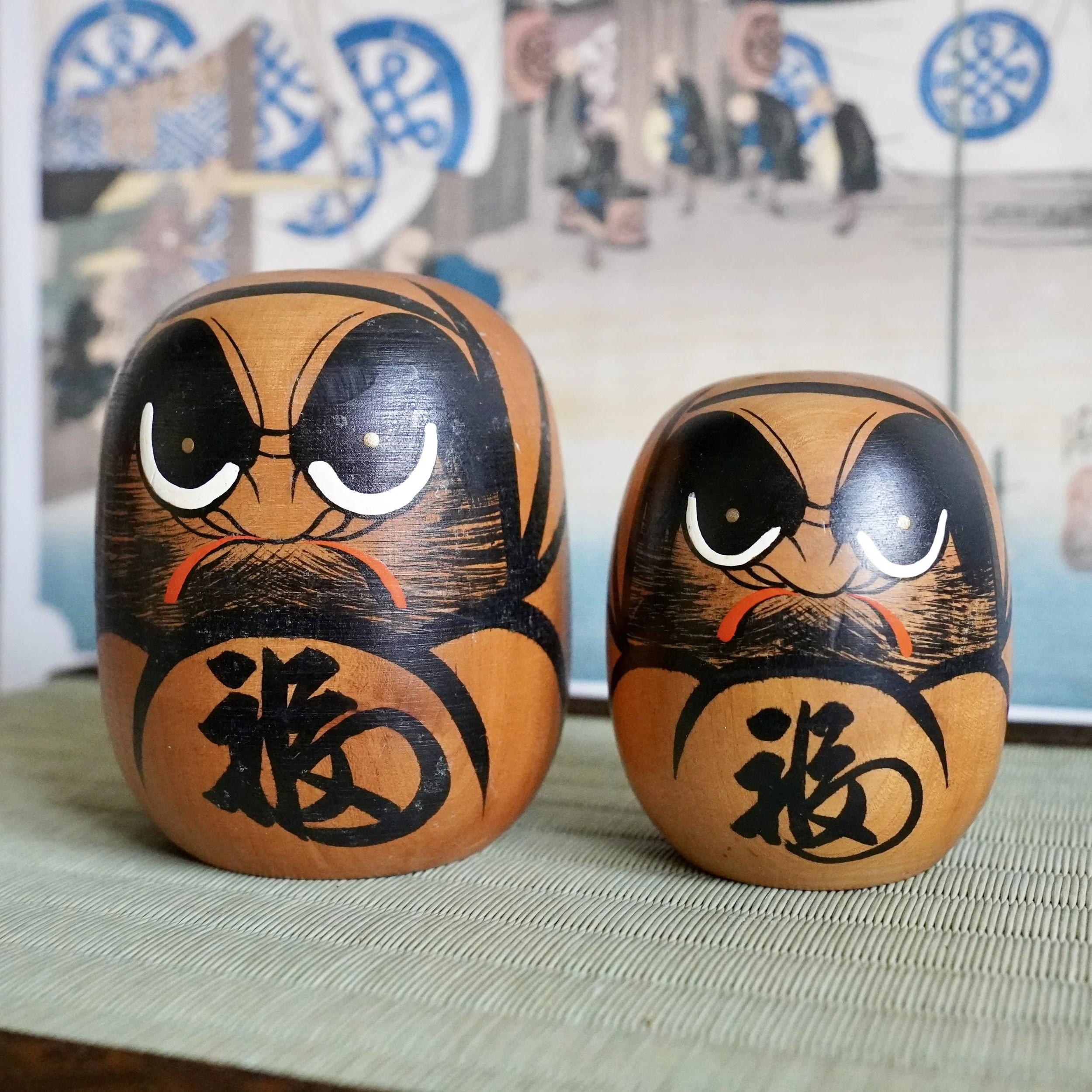
Two daruma sit together like a small, watchful family: one broad and full, the other its smaller echo. Both wear the same fierce expression, thick black brows drawn in a single confident stroke, eyes rimmed white around a dark centre, a short orange mustache below. On the belly of each, the character for fortune sits in solid black. Nothing about them is dainty. They look like they mean it.
Daruma dolls carry one of the most recognisable stories in Japanese folk craft: the wish made, the goal set, the eye left blank until the promise is kept. Pieces like this pair were turned on a lathe by the same craftsmen who shaped kokeshi, in the onsen towns of Tōhoku where wood was the material at hand and every visitor wanted something to bring home. No maker signed this pair. What they carry instead is smaller and more personal: a handwritten date on the underside, someone once marking the day this pair came into their life.
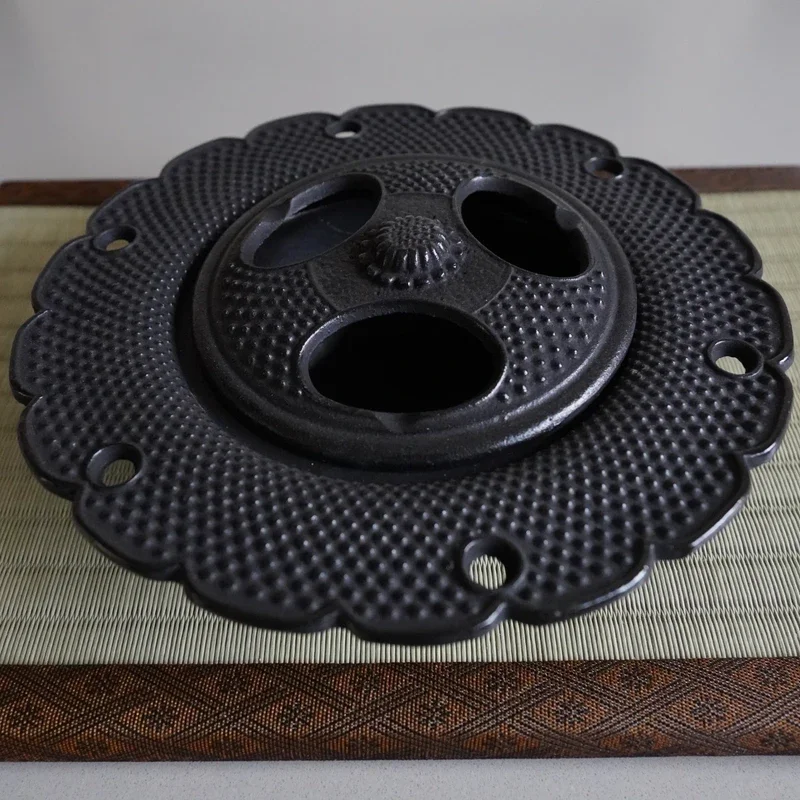
Nearly a kilogram of matte black Nambu cast iron, every surface covered in the arare dot pattern — the raised hailstone texture that has defined this craft tradition for centuries. This kōro sits low and wide, shaped as a chrysanthemum in full bloom, its scalloped outer edge giving it a silhouette that reads clearly from across the room. The three openings are proportioned with care against the flower form, and the raised bud at the centre draws the eye exactly where the smoke will rise.
This piece was made by Iwachu, the Morioka foundry established in 1902 that became the definitive name in Nambu tekki. Their 岩鋳 seal on the base is a guarantee that has meant something for over a century: the piece is what it says it is, made the way it was always made, in the ironworking tradition that took root in Iwate Prefecture under the Nanbu clan lords of the Edo period and received National Traditional Craft designation from the Japanese government in 1975. A Shōwa-period Iwachu kōro in this condition, apparently unused, is not something that turns up often.
Read more about the objects for your Japanese meditation corner, and why each one matters in my journal.
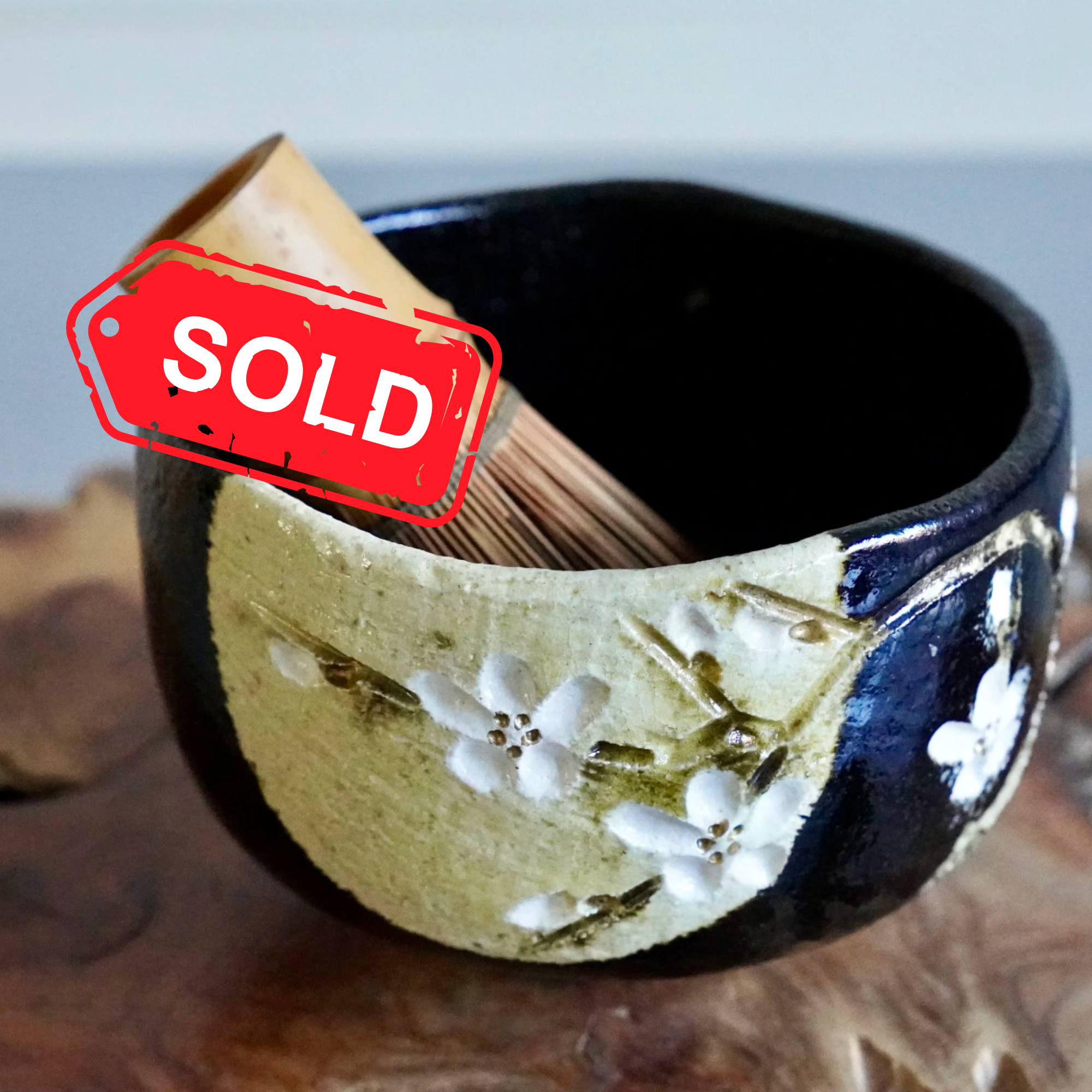
Notice: This chawan has found a new home. If you are looking for something similar, scroll down.
Nearly the entire surface disappears into black, a glaze so deep it seems to swallow the light around it. Then, sweeping across one side, a pale arc of ash white clay breaks through, and from that ground three cherry blossom branches rise. The blossoms are carved into the clay itself, the branches traced in warm gold. The bowl is compact, a little heavier than it looks, and it settles into two cupped hands as though it were made for exactly this grip.
Okugawa Katsuomi built his reputation the hard way, striking out on his own rather than working under an established kiln name, and the confidence in this piece shows why that risk paid off. A potter working independently answers to no house style, only to his own hand, and a cherry blossom cut this precisely into a glaze this dark is the kind of detail that gets noticed. This bowl comes with its full history attached, both in the tomobako it still carries and in a maker whose name is now well documented.
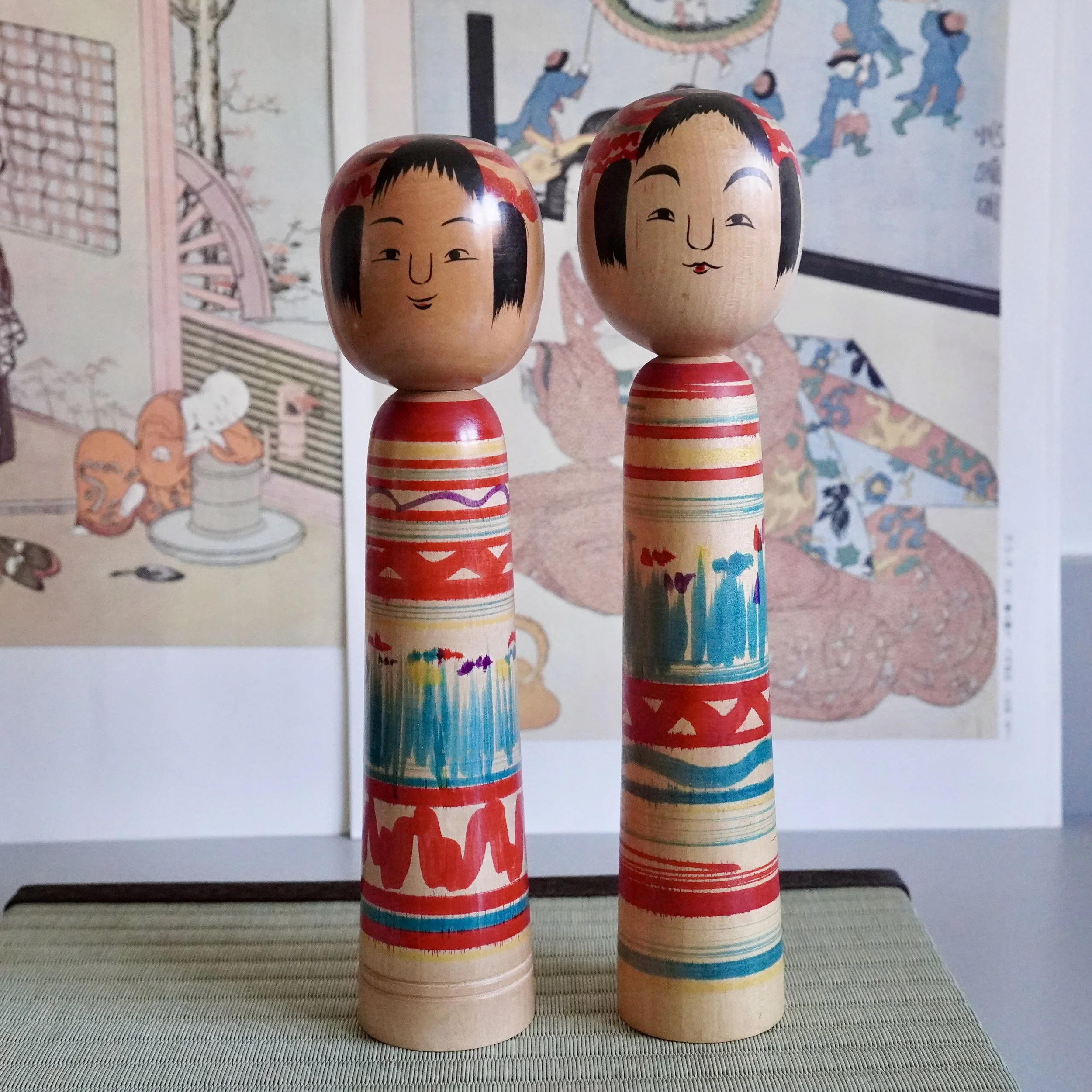
Two faces, nearly identical at first glance and then not at all. One laughs with its mouth open, a flash of red catching the light like a hint of tongue. The other's mouth is small, round and pursed, closer to a kiss than a laugh. Tilt either head and it turns with a small resistance and a soft squeak, the same trick Tsuchiyu makers have used for generations. Both dolls are signed on the base by Jinnohara Kazunori (陳野原和紀). More info on the makers page.
Where they differ further is the hand that painted the bodies. One carries a busier decoration, a looping purple line, a wider red band, a restless zigzag near the base, the wood warmer and more time worn. The other stays quieter, its red kept narrow and calm. The motif itself, a scatter of grass and small flowers, traces back to Kazunori's lifelong reconstruction of the historic Kumematsu style.
Want to understand the difference between dentō and sōsaku kokeshi? I wrote about it, with a trip through Fukushima along the way.
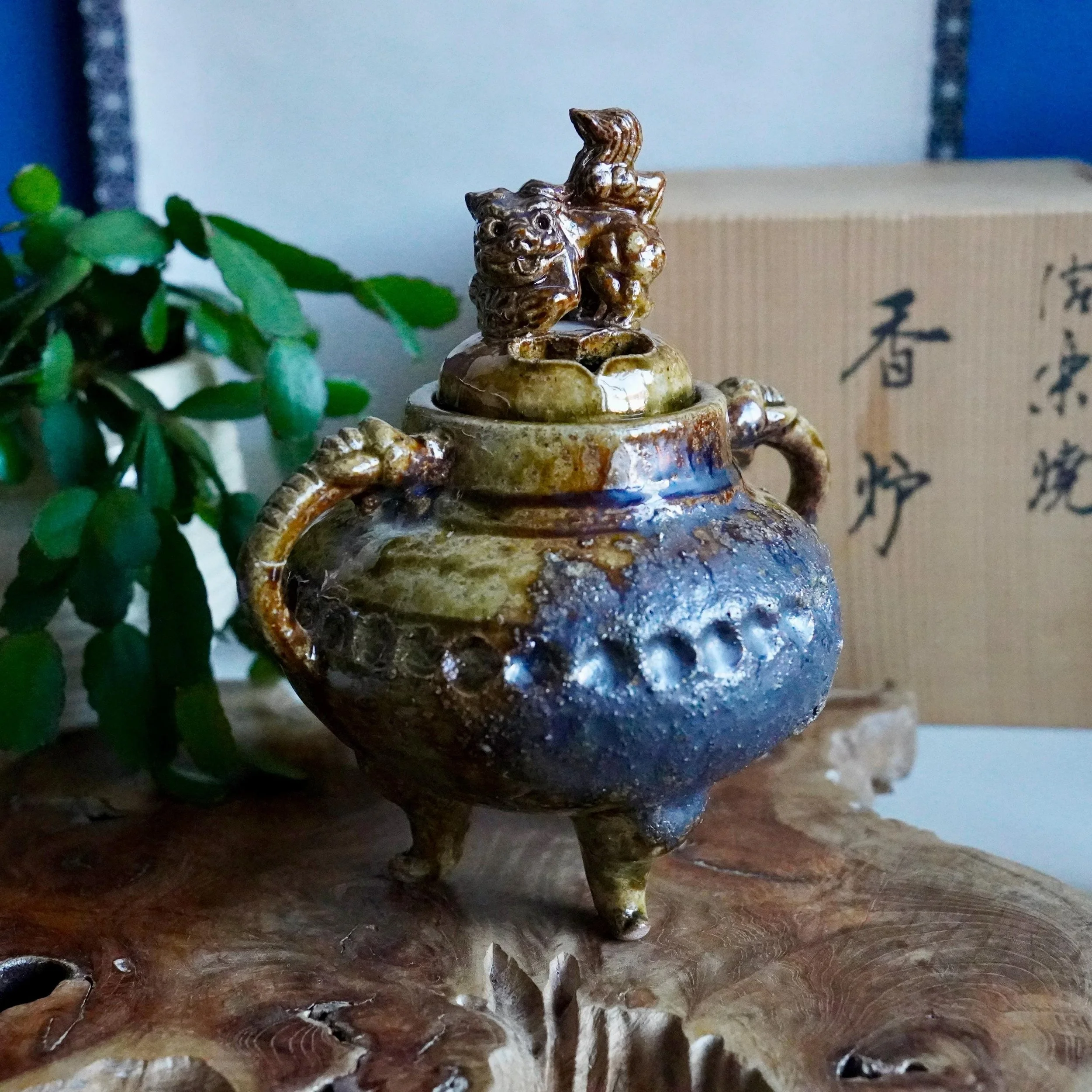
The glaze is what stops you here. Deep amber and bronze pool across the shoulders, then shift into a stormy blue-grey lower down the belly, alive with texture where the wood ash settled unevenly during firing. No two kilns fire the same way twice, which means no other piece looks quite like this one.
On the lid, a small shishi, part lion, part dog, sits mid-pose, claws gripping the knob beneath it. The sculpted handles on either side echo the same restless energy. This is an object you keep circling back to look at.
A kōro like this was used to purify a room before meditation or ceremony, to mark the quiet shift from day into evening, or simply to settle a busy house. The base carries an impressed workshop stamp, and the original wooden box holds matching calligraphy alongside a personal red hanko seal, a level of documentation that vintage Japanese ceramics rarely arrive with intact.
Read more about the objects for your Japanese meditation corner, and why each one matters in my journal.
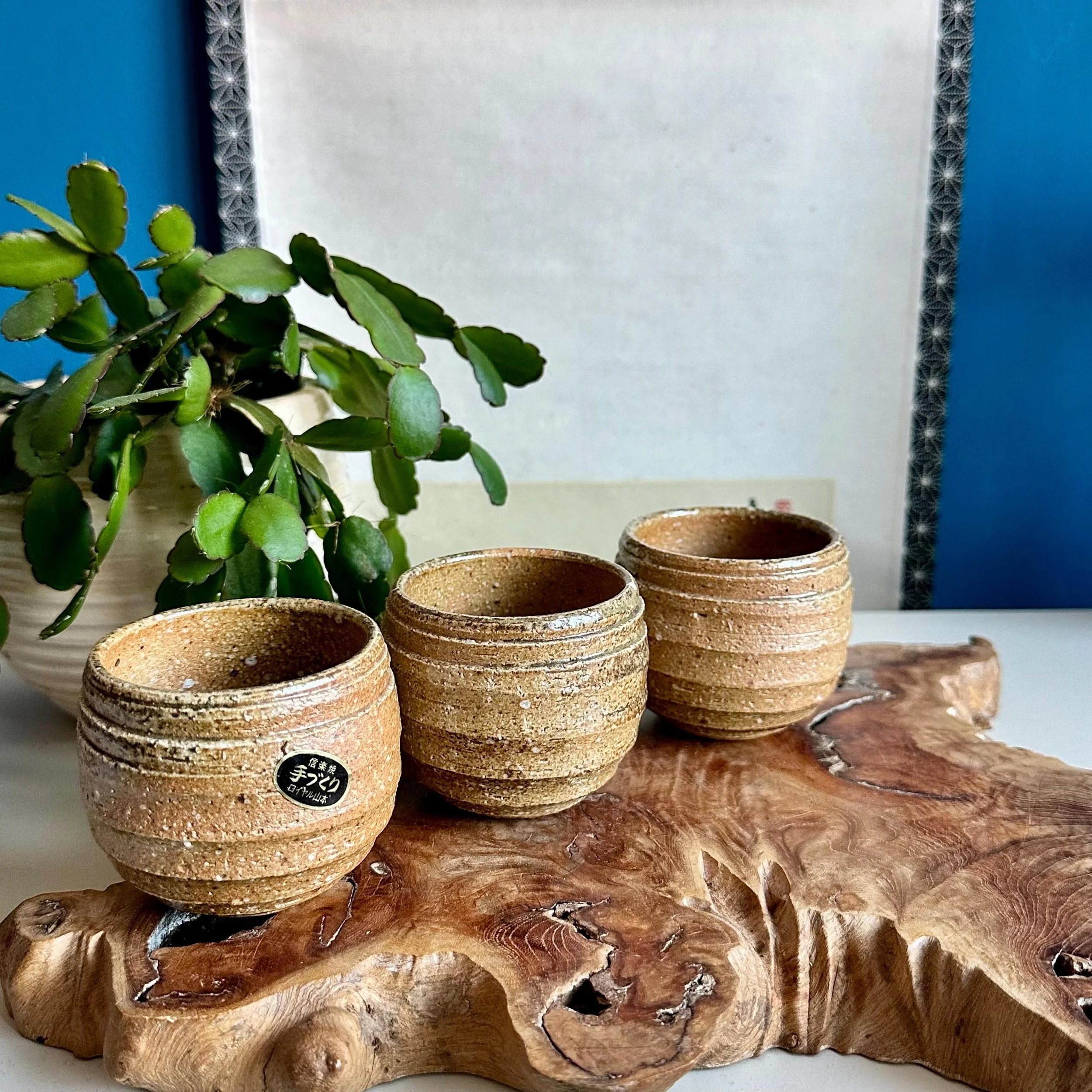
Three cups, no two exactly alike in shape. Look closely and you'll see it: a slightly different curve here, a different scoring there, the way light catches each glaze a little differently from cup to cup. That's what handmade looks like when nobody's trying to hide it. The clay carries small flecks of stone straight from where it was dug, and the glaze sits warm and understated, never showy. Set out on a shelf or used daily, they hold their own without asking for attention.
These cups come from Shigaraki, one of Japan's six ancient kiln towns, the Nihon Rokkoyo, with pottery traditions reaching back centuries. The original studio sticker still intact, reading Shigaraki-yaki, tezukuri (handmade), Royal Yamamoto.
Shigaraki stoneware has been prized by tea practitioners for generations for exactly this quality: unpretentious, tactile, made to be used rather than admired from behind glass.
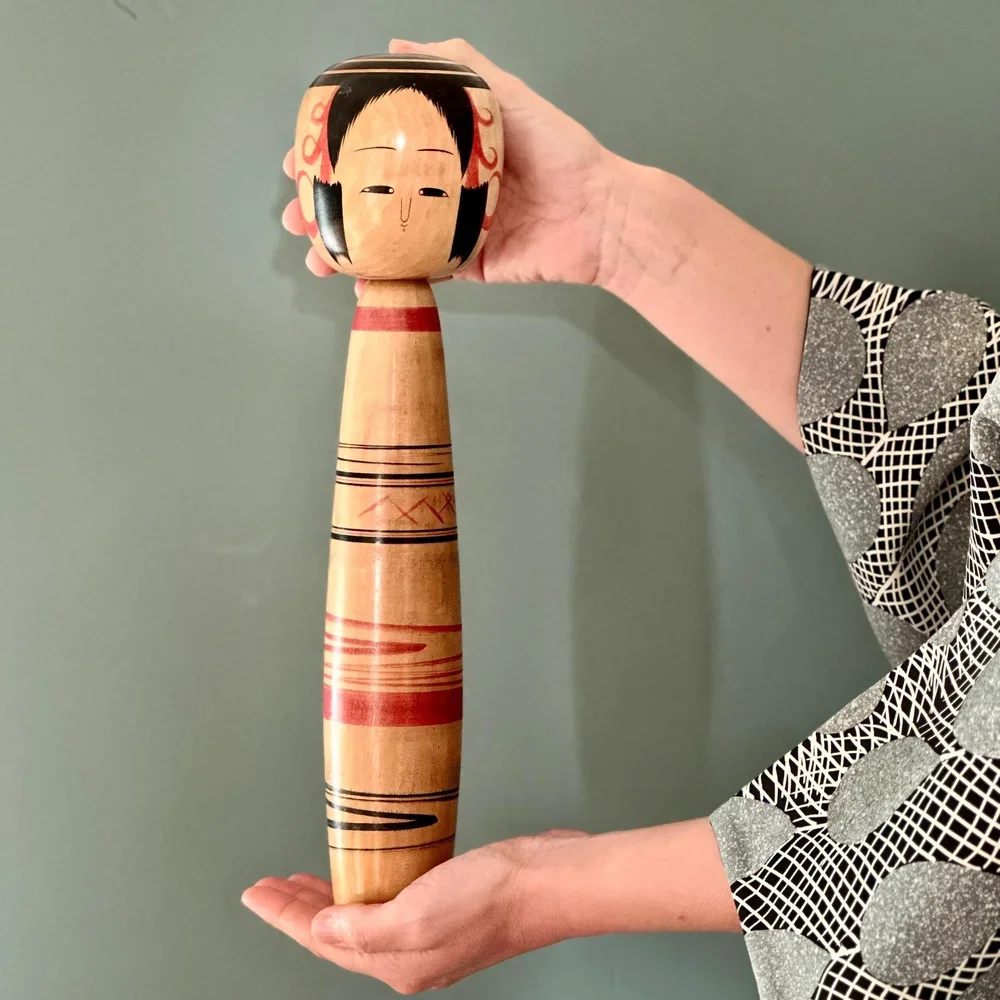
At 37 centimetres this kokeshi commands rather than decorates. The body tapers from a broad shoulder down to a narrow base in one long, uninterrupted line, and the proportions are exactly right: it reads taller than it measures. The banding is bold, red and black on pale natural wood, with small painted crosses breaking the rhythm of the stripes just enough to hold the eye. This is a piece that works from across the room.
Tilt her head and she answers back, a soft, hollow squeak from the loose-fitting joint where the head meets the body, the same trick every Tsuchiyu maker has used for generations. What marks this particular piece is the banding itself: a zigzag line dotted with small crosses partway down the body, breaking from the plain horizontal stripes typical of the tradition, followed by a single sweeping red arc lower on the torso, a freer, more painterly touch than the usual strict rings.
Want to understand the difference between dentō and sōsaku kokeshi? I wrote about it, with a trip through Fukushima along the way.
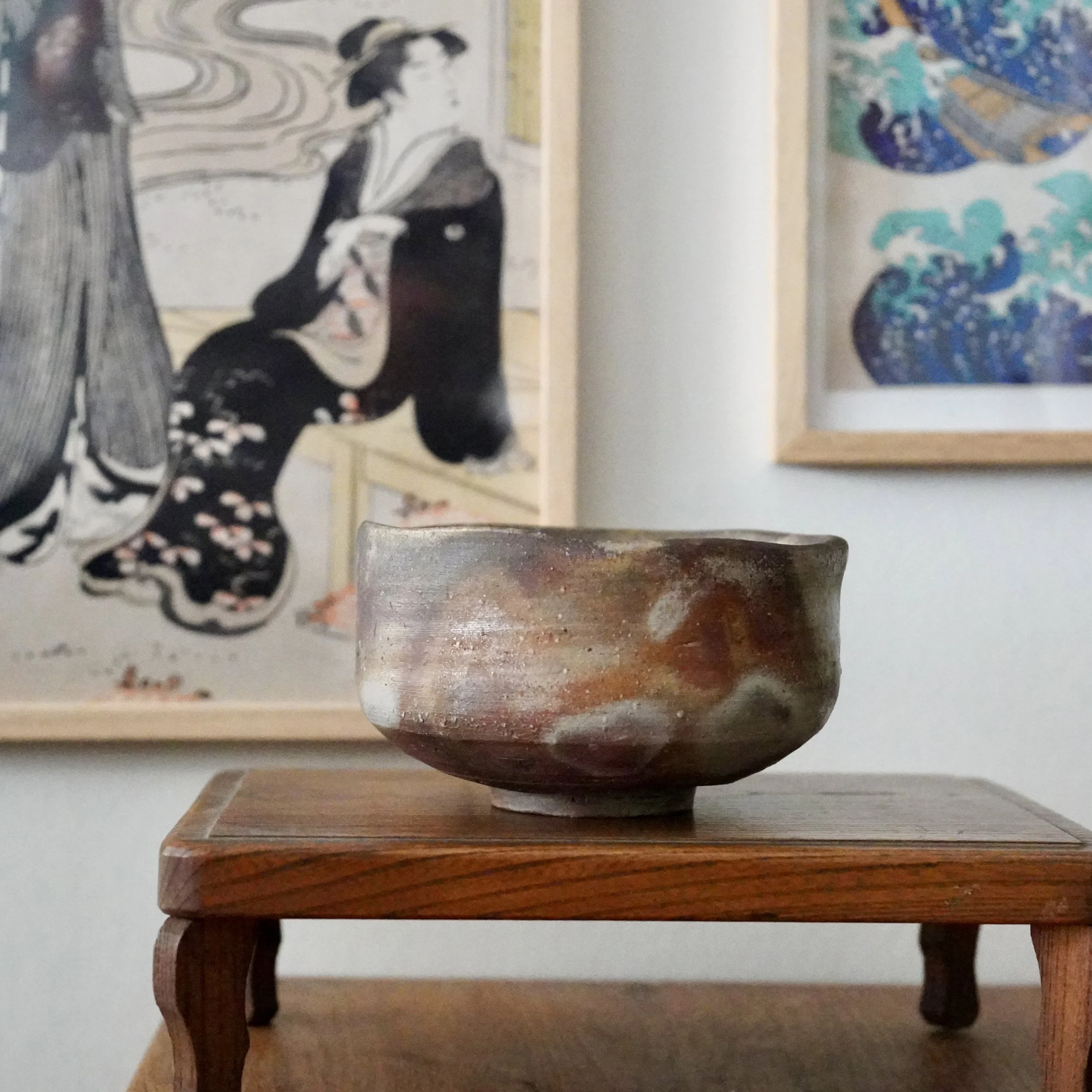
The first time I held this bowl, I turned it slowly in both hands and tried to work out what I was looking at. Purple, deep crimson, ashy grey, a band of pale white on the inside where the heat had settled differently. None of it looked applied. It looked like something that had happened to the clay rather than something done to it.
That is, more or less, exactly what yakishime is.
Yakishime is the practice of placing unglazed clay in a wood-fired kiln and letting the fire decide the rest. In the Bizen tradition this has been practiced for over a thousand years, and the surfaces it produces, rough clay, fire-born colour, marks that record the firing like a landscape, became one of the foundations of Japanese tea ceremony aesthetics. A bowl made this way was not decorated. It was shaped, placed in a kiln, and submitted to fire.
Read more about Bizen yaki here.
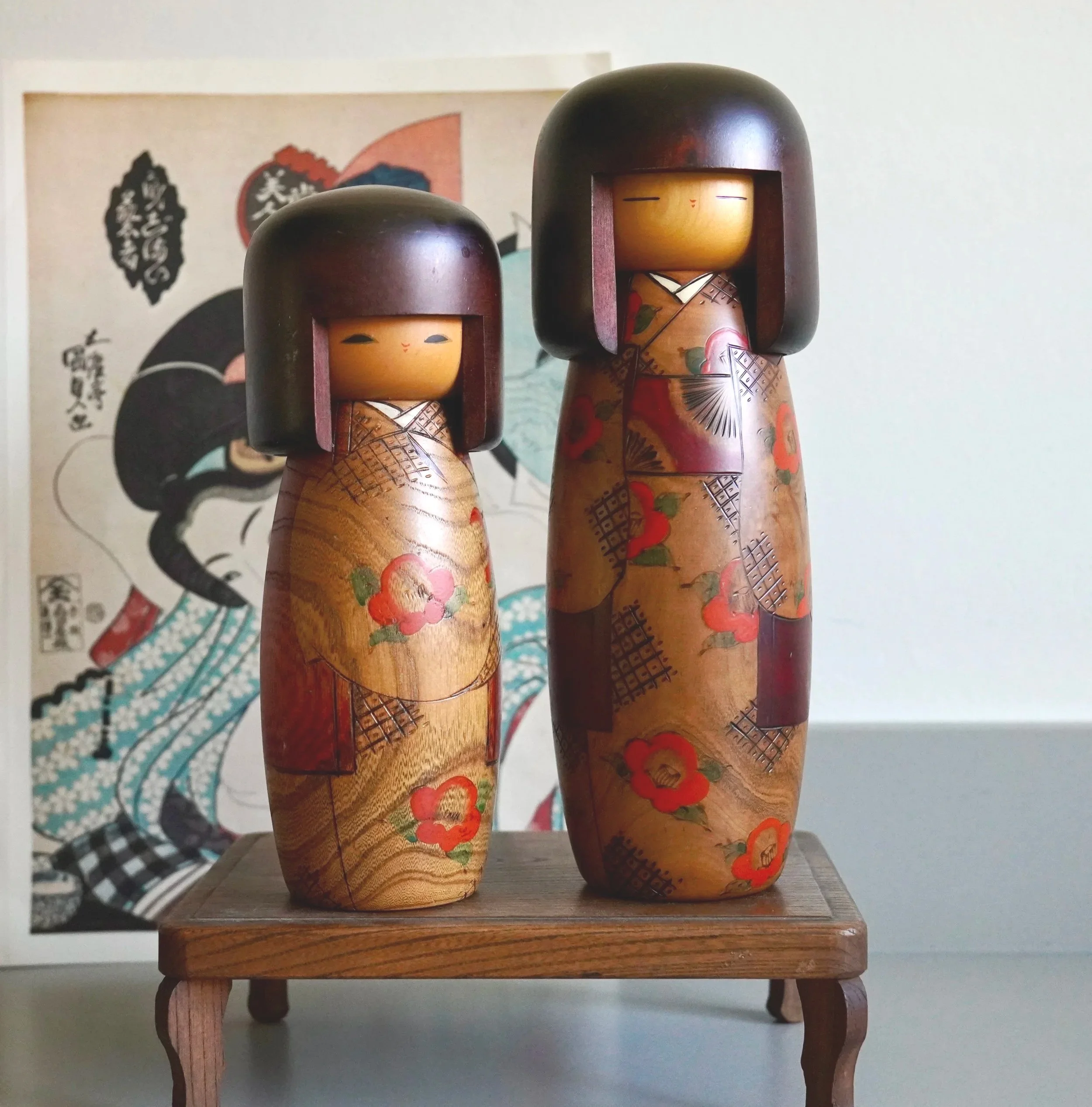
The zelkova grain runs through the entire body of this kokeshi like a landscape, visible beneath the painted camellia flowers and the yakie-burned fan and lattice decoration of the kimono. The dark upper section of the body, a deep burgundy against the warm honey of the wood below, is not paint covering the material. It is the material, treated and turned until it reached that colour. The proportions are generous: broad at the shoulder, tapering at the base, heavier in the hand than you expect.
Usaburo Kokeshi was founded in 1950 in Shinto Village, Gunma Prefecture, by Okamoto Usaburo, the craftsman who introduced the yakie burning technique to sōsaku kokeshi and worked with zelkova and chestnut at a time when most makers dismissed these woods as unsuitable. His studio went on to win the Minister of International Trade and Industry Award at the All-Japan Kokeshi Competition, one of the most significant government recognitions in Japanese craft.
The sticker on the larger of these two pieces carries exactly that award. The zelkova grain visible beneath the kimono decoration is central to what Usaburo built his reputation on: the wood is not hidden, it is part of the design.
Interested to read more about the woodworking on kokeshi like these? I wrote about it in my journal.
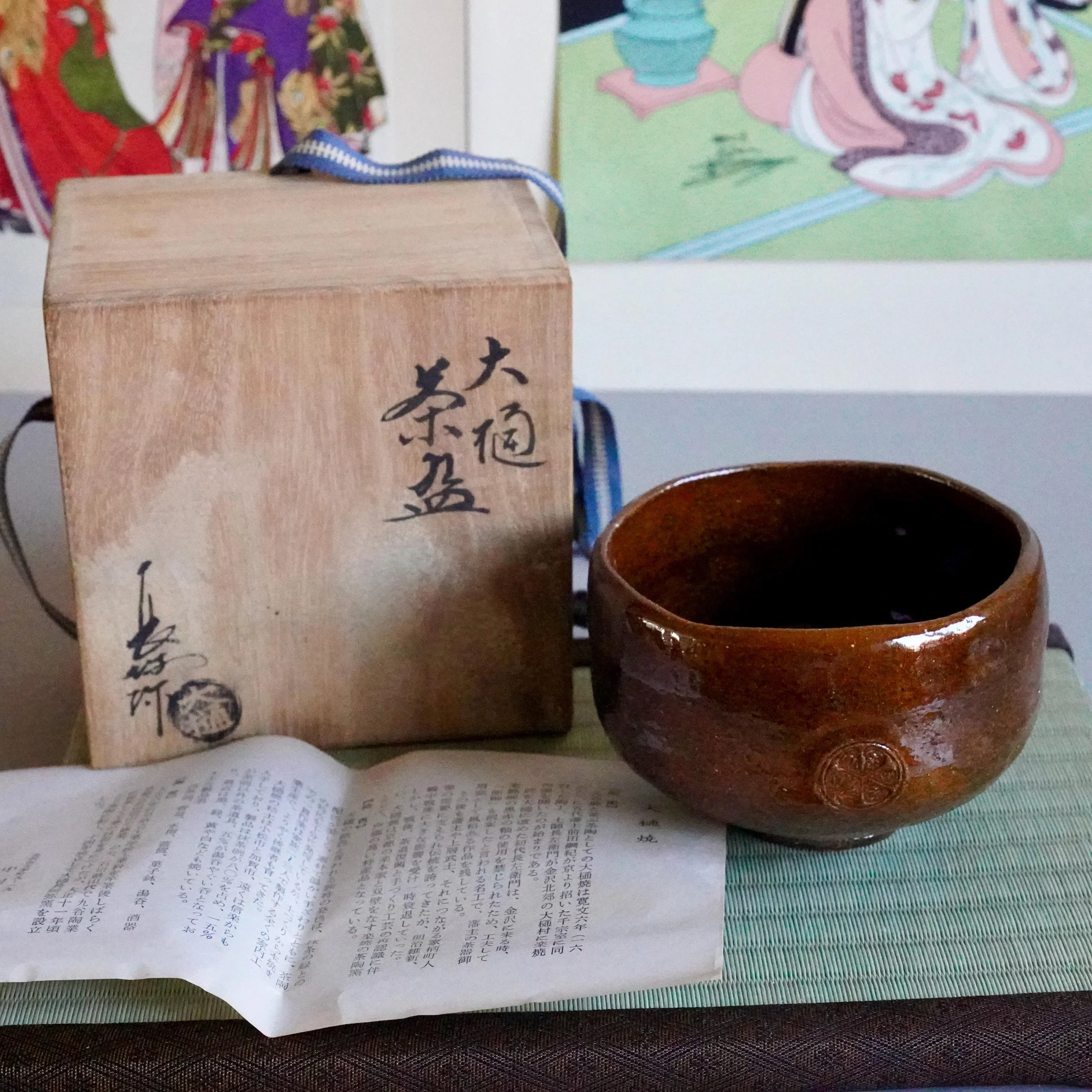
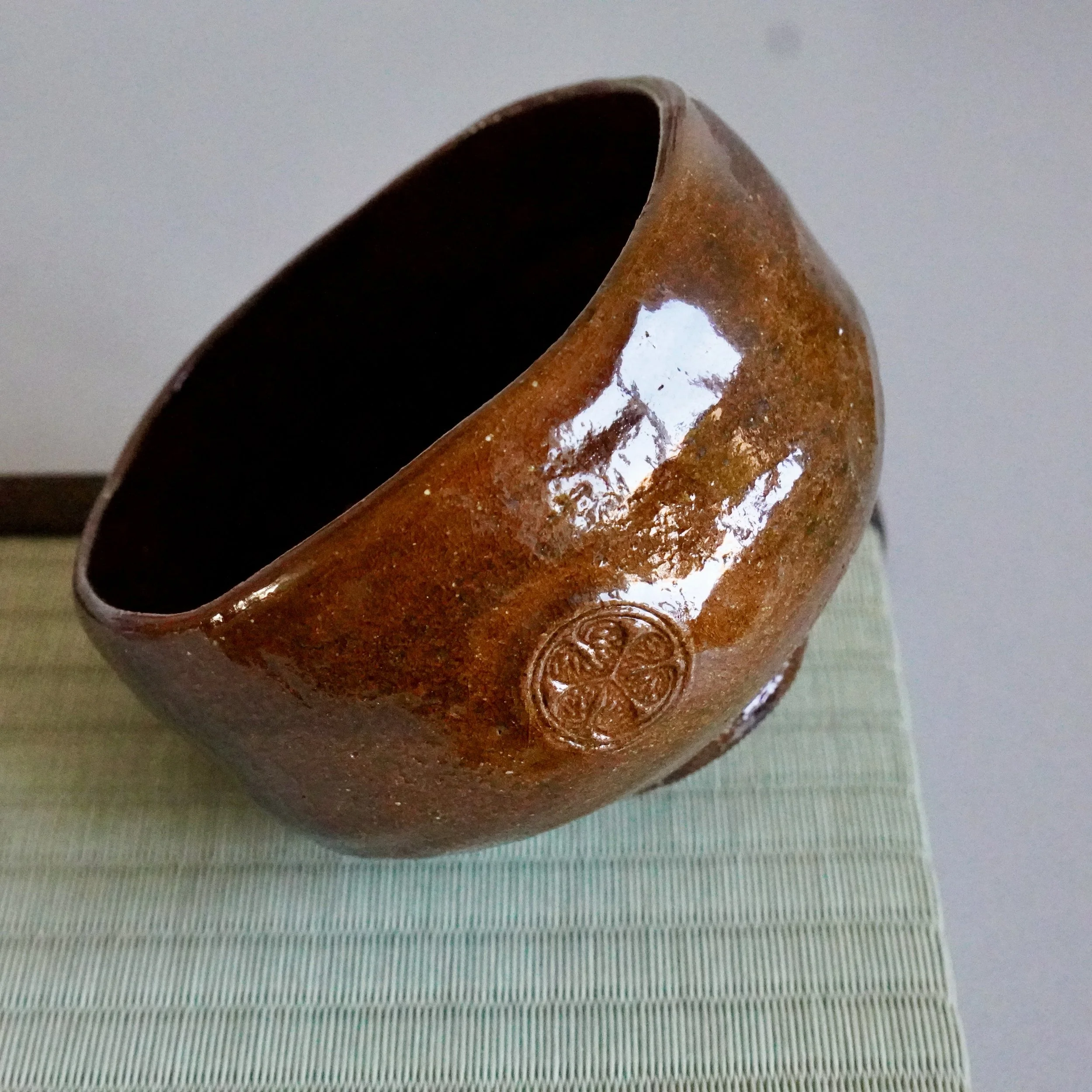
The glaze is the first thing. One side of this bowl is warm amber-caramel, the colour of old honey in light. Turn it and the same glaze has pooled darker, almost brown-black, as if the bowl remembers the heat of the kiln unevenly. The interior deepens toward the base. The form is round and full, wide in the hand, settled rather than imposing.
Ōbi-yaki has been made in Kanazawa since 1666, when a Kyoto potter accompanied a tea master to the court of the Maeda clan and began making tea bowls with clay from the village of Ōbi. This bowl comes from the Nakamura Chōami kiln, a workshop within that same tradition, established in Kanazawa in Taishō 14 (1925).
The ame-yu glaze, that amber caramel tone, was a gift from the Raku family itself: an iron-rich glaze said to carry a warmth suited to Kanazawa's snow country winters, unlike the red and black glazes Kyoto kept for its own kilns. This bowl has never been used.
Curious about this lesser-known tea bowl traditions? Ōbi-yaki has one of the best stories of them all. Read it in my journal.
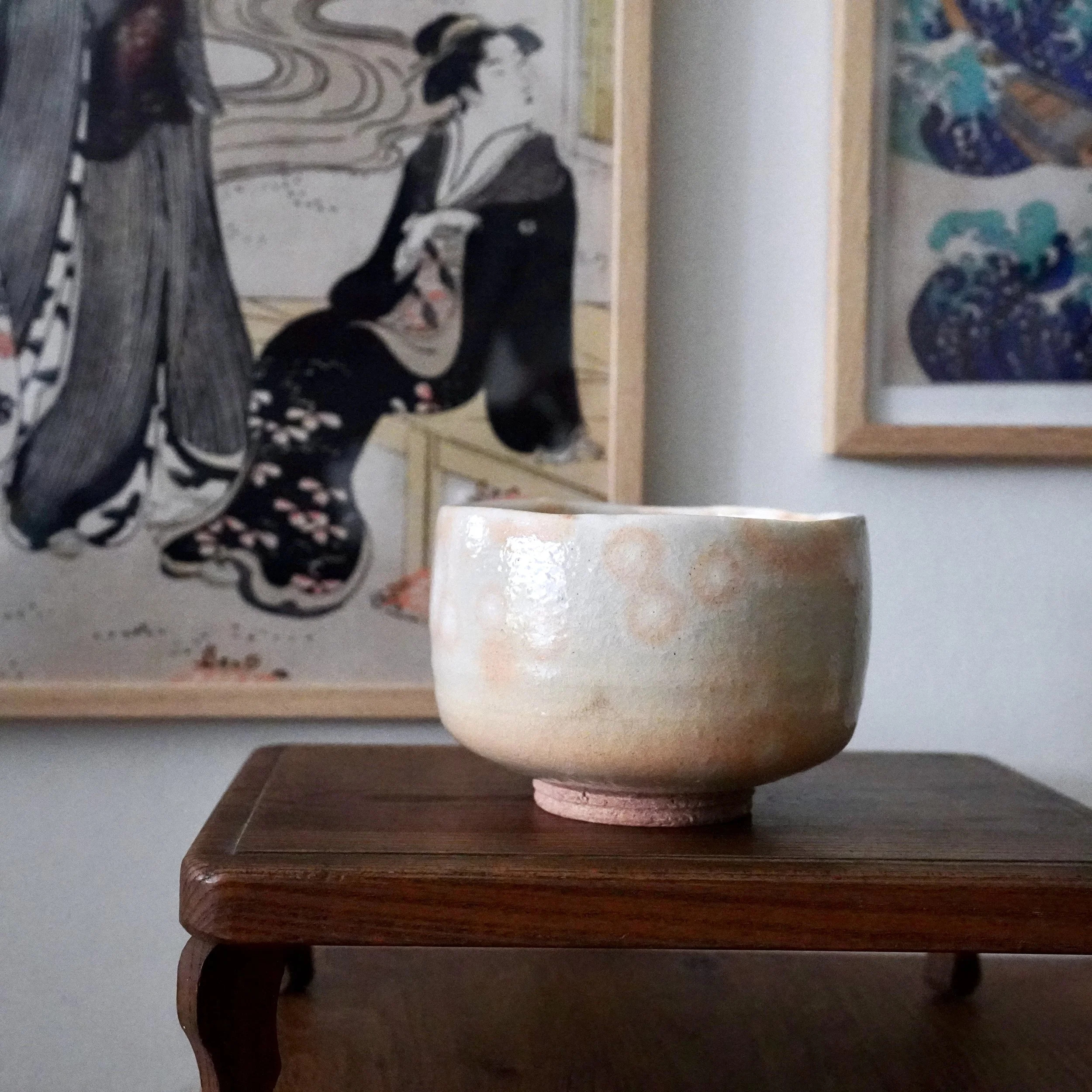
The glaze sits pale and quiet at first, almost plain, until the light catches it at an angle and the pink shows through. Not painted on, not uniform, just soft blush drifting through the white where the kiln decided to leave it. A fine network of crackle runs the length of the bowl, more visible in some spots than others, like the surface has been quietly aging since the day it left the wheel.
This is Hagi ware, one of Japan's oldest tea ceremony clays, prized for centuries specifically because it never stays the same. The gohonde spotting happens on its own during firing, no two bowls carry it in the same place, and the crackle glaze is built to change with use: tea seeps into the fine lines over years and slowly deepens their colour. A chawan like this isn't finished when it leaves the kiln. You keep making it.
Read more about how Hagi ware grows with you in my journal here.
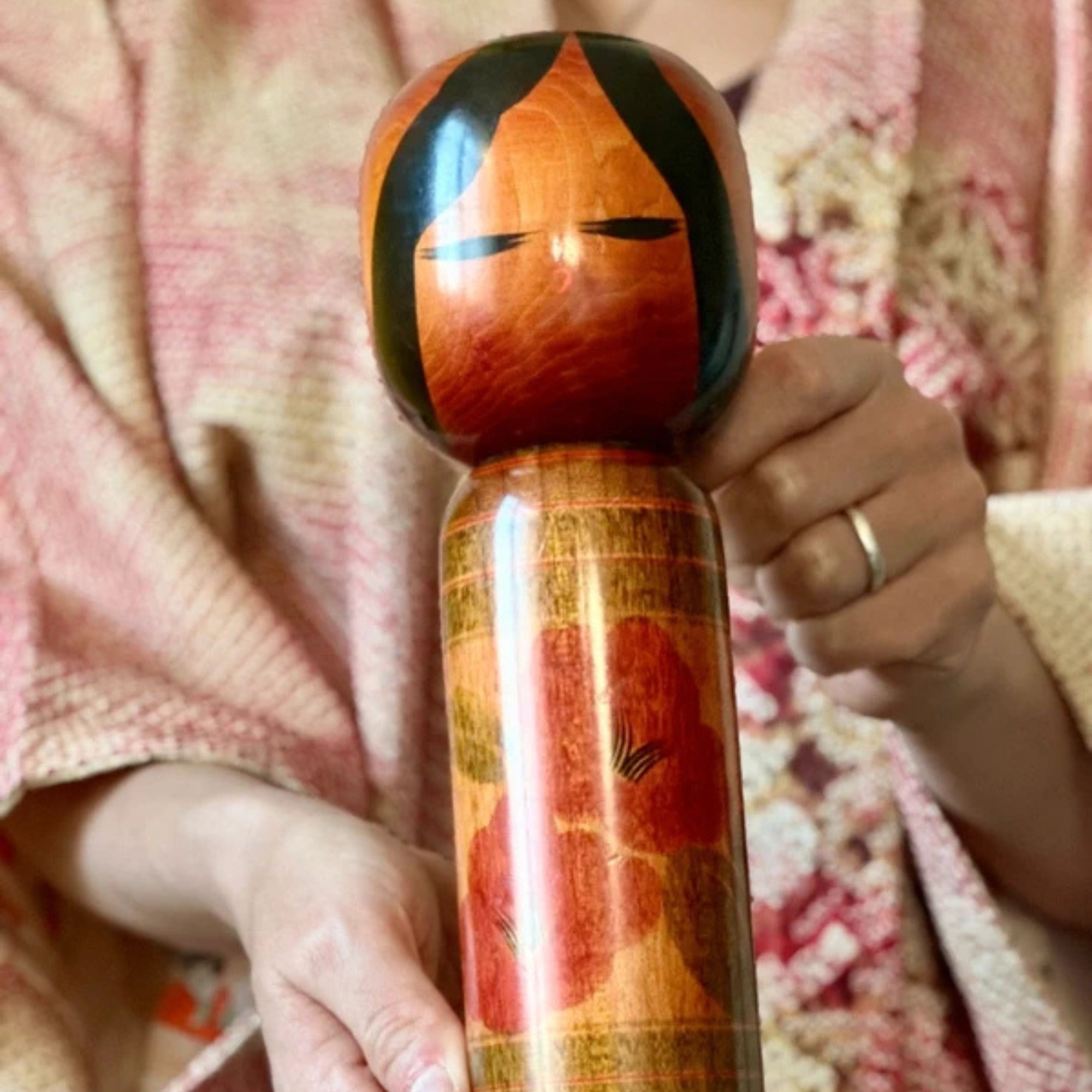
The half-dark head is what stops you. One side deep black, the other the warm reddish glow of the wood grain itself, and between them a face with heavy-lidded almond eyes that looks both ancient and entirely contemporary. Below it, two large camellia flowers in deep red fill almost the entire body.
Tsubaki Musume, Camellia Girl, is one of the most recognized designs in the sōsaku kokeshi tradition, and Tamura Noboru one of its most celebrated makers. He won the Prime Minister Award during his career and his work is collected internationally. This piece is signed on the base in his characteristic brushwork.
Tamura Noboru works from Studio Tamura Kogei, a creative kokeshi studio in Shibukawa, Gunma Prefecture. The same studio is also home to his wife: female kokeshi maker Tamura Chie, whose work under the name Chiei Saku has its own devoted following among collectors. More info on their makers page.
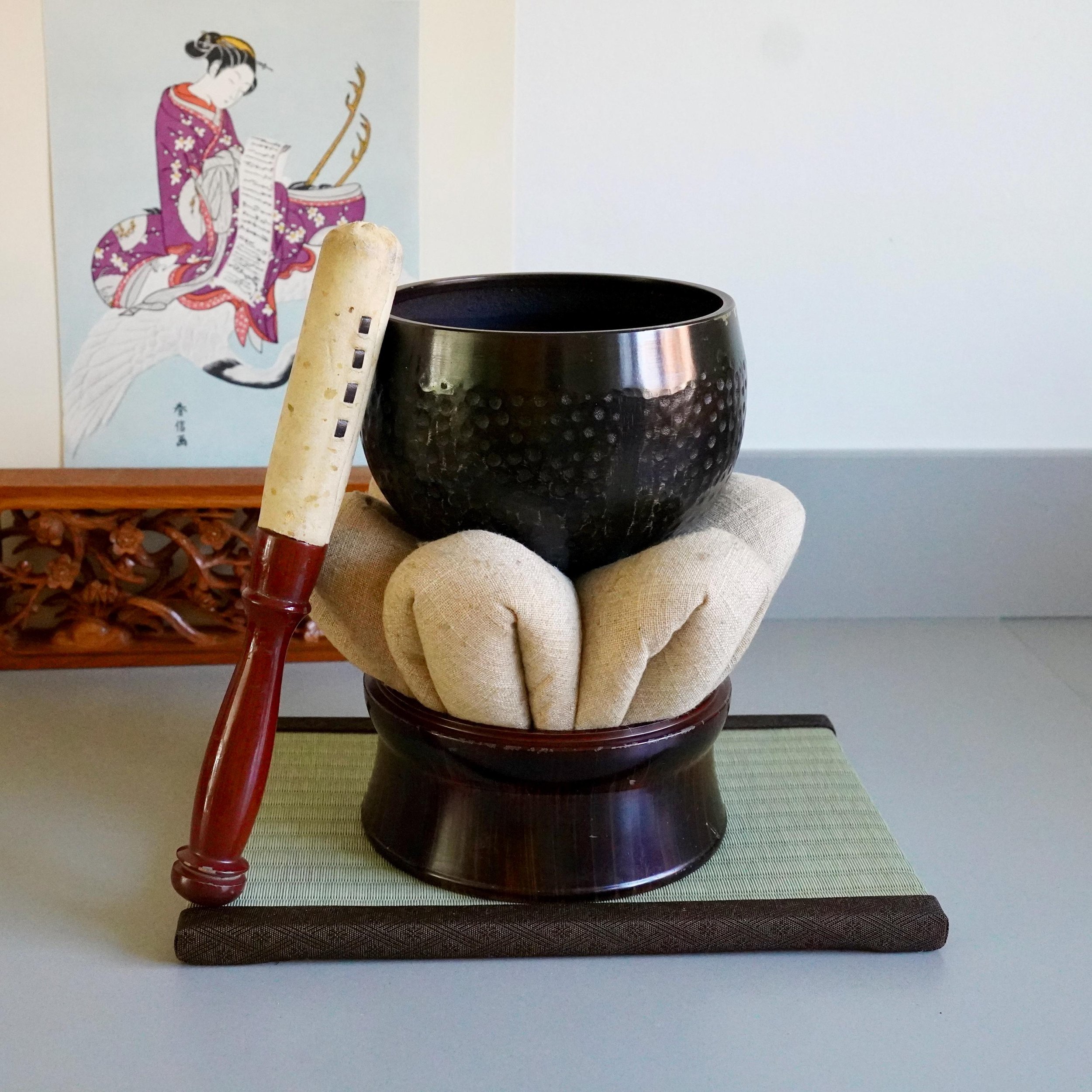
This rare temple singing bowl from the Showa era is a heavy, resonant treasure, sourced directly from Kyoto. Cast in solid bronze, its surface features a hand-hammered tsuchime finish that catches the light, shifting from deep graphite to warm amber as you move around it. It is a substantial piece with a grounded presence even before it is struck.
Place it in a meditation room or on a yoga studio altar and it will hold its own. It has the weight and presence of a genuine temple object, which is exactly what it is. If you work with somatic healing, breathwork, or mindfulness practice, the depth of the tone carries well even in a larger space. The set is entirely original and complete, standing 24 cm tall. It includes the bronze bowl, a dark red-brown lacquered wood stand, and a mallet with a matching red handle.
Read more about the objects for your Japanese meditation corner, and why each one matters in my journal.
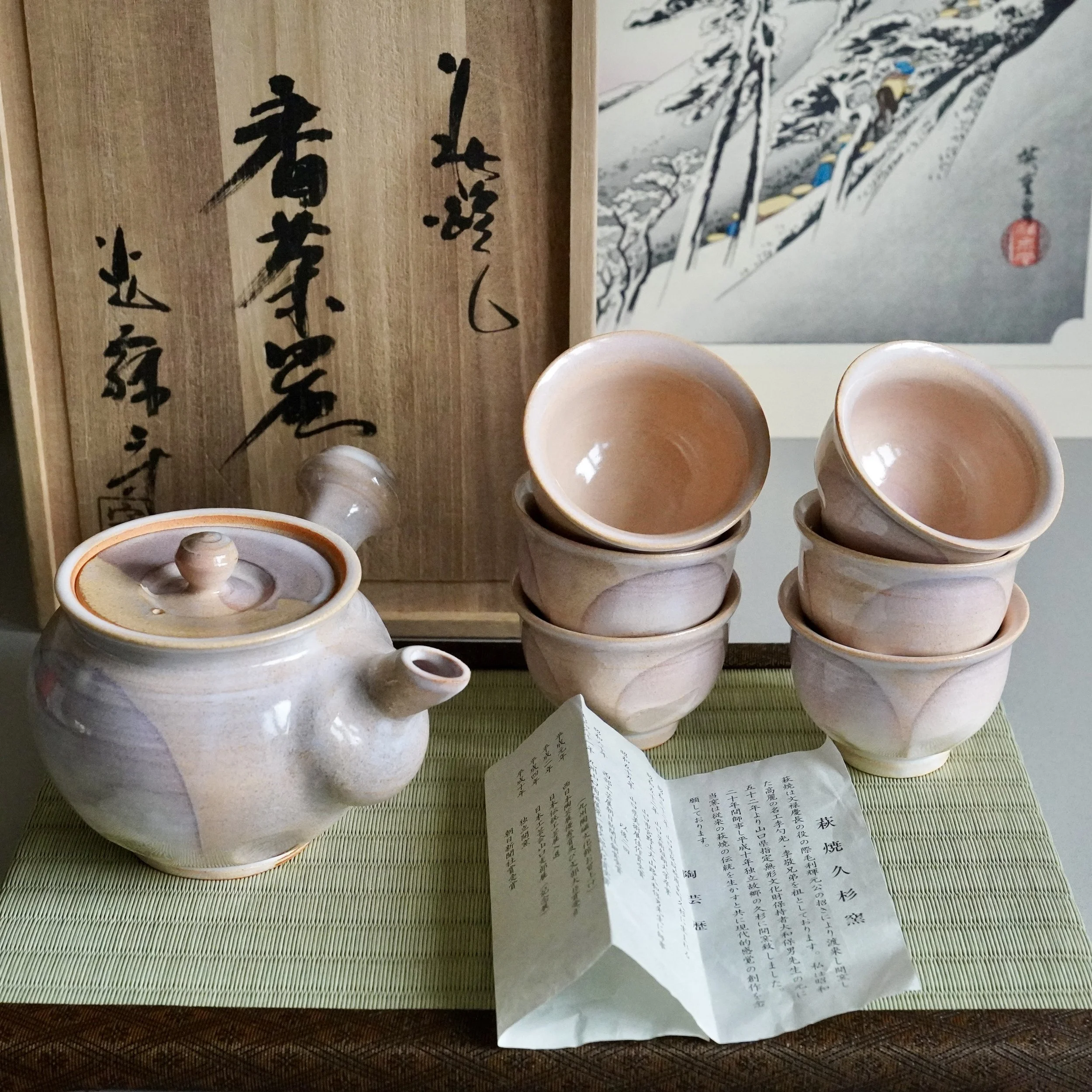
Six yunomi and a kyusu, all thrown and fired together in the soft, porous clay that makes Hagi-yaki so distinct, in a glaze that shifts between pearl white and a soft, bruised lavender depending on the light. The cups curve gently inward, sized to sit naturally in both hands. The kyusu is low and full, compact but generous, built for loose leaf tea, with a side handle and a ceramic strainer fitted right into the spout. Nothing about the set feels overworked, and the seven pieces read unmistakably as one gesture.
Most vintage Hagi-yaki arrives with a kiln stamp and nothing else, no way to trace who shaped it or when. This set comes with more: an original tomobako signed and sealed by Kondō Mamoru himself, and his own shiori documenting the piece. Paper trails like that rarely survive on tea ware that has changed hands as often as this has. It turns six cups and a teapot into something you can actually place, not just admire.
Read more about the beauty of Hagi-Yaki that will grow with you in my journal.
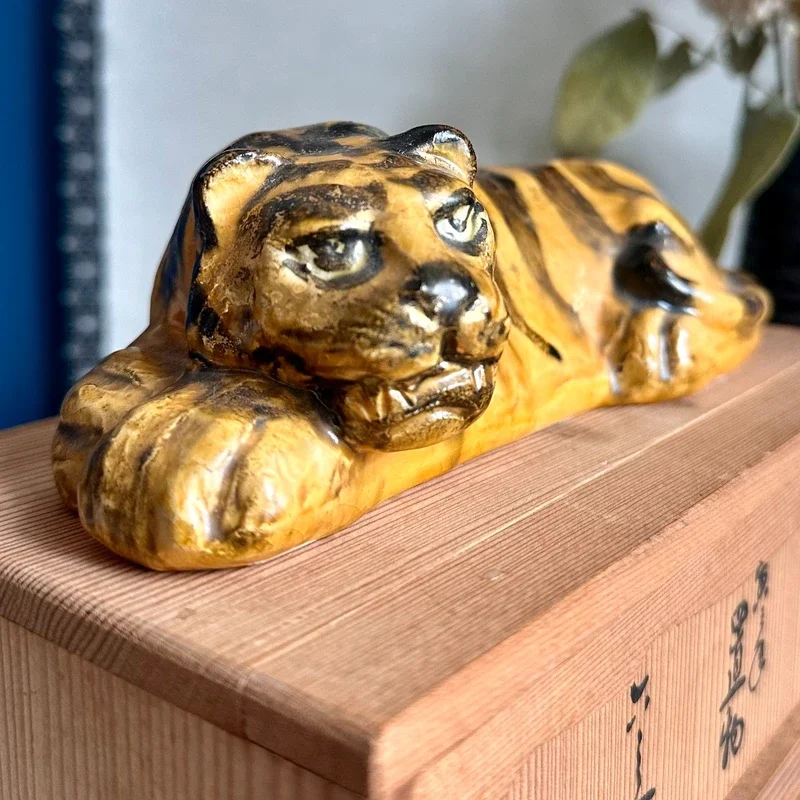
The tiger lies with its head turned toward you, one paw forward, the weight of the body settled. The glaze is warm amber with dark brown stripes, and the face is painted with enough specificity that you know exactly what kind of animal this is without needing to be told. It is not decorative in the way of a souvenir. It is a studied likeness. Something about the expression, slightly open-mouthed, the eyes directed outward, makes it feel more alert than resting.
Kiyomizu Rokubei VI (六代清水六兵衞, 1901 to 1980) came from a kiln lineage that had been making animal okimono as part of its output since the 18th century. Zodiac animals made at the Rokubei studio were considered collector pieces, sold at high-end establishments throughout Japan. This tiger is signed with the 六兵 personal name seal pressed into the base, and comes in its original tomobako inscribed 寅置物, tiger okimono. A piece likely made for a Year of the Tiger, most probably 1950 or 1962.
Read more about this tiger made for its own year and the kinsai gold Kyoto tradition in my journal.
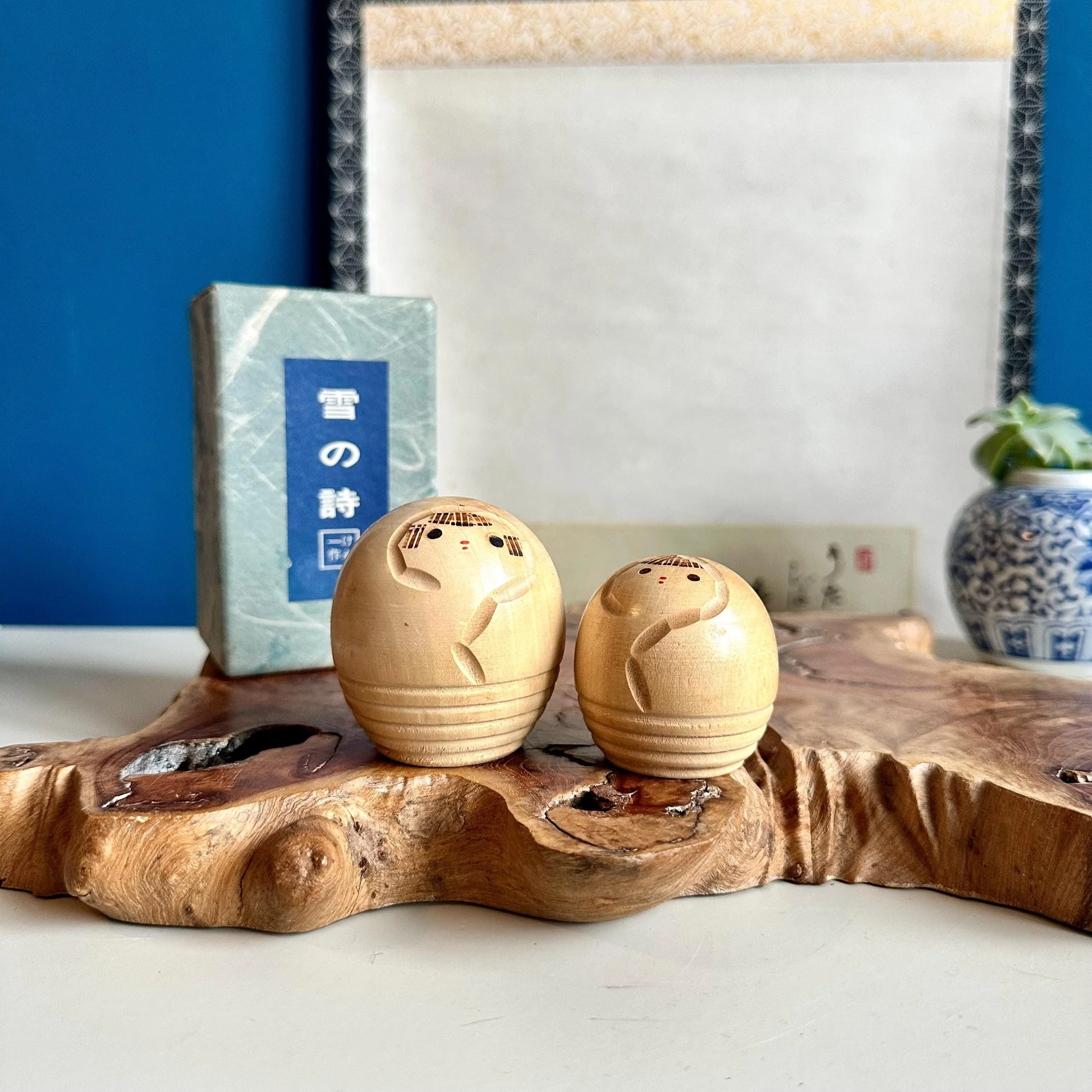
Two figures, almost perfectly round, with the smallest possible faces. Each one is a child pulled so deep into a winter coat that almost nothing is left visible: two small eyes, a nose, and just enough of a chin to know there is a face at all. The rest is wood, pale and smooth, the natural grain running in quiet lines across the surface. Put them together and they look like they are waiting for something to stop.
Murakami Kenichi came to kokeshi through oil painting, and that shows in how he thought about a subject. Where other makers added decoration, he removed it. These two pieces are among his most recognizable work, a winter child so bundled in a coat that almost nothing human remains visible, and the entire point of the making is that restraint. What you are holding is not a simplified figure. It is a figure from which everything unnecessary has been taken away.
Comes with original tomobako box inscribed 雪の詩 (Yuki no Uta, Poem of Snow).
Read more about the woodworking on kokeshi in my journal.
Items you may also like
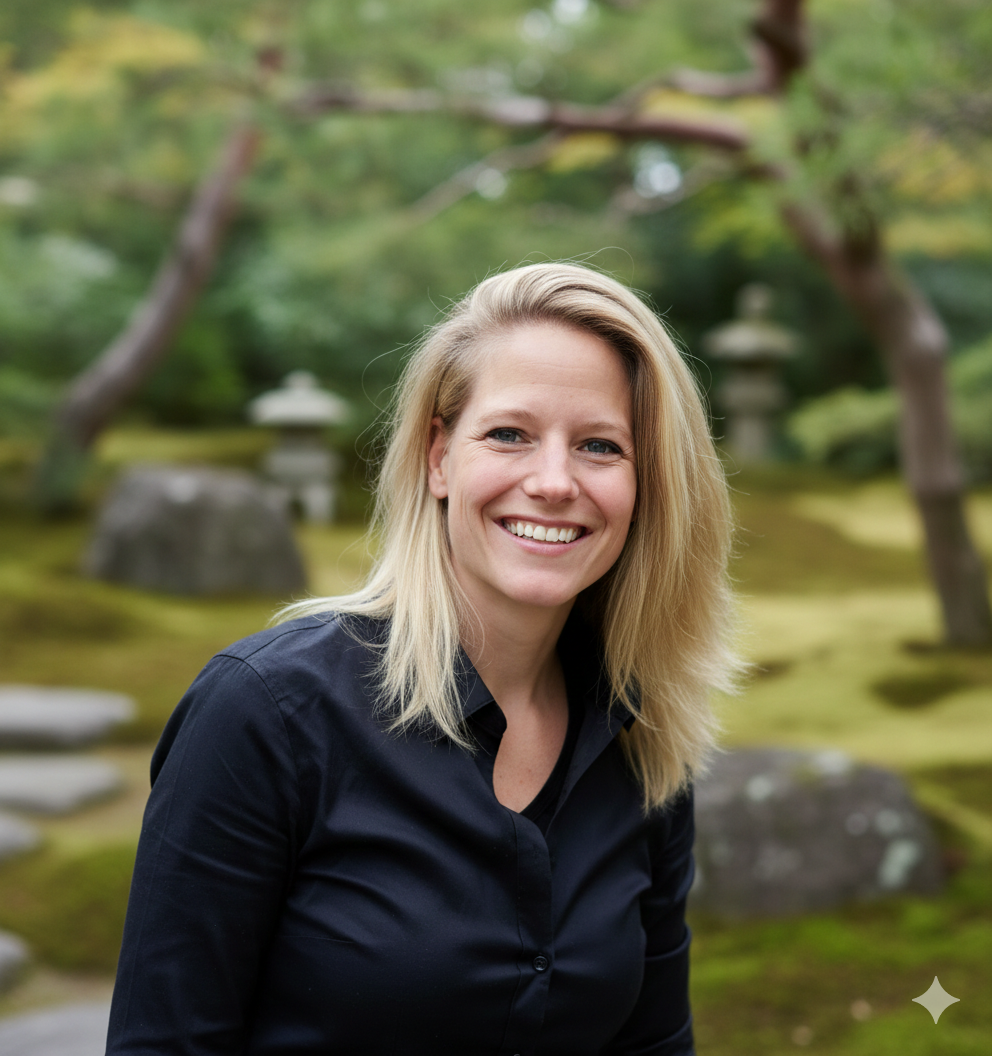
Questions before you buy?
Since my items are one-of-a-kind pieces, I want to ensure they reach you perfectly.
Questions about the history or condition?
Need a custom shipping quote or shipping outside the EU?
Prefer to see more detailed photos or a video?
Reach out to me directly. I'm here to help you find the perfect piece for your home.
✉️ hello@kaikoandco.com
💬 Instagram DM: @bykaikoandco
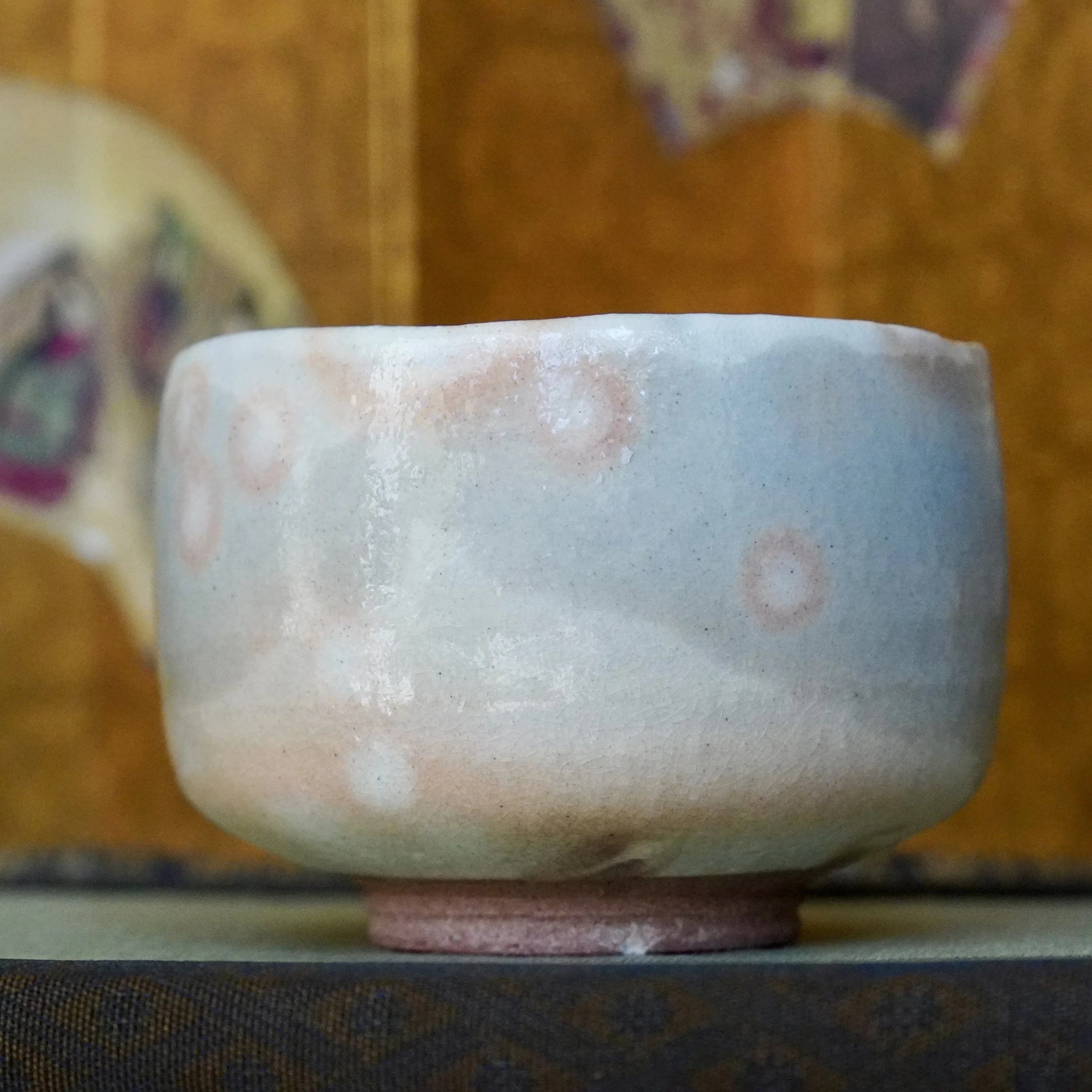
I filled a Hagi chawan with water and watched what happened. Within a minute, the glaze showed exactly how it will change with years of tea, and four other pieces revealed just how differently that process can unfold, starting long before the kiln, in the clay itself.
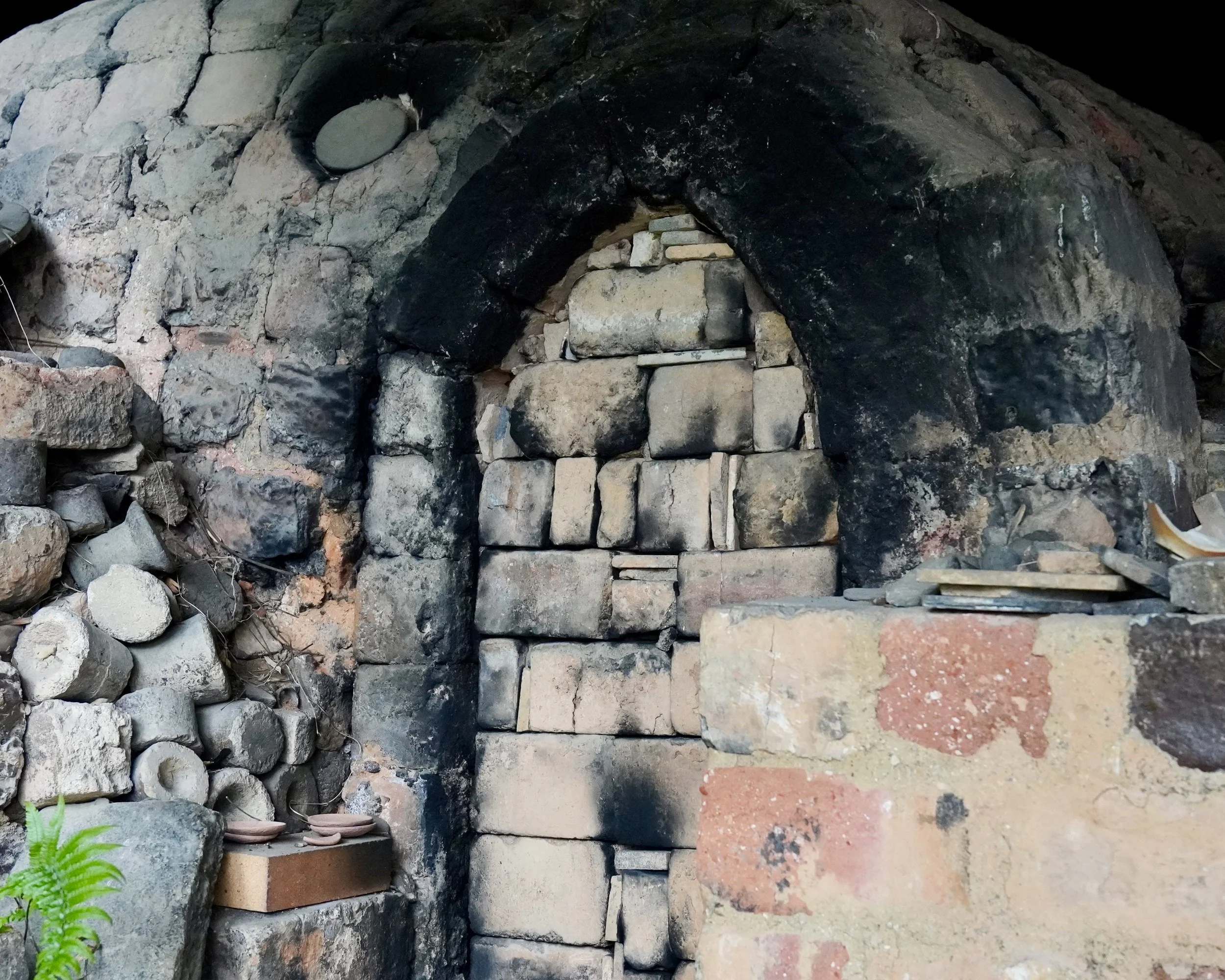
Three generations under one roof, a blue glaze that surprised me, and a cat I bought on the way out. One of my favorite mornings in Hagi, at the Okada kiln.
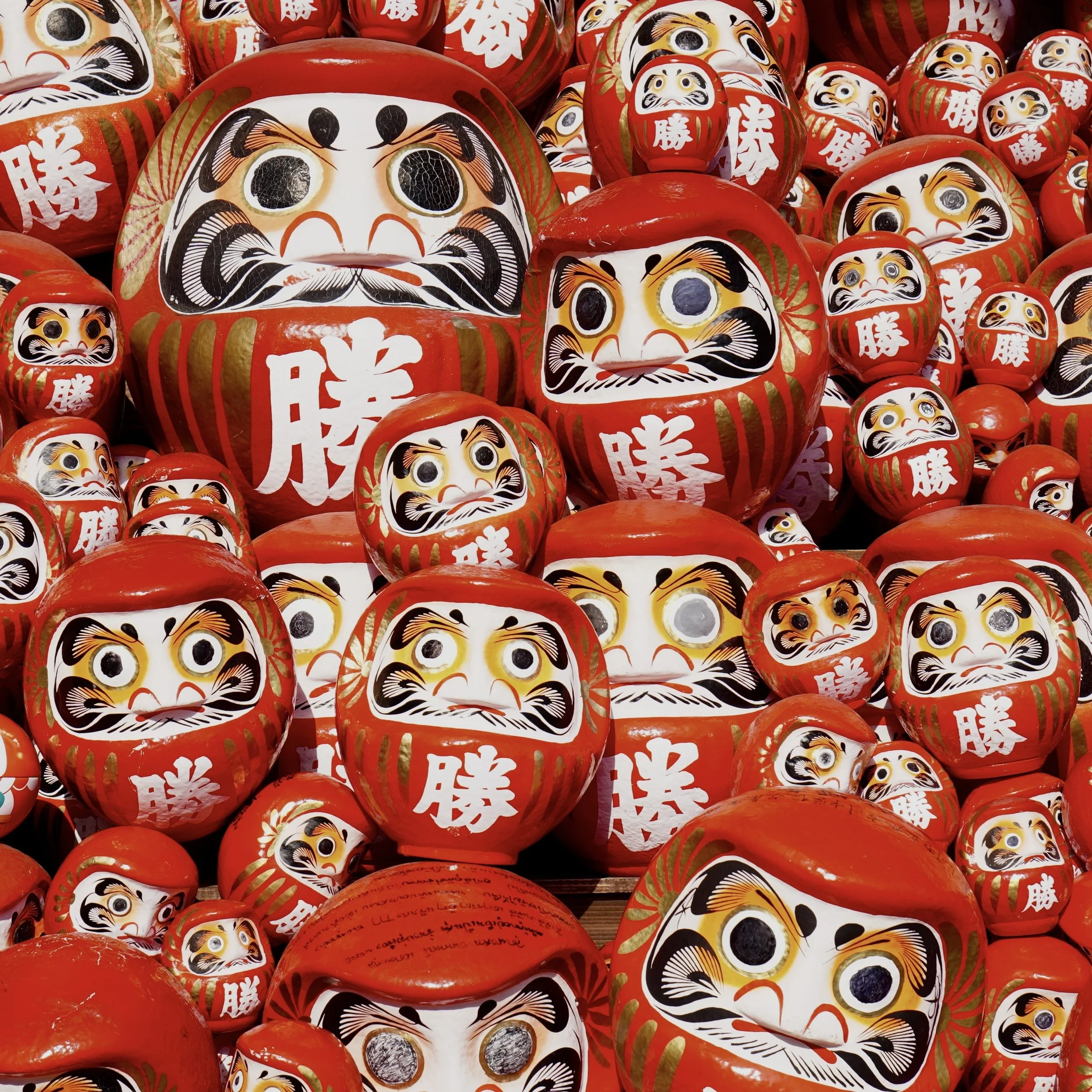
Perched in the forested hills of Minoh, Katsuo-ji is known throughout Japan as the Daruma Temple, thousands of red daruma cascading down its steps, each one carrying someone's wish. A visit that changed how I see the wooden daruma in our own collection.
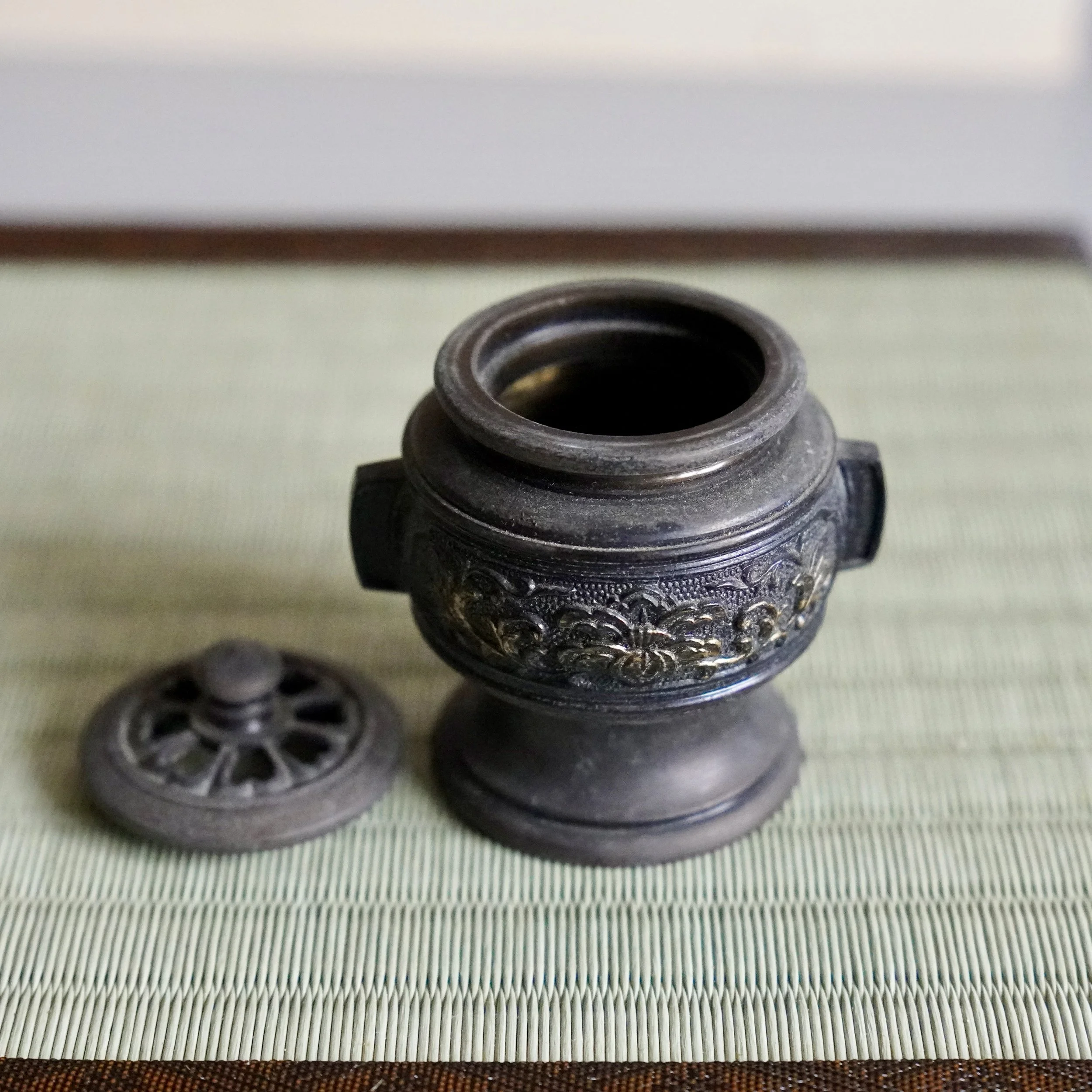
Every temple I visit in Japan has the same quality of quiet, and it starts with three things: scent, sound, and a presence that holds the space. Here is how to bring that same intention home, starting with a single kōro and the concept of ma.
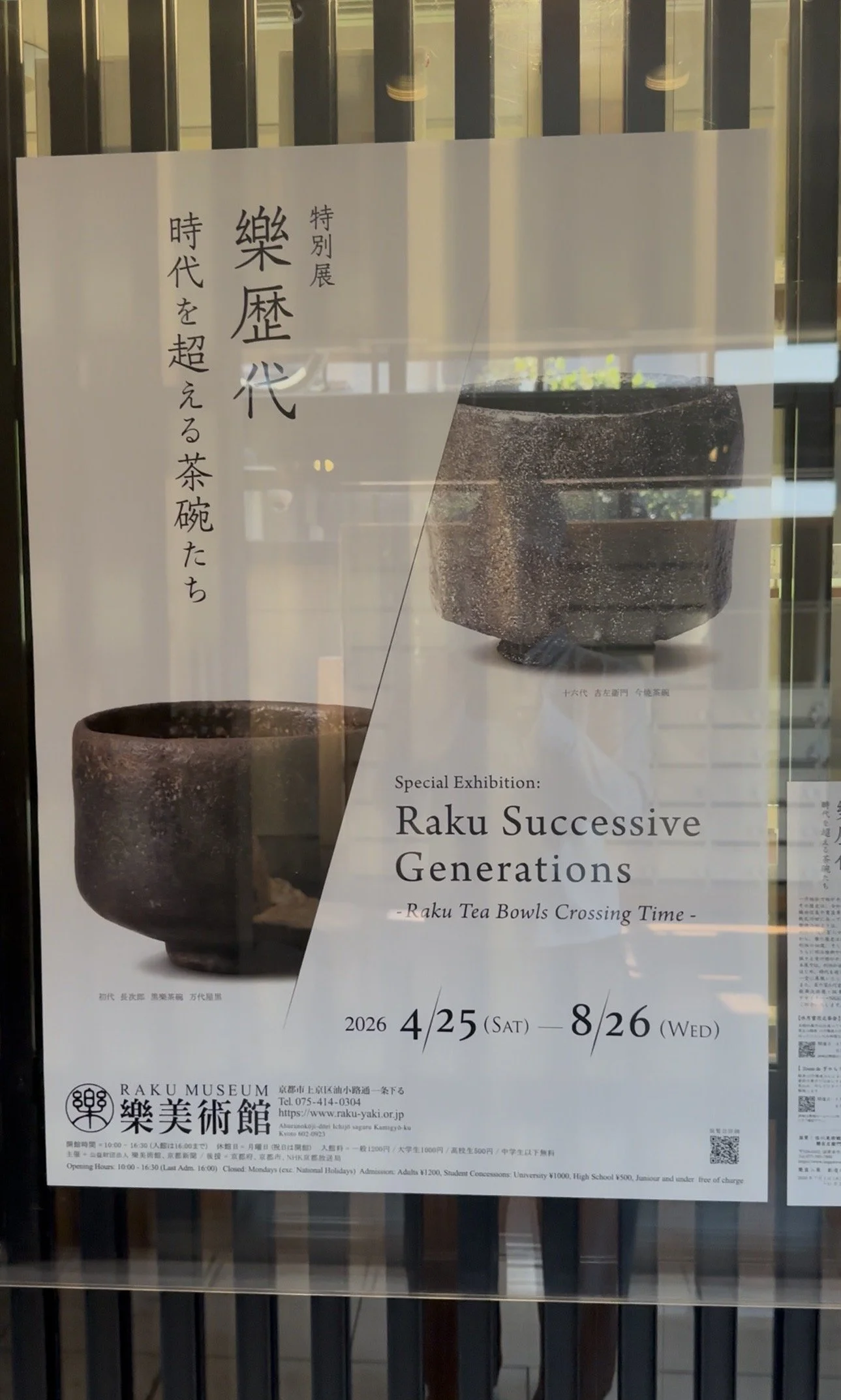
Inside the Raku Museum in Kyoto during the Raku Successive Generations exhibition. Chawan from Chōjirō to the 16th Kichizaemon, a quiet garden, and one idea about tradition that stayed with me.
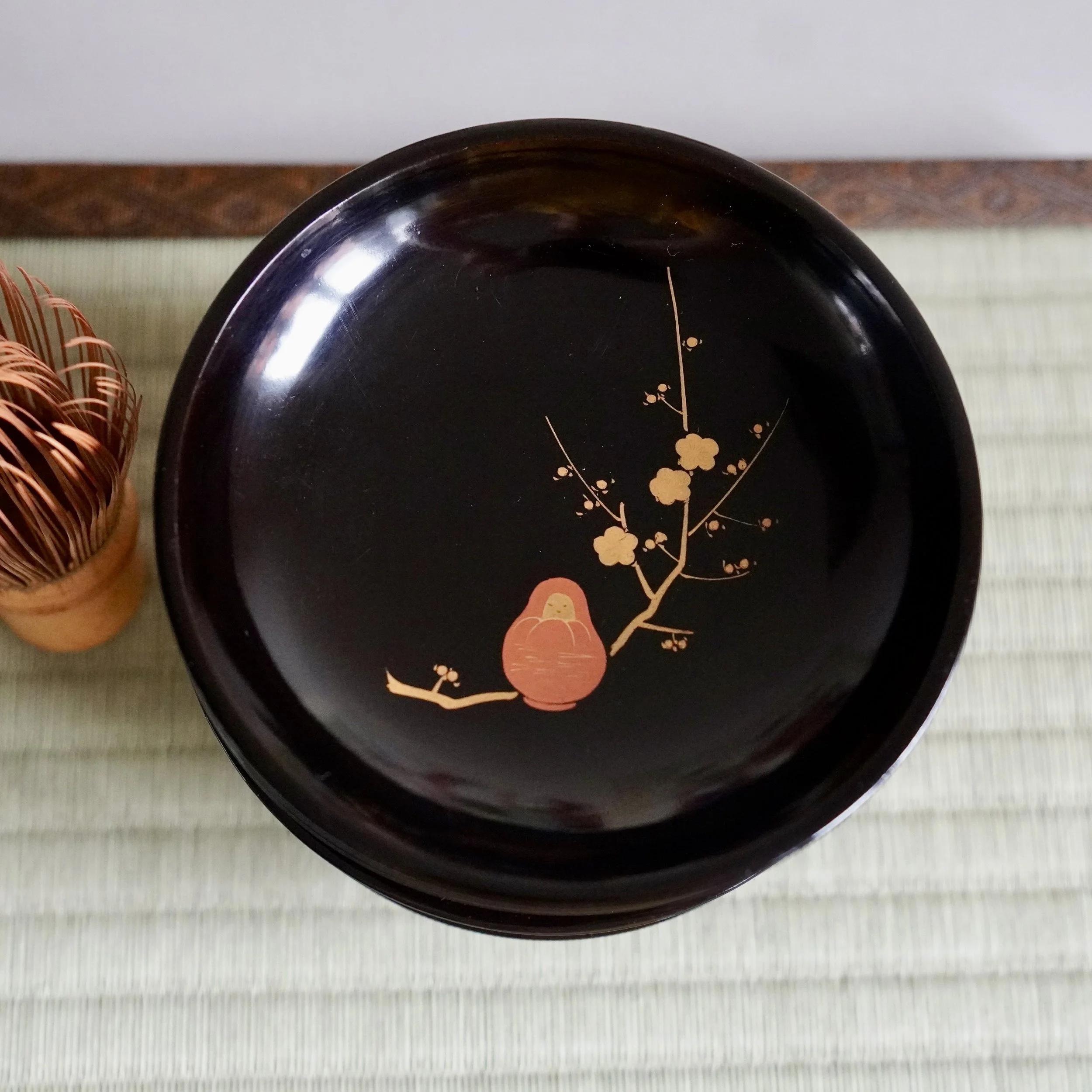
Urushi looks fragile and behaves like the opposite, until it meets a sunny windowsill or a winter radiator. Here is what actually damages lacquerware, what does not, and the handful of habits that keep a piece looking the way it did the day it was finished.
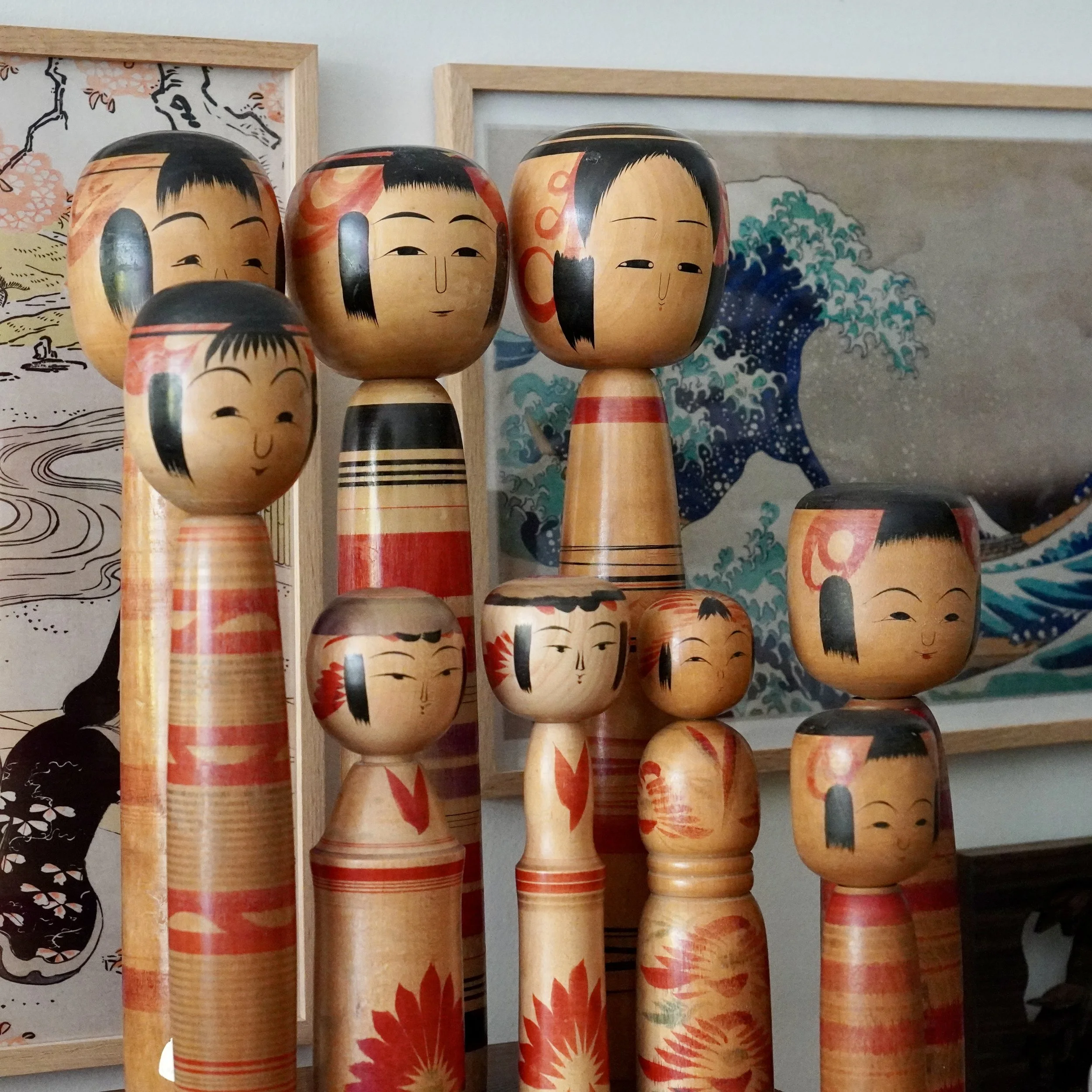
A kokeshi asks for very little once it has found the right spot. Grouped in threes on a shelf, alone on a windowsill out of direct sun, or standing next to something entirely unrelated, like a stack of books or a single dried branch. Here is what I have learned about placing them so they actually get looked at, instead of disappearing into a room.
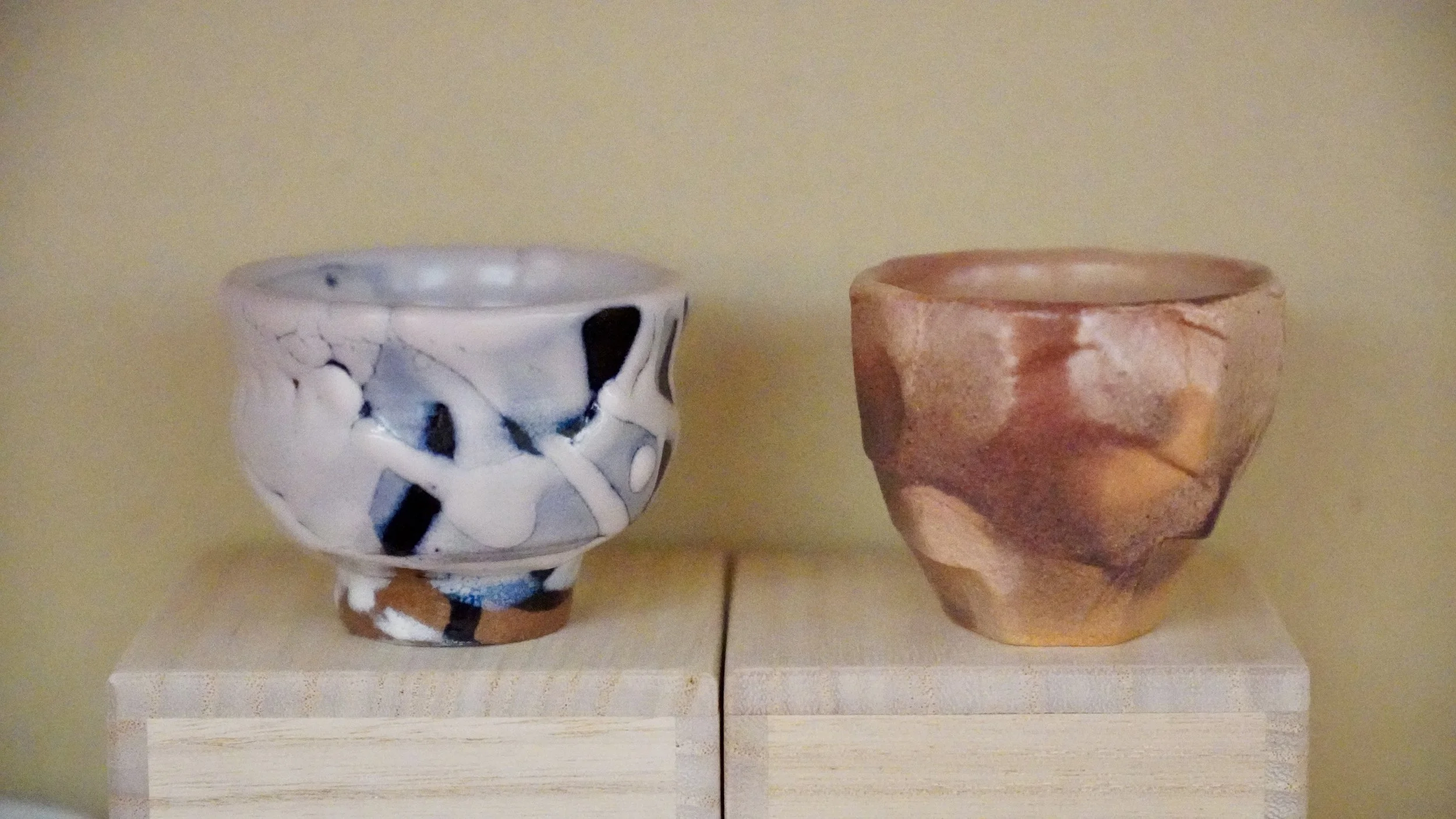
Every ceramic piece I bring home has already been through decades of hands before mine. A chawan changes colour with tea over the years, a vase collects mineral marks if you let it, and neither of those things is damage. Here is what actually matters when you look after one.
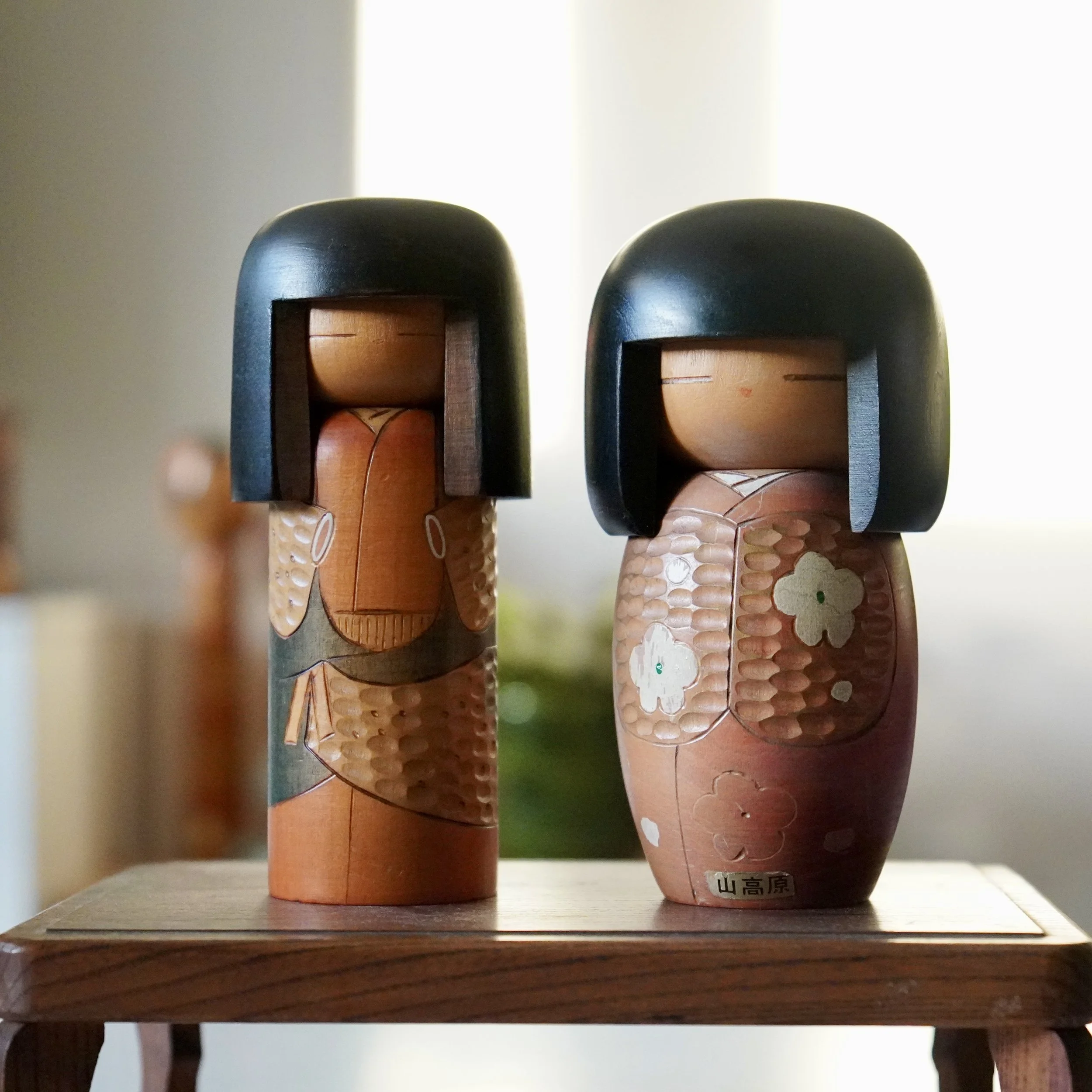
A week in the heartland of kokeshi: Fukushima. From climbing Mount Bandai before sunrise to studying the unique facial expressions in the work of masters like Ichiro and Sato Fumio. Discover how the landscape and deep-rooted woodcarving traditions shape these authentic vintage treasures.
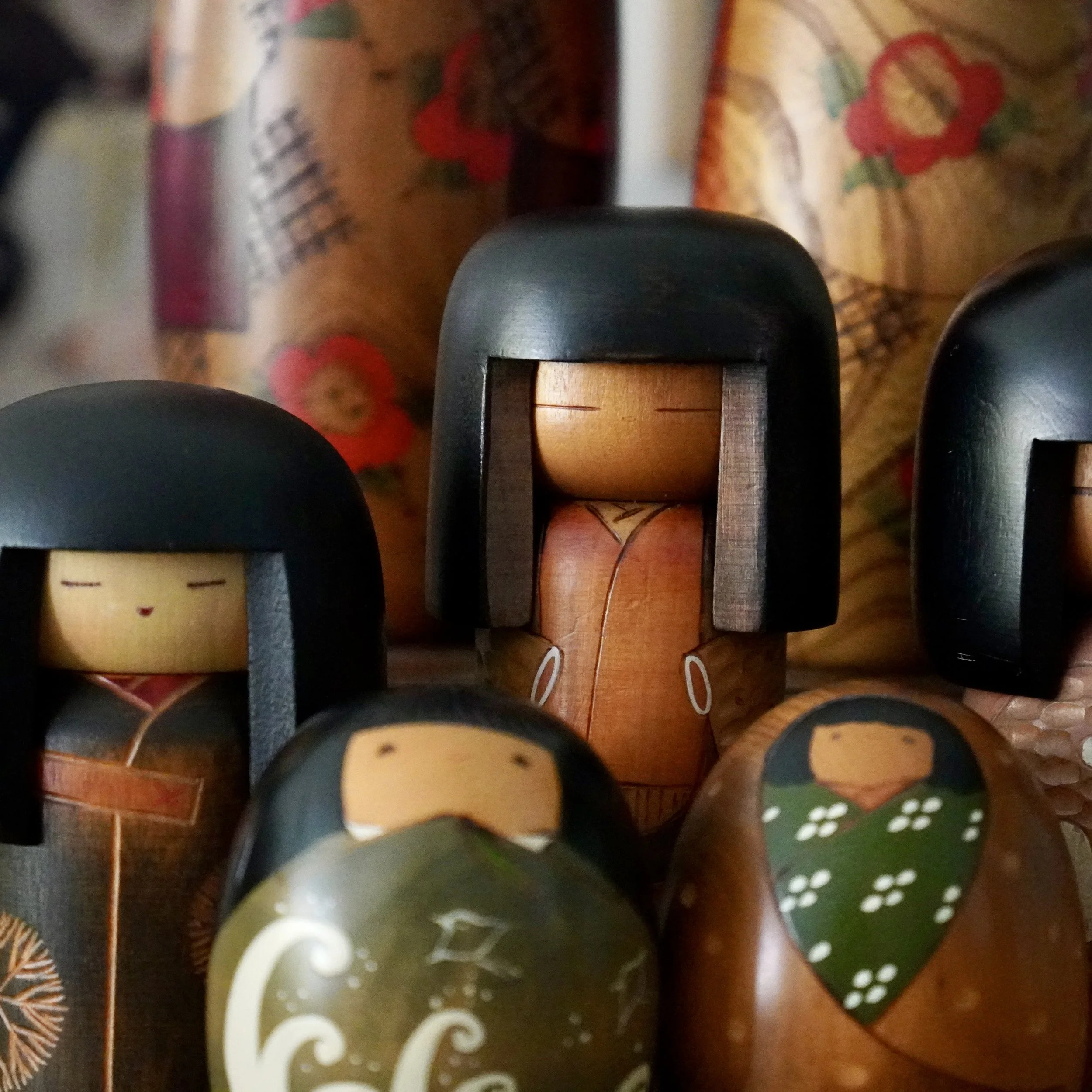
What draws you to a kokeshi is rarely the name on the base. It is the grain showing through the dark wood, the mark the tool left, and the two lines that somehow become a face. A close look at how makers like Usaburo and Sansaku Sekiguchi work with and against the wood itself.
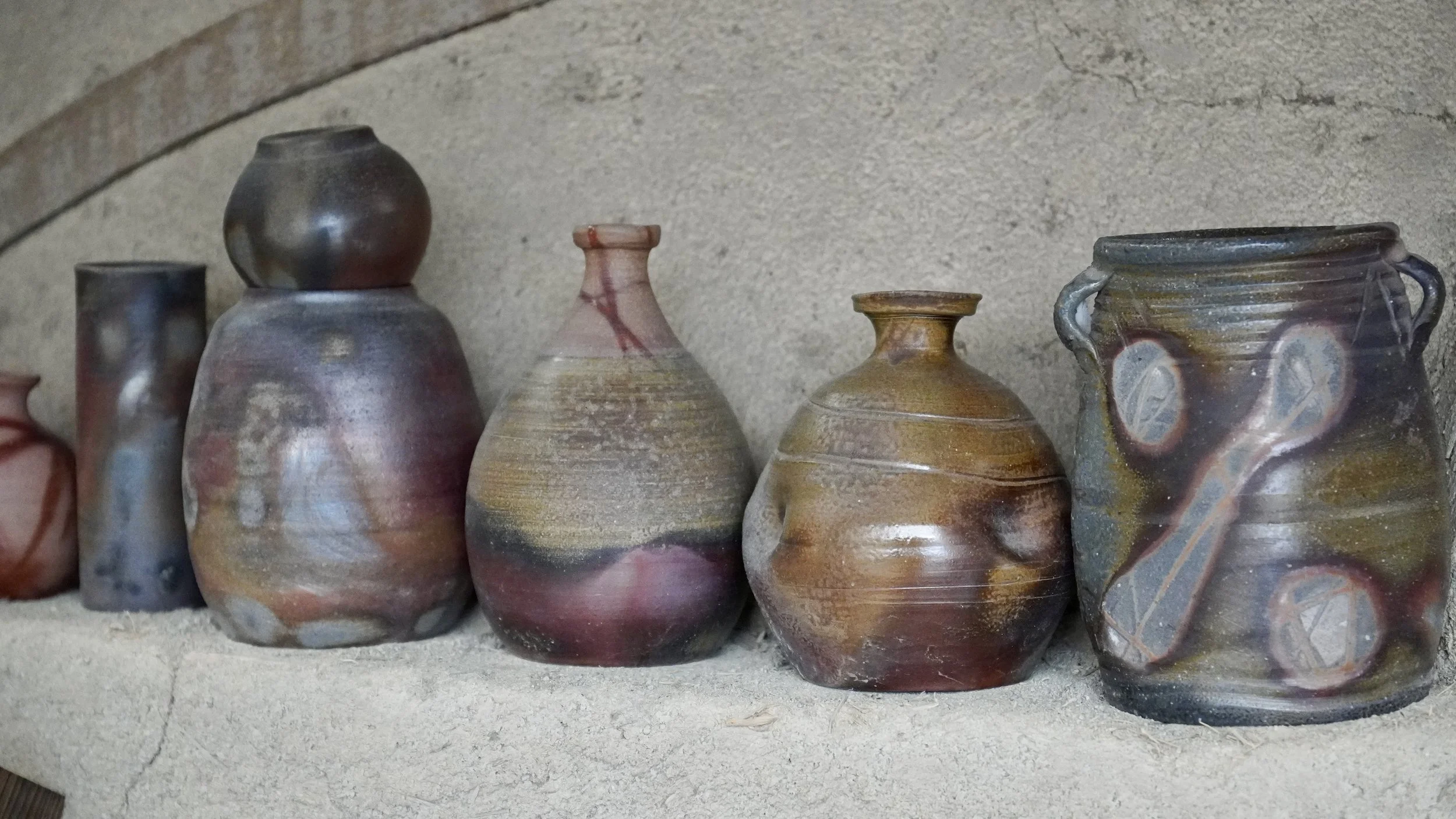
Bizen-yaki has no glaze. Every color, every mark, every surface effect is made in the kiln by fire, ash, and position. This guide explains what hidasuki, goma, sangiri and shiro-Bizen actually are, how they are made, and what to look for when you buy.
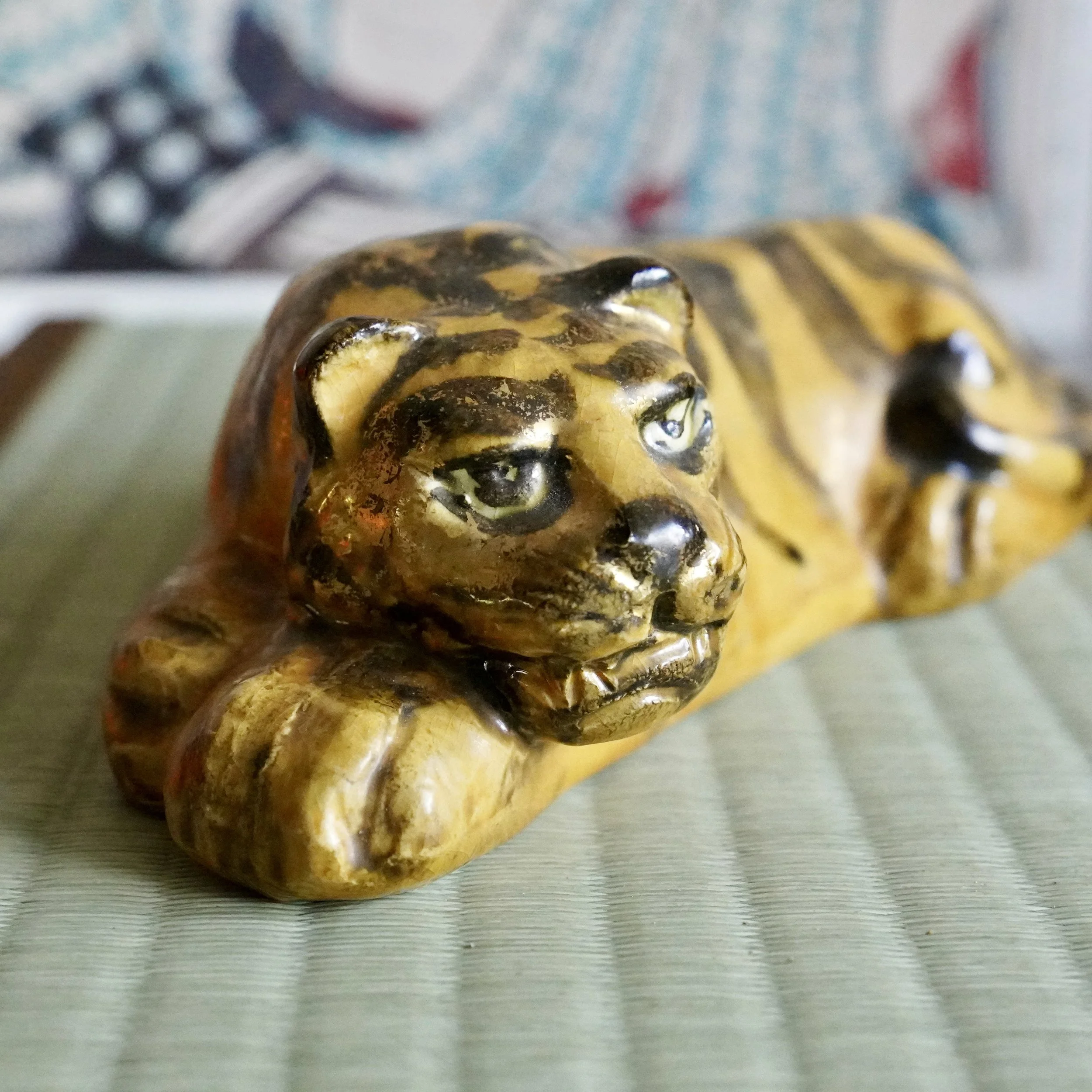
There is a small tiger on my desk with gold worn down to almost nothing on its ears and shoulders. It was made for a Year of the Tiger, in Kyoto, by a kiln lineage going back to 1771. The wear is not damage. It is exactly what the gold was always going to do.
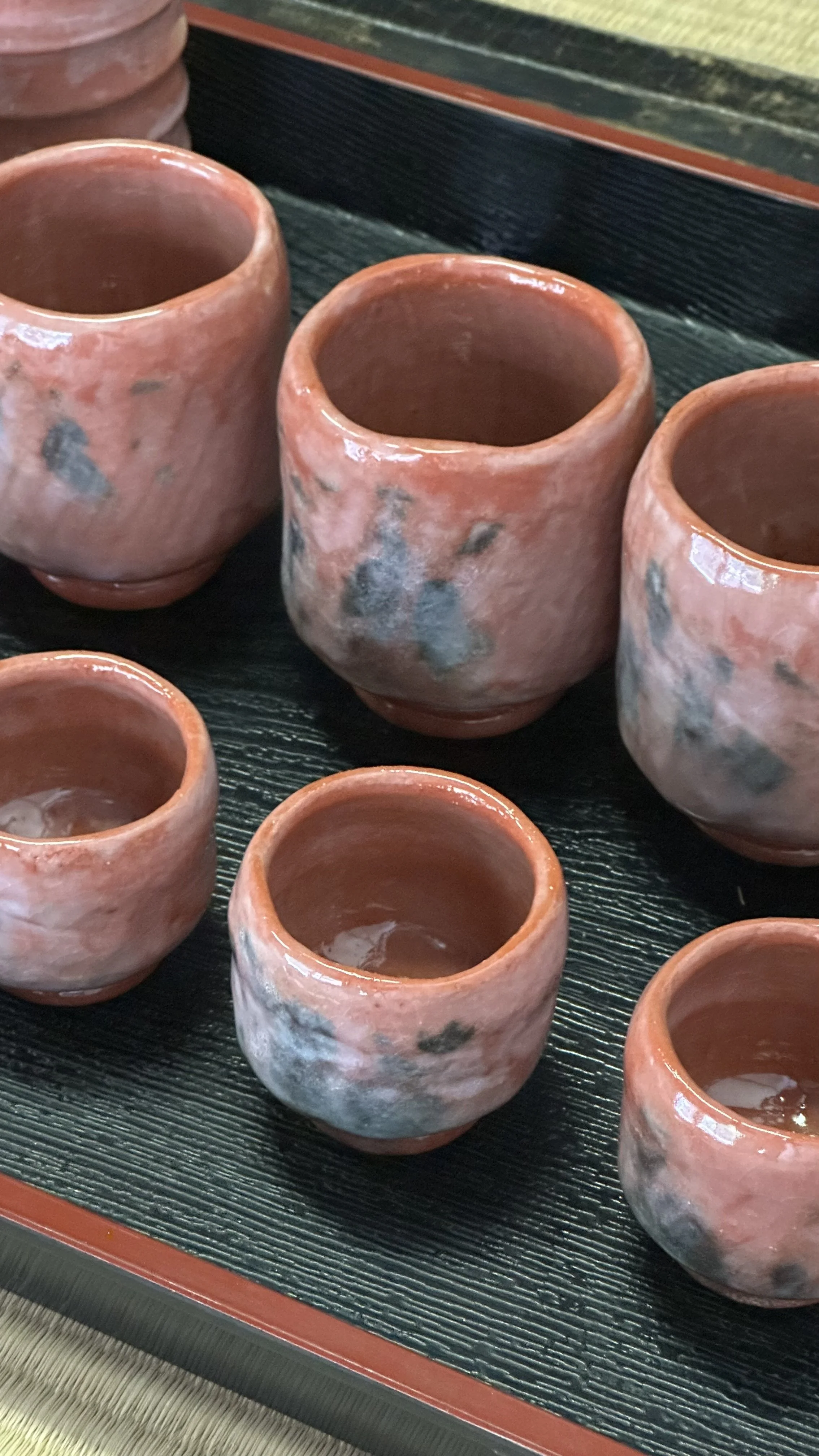
Behind the curtain at Raku Studio Waraku in Kyoto's Gion district. How aka-raku and kuro-raku tea bowls are hand-formed, fired, and finished with charcoal by 8th generation master Kawasaki Motoo. A sourcing diary entry from KAIKO&CO.
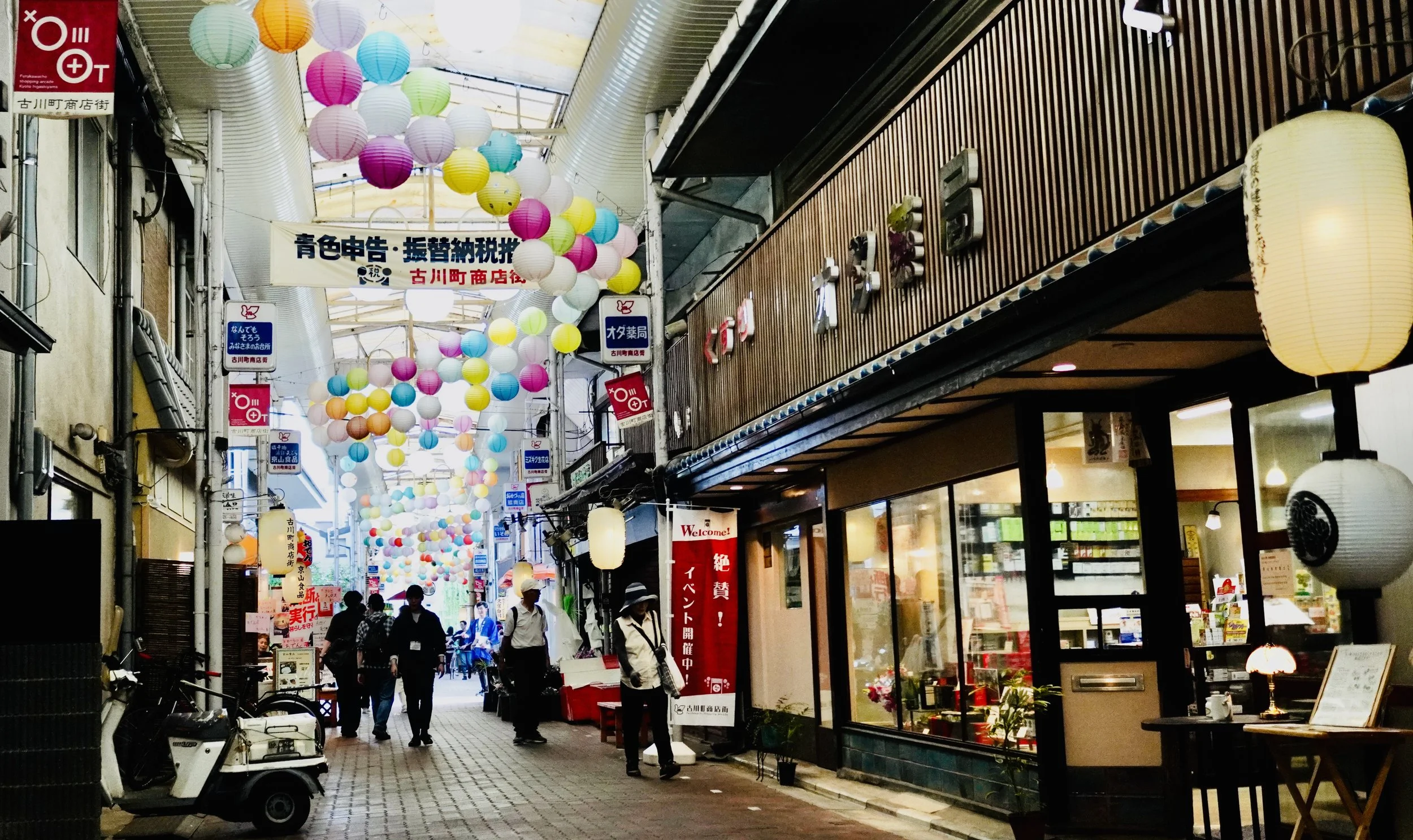
Furukawacho Shotengai in Higashiyama: an arcade frozen in the 1970s, a kimono specialist with six haori I had not expected to find, and a folder of 1895 Kyoto lithographs from an antique bookstore tucked behind a curtain. Day three of my Sourcing Week in Japan series in Kyoto and Okayama.
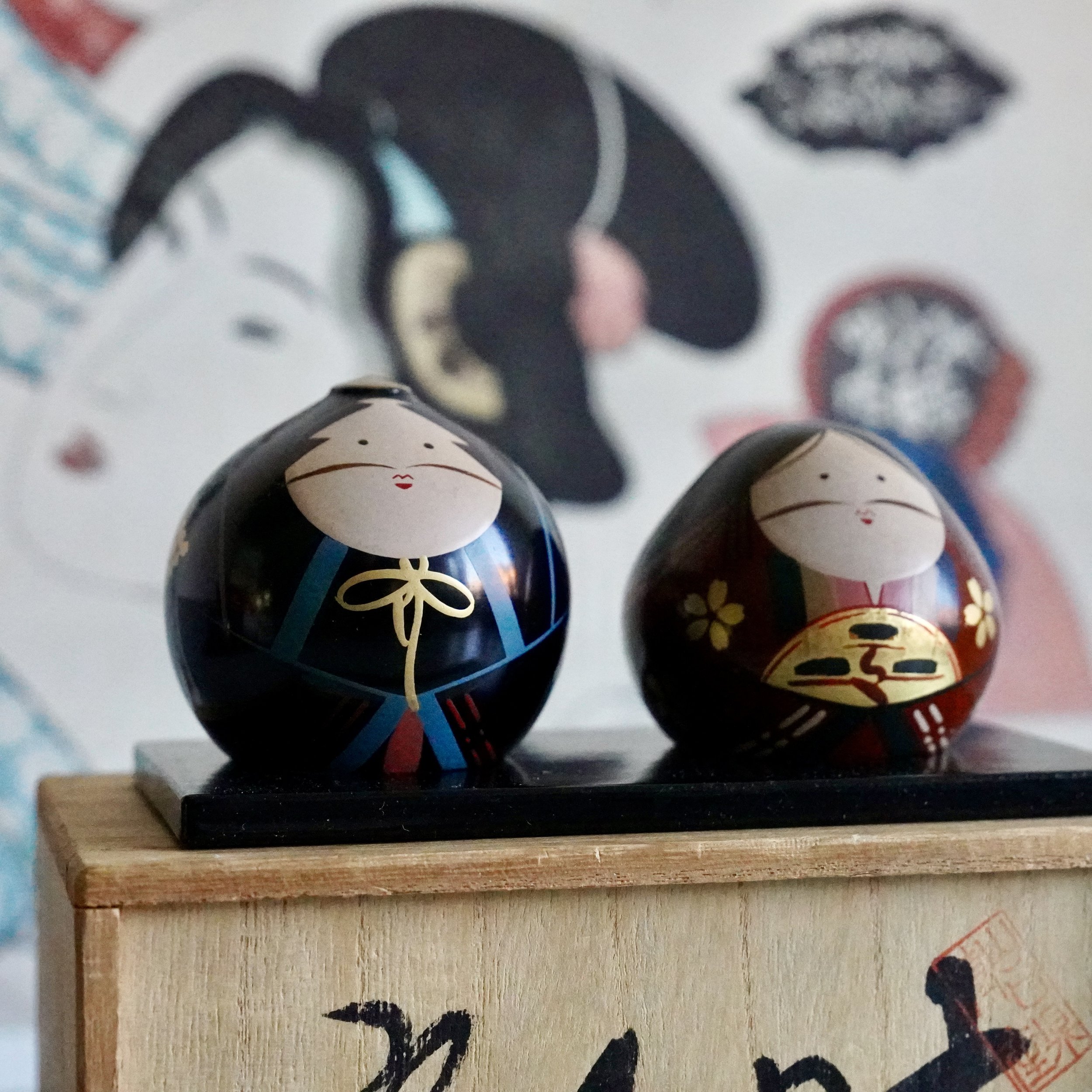
An antique market stall on temple grounds in Tokyo's Yanaka cat town, a lacquered doll pair from the ‘50’s with a story about a homesick bride, and a cat print.
A Kyoto potter stayed behind in Kanazawa in 1666, and the Raku family sent a glaze north with him, one built for the cold. Eleven generations later, that same amber glaze still catches the light.
Held at an angle, this chawan catches the light differently every time. The pale, crackled glaze runs from a soft off-white into a warm, almost blush pink where it thins over the clay, a color Hagi potters call karahai, and it only appears where the firing has gone exactly right. The rim tilts and dips ever so slightly, a wall that never quite settles into a perfect circle, and that small imperfection is what makes it sit so naturally in the hand. It is a bowl built to be picked up, turned, and looked at again.
This bowl carries the tomobako signature of Matsuura Mugen, founder of the Shōunzan-gama kiln in Hagi, built on the very ground where Hagi-yaki itself began centuries ago. Mugen's work grew out of the tradition of Miwa Kyūwa, one of the defining masters of Hagi ware and a holder of Japan's Living National Treasure designation, and that lineage shows in the quiet, unforced warmth of this glaze. Its wide, shallow shape is a natsu-jawan, a summer bowl, made so the tea cools a little faster in the warmer months, which makes this the moment to bring it into use rather than let it wait. A signed, boxed chawan from this kiln is not something that turns up often outside Japan.
Hagi ware isn't meant to stay the same. Read how it grows with you, in my journal.