
In short: a kokeshi is a Japanese wooden doll from the Tohoku region, with a round head on a cylindrical body, turned on a lathe and painted by hand. There are 11 traditional styles, each named after a region, and Naruko in Miyagi is one of them. A Naruko kokeshi is made in seven steps: the log dries for about a year, is cut into a blank, turned on the lathe, bored for the neck, fitted with its head, painted with a face and finished with wax. The neck sits in a hole in the body, which is why a Naruko head squeaks when you turn it.
Some of my favourite places in Japan are in Tōhoku, in the north of Honshū, where kokeshi are part of daily life. You see them in workshops, in shop windows and on station platforms. You also find them in the hands of makers who sit at the lathe and turn a plain piece of wood into a small person, as people there have done for generations.
I go back to these places because this is where the pieces I bring home begin. Standing in a workshop, watching a maker work and hearing them talk about their wood, their brushes and the village they come from tells me more than any reference book. It is also how I learn to read what I find later: the shape of a head, the way a pattern is painted, the signature on the base.
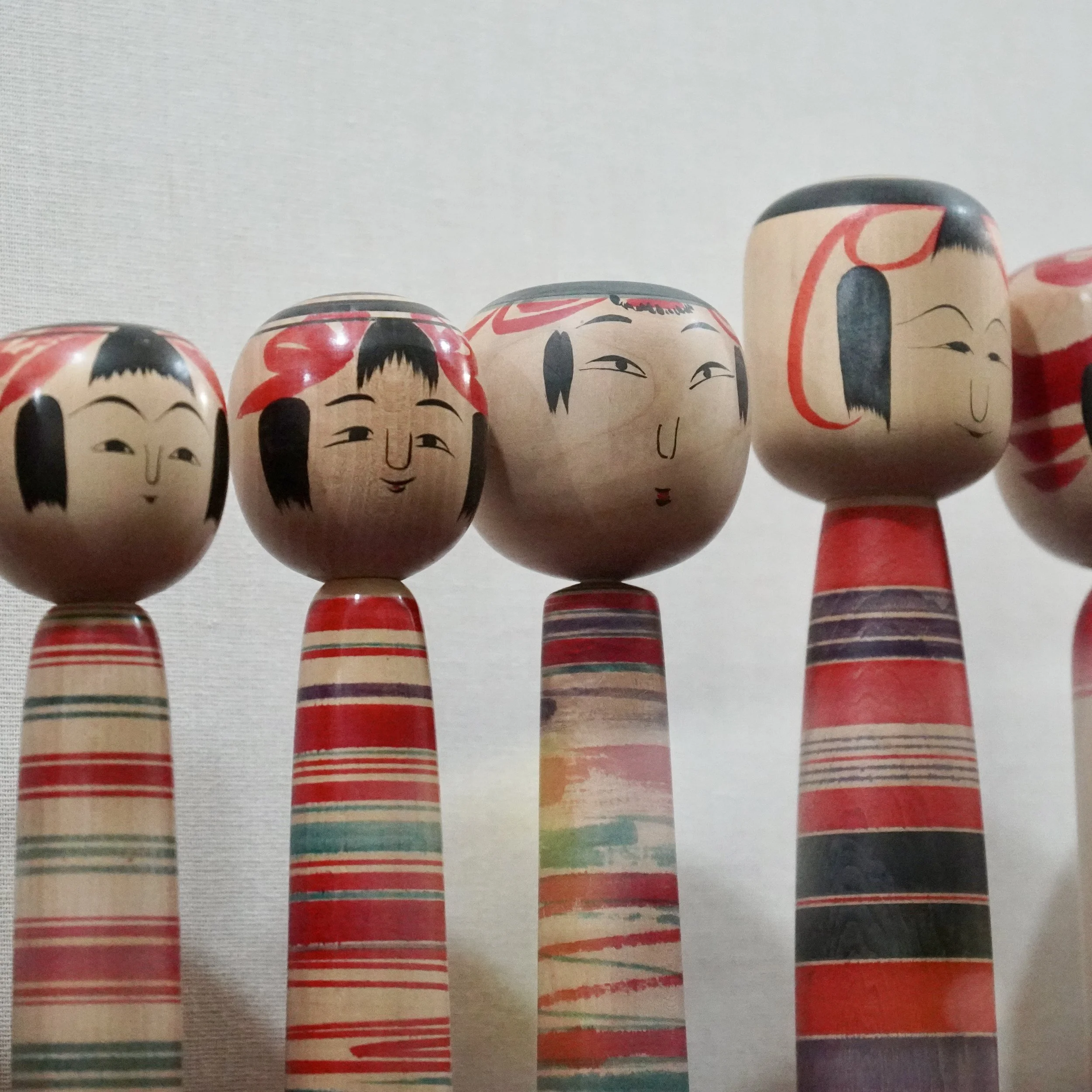
Below you see traditional kokeshi from Miyagi, in the north of Tōhoku. And a maker at work at the lathe. This is where my journey into the craft begins.
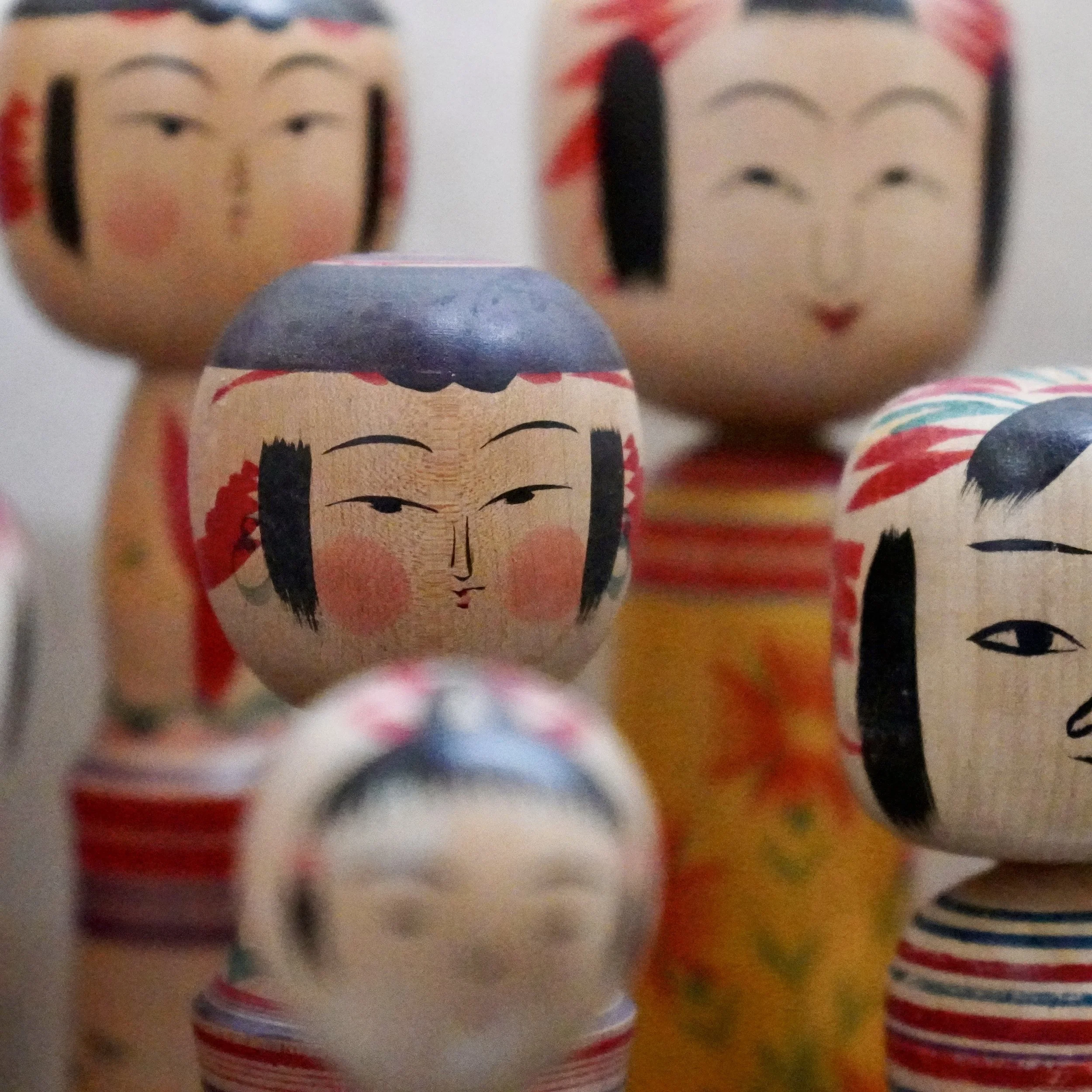
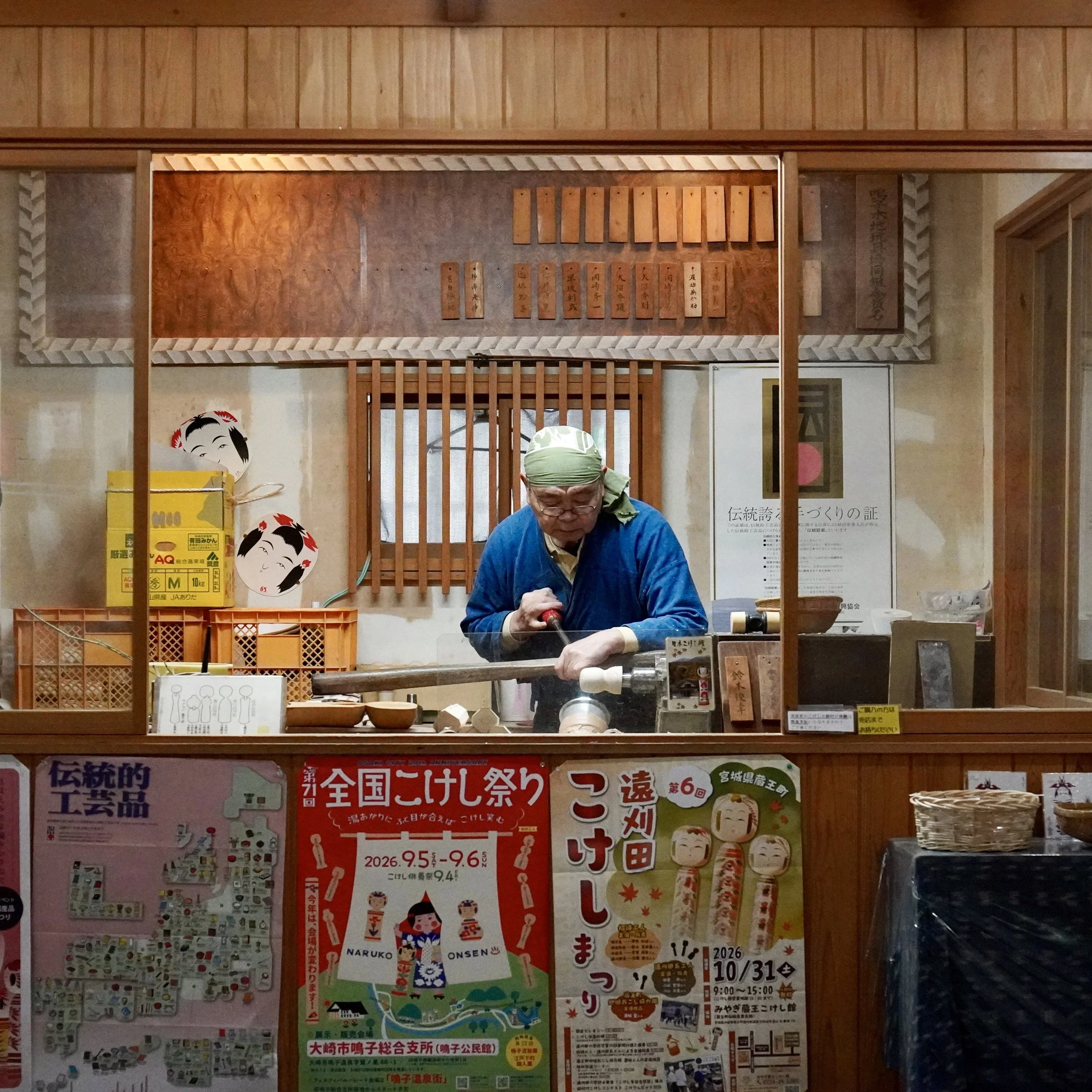
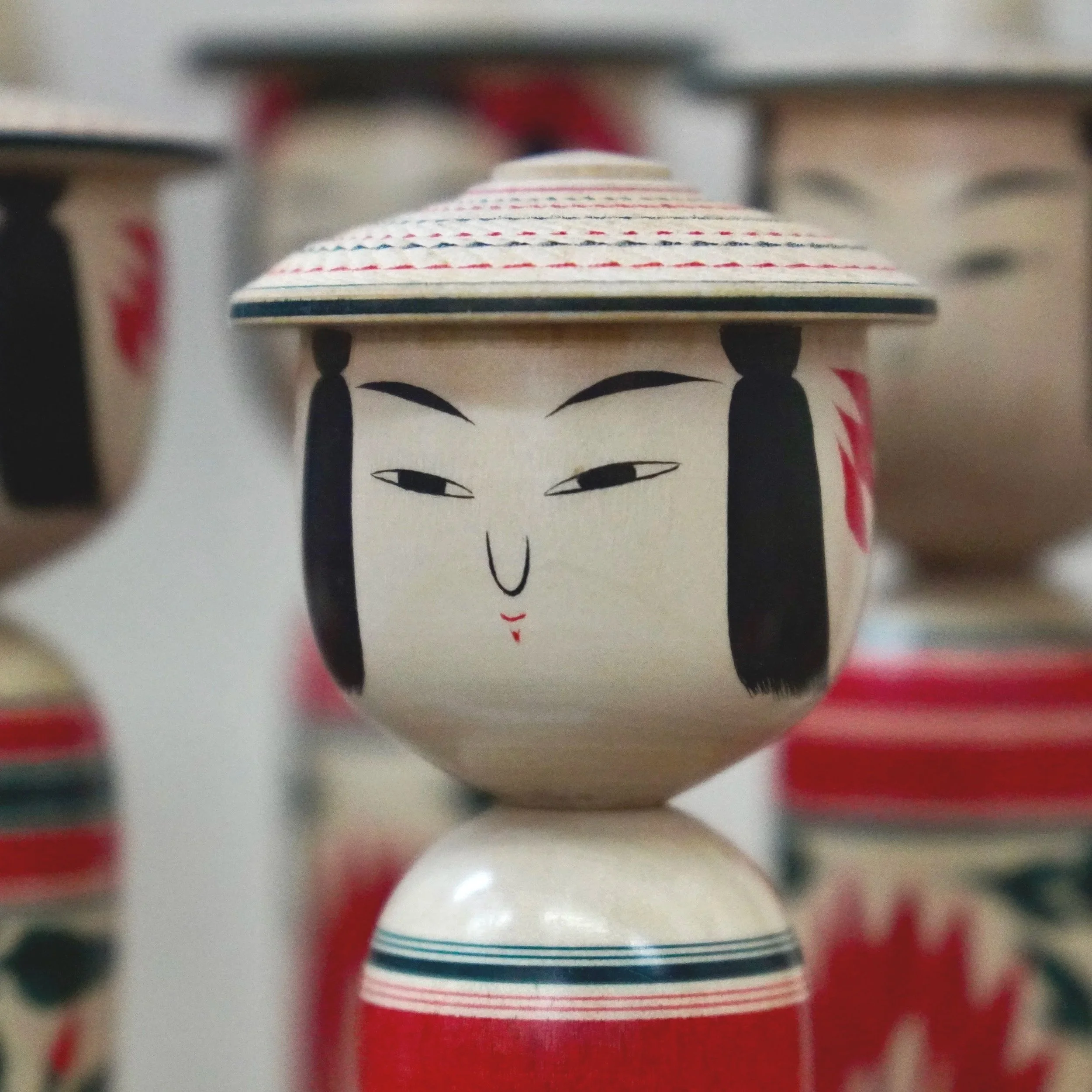
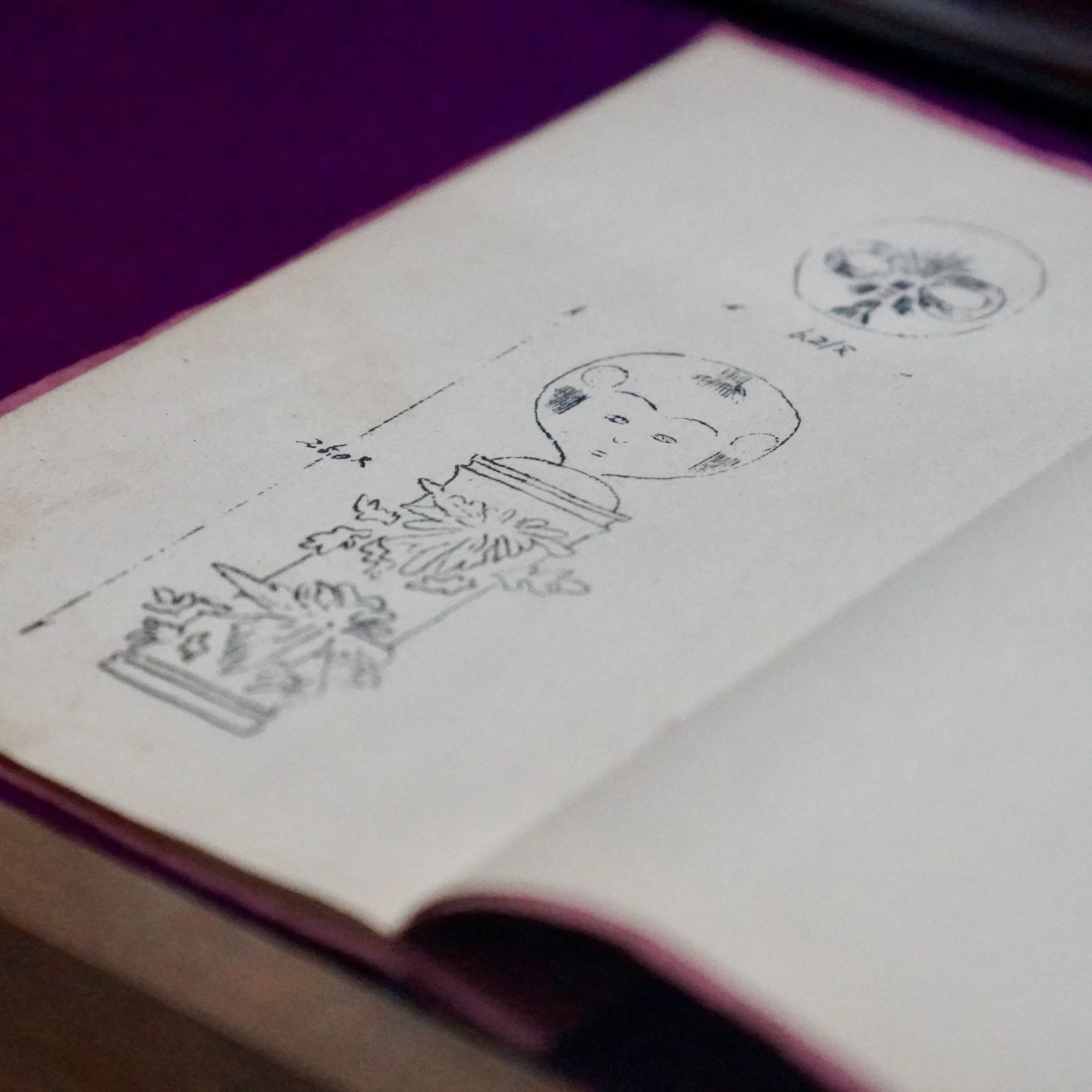
Turn the head of a Naruko kokeshi and it answers with a small squeak.
I live with dozens of kokeshi, and one question never goes away: how is a kokeshi made? How does a plain piece of wood turn into this little person? So this time I went to Naruko for you, the same way I went to Hagi and Bizen to see the clay and the ceramics with my own eyes.
Step off the train in Naruko and you know where you are. Kokeshi at the station, kokeshi on the street lamps, and even the cookies that come with your coffee are in on it. This hot spring town in Miyagi, in the north of Japan, gave its name to one of the five traditional kokeshi styles of Miyagi, and the craft is alive here. Makers work in more than one place, and the younger generations carry it with pride.
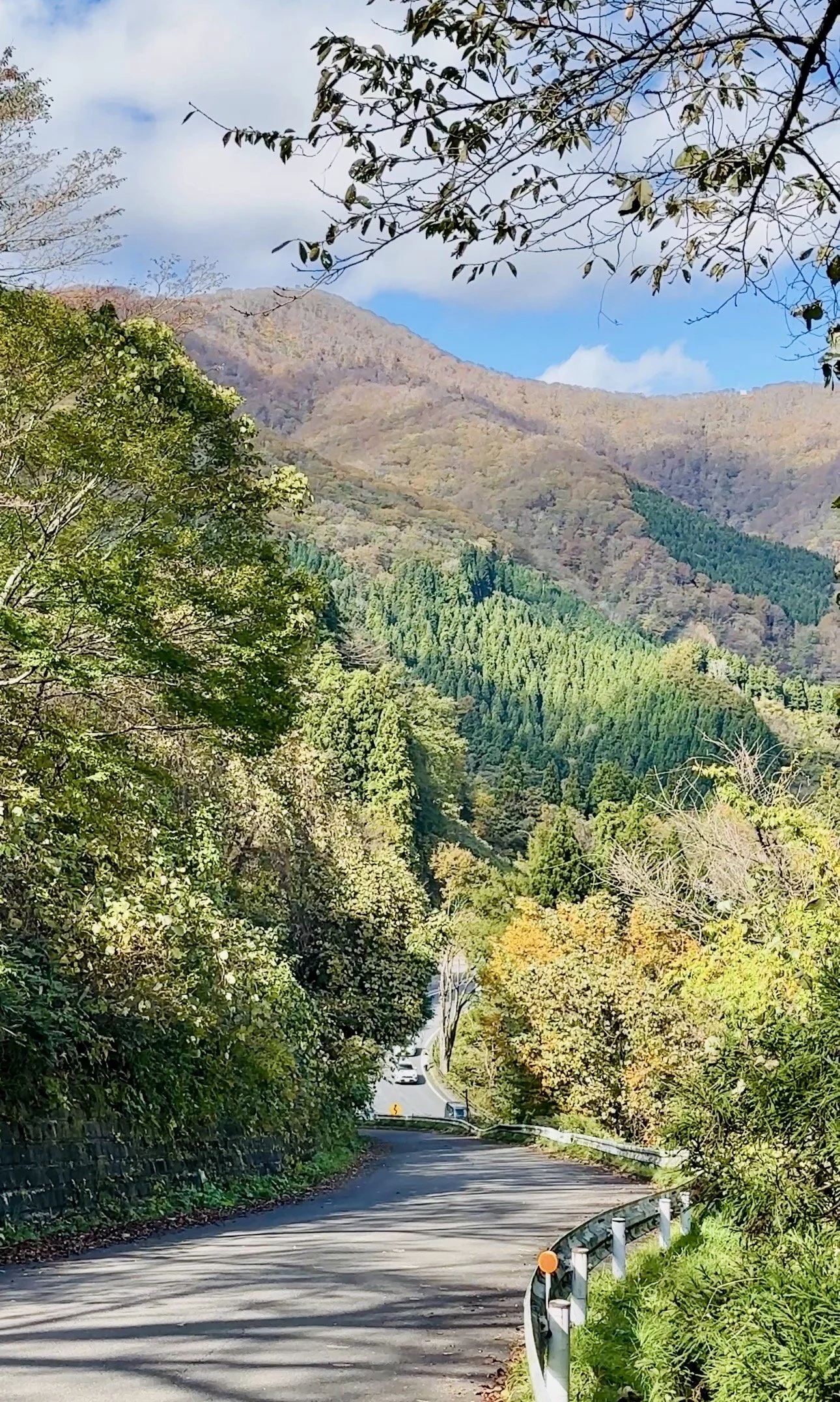
Autumn mountains above Naruko Onsen in Miyagi, forested slopes with roads winding through the valley
What is a kokeshi, and where does it come from?
A kokeshi is a Japanese wooden doll from the Tohoku region, in the north of the country: a round head on a cylindrical body, no arms, no legs, turned on a lathe and painted by hand. Kokeshi began as children's toys, and they are still seen as little charms that bring children health and happiness. Every face is painted by hand, so no two are alike.
The story starts in the mountains of Tohoku, in the Edo period. The villagers there were woodturners who spent their days at a lathe, turning bowls and trays. They also turned small dolls, for their own children and for the children next door.
The hot springs of the region drew visitors who came to soak and rest, and they wanted something to take home to their children. The dolls were right there. A village toy became a souvenir. In the twentieth century collectors discovered them, and makers began to sign their work.
And the shape has barely changed since.
Traditional and creative kokeshi
First things first. There are two families of kokeshi, and it helps to know which one you are holding.
Traditional kokeshi follow the style of the place they come from. There are 11 traditional styles, each named after a region of Tohoku and each with its own shape, hairstyle, face and decoration: Tsugaru in Aomori, Nanbu in Iwate, Kijiyama in Akita, Naruko, Togatta, Yajiro and Sakunami in Miyagi, Hijiori, Zao Takayu and the Yamagata style in Yamagata prefecture, and Tsuchiyu in Fukushima. Naruko is one of the 11, and one of the three main production centres, together with Togatta and Tsuchiyu.
Creative kokeshi follow no village rules. One maker, one idea: the shape, the face and the decoration are the maker's own, and the doll is usually signed. The craft underneath is the same, wood, a lathe and a chisel. The freedom is what differs.
You will find both in my shop. In this story we follow the traditional Naruko way, from the tree to the shelf.
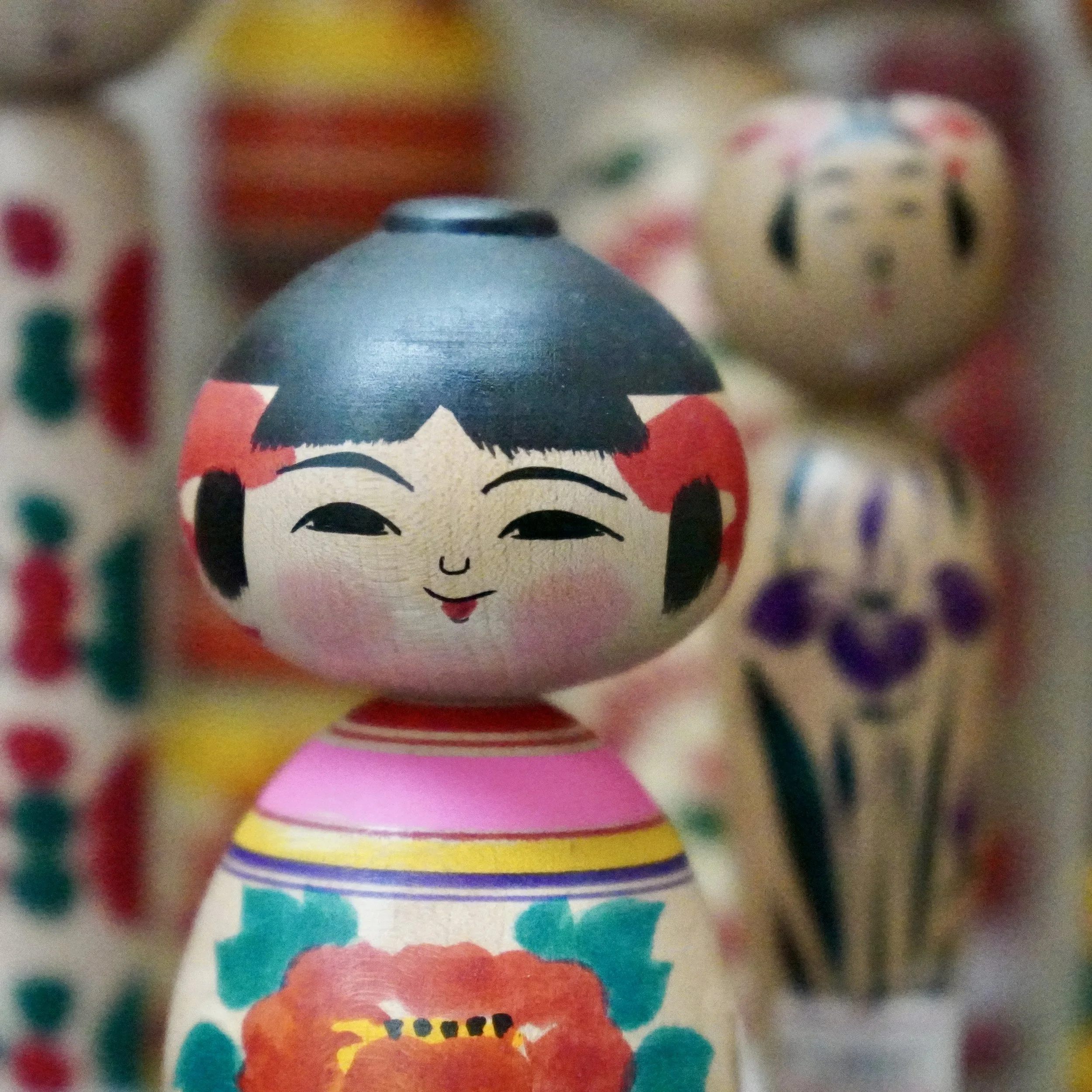
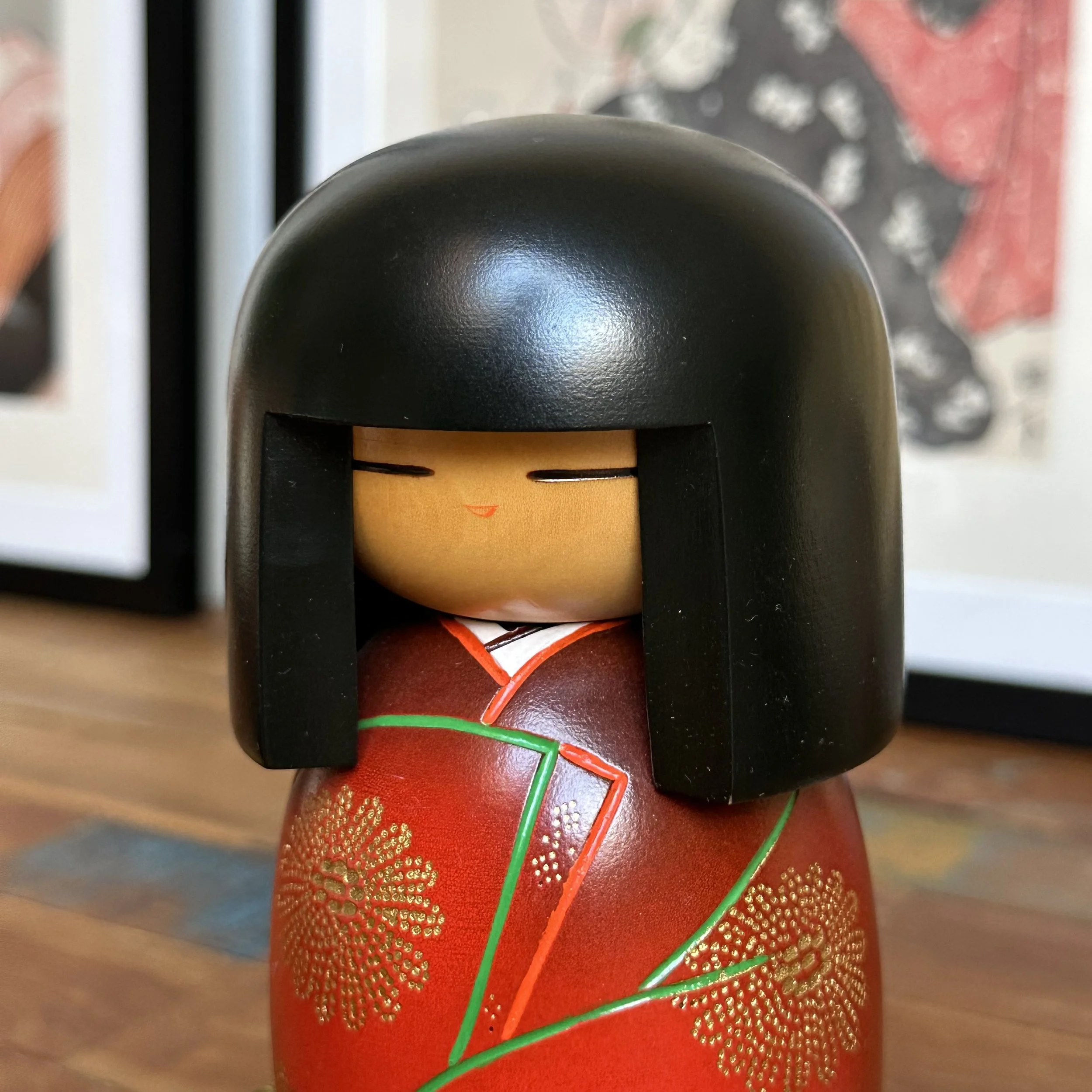
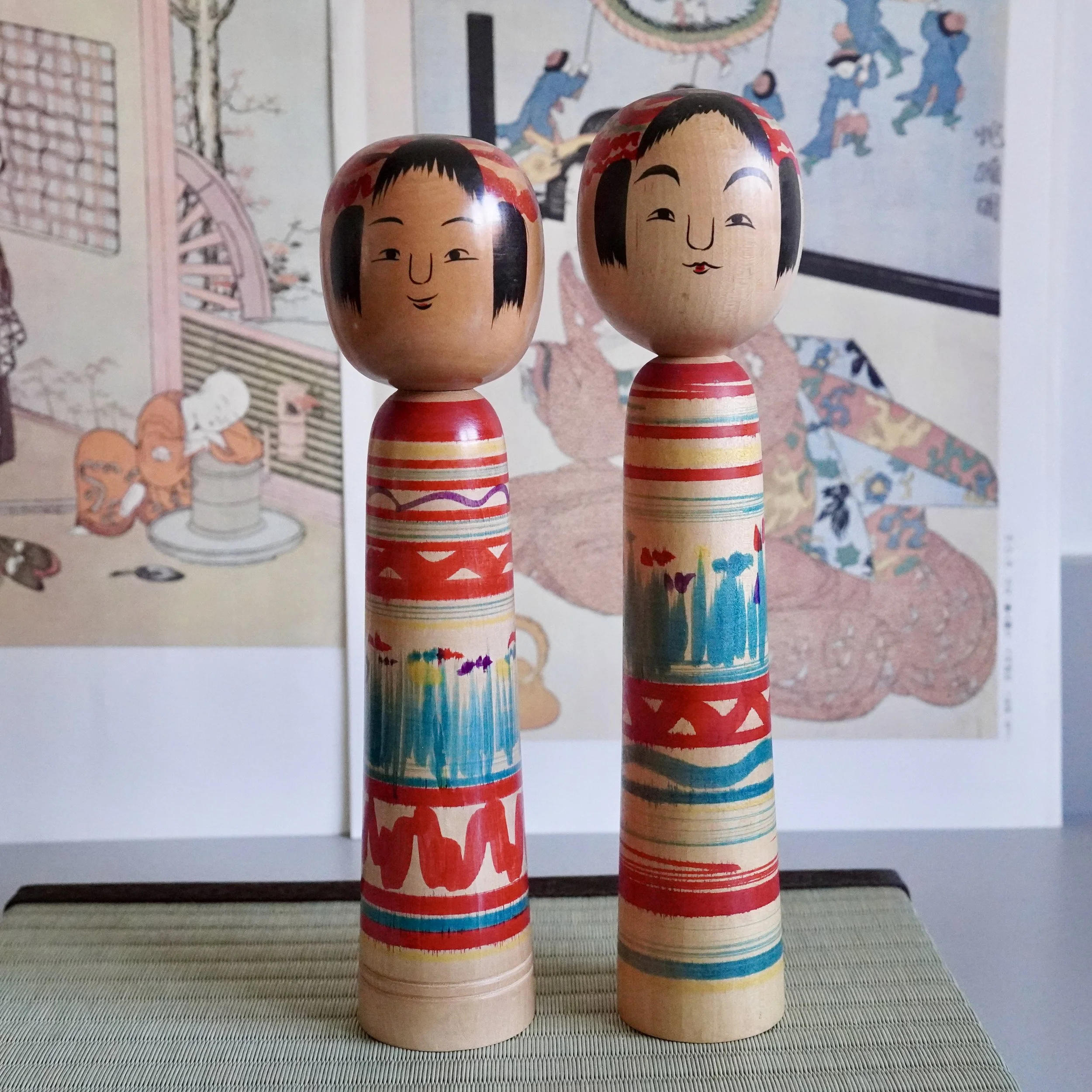
The left photo is of a traditional kokeshi and the right one is a creative kokeshi from Kisaku.
A log that waits for a year
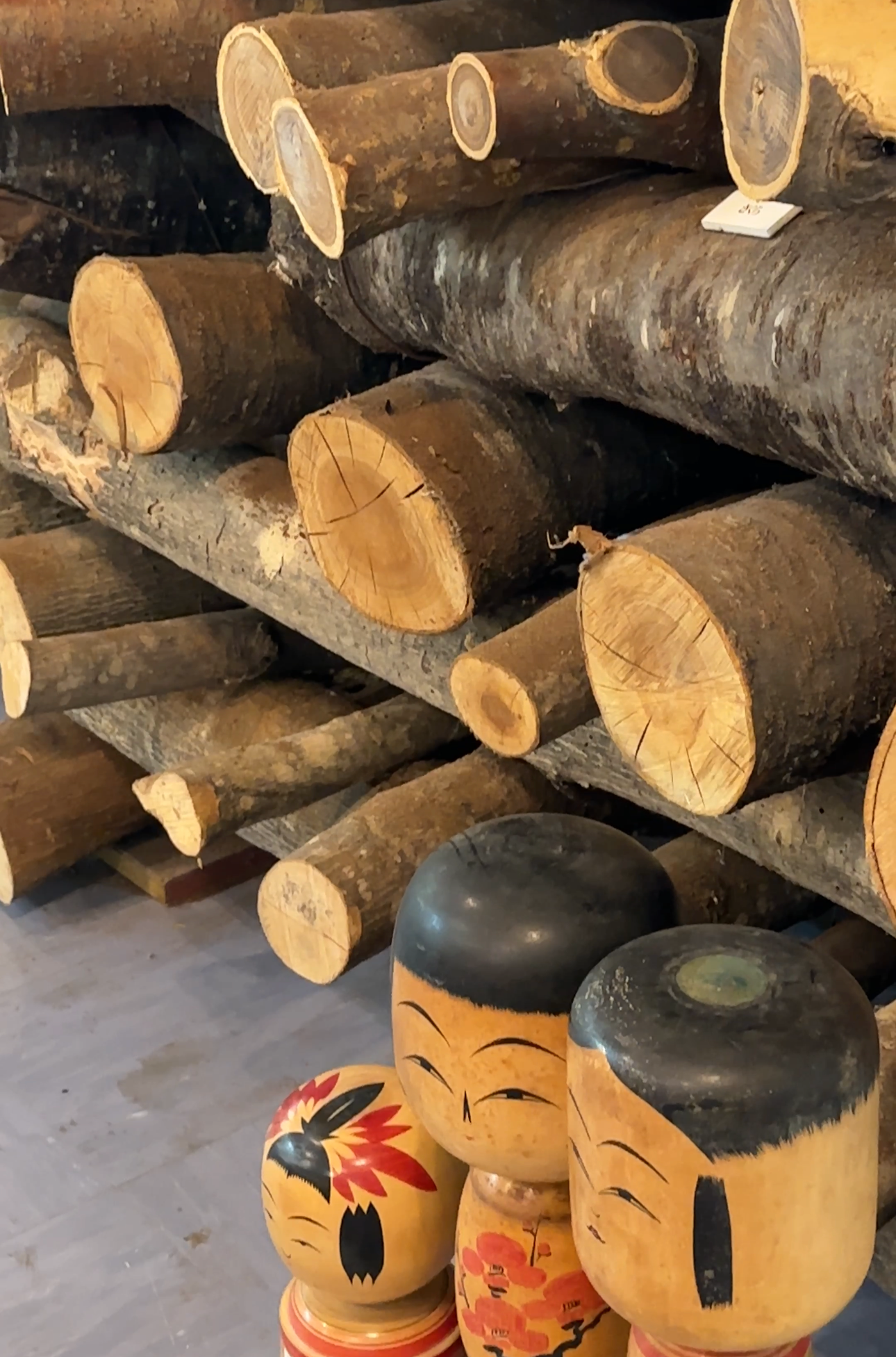
Every kokeshi begins as a tree. It is felled, cut to a workable length and then left alone. It dries naturally, for about a year, before anyone touches it with a chisel. Wood keeps moving while it dries, and you can see it on the ends of old logs, where hairline cracks run from the heart to the bark. There is no shortcut, and the whole craft starts with patience.
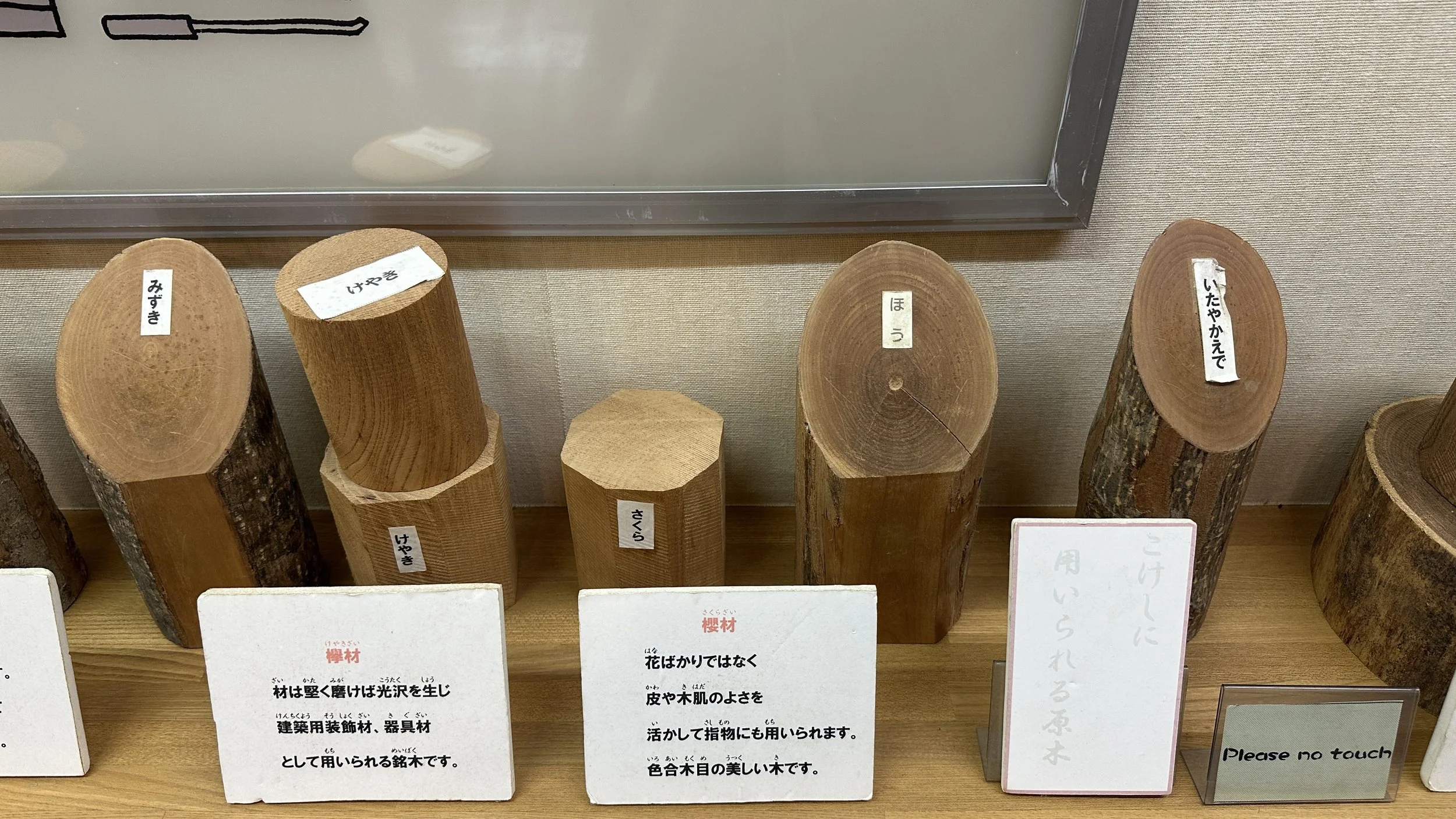
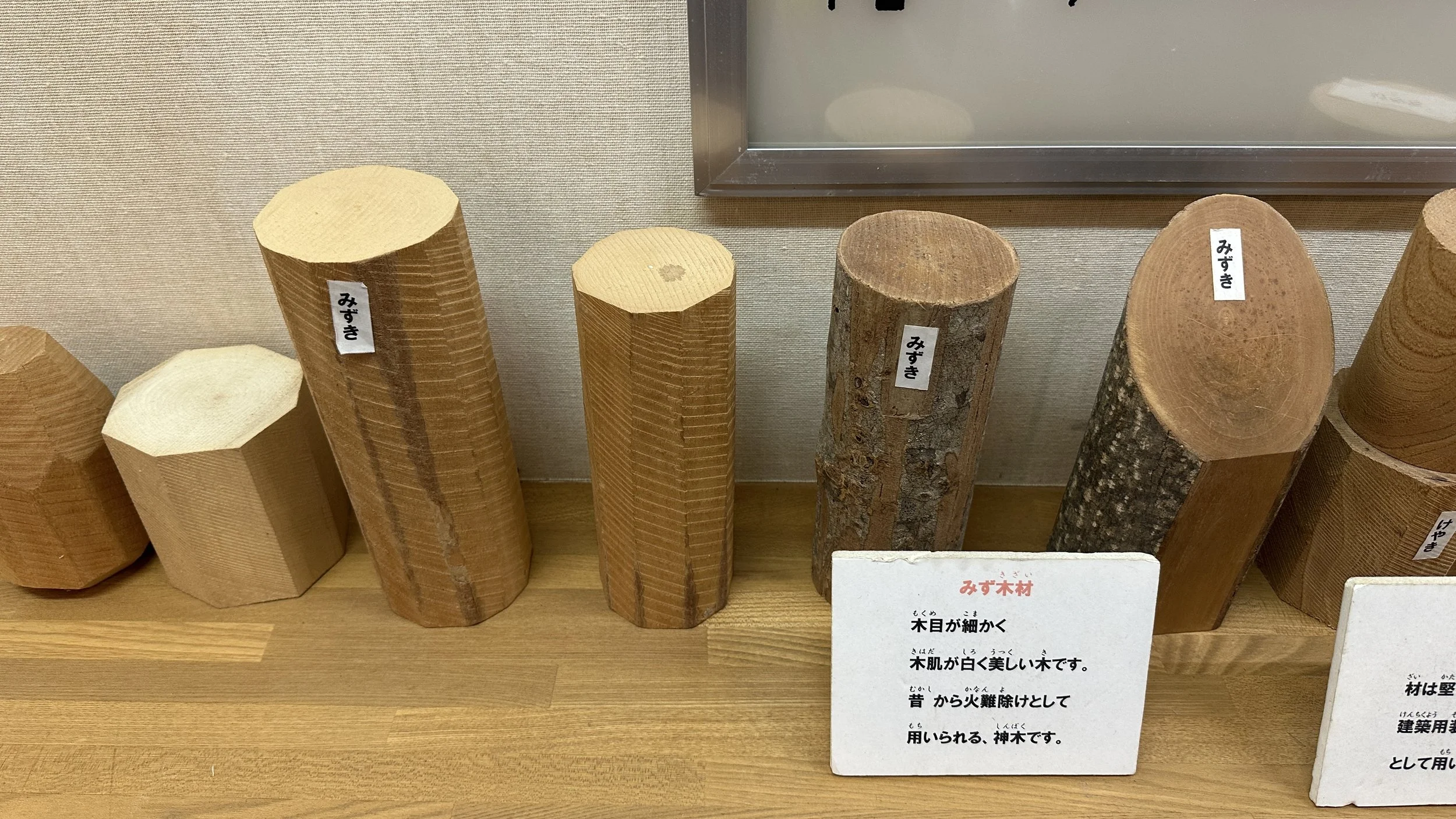
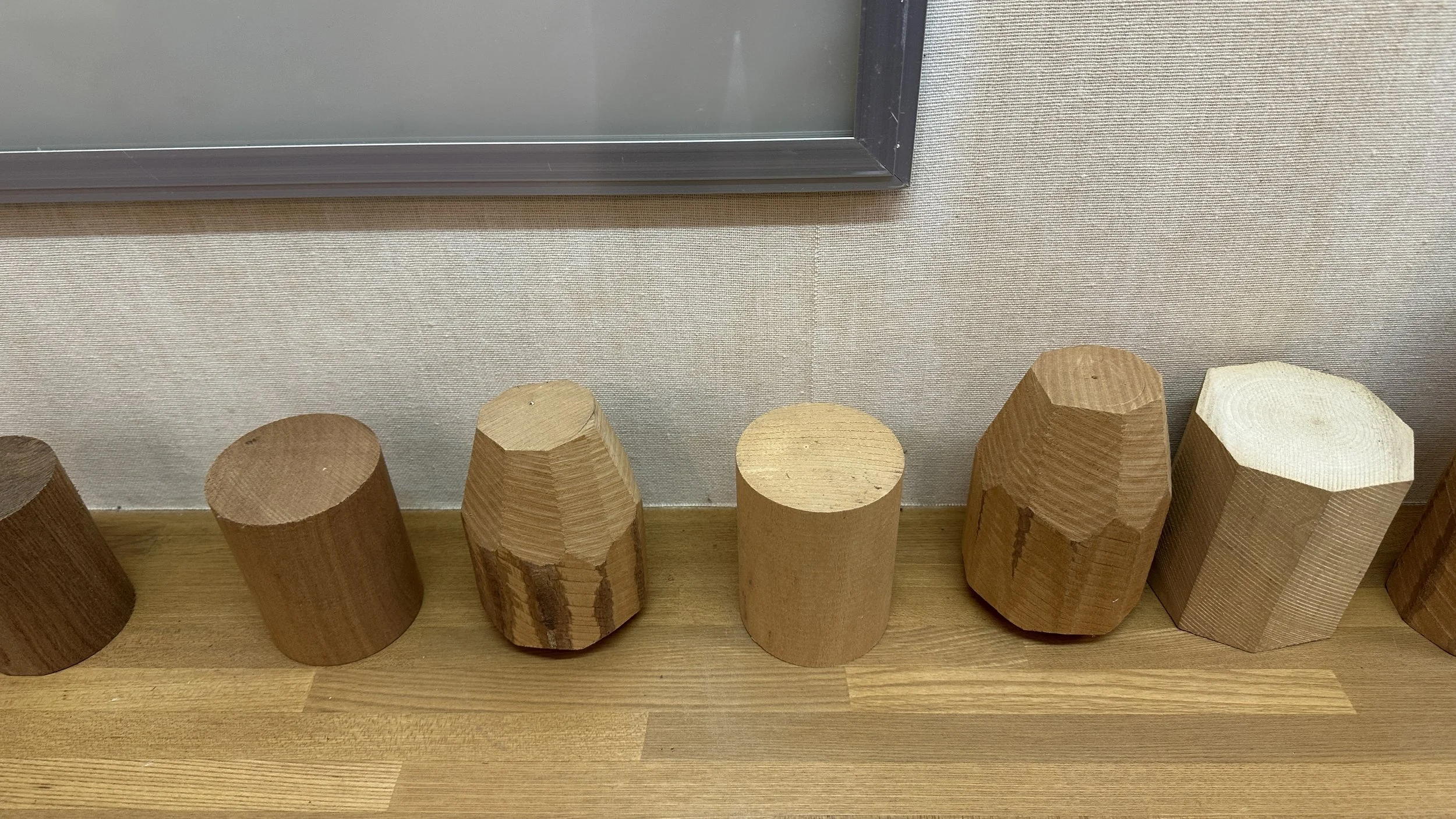
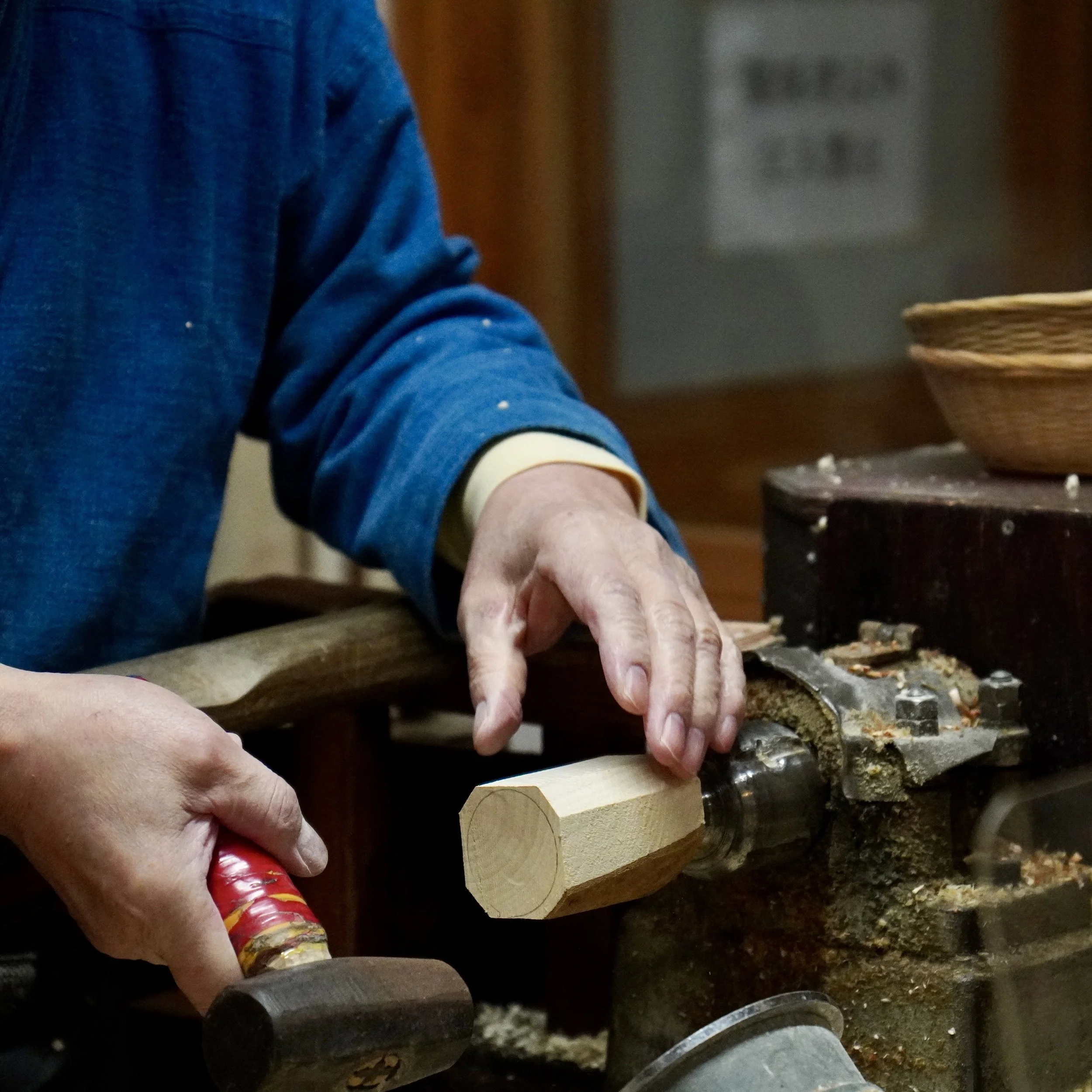
Cutting the blank, and the lathe
When the wood is ready, the log is cut to the length of the doll it will become and roughly shaved into a cylinder. A raw log with bark and growth rings becomes a rough block with flat sides, and then a clean round cylinder, waiting for the lathe.
Then the lathe, and the block becomes a body. In Naruko I watched makers at work, women and men, old and young. A pale block spins, the chisel touches the wood, and a thin curl of shavings lifts away. Head and body are turned, and the doll appears out of the block. The fine rings in the wood come from this moment.
Not every doll is turned from the same wood, and the wood chooses the colour of the doll before the brush touches it: the blocks run from nearly white to warm red brown to deep dark brown. Mizuki, a dogwood, has a fine grain and a pale, clean surface, and in Japan it has long been associated with protection from fire. Keyaki, a zelkova, is hard and takes a polish. Cherry gives a warm colour and a beautiful grain. Enju, the Japanese pagoda tree, is a lucky tree, said to keep evil away and invite good fortune. Magnolia and maples are used too.
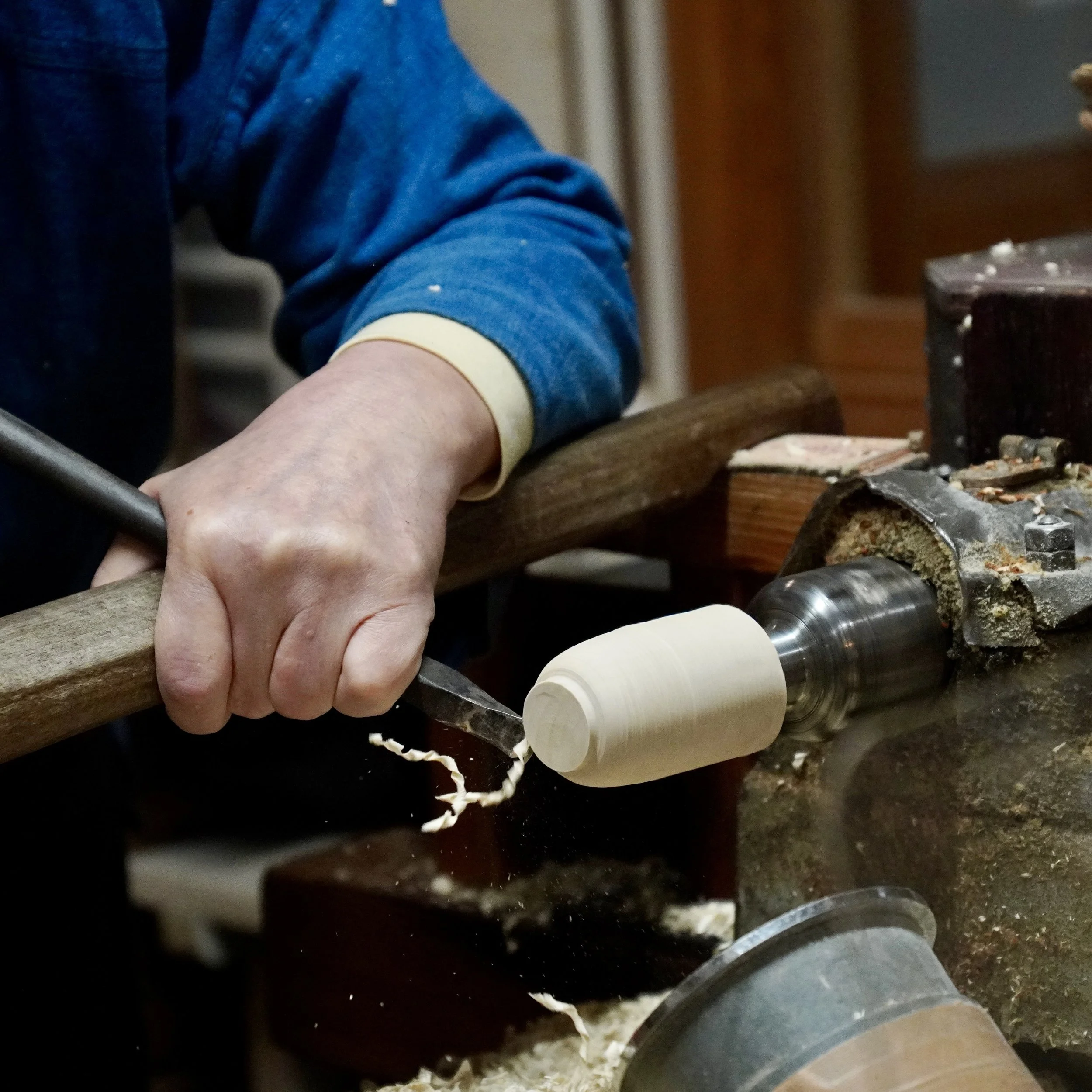
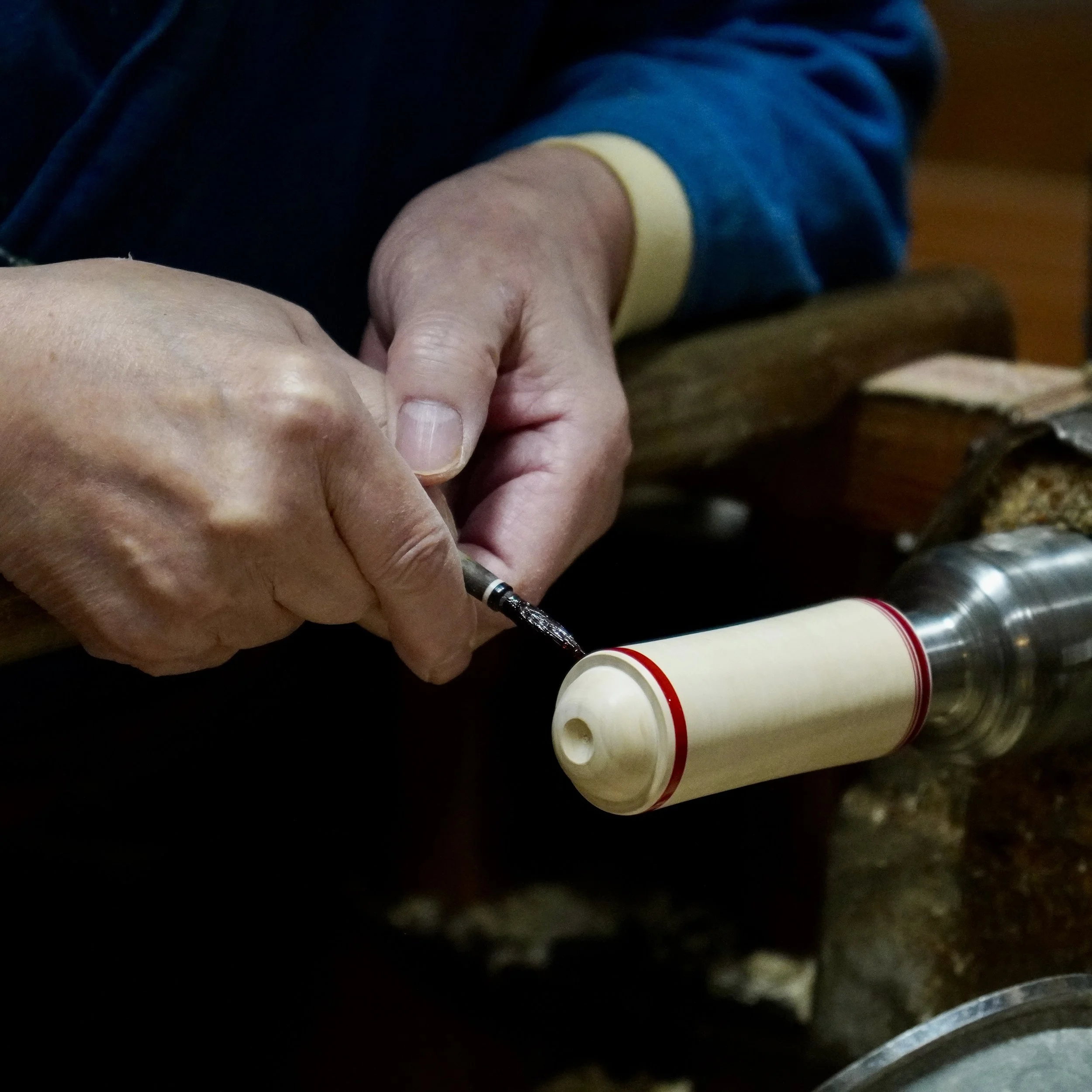
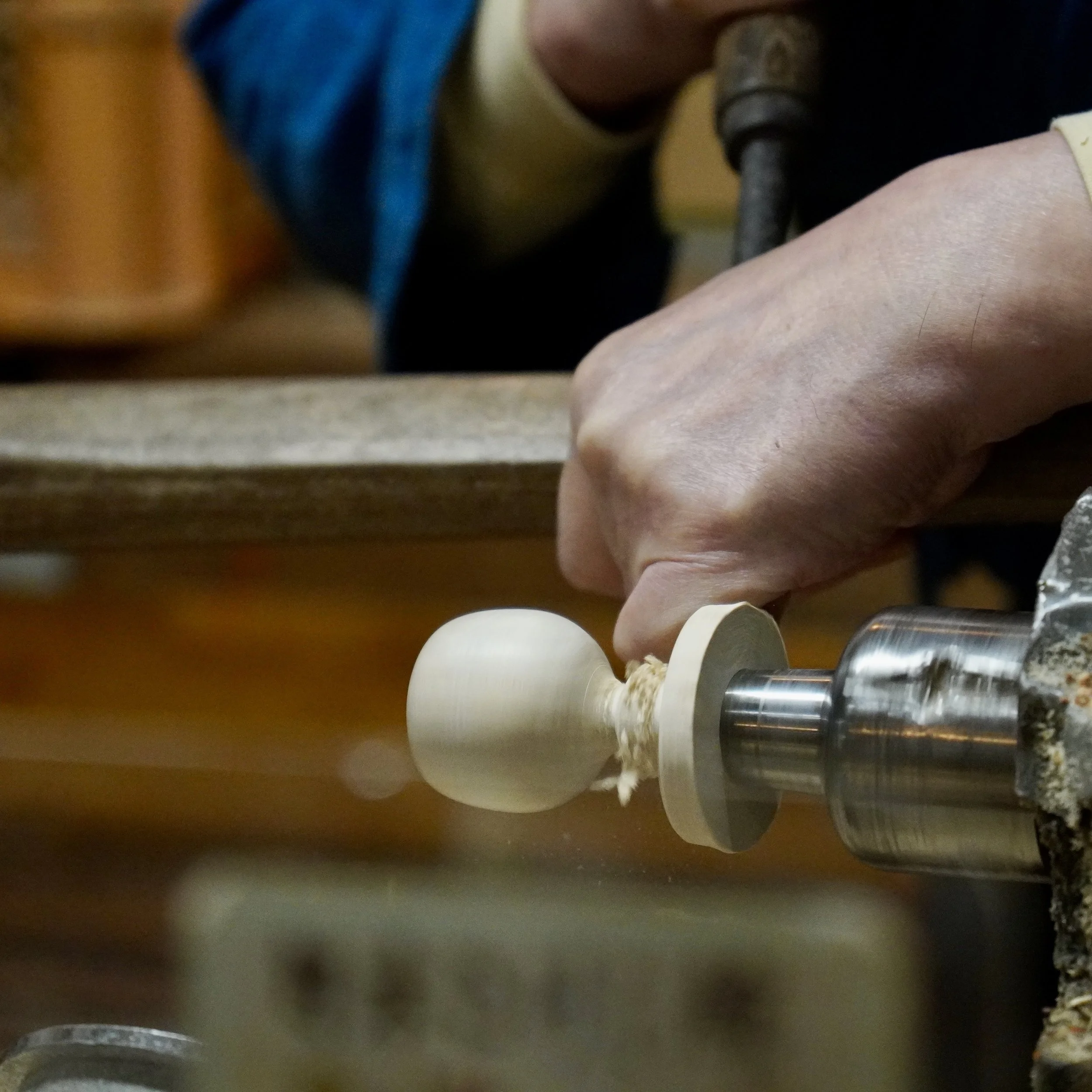
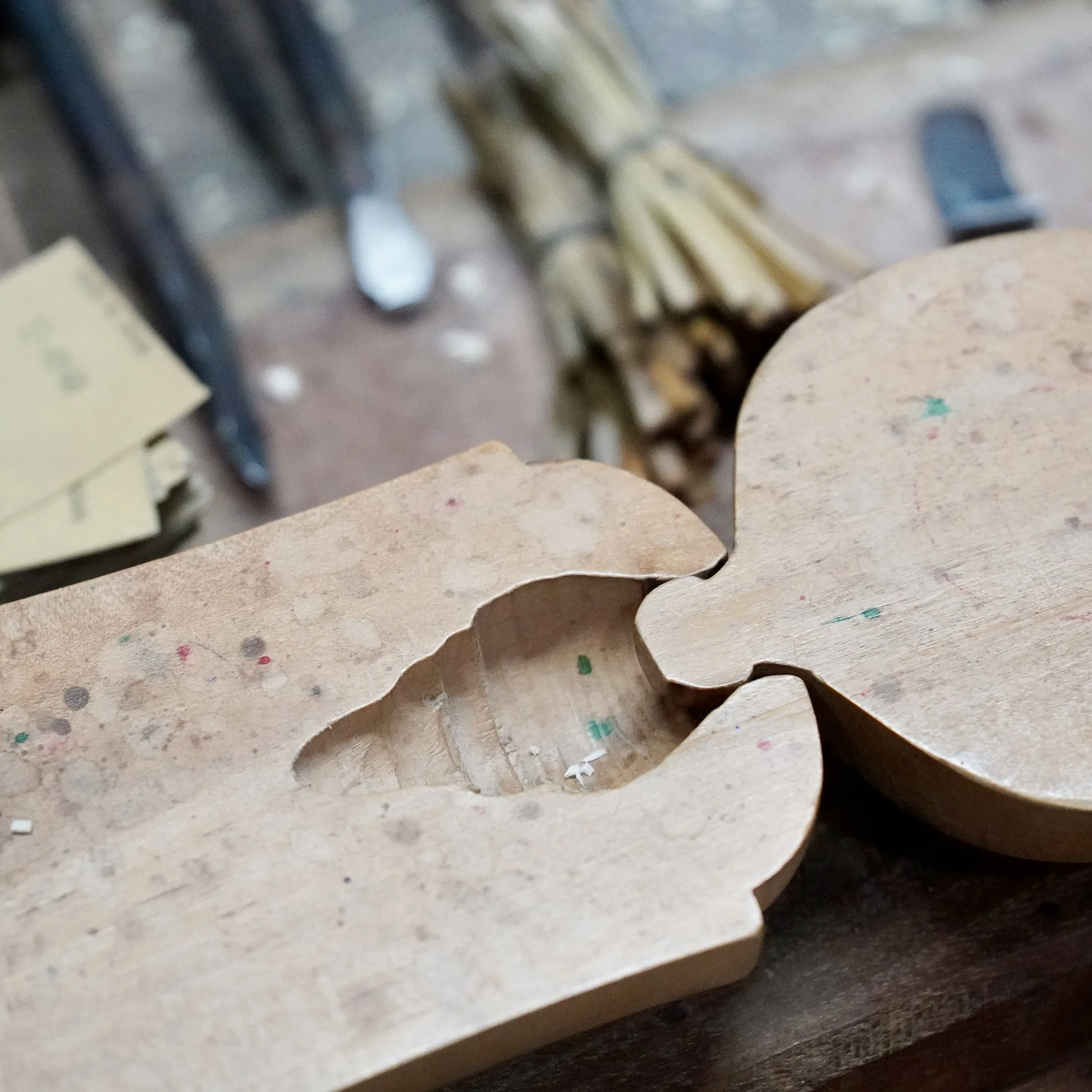
Kokeshi cut in half showing the neck of the head fitted into the hole in the body
A hole for the neck, and the sound of Naruko
Now comes the part that makes a Naruko kokeshi a Naruko kokeshi. At the tip of the body the maker bores a hole, a small round hollow in the wood, and then pushes the neck of the head into it. In Naruko the hole is in the body and the neck goes inside. Other styles are put together differently, which is why this is the one to listen to.
That fit is what you hear. Turn the head and it answers with a small squeak, a little voice from inside the wood. The squeak comes with the way a Naruko doll is built. Imagine it in a child’s hands: a doll that answers back.
Try it, gently, when you meet one. Hold the body, turn the head a little, and listen.
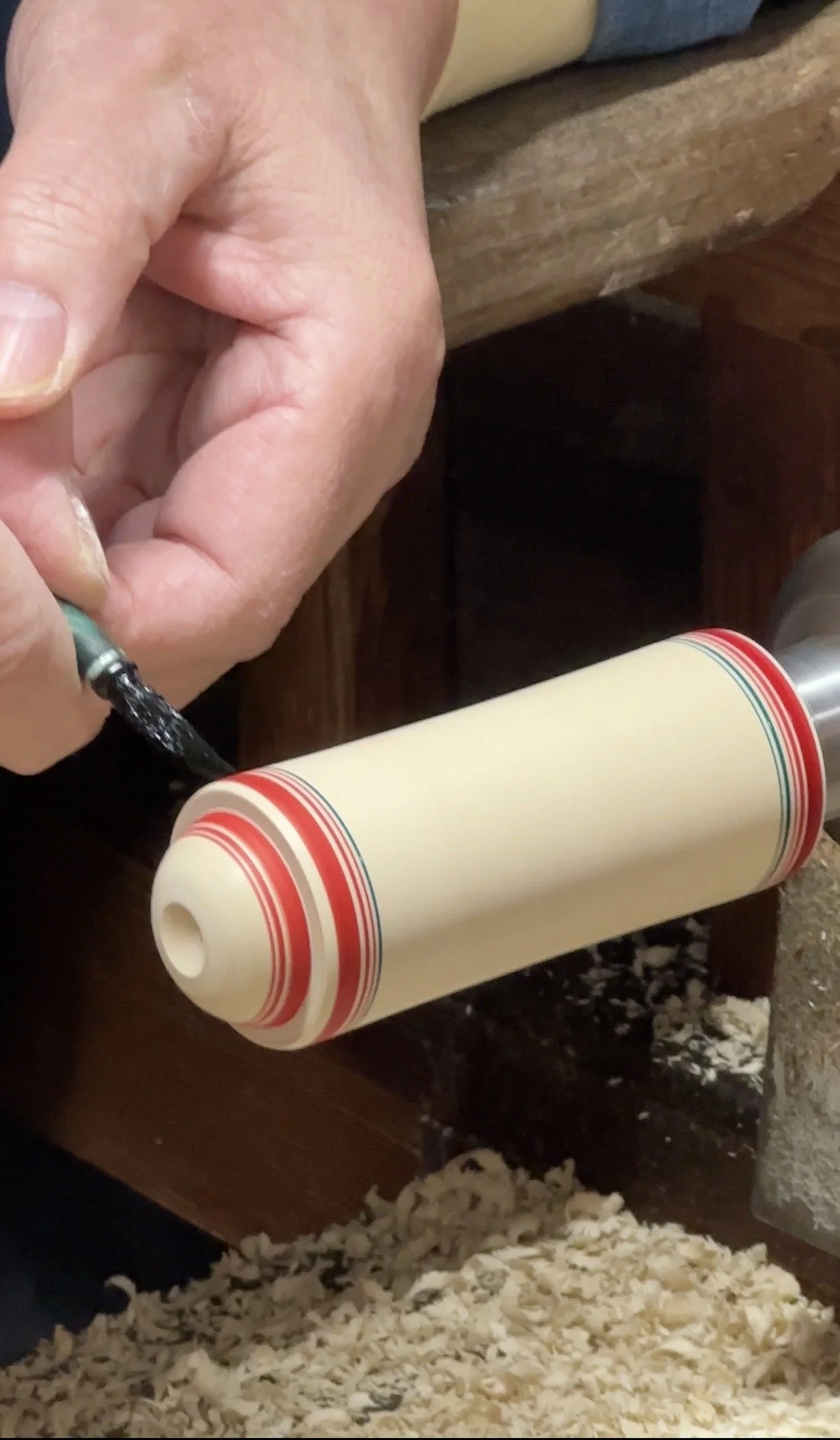
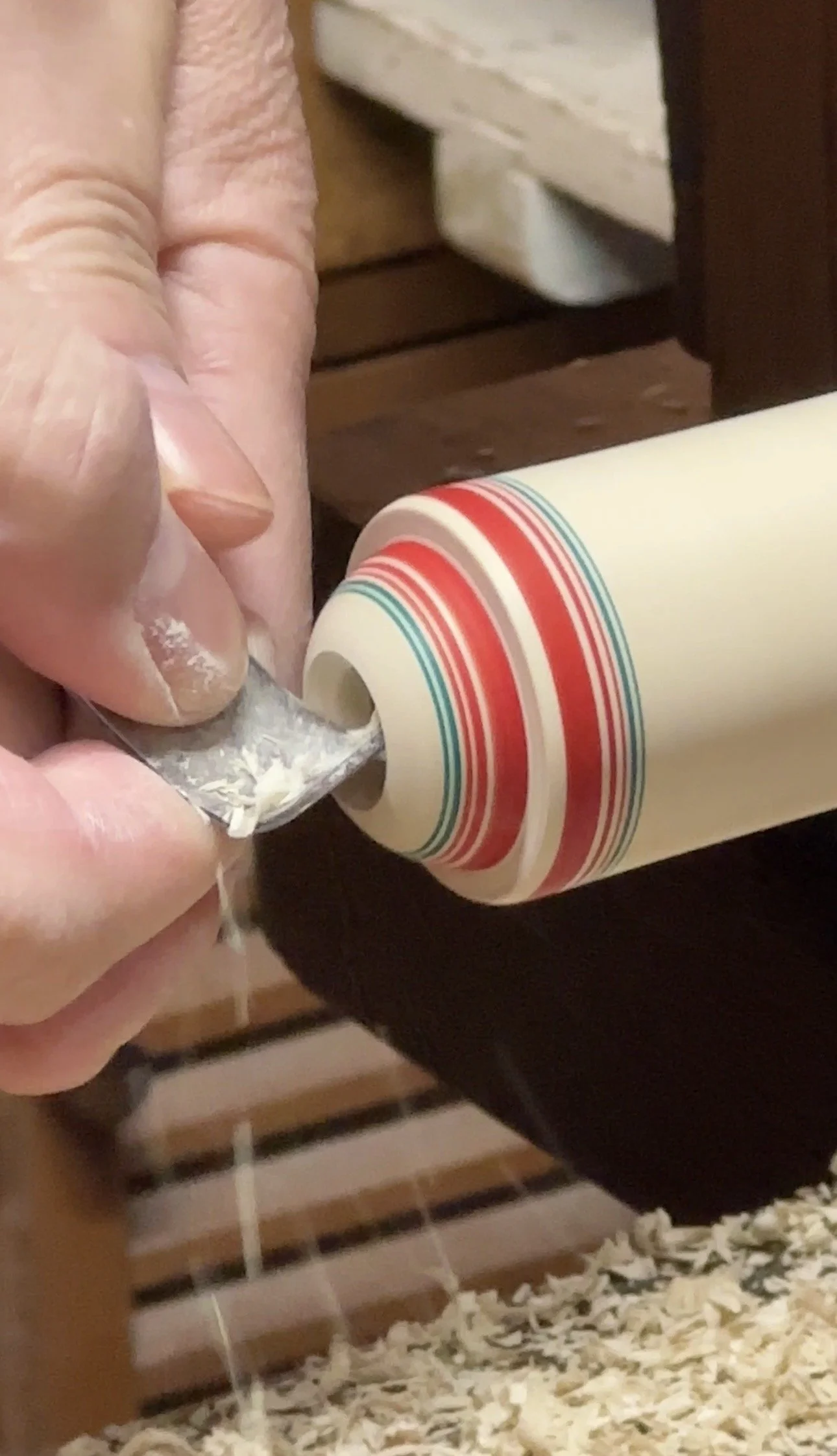
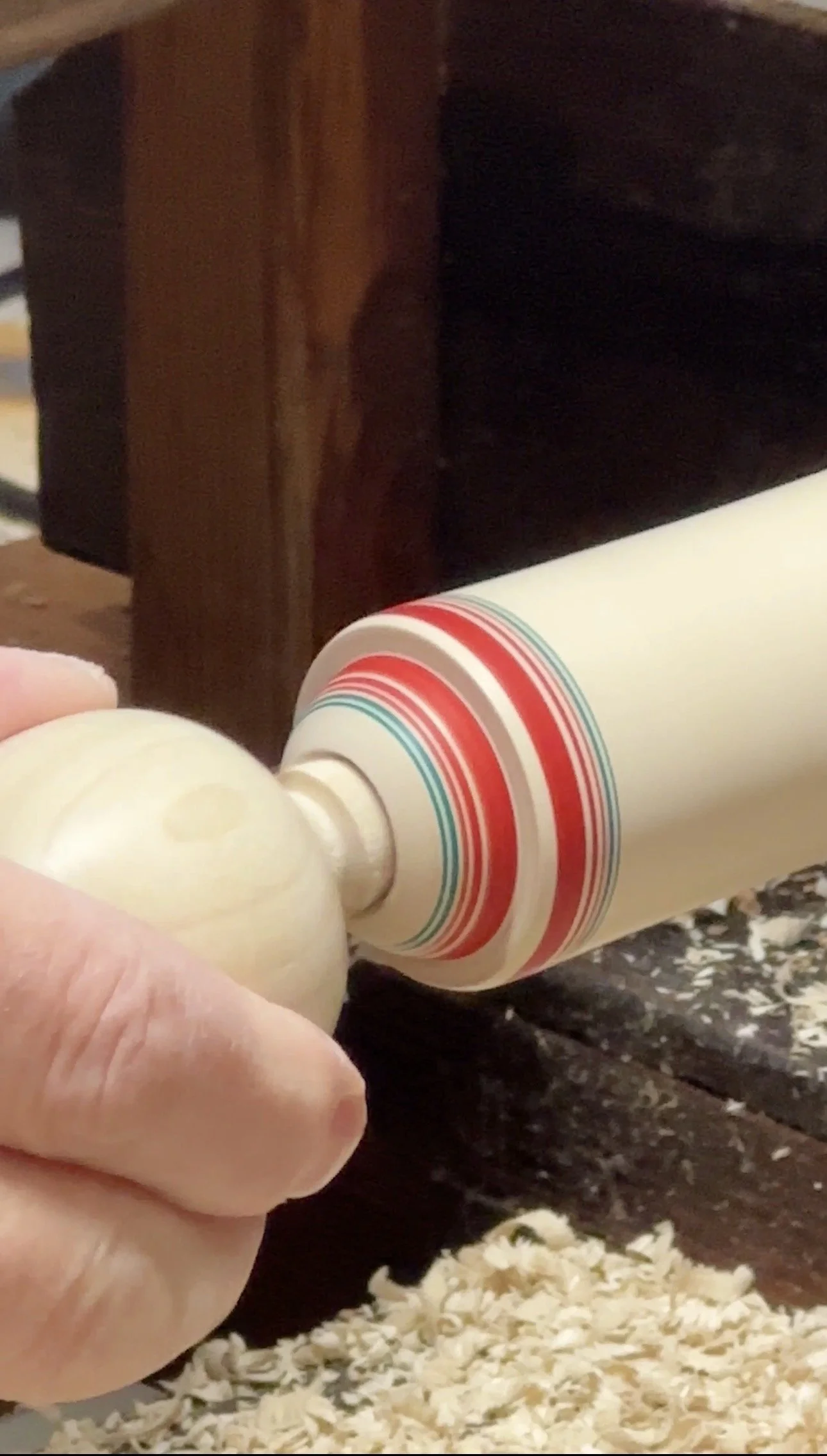
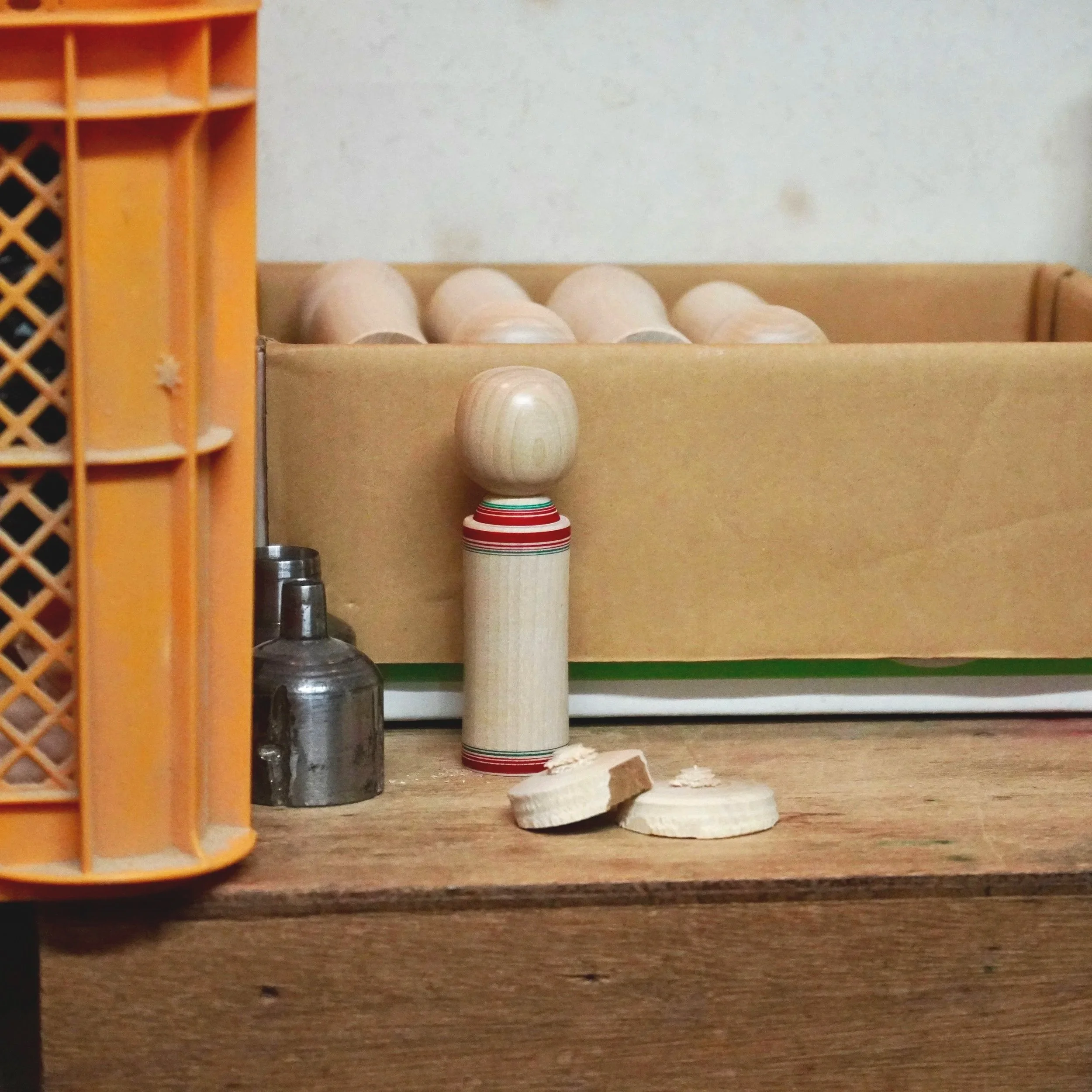
And one last turn
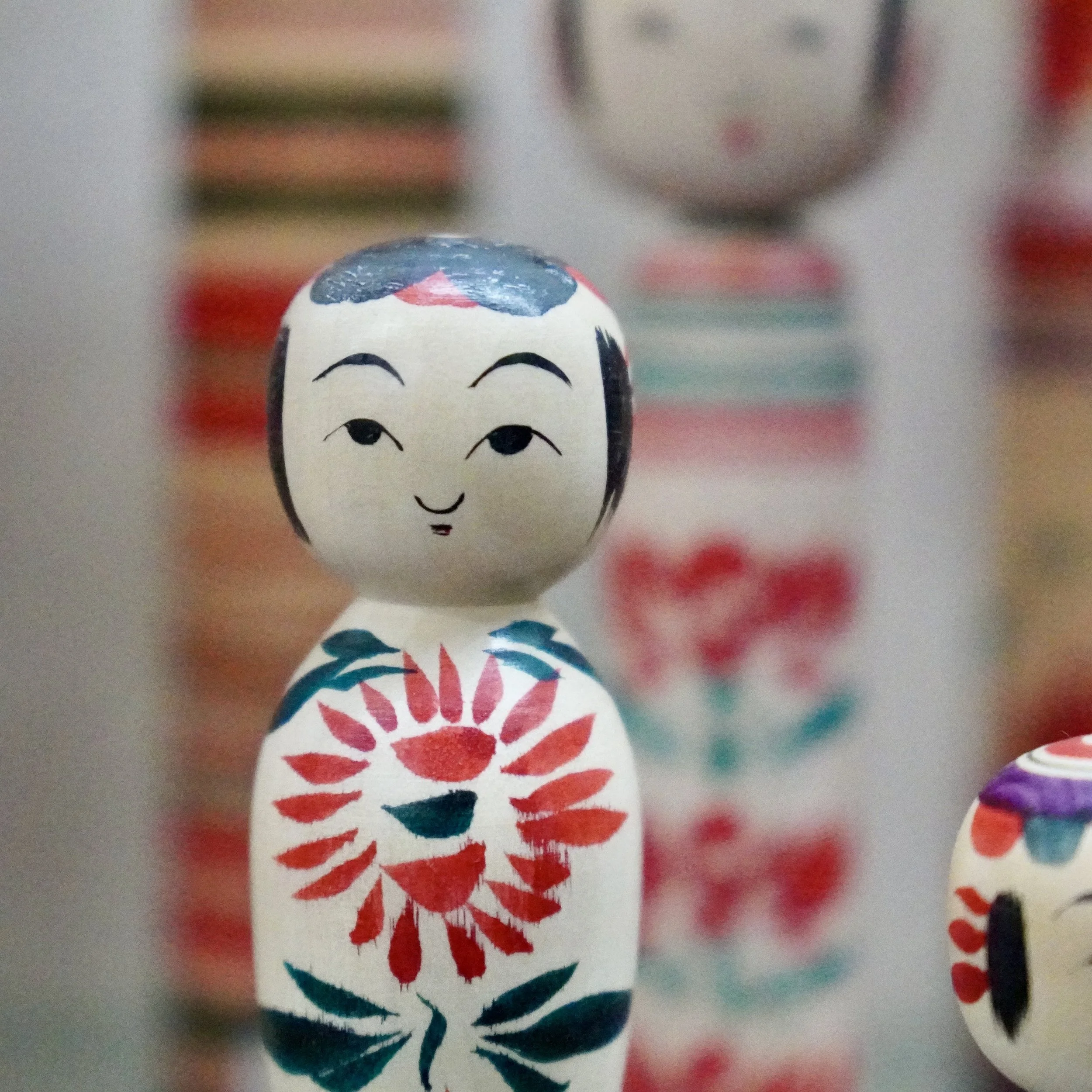
Then the doll gets a face, and here the maker's hand shows. Every maker paints a slightly different expression: a quieter smile, a sleepier eye, a brush stroke that falls a little differently. Put two dolls side by side and you will see it.
The last step is waxing. The doll goes back on the lathe one more time, the wax goes on and the sheen comes up. With that, the kokeshi is complete. A year of drying, a chisel, a hole for the neck, a face painted by hand and a last turn with wax: that is a lot of care in something that looks so simple.
Done. Now you can read a kokeshi
Now you know what went into the doll on your shelf, and you can read it. Start with the face, because the face is the maker's handwriting. Turn the head gently: on a Naruko doll you will hear it, while other styles are put together differently, so not every kokeshi squeaks. Look for the fine lathe rings in the wood, and notice the shine, which is wax. A waxed finish and painted details are one more reason to keep water away from a kokeshi, and my care guide explains how to look after one.
And turn the doll over, because the base is where the maker signs. That is why it is the first thing I do with every new piece.
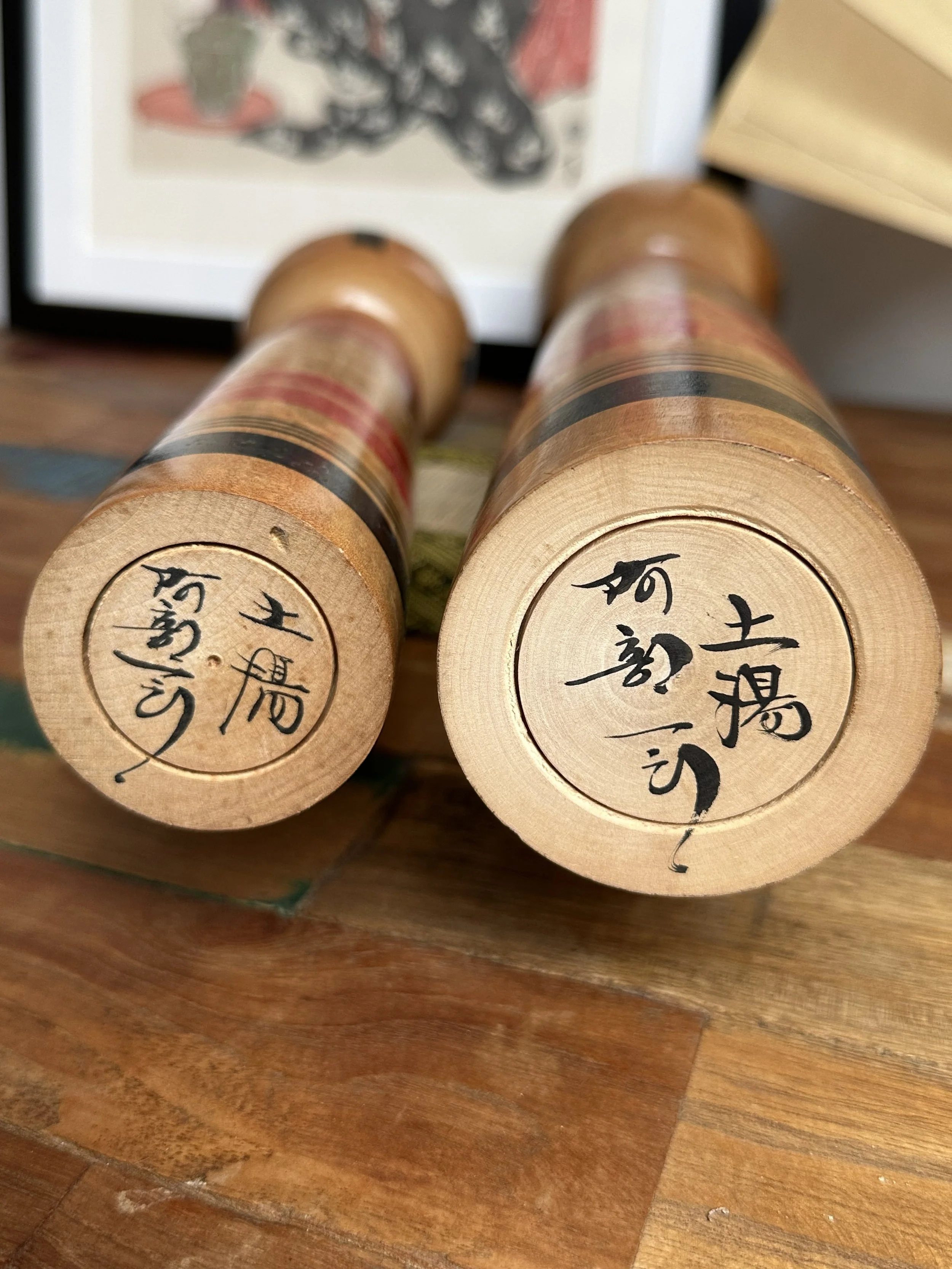
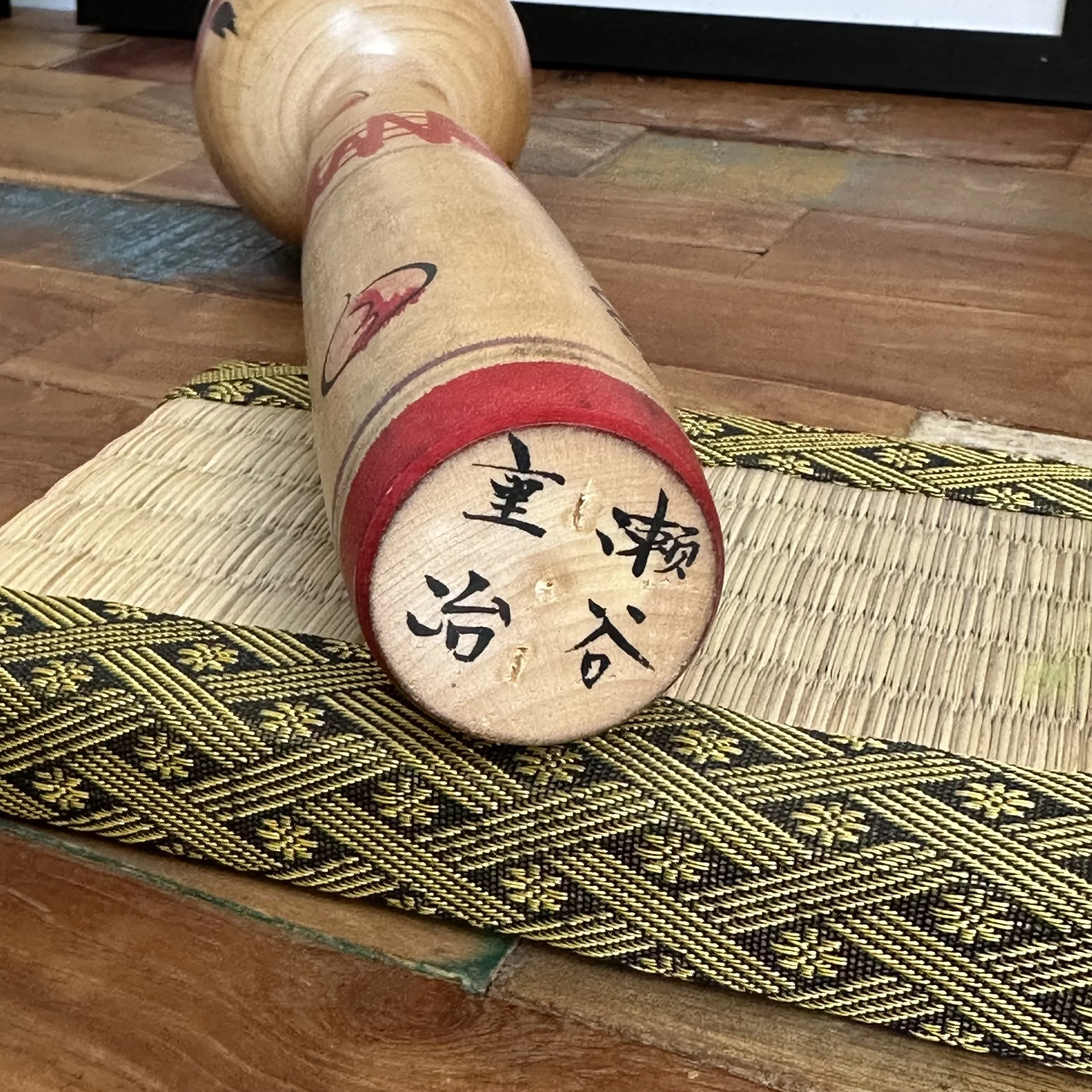
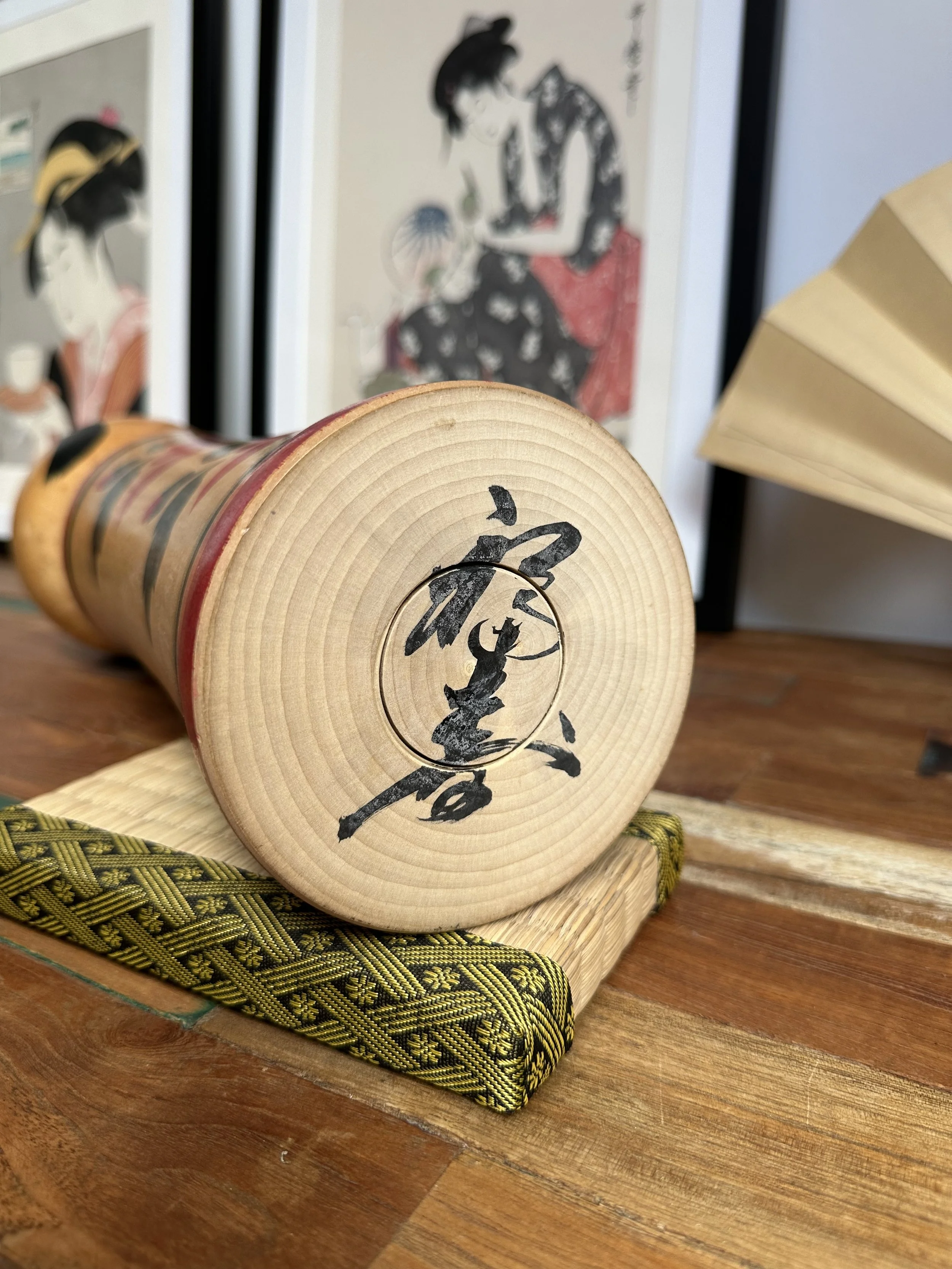
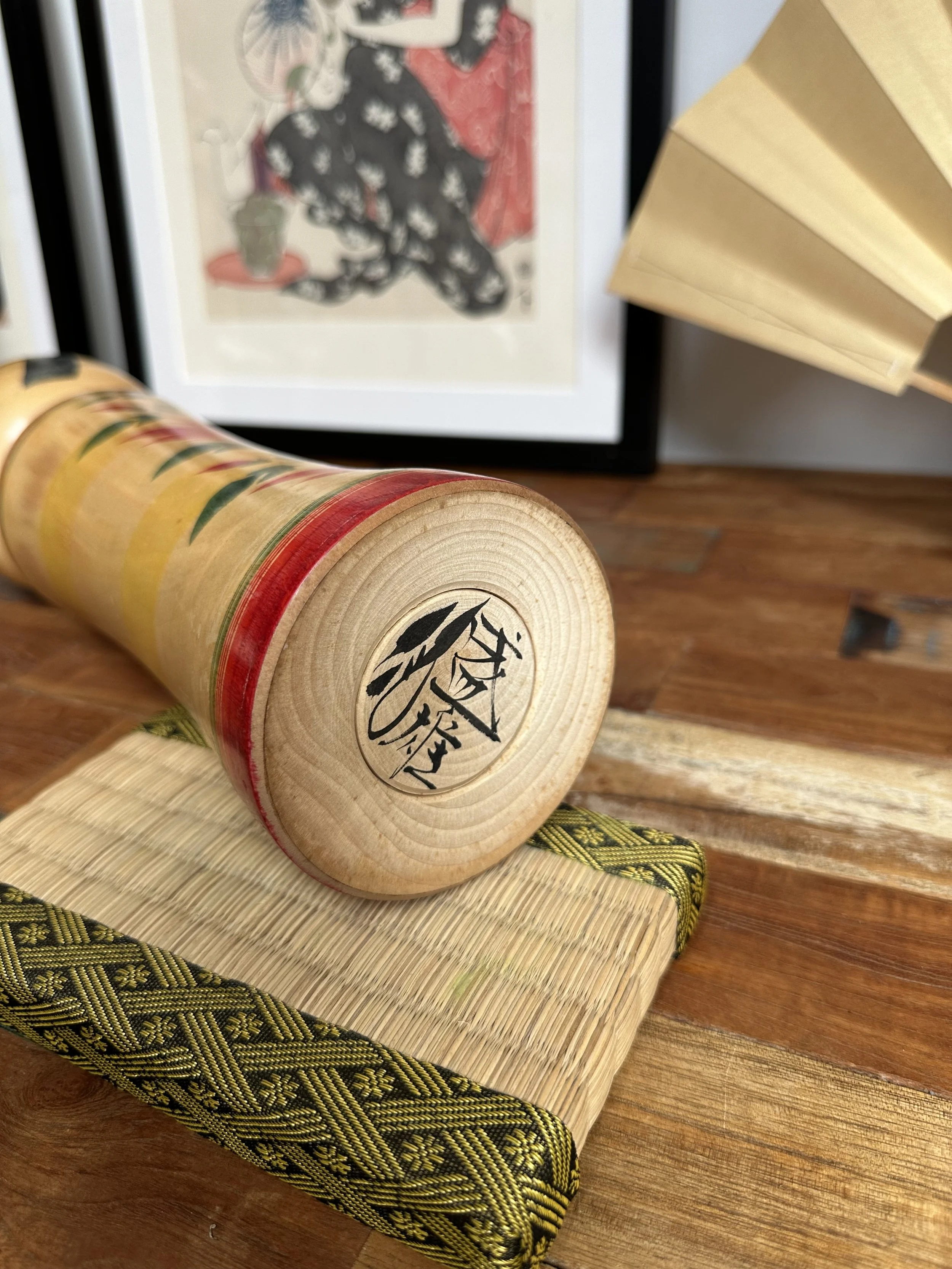
From the lathe to your shelf
The people behind the dolls matter as much as the wood. I filmed their hands at the lathe for Instagram, and the stories of the makers I work with live on the Meet the makers page. If you want to see the kokeshi themselves, the kokeshi page is the place to start.
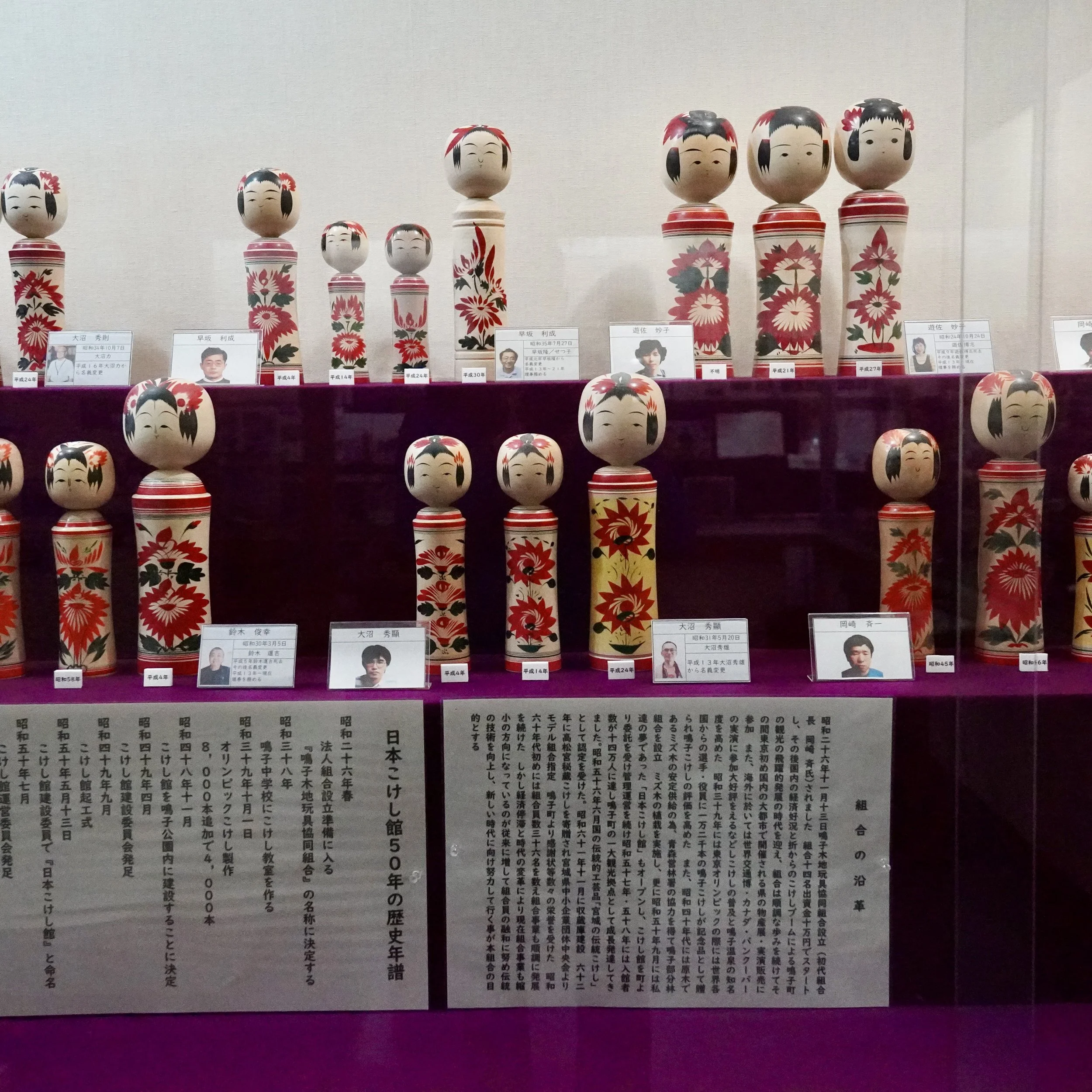
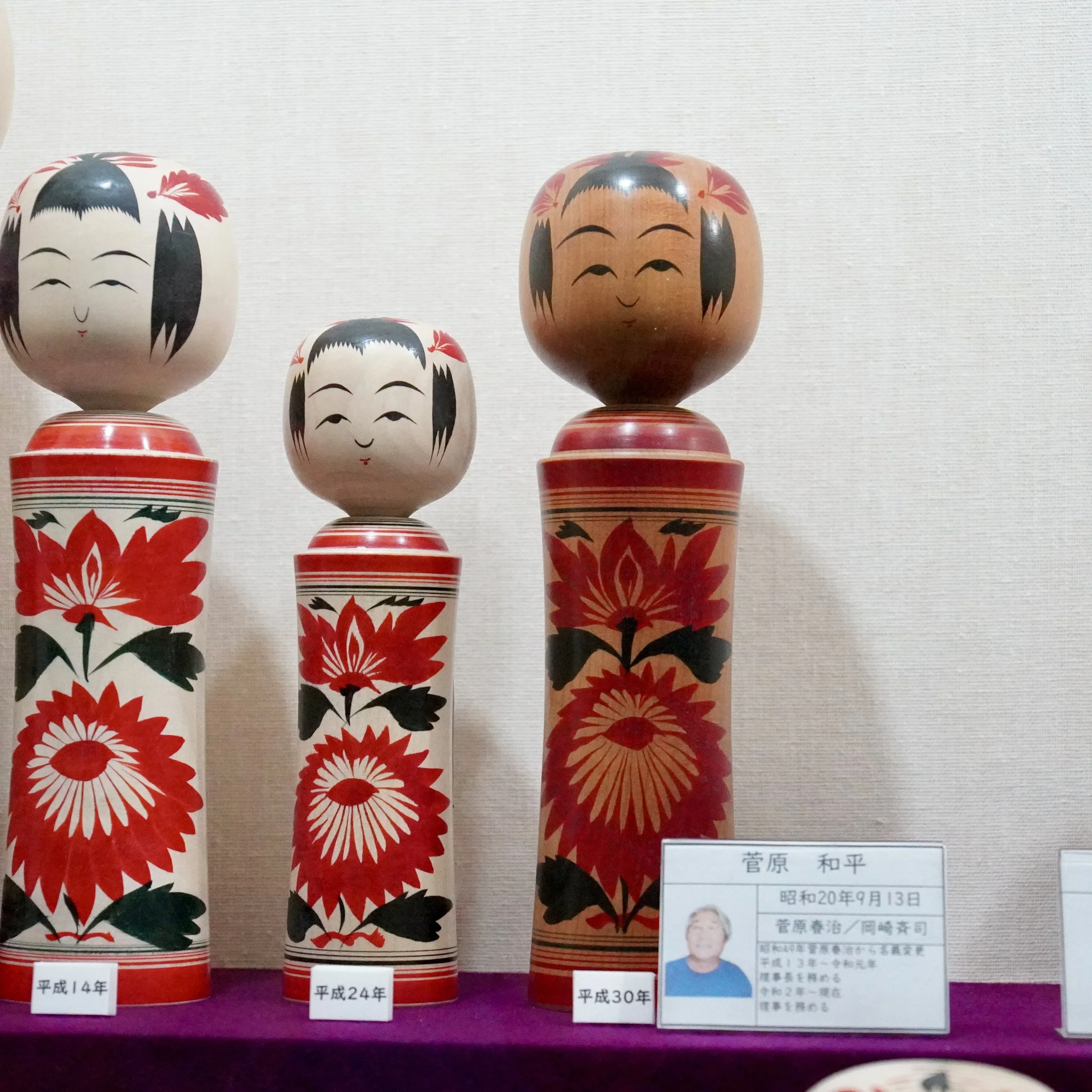
Many of the photos in this story were taken at the Japan Kokeshi Museum in Naruko. My warm thanks to the makers and to everyone there who let me watch and photograph.
Words you will meet
kokeshi (こけし): the Japanese wooden doll with a round head and a cylindrical body.
dentō kokeshi (伝統こけし): traditional kokeshi, made in one of the 11 regional styles.
sōsaku kokeshi (創作こけし): creative kokeshi, designed freely by one maker.
rokuro (ろくろ): the lathe.
bassai and kansō (伐採・乾燥): felling and drying the wood.
kidori (木取り): cutting the log into blanks.
rokuro biki (ろくろ挽き): turning the head and body on the lathe.
anaake (穴アケ): boring the hole in the body for the neck.
kubi-ire (首入れ): fitting the head into the body.
byōsai (描彩): painting the face and decoration.
rō biki (ろう挽き): waxing the doll on the lathe.
onsen (温泉): hot spring.
mizuki and keyaki: dogwood and zelkova, two woods used for kokeshi.
See all kokeshi in collection
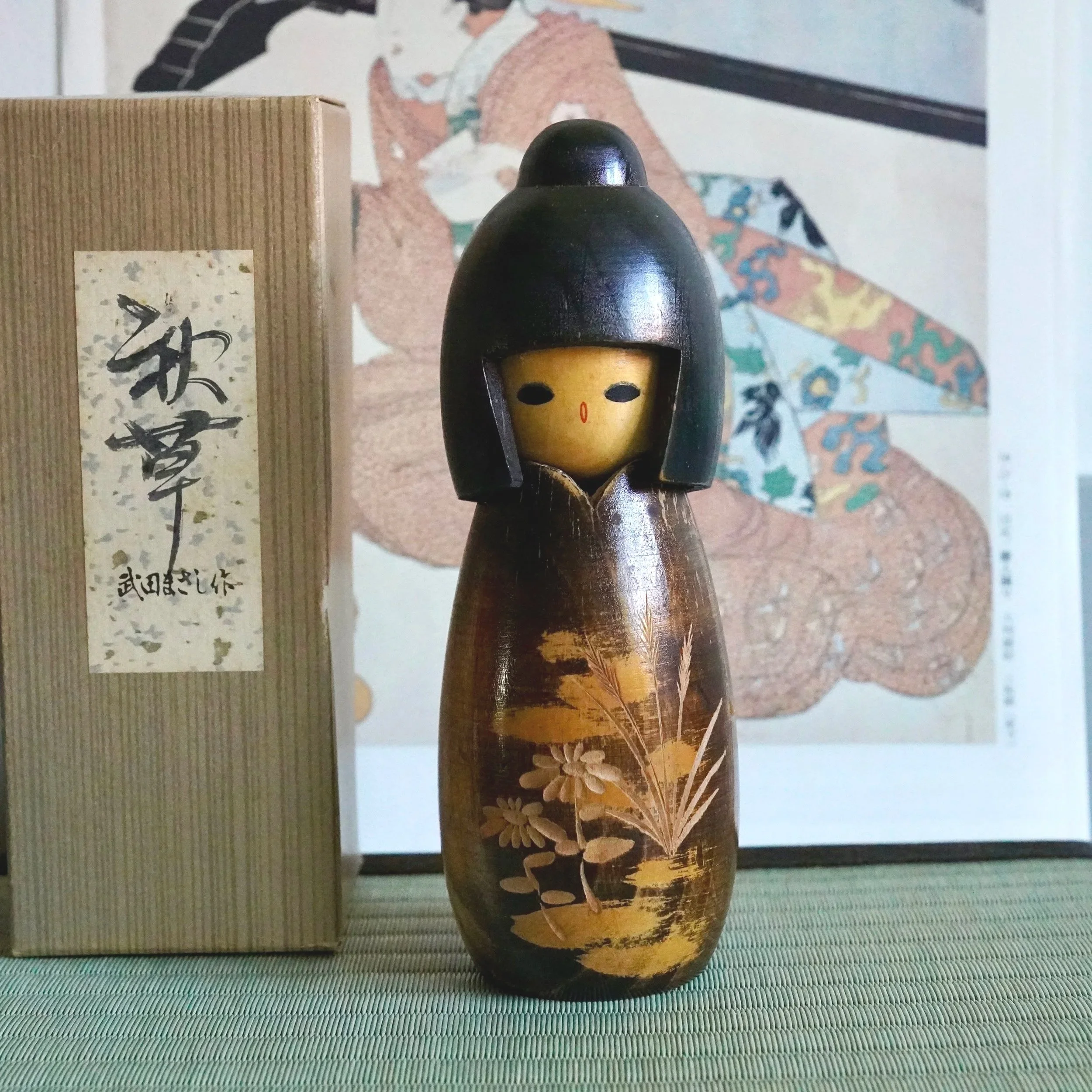
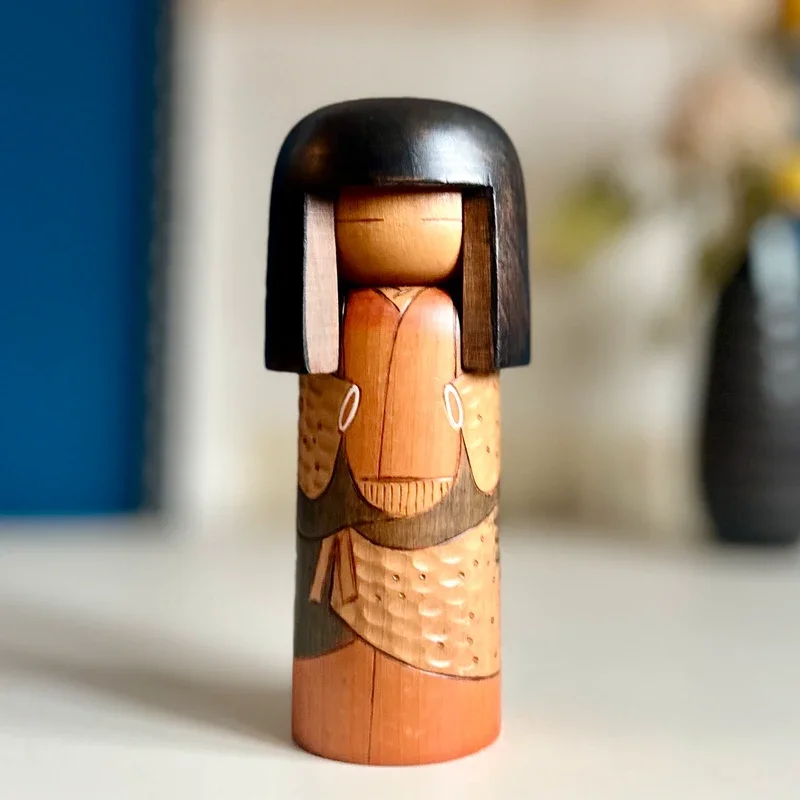
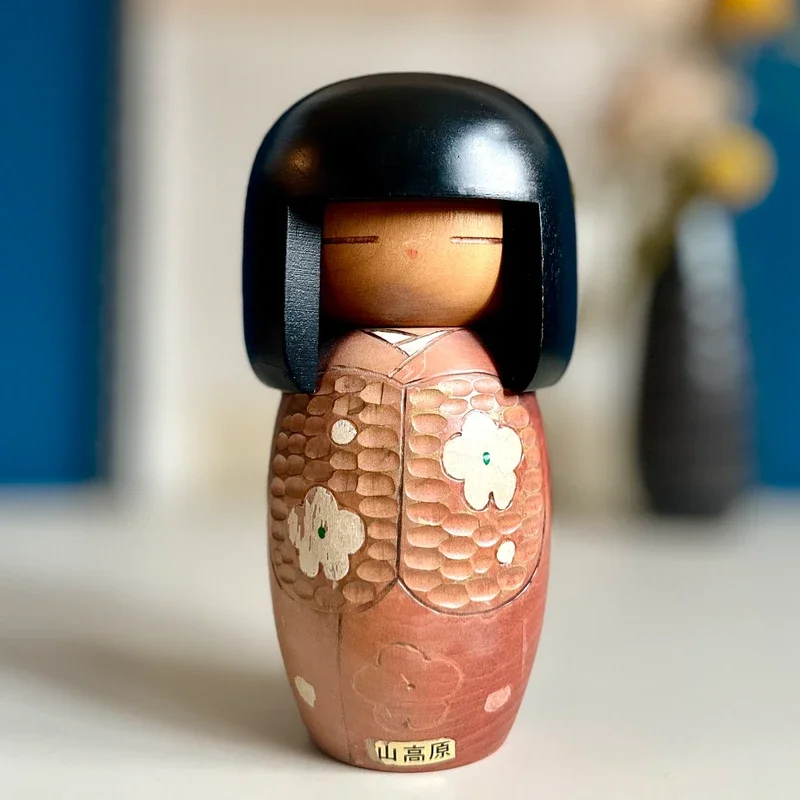
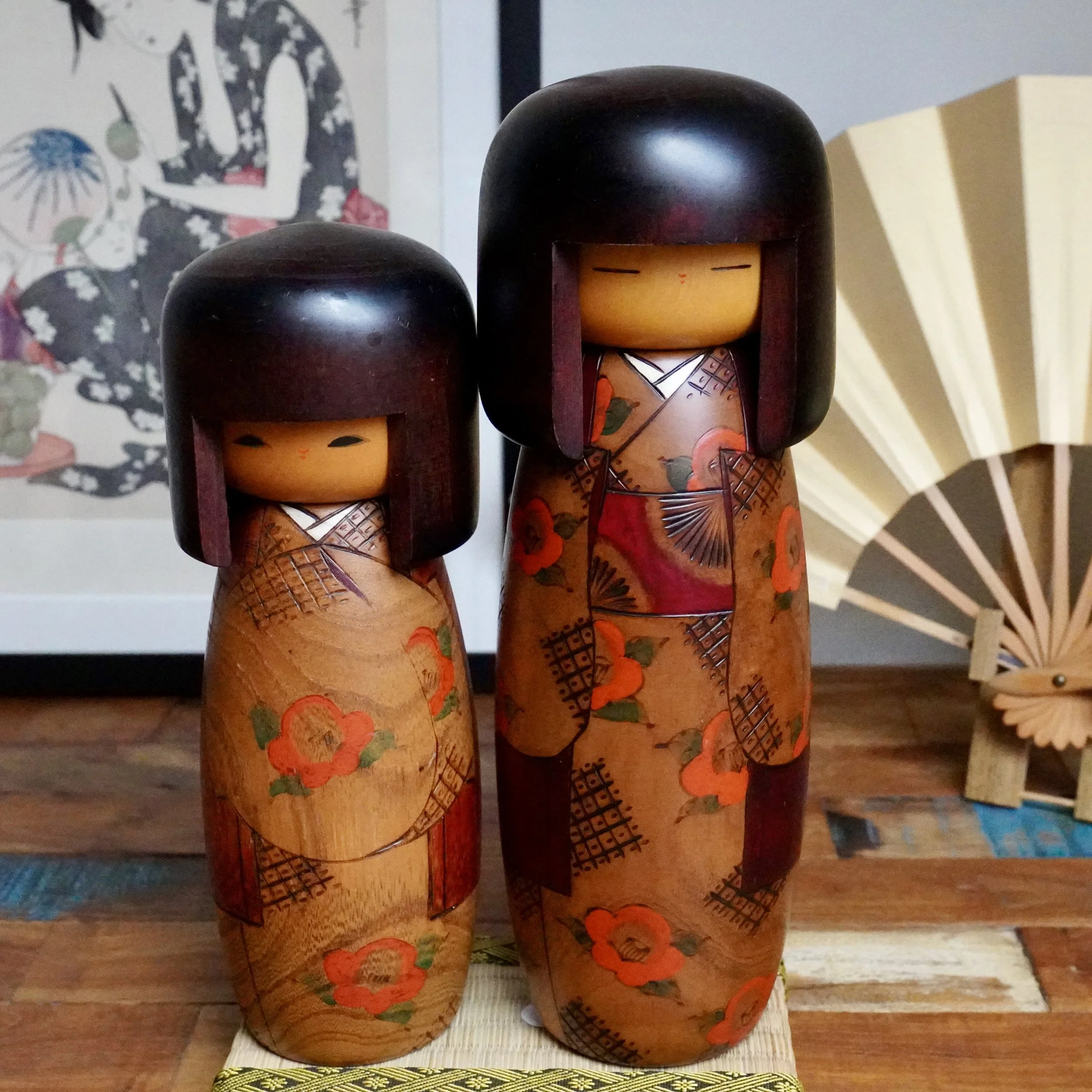
Read more
→ Curious about the wider Hagi tradition, kan'nyū, and how the glaze changes with years of use? Read the full story in the journal.
→ Three generations under one roof, a blue glaze that surprised me, and a cat I bought on the way out. Come with me to the Okada kiln.
→ Want to see what happens when water meets a porous Hagi-yaki chawan through its kan'nyū crackle glaze? I wrote a short piece on karahai.
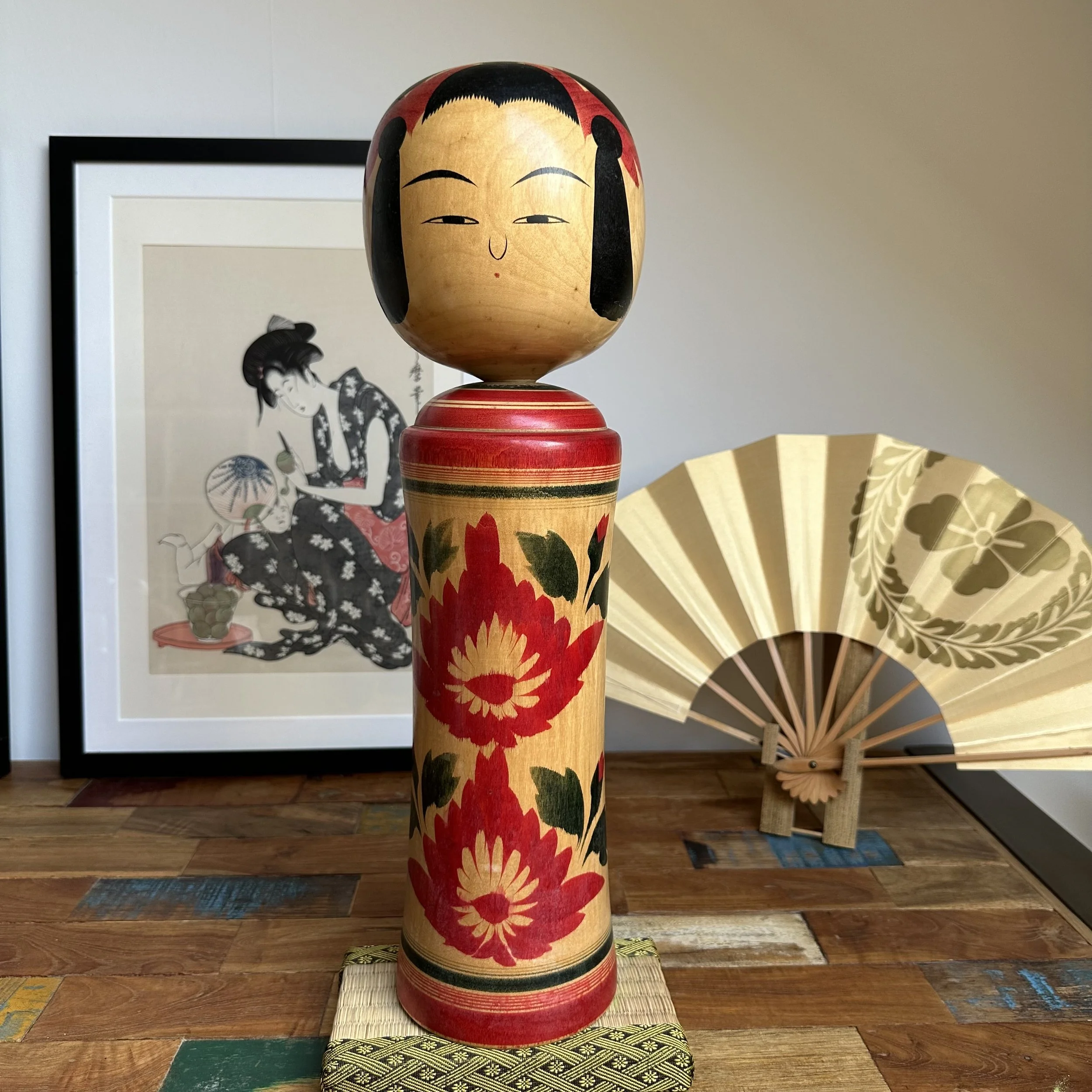
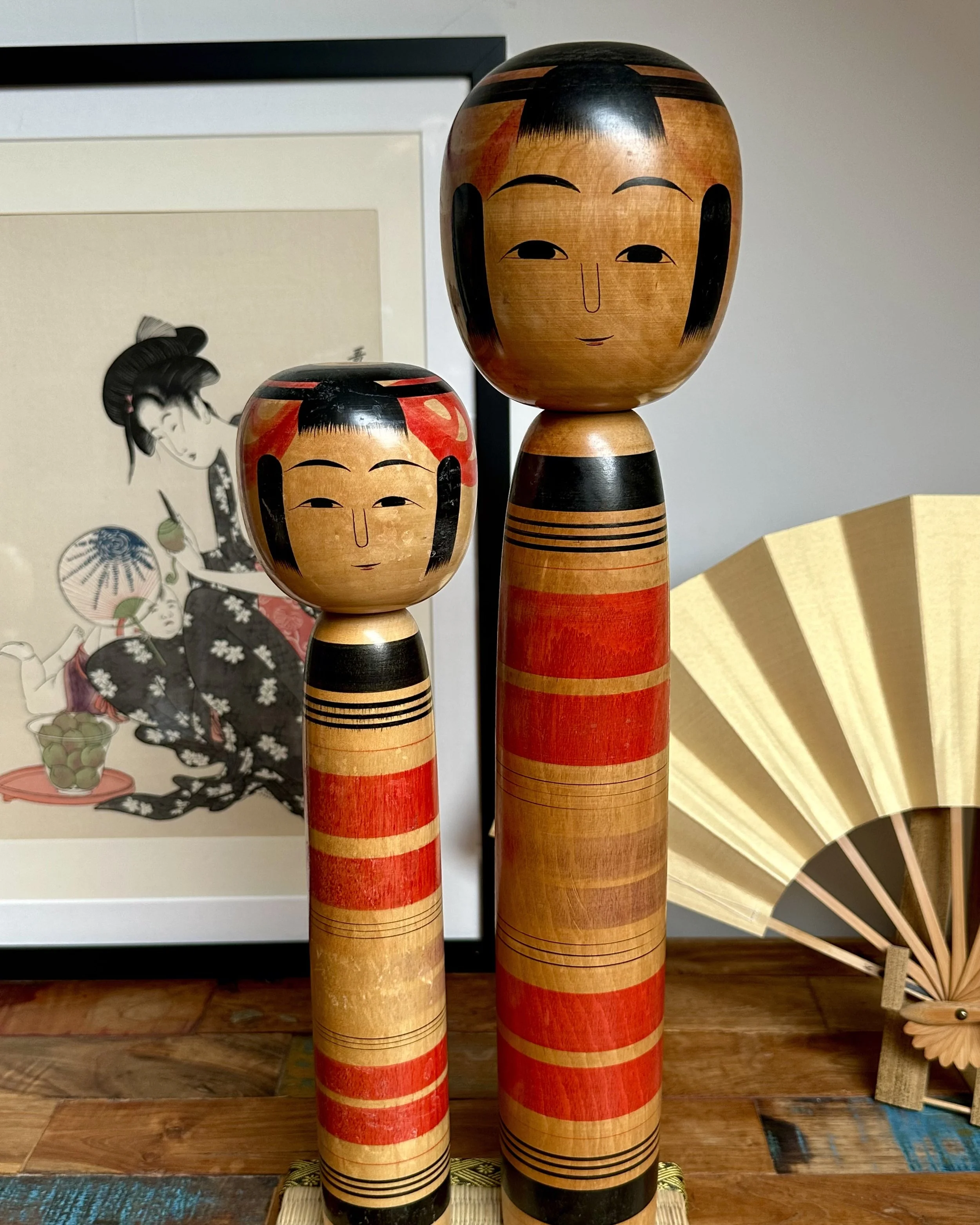
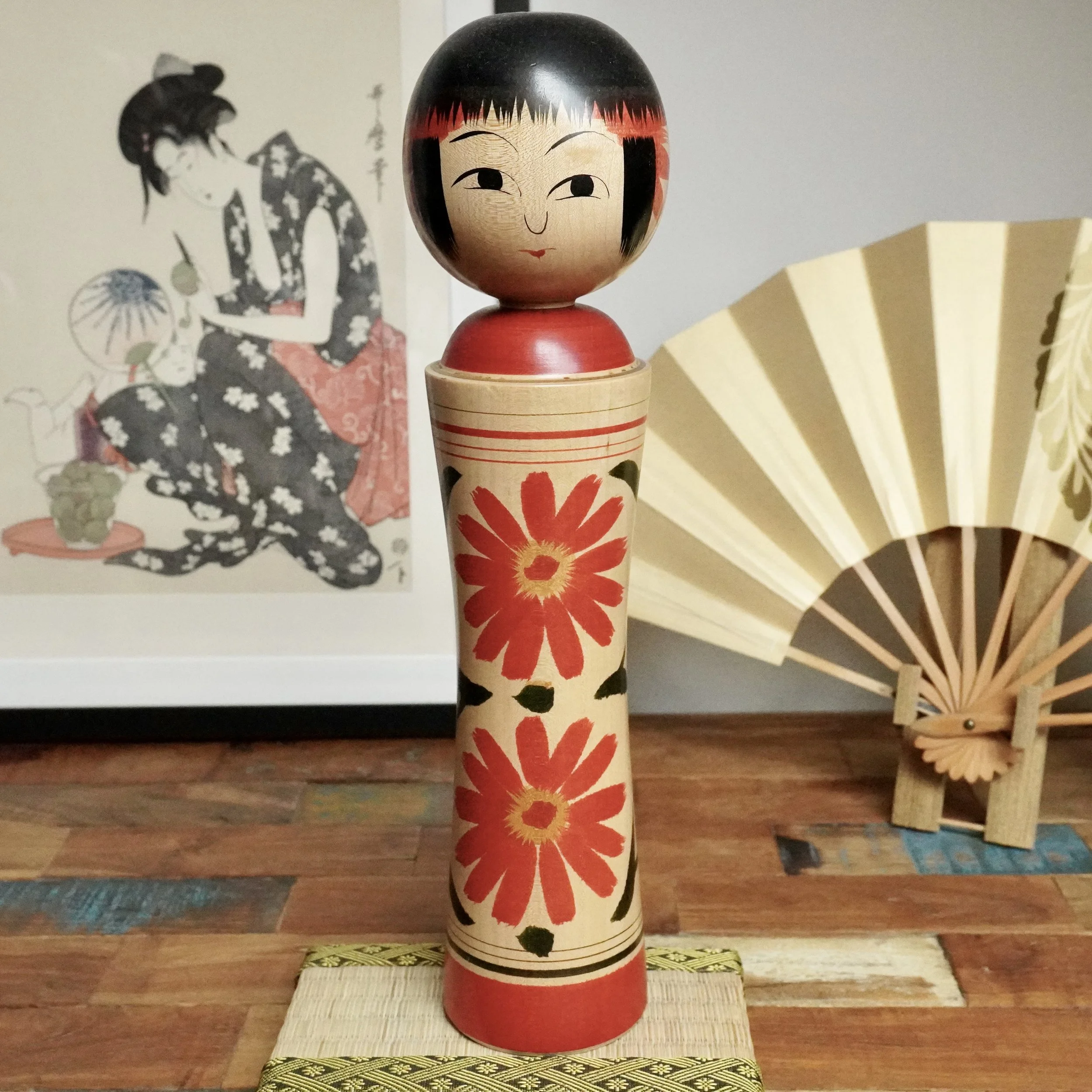
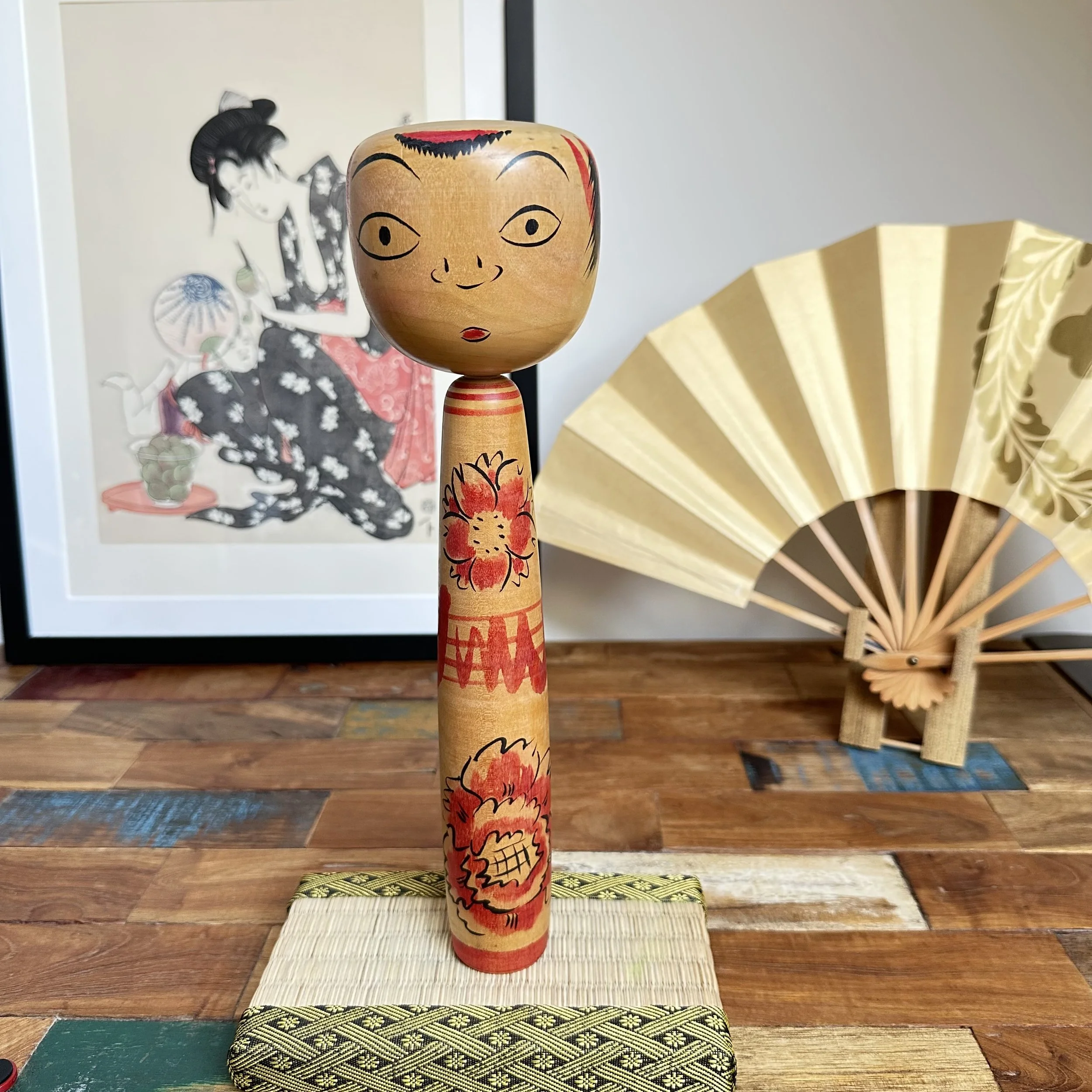
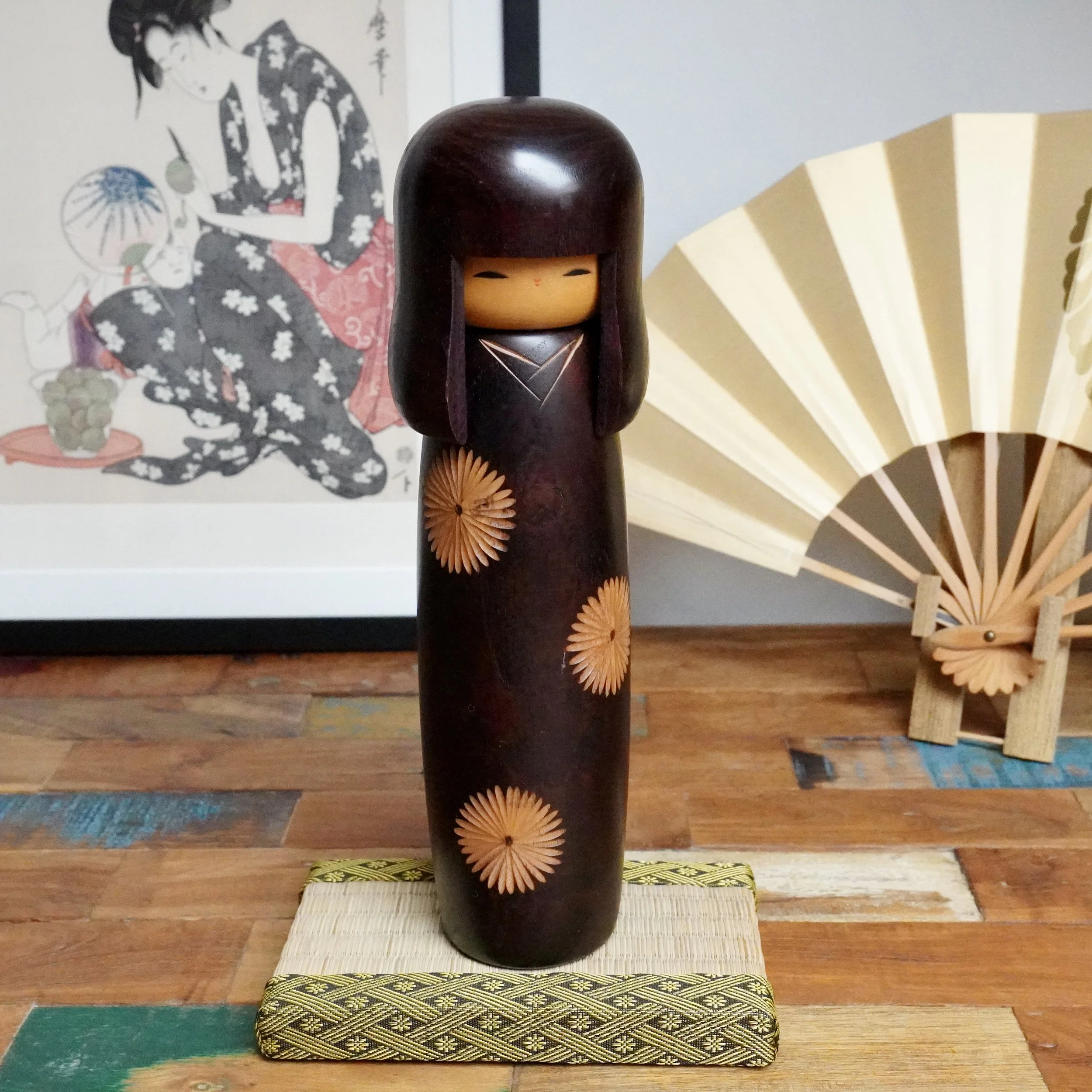
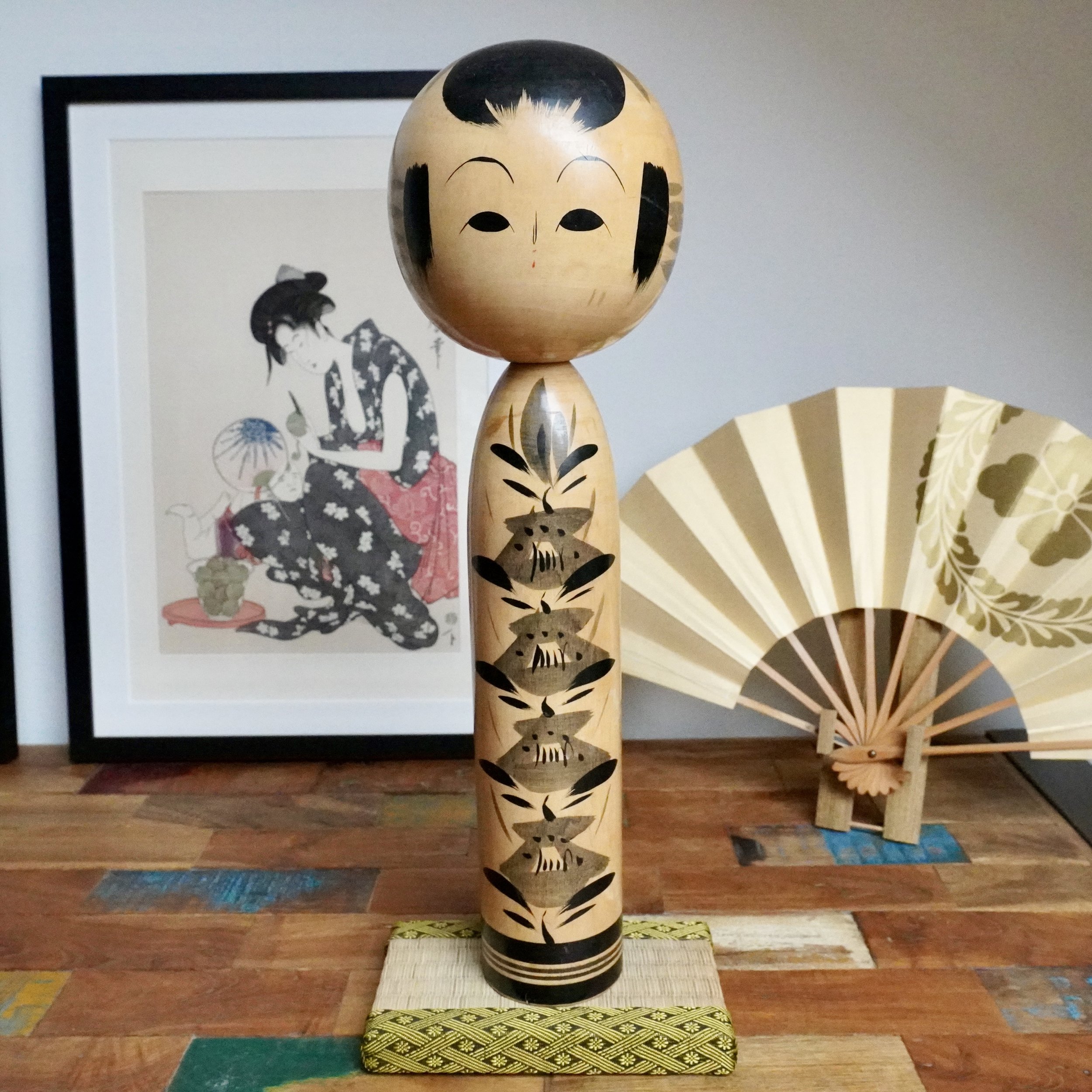
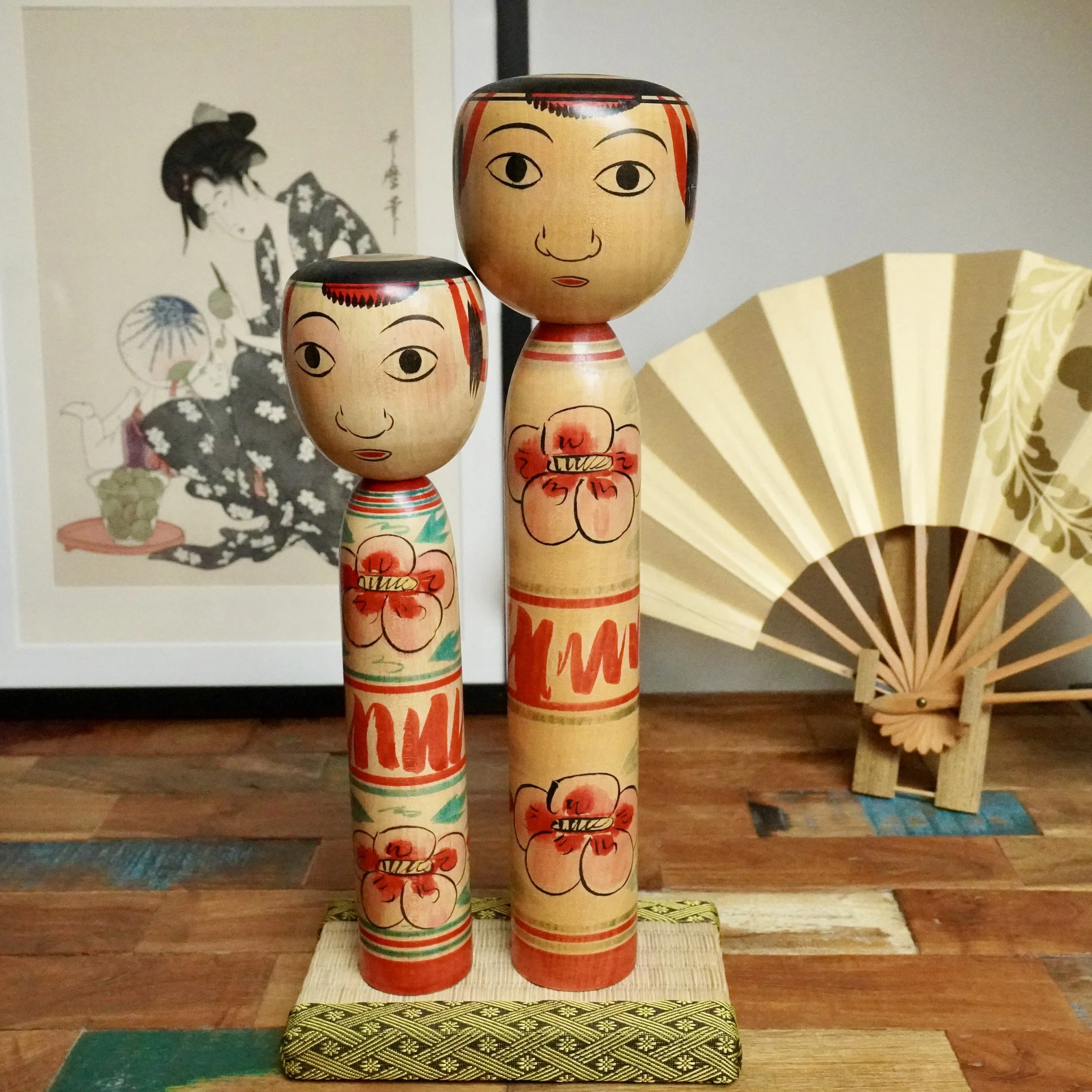
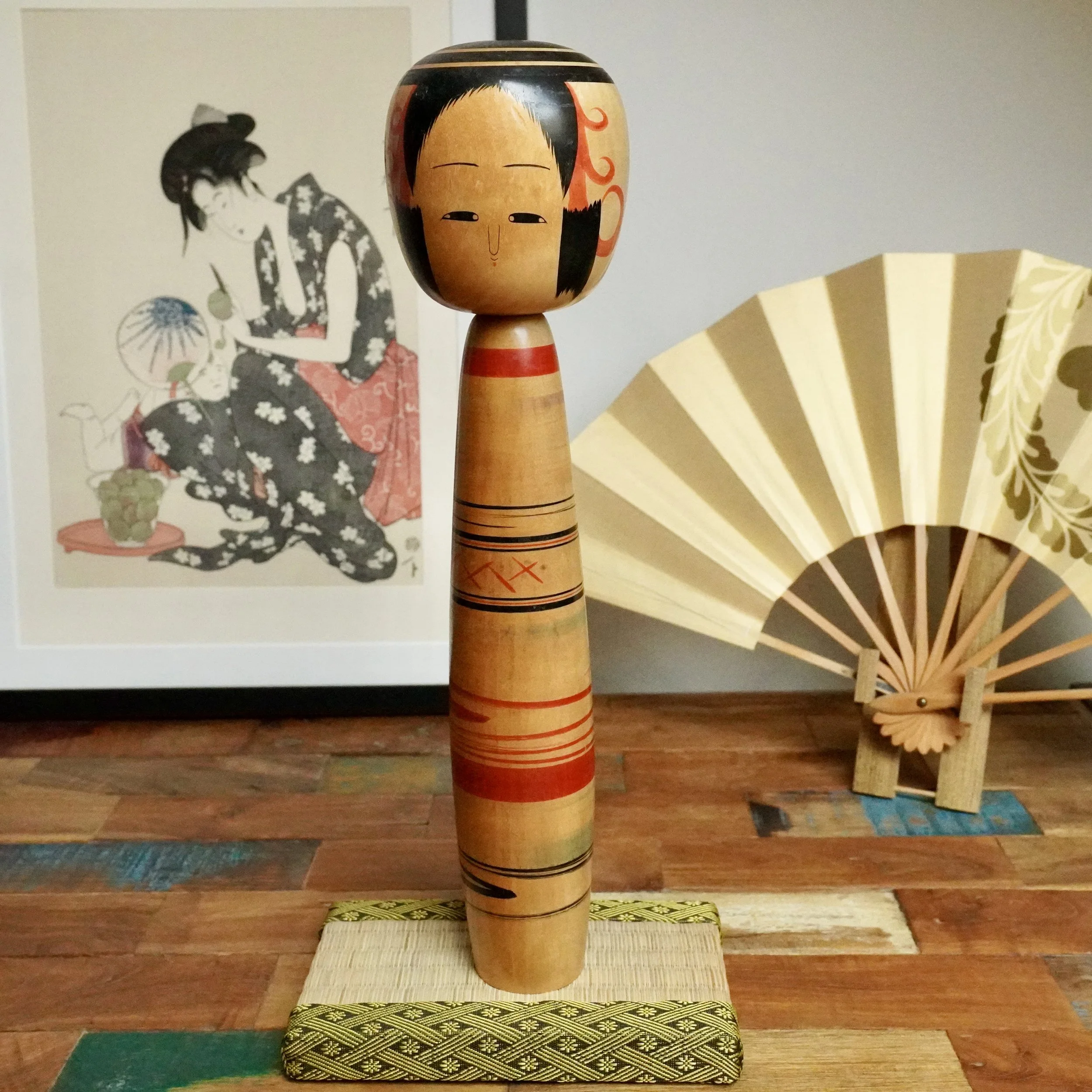
Soft, narrow eyes under thin brows, black side locks hanging straight beside the cheeks, and chrysanthemums in strong red on pale wood: from the front this kokeshi looks calm, and from above it is busy. At 39 cm it stands comfortably on a shelf or sideboard, and the head turns, so you can choose which way it looks at the room. If you would like it to have company, his brother Yusa Fukuju's Kanji-type is almost half a metre tall, is in the collection too and goes very well with it.
Takahashi Morio was the grandson of Takahashi Kanji and ran the family workshop Takakan after the war, training many of the Naruko makers who came next. The pattern is the Kanji-type, his grandfather's kokeshi, which his father Sakari rebuilt in 1952 and which the Kokeshi Wiki counts among the first successful reconstructions. This one carries his own name on the base.
→ Want to understand the difference between dentō and sōsaku kokeshi? I wrote about it, with a trip through Fukushima along the way.
→ Curious how Naruko compares to the other ten traditional kokeshi lines? Read the full guide.