
 Image 1 of 20
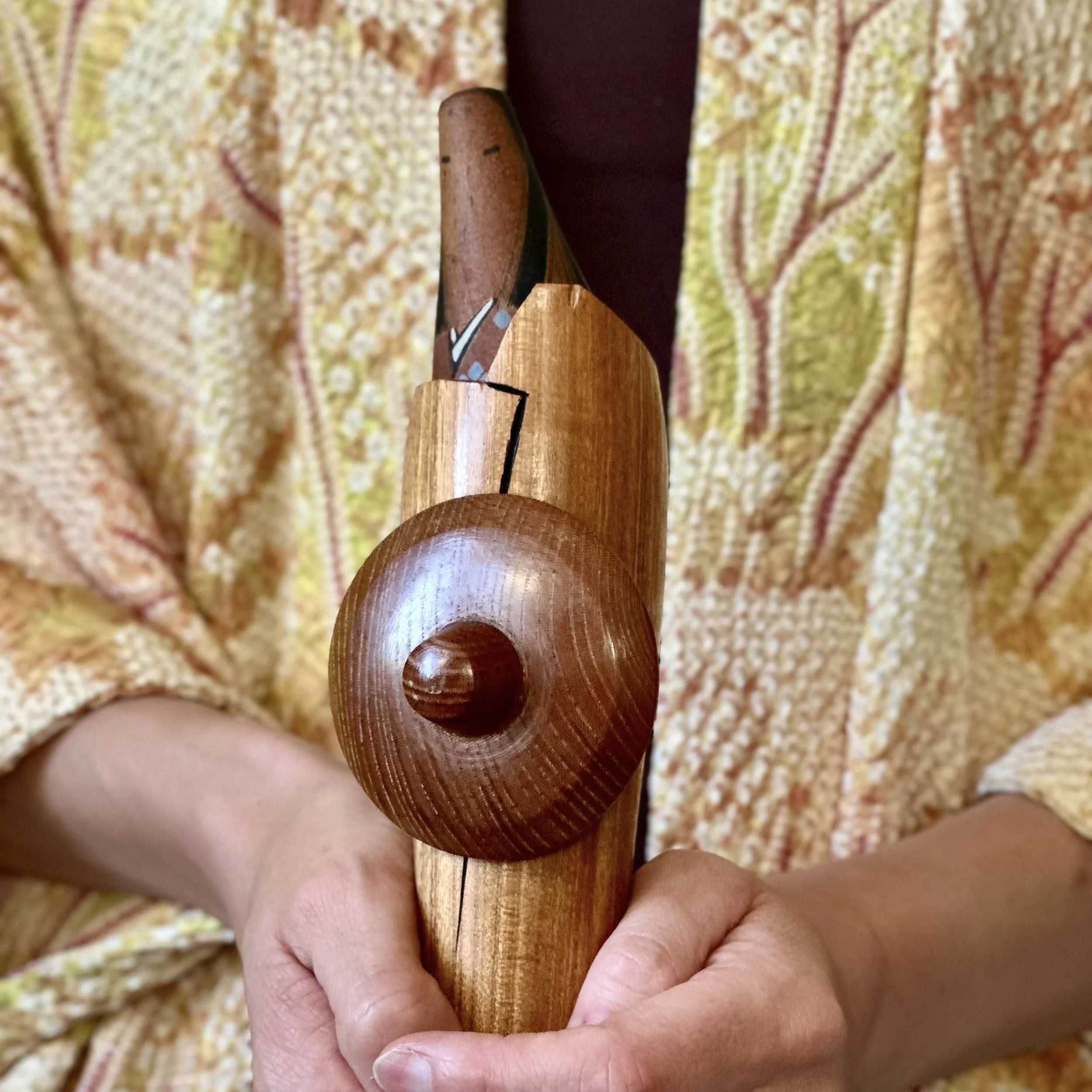 Image 2 of 20
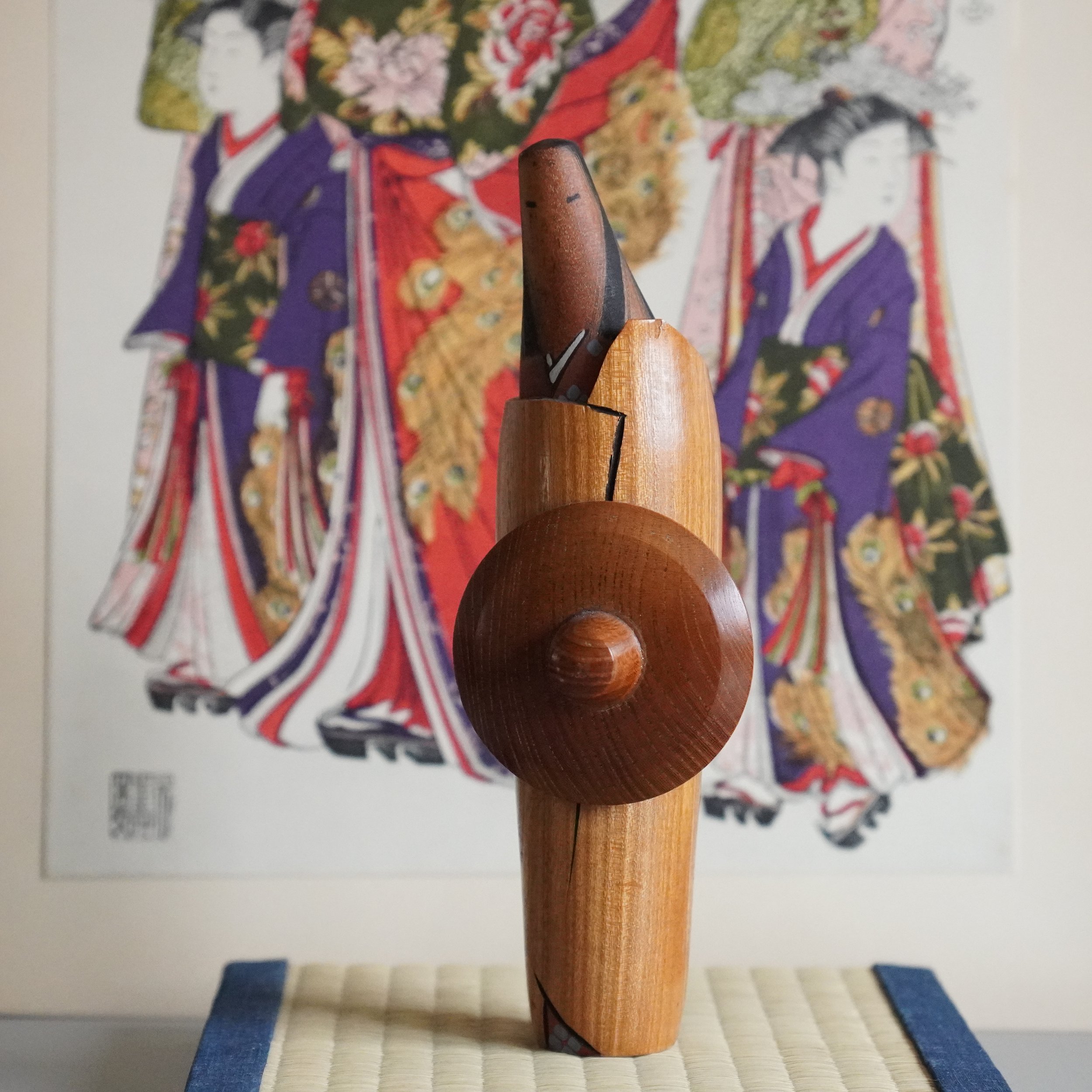 Image 3 of 20
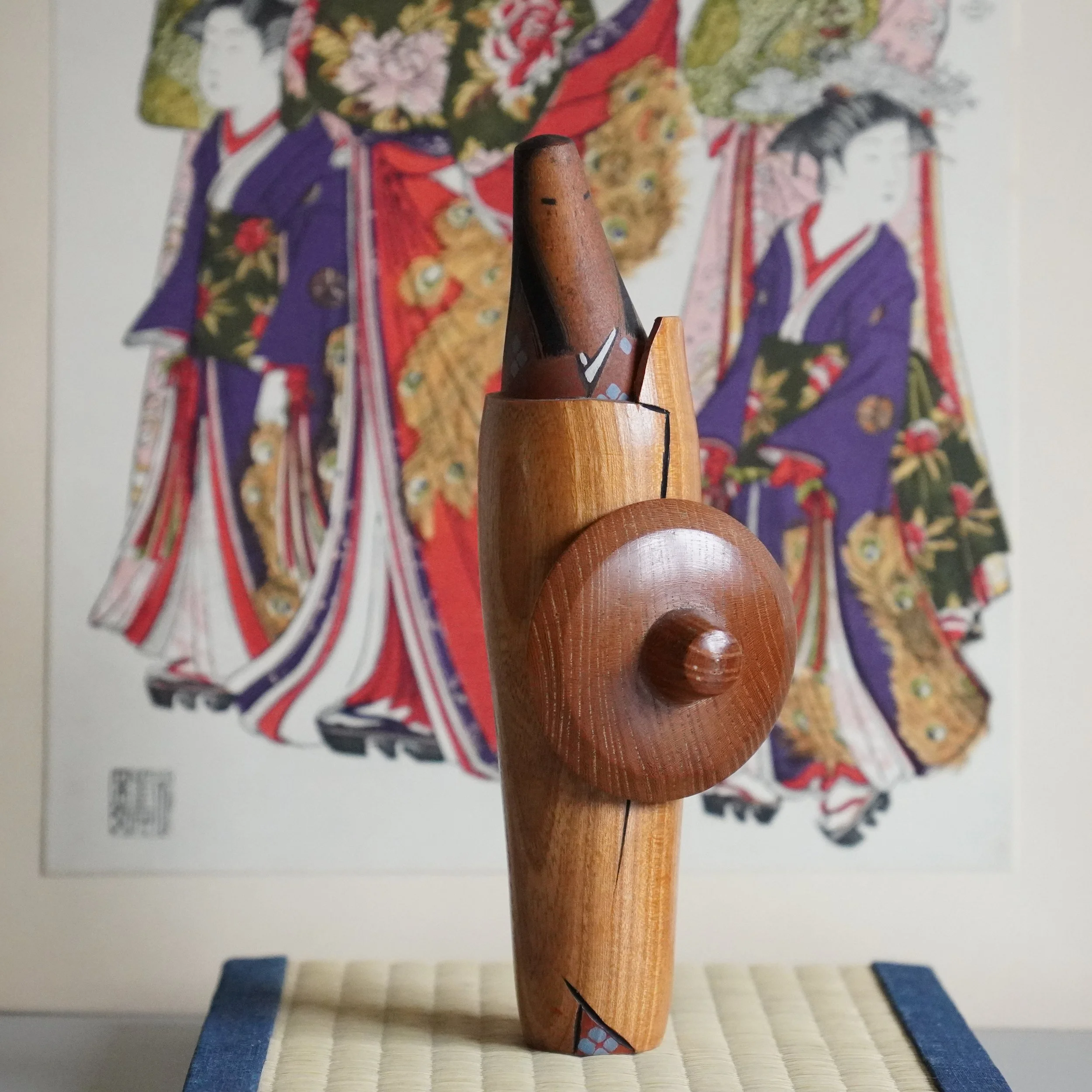 Image 4 of 20
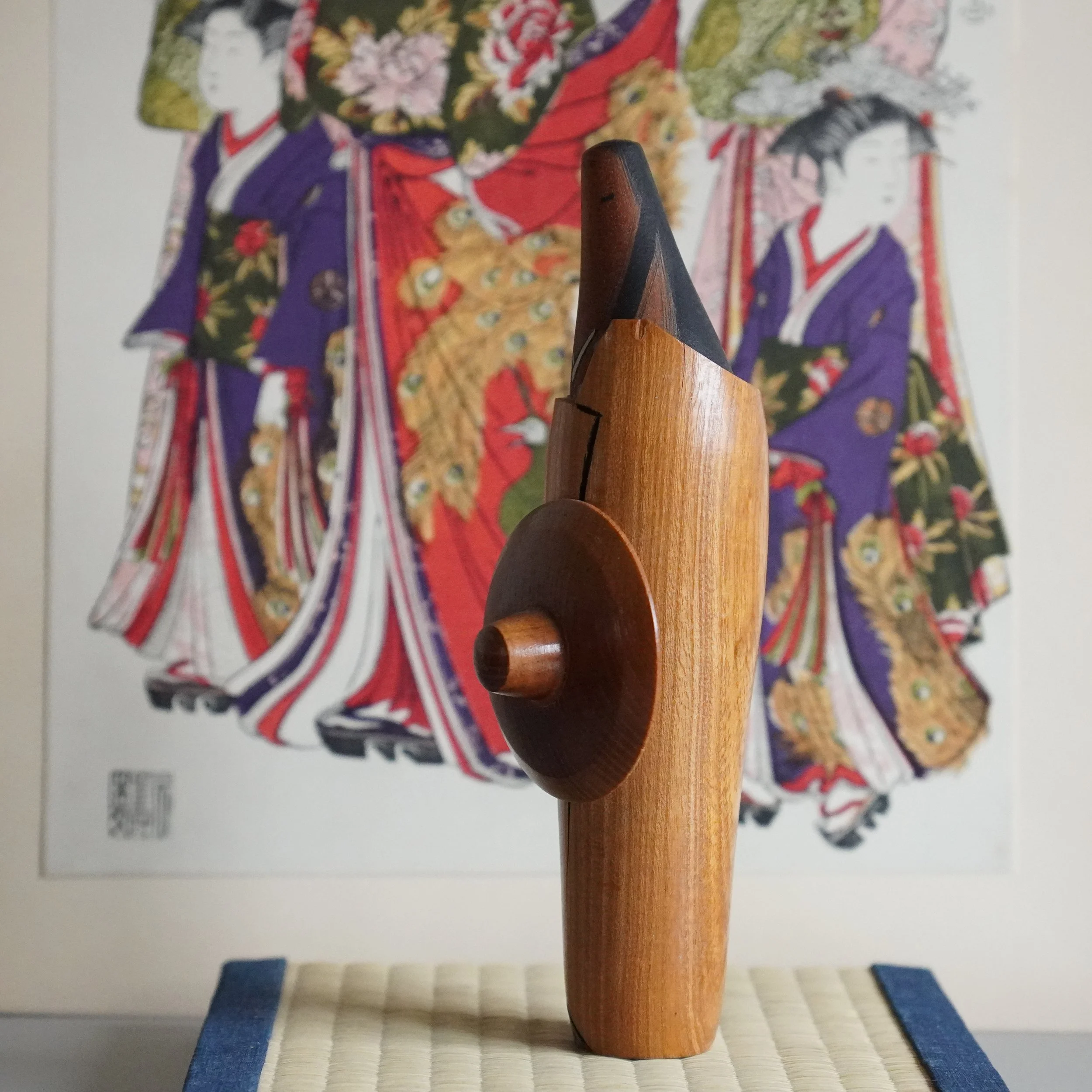 Image 5 of 20
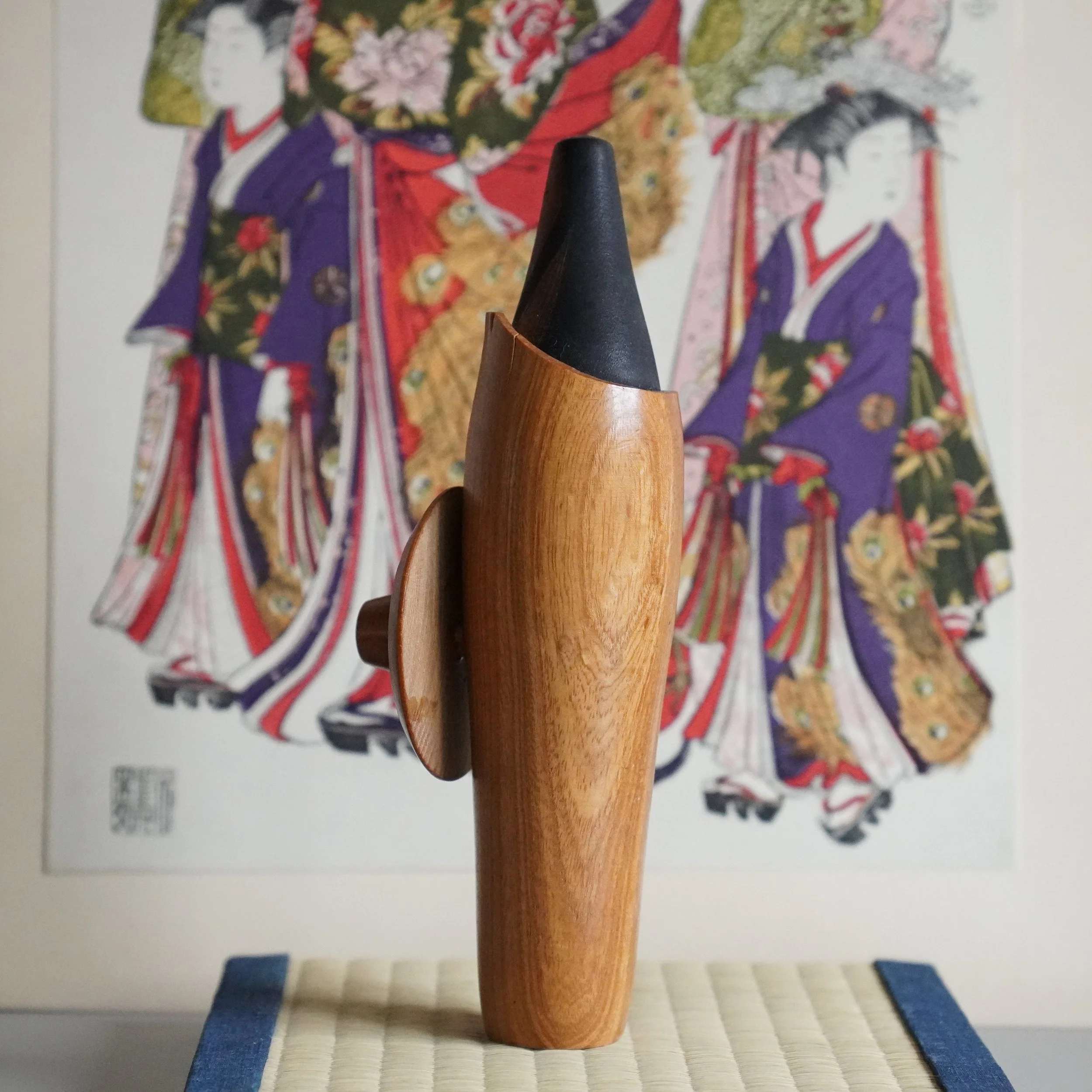 Image 6 of 20
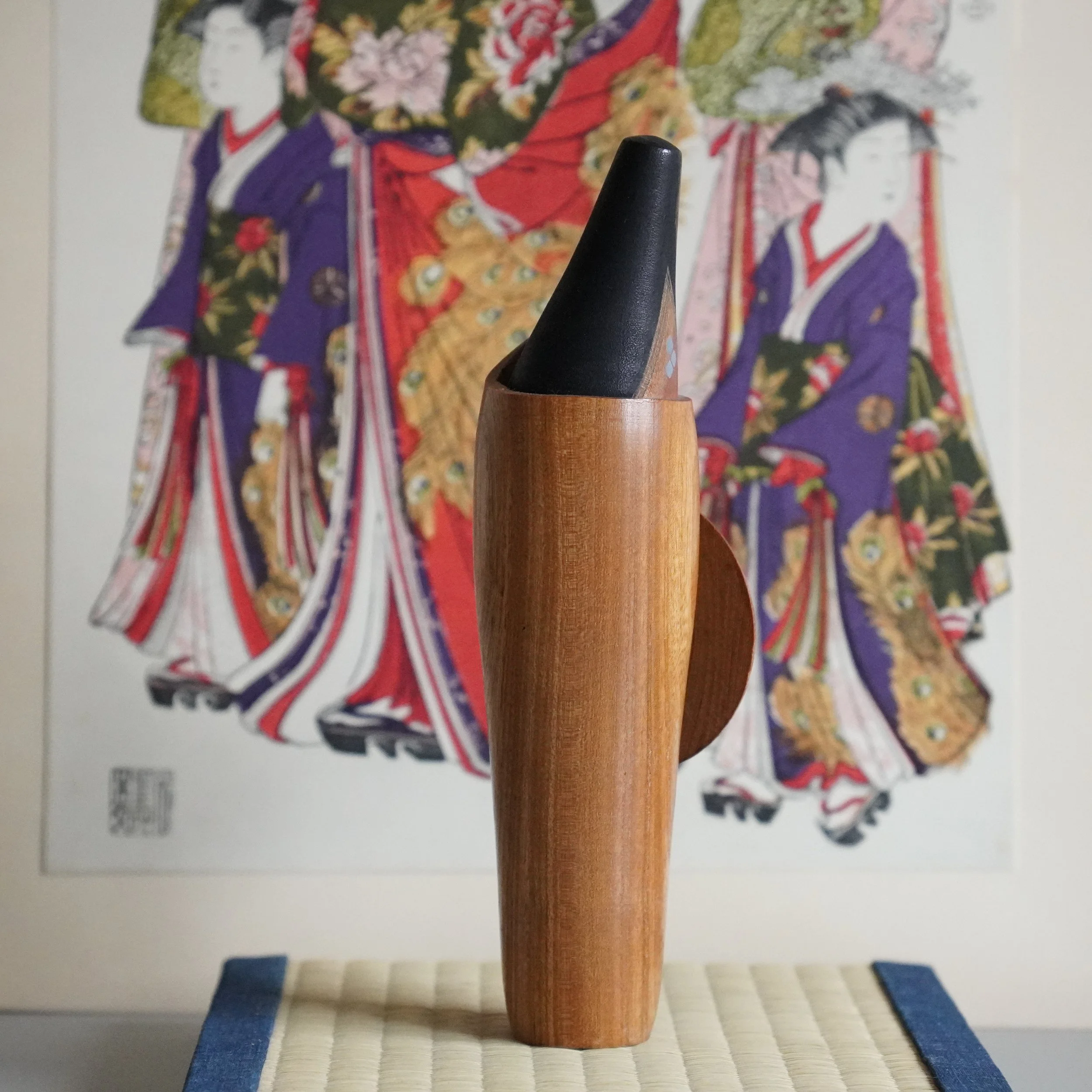 Image 7 of 20
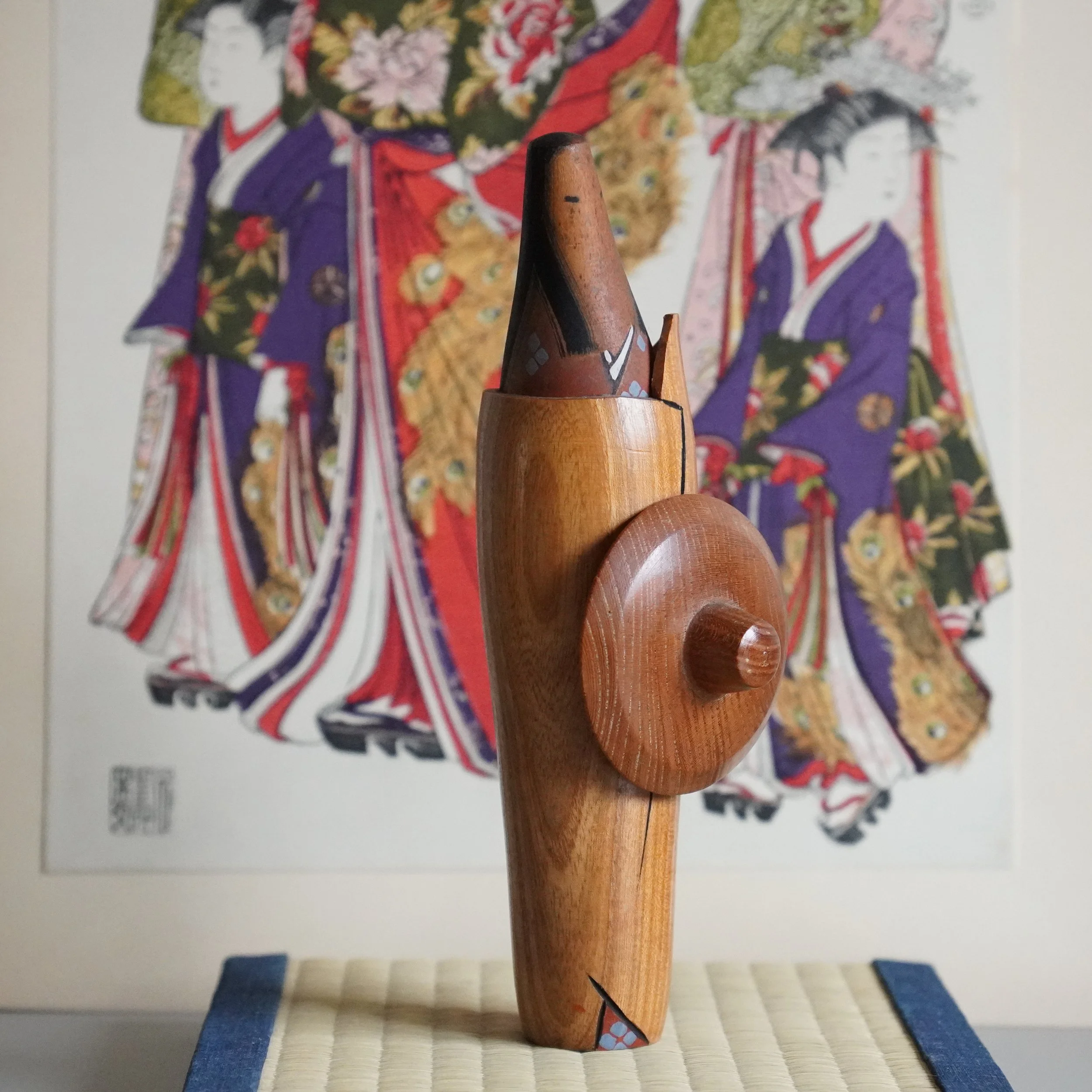 Image 8 of 20
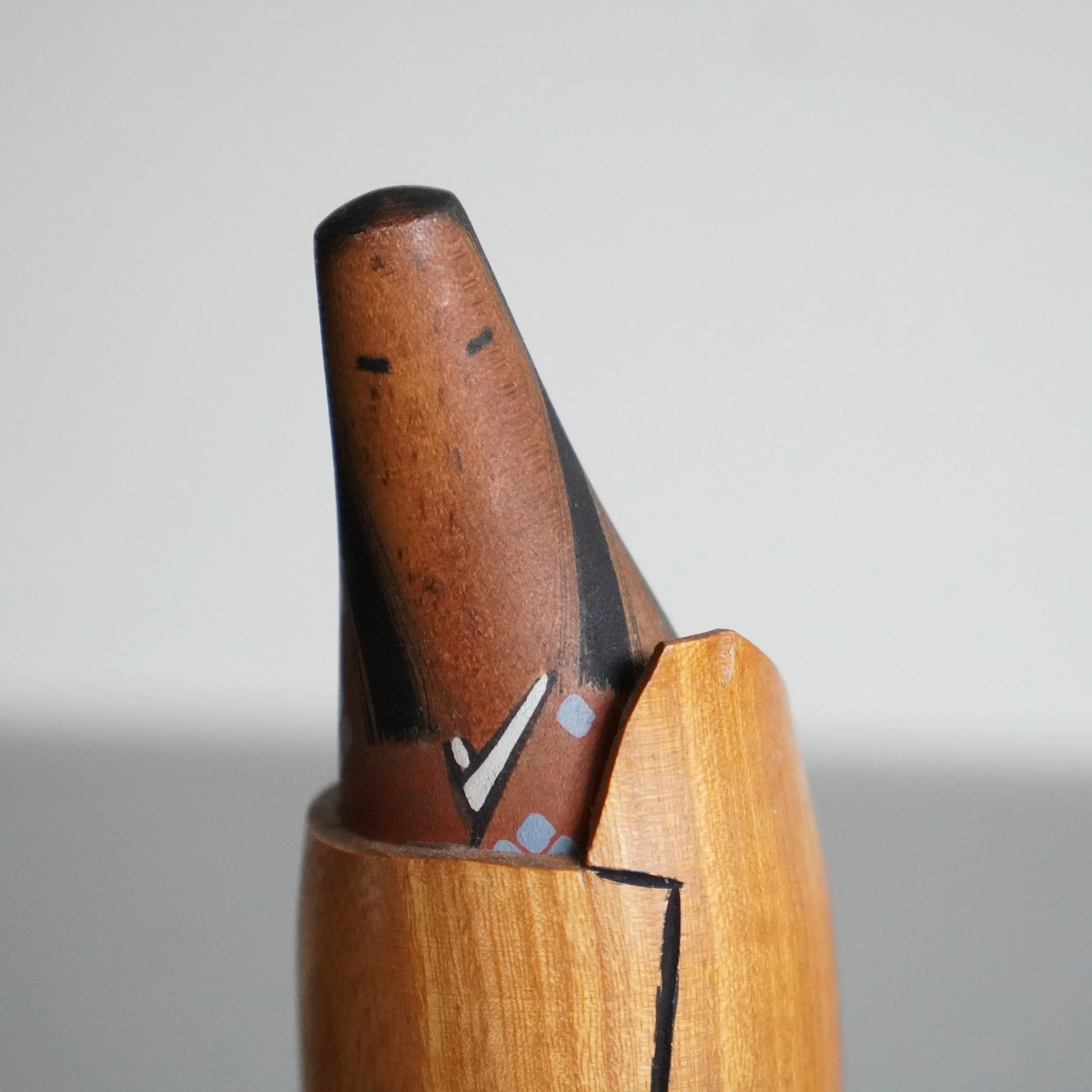 Image 9 of 20
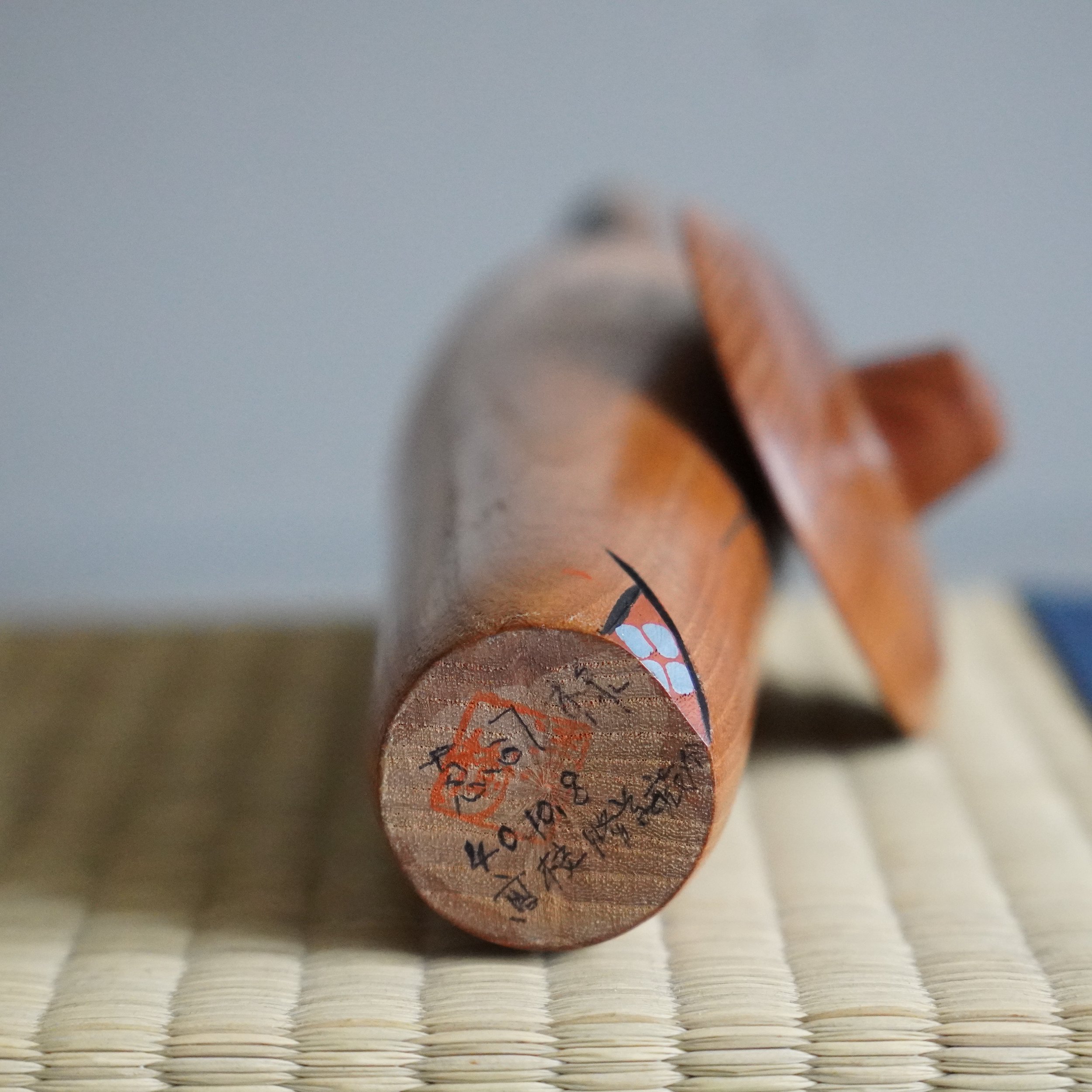 Image 10 of 20
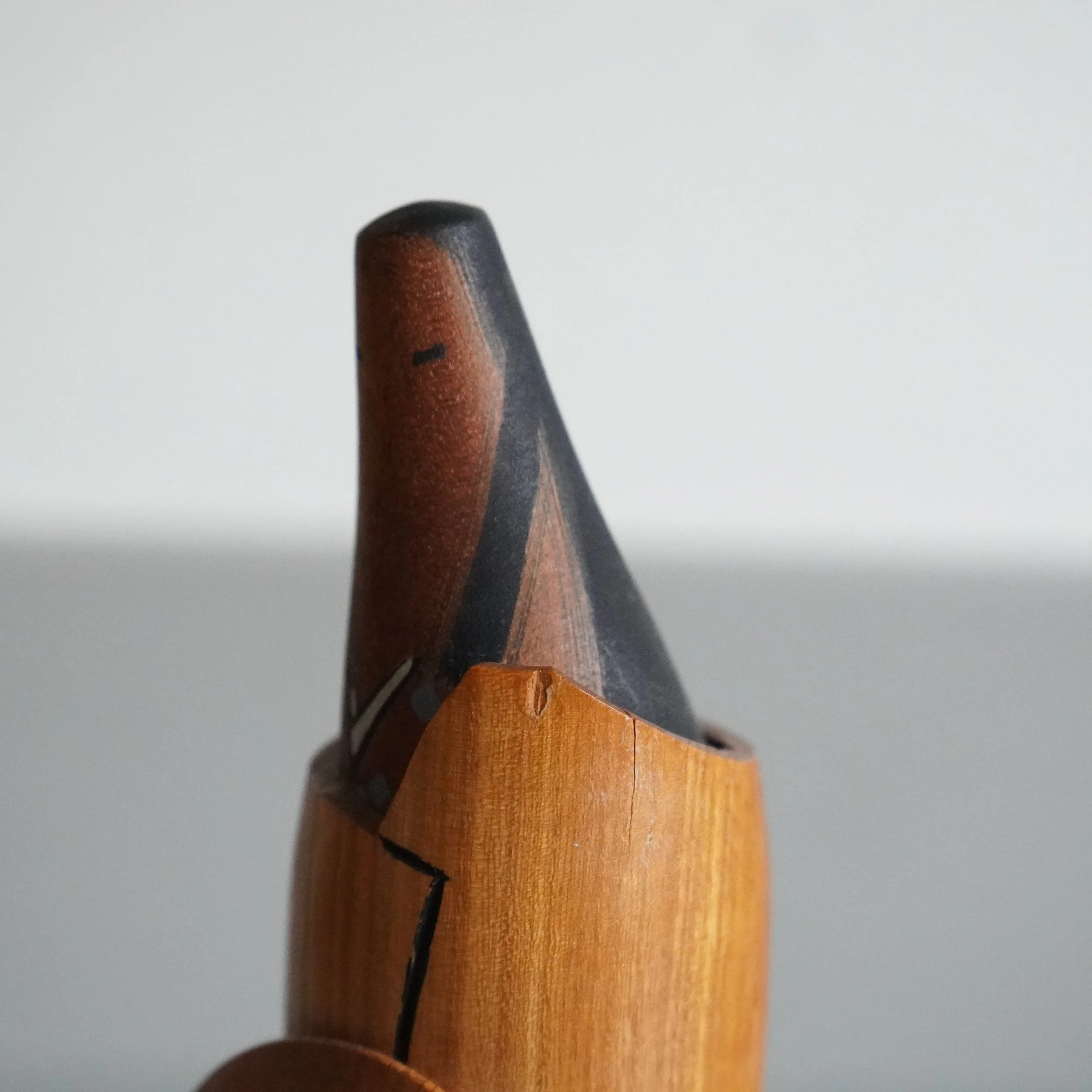 Image 11 of 20
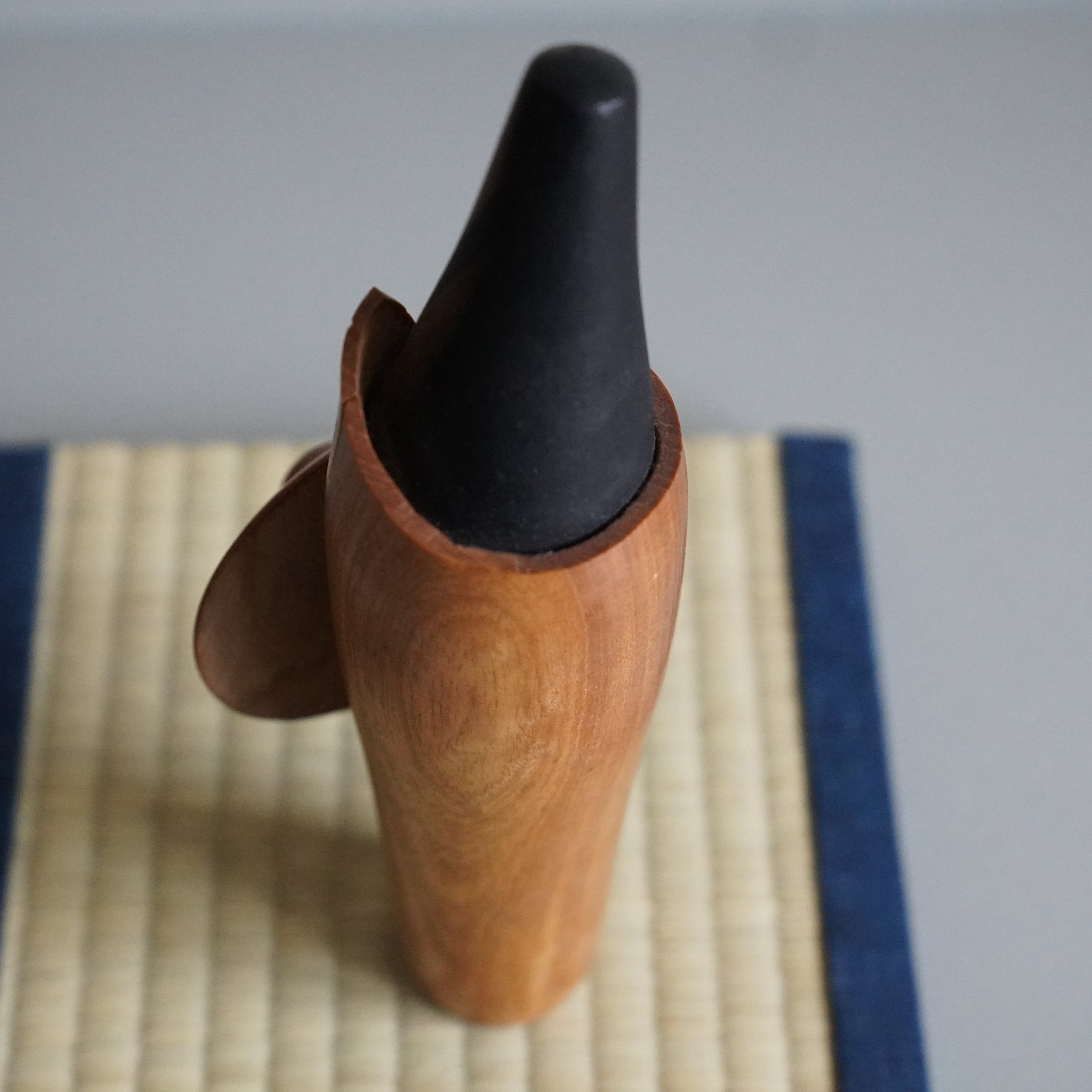 Image 12 of 20
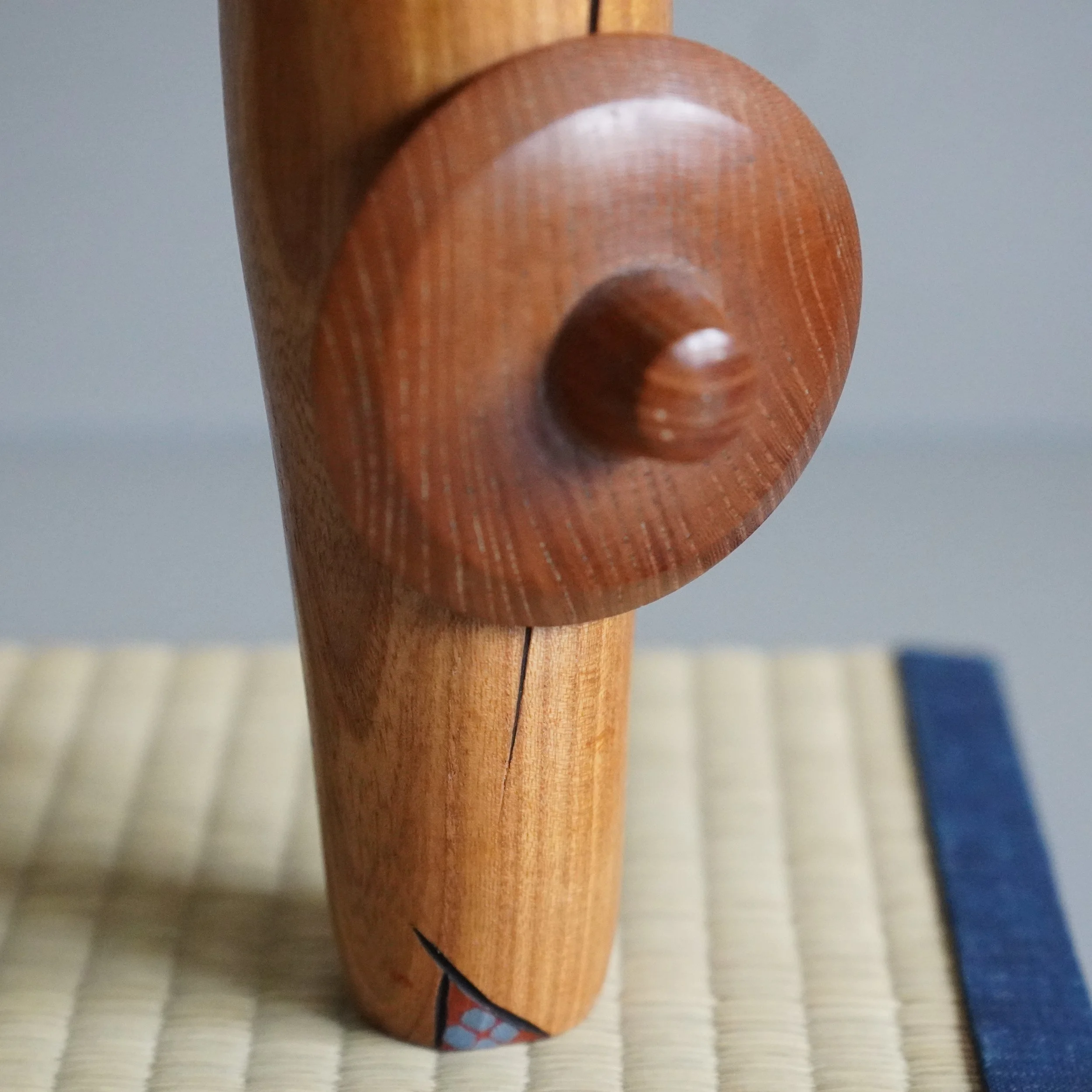 Image 13 of 20
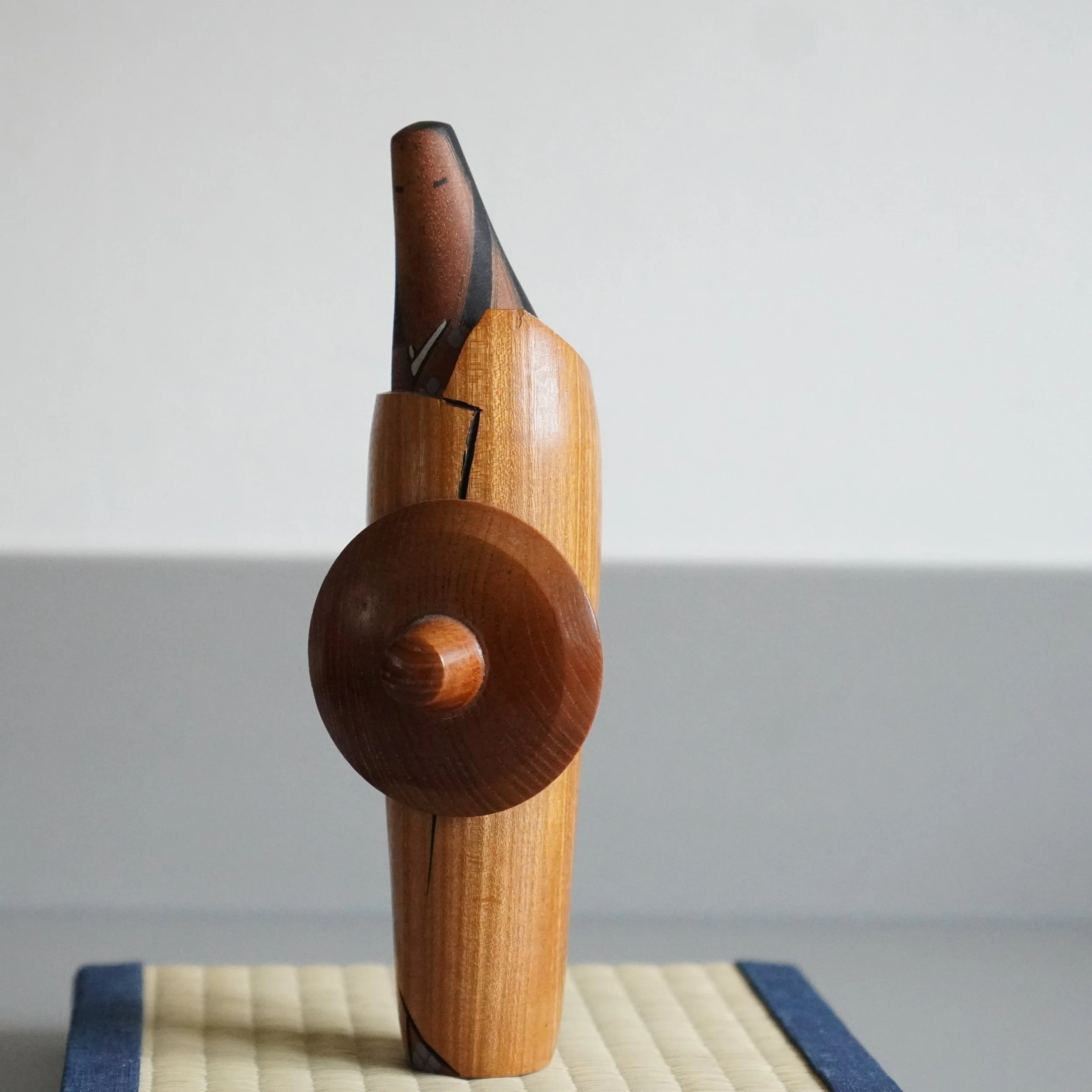 Image 14 of 20
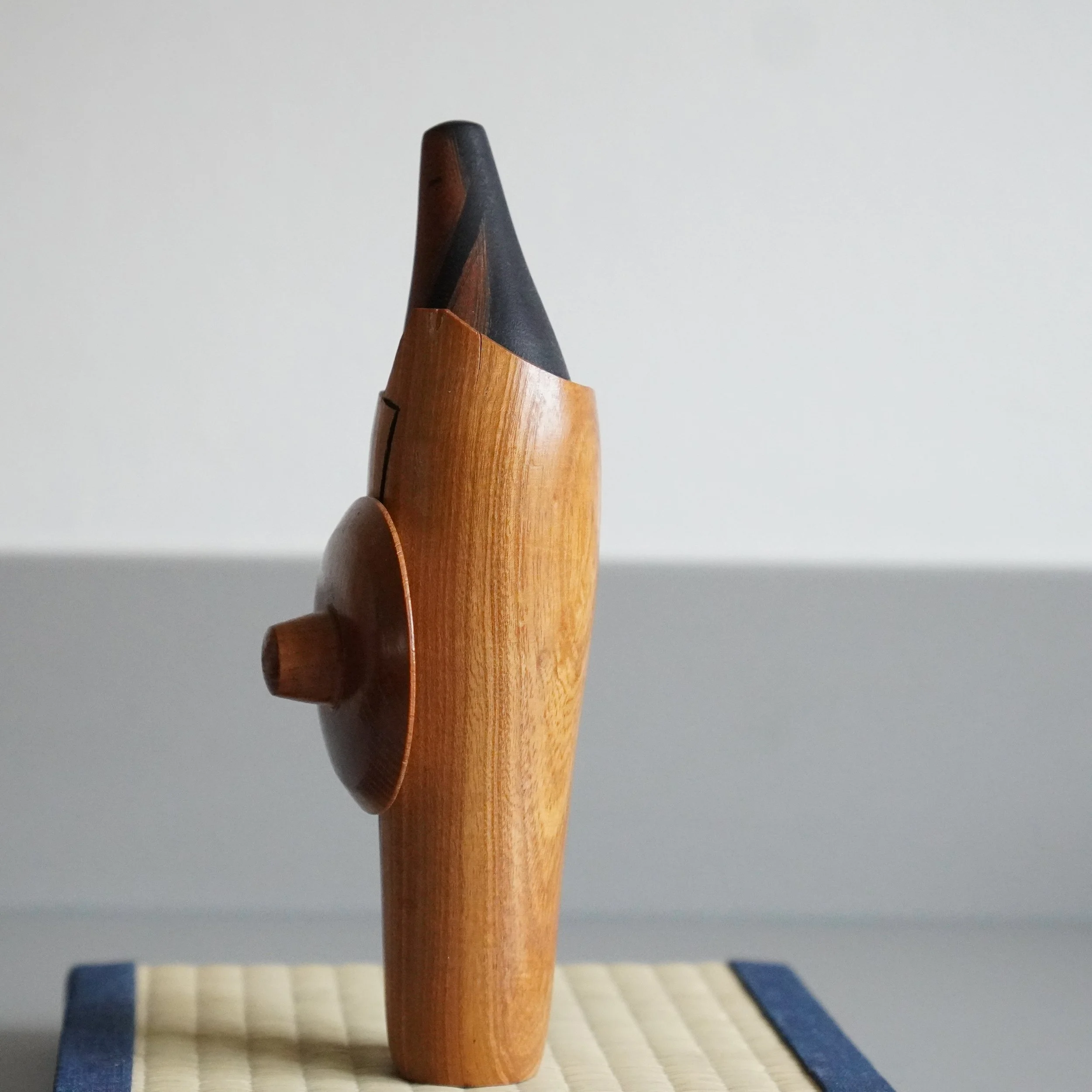 Image 15 of 20
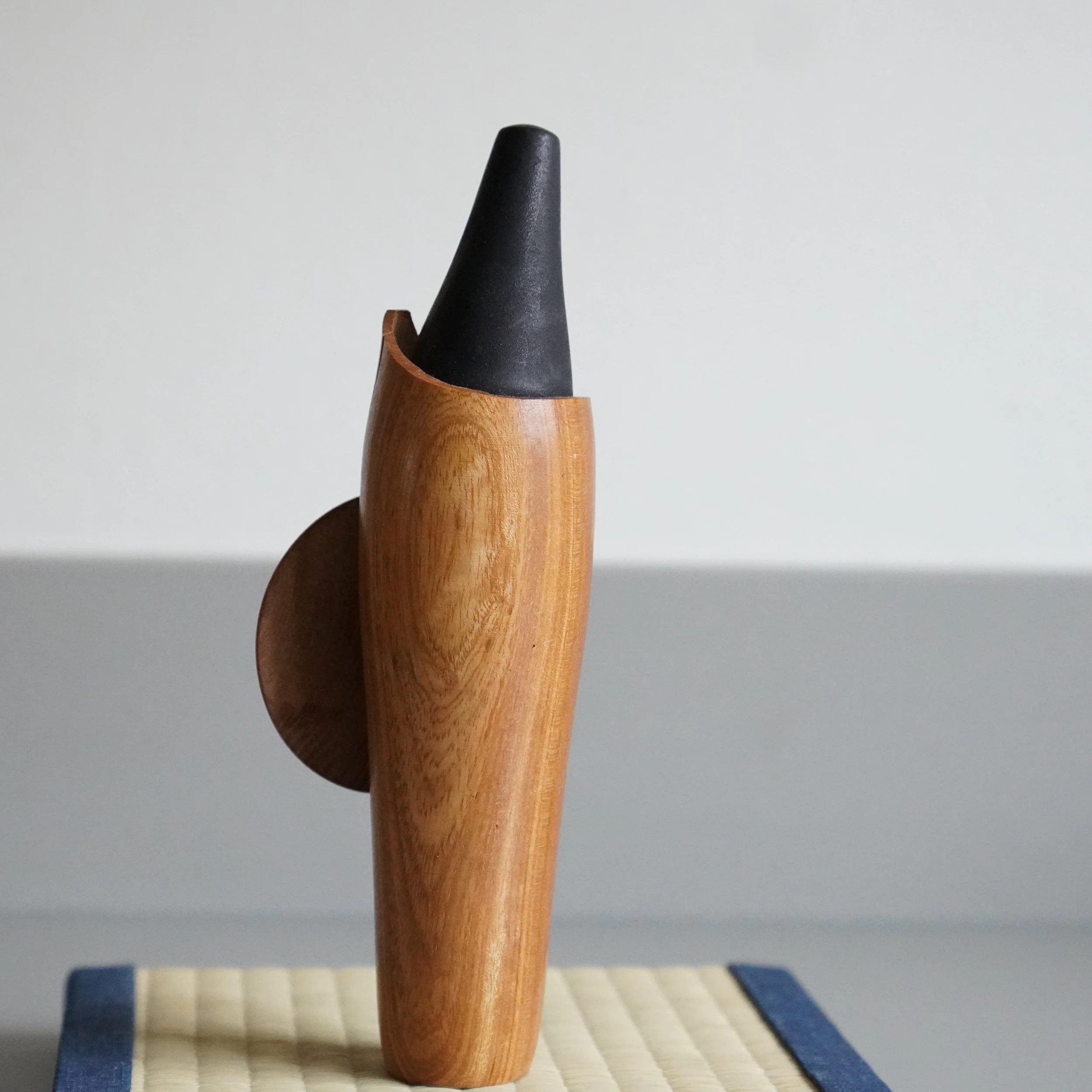 Image 16 of 20
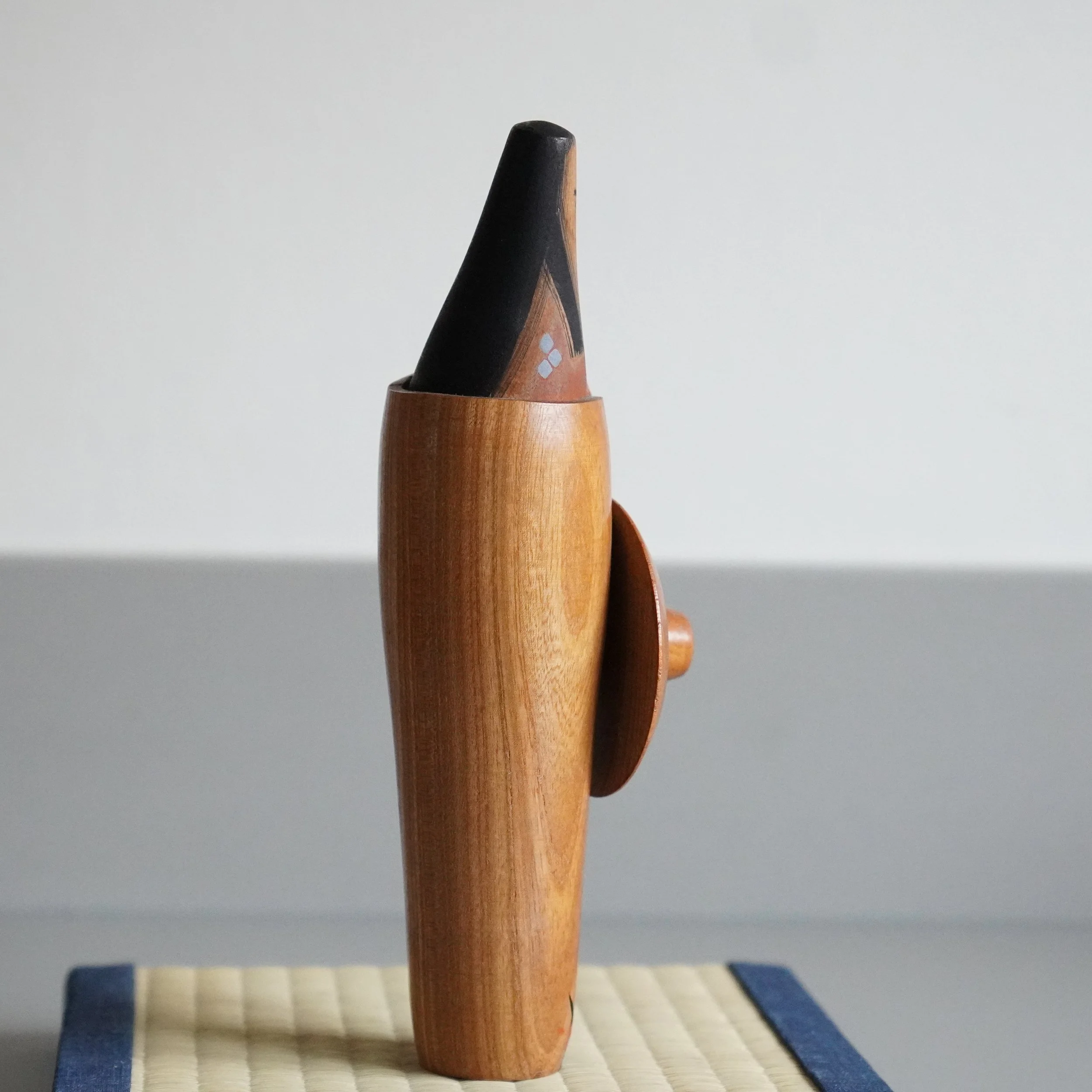 Image 17 of 20
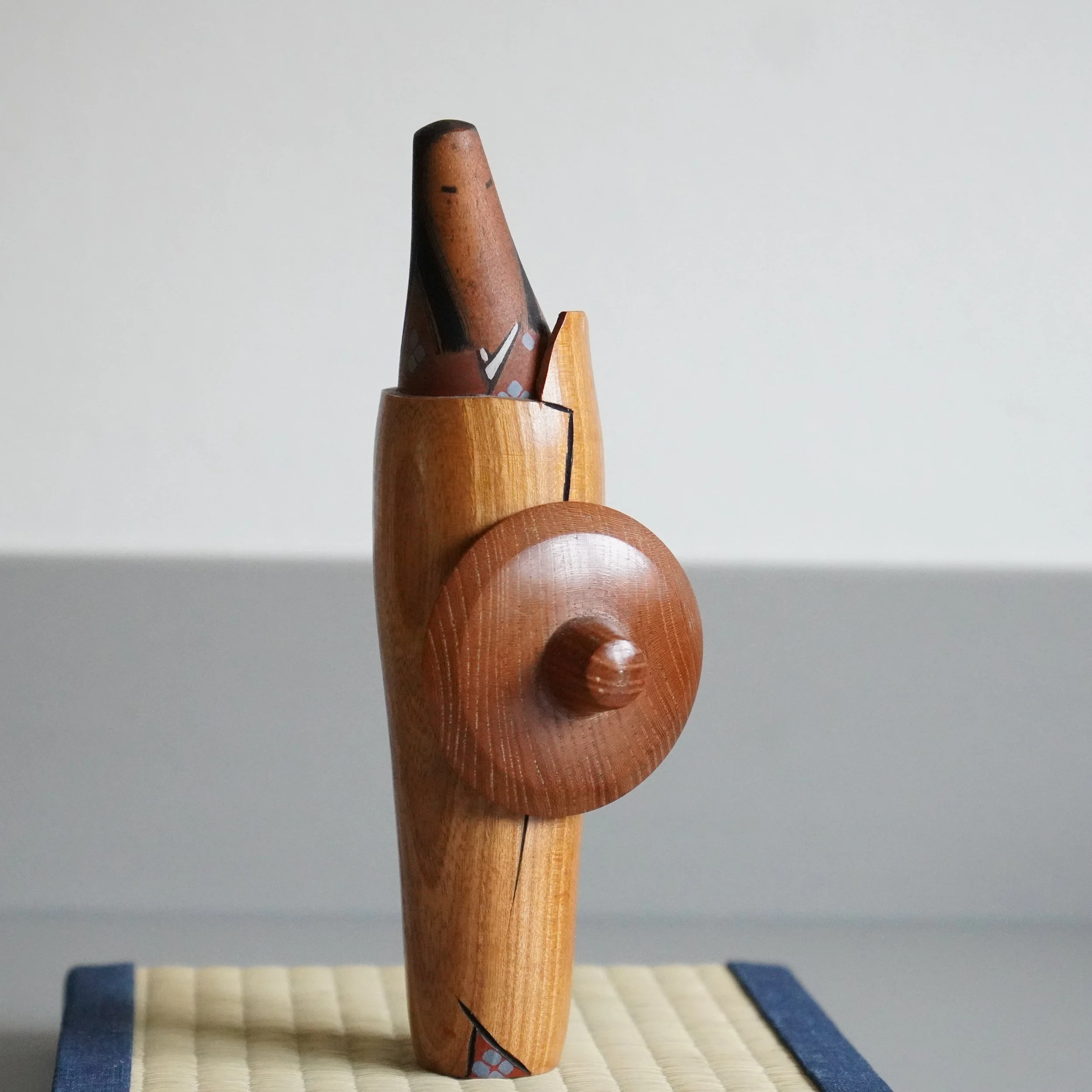 Image 18 of 20
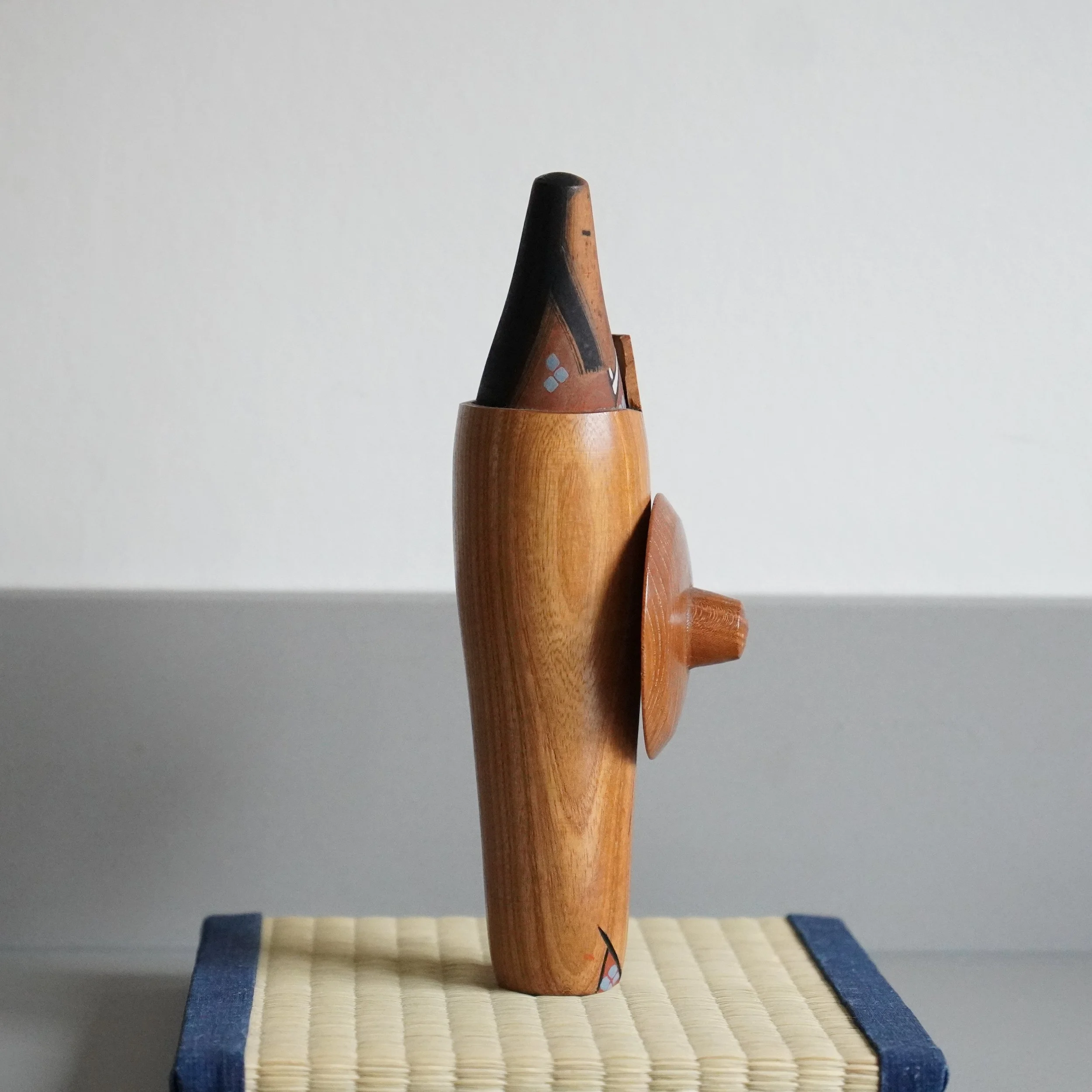 Image 19 of 20
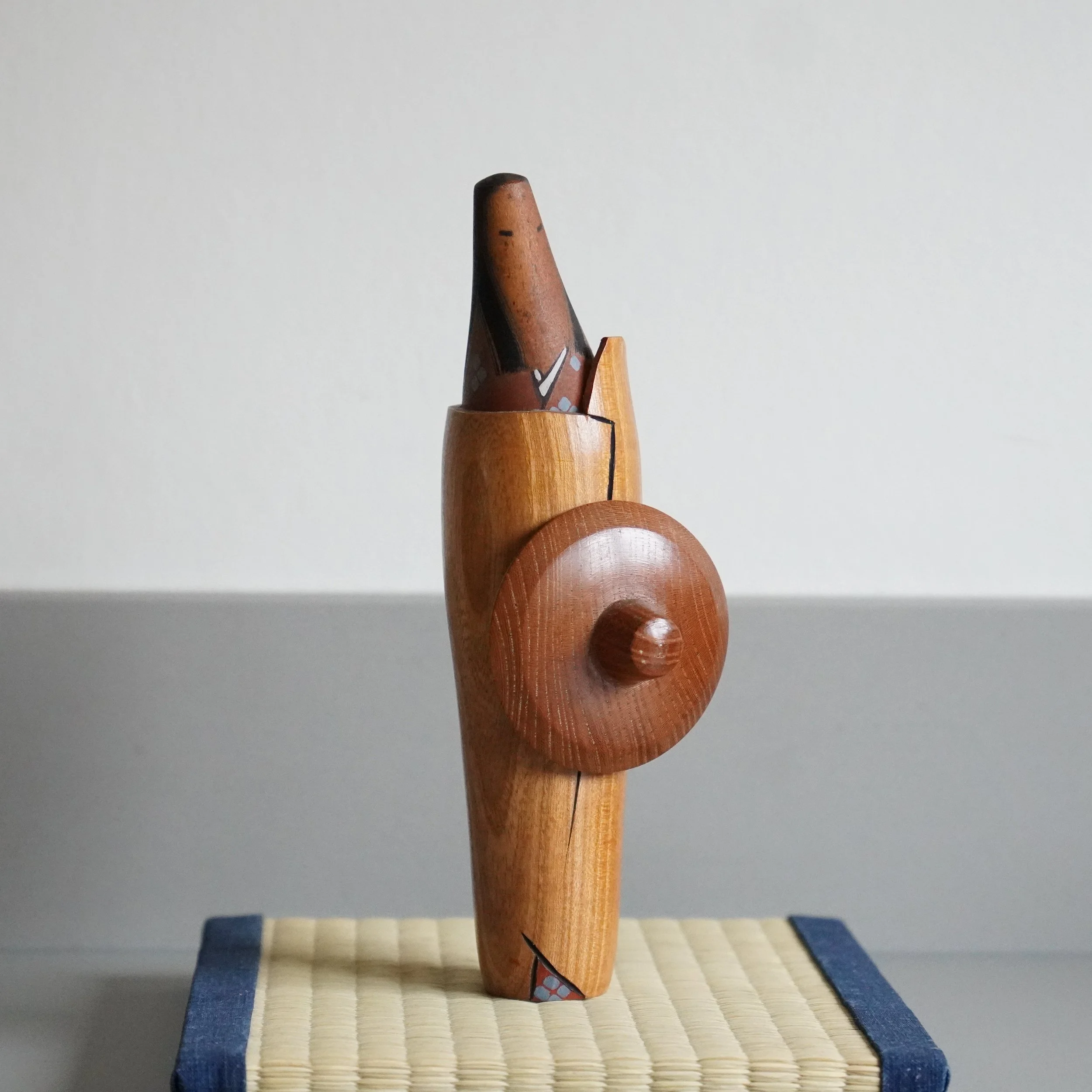 Image 20 of 20
Sōsaku kokeshi by Seiju Kon named Oshinobi Dochu, Shōwa period, 1965
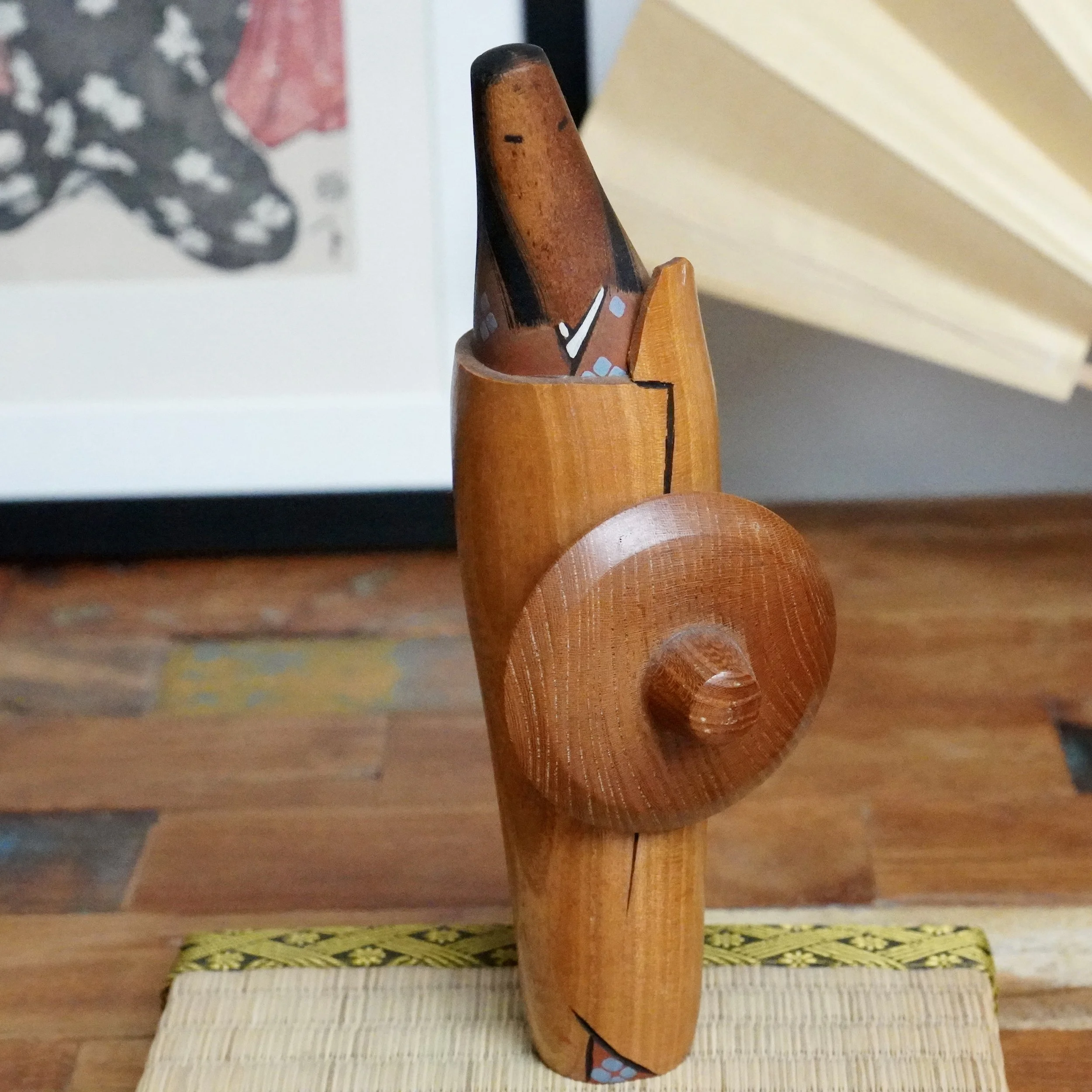
The first thing you notice is the hat. It stops you before you understand what you are looking at. Below it, the body is built from rings of different wood, each one a slightly different tone of amber and chestnut, pressed together in warm tiers. At the very top, a painted face, small and precise.
Someone thought carefully before they made it.
Seiju Kon, whose given name is Kon Akira, was born in 1931 in the Yamagata area and studied under master woodworker Hasegawa Tatsuo. His work is rooted in the Tsugaru kokeshi tradition and he returned, throughout his career, to a small set of subjects: figures from Noh theatre, women of the Heian court, characters from the world of classical Japanese performance and rank.
She is one of those. She belongs to a series he made across decades, and it is immediately recognizable to anyone who has seen his work before.
→ Interested to read more about the woodworking on kokeshi like these? I wrote about it in my journal.
→ Two makers took on the same disguised traveller in very different ways. Read more about this in my journal.
The first thing you notice is the hat. It stops you before you understand what you are looking at. Below it, the body is built from rings of different wood, each one a slightly different tone of amber and chestnut, pressed together in warm tiers. At the very top, a painted face, small and precise.
Someone thought carefully before they made it.
Seiju Kon, whose given name is Kon Akira, was born in 1931 in the Yamagata area and studied under master woodworker Hasegawa Tatsuo. His work is rooted in the Tsugaru kokeshi tradition and he returned, throughout his career, to a small set of subjects: figures from Noh theatre, women of the Heian court, characters from the world of classical Japanese performance and rank.
She is one of those. She belongs to a series he made across decades, and it is immediately recognizable to anyone who has seen his work before.
→ Interested to read more about the woodworking on kokeshi like these? I wrote about it in my journal.
→ Two makers took on the same disguised traveller in very different ways. Read more about this in my journal.
What makes this creative kokeshi special
The up close look and feel
Tsugaru kokeshi are known for their painted surfaces, and Seiju Kon uses that tradition influencing his works. The face is small and flat, the features applied in precise, economical brushstrokes, a style that reads as simple until you look closely and realize how much is said in very little.
In the hand, the piece feels warm. Where the different woods meet, your fingers find the faint edges of the joins, rings you can trace around the body. The lathe work underneath is very smooth.
Charming details
This kokeshi lady has a name: Oshinobi Dochu. It means traveling incognito. A noblewoman of high rank has disguised herself for the road, pulling a wide hat low over her face, wrapping herself in a heavy layered coat so that no one will know who she is. It is her protection.
The tiered wood body is the travel coat, each layer a different wood as if a different fabric. Once you know the name, the form resolves into a figure you recognize in a single look.
-
Kon Akira, working under the art name Seiju. Born 1931, from the Yamagata area, a central prefecture in Japan's kokeshi-making tradition.
Studied under master woodworker Hasegawa Tatsuo. Designs rooted in the Tsugaru kokeshi tradition; pieces were historically sold at the Owani Spa in Aomori.
Known for recurring subjects drawn from Noh theatre and the Heian court, including stylized noblewomen and masked performers.
Little is documented about this maker outside specialist kokeshi circles; his work is identified by style and by his handwritten signature.
Signed 近誠寿 Kon Seiju on the base, with a handwritten ink inscription with the date and a red hanko seal.
-
Yamagata, Japan.
The bottom inscription says she is made in October 1965 (Shōwa 40)
-
Height: ca. 21 cm
Weight: 209 gr
-
Good vintage condition, consistent with age.
A hairline crack is visible at the top of the collar, stable and without movement.
Natural patina on the wood surface and light age marks appropriate for a piece made in the 1960s.
-
Keep away from direct sunlight and dry heat sources.
Clean with a soft dry cloth only.
Water and damp cloths can lift the paint and cause the wood to swell, particularly on older lacquered surfaces.
If the kokeshi stands near a radiator in winter, move it, as rapid drying causes older wood to crack.
Kokeshi like to be looked after too. The care guide has the details.
*Decorative items such as the whisk are for styling
and scale purposes only and not included in the sale
Meet our other kokeshi
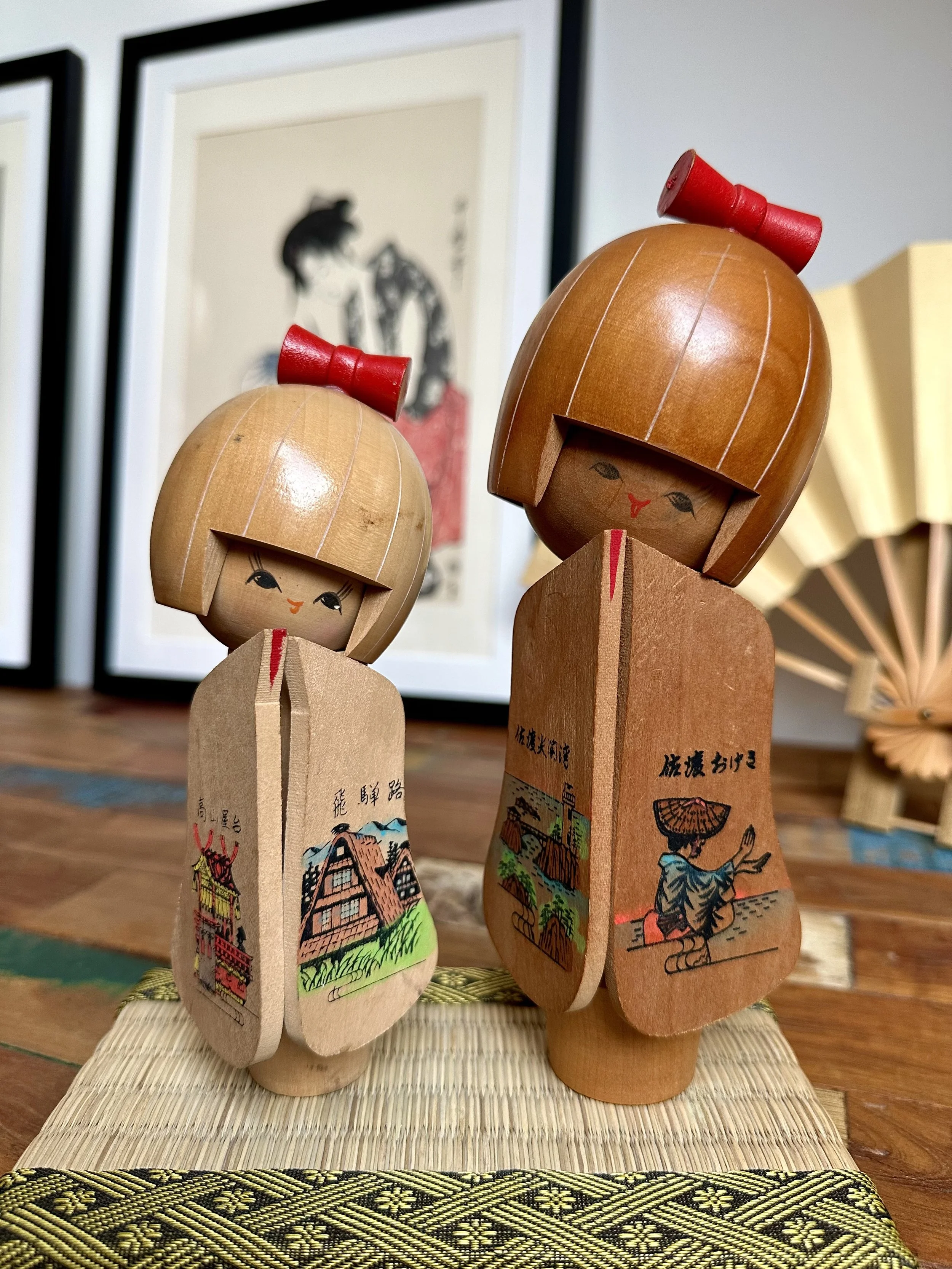
They are the same object twice: same flat panels fanning out from the waist, same simply painted face with a faint blush at the cheek, same red square seal on the base. But open them and they show two completely different corners of Japan. One carries the Okesa dancer of Sado Island and the sea cliffs of Senkaku Bay. The other shows the lacquered festival float of Takayama and the steep-roofed farmhouses of the Hida countryside. Same format, same hand, two worlds.
Sato Suigai (佐藤翠涯) was a Gunma-born kokeshi master and multiple Prime Minister Award winner who made this flat-panel omiyage kokeshi for travellers returning from destinations across Japan. These two pieces show that practice clearly: the same maker, the same form, two different regions, each panel a compression of what that place most wants to be remembered for. Together they work as a pair not because they match exactly, but because they rhyme. The last photo shows their bigger sister in our collection.
The larger lady has aged to a slightly darker wood tone than the smaller lady, the kind of natural variation that happens when two pieces live their decades separately before finding each other again.
→ Interested to read more about the woodworking on kokeshi like these? I wrote about it in my journal.
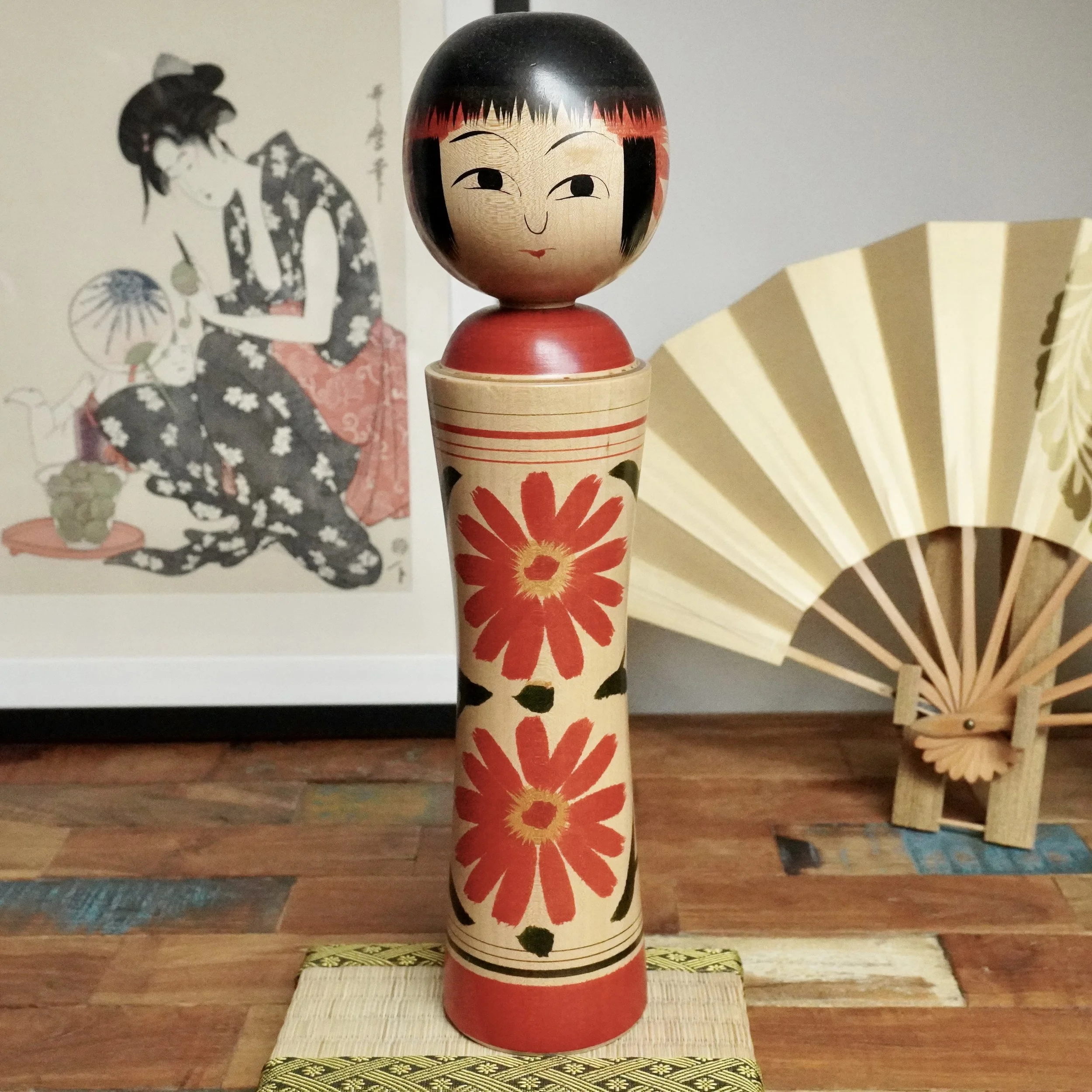
The scale alone stops you. At 36.5 centimetres, this is a kokeshi that holds a shelf on its own. The body is a clean, pale column, with two oversized red chrysanthemums running almost its full height, petals brushed outward in confident strokes around small golden centres. Red at the collar, red at the base. The face is quiet and a little knowing, framed by a precise black bob.
Izu Mamoru spent decades making Ginzan kokeshi at Ginzan Onsen, in the family workshop that is still the only place this style is made. He died in 2019. On the base of this piece he recorded the exact day it was finished, June 23, 1998, and his age at the time, 73.
Most kokeshi carry a name. This one also carries a moment.
Want to understand the difference between dentō and sōsaku kokeshi? I wrote about it, with a trip through Fukushima along the way.
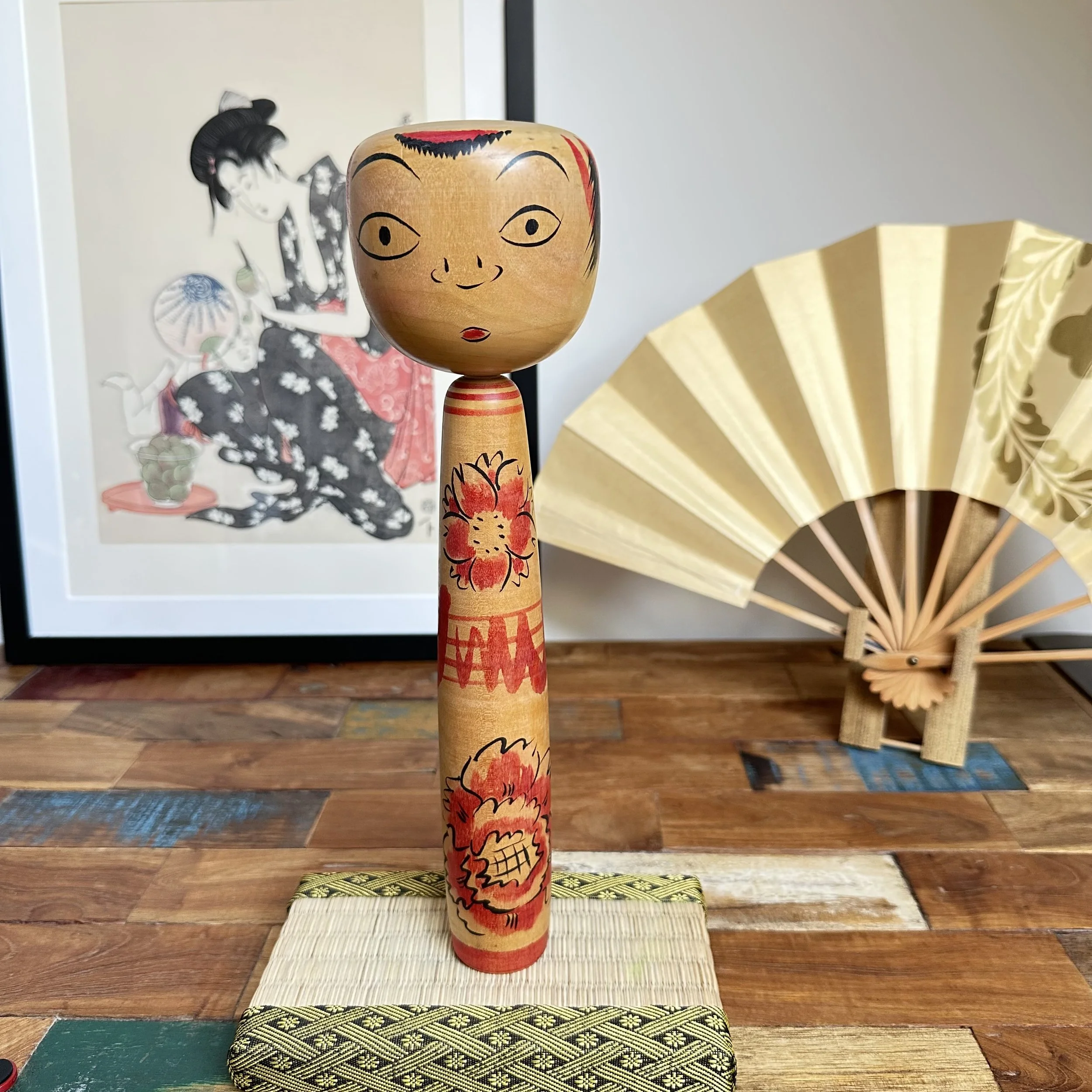
There is something almost comical about the size of her face and head against her narrow, tapering body beneath it, and that imbalance is exactly the point. Her face tilts forward slightly as if caught mid-thought, one eyebrow set a touch higher than the other, giving it a expression that shifts depending on the angle you catch it from. At just over 30cm, she commands more presence than its slim frame suggests.
This piece was made by Seya Jūji, who trained directly under Iwamoto Yoshizō, the maker who defined the Nakanosawa Takobozu style. Yoshizō gave Jūji a simple instruction early on: paint cherry blossom, not peony, so your work can always be told apart from mine. That small act of teaching is still visible on the body of this doll today, decades later. Jūji went on to become the maker Tokyo dealers turned to when they needed the earliest Takobozu designs faithfully reconstructed, work that helped keep the whole tradition alive through the 1970s.
→ Want to understand the difference between dentō and sōsaku kokeshi? I wrote about it, with a trip through Fukushima along the way.
→ Curious how Tsuchiyu compares to the other ten traditional kokeshi lines? Read the full guide.
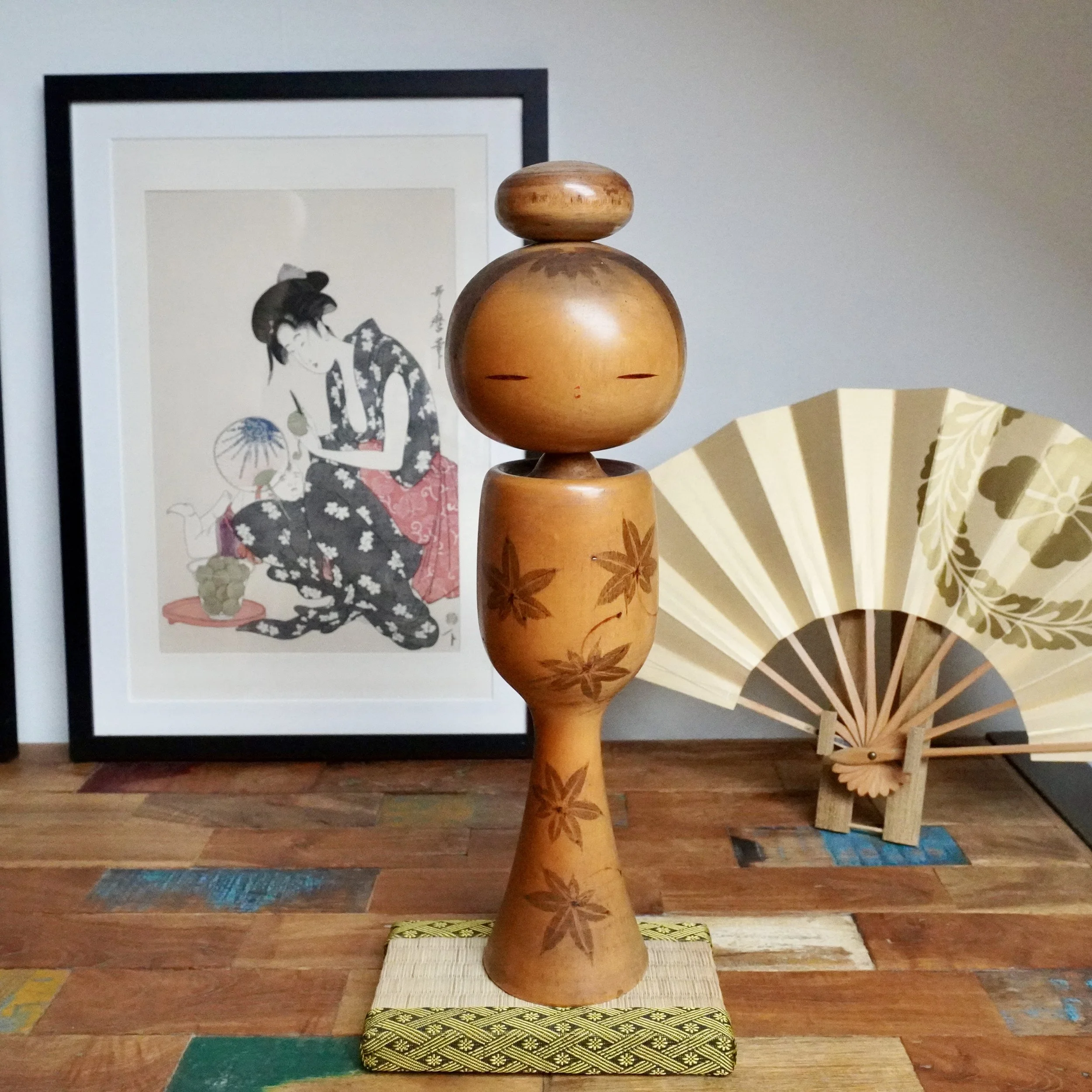
This kokeshi stands taller than almost anything else in the collection: 41 centimetres of smooth, weighted wood, its rounded head resting above a body that tapers in and out again like a figure caught mid movement. Dark maple leaves drift across the surface in loose, hand painted clusters, their veins burned into the wood before the colour was added. At nearly a kilo in the hand, this is not a piece you display and forget. It asks to be picked up.
This is the work of Kano Chiyomatsu, a sōsaku kokeshi artist from Gunma prefecture whose career spans more than seventy years and includes two occasions, in 1981 and 1982, when his work was presented to the then Crown Prince and Crown Princess Michiko. His pieces have been included in Gunma's own middle school art textbooks and he has been recognised as a Prefectural Traditional Craftsperson. This particular piece carries his signature and seal.
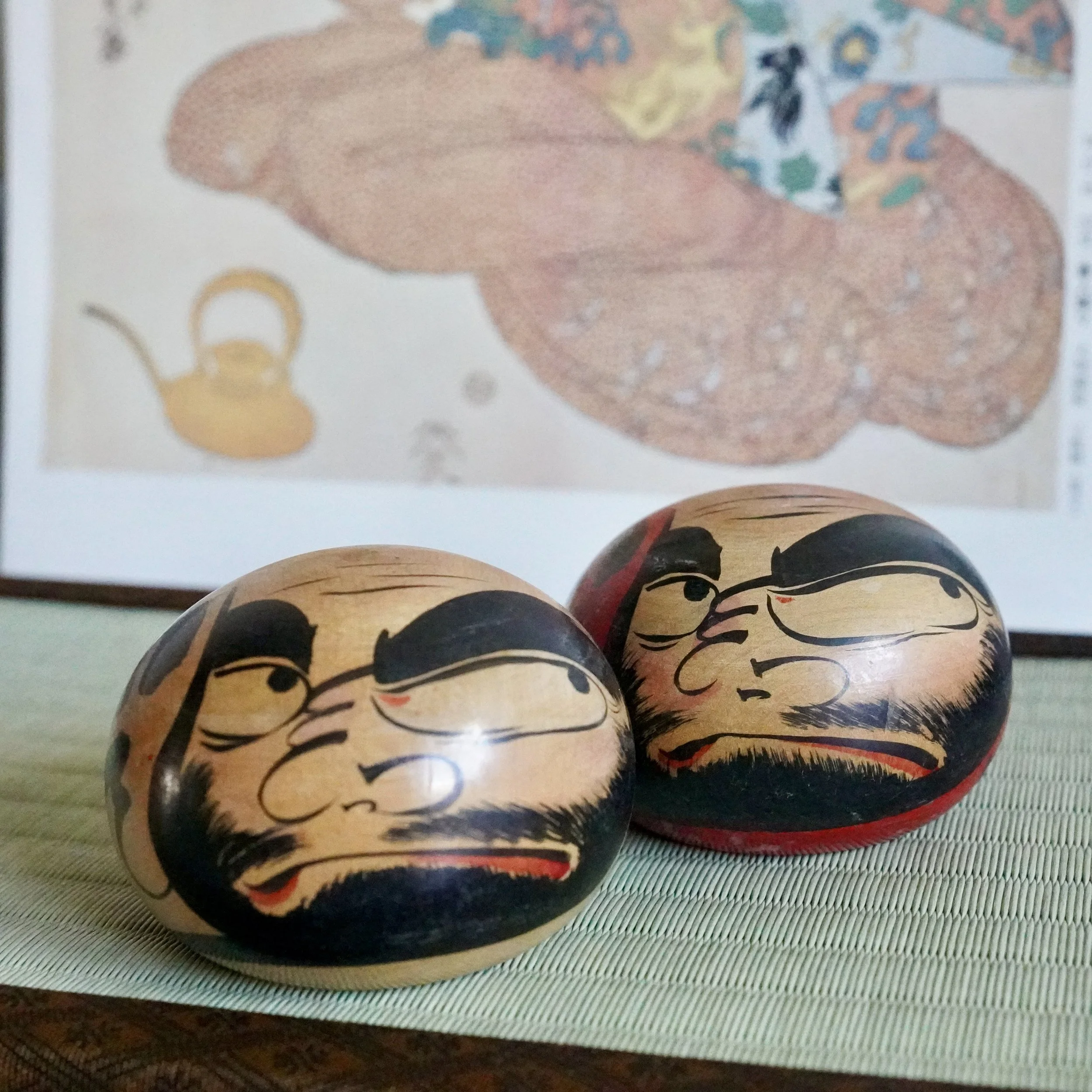
Two round, hand painted faces, caught mid scowl, sit side by side like they have been arguing for decades. One wears a red collar around its base, the other is left in plain wood, and both carry the same fierce eyebrows and downturned mouth carved from a single turn of the lathe. There is no seam anywhere on either piece, just one continuous curve from crown to base, the kind of shape that only comes from a craftsman who has made this exact form hundreds of times before.
Both are signed on the base with the place name Nuruyu and the name Satō Zenji, one of the two craftsmen credited with keeping the Tsugaru kokeshi tradition alive in the town of Kuroishi after the war. He learned the trade from master Mori Hidetarō starting in 1955, then spent years travelling to department stores across Japan to demonstrate the craft in person, building an audience for a doll making style that had nearly disappeared. Owning a signed pair like this means owning a small, physical piece of that revival.
Curious where the daruma shape itself comes from, arms and legs withered away through nine years of meditation? I stood among a thousand of them on a hillside in Osaka. Read about it in my journal.
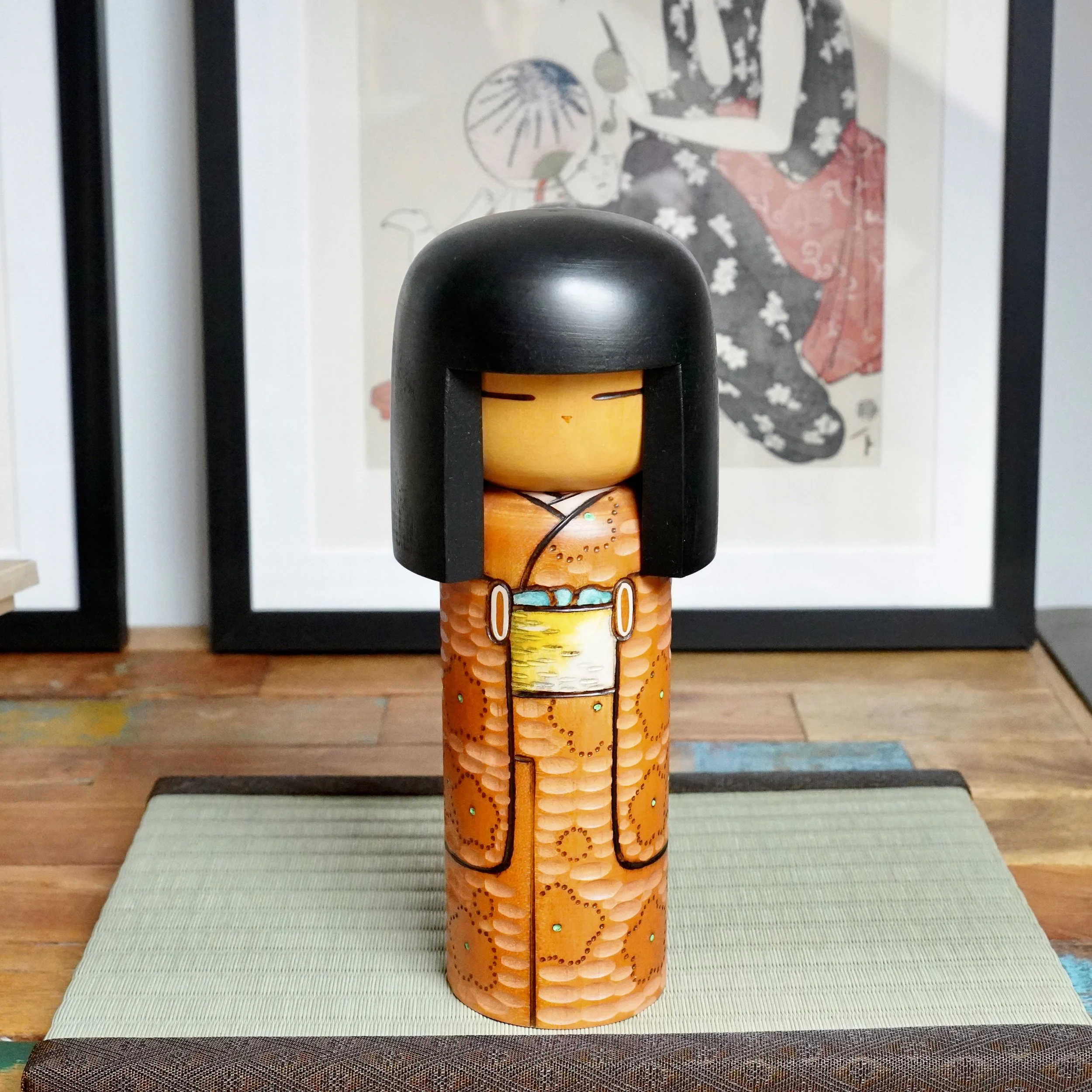
She stands taller than most figures from this maker, her kimono covered edge to edge in the small, scooped indentations that mark Kisaku's carved work, hundreds of shallow cuts taken directly from the wood rather than painted on. Over this textured ground, ume blossoms are painted in soft outline, each one marked with a single point of green. The obi sits high and pale against the warm terracotta, banded in turquoise.
Kisaku (喜作) worked in the sōsaku tradition through the Shōwa period, from Gunma Prefecture, and pieces at this scale are less common than the smaller figures usually seen from this maker. The combination of carved ground and painted decoration, rather than one or the other, shows a maker working confidently across two techniques on a single figure. Signed on the base in brushed ink.
Interested to read more about the woodworking on kokeshi like these? I wrote about it in my journal.
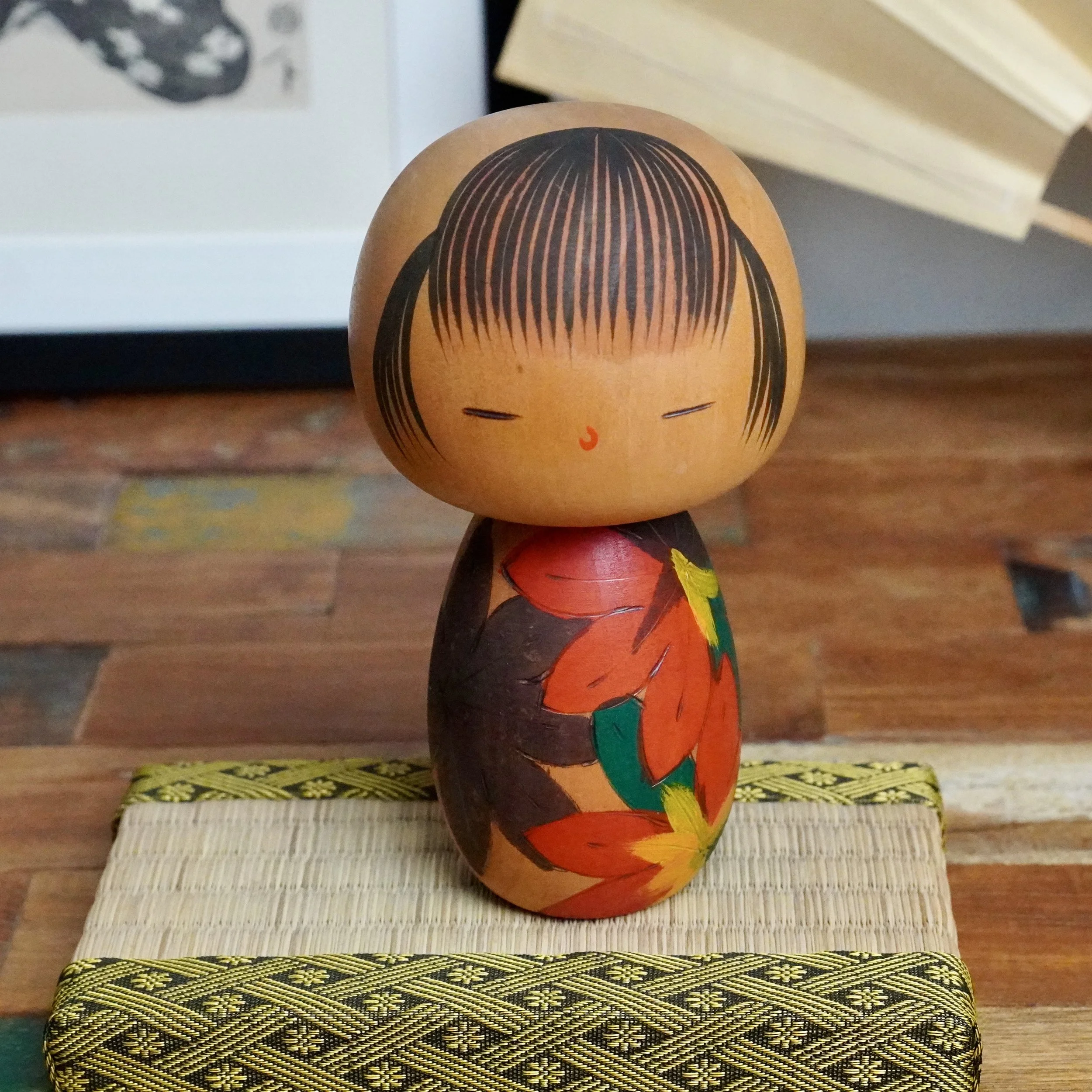
There is a lot happening on this kokeshi, and none of it by accident. Every leaf covering her body was cut into the wood first, the paint only added after, red, near black, green and yellow layered so vivid it is still bright after all these years. She is small enough to hold in one hand, but she carries the real weight due to her appearance.
Yuji Kawase’s decoration follows the same unconventional order as his shaping: the motif, whether autumn maple leaves, dandelions, camellias or origami cranes, is carved into the wood first, and colour is added afterwards into the carved relief. The result is decoration with real texture rather than a flat painted surface, something you can feel as much as see.
→ What draws you to a kokeshi is rarely the name on the base. Read more about how makers like Sekiguchi carve rather than paint their signature detail in my journal.
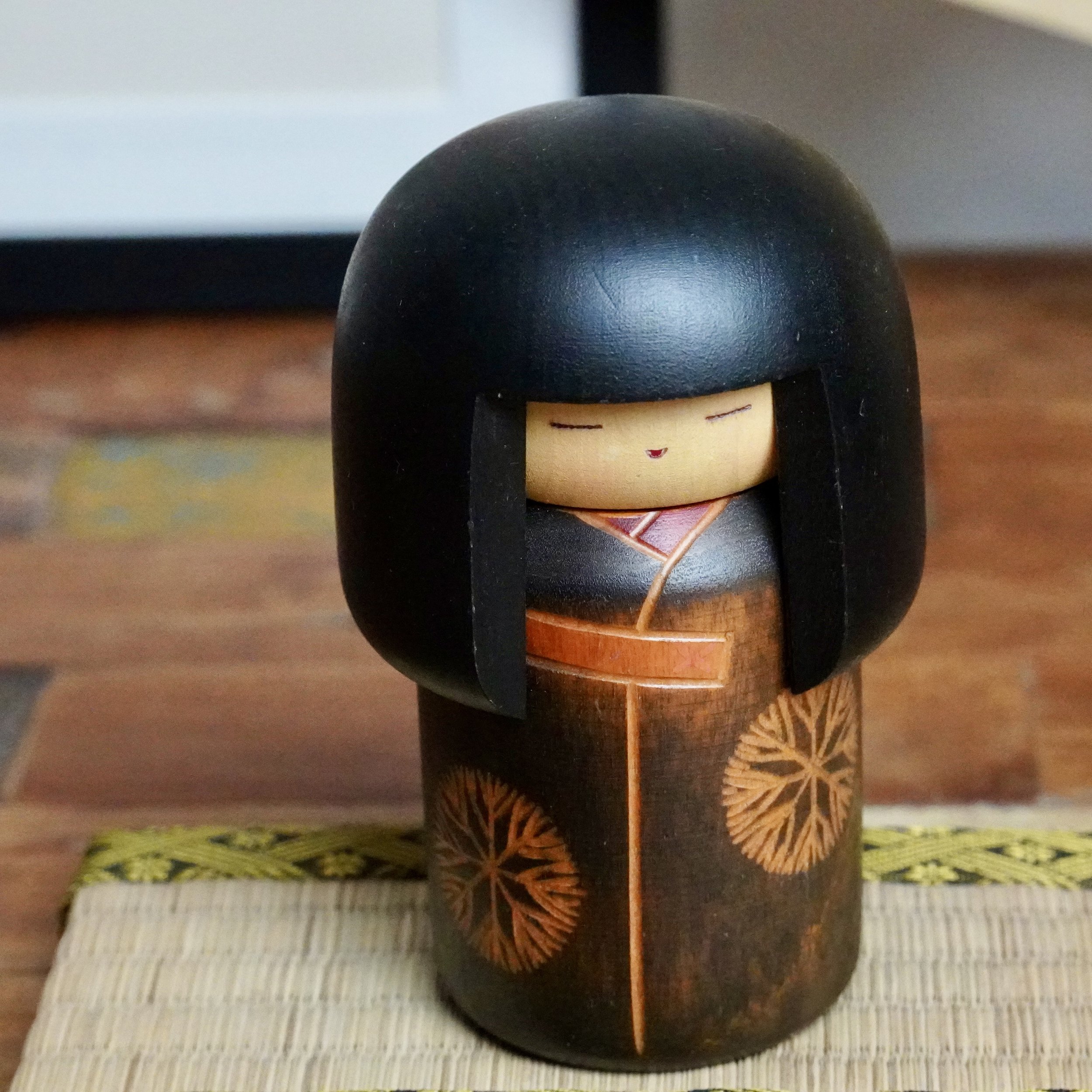
Small enough to sit in one palm, this kokeshi has a quiet, downcast composure that larger pieces often lose. Her dark lacquered hair falls in a smooth, sculpted line across a pale, softly painted face, eyes closed in a calm, almost sleepy expression. The kimono is deep and dark, incised rather than simply painted, with a fine red under layer just visible at the collar.
This is the work of Sekiguchi Sansaku, one of the defining names in Gunma's post-war sōsaku kokeshi movement and a recipient of the Prime Minister's Award. His young girl, or dōjo, design recurs across his career in many sizes, and this piece carries his own seal on the base along with a handwritten inscription dating it to the 21st of July 1991.
→ What draws you to a kokeshi is rarely the name on the base. Read more about how makers like Sekiguchi carve rather than paint their signature detail in my journal.
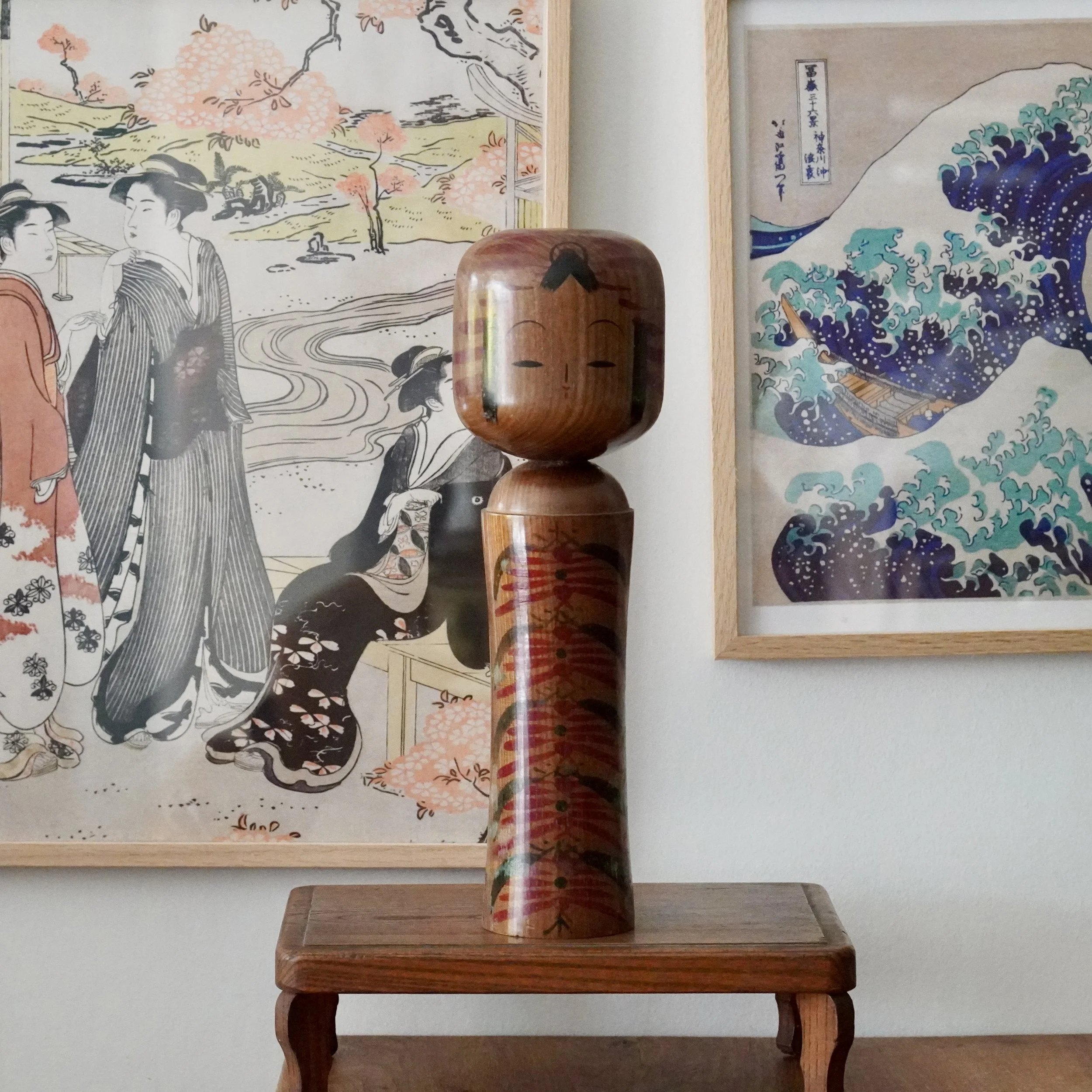
The grain does most of the work before the paint even starts. This kokeshi is turned from dark keyaki, Japanese zelkova, and the wood has aged into something close to bronze: warm, dense, with a reddish-brown depth that shifts as the light moves across it. Over that, sweeping black brushwork and horizontal red-maroon banding run the full length of the body. The result is more calligraphy than decoration. It stops you because it looks like nothing else on a shelf.
Kawamura Shōji (川村昭治) was part of the Kawamura family of Yamagata kokeshi makers, a lineage documented across multiple generations in the dentō tradition of Tōhoku. This piece shows his more abstract side: the traditional training is visible in the precise lathe work and the weight of the form, but the decoration is entirely his own, abstract, direct, and confident.
Kawamura’s work sits on the boundary between dentō and shingata. His foundation is traditional Yamagata-kei kokeshi making, but his output ranges from pieces that stay close to that convention to others that drift toward the freer, more individual expression associated with shingata and sōsaku work.
→ Interested to read more about the woodworking on kokeshi like these? I wrote about it in my journal.
→ Wondering where Yamagata fits among the eleven kokeshi traditions? Here's the full picture.
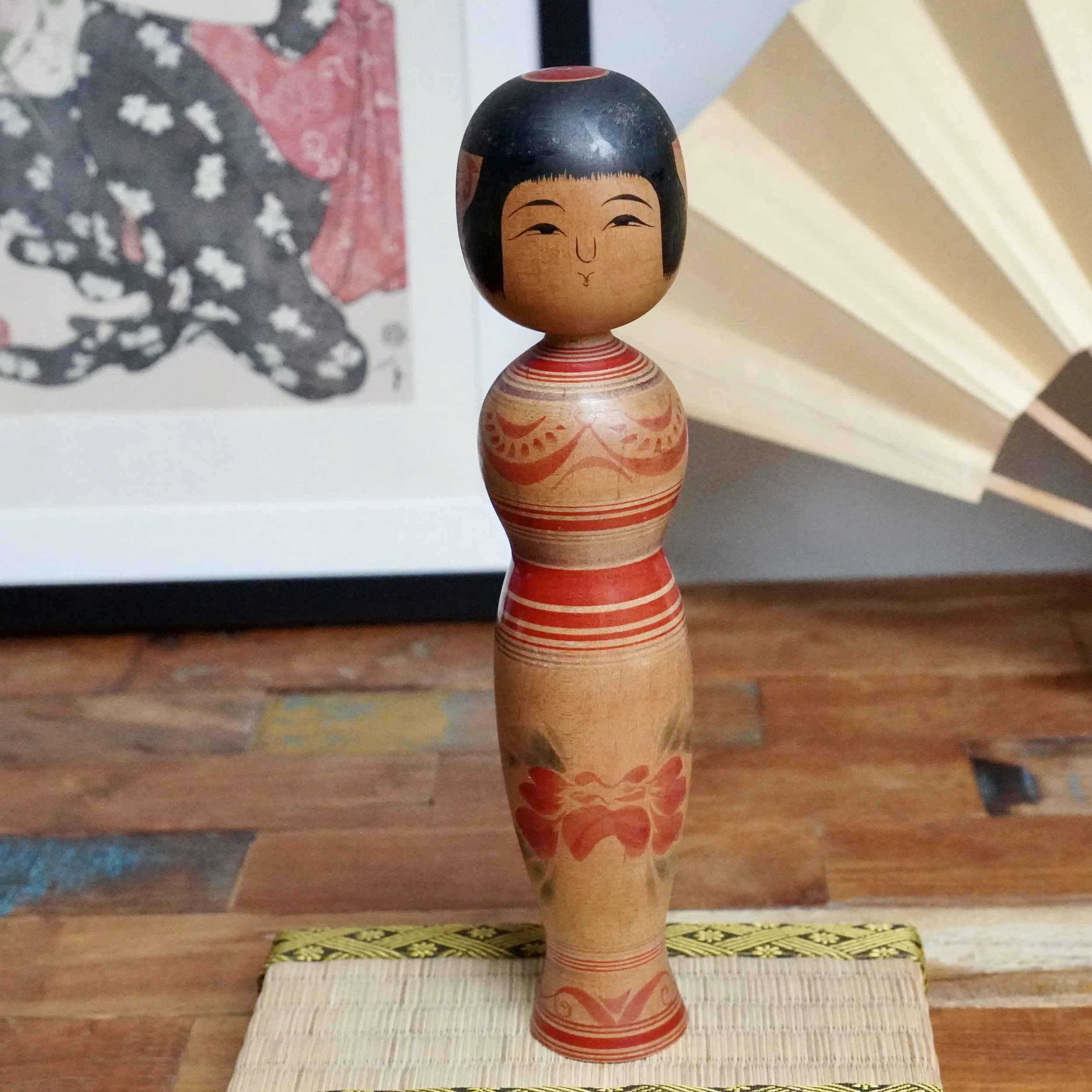
The waist gives it away before anything else does. Where most kokeshi run in one continuous column, this one pulls in sharply below the shoulders, then widens again toward the base, an hourglass silhouette you will not find anywhere else among the eleven dentō traditions. A large, loosely brushed peony spreads across the front of the body in red and deep plum, painted with a freer, more painterly hand than the tightly repeated florals of the older Miyagi lines. The head and body are turned from a single piece of wood, no seam at the neck, the whole figure carrying itself with an easy, almost sculptural confidence.
Tsugaru is the youngest of the eleven recognised kokeshi traditions, only reaching back to the 1920s, born once adults rather than children became the main buyers of kokeshi as hot spring souvenirs, and freed from the older, stricter toy-shaped conventions as a result. It is made using a genuinely difficult reverse-lathe technique, a method every other line has largely abandoned. This piece is signed by Sasamori Junichi, born 1954, a maker working within the Nuruyu style associated with the tradition's founder, Mori Hidetarō. The peony carries real weight here: it is the crest of the Tsugaru clan itself, not simply a decorative flower, which makes this a piece that carries the region's own history on its body, not just a pattern borrowed from elsewhere.
→ Wondering where Tsugaru fits among the eleven kokeshi traditions? Here's the full picture.
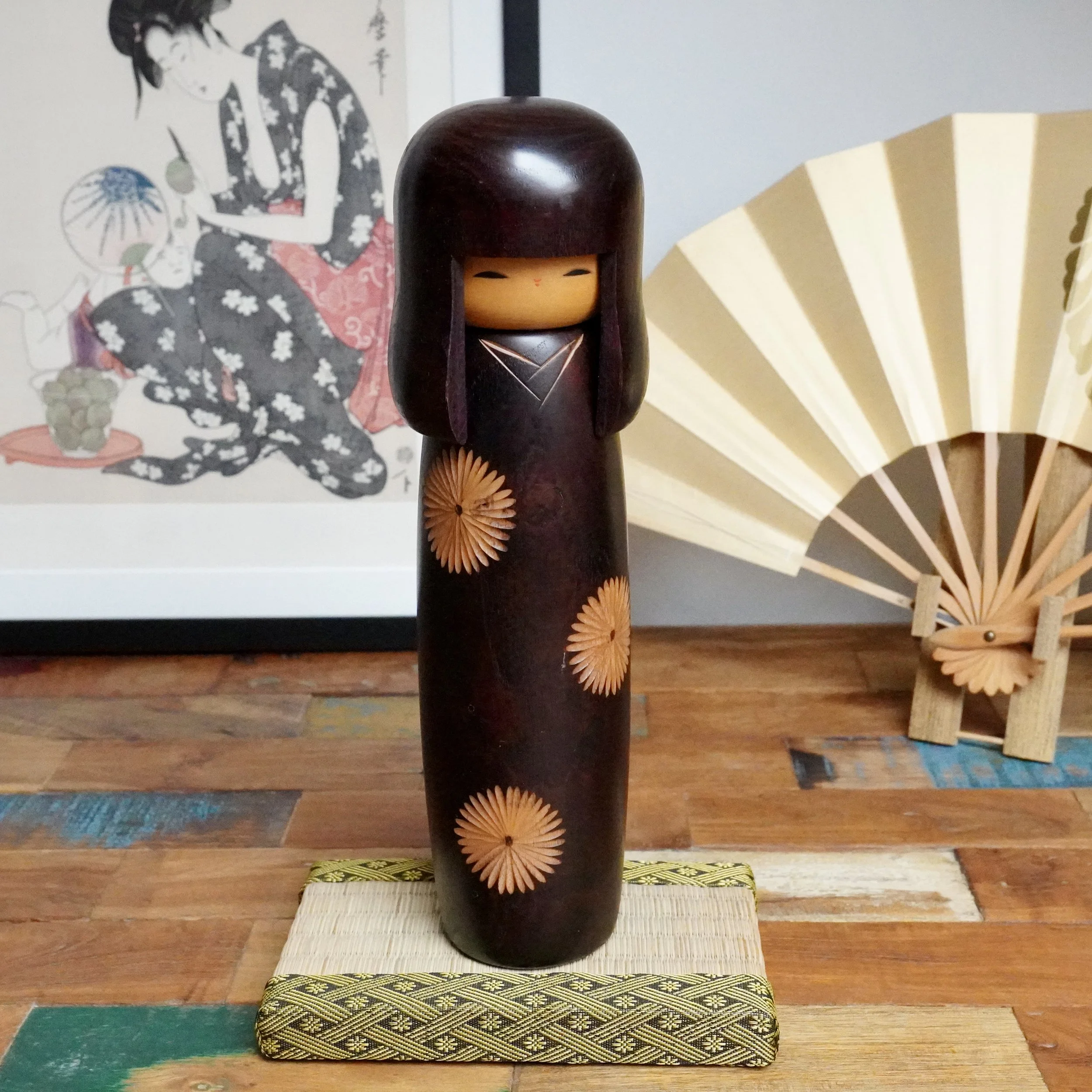
The wood here is stained almost to the point of black, but hold it under a lamp and it turns, deep brown catching the light across grain of the rounded okappa hair. Against that dark ground sit two chrysanthemum medallions in pale, untouched wood, their petals radiating out in fine ridges, close enough to touch and count. The face is set low and quiet, downcast eyes, a small red mark for a mouth, the kind of stillness that makes you stop scrolling and just look at it for a second longer than you meant to.
This is a sōsaku kokeshi signed by Yuji Okamoto, second generation maker at Usaburō, the Gunma workshop that has been making kokeshi since around 1950 and today ships its work to collectors across the world. What makes this particular figure worth pausing on is what is stuck to its base: the original gold award sticker from the All Japan Kokeshi Concours, the country's oldest and largest kokeshi competition, held every year in Shiroishi. This piece carries the Forestry Agency Director-General's Award, one of the recognised honours given out at that event alongside the Prime Minister's Award. It was made to be judged against the best kokeshi in Japan, and it won something.
The sticker on the larger of these two pieces carries exactly that award. The grain visible beneath the kimono decoration is central to what Usaburo built his reputation on: the wood is not hidden, it is part of the design.
Interested to read more about the woodworking on kokeshi like these? I wrote about it in my journal.
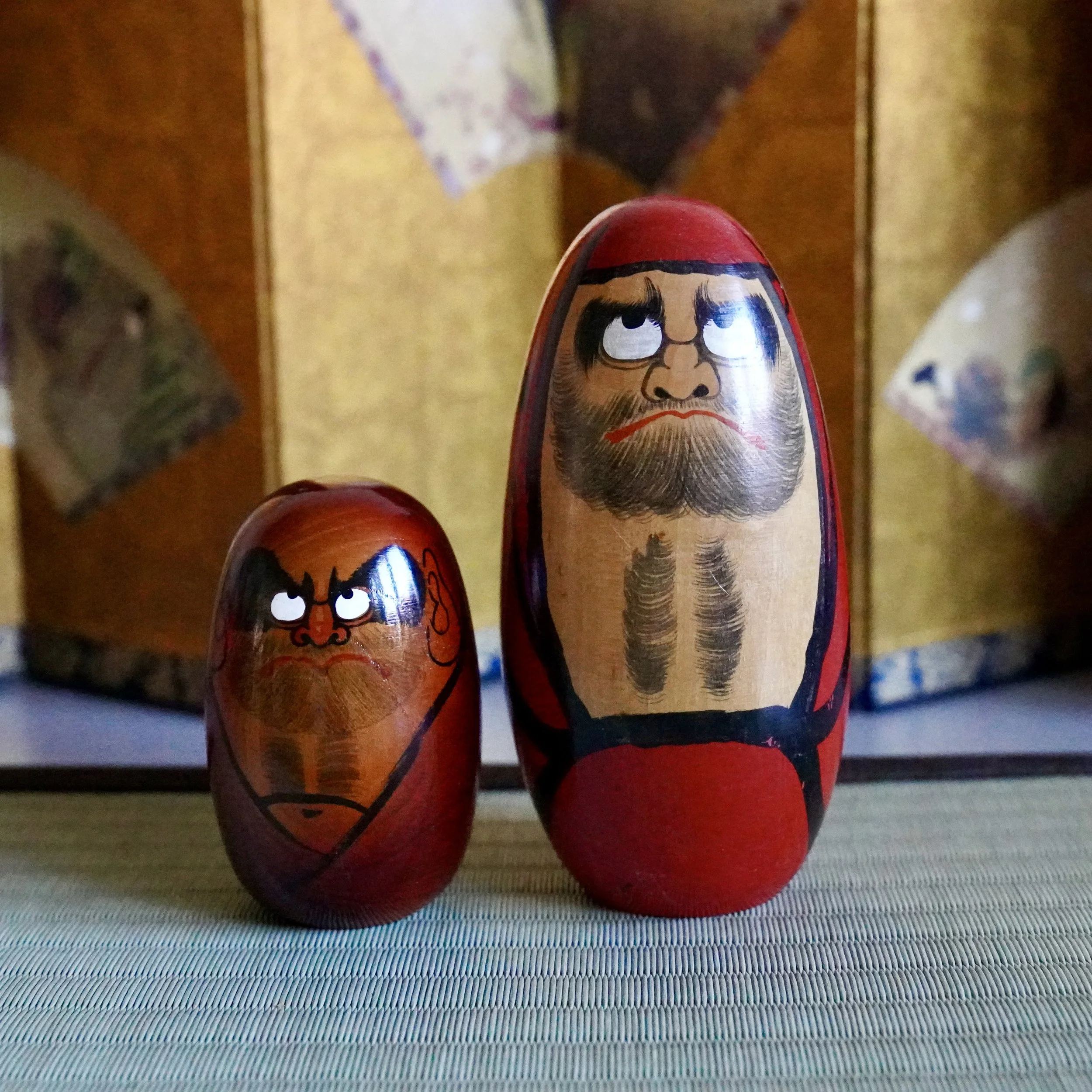
They look down with the kind of stillness that takes a moment to place, heavy lidded eyes under thick brushed eyebrows on the larger figure, the same sharp piercing eyes on the smaller one. A full beard is painted strand by strand rather than filled in flat, while vermilion lacquer sweeps around him in one unbroken line, giving way to a dark, almost black hood at the crown. Beside him, the smaller daruma that carries an deep warm lacquer worn into a darker tone where beside the decades of handling he still holds his shine.
Both take the armless, legless form associated with Bodhidharma, the monk said to have meditated so long in stillness that his limbs withered away, leaving only the seated shape carried in his memory ever since.
Both made by different well-known woodworkers. The larger daruma has a black seal pressed at its base, belonging to Shido Shozan, a Yamagata carver known chiefly for his sōsaku kokeshi rather than daruma like this one. The smaller daruma is made by Seifu Gono. A mingei craftsman known for turning keyaki, the slow growing Japanese zelkova prized for its depth of grain, into figures exactly like this one. Keyaki is not an easy wood to source, it takes centuries to mature, and Gono treated every piece as something meant to outlast him.
Curious where this expression comes from in the flesh? I found a thousand versions of it on one hillside in Osaka. Read about it in my journal.
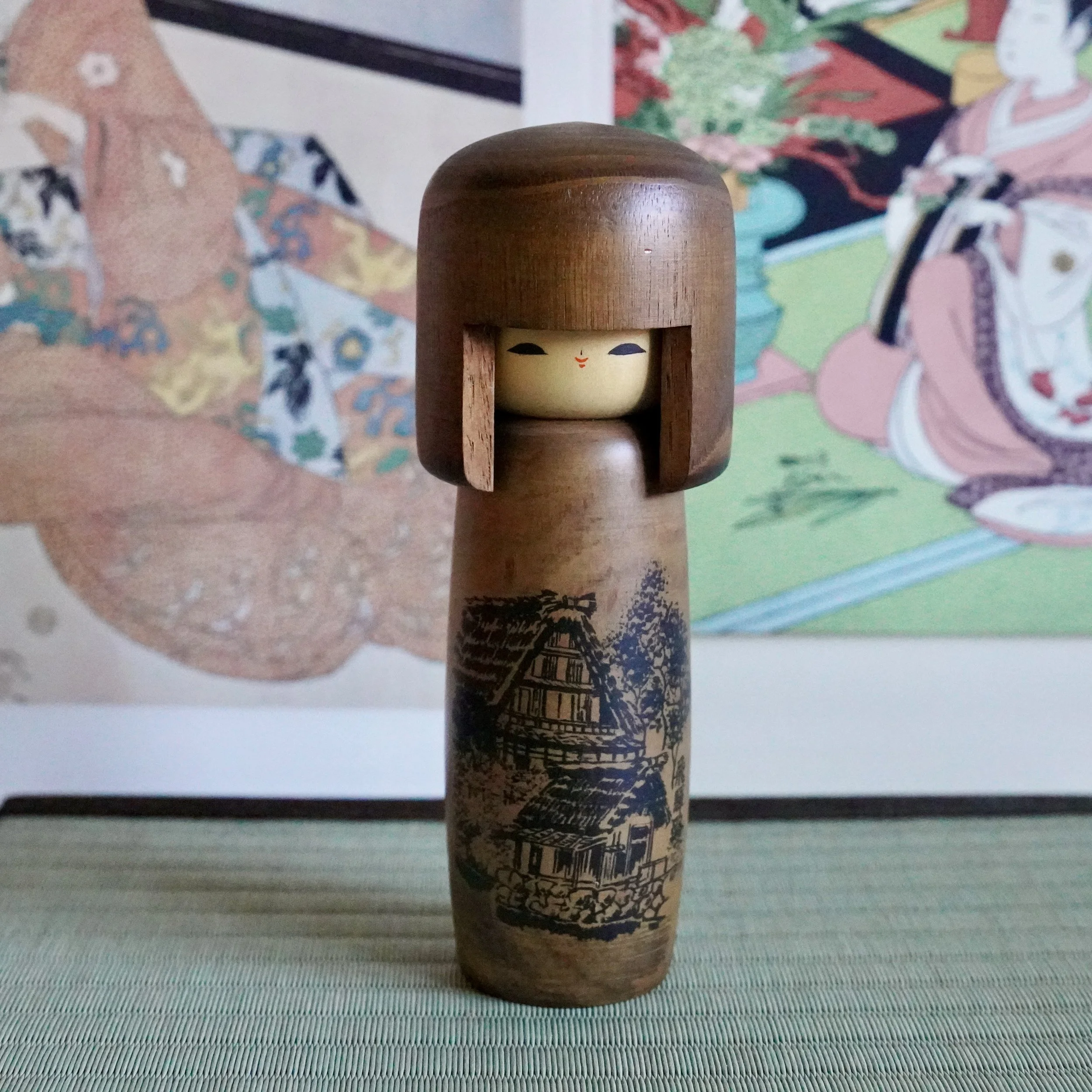
She looks out from under a heavy dark bob, two sliding wooden panels framing a small painted face with the calm, slightly downturned eyes typical of a well made kokeshi. Turn her around and the whole story changes: her body carries a painted scene, thatched farmhouse roofs rising steeply against a stand of trees, rendered in dark ink tones against the warm honey wood, like a print laid straight onto the grain.
Usaburō Kokeshi was founded by Okamoto Usaburō in Shinto Village, Gunma Prefecture, in 1950. Rather than following the strict regional patterns of traditional kokeshi, his workshop became known for sōsaku kokeshi, free in subject and form. Sometimes painting real places travellers had visited directly onto the wood. This particular scene depicts the Hida road, the old route through the mountains of Gifu Prefecture that leads to Takayama and the thatched villages of Shirakawa-go, a well loved keepsake from one of Japan's classic postwar travel routes.
Interested to read more about the woodworking on kokeshi like Usaburo? I wrote about it in my journal.
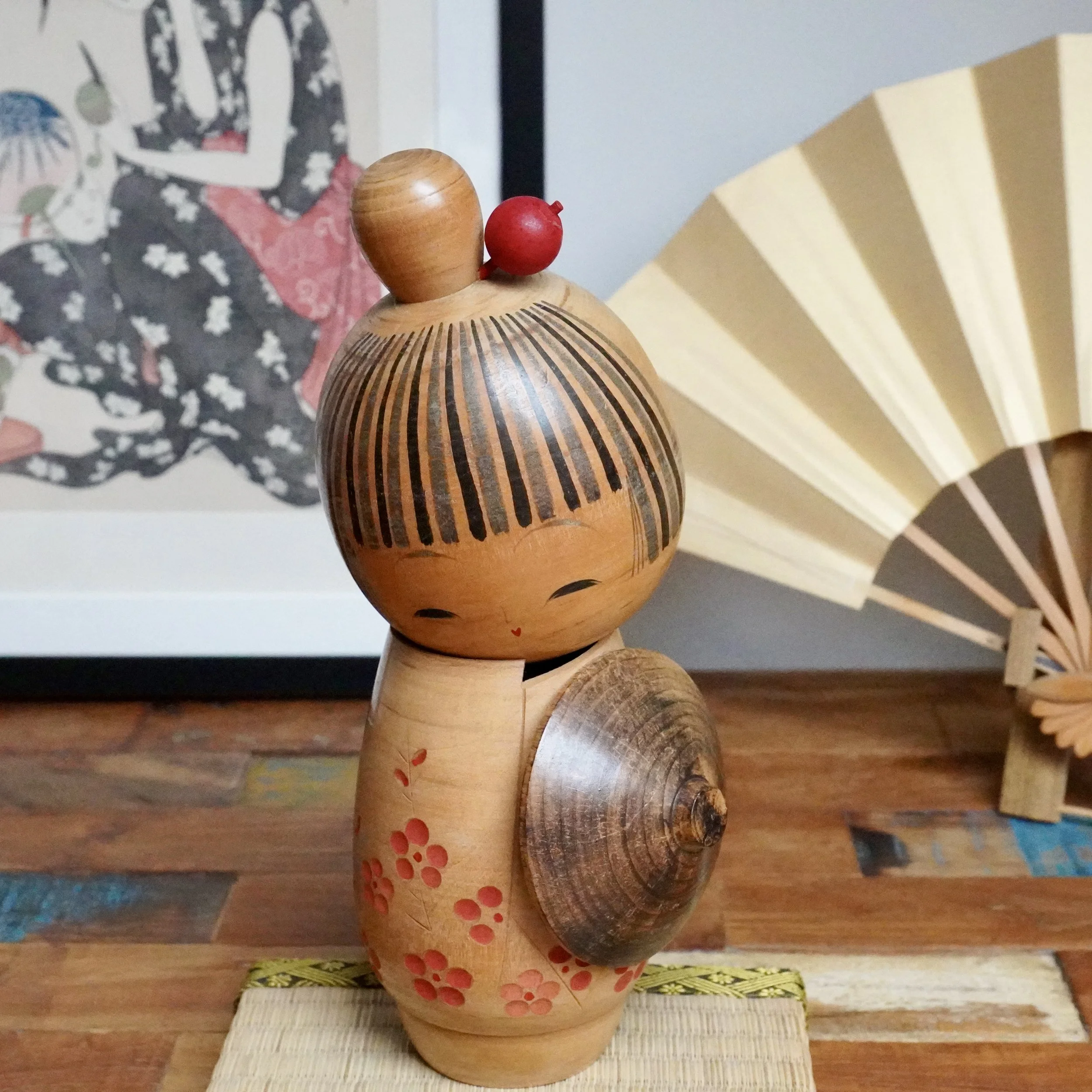
She stands taller than most kokeshi you will come across, and heavier too, with real weight settling into your palm the moment you pick her up. The head is covered edge to edge in fine combed striping, dark lines cut close together into a rounded cap, with a single red wooden bead perched at the crown like a stray plum bud. Sprays of red plum blossom trail down the body, each one carved first and filled with pigment after, and held against her side is a separately turned wooden kasa, a wide travel hat, raised the way a Heian noblewoman would once have lifted hers to shield her face on the road. Nothing about the proportions is timid: this is a maker working at full scale and full confidence.
The base carries the brush signature of Suigai, a painter who found his real language in wood. He spent a lifetime letting plants speak for people, plum blossom especially, always returning to it the way you return to a word that still means something. That instinct is what earned him Japan's Prime Minister's Award, but it is also simply what makes this particular figure feel considered rather than decorative. You are not buying a doll. You are buying the version of plum blossom one specific person kept coming back to, and decided, of everything he could have painted, this was worth painting again.
→ Interested to read more about the woodworking on kokeshi like these? I wrote about it in my journal.
→ Curious about the theme behind this pose? I wrote about oshinobi dōchū, the Heian tradition of travelling in disguise, in my journal.
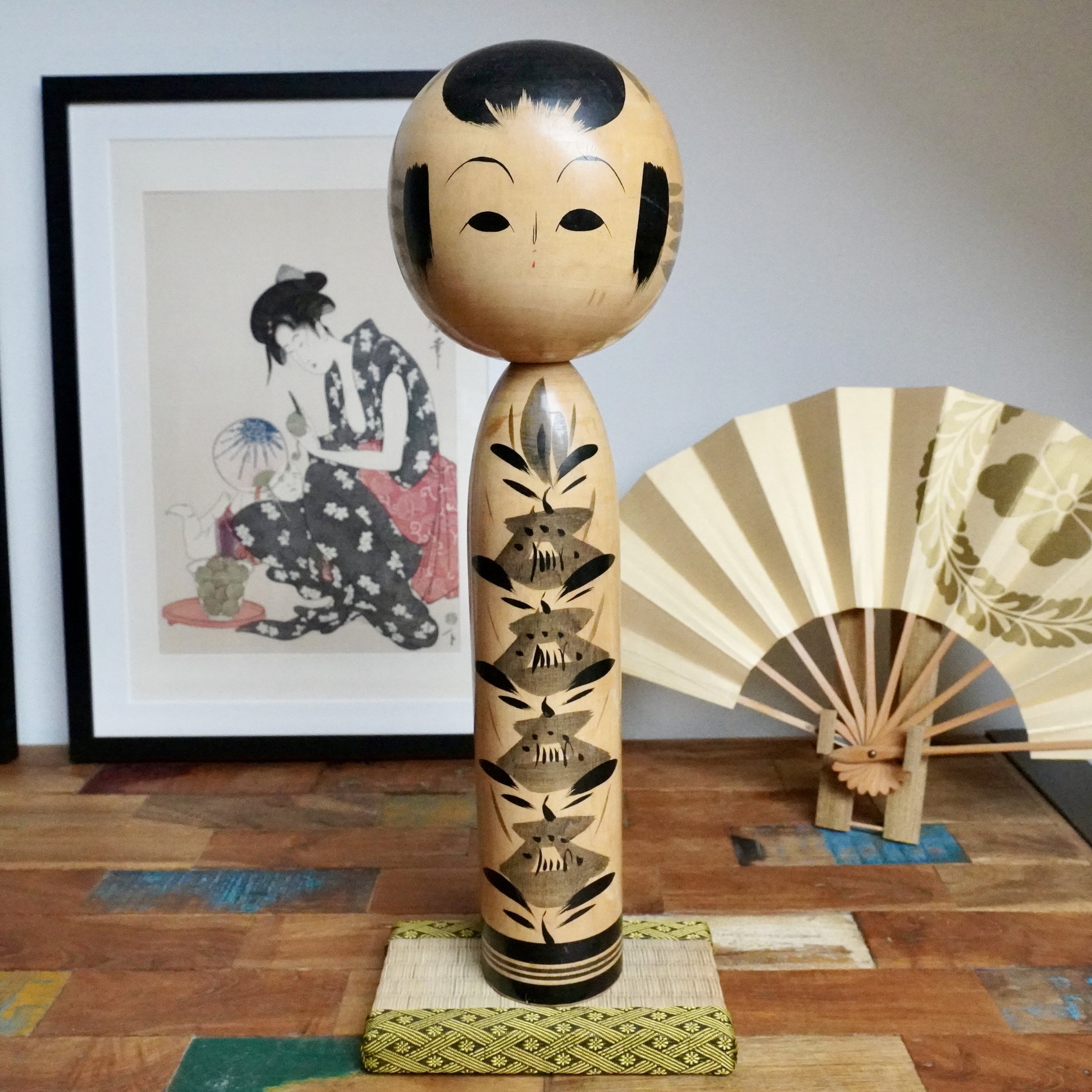
He looks caught mid turn. One section of his dark hair is brushed back in short, dry streaks, as if just ruffled, while the rest sits in a neat round cap above a calm, half lowered gaze. Down the long cylinder of his body, four flowers stack in grey and black, each bloom slightly different from the one above it, hanging leaves drifting between them. There is a stillness to him that a mass produced kokeshi rarely has, the kind that comes from a hand working without a template.
At 46.5 centimetres, this is not a doll you tuck onto a shelf and forget, it commands a room the way only a handful of vintage kokeshi can. The name on the base, Tetsuen, belongs to a small, tightly knit Shiraishi workshop where a style was considered worth keeping alive even after its maker was gone. Female kokeshi maker Chiyoko Hamatsu picked up the brush in her brother in law's memory and kept his flowers blooming for another four decades. Owning a piece like this means owning both the scale and the story, a kokeshi large enough to anchor a room and old enough to carry a small piece of a family's determination not to let something disappear.
Want to understand the difference between dentō and sōsaku kokeshi? I wrote about it, with a trip through Fukushima along the way.
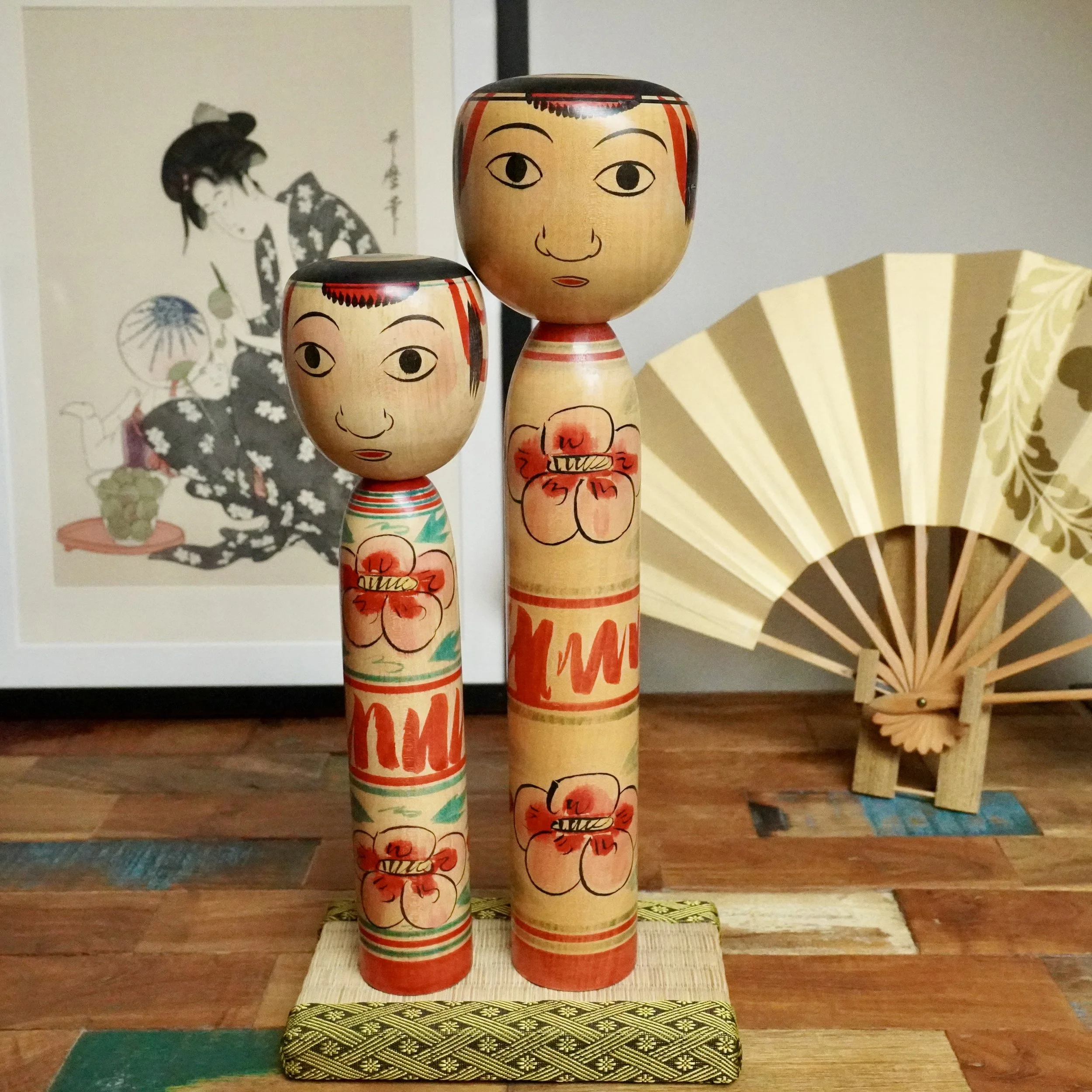
Two takobozu kokeshi standing shoulder to shoulder, the way they were clearly made to be seen. Both have that unmistakable oversized round head and the wide, startled eyes rimmed in red that give this Nakanosawa style its nickname, octopus priest.
This is not two random old kokeshi that happen to look similar. They come from one hand, a hand trained directly by Iwamoto Yoshizo, the man who carried this exact design forward after his father invented it. Tokuju spent the rest of his life protecting that design rather than putting his own spin on it. That is rare enough to be worth a spot on a shelf where you will actually see it every day, not tucked away as an investment. A signed pair like this, from a maker specialists still name when they talk about this style, is not something you will come across twice.
→ Want to understand the difference between dentō and sōsaku kokeshi? I wrote about it, with a trip through Fukushima along the way.
→ Curious how Tsuchiyu compares to the other ten traditional kokeshi lines? Read the full guide.
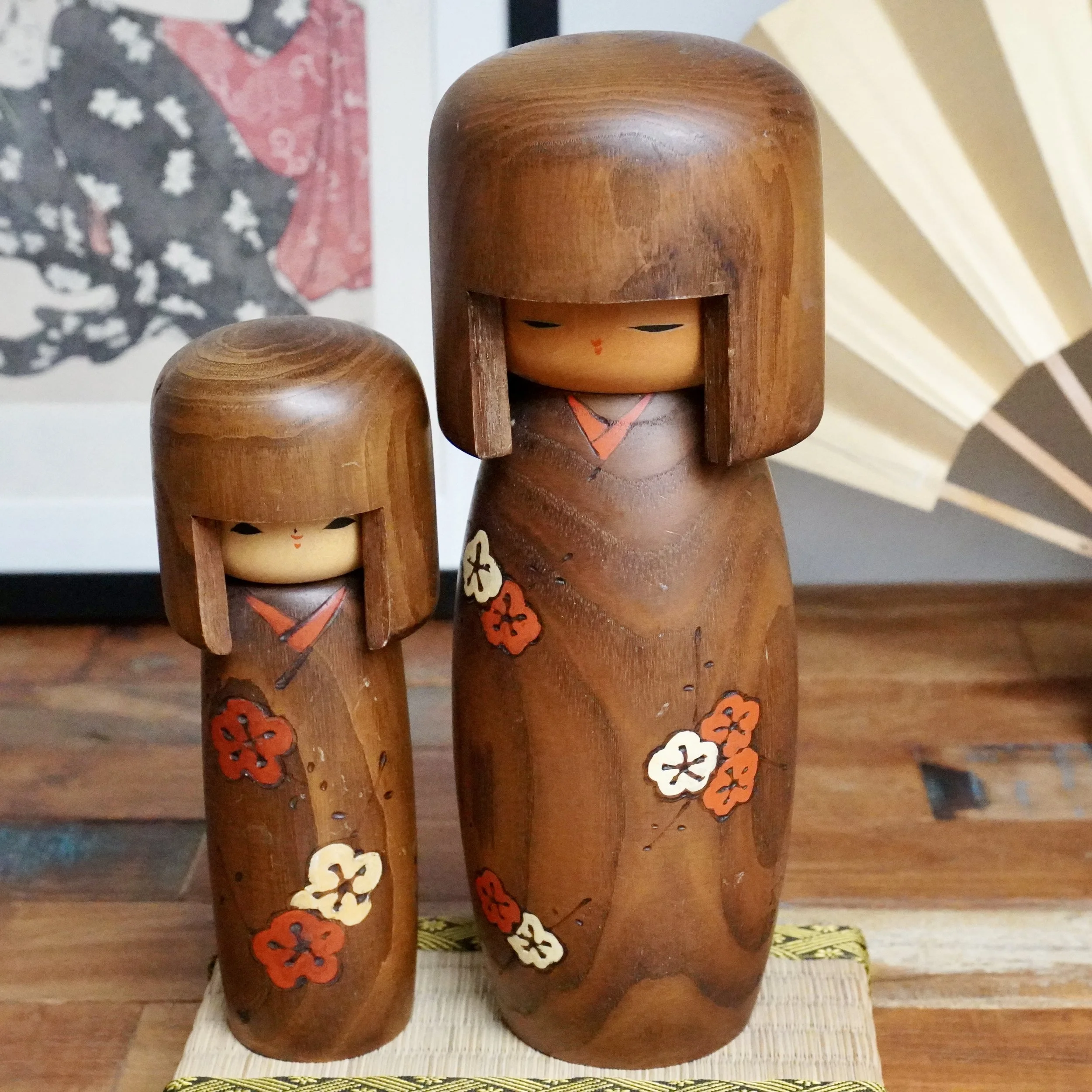
The hair on these two is the first thing you notice, and the last thing you expect. No black lacquer, no painted bob. Just the wood itself, left to show its own colour and grain, warm and pale where the light catches it. Below, plum blossoms scatter across both figures in red and cream, unhurried, some caught mid-branch as if the painter simply stopped when the flower looked right. The larger figure stands with quiet composure, the smaller one echoes her almost exactly, a pair clearly made to be seen together.
Usaburo's studio built its reputation on the opposite of this: a glossy black bob that became so recognisable it is often the first thing collectors associate with the name. This pair by Yuji Okamoto, second generation of the workshop, does something quieter. Leaving the natural wood exposed where paint would usually go asks the material to carry the character instead of colour doing it for him. It is the same hand and the same studio you find behind some of the most awarded creative kokeshi in Japan, working here in a lower key.
Interested to read more about the woodworking on kokeshi like these? I wrote about it in my journal.
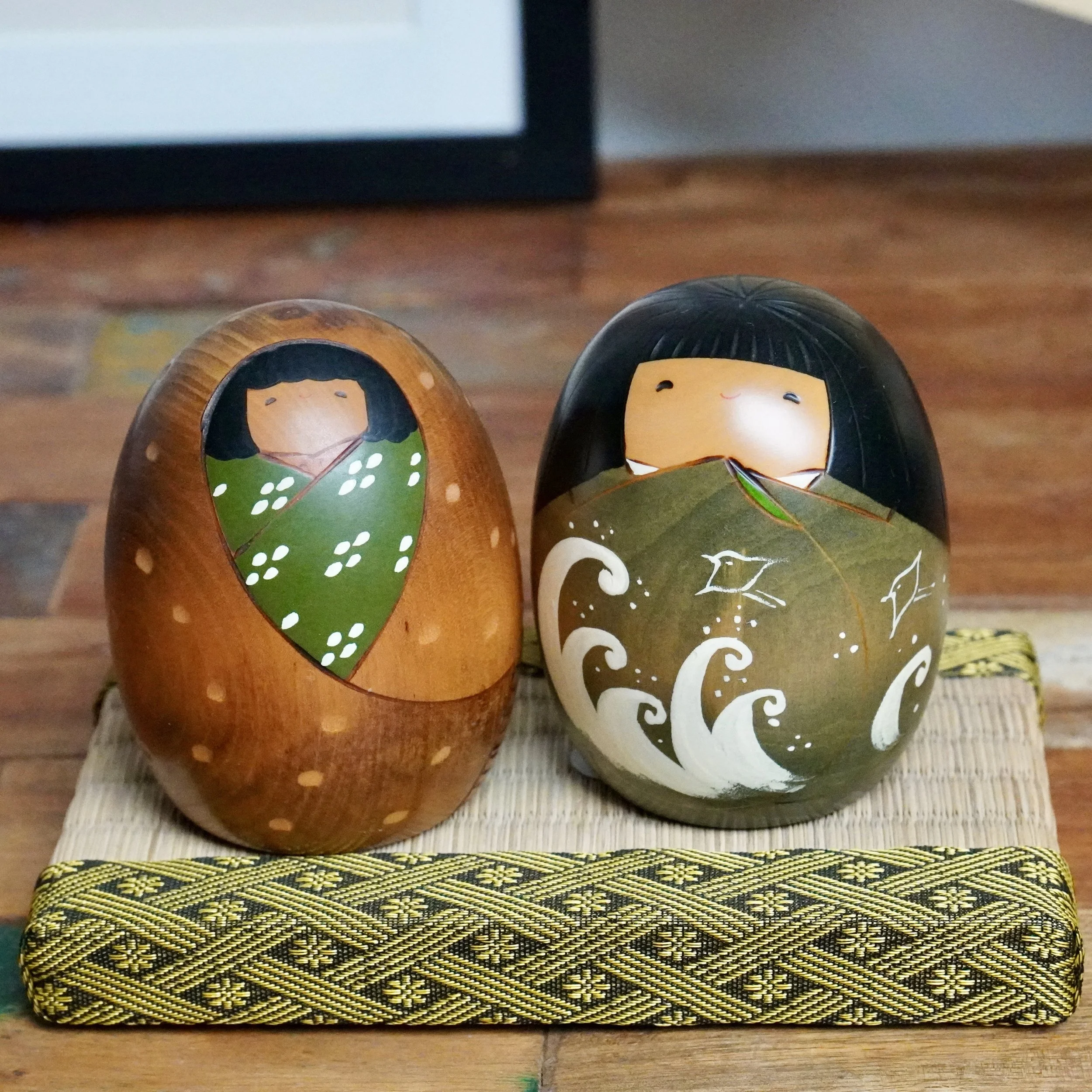
Two small egg-shaped figures, standing no taller than a teacup, each carrying its own season on its body. One is wrapped in soft olive waves that curl toward a pair of birds caught mid-flight. The other is scattered with dozens of white, snow-like specks that spill straight onto the kimono without a break. Side by side they hold a kind of quiet balance, warm summer green against honey-brown winter, two halves of the same idea standing a hand's width apart.
These two belong to Okamoto Usaburō's "Shiki no Uta," (Poem of the Four Seasons) a design created for his workshop at the foot of Mount Haruna in Gunma. Usaburō spent his career developing carving and burning techniques that let wood carry more expression than kokeshi traditionally allowed, work that eventually reached the collection of Emperor Shōwa.
This pair represents summer and winter from his four-part seasonal design, and the softer linework and gentle surface patina on both place them earlier in the workshop's long production history, well before the cleaner, more uniform look of the pieces made today.
Interested to read more about the woodworking on kokeshi like these? I wrote about it in my journal.
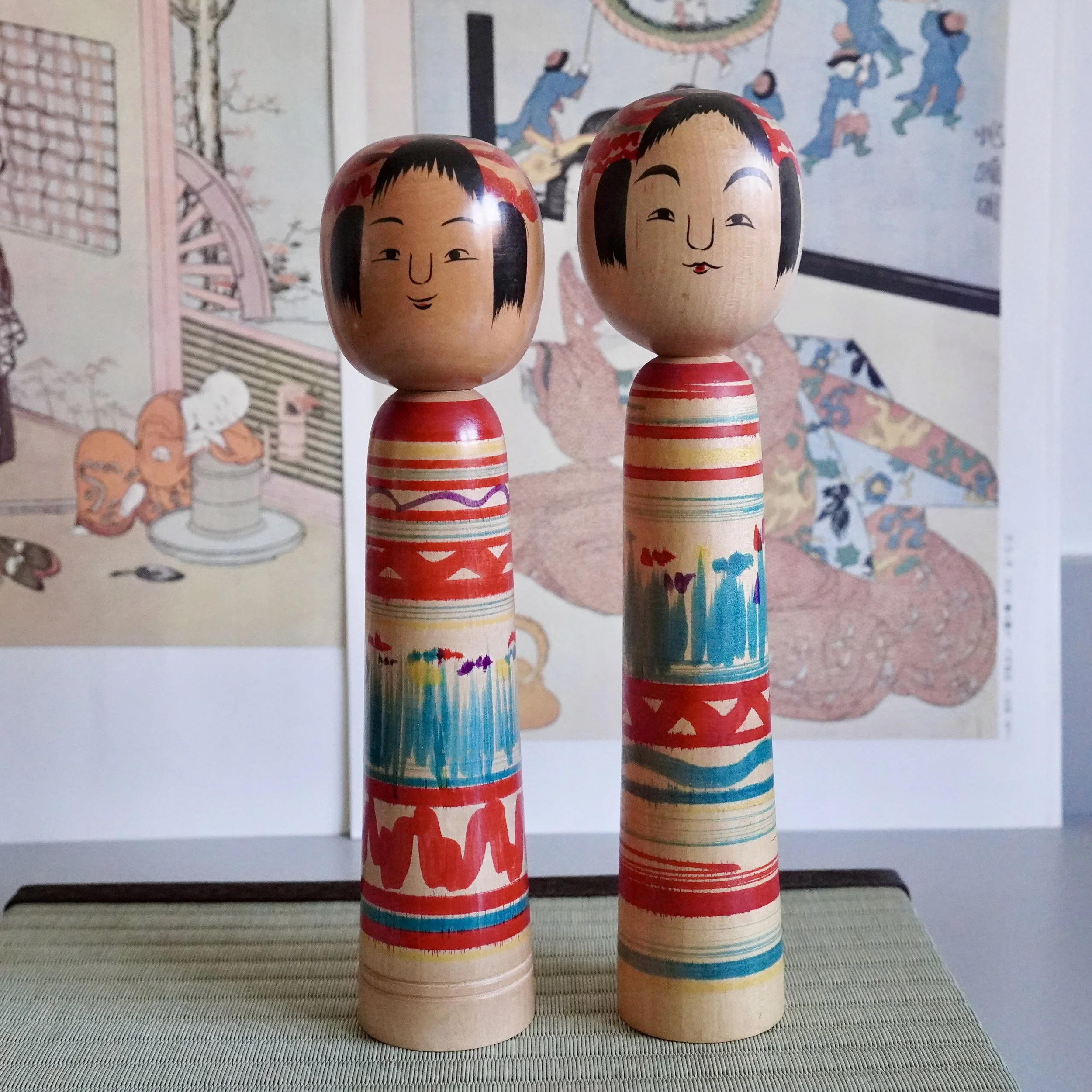
Two faces, nearly identical at first glance and then not at all. One laughs with its mouth open, a flash of red catching the light like a hint of tongue. The other's mouth is small, round and pursed, closer to a kiss than a laugh. Tilt either head and it turns with a small resistance and a soft squeak, the same trick Tsuchiyu makers have used for generations. Both dolls are signed on the base by Jinnohara Kazunori (陳野原和紀). More info on the makers page.
Where they differ further is the hand that painted the bodies. One carries a busier decoration, a looping purple line, a wider red band, a restless zigzag near the base, the wood warmer and more time worn. The other stays quieter, its red kept narrow and calm. The motif itself, a scatter of grass and small flowers, traces back to Kazunori's lifelong reconstruction of the historic Kumematsu style.
Want to understand the difference between dentō and sōsaku kokeshi? I wrote about it, with a trip through Fukushima along the way.
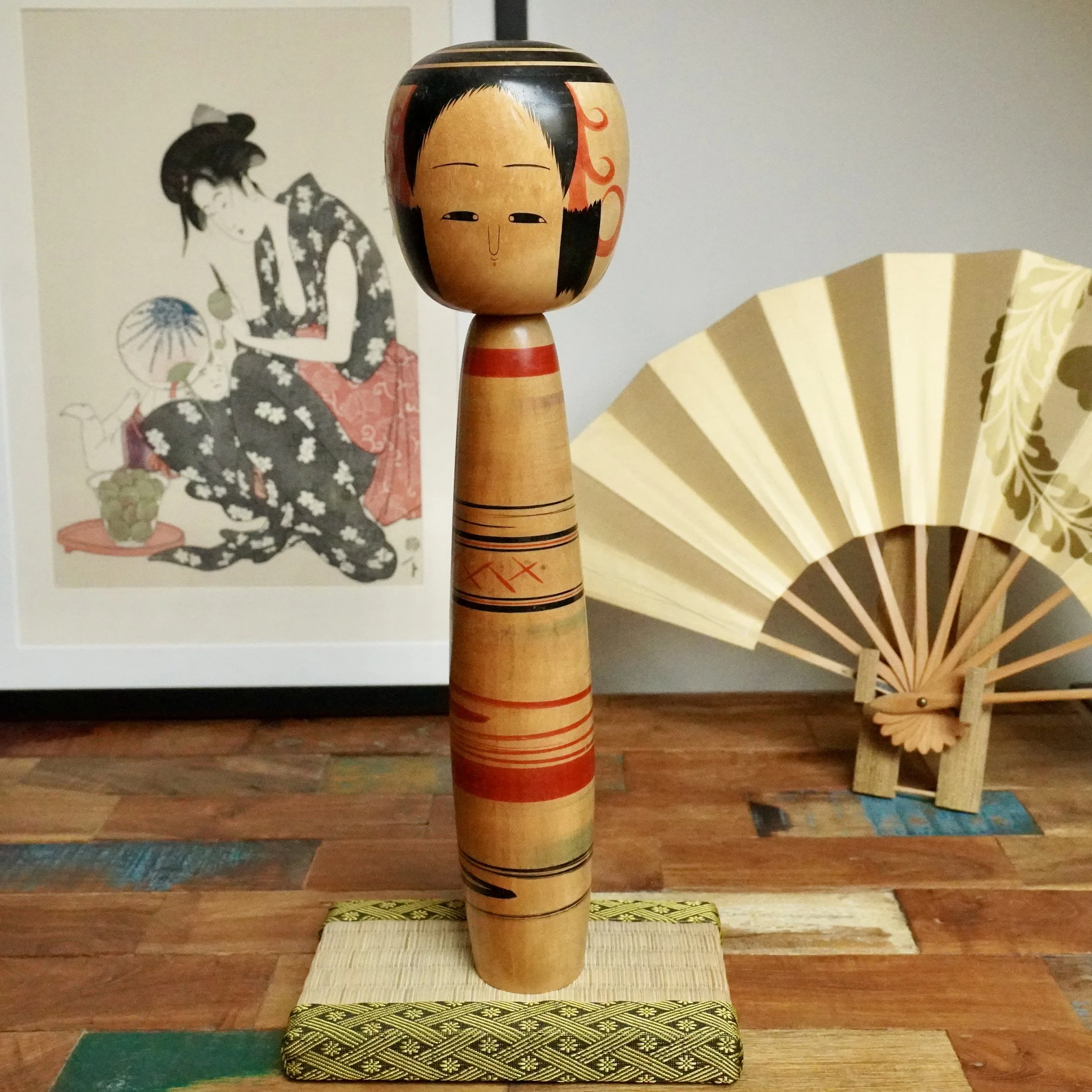
At 37 centimetres this kokeshi commands rather than decorates. The body tapers from a broad shoulder down to a narrow base in one long, uninterrupted line, and the proportions are exactly right: it reads taller than it measures. The banding is bold, red and black on pale natural wood, with small painted crosses breaking the rhythm of the stripes just enough to hold the eye. This is a piece that works from across the room.
Tilt her head and she answers back, a soft, hollow squeak from the loose-fitting joint where the head meets the body, the same trick every Tsuchiyu maker has used for generations. What marks this particular piece is the banding itself: a zigzag line dotted with small crosses partway down the body, breaking from the plain horizontal stripes typical of the tradition, followed by a single sweeping red arc lower on the torso, a freer, more painterly touch than the usual strict rings.
→ Want to understand the difference between dentō and sōsaku kokeshi? I wrote about it, with a trip through Fukushima along the way.
→ Curious how Tsuchiyu compares to the other ten traditional kokeshi lines? Read the full guide.
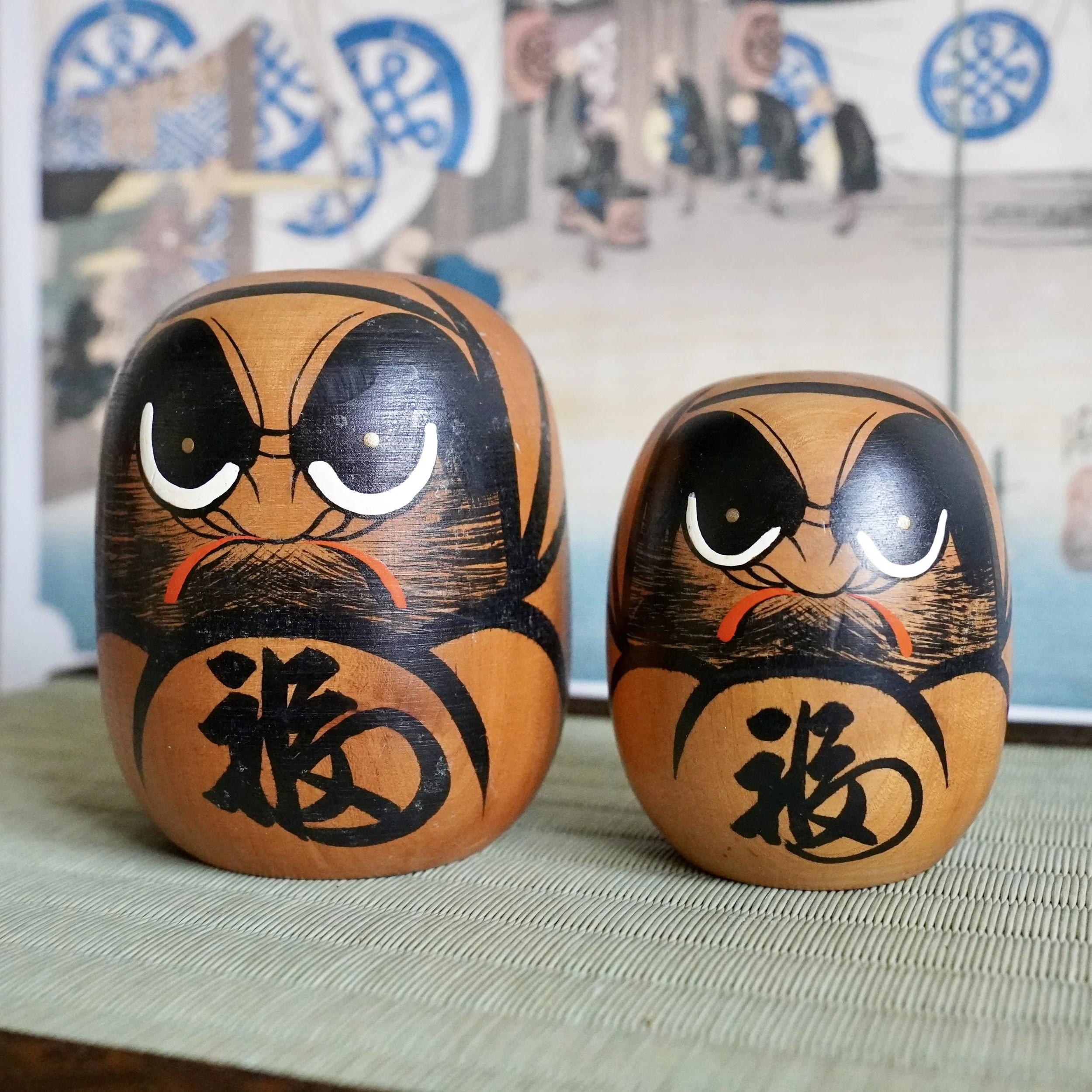
Two daruma sit together like a small, watchful family: one broad and full, the other its smaller echo. Both wear the same fierce expression, thick black brows drawn in a single confident stroke, eyes rimmed white around a dark centre, a short orange mustache below. On the belly of each, the character for fortune sits in solid black. Nothing about them is dainty. They look like they mean it.
Daruma dolls carry one of the most recognisable stories in Japanese folk craft: the wish made, the goal set, the eye left blank until the promise is kept. Pieces like this pair were turned on a lathe by the same craftsmen who shaped kokeshi, in the onsen towns of Tōhoku where wood was the material at hand and every visitor wanted something to bring home. No maker signed this pair. What they carry instead is smaller and more personal: a handwritten date on the underside, someone once marking the day this pair came into their life.
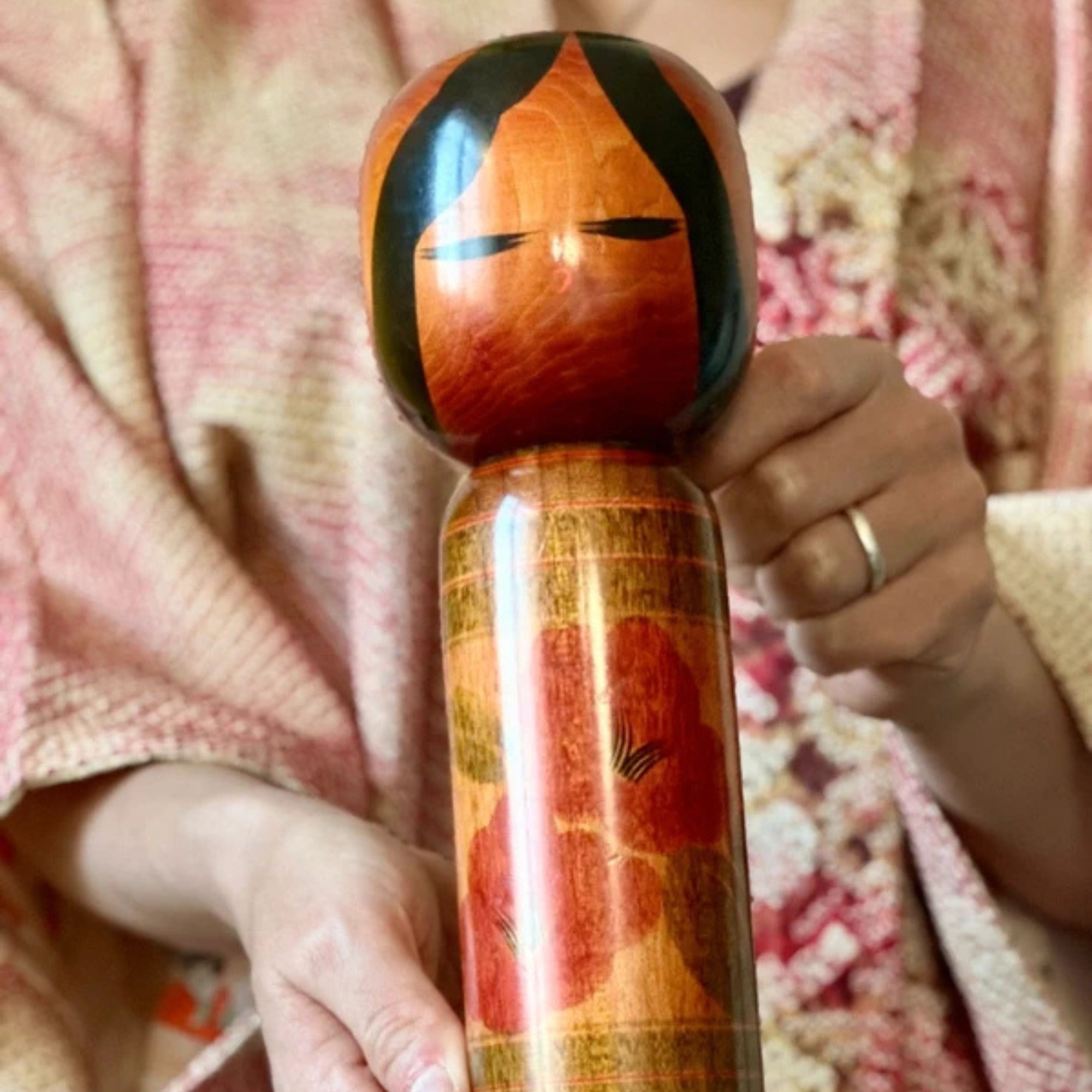
The half-dark head is what stops you. One side deep black, the other the warm reddish glow of the wood grain itself, and between them a face with heavy-lidded almond eyes that looks both ancient and entirely contemporary. Below it, two large camellia flowers in deep red fill almost the entire body.
Tsubaki Musume, Camellia Girl, is one of the most recognized designs in the sōsaku kokeshi tradition, and Tamura Noboru one of its most celebrated makers. He won the Prime Minister Award during his career and his work is collected internationally. This piece is signed on the base in his characteristic brushwork.
Tamura Noboru works from Studio Tamura Kogei, a creative kokeshi studio in Shibukawa, Gunma Prefecture. The same studio is also home to his wife: female kokeshi maker Tamura Chie, whose work under the name Chiei Saku has its own devoted following among collectors. More info on their makers page.
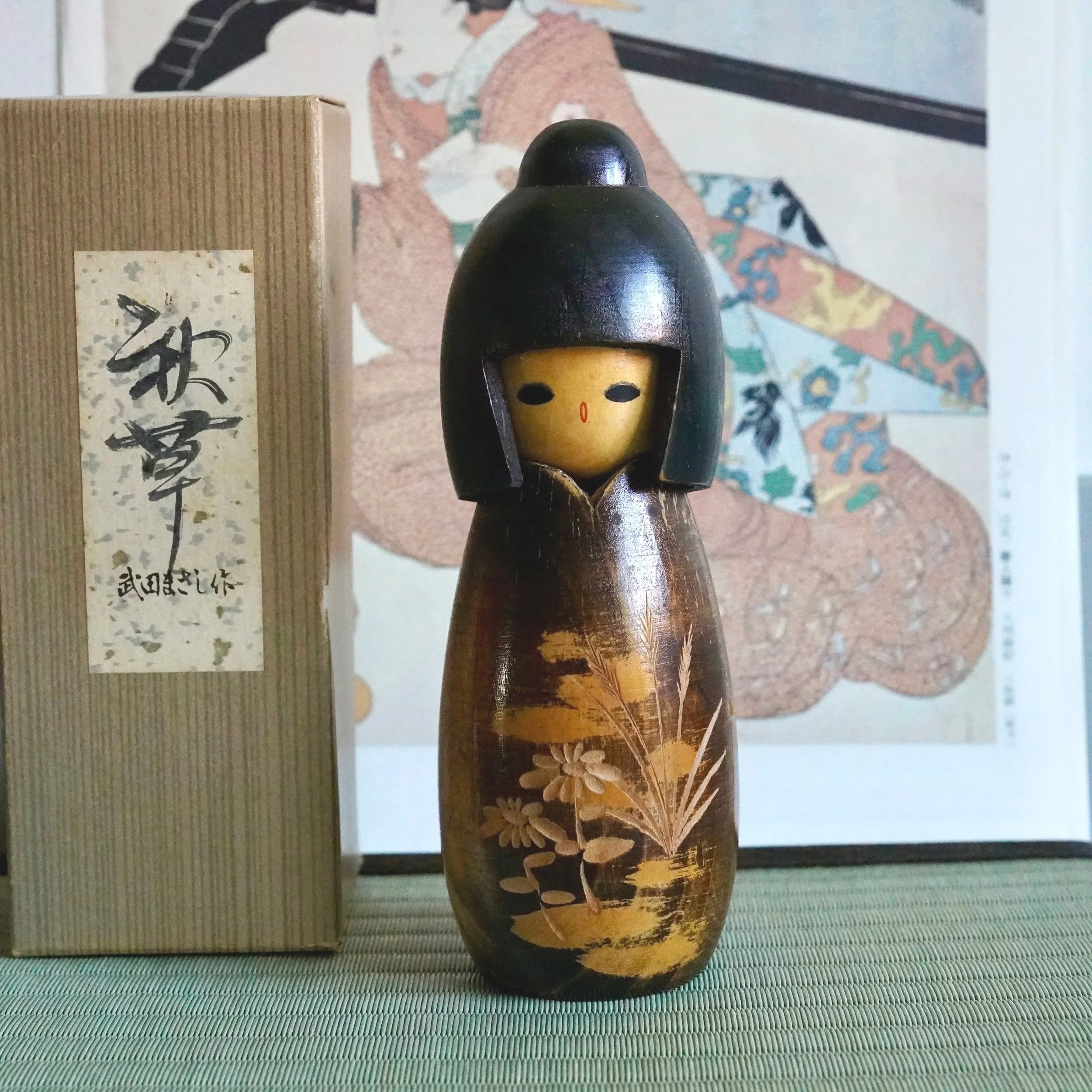
The body is deep lacquered brown, the colour of old teak in low light. Across the torso, autumn grasses and chrysanthemums are carved in low relief and left in their natural wood tone, so the decoration glows against the dark ground. The head sits directly on the shoulders, smooth and pure black, no neck, no detail. From across the room it reads as a single dark silhouette. Move closer, and the flowers appear.
This piece comes from the hand of Takeda Masashi (武田まさし, 1930 to 2015), one of the most recognised names in sōsaku kokeshi. Masashi worked from Zaō in Yamagata, a mountain region that became a quiet centre for creative kokeshi making in the mid-twentieth century. His studio was known for exactly this: dark lacquered bodies, carved naturalistic relief, and a formal restraint that sets his work apart from the brighter painted styles of other kokeshi traditions.
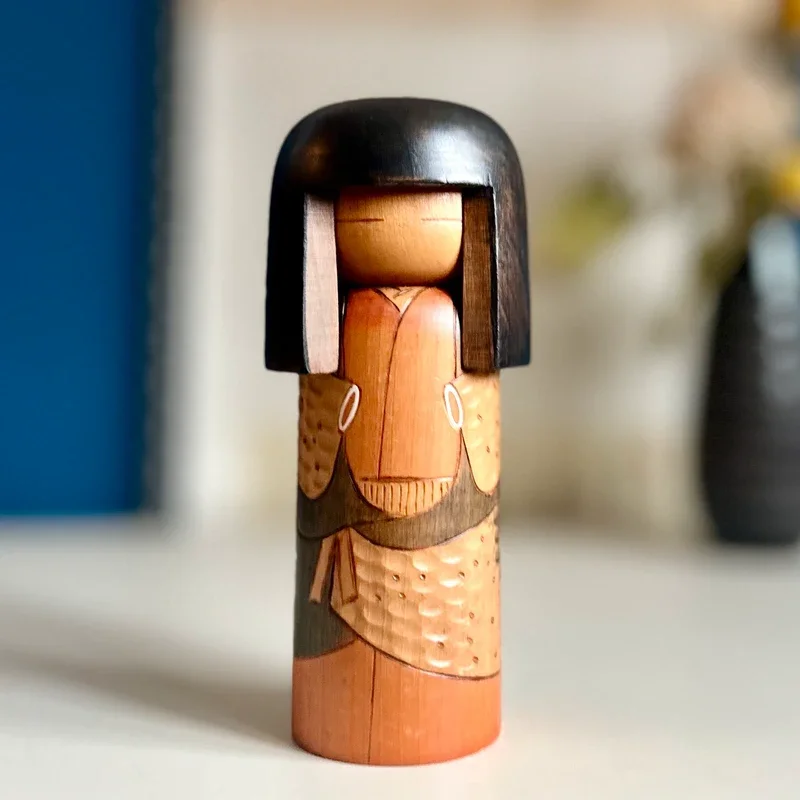
She stops you because of the detail. The dark outer kimono falls open at the sides to reveal a warmer inner robe, and each layer carries its own incised pattern: broad sleeves with carved surface texture, a lower section in dense relief that reads like heavy woven cloth. The face is minimal, the dark hair close and smooth, and none of it competes with what is happening on the body. She is a figure that rewards a second look and a third.
Kisaku (喜作) was active in the sōsaku tradition through the 1960s and 1970s, and his carved pieces are consistently sought by collectors for the quality and restraint of the cutting. What makes this figure technically demanding is the layering: each area of the kimono is treated differently, the transitions between inner and outer robe carved cleanly without losing the sense of depth. The signature is brushed in ink directly onto the base.
She has a sister: a second Kisaku figure from the same period, rounder in form and decorated with incised ume plum blossoms. Both are available separately. You can find her here.
Interested to read more about the woodworking on kokeshi like these? I wrote about it in my journal.
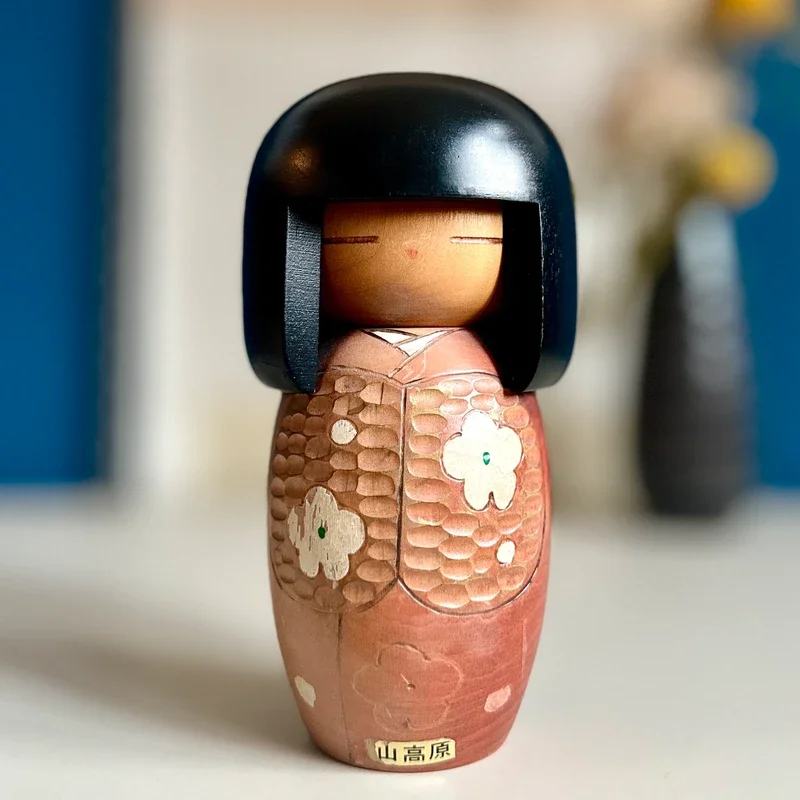
She is rounder and softer than most sōsaku figures of this size, the terracotta ground warm against the white of the carved plum blossoms. The flowers sit in shallow relief across her body, petals cut directly into the wood with white pigment worked into the recesses, each one slightly different from the next. The dark hair is smooth and close, the face simple and settled. She is the kind of object that reads clearly from across a room and rewards you further when you pick her up.
Kisaku (喜作) worked in the sōsaku tradition through the 1960s and 1970s, and his carved pieces are consistently sought by collectors for the quality and restraint of the cutting. The ume plum blossom is among the most traditional motifs in Japanese decorative craft, and placing it on a kokeshi in this form, incised rather than painted, without additional ornament, is a choice that relies entirely on the maker's confidence in the technique. Signed with the red hanko on the base.
She has a sister: a second Kisaku figure from the same period, taller and more angular, her outer kimono carved with broad sleeves and layered incised textile patterns. Both are available separately. You can find her here.
Read more about the woodworking on kokeshi in my journal.
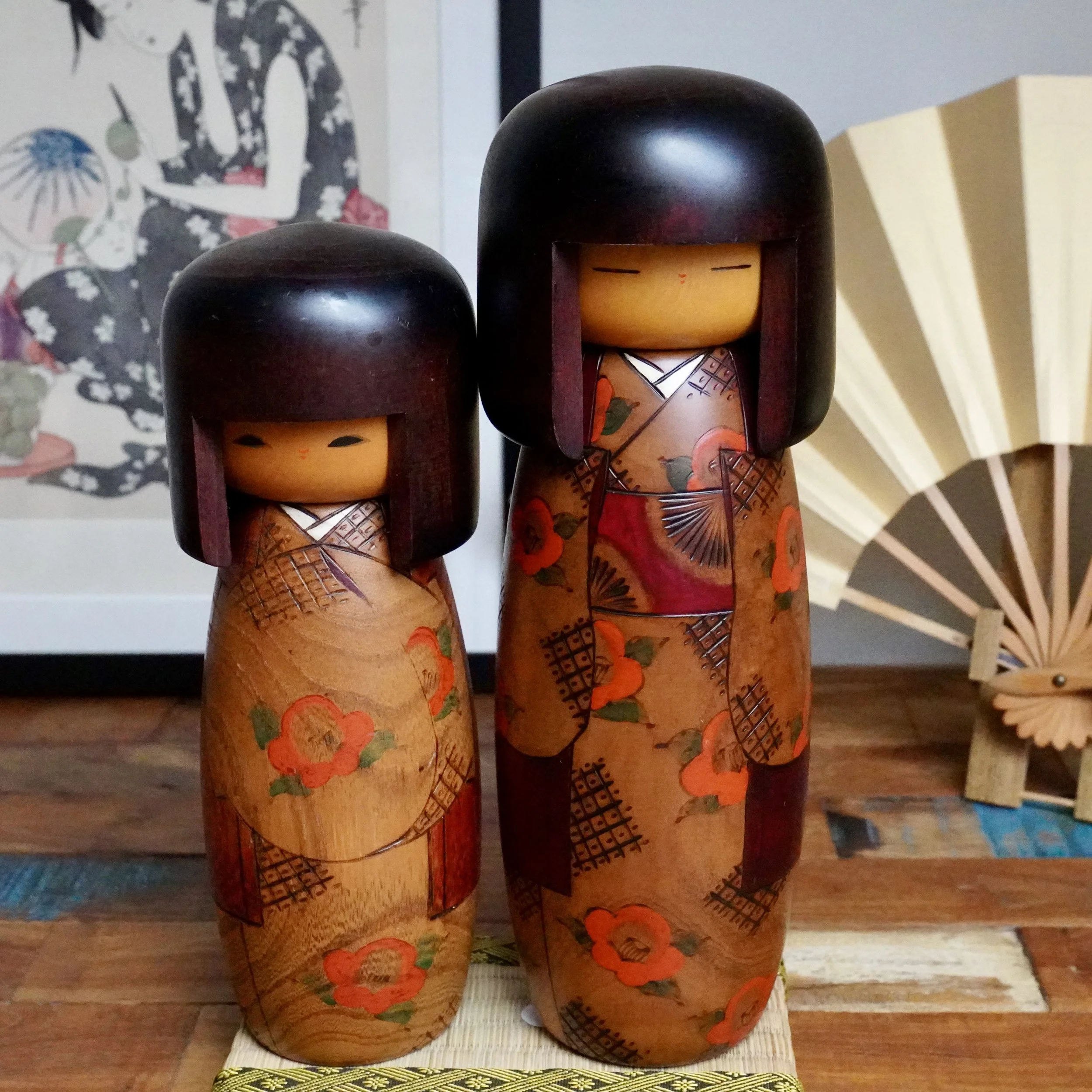
The zelkova grain runs through the entire body of this kokeshi like a landscape, visible beneath the painted camellia flowers and the yakie-burned fan and lattice decoration of the kimono. The dark upper section of the body, a deep burgundy against the warm honey of the wood below, is not paint covering the material. It is the material, treated and turned until it reached that colour. The proportions are generous: broad at the shoulder, tapering at the base, heavier in the hand than you expect.
Usaburo Kokeshi was founded in 1950 in Shinto Village, Gunma Prefecture, by Okamoto Usaburo, the craftsman who introduced the yakie burning technique to sōsaku kokeshi and worked with zelkova and chestnut at a time when most makers dismissed these woods as unsuitable. His studio went on to win the Minister of International Trade and Industry Award at the All-Japan Kokeshi Competition, one of the most significant government recognitions in Japanese craft.
The sticker on the larger of these two pieces carries exactly that award. The zelkova grain visible beneath the kimono decoration is central to what Usaburo built his reputation on: the wood is not hidden, it is part of the design.
Interested to read more about the woodworking on kokeshi like these? I wrote about it in my journal.
The first thing you notice is the hat. It stops you before you understand what you are looking at. Below it, the body is built from rings of different wood, each one a slightly different tone of amber and chestnut, pressed together in warm tiers. At the very top, a painted face, small and precise.
Someone thought carefully before they made it.
Seiju Kon, whose given name is Kon Akira, was born in 1931 in the Yamagata area and studied under master woodworker Hasegawa Tatsuo. His work is rooted in the Tsugaru kokeshi tradition and he returned, throughout his career, to a small set of subjects: figures from Noh theatre, women of the Heian court, characters from the world of classical Japanese performance and rank.
She is one of those. She belongs to a series he made across decades, and it is immediately recognizable to anyone who has seen his work before.
→ Interested to read more about the woodworking on kokeshi like these? I wrote about it in my journal.
→ Two makers took on the same disguised traveller in very different ways. Read more about this in my journal.
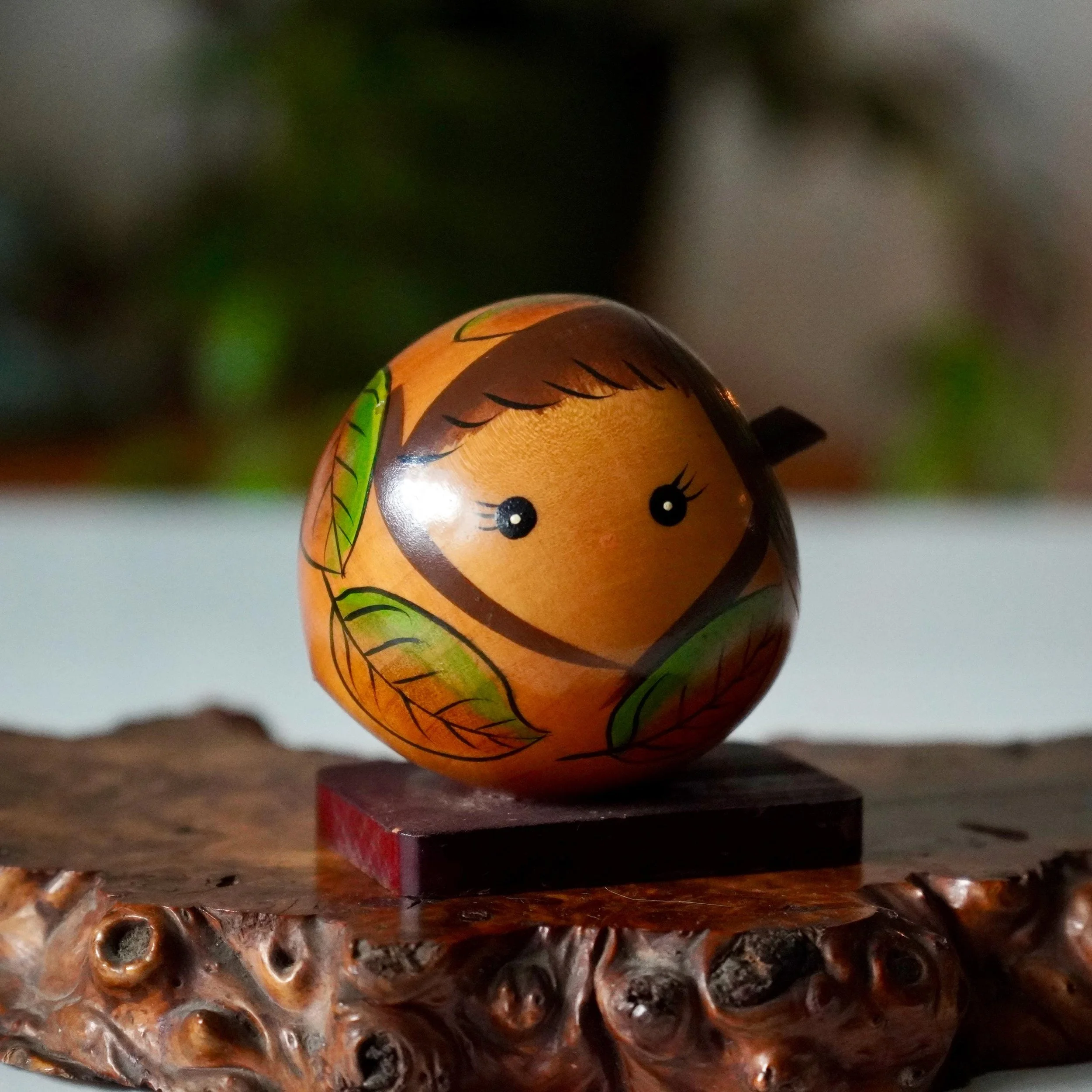
She sits in your hand like a small warm stone. The form is a single unbroken sphere, no neck, no waist, no separation between head and body, just one continuous round shape with a tiny stem at the top and a face tucked quietly into the side. Two round eyes with lashes look out from between painted autumn leaves.
Her maker Chie is one of the few widely recognised female masters in the sōsaku tradition. She is known for translating natural forms directly into wood, and this piece is exactly that: not a doll holding a leaf motif, but a doll that is the thing itself, an acorn that became a girl, or a girl that became an acorn.
Tamura Chie works from Tamura Kogei, a creative kokeshi studio in Shibukawa, Gunma Prefecture. The same studio is also home to her husband Tamura Noboru, one of the most celebrated names in sōsaku kokeshi and a Prime Minister Award winner.
Interested to read more about the woodworking on kokeshi like these? I wrote about it in my journal.
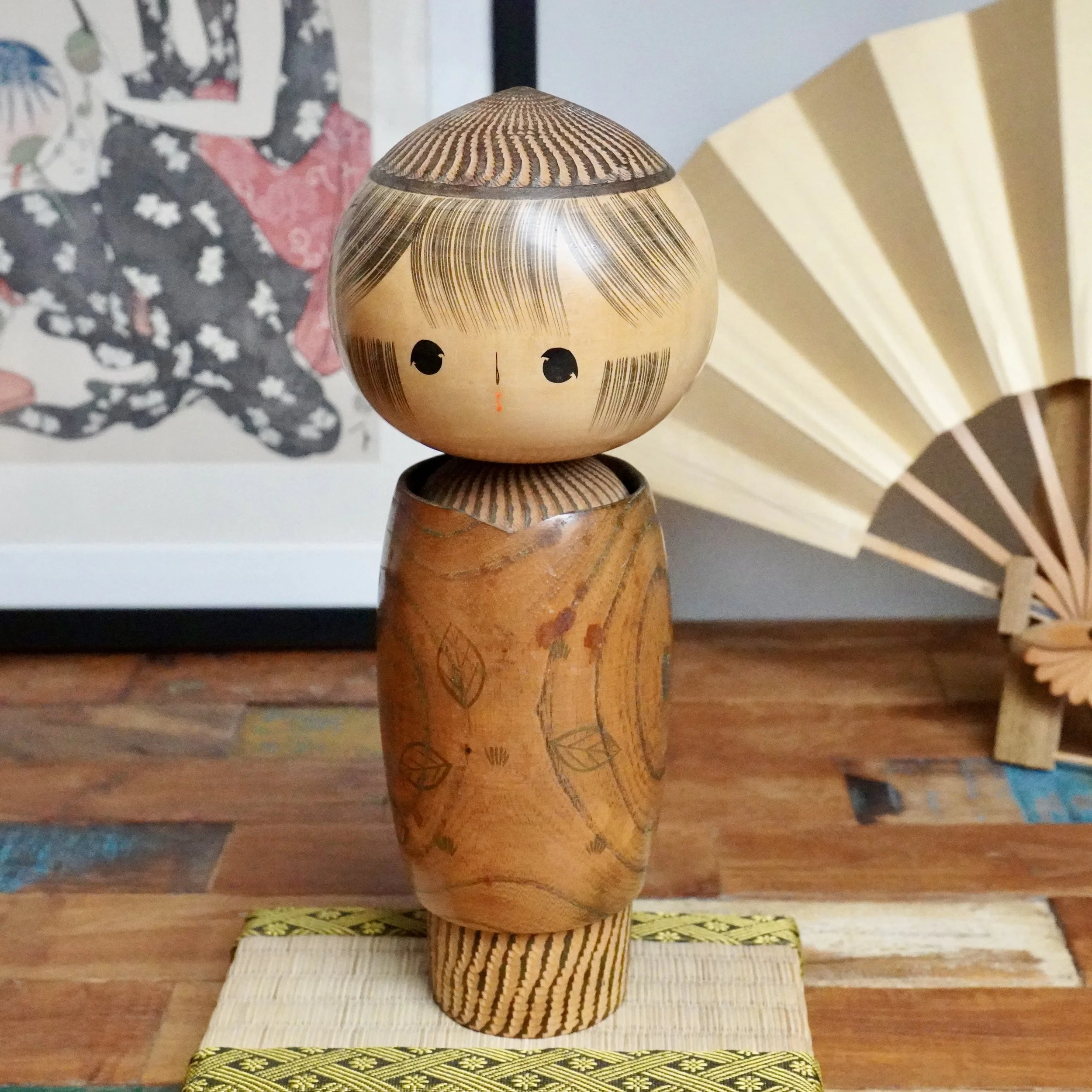
The grain of the wood is doing most of the work here. Tamura Noboru turned this piece of keyaki so the annual rings wrap around the body in concentric arcs, one layer visible through the next, the whole surface reading as landscape rather than material. The leaf motifs painted on the body sit inside that grain rather than over it. The burnt stripes at the collar, head and base mark the transitions the way a line drawing marks a contour.
Tamura Noboru is one of the most recognised names in sōsaku kokeshi, the tradition of creative artist-made kokeshi that emerged in the mid-twentieth century as makers began working outside the strict regional styles. He received multiple awards across his career, including the Prime Minister Award, Japan's highest recognition in traditional craft.
Noboru works from Studio Tamura Kogei, a creative kokeshi studio in Shibukawa, Gunma Prefecture. The same studio is also home to female kokeshi maker Tamura Chie, whose work under the name Chiei Saku has its own devoted following among collectors. I have kokeshi from her as well, you’ll find it under this page among the related items.
Interested to read more about the woodworking on kokeshi like these? I wrote about it in my journal.
Questions before you buy?
Since my items are one-of-a-kind pieces, I want to ensure they reach you perfectly.
Questions about the history or condition?
Need a custom shipping quote or shipping outside the EU?
Prefer to see more detailed photos or a video?
Reach out to me directly. I'm here to help you find the perfect piece for your home.
✉️ hello@kaikoandco.com
💬 Instagram DM: @bykaikoandco
Pages from my journal
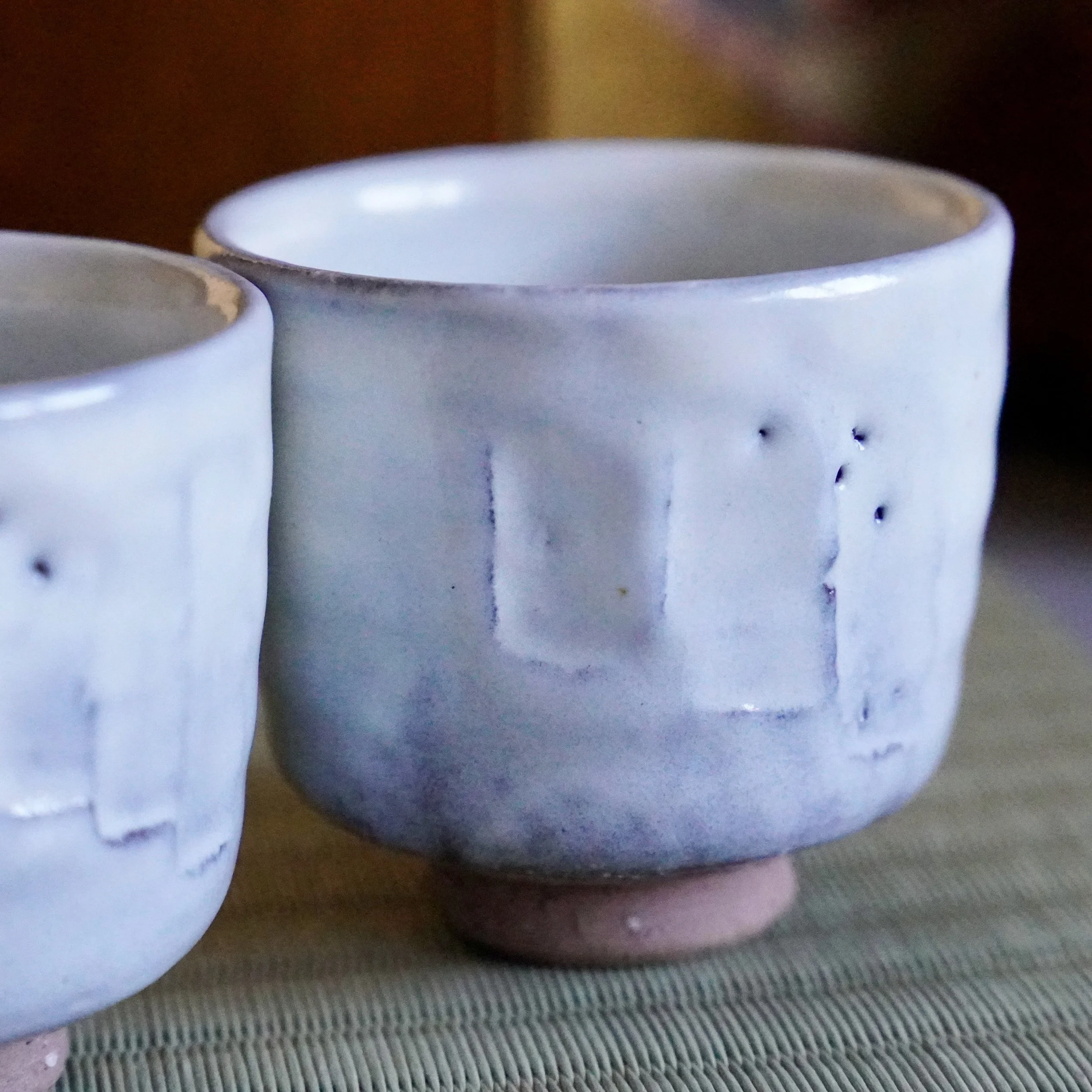
Tiny pinholes scattered across a thick glaze, a texture called su-ana, tell you more about Shino and Hagi ceramics than most people realise. Here's what causes it, and why potters never smoothed it away.
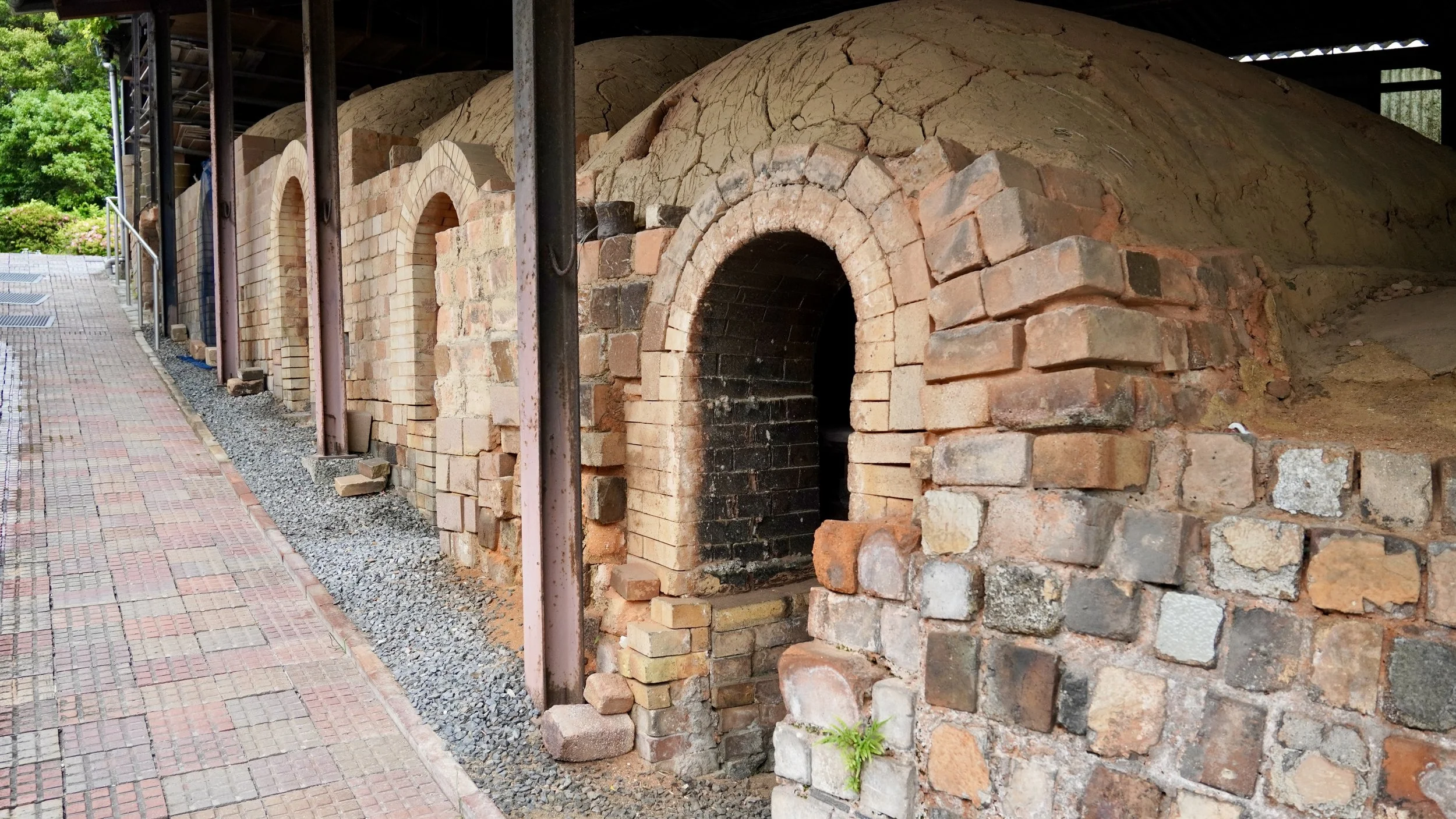
Senryūzan (泉流山) is a Hagi-yaki kiln in Yamaguchi Prefecture founded in 1826, tracing its roots back further still to the late Edo-period Obata-yaki tradition. The kiln was led for decades by Yoshiga Taibi, a recognised Person of Cultural Merit, and is now run by his son Yoshiga Hatao. Senryūzan still fires in a wood-burning noborigama, one of the few climbing kilns in Hagi still worked this way.
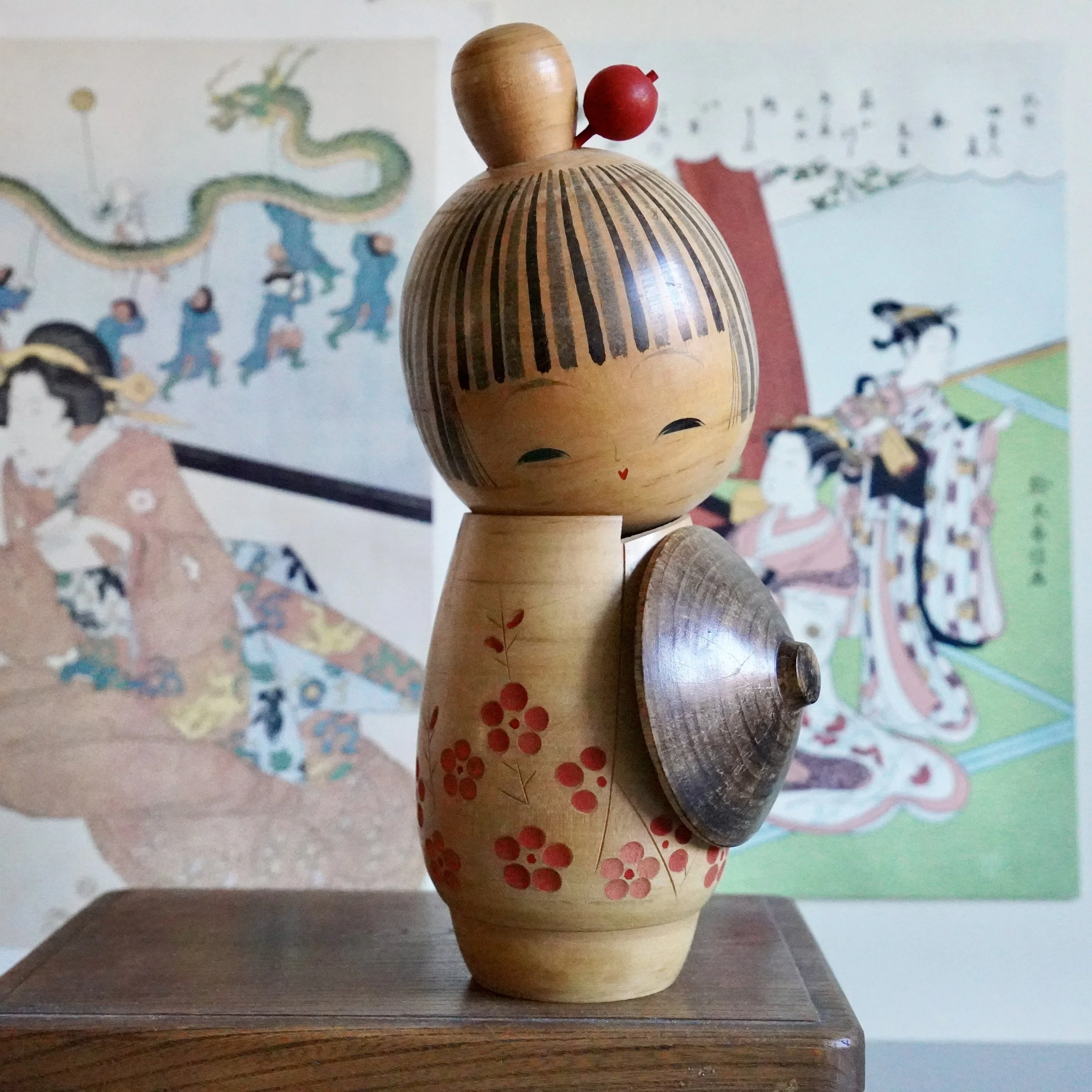
Oshinobi dōchū, travelling incognito, shows a Heian noblewoman shielding her face with a kasa hat while journeying in disguise. Two pieces in the collection, by Sato Suigai and Seiju Kon, show how differently that same story can be built in wood.
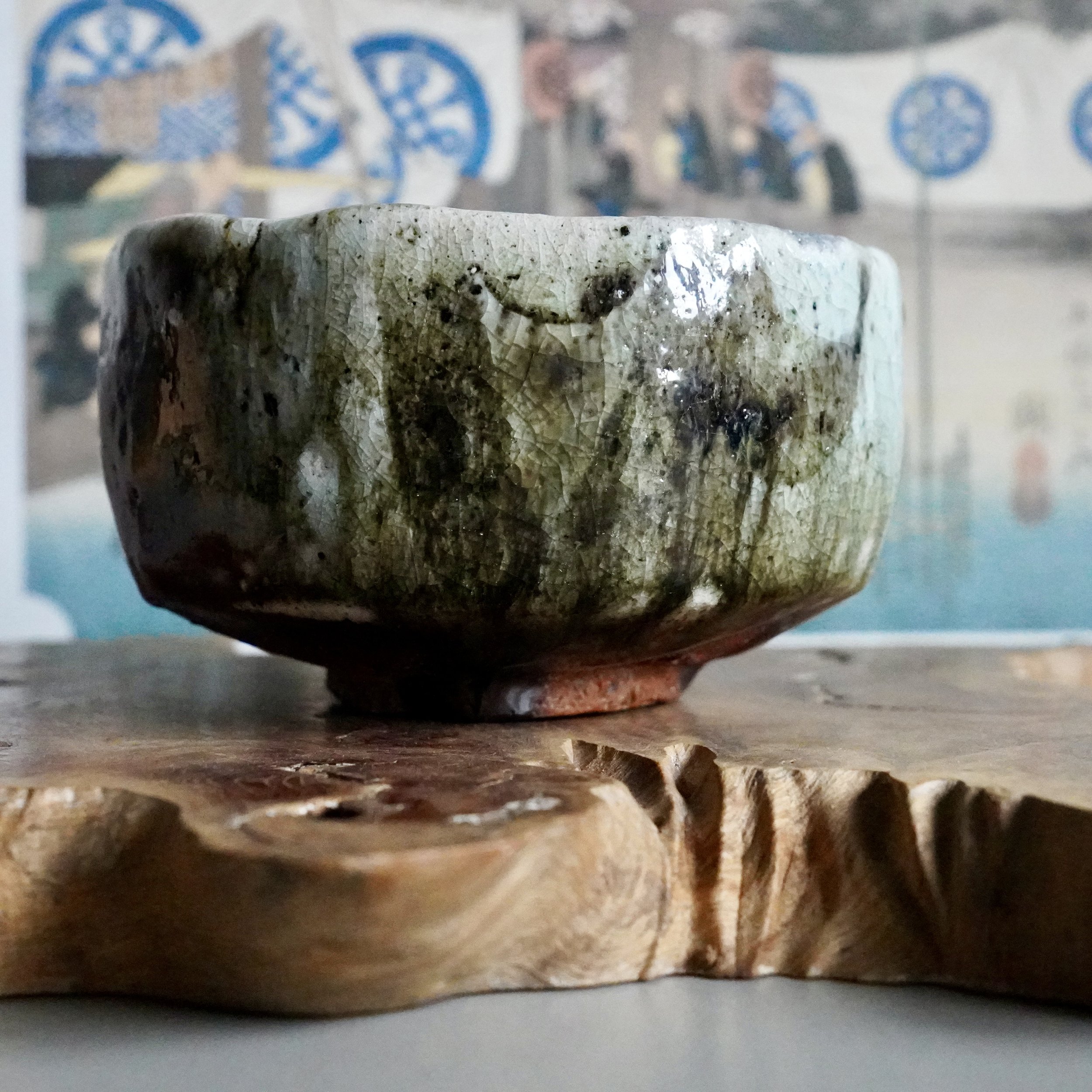
This chawan was fired at the Kakuzan-gama, a kiln built in 1959 inside the Kyoto headquarters of Ōmoto, a Japanese religious movement, by Kaneshige Sozan, a member of Bizen's most celebrated pottery family. It is signed by Deguchi Eiji, who served as Ōmoto's Sōchō (director) from 1958 to 1962. A single white glaze on this bowl developed rust, near-black and crystalline blue effects during firing, the result of flame position, ash deposit and heat variation inside a wood kiln, not of painting or decoration.
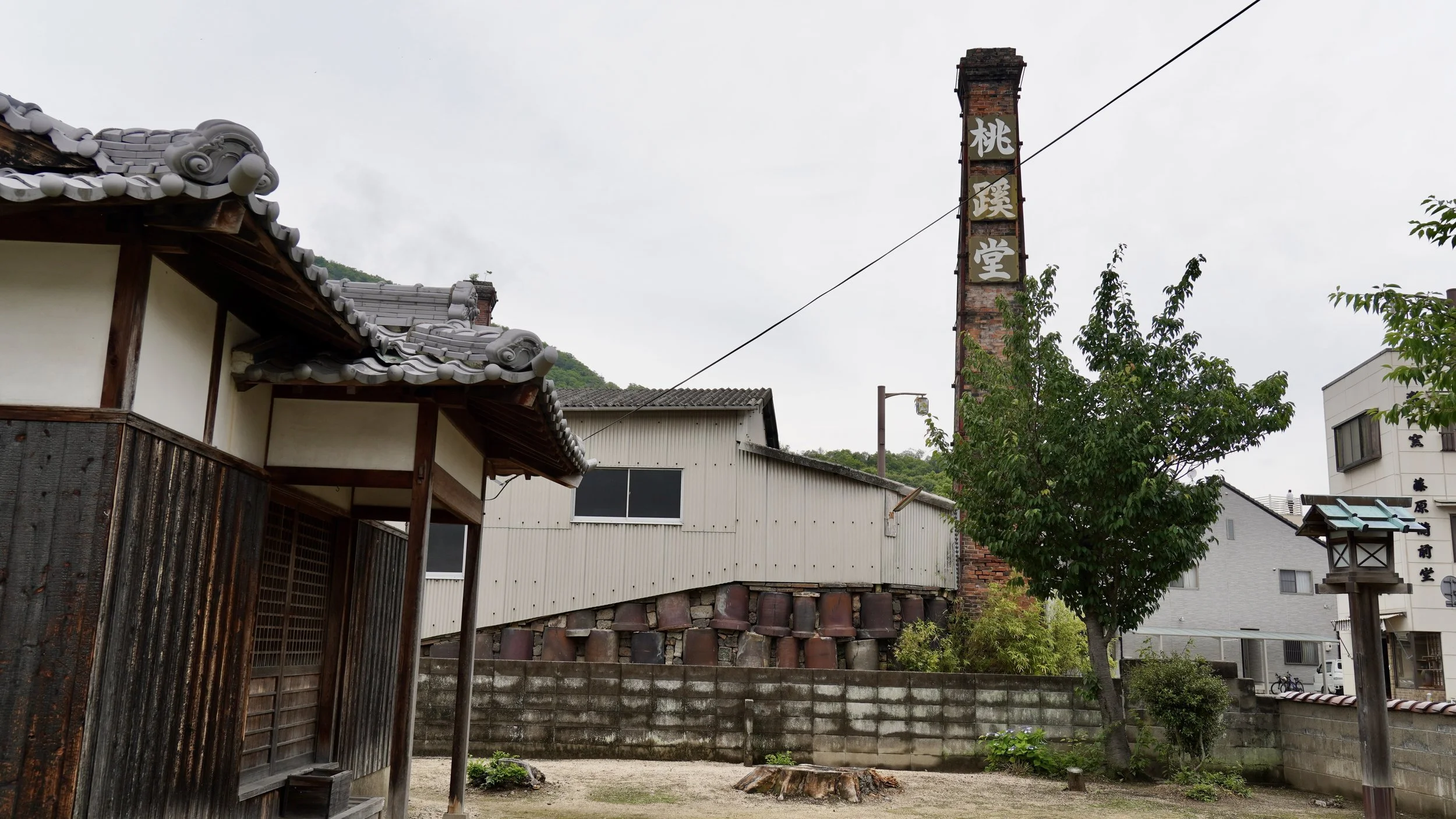
Bizen-yaki is never glazed and never painted. Everything visible on a finished piece was decided during the firing itself, by potters who spend two weeks feeding a kiln by hand, reading the fire instead of a dial. On a return visit to Shibaoka Tōsendō, the Kōzan-gama kiln in Imbe, here is what that actually looks like from the inside.
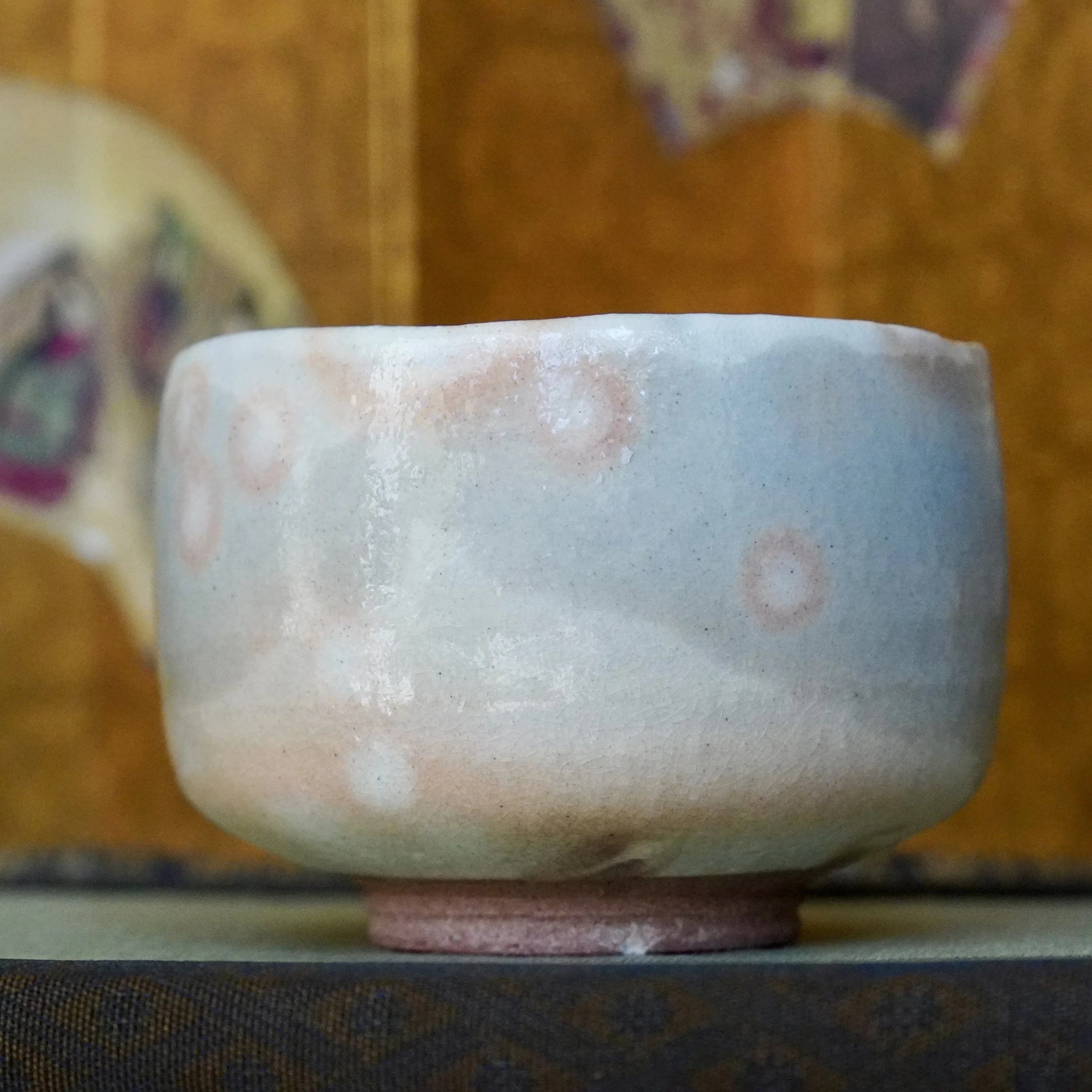
I filled a Hagi chawan with water and watched what happened. Within a minute, the glaze showed exactly how it will change with years of tea, and four other pieces revealed just how differently that process can unfold, starting long before the kiln, in the clay itself.
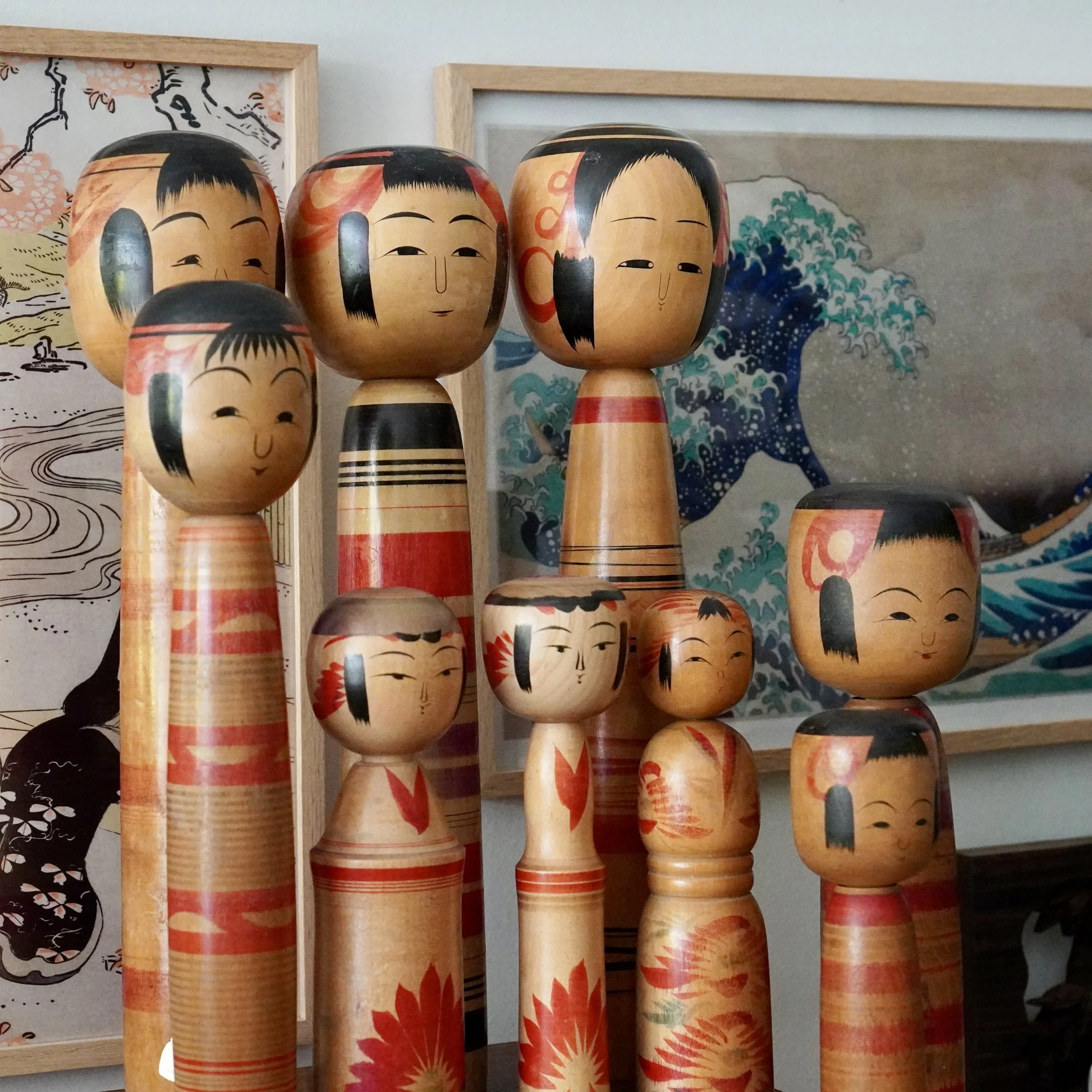
Every kokeshi carries the place it comes from before it carries anything else. A guide to the eleven regional traditions of Tōhoku, and how to recognise each one on sight.
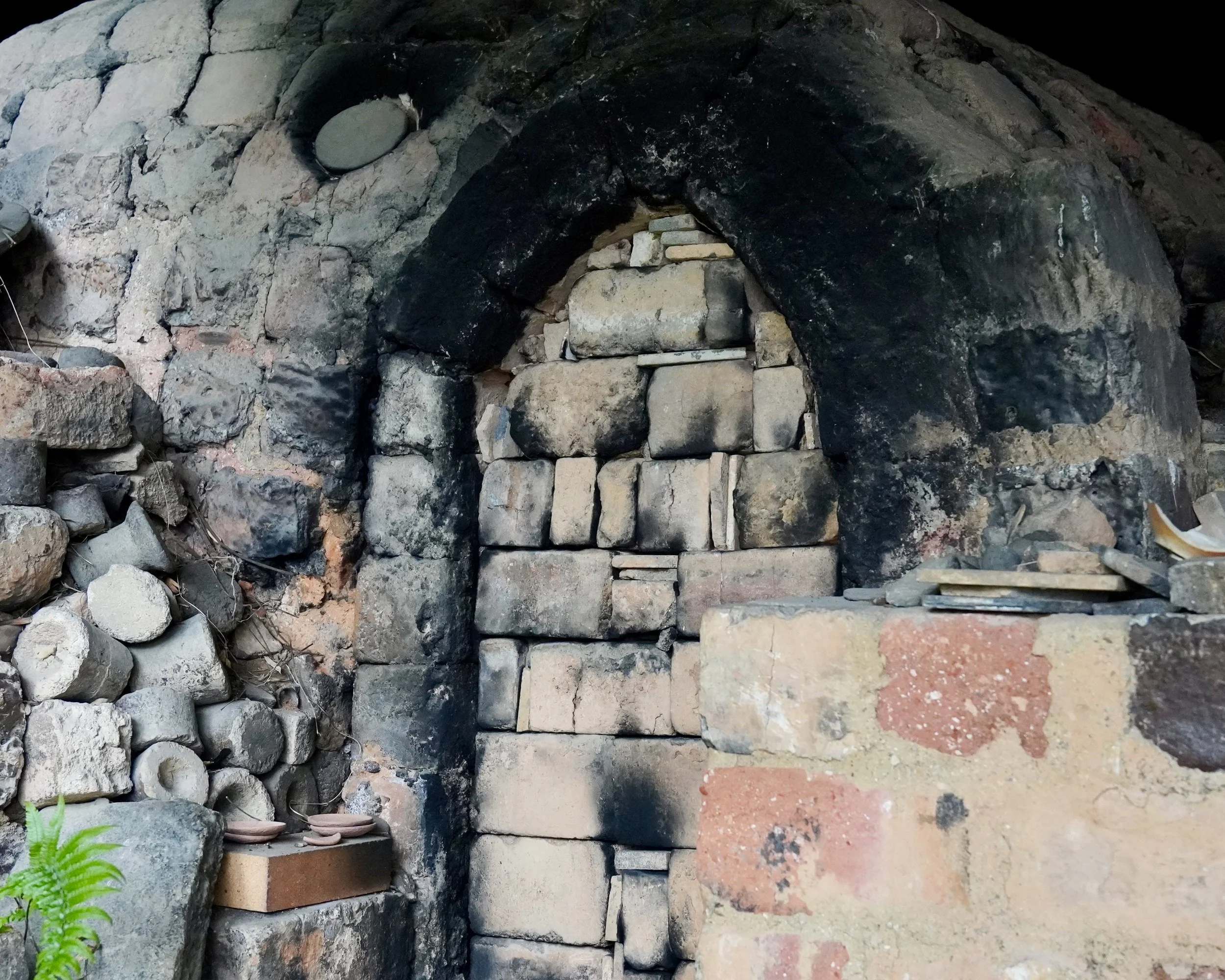
Three generations under one roof, a blue glaze that surprised me, and a cat I bought on the way out. One of my favorite mornings in Hagi, at the Okada kiln.
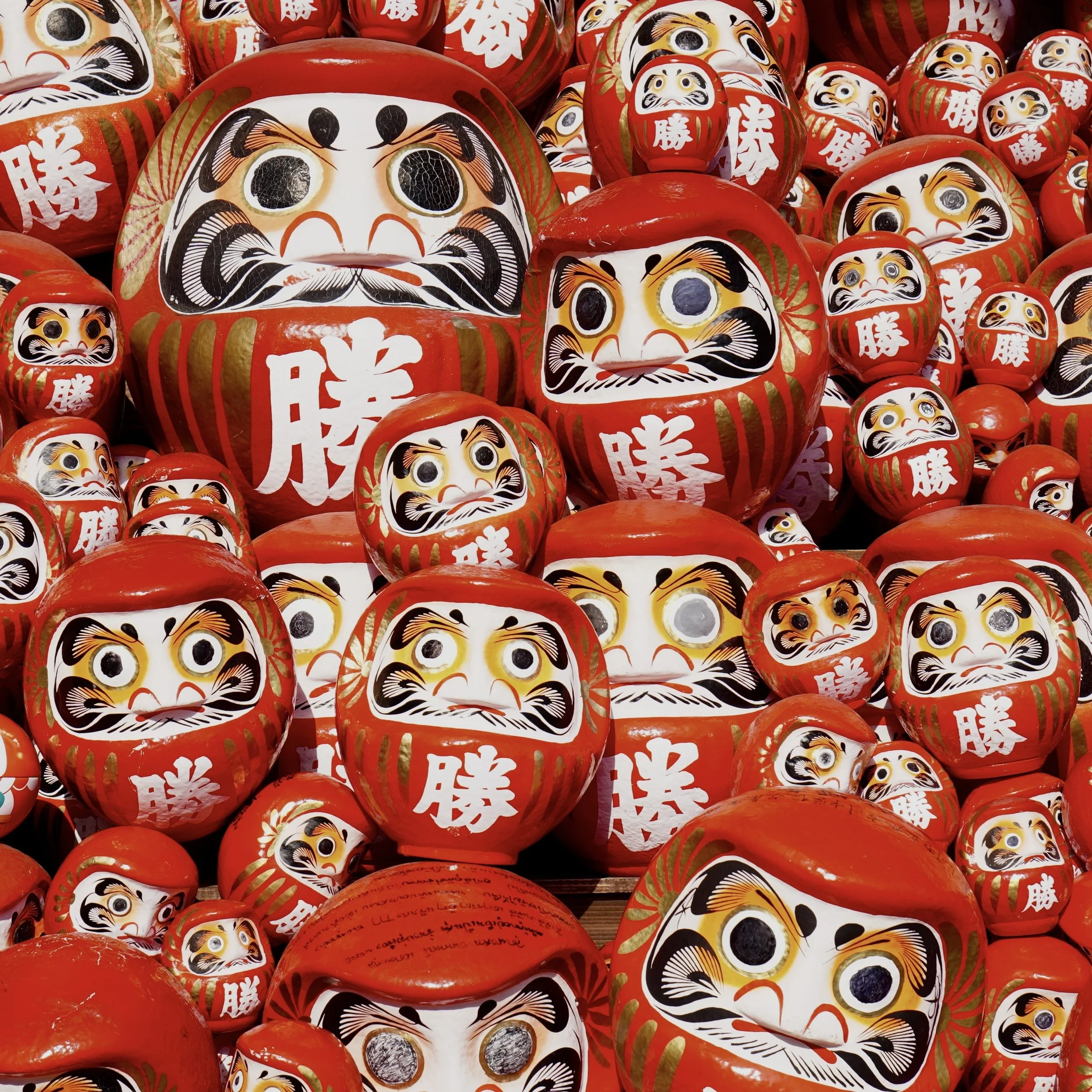
Perched in the forested hills of Minoh, Katsuo-ji is known throughout Japan as the Daruma Temple, thousands of red daruma cascading down its steps, each one carrying someone's wish. A visit that changed how I see the wooden daruma in our own collection.
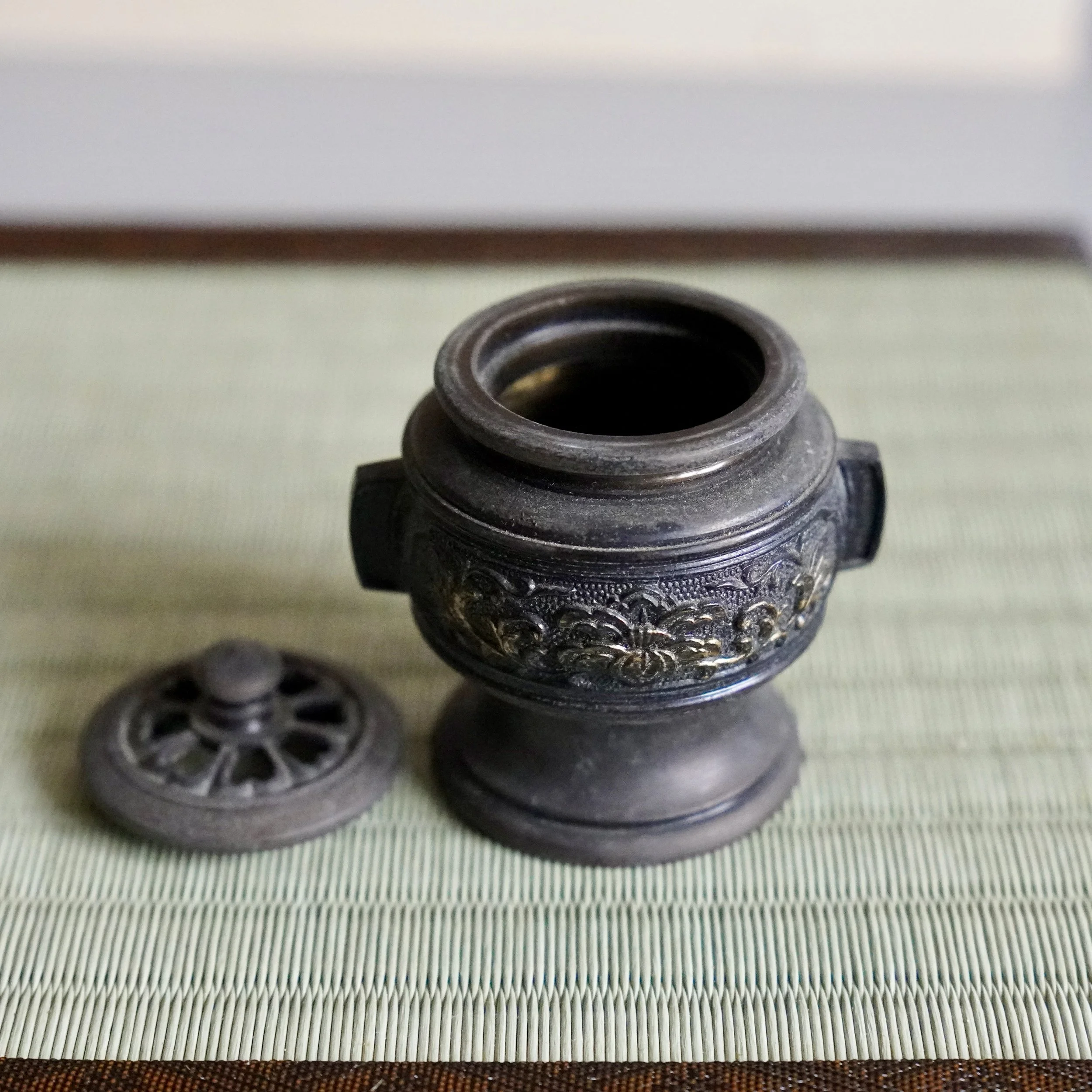
Every temple I visit in Japan has the same quality of quiet, and it starts with three things: scent, sound, and a presence that holds the space. Here is how to bring that same intention home, starting with a single kōro and the concept of ma.
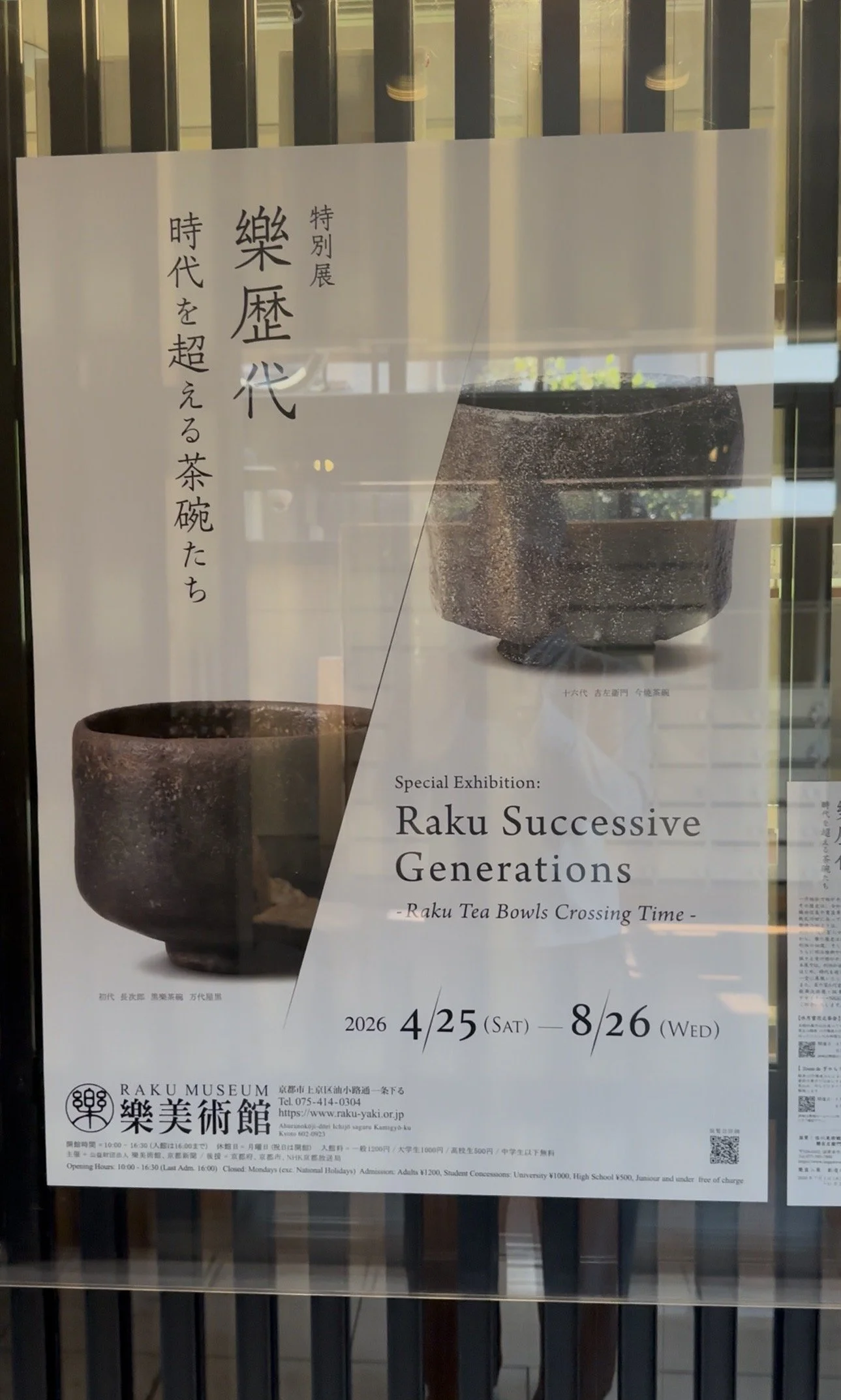
Inside the Raku Museum in Kyoto during the Raku Successive Generations exhibition. Chawan from Chōjirō to the 16th Kichizaemon, a quiet garden, and one idea about tradition that stayed with me.
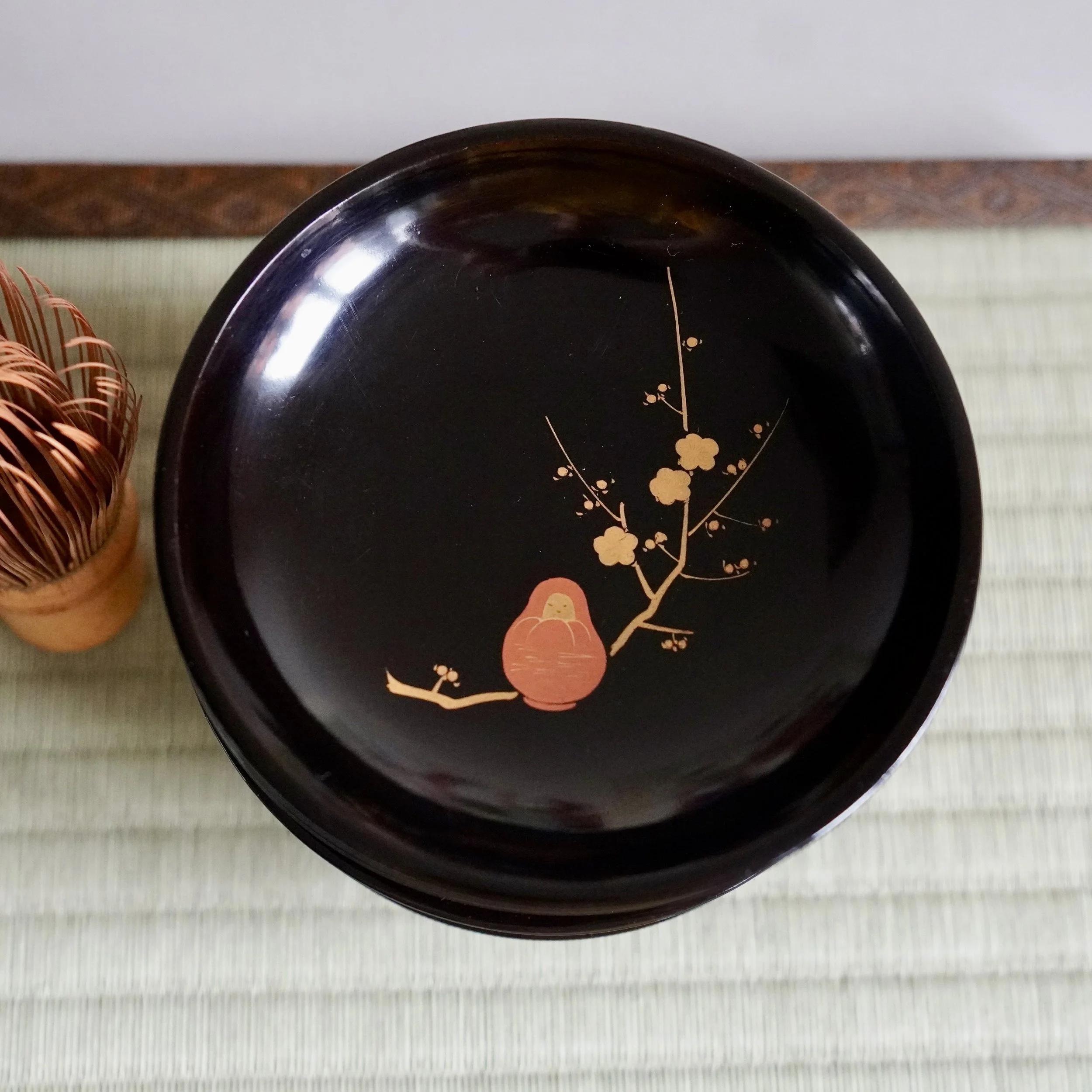
Urushi looks fragile and behaves like the opposite, until it meets a sunny windowsill or a winter radiator. Here is what actually damages lacquerware, what does not, and the handful of habits that keep a piece looking the way it did the day it was finished.
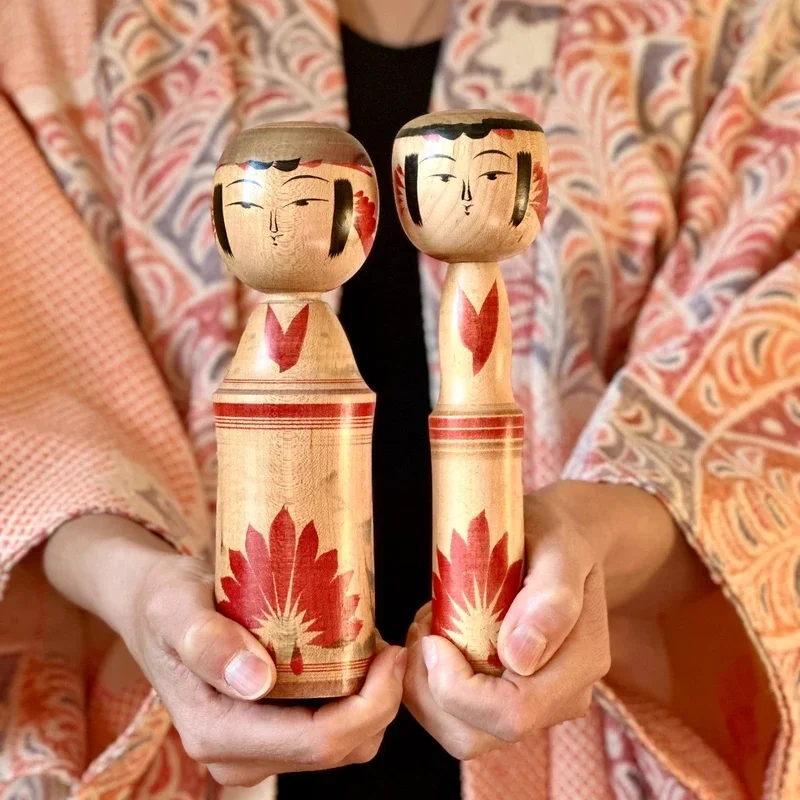
A kokeshi asks for very little once it has found the right spot. Grouped in threes on a shelf, alone on a windowsill out of direct sun, or standing next to something entirely unrelated, like a stack of books or a single dried branch. Here is what I have learned about placing them so they actually get looked at, instead of disappearing into a room.
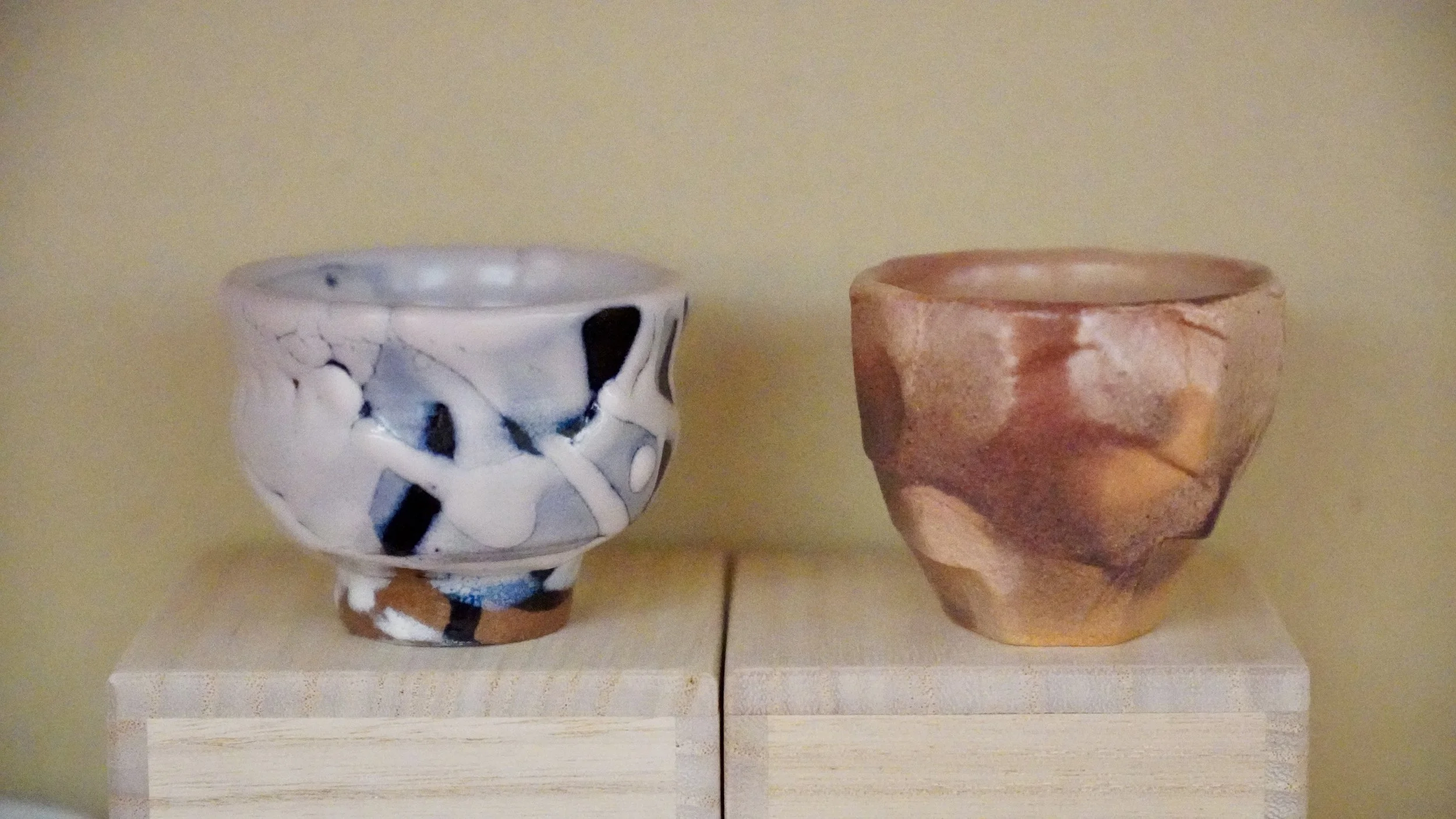
Every ceramic piece I bring home has already been through decades of hands before mine. A chawan changes colour with tea over the years, a vase collects mineral marks if you let it, and neither of those things is damage. Here is what actually matters when you look after one.
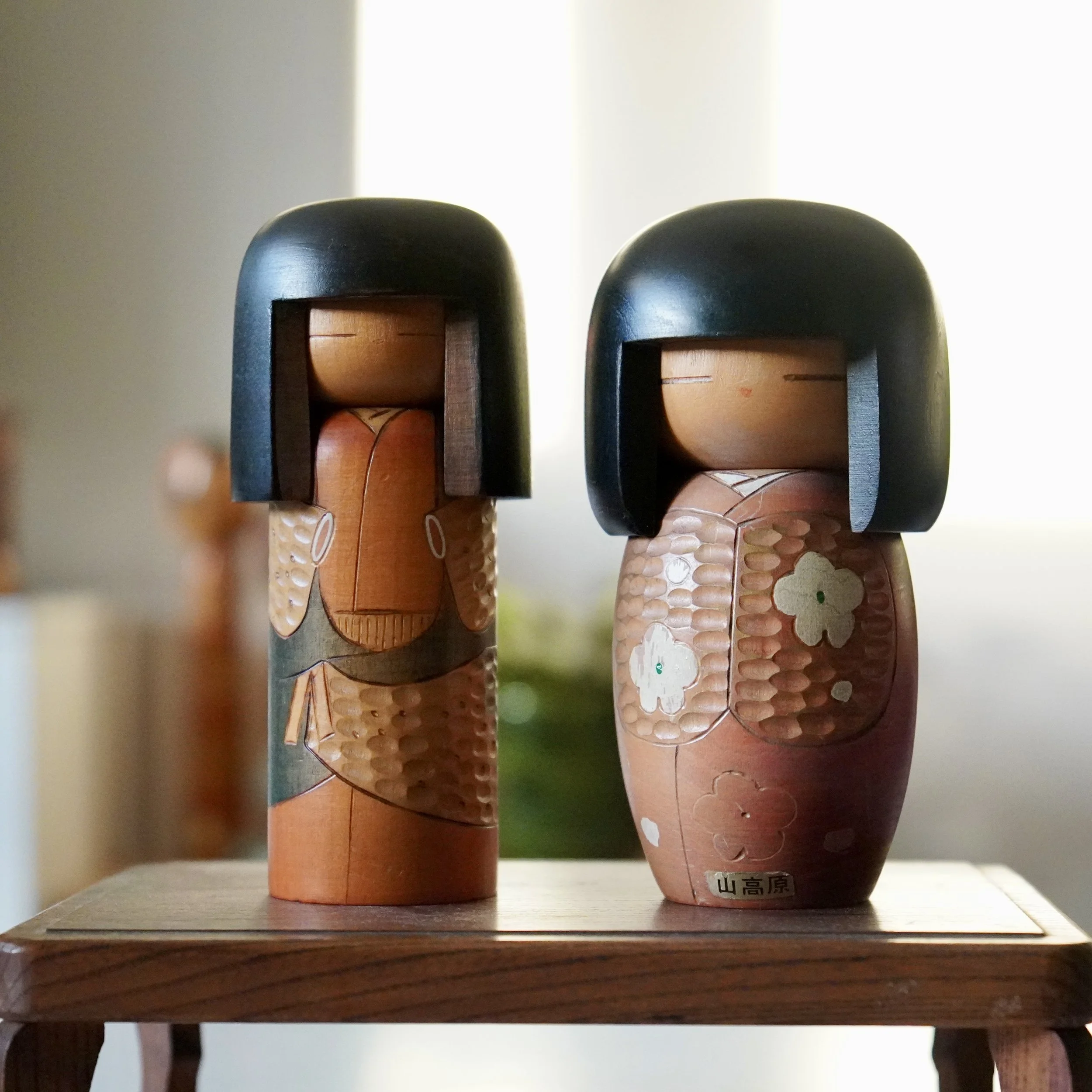
A week in the heartland of kokeshi: Fukushima. From climbing Mount Bandai before sunrise to studying the unique facial expressions in the work of masters like Ichiro and Sato Fumio. Discover how the landscape and deep-rooted woodcarving traditions shape these authentic vintage treasures.
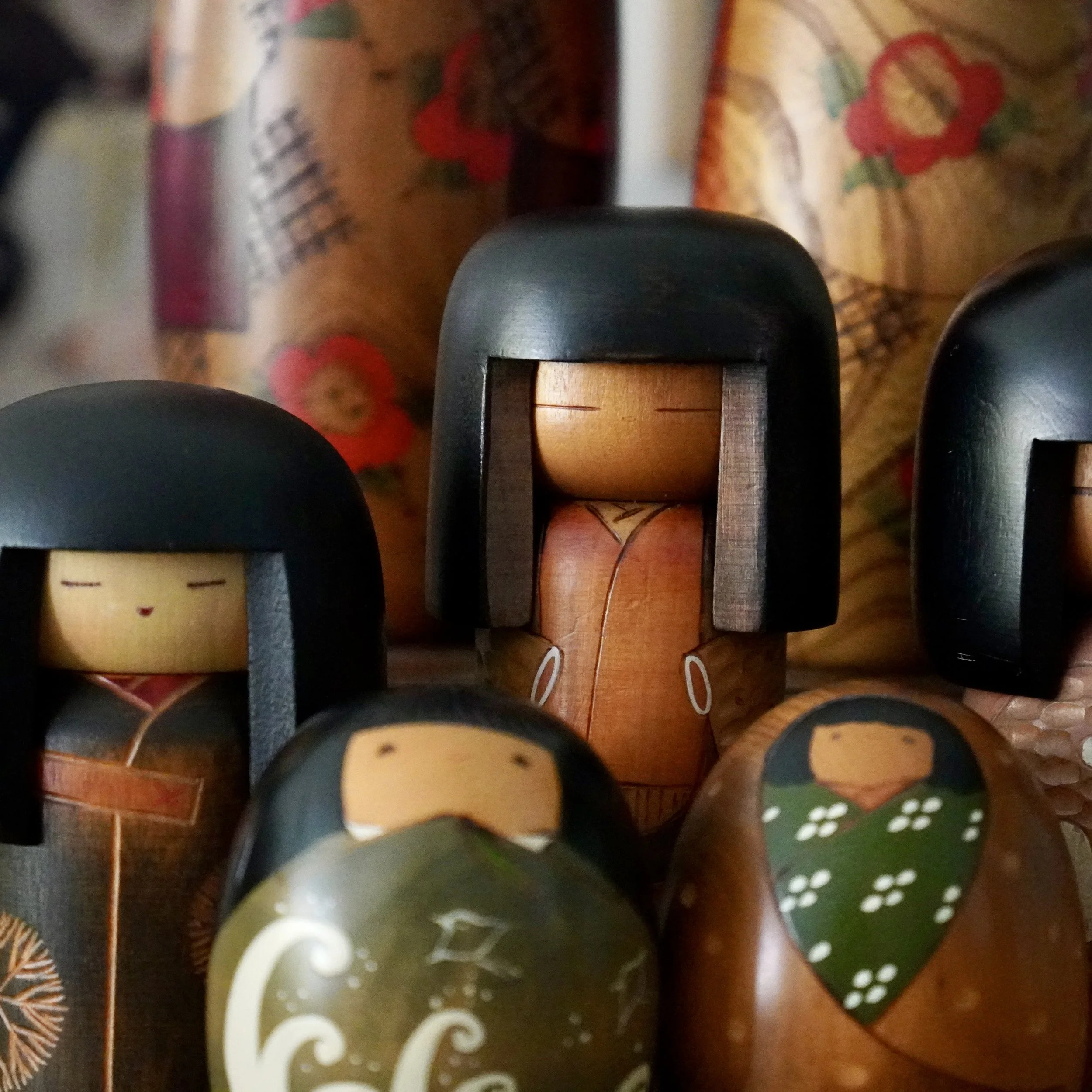
What draws you to a kokeshi is rarely the name on the base. It is the grain showing through the dark wood, the mark the tool left, and the two lines that somehow become a face. A close look at how makers like Usaburo and Sansaku Sekiguchi work with and against the wood itself.
Two kokeshi stand side by side, one almost half a metre tall and both wearing traditional bands of red, black, purple and bare wood from collar to base. There are no flowers and no scenes: the stripes are the whole design, and at this height two of them fill a shelf or sideboard by themselves. Under a straight fringe both faces look out with a calm gaze.
Abe Ichirō learned the Tsuchiyu craft from his father, Abe Shinjirō, and in 1967 rebuilt one of his father's Taishō period kokeshi, a body decorated with lathe lines only. These two are decorated the same way: every band was painted while the wood turned on the lathe, so the pattern is the making itself.
The head turns and produces a soft squeak when rotated. In Japanese this is called the cry of a child, and it is one of the quiet surprises of traditional Tsuchiyu kokeshi.
→ Curious how Tsuchiyu compares to the other ten traditional kokeshi lines? Read the full guide.