
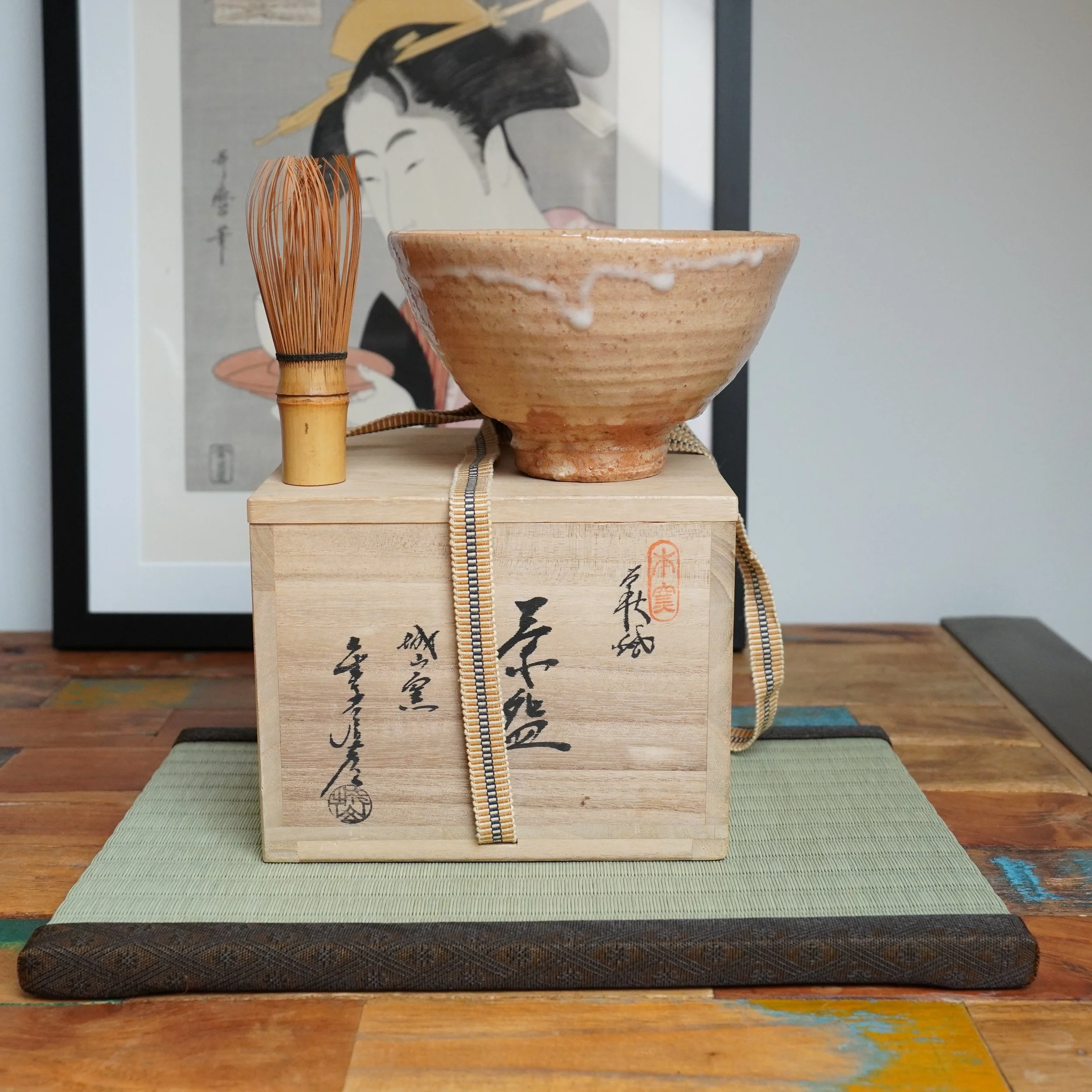
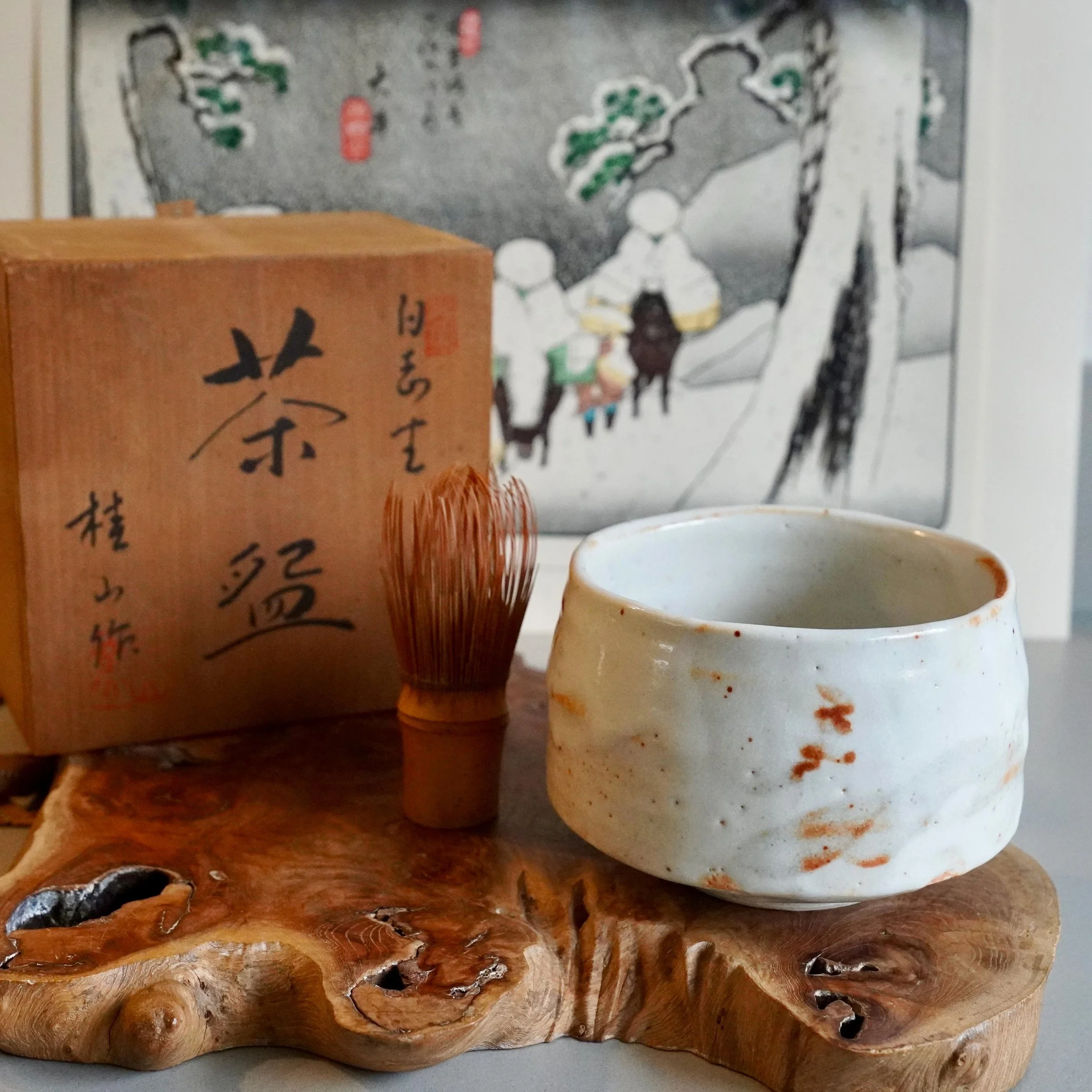
Hagi-yaki began around 1604, when Mōri Terumoto brought the Korean potter brothers Yi Sukkwang (李勺光) and Yi Kyung (李敬) to Hagi to open the domain’s official kiln. Korea still shows in a Hagi bowl in the notched foot, the pale pink gohonte spots and the climbing kiln. What Hagi added is the soft, absorbent clay, the thin ash glaze and the colour that deepens with tea, known as nanabake.
While traveling in Korea for research, I moved between tea shops, antique dealers and museums, talking to the people who handle objects with a story every day. I kept going back to the ceramics. They draw me in, truly. I had spent spring in Hagi, and now I came across the same style in Korea. That makes sense, as Hagi is a Japanese kiln with a Korean beginning. Hagi-yaki passes through my hands very often, maybe more than raku-yaki and Bizen-yaki combined. So I was fascinated by the Korean origin story and decided to dig in and share what I found.
What did the Korean potters bring with them and what did Hagi make of it?
The potters who came to Hagi
In 1592 the armies of Toyotomi Hideyoshi invaded Korea and many Korean craftsmen were taken to Japan by force, against their will. From their skills new ceramic traditions were introduced in Kyushu and western Japan, among them were the Satsuma, Arita and Hagi ware we know today. We know them as Japanese styles, but their roots are Korean expertise.
The Japanese side of the Hagi story is often told in a milder way. After hearing the potters’ stories in museums across Korea, it is hard to tell it any other way, so I will say it plainly: these potters did not come as guests, and they went through a great deal of suffering.
The lord of Hagi, Mōri Terumoto, was told to bring back renowned potters for their knowledge. These potters were the Korean brothers Yi Sukkwang and Yi Kyung, known in Japan as Ri Shakkō and Ri Kei. Spellings differ from source to source. They travelled with Terumoto to Hagi in 1604, where he had them set up kilns for the domain. Yi Kyung took the Japanese name Saka Kōraizaemon, which the head of the Saka family still carries today. Kōrai is the old Japanese word for Korea, so the name still carries the origin in it.
Two lines grew from the brothers. Matsumoto Hagi descends from Yi Kyung and the Saka family. Fukawa Hagi, further inland near Nagato, was started by Yamamura Heishirō Mitsutoshi, a grandson of Yi Sukkwang. The Miwa kiln followed in 1663, and the first Kyusetsu Miwa was sent to Kyoto to study raku and combined what he learned there with local practice.
The Korean bowl behind Hagi
Korean tea bowl in conical Ido shape with honey glaze. Photographed in an antique shop in Korea
So what did the first Hagi tea bowls look like? Close to their Korean models, of course. Early pieces owed much to the pottery being made in Korea at the time, above all the Ido bowl. Ido began as a simple Korean rice bowl. Japanese tea masters came to treasure it, partly because Sen no Rikyū valued the roughness and irregularity of Korean pottery. Hagi tea bowls still recall it. An Ido-style bowl is roughly conical, with a tall foot that has a ridge like a bamboo node (takenofushi kōdai) and the soft spiral marks of the potter’s fingers on the wheel (rokurome).
What happened next is the interesting part. In Korea, a potter made a rice bowl for everyday use. Whether the bowl came out a little crooked or rough, nobody minded, it simply happened. Japanese tea masters found that crooked, rough look beautiful. After that, the potters in Hagi made their tea bowls rough and uneven on purpose, because the tea masters wanted them that way. In Korea it was a side effect, in Hagi it became a choice.
Why this matters to the question of what did Hagi take over, and what did Hagi make its own? Well, Hagi took over the rough look and turned it into a deliberate style.
With that in mind I walked into the Seoul museum to learn more about just how much of Hagi is Korean and how much is a Japanese influence?
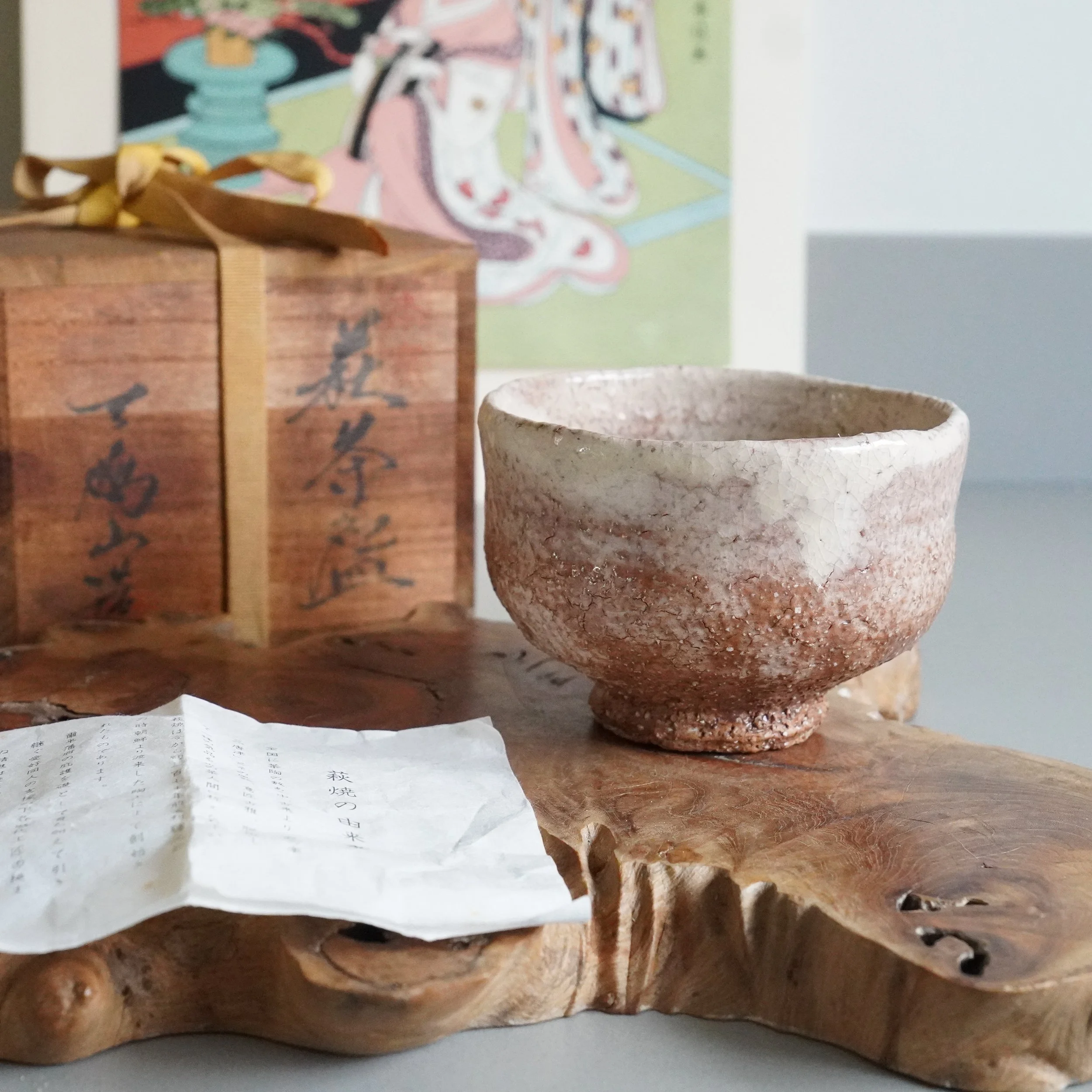
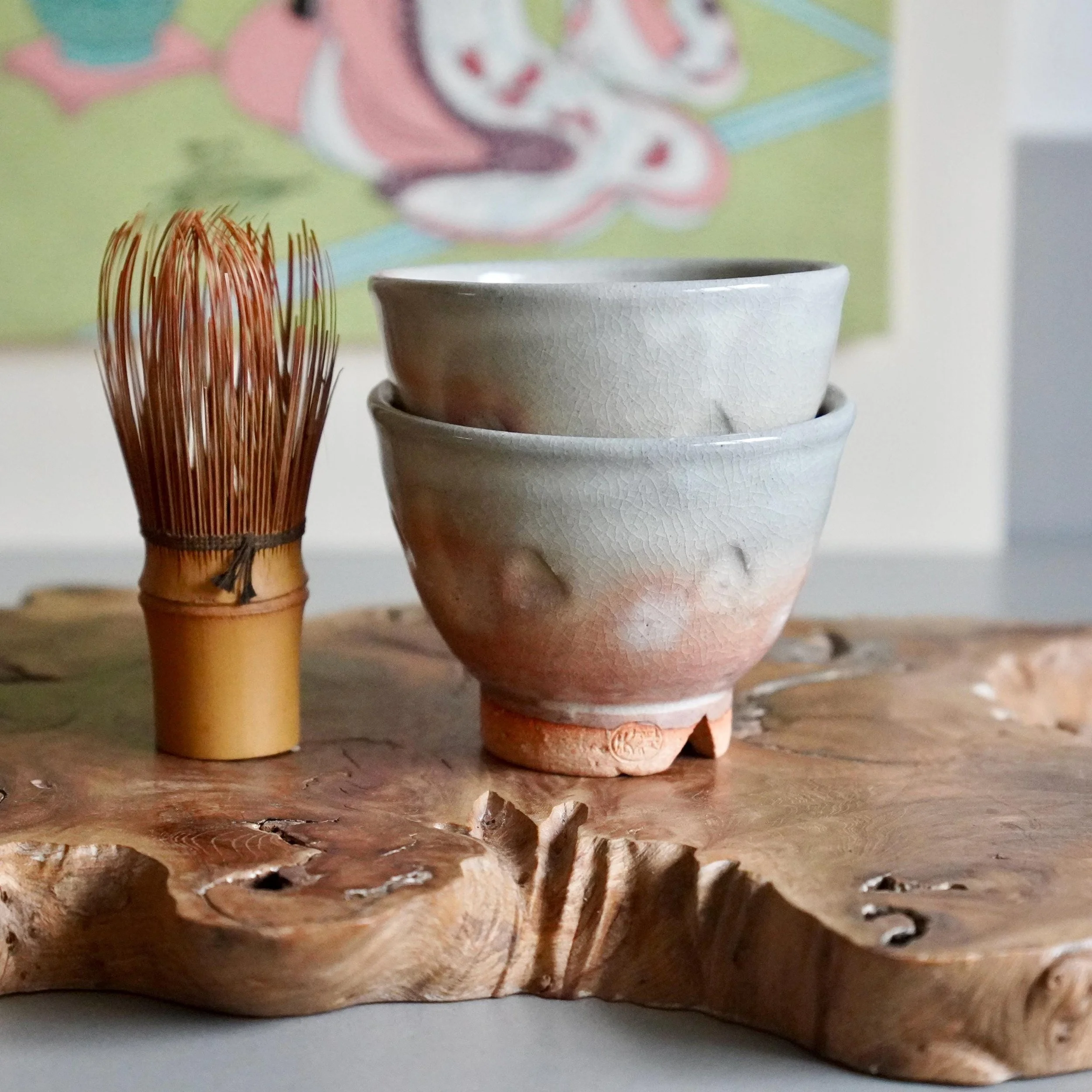
Let’s start at the bottom, because the foot tells you a lot. Many Hagi bowls have a small notch cut into the foot ring, known as kiri-kōdai. Nobody knows for certain why. The best-known story says Hagi ware was reserved for the lord, and a notch made a piece look damaged enough to be sold to commoners. Cut feet existed in Korean pottery and in Japanese tea bowls before Hagi, though, so the story may have been added later to explain a habit already there. Whatever the reason, the notch stayed.
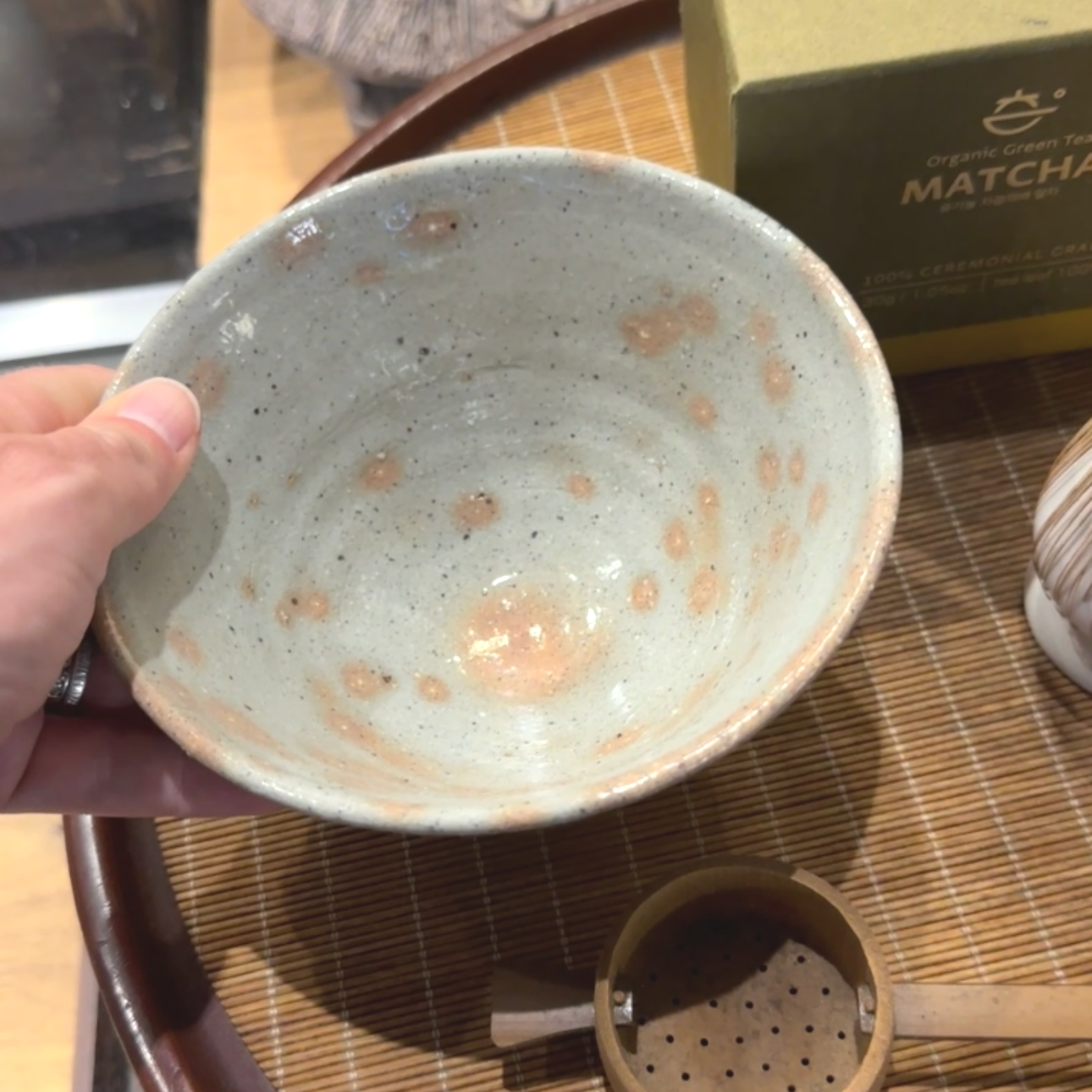
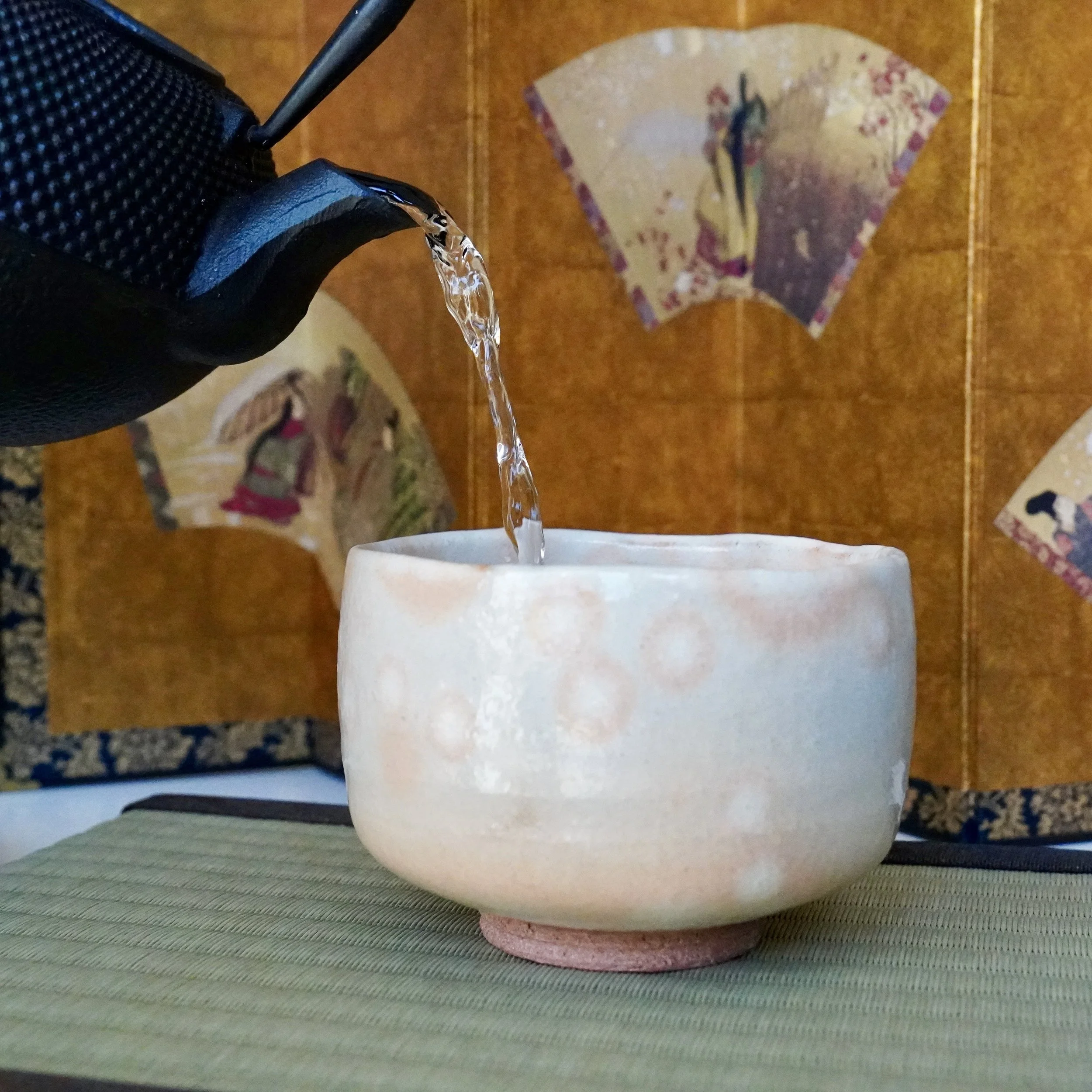
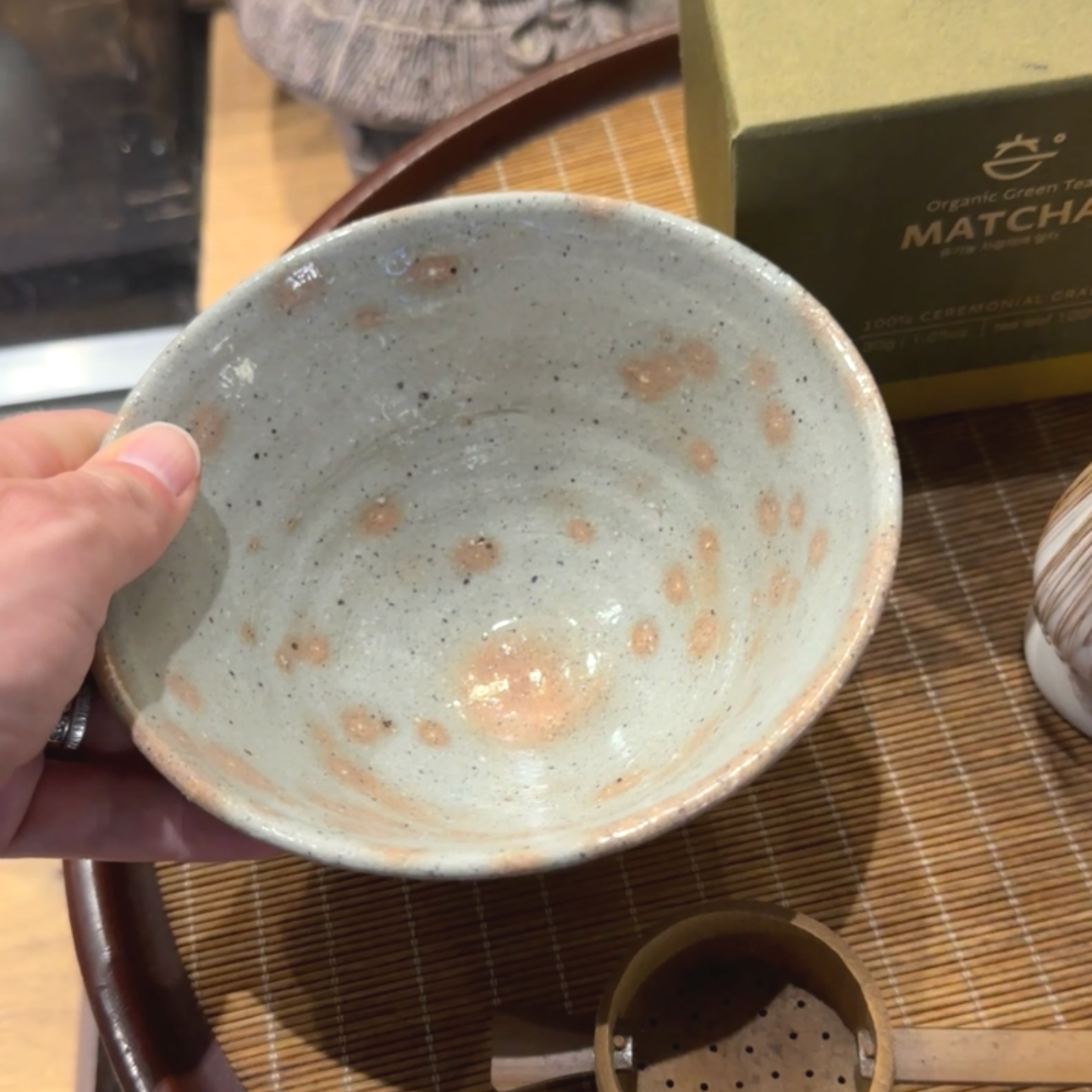
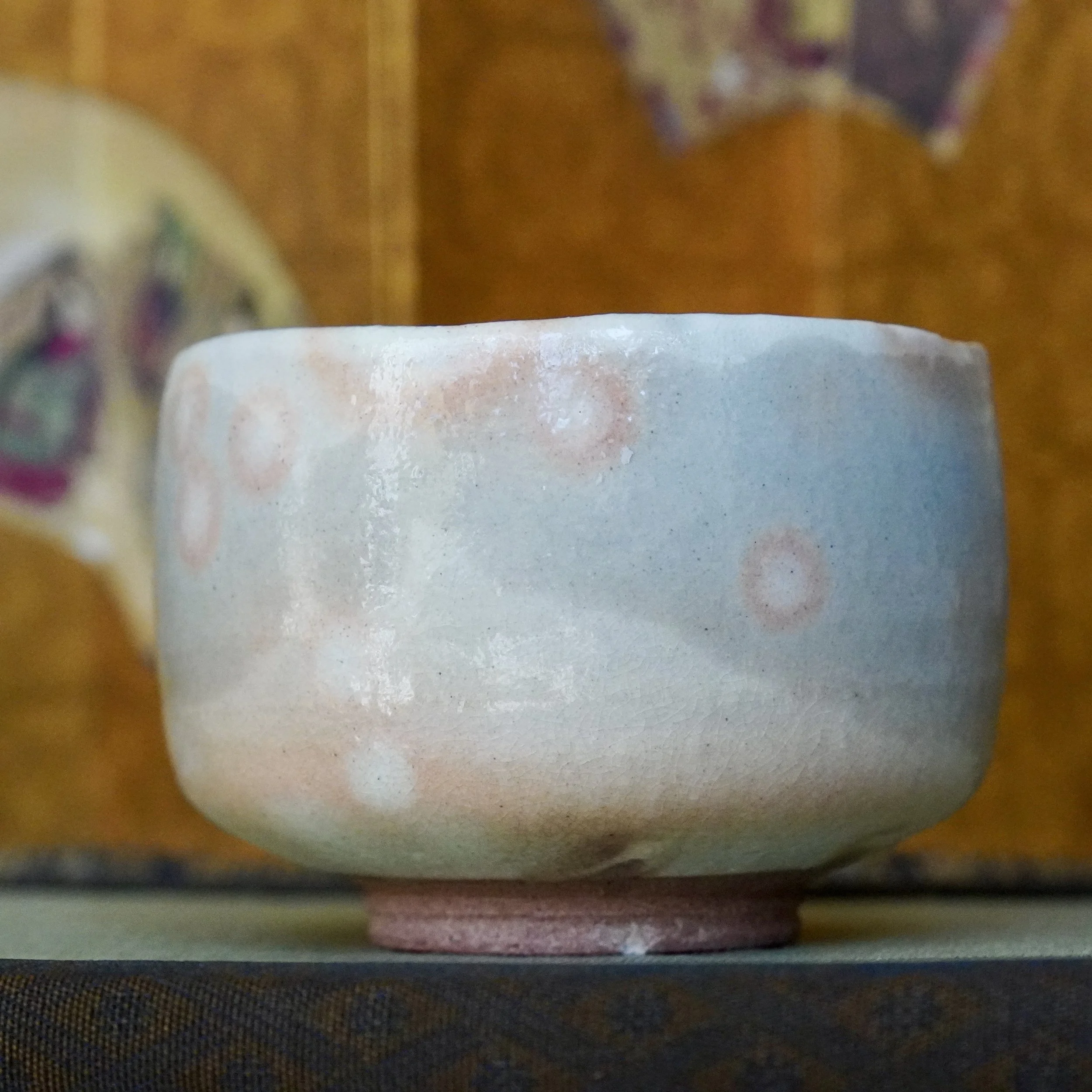
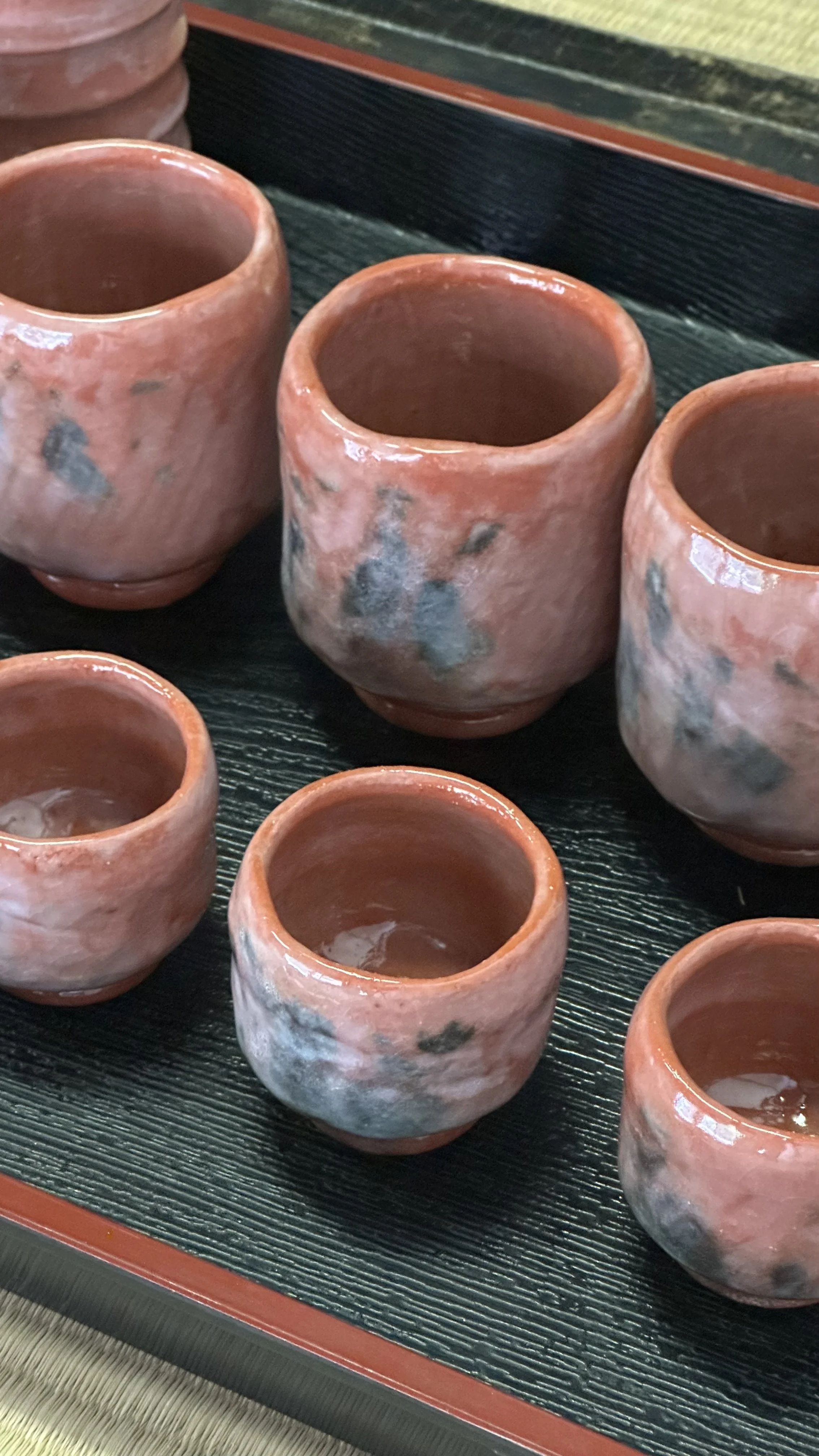
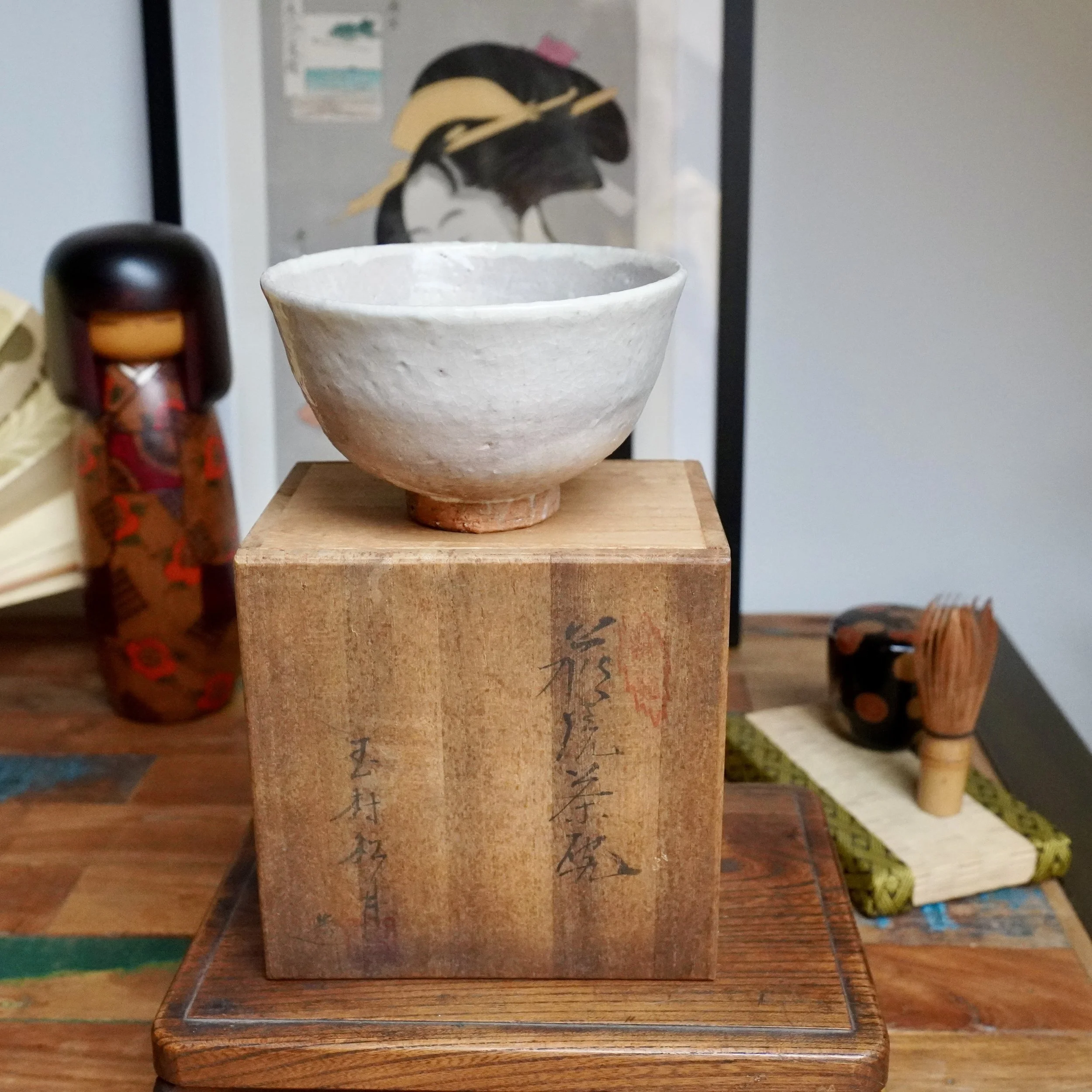
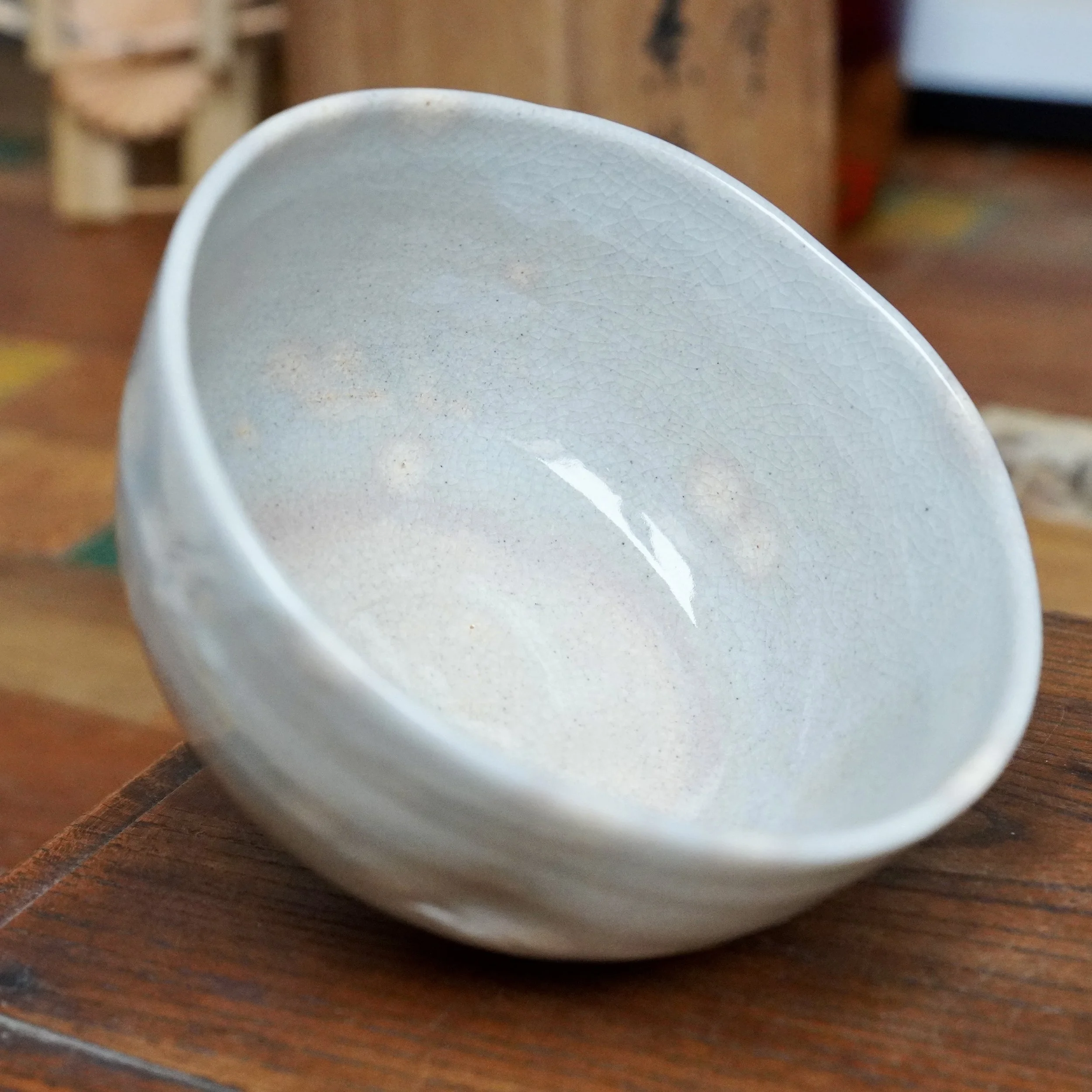
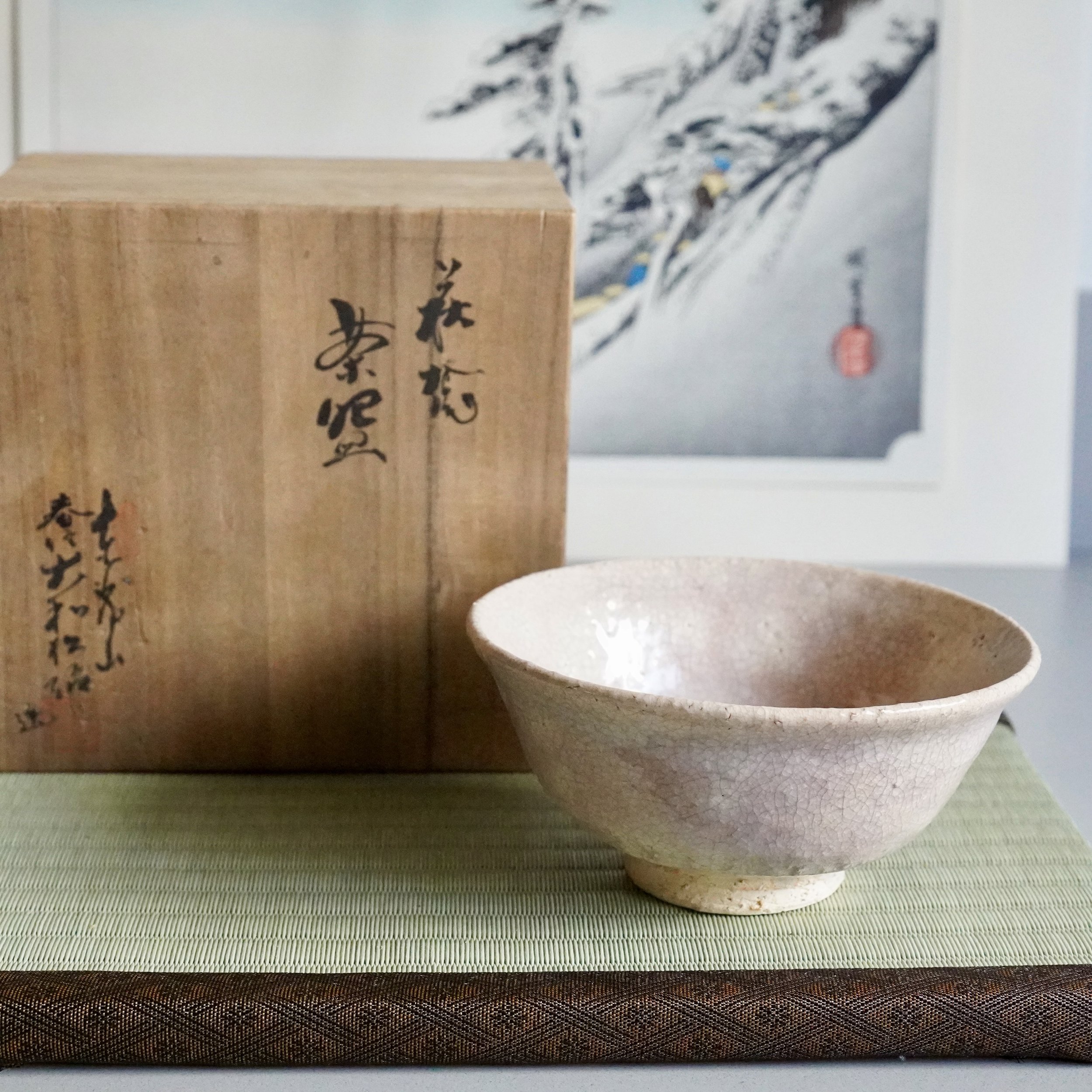
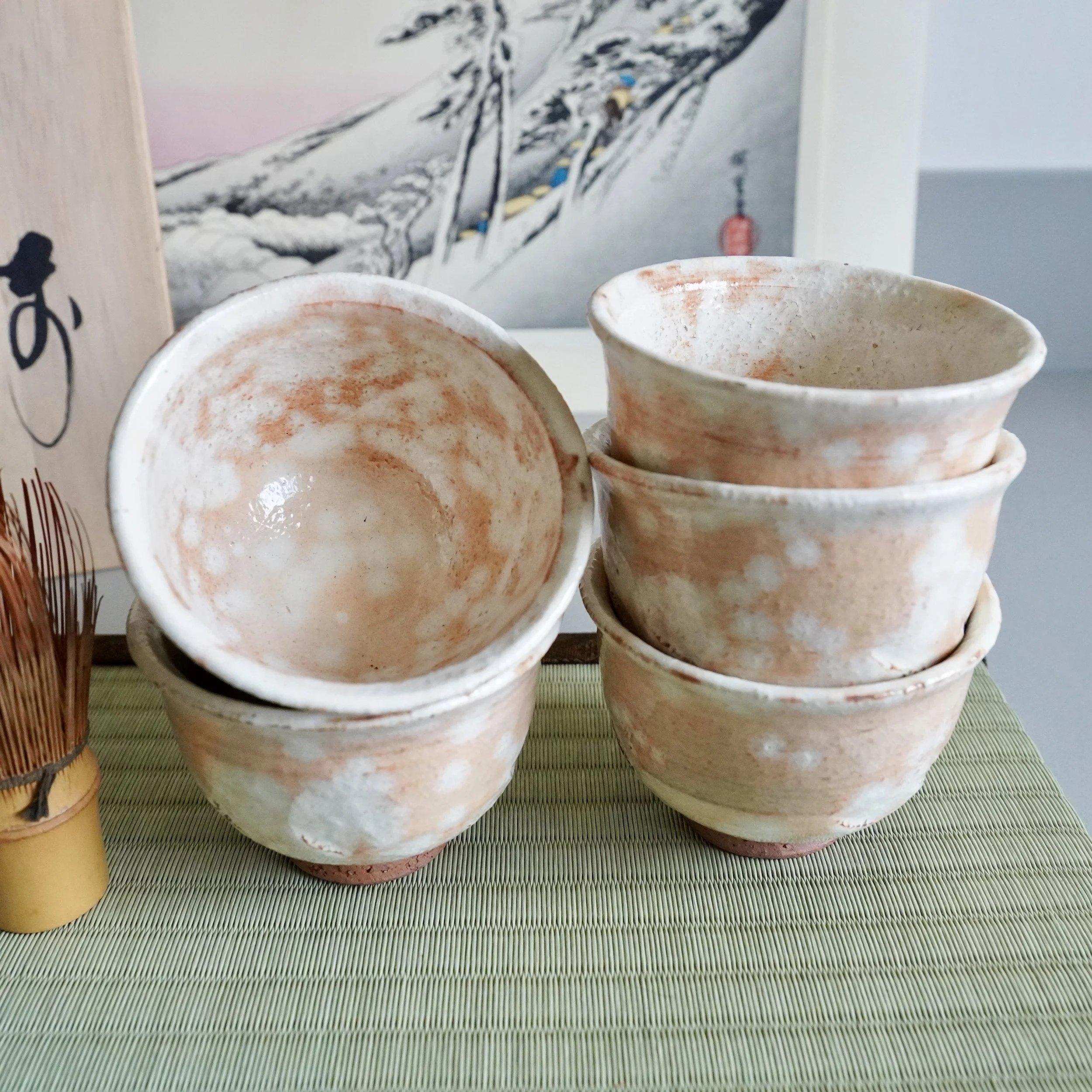
Look closely at some Hagi bowls below and you may find pale pink or white spots scattered across the glaze. This pattern is called gohonte, and it came from Korea first. From around 1600, Japanese tea masters sent order forms, called gohon, to Korean kilns, and the bowls that came back often carried these spots, so the name stuck. Hagi potters, whose own tradition began with Korean craftsmen, kept the effect. It comes from the iron in the clay reacting in the kiln.
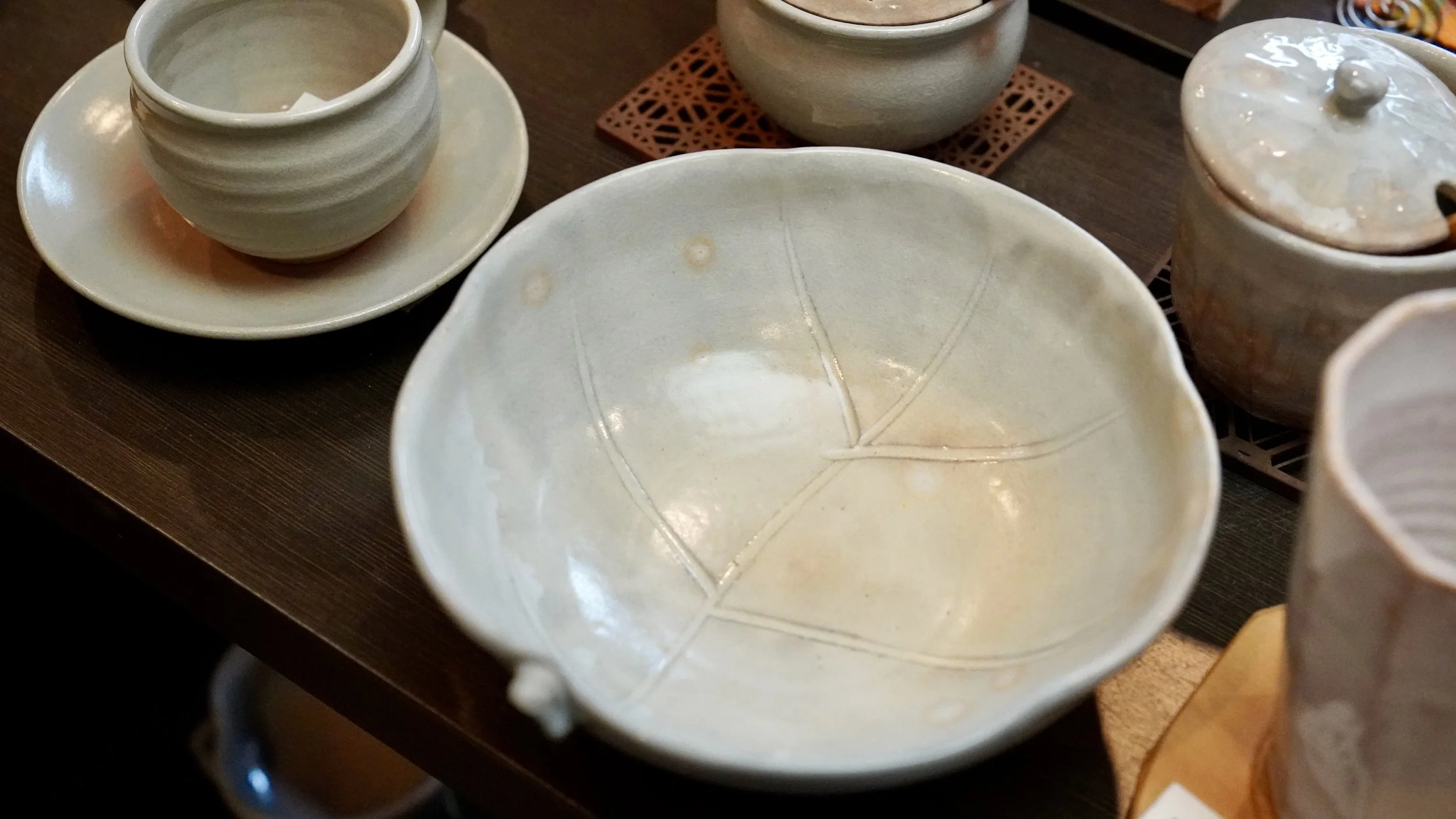
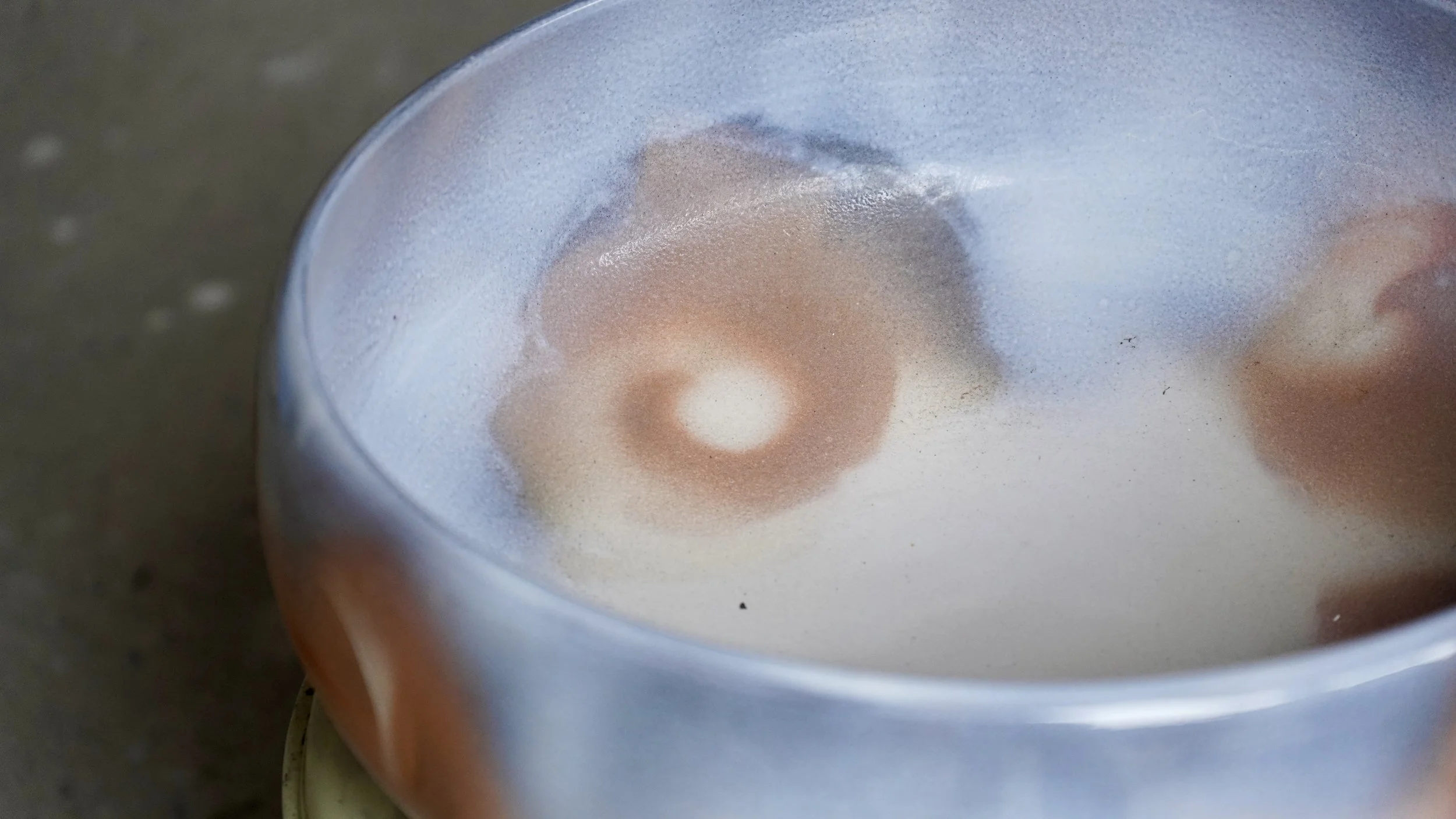
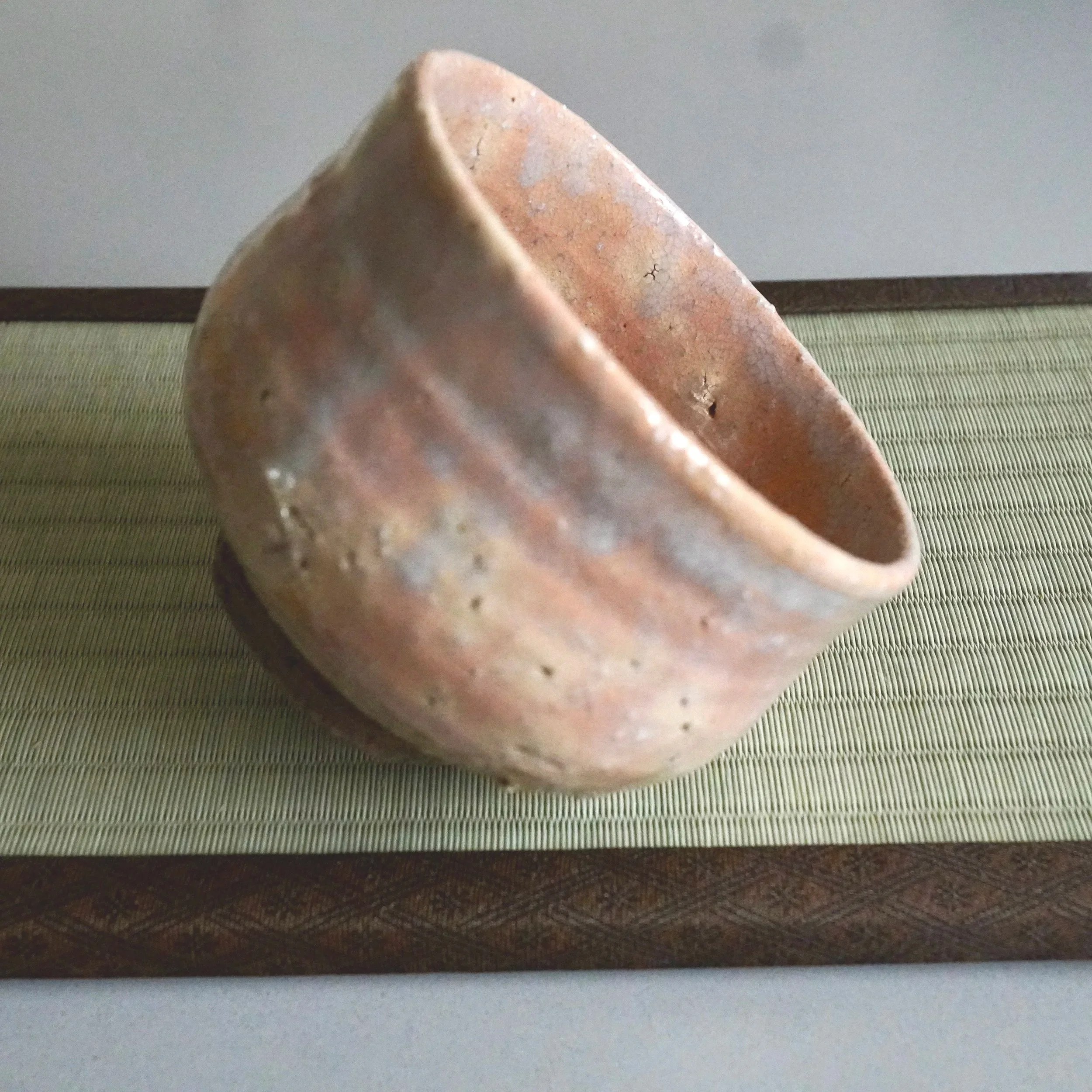
The fire and kilns leading to the noborigama you might know
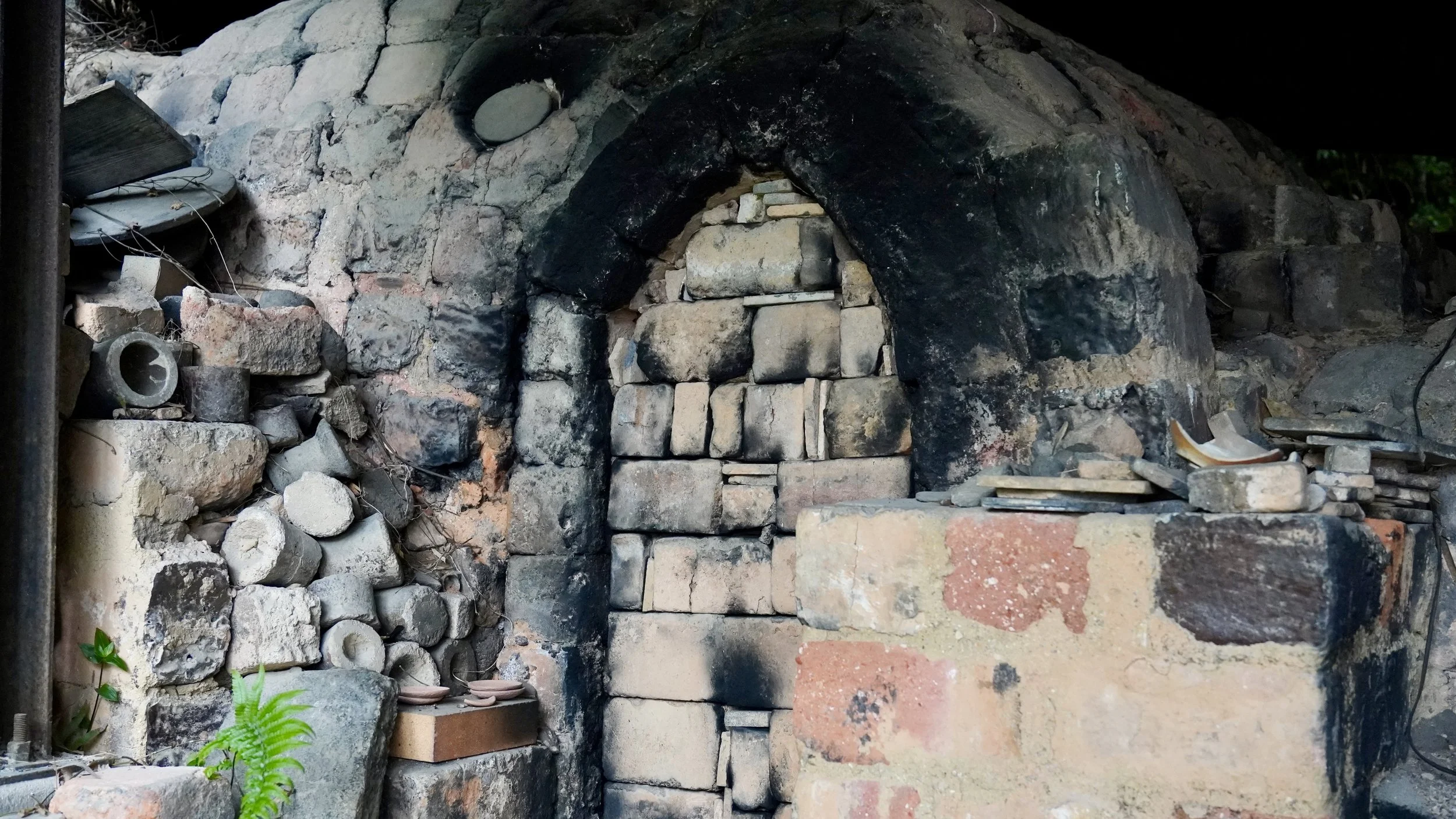
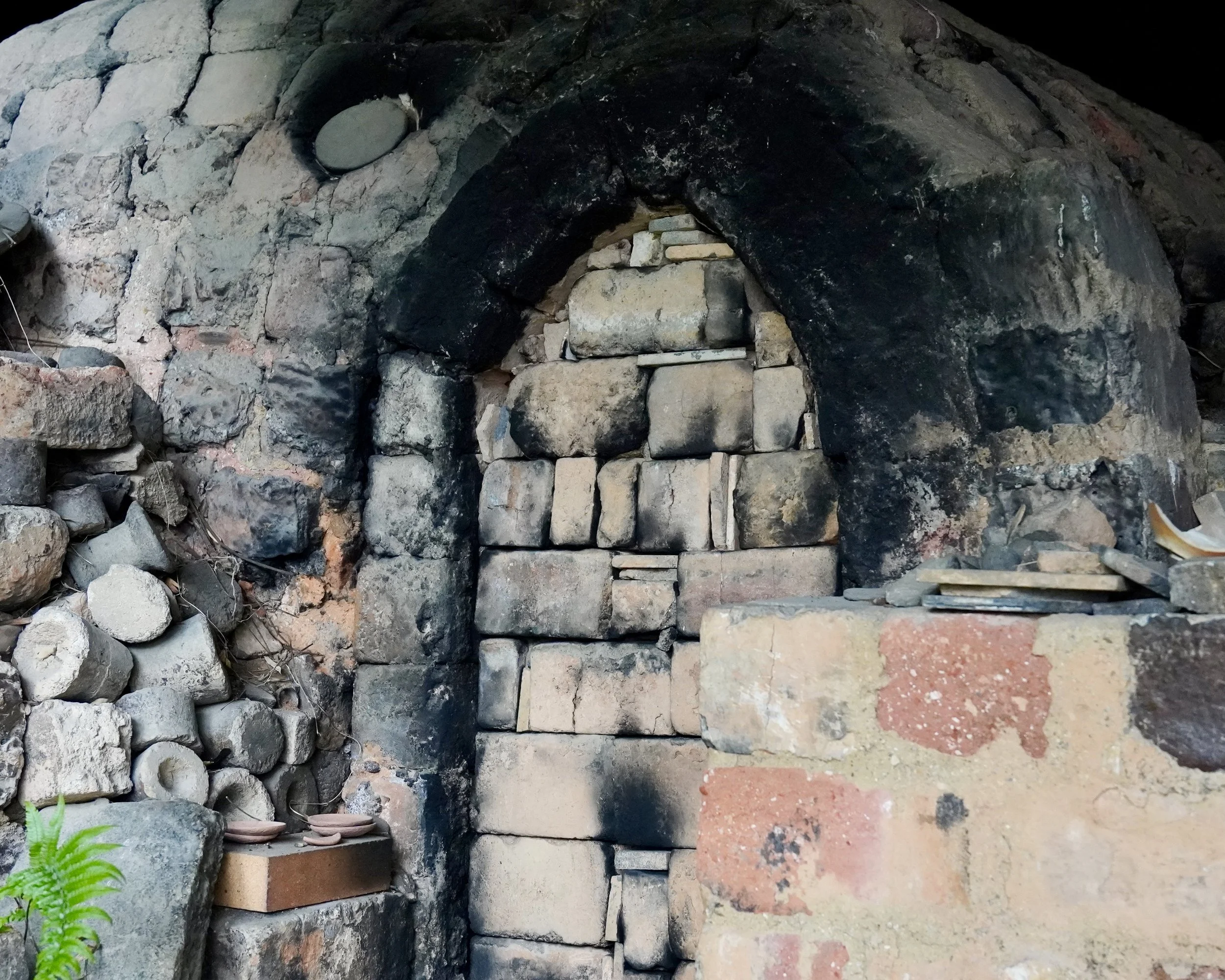
Then there is the fire. At the Seoul Museum of Craft Art, the part that stayed with me was about building a mangdaengi kiln. The exhibition showed footage of the kiln itself, with its rough, arched chambers lined in red, and old black and white film of potters at work. In one scene a potter remembers that potters used to move from place to place looking for clay. Hagi began the same way, with Yi Kyung searching for clay in Matsumoto. So the clay hunt shaped Hagi-yaki as we know it today.
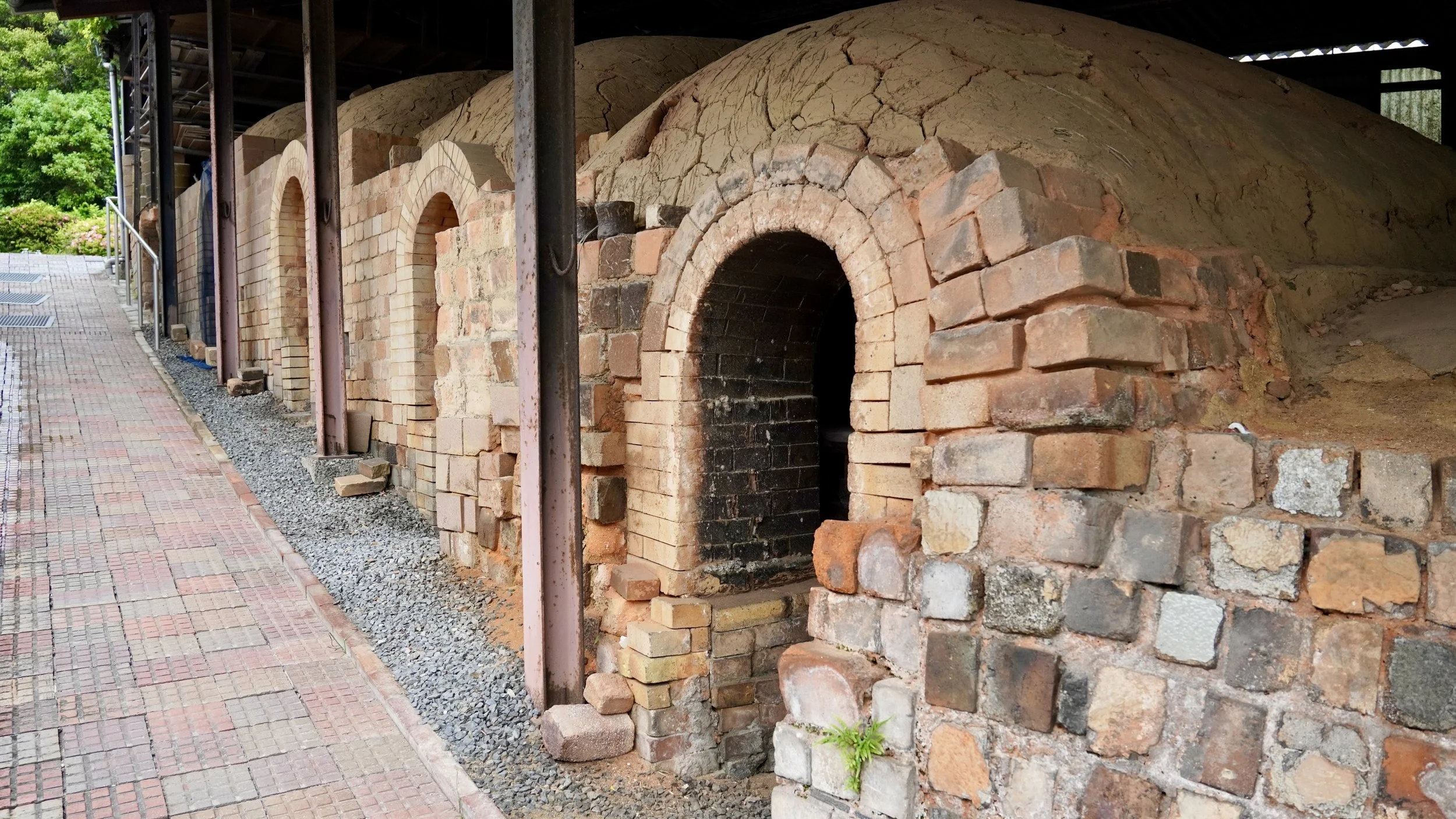
A Korean mangdaengi kiln is built by stacking long, narrow cylinders of clay into an arched roof. Inside, the floor steps up through separate chambers, which makes it a multi-chamber kiln. Kiln types that are shaped as a dome of earthen bricks can hold more than 1,000 degrees Celsius with a steady flame.
Three kiln types come up whenever Korea and Japan are discussed together, so here is how I keep them apart:
Anagama: one long tunnel chamber on a slope. It came to Japan with Korean potters around the fifth century.
Mangdaengi: a Korean multi-chamber kiln with a roof of stacked clay cylinders and a stepped floor.
Noborigama: a Japanese climbing kiln whose chambers each sit higher than the one before, with stoking ports into the chambers. It reached Japan from Korea in the early seventeenth century and traditional Hagi relies on it for the changes the flame makes to the glaze.
The idea of a chambered kiln on a slope, with heat passed from one chamber to the next, crossed the sea with those potters.
What Hagi made its own
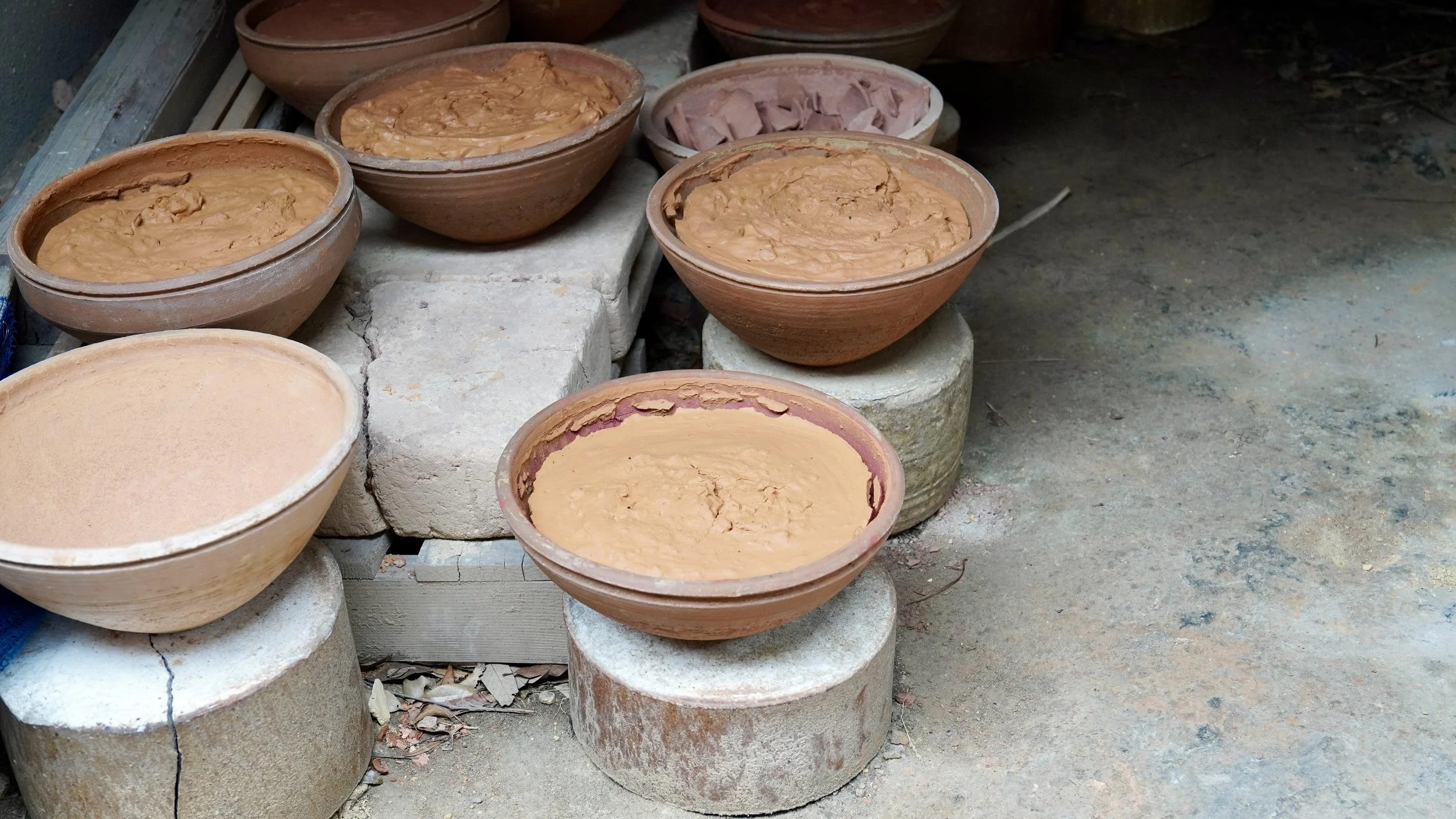
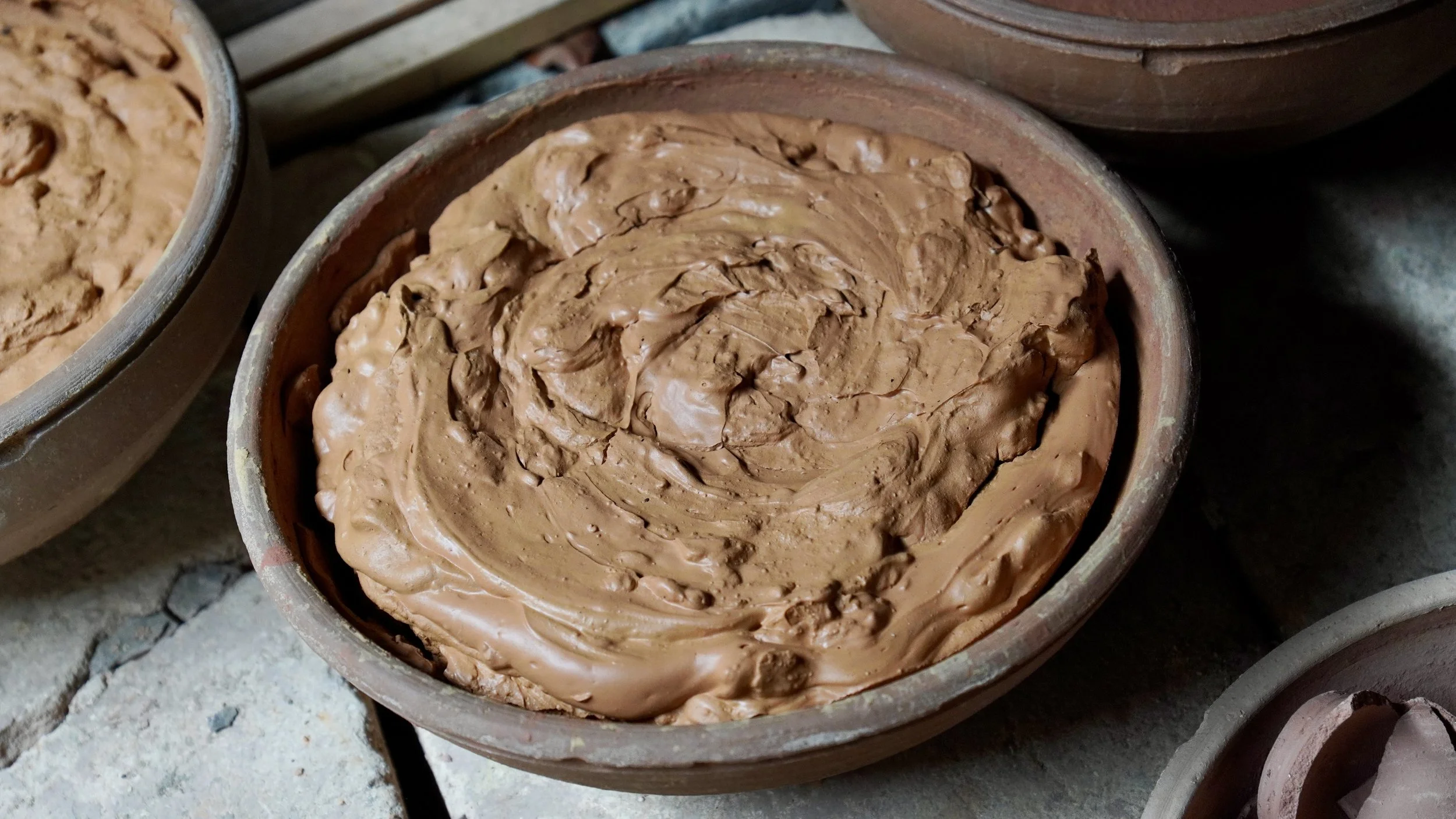
Mixed Hagi clay, the blend of Daidō, Mishima and Mitake earths that gives every piece its individual character before it ever touches the wheel.
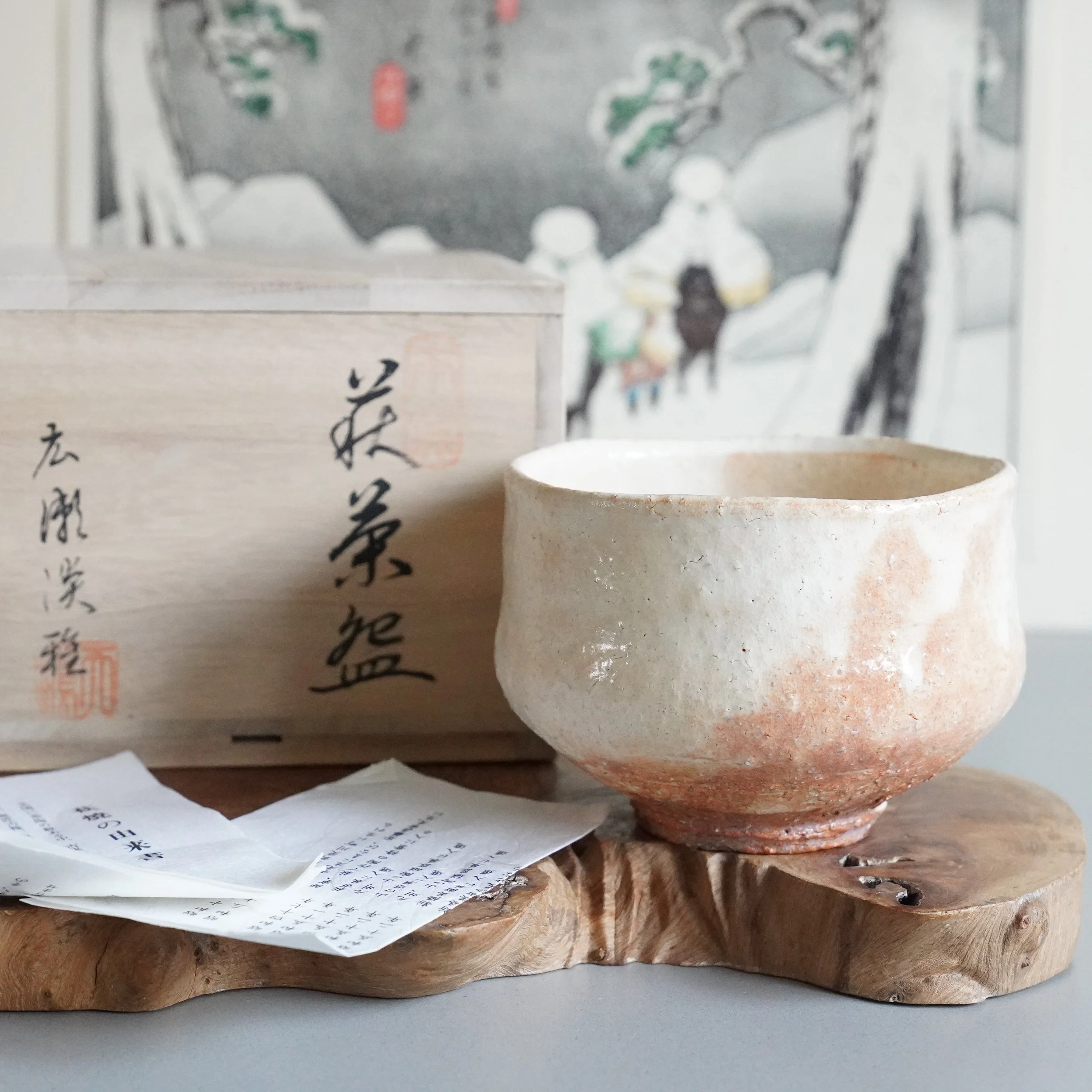
The biggest change I think is the clay. A local clay called daidō-tsuchi was mixed with the more fire-resistant mitake-tsuchi. This gave Hagi the subtle changes in colour and texture that people now recognise. Potters also add iron-rich mishima clay, dark red, which warms the colour.
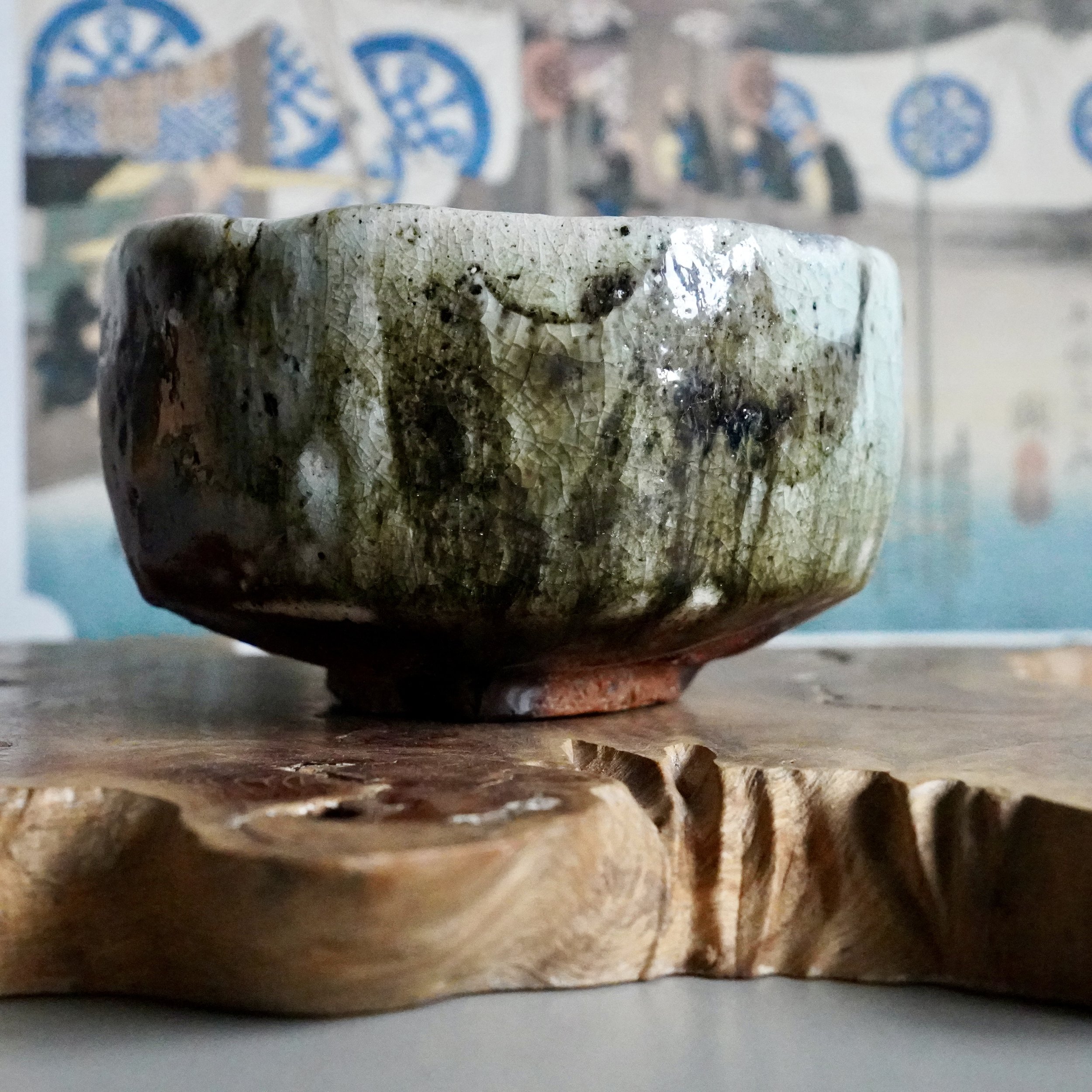
The glazes are wood ash or straw ash, laid thin and the pieces are almost never painted. That sets Hagi apart from Karatsu, which kept the Korean tradition of freehand iron painting. Hagi ware went the other way and let clay, glaze and fire do the work. Very much like Bizen-yaki
The clay shrinks only a little in the fire and stays poreus, absorbent. With a fine crackle in the glaze we tea passionists came to love. As tea and sake slowly stain the bowl from the inside so the colour deepens with use. It gets its own character through the drinks that were enjoyed through them. In Hagi they call this the seven changes, nanabake.
See what happens to a Hagi bowl when you fill it with water, filmed live to show you how it will take up tea over the years. Read it in my journal post: What happens when water meets Hagi-yaki.
Hagi’s shape did not stay the way the Korean potters left it. When the domain’s patronage ended in 1868, the potters who had worked for the lord had to run their own workshops and kilns spread beyond Hagi. In the twentieth century Hagi won back its place as a tea ware, potters began making sake sets and tableware for daily use next to the bowls for tea, and after the war individual artists became more active. Today potters in Hagi go further, making sculptural pieces that look little like the quiet tea bowls of the past.
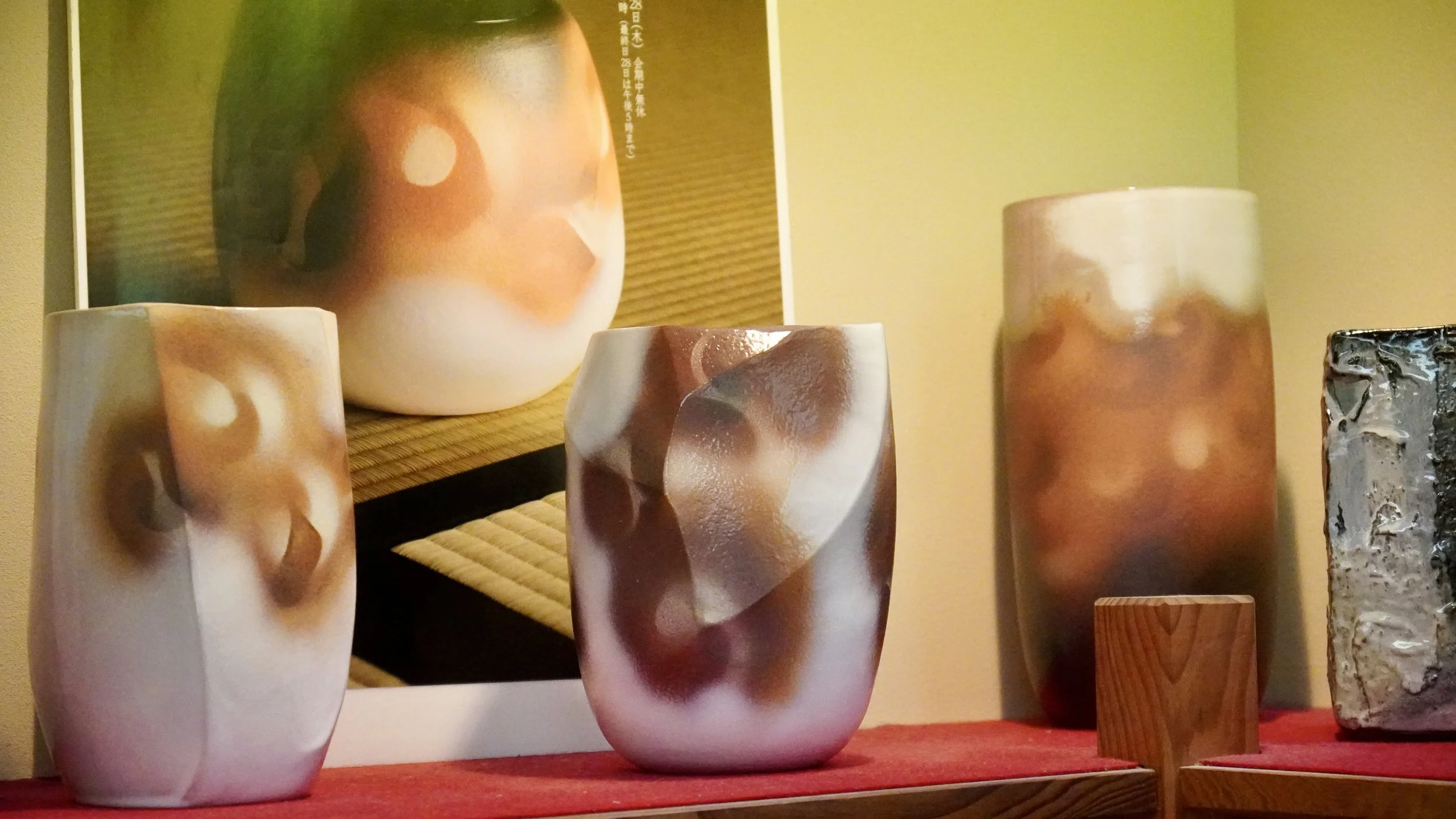
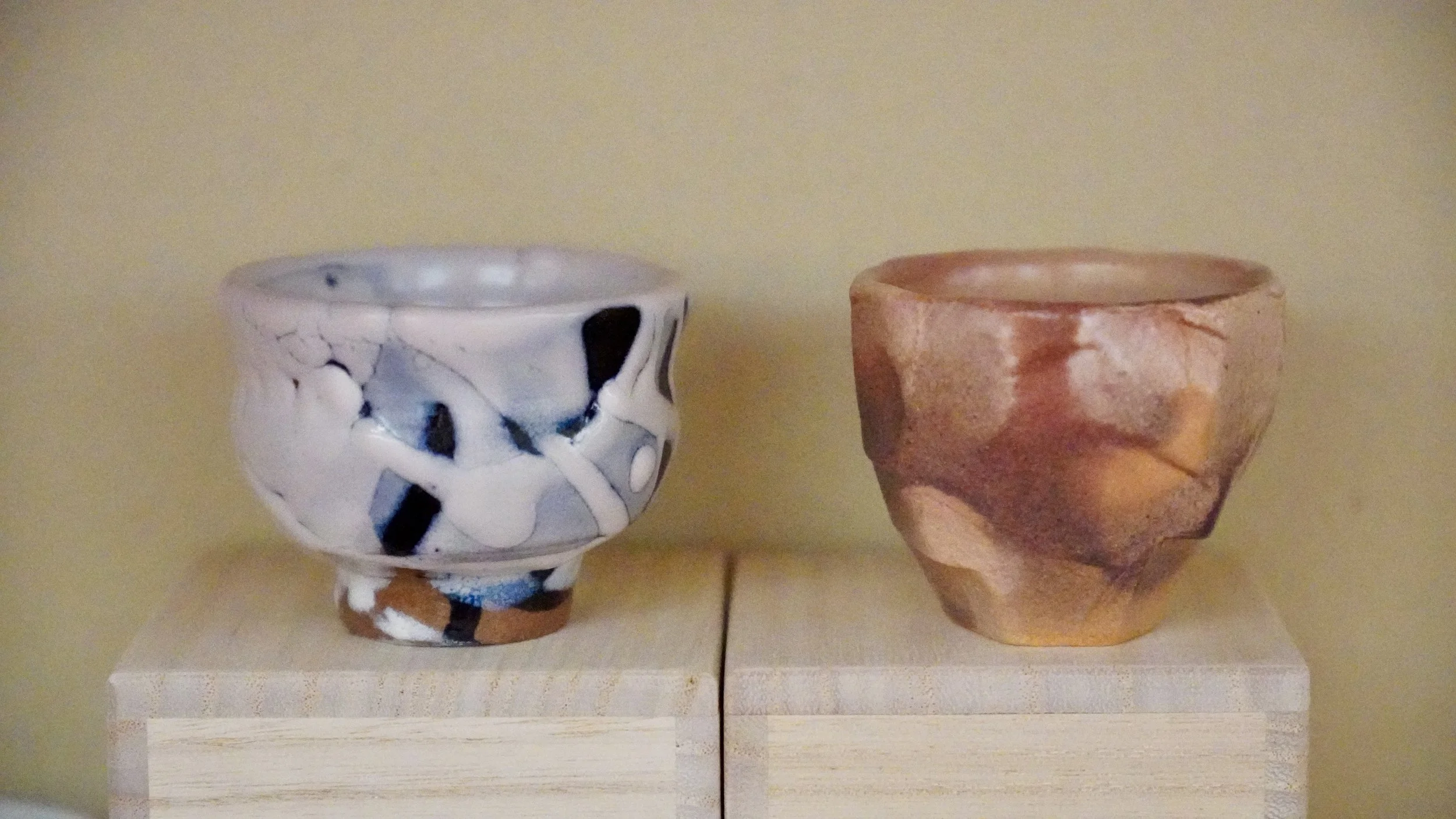
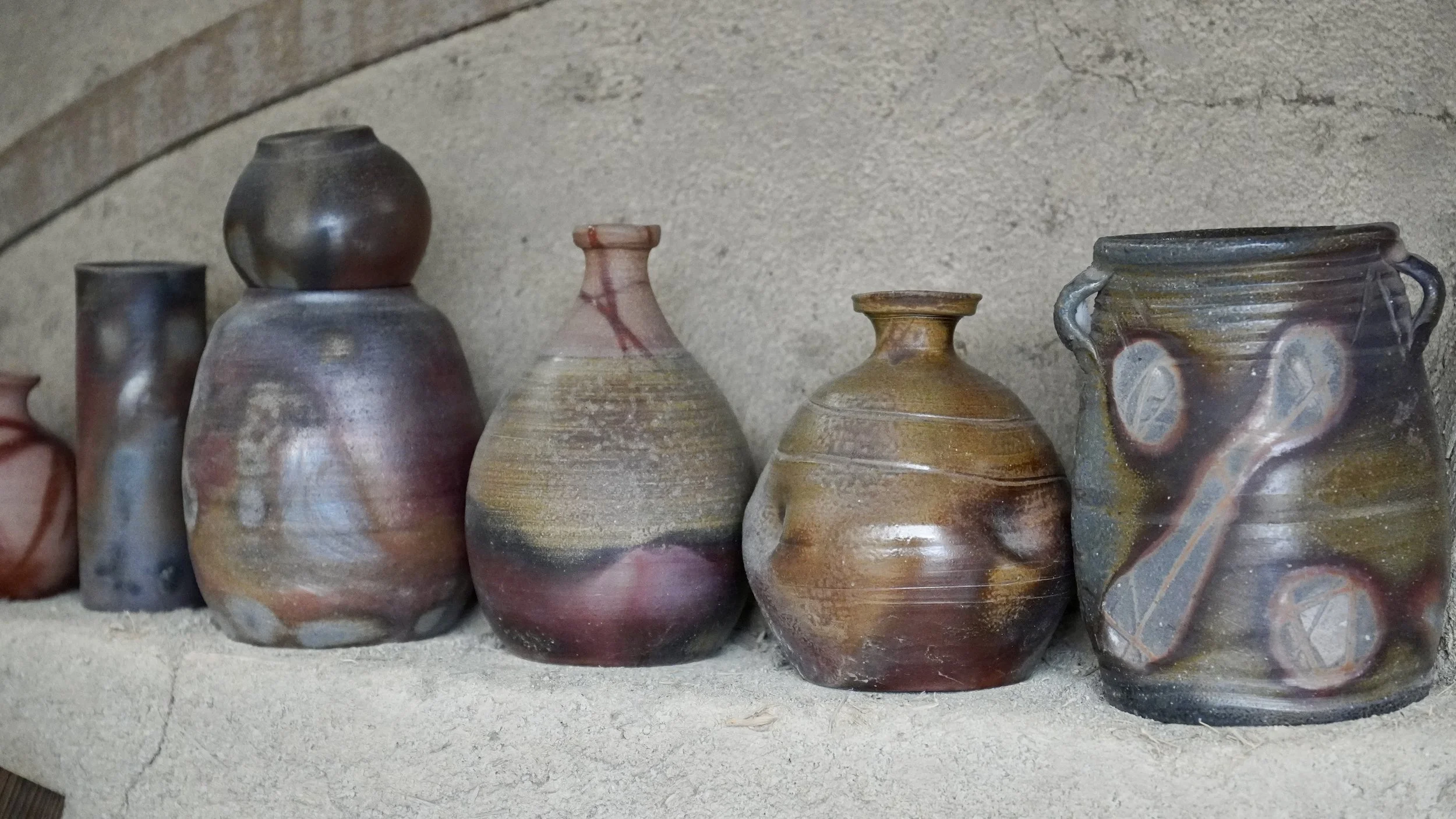
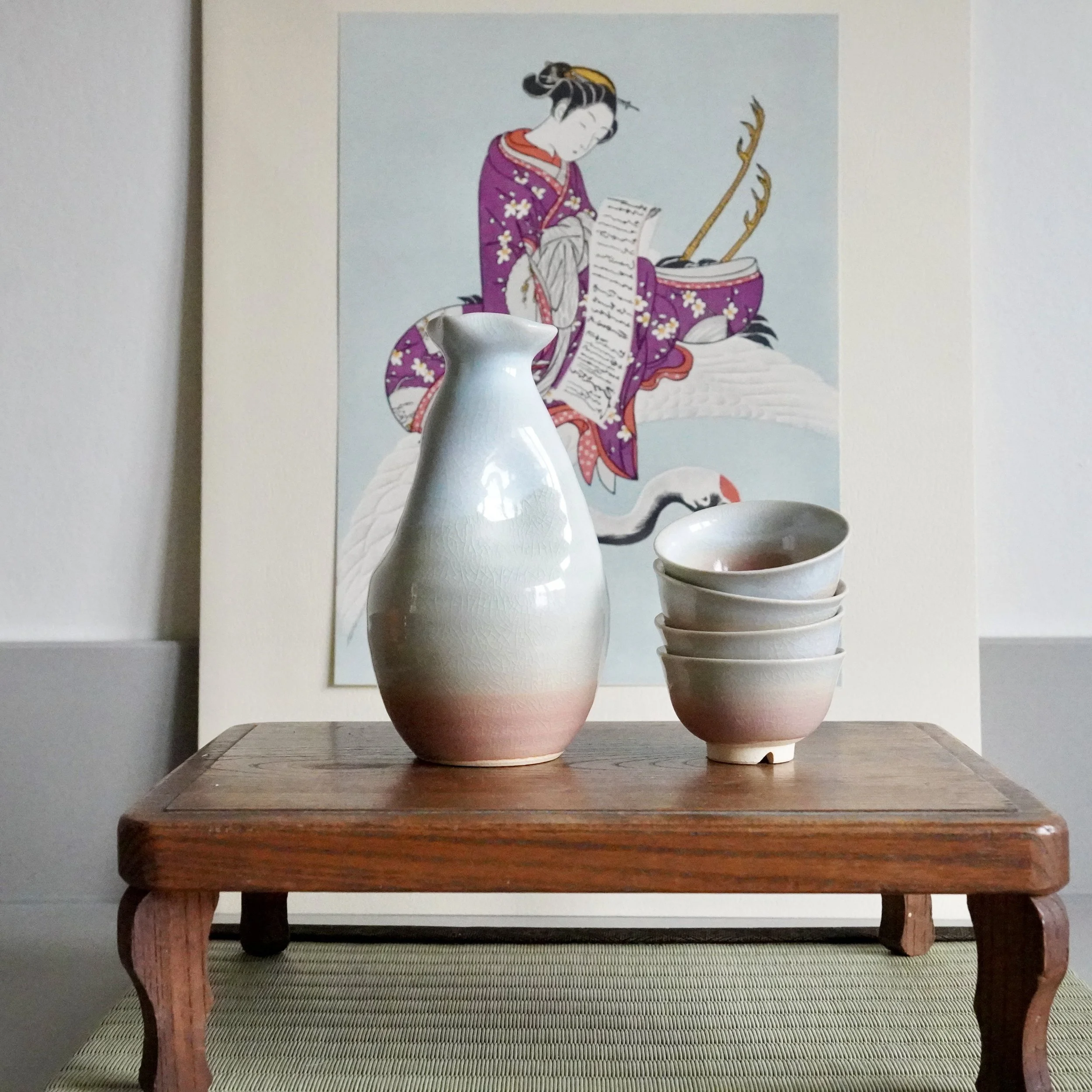
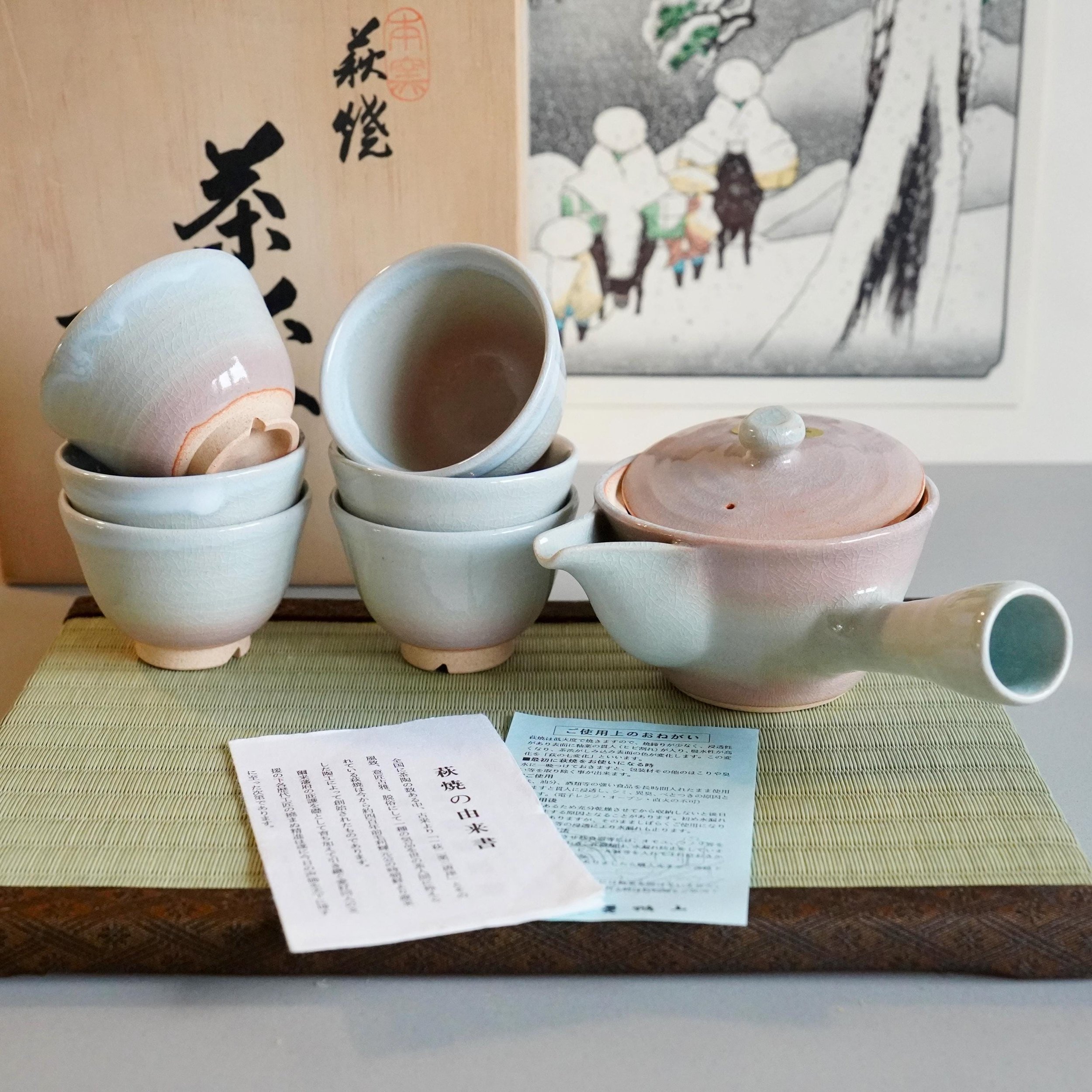
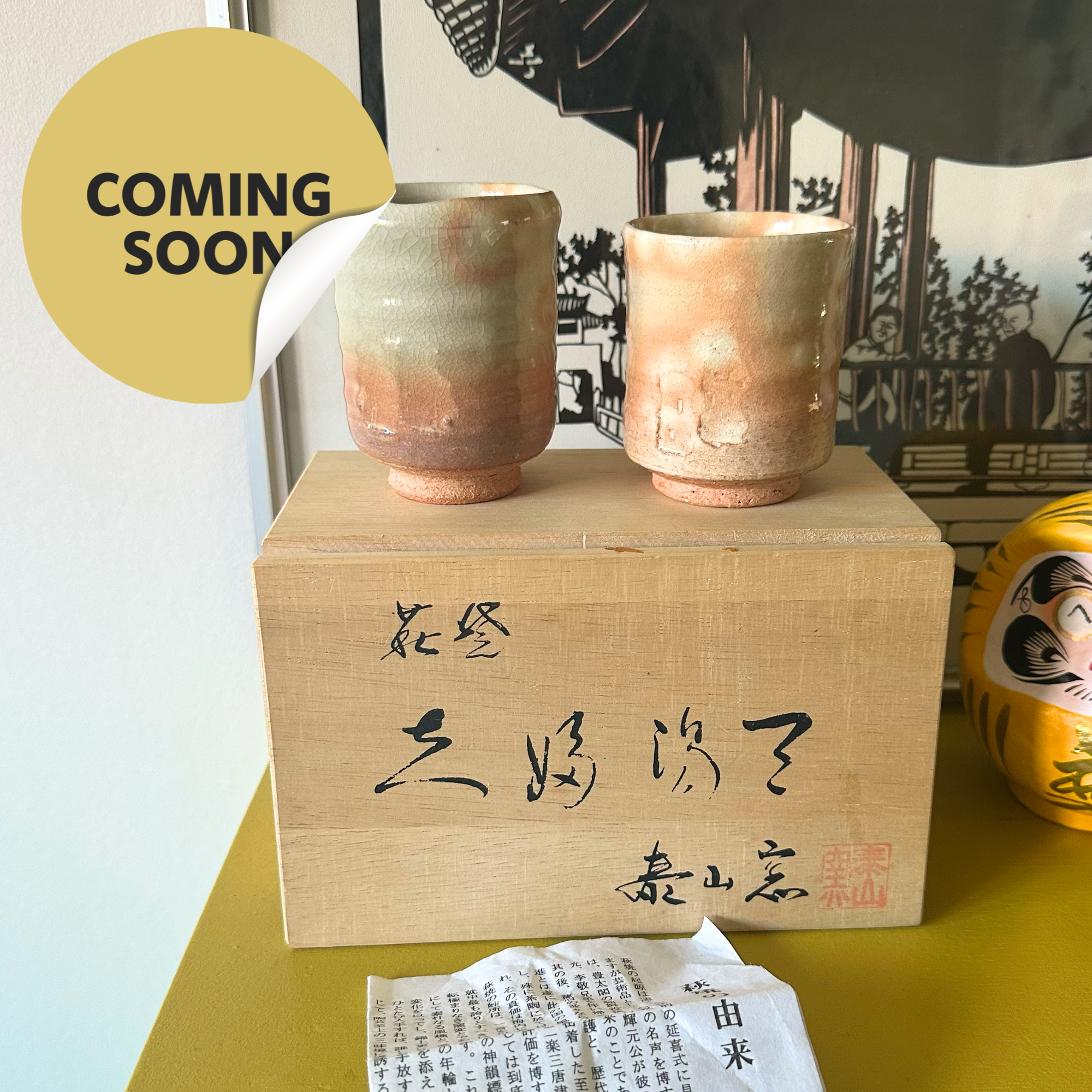
The glazes changed too. White Hagi glazes grew thicker and bolder, pale blue glazes appeared, and kiln effects let the fire itself decide the colours and patterns on a surface. Some potters now make sculptural pieces that look little like a tea bowl, while others keep the split foot and the soft, absorbent clay. At the Okada kiln, three generations work around a wood-fired noborigama, and one of their glazes is a pale blue named after the Sea of Japan. Below you see their Noborigama, blue glazed sake cups, an Oni-Hagi vase (devil Hagi) with a thick, clumped white glaze over heavy dark clay and another vase in Yū's ensai technique: developed from what was brought back from travels along the Silk Road, producing a reddish, flame-like transformation across a white ground.
Read more about my Hagi visits in the journal posts: first a morning at the Okada kiln, and a quiet morning at Senryūzan,
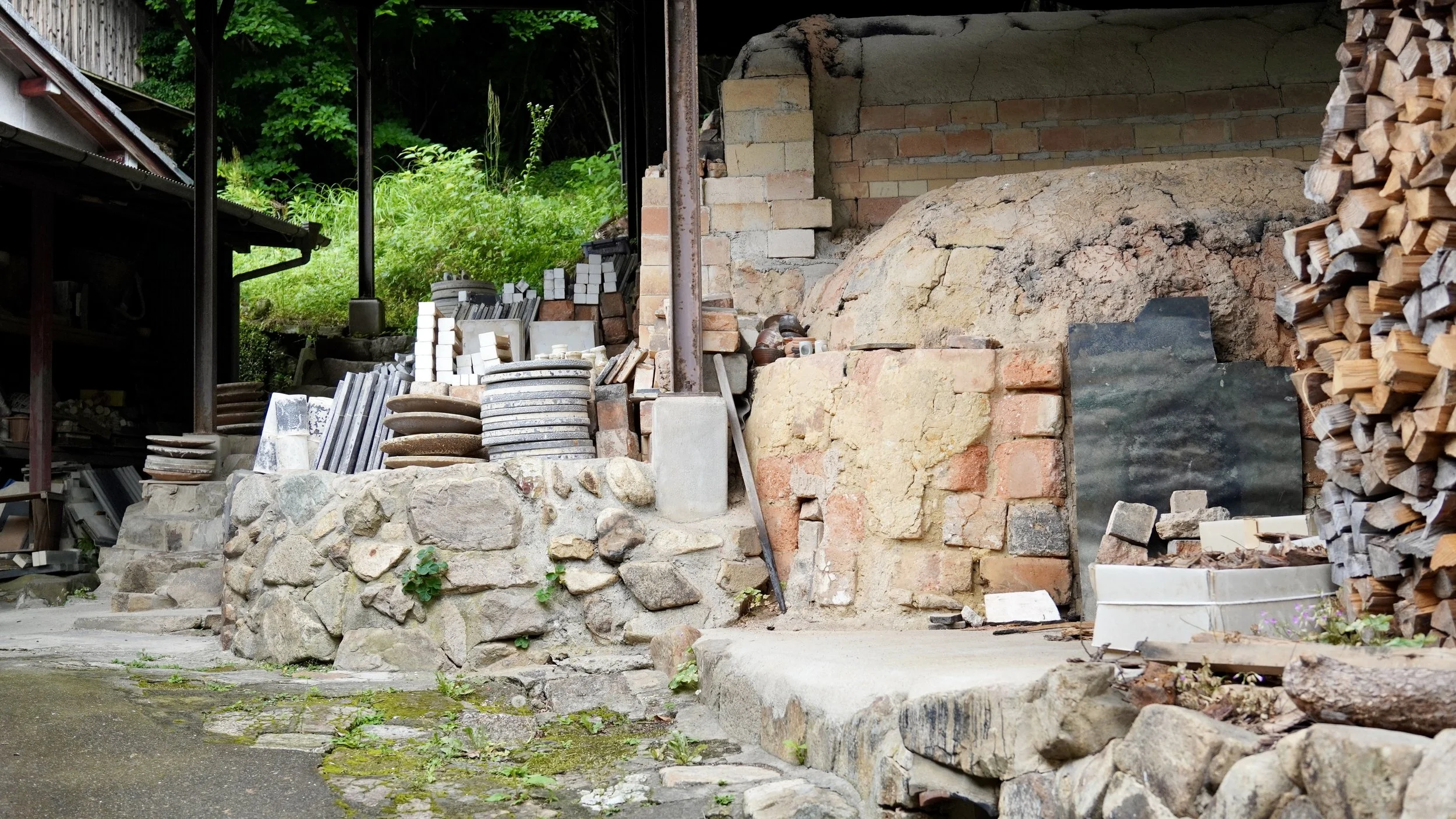
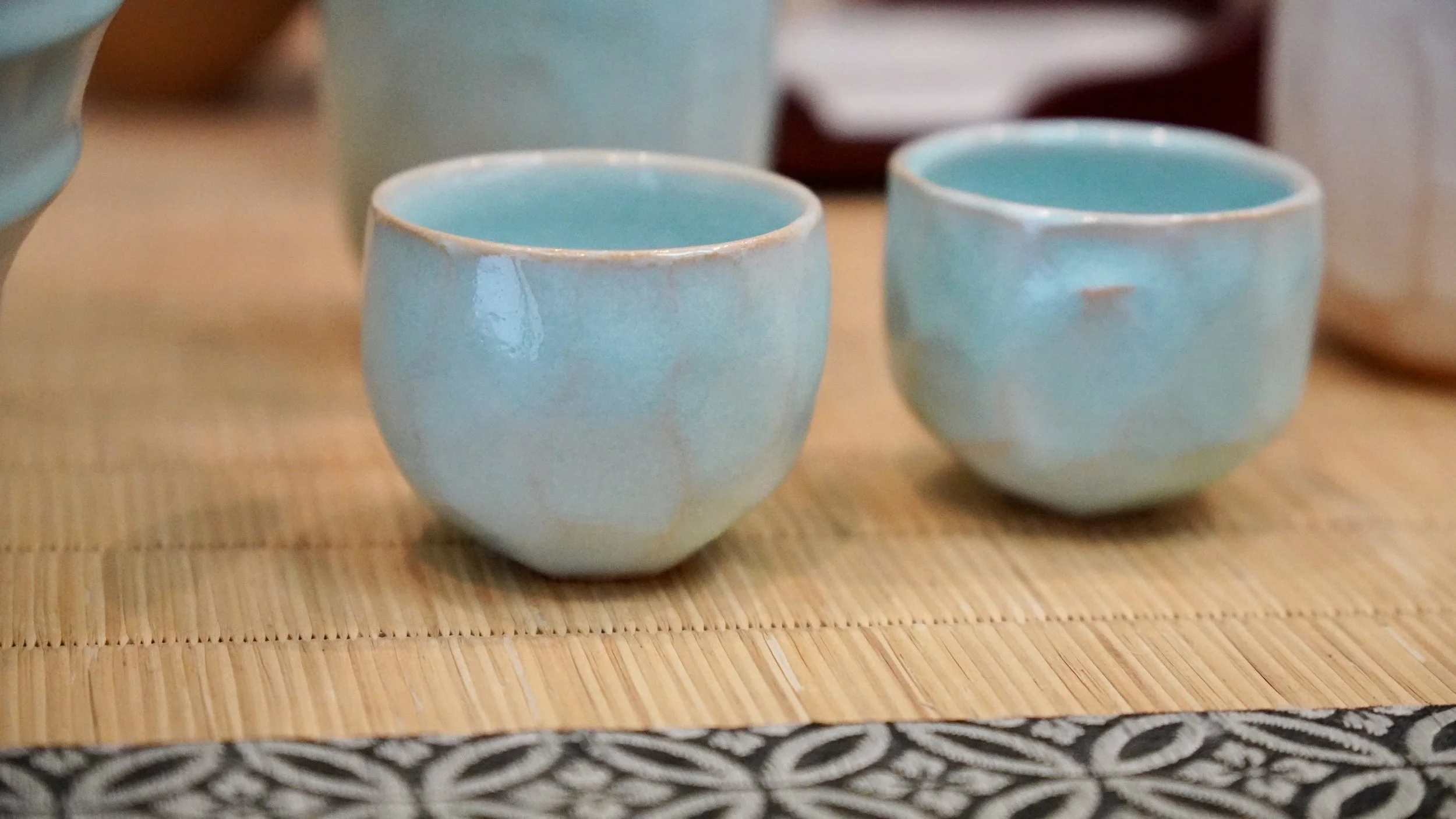
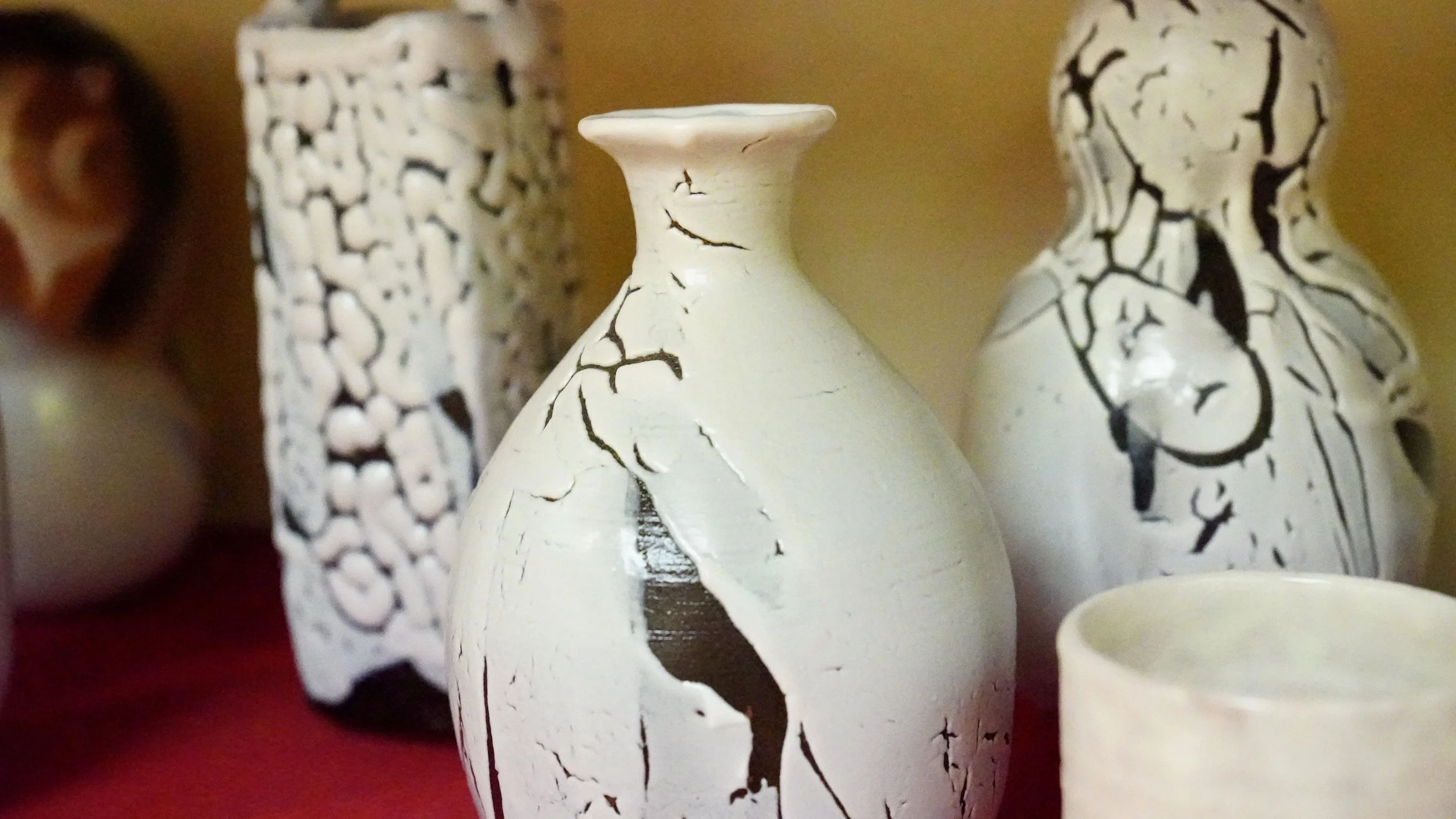
Read more
A selection of other kiln visits and glaze traditions from Japan.
→ Hagi-yaki isn't meant to stay the same. Read how the glaze itself keeps changing, in my journal.
→ Curious what that crackle actually does the moment it meets tea? I filled a Hagi chawan with water and watched it happen in real time: What happens when water meets Hagi-yaki
→ Ensai and tanseiyu both come from a kiln that lets fire and slip decide the surface. Bizen goes even further: no glaze at all, only what ten to fourteen days in the flame leaves behind. Bizen-yaki: the Okayama tradition without glaze
→ Curious how to care for a piece like the Okada kogo in the shop? I wrote a full ceramics care guide.
→ Want to know more about the eight generations behind this kiln, and how to recognise a genuine piece? Meet Okada Yū and Okada Yasushi on the maker page.
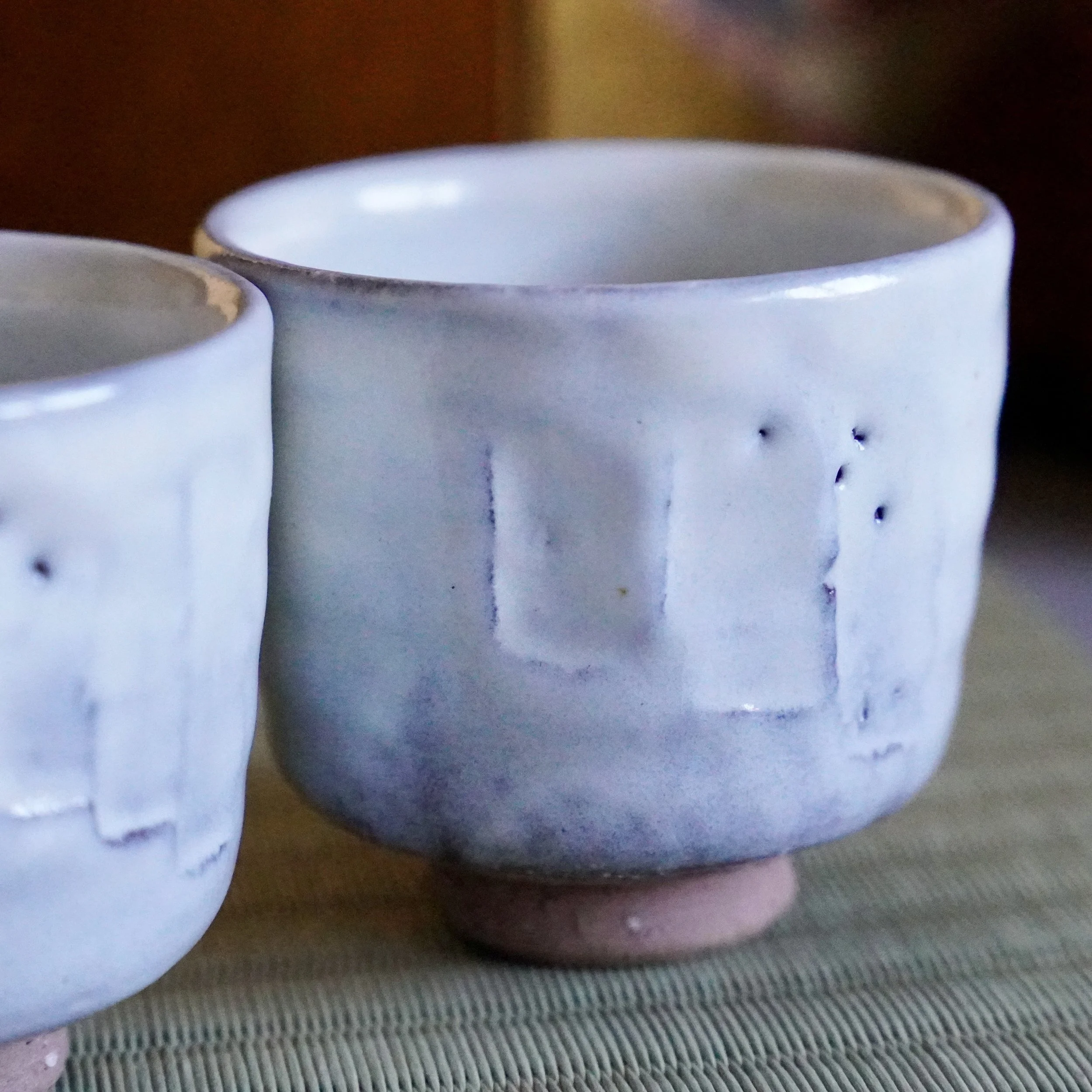
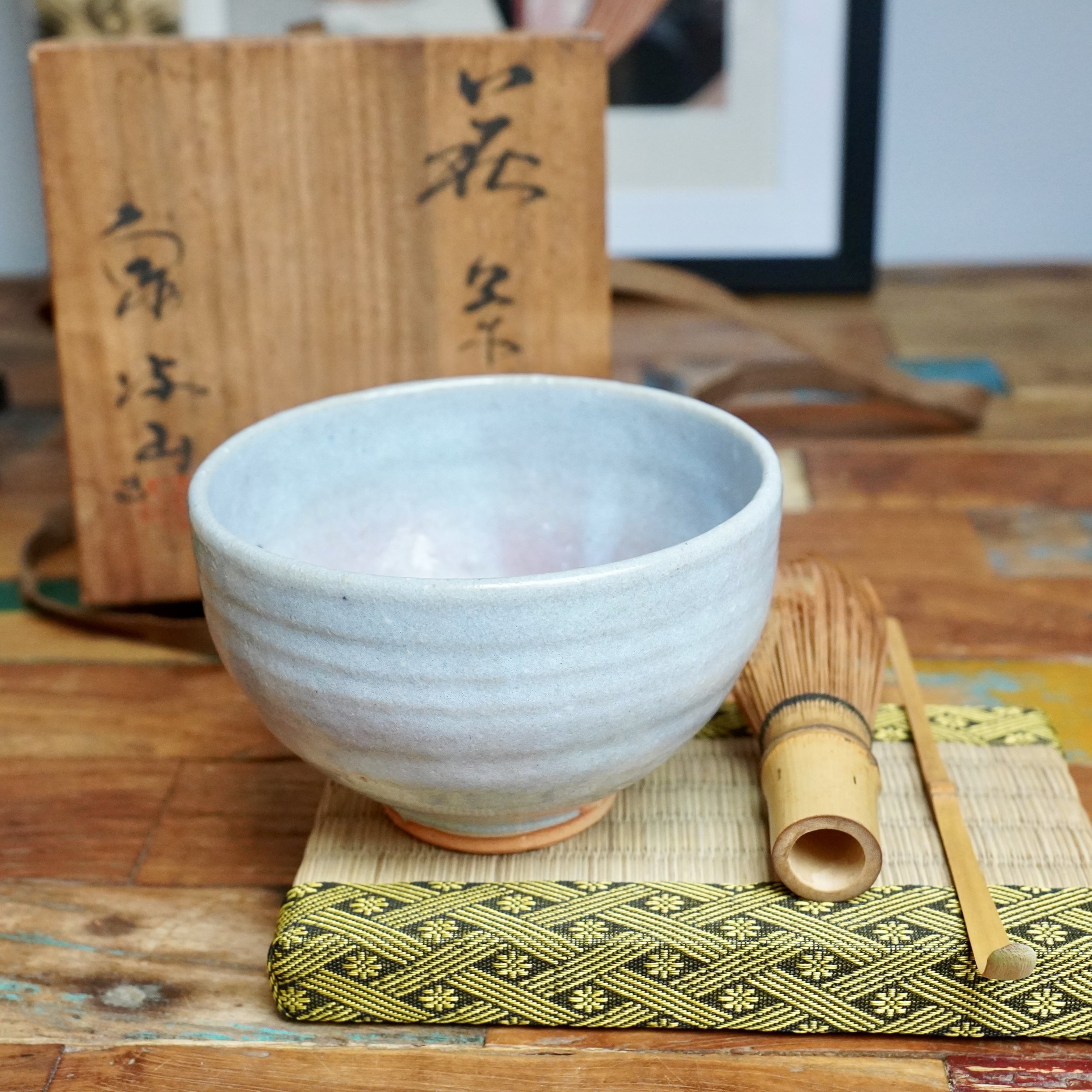
The lavender blue catches you before anything else does. Not a saturated, forced blue but something that moves between blue and purple depending on where the light falls, lightening near the rim, deepening in the grooves where the wheel left its mark. The ribbed surface amplifies that movement: each cup reads differently at different times of day, and differently again from the one sitting next to it.
These cups come from Tsubaki-gama Tenpōzan (椿窯 天鵬山) in Hagi, the kiln founded by Hirose Nanshū and led by his son Hirose Tanga (広瀬淡雅, born 1939). The kiln holds the Traditional Craft of Japan designation (伝統工芸品), an official certification that the materials and methods meet the standards that define authentic Hagi ware.