 Image 1 of 5
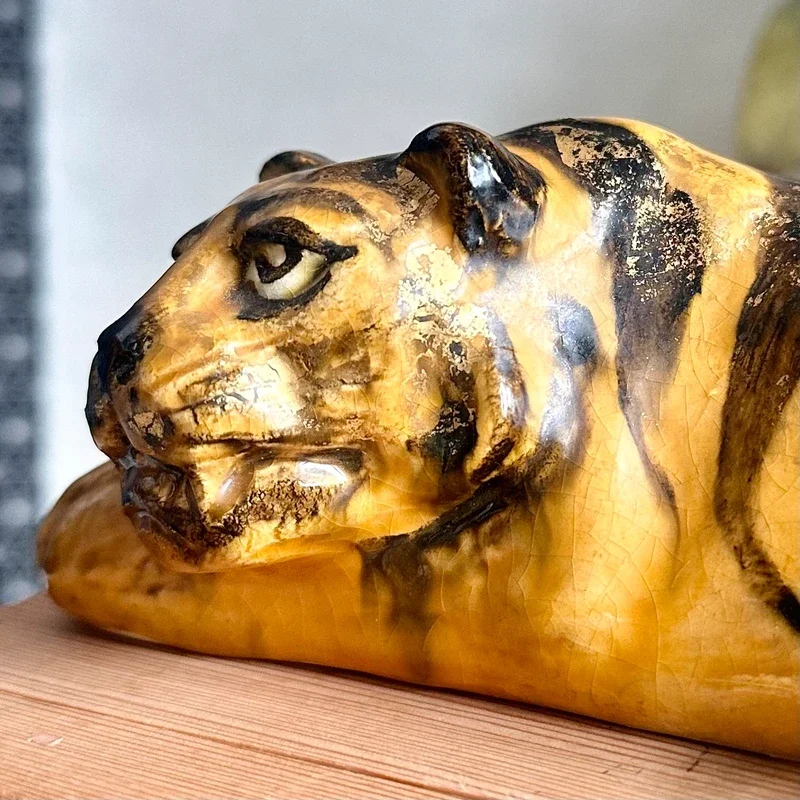 Image 2 of 5
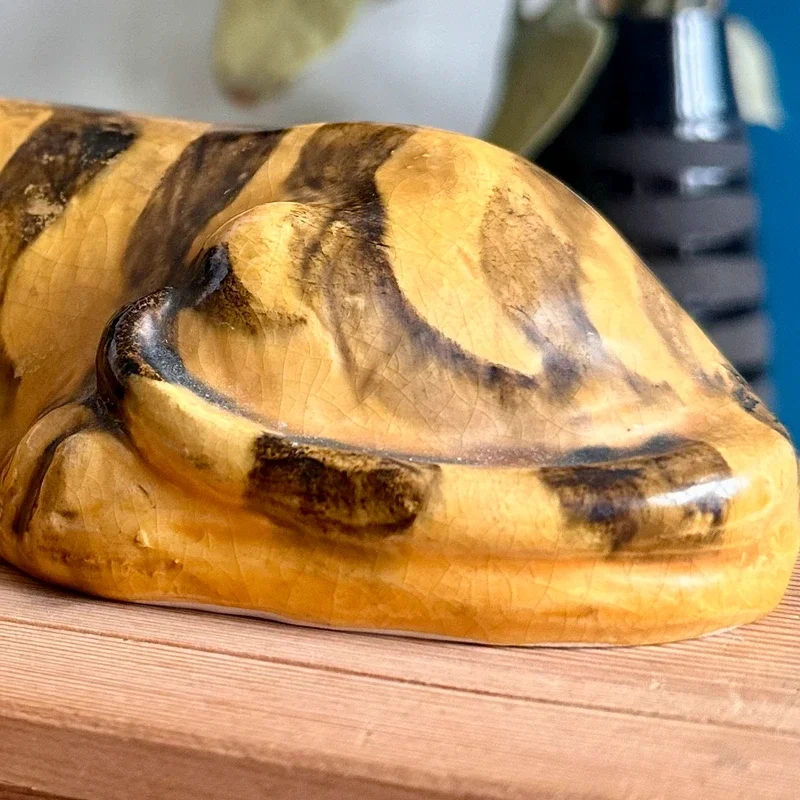 Image 3 of 5
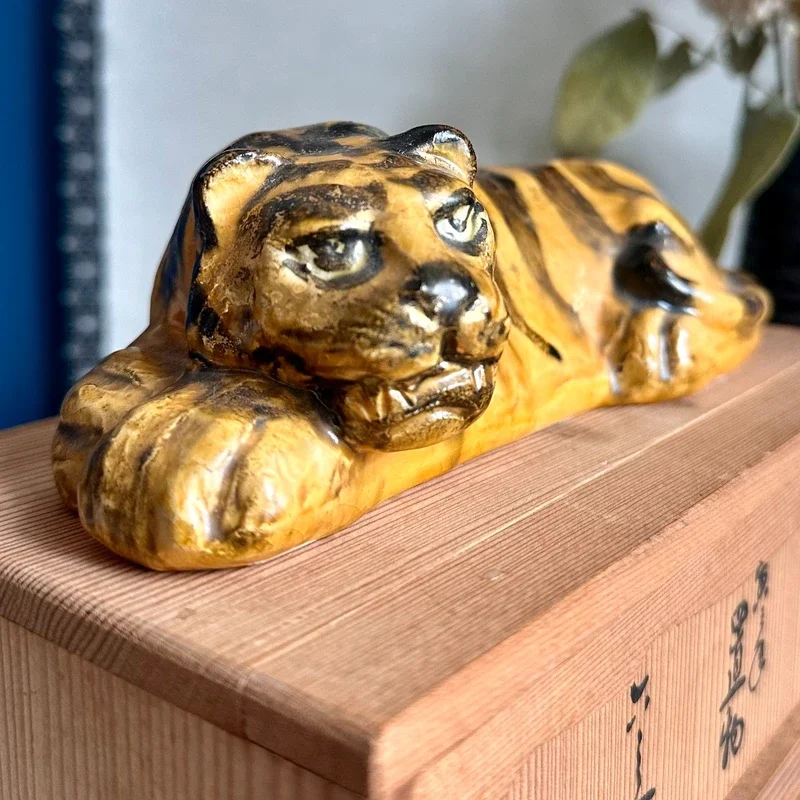 Image 4 of 5
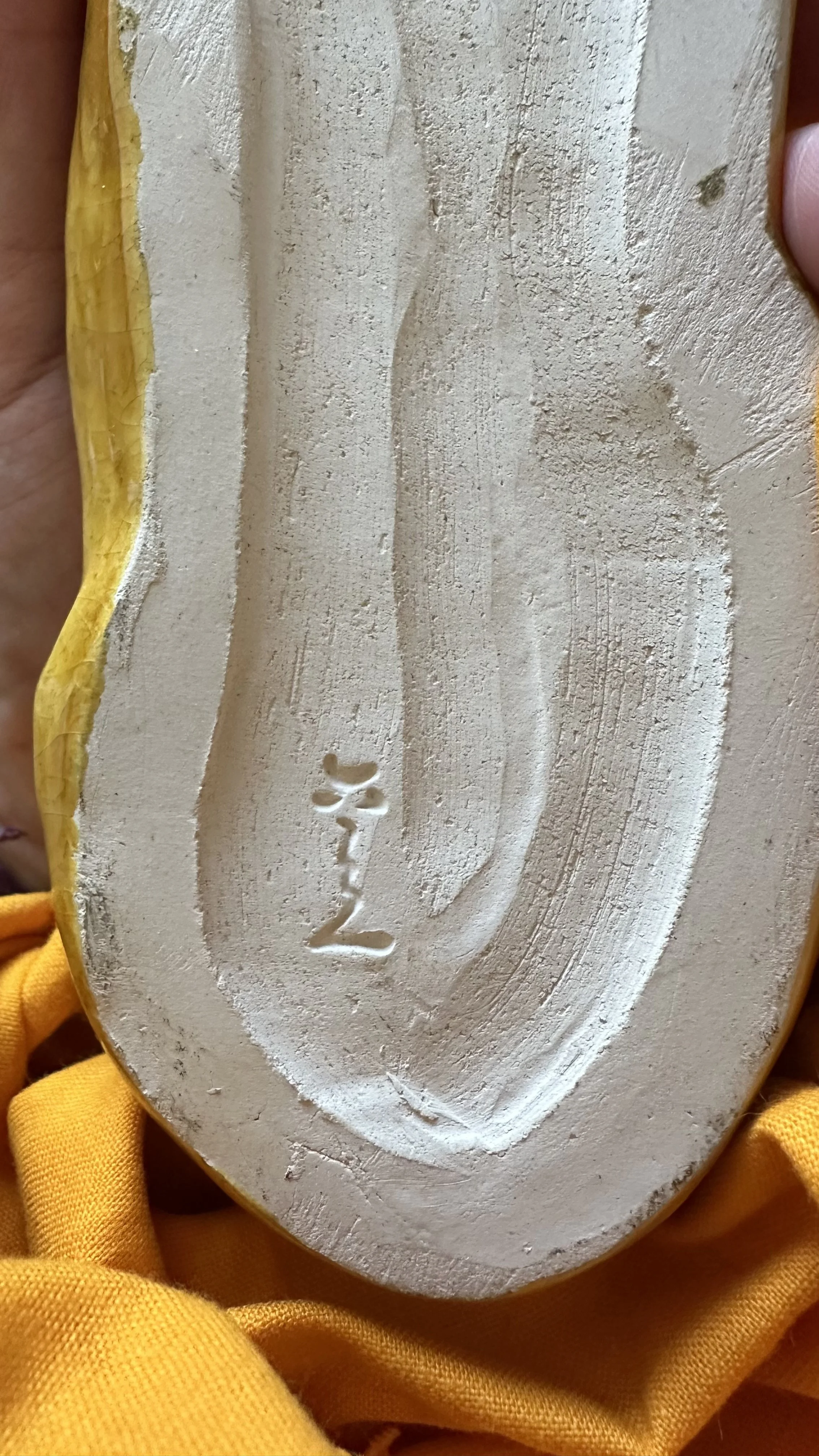 Image 5 of 5
Japanese Kiyomizu Rokubei VI tiger with original tomobako, Kiyomizu-yaki Shōwa period
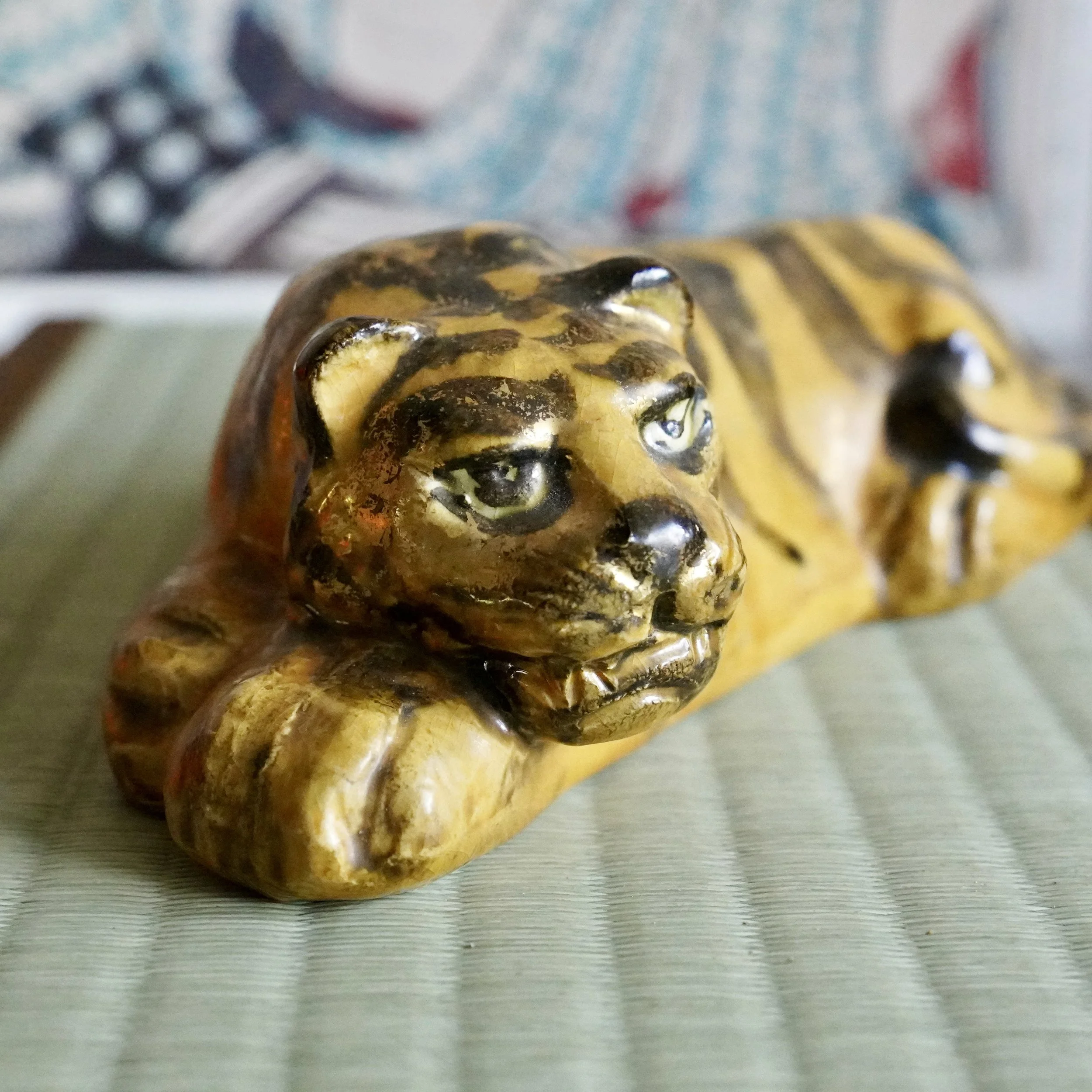
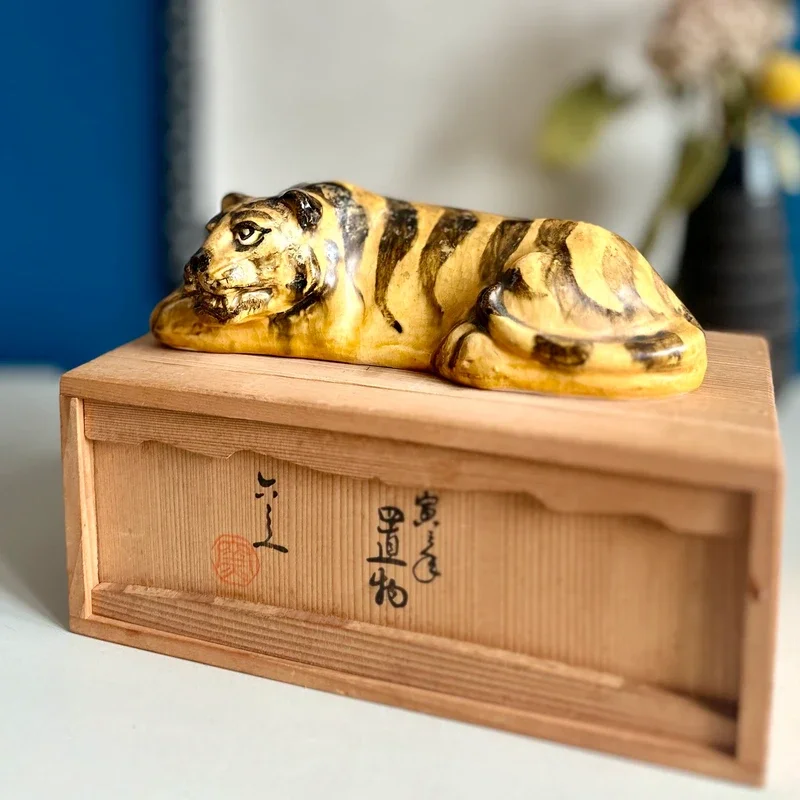
The tiger lies with its head turned toward you, one paw forward, the weight of the body settled. The glaze is warm amber with dark brown stripes, and the face is painted with enough specificity that you know exactly what kind of animal this is without needing to be told. It is not decorative in the way of a souvenir. It is a studied likeness. Something about the expression, slightly open-mouthed, the eyes directed outward, makes it feel more alert than resting.
Kiyomizu Rokubei VI (六代清水六兵衞, 1901 to 1980) came from a kiln lineage that had been making animal okimono as part of its output since the 18th century. Zodiac animals made at the Rokubei studio were considered collector pieces, sold at high-end establishments throughout Japan. This tiger is signed with the 六兵 personal name seal pressed into the base, and comes in its original tomobako inscribed 寅置物, tiger okimono. A piece likely made for a Year of the Tiger, most probably 1950 or 1962.
The tiger lies with its head turned toward you, one paw forward, the weight of the body settled. The glaze is warm amber with dark brown stripes, and the face is painted with enough specificity that you know exactly what kind of animal this is without needing to be told. It is not decorative in the way of a souvenir. It is a studied likeness. Something about the expression, slightly open-mouthed, the eyes directed outward, makes it feel more alert than resting.
Kiyomizu Rokubei VI (六代清水六兵衞, 1901 to 1980) came from a kiln lineage that had been making animal okimono as part of its output since the 18th century. Zodiac animals made at the Rokubei studio were considered collector pieces, sold at high-end establishments throughout Japan. This tiger is signed with the 六兵 personal name seal pressed into the base, and comes in its original tomobako inscribed 寅置物, tiger okimono. A piece likely made for a Year of the Tiger, most probably 1950 or 1962.
What makes this Rokubei tiger special
The up close look and feel
The glaze is applied thickly on the body, the colour deepening where it pools in the muscular contours of the back and haunches. The stripes are painted in darker brown directly over it, each one a confident brushstroke. What stands out are the golden details on his head and shoulders and the big paws he is resting his head on. Giving him that majestic tiger look.
That gold is kinsai, an overglaze gold applied by hand and fired a second time onto the surface. It is a technique with a well known fate: it wears thin with handling. Here it is thinnest on the ears, shoulders, and the tops of the paws, exactly where a hand would naturally rest over decades.
Charming details
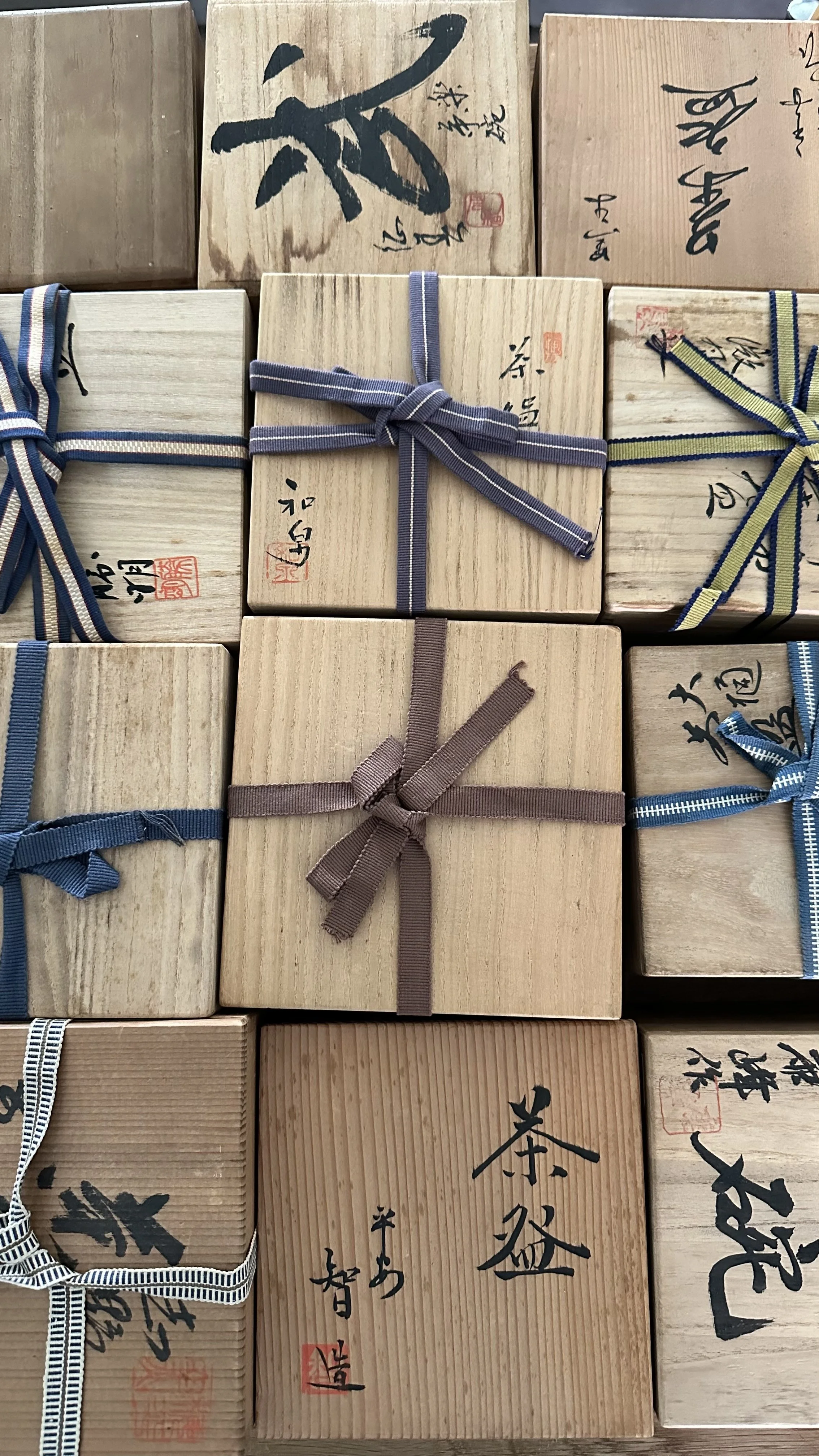
The tomobako is inscribed 寅置物, tiger okimono. In Japan, 寅 is also the zodiac sign of the tiger, which falls every twelve years. Tiger okimono made at the Rokubei kiln were traditional collector pieces, given as gifts in the Year of the Tiger and kept afterward as protective objects.
The tiger in Japanese iconography is associated with courage and the warding off of misfortune. This one has been resting on its tomobako for somewhere between fifty and seventy years.
-
Made by Kiyomizu Rokubei VI (六代清水六兵衞).
Born 1901, Kyoto. Died 1980.
Japan Art Academy Prize 1957, member of the Japan Art Academy 1962.
His works are in the Metropolitan Museum of Art, New York, and National Crafts Museum, Tokyo.
The Kiyomizu Rokubei kiln, founded 1771, produced animal okimono as a recognised part of its output across generations.
Signed: 六兵 personal name seal impressed on the base.
The tomobako is inscribed 寅置物 (tiger okimono) in the maker's hand.
-
Kyoto, Japan. Kiyomizu-yaki (Kyo-yaki).
Shōwa period. Made for the Year of the Tiger, ca. 1950 (Shōwa 25) or 1962 (Shōwa 37).
-
Weight: ca. 430 gram
Length: ca. 19 cm
Height: ca. 6 cm
-
Excellent vintage condition.
Glaze and paint intact throughout.
-
Overglaze enamel on ceramic. Do not wash with water.
The painted decoration sits on the surface of the glaze and is vulnerable to abrasion and moisture.
Dust with a soft dry cloth only.
Keep away from direct sunlight, which fades overglaze enamels over time.
Handle by the body rather than the head or tail.
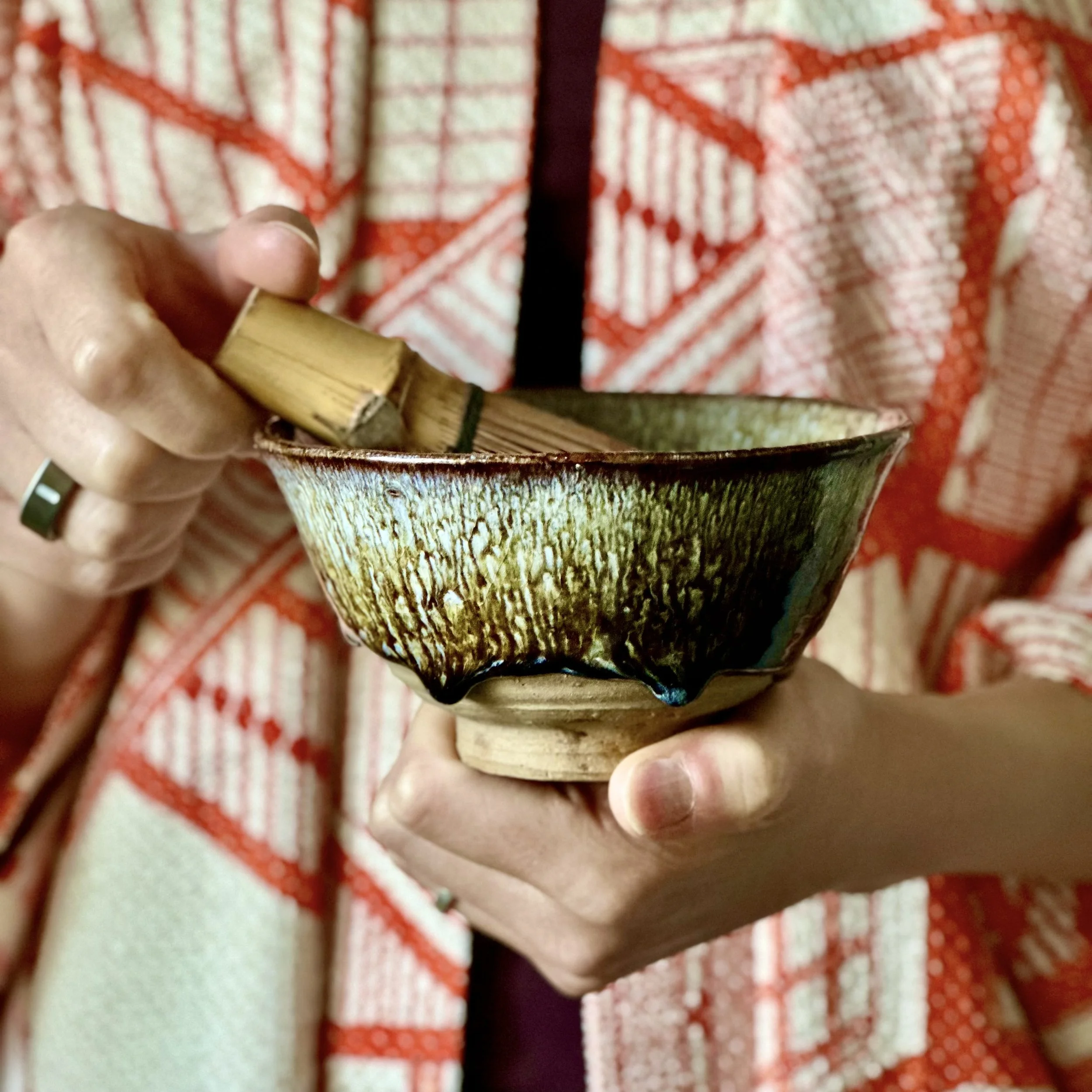
*Decorative items such as the whisk or wooden stands are for styling
and scale purposes only and not included in the sale
Items you might also like

Questions before you buy?
Since my items are one-of-a-kind pieces, I want to ensure they reach you perfectly.
Questions about the history or condition?
Need a custom shipping quote or shipping outside the EU?
Prefer to see more detailed photos or a video?
Reach out to me directly. I'm here to help you find the perfect piece for your home.
✉️ hello@kaikoandco.com
💬 Instagram DM: @bykaikoandco