 Image 1 of 15
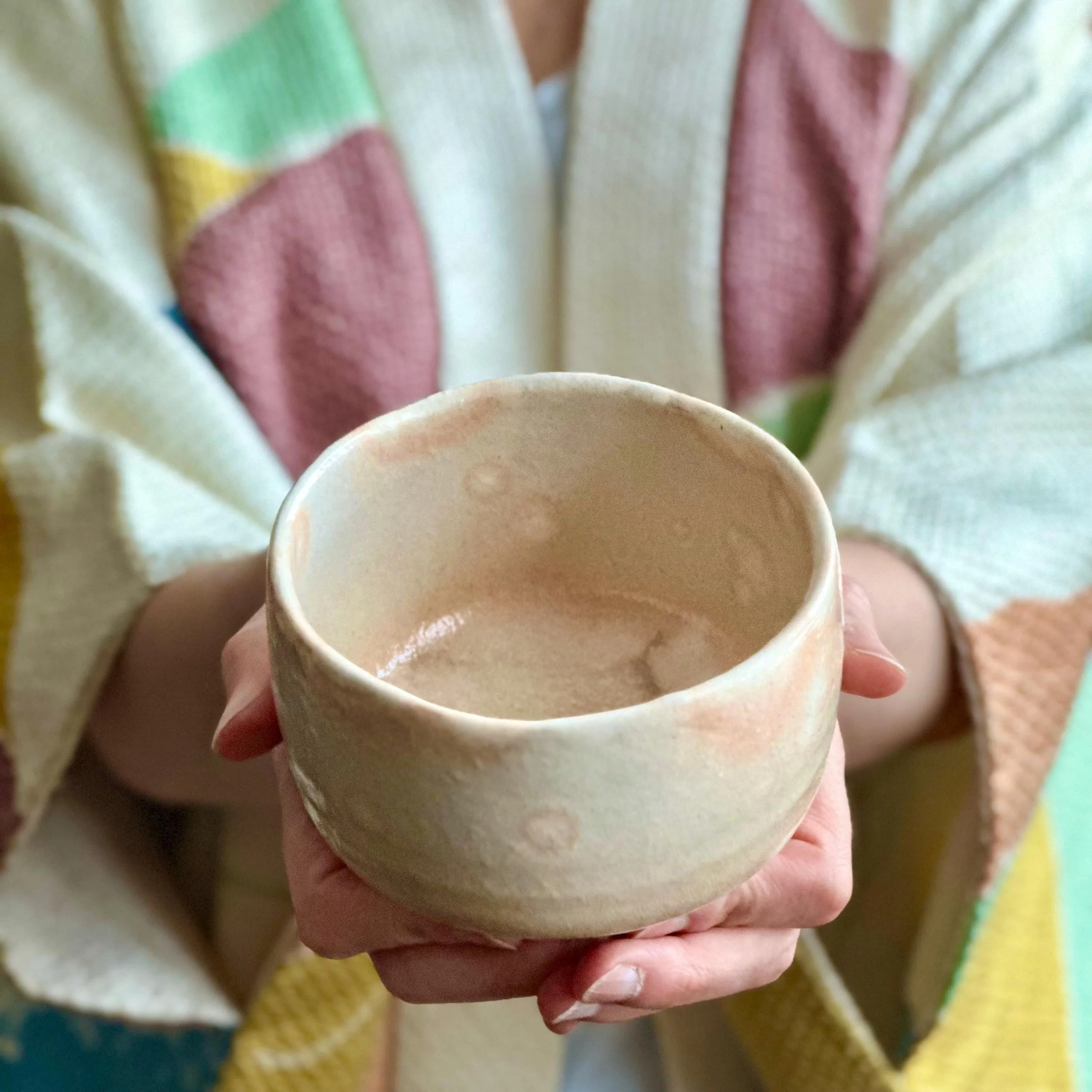 Image 2 of 15
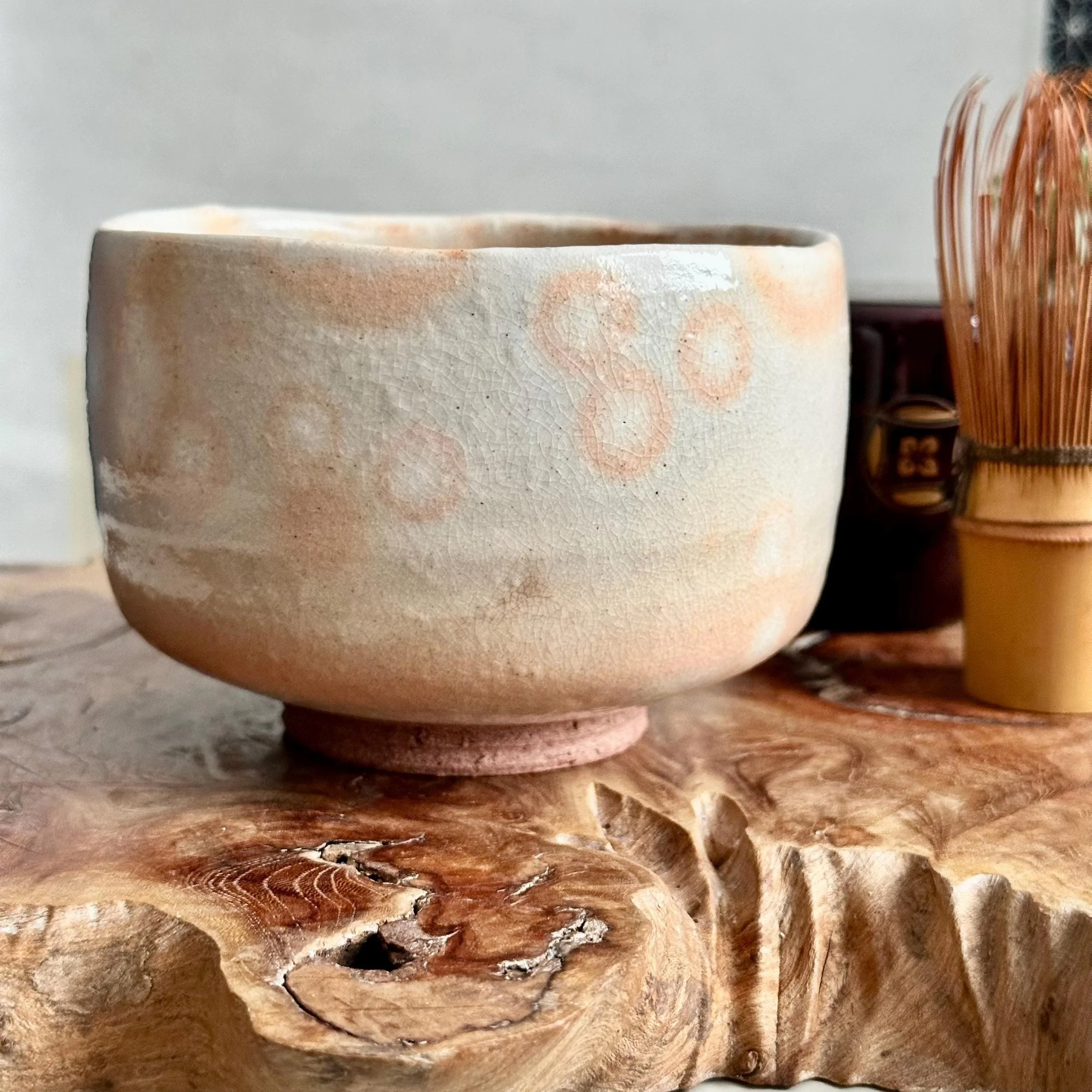 Image 3 of 15
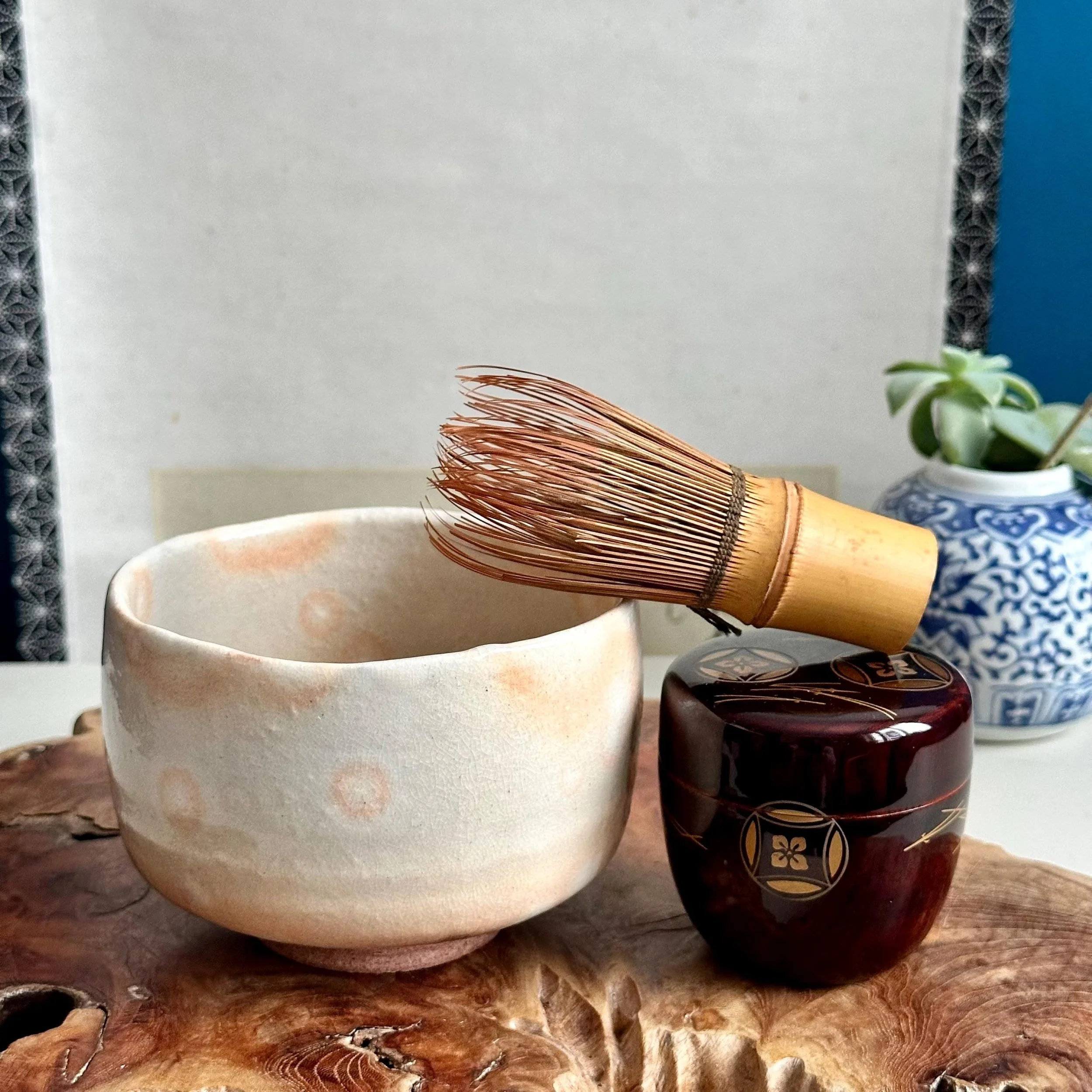 Image 4 of 15
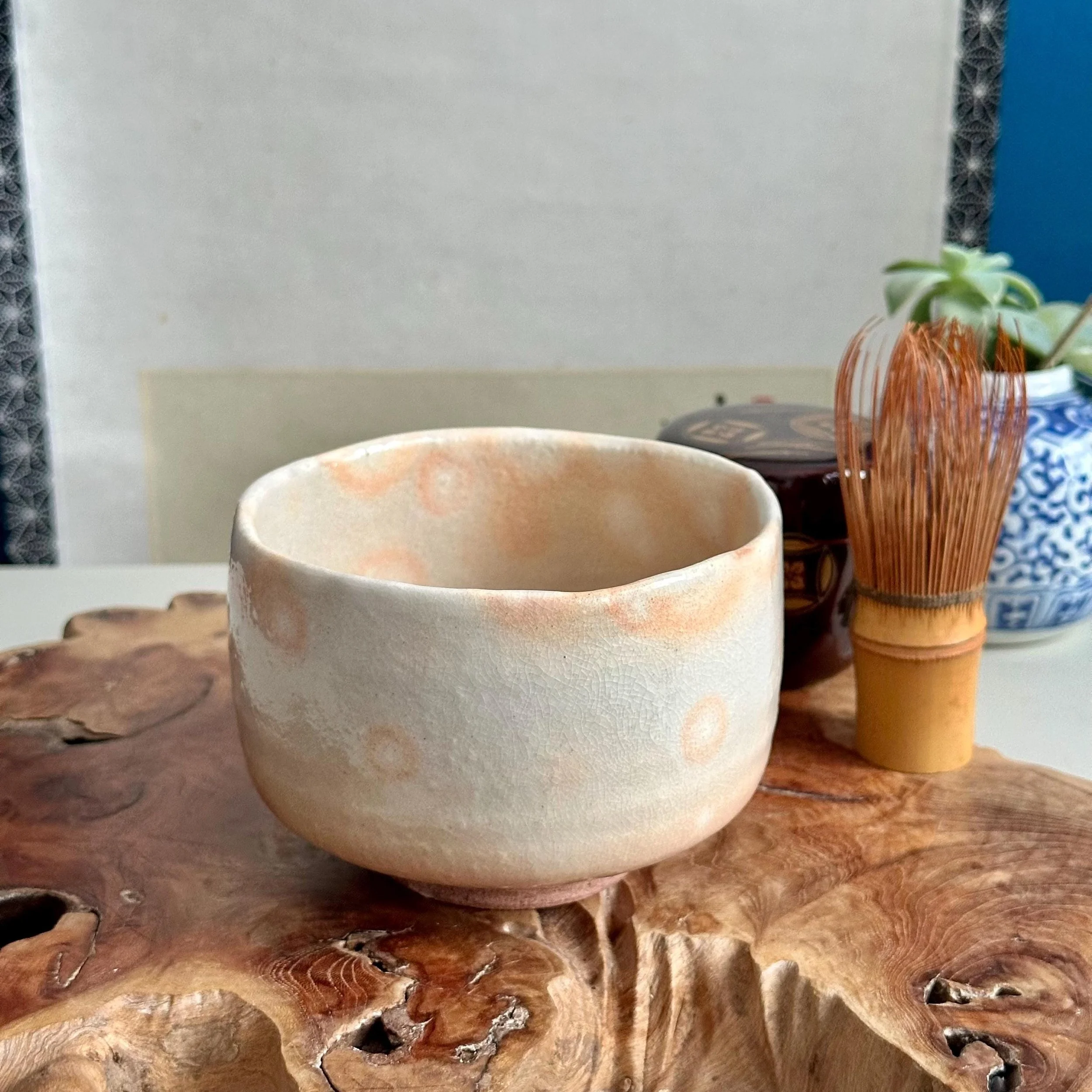 Image 5 of 15
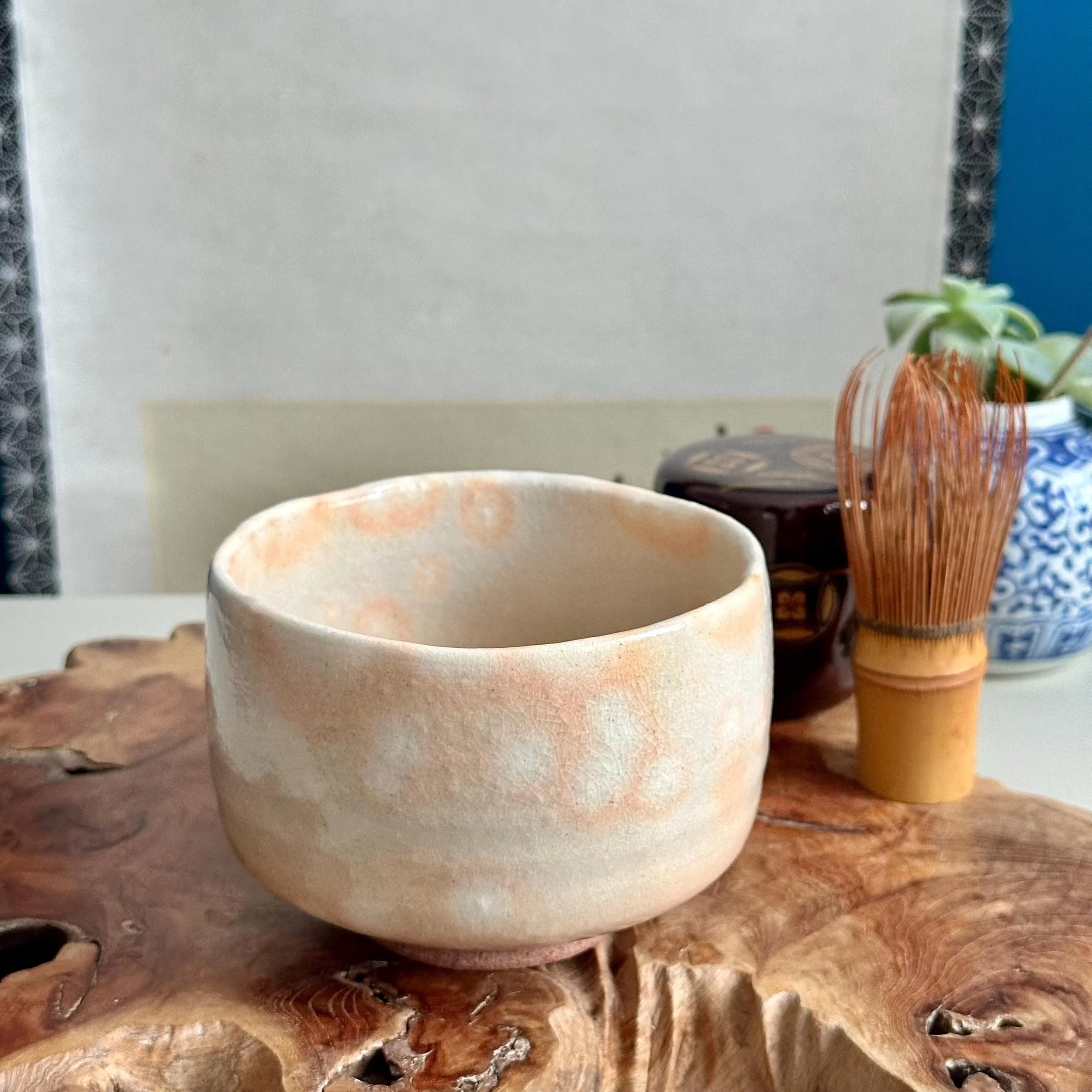 Image 6 of 15
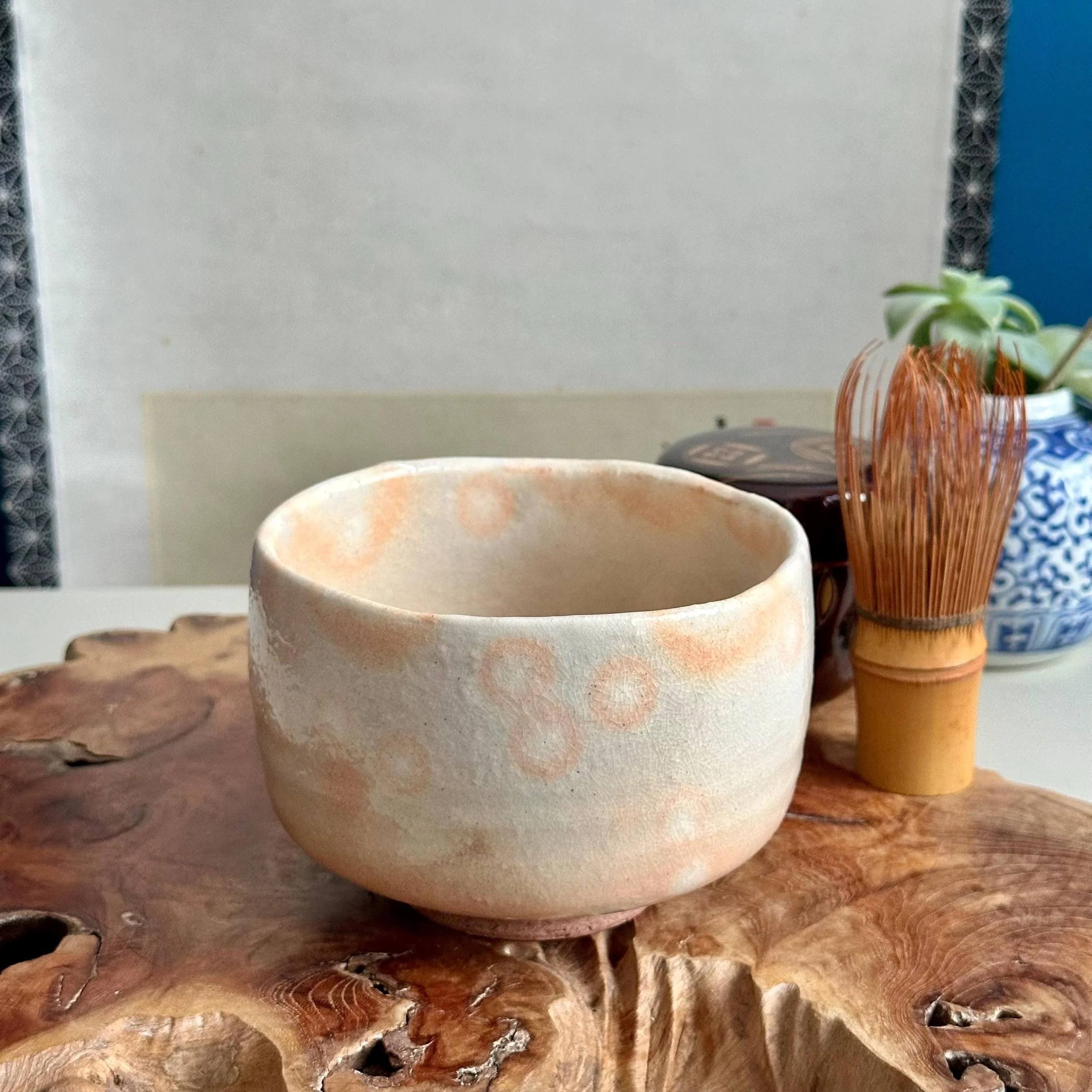 Image 7 of 15
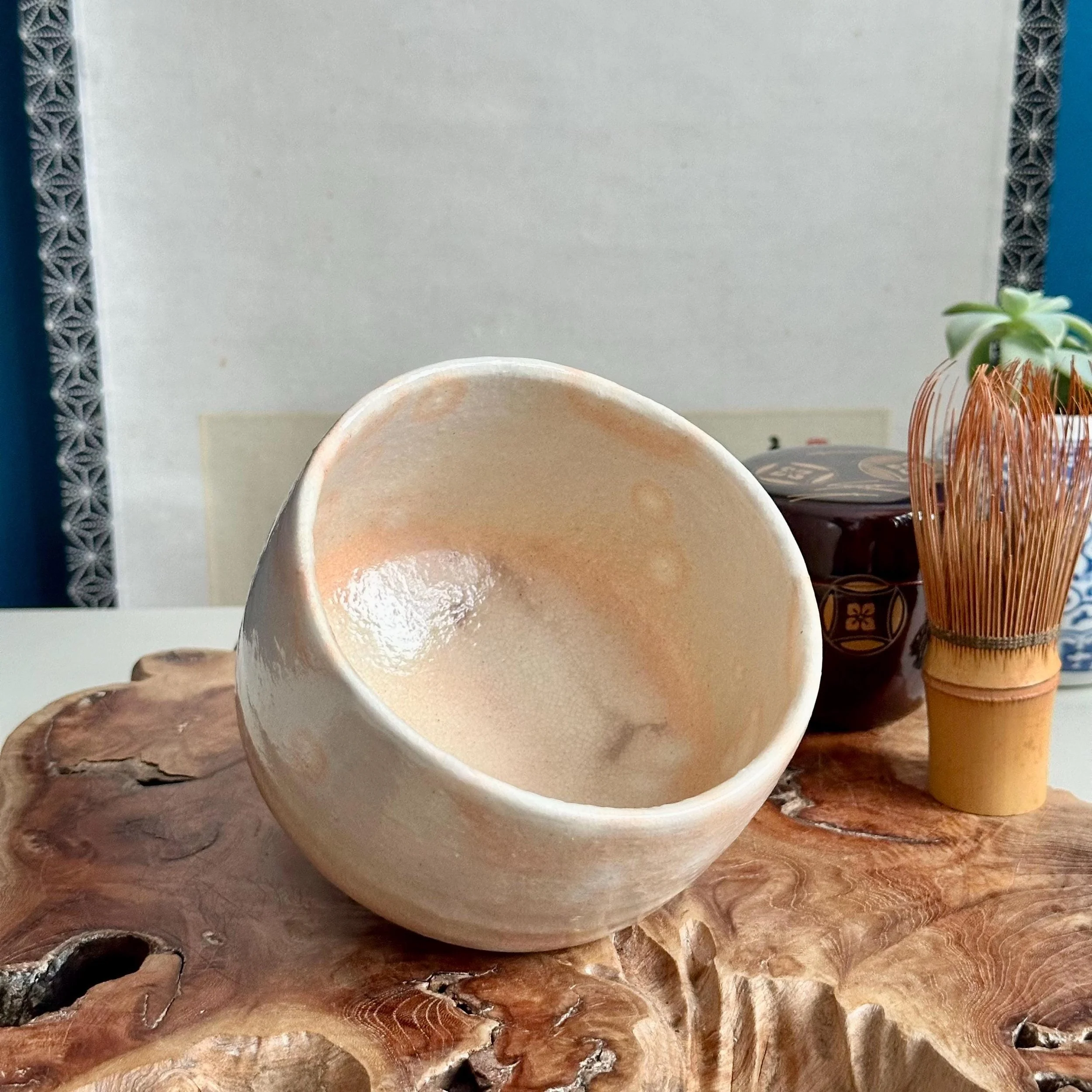 Image 8 of 15
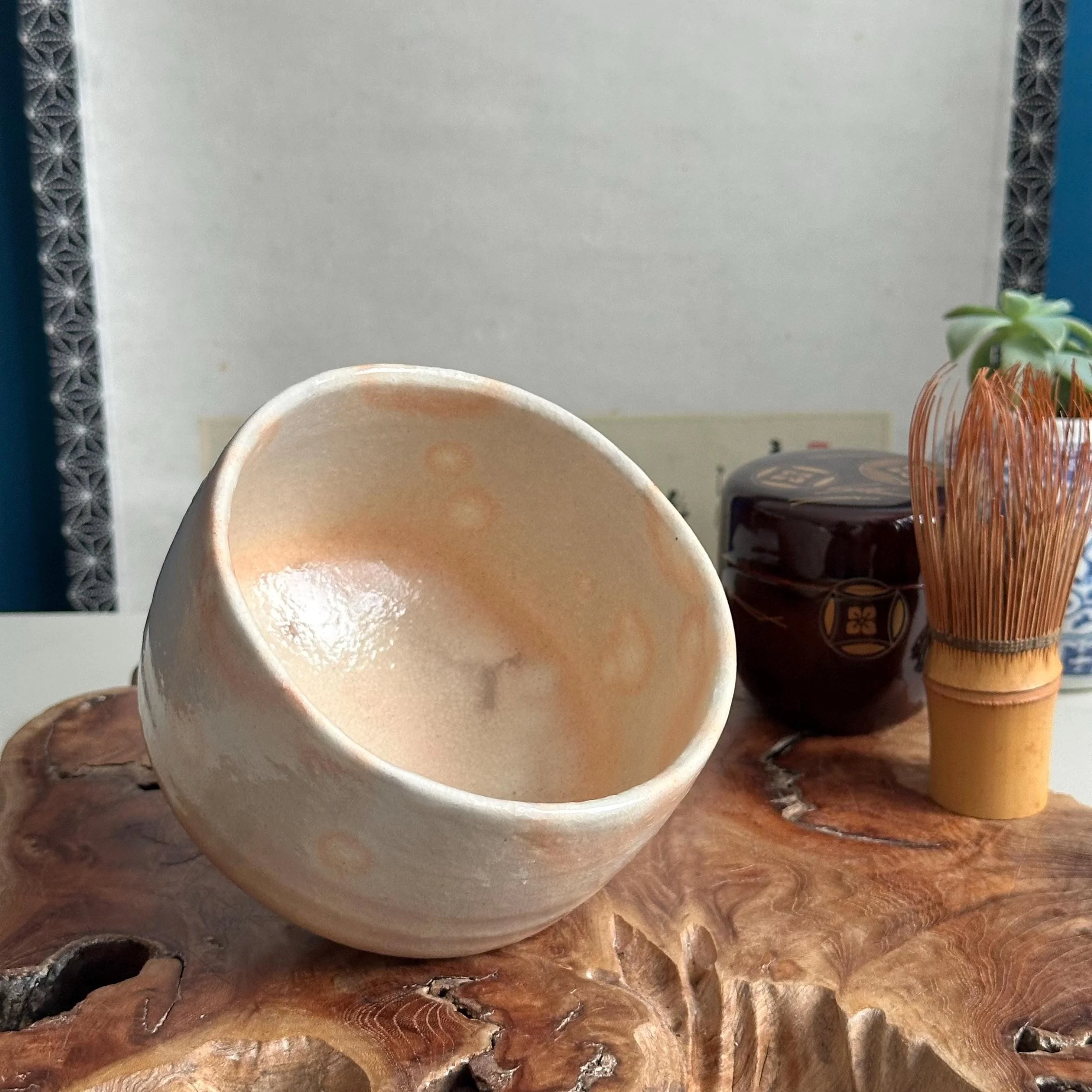 Image 9 of 15
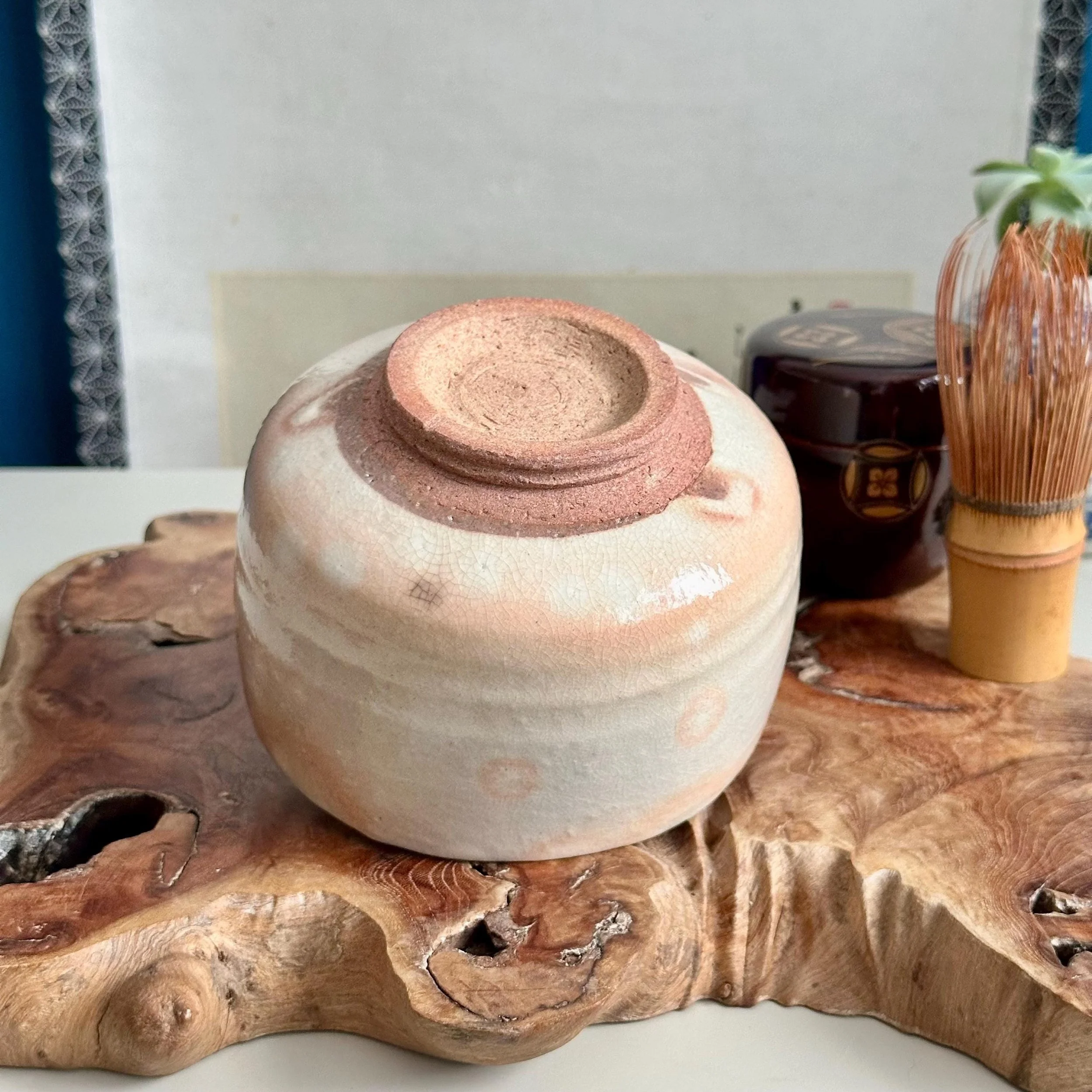 Image 10 of 15
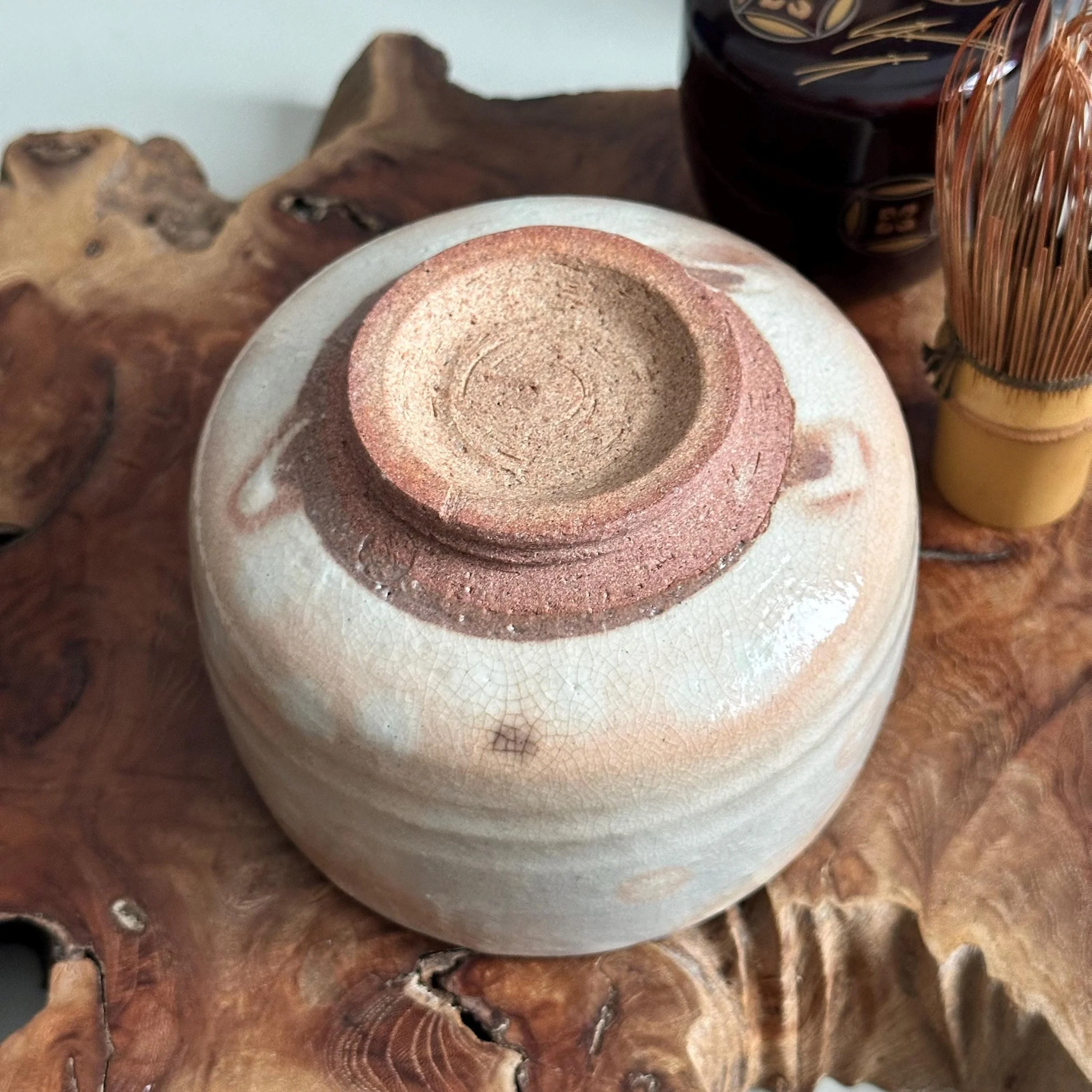 Image 11 of 15
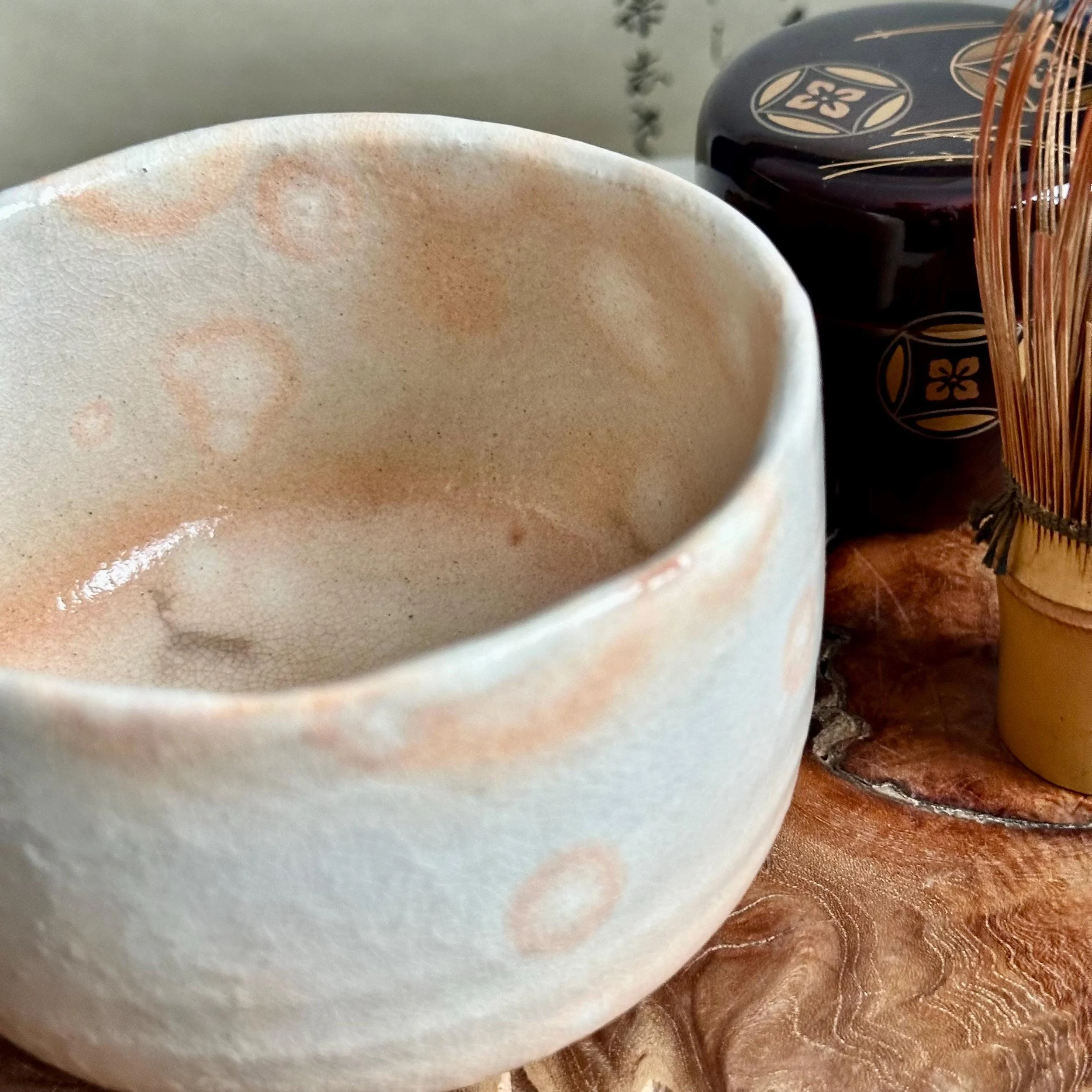 Image 12 of 15
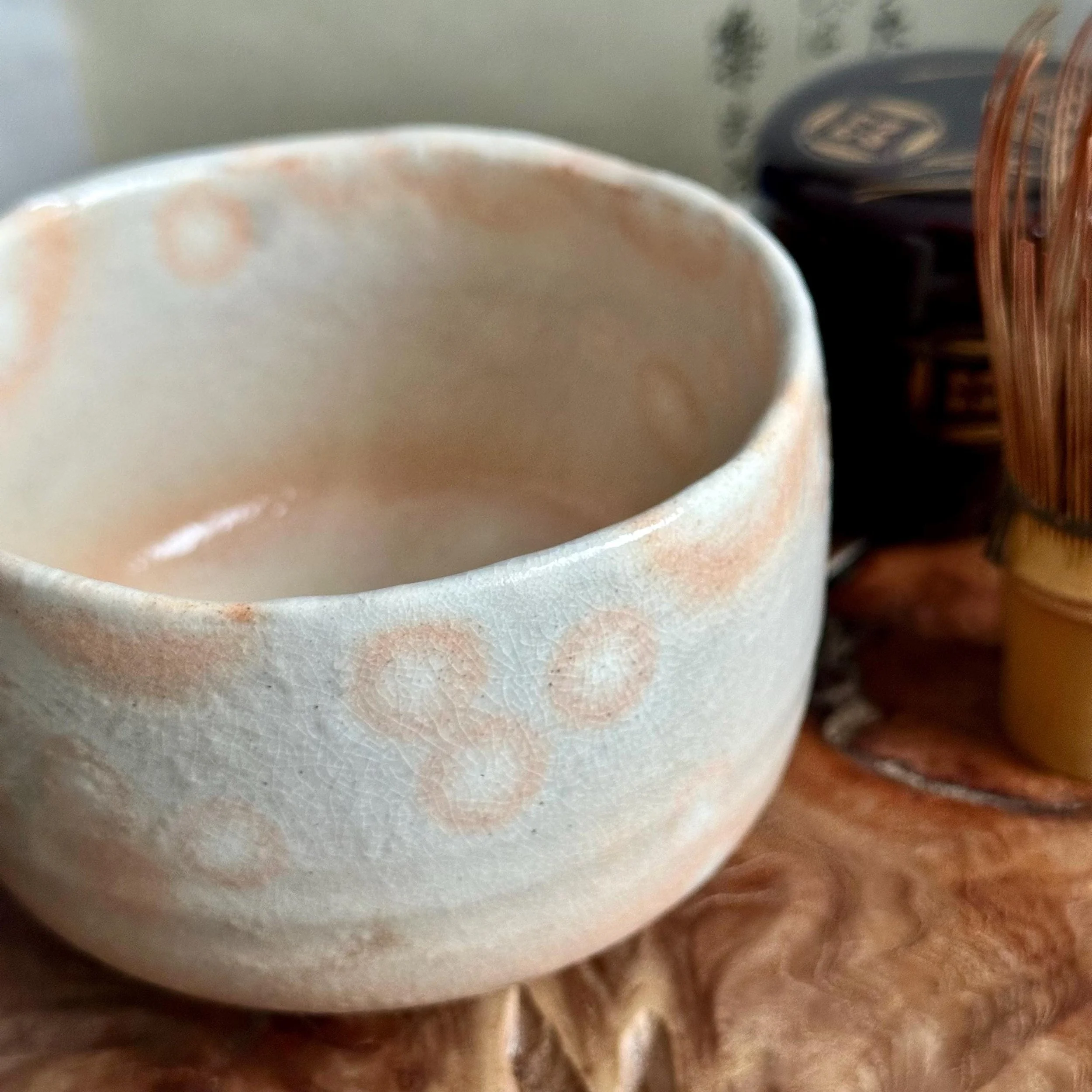 Image 13 of 15
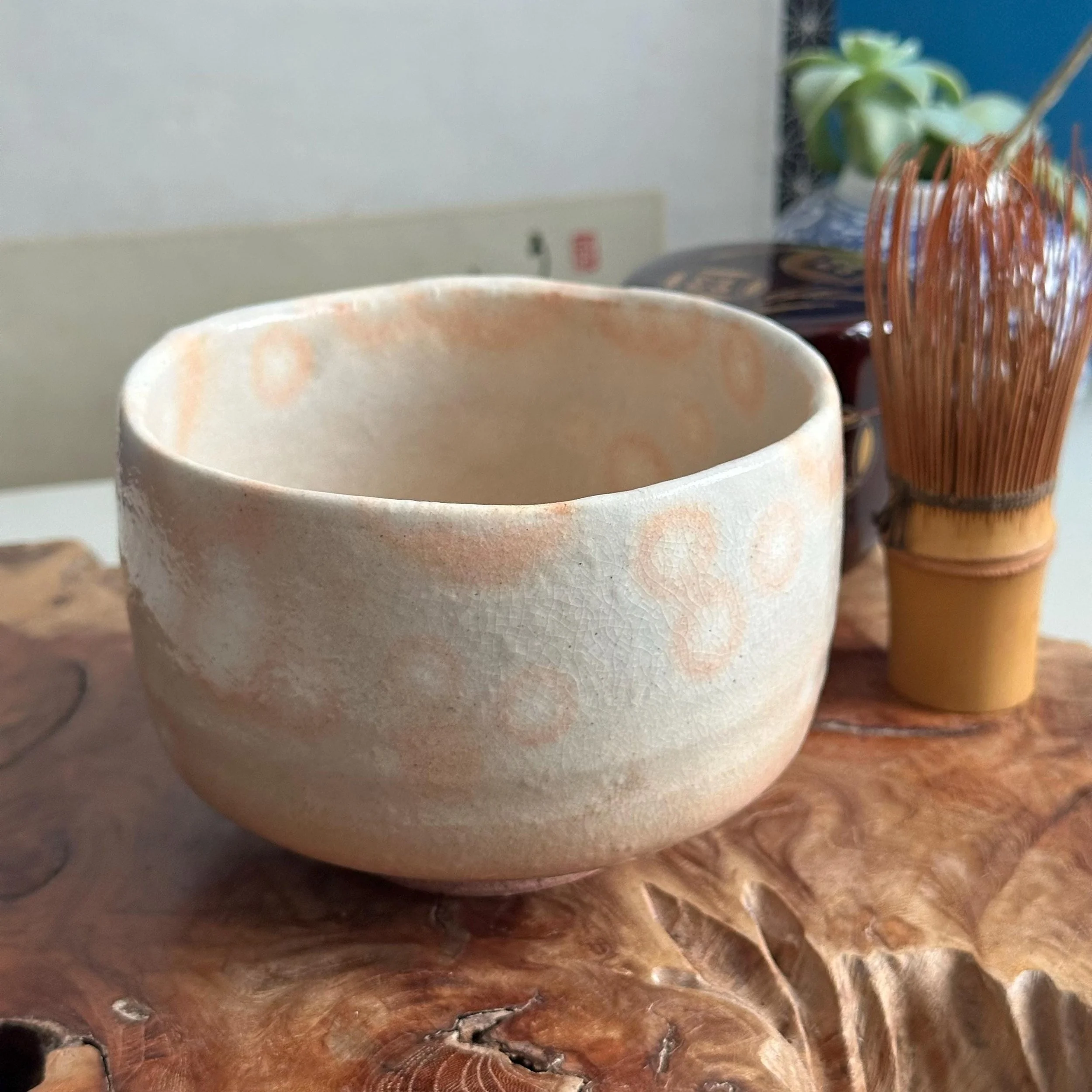 Image 14 of 15
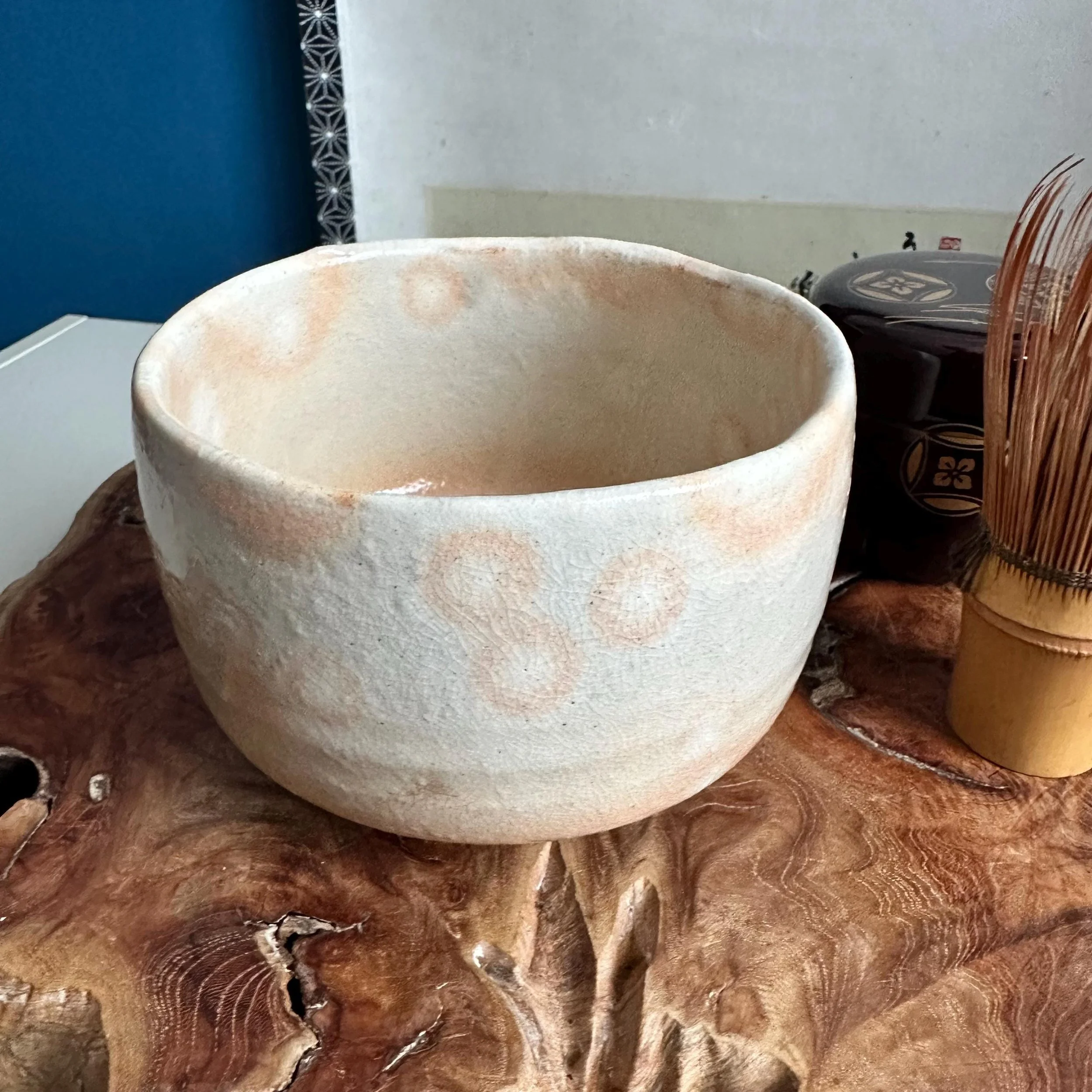 Image 15 of 15
What makes this Hagi ware chawan special
The up close look and feel
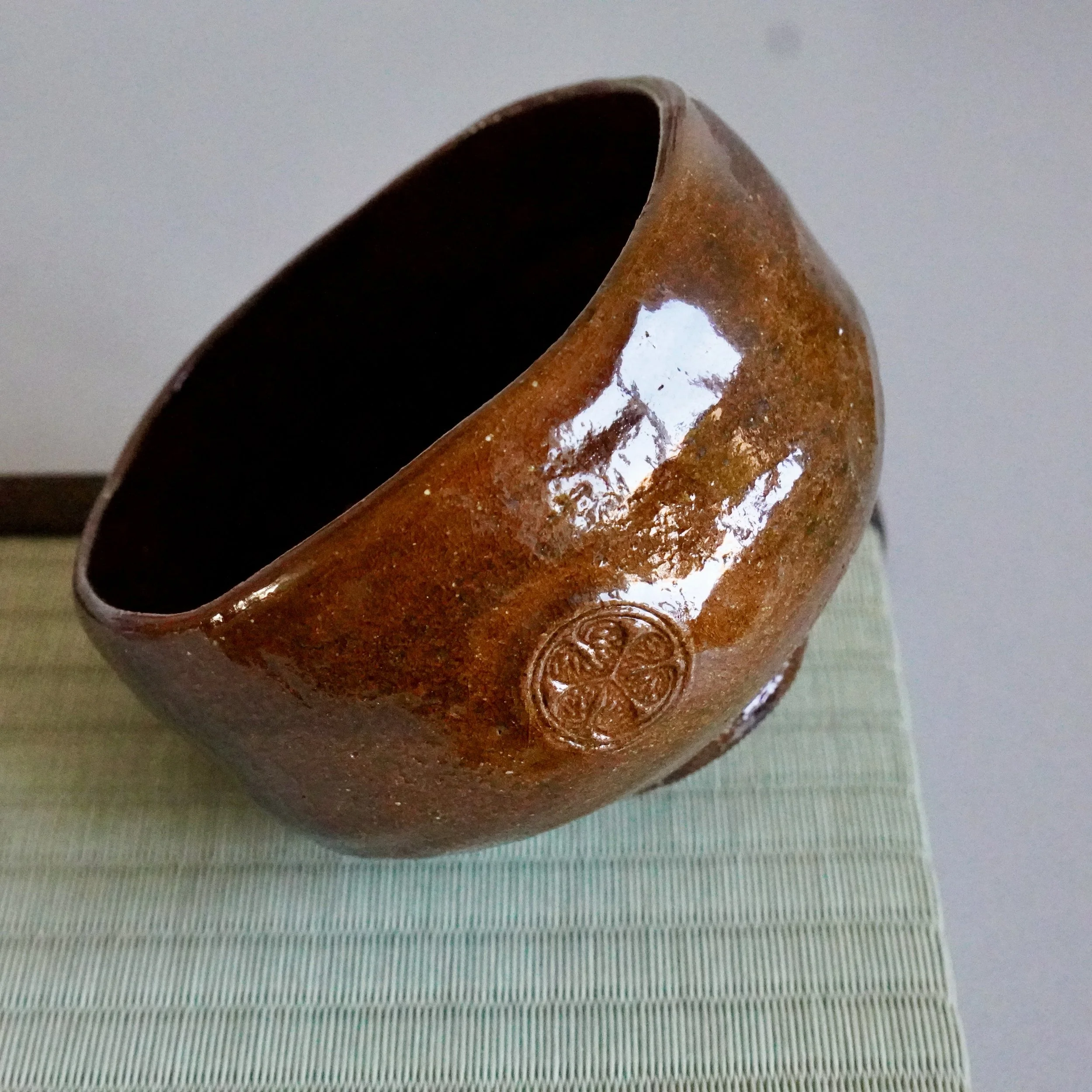
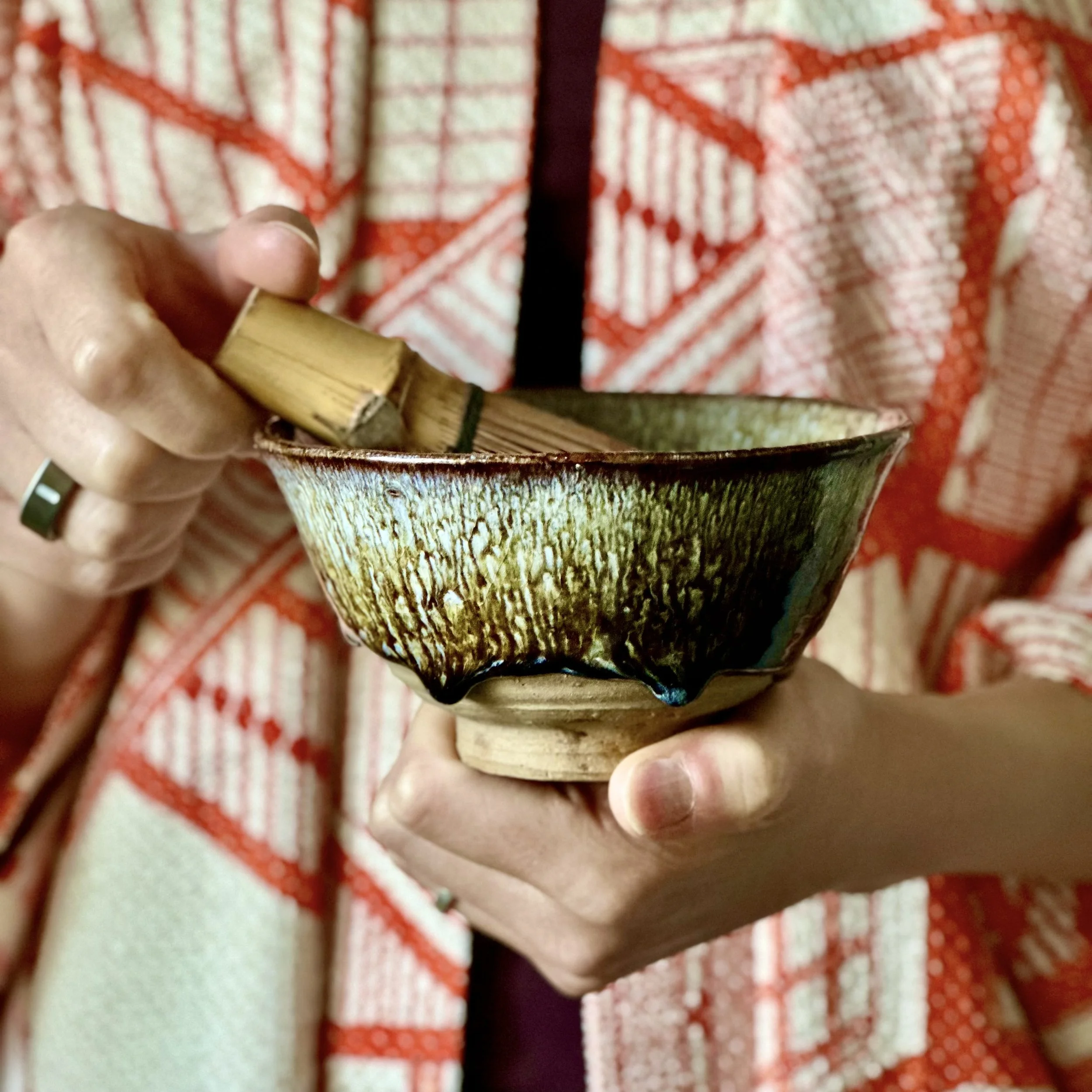
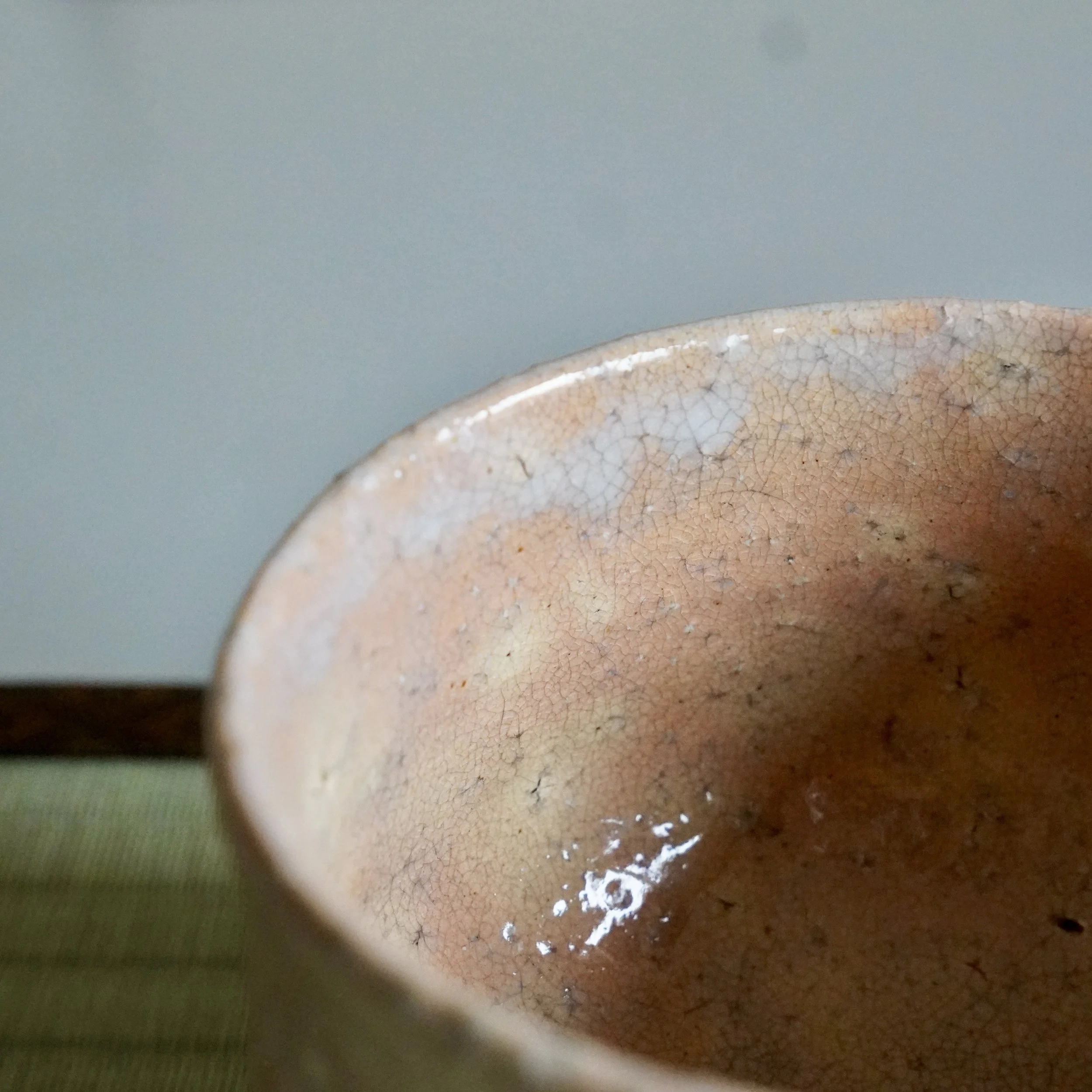
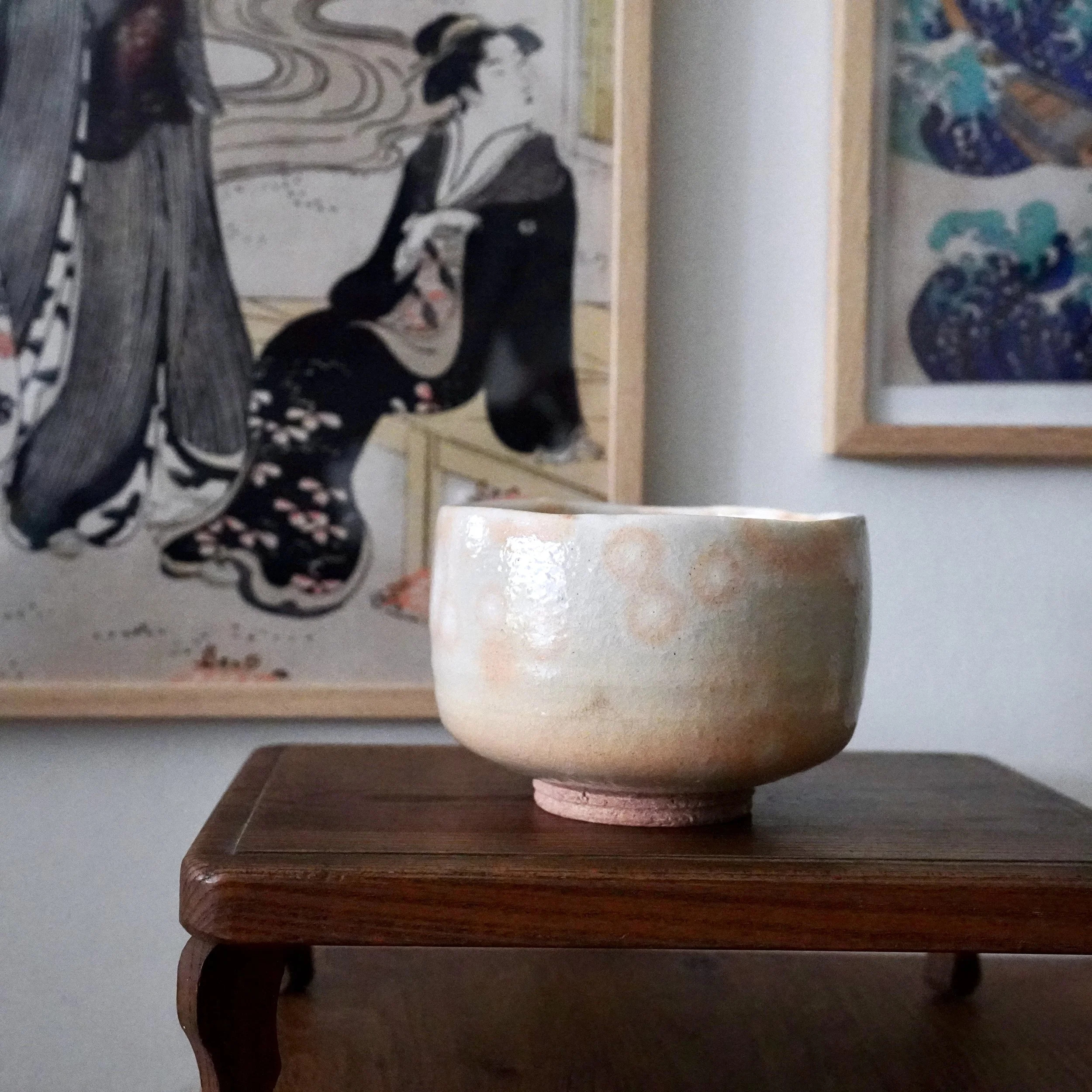
Held in the hand it feels lighter than the form suggests, the walls thin enough to warm quickly against warm water. The glaze is dry and slightly matte where the pink sits, cooler and glassier where it thins out toward the rim. Turn it over and the foot is bare, coarse, sandy Hagi clay against the smooth interior, a texture you feel before you notice it visually.
Charming details
The pink never lands the same way twice. Gohonde spotting comes from where a piece sat in the kiln relative to the flame and the ash during firing, so the placement on this particular bowl, drifting more toward one side than the other, is unrepeatable by design. Look closely along the interior wall and you can trace a single fine line of crackle running almost like a vein toward the base, the beginning of years of tea slowly staining its way in.
-
Hagi ware tradition
The gohonde style is closely associated with Hagi-yaki from Yamaguchi Prefecture, and the piece is consistent with that tradition in clay body, glaze, and form
-
Hagi, Yamaguchi Prefecture.
Shōwa period, ca. 1970s to 1980s.
-
Diameter. ca 11 cm diameter
Height: ca 8 cm
Weight: ca 318 grams.
-
Excellent vintage condition.
Appears unused, no chips, cracks or repairs visible.
-
Hagi-yaki is porous, so treat it gently: no dishwasher, ever, the heat and detergent will damage the glaze and can stress the clay body.
Rinse by hand in lukewarm water and let it dry fully in the air before storing.
Warming the bowl with a splash of hot water before whisking matcha helps the clay meet the heat gradually.
Over time the crackle will darken slightly with use, that's expected, not damage.
*Decorative items such as the whisk or wooden stands are for styling
and scale purposes only and not included in the sale
Items you may also like

Questions before you buy?
Since my items are one-of-a-kind pieces, I want to ensure they reach you perfectly.
Questions about the history or condition?
Need a custom shipping quote or shipping outside the EU?
Prefer to see more detailed photos or a video?
Reach out to me directly. I'm here to help you find the perfect piece for your home.
✉️ hello@kaikoandco.com
💬 Instagram DM: @bykaikoandco