 Image 1 of 20
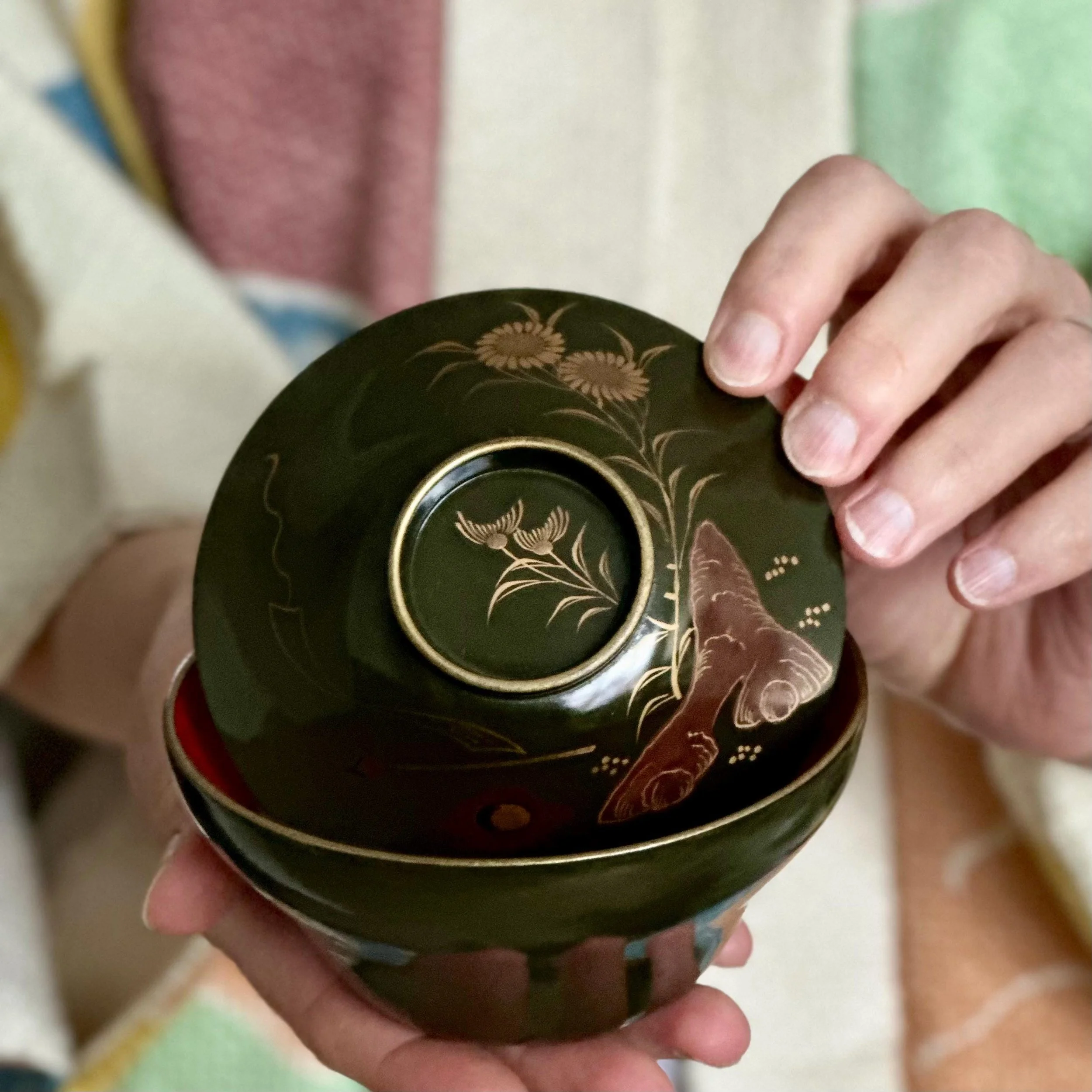 Image 2 of 20
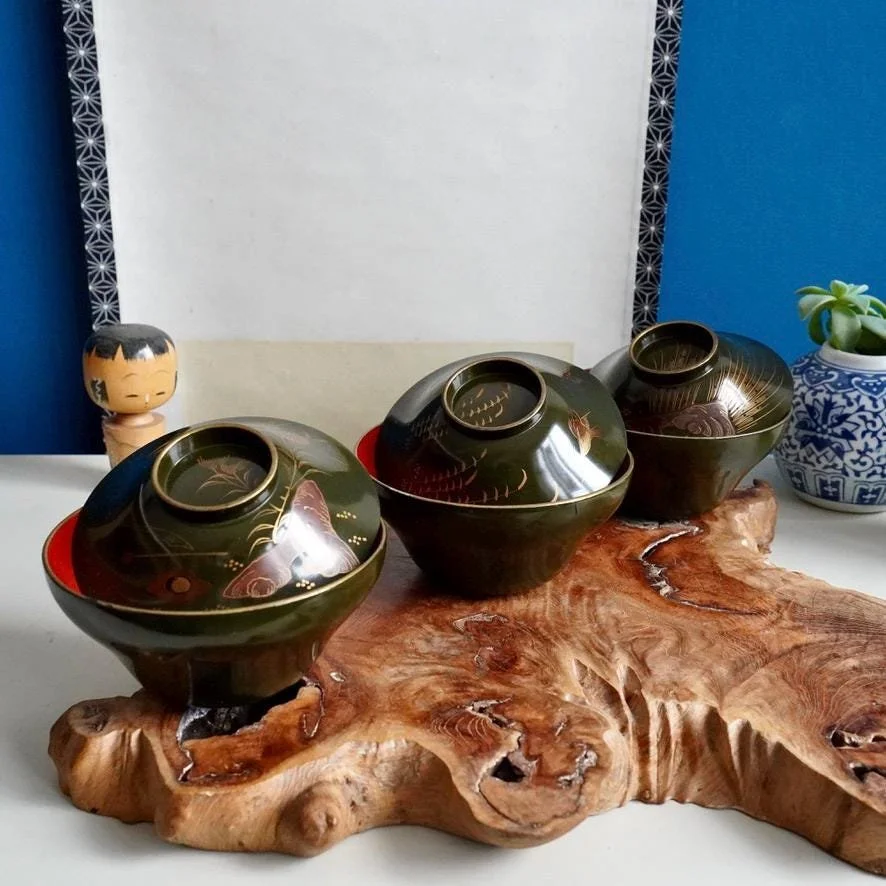 Image 3 of 20
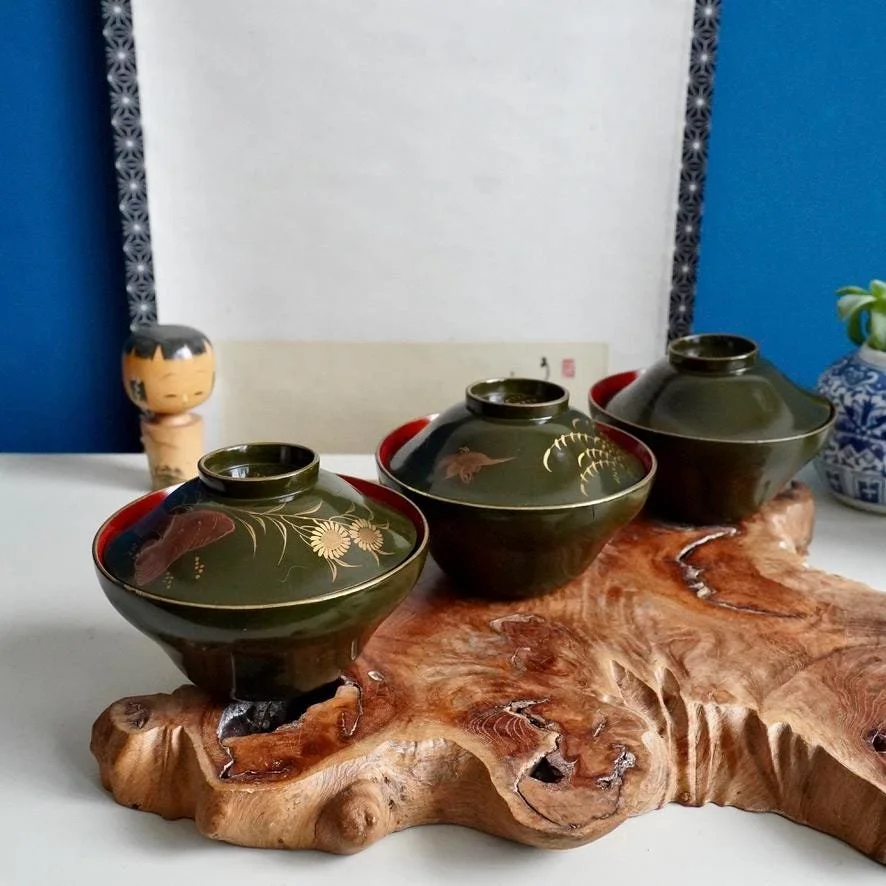 Image 4 of 20
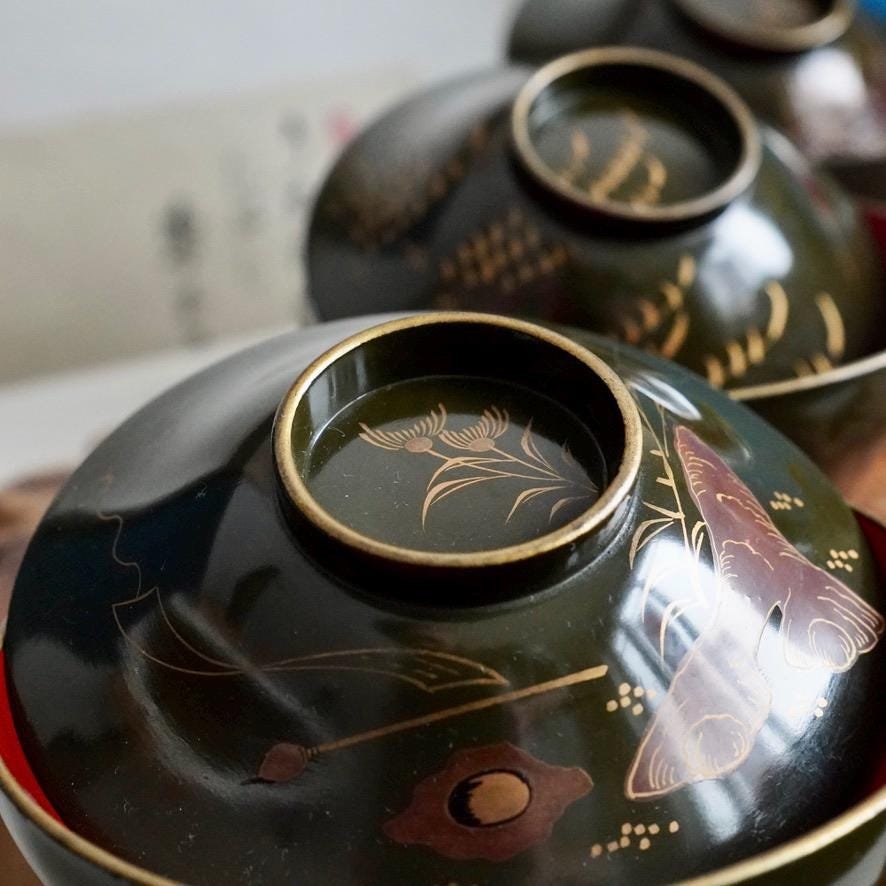 Image 5 of 20
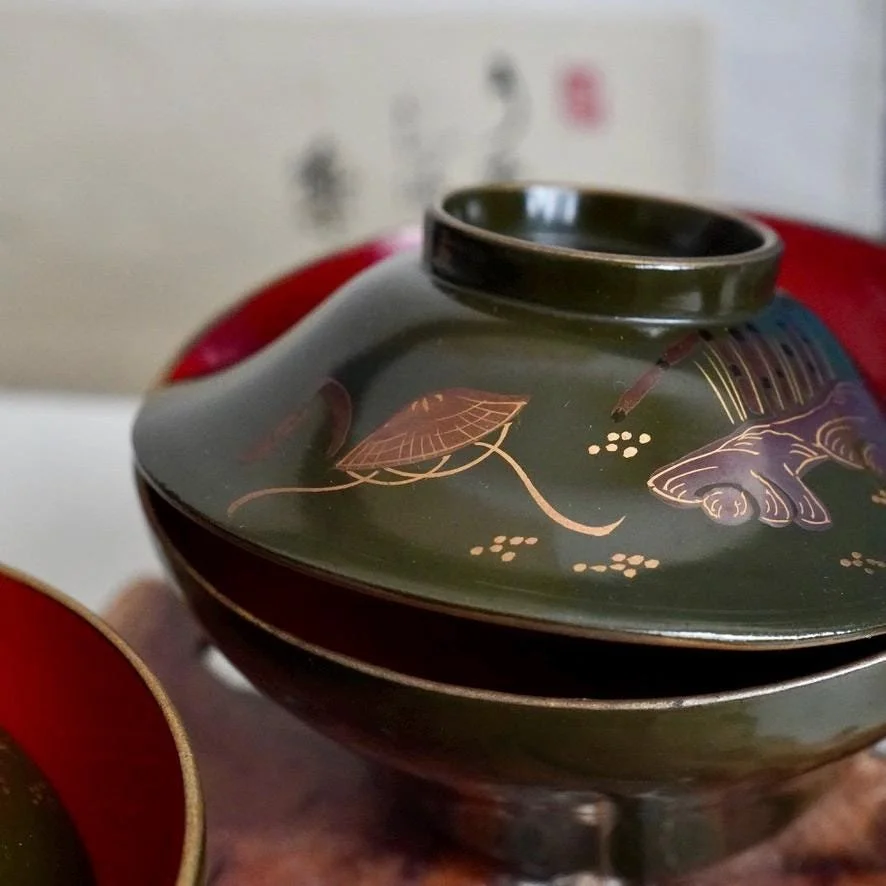 Image 6 of 20
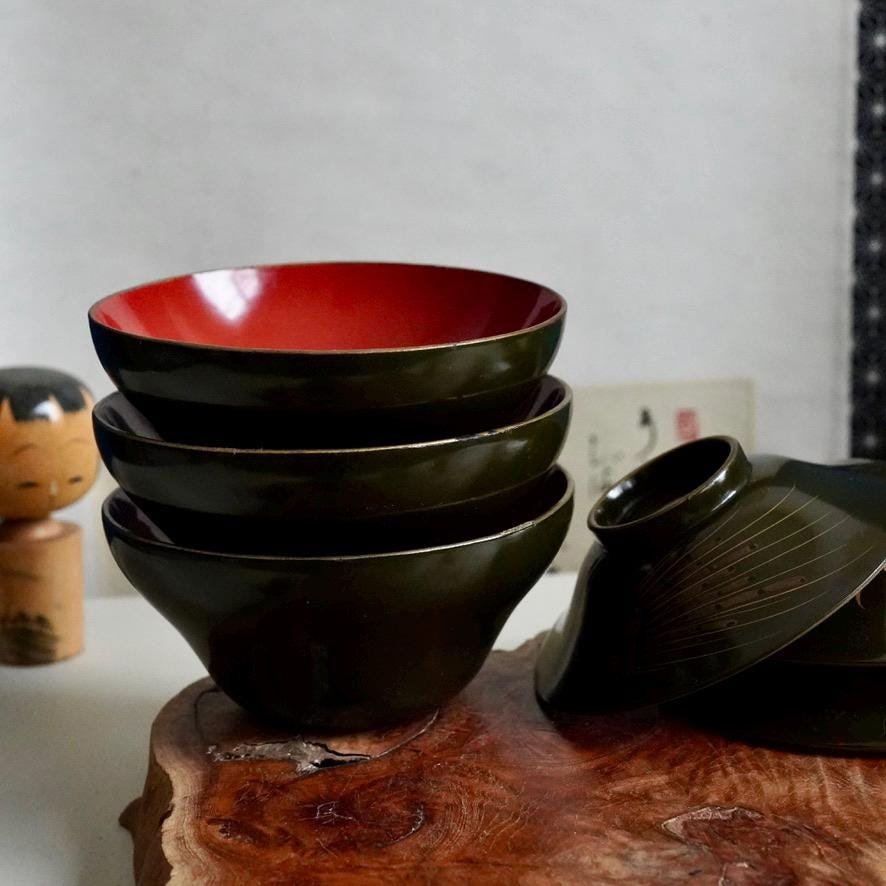 Image 7 of 20
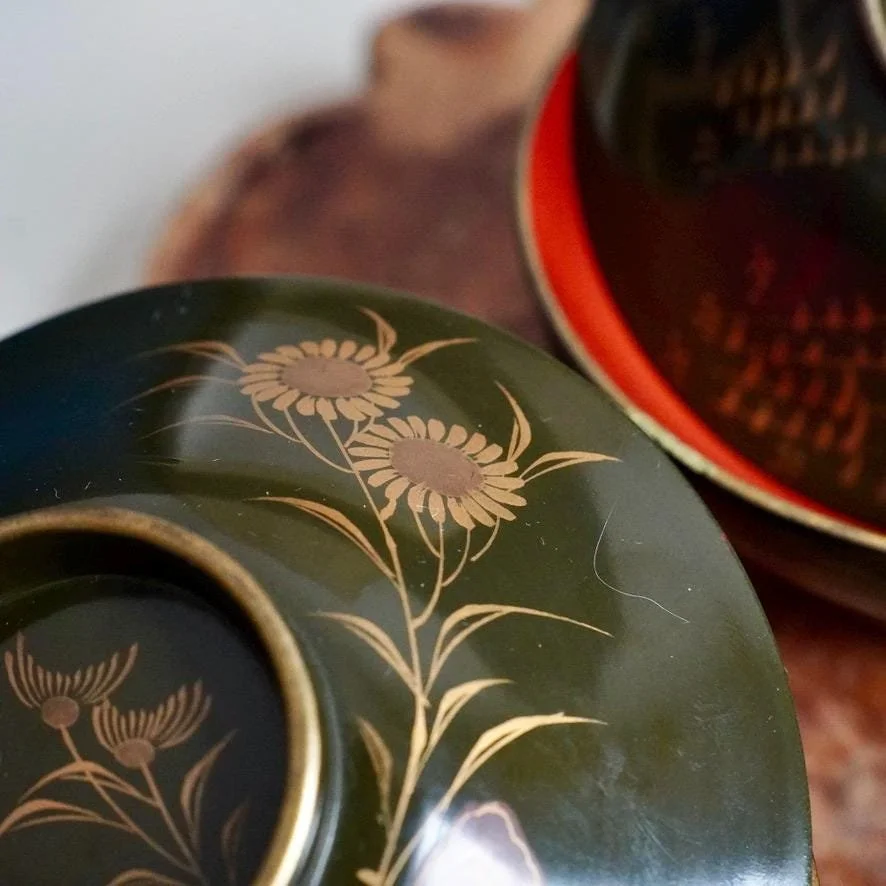 Image 8 of 20
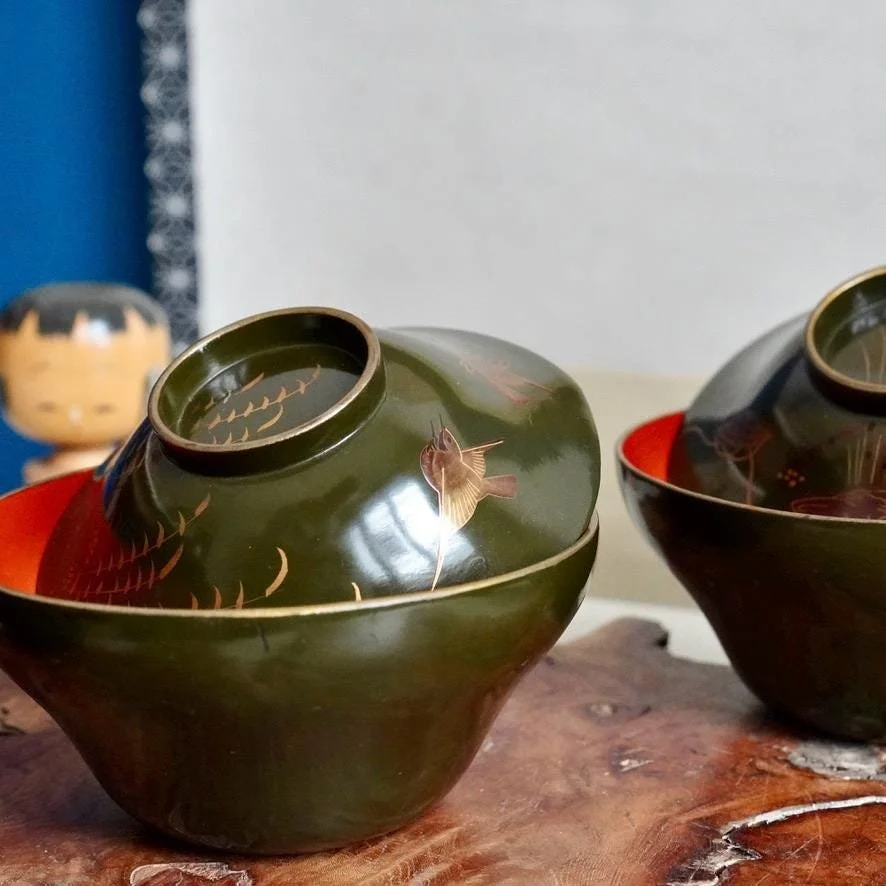 Image 9 of 20
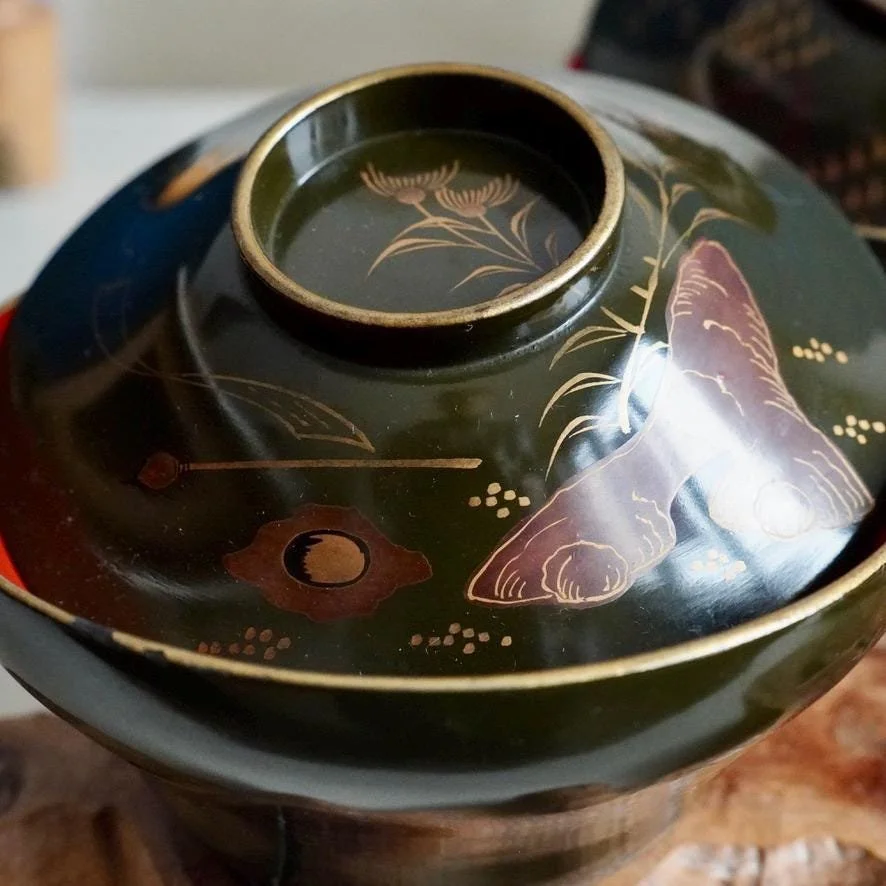 Image 10 of 20
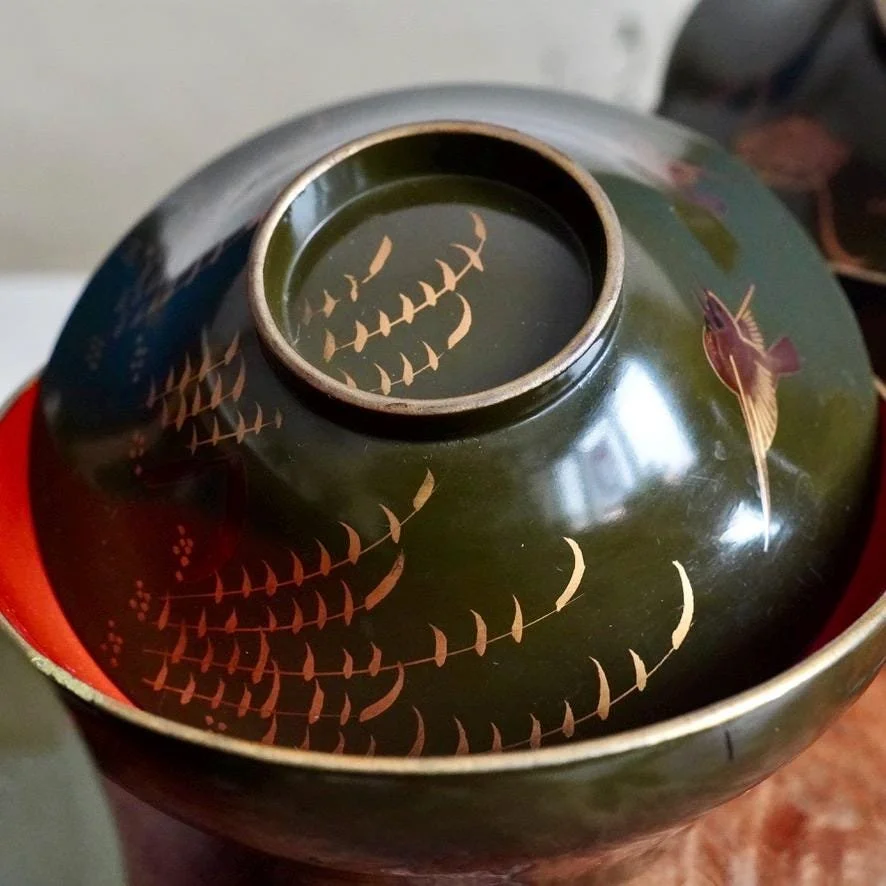 Image 11 of 20
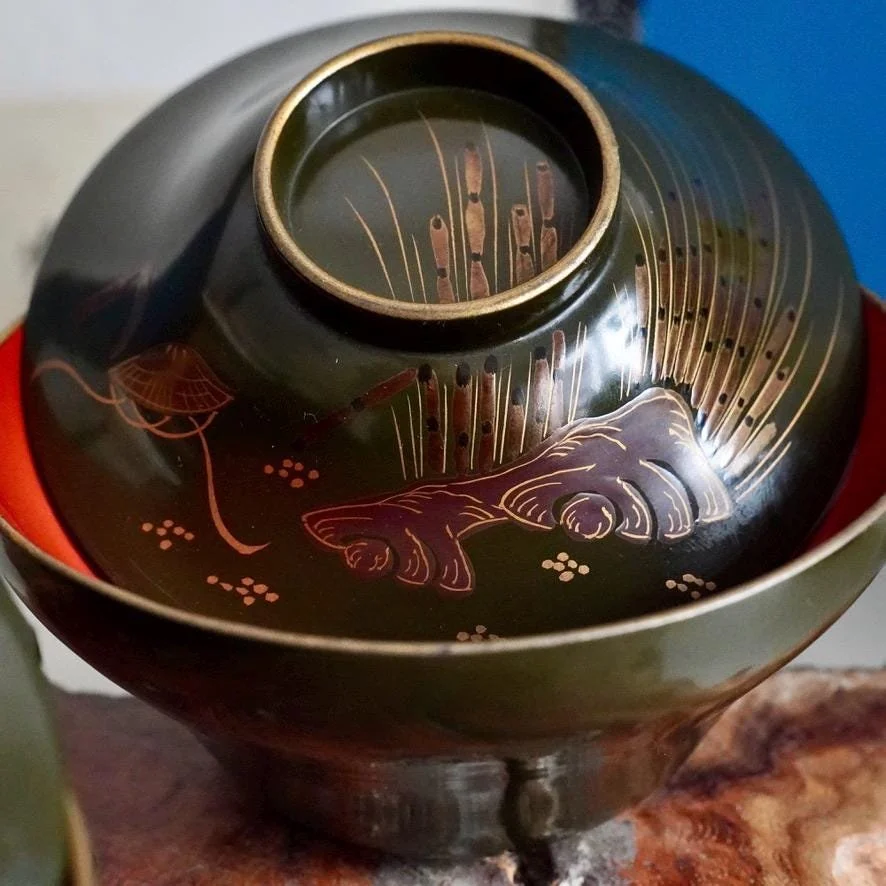 Image 12 of 20
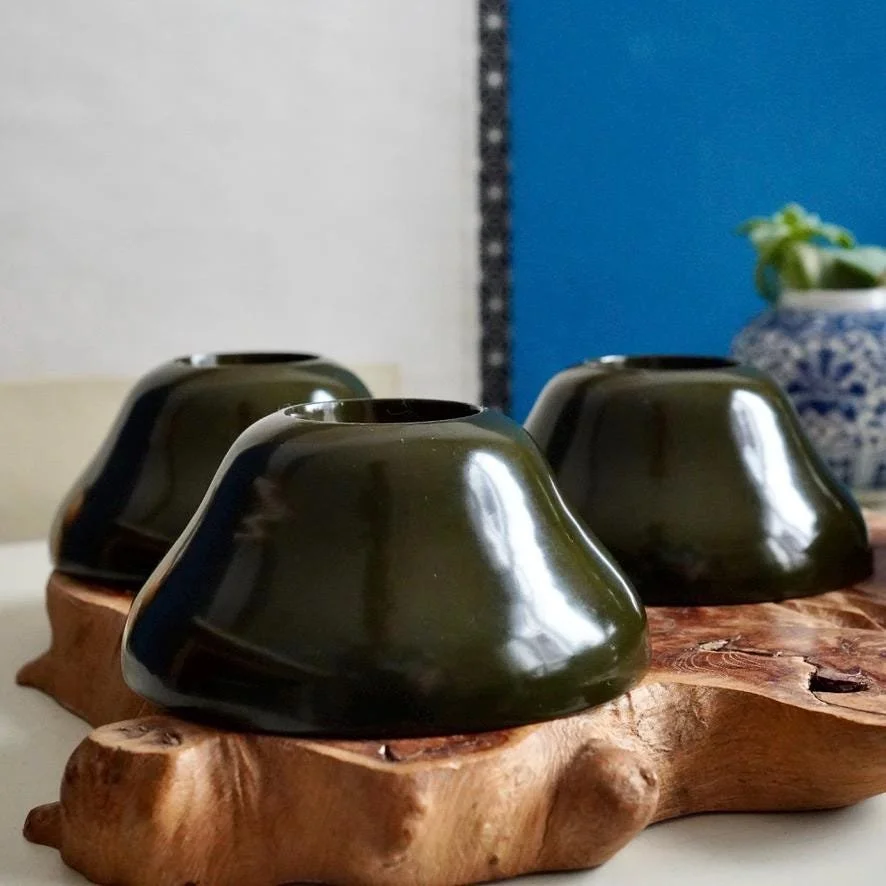 Image 13 of 20
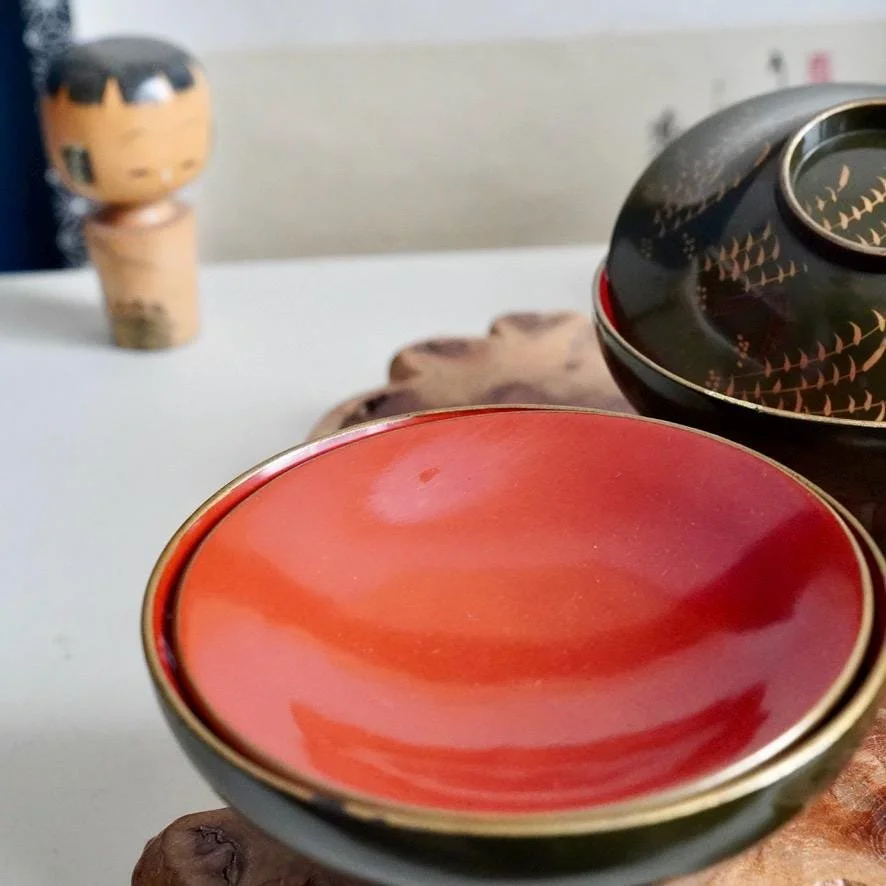 Image 14 of 20
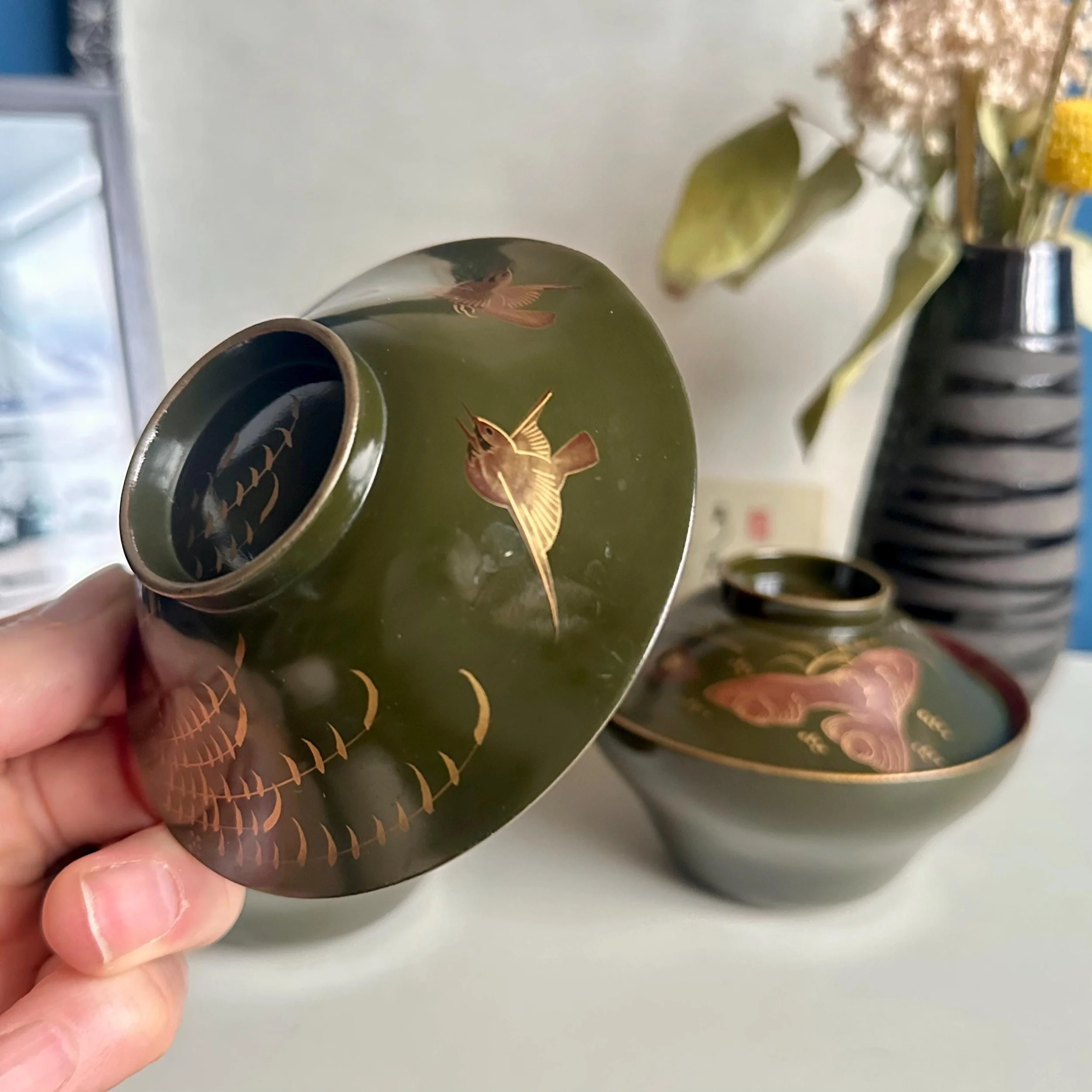 Image 15 of 20
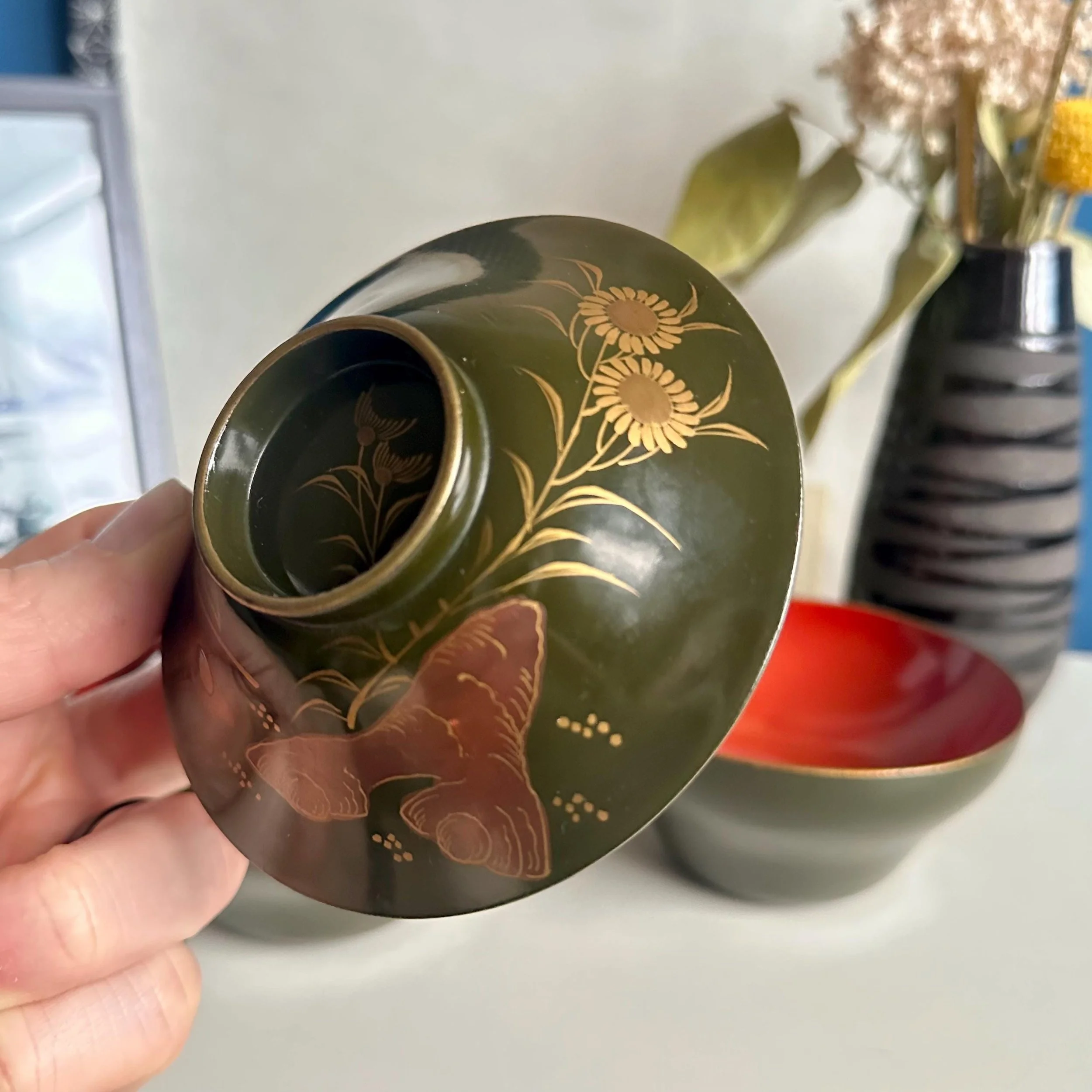 Image 16 of 20
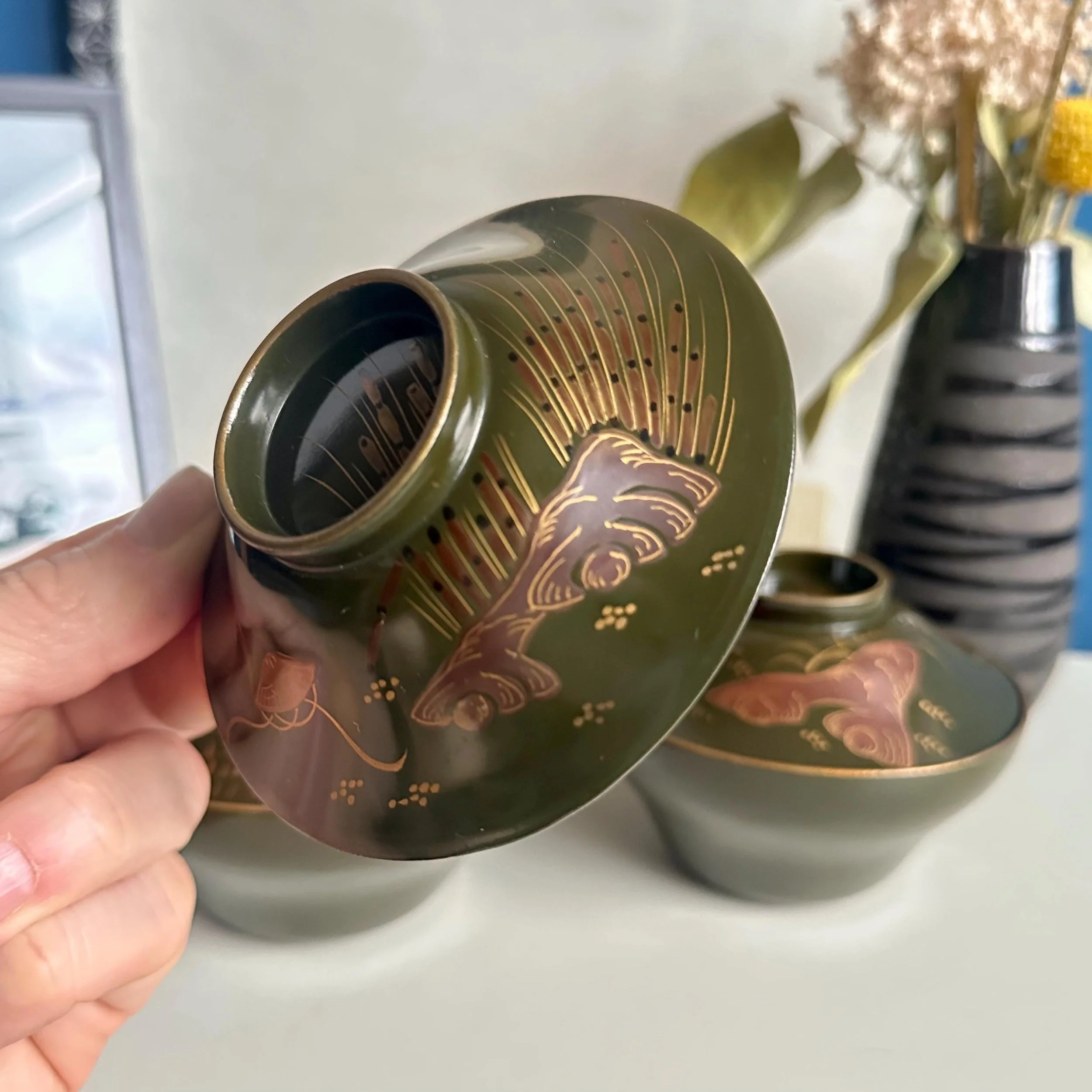 Image 17 of 20
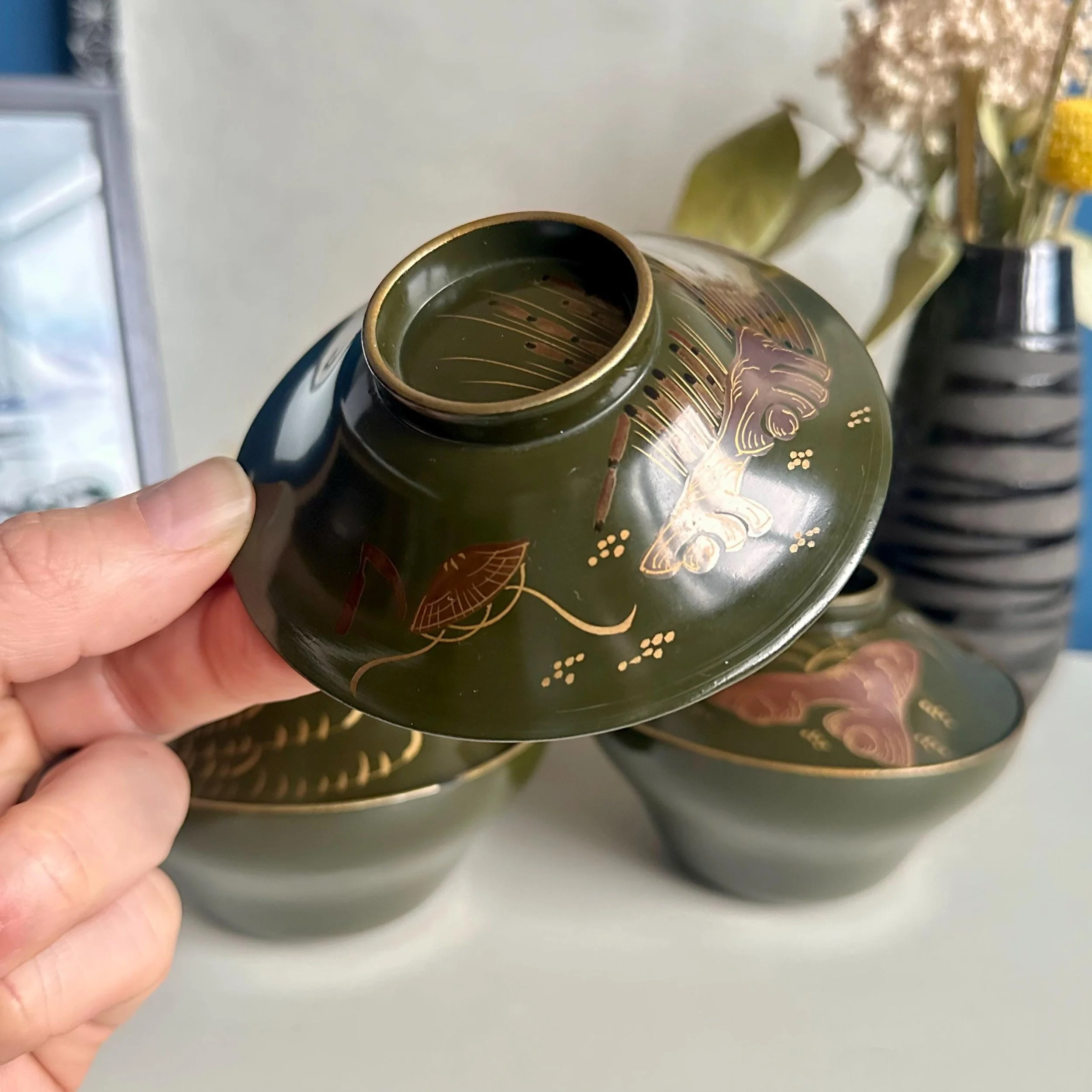 Image 18 of 20
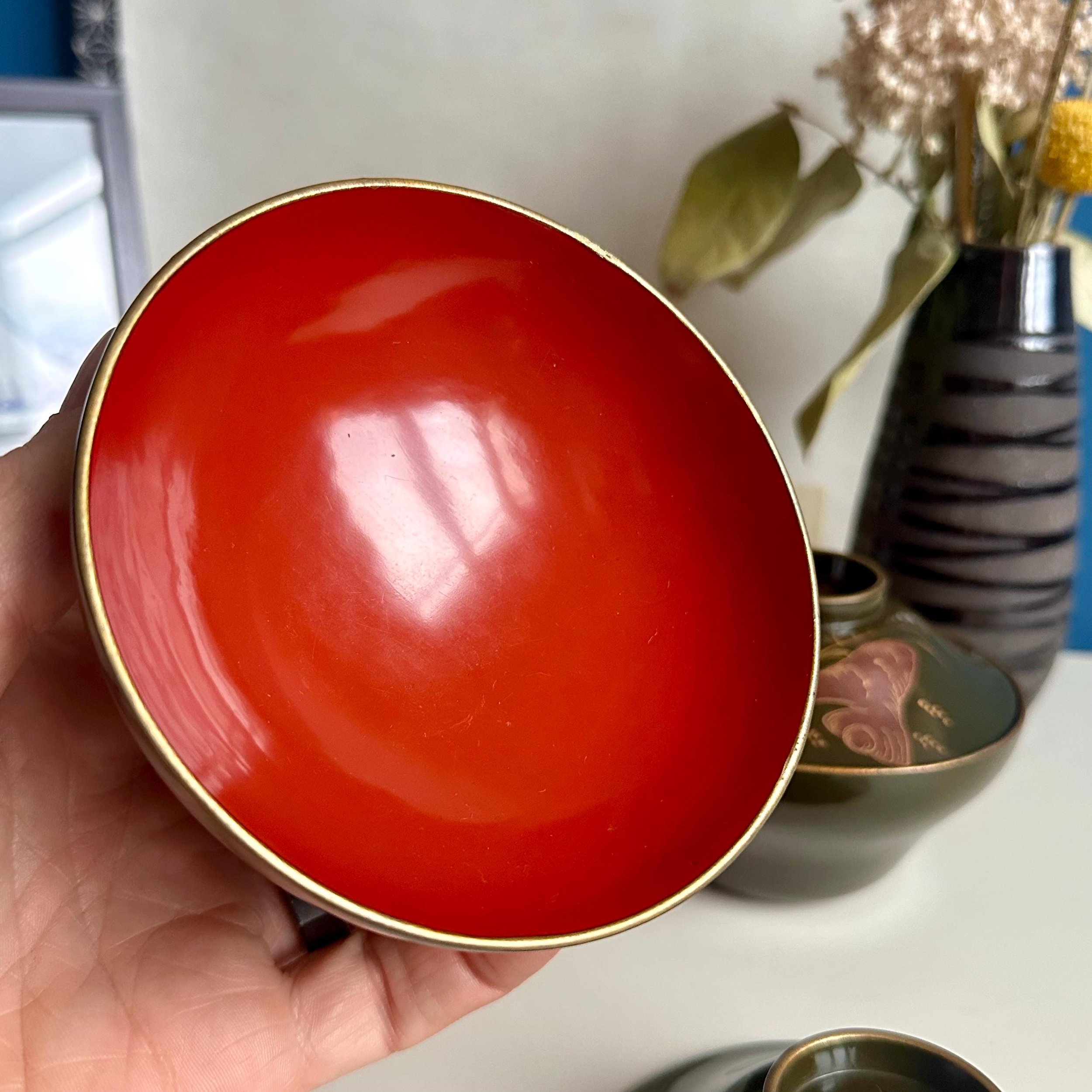 Image 19 of 20
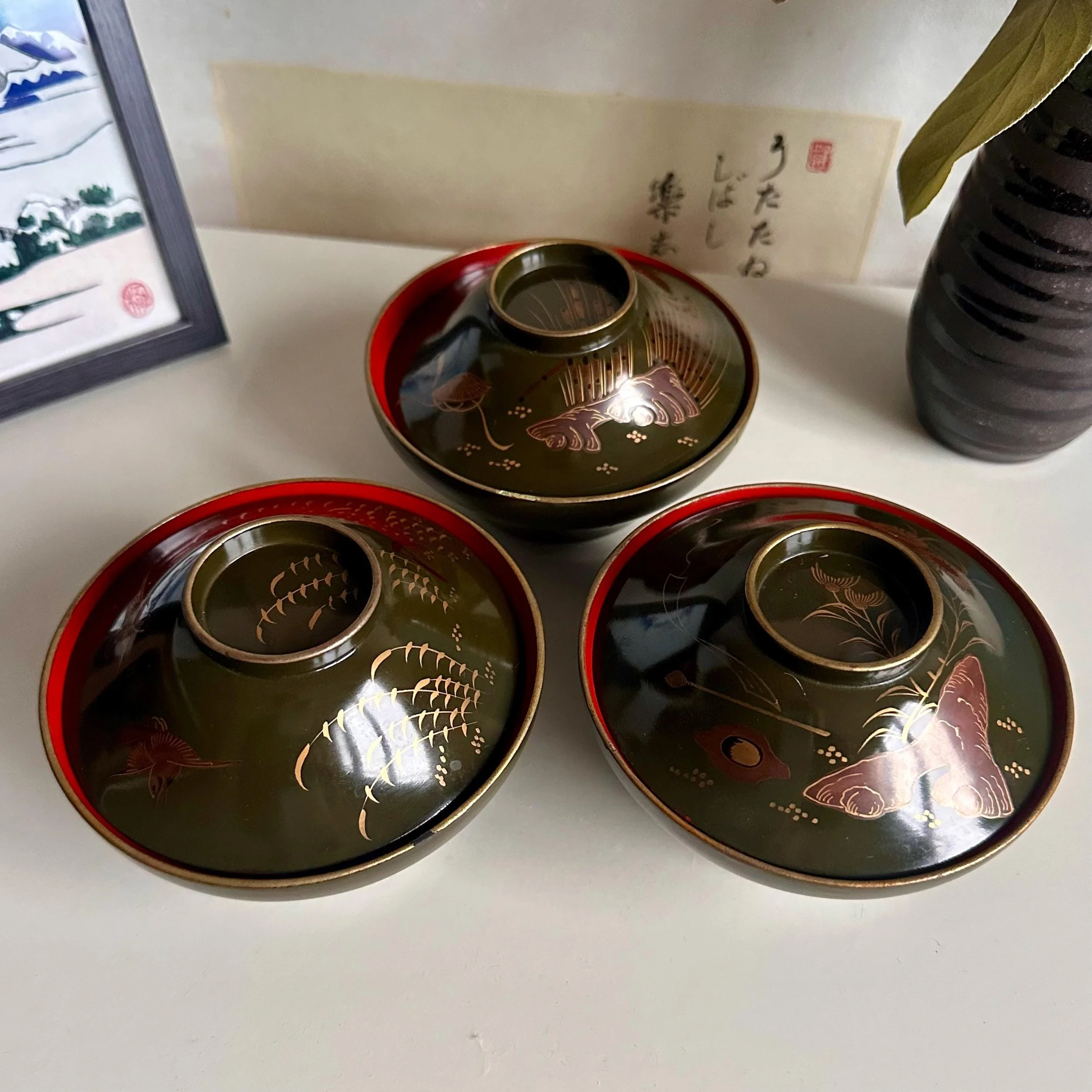 Image 20 of 20
What makes this lacquerware owan set special
The up close look and feel
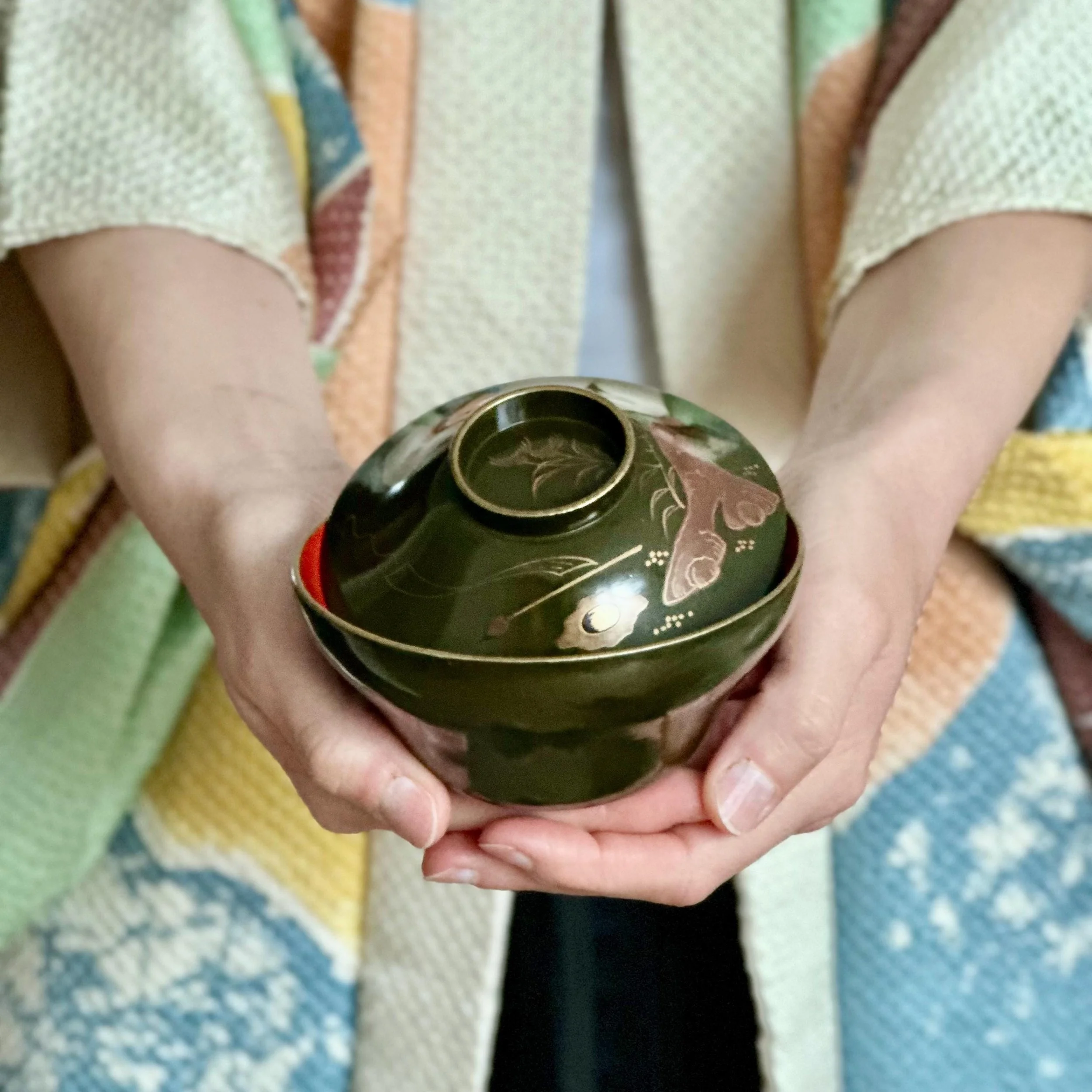
The green on the outside is dense and slightly matte, closer to the colour of dried moss than fresh growth, and it deepens where the bowl curves away from the light.
It is a warm green, not cold, and next to the red interior it holds a tension that reads as very deliberate.
Open a bowl and the red comes up quickly, clean and glossy, with the gold rim catching between the two halves. The wood underneath the lacquer is light, the kind of weight that makes the bowl feel complete in one hand.
The lids sit with the easy looseness of objects that have been opened and closed many times.
Charming details
Each lid carries a different scene, and none of them repeat.
One shows shells and water plants rendered in fine gold lines, a coastal scene reduced to its essentials.
The second lid carries pampas grass bending under its own weight, with a small bird mid-flight at the edge, its wings caught in a moment.
The third is covered in sunflowers on long stems, full and open, the kind of field motif that reads as summer even in midwinter.
Three scenes, three decisions, one set.
The result is a set that rewards close attention.
-
Type: wooden owan (お椀), lidded soup or rice bowls, set of 3
Exterior finish: iro-urushi in olive green, with gold maki-e (蒔絵) decoration
Interior finish: red urushi lacquer
Rim: thin gold band on both bowl and lid
Motifs: shells and water plants, pampas grass with bird in flight, sunflowers, each on a separate bowl
Technique: Iro-urushi technique: green pigment mixed into transparent lacquer for the exterior, red lacquer interior. Maki-e decoration in which gold powder is applied to still-wet lacquer.
-
Purchased from an antique specialist in Okayama, assessed at approximately 90 years old at time of purchase (2025).
Ca. 1925 to 1940, late Taishō to early Shōwa period
-
Height: approx. 8 cm per bowl with lid
Diameter: approx. 11 cm per bowl
-
The lids sit with a slight looseness consistent with decades of use.
These bowls have had a full life before reaching you, and it shows in the best way: the lacquer warm and settled, the fit of lid to bowl worn in rather than worn out.
Good antique condition consistent with their age and use. Honest surface marks, no cracks.
-
Urushi lacquerware should never go into a dishwasher or sit in standing water.
Wipe clean with a soft, barely damp cloth and dry immediately.
Keep away from direct sunlight, which breaks down natural urushi over time.
These bowls have lasted nearly a century with the right conditions, and they will continue to if treated accordingly.
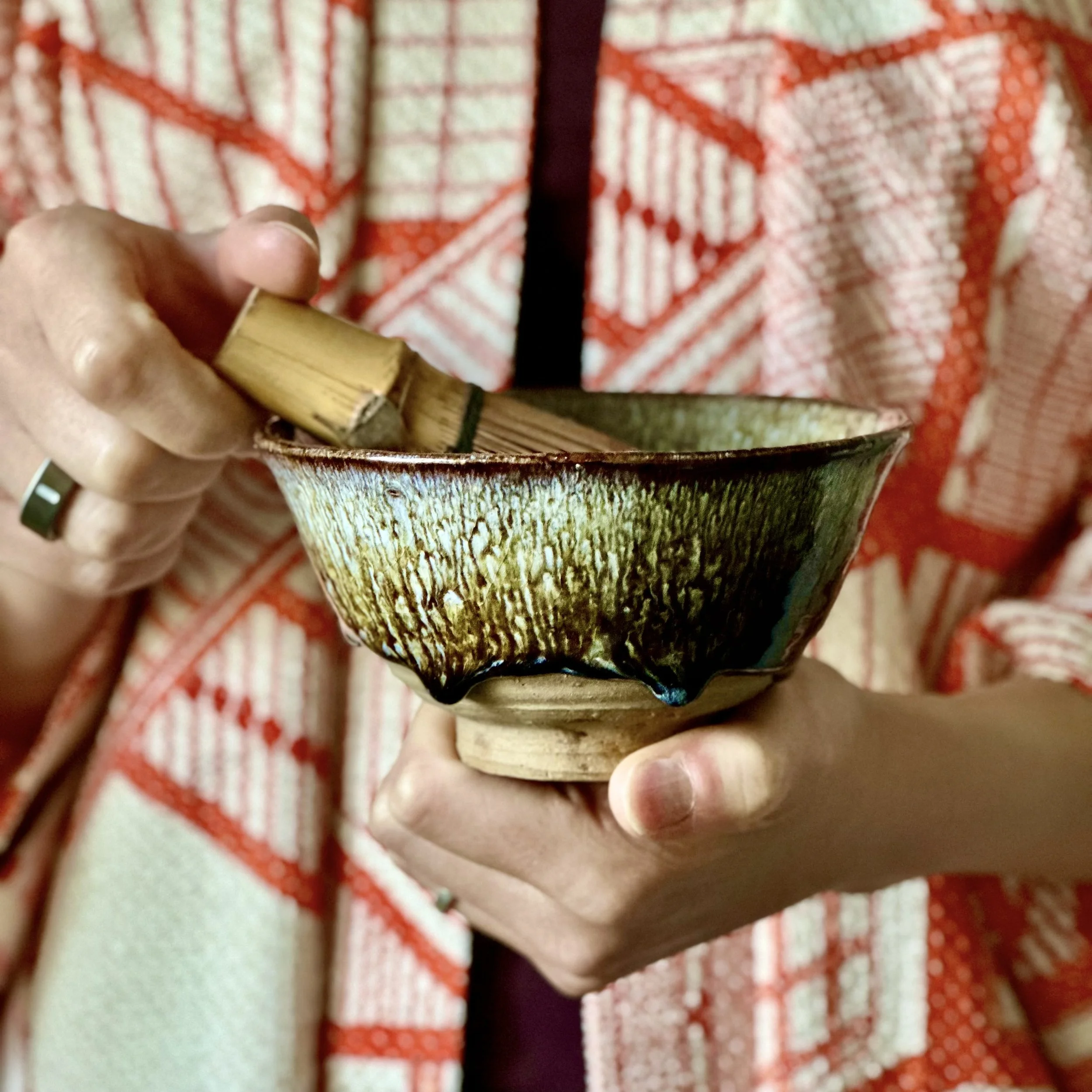
*Decorative items such as the whisk are for styling
and scale purposes only and not included in the sale
Items you may also like

Questions before you buy?
Since my items are one-of-a-kind pieces, I want to ensure they reach you perfectly.
Questions about the history or condition?
Need a custom shipping quote or shipping outside the EU?
Prefer to see more detailed photos or a video?
Reach out to me directly. I'm here to help you find the perfect piece for your home.
✉️ hello@kaikoandco.com
💬 Instagram DM: @bykaikoandco