 Image 1 of 22
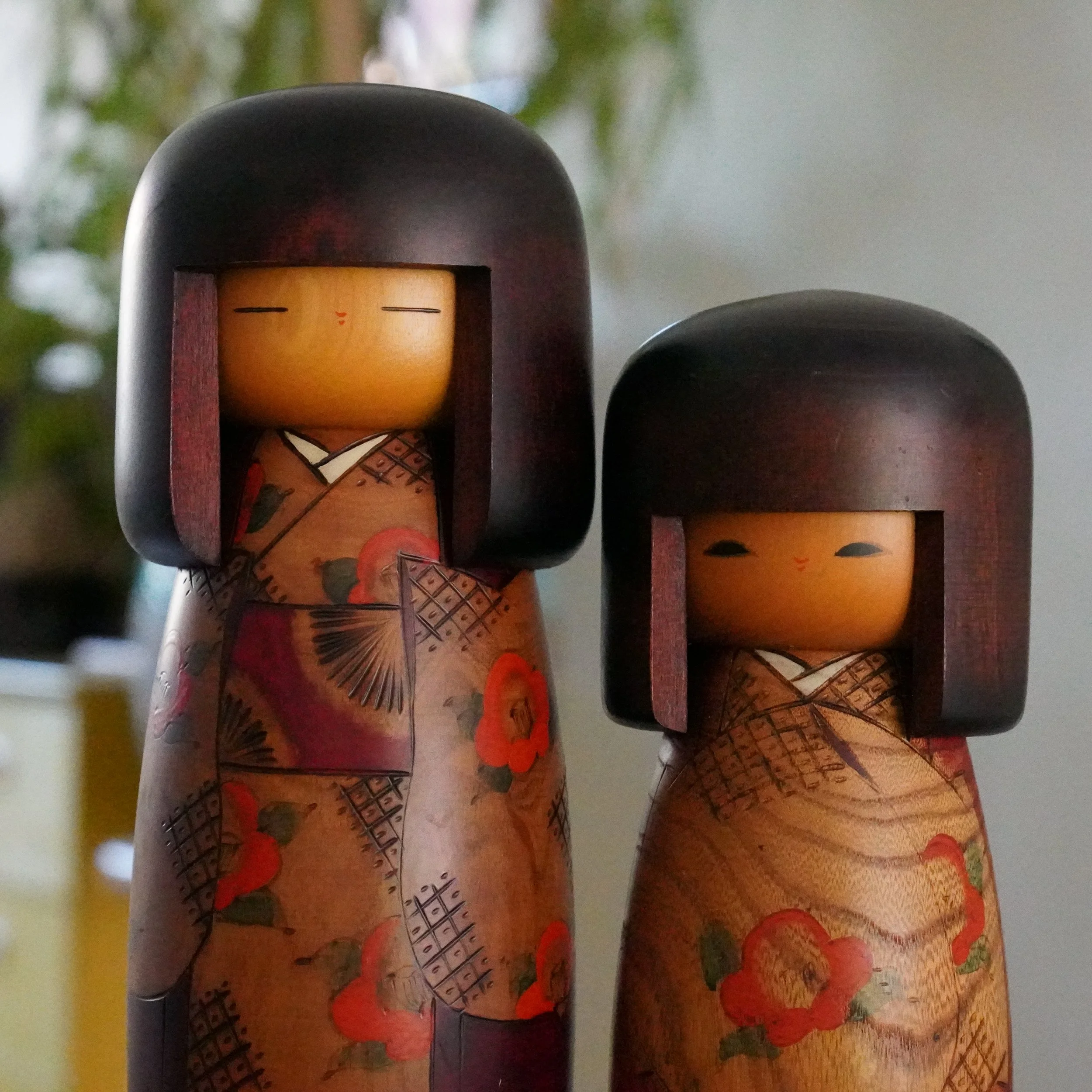 Image 2 of 22
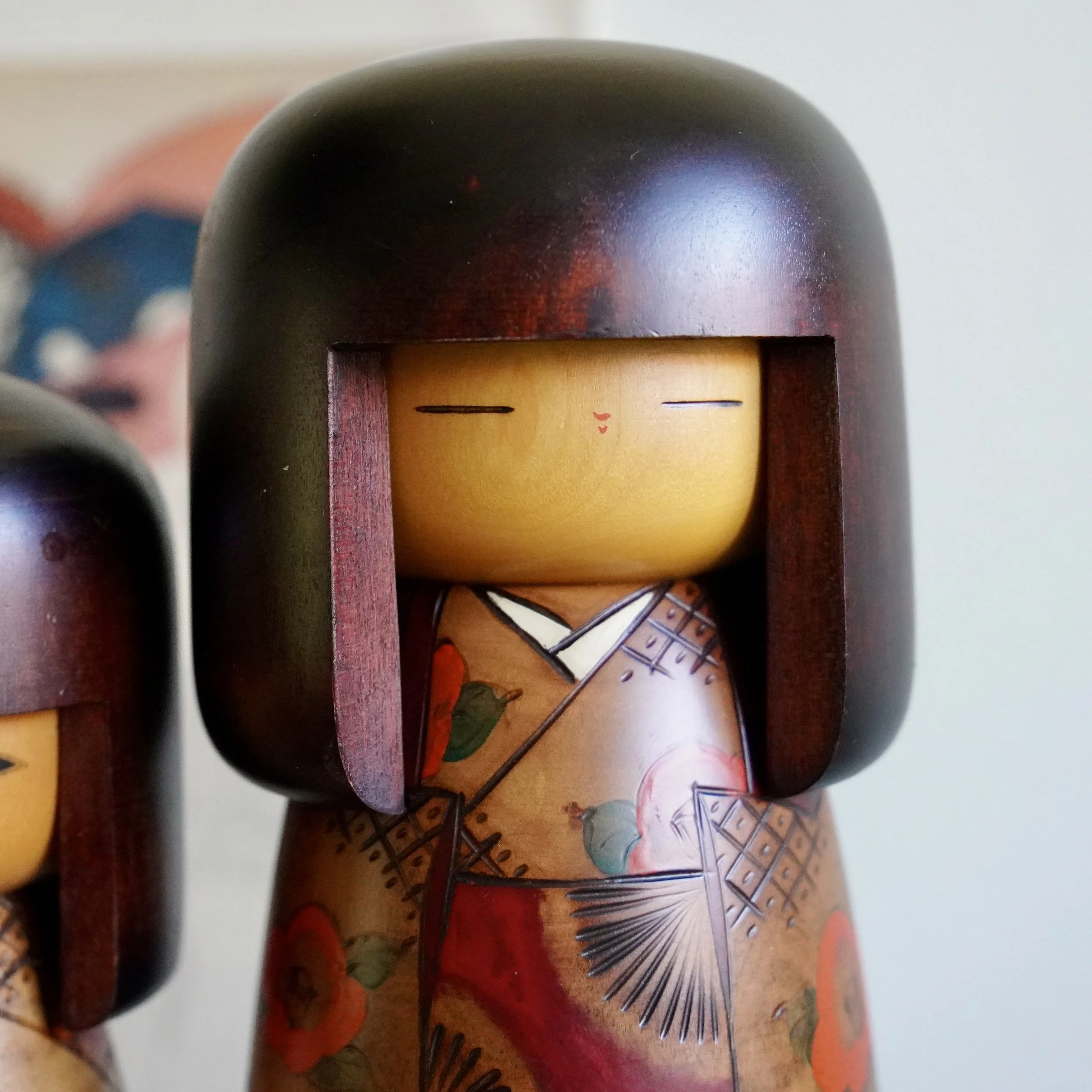 Image 3 of 22
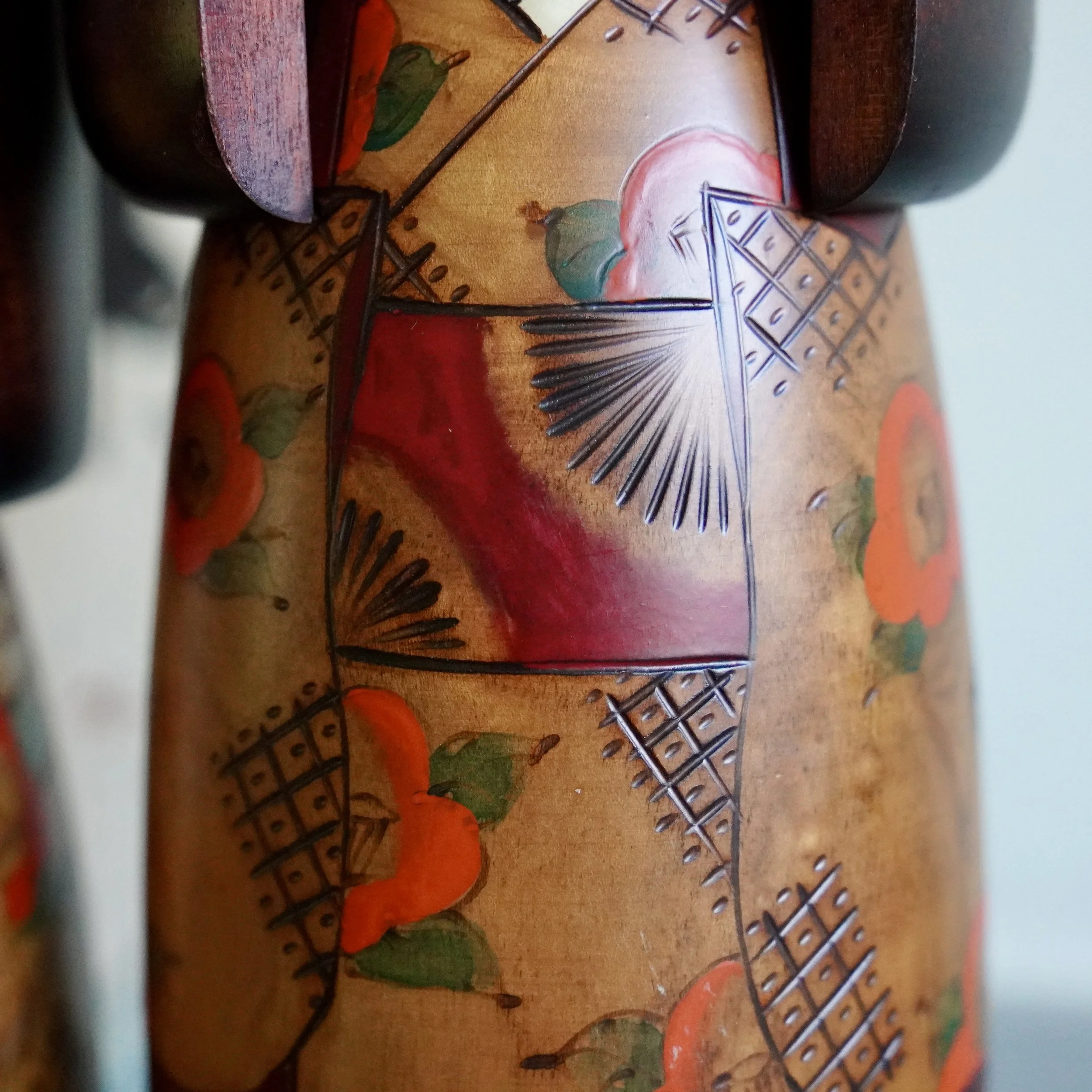 Image 4 of 22
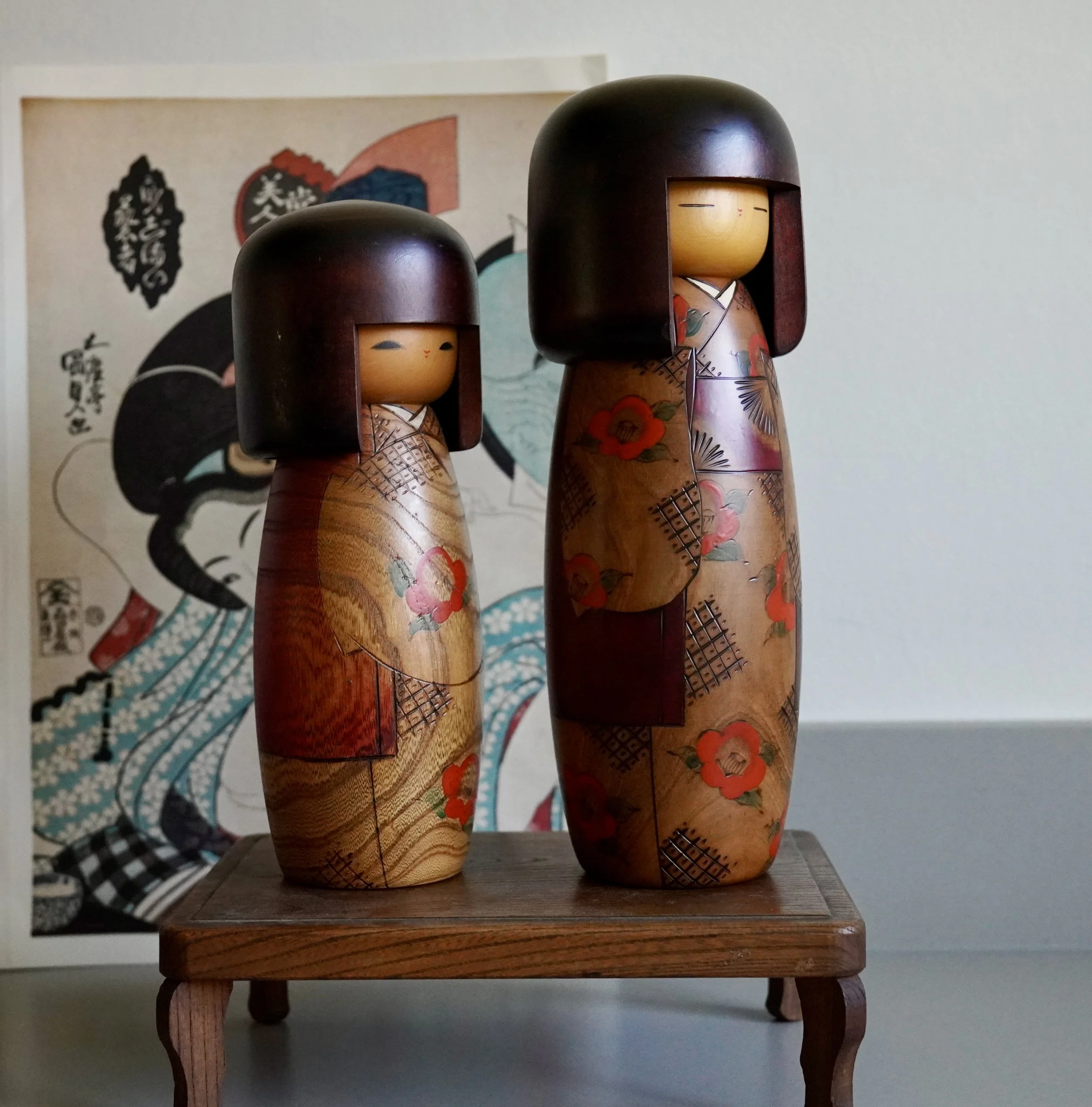 Image 5 of 22
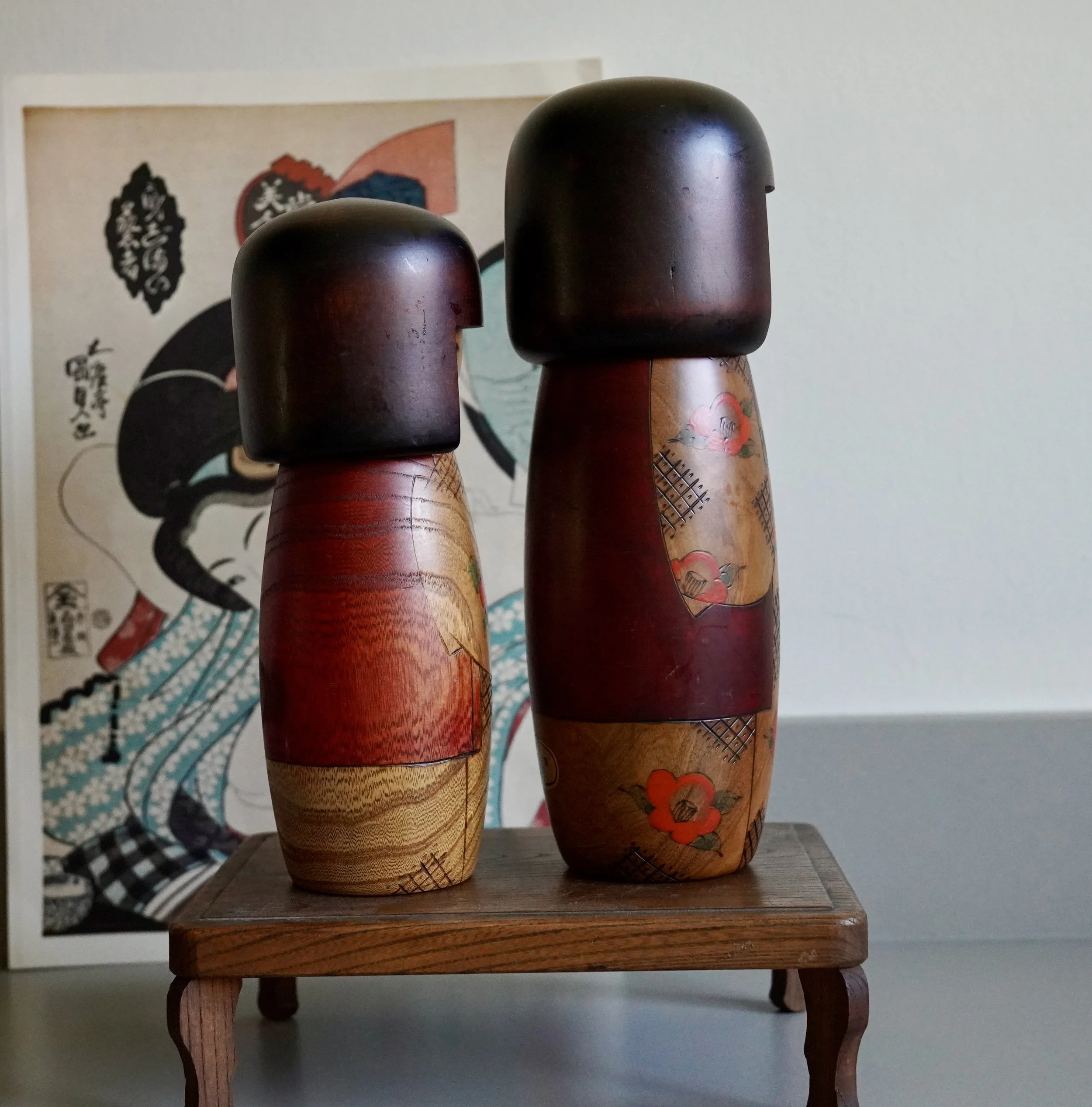 Image 6 of 22
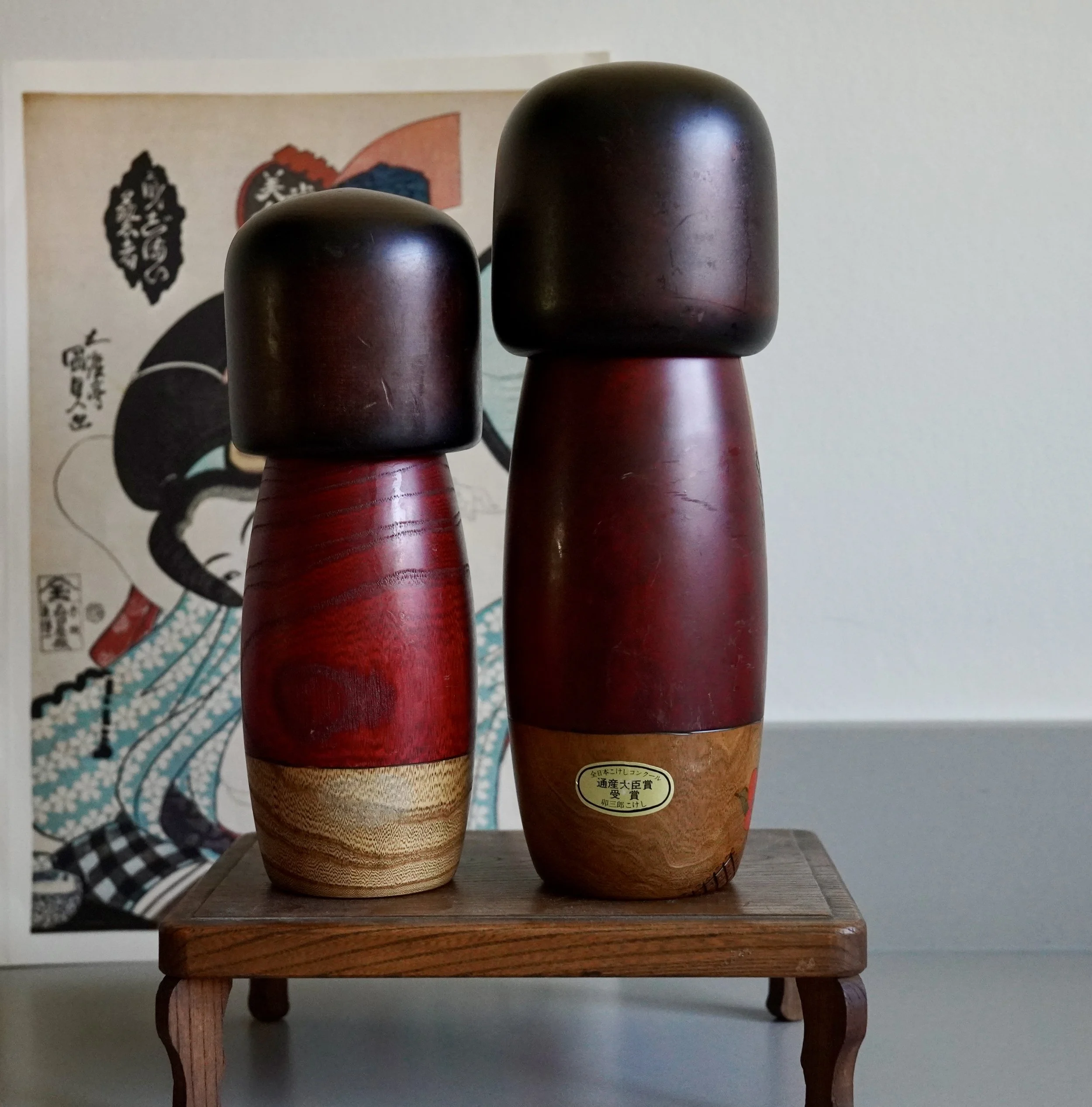 Image 7 of 22
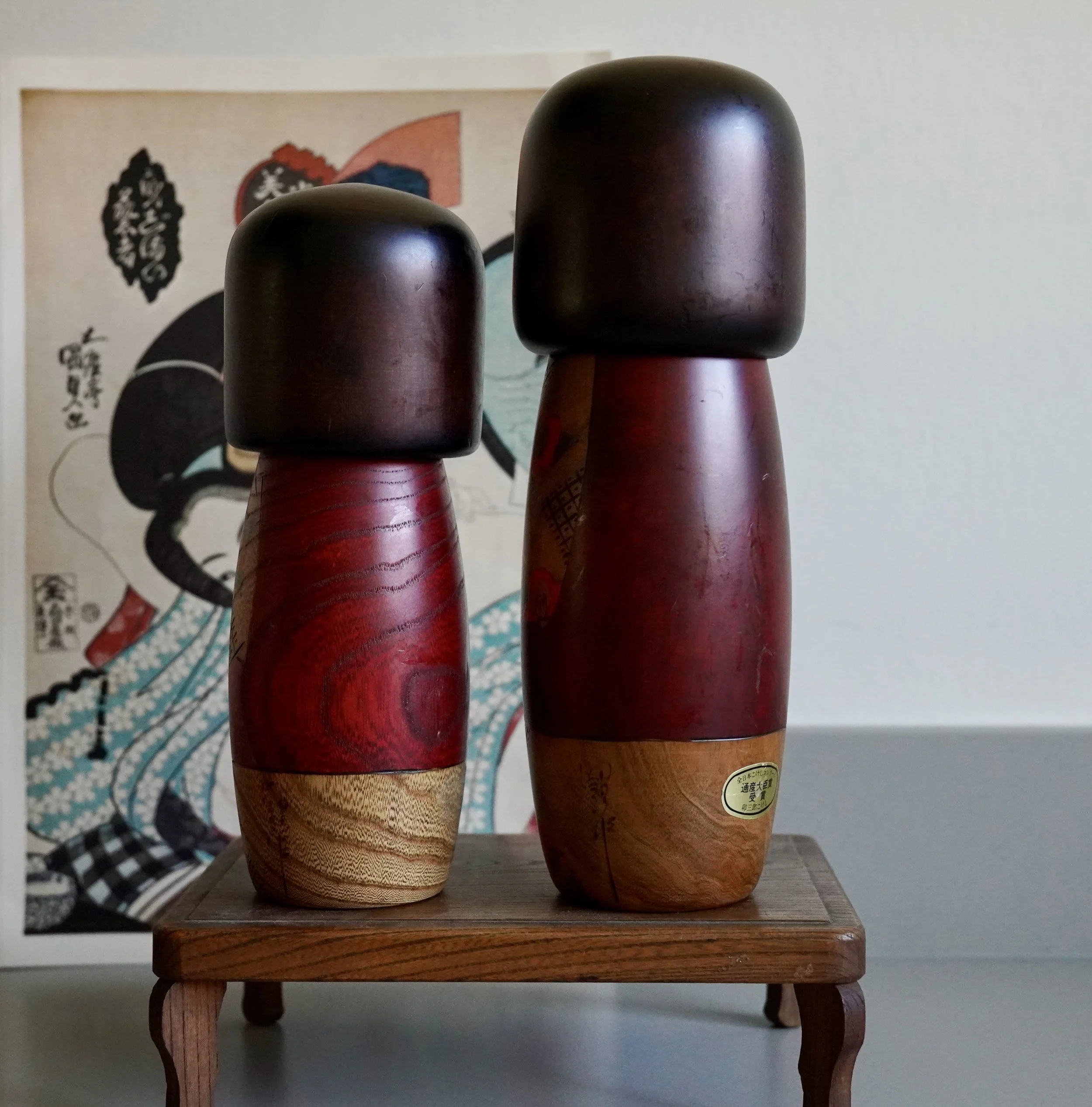 Image 8 of 22
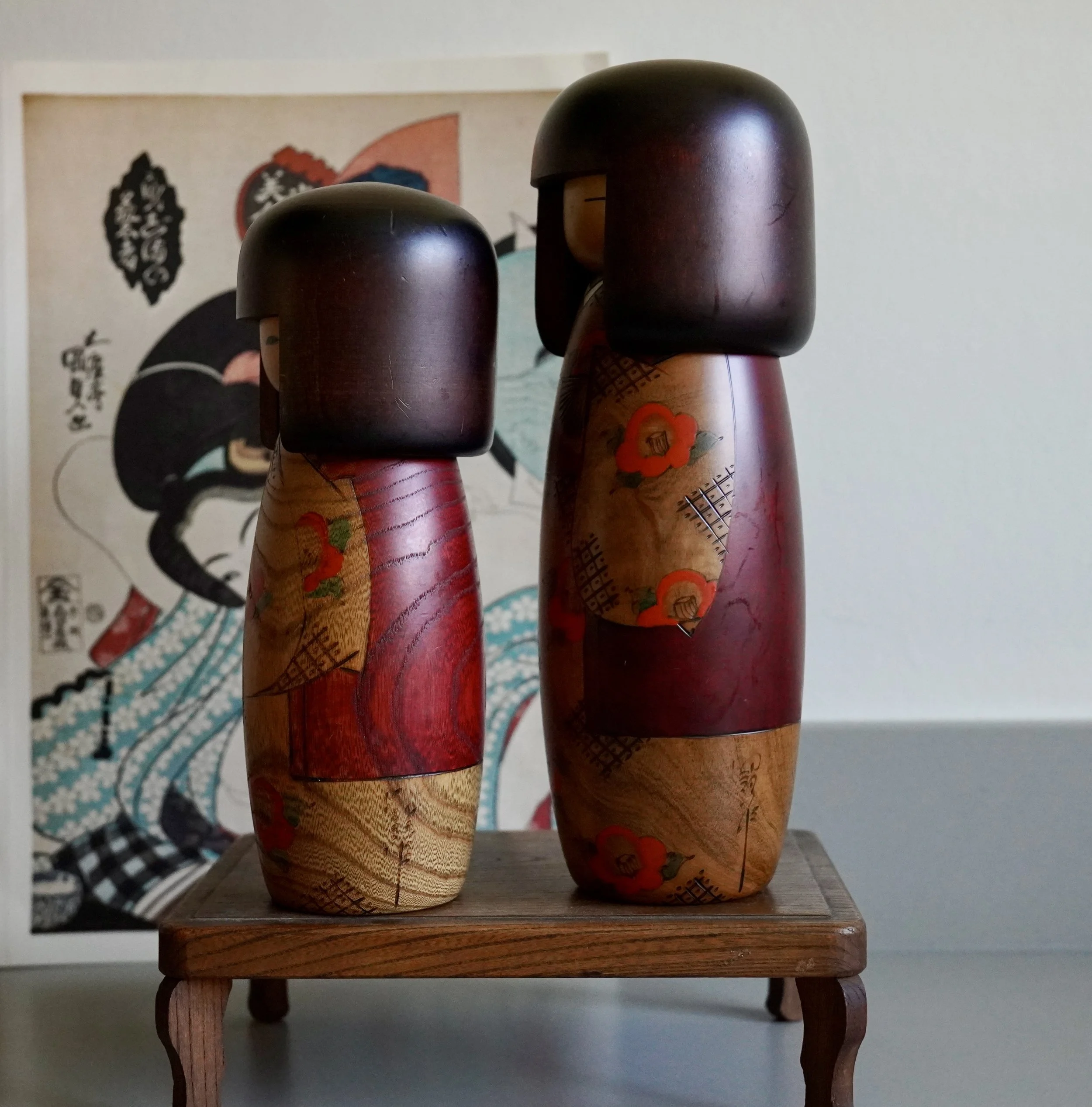 Image 9 of 22
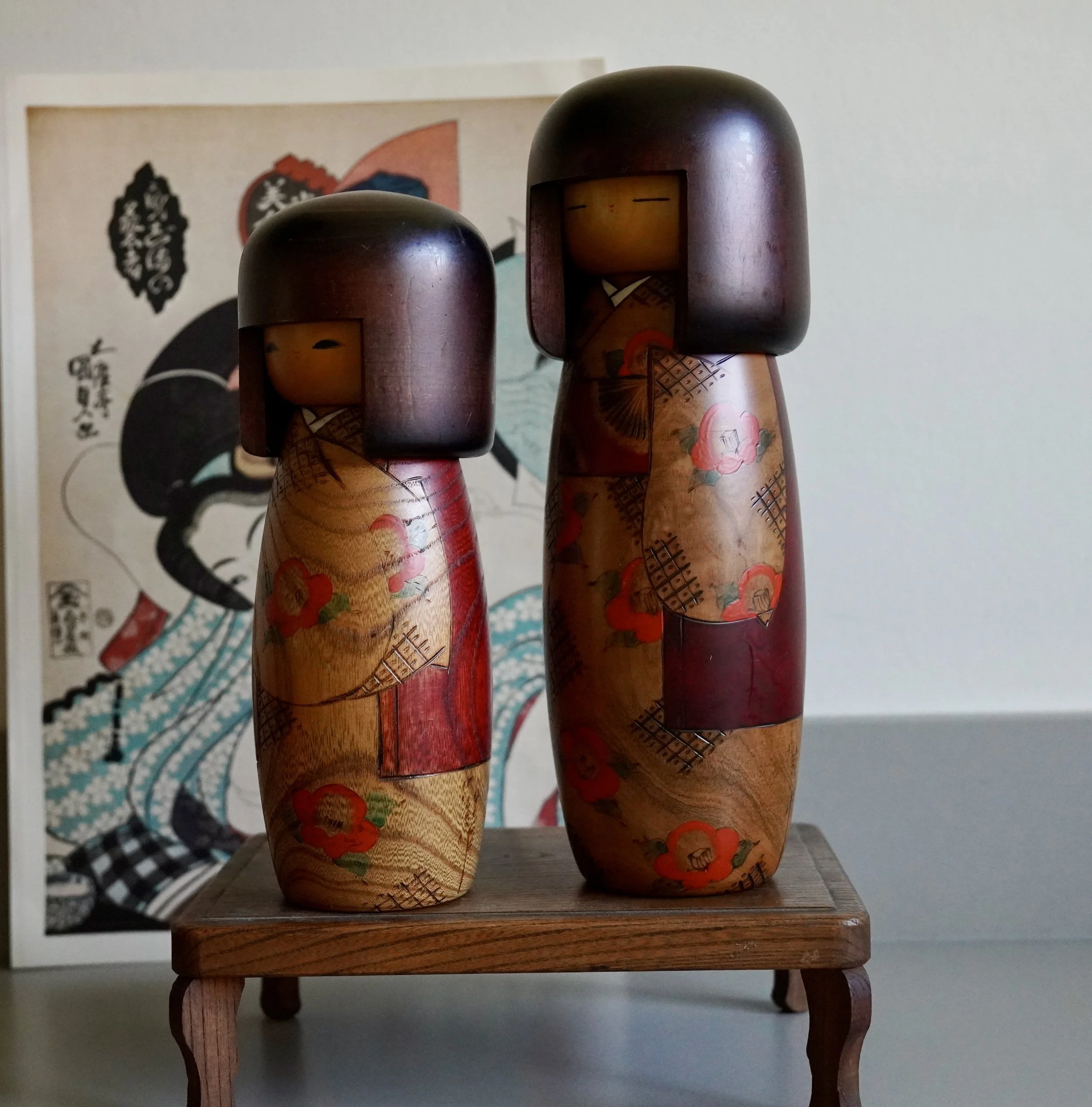 Image 10 of 22
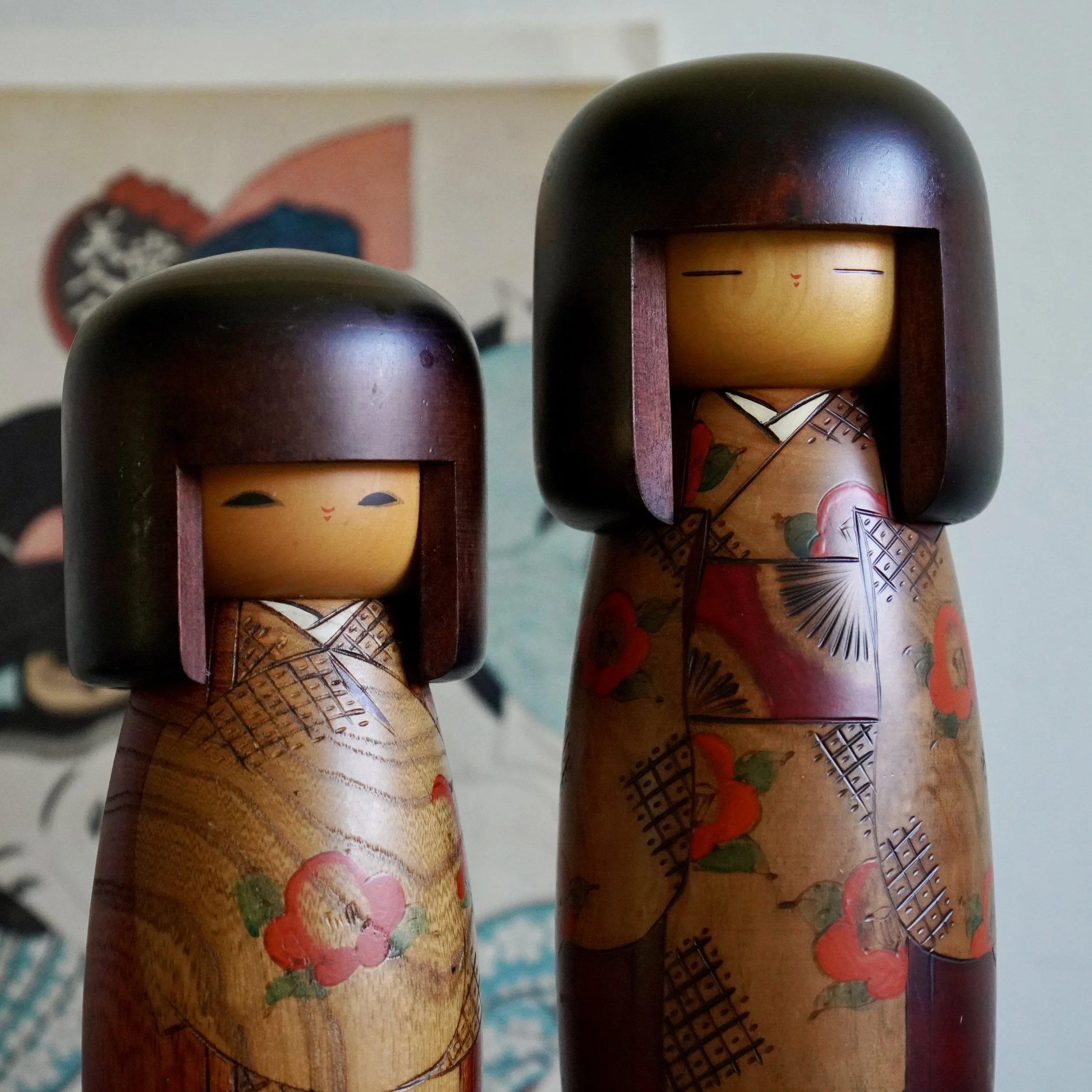 Image 11 of 22
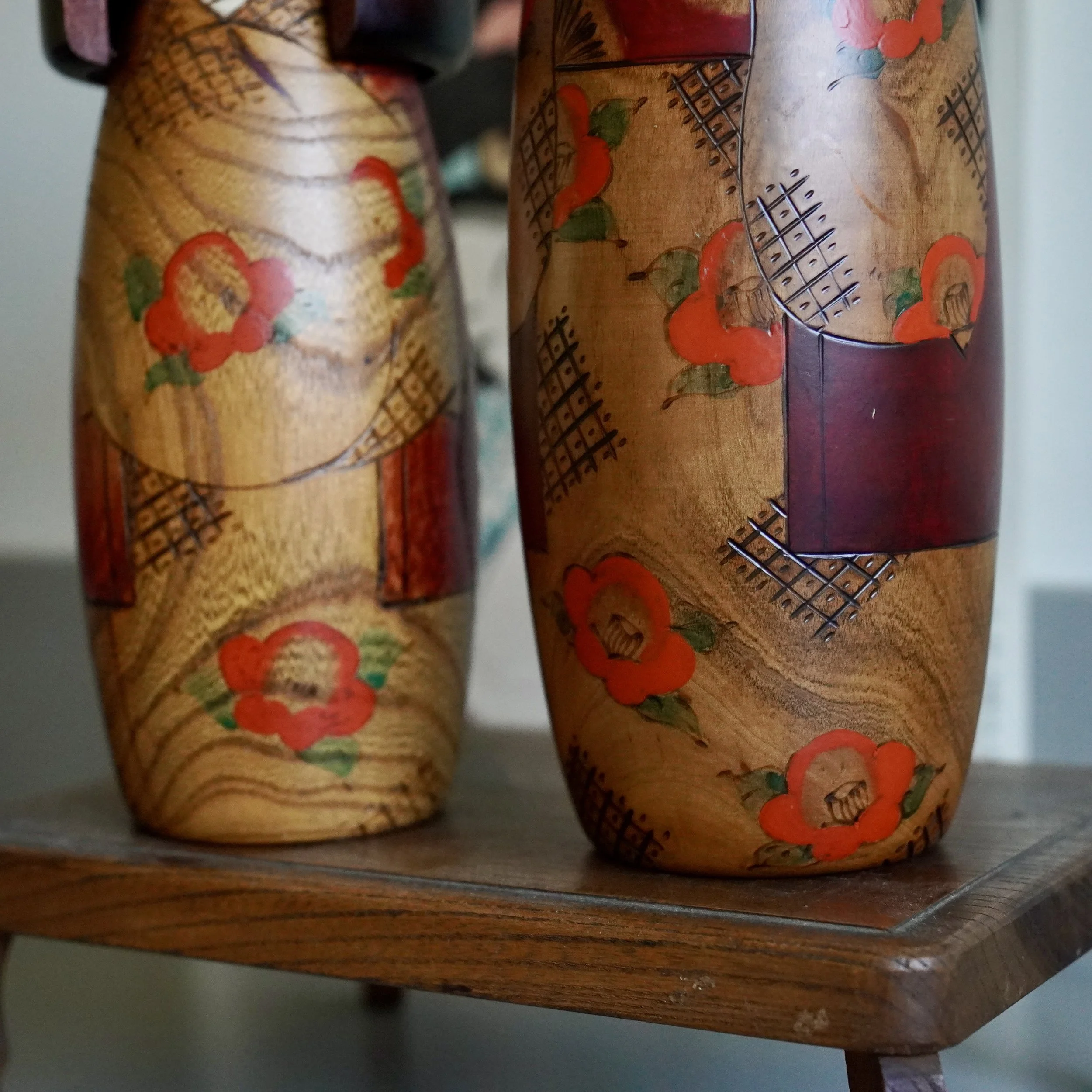 Image 12 of 22
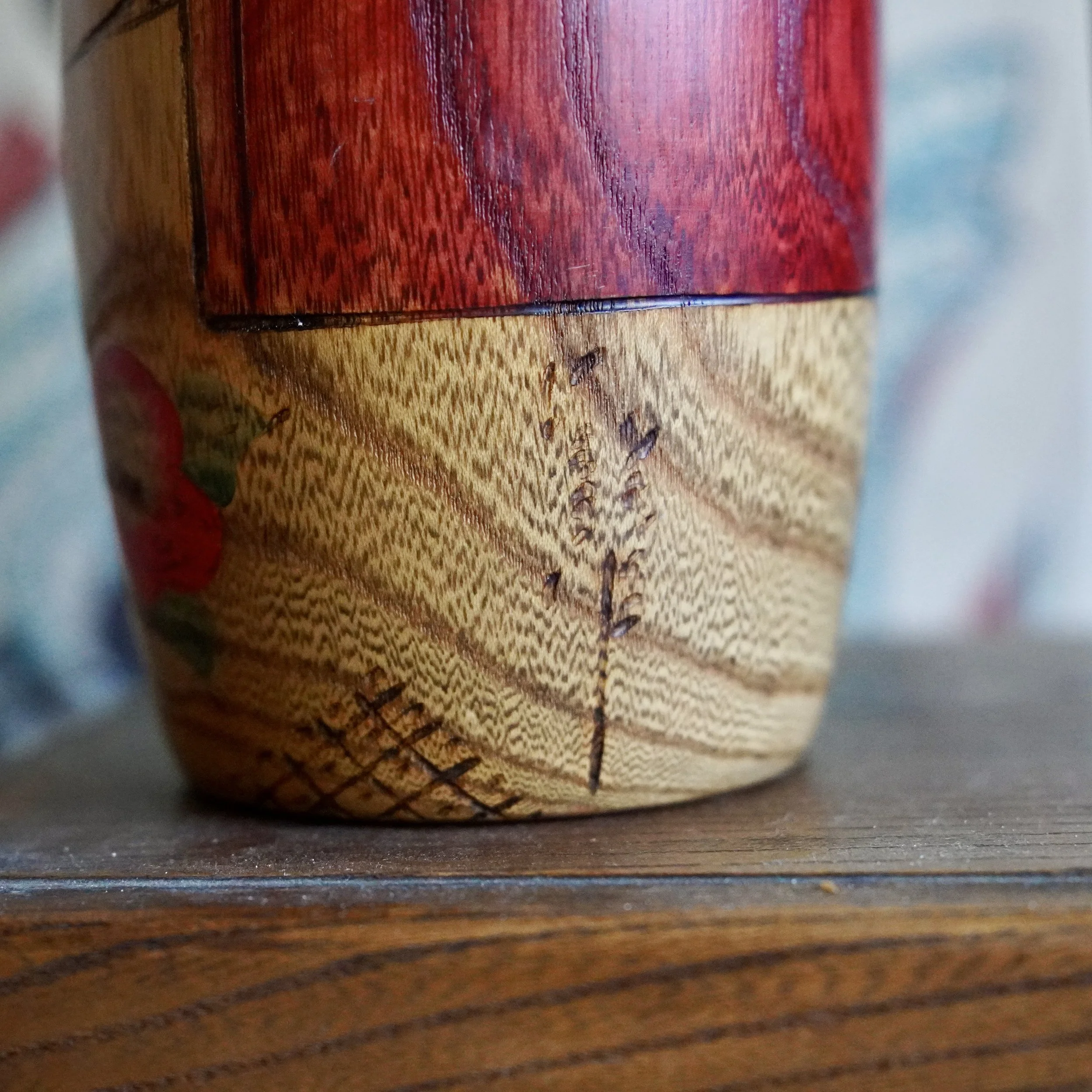 Image 13 of 22
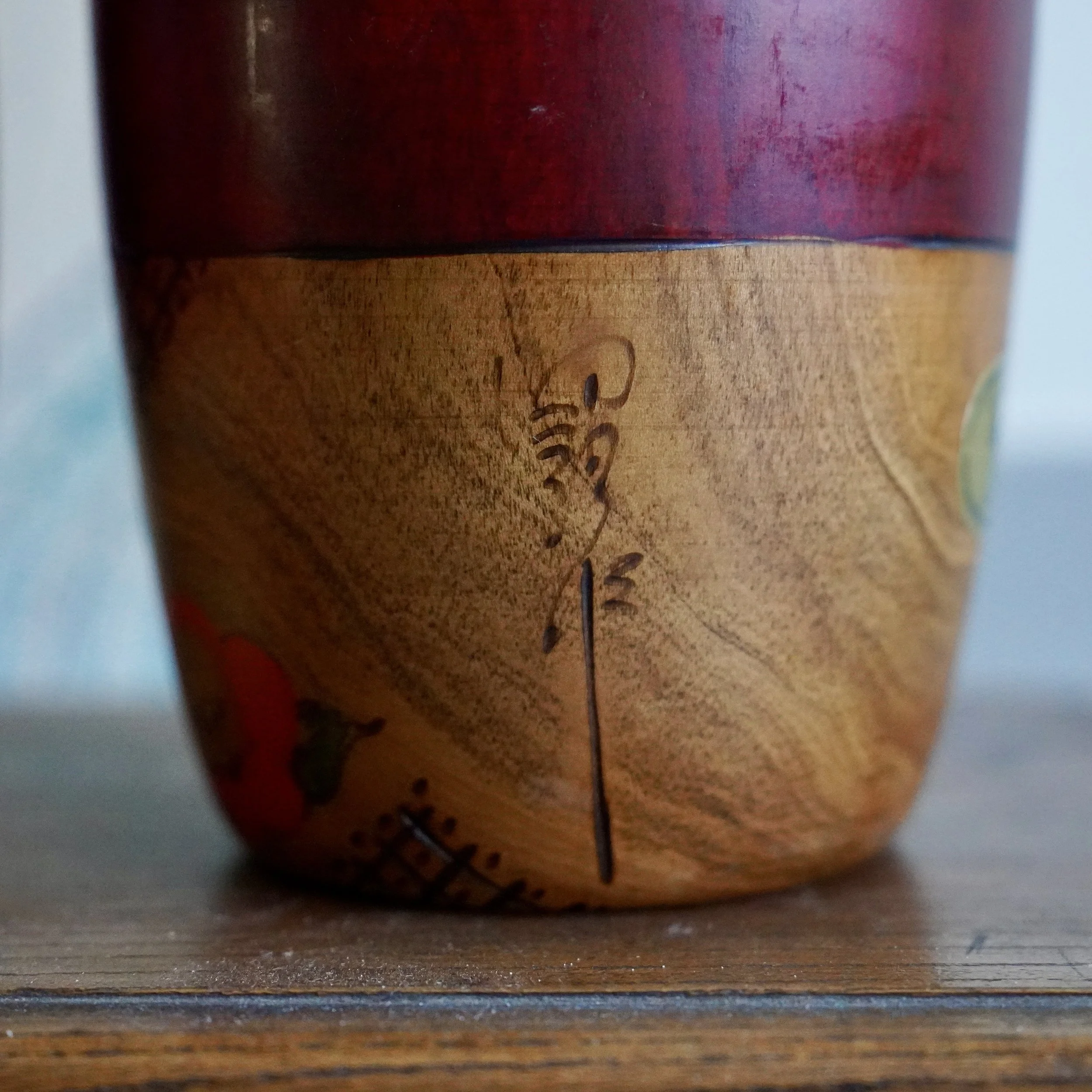 Image 14 of 22
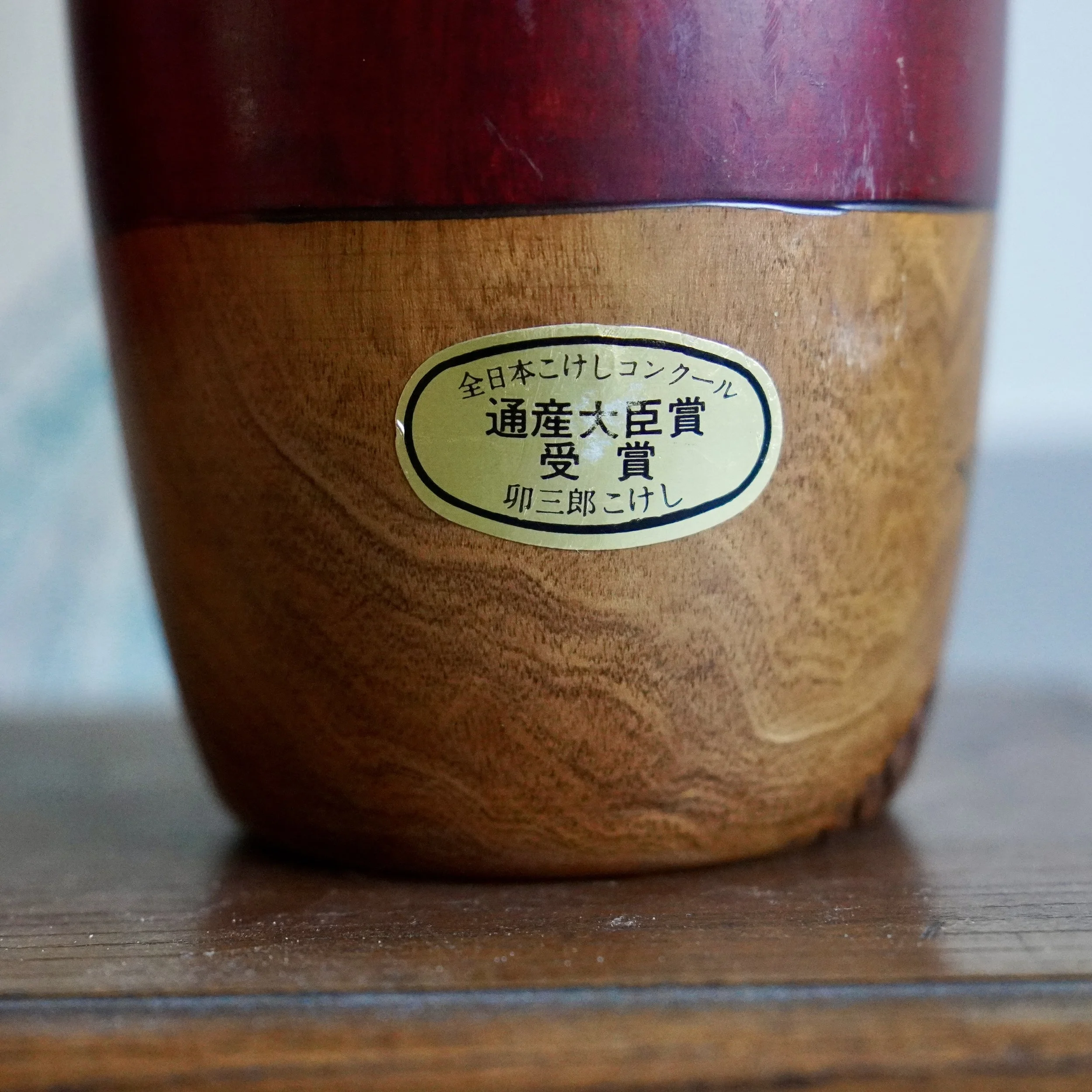 Image 15 of 22
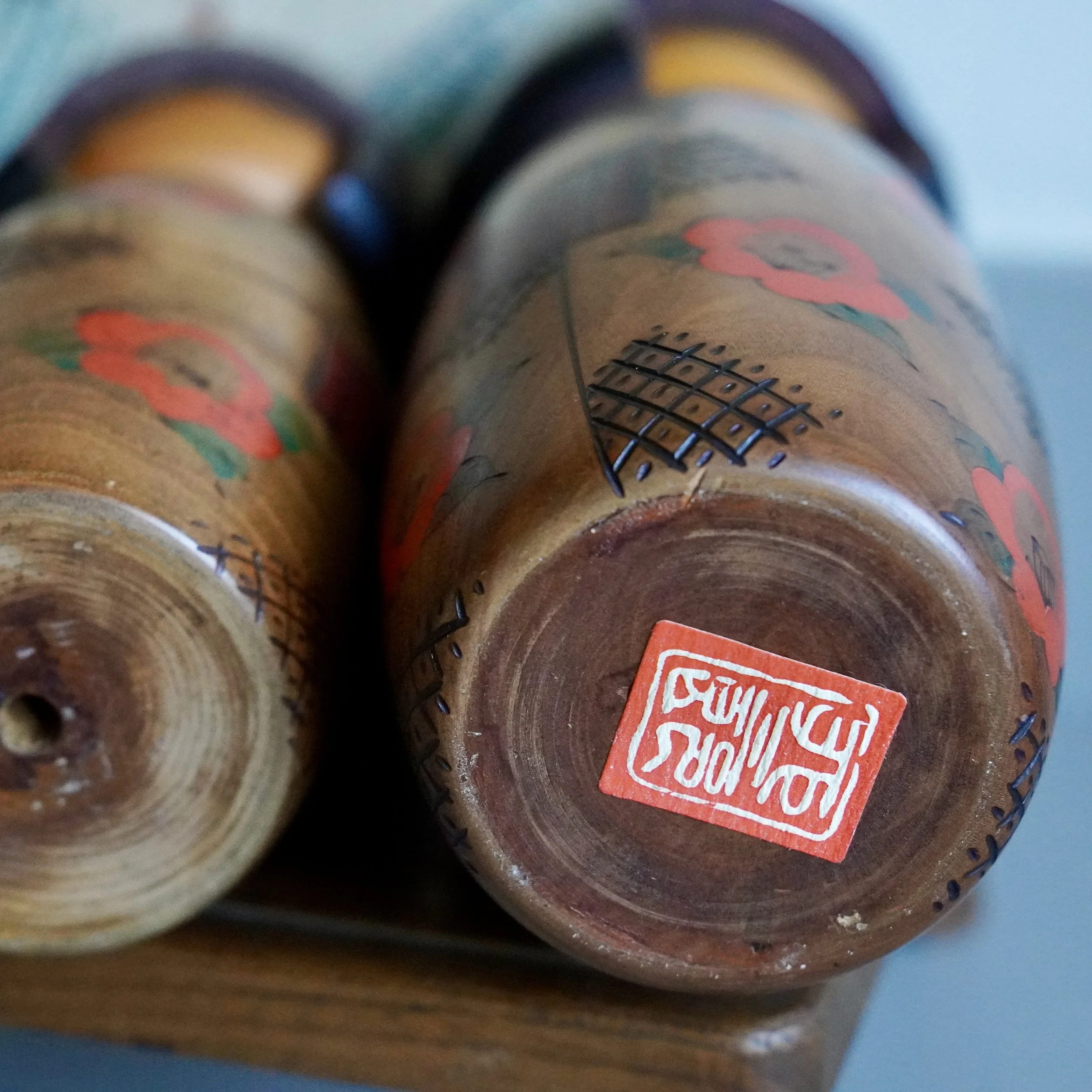 Image 16 of 22
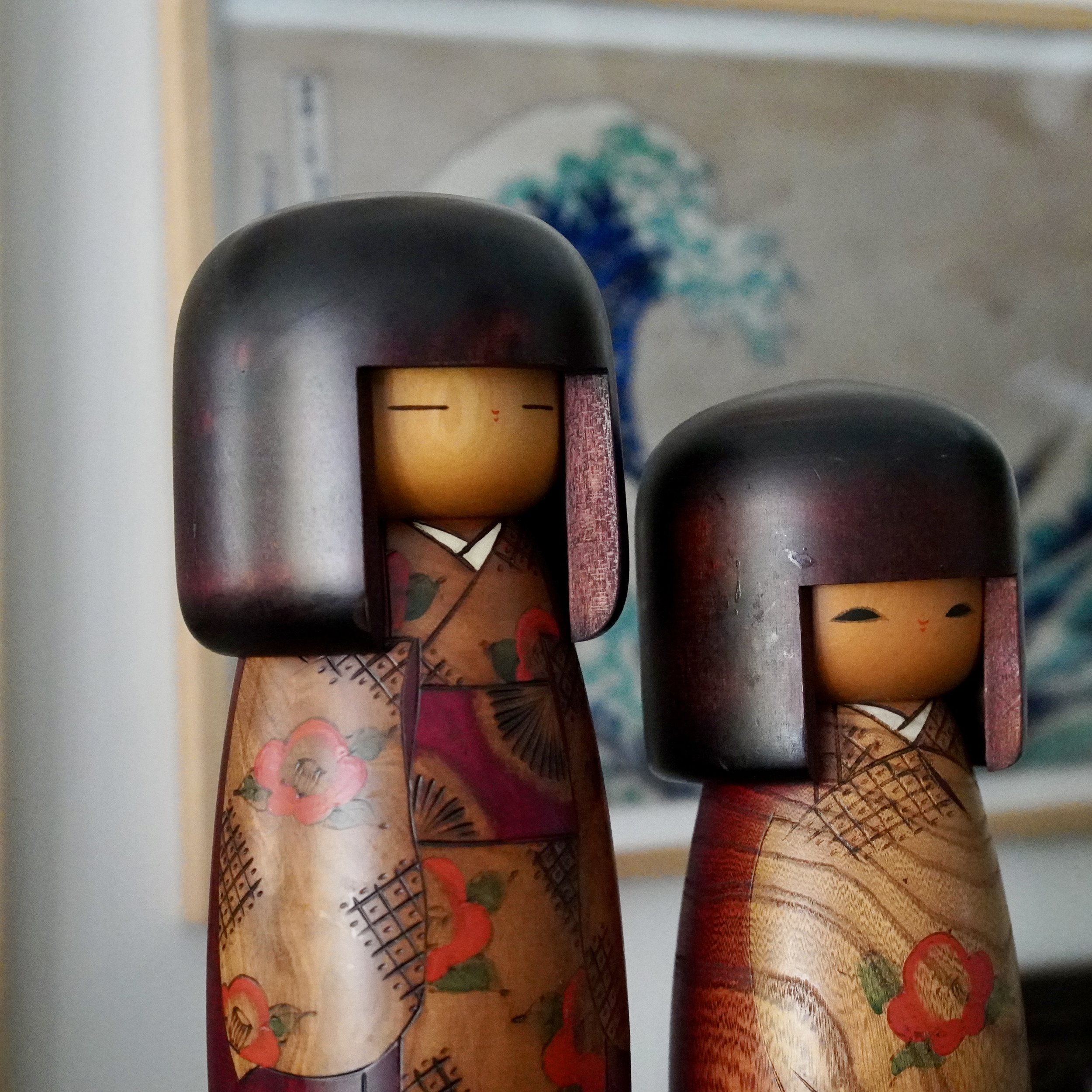 Image 17 of 22
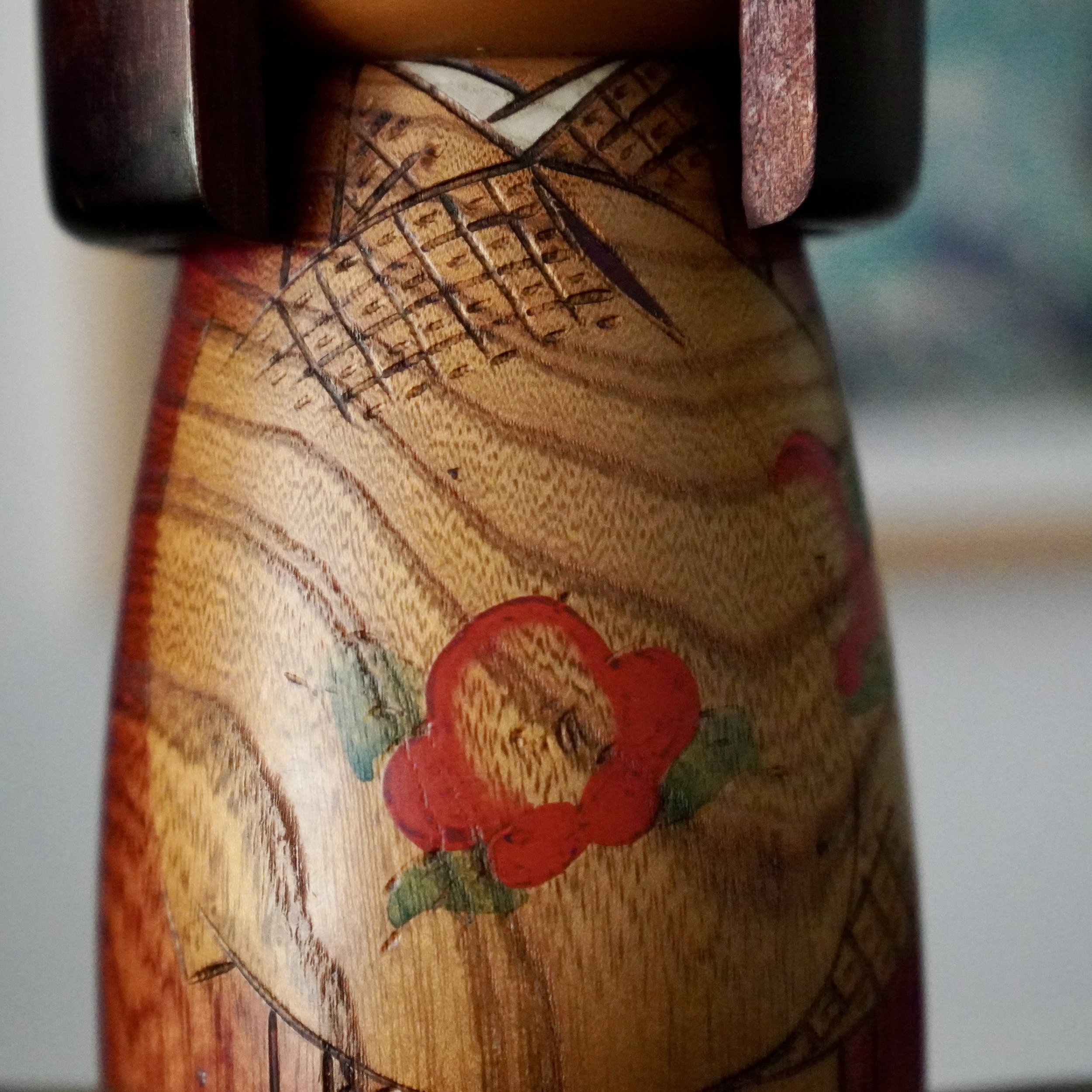 Image 18 of 22
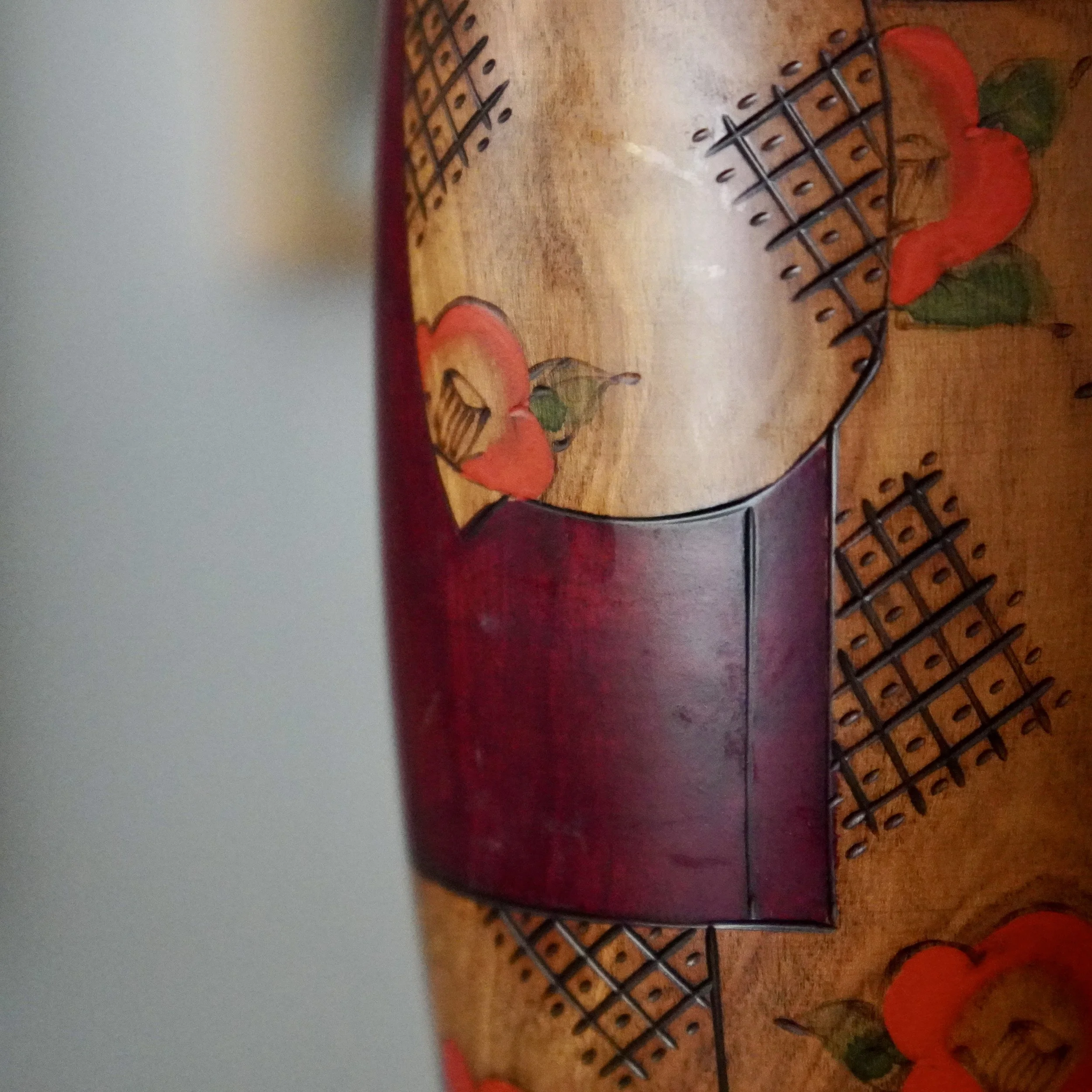 Image 19 of 22
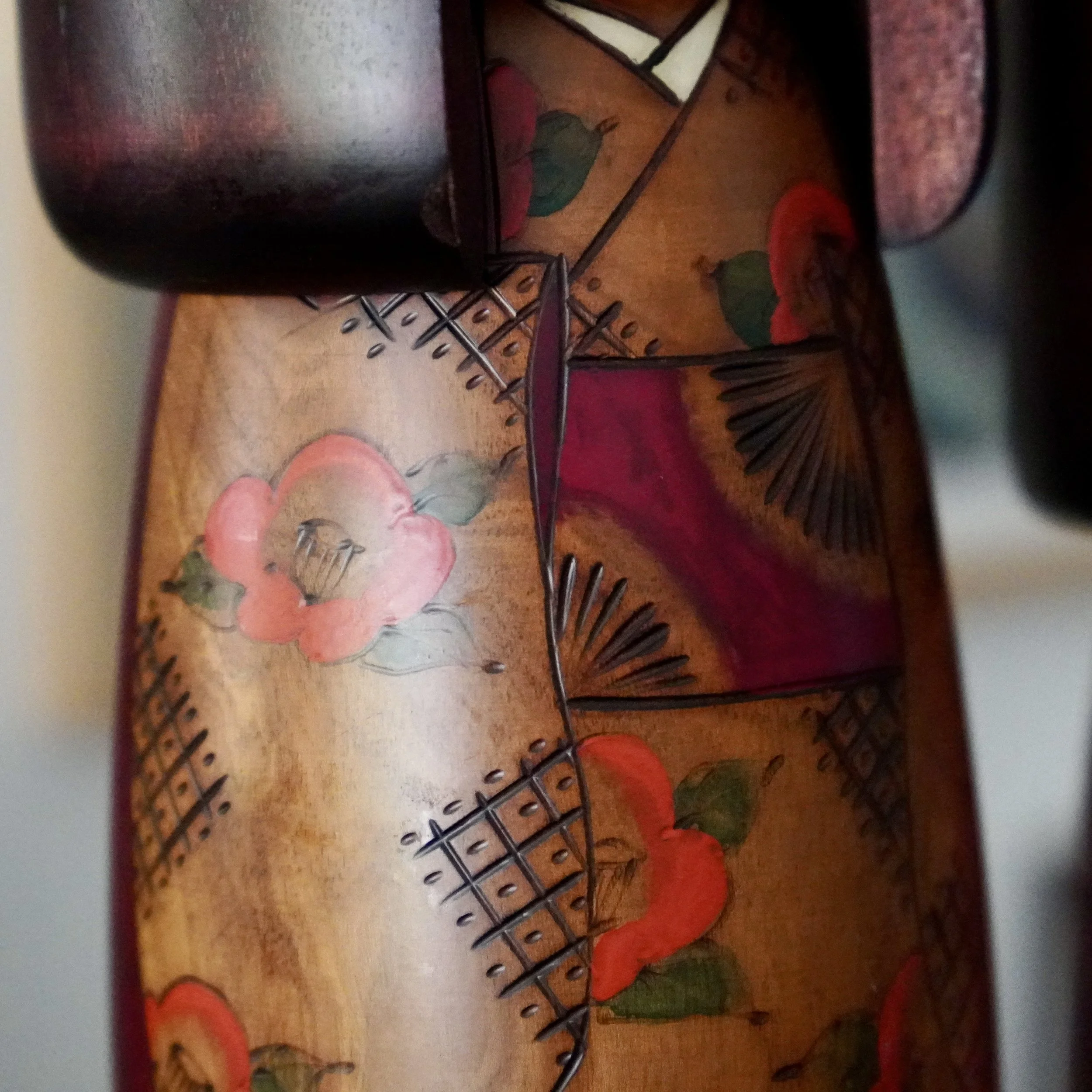 Image 20 of 22
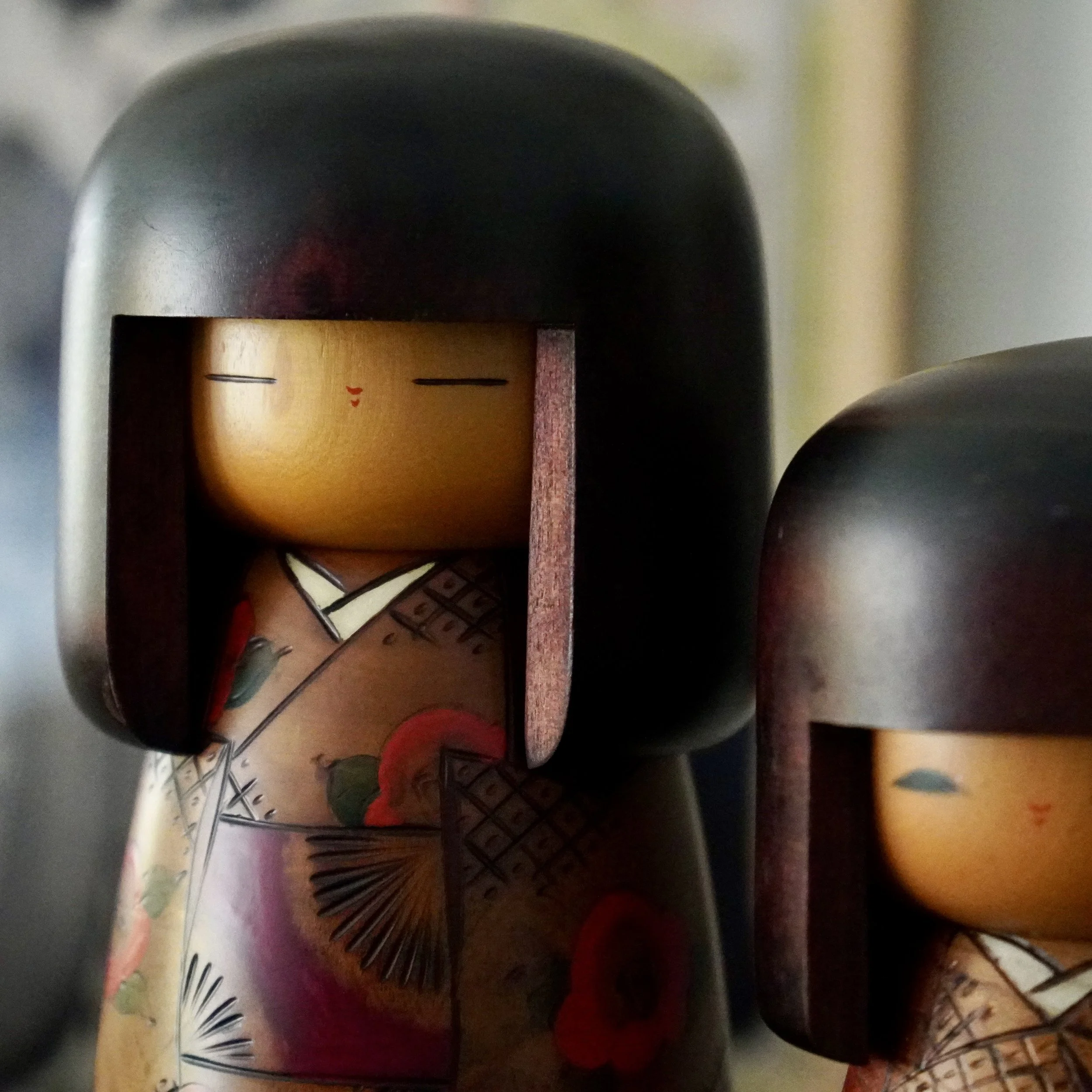 Image 21 of 22
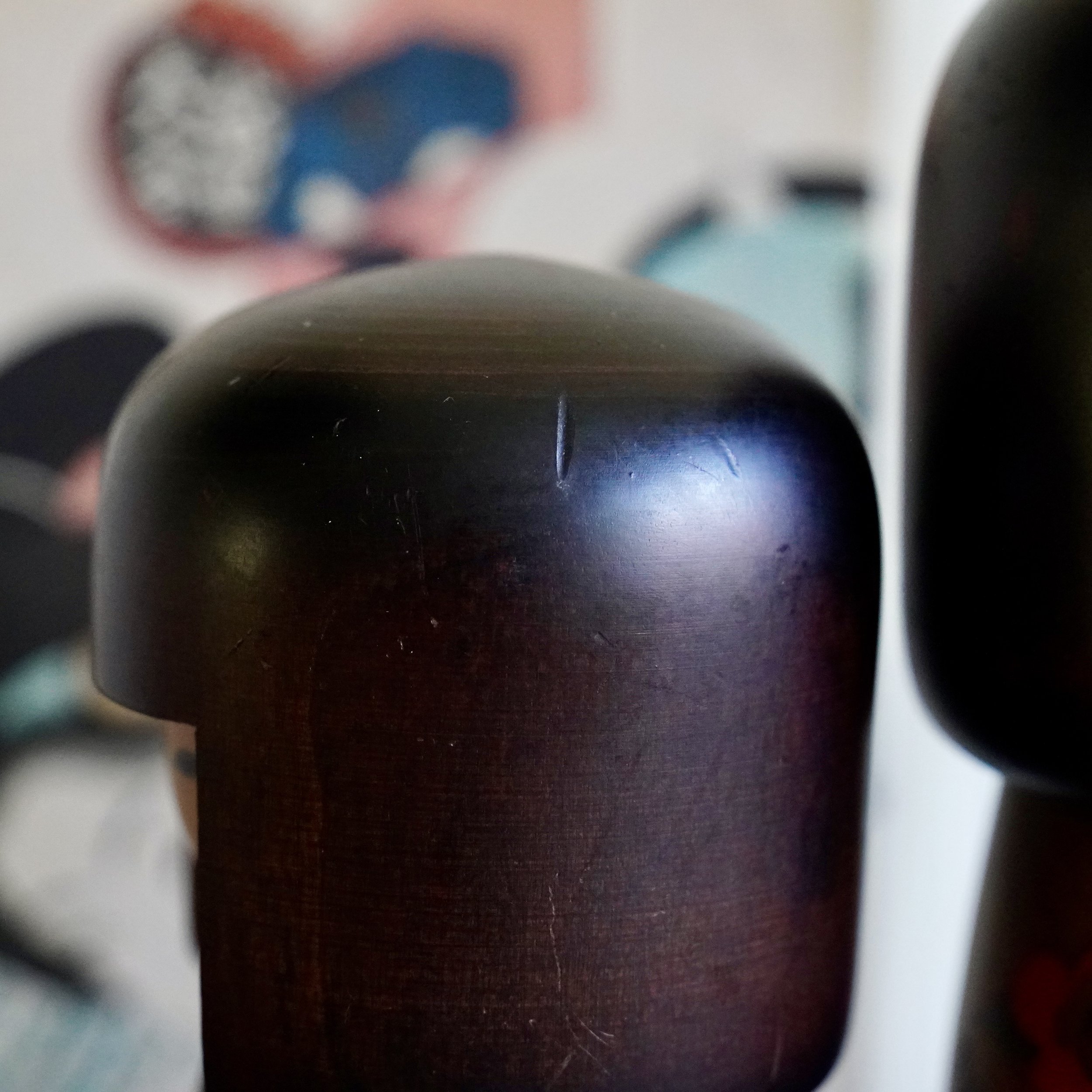 Image 22 of 22
What makes this kokeshi special
The look and feel up close
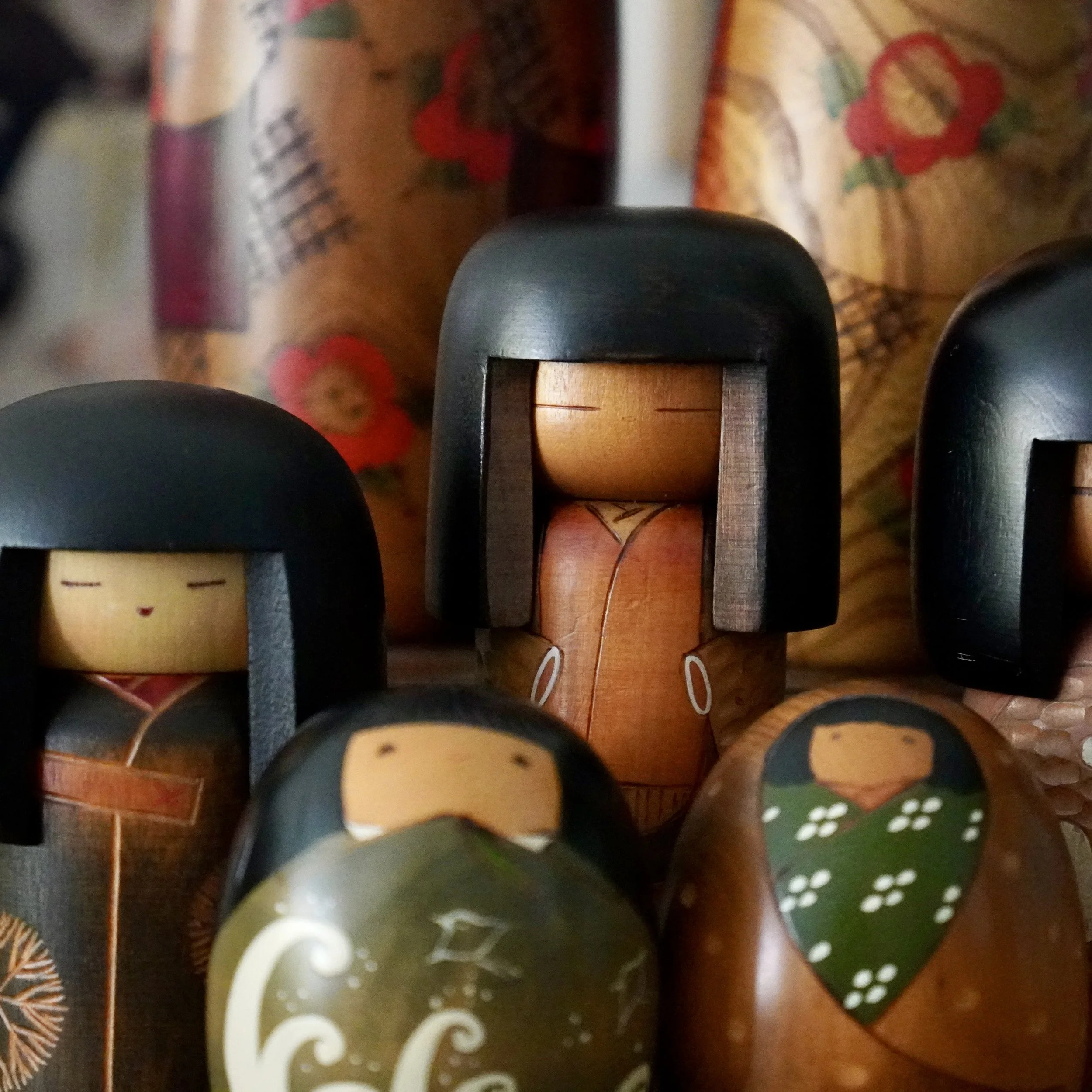
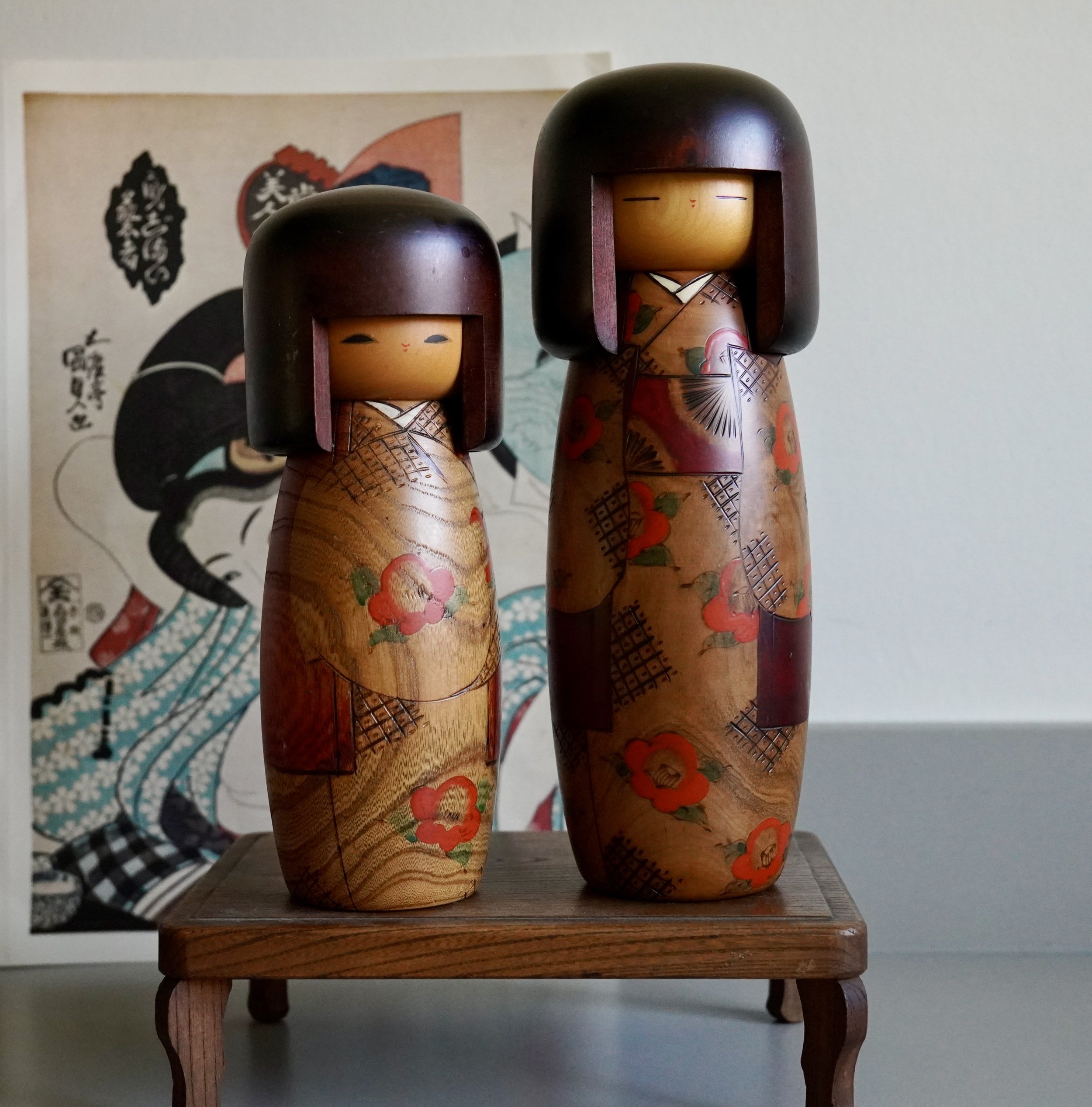
The zelkova grain moves across the body in long, sweeping lines, warm amber where the wood is exposed and a deep mahogany-red where the upper kimono section has been treated. The camellia flowers are painted in opaque red with green leaves, placed against the grain rather than following it. The yakie lines, the lattice, the fan ribs, they are burned into the surface and catch the light differently from the paint: matte and deep where the wire pressed, glossy where the brush followed. Heavy in the hand, solid and still.
Charming details
The award sticker reads 全日本こけしコンクール 通産大臣賞受賞, the Minister of International Trade and Industry Award from the All-Japan Kokeshi Competition. This is a government prize, one step below the Prime Minister's Award, awarded at Japan's most significant national kokeshi competition. The sticker has stayed on the base since it was placed there, decades ago, undisturbed.
-
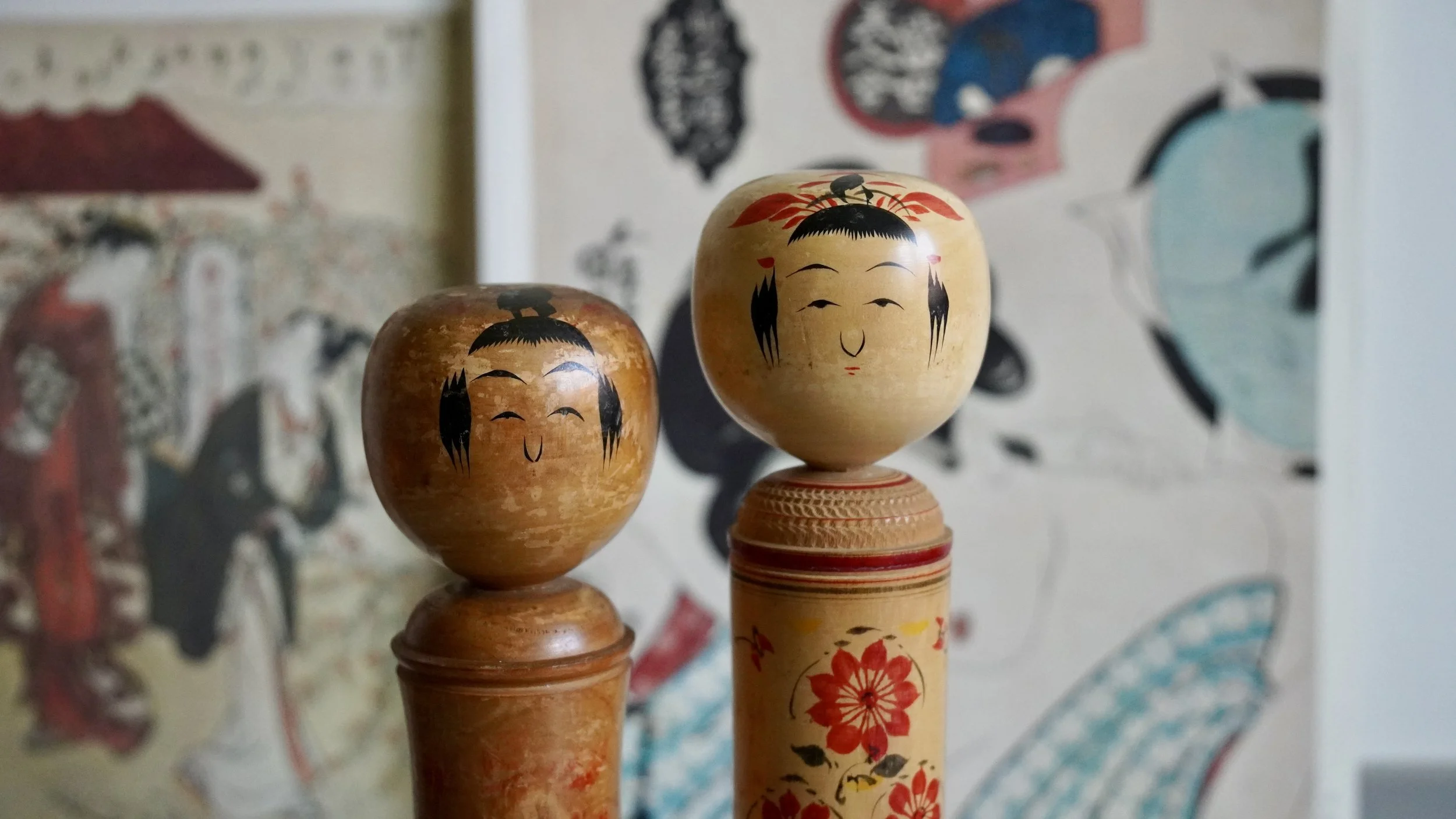
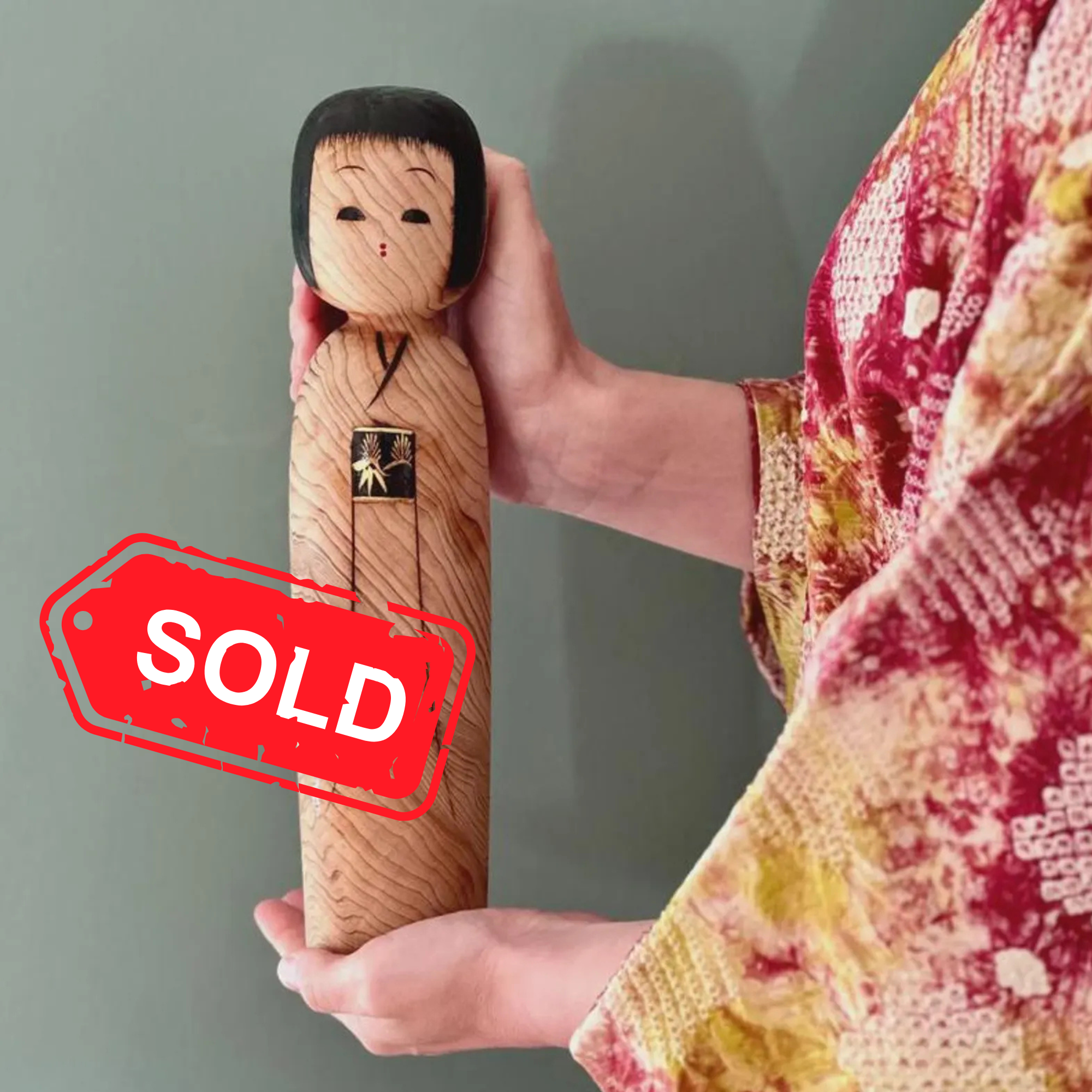
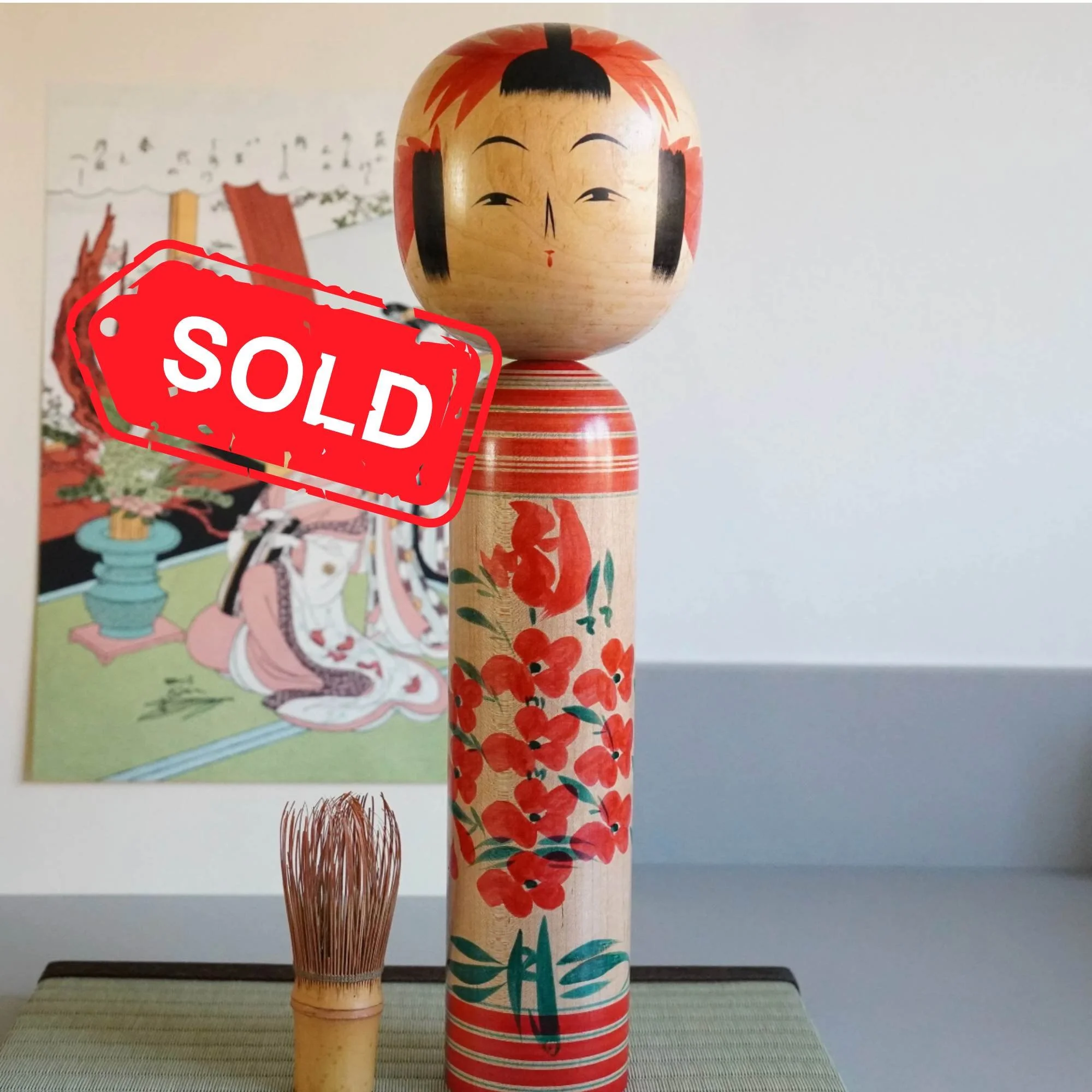
Sōsaku kokeshi (creative kokeshi), zelkova wood body with yakie burning technique and hand painting.
Usaburo Kokeshi (卯三郎こけし), founded by Okamoto Usaburo (1917 to 2009), Shinto Village, Kitagunma-gun, Gunma Prefecture.
Usaburo pioneered the yakie technique, burning fine decorative lines with a heated nichrome wire before painting.
This piece is signed by Yuji Okamoto (岡本有司), eldest son of the founder and second generation Usaburo, born 1948 in Shibukawa, Gunma.
Yuji studied under his father from the age of 22 and became the leading figure of the studio after his father's passing.
Winner of the Prime Minister's Award at the All-Japan Kokeshi Competition, the highest government recognition in Japanese kokeshi craft.
The studio seal 卯三郎こけし is confirmed on the base.
-
Shinto Village, Gunma Prefecture.
Shōwa period, ca. 1970 to 1990 based on construction and sticker style.
-
Large doll:
Height: approx. 29.5 cm.
Width: approx. 10 cm.
Weight: approx. 1283 g.
Smaller doll:
Height: approx. 25.5 cm.
Width: approx. 9 cm.
Weight: approx. 893 g.
-
Very nice vintage condition. No cracks, or repairs.
Minor surface wear consistent with their age.
A small indentation on the crown of the head, a lathe mark from production. Not visible from the front and does not affect the character of the piece.
Original studio sticker present on base.
-
Keep away from direct sunlight and heat sources, both of which can cause the wood to dry out and crack over time.
Do not use water or cleaning products on the painted surface.
Dust with a dry soft cloth.
*Decorative items such as the whisk and plank are for styling
and scale purposes only and not included in the sale
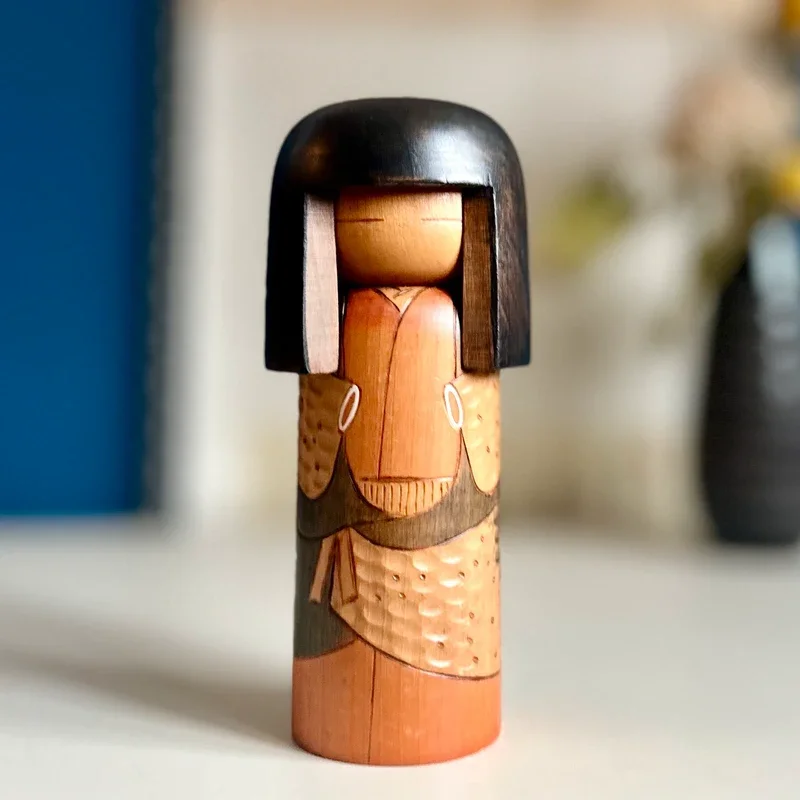
Meet our other kokeshi


Questions before you buy?
Since my items are one-of-a-kind pieces, I want to ensure they reach you perfectly.
Questions about the history or condition?
Need a custom shipping quote or shipping outside the EU?
Prefer to see more detailed photos or a video?
Reach out to me directly. I'm here to help you find the perfect piece for your home.
✉️ hello@kaikoandco.com
💬 Instagram DM: @bykaikoandco